A Silver Wedding Journey to Yunnan: Celebrating 25 Years with My Parents
A Silver Wedding Journey to Yunnan: Celebrating 25 Years with My Parents
Preface: A Long-Planned Warm Journey
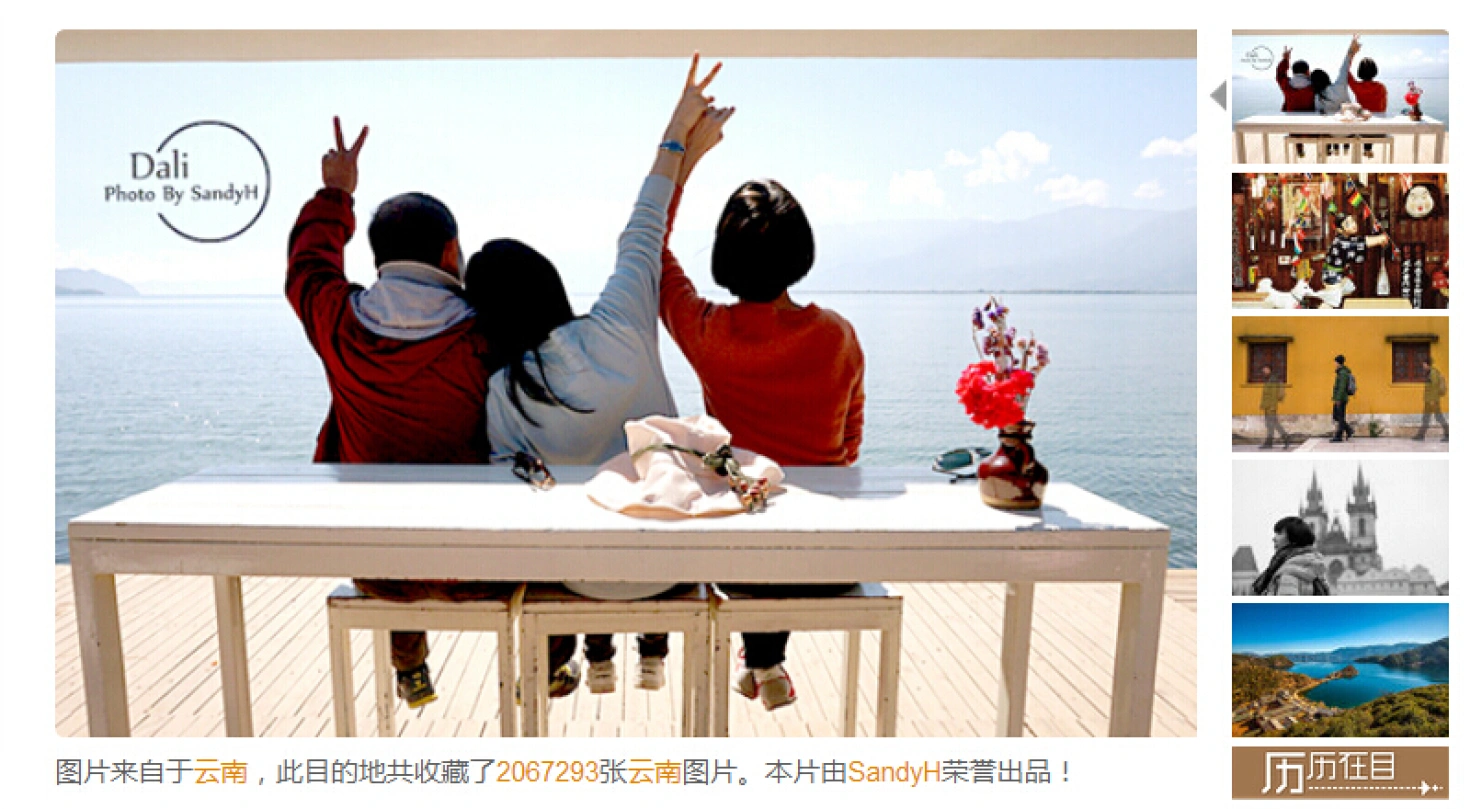
In the golden autumn of October 2014, my father and mother celebrated their twenty-fifth anniversary together — their silver wedding. As their "naughty daughter" who grew up cradled in their love, I decided to craft a carefully planned trip to Yunnan, leaving warm memories as a tribute to this special milestone.
I know that one day I will fall in love, get married, and perhaps no longer be able to travel with them every year. Maybe later, I'll only be able to take one of them on a journey. Even further down the road, I might only be able to miss them while traveling. That's precisely why I cherished this opportunity — to make this trip a shared memory for the three of us. For them, it would be a memory of their daughter thoughtfully planning and showing them the world. For me, it would be a memory of a fresh graduate using her modest earnings to give back to her parents.
Although my parents generously provided financial support, as a struggling young woman just starting her career, my greatest joy was hunched over my computer comparing flight and hotel prices to find the best deals. Family travel is the most relaxed kind — my parents were happy to follow my arrangements. Besides, both my parents are indecisive Cancers, while I, a natural leader as a Sagittarius, was practically born to be a travel planner!
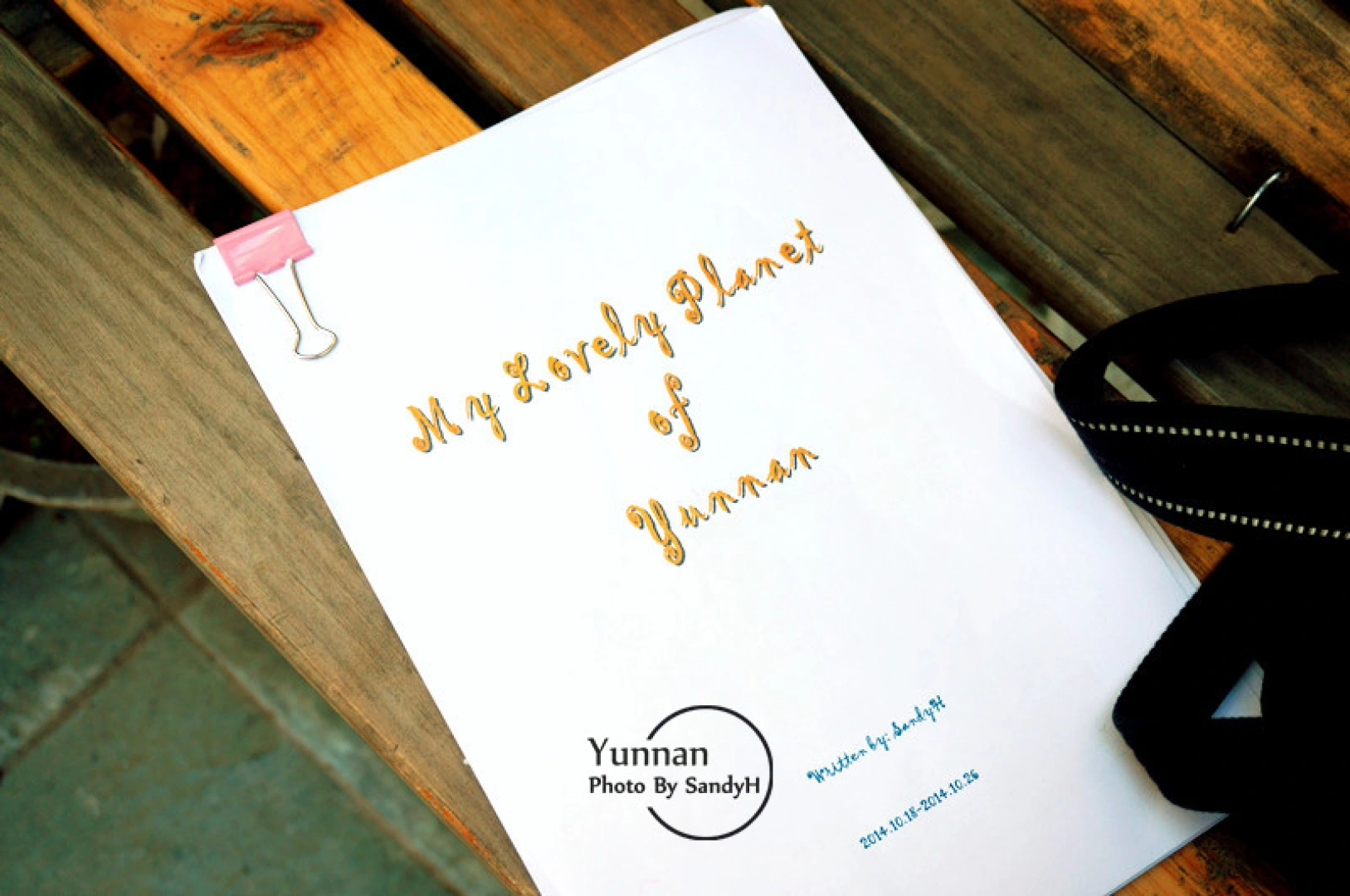
After three months of monitoring and booking in advance, I created a 40-page travel guide titled "My Lovely Planet of Yunnan." Although the itinerary changed several times, thorough preparation meant we barely encountered any of my mother's famous panic attacks along the way — celebration time!
Special thanks to @大脚CL for their "12 In-Depth Yunnan Travel Routes" and for answering my many questions. As a Yunnan native, their advice made our trip even more perfect.

The final itinerary was as follows:
- Day 1: Guangzhou → Kunming, arriving in the Spring City by night flight
- Day 2: Kunming → Fuxian Lake, watching "Impressions of Yunnan" in the evening
- Day 3: Dongchuan Red Land
- Day 4: Dongchuan Red Land → Green Lake → Yunnan University → Golden Horse and Jade Rooster Archways, overnight train
- Day 5: Dali Ancient Town → Caicun Village cycling → Xiaoyizhuang Erhai Lake boat ride
- Day 6: Xizhou → Butterfly Spring → Shuanglang → Lijiang Dayan Ancient Town
- Day 7: First Bend of the Yangtze River → Tiger Leaping Gorge → Guishan Park Prayer Wheel → Yila Grassland → Shangri-La Golden Hall performance
- Day 8: Potatso National Park, overnight train
- Day 9: Kunming → Guangzhou, early morning flight back
Seven days of sightseeing, compact yet fulfilling. Now, let me take you through this journey with the most honest "travelogue" style possible.
Chapter One: Fuxian Lake — Unexpected Beauty Amid Wind and Waves
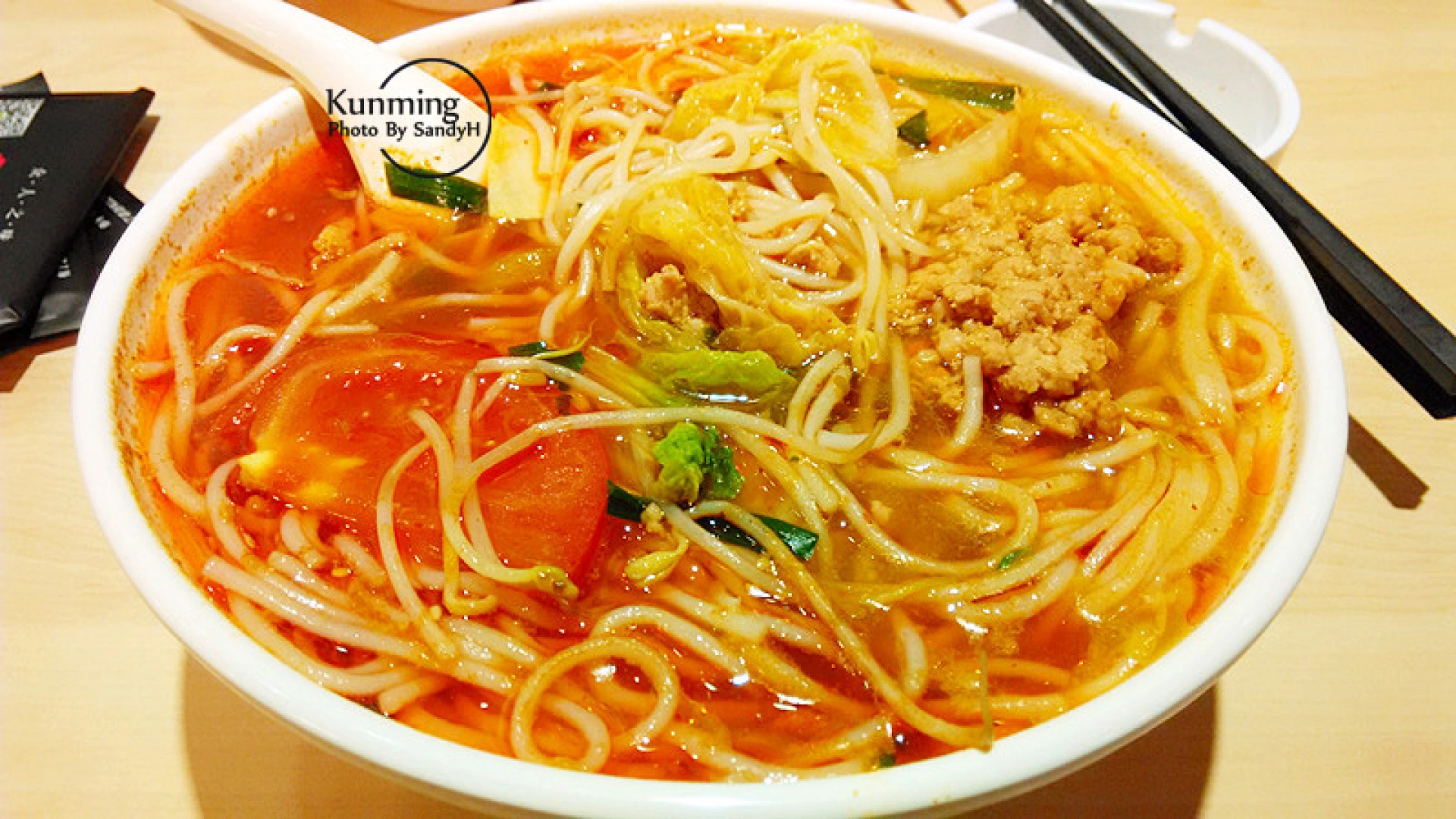
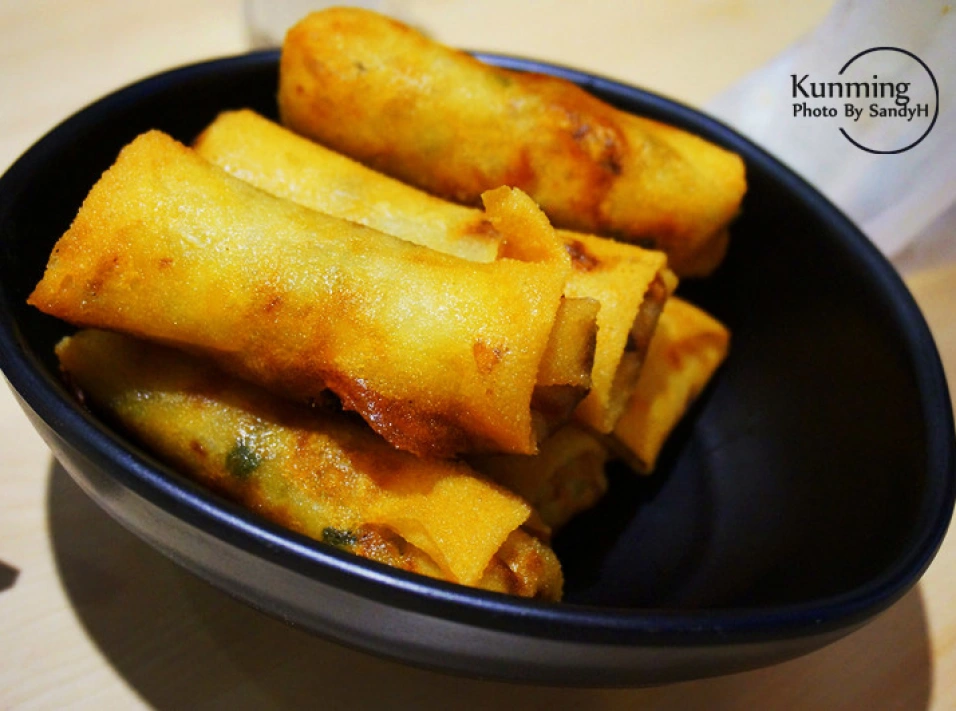
In the morning, we had breakfast at Qinghe Small Pot Rice Noodles (青禾小锅米线) near our hotel. The small portion was surprisingly generous, spicy enough to make me stick out my tongue, yet I couldn't stop eating. The spring rolls were also crispy and delicious. Next door, Yingfeng Grilled Rice Cakes (英凤烧饵块), filled with fried dough sticks and peanut butter, tasted like a hand roll. I was tempted to try the oddly named "fermented bean curd sauce," but the老板娘 (shop owner) kindly warned me: "Outsiders can't handle it." Professional integrity — I gave it up.
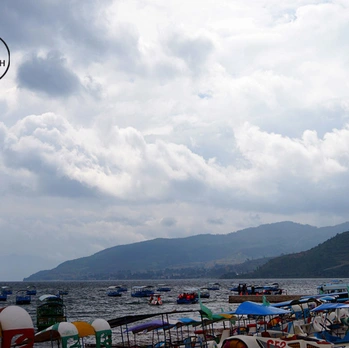
Taking a bus to Chengjiang and then a local bus, we arrived at Fuxian Lake's Luchong Scenic Area at 11 AM. The sky was gray, and the lake was rough with wind and waves. A group of young people rented a large boat, hoping to paddle out with their combined strength, but they only spun in circles. After several struggles, they reluctantly returned to shore. We had planned to rent a pedal boat, but the three of us just looked at each other, blinked, and moved on.
Bijia Mountain became our new target. This low hill offered a panoramic view of the entire lake, the fine white sand beach, and the drifting boats. On the mountain, the words "仙海蓬莱" (Immortal Sea Penglai) were inscribed. Even on an overcast day, the scenery's beauty was evident. From the highest point, the houses in the scenic area displayed harmonious colors, like a painting of a small town.
After descending, we tried Fuxian Lake's specialty — copper pot fish (铜锅鱼) and copper pot potato rice (铜锅洋芋焖饭). The fish was simply boiled in clear water and dipped in Guilin chili sauce. But as a family from Guangzhou with discerning tastes, we thought, "It's okay, just enough to fill our stomachs." However, the copper pot potato rice won me over completely. Eating potatoes every day in Yunnan felt absolutely wonderful — yes, I'm a potato addict.
Chapter Two: Impressions of Kunming — From Old Streets to the Stage
Back in Kunming's city center, we strolled through the old Jingxing Street. We saw water pipes, decent-quality Bodhi bracelets, and dried Sanqi (notoginseng). We also encountered the famous Jiahua Flower Cake (嘉华鲜花饼) and bought some fresh ones to try. Unfortunately, we were too absorbed in our shopping to take photos. Turning a corner, we spotted the former residence of Nie Er?
For dinner, we chose the old establishment Fuzhao Lou (福照楼) on Jingxing Street. We ordered steam pot chicken (汽锅鸡), tofu flower rice noodles (豆花米线), and flaming potato mash (火焰土豆泥). The result was disappointing — the steam pot chicken was nothing but diced chicken breast and bones, far inferior to the whole chicken steam pot at the food court near my office for 55 yuan. The flaming potato mash tasted good but was too salty. It seems "old establishment" doesn't always mean "good flavor."
In the evening, we went to the Art Theater to watch "Impressions of Yunnan" (《云南映象》). This touring show, which costs several hundred yuan in Guangzhou, was only 139 yuan on Taobao in Kunming (rising to 153 yuan after National Day). Watching this performance in Yunnan itself, experiencing the songs and dances of this multi-ethnic land, had a unique flavor.
The show was incredible! The solo dance by Xian Xiaotuan was breathtaking, and the Moonlight Dance and Peacock Dance were so beautiful they brought tears to my eyes. The ensemble dancers sang and laughed joyfully. The working people of Yunnan's ethnic minorities create beauty through their labor and daily life. I shamelessly snapped a few photos, only to be flashed by the staff's laser pointer. Sorry, but it was just too beautiful. Experiencing authentic ethnic minority songs and dances on our first day in Yunnan was the perfect start.
Chapter Three: Dongchuan Red Land — God's Spilled Palette
The town of Red Land (红土地镇) was formed in 2005 by merging Fajie Township and Xintian Township, still under Kunming's jurisdiction. But the four-and-a-half-hour bus ride made me want to complain: this jurisdiction is way too broad!
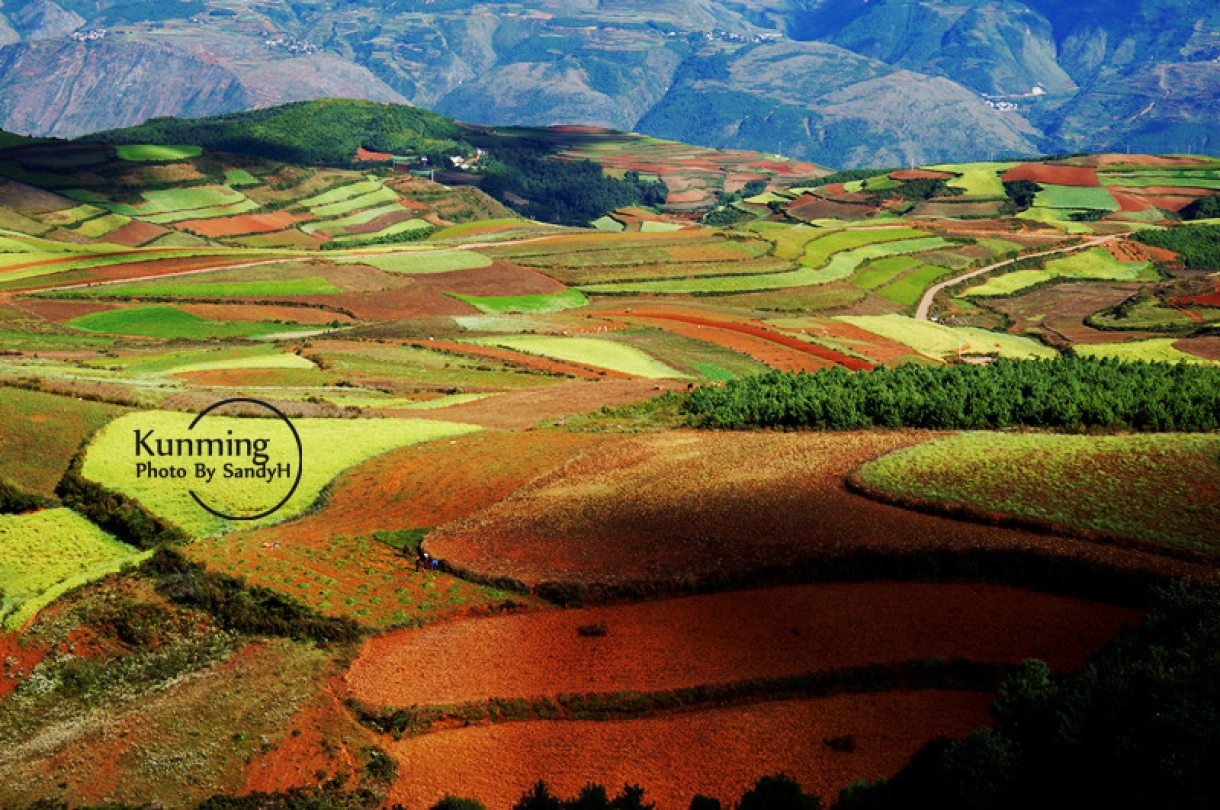
Because we lingered over our pork slice rice noodles (汆肉米线), we missed the 7:50 bus by two minutes and had to wait for the next one. Why is the red land so red? Because the iron-rich soil, under high temperatures and rainfall, oxidizes to reveal a crimson hue. The scenic spots include Seven-Color Slope, Splendid Garden, Sunset Gully, Snail Bay, Lepu Hollow, Pot Bottom Pond, and Damakan. For centuries, farmers have casually planted wheat, potatoes, rapeseed, buckwheat, and other crops on their own land, and this haphazard cultivation has created the colorful Dongchuan Red Land we see today.
After a bumpy four-and-a-half-hour ride, we arrived at Shanlihong Photography Inn (山里红摄影酒家). We had some noodles, took a nap, and snapped a few photos from the rooftop terrace — beautiful even from there.
At 3 PM, when the sunlight wasn't as harsh, we set out to see the red land. The owner first took us to Splendid Garden. The afternoon light bathed it, and the beauty of the red land burst forth the moment a cloud moved away. It was so bright we could barely keep our eyes open.
Next, we went to the Red Land Grand View. The scenery here truly lived up to its name. Although I'm an amateur among amateurs, the photos I took were still beautiful. Yet the beauty in the photos was only half of what my eyes saw. The owner said we were lucky with the weather: "The most beautiful red land wouldn't be more beautiful than today. Some people stay for days or even half a month and never get weather like this." We felt so grateful that the heavens were on our side.
When the light was obscured by clouds, we headed to Sunset Gully. Despite its name, it's not a place to watch the sunset. The sunlight was weaker than before, and the feeble light seemed unable to capture even half of Sunset Gully's beauty.
On the way back, we passed an ancient sacred tree that was hundreds or even thousands of years old. The owner explained that 2000 years ago, there were no other trees around this sacred tree — it stood alone on this land. Later, the government required returning farmland to forest, so the ancient sacred tree scenic area disappeared, and many smaller trees grew around it. Protecting the forest to prevent soil erosion is indeed necessary.
Snail Bay was a winding stretch of red land. As sunset approached, the red land took on a gentle, soft beauty. Under the mild sunlight, the farmer's casual cultivation created a palette with a leisurely charm.
Leaving Snail Bay, the sun was already sliding behind the western hills. The owner took us to Pot Bottom Pond's Tile House Ridge to watch the sunset. The interplay of clouds and the setting sun created beautiful twilight hues. As the sun gradually descended, it took the warmth with it, leaving my hands and feet freezing cold.
After the sun fully set, we prepared to return. But just as we started driving, we saw beautiful fire clouds! It was an unexpected delight. Unfortunately, it was too brief — by the time I pulled out my camera, the beauty was already fading. I only managed to snap a few hurried photos.
On the Red Land, with every extra ray of light or missing cloud, every moment is so different. I could only marvel at how much the heavens favored us, giving us such cooperative weather.
The next morning, we got up early to watch the sunrise. Damakan was already lined with people. I shamelessly squeezed into a spot between two people who had already claimed their positions. Only after standing there did I realize my neighbor was a true photography enthusiast — his equipment bag held two cameras, one on his tripod, one in his hand, one around his neck, one slung across his waist, and he occasionally pulled out his Note 3 to take photos. Seeing such an arsenal, I discreetly touched my slender little camera — I'm just an amateur shutterbug girl.
As soon as Dad saw the pale light in the eastern sky, he said with experienced certainty, "There won't be much to see today." Naturally, I didn't believe him. I stood shivering next to the expert, waiting. As Dad predicted, thick clouds completely obscured the sun. Unwilling to give up, I waited until 7:30 before retreating to the car, shivering.
As we left, the owner took us to Seven-Color Slope. He said confidently, "I feel I should take you, but once you're there, you'll probably come down quickly." Sure enough, we walked in, saw a patch — not impressive — kept walking, and hit a dead end. I dutifully snapped one photo and slunk back to the car. The owner looked smug, his face practically screaming, "I told you so."
Back at the inn, we quickly ate a steaming bowl of tomato and egg noodles, and my cold hands and feet warmed up rapidly. At 8:50, we boarded the bus back to Kunming, feeling reluctant to leave.
Many people might think of the Red Land: "Isn't it just a patch of red soil? It only has color when crops are planted — not worth seeing." But coming here, I experienced beauty I'd never seen before — the long-missed blue skies and white clouds, the brilliant colors under the sunlight, and my parents by my side. It couldn't have been better.
On the way back, I sat next to a middle-aged auntie from Chengdu. I'm 100% outgoing, and she was 120%. We chatted until our mouths went dry. Auntie was a photography travel enthusiast who had traveled around China and the world. In her youth, she had crossed Yunnan and Sichuan, gotten lost in the mountains, and was taken in by mountain villagers for an entire month, causing her family to think she had disappeared. She brazenly went to a TV station to work as a copywriter and lighting assistant. She used WeChat translation to chat with a Korean girl and convinced her to go to Shangri-La together.
"Auntie, you must be a Sagittarius!" "Yes, you guessed it right away." — Hello, fellow Sagittarius!
Auntie said, "People talk about travel romances, but to me, a romance is meeting every lovely person on the road and having the fortune to become friends."
Auntie, you are also my romance. Hope to meet again.
Chapter Four: Exploring Kunming Again — Scholarship and History by Green Lake
Back in Kunming's city center, we finally had time to explore the Green Lake area — Kunming's green heart. Surrounded by Yunnan University, Yunnan Normal University, and Yunnan University of Technology, it's a place of youthful energy and scholarly atmosphere.
Starting from Wenhua Lane, we passed the Yunnan Normal University Affiliated Primary School, which looked like you needed "money and status" to enter, and walked to the famous Mr. Slope (先生坡). I wondered if the scholars in their blue gowns and long robes walked here as quickly as I did, or if they still gracefully fanned themselves with inscribed folding fans as they strolled toward Green Lake. Did Li Gongpu, Wen Yiduo, Chen Yinke, Zhu Ziqing, and my favorite Zhongshu (Qian Zhongshu) discuss articles, debate current affairs, and care about the nation and its people on this very lane? This short, narrow alley, with its name "Mr. Slope," made me feel as if I had traveled back in time, following them like a little shadow, eavesdropping on their conversations.
Emerging from Mr. Slope, the lush, tranquil Green Lake came into view. Old men playing chess and cards in the park — such a simple, everyday scene — was exactly what made Green Lake the most beautiful and most Kunming-like sight.
It's said that every winter and spring, tens of thousands of Siberian black-headed gulls stop at Green Lake, earning the title of Kunming's "honorary citizens." Unfortunately, we weren't there at the right time. We could only stroll and look at the withering lotus leaves as we walked toward the Army Military Lecture Hall (陆军武讲堂) by the lake. This famous military academy was on par with the Whampoa Military Academy and the Baoding Army Officer School. The yellow building looked quite appealing — definitely a "military academy style" of architecture.
What? It's closed? Why are you closing so early? Oh no!
Disappointed, we could only cross Green Lake and head straight for Yunnan University.
After leaving Yunnan University, we made a special trip to the 1910 South Railway Station Restaurant (1910火车南站) for dinner. The decor was unique, and sitting by the train tracks while eating was fun. After my disappointing steam pot chicken at Fuzhao Lou, I couldn't resist ordering it again. Wow! This is what steam pot chicken should taste like! I finished half of a medium pot by myself! Highly recommended! Everything at this restaurant was delicious — mushroom cakes, golden strips with pea jelly (金条稀豆粉), and beef. This was the best meal we'd had in Yunnan so far.
After dinner, we walked and walked until we reached Kunming's tourist staple — the Golden Horse and Jade Rooster Archways (金马碧鸡坊). The lights were beautiful. Seeing children on the street holding roses, we immediately knew what they were up to! We cleverly dodged them. Sure enough, a passing couple was handed a rose, quoted at 10 yuan. Don't want it? No way — these kids are professionals. They'll kneel down on the spot. If you still refuse, the price goes up — 20 yuan, take it or leave it?! Then all the kids in the square swarm over and kneel together. At that point, it's not about 20 yuan anymore — there's still a 100-yuan bill in your wallet, buddy! Under such beautiful lights, we could only snap a couple of quick photos and flee before someone bowed to us — something we couldn't accept and couldn't afford.
We arrived at Kunming Railway Station and waited for the train to depart for the hometown of A Peng and Jinhua (the legendary lovers from the Bai ethnic group's story).
Chapter Five: Dali — Wind, Flowers, Snow, and Moon in the Morning Light
The overnight train arrived in Dali. When we stepped out of Dali Station, the sky wasn't yet light. I brought along a girl from Shenzhen who was traveling solo and had been in the bunk opposite mine, and we took the bus together to the ancient town. In the morning light, the golden peaks of Cangshan Mountain looked comfortable and relaxed. After parting ways with the girl at the guesthouse, we began to experience the beauty of Dali's morning.
Dali in the early morning was still asleep — Foreigner Street without passersby, Fuxing Road without tour groups, shops not yet open. Only clusters of green weeping willows swayed in the breeze.
We reached Wuhua Tower, the city gate that appears in countless movies and TV shows. A national guesthouse? It seemed too small for that. The characters "大理" (Dali) on the tower were written by Guo Moruo. I tried to secretly photograph a Bai ethnic girl but failed — ha!
We walked through the ancient town's market, experiencing the most authentic daily life of Dali's Bai people. After looking at various mushrooms, vegetables, and fish whose names I couldn't remember even after asking, we bought some grapes and pomegranates. The large temperature difference between day and night here makes the fruit very sweet.
At the intersection of Fuxing Road and Renmin Road, we found "Zhen Chun" (真淳) soy milk and fried dough sticks — all made with real ingredients! The soy milk had a strong soybean flavor, and when I sucked it up with a straw, I could still bite into sugar — a bit amusing. The fried dough sticks were freshly made, with an excellent texture. I hadn't had such substantial fried dough sticks in Guangzhou for a long time.
Since we planned to cycle to Caicun Pier and Longkan Pier in the afternoon, we asked around about bicycle rentals. On Renmin Road, there was a shop with a sign in the alley entrance saying "Bicycles for Rent." At the end of the alley were several bikes, and further inside, a residential courtyard had many more bikes for rent. The owners of this shop were incredibly kind! Although I didn't take photos, I'll explain later how great this rental shop was. Finding this place was our blessing.
Following Renmin Road toward Erhai Gate, we saw a sign at a small alley entrance for "Dali Catholic Church" and decided to check it out. This Catholic church was surrounded by a pastoral little courtyard, blending seamlessly with the Bai ethnic architecture of the ancient town — a peaceful haven. This nearly century-old church featured layered eaves, flying rafters, carved beams, painted pillars, and exquisite, colorful decorations. A handsome Tibetan guy from Diqing who loved Dali told us that the church's façade even had dragon-head flying eaves. A Catholic church with a dragon raising its head and swishing its tail — simply astonishing. Sitting in this small alley, the church was filled with a starry sky, incredibly beautiful.
On the arborvitae leaves next to the screen wall, I even saw cypress seeds. Turning around, I noticed a large pumpkin growing on the ground. The church's leisurely, carefree atmosphere was enviable.
Bougainvillea, also called triangle plum, was everywhere in the ancient town.
We walked all the way to Erhai Gate, came back via Yuer Road, passed Puxian Temple and took a quick look inside. Not understanding its mysteries, we were out in less than five minutes. We had lunch at "Kuige Halal Restaurant" (魁阁清真馆), recommended by Da Jiao. The braised beef and cold beef were incredibly delicious! Highly recommended again! I hadn't tasted beef with such a strong beef flavor in a long time.
After lunch, full and round, we returned to the guesthouse for a nap, waiting for the afternoon UV rays to weaken before cycling.
At around 3 PM, we went to rent bicycles at the small alley. In the morning, only the shop owner's wife was there. In the afternoon, the chubby, adorable owner was also present. He gave us a map and explained in detail how to cycle from Caicun to Longkan. After thanking him profusely, we set off.
Cycling to Caicun Pier, we already caught a glimpse of Erhai Lake's beauty. Since Caicun was a large cruise ship pier charging 180 yuan per person — too expensive — we huffed and puffed toward Longkan instead.
As we rode, something felt wrong. Wasn't this supposed to be Erhai Lake cycling? Shouldn't we be riding alongside the open, tranquil, blue lake? Why didn't it feel like we were near the water? Isn't this called "West Ring Lake Road"?
The more we rode, the more不对劲 (something felt off). We made a sharp left turn into Xiaoyizhuang. The entire village was under construction — houses and guesthouses being built to contribute to Dali's future tourism. After asking a few villagers, we finally reached the shore of Erhai Lake — ta-da! Blue sky, white clouds, silver Cangshan, and jade Erhai — a vast expanse of azure before our eyes.
Villagers invited us to take a boat ride on their fishing boats to see Erhai Lake. After some bargaining, we happily boarded. Although we had planned to take a large cruise ship tomorrow, travel is always full of changes. Besides, this was much cheaper than the big boat! Small-minded thinking, I know!
There were even little ducks on Erhai Lake, and we could see the Three Pagodas looking like toothpicks in the distance — quite amusing.
After getting back on shore, we cycled back to the ancient town and had dinner at the old establishment Yiheng Restaurant (益恒饭店) on Yuer Road. Sigh, I never learn. After being burned by one old establishment, I had to try another. The old lady's potatoes (老奶洋芋) were cold, the fragrant herb ribs were lukewarm, and the pickled plum pork belly (雕梅扣肉) was slightly better, edible with rice. Only the clay pot fish (砂锅鱼) at the end was satisfying — a pot with small white crucian carp, mushrooms, and vegetables, steaming hot. Finally, I felt like I had something warm in my stomach. Sigh, old establishments, old establishments — I'll never go to another one again. Once they become famous, they start producing mediocre food and treating customers poorly. Utterly disappointing.
After dinner, we returned the bikes, and the owner chatted with us. He said, "You should spend more time in Dali — Xizhou, Zhoucheng, Butterfly Spring (from our generation's 'Five Golden Flowers'), Shuanglang, Wase, Xiaguan. Since you're filial enough to bring your parents on a trip, you should make it a good one." He not only recommended routes but also taught us how to eat wild mushrooms, recognize genuine landscape marble, and even showed us his personal collection. He mentioned the word "filial piety" (孝顺) at least five times that evening. Perhaps it's rare for grown children to bring their parents on vacation. Meeting this local family in the alley was such a stroke of luck. He was delighted to see us, and we chatted for over an hour.
Shop owner and his wife, you are also my romance. Hope to meet again.
Oh, by the way, on the way back to the guesthouse, I bought a cup of grape and pomegranate juice at "July 8th Shop" (七月八号) on Renmin Road — freshly squeezed juice without added water, so delicious! Highly recommended too!
Chapter Six: Xizhou — Bai Ethnic Charm and Unexpected Choices
In my 40-page travel guide, the second day in Dali had two options:
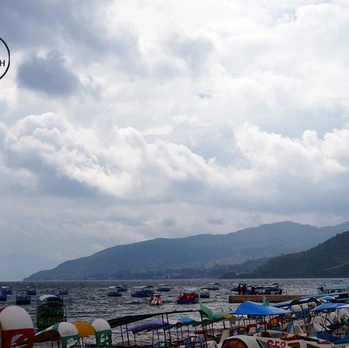
Plan A: Take the 100-yuan large cruise ship on Erhai Lake, about 4 hours, with a stop at Nanzhao Style Island. Plan B: Take a bus to Xizhou and Shuanglang.
Since we had already taken a small boat on Erhai Lake yesterday, we ultimately chose... (to be continued)
Conclusion: The Meaning of Travel
Looking back on these seven days, from the wind and waves of Fuxian Lake to the vibrant colors of the Red Land, from Dali's morning light to Shangri-La's grandeur, every moment is worth treasuring. But the most precious thing isn't the scenery itself — it's the people who accompanied me to see it.
My parents' silver wedding journey was not just an exploration of Yunnan, but a rediscovery of family bonds. On the Red Land, our eyes were blinded by the sun, yet we laughed like children. By Erhai Lake, we cycled until we were out of breath, but cheered at the sight of that vast blue expanse. In Shangri-La, we shivered in the cold, but waited patiently for a sunrise.
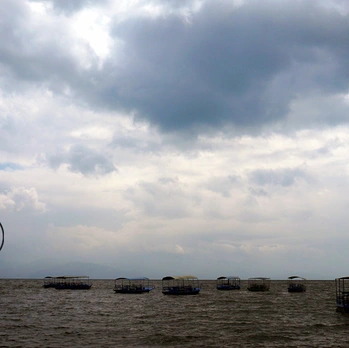
The meaning of travel isn't about how far you go or how many sights you see. It's about who you're with and what memories you create together. This time, I brought my parents, measured Yunnan with our footsteps, and recorded warmth with my heart. These memories will be our shared treasure forever.
Practical Tips: 1. Transportation: Yunnan's attractions are scattered, so plan your transportation in advance. Overnight trains are a cost-effective and time-saving choice. 2. Accommodation: The Shanlihong Photography Inn on the Red Land, guesthouses in Dali, and the Moonlight City Hotel in Shangri-La are all good value options. 3. Food: For steam pot chicken, definitely go to the 1910 South Railway Station Restaurant, not Fuzhao Lou. The beef at Kuige Halal Restaurant is worth trying. The fresh juice at July 8th Shop is highly recommended. 4. Tickets: For "Impressions of Yunnan," buy tickets on Taobao in advance — much cheaper than at the door. 5. Season: Golden autumn (October) is the most beautiful season in Yunnan, but the temperature difference between day and night is significant, so bring enough clothes.
Cost Overview (per person): - Transportation: Approximately 1,500 yuan (including flights, train tickets, buses) - Accommodation: Approximately 800 yuan - Meals: Approximately 600 yuan - Tickets and performances: Approximately 500 yuan - Total: Approximately 3,400 yuan
May every child, while their parents are still young, take them to see this world. Because some sights, once missed, are gone forever. And some memories, once made, last a lifetime.
You should also read:

Into the Hidden Valley: A Solo Journey Through the Mysterious Dulong River
Into the Hidden Valley: A Solo Journey Through the Mysterious Dulong River Deep in the northwestern corner of Yunnan Province, tucked away from the modern world, lies a place that feels like a secret whispered among mountains. The Dulong River Valley is not just a…
Continue reading...
God’s Abandoned Palette: A Self-Drive Journey Through Yunnan’s Dongchuan Red Land
God’s Abandoned Palette: A Self-Drive Journey Through Yunnan’s Dongchuan Red Land Travel has never been about reaching some distant geographic coordinate. It’s about encountering, along the way, the version of yourself buried beneath the rubble of daily routine. During this May Day holiday, I finally…
Continue reading...
Cloud Travelogue · Dali of Wind, Flowers, Snow, and Moon: A Three-Day, Two-Night Journey of a Free Spirit
Cloud Travelogue · Dali of Wind, Flowers, Snow, and Moon: A Three-Day, Two-Night Journey of a Free Spirit I am a cultured female foodie with a touch of rogue charm. I slung on my backpack, took my lover's hand, and set off on a spontaneous…
Continue reading...