The Golden Land of Myanmar: Searching for a Lost Buddhist Kingdom in the Cracks of Time
The Golden Land of Myanmar: Searching for a Lost Buddhist Kingdom in the Cracks of Time
Prologue: A Plane Ticket, Traveling Through Thirty Years
Sometimes, the most captivating thing about travel isn't how far you've gone, but how you feel like you've pressed a button on a time machine.
When I boarded the flight from Bangkok to Yangon, I had no idea that this journey would take me into a corner forgotten by time. Myanmar—a country separated from Thailand by nothing more than a border—felt like a world frozen mid-play, everything suspended in some twilight hour of the 1980s.
There were no skyscrapers with glass facades reflecting blinding sunlight, no hurried crowds in subway stations, and even the streetlights seemed half-hearted. But it was precisely this "backwardness" that preserved an enthralling rawness across the land.
Chapter One: The Parable of the Dragon, and a Destiny Breaking Free
In Myanmar, there's an ancient legend about a dragon.

Every year, the village would sacrifice a young maiden to the dragon. Year after year, young heroes would cross mountains and valleys to slay the beast, but none ever returned. Until one day, another hero set out. He arrived at the dragon's lair and found it piled high with gold and jewels. He pierced the dragon with his sword, then sat upon its corpse, mesmerized by the glittering treasures. Slowly, scales began to grow on his skin, then a tail, then horns—he had become the new dragon.
This legend was once the cruelest metaphor for Myanmar's history. The seduction of power, the corruption of rebels, the cyclical tragedy—all played out repeatedly on this land. But today, under the guidance of Aung San Suu Kyi, the people of Myanmar began to raise their voices. They no longer feared. They no longer remained silent. History could be recorded openly; controversies could be debated publicly.
The tide of change is surging. What will the future hold? No one can say for sure. But at least this era is trying to step out of that fated parable.
Chapter Two: Impressions of Myanmar—Between Diamond and Peacock
In my imagination, Myanmar was a land both mysterious and turbulent.
She was beautiful—deep in the dense forests lay the world's finest jade mines, golden pagodas shimmered in the sunlight, and monks' robes fluttered in the wind. She was also unsettling—war, drugs, warlord fiefdoms—all cast shadows over the land.
But on this soil, people wore longyi (traditional Burmese sarongs) and flip-flops, with smiles on their faces. They smiled for strangers they'd never met, and they smiled for the gods and Buddhas in their hearts. No matter how hard life was, they never gave up hope. Behind those humble smiles lay devotion to the Buddha and a love for life itself.
On a map, Myanmar stands upright like a dazzling diamond, and sideways like a peacock fanning its tail. Apart from a handful of major cities, most of the country is wild, rural grassland. But in stark contrast stand those glittering golden pagodas, built from the selfless donations of the faithful.
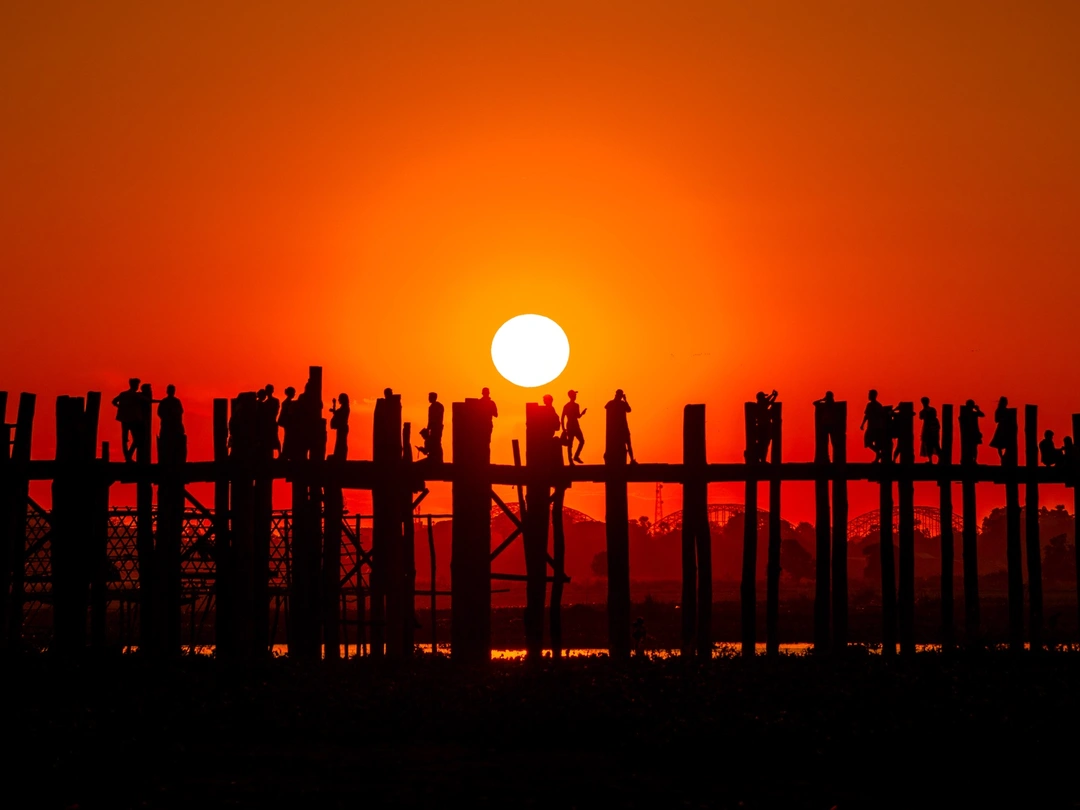
The peace of Yangon, the thousands of pagodas in Bagan, the sunset over U Bein Bridge in Mandalay—every city had its own distinct character. But for me, what moved me most were not these landmark buildings, but the people who still smiled kindly despite their hardships. The pure simplicity in them fascinated me.
Chapter Three: Flying to Yangon—A Surreal Night Flight
The plane took off from Bangkok, heading toward Yangon.
As the aircraft began its descent, lightning flashed outside the window. I was on an ATR72 turboprop—a plane the Burmese jokingly called the "widow-maker." Since 1988, it had been involved in fifteen accidents, and even Russia had banned it outright. I watched the wing being battered by the wind, nearly twisting out of shape, and listened to thunderclaps that seemed to explode right next to my ears. I silently regretted not buying travel insurance.
Just as my mind was spiraling, Yangon appeared in the distance. It looked like a dark stain stretching toward the midnight sea. Lazy gray seawater rose to the horizon, lightning split the sky, illuminating the pitch-black city. Slowly, lights began to flicker, weaving into threads, spreading like a spiderweb toward the city center.
Then I saw the Shwedagon Pagoda.
It rose like a golden nipple from the earth, impossible to miss in the pitch-black night. It was the only landmark visible to foreign passengers from the air.
When the plane landed in Yangon, it was nearly midnight. Peering out the window, I could only see sparse, scattered lights—a stark contrast to Bangkok's blazing nightscape. The rain gradually stopped, and the faint lights feebly lifted Myanmar's mysterious veil. What remained felt like an abandoned amusement park at midnight, a handful of insignificant lights outlining an awe-inspiring image.
Stepping out of the airport, I was greeted by a group of haggling taxi drivers. Their greeting had shifted from "Sawadee ka" to "Mingalaba." The lead driver wore a checked shirt and a blue longyi, pot-bellied, with typical South Asian features. God had given the Burmese skin like fine, bronze silk—but when they opened their mouths, revealing blood-red stains from betel nut chewing, the beauty shattered instantly.
After negotiating a price, I was led to a car that looked like "a body covered in unhealed wounds." The moment I sat down, my surreal journey officially began.
I slammed the door hard, making sure it wouldn't fly open halfway. I didn't expect the seatbelt or air conditioning to work; I just prayed the brakes wouldn't fail. As the car pulled onto the road, I realized a bewildering fact: they drove on the right, but the steering wheel was also on the right? This was too surreal!
Sitting on the seat, I could feel the springs vibrating directly, as if something alive was about to burst out from beneath me. The road was so bumpy I couldn't take a single clear photo. The whole ride made me nauseous. I knew this trip wasn't going to be a walk in the park—it was going to be a trial by fire.
During the long drive, aside from small talk, the driver asked me many historical questions. Luckily, I had done my homework—I explained the difference between "Burma" and "Myanmar," and between "Rangoon" and "Yangon."
A quick note for readers: although both are called "Myanmar" in Chinese, whether you say "Burma" or "Myanmar" in English carries very different political weight. For some, the country is called Myanmar; for others, it's Burma. But for everyone, it was once synonymous with violence, oppression, and humiliation. When the British colonized Myanmar, they changed the name from Myanmar to Burma, turning it into a province of India. After independence, the ruling military junta changed the name back to Myanmar, and even moved the capital from Rangoon to Yangon (Naypyidaw was later designated as the new capital).
I joked that perhaps Myanmar was the only country to move its capital because Yangon couldn't provide 24-hour electricity. The driver burst out laughing.
In the midst of our banter, I arrived at the hotel. After checking in, exhausted, I fell straight asleep.
Chapter Four: Yangon Morning—An Elegy for Colonial Architecture
I woke up to the sound of chanting.
Pulling open the floor-to-ceiling curtains, I found a large balcony outside. Standing there, I could overlook the entire street. I was staying on Yangon's 17th Street—where the streets still followed British naming conventions: north-south were "streets," east-west were "roads."
The whole neighborhood was crammed with crumbling colonial-era buildings, washed by rain into decay. The kind of old that carried an unmistakable atmosphere. The entire street was tangled in spiderwebs of electrical wires. Looking closely at the details—window sills, pillars, the sculpted patterns on balconies—you could feel the care the British had poured into this city.
Yangon must be the Southeast Asian city with the most surviving colonial architecture. Though they were now stained with mildew, like an out-of-fashion coat, they at least showed you that it had once been a very expensive European coat.
In the early morning streets, groups of monks were everywhere. They wore robes, one shoulder bare, ranging from the elderly to young children. In Myanmar, every man must spend some period of his life as a monk. Their faces held the compassionate smile of the Buddha, representing the dignity of this "Buddhist nation."
Driven by their faith, local Buddhists spared no effort in building temples and pagodas. These golden, glittering stupas became Myanmar's landmarks, and also created the "Land of Pagodas" that travelers worldwide dream of visiting.
Chapter Five: Wandering Yangon—Between East and West
Though Yangon was in a temporary decline, it still carried an imperial air.
The city's layout was a crisscross of straight lines, with wide, unobstructed avenues. Many buildings drew inspiration from Greek architecture, solid and sturdy. Every time I took a taxi through Yangon's commercial district, I often felt like I was strolling through Jack the Ripper's old London—until a bump jolted me back to reality.
Driving along the riverside, the architectural style shifted to that of London's customs house. Inside these grand buildings, a religious atmosphere lingered in the dim light of dark wood and faintly gleaming brass. Crossing the threshold, I unconsciously fell silent. The exteriors and bearing of many buildings had no false comfort, no surrender to the climate's erosion—this was the Victorian colonists' response to Yangon's ethereal glory.
Now, these massive pillars still stood with tattered dignity. At their bases, stray dogs scavenged and ragged people huddled in chaotic heaps. Over the years, the main thoroughfares, despite their purely English names, had long been occupied by mottled stalls and shacks. In these European arteries flowed pure Eastern blood. The port area was an Indian quarter; the Chinese had moved their temples and restaurants westward; and the Burmese themselves seemed content to huddle in the city's outskirts.

The government had yet to take measures to control the rampant squalor. Remote alleys piled high with stinking garbage, and before dogs and crows could finish eating the old, new trash appeared.
But the ordinary people of Myanmar lived happy, dream-filled lives. They appeared spotless, calm, and serene in the sunlight. The Burmese must be one of the most graceful peoples in the world—even when ragged and bruised, they showed no sign of misery or despair.
Buddhism promotes a positive and tangible benefit: accumulated merit must be obtained through acts of charity, which build karma for the next life. Unfortunately, this method of gaining merit seemed less effective when facing "less-than-perfect" foreigners—especially Indian immigrants.
I had mentally prepared myself: this was less an adventure and more a pilgrimage. Transportation was slow and crowded—buses without doors wobbled along, secondhand cars scrapped from Japan and South Korea filled the streets, antique, gasoline-fumed boats plied the river, and there were pitifully few tuk-tuks and motorcycles weaving through the alleys.
The journey was full of hardships, but always fascinating. Despite countless trivial miseries, when I looked back, only happiness settled at the bottom of my heart. This was the Myanmar journey I had imagined and prepared for.
Chapter Six: Faces and Faith—Thanaka, Cheroots, and Betel Nut
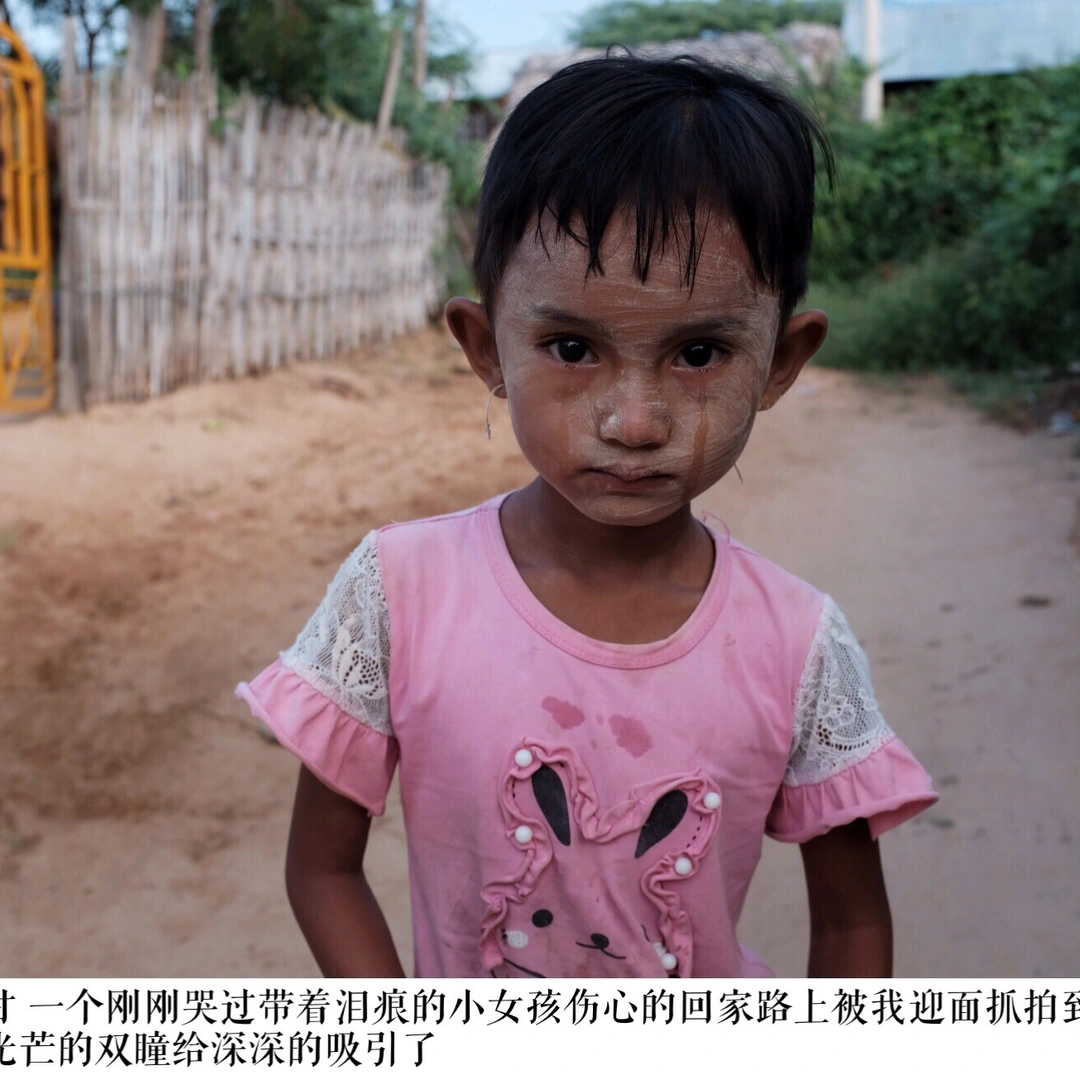
On the faces of young girls and children was a white paste ground from bark—they called it "thanaka." Their entire faces looked like flawless masks. Every adult had a massive square-shaped cheroot (Burmese cigar) dangling from their lips, or was chewing betel nut, spitting red-stained saliva.
The Burmese were famously kind to strangers. They believed that if a foreigner, as a believer, hadn't spent a symbolic period in a monastery, they absolutely didn't qualify as human. Of course, that was the old standard. In modern times, the Burmese held a secret pity for foreigners—because a foreigner's current incarnation wasn't perfect; they probably hadn't done many good deeds in a past life, which was why they hadn't been reborn as a cockroach or rat. To achieve a perfect personality in this life, one needed to accept nirvana and attain ultimate enlightenment—perhaps only in the next life.
When I was in Israel, I talked with some Christians. They believed that without faith, one would eventually face divine punishment. Compared to that, Buddhism's approach was less self-righteous, more humble and restrained. As Darwin said, "All things in the world can approach perfection through evolution; humans, as rulers, may have already transcended past lives." Clearly, the Burmese had the kindness to lift us from primordial biological slime into humanity.
During my days in Myanmar, the English words I heard most were "never mind" and "thank you." They used these two phrases constantly. Living in such poverty and backwardness, "never mind" was perhaps a compromise, a resignation. The most awkward thing was that every time I said "thank you" to someone who helped me, their response was also "thank you." At first, I was puzzled, but later, when I was about to leave, I understood: I spent in one day what they earned in half a month—perhaps that was the greatest help I could give them.
Chapter Seven: Along the Yangon River—A Slow-Motion Portrait of Life
Since my accommodation was near the Yangon River, I got up early every morning and walked along the riverbank before returning to the hotel for breakfast.
The Yangon River dock left me with the impression that everything looked more inspiring there. The riverbank was embedded with abandoned sampans, scattered ropes, unrecognizable sails, and corroded bow decorations patched with repairs—everything bore the marks of time. People moved like分工明确的蚂蚁 (well-organized ants), loading and unloading cargo in the most primitive, methodical way.
On the riverbank, stray dogs had minor skirmishes from time to time. A few scrapped Japanese taxis were parked by the river, and groups of taxi drivers waited for customers in the shade. At that moment, the drivers were fast asleep. From the branches above their heads came a soft, melodious song, and somewhere, someone was intermittently beating a gong.
The scene felt like a Sunday afternoon where time itself was fading away. The beautiful sound of a piano tinkled in the English countryside, and the air was thick with lazy languor. At that moment, it was perfect for waiting for a boat to sail away—to the increasingly dilapidated southern port of DALA.
Dala is south of Yangon, and because it's not well-known, very few tourists take the ferry there. On the boat, I met Mack from Atlanta, also a street photography enthusiast. We traveled together. White people were exceptionally popular there, which gave Mack a headache. Every time he raised his camera, he was greeted by peace signs.
On the road, a peculiar piece of music caught my attention. I walked over and found a particularly exquisite little courtyard. An older man was sitting in a recliner, beckoning me to come and sit down. On the table was a bowl that looked like it contained something poisonous—a black, gelatinous substance split into clumps on the surface. The man grabbed a cup, expertly wiped its rim with his finger, dipped it into the bowl, then removed the gelatinous stuff stuck to the outside. Before he raised the cup to his lips, out of hospitality, he raised it in my direction.
I think he may have misunderstood my smile—he thought I wanted a taste. He pressed it into my mouth and made me drink. I had no choice. Closing my eyes, I used my teeth to block those things that looked like black frog eggs, and gulped down the sweet, iron-tasting liquid.
Chapter Eight: The Festival of Lights and the Shwedagon Pagoda—The Radiance of Faith
Yangon was celebrating its grand annual Festival of Lights.
According to Buddhist legend, the Buddha Sakyamuni once preached to the gods from the fourth full moon to the seventh full moon of the Burmese calendar. During this period, all monks were to remain in retreat, and believers were to avoid moving or marrying. On the seventh full moon, Sakyamuni descended to the human world surrounded by the gods, and the Burmese people lit all kinds of colorful lanterns and candles to welcome him. This day also marked the end of the monks' retreat.
Yangon's Shwedagon Pagoda is the soul and heart of the city, the primary pilgrimage destination for devotees—equivalent to the Kaaba in Mecca for Islam. In short, the Shwedagon Pagoda is a great and magnificent monument. In today's desert of cheap, fake modernization, here was a small oasis where the astonishing charm of the ancient East remained unchanged. Thinking of this was a comfort in itself.
The sacred and inviolable特殊性 (special nature) of the Shwedagon Pagoda lies in this: it not only enshrines the relics of Gautama Buddha but also treasures the relics of three Buddhas who preceded him. It is the only pagoda recognized to house the relics of four Buddhas. Among the relics stored here are eight strands of the Buddha's hair—four of which are authentic (given during his lifetime), and four are replicas from a journey to India.
According to the official travel guide: when the casket containing the hair relics was opened, the strands flew high into the air, as high as seven palm trees. They emitted a multicolored radiance, a holy light that made the mute speak, the deaf hear, and the lame walk. Then, pearls and precious gems rained down like a storm, covering the entire ground up to knee-deep.
The jewels buried with the Buddha's relics were so priceless that, centuries later, word reached the ears of a Chinese emperor. He created a magical humanoid figure and sent it to rob the sacred site. According to the chronicles, this creation was so dazzled by the pagoda's appearance that it hesitated. In its confusion, the guardian spirit of the Shwedagon attacked it and ultimately shattered it to pieces.
The kings of Myanmar were accustomed to decorating this pagoda with extravagant treasures—countless diamonds and jewels adorned the spire, or at least they regilded it with an equal weight of gold. In other Eastern countries, kings hid their gold and silver treasures in vaults. But in this country, gold and jewels were displayed in broad daylight for all to see—shockingly ostentatious.
There are three greatest bells in the world, and two of them were cast here. Both were seized by foreigners—one by the Portuguese, the other by the British. But both bells caused the ships carrying them away to capsize in the water. Hearing this from my Burmese guide, my heart grew heavy.
Chapter Nine: Yangon Central Railway Station—A Train to the Past
Yangon's railway station was built in 1887. As a landmark building, it was a major target for Japanese forces during World War II when they attacked the British garrison in Burma. This station, which had witnessed so much history, remained Yangon's transportation hub to this day.
All of Myanmar's trains were secondhand ones scrapped from Japan—mid-century relics that should have been decommissioned, some still bearing "JR" logos with their names and styles unchanged. The calm passengers on the platform looked like they were attending a premiere no one was excited about. They only lined up to board when the train was about to depart. Then, a man presumed to be the station master would pull a handbell from under his arm and start ringing it, handing a leather-like flag to someone on the train.
At the back of every train sat the train master and three police officers playing poker. Their day's work was to pass the time on the swaying train. The train tilted forward slightly, and all the passengers stumbled. Only the experienced fruit vendors kept their goods on the floor. Passengers who had already found their seats bumped into each other, then smiled as they straightened up, looking dazed, swaying along with the train's motion.
The clanging of steel wheels quickly drowned out the chatter and laughter on board. I moved through the train like a foraging mouse, from front to back, looking for subjects to photograph. Outside the window, dark clouds gathered. The people on the platform, as the train started moving, staggered and disappeared from the window frame. Then, almost in the blink of an eye, bungalows and African-style thatched huts came into view. These houses, along with some ruined pagodas, massive crumbling walls, moats blocked with rubble, and headless Buddha statues, seemed to intertwine like demons and monsters from legends. Everything was suffocated by cacti, shrubs, and flowering weeds. Here, thousands of people toiled hard, but in vain.
I was planning to get off at the next stop and rent a car back to downtown Yangon. Just then, a nimble, bespectacled young Burmese man jumped onto the tracks and hopped aboard before the train had even fully stopped. As he passed by me, he gave a slight smile and found a seat. I turned and looked back inside the carriage—many passengers were getting off. So I decided to ride this train from start to finish.
The train swayed away from the city. The scenery outside the window had grown tiresome, but the world inside the carriage was slowly coming to life. The entire three-and-a-half-hour journey cost only 400 kyat—though no one checked tickets, it showed me a breathing, living Myanmar.
My days in Yangon flew by. Writing this now, I still miss the city—at least the cars here never used their high beams, even on poorly lit roads.
Chapter Ten: Bagan—Wherever You Point, There Is a Pagoda
"If you ask the number of pagodas in Bagan, it's four, four, four, six, seven, three, three." — This is a Burmese saying. The number is clearly an artistic exaggeration. But according to the latest survey by the Myanmar Department of Archaeology, there are still 2,217 large and small pagodas and temples in the Bagan area. Hence, it's called the "Land of a Thousand Pagodas." As the saying goes, "In Bagan, wherever you point, there is a pagoda"—and it's true.
Marco Polo may never have actually visited Bagan, but in his travelogue published in 1298, he described it as one of the most exquisite sights in the world. Even today, what we see may only be a fading afterglow of its former glory, but the Venetian traveler's praise still holds true. You can still compare the words written a hundred years ago with what you see today, and discover—a pure land that hasn't changed much.
In Bagan, it's hard not to be awestruck. It's like climbing the Great Wall—in such an ancient era, what kind of vision and determination did it take to achieve such greatness? Yet all greatness seems fragile. A gentle breeze could shatter it in an instant.

In Myanmar, I've already sighed this sentiment more than once: I missed it. I came too late. Perhaps I should feel fortunate for Myanmar, and sorry for myself. Fortunate that Myanmar is moving toward what might be a better future; sorry that the simple, sincere Myanmar is saying goodbye to us, fading into the mist of time. After the earthquake, all the pagodas where you could watch the beautiful sunrise were closed to climbing.
In Yangon, I had complained that the roads weren't as wide or smooth as those in our countryside, and that the public facilities were terrifyingly retro. When I arrived in Bagan, I realized how ungrateful I had been in Yangon—here, I constantly felt sand on my tongue. The dusty, unpaved roads made riding my e-bike a miserable experience. Following behind large vehicles and eating their dust was nothing compared to skidding on the rural, cactus-lined dirt roads—it drove me crazy.
The sky in Bagan was incredibly blue, and the sun beat down on me relentlessly. I had gotten so tan that my skin was darker than some Asian tourists. And I had also gotten into the habit of traveling in a longyi and sandals. In fact, sandals were absolutely crucial—because whenever you entered any site, you always had to take off your shoes.
If there were other tourists around, wearing a longyi might have seemed like a ridiculous, affected pose—definitely hard to accept. But in this hot, dusty place, the longyi's advantage of keeping you cool suddenly made sense. I finally understood why women liked wearing skirts—it was absolutely the best travel companion. In Bagan, I wore a longyi almost every day, though I was always worried that my phone, tucked into the waistband, would fall out.
Chapter Eleven: Old Bagan—An Ocean of Pagodas
I rode my e-bike from Nyaung-U, eating dust kicked up by passing cars the whole way, enduring a miserable journey until I finally reached Old Bagan.
In an instant, gleaming conical structures appeared before me. This increasingly barren land, having endured the ravages of dozens of kings and over a hundred generations of human descendants, was now weak and utterly subdued.
Thousands of pagodas, ghostly and dilapidated, surrounded me. Beyond building pagodas, the ancient Burmese seemed to create their own greatness through this act. Just as in biblical times, battles were sometimes decided by single combat between the best warriors of each side. In Burmese history, there were many examples where conflicts between two sides were resolved without fighting—whichever side finished building a pagoda first was declared the winner.
My Burmese guide enthusiastically recounted some of the blatant, childish tricks used by winners—fake bricks made from canvas. And yet...
You should also read:
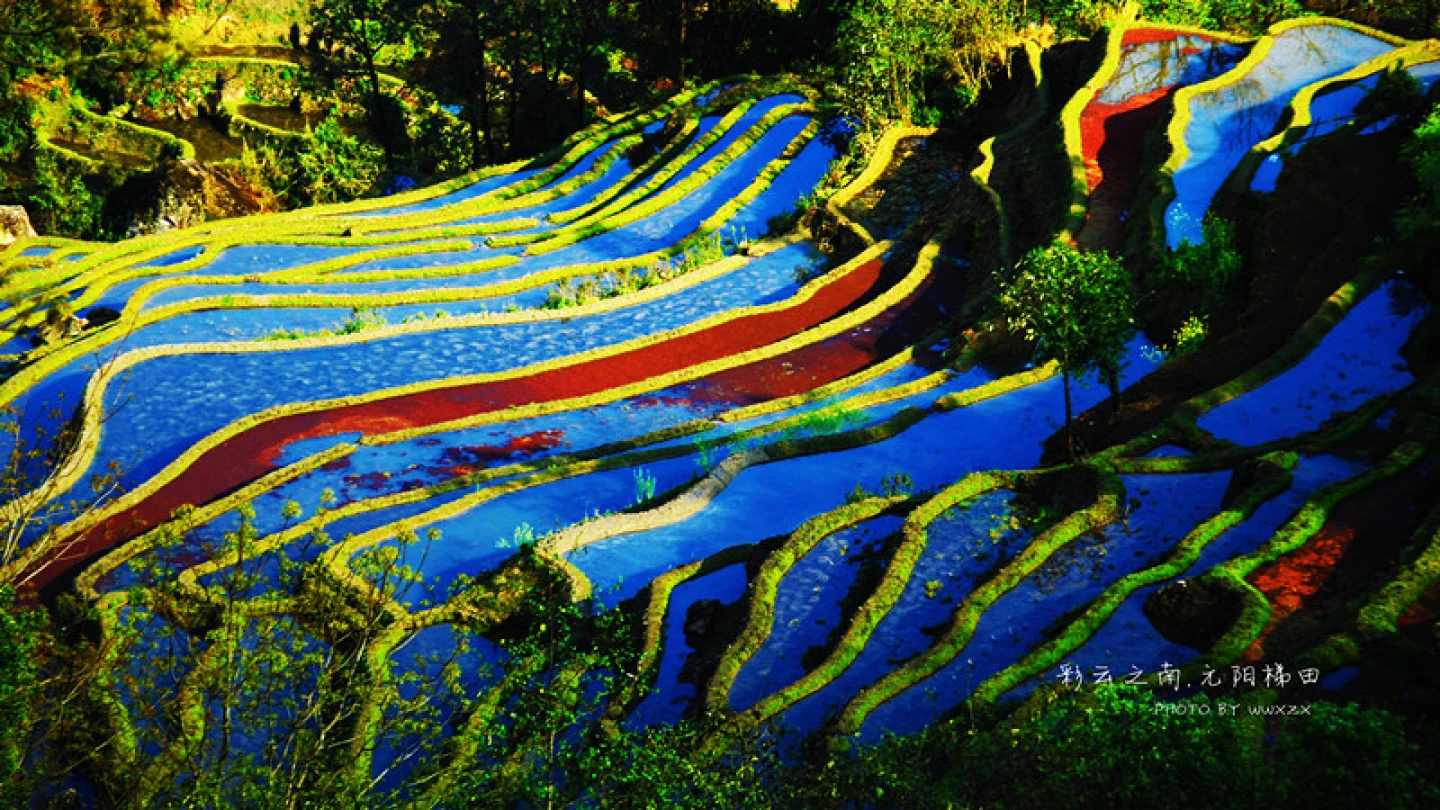
The Grand Beauty of Yuanyang: A Land Carved by Cultivation
The Grand Beauty of Yuanyang: A Land Carved by Cultivation A Belated Journey Chengdu has finally cleared up. After several consecutive days of rain, the sunset gently pours through the window. I sit in front of my computer, staring blankly at over three thousand photos.
Continue reading...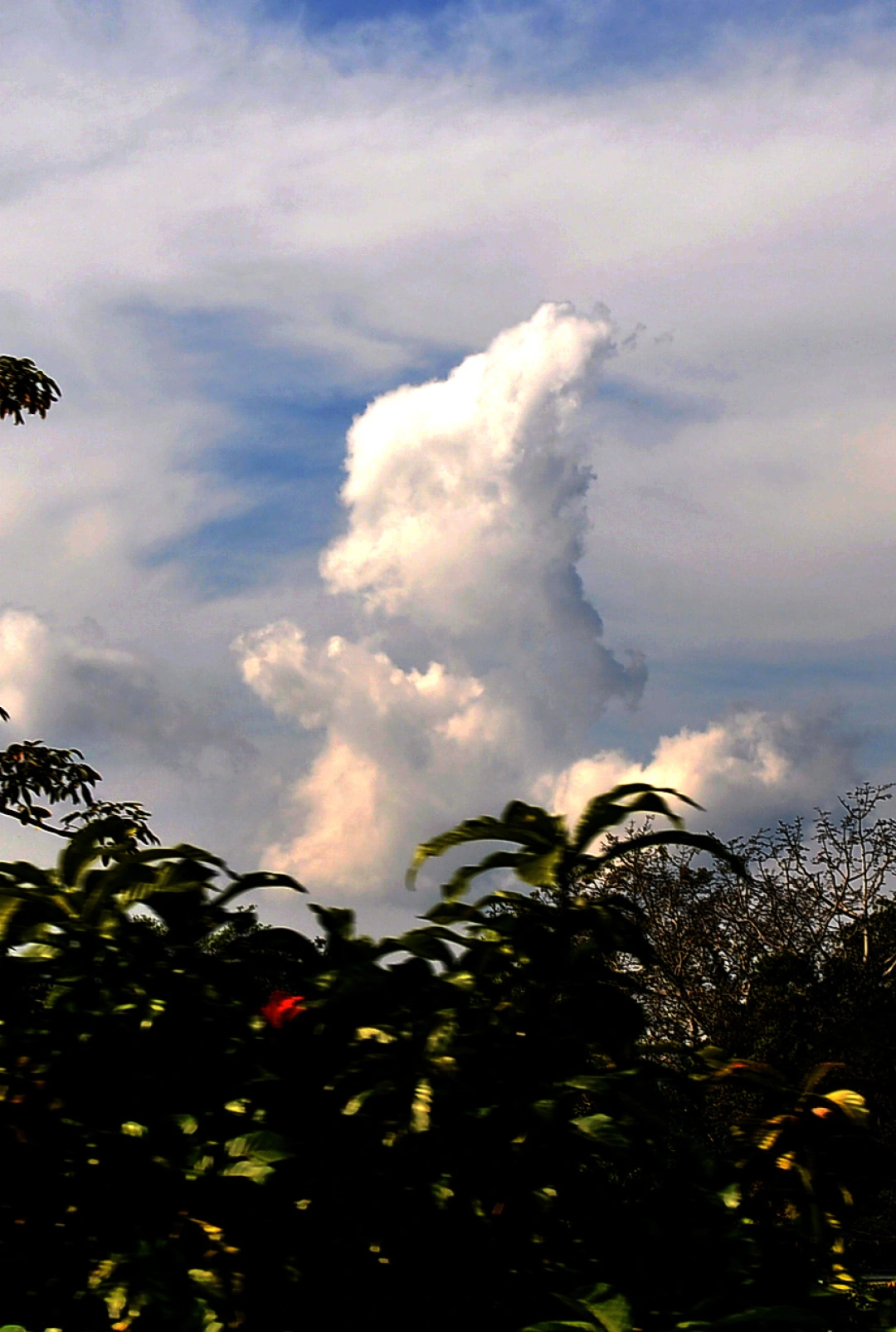
Xishuangbanna Self-Drive Tour: Into the Tropical Wonderland at the Edge of the Sky (Complete Guide)
Xishuangbanna Self-Drive Tour: Into the Tropical Wonderland at the Edge of the Sky (Complete Guide) Introduction: A Dream Fulfilled Thirty Years Early Some journeys are destined to happen at a specific moment in time. For me, a self-drive trip to Xishuangbanna was originally the first…
Continue reading...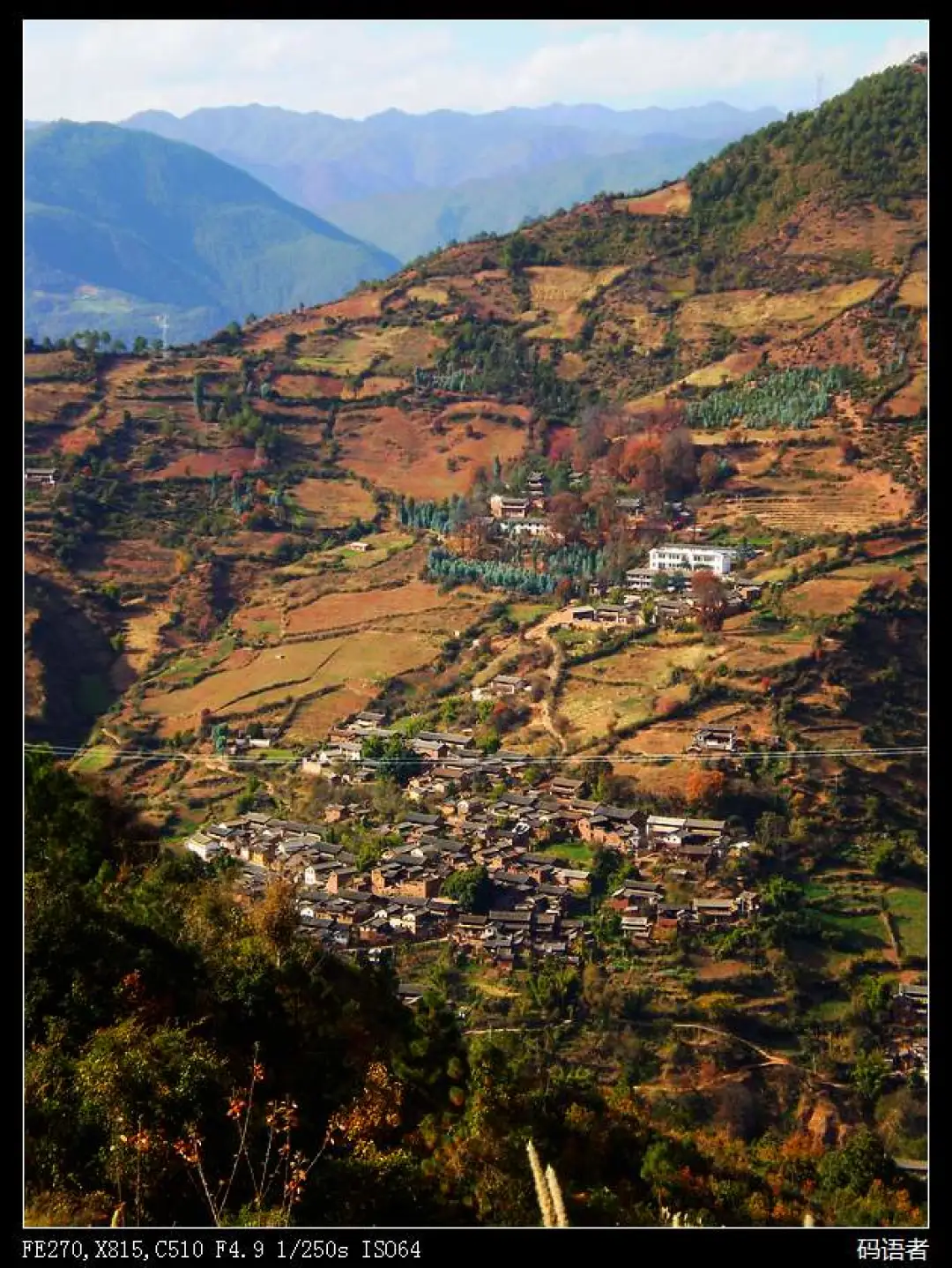
Before the Tongue: Discovering Nuodeng, the Ancient Salt Town Time Forgot
Before the Tongue: Discovering Nuodeng, the Ancient Salt Town Time Forgot There’s a peculiar magic in places that have been left behind by history. They don’t try to impress you. They don’t have polished welcome centers or laminated maps. They just are—worn, quiet, and utterly…
Continue reading...