The Most Beautiful Autumn in Yunnan: A Spontaneous Journey Through Lijiang, Shangri-La, Dali, and Tengchong's Ginkgo Village
The Most Beautiful Autumn in Yunnan: A Spontaneous Journey Through Lijiang, Shangri-La, Dali, and Tengchong's Ginkgo Village
Prologue: The Unexpected Beauty of Travel
Some journeys are destined to be surprises that never made it onto your calendar. When my best friend said, "I want to go to Yunnan—let's go together. If we don't go now, we'll never have the time," I barely hesitated before throwing my bags together. Sometimes, setting off doesn't need too many reasons—having like-minded people by your side is the best excuse there is.

I'm Little Bunny Meng, a traveler who loves to measure the world one step at a time. This time, my best friend Li and I embarked on an autumn journey through Yunnan, from Lijiang to Shangri-La, from Dali to Tengchong's Ginkgo Village. In eight days, we wove together an encounter with gold, blue, and dreams.
Trip Overview: An "Off-the-Beaten-Path" Yet Smooth Route
To be honest, our itinerary wasn't exactly classic—it was even a bit "quirky." It won't suit every traveler, but if you're short on time and want to hit all these places in one go, this route is definitely worth considering.
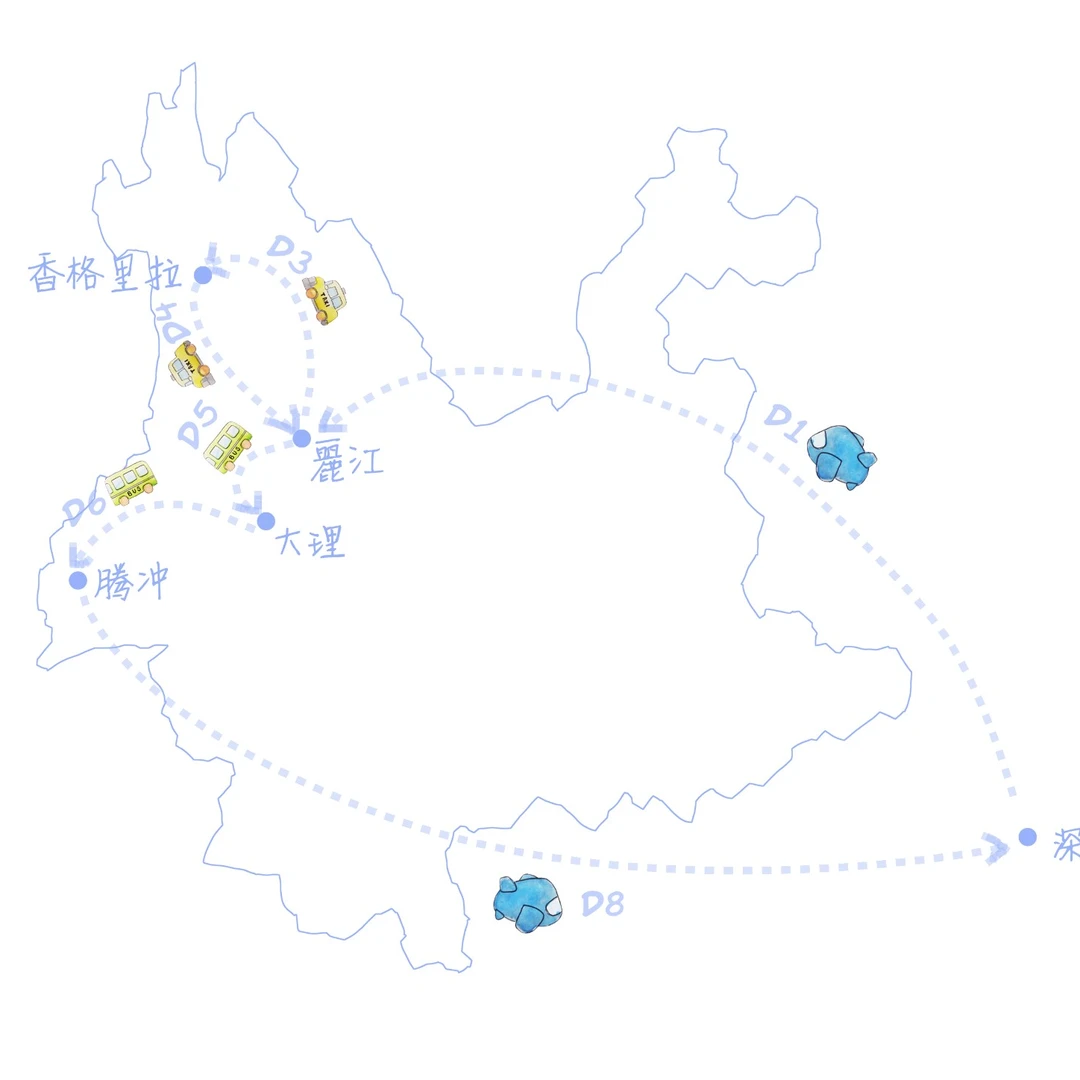
- Day 1: Shenzhen → Lijiang, wandering through Dayan Ancient Town (stayed at Lijiang Shiguang Huayuan Inn)
- Day 2: Full-day trip to Jade Dragon Snow Mountain (including Blue Moon Valley, stayed in Lijiang)
- Day 3: Shangri-La two-day tour, Day 1—First Bend of the Yangtze River, Upper Tiger Leaping Gorge, Yila Grassland, Tusi Feast (stayed in Shangri-La)
- Day 4: Shangri-La two-day tour, Day 2—Pudacuo National Park, Dukezong Ancient Town (stayed in Lijiang)
- Day 5: Lijiang → Shuanglang, cycling around Erhai Lake (stayed in Shuanglang)
- Day 6: Shuanglang → Tengchong Ginkgo Village (stayed at a farm stay)
- Day 7: In-depth exploration of Ginkgo Village (stayed at farm stay)
- Day 8: Tengchong → Shenzhen
Chapter One: Lijiang—Where "Doing Nothing" in the Ancient Town Is the Real Deal
First Impressions of Lijiang: Cobblestone Streets, Sunshine, and a Lazy Dog
Flying direct from Shenzhen to Lijiang, after a three-hour flight, the dry, warm air hit us as we stepped off the plane. In mid-November, the midday sun was so hot it made us want to shed our jackets—I was wearing only a thin shirt and still felt comfortable.
The inn's driver was already waiting at the exit. Half an hour later, we were standing at the entrance to Dayan Ancient Town. The town maintenance fee was 80 RMB—a bit painful, but since we planned to visit Jade Dragon Snow Mountain, we paid up without complaint. The real test came when we had to drag our suitcases over the cobblestone streets, going "clack-clack-clack" the whole way. After just ten minutes, our arms were already protesting.
The inn's atmosphere instantly healed us. A poodle lay lazily at the entrance, and the staff greeted us at a leisurely pace. We'd originally booked a standard room on the first floor, but the lack of privacy was too much, so we quickly switched to a queen-bed room on the second floor. The owner looked at the two of us girls and couldn't help asking, "You're not... you know, are you?" I laughed and replied, "Don't worry, we're not a couple." Clearly, Lijiang's reputation as a "liberated" place had spread far and wide.
Strolling Through the Ancient Town: Wishing Plaques, Ginkgo Trees, and a "Rip-Off" Bar
Everyone says Lijiang is perfect for zoning out—reading a book at the inn, soaking up the sun, letting your mind go blank. But Li and I clearly weren't the "artsy-fartsy" type. After dropping our bags, we followed the owner out to find food and explore.
The freshly washed cobblestone streets glistened in the setting sun. In the alleys, aunties were everywhere selling roasted sweet potatoes and grilled corn. We headed toward Lion Hill, passing inns and cafés that offered panoramic views of the ancient town. When we reached that familiar row of wishing plaques, I couldn't help but stop—they hung near the Big Waterwheel, rustling in the wind as if whispering countless people's hopes and dreams.
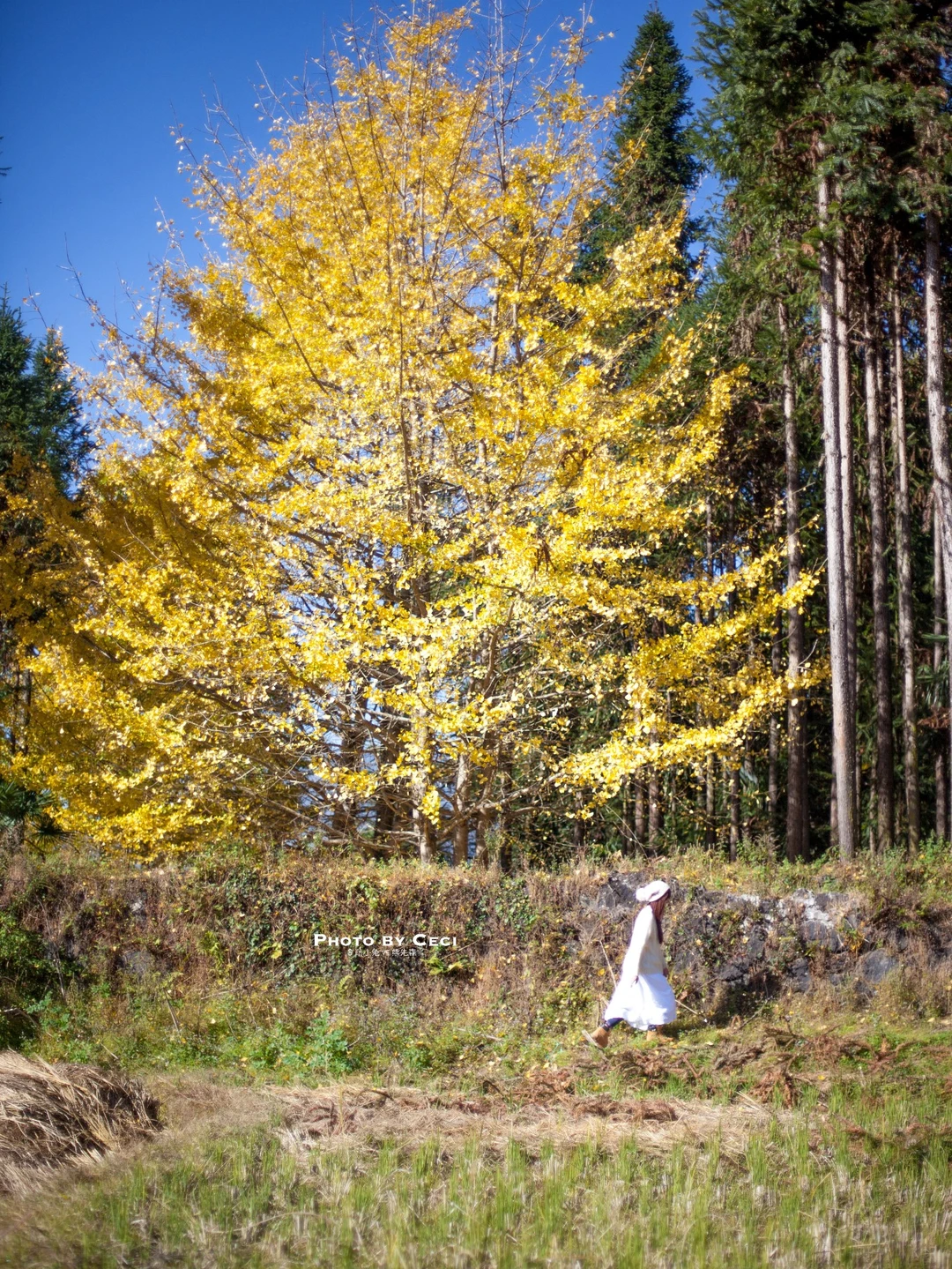
What surprised me most was a single ginkgo tree. Its leaves were a translucent gold, and sunlight filtered through them, casting dappled shadows. Li and I exchanged a glance and smiled: we hoped the ginkgo leaves in the village would be just as beautiful.
As for dinner... we made a classic tourist mistake. We wanted to find a place where we could listen to music while eating, but we quickly discovered that the bar street was deafeningly loud, with garish lights straight out of an '80s disco. Eventually, we found a place near the Big Waterwheel where the staff agreed to let us bring our own food upstairs. When they handed us the menu, our jaws dropped: a glass of fresh-squeezed juice cost 58 RMB, and a pot of flower tea was 268 RMB. Luckily, it was the off-season, so there were few customers, and they only made us buy one drink before letting us sit. The singer was pretty good, so we made do.
We returned to the inn around eight in the evening. The lights by the little bridge were already on. Looking up, we could faintly see stars, but the ground light was too bright—we never managed to get a decent shot of the night sky.
Chapter Two: Jade Dragon Snow Mountain—A First Snow Date at 4,680 Meters
"I want to go to the snow mountain! I want to see snow!" That was the first thing Li said before coming to Yunnan. So Jade Dragon Snow Mountain became a "must-do" on our itinerary.
We booked a pure-tour group through the inn's partner, "Daren Travel Agency." It cost 540 RMB and included everything, plus oxygen canisters and down jackets. At 7:30 a.m., we gathered at the entrance of No. 1 Middle School, and once we had eight people, we set off. A 40-minute drive brought us to the foot of the mountain.
Reaching the Summit: Altitude Sickness, Sunglasses, and a "Pill-Popper's" Comeback
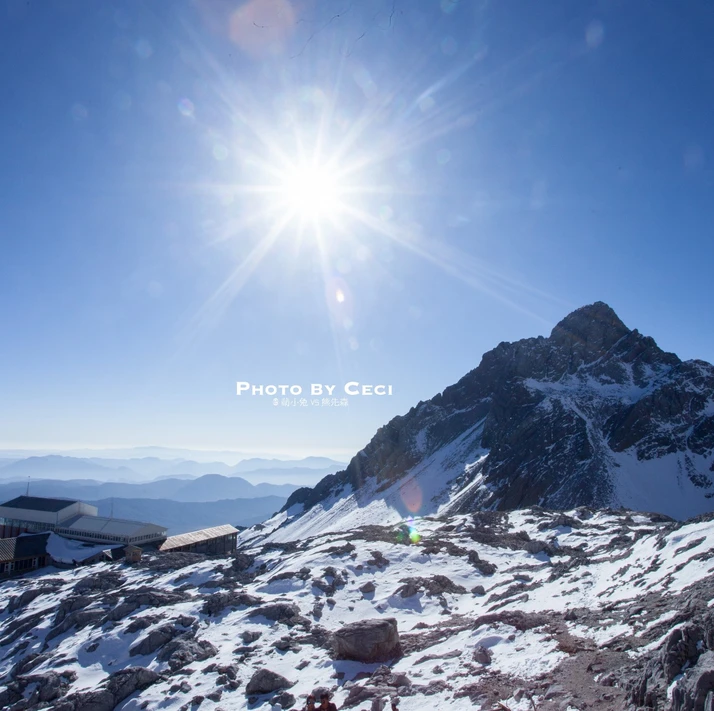
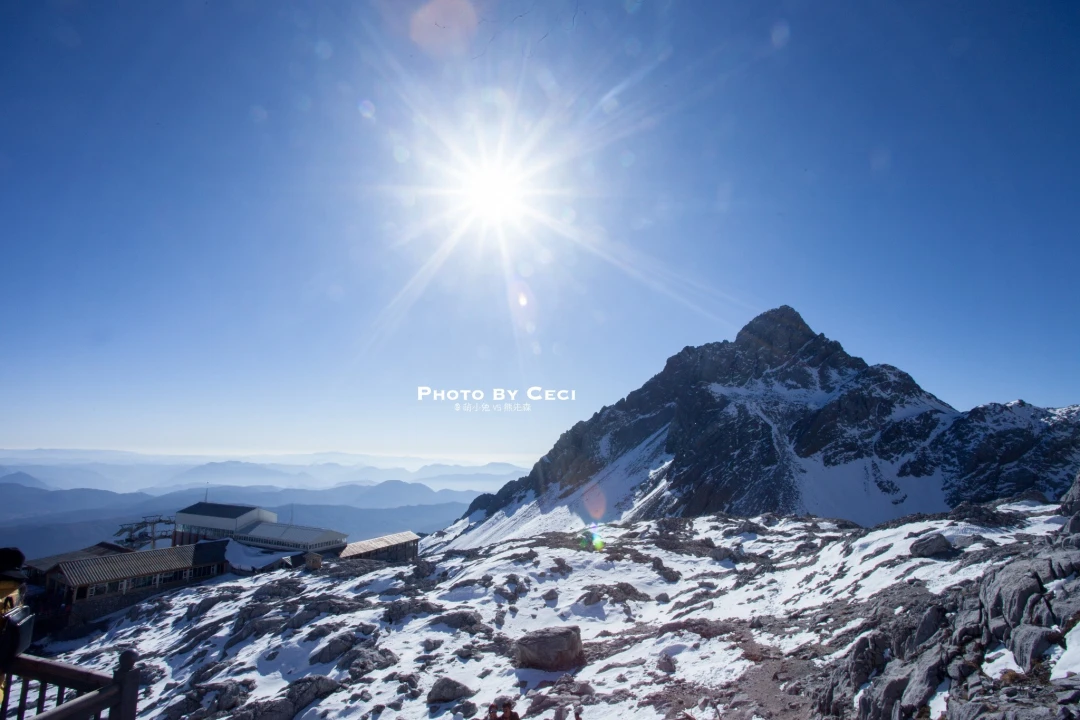
The scenic area has three cable cars: the main one (Glacier Cable Car, elevation 4,506 meters), the small one (Yunshanping, elevation 3,200 meters), and the Yak Meadow Cable Car (elevation over 3,700 meters). We chose the main cable car, going straight to the highest point. The advantage of the off-season was no lines—we were on the cable car in about ten minutes. It climbed quickly, taking just ten minutes to go from the base to 4,500 meters.
As soon as we stepped off the cable car, a chilly wind hit us. A word of advice: you must wear sunglasses—the UV rays reflected off the snow are incredibly strong and can easily damage your eyes. I overestimated my stamina. I hadn't taken any Rhodiola rosea beforehand, and after just a few dozen meters, I was out of breath. I had to stop frequently, taking occasional puffs of oxygen. Meanwhile, Li was busy taking photos and posting on social media, laughing at me for being "so out of shape." And she used to be the "pill-popper"! I could only sigh: I'm getting old.
In November, there wasn't much snow on Jade Dragon Snow Mountain. Our guide said the sun had been too strong that month, melting a lot of it. To see thick snow, you'd have to wait until late December or January. Though a bit disappointed, the good weather and stunning views more than made up for it. We kept taking photos on the boardwalk until we reached the summit at 4,580 meters around 11 a.m. We lingered on that small platform until 11:30 before finally heading down.
Blue Moon Valley: Wandering Through a Blue Wonderland
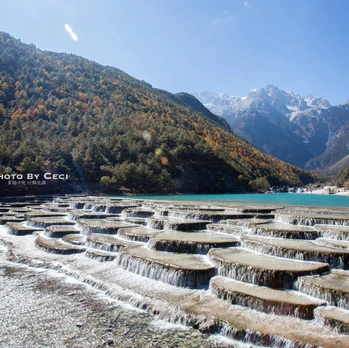
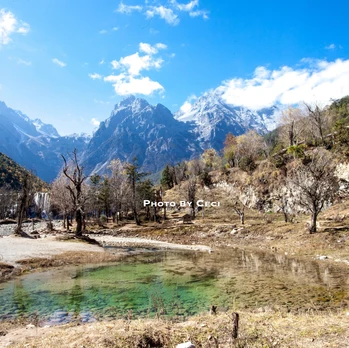
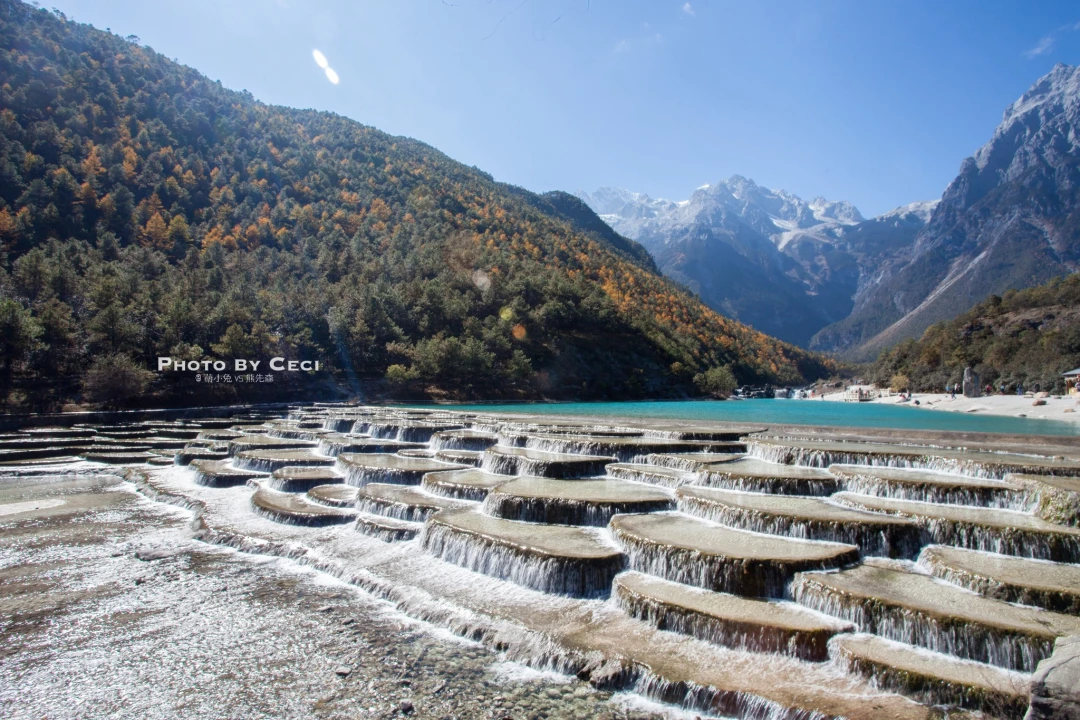
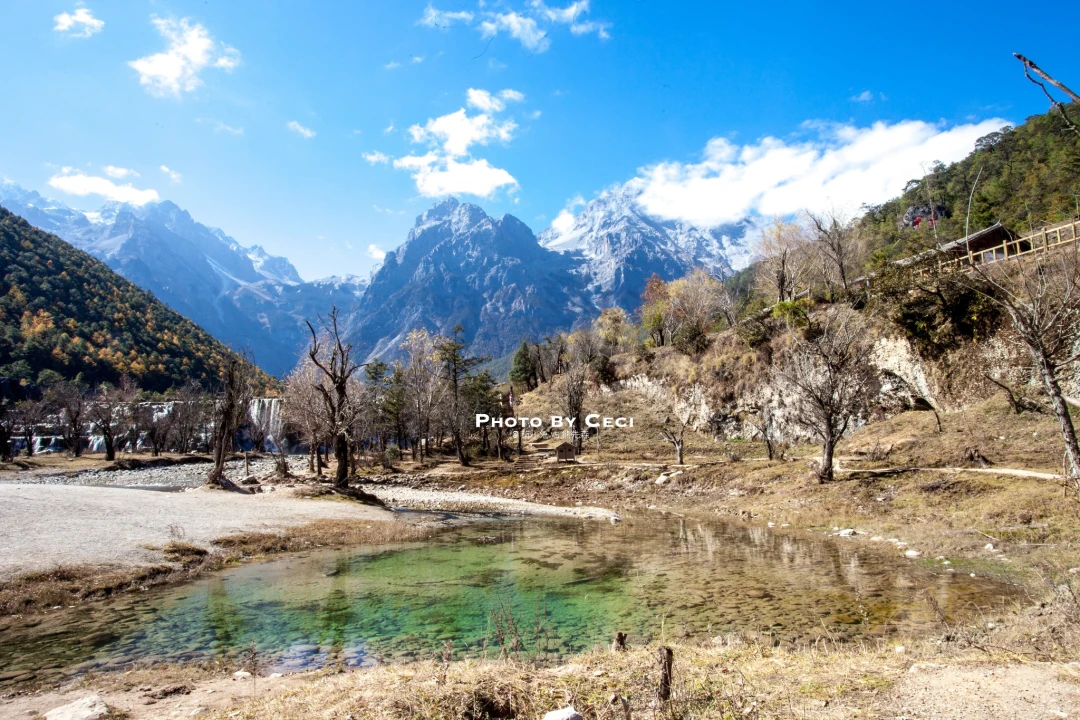
After coming down from the snow mountain by cable car, we took an eco-shuttle to Blue Moon Valley. This area includes the White Water Terrace and four lakes: Jade Liquid Lake, Mirror Pond Lake, Blue Moon Lake, and Listening to Waves Lake. Our guide suggested taking the electric cart (50 RMB per person, good for three rides) from the start to White Water Terrace, then to Mirror Pond Lake, after which we could walk through the most scenic section.
To be honest, the electric cart wasn't really necessary—each leg was only about a five-minute ride. But we went along with the crowd anyway. The entire Blue Moon Valley can be explored in about two hours.
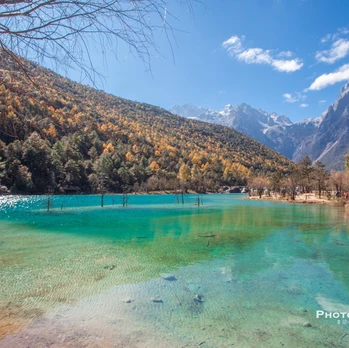
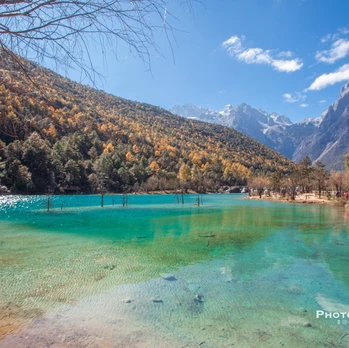
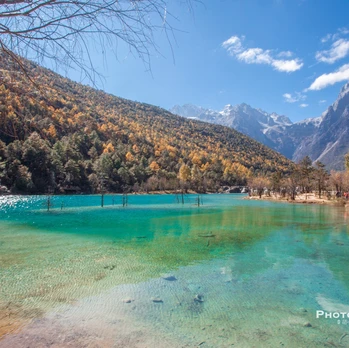
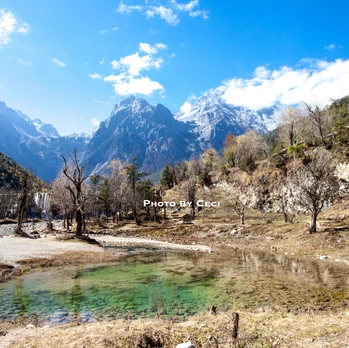
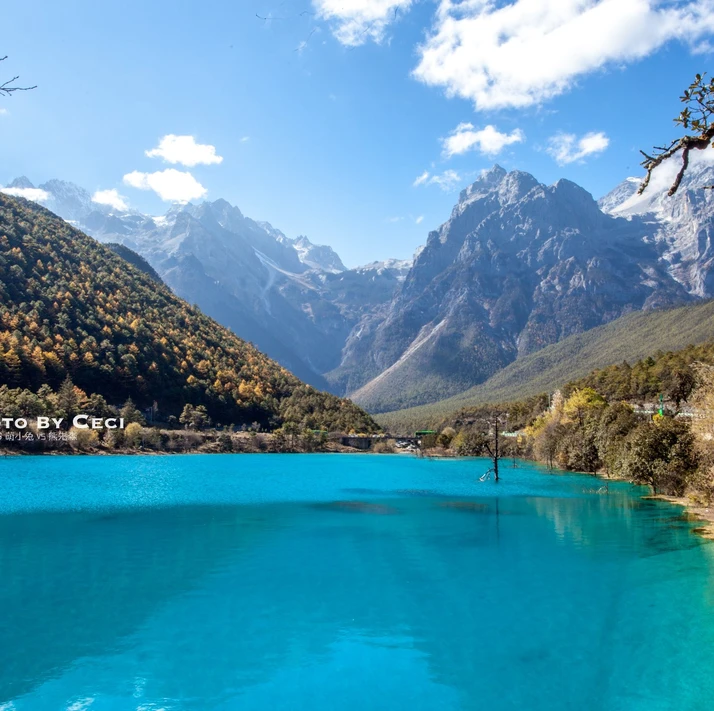
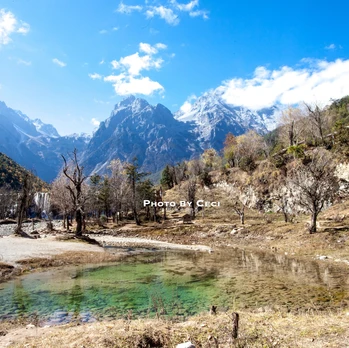
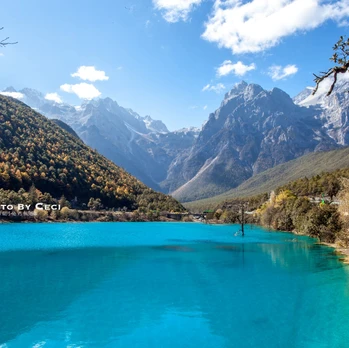
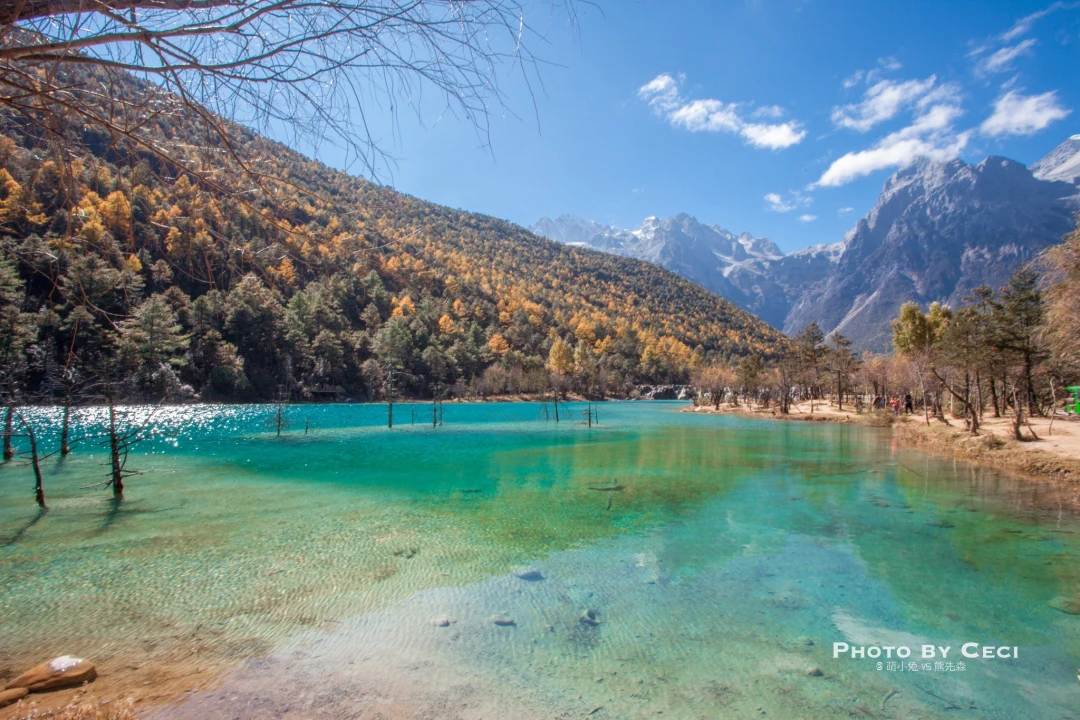
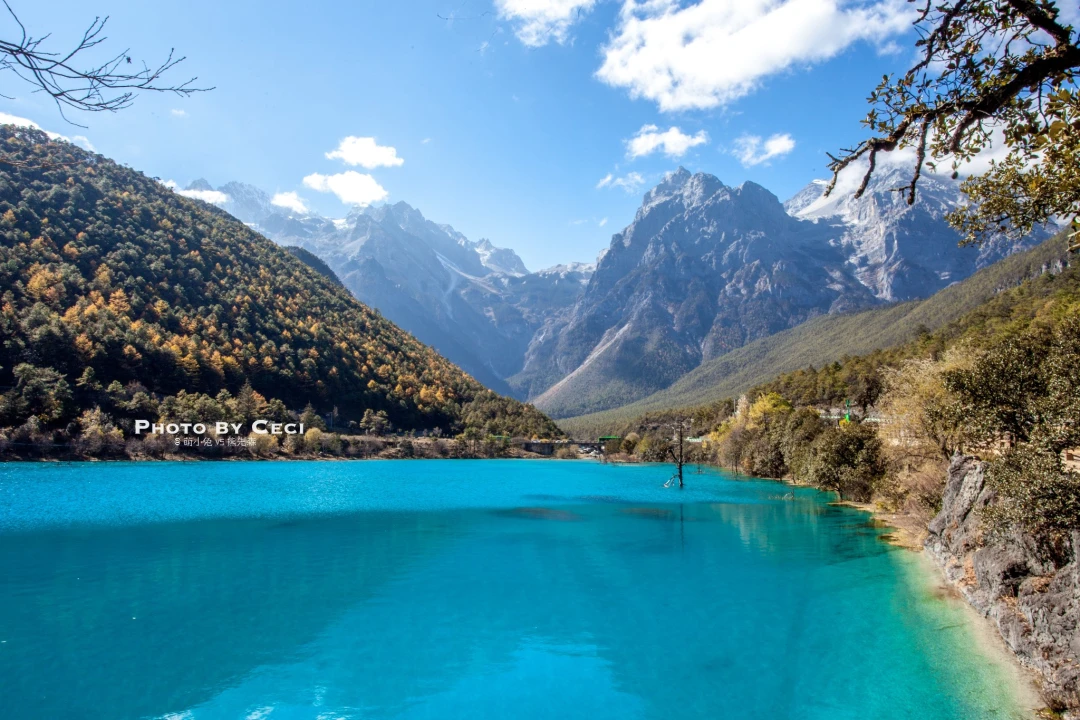
Jade Liquid Lake was my personal favorite. That shade of blue was breathtaking—a clear, translucent green mixed with a gem-like blue, set against the vegetation on the opposite shore. It was as beautiful as a painting. Li had just been to Jiuzhaigou Valley last month, and she said the water here was almost as beautiful, though the surrounding vegetation wasn't quite as impressive.
Chapter Three: Shangri-La—A Golden Fairy Tale on the Plateau
Tiger Leaping Gorge and Yila Grassland: Wind, Cow Dung, and Us Being Goofballs
The two-day Shangri-La tour also started from the No. 1 Middle School entrance. We boarded at 7:30 a.m. and arrived at Upper Tiger Leaping Gorge around 10 a.m. As soon as we stepped off, it was noticeably colder than at Jade Dragon Snow Mountain, so we quickly put on all our gear. We walked down the boardwalk and then back up—about an hour of hiking. The Jinsha River roared below us; photos couldn't capture the震撼, but seeing it in person was awe-inspiring.
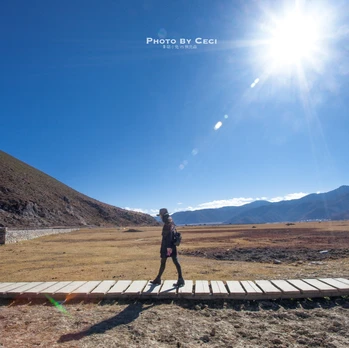
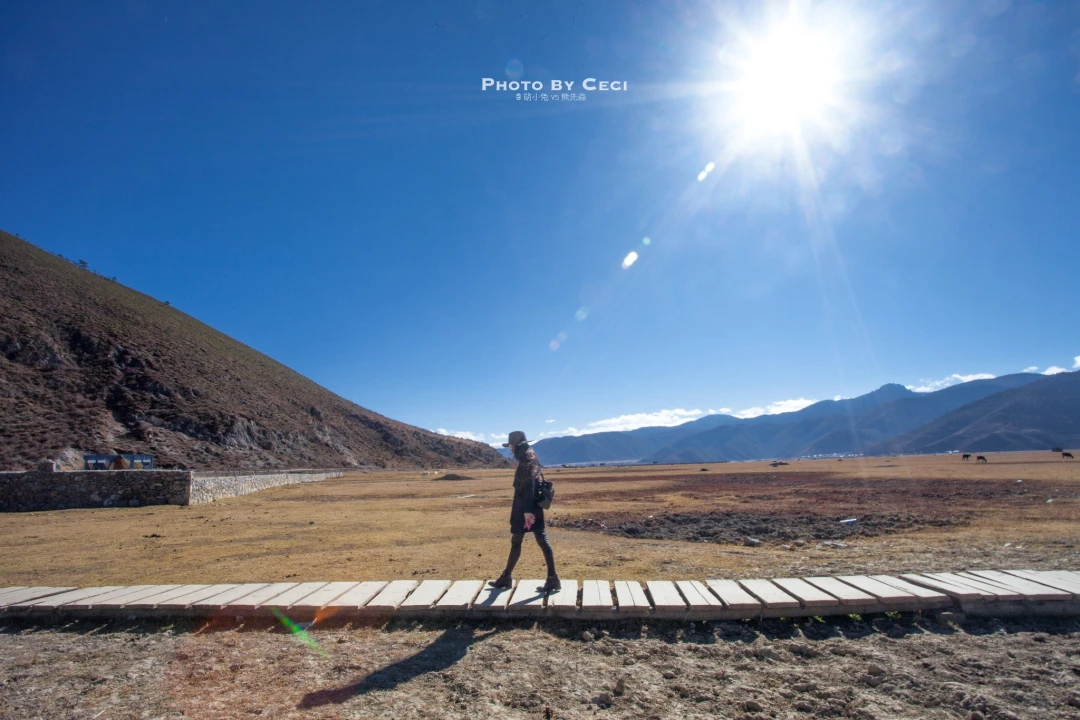
At 3 p.m., we reached Yila Grassland. An endless expanse of withered yellow grass, cow dung everywhere, and the wind howling in our ears—I almost got tinnitus. At first, we took nice photos, but then we completely let loose, laughing until our stomachs hurt.
The Tusi Feast: Yak Hotpot and a Host Funnier Than Wu Zongxian
We'd originally planned to visit Guishan Park to see the prayer wheel, but our driver had a toothache and dropped us off at the hotel instead. We wanted to explore on our own, but a pharmacy clerk told us it was a 45-minute walk to Songzanlin Monastery and that it closed at 5 p.m., so we gave up.
At 6:30 p.m., the driver took us to the "Tusi Feast"—a yak hotpot. It was my first time eating yak meat. I wasn't sure if it was because of the altitude or the stove, but the food took forever to cook. The potatoes and radishes never softened from start to finish. But there was plenty of meat, and the servers kept asking if we wanted more, as if it were free.
The real star of the evening wasn't the food, though—it was the performance. Members of the Tusi family sang and danced, and the host was funnier than Wu Zongxian. Li laughed so hard that night she couldn't stop.
Pudacuo National Park: A Dreamlike Wonderland and Adorable Little Squirrels
Pudacuo was the only scenic spot on the two-day Shangri-La tour. It was like a fairyland, even in this season, with its own unique charm. The temperature was only a few degrees Celsius in the morning, and a thin layer of frost covered the boardwalk.
The first stop in the park was Shudu Lake. Following our driver's advice, we took the sightseeing bus straight through, stopping briefly at the last station for photos. The driver said the best part of Pudacuo was Bitahai Lake, where the hiking was more worthwhile—and he was right.
In the morning, Shudu Lake was shrouded in mist, like a dreamscape. That glimpse of blue sky and the crystal-clear alpine lake made my heart skip a beat. The second stop was Militang Pasture, which was as withered and yellow as Yila Grassland in this season. Li's friend sent her photos from August, when everything was lush and green—completely different worlds.
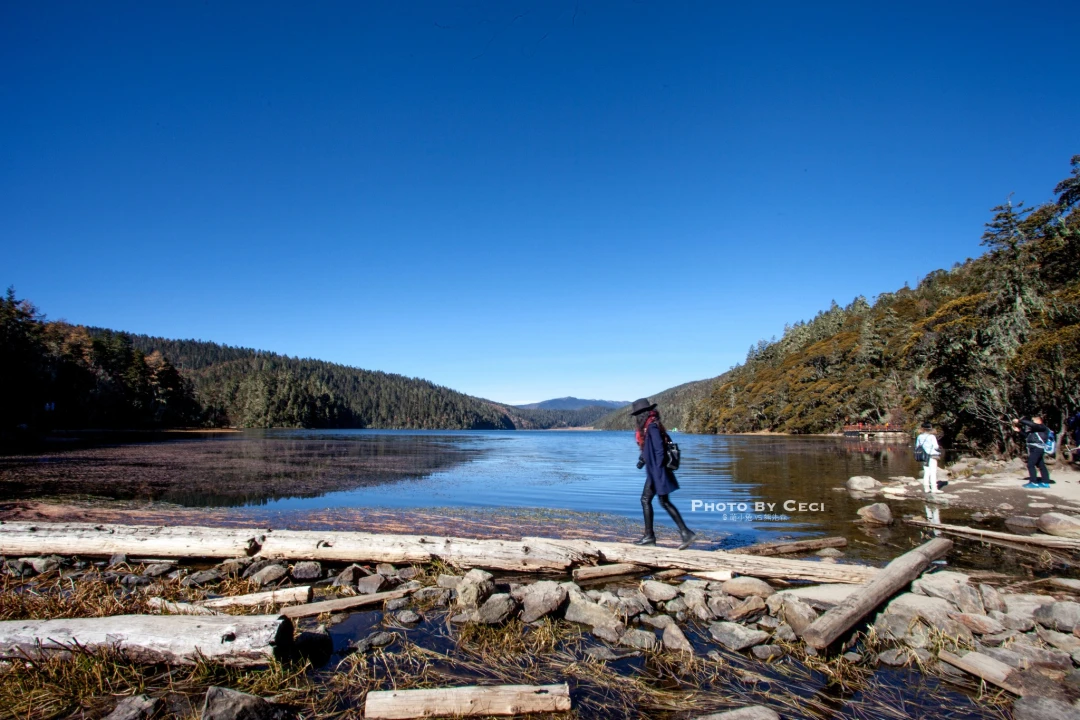
Bitahai Lake was where we started our hike. We walked for about three hours. The vegetation was rich, and the oxygen levels were high, making it much easier than the snow mountain. The cutest part was the squirrels—they were everywhere and not very afraid of people. When a tourist took out some food, they'd grab it and run off. Li held out her hand, and a squirrel almost climbed onto it, but it just brushed her hand with its tail before darting away. Li said, "That touch was so soft."
After leaving Pudacuo, the driver took us to Guishan Park, which we'd missed the day before. The world's largest prayer wheel was there, and it took all eight of us working together to barely turn it. From Guishan Park, we could see Dukezong Ancient Town lying quietly below, though we couldn't tell which parts were from the fire and which were ruins.
Chapter Four: Dali—A Brief Stop by Erhai Lake
Shuanglang: From "The Middle of Nowhere" to "Scenic Beauty"
Taking a bus from Lijiang to Shuanglang took about two and a half hours. When we got off, I almost thought I'd arrived in Myanmar—a dusty station, with三轮车 and motorcycle drivers swarming around. I seriously recommend taking a三轮车, because dragging your suitcase over the "primitive" dirt road for twenty minutes will make you grateful for my advice. Even on the三轮车, it was a bumpy ride of at least ten minutes to the hotel.
After dropping our bags, we immediately went looking for food. On the roadside, we saw something purple that we thought was purple sweet potato. A guy bought one to try, chewed it, and said confidently, "It tastes like carrot." Haha, we couldn't stop laughing.
Cycling Around Erhai Lake: Electric Scooters, Seagulls, and "A Hole in the Sky"
After eating, we went to rent an electric scooter. Neither Li nor I had a driver's license, and we'd never ridden one before—the last time I tried was in Taiwan, and that was with Xiong Xiansheng driving. When the rental boss asked if I knew how to ride, I said, with a mix of nervousness and certainty, "I do." Friends, this is a bad example—don't follow it.
But honestly, an electric scooter is pretty similar to a bicycle—balance, throttle, brakes—it didn't seem that hard. I gave it a try, and we set off. With Li on the back, I was pretty nervous and kept it to 30 km/h at most. Once I got the hang of it and made sure there were no cars around, I dared to push it to 70 km/h.
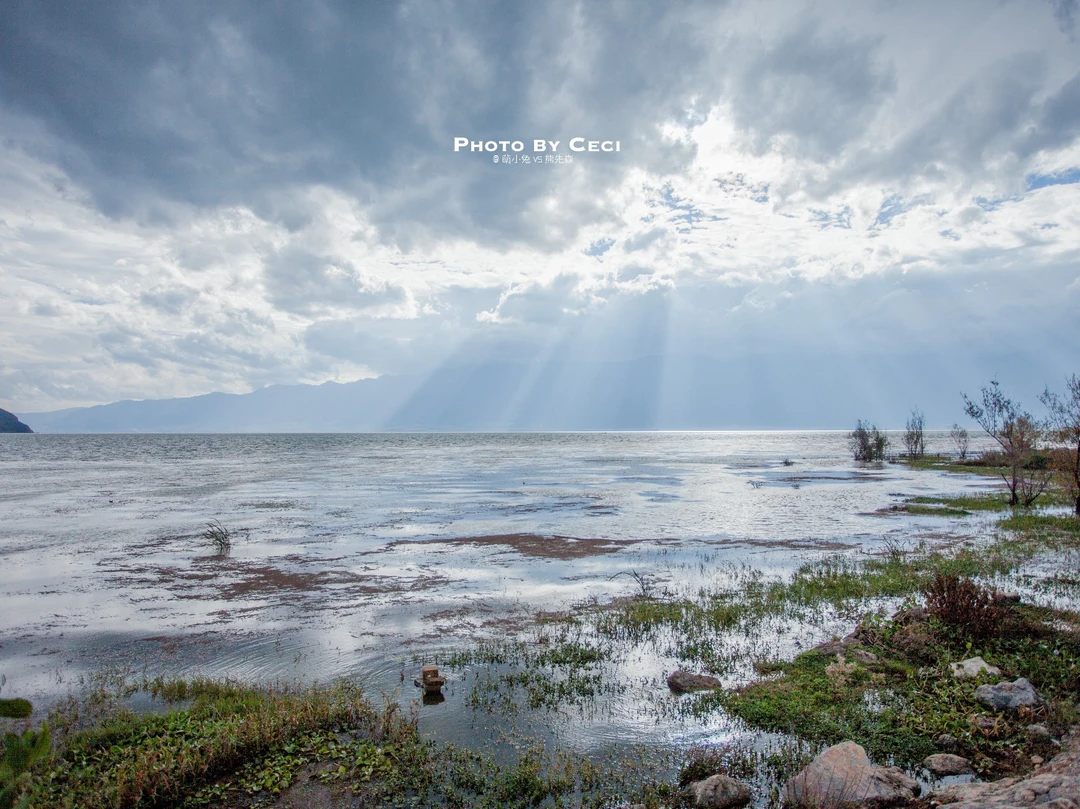
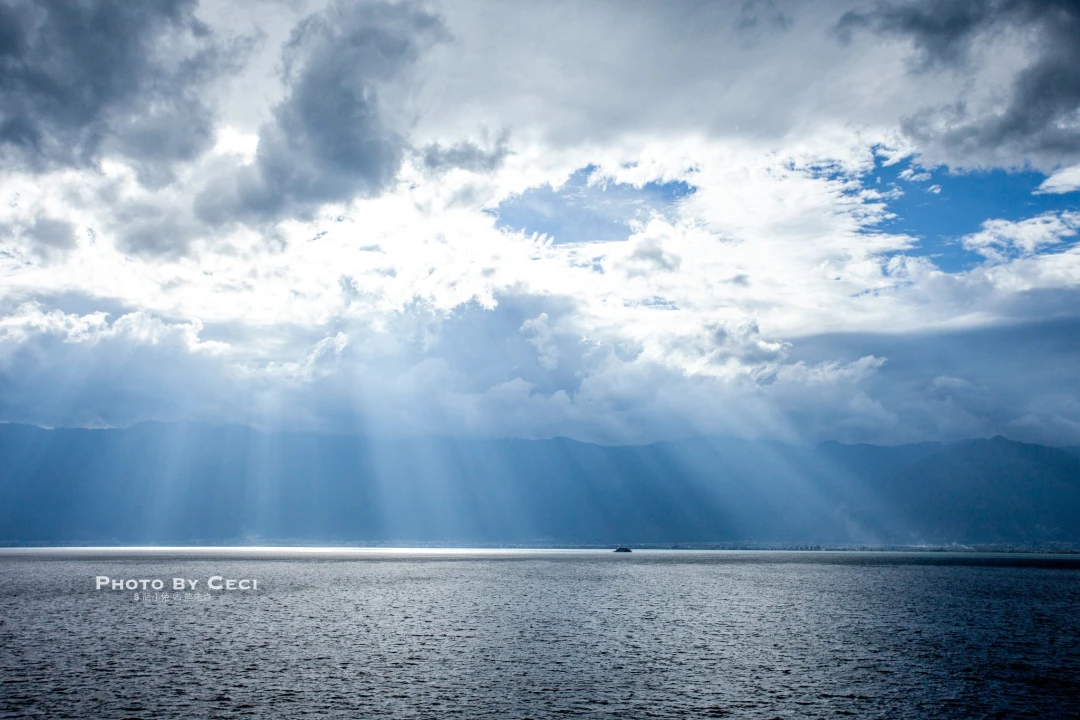
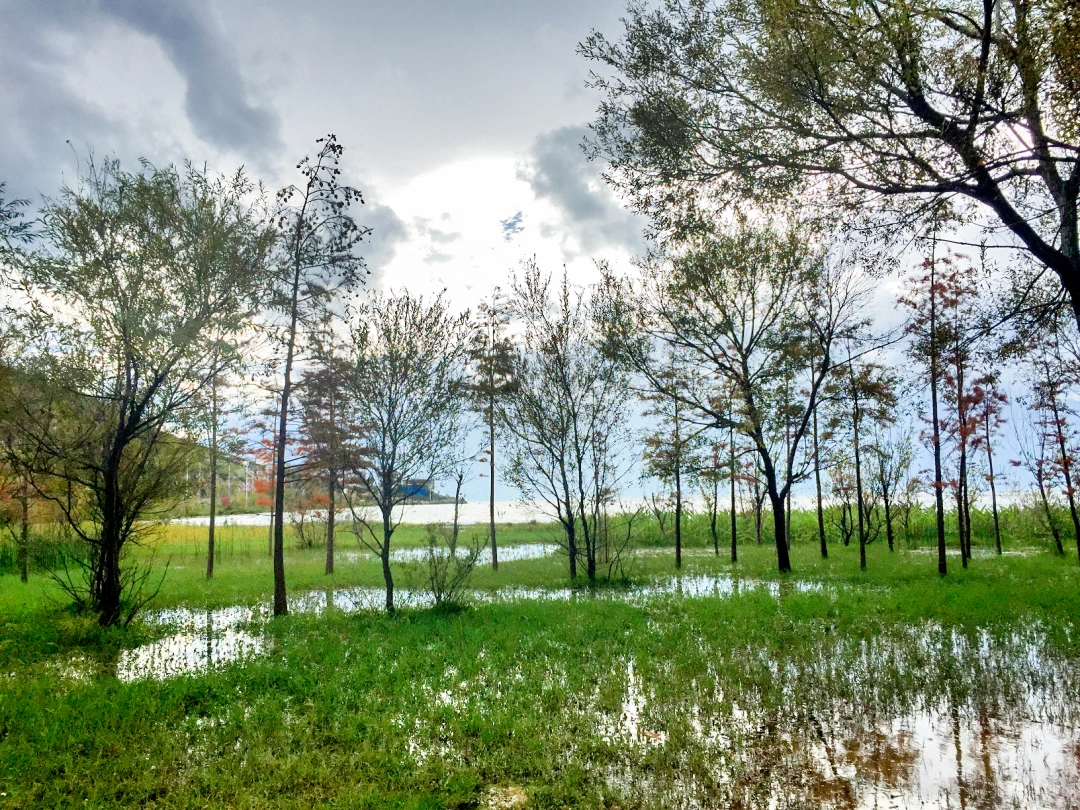
We stopped frequently, taking in the beautiful scenery everywhere. I especially loved the patches of wetland. After so many days in Yunnan with clear skies every day, Dali was the only place with clouds—but the clouds had their own kind of beauty. Light streamed through them, casting rays onto Erhai Lake. Li said, "The sky has opened a hole to collect the spirits, and you're the one it's coming for."
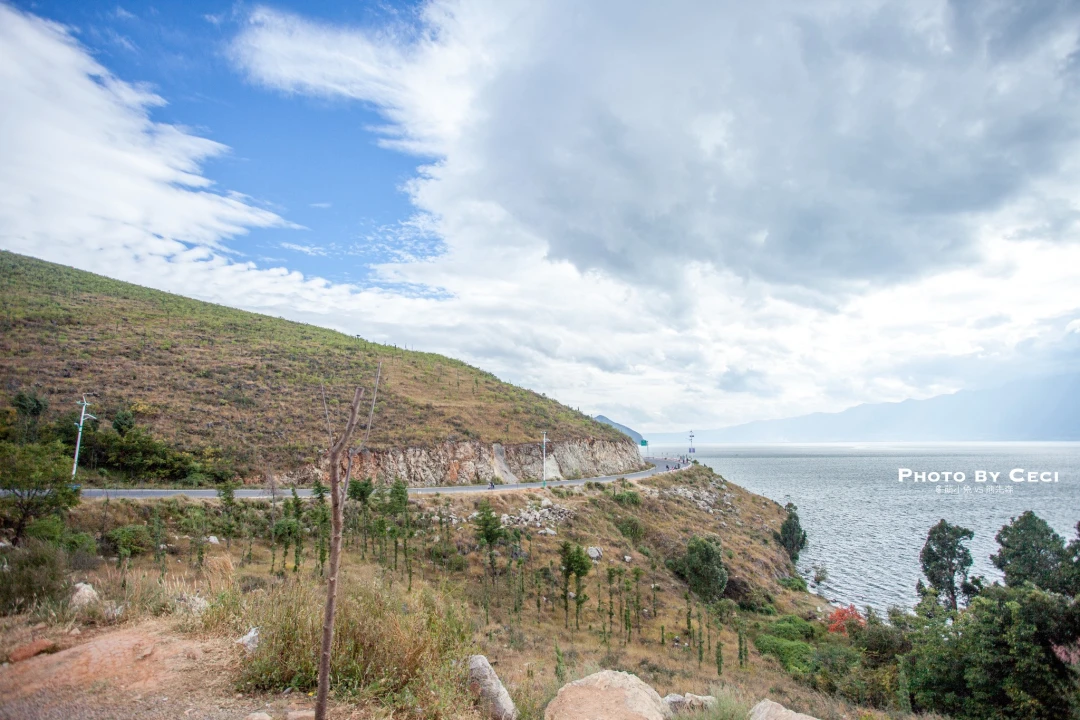
We rode all the way to Xiaoputuo, where flocks of seagulls were lingering along the shore, foraging for food. Between Wase and Xiaoputuo, there was a platform extending into Erhai Lake. Many people stood on it to take photos, looking as if they were standing on the water. But by the time we found it, the tide had come in, and the water was up to our ankles, so we had to give up.
Chapter Five: Tengchong Ginkgo Village—Golden Fairy Tales and Warm Hospitality
An Eight-Hour Journey for That Touch of Gold
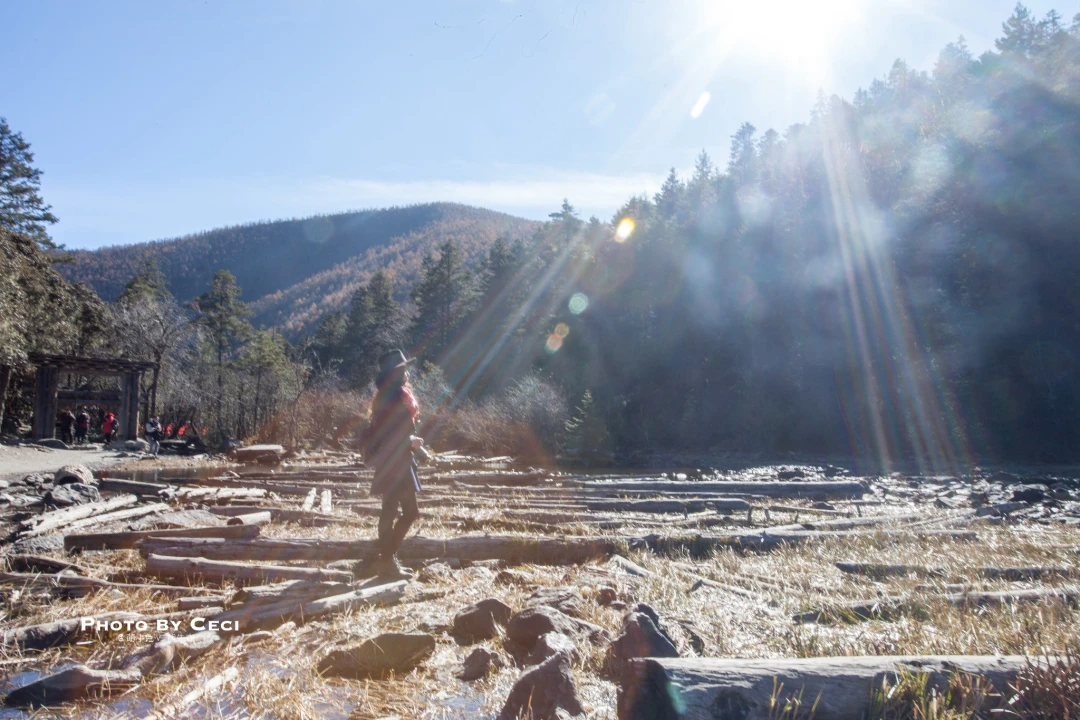
Since we'd missed the best season at Daocheng Yading, we chose Tengchong Ginkgo Village instead—even though Li had already seen the ginkgo trees in Nanying, she was still willing to come with me. The village has ginkgo trees that are over a hundred years old, and the best viewing season is from mid-November to early December. We arrived on November 21, and most of the leaves had already turned yellow—it was stunningly beautiful.
But getting to Ginkgo Village takes courage. We spent eight and a half hours traveling from Shuanglang to get there. Some people say Ginkgo Village is a hidden paradise, preserved in its original beauty because it hasn't been developed. But after two days there, our biggest takeaway was that it's already becoming commercialized, and not in a well-managed way. The village entrance and Ginkgo Park were packed with vendors, and tourists were shoulder to shoulder, especially in the afternoon—it felt like being at an exhibition.
However, as long as you avoid the crowded spots and times, the entire village is yours to explore. Walking slowly, feeling the tranquility of falling ginkgo leaves—I really loved this place. What I loved even more were the villagers. They were all incredibly friendly. After two days there, it felt like visiting relatives. When the weather turned cold at night, the auntie would light a charcoal stove and invite us over for tea and conversation, roasting ginkgo nuts for us to eat. Every time we came back from outside, they'd greet us with a smile, saying, "You're back." On the morning we left, worried we'd miss our flight, they got up early to wake us and saw us off, saying, "You've been here two days—we're starting to miss you already."
Night Sky Photography and Morning Hike Up the Mountain: Grandpa, Brother Donggua, and the Milky Way
While eating dinner at the farm stay, we struck up a conversation with a photography enthusiast we called "Brother Donggua." He said he'd been here two years ago, and the changes were huge—it used to be a quiet, beautiful village, but now it's commercialized. He wanted to go out and shoot the stars at night, and the farm stay's owner, Brother Chen, agreed to take him. I asked if I could tag along.
Brother Chen was incredibly kind. He picked us up promptly at 11 p.m. The village had streetlights, so he took us to a nearby field where there was no artificial light at all. The only problem was that it was a half-moon night, so the moonlight was a bit bright. Brother Chen stayed with us until midnight before we headed back. And you know what? That faint streak you can barely see in the photos—that's the winter Milky Way.
The next morning, an elderly grandpa took Brother Donggua and me up the mountain to see the view of Ginkgo Village. The sunrise was late, so we didn't set off until 7:30. The grandpa was seventy years old and in great shape—he went up the mountain almost every day. I was already out of breath halfway up, while he was walking effortlessly with his sickle and water bottle. Seeing me struggling, he asked if he could carry my tripod for me, then casually cut down a small tree to use as a hiking stick—I couldn't help but admire him.
Later, a few more photography enthusiasts showed up, all with full gear. I only had a wide-angle lens, so I did my best. Brother Donggua had a telephoto lens, and I could only look at him with envy, then back at the beautiful scenery.
The Old Uncle and the Misty Forest: The Purest Ginkgo Village
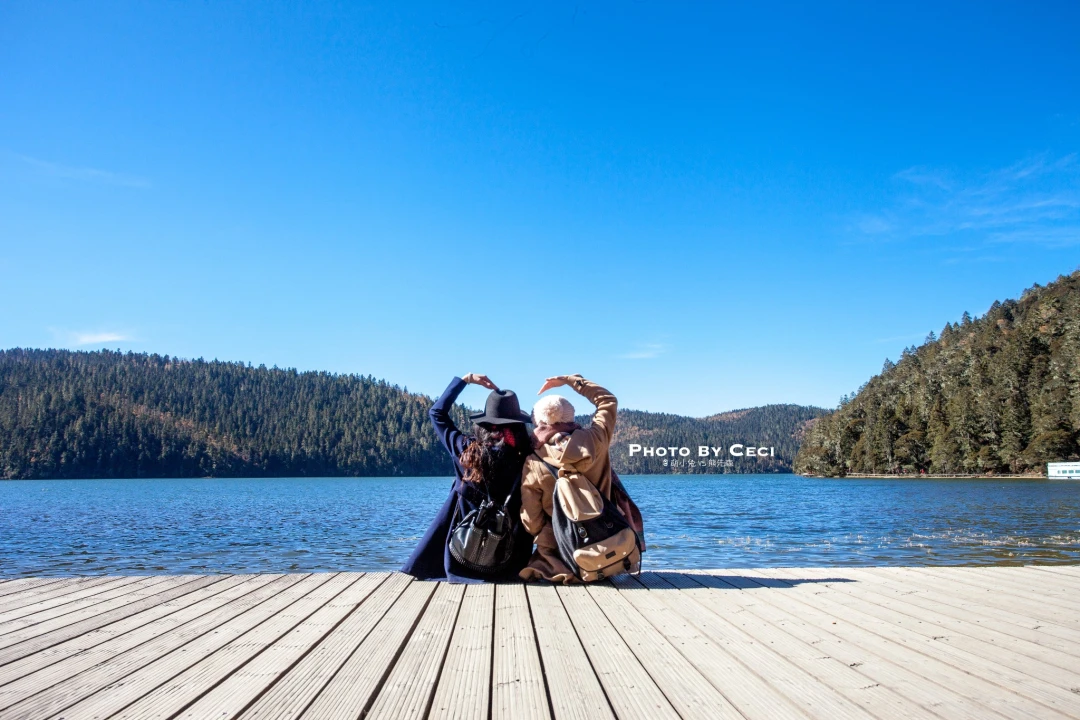
As we wandered, we met an old uncle. He was very enthusiastic and kept talking to us, even though his accent made it hard to understand. He kept going anyway, leading us to beautiful spots for photos. Pointing to one place, he said, "People came before, just like you with your cameras, and they took photos right here—beautiful!" Then he took us to see some really stunning ginkgo trees. It turned out these were all part of his family's farmland and ginkgo groves—he was clearly proud of them.
Before we knew it, we walked through a misty forest with no one else around. It felt surreal. At that moment, I felt like I'd stepped into a fairy tale.
Epilogue: About Travel, and About You
This trip to Yunnan taught me one thing: the meaning of travel isn't about how many places you've been, but about the scenery you encounter—and the version of yourself you discover.
Lijiang's laid-back vibe, Jade Dragon Snow Mountain's grandeur, Shangri-La's mystery, Dali's tranquility, Ginkgo Village's warmth—each place was like a piece of a puzzle, completing my vision of Yunnan.
If you're thinking of following this route, here are a few tips:
- About accommodation: Lijiang has thousands of inns. In the off-season, you can choose when you arrive, but if you're dragging a big suitcase, it's better to book ahead.
- About altitude sickness: Before going to Jade Dragon Snow Mountain and Shangri-La, it's best to take Rhodiola rosea in advance. Don't overestimate yourself like I did.
- About Ginkgo Village: The best viewing time is from mid-November to early December. I recommend staying one night to avoid the afternoon crowds.
- About transportation: Getting from Shuanglang to Ginkgo Village requires transfers, so allow plenty of time and plan your route in advance.
Finally, thank you to Li for her company, and to those warm-hearted villagers and fellow travelers we met along the way. May every journey you take lead you to the most beautiful scenery.
—Little Bunny Meng and Xiong Xiansheng, always traveling hand in hand.
You should also read:
Yunnan! Paradise on Earth – The Yubeng Chapter: A Soul-Cleansing Journey into Seclusion
Yunnan! Paradise on Earth – The Yubeng Chapter: A Soul-Cleansing Journey into Seclusion Prologue: Why Yubeng? If you ask me which place in Yunnan is most worth hiking to, I would answer without hesitation: Yubeng. This is not an answer I give lightly. As a…
Continue reading...
Solo in Yunnan: A Wanderer’s Guide to the Land of Eternal Spring
Solo in Yunnan: A Wanderer’s Guide to the Land of Eternal Spring There’s something magical about traveling alone. No compromises, no schedules to keep, no one to please but yourself. I’ve been on the road for nearly three months now, and not once have I…
Continue reading...
Body in Hell, Heart in Heaven: A Pilgrimage Through Tiger Leaping Gorge — A Dialogue Between Heaven and Earth
Body in Hell, Heart in Heaven: A Pilgrimage Through Tiger Leaping Gorge — A Dialogue Between Heaven and Earth Introduction: When the Gorge Splits Open Beneath Your Feet Some say Tiger Leaping Gorge is the closest place on Earth to the border between "hell" and…
Continue reading...