The Tail End of Graduation: How We Captured Youth's Brightest Moments Among Yunnan's Snowy Peaks and Lakes
The Tail End of Graduation: How We Captured Youth's Brightest Moments Among Yunnan's Snowy Peaks and Lakes
Some say a graduation trip is a ritualistic farewell. But for us, it felt more like a long-planned pilgrimage—a journey to meet the mountains, the lakes, and most importantly, ourselves.
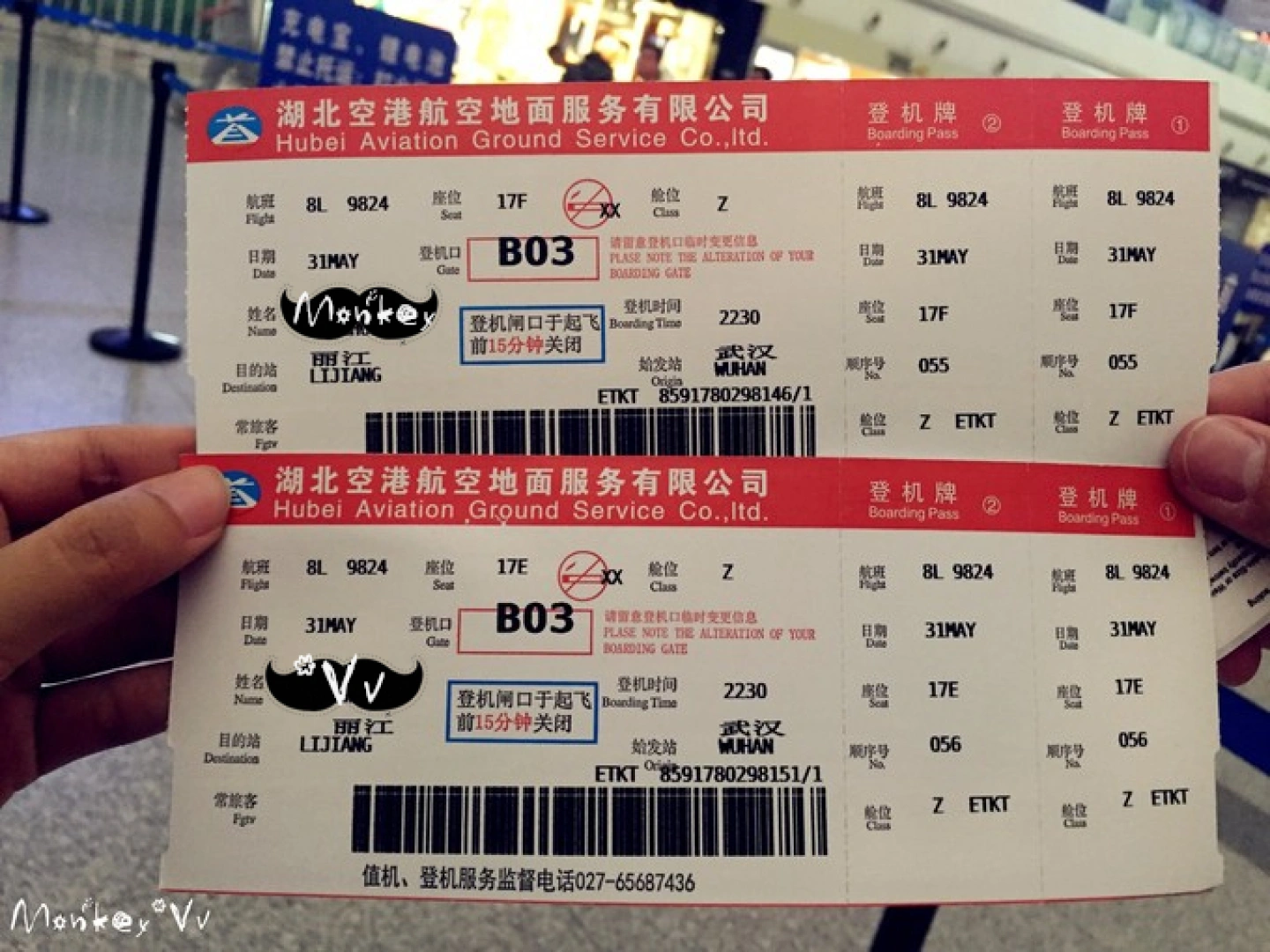
On May 31, 2016, as the plane lifted off from Wuhan Tianhe Airport, cutting through the night sky toward Lijiang, I leaned against the window, my heart stirring with an indescribable flutter. It was my first time on a plane, while my partner Lao Deng, already a seasoned flyer, sat calmly as if riding a bus. I couldn't help but wonder: What does takeoff feel like? Will my ears hurt? Is airplane food really that bad?—Okay, I admit it, I was like a curious kid, having Googled "what not to bring on a plane" and "can you check in power banks" days in advance.
Turns out, the push-back feeling during takeoff was absolutely exhilarating—I almost laughed out loud. But the woman next to me looked terrified, clutching herself as if the plane was about to crash any second. As for the airplane meal—well, keep your expectations low.
The start of this trip wasn't exactly smooth sailing. Although Lao Deng and I went to the same university for both undergrad and grad school, we were in different years and different majors. June happened to be my English final exam month, with the oral exam scheduled for June 7th and 14th. I braced myself and asked my professor for a favor after class on May 24th. To my surprise, she said cheerfully, "Just coordinate with your group and pick a day." My kind teammates agreed to set the exam on the 14th, so I quickly booked my flights: departing May 31st and returning on the afternoon of June 13th.
You think everything went smoothly from there? Life never lets you off that easy. On May 31st, during class, the professor suddenly announced that each group would send someone to draw lots for the exam time. I represented our group, my heart pounding like I was drawing a lottery ticket—what if I didn't get the 14th? I unfolded the slip of paper: Week 17 (June 14th), Group 2! I nearly jumped out of my seat in the classroom. That night, I flew to Yunnan with peace of mind.
Pre-Departure Prep: We Weren't Going on Vacation—We Were Going to War
The centerpiece of this trip was Yubeng Village—a place you can only reach on foot. Our backpacks were packed with "survival gear," and here's the full list:
- Hiking backpack: 50L for guys, 40L for girls
- Hiking boots: High-top, waterproof, with ankle support
- Quick-dry shirt and pants: Essential for hiking—nothing worse than wet clothes that won't dry
- Shell jacket + fleece: Warm, windproof, waterproof
- Sun-protection clothing, sunscreen, after-sun repair, face masks: Yunnan's UV rays are no joke
- Hat, sunglasses, buff: Full sun protection—the high-altitude sun is blinding
- Two trekking poles: Essential! Essential! Essential!
- High-power flashlight: In case you have to walk at night; your phone might die too
- Medicine: Cold medicine, Rhodiola, cooling balm, mosquito repellent, band-aids, iodine, cotton swabs, motion sickness pills
- Camera, charger, two power banks
- Portable thermos: Very important! Most lodgings offer free hot water, but regular water bottles won't cut it
- Tent, sleeping bag, sleeping pad: In the off-season, camping in Yubeng isn't ideal—it's too cold at high altitudes
- Yellow rubber bands: 3 RMB for a pack of 100—a storage lifesaver
- Student ID, national ID: You must bring your undergraduate student ID! Only those under 25 can get student tickets—brutal!
- Towel, toothpaste, toothbrush, shampoo, face wash, razor
- Salt: In case you encounter leeches—sprinkle salt or use a lit cigarette to burn them off
- Long, thick socks: Over the ankle, or your soles will feel like needles after walking too long
- Raincoat, selfie stick, cash
Itinerary Overview: 12 Days, These Are the Places We Went

- May 31: Wuhan → Lijiang (late-night flight)
- June 1: Lijiang → Deqin → Feilai Temple
- June 2: Feilai Temple → Nilong → Lower Yubeng Village → Shenbao Inn
- June 3: Shenbao Waterfall → Upper Yubeng Village → Hiker's Home
- June 4: Upper Yubeng Village → Ice Lake → Hiker's Home
- June 5: Upper Yubeng Village → Xidang → Feilai Temple → Deqin → Shangri-La
- June 6: Shangri-La → biking around Napahai Lake, horseback riding
- June 7: Shangri-La (outsmarting a shady vendor) → Tiger Leaping Gorge
- June 8: Tiger Leaping Gorge → Lijiang → Shuhe Ancient Town
- June 9: Lijiang → Lugu Lake → Daluoshui → Lige
- June 10: Early morning pig trough boat for sunrise, biking around Lugu Lake
- June 11: Lugu Lake → Lijiang Dayan Ancient Town
- June 12: Lijiang Dayan Ancient Town → Thousand Tortoise Mountain
- June 13: Lijiang → Wuhan (afternoon flight)
Yubeng: Beneath the Snowy Peaks, We Were Both the Smallest and the Bravest
Stop One: Feilai Temple—Meili Snow Mountain's "Shyness" and the "Scam" of the Combo Ticket
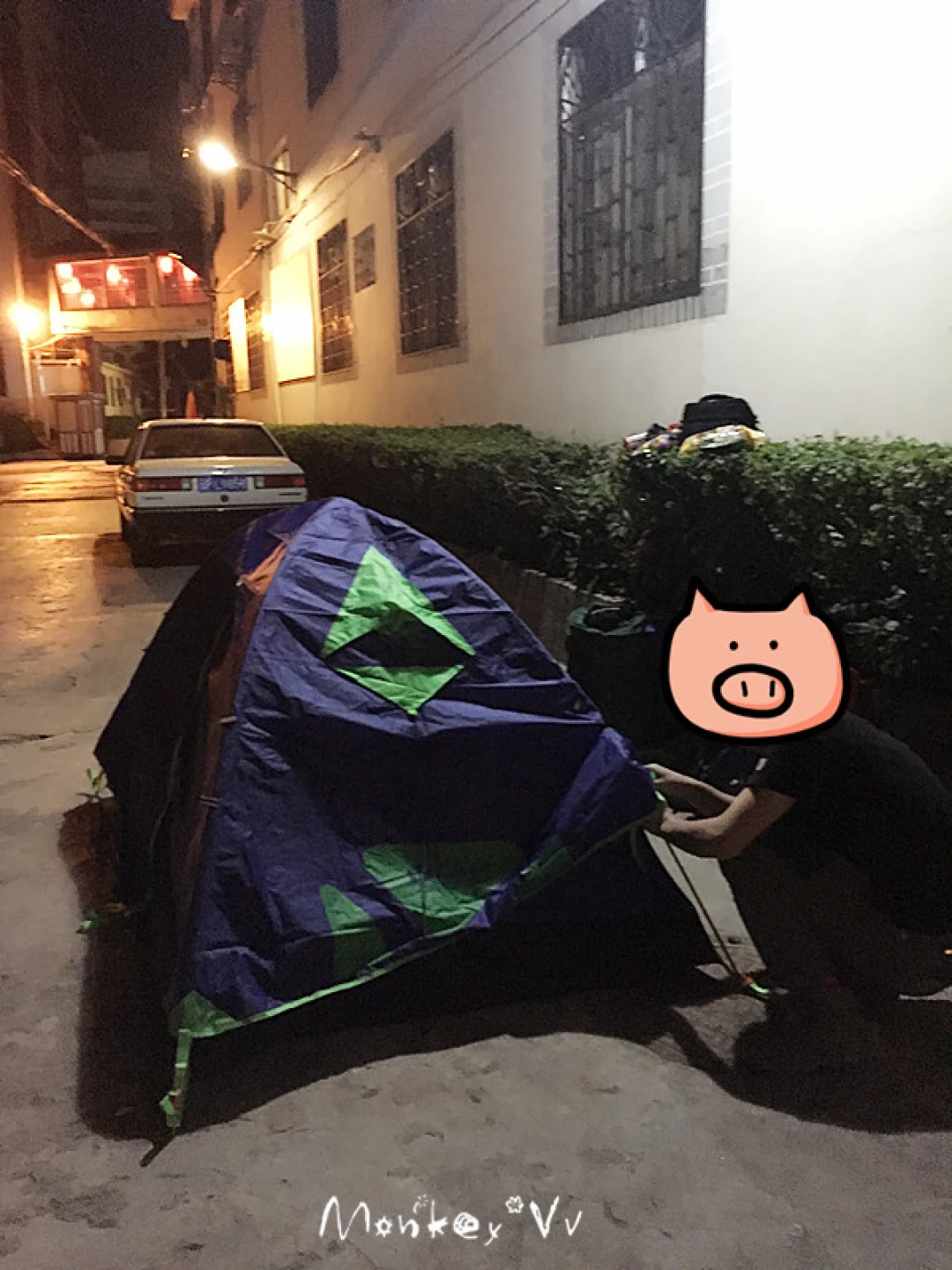
At 1:50 AM on June 1st, we landed at Lijiang Sanyi Airport. To our delight, the airport shuttle was still running (it operates as long as there are flights! 20 RMB per person, final stop at Lantian Hotel). We arrived in the city at 2:55 AM. Since we had booked an 8:30 AM bus from Lijiang to Deqin, we simply pitched our tent in a safe alley near the bus station and lay down with abandon. Looking back now, it was both crazy and romantic.
The bus ride from Lijiang to Deqin took a full 8 hours. The mountain roads twisted endlessly, and I got so carsick I threw up everywhere. We passed through Shangri-La, Napahai Lake, and Tiger Leaping Gorge—the scenery was stunning, but I swore I'd never eat greasy food before a long bus ride again.
In Deqin, we pooled together with 7 people to hire a van to Feilai Temple, 10 RMB each. The moment we stepped out, even though thick clouds hung overhead, the beauty of Meili Snow Mountain took my breath away. Here, it doesn't get dark until 8:30 PM, so time feels stretched.
Ticket alert: In the past, you could buy tickets separately for Feilai Temple and other attractions. Now, you have to buy a combo ticket (230 RMB, half price for students at 115 RMB), which includes Feilai Temple viewing platform, Yubeng Village, the First Bend of the Jinsha River, and Wunongding Peak, valid for one week. Student tickets require an undergraduate student ID and national ID, and you must be under 25. Lao Deng was over the age limit, so I bought one student ticket on the first day, then changed my clothes early the next morning and bought another—the ticket lady's memory wasn't that sharp, haha. I'm a budget ninja!
Stop Two: Entering Yubeng via Nilong—Thrills and Awe on a Cliffside Path
Most people take the Xidang route from Feilai Temple to Yubeng (Xidang in → Upper Yubeng → Lower Yubeng → Nilong out), but after reading that the Nilong route was more scenic, we decided to take this "less traveled road." At dinner, three foreign girls asked if they could share a van with us to Xidang, but we couldn't explain in English why we were taking Nilong instead. It was a four-way confused face-off against a three-way confused face—awkward doesn't even begin to describe it.
On the Nilong path, the left side was a cliff, and the right side was falling rocks—extremely dangerous in the rain. But we went on a clear day, so we passed through quickly without issues. Our driver drove with one hand while talking on the phone, right next to a cliff—our hearts were in our throats the whole time. To make things even crazier, the weather changed completely within a few miles—one moment it was blazing sun, the next, hailstones were falling.
At the Nilong entrance, a villager checked our tickets. We passed and started hiking. The landscape was barren and magnificent, with snow-capped mountains appearing and disappearing in the distance. At the first rest stop in the village, we paid a 5 RMB environmental protection fee per person, receiving a 5 RMB voucher that could be used to settle our room bill at any inn in Yubeng.
When we reached Lower Yubeng Village and saw the enormous snow mountain before us, I couldn't believe my eyes—it looked so unreal, like a painting. At that moment, all the hardship was worth it.
Stop Three: Shenbao Inn—A "Paradise" for 30 RMB a Night
The owner of Shenbao Inn was incredibly warm, with music playing in the courtyard all day—the vibe was electric. In the off-season, a bed cost only 30 RMB per person, with three beds per room. When the owner saw we were a couple, he gave us the whole room for 60 RMB. There were electric blankets, hot water, a hairdryer, and even WiFi! Who says Yubeng has no internet? Come see for yourself.
But I have to be honest: the owner's cooking was terrible... He was really enthusiastic about it, though, so don't burst his bubble.
Stop Four: Shenbao Waterfall—Wishes in Freezing Water
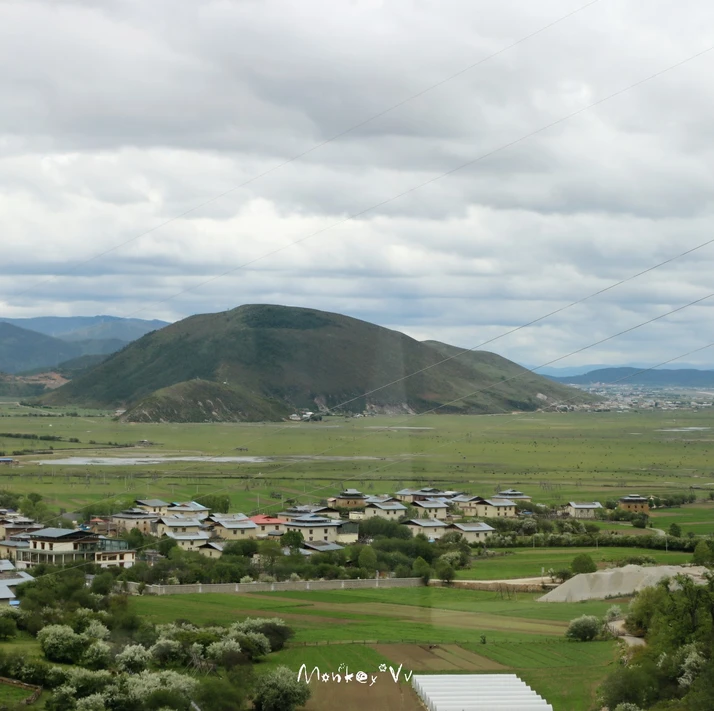
We woke up at 5:30 AM just to see the golden sunrise on the snow-capped peaks at 6:20 AM. After that, we set off for Shenbao Waterfall, a round trip of about 10 kilometers. Along the way, Tibetan locals build Mani stone piles for blessings—you can add a stone, but don't knock over anyone else's.
The inn owner said that around 10 AM, a rainbow would appear at the waterfall—and we actually saw it! The Tibetan locals told us, "You're lucky. Good fortune will come your way."
Legend says that the less you wear under the waterfall, the more your wishes will come true if you walk around it three times with your hands clasped. We stripped down to short sleeves and stepped in. The water pelted our skin painfully, and it was bone-chillingly cold. Our shoes were completely soaked, and we came out drenched. But it felt amazing.
Stop Five: Hiker's Home—A Touching Moment Under the Stars
Looking down at Lower Yubeng Village from Upper Yubeng Village was like staring at a postcard. We stayed at Hiker's Home, which cost only 50 RMB per night in the off-season. From the window, we could see the quiet village and the snowy peaks. On the wall of our room was a handwritten message:
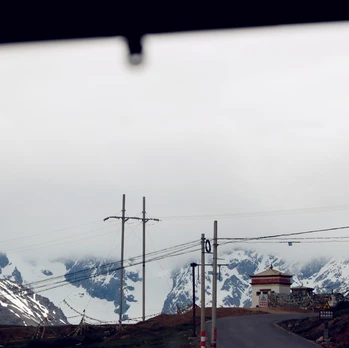
"A shower of dew falls from heaven. I stood at the foot of the Divine Waterfall and circled twice. The first circle was for my family's safety. The second circle was for me and the one I love to share this life together."
I circled three times. The third was for my family and friends—may they be healthy and safe.
That night, I went up to the rooftop to look at the stars. It was so beautiful it made me want to cry. I saw not just one, but several shooting stars, and I stomped my feet on the roof in excitement. Without a tripod, I used a brick to steady my camera and stood in the freezing wind for two hours, finally capturing an imperfect shot of the starry sky. You have to see Yubeng's night sky—it's the kind of beauty that makes you weep.
Stop Six: Ice Lake—Altitude Sickness and the Strange Joy of Shoveling Snow
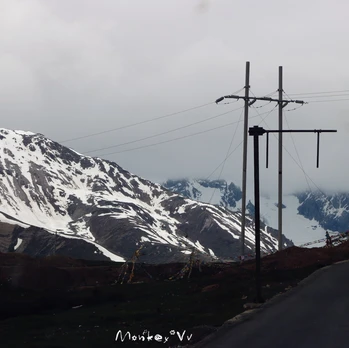
From Lower Yubeng to Ice Lake, the elevation is 3,864 meters, and the round trip is 12 kilometers. The trail is long, so start early and bring plenty of food and hot water. At high altitudes, altitude sickness is common—bring medicine. I'm usually the healthier one, but on the way to Ice Lake, Lao Deng got hit with altitude sickness. Don't panic—take your medicine, walk slowly, and rest when you need to. Hiking isn't about who gets there fastest; it's about experiencing the scenery along the way.
We reached Ice Lake at 4 PM, just as a light rain started falling. It was freezing cold. The water in Ice Lake had a strange, beautiful color, and there was still snow on the ground. Shoveling snow in the middle of summer—that strange, wonderful feeling is something I'll never forget.
For dinner, the four of us still ordered chicken soup—it had become our obsession. I highly recommend "Weixi Small Eats & Barbecue" in Upper Yubeng Village. The owner was incredibly generous and even gave us some of his homemade barley wine. I only had a small cup, felt warm, and went back to shower and do laundry while still sober. But that wine had such a strong aftereffect that I woke up at 2 AM to throw up—I later found out it was 45% alcohol! This was my second time throwing up in Yunnan—the first was from carsickness, the second from drinking... I was so embarrassed.
Stop Seven: Leaving Yubeng—Exiting via Xidang, an Unexpected Blessing
Leaving Yubeng via Xidang was easy enough, but the constant downhill sections made my feet ache terribly. We ran into a group of people heading up the mountain from Xidang, and I thought to myself: Not entering through Xidang was a smart move—the scenery isn't as good as Nilong. I recommend going in through Nilong and out through Xidang.
When we reached Xidang, we missed the bus back to Shangri-La. Just then, a guy called out, "Anyone going to Shangri-La? I'll take you along." We jumped at the chance. Not only was it more comfortable and cheaper than the bus, but we also got to see the other scenic spots included in our combo ticket along the way—the bus wouldn't have stopped. I'm grateful for everything.
Shangri-La: Wind Over the Grasslands and a "Battle of Wits"
Napahai Lake: The Freedom of Biking and Horseback Riding
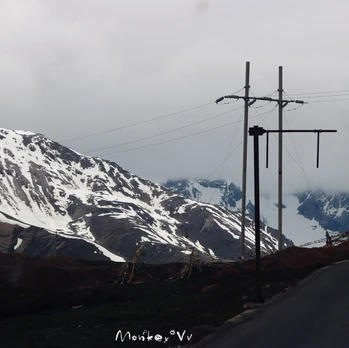
In Shangri-La, we rented an electric scooter (70 RMB for the day) and rode around Napahai Lake. Hiring a car is boring—riding yourself is way more fun, and you can go wherever you want. Napahai is a vast expanse of grassland, perfect for taking your time and enjoying the view. We also went horseback riding—my butt was sore from the bouncing, but galloping across the prairie felt incredible.
Outsmarting a Shady Vendor
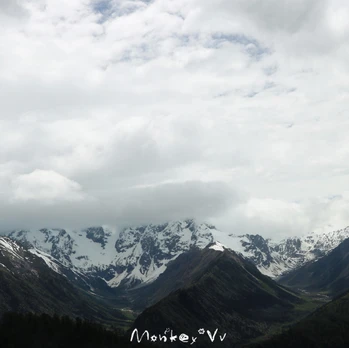
In Shangri-La, we ran into a dishonest vendor. I won't go into the details, but we handled it like vigilantes and "took them down." When you're traveling, safety comes first, but don't be afraid to stand up for yourself if you encounter injustice.
Lugu Lake: Sunrise from a Pig Trough Boat and a Scooter Ride Around the Lake
The ride from Lijiang to Lugu Lake was bumpy, but the moment we saw the water, everything was worth it. We stayed in Lige and got up early to take a pig trough boat out for sunrise. The lake was as still as a mirror, and the sun slowly rose from behind the mountains, painting the entire sky in shades of red.
After that, we rented an electric scooter and circled the lake. Lugu Lake is huge—it takes hours to go all the way around—but the scenery along the way makes you forget about time. The water was so blue it didn't look real. Mosuo villages dotted the lakeshore, and everything was peaceful and beautiful.
Epilogue: Graduation Isn't an End—It's a New Beginning
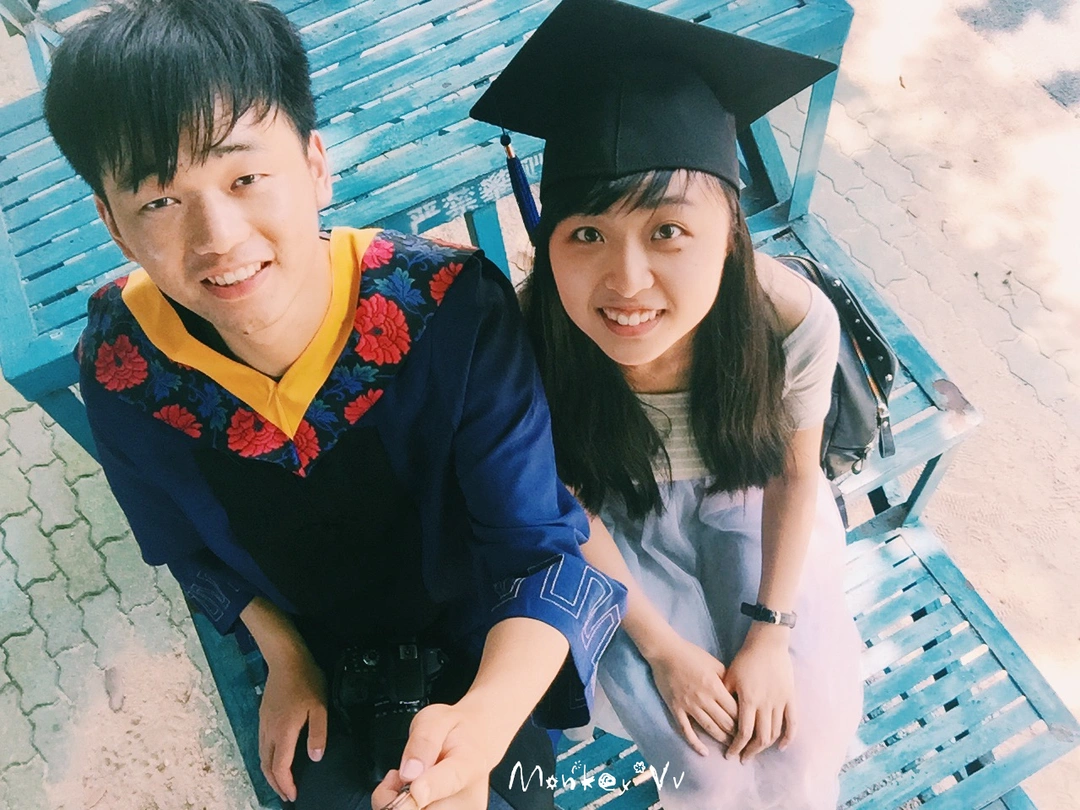
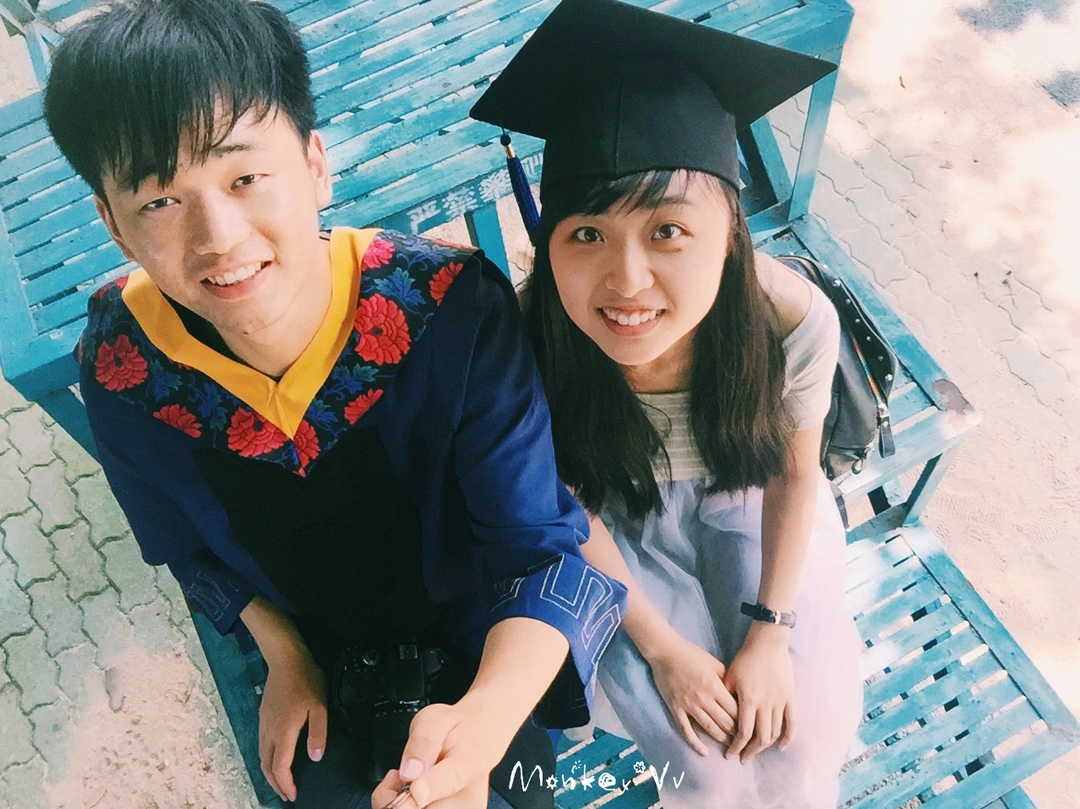
In June 2016, Lao Deng graduated. In June 2017, I graduated too. Graduation isn't an end—it's a new beginning. We went from undergrad to grad school, even though we weren't in the same year or the same major, but we've always been together. Everyone we met said, "You two are so lucky to have each other. That's wonderful." But the truth is, there's no such thing as coincidence. Every beautiful moment requires effort, again and again.
On this trip, we carried ridiculously heavy backpacks, wore super rugged gear, had no pretty dresses or fancy photo props, and got tanned like dogs. But that's exactly what made it unique and powerful.
Finally, some advice for anyone planning a trip to Yunnan:
- Safety first: Whether you're traveling alone or in a group, safety is always the top priority
- Bring your student ID: Only those under 25 can get student tickets—it's brutal, so travel while you're young
- For Yubeng, go in through Nilong and out through Xidang: The scenery is better and the experience is more unique
- Bring a thermos: Staying hydrated with hot water is crucial at high altitudes
- Don't expect too much from the inn owner's cooking: But their warmth is genuine
- Don't miss the starry sky: Yubeng's night sky is beautiful enough to make you cry
Those twelve days in Yunnan felt like a pilgrimage. We watched snow in Yubeng, rode horses on the grasslands of Napahai, circled Lugu Lake on a scooter, and even took down a shady vendor like heroes. So many moments were frozen in photographs, melting deep into our hearts.
Something seemed to bloom—with a soft pop, you could feel it happening in real time.
This was our graduation trip. And it was the fulfillment of a promise we'd made to each other, years in the making.
You should also read:
Eight Little Details of a Trip with Your Bestie | A Three-Day November Getaway to Lugu Lake
Eight Little Details of a Trip with Your Bestie | A Three-Day November Getaway to Lugu Lake A few idle days at the end of the year feel like stolen time, always stirring a restless itch. I had originally planned to go to Yunnan with…
Continue reading...
Hidden Among the Misty Mountains of Southeast Yunnan Lies a Real-Life Shangri-La—Qiubei Puzhehei
Hidden Among the Misty Mountains of Southeast Yunnan Lies a Real-Life Shangri-La—Qiubei Puzhehei We're always searching for faraway places, yet we often overlook the hidden paradises right under our noses. The term "Shangri-La" has been overused, and every trendy scenic spot is now packed with…
Continue reading...
Meili Pilgrimage, Snowy Mountain Kora: A Winter Journey That Brushed Past Death
Meili Pilgrimage, Snowy Mountain Kora: A Winter Journey That Brushed Past Death Prologue: Being Alive Is the Greatest Fortune Outside my window, Chongqing is enduring a rare century-level cold snap. This mountain city, which hasn't seen snowflakes in over a decade, is now blanketed in…
Continue reading...