Meili Pilgrimage, Snowy Mountain Kora: A Winter Journey That Brushed Past Death
Meili Pilgrimage, Snowy Mountain Kora: A Winter Journey That Brushed Past Death
Prologue: Being Alive Is the Greatest Fortune
Outside my window, Chongqing is enduring a rare century-level cold snap. This mountain city, which hasn't seen snowflakes in over a decade, is now blanketed in pure white. And yet, I was thousands of kilometers away on the Tibetan Plateau, setting foot on the kora trail leading deep into the Meili Snow Mountains—to Yubeng Village. Now, sitting in my warm home, sipping lemon water handed to me by my mother as I type these words, I can still feel the palpitations of someone who has narrowly escaped death.
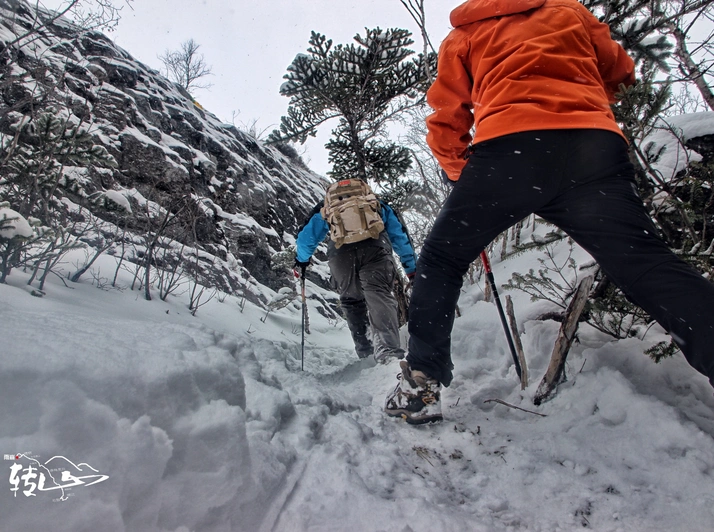
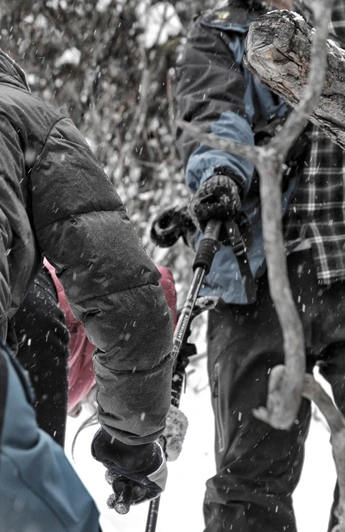
Looking back on this journey, I'm truly terrified. On Baima Snow Mountain, our car skidded on icy roads, charging straight toward a cliff. The tire tracks had already crossed the edge without guardrails—one more inch forward, and this travelogue would never have existed. Deep in the mountains that day, the snow was calf-deep. We descended from Ice Lake, practically sitting on the snow, sliding down around cliffs. When speed got out of control, we crashed and stumbled; falling became routine—on the final stretch to the Divine Waterfall alone, I fell nearly ten times. My camera's UV filter cracked, snow water seeped into the lens and wouldn't retract, so I kept shooting with a fogged-up camera. My hands were cut by alpine vegetation, but before I could stop the bleeding, the biting wind quickly froze the wounds shut.
But even so, if I could do it all over again, I would still go. I would still head into that vast expanse of snow in Yubeng's deserted winter, facing this cold snap head-on.
Why Go on a Kora? The Call of the Sheep Year

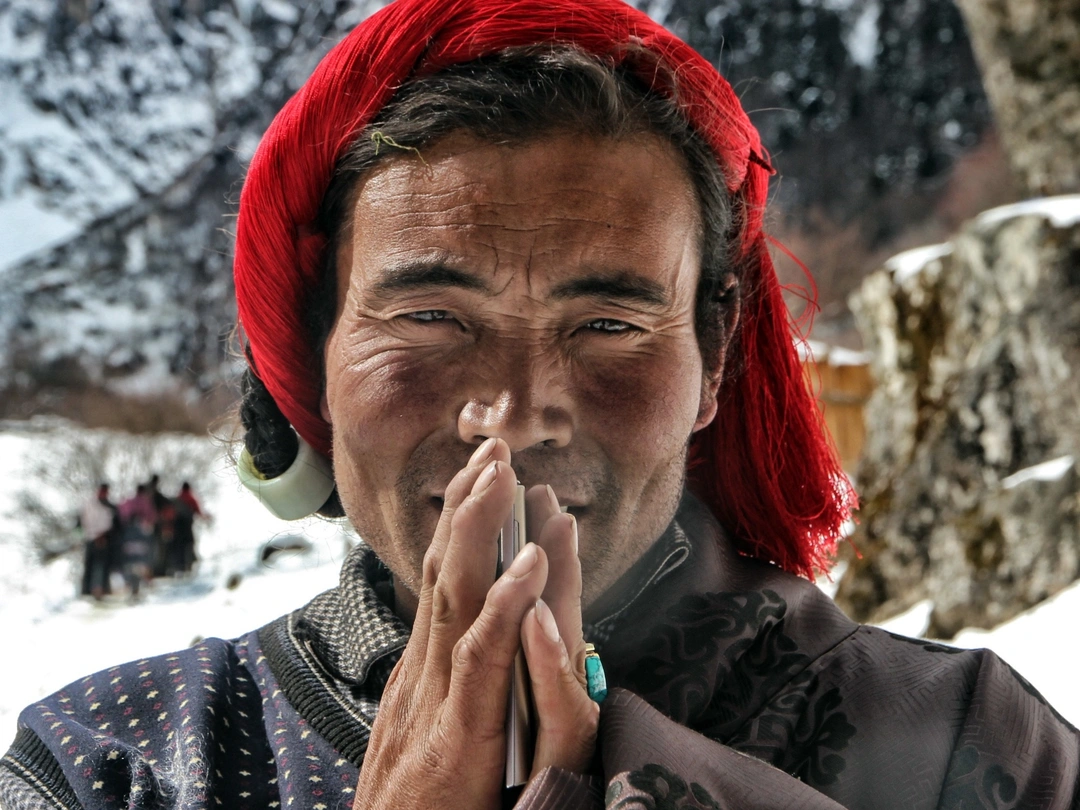
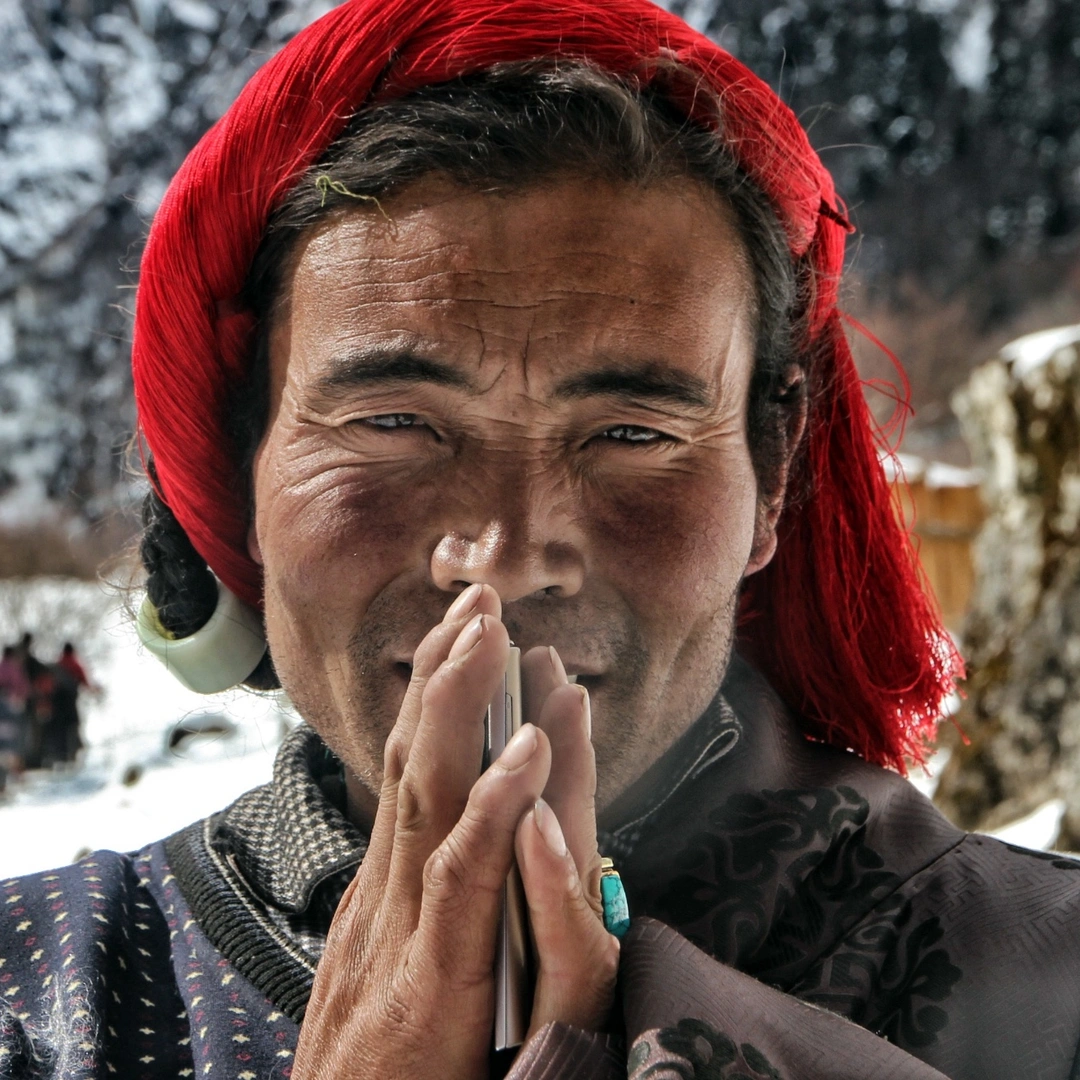
I rushed to do the kora at the tail end of the Tibetan Sheep Year, because Kawagebo—the main peak of the Meili Snow Mountains—belongs to the sheep zodiac sign. In Tibetan tradition, the Sheep Year is the most important year for pilgrimage to Meili. Thousands of Tibetans flock here to complete the most significant religious ritual of their lives. Kora, or circumambulation, is a widespread religious practice in Tibetan areas. Along the way, those devout and pure eyes remain deeply etched in my memory.
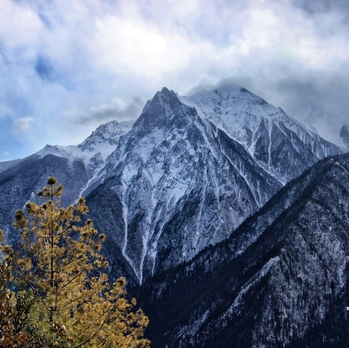
Besides catching the last train of the Sheep Year, I had an even bigger wish: to see Kawagebo's true face with my own eyes. The Thirteen Peaks of Meili are shrouded in clouds and mist year-round, rarely revealing themselves. It's said that if you're lucky enough to glimpse her splendor, good fortune will follow you for an entire year.
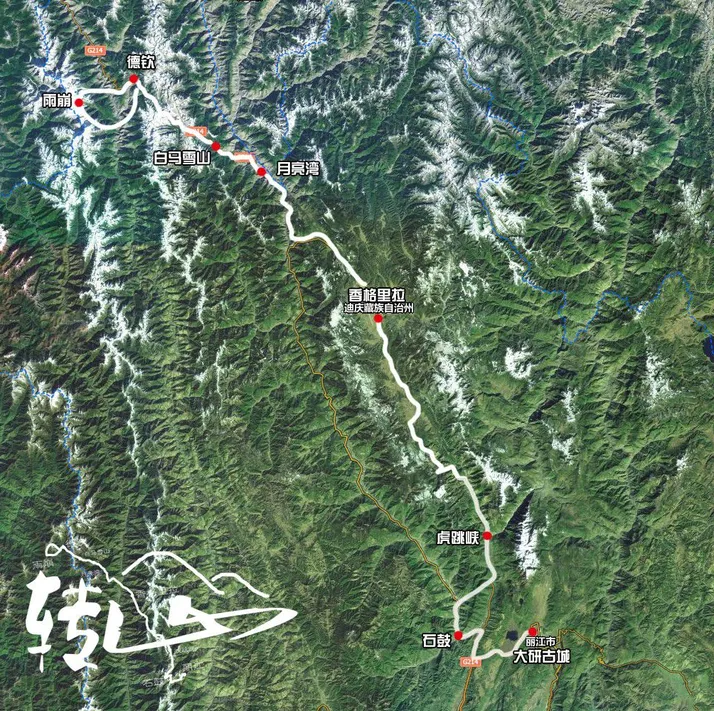
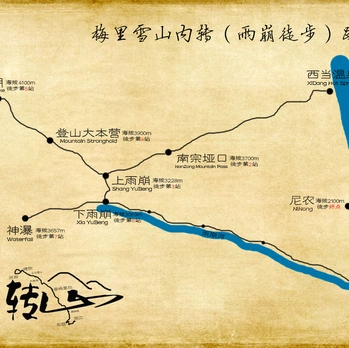
For this pilgrimage, I set aside a full nine days. The itinerary was roughly divided into two parts: pilgrimage and kora. The pilgrimage started from Lijiang, gradually approaching the Meili Snow Mountains, taking about five days; the kora began at Feilai Temple, going deep into Yubeng, Divine Waterfall, and Ice Lake, completing the circuit and returning in four days.
The Pilgrimage Road: From Lijiang to Meili
The pilgrimage starts in Lijiang. From the glittering Dayan Old Town to Shigu Town at the First Bend of the Yangtze River; from the roaring Tiger Leaping Gorge to the lost horizon of Shangri-La; watch the Jinsha River's Great Bend, where green waters trace perfect arcs through rugged mountains; cross Baima Snow Mountain, passing the 4,292-meter pass, and finally arrive at Feilai Temple at the foot of the Meili Snow Mountains.
The Kora Trail: 4 Days of Inner Circuit
The inner circuit starts from Xi'dang Hot Spring, hiking a full day to reach Upper Yubeng Village; the second day goes round-trip to Ice Lake and arrives at Lower Yubeng Village; the third day goes round-trip from Lower Yubeng to Divine Waterfall, then exits through Nínóng to complete the inner circuit.
Lijiang: Slow Time on the Edge of the Plateau
The journey began in Dayan, a thousand-year-old ancient town on the edge of the plateau.
My first impression upon arriving in Lijiang was dryness. Winter in Yunnan is incredibly dry. After exiting Lijiang Airport, walk along the elevated road for five minutes to reach the bus stop. Take bus No. 11 for 3 yuan to get to the old town—so don't fall for those online 20-yuan shuttle bus scams; saving money is the way to go.
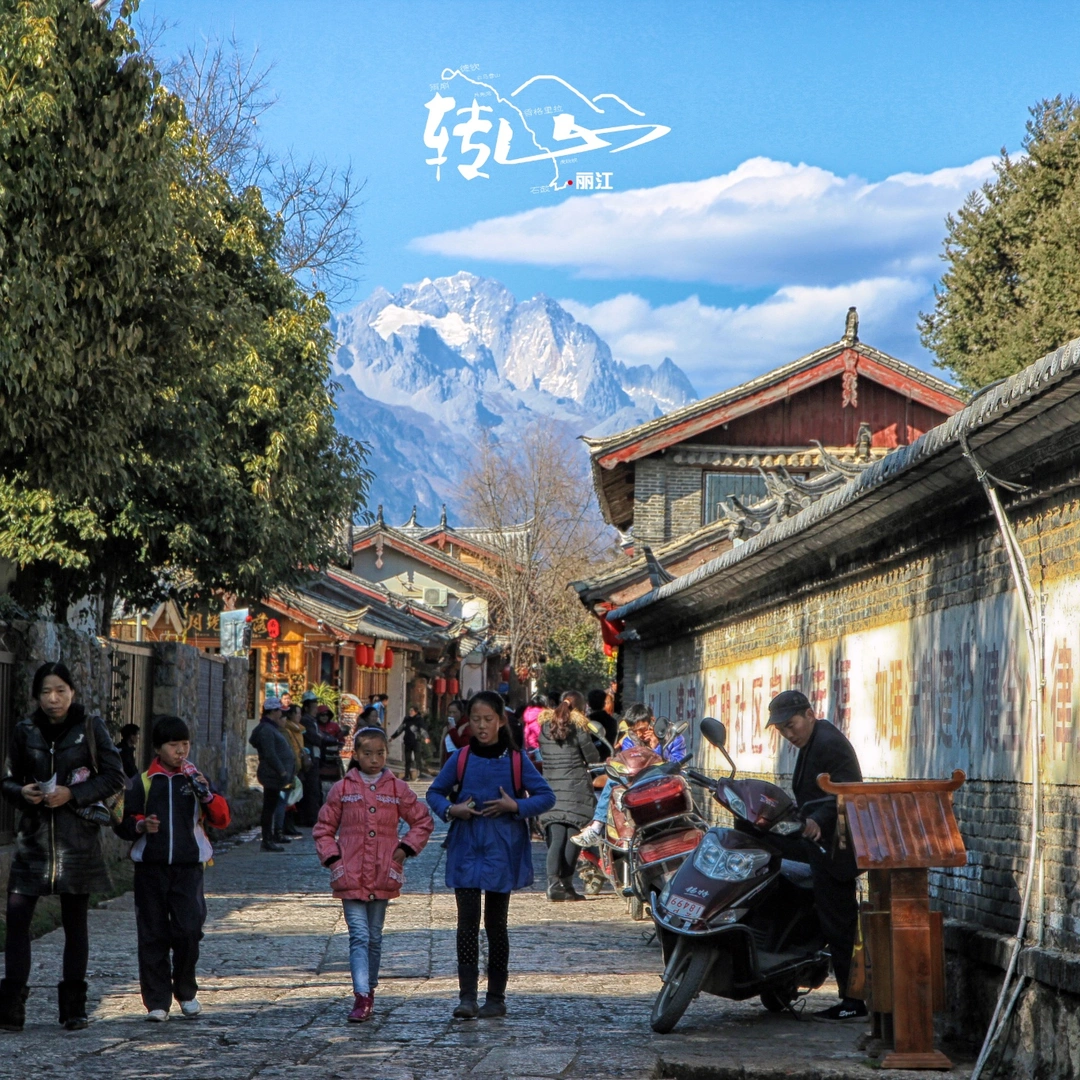
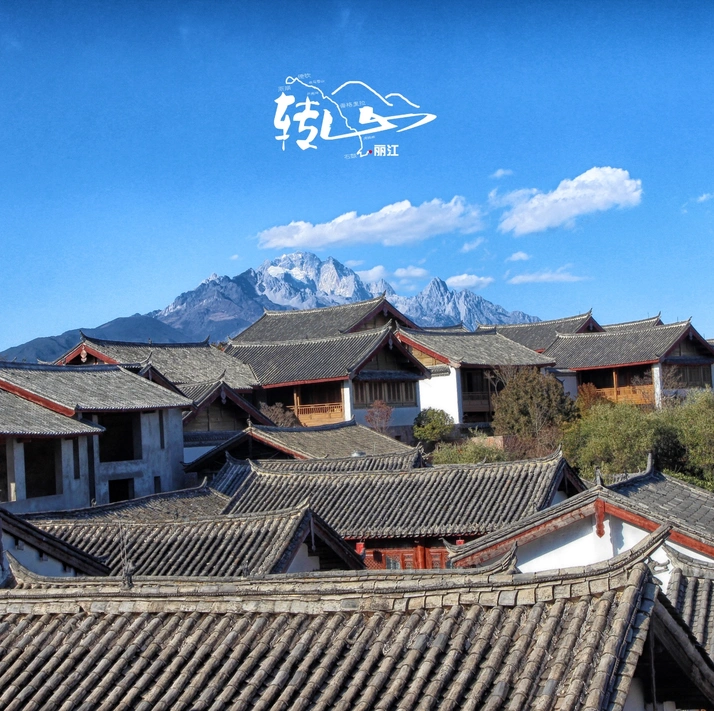
The plateau weather was unreal—blue skies and white clouds. Sitting by the window on the bus, I passed mountains, canyons, fields, and rivers—a feast for the eyes. The majestic Jade Dragon Snow Mountain accompanied me all the way, clearly visible, and as a southerner who rarely sees snow mountains, I was thrilled.
Entering the old town through the South Gate, Dayan Old Town is what people usually mean by "Lijiang Old Town." Before officially heading up to the plateau, I decided to rest for a full day in this small town on the plateau's edge.
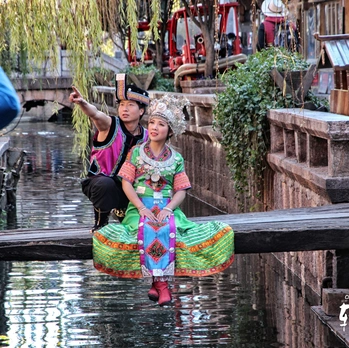
Lijiang was once a transit point on the Silk Road and the Ancient Tea Horse Road, with nearly 900 years of history. Small bridges over flowing water and well-arranged traditional houses give it a touch of the water towns south of the Yangtze River. In my impression, Lijiang is a place to zone out. A sliver of sunlight, a bit of ease. Rows of cafes, bars, and small shops dazzle the eyes. You can leisurely read a book, listen to "A Moment," soak up the sun, play with a dog, and be as lazy as a cat curled up on a street corner, too drowsy to open your worldly eyes. This place absolutely meets all the artistic imaginings of a literary youth.
Getting Lost Is Also a Pleasure
Wandering through the old town is actually a skill. It's a natural maze. Centered around Sifang Street (Square Street), Dayan Old Town has a labyrinth of alleys and lanes, rising and falling, connecting in all directions. But there's a pattern—you can almost always see the Wangu Tower on Lion Hill, the highest point. Head toward Wangu Tower, and you'll find Sifang Street, from where you can reach anywhere in the old town.
But my advice is: go with the flow. Instead of struggling to find your way, just wander aimlessly and enjoy it. That's how you can truly settle down and feel every flower, every blade of grass, every shop and stall.
I happened upon an alpaca—a real one! "Hey buddy, don't be so arrogant! Come on, give me a smile!" "Or how about I smile for you?" (Laughter)
Near the Big Waterwheel is a tourist hub and the strictest ticket-checking area. It's nearly impossible to enter the old town for free from this direction.
Without realizing it, sunset came. The warm sunlight gently spilled over the rooftops, bringing immense comfort. I found a small wooden chair on a street corner, sat down, and gazed at the houses before me. Crowds of people streamed past, the sounds of hawking and laughter rising and falling. But my heart had already begun to drift toward the distant Tibetan lands.
Accommodation: Good and Cheap
Regarding accommodation in Lijiang, there are many options inside and outside the old town, but since you're here, it's best to stay inside. Most lodgings in Dayan are guesthouses, very comfortable. I stayed in Lijiang for four days, at three different guesthouses, paying 70, 50, and 30 yuan respectively—yes, that cheap. As long as you pay attention to online information, finding cost-effective guesthouses isn't hard.
Staying on Lion Hill is a good choice; you can overlook the entire old town. There are many lodgings on Lion Hill, and it's relatively quiet. The inn I stayed at was next to Wangu Tower on Lion Hill. The view from the balcony was breathtaking—watching the golden sunrise on the snow mountain in the morning, the old town sunset in the evening, and the stars at night—all for just 70 yuan a night.
Lijiang by Night: Another Flavor
Before I knew it, the sky was ablaze with fiery clouds. Night quietly fell. Lijiang at night has a different taste: dazzling lights, neon adorning ancient buildings, songs drifting from bars. The sound of Dongba drums rose, and the rhythm of "A Moment" intoxicated a girl nearby.
My stomach started growling. Thinking about the Naxi cuisine I was about to taste made me drool. But this plate of food in front of me—I couldn't eat it. Especially that thing in the bottom right corner.
88 Snack Shop: Worth the Queue
There's always a line outside Shop 88. I took a number and sat at the door waiting, hungry and bored. But during those 20 minutes sitting in front of Shop 88, I found a new pleasure—observing the hurried passersby.
Tourists and locals streamed past me endlessly. They stopped and started, paused to take photos, haggled, passed by. Watching quietly, you can pick up on things. When you're the one walking and playing, you think you see more, but you rarely see anything truly. Stop, sit for a while, and you see things clearly. The edges and corners of ancient buildings are obscured by shop neon; Naxi girls and boys hide in the crowds of tourists. Their stories flash past like light, brushing by me.
Got my number! I sat in a narrow corridor between old buildings, on wooden chairs, under dim yellow lights.
Naxi Grilled Fish (also called Dongba Grilled Fish) is a traditional dish from the Ancient Tea Horse Road and a signature Naxi dish. It's marinated with special spices, mainly fermented black beans, and prepared through grilling, frying, and pan-searing. Slightly spicy, with a delicious taste, crispy skin, and tender meat.
Chickpea Cold Noodles (jī dòu liáng fěn) is also a Lijiang specialty, also known as black cold noodles. The "Lijiang Prefecture Annals" from the Qianlong era called this snack "black tofu." It has remained popular for centuries—eaten cold in summer, hot in winter. Though plain-looking, its texture is smooth and delicate, making it a great dish with rice or wine.
After eating, I strolled through Bar Street. They say, "Coming to Lijiang is to encounter a romantic love story"—in short, a "romantic encounter." But tonight, I didn't feel like going in. After all, I'm a gentleman. Romantic encounters... well... yes, I went tomorrow night. (Smile)
Back at the guesthouse, Lion Hill was very quiet at night. The noise from the bars at the foot of the hill became a blurred nocturne, making Lion Hill's tranquility even more pronounced. Overlooking the entire city, thousands of lights twinkled, intoxicating me.
Tomorrow, I'm heading to Shigu Town. How beautiful an arc will the magnificent First Bend of the Yangtze River trace across this land? I'm looking forward to it. But at this moment, what I think about most is distant Yubeng—that small village deep in the snowy mountains.
Shigu: Witnessing the First Bend of the Yangtze
When the first light of dawn fell on Lion Hill, the second-floor room of the guesthouse was already tinged with a faint gold. I pushed open the window and waited for the sky to fully brighten. The sun slowly rose, and Jade Dragon Snow Mountain turned a pinkish gold, like a young girl in first love blushing at the sight of her sweetheart.
I stepped out of my room and stood on the guesthouse terrace, gazing into the distance. The morning sunlight bathed the ancient town below the plateau, warm and comforting. Distant mountains, nearby houses—I was lost in a daze again for a long time.
Going straight down from Lion Hill to the roadside, a local Lijiang baba (flatbread) was today's breakfast. Golden and fragrant, it was crispy and delicious.
The bus station didn't have a bus to Shigu as I had hoped. It turns out the road to Shigu splits off midway from the road to Tiger Leaping Gorge and Shangri-La, so there are fewer buses. I needed to take a minibus. I got a spot in a 7-seater car and finally set off. Some locals from Shigu were on board, constantly describing Shigu's beauty, making me wish I could fly there. Shigu Town's most famous feature is the beautiful bend of the Yangtze River in front of the town, where it makes a big turn and changes its original flow direction.
The car kept descending; Shigu's elevation is lower than Lijiang's. The mountain road was bumpy, so I closed my eyes—I couldn't see the cliffs! By the time I got off, it was already lunchtime. I found a nameless local eatery by the river. When ordering, I noticed every table had a small red bowl of food. I asked and learned it was called "Riverside Spicy."
A small, greasy bowl, bright red, looking very spicy. This was the famous riverside spicy (the name is pretty casual, isn't it?). According to locals, riverside spicy was invented by Naxi women living along the Jinsha River. The Three Parallel Rivers area has harsh natural conditions; people go up mountains and down rivers every day, wading through water, which easily leads to rheumatism over time. To help their husbands eat well and stay full while also relieving rheumatism, Naxi women experimented repeatedly and created this dish. The shop owner told me that in Shigu, whenever you host a banquet or a feast, you must have a bowl of riverside spicy to make it proper. I have to say—this was the best dish I ate on the entire trip. No contest.
Climbing the Hill to See the First Bend of the Yangtze
After lunch, the weather turned gloomy in the afternoon, with more and more clouds gathering. Standing at the road level, it was hard to get a full view of the First Bend of the Yangtze. On a local's advice, we climbed a small hill. The mountain path followed the village upward, and along the way, every house faced the great river—real "river-view homes."
The terraced fields in the mountains were beautiful. Even in deep winter, there were rapeseed flowers in bloom—truly the plateau. Dark clouds rolled in; it looked like the weather was about to change.
The higher we climbed, the more open the view became. The emerald-green waters of the Yangtze were about to reveal themselves. I unconsciously quickened my pace.
At a certain height, Shigu Town, the river beside it, and the fields at the village's edge were all clearly visible. This was the "path" we took—there was actually no real trail.
Speaking of this Jinsha River, legend has it that residents along its banks once sifted sand for gold, hence the name "Gold Sand River." It flows out of Qinghai, passes through Tibet, enters Yunnan at Deqin County, and continues south through the Hengduan Mountains. When it reaches Shigu Town, blocked by a mountain cliff, it makes a sharp turn northeast, forming a huge V-shaped bend. This wonder is called "The First Bend of the Ten-Thousand-Li Yangtze River."
Finally, I saw this great bend—truly spectacular.
I thought few people would come to Shigu, and even fewer would climb this hill. But halfway up, we still encountered a cheerful mother-and-son pair from Shenyang, guided here by a local. That little boy was so cute—he refused to cooperate with his mom for photos but struck poses in front of our camera. Was it because big brother was too handsome?
Old Gong was the travel buddy who set out with me this time. He would part ways with me in Shangri-La, heading back to Dali, while I continued alone toward Meili.
Sitting on the withered grass, gazing at this bend in the river and the small town below, my mind wandered. I was glad I had set off again, irresponsibly, with hardly any detailed planning. This afternoon on the small hill in Shigu Town was quiet. Watching the river, the cooking smoke, and the terraced fields, I felt the world had shrunk to just this patch of land—suddenly small. In a foreign place, seeing someone else's home also felt strangely familiar.
This bend of the river before me came from Qinghai and changed course here. It would flow past Chaotianmen, to my hometown Chongqing; past the Yellow Crane Tower, to my university in Wuhan; and finally to the sea, to Shanghai, where I would work in the future. It ran through my entire story.
The river was green this season. A local big brother told me it would turn yellow in a few months.
By evening, the sun was about to set before we reluctantly left this peaceful land. A town elder told me Shigu might be developed into a tourist attraction in a few years, and the locals would become prosperous. He smiled happily. I was happy for him, but also a little disappointed. There are already too many tourist attractions, leaving only the stench of money. Could this little bit of rustic, authentic Shigu be preserved?
It was already dark when we returned to Lijiang. I stood on Lion Hill, overlooking the old town at night. I would soon leave here for Shangri-La. Entering the Tibetan area tomorrow meant that this pilgrimage road to Meili was officially on track.
Old Gong ordered a bowl of cross-bridge rice noodles, and I had some snacks. I couldn't eat much—probably because that bowl of riverside spicy at lunch had been too filling.
That night, we picked a bar that wasn't too noisy, with about a dozen people. The singer was very good. His weathered voice, singing love songs, could stir deep memories. On this night in the ancient town beneath the snow mountain, listening to such songs, I felt a bit tipsy—even though we were only drinking non-alcoholic beverages.
Within the five meters between our table and the singer, I could see two other tables. Farther away was a table of Koreans, a lively group speaking a language I didn't understand, sharing their joy. Closer to us was a girl—just one. Her table was full of beer bottles. She sat silently, as if waiting for someone, but no one ever came. She would suddenly run up and beg the singer to let her sing a song, then come back and sit in silence again. I think she must have had a story. The person she was waiting for might never come, or might not even be here. Many people here miss distant places, which is why they unconsciously exile themselves here.
Today, my stamp booklet gained another mark. I love collecting these travel symbols. The postmark clearly marks the place and date at that moment—it feels more real to me than a location tag on social media. The era of Weibo and WeChat has made recording simple, but besides posting on social media, I usually still write a paper diary, go to the local post office to get a stamp, check the route and hand-draw it in my notebook... I even insist on sending postcards to friends and myself.
I will always cherish the smell of ink on paper. On a swaying train carriage, under the dim light of a hotel room, recording every bit of the journey with a pen. Years later, the paper will yellow, but the emotions from that time will pierce through the paper, never fading with time—something social media can never replace.
Shangri-La: The Lost Horizon
I forgot how I got back to the guesthouse from the bar last night; everything felt hazy. Early in the morning, after thanking and saying goodbye to the innkeeper who had been so attentive, we continued our journey toward Meili. Today, we officially entered the Tibetan area and arrived in Shangri-La.
I went to the bus station on the fly and bought tickets for the next bus to Shangri-La. The bus was about to leave, and we got on as standbys. The scenery along the way was beautiful, completely different from the heavy snow and dangerous roads I had imagined. The weather was good too. Shortly after leaving the city, a rainbow even appeared. National Highway 214 was in decent condition.
After crossing Songyuan Bridge, we officially entered the Tibetan area. The driver took a short break here. The Jinsha River, after its big bend at Shigu, flowed here and became the geographical boundary between Yulong County in Lijiang and Diqing Tibetan Autonomous Prefecture.
Once inside the Tibetan area, the landscape began to change noticeably. The altitude kept rising, and snow mountains accompanied us all the way. Green turned to withered yellow in an instant, and soon everything was white...
I sat by the window, never taking my eyes off the scenery outside. The mountain road twisted and turned like a tangled rope. Outside, blue skies and white clouds, yet there was sporadic rain. The sound of raindrops tapping on the glass seemed off. By the time I realized it, I saw a vast expanse of white—it was snow.
I couldn't remember when the scenery outside turned snowy. It felt like a sudden turn, and in an instant, the view outside became a white world. The plateau landscape was astonishing. By now, the bus had been in the Tibetan area for several hours. Many passengers, tired from the journey, had fallen asleep, unaware of the snow outside. Old Gong beside me was also snoring lightly. Only I was excitedly watching the changing scenery.
On such road conditions, an accident could happen in a moment. Along the way, we saw overturned vehicles—terrifying.
Wandering Through Dukezong Old Town
Finally, after hours of bumpy mountain roads, we arrived in Shangri-La.
I first heard the word "Shangri-La" in a song, and later learned about "Lost Horizon." "The place where the sun first shines is the eastern Jiantang; the most blessed place on earth is Shangri-La by the banks of the Naizi River." In 1933, James Hilton, in his novel "Lost Horizon," first depicted an eternal, peaceful, and tranquil land hidden in the eastern mountains—"Shangri-La." It made me, decades later, yearn for it deeply.
As soon as we arrived in Shangri-La, before even entering the old town, it started snowing—and with the sun shining.
Dukezong Old Town is the largest Tibetan residential complex, with over 1,300 years of history. It was once a window for cultural exchange between the snowy Tibetan regions and Yunnan, and a hub for economic trade across Sichuan, Tibet, and Yunnan. The old town is built along the mountain, with uneven roads paved with ancient stones following the natural terrain. To this day, deep hoof prints remain on the stone slabs—tokens left by time from the old horse caravans. For the caravans traversing the Ancient Tea Horse Road, Dukezong was a key town and the first stop after entering Tibet.
Moonlight Square is the center of Dukezong. On ordinary days, many Tibetan aunties dance a very famous dance here—square dancing! "You are the most beautiful cloud in my sky..." The weather was great today—bright sun and snow at the same time, completely overturning my worldview.
"Those white doves, backs to the setting sun, the scene is too beautiful to look at." Moonlight Square has many doves, flying around Tibetan-style buildings, a delightful sight.
In front of Moonlight Square, a park built along the mountain came into view. The most eye-catching was the golden prayer wheel. Even from afar, its grandeur was palpable, awe-inspiring.
Turtle Mountain Park was built during the Kangxi era, following the mountain's contours. At the top is Chaoyang Tower, three stories high. Climbing to the top, you can see the entire Sun and Moon City. At the foot of the mountain is an ancient well that once supplied drinking water to the entire town, clear and sweet. Years ago, groups of young girls carrying water every morning formed a beautiful scene in the old town. The Turtle Mountain Temple and the prayer wheel are the park's most distinctive features.
Turtle Mountain isn't high. Climbing it, prayer flags fluttered in the wind, and occasionally Tibetan pilgrims could be seen.
Turning the World's Largest Prayer Wheel
On Turtle Mountain Park stands the world's largest prayer wheel. The entire wheel is about five stories high, made of pure copper gilded with gold. The upper part of the cylinder is engraved with reliefs of the four great Bodhisattvas: Manjushri, Samantabhadra, Avalokiteshvara, and Kshitigarbha; the lower part is carved with the Eight Auspicious Symbols of Buddhism. Inside the cylinder are stored 1.24 million sutras and mantras, along with various Buddhist treasures, weighing 16 tons.
Below the prayer wheel is a ring of handles for people to push. Turning such a massive wheel requires joint effort from many people. Each clockwise rotation is equivalent to silently reciting Buddha's name 1.24 million times. Turning it three full rounds can eliminate disasters and bring good fortune. I gave it a try too—the first round really required a lot of strength, but once it got moving, inertia made the remaining two rounds much easier.
That day, standing on Turtle Mountain in Dukezong, I watched for a long time. Distant snow-capped mountains, nearby colorful Tibetan houses. Shangri-La is indeed a place you can fall in love with.
Standing there, quietly watching this city. It was hard to imagine that such a beautiful scene before me was a wounded version. In January 2014, Dukezong Old Town suffered a massive fire, burning down nearly two-thirds of its buildings. From then on, the once-thriving Dukezong suddenly became deserted, never regaining its former glory.
If Shangri-La is the lost horizon, then Dukezong, after 2014, became a truly lost and unrecoverable city. This once-prosperous ancient town on the Tea Horse Road was now scarred and desolate. But faintly, wandering through the streets, you could still see traces of the past. Fortunately, part of Dukezong was preserved, like the Venus de Milo with her broken arms, making it all the more precious.
Winter in Shangri-La already sees few tourists, and the desolate Dukezong even fewer. Walking through Dukezong that day, watching the once-bustling stone streets become cold and empty, with hardly anyone even in Moonlight Square, I couldn't help but sigh. But looking into the distance, the mountains and rivers remained; looking up, the blue sky and white clouds. The beauty of this land was never just because of its people. May it be well.
Someone from a nearby house had swept snow into a cute snowman.
Night slowly fell. The winter night in Dukezong on the plateau was bitterly cold. The streets and alleys were nearly empty. This declining old town was eerily quiet.
A handful of greens dropped into the hot pot, releasing a burst of fragrance. Sitting in a small shop on a corner of the old town, the landlady placed a heater under our feet. Business wasn't great, but compared to a few other places, it was passable. Winter in Dukezong just didn't attract many people.
A bowl of dipping sauce with all five flavors, a spoonful of chicken broth, a few pieces of hot, tender chicken—it felt like pure bliss. Sitting near the door, I listened to the landlady talk about her former inn in the burned-down area. Even in winter, it used to be fully booked. Dukezong was once bustling, streets and alleys packed with people, lively and noisy. As she spoke, the landlady, in her thirties, suddenly fell silent. She smiled.
Final Thoughts
Now, sitting in my warm home, typing these words, jokingly recounting these experiences, it all seems so easy. My mother brought over a steaming cup of lemon water. Firecrackers sounded outside the window. I glanced at the photos on my computer and her worried eyes, and said, "It's okay, I didn't fall." She smiled.
Flipping through those photos—ones I had to bring back even with a damaged lens—I thought to myself: If I could do it all over again, I would still go. I would still head into that vast expanse of snow in Yubeng's deserted winter, facing this cold snap head-on.
Heavy snow falling, life hanging by a thread. The pilgrimage road was full of scenery; the kora trail had no turning back.
This was my Meili pilgrimage journey—a winter adventure that brushed past death, a baptism of the soul, a memory that can never be replicated.
You should also read:
Two Girls' Graduation Trip: Dali and Shuanglang – A Poetic Farewell to Mountains and Sea
Two Girls' Graduation Trip: Dali and Shuanglang – A Poetic Farewell to Mountains and Sea Preface: Catching the Tail of Youth, Heading South During our senior year of college, my roommate and I – two girls studying in Beijing – decided to bid farewell to…
Continue reading...
Cloud Travelogue · Dali of Wind, Flowers, Snow, and Moon: A Three-Day, Two-Night Journey of a Free Spirit
Cloud Travelogue · Dali of Wind, Flowers, Snow, and Moon: A Three-Day, Two-Night Journey of a Free Spirit I am a cultured female foodie with a touch of rogue charm. I slung on my backpack, took my lover's hand, and set off on a spontaneous…
Continue reading...
The Meaning of Travel – A Tengchong Story: A Journey of the Heart and Personal Growth
The Meaning of Travel – A Tengchong Story: A Journey of the Heart and Personal Growth Setting Out, Only to Return a Better Self Some say travel is nothing more than leaving a place you're tired of, only to go to a place where others…
Continue reading...