The Wind, Flowers, Snow, and Moon of May: A Romantic Encounter with Lugu Lake and Lijiang
The Wind, Flowers, Snow, and Moon of May: A Romantic Encounter with Lugu Lake and Lijiang
Life is an endless journey with no final destination, and every departure marks the beginning of a conversation with yourself. In late April 2013, I set off on a ten-day trip to Yunnan with three equally "straightforward" girls, carrying restless hearts. Along the way, we woke up in the mist of Lugu Lake, reveled in the twilight of Lijiang, and let ourselves drift in the gentle breeze of Dali—the wind, flowers, snow, and moon of May, we experienced them all.
Why Set Out? Because the Mountains Are There, Because the Heart Is Far Away
I recently stumbled upon a short film called "Travel Notes," which asked: Why do we travel?
A mountaineer says, "Because the mountains are there." A fresh graduate on her first long trip answers, "Some things, if you don't do them now, you might never do them in your life." Every heart on the road has its own unique reason.
For me, travel is life itself.

But the reality is, for most people, travel happens simply because "it's a holiday"—they don't want life to be stuck on an endless loop. I'm one of those people too. So during holidays, travel often turns into a nightmare, betraying its original purpose. The only solution is to change your mindset, change your approach, and turn a statutory holiday into a real celebration.
This May Day trip to Yunnan coincided with the peak holiday period, but our spirits remained high. As usual, what was supposed to be a "budget trip" somehow turned into a "luxury binge"—all because I couldn't control my mouth, my craving for comfort, or my restless heart.
Before we set off, when I posted a recruitment notice on a forum, many people doubted that my budget of 1,500 yuan (about $220) could even cover accommodation. In the end, we did go over budget with all our indulgences, but it was within acceptable limits. I'll share the detailed itinerary at the end, because the best should come first—the memories from the journey and the images in our cameras are the real treasures.
First Stop: Lugu Lake — A Bittersweet Paradise on Earth
Speaking of Lugu Lake, it's a love-hate relationship. Ever since I saw the first photo of it, I've dreamed of visiting countless times. During the Spring Festival this year, I even mustered the courage to drive there, but I gave up halfway in despair—Lugu Lake during a major holiday is just too much to handle.
This time, I traveled with three beautiful women, all first-time visitors to Lugu Lake, two of whom had never even taken a train before. From Chengdu to Xichang, the ten-hour train ride passed quickly—we either slept or snacked the whole time. But the twelve-hour mountain drive from Xichang to Lugu Lake was a different story—bumpy enough to ruin any sleep, and some of us got carsick and threw up. Yet the moment we arrived at Lugu Lake, everyone seemed to be recharged—travel has that magical power to excite.
We arrived at 8:30 PM. The girls' top priority was showering—especially Bei Bei, who loved it so much that every time I called them for dinner or to go out, the answer from the room was always: "Wait, Bei Bei is showering!" I couldn't help but roll my eyes every time.
I'd heard Lugu Lake hadn't seen rain for a long time, but the moment we arrived, a thunderstorm broke out—I couldn't tell if that was good luck or bad. The next morning, I got up early out of habit and went alone to the rooftop viewing platform to wait for sunrise. Unfortunately, the eastern clouds were too thick, and no matter how hard the sun tried, it couldn't break through. The morning at the Grass Sea (Caohai) was incredibly peaceful. When we arrived the night before, everything was pitch black around us, and only when I stepped out of the inn in the morning did I realize how beautiful our accommodation was.
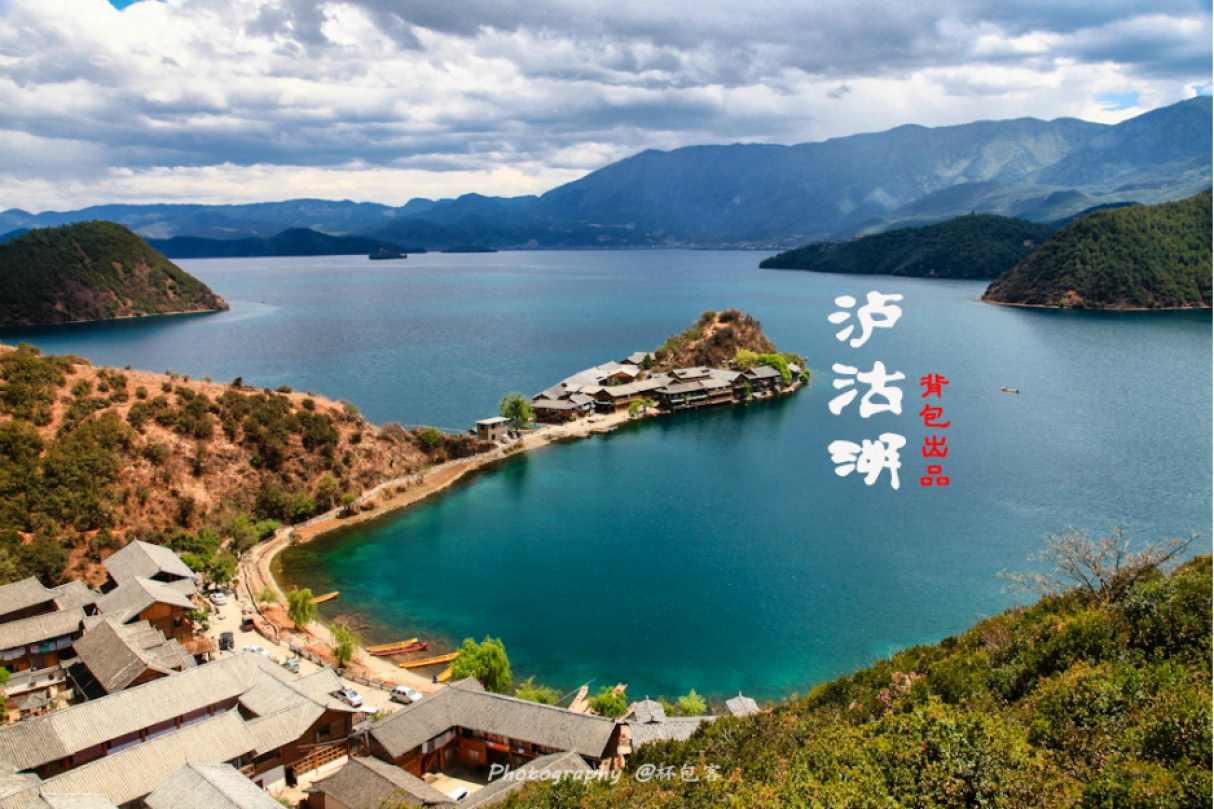
After breakfast, we walked along the road toward the lake. The weather was improving. Even though Chengdu often has blue skies, compared to the plateau's sky, ours suddenly seemed gray and dull. The part of Lugu Lake near the Grass Sea belongs to Sichuan territory. Personally, I think the Yunnan side is more beautiful, but I was still stunned at first sight—there were no tourists in the early morning, the lake was as smooth as a mirror, and a few pig trough boats (traditional wooden canoes) floated quietly. Everything was so serene.
Taking advantage of the sparse crowd, we quickly snapped some portraits. There was a small path by the lake lined with pink flowers. I'd heard that September is the most beautiful season at Lugu Lake, but May's scenery was no less impressive—the "water-loving flowers" (a type of aquatic bloom) were already in bloom in the lake, and the small pink flowers on the hillside were at their peak.
Around 11:00 AM, the weather at Lugu Lake was at its best. There wasn't a single cloud in the sky, and the blue was so vivid it left me speechless. We took a series of "bestie photos" on this path—the sunlight was perfect, and our smiles were just right.
At noon, we returned to the inn to arrange a car for the lake tour, but the owner said none of the minivans could operate today—the local private tour cars didn't have commercial licenses. So we had to wait at the inn. Later, a guest drove into town to buy medicine. Xiao Xu noticed he was alone and driving a car with Sichuan plates, so she stopped him and playfully begged for a ride. A beautiful woman's charm worked wonders—the guy agreed to take us into town. He initially thought there was only one girl, but when four people suddenly appeared with bags and luggage, his expression turned pained—we later found out he wasn't feeling well, having gotten food poisoning in Lijiang.
Once we arrived at Lugu Lake Town, we easily found a tour driver and even ran into a handsome guy from Hubei who joined us for the tour, reducing our per-person cost by another 20%. This guy worked in Beijing and had been traveling for over thirty days after quitting his job. He planned to finish visiting Lugu Lake and then return to Chengdu to find a new job—now that's what I call a life well lived.
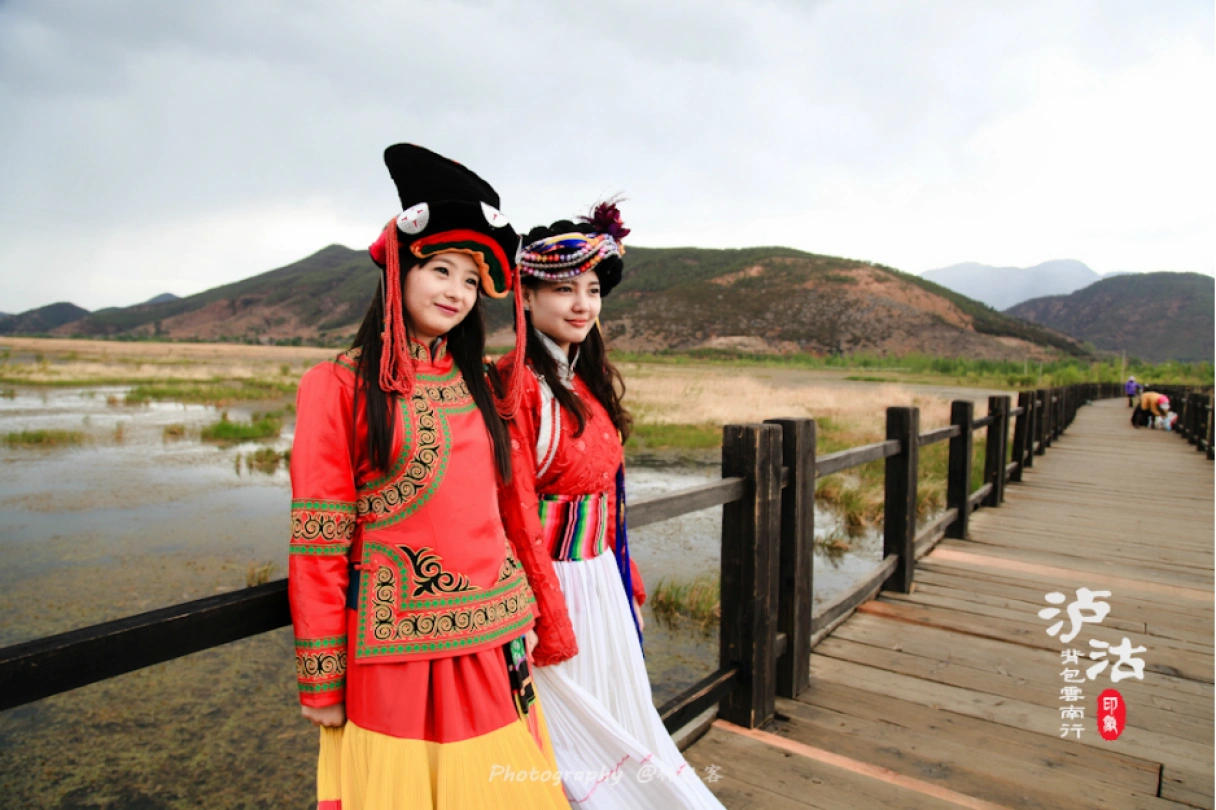
In the afternoon, the weather suddenly changed. By the time we reached the Walking Marriage Bridge (Zouhun Qiao), dark clouds were gathering overhead. The Mosuo girls on the bridge were stunning in their traditional costumes. Legend has it that if a girl scratches your palm, it means you're in for an interesting night—but I didn't encounter any "authentic" Mosuo girls doing that. The costumes were rented for photos—20 yuan for three outfits, just enough for our three beauties to each wear one.
The driver said today's rain was the heaviest Lugu Lake had seen all year. We passed many places without the mood to take photos until we reached Daluoshui, where the sun slowly emerged. After checking into our inn, the owner told us that bus tickets to Lijiang were in short supply and advised us to buy them immediately. We rushed to the bus station and waited for ages before the ticket seller finally showed up—life in Lugu Lake is just too laid-back.
The inn at Daluoshui was right by the lake. Normally, a lake-view room costs just over 100 yuan, but during the May Day holiday, we could only afford a courtyard room. Between Daluoshui and Lige, there was a stretch of beach with nice scenery, but many local kids were causing trouble, insisting that we buy things from them. Some kids were polite and let it go if we didn't buy; others would curse, spit, or splash water at us, which was really off-putting. Sometimes I find it deeply saddening—innocent children, the flowers of our nation! When we send aid to children in Africa, why don't we spend more energy paying attention to the kids in the mountains?
Almost everyone who visits Lugu Lake takes the same photo in the same spot, then zooms in for another shot—the standard "I was here" picture. The wishing plaques looked especially beautiful against the blue sky and white clouds. Even though I don't know if these wishes will come true, just looking at them made me feel good inside.
They say everyone must take three trips in life: a spontaneous solo trip, a honeymoon with your loved one, and a trip with your best friends. Have you completed all three?
Lugu Lake actually has three versions: Sichuan's Lugu Lake—the Grass Sea; Yunnan's Lugu Lake—Lige; and China's Lugu Lake—Luoshui. During our nine-day trip, the most expensive meal was also at Lugu Lake—174 yuan for four people and a pot of chicken. At the time, the bird flu scare was in full swing.
After dinner, we went for another walk by the lake. At this moment, Lugu Lake showed us the most beautiful scenery of the entire trip—compared to this, the later visits to Erhai Lake, Shuanglang, and Lijiang were utterly lackluster. I suggest doing the reverse route: Dali—Shuanglang—Lijiang—Lugu Lake, so the scenery gets progressively more stunning. Once you've seen Lugu Lake, everything else pales in comparison.
Such beautiful scenery is not only a "shutter killer" but also a "battery killer." The most painful thing in the world? Watching the sun set while your camera battery dies—I missed the sunset glow, I missed the sunset itself, all because the battery gave out.
By the lake, we also ran into the famous owner of the Watchtower Inn and her dog Niuniu playing in the water. A large crowd was drawn by the two dogs. Maybe in Lugu Lake, life is that simple—a group of people watching two dogs chase a ball in the water can spend an entire afternoon doing just that. Compared to the fast-paced city life, waking up naturally, sunbathing, and playing with dogs here—that's real living. In the city, we struggle for survival; here, we truly live.
I'd heard Lugu Lake was prone to power outages, and it lived up to its reputation. The electricity was out all night. I had planned to shoot sunrise the next morning, but without power, I didn't go (I know, that's just an excuse). When I woke up, the sun was already high, and the girls were still sleeping in. I went alone to the dock. The morning mist on Lugu Lake's surface hadn't fully dissipated, but the light was already strong. If I come back in the off-season, I'm definitely staying in a lake-view room, lying in bed and watching the sunrise.
Just then, a small boat slowly rowed toward me. Lugu Lake's beauty isn't just about nature—it gains spirit from the people. Sunlight scattered across the lake, like thousands of stars. I cursed my poverty—I couldn't afford a polarizing filter! In the morning, there wasn't a single cloud in the sky, and across the lake stood the legendary Goddess Peak. In good weather, taking the cable car to the summit for a panoramic view is also excellent—90 yuan round trip, plus 2 yuan for insurance. We had to catch a bus to Lijiang at noon, so we gave up on it—or rather, we thought it was too expensive.
Finally, let two of the beauties say goodbye to Lugu Lake. Next stop: Lijiang.
Second Stop: Lijiang — Daydreaming, Romance, and Letting Go
Lugu Lake is only about 220 kilometers from Lijiang, and the road conditions are much better than the route from Xichang to Lugu Lake. The main challenge is the winding roads—if you're driving yourself, watch your speed. Driving and taking public transport each have their advantages. If I were traveling alone, I'd prefer to backpack and take whatever bus comes, going wherever the road takes me. On the bus, you meet all kinds of travelers, and listening to their stories is part of the journey itself—some people even turn those stories into best-selling books, then use the royalties to continue traveling and writing more stories.
At 10:00 AM, we dragged our luggage to the station. Lugu Lake's bus station was pitifully small. Besides local business people, most passengers were tourists. Across from the waiting room sat a white-haired couple—I truly admire these elderly folks who still walk the road together. "Even if love eventually loses its passion, we will always travel hand in hand"—they really live up to that.
The bus departed from the station, winding up the mountain roads away from Lugu Lake. Near the summit, the full view of Lugu Lake came into sight—I couldn't find better words to describe its beauty, so I just captured the moment through the bus window with my camera. The bus stopped at a place selling medicinal herbs to add water and let passengers use the restroom—clearly a tourist shopping stop. Every day, many tourists from Lijiang take three-day tours to Lugu Lake. Wherever there are Chinese people, the travel model is pretty much the same, including in Thailand—they drag you to some godforsaken place to buy things, and if you don't buy, they make your life difficult.
Along the way, the blue sky and white clouds started to feel repetitive. I dozed off on the bus, and when I woke up, I could already see snow-capped mountains in the distance. When taking the bus to Lijiang, don't eat too much—you'll get sick; but don't eat too little either, because there's only one place to eat along the way, serving only potatoes, eggs, and corn. I recommend the corn here—5 yuan per ear, very sweet.
The green river is called the Jinsha River (Gold Sand River), originating from the Tibetan Plateau. By this point, most people were asleep—probably tired and used to the scenery. But I still couldn't resist the colors of the plateau; I wished the driver would stop, or that I could break the window glass.
When you see Jade Dragon Snow Mountain (Yulong Xueshan) by the roadside, it means you've arrived in Lijiang.
People come to Lijiang for many reasons: some come for one person but stay for another; some are drawn by the lazy sunshine after being too busy in daily life; some come purely for romance; others are dragged here by tour groups without much thought. I came because I'd never been before.
In the quiet alleys of Shuhe Ancient Town, we stayed at an inn called Fangxiang Yuan (Fragrant Garden)—truly a place full of love. The owner was from Hunan, young and accomplished, and we'd connected on Weibo. After resting and showering at the inn, we took a minivan to Lijiang Old Town for 5 yuan. Before sunset, I climbed to the viewing platform in front of Wenchang Palace, which offers a free panoramic view of Lijiang Old Town.
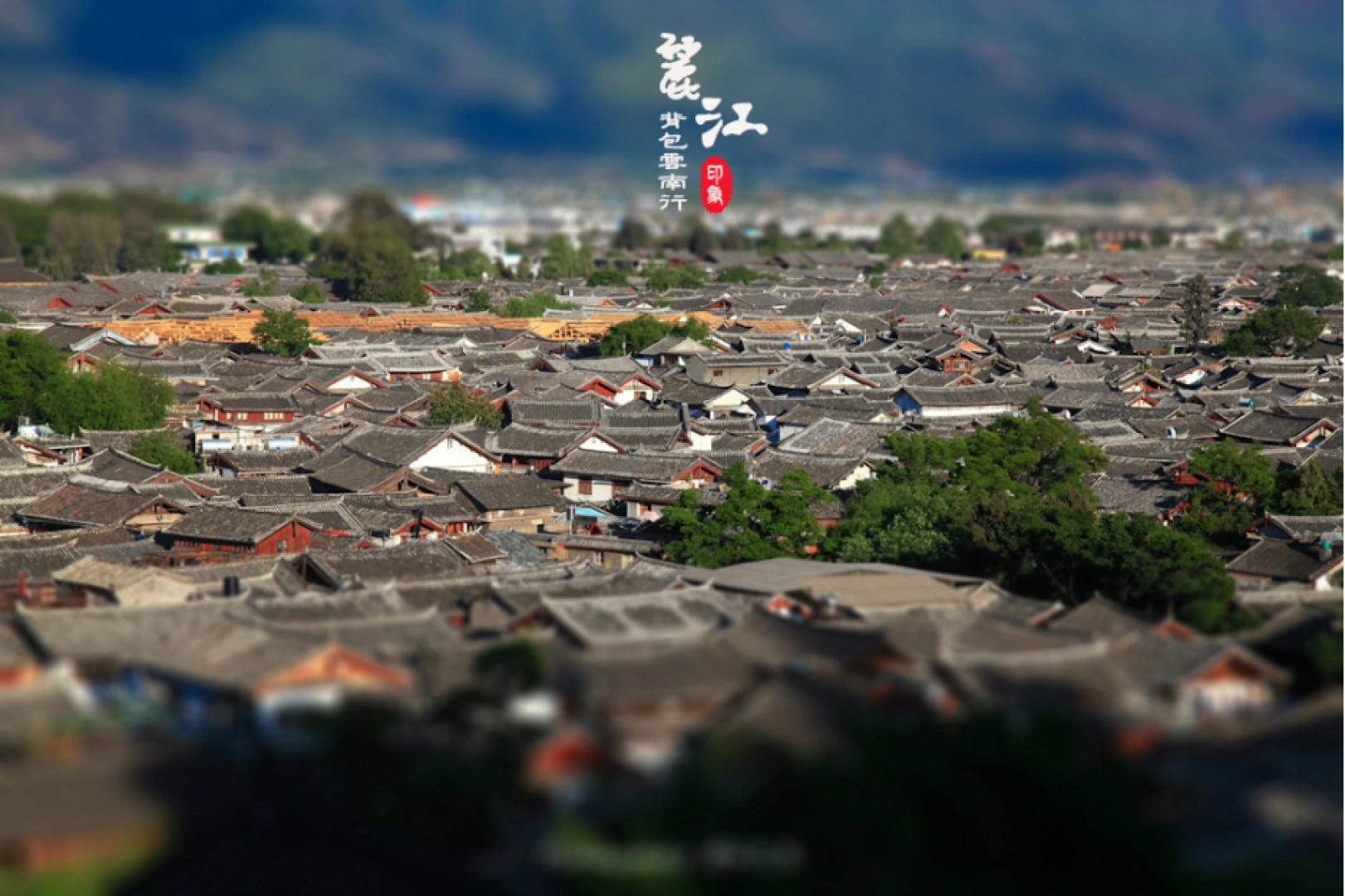
My first time in Lijiang, Sifang Street (Square Street) was a must-visit. During the May Day holiday, many friends from Chengdu were also in Lijiang. I ran into a friend at Sifang Street, and he took me to a youth hostel to down a couple of bottles of beer. The balcony on the third floor of the hostel had a perfect view of the sunset glow over Jade Dragon Snow Mountain. Nearby, some backpackers were preparing for a徒步 (trekking) trip into Tibet. Drinking beer, watching the sunset, listening to their stories of trekking into Tibet—this is life.
After the sun set, the temperature in Lijiang dropped sharply. I was only wearing a short-sleeved shirt and couldn't take it anymore, so I said goodbye and returned to Shuhe. On the way back to the inn, I kept telling myself: "This isn't Jinli (a famous street in Chengdu), this is Lijiang"—otherwise, I would have thought I was at a temple fair in Jinli. There were just too many people. I prefer the quieter Shuhe.
The next day in Lijiang, we woke up naturally. I love independent travel because you can arrange everything yourself without rushing from one attraction to another. Sleep when you want, eat when you want, buy what you want. Whether in Shuhe or Lijiang, artists are everywhere. Bei Bei and Xiao Xu each found a portrait artist to draw them, and soon a crowd of photography enthusiasts gathered around. Many guys with romantic intentions took the initiative to ask for contact information, and some photographers with long lenses would take a shot from afar and then come over to ask for WeChat, claiming it was to send the photo—this trick seemed to work quite well. But maybe because the crowd distracted the artists, the portraits ended up looking like completely different people.
On May 1, 2013, many places in China witnessed a solar halo. The bar street in Shuhe Ancient Town had many fruit stalls whose colorful displays made your mouth water, but when I asked about the prices, I was shocked. The inn we stayed at was tucked away in an alley, close to the bar street and Sifang Street but still quiet. The little girl making pottery was so adorable—rather than beautiful women, I'd prefer a cute daughter like that.
Finally, our friend "Backpack Sister" arrived! We had taken a train and bus, bumping our way to Lijiang, while she flew directly, accompanied by the adorable Xiao Wanzi (Little丸子). In Lijiang, there's another phenomenon: most people look a bit dazed—either they've been here too long and gone dull, or the sun has just baked them silly.
Compared to Lijiang Old Town, I find Shuhe more refined and less noisy. Many people come here for wedding photos and artistic portraits. In an unnamed alley, we encountered two Alaskan Malamutes. Their owners, a couple, were calmly drinking tea and chatting, while tourists were getting wildly excited over the dogs.
In Lijiang, even if you don't have a romantic encounter, you must experience the bar scene at least once. We went to a bar entirely run by people born in the 1990s. What impressed me most was the beautiful owner—she was the boss, the drummer, and the singer all in one, and she looked especially cool when playing the drums. We weren't drinking alcohol; we were drinking loneliness. Romance—why hasn't it come? Xiao Xu and Bei Bei both sang well. When the singer took a break, anyone could go up and practice.
The third day in Lijiang was also our last. The owner asked where we wanted to go—the inn could help arrange trips to Lashihai, Jade Dragon Snow Mountain, Tiger Leaping Gorge, and other nearby attractions. I said, "We came to Lijiang to daydream, sunbathe, and look for romance." I'd long heard that Lashihai was a rip-off (after seeing Lugu Lake, going to Lashihai would be a regret); Jade Dragon Snow Mountain's tickets were too expensive with poor value, and you had to buy the Old Town maintenance fee (among Yunnan's snow mountains, I only want to see Kawagebo—everything else is just ordinary). The owner also said we were wise—in Lijiang, the free sunshine is the best.
Today's focus was a photo shoot on the bar street of Lijiang Old Town. We specifically brought a reflector, but it started raining before we even entered the old town. Speaking of Yunnan's drought—wherever we went, it rained: Lugu Lake, Lijiang, Dali, Shuanglang, Chuxiong. The rain got heavier and heavier, making the locals of Yunnan overjoyed. We carried the reflector for nine days without using it once; the only time we took it out was to shield ourselves from the rain.
Lijiang is an open city—you can tell from the handicrafts. It's also a world of vibrant colors—just walk down the street and you'll see. We took the obligatory "I was here" photos in front of iconic landmarks, plus a group shot. Lijiang's bar street feels like two completely different places during the day and at night. After the TV drama "Beijing Youth" became a hit, Lijiang became popular all over again—everything related to the show got a boost. Honestly, I think "Beijing Youth" was pretty ridiculous—this whole "relive your youth" thing. Most young people today are still struggling to survive. Without a few hundred thousand yuan in savings, you can't even find the path to youth.
At 5:00 PM, we took the train from Lijiang to Dali. I had already packed away my camera, only keeping a few photos on my phone. Lijiang's train station was also quite beautiful. The moment we left, Lijiang's clouds were still as stunning as ever, and I really felt reluctant to go—at that moment, I finally understood why so many people come to Lijiang and never want to leave.
Final Thoughts: The Meaning of Travel
This Yunnan trip, from the tranquility of Lugu Lake to the hustle and bustle of Lijiang, from the morning at the Grass Sea to the twilight in Shuhe, left unique memories at every stop. We experienced torrential rain and scorching sun, power outages and getting lost, a portrait artist who drew us all wrong and a camera that ran out of battery—but these became the most precious parts of the journey.
What travel teaches us isn't how to save money or check off landmarks, but how to be with ourselves, how to meet strangers, and how to find a sense of home in unfamiliar places. The morning mist of Lugu Lake, the sunset glow of Lijiang, the laughter of the girls, the stories of the innkeepers—these moments pieced together are the whole meaning of travel.
If you want to follow this route, my advice is: go counterclockwise—Dali, Shuanglang, Lijiang, Lugu Lake—so the scenery gets increasingly beautiful. Budget-wise, a frugal trip can be kept to around 1,500 yuan (about $220), but if you're like us and can't control your cravings, you might go a bit over. Most importantly, bring a good mood, bring an expectation for the unknown, and then set off.
Because the mountains are there.
You should also read:

Cloud Travelogue · Dali of Wind, Flowers, Snow, and Moon: A Three-Day, Two-Night Journey of a Free Spirit
Cloud Travelogue · Dali of Wind, Flowers, Snow, and Moon: A Three-Day, Two-Night Journey of a Free Spirit I am a cultured female foodie with a touch of rogue charm. I slung on my backpack, took my lover's hand, and set off on a spontaneous…
Continue reading...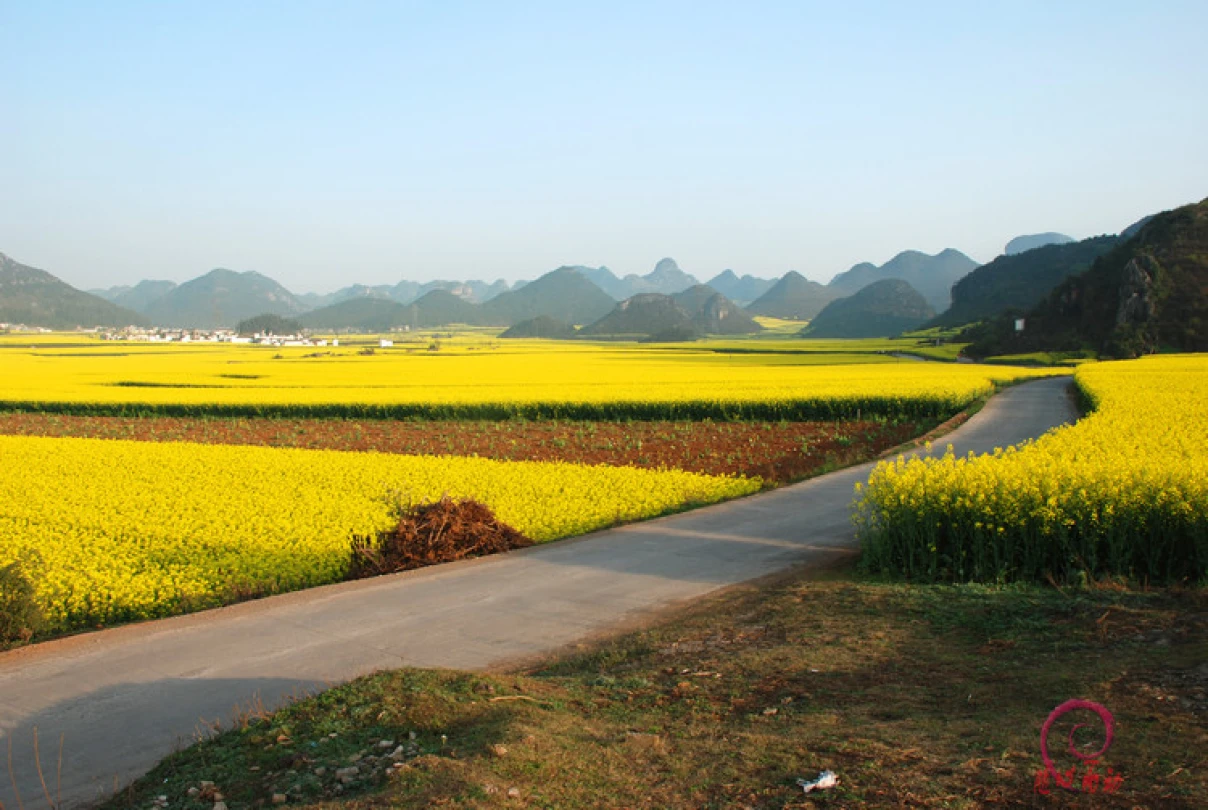
Golden Luoping: A Romantic Encounter with Sunshine and Seas of Flowers
Golden Luoping: A Romantic Encounter with Sunshine and Seas of Flowers Introduction: The Third Time's the Charm Some landscapes are destined to be seen at the right moment. For me, that was exactly the case with Luoping's rapeseed flowers. On February 22, 2011, the Luoping…
Continue reading...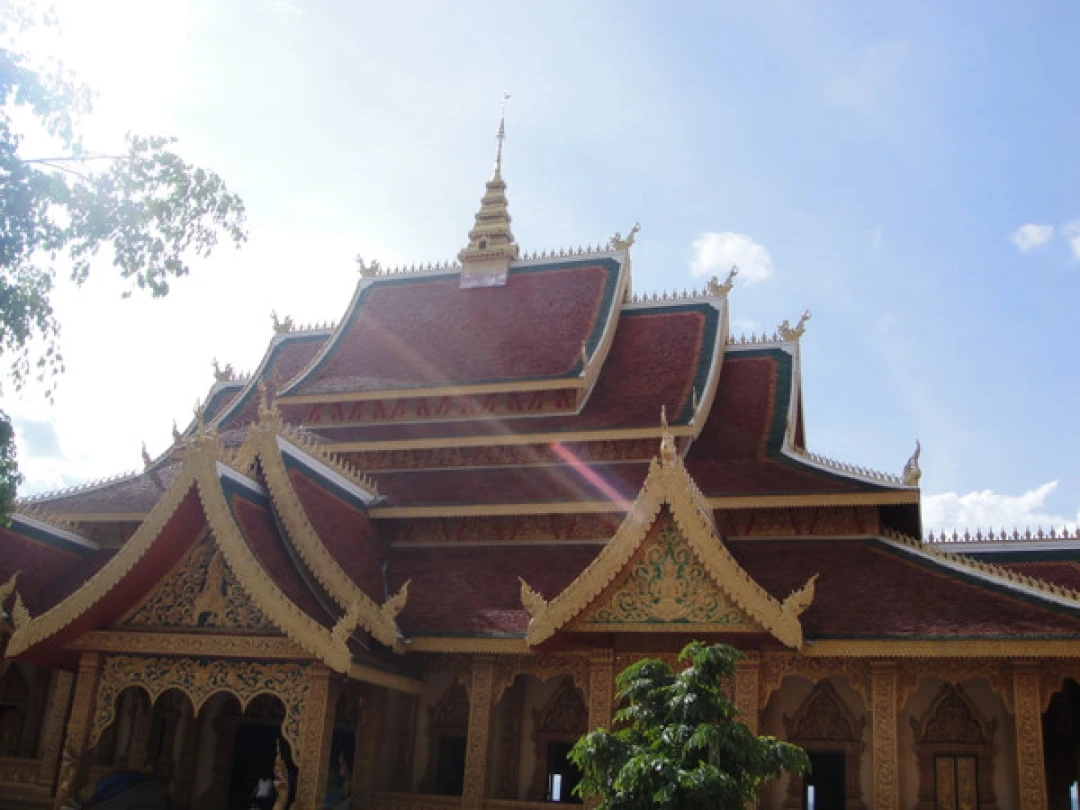
Xishuangbanna: Encountering an Ideal and Magical Paradise in the Green Wonderland at 21° North Latitude
Xishuangbanna: Encountering an Ideal and Magical Paradise in the Green Wonderland at 21° North Latitude If you ask me which place in China most resembles Southeast Asia, I would answer without hesitation: Xishuangbanna. This is not Thailand, yet it possesses an even richer Buddhist ambiance…
Continue reading...