The Wind-Swept Tea Horse Road: An 8-Day Solo Journey Through Jianchuan, Dali, Yunnan
The Wind-Swept Tea Horse Road: An 8-Day Solo Journey Through Jianchuan, Dali, Yunnan
Prologue: Escaping the Cubicle, Chasing an Idyllic Dream
City life, from nine to six, feels like a printer that never stops, churning out identical pages day after day. One afternoon, I looked up at the patch of blue sky carved into fragments by high-rises outside my window, and a surge of uncontrollable impulse rose from the depths of my heart—I needed to escape.
Where to? I wanted pastoral scenery, ancient architecture with cultural depth, and a place relatively off the beaten path. Almost simultaneously, a name surfaced in my mind—Jianchuan. Yes, that small Yunnan town that stepped into the public eye thanks to the drama Meet Yourself. Carrying my longing for the romantic rural life depicted in the show, I packed my backpack and set foot on this wind-swept Tea Horse Road.
Chapter One: First Encounters with the Tea Horse Road and Jianchuan
What Is the Tea Horse Road?
The Tea Horse Road, a legendary trade route stretching across Southwest China, originated in the Tang and Song dynasties and flourished during the Ming and Qing. It was not merely a commercial path for mule caravans transporting tea and salt, but a vital artery for the cultural fusion of Han, Tibetan, Yi, Naxi, and other ethnic groups. The Yunnan-Tibet section begins in Pu'er, passes through Weishan, Dali, Jianchuan, and Lijiang, heading north to carry Pu'er tea into Tibetan regions, returning with Tibetan horses and medicinal herbs.
Jianchuan: A Hidden Martial Arts Town
Jianchuan, an understated little county in the northern part of the Dali Bai Autonomous Prefecture. Mountains shaped like swords, rivers flowing like streams—the name alone carries a whiff of martial arts romance.
What treasures lie hidden here?
- The only surviving ancient market on the Tea Horse Road
- The Nanzhao and Dali Kingdom grottoes, hailed as the "Dunhuang of the South"
- A living ancient city with over 600 years of history
- A thousand-stone formation resembling crouching lions
- Stunning pastoral landscapes
- Wetland lakes where thousands of birds roost
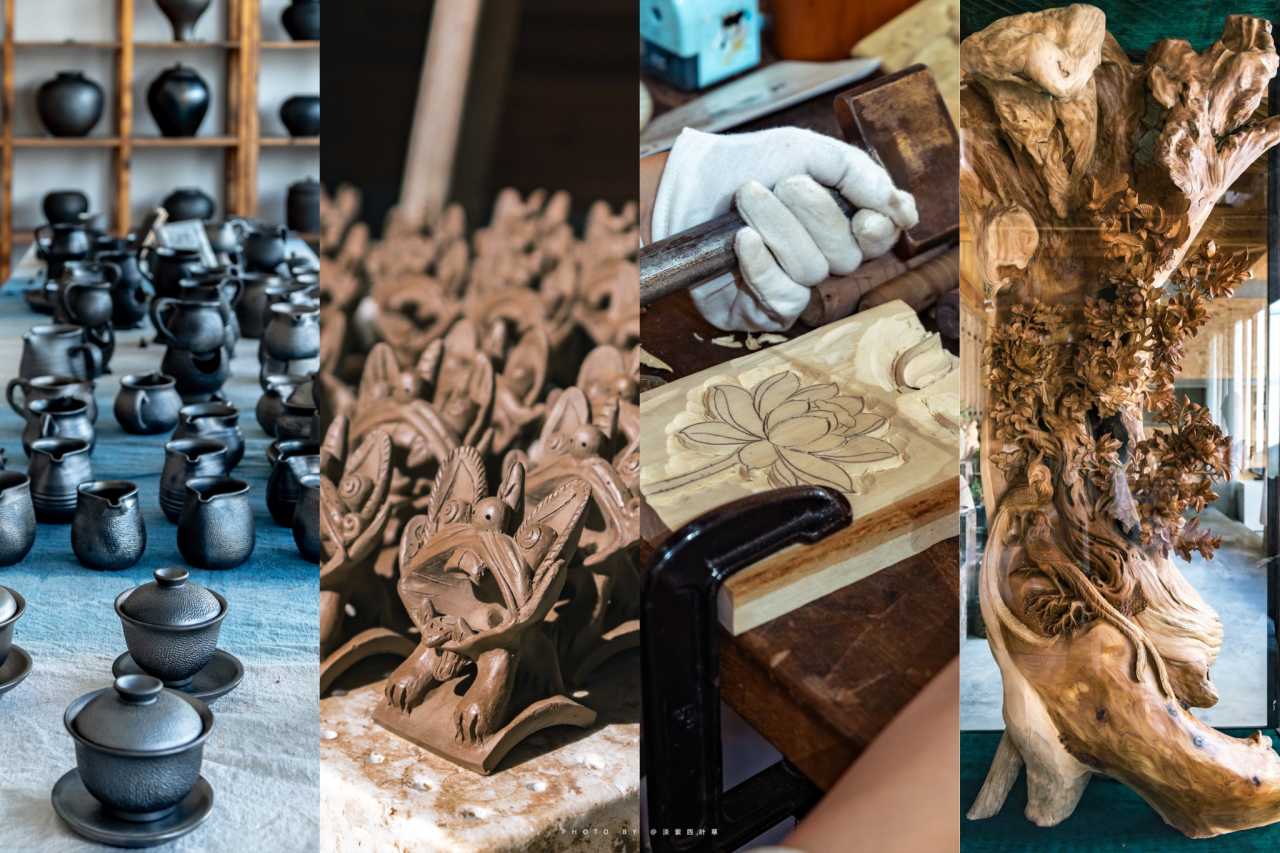
- Intangible cultural heritage passed down for millennia: black pottery and wood carving
In short, this is an underrated gem of a town.
Chapter Two: An Overview of My 8-Day Solo Itinerary
The route I planned was: Weishan, Dali, Shaxi, Jianchuan, Lijiang—this line perfectly traces the core section of the Tea Horse Road in Yunnan, and public transport connects it all without backtracking. However, to maintain a "semi-laid-back" travel pace, I reluctantly gave up Weishan.
My 8-Day, 7-Night Itinerary:
- Day 1: Guangzhou → Kunming → Dali, City Walk in Dali's Xiaguan district
- Day 2: Dali → Shaxi Ancient Town, leisurely exploration of the town
- Day 3: Shaxi Ancient Town → Librairie Avant-Garde → Hualong Village
- Day 4: Shaxi Ancient Town → Shibao Mountain → Shilong Reservoir
- Day 5: Shaxi Ancient Town → Jianchuan Ancient City
- Day 6: Jianchuan Ancient City → Cycling around Jian Lake
- Day 7: Jianchuan Jingfeng Park → Thousand Lion Mountain
- Day 8: Jianchuan → Lijiang → Guangzhou
Gear: Sony A7C2 + Tamron 28-200. BGM: Wind from the Cloud Village (a reference to a popular Chinese music app playlist).
Chapter Three: Setting Off! From Guangzhou to Shaxi

At 4 a.m., the ride-hailing car carried me toward the airport. I was still mentally replaying the sting of getting "stabbed in the back" by a sudden drop in airfare—the same price could have bought me a less painful flight.
After transferring from Kunming Changshui Airport to Kunming Railway Station by metro, I was back in Kunming after a year, this time just passing through. The May Day holiday hadn't even started, but the station was already packed. On the high-speed train to Dali, I saw the green version of the Fuxing bullet train for the first time and almost mistook it for an old green-skinned train.
Shaxi's Transportation Transformation
Shaxi still has no high-speed rail connection. Before the new expressway opened, there was only one winding mountain road (Niusha Road) linking it to the outside world. From Jianchuan County to Shaxi took over an hour, and landslides were common during the rainy season. Coming from Dali or Lijiang also required navigating mountain roads, taking more than three hours.
In 2023, the He-Jian-Lan Expressway's Shaxi branch opened, ending Shaxi's era of isolation marked by "eighteen mountain bends." I took the Dali-Lijiang Expressway, turned onto the new expressway at Diannan Town, passed through the Shibao Mountain area, and arrived in Shaxi in about two hours.
Chapter Four: Shaxi Ancient Town—Time Slows Down Here
First Impressions of Shaxi
Shaxi Ancient Town shot to fame thanks to Meet Yourself. But setting aside the show's romanticized filter, it is inherently a treasure trove of beautiful rural scenery and rich cultural history.
I stayed at a newly opened Bai-style courtyard near the North Gate. The room was comfortable and offered great value. After dropping off my luggage, I grabbed my tripod and set out to explore the ancient town.
Sideng Street: A Living Fossil of the Tea Horse Road
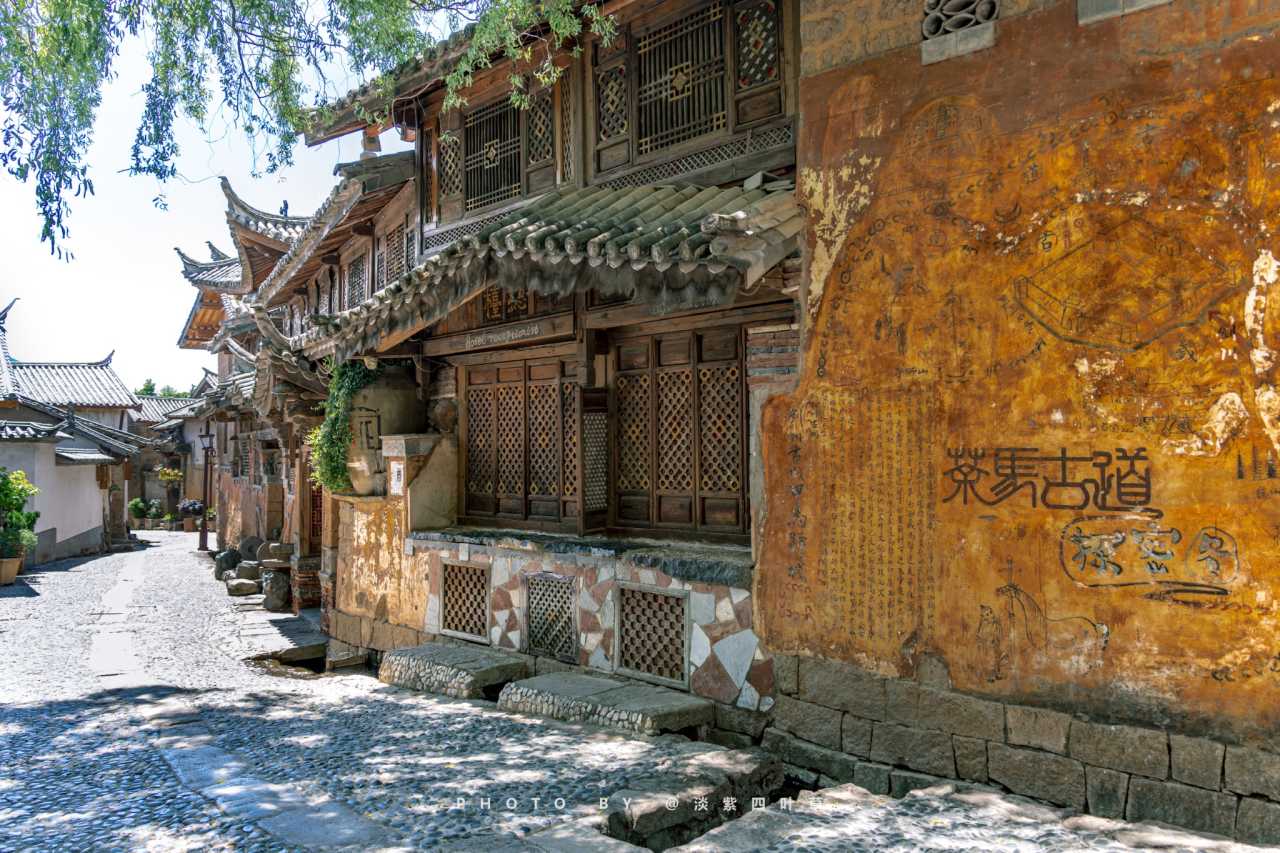
Sideng Village is the heart of Shaxi, and locals call it Sideng Street. Historically, it was a famous market town along the Tea Horse Road. Three landmarks define it: Xingjiao Temple, the Ancient Stage, and Yujin Bridge.

My walking route: North Gate → North Guzong Alley → Sideng Street → Ouyang Courtyard → Sifang Street → South Guzong Alley → South Gate → Yujin Bridge → East Gate → North Gate.
The North Gate is a completely modern reconstruction—the original was destroyed so thoroughly that even its foundation stones were gone, making restoration impossible.
Walking along North Guzong Alley toward Sifang Street, the day before May Day, there were still few tourists. This alley is lined with large, deep courtyard houses that once served as "horse inns"—providing lodging, food, and care for horses to traveling merchants. Today, most of these courtyards have been rented or bought by "new migrants" and converted into guesthouses and homes. Shaxi retains its antique charm precisely because these old buildings have been preserved.
Ouyang Courtyard: A Five-Star Horse Inn on the Tea Horse Road
Ouyang Courtyard, built in the late Qing and early Republic periods by the Ouyang Jing family, wealthy horse caravan merchants, is the best-preserved ancient residence in Shaxi. It served as both a family home and a horse inn, earning the title "Five-Star Horse Inn on the Tea Horse Road."
Entering the alley, I saw a young woman sketching, so absorbed she seemed isolated from the world. The gate of Ouyang Courtyard is meticulously crafted—wooden structure with red sandstone walls, carved with horses, sheep, tigers, and dogs, and adorned with lotus and cloud-thunder patterns on the arch. Beyond the gate lies a long corridor, at the end of which is the actual entrance to the main residence.
The courtyard follows the classic Bai architectural layout: "three rooms with one screen wall, four enclosed courtyards with five patios." To the east stands a large screen wall; the other three sides house two-story buildings. Between the main hall and the side rooms are small patios, while the central large patio is arranged as a garden.
The most stunning details are the wooden doors, carved with one hundred different forms of the characters for "blessing" and "longevity," and the exquisite ancestral shrine. For anyone wanting to appreciate Shaxi's wood carving culture, Ouyang Courtyard is a must-visit.
Outside the main courtyard, two additional houses have been converted into wood carving workshops—I later learned they are branches of the Jianchuan Tianyi Garden Wood Carving Exhibition Hall.
Sifang Street: The Heart of a Thousand-Year-Old Market

Sifang Street, a small square paved with red sandstone slabs, is the only completely preserved thousand-year-old market on the Tea Horse Road. Three ancient lanes extend to the east, south, and north gates, leading to Dali, salt mining areas, and Tibet respectively. In 2001, it was inscribed on the "World Monuments Watch List," alongside the Great Wall and the Shanghai Ohel Rachel Synagogue.
At the center of the square stands a 300-year-old locust tree, a silent witness to the rise and fall of the horse caravan culture. By late June and early July, the tree is covered in white blossoms, and when the wind blows, petals carpet the red sandstone slabs.
Xingjiao Temple: The Temple That Gave Shaxi Its Name
The "Temple" in "Sideng" refers to Xingjiao Temple; "Deng" in the Bai language means "place." The village was built around the temple, and the market took its name from it.
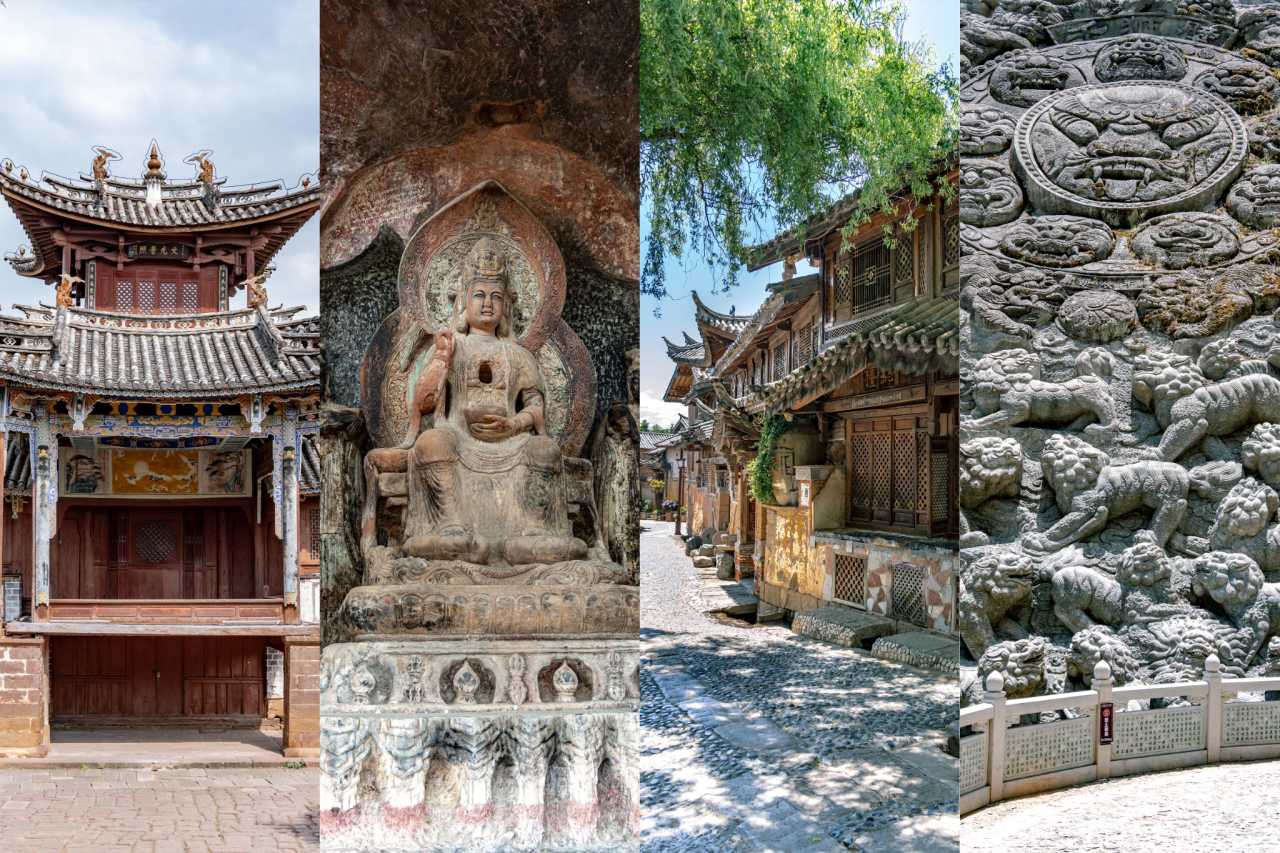
Xingjiao Temple, built during the Ming Dynasty over 600 years ago, is the largest and most typical surviving temple of Bai Esoteric Buddhism in China. The main and secondary halls display architectural styles from the Song and Yuan dynasties, blended with Bai and Tibetan Esoteric Buddhist features—a rare combination in the country.
The highlight is the murals in the Great Buddha Hall—16 Ming Dynasty paintings centered on Esoteric Buddhist themes, incorporating scenes from the Nanzhao and Dali Kingdom courts. Unfortunately, they are poorly preserved; during the Cultural Revolution, the hall was used as a teacher's dormitory, and the murals were damaged by smoke. Among them, "The Complete Picture of the Southern Buddha's Subduing of Demons" depicts Shakyamuni in a female form—an absolutely unique representation in Chinese Buddhist temples.
In the evening, I sat under the Guanyin Tower of Xingjiao Temple, soaking in the sun. The courtyard was deep, the ancient trees towering, and sunlight filtered through the foliage onto the blue stone slabs. Outside the mountain gate, tourists bustled, but inside the temple, it was as quiet as another world.
The Ancient Stage at Sifang Street: From Dusk to Nightfall
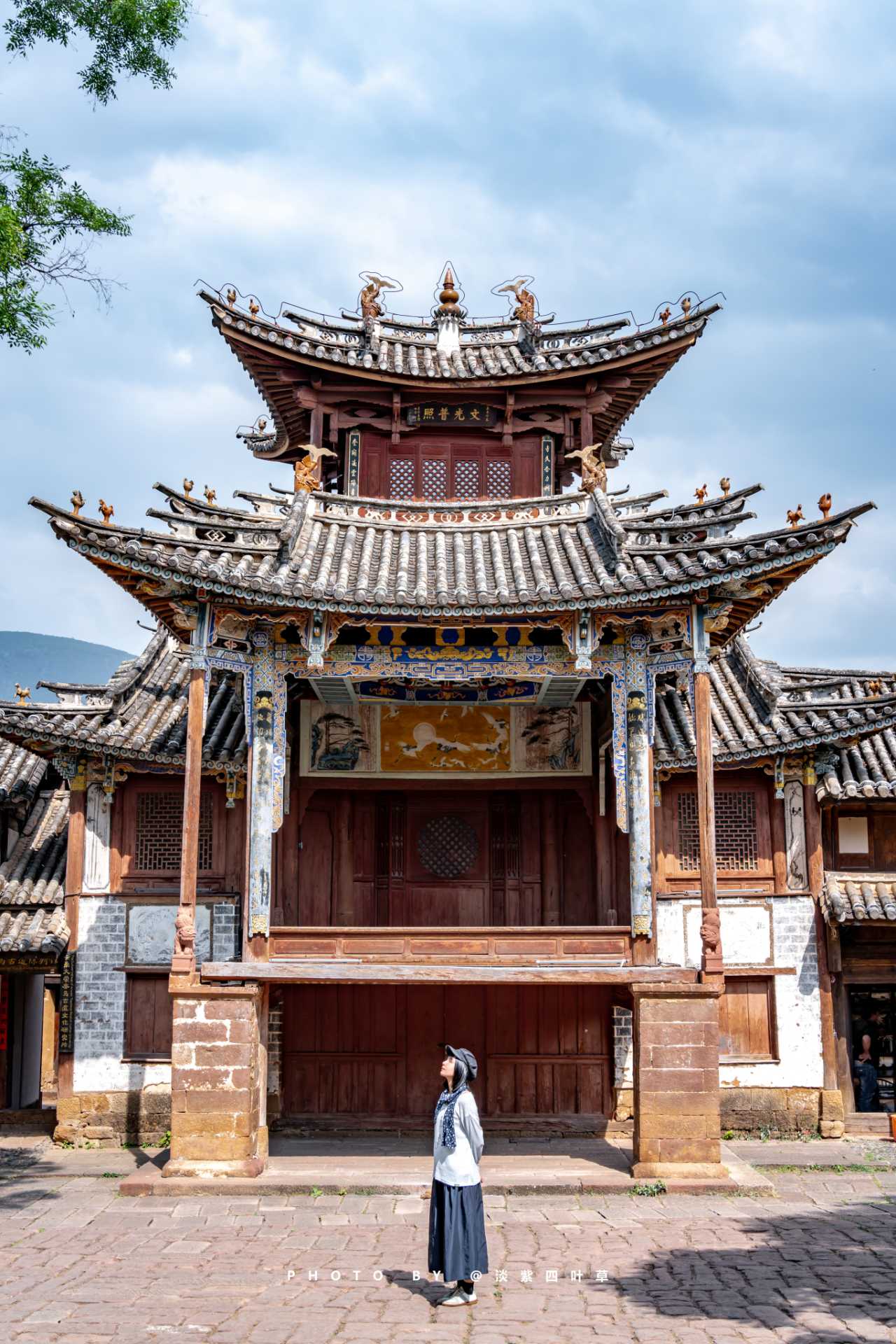
The ancient stage is the "star" building of Sifang Street. A three-tiered structure—shops on the ground floor, the stage on the second, and a Kuixing Pavilion (a tower dedicated to the god of literature) on the third. Originally built during the Jiaqing reign of the Qing Dynasty, it was later destroyed by fire and rebuilt several times.
I photographed the ancient stage on sunny days, overcast days, and at dusk. Only the dusk view left me unforgettable—as the sun set, the entire square was bathed in warm brown tones. Sunlight streamed gently through Xingjiao Temple onto the stage, and the dappled light filtering through the old locust tree's branches danced across the architecture.
I sat under the old locust tree, my feet on stone slabs still bearing the imprints of horse hooves. A row of monks sat before the mountain gate of Xingjiao Temple, coming to pay homage. In that moment, it felt as if I had been transported back to the days of the Tea Horse Road a century ago—the sound of horse hooves and bells echoing in my ears.
The East Gate and Yujin Bridge: The Soul River
Beyond the East Gate lies the Heihui River. The once-overgrown riverbank has now been transformed into a tree-lined square. I stopped at a small courtyard for a bowl of rice noodles and some yogurt—handmade yogurt from the owner's own cows, rich and creamy with a refreshing taste. Limited daily supply, the owner said, and no need for promotion.
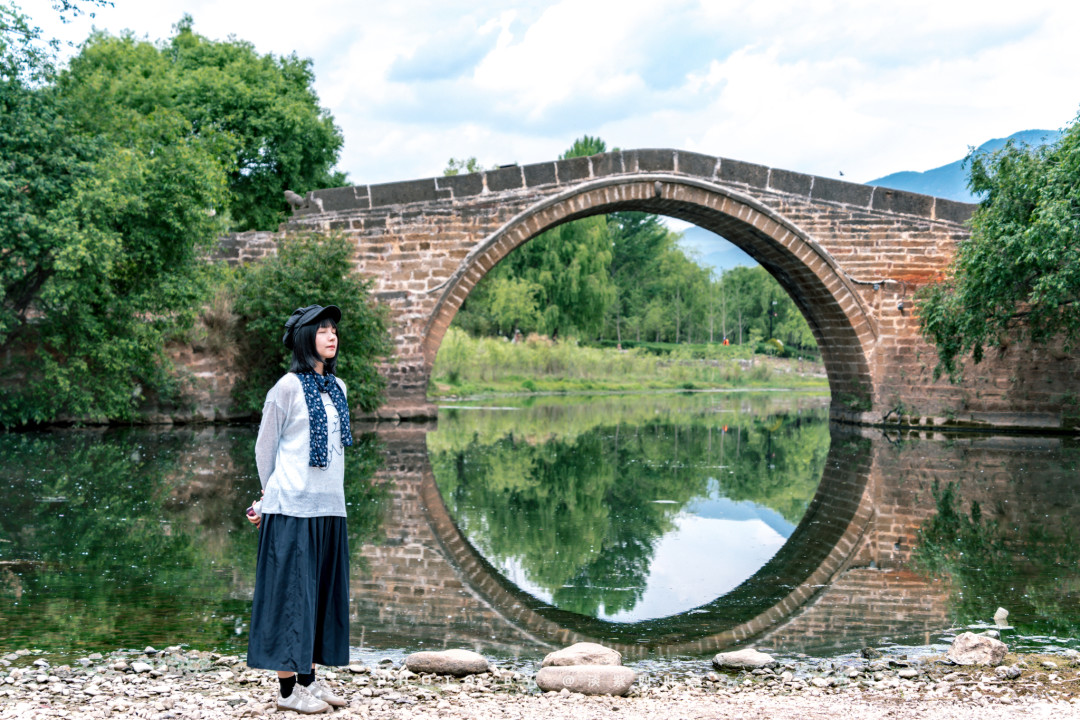
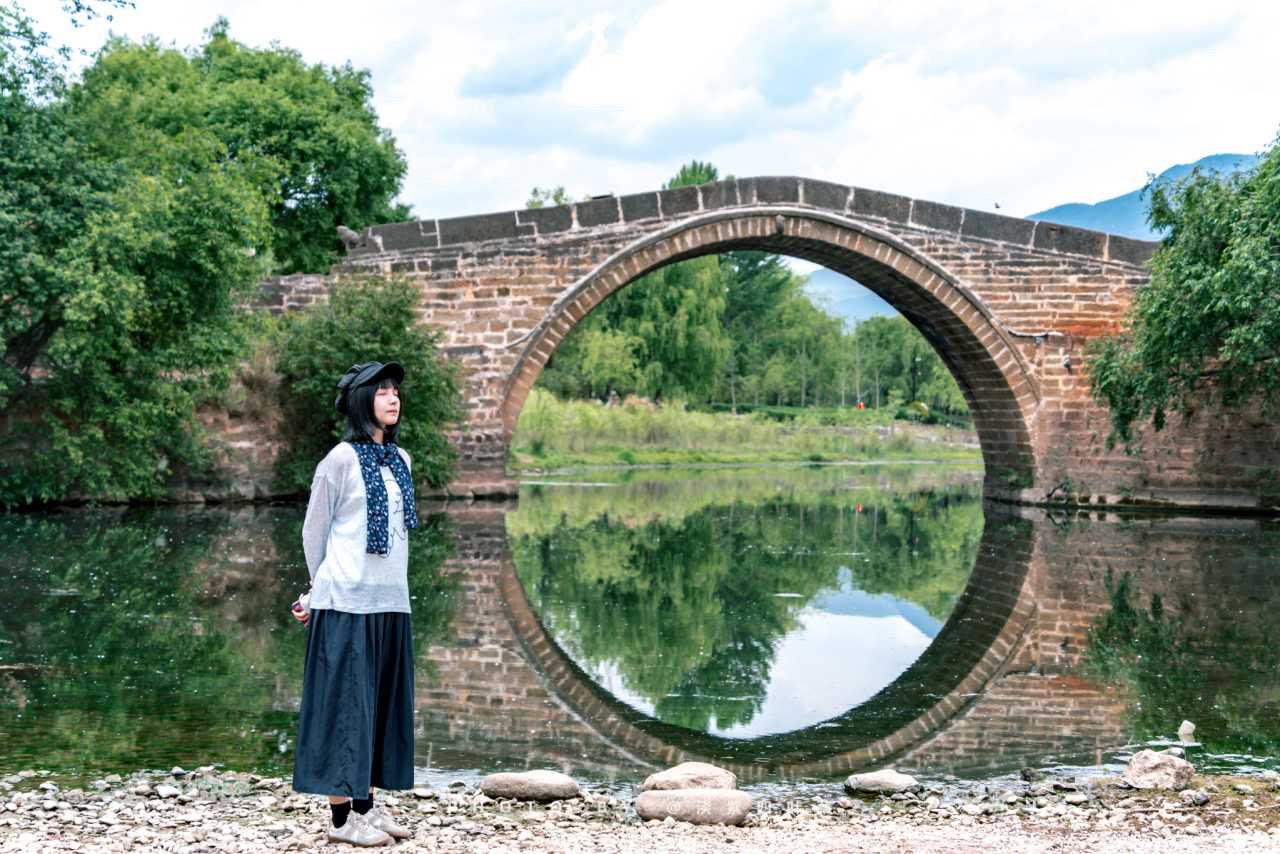
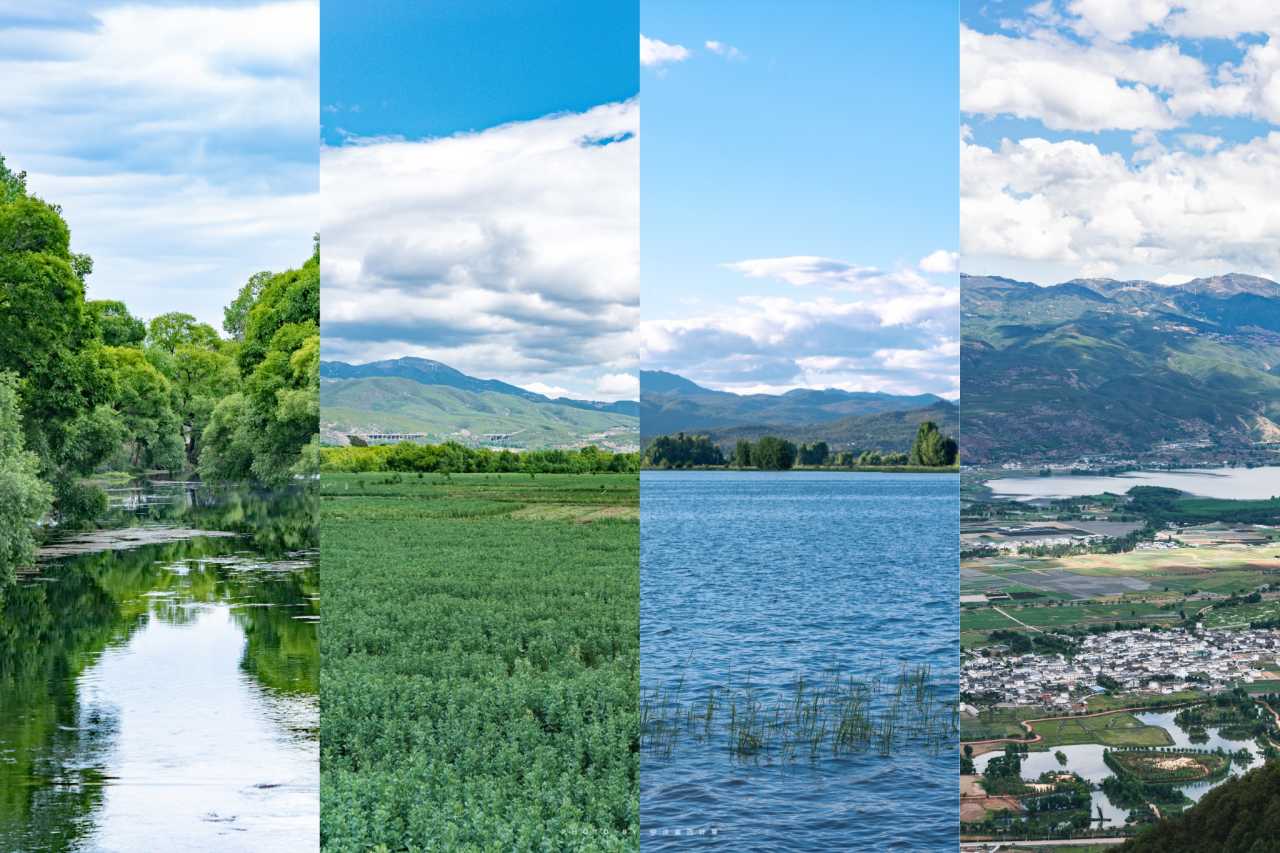
The Heihui River originates from Jian Lake, flows through the Shaxi Basin, and eventually joins the Lancang River. It is the soul of Shaxi. Yujin Bridge was originally a wooden bridge from the Ming Dynasty, rebuilt as a stone arch bridge during the Republic period. Today, it is the most popular "healing" photo spot among the three landmarks.
My first impression of Yujin Bridge? "What's this? A little broken bridge?" Getting closer, I thought, "Hmm, it has some historical character." But once I stood on the bridge—wow! The scenery was stunning!
"The Heihui River flows clear beneath Yujin Bridge, willows catch the moon, stars dot the riverbed. Horse hooves shatter a thousand years of shadows, a single pole pushes through the green of all seasons." This Bai folk song lyric perfectly captures the view from the bridge.
At dusk, the sun sank into the river, turning the water a deep jade green, like a giant mirror. The trees and grasslands were gilded in gold, and the distant mountains appeared hazy, like an oil painting.
Chapter Five: Librairie Avant-Garde and Hualong Village—A Tower of Books and Coffee Clouds
Librairie Avant-Garde: From Granary to Spiritual Granary
The Librairie Avant-Garde in Beilong Village is the fifth rural branch of the renowned Nanjing Librairie Avant-Garde, hailed as one of "China's Most Beautiful Bookstores." Converted from an abandoned grain silo, the site was recommended by poet Bei Dao, designed by architect Huang Yinwu, and completed after three years of renovation.
The design preserves traditional Bai elements like rammed earth walls, mortise-and-tenon beams, and double-eaved roofs, while innovating with glass ceilings for natural light and floor-to-ceiling windows to frame the view. Its 20,000-volume collection focuses on Yunnan themes, with 13 specialized sections including "Yunnan," "Tea Horse Road," "Bai Ethnicity," and "Southwest Associated University."
On the first day of the May Day holiday, waves of tourists kept coming. I found a corner sofa, picked up a book on the history of Sideng Village, and read quietly.
Across from the bookstore is the Pioneer Poetry Café, where drinks are themed around poems. In the backyard, a poetry tower has been converted from a tobacco-drying shed. Spiraling up the wooden staircase, you pass portraits and verses of Chinese and international poets hanging on the walls. Reaching the top, you get a 360° panoramic view of the entire area.
Hualong Village: Coffee Time on the Mountainside
Hualong Village sits on the mid-slope of the eastern bank of the Heihui River, facing Shaxi Ancient Town across the water. At an altitude of about 2,190 meters, it offers a sweeping view of the entire Shaxi Basin. In recent years, it has sprouted numerous boutique guesthouses, artsy coffee shops, and specialty bakeries.
In early May, before the rice transplanting season, the fields were mostly bare earth. By June to August, they turn lush green; in autumn, they become a golden world. After rain, you can see mist and clouds swirling among the mountains.
I ordered a cup of coffee, gazed at the scenery, and let my mind go blank. Maybe rainy days aren't so bad—they gave me, someone used to "special forces" style itineraries, a chance to slow down.
Coming down from the mountain, I noticed many trees covered in pink blossoms. An auntie from the village told me they were catalpa trees. Their blooming season runs from late April to early May—remember to come see them.
Chapter Six: Shibao Mountain—Danxia Wonders and Southern Treasures
Cycling to Shibao Mountain
My original plan was to take a rural minibus to Shibao Mountain, but after waiting for a long time, none came (they only depart when full). A taxi for one person would cost 60 yuan each way, so I rented an electric scooter and rode there directly.
Shibao Mountain is about 15 kilometers from Shaxi, famous for its Danxia landform—red sandstone formations shaped by wind and water. The core attractions are the Shizhongshan Grottoes, Baoxiang Temple, and Haiyunjü.
Shizhongshan Grottoes: Treasures of the South
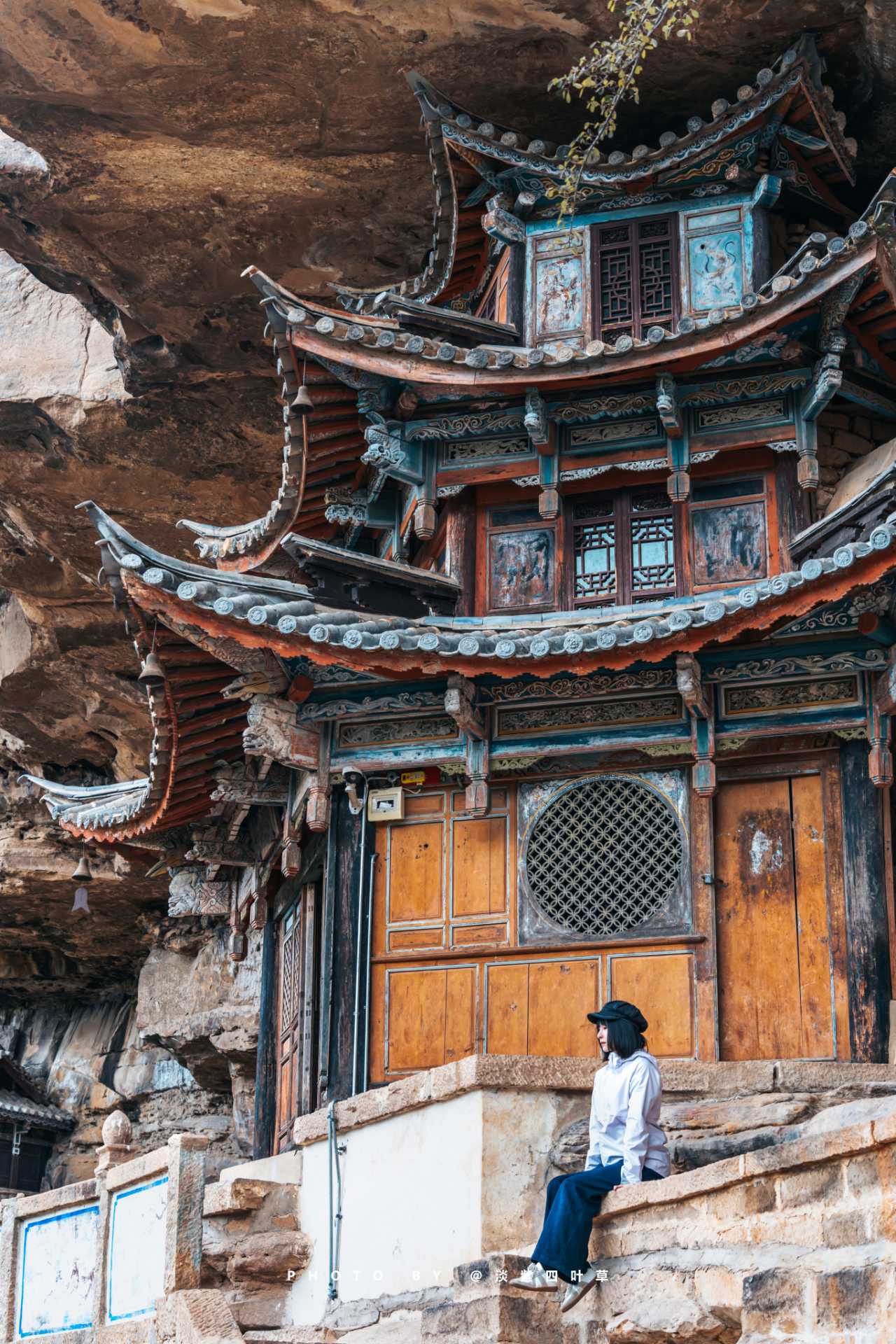
The Shizhongshan Grottoes are a Buddhist artistic treasure carved during the Nanzhao and Dali Kingdom periods. Designated as one of the first batch of nationally protected cultural sites, they comprise 17 grottoes across three areas: Shizhong Temple Zone, Shiziguan Zone, and Shadengqing Zone.
The Shizhong Temple Zone is the core, featuring royal statues and Buddhist themes. Climbing up the stone steps, you reach the grottoes. Here, you can also get up close to Shibao Mountain's Danxia landscape—weathered spherical rocks forming bizarre peaks and stones, some resembling lions, others elephants, with cracks like tortoise shells.
Chapter Seven: Epilogue—The Wind Has Passed, My Heart Remains on the Tea Horse Road
An 8-day journey, starting from Guangzhou, passing through Dali, Shaxi, and Jianchuan, finally returning from Lijiang. Alone, with one backpack and one camera, I traversed the most essential section of the Tea Horse Road.
Shaxi's dusk, the tranquility of Xingjiao Temple, the reflection on Yujin Bridge, the scent of books at Librairie Avant-Garde, the coffee clouds over Hualong Village, the thousand-year-old grottoes of Shibao Mountain—every image is etched into my memory.
The wind-swept Tea Horse Road blew away the city's clamor and brought inner peace. If you, too, want to escape your cubicle, come here and let the wind blow through you.
Key Takeaways:
- Best Seasons: April–May (catalpa blossoms), June–August (lush green fields), Autumn (golden rice fragrance)
- Transportation Tip: Depart from Dali or Lijiang, take the He-Jian-Lan Expressway's Shaxi branch; about 2 hours
- Must-Visit Spots: Sideng Street, Ouyang Courtyard, Xingjiao Temple, Yujin Bridge, Librairie Avant-Garde, Shizhongshan Grottoes
- Accommodation Recommendation: Bai-style courtyards within Shaxi Ancient Town offer great value
- Food Recommendation: The yogurt outside the East Gate; rice noodles and rice shreds (mi xian er si) at the farmers' market
- Travel Pace: Adopt a "semi-laid-back" approach; schedule at least 3–4 days in Shaxi—only by slowing down can you truly appreciate its beauty
You should also read:

Body in Hell, Heart in Heaven: A Pilgrimage Through Tiger Leaping Gorge — A Dialogue Between Heaven and Earth
Body in Hell, Heart in Heaven: A Pilgrimage Through Tiger Leaping Gorge — A Dialogue Between Heaven and Earth Introduction: When the Gorge Splits Open Beneath Your Feet Some say Tiger Leaping Gorge is the closest place on Earth to the border between "hell" and…
Continue reading...
Cloud Travelogue · Dali of Wind, Flowers, Snow, and Moon: A Three-Day, Two-Night Journey of a Free Spirit
Cloud Travelogue · Dali of Wind, Flowers, Snow, and Moon: A Three-Day, Two-Night Journey of a Free Spirit I am a cultured female foodie with a touch of rogue charm. I slung on my backpack, took my lover's hand, and set off on a spontaneous…
Continue reading...
The Meaning of Travel – A Tengchong Story: A Journey of the Heart and Personal Growth
The Meaning of Travel – A Tengchong Story: A Journey of the Heart and Personal Growth Setting Out, Only to Return a Better Self Some say travel is nothing more than leaving a place you're tired of, only to go to a place where others…
Continue reading...