The Yunnan-Tibet Road: Composing a Prose Poem of Shangri-La in the Heart of the Snow Mountains
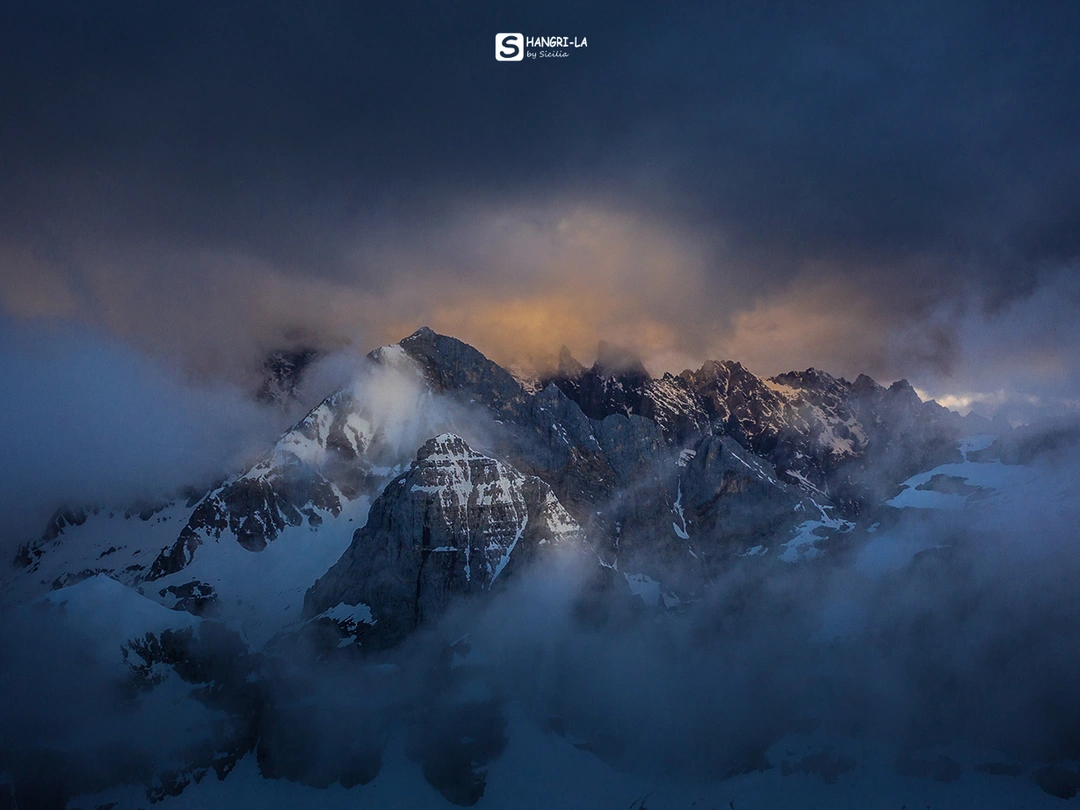
The Yunnan-Tibet Road: Composing a Prose Poem of Shangri-La in the Heart of the Snow Mountains
Introduction: When the World Stopped, We Finally Saw Our Homeland
The Spring Festival of 2020 arrived with an unusual quietness. COVID-19 swept across the globe like a silent avalanche, swallowing up countless meticulously planned travel itineraries. Visas became void, flights were canceled, plans were搁浅 (scuttled) — that year, we were all "trapped people."
But fate always quietly opens a window when it closes a door. As the pandemic data from abroad grew more alarming by the day, we Chinese — "financially modest but time-rich" — finally had the chance to re-examine the land beneath our feet. It turned out that the most beautiful scenery was never far away, but hidden deep in the homeland we had always overlooked.
There is a place nestled in the folds of the plateau, surrounded by mountains, guarded for generations by Tibetan Buddhist monasteries. Legend says it is closest to the sky, known as "the purest land on earth" and "the place nearest to heaven." Some say it is the Creator's favorite, endowed with the most pristine beauty in the world. It is called Shangri-La — a fairyland forgotten by the gods in the mortal realm.

And if Shangri-La is heaven, then Balagezong (巴拉格宗) is the earthly paradise, utterly isolated from the world. Here you will find the ancient legends of the Khampa clans, precipitous and deep gorges, majestic snow-capped mountains, primeval forests in layered splendor, emerald pastures, and the simple, honest Bala Village.
In July, Shangri-La awakens. This was my second time setting foot on this land. The first time was in April, when the mountains were still covered in ice and snow. Why revisit within just a few months? Simply to see the meadows after the snow had melted, to once again feel the warm, unpretentious hospitality of the Khampa people, and to bring my son — that little fellow named Siemens — to see the Shangri-La of my memories.
And so, what was originally planned as a solo journey turned into a battle of wits and wills — a parent-child trip.
Tiger Leaping Gorge: Meeting the Flood Season Head-On, Understanding "Uncontrollable Fury"
July is the rainy season in Shangri-La. The snow on the mountains melts, and as far as the eye can see, everything is lush green. During this time, it rains for about a third of the day. But precisely because of the rainy season, Tiger Leaping Gorge (虎跳峡) is at its most magnificent, in the midst of its annual flood. So, this leg of the journey had to start here, no question.
We woke up early and rushed over, only to find that there were already quite a few tourists. From the parking lot into the scenic area, the hiking plank road takes about an hour. To be honest, this stretch wasn't as easy as I had imagined. By the time we reached the viewing platform, my legs were a bit sore and weak.
The Jinsha River, originating from the Geladandong Snow Mountain in Qinghai, flows past the First Bend of the Yangtze River in Shigu Town, then abruptly turns north, squeezing forcefully through the narrow gap between Haba Snow Mountain and Jade Dragon Snow Mountain. The once calm and peaceful river instantly becomes furious, forming the world's most spectacular grand canyon — and the narrowest part of this canyon is Tiger Leaping Gorge.
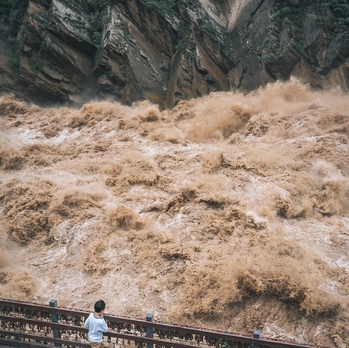
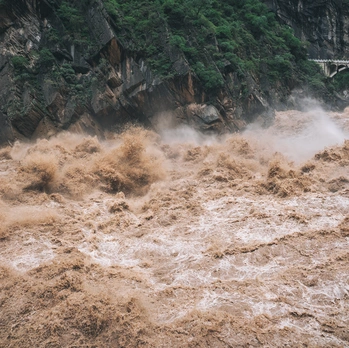
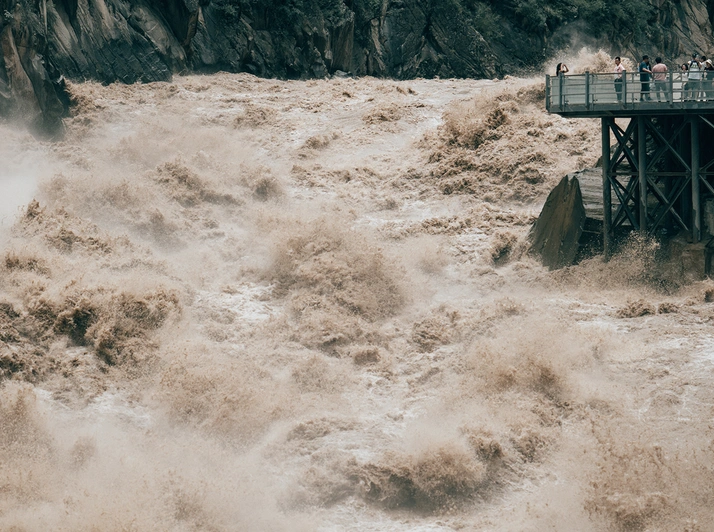
Tiger Leaping Gorge is divided into three sections: Upper Tiger Leaping, Middle Tiger Leaping, and Lower Tiger Leaping. We visited Upper Tiger Leaping, the narrowest section and the most beautiful part of the gorge. In the middle of the river stands a huge boulder, lying crosswise in the current like a steep waterfall, splitting the torrent in two, with thunderous waves crashing against the sky.
After spending some time there, the initial visual shock gradually faded. I quieted my mind and suddenly felt: in the face of nature's uncanny workmanship, humans are so small and insignificant.
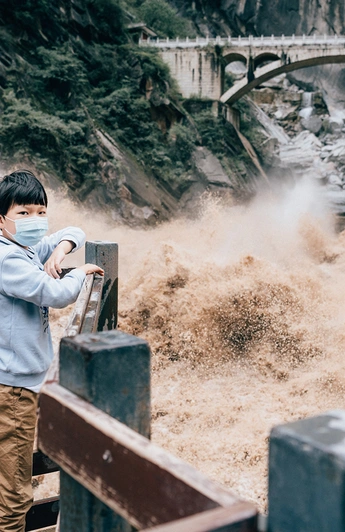
The raging river pounded against the jagged rocks, sending towering columns of spray and foam into the air. The thunderous roar echoed and reverberated through the stone walls. Standing by the railing for just a moment to take a photo, my clothes were splashed by the muddy water, and the air was thick with the smell of silt.
Wild — that is my most profound impression of Tiger Leaping Gorge.
Balagezong: Where the Immortals Dwell, Once Erased from the Map
If Shangri-La is heaven, then Balagezong is the earthly paradise.
"Balagezong" means "the place where immortals dwell" in Tibetan. Besides its name, its geographical location is equally remote from the mundane world. Once upon a time, Balagezong couldn't even be found on a map — there was no electricity, no roads, and no communication. The villagers had almost no cash income. Even basic necessities like salt and tea were incredibly hard to come by. Poverty and backwardness became synonymous with Bala Village. To get out of the deep mountains, the only way was a horse-and-person trail built on the cliffs in the 1970s, less than a meter wide. One wrong step could send you tumbling into the roaring Gangqu River below.
It wasn't until one person appeared that the fate of Bala Village changed.
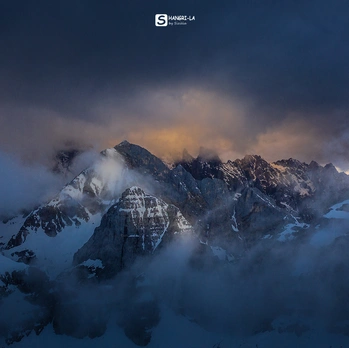
His name is Sana Dingzhu (斯那定珠), and he was also born in this isolated village. As a child, while forging iron, a piece of metal flew into his eye, injuring it. To see a doctor, he had to leave the mountains for the county seat. But back then, transportation in Bala Village was extremely underdeveloped, with various vertical landforms. It took him a full five days to reach Zhongdian County (now Shangri-La City). Because the best treatment time was missed, he lost the sight in one eye.
But Sana Dingzhu was not discouraged. On the contrary, this experience planted the dream of changing his hometown's impoverished condition. As an adult, he used the tens of millions of assets he had accumulated through business to build a road connecting Bala Village to the outside world. The winding mountain road from National Highway 214 to Bala Village has 43 sharp turns, coiling around the mountainside and ravines like a white "khata" (ceremonial scarf) draped across the mountains.
Entering the Balagezong scenic area, starting with the white stupa that greets your eyes, you can immediately feel a strong Tibetan atmosphere and religious color.
The Millennium Bodhi Tree and the Secret Gorge
I had long heard that there was a legendary bodhi tree within the Balagezong scenic area. It has traversed a thousand years of time, clinging to the cliffside, bathed in rain for millennia yet still lush and verdant. It is said that a few years ago, overnight, a Buddha's left hand grew out of the tree's trunk — truly miraculous.
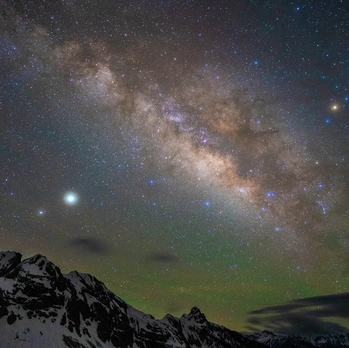
Next to the bodhi tree stands a Sutra Hall (藏经堂), enshrining the Yellow Jambhala, Padmasambhava, White Tara, Ushnishavijaya, and Green Tara. Outside the hall, a large prayer wheel filled with scriptures is installed. Turning it clockwise brings good fortune and auspiciousness. Devout believers who come here will pray before the Buddha hall.
The cliffside plank road winds its way through the narrow gorge, stretching over two thousand meters long, where "there is no way to heaven and no door to earth," heading eastward. For thousands of years, no one had set foot here; every plant and tree is a masterpiece of nature. Walking on the level plank road, looking up, the peaks on both sides seem to reach the sky, the sheer cliffs plunge straight into the river, and the vegetation is lush and green — everything before your eyes is the scene of spring and summer.
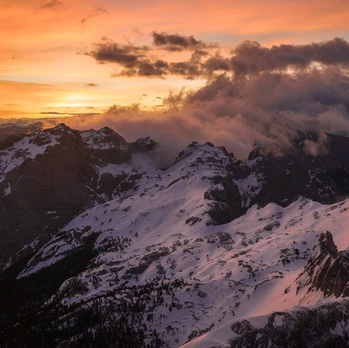
Accompanied by the sound of water, another highlight of the gorge is the Gangqu River (冈曲河). This river is the mother river of Bala Village. Its current is neither too fast nor too slow, so the rafting here is also gentle and leisurely, allowing you to enjoy a panoramic view of the grand canyon from the river, feeling how small humans are in the face of nature.
Following the route, I stumbled upon another unique world. Unlike the emerald green of the gorge river, the stream in Butterfly Valley (蝴蝶谷) originates from the mountains, crystal clear. It is called Butterfly Valley presumably because, when the butterflies spread their wings, this place must be filled with their shadows.
Mani piles (玛尼堆) can be seen everywhere on the rocks. These stacked stones are a form of Tibetan prayer and blessing, symbolizing good fortune and auspiciousness. Wild mountain palm trees are usually only found in tropical regions; they are extremely rare in the alpine cold vegetation zone of the Qinghai-Tibet Plateau north of the Jinsha River. On the parts of the cliff not covered by vegetation, a natural "福" (fortune) character is revealed.
All the wonders in Balagezong made me believe even more strongly: this is a blessed land protected by the gods.
Bandan Lhamo and Dolma Lhakhang: Pilgrimage at the Summit of the Gods
Balagezong is home to eight sacred mountains, and Bandan Lhamo (班丹拉姆) is one of them. This is the Shangri-La dreamland referred to in Lost Horizon. Bandan Lhamo is the chief of all deities in Tibetan Buddhism. Tibetans believe that worshipping her can remove disasters and bring prosperity to people and livestock.
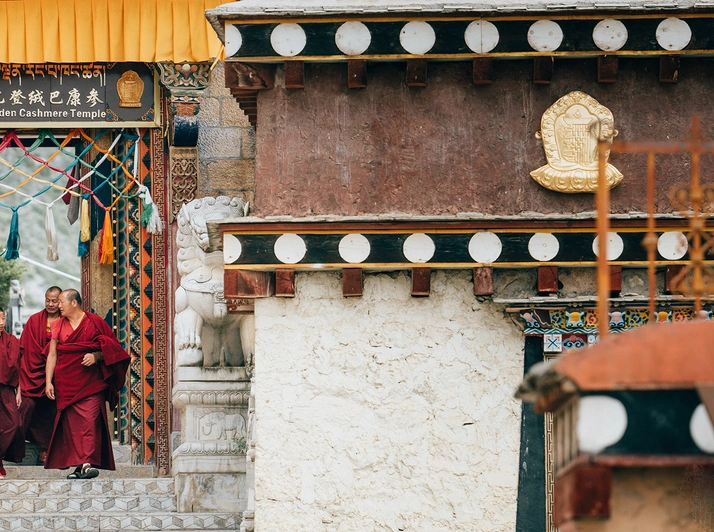
Taking the scenic area shuttle bus up the mountain, at the Bandan Lhamo viewing platform, I looked out over Balagezong. All the mountains were right in front of me, as if I could reach out and touch them.
Dolma Lhakhang (卓玛拉康) is a Guanyin (Avalokiteshvara) temple built over 1,300 years ago by the chieftain Sana Dorje (斯那多吉) behind his Dayong residence. Eight white stupas stand at the temple entrance, forming the Dayong Stupa Group. Each stupa has a different meaning. From east to west, they are: the Lotus Heap Stupa, the Four Noble Truths Stupa, the Stupa of Pacifying Disputes, the Bodhi Stupa, the Stupa of Miracles, the Stupa of Descending from Heaven, the Victory Stupa, and the Nirvana Stupa, recording the eight great merits of Shakyamuni Buddha's life. It is said that circumambulating the stupas can change your luck and accumulate merit, but remember to walk clockwise.
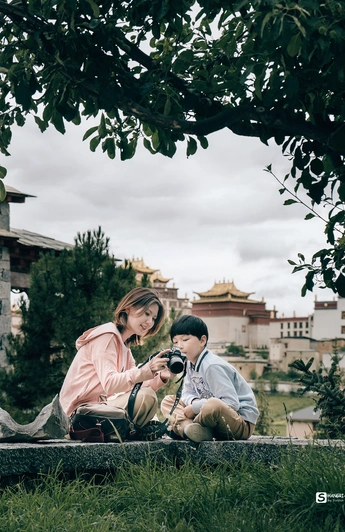
The temple houses a total of 21 Taras, a group of female deities who deliver and save sentient beings from suffering. They are also the female principal deities revered by various sects of Tibetan Buddhism. The 21 Taras have different forms. When paying homage, you can bow to all of them or follow your affinity; the 9th Tara is considered the most sacred. The hall on the first floor is filled with colorful prayer flags, creating a solemn and sacred atmosphere.
There are two things to note when entering the temple: never step on the threshold, and remember to take off your sunglasses and hat. Statues of Buddhas and deities cannot be photographed, but other things can.
Bala Village: The Original Homeland of the Immortals
The tiny Bala Village (巴拉村) at the foot of the sacred mountain is the pure original homeland of Balagezong, the dwelling place of immortals, the true Shambhala. Here, the mountains are high, the gorges are steep, and the village is isolated from the world. The villagers have been protected by the sacred mountain for generations and are deeply loyal to it. This place once lacked material goods, but it has never lacked faith.
At the village entrance, there are three Mani piles. Like thangkas, they can withstand a thousand years of wind and rain and the vicissitudes of history, yet still maintain their colorful appearance. The scriptures on the pile walls are too ancient; only high lamas with profound knowledge can read them. Among the countless passing tourists, no one knows their hidden meaning.
The white stupa on the mountaintop is where the Bala people perform the "煨桑" (smoke offering) ritual to pray for blessings. Every household in Bala Village also has its own incense burner. Although I am not Tibetan and don't fully understand this faith, I am filled with respect for it.
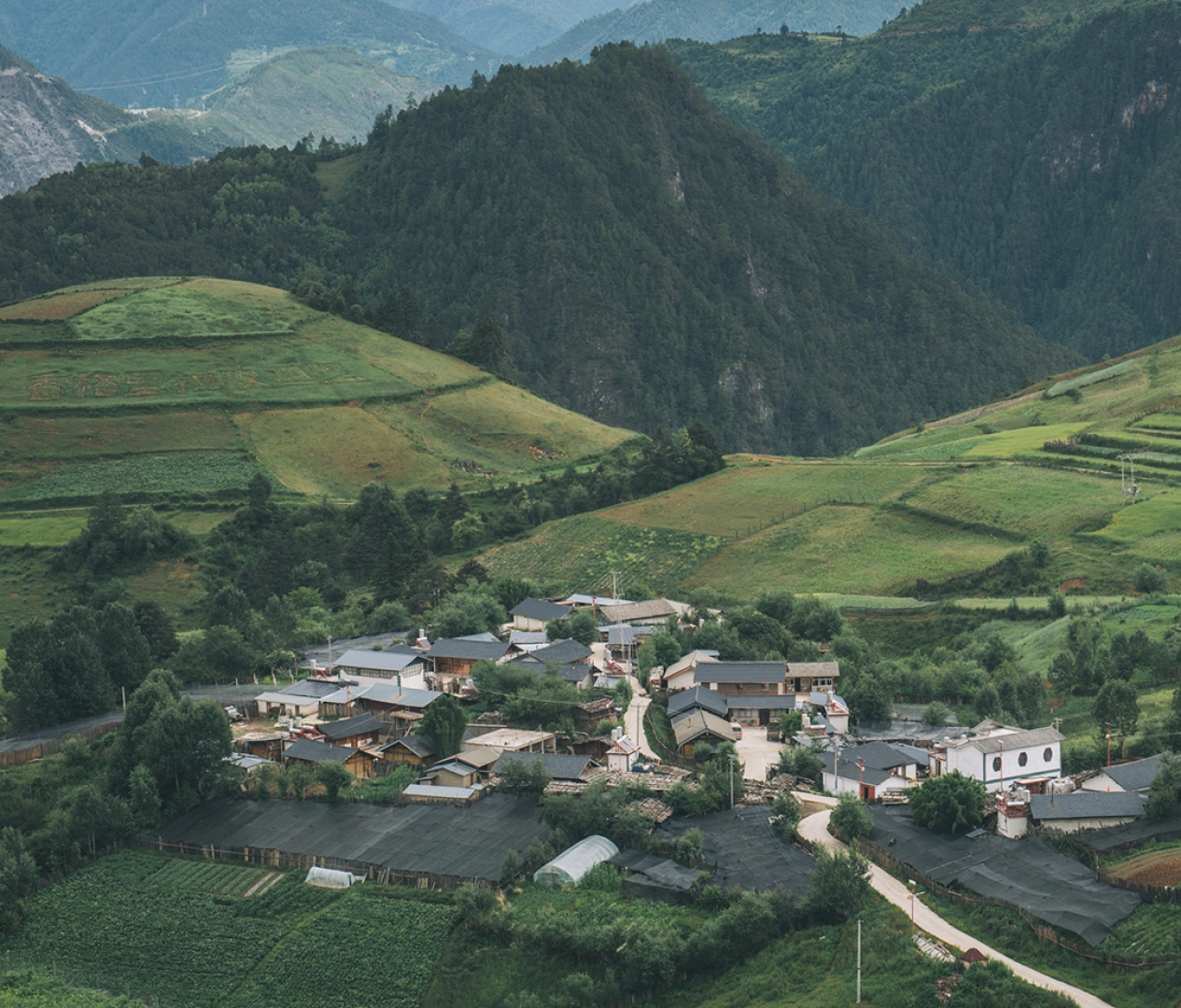
The village still retains its original appearance. Adhering to the belief that "everyone who comes here is family," no family in the village keeps a dog, and no one locks their door. The simple wooden doors are only meant to keep wild animals out and livestock from wandering in and out. They rely on the self-nature of the Dharma and their conscience to guard the home of their hearts.
In the center of the small village, there is a Mule Team Butter Tea House (马帮酥油茶馆), easy to find. Unlike ordinary butter tea houses, this one has a strong Tibetan folk house atmosphere. Here, you can open the window and see the distant stupa. When you're tired from walking, you can come in for a bowl of butter tea, look at the sacred mountain through the window, and make your own tsampa (roasted barley dough) with your hands, experiencing authentic Tibetan life. Buying butter tea comes with free barley flour. It comes in sweet and salty versions; choose according to your preference.
Shangri-La is the birthplace of Tibetan black pottery. Local artisans have passed down traditional Tibetan pottery-making techniques for generations, a history spanning nearly a thousand years. The mule teams traveling from north to south, while transporting tea, also carried this local pottery far and wide. Every step of the pottery-making process is a technical skill. The molding and firing processes involve unique techniques, and the firing also requires locally sourced raw materials. Every potter is a true master craftsman, and every piece of black pottery is a well-deserved work of art.
At the Bala Village Black Pottery Museum (巴拉村黑陶博物馆), you can experience the traditional craft of making pottery. These houses were originally people's homes. Only in recent years, due to earthquakes and the houses being too old, did the entire village move to the foot of the mountain. These houses, after being reinforced and renovated, have become a leisure destination combining dining and accommodation, allowing tourists to learn about local culture while having their basic needs met.
As a bubble tea addict, I never expected to enjoy a cup of Huangcha (皇茶) milk tea in Balagezong.
Above the Gorge: A Game for the Brave and the Glass Skywalk
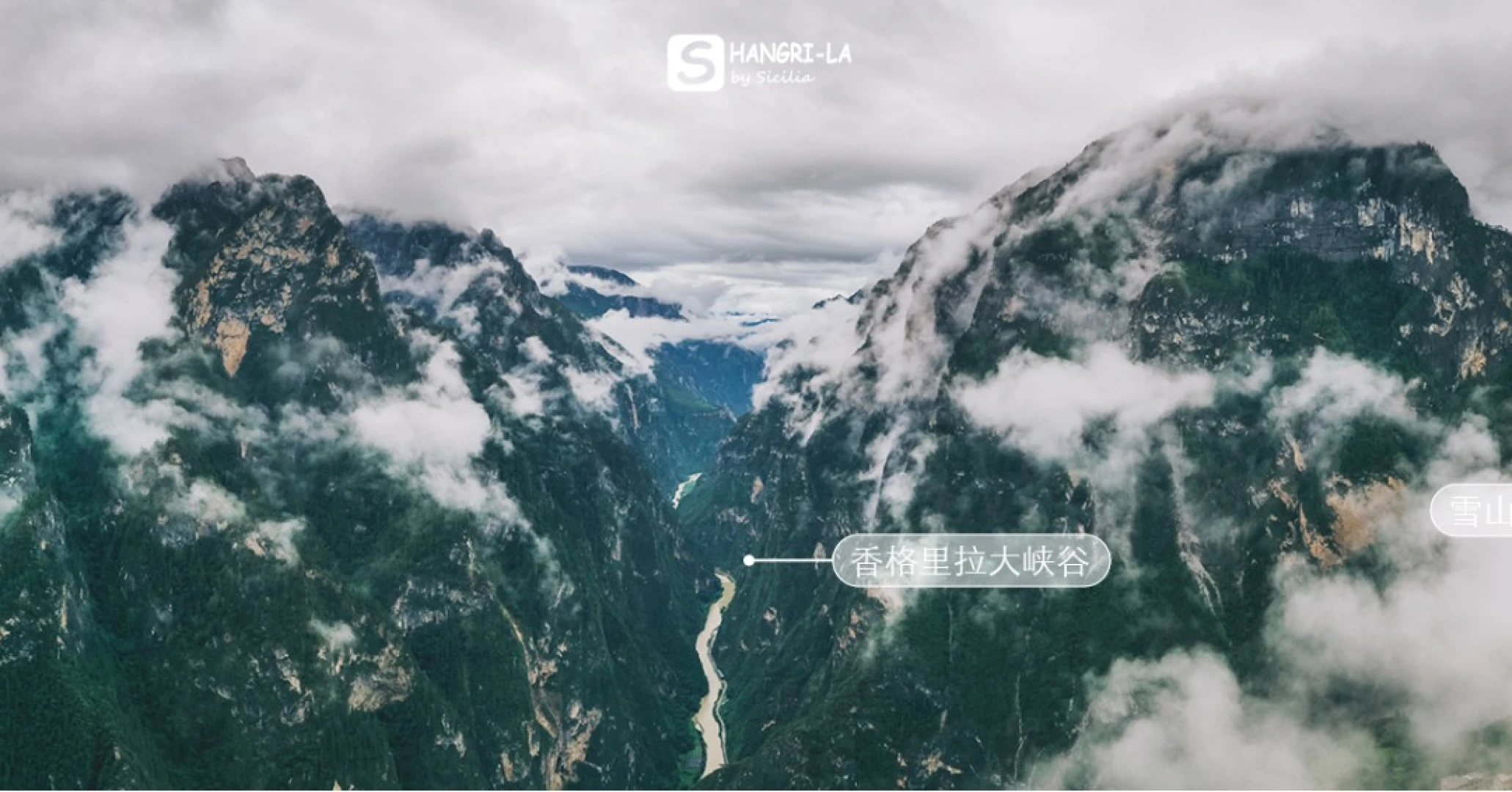
Driving up the winding mountain road from the Shangri-La Grand Canyon, the scenery becomes increasingly different. Only by truly coming here can you appreciate the magnificent splendor of the vast world. It is wild and full of charm, with ancient trees densely packed. The river winds and rushes like a silk ribbon, a magical painting by nature. There is a huge elevation difference between the river valleys. "Gorges within gorges, gorges above gorges, crisscrossing and interlocking, gorge after gorge connected" is its greatest feature.
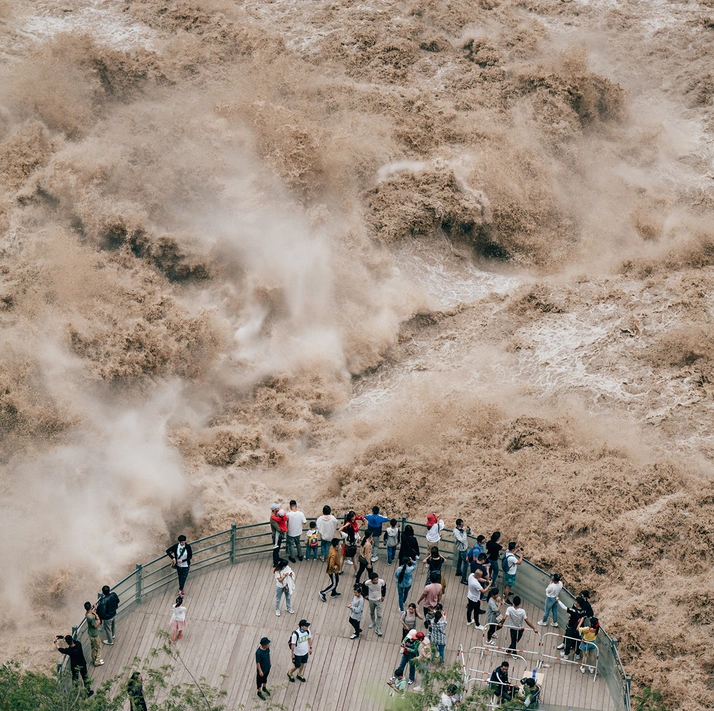
"There are moments in one's life that make you open your soul." In Lost Horizon, Hilton describes the protagonist's feeling upon witnessing the wonders of Shangri-La. The yellowing mountains stretch into the distance, clothed in vegetation. Weaving between the mountains, racing above the clouds — only when you are truly there do you understand what it means to have "a moment that opens your soul."
The aerial zipline across the gorge is probably a game for the brave. From the jungle to the gorge, from the foot of the mountain to the peak, dark green and rock intermingle, showcasing nature's myriad forms. The morning sun evaporates the sea of clouds among the mountains, romantic and dreamlike. Sliding back to the starting point from one end of the plank road on the zipline, with Gesong Sacred Mountain in front and a bottomless abyss below — this is not for those afraid of heights.
Many scenic spots now have glass viewing platforms, nothing special. But Balagezong's is the highest-altitude, highest-verticality glass skywalk in China, so I still wanted to see it. Building a glass skywalk here was incredibly difficult, nearly a thousand meters high, almost hanging on the cliff face. Through the glass floor beneath your feet, you can look directly down into the Shangri-La Grand Canyon, taking it all in at a glance.
Shambhala Stupa: The Sacred Mountain of Buddha, Dharma, and Sangha
Taking the sightseeing bus to Huahai Tang (Flower Sea Meadow), it was the rainy season in July, and there were still a few scattered wildflowers. Although the season for alpine rhododendrons was over, the little log cabins in the forest had their own charm. Following the winding road, the altitude kept rising, and the scenery became quite different from that below Bala Village. The temperature below Bala Village felt like spring and summer, but at the mountain pass, it was noticeably cooler.
At the top of the pass, I could see the distant snowy mountains again. Balagezong's location is truly magical — on one side is Yading Daocheng, on the other is Meili Snow Mountain. When the weather is good and visibility is high, you can see all the sacred mountains if you launch a drone.
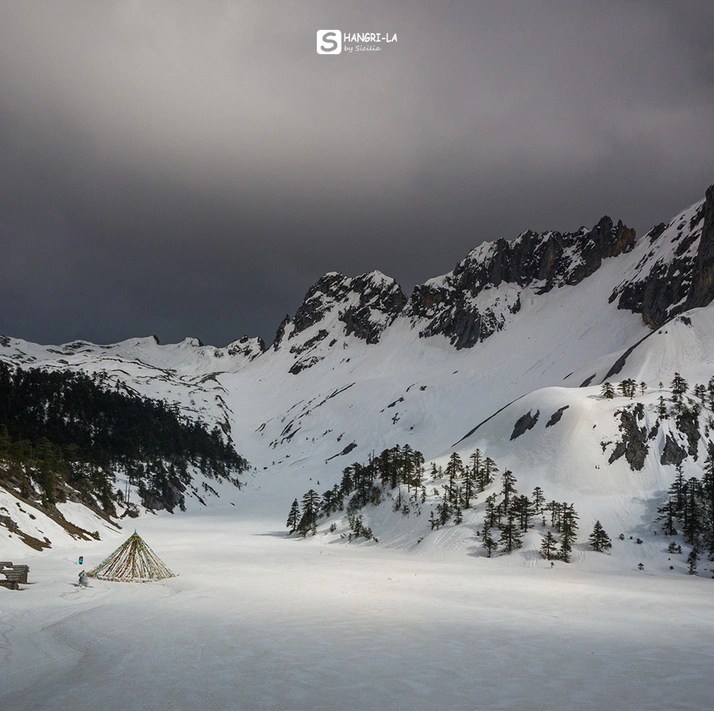
Looking out from the pass, Balagezong seemed to have transformed into a snowy fairy tale world. The snow on the ground was thick, and stepping on it made a slight crunching sound.
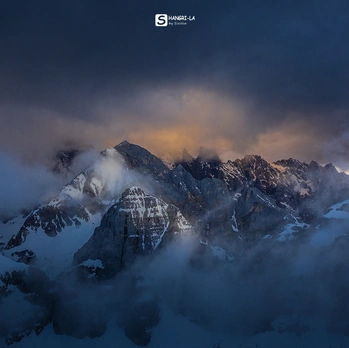
Looking up, the snow-covered Shambhala Stupa (香巴拉佛塔) stood tall and proud, with the golden afterglow of the setting sun spilling over the land. Seeing it with my own eyes, I didn't know how to describe my feelings at that moment. The stupa has a kind of magic that makes you forget the mundane world and worship devoutly.
Next to the Shambhala Stupa are the "Lama Sitting Statue" and the "Sutra Statue" rock formations, along with two other stupas. Together, they are known as the Three Jewels of Buddha, Dharma, and Sangha. This is the celestial stupa prophesied by Shakyamuni Buddha after his enlightenment, a sacred mountain said to be able to eliminate the turbid energy and karmic obstructions inherent in people.
Seeing the stupa depends on luck. If you happen to encounter a foggy day, you can barely make out its shape. Facing the wind, gazing at the stupa, silently making a wish, my heart felt peaceful and serene. Every year, many monks come here to pay homage, which shows the great importance of this stupa in the hearts of Tibetans.
At the foot of the Shambhala Stupa lies a pasture. When I came in spring, it was still a snowfield. After the snow melted, the July pasture was full of life. Horses wandering or grazing everywhere, little log cabins, trees covering the mountains — it was hard to believe that such a vast plain was hidden among these high mountains.
Just as Lost Horizon depicts: snow mountains, pastures, villages, gorges — Balagezong has them all.
Nai Dang Pasture and the Wild Fun of the Rainy Season
Nourished by the summer rains, the pasture grass grew exceptionally lush. The climate in the river valley was hot, not as cool as the pasture area. So in summer, the Bala villagers drive their livestock to Nai Dang Pasture (乃当牧场) to live.
I accidentally captured a photo of a magical tree, shaped like a person with open arms, standing on the mountaintop guarding Balagezong — indescribably wonderful. Actually, the misty, cloudy atmosphere of the rainy season is also something I deeply love.
For accommodation in Balagezong, I chose a hotel within the scenic area. There are many types of hotels in the area, with various price ranges — five-star luxury, light luxury, and budget hotels at the entrance — meeting the needs of different tourists. Considering convenience for visiting attractions, I chose the Balagezong Snow Mountain Ice Spring Health Manor (巴拉格宗雪山冰泉养生庄园), which is backed by Gesong Snow Mountain, a five-minute walk from Dolma Lhakhang, and offers a view of Bala Village.
I had thought Balagezong was quite primitive, so I didn't have high expectations for accommodation. But this hotel completely dispelled my concerns — the room was spacious and full of Tibetan character. The room service was excellent. Each room had its own dedicated butler. Before going to bed, we were served nourishing Tibetan soup and Tibetan-style snacks. The living room with floor-to-ceiling windows had a fantastic view. Sitting by the window with a cup of hot tea, you could enjoy the beautiful scenery of the Tibetan sacred mountains without even going out.
Rainy Season "Poison" Tasting: A Feast of Wild Mushrooms
The rainy season is the happy time for eating wild mushrooms in Yunnan. We spent a week in Shangri-La. Besides visiting the scenic spots, we often joined the locals in the forests of Balagezong to experience the fun of digging for mushrooms.
After the rain, the forest exuded a very fresh scent of grass and wood. The damp environment was perfect for mushroom growth. Exploring the forest, encountering all kinds of poisonous and non-poisonous mushrooms, felt like a very local leisure activity. Locals call picking mushrooms "jian jun" (捡菌) — the character "jian" (to pick up) has two meanings: picking mushrooms in the mountains is a test of "luck." Sometimes after a rain, mushrooms pop up all over the mountain, and you just bend down and pick them up. It's full of fun.
As the saying goes, eating wild mushrooms in Yunnan requires three kinds of familiarity: you need to be familiar with the mushroom varieties, you need to cook the mushrooms thoroughly, and you need to know the way to the hospital. But we were just digging for fun; none of us dared to ask the hotel to cook them. I'll quietly tell you: the ones I was holding were all edible.
Here are a few common methods for identifying mushrooms:
- Appearance identification: The pretty ones are poisonous; the ugly ones might be poisonous.
- Experience summary: If someone says you can't eat it, don't eat it; if someone says you can eat it, it might not necessarily be safe.
- Photo comparison: If an online search says it's poisonous, it really is poisonous; if an online search says it's non-toxic, you might have misidentified it, and it could be poisonous.
Under the guidance of experienced locals, I still managed to harvest two bags of "spoils." Although I didn't get to eat them myself, I later went to the mushroom market in the county town to have a taste — wild ones are called "junzi" (菌子), farmed ones are called "mogu" (mushrooms).
Let me also introduce a few unique plants of Balagezong: "Tie Sao Ba" (铁扫把, Iron Broom), a plant that can be used both as traditional Chinese medicine and as a broom, highly cost-effective. If you happen to have abdominal pain or diarrhea, you can dry it, grind it into powder, and drink it with boiling water. There's also "Bai Juan" (白卷, White Roll), said to be extremely drought-resistant. During the dry season, it retracts its roots and rolls itself into a ball for protection; during the rainy season, it takes root and blooms again. It sounds like a plant from the Sahara to me!
Songzanlin Monastery: Ten Years On, Still Golden and Magnificent
Not far north of Shangri-La County town lies a vast grassland. At the edge of the grassland, a pure white and majestic monastery suddenly appears, standing tall among the mountains. The tiles on the roof glisten — seeing Songzanlin Monastery (松赞林寺) for the first time can only be described as "stunning."
Across from Songzanlin Monastery is the famous Soul Lake of the goddess White Lhamo, where you can photograph the monastery's reflection. It is said that if you are lucky, you can see your past and future lives in the lake.
The layout of the monastery is unique, like an oval fortress. The main hall stands tall in the center, while eight subsidiary halls (Kangcan) and other buildings cluster around it, creating a layered effect of heights and depths.
This was the first time I brought Siemens to a Tibetan area, to show him the Songzanlin Monastery of my memories. When I first came to Yunnan, I still thought of myself as a young woman. Unknowingly, ten years have passed — and Songzanlin Monastery is still the same glittering, golden Songzanlin Monastery.
Built in 1679, Songzanlin Monastery was approved by the Kangxi Emperor himself, and its site was chosen through divination by the 5th Dalai Lama, Ngawang Lobsang Gyatso. It is said that when the 5th Dalai Lama chose the site, he saw the Sacred Mother Lake in front, Mount Kari behind, the clear Naizi River flowing eastward across the whole of Greater Zhongdian, and Shika Snow Peak in the distance to the west. Seeing this perfect geographical harmony, he decided to build the monastery here.
Built on the mountains, Songzanlin Monastery does resemble the Potala Palace in appearance. The main hall can accommodate nearly 2,000 people sitting in meditation and chanting sutras, demonstrating the grandeur of the Dharma. Its incense is very strong, with a continuous stream of devout pilgrims. Songzanlin Monastery holds supreme prestige in the hearts of the local people. In the past, it was an honor for a family's son to be sent to the monastery as a lama. In relatively well-off families, every household had sons who became lamas; except for one son left to carry on the family line, all others were sent to the monastery.
Looking at Songzanlin Monastery from afar, it felt as if the anxiety and restlessness in my heart were smoothed away. Many people travel thousands of miles to come here and worship. But I believe the Buddha is not thousands of miles away, nor is he a mysterious, unreachable entity — he has always existed in the hearts of each of us; we just never realized it.
Behind Songzanlin Monastery, there is a grassland covered with wildflowers in July, a great place to take the kids for a walk. Walking through it, the air was filled with a light, fresh scent of grass. To capture the best light, you often have to seize the briefest moments — listen with your heart, feel with your soul. All those times I taught my son photography skills finally paid off in Shangri-La.
On the evening we visited Songzanlin Monastery, we stayed nearby at the Songtsam Linka Hotel (松赞林卡酒店), separated from the monastery by just a field. The watchtower-style buildings, built according to the mountain's contours, seemed to have grown out of the hillside fields. White clouds drifted low across the sky, and from afar, we could see the dazzling light emanating from the golden roof of Songzanlin Monastery.
There was little to do in the countryside at night, so we stepped out for a walk along the uneven stone paths. This was a stone building complex built entirely according to the mountain's terrain, with 24 two-story buildings arranged in a pleasingly irregular pattern. In contrast to the stone exterior, the interior materials were mainly wood and copper. All the wood used in the hotel came from reusable materials salvaged from 180 old houses that local Tibetans had dismantled. The use of copperware was originally a Tibetan household tradition — washbasins, countertops, stair edging. The extensive use of copper naturally immerses you in a Tibetan lifestyle atmosphere.
When it rained and we couldn't go out, we spent time in the hotel reading books and watching videos about the Tibetan region. Some books took on a different meaning after having visited Shambhala. The three meals a day at the hotel were full of pleasant surprises. Tibetan cuisine is rich and varied — the tsampa cake was much tastier than I had imagined, and the yak meat was incredibly fragrant. Whether meat or vegetables, they were all raised and grown by the local villagers. The meat was delicious, and the vegetables were sweet.
Napahai Lake: Not a Sea, But Surpassing One
In Shangri-La, the grassland wildflowers of Napahai Lake (纳帕海) always bring a sense of peace and joy. Although called a "sea" (hai), it is not a sea. During the rainy season, most of the grassland is submerged by lake water, becoming a sea; during the dry season, with less water and more grass, the lake recedes and turns back into grassland. Black-necked cranes love to inhabit the swampy meadows here. There are also many herders, still wearing their traditional ethnic clothing, living a simple life of grazing.
In July, Napahai is like an ocean of plants. Countless flowers bloom — rose-red wild peonies, wild chrysanthemums, and various other fragrant wildflowers and grasses whose names I don't know — forming a beautiful picture.
The residents near Napahai still maintain their traditional ways and also offer some local activities for tourists to experience, such as archery. The little guy's greatest joy was this — he hit the bullseye, won a khata, and was overjoyed.
There are three ways to explore Napahai: by bicycle, on horseback, or on foot. The horses here are called Dian horses (滇马, Yunnan horses). They are a bit shorter than ordinary horses, so they are also called short-legged horses. Although riding a horse across the grassland sounds novel, I chose to walk without hesitation — not to make things difficult for myself, but because I prefer to feel the earth with my own two feet.
Although I didn't ride a horse, I still want to remind everyone: never stand behind a horse, as it will feel uneasy and might kick you. Stand in front of it, gently stroke its head, and let it feel your goodwill.
Everywhere on the grassland, cattle and sheep graze leisurely, presenting a beautiful pastoral scene of "wind blowing low the grass, revealing cattle and sheep." Walking is very pleasant, but remember to watch your step — avoid stepping on the animal droppings.
Conclusion: Shambhala Is Not Far Away, But in the Heart
No matter how long the road, there is an end. No matter how beautiful the scenery, there is a farewell.
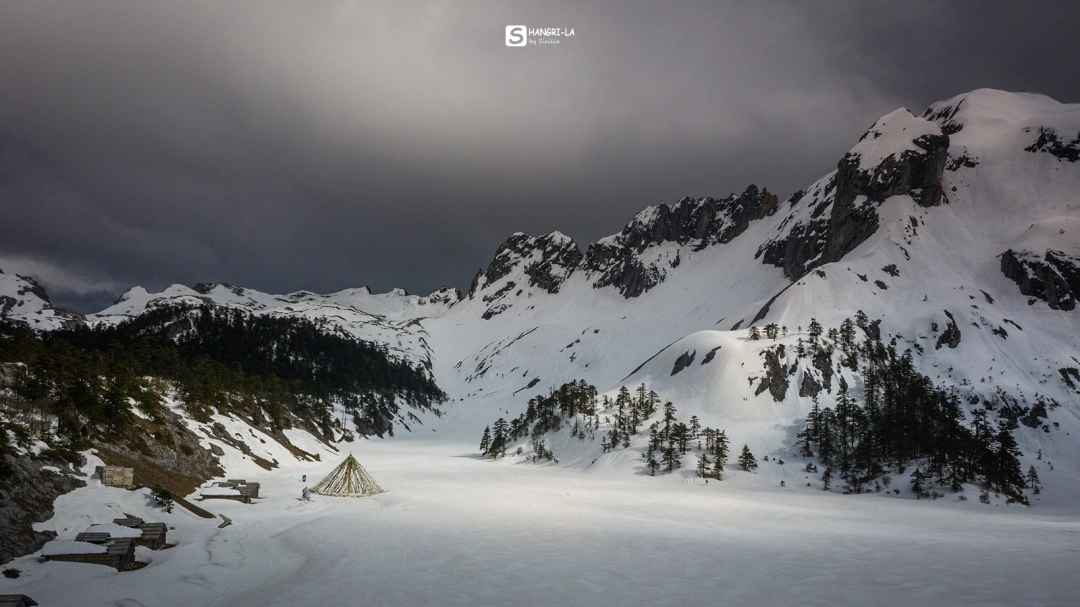
On many nights after returning from Shangri-La, I still recall those images: the furious waters of Tiger Leaping Gorge, the millennium-old bodhi tree of Balagezong, the golden afterglow of the Shambhala Stupa, the gilded roof of Songzanlin Monastery, the wildflower meadows of Napahai... and those simple Khampa people, those devout pilgrims, those cattle and sheep running freely on the plateau.
Some say Shambhala is a legend, a dream that can never be reached. But I say, Shambhala has always been here — hidden deep in the snowy mountains, hidden between the gorges, hidden in the heart of everyone willing to stop, to listen, and to feel.
If you are also tired of the city's noise, if you also long for a cleansing of the soul, then go to Shangri-La. Go to Balagezong. Go see the place where the immortals dwell. Go listen to the prose poem of the snowy mountains.
There, you will find a heaven you have never seen before.
You should also read:

Body in Hell, Heart in Heaven: A Pilgrimage Through Tiger Leaping Gorge — A Dialogue Between Heaven and Earth
Body in Hell, Heart in Heaven: A Pilgrimage Through Tiger Leaping Gorge — A Dialogue Between Heaven and Earth Introduction: When the Gorge Splits Open Beneath Your Feet Some say Tiger Leaping Gorge is the closest place on Earth to the border between "hell" and…
Continue reading...
Cloud Travelogue · Dali of Wind, Flowers, Snow, and Moon: A Three-Day, Two-Night Journey of a Free Spirit
Cloud Travelogue · Dali of Wind, Flowers, Snow, and Moon: A Three-Day, Two-Night Journey of a Free Spirit I am a cultured female foodie with a touch of rogue charm. I slung on my backpack, took my lover's hand, and set off on a spontaneous…
Continue reading...
The Meaning of Travel – A Tengchong Story: A Journey of the Heart and Personal Growth
The Meaning of Travel – A Tengchong Story: A Journey of the Heart and Personal Growth Setting Out, Only to Return a Better Self Some say travel is nothing more than leaving a place you're tired of, only to go to a place where others…
Continue reading...