Three Prime Lenses Through Yunnan: Lugu Lake, Our Warmest Family Memories
Three Prime Lenses Through Yunnan: Lugu Lake, Our Warmest Family Memories
Introduction
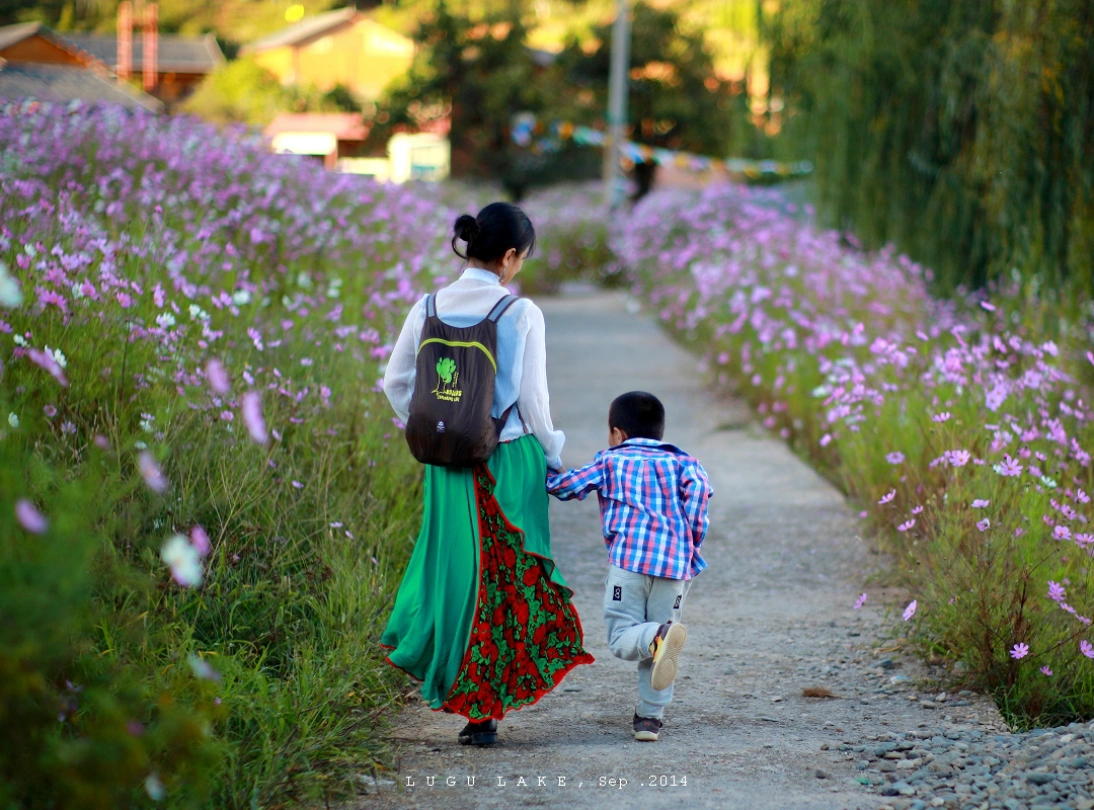
That autumn, our son Taotao was five years old.

We brought him—and three prime lenses—to the land of Yunnan. Not to make him remember anything in particular, nor to flood social media with perfect photos. We simply wanted, while he was still young enough to hold our hands, to walk a stretch of road together, gaze at a lake, and savor some unhurried time.
Travel doesn't have to be life-changing. What we wanted was simply this: a warm stretch of time, just the three of us.
Pre-Trip Preparations: What You Need to Know
Itinerary Overview
This journey spanned ten days, starting from Harbin in the icy north, transiting through Kunming, and finally arriving at Lijiang and Lugu Lake. The route went like this:
- Day 1: Harbin → Kunming → Lijiang, overnight in Lijiang
- Day 2: Lijiang's Dayan Old Town
- Day 3: Lijiang → Lugu Lake (Lige Village)
- Day 4: Lige Village, Nisai Village
- Day 5: Lige Village, lake circuit tour
- Day 6: Lige Village → Shuhe Ancient Town
- Day 7-8: Shuhe Ancient Town
- Day 9: Lijiang → Kunming
- Day 10: Kunming → Harbin
Practical Tips
If you're planning a similar trip, these pointers might save you some trouble:
- Book accommodation early: Reserve your preferred guesthouse at least 20 days in advance. We missed out on our top choice because we were too slow.
- Use Taobao for bookings: Booking guesthouses and transfers through Taobao gives you the option to leave a bad review if something goes wrong.
- Check cancellation policies: Every guesthouse has different rules. Make sure you understand them before booking.
- Make sure your suitcase wheels are sturdy: The streets in the old town and around Lugu Lake are paved with cobblestones. Dragging a suitcase is exhausting, and weak wheels might give up halfway.
- Bring a flashlight: Lugu Lake has no streetlights. You'll need one for nighttime walks. We brought a high-power LED flashlight bought online—it worked great and passed airport security without issue.
- Don't exceed power bank limits: Airport security is strict about power bank capacity. Check the regulations before you go.
- Bring your own slippers and towels: Some guesthouses don't provide them. Confirm in advance.
- Ask about spice levels: Lugu Lake sits on the border between Sichuan and Yunnan, so there are plenty of Sichuan restaurants. When ordering, always ask "Is this spicy?" We once ordered ham fried rice and got a dish so fiery it made us question our life choices.
About Photography Gear
I brought a Canon 6D body with three prime lenses: an R28/2.8, an EF50/1.2, and an R80/1.4.
Why three primes? Because each lens has its own personality:
- R28/2.8: My go-to for street photography and detail shots. On a full-frame body, it works as a mild wide-angle, occasionally useful for landscapes.
- EF50/1.2: A standard lens that handles almost anything. It was my everyday lens in Dayan Old Town. The f/1.2 aperture easily blurs out the crowds in busy areas.
- R80/1.4: A telephoto lens perfect for portraits, close-ups, and landscapes. Since it lets me shoot from a distance, I also captured some natural, candid street scenes.
Each lens contributed about a third of the photos this trip. They worked together beautifully.
Advice for photography enthusiasts: Lijiang's climate is humid, and the old town is full of flowers. If you enjoy shooting plants and blossoms, bring a macro lens. But if you're low on energy, hate carrying heavy gear, only use auto mode, or prefer "point-and-shoot" convenience, stick with your phone or a compact camera. A DSLR is not for you.
Also, the old town is filled with shops selling scarves, accessories, and ethnic clothing at reasonable prices. Don't pack too many jackets—buy them there. Put on some local attire, stand in the old town or by Lugu Lake, and you'll look stunning without trying.
Day 1: Departure, Surprises on a Long Journey
From Harbin to Lijiang, we had to transfer in Kunming, with a three-hour layover at the airport. We left at 8 a.m. and didn't arrive until 7 p.m. The drive from Lijiang to Lugu Lake would take another eight hours. Of our ten-day trip, four days were spent traveling.
Even adults find such long journeys tedious, but Taotao was fascinated by everything around him, showing no sign of impatience. A child's world is simple: as long as Mom and Dad are there, anywhere is a playground.
Day 2: Dayan Old Town, Time Slows Down
Lijiang's old town was built in the late Song and early Yuan dynasties, over 800 years ago. Located at the crossroads of Yunnan, Sichuan, and Tibet, its bustling trade routes quickly turned it into a famous market town and strategic hub.
The Old Town at Dawn
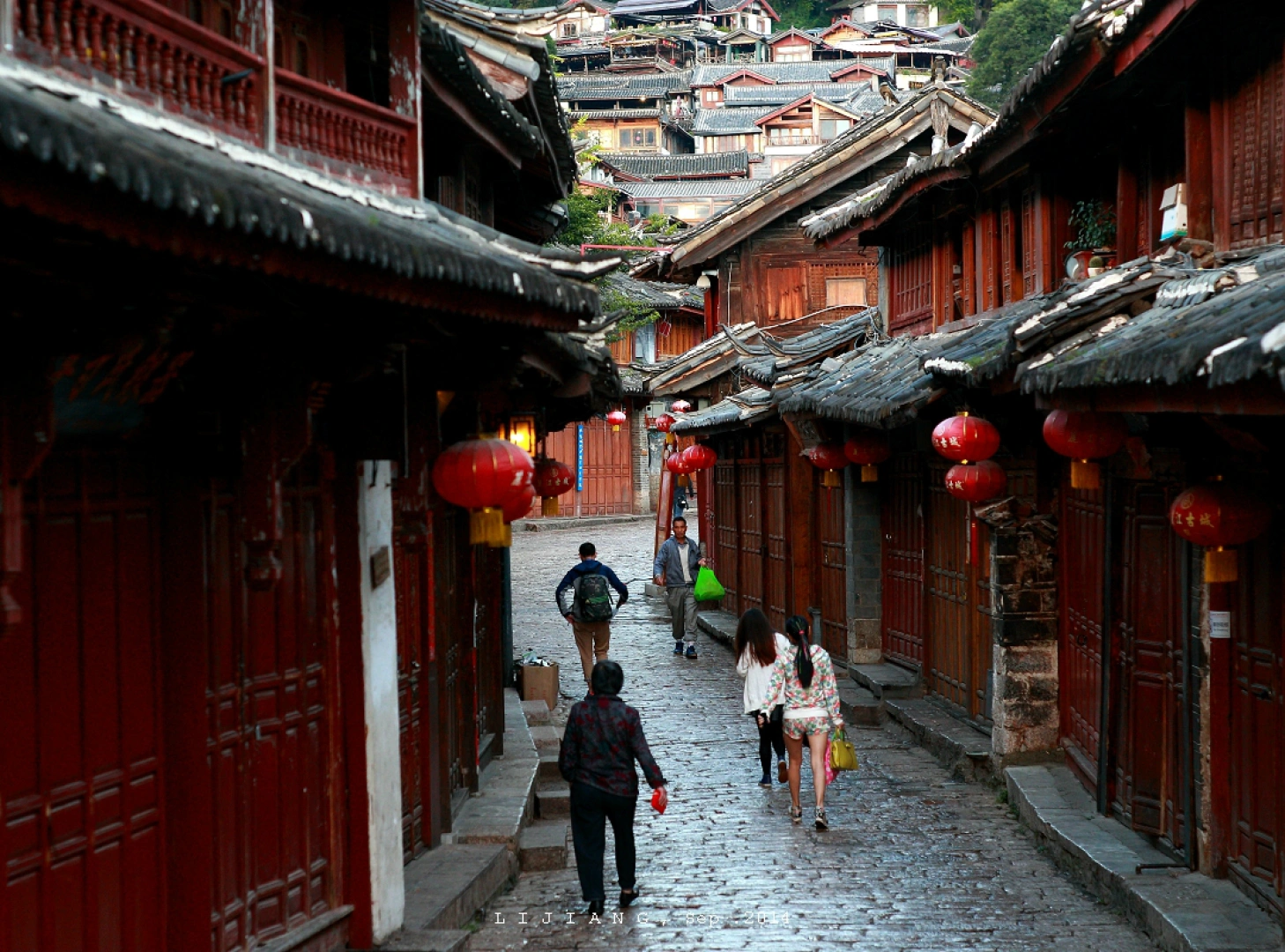
To avoid the crowds, we woke up early. The old town at dawn was as quiet as a dream not yet fully awake.
In an alley, a cat—either an early riser or a night owl—lounged lazily on a wall. In the distance, an elderly woman was lighting a fire. By the time we got closer, she had already gone inside, leaving only a brazier glowing warmly in the chilly morning.
The damp, rainy climate made plants grow wildly. Even a tiny patch of rooftop could sprout a patch of green.
The Guesthouse "Muguo Ke"
We stayed at a guesthouse called "Muguo Ke," an ancient Naxi courtyard house tucked away in a quiet corner of Wuyi Street. A small stream ran past the entrance, where we could see elderly women fetching water in the morning.
Once Taotao and his mom were up, our leisurely stroll through the old town truly began.
Eating and Wandering
Walls were covered in pictographic writing, fascinating to look at. Most shops were still closed, except for a Bai ethnic grandmother weaving small accessories at her doorstep. She asked if we wanted braids—6 for 10 yuan, cheap and charming. Why not?
After the braids, breakfast. Lijiang's yogurt is famous—how could we not try it? The old town was decorated with greenery and flowers everywhere. Taotao ate his yogurt, Mom was busy on WeChat, Dad was busy photographing—everyone happy in their own way.
By late morning, Wuyi Street and Sifang Street were packed. We found a restaurant—or rather, a bar that served food during the day and alcohol at night.
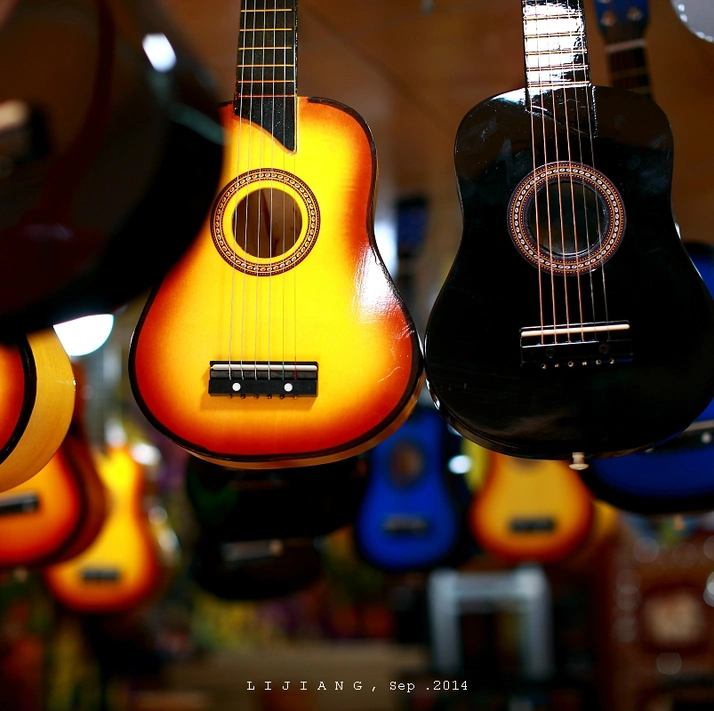
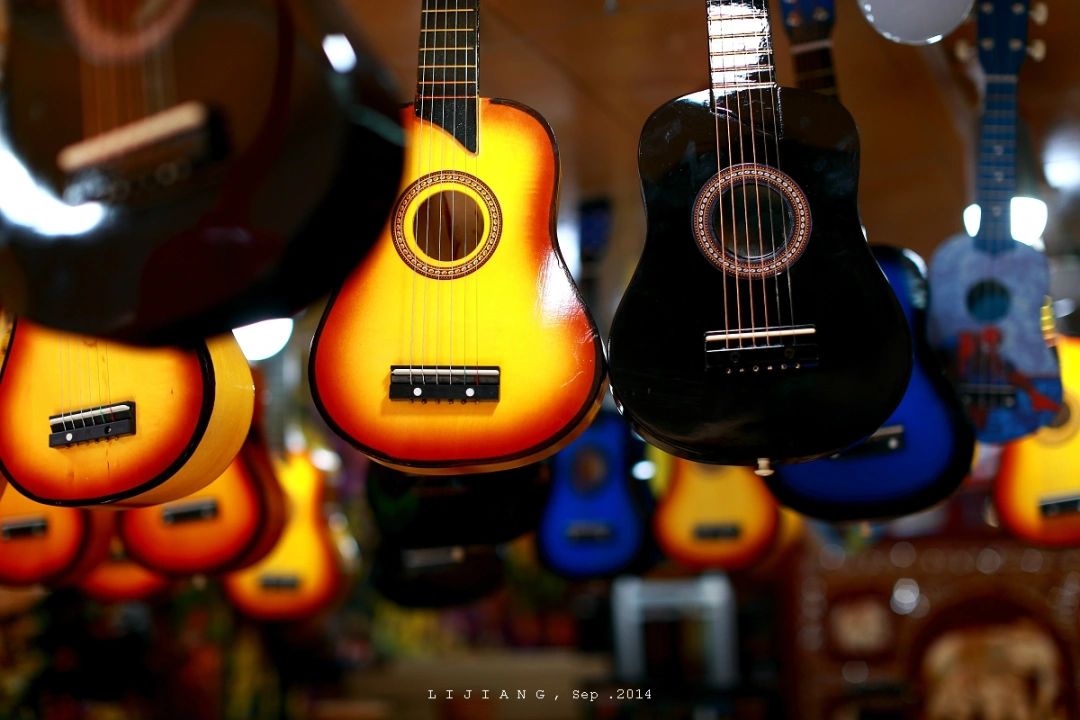
In Lijiang's old town, many small shops sell African djembe drums alongside CDs. Playing CDs and drumming is a great way to attract customers. Taotao was drawn in by the drumming and fell in love with the instrument. We bought one for 60 yuan—a big toy, really.
Afternoon Wandering
After lunch, we returned to the guesthouse to rest and escape Lijiang's harsh UV rays. In the afternoon, we continued our aimless wandering.
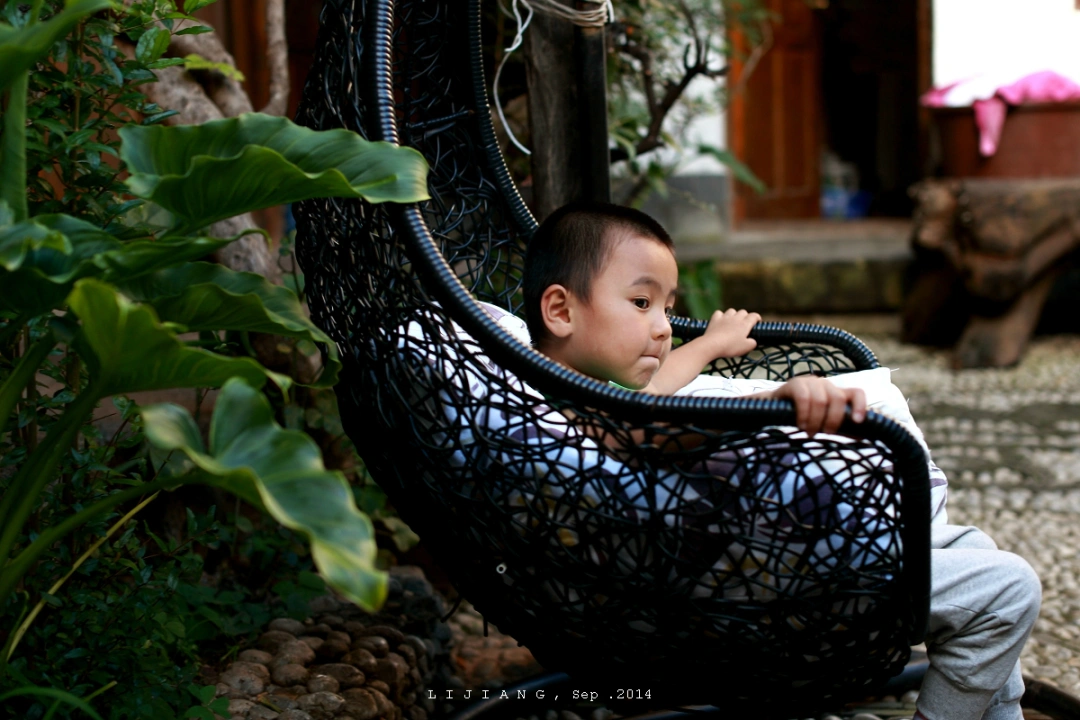
A dog sat daydreaming on a doorstep. At a drum shop, the owner was teaching two girls how to play. Taotao plopped down on the threshold, watching intently. A little while later, he wandered inside and sat down on his own.
On the way back, we passed the drum shop again. Taotao's mom wanted to learn the drum so she could teach him at home.
Day 3: Off to Lugu Lake
The guesthouse owner arranged a car for us, departing at 6:30 a.m. from the old town. We woke up at 5 a.m., got ready, and had breakfast at a small eatery. At that hour, shops inside the old town were still closed, but the ones on the outskirts were already open, catering to travelers coming and going. The owner told us he'd arrived before 4 a.m. to prepare breakfast—running a business isn't easy.
We took an 8-seat minivan. Round-trip from Lijiang to Lugu Lake cost 200 yuan per person. The drive took about seven hours, including a lunch break. After entering the Lugu Lake scenic area, there was a viewpoint offering a distant view of the lake.
The van passed through Daluoshui Village and ended at Lige Village. After a ten-minute walk, we arrived at Wucai Lige Guesthouse. We had wanted to book three nights in the "Pink Pavilion" but couldn't, so we settled for two nights in the "Blue Pavilion" and one in the "Pink Pavilion."
First Glimpse of Lugu Lake
Outside the guesthouse, directly across, was Lige Peninsula. We had wanted to book the "Peninsula No. 7" guesthouse there, but we were too late for that too.
After a seven-hour drive, we were exhausted. After resting for two hours, we stepped out and began our first day at Lugu Lake.
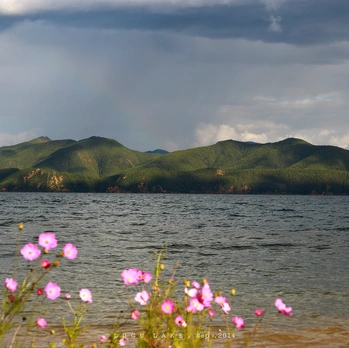
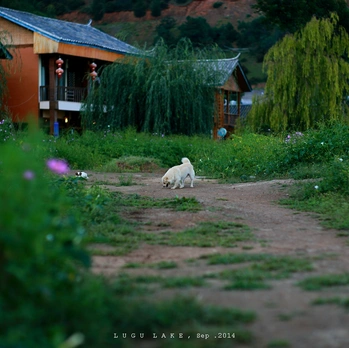
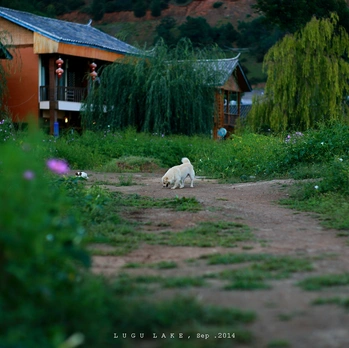
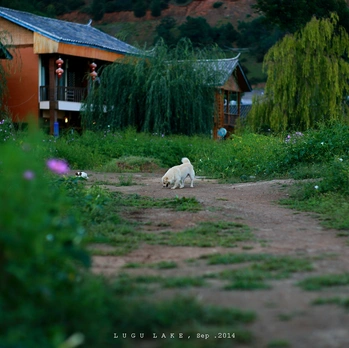
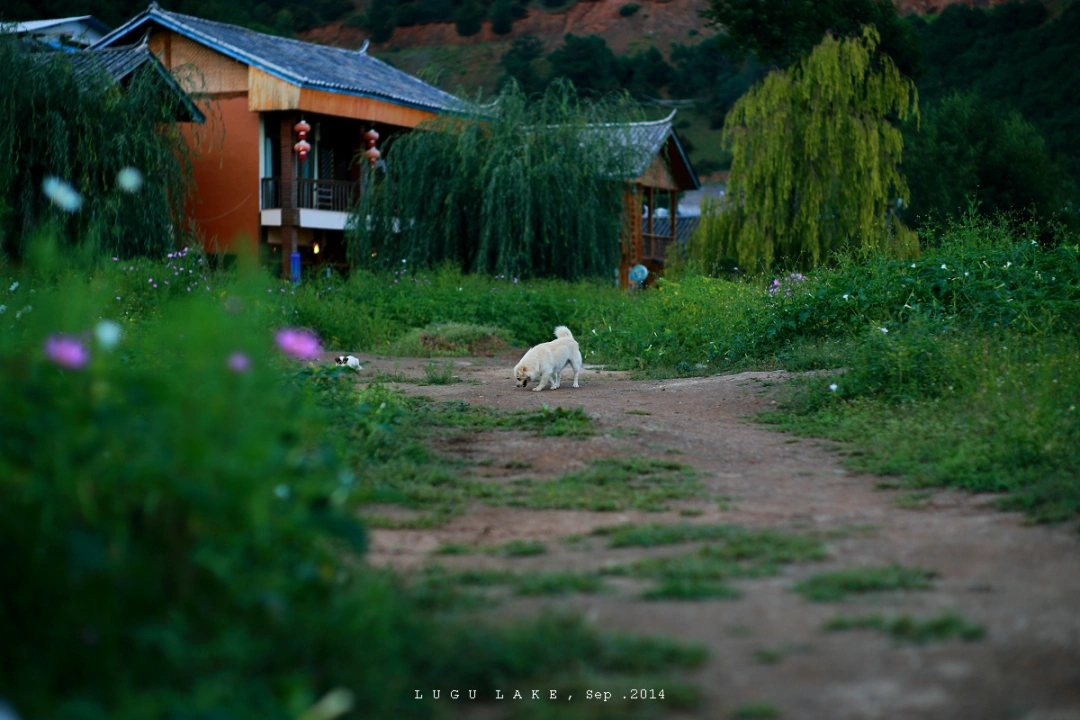
We tried the famous local dish—pork belly (zhū biāo ròu). Gesang flowers were everywhere. There were many dogs around, some of them strays, but with guesthouses and restaurants everywhere, they had no trouble finding food.
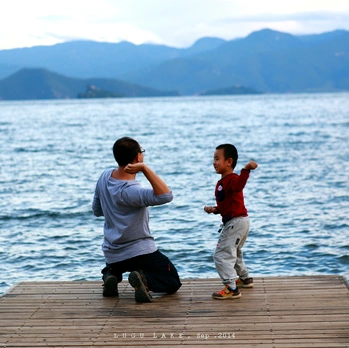
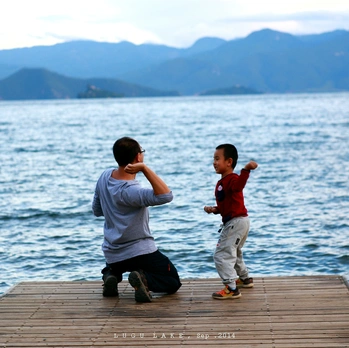
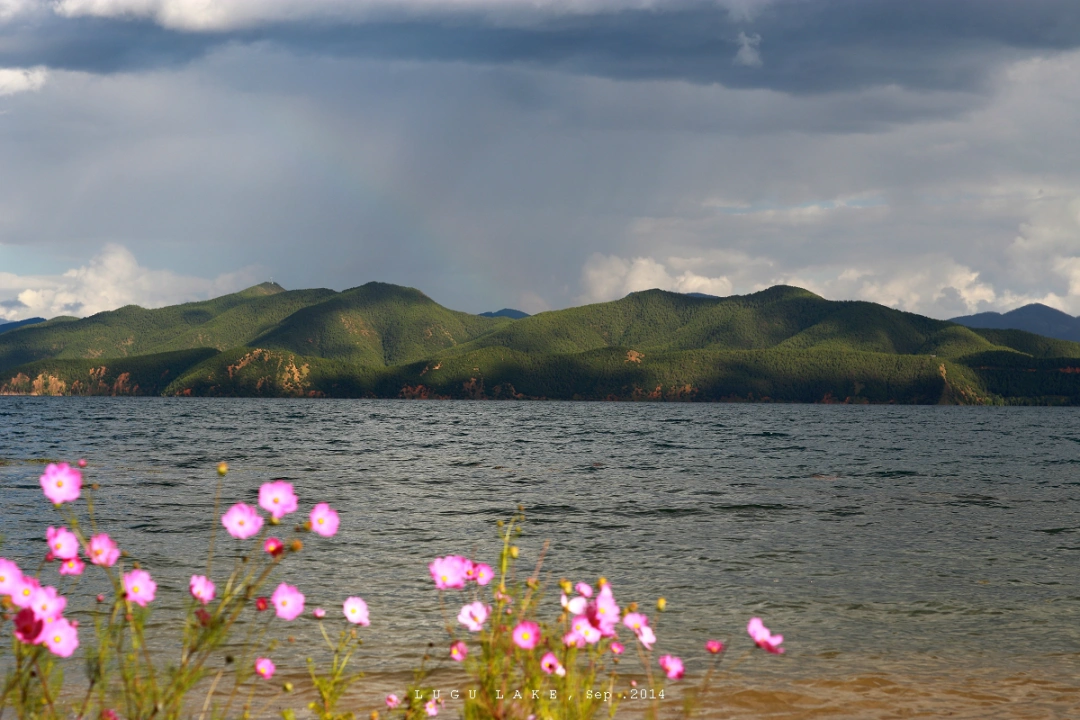
At Lige Pier, the pale blue sky, white clouds, and deep blue water created a peaceful, serene scene.
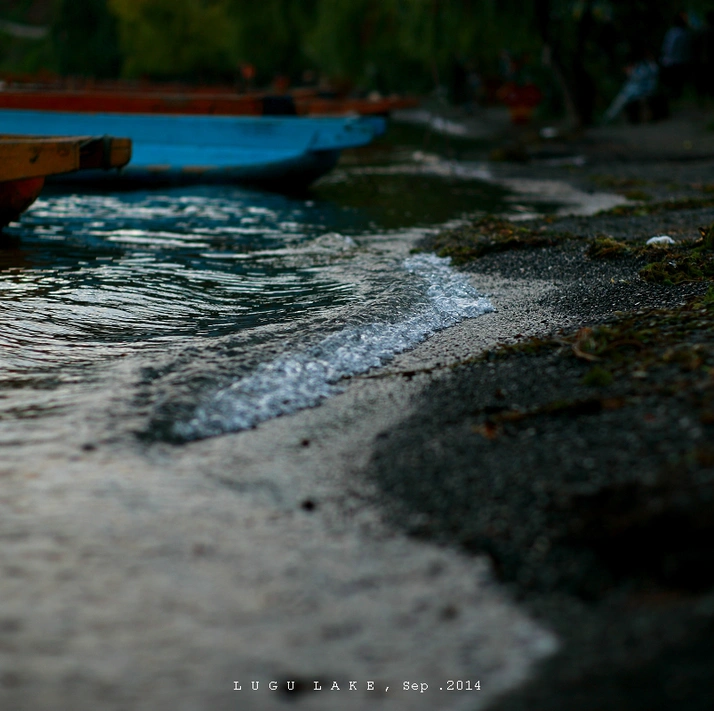
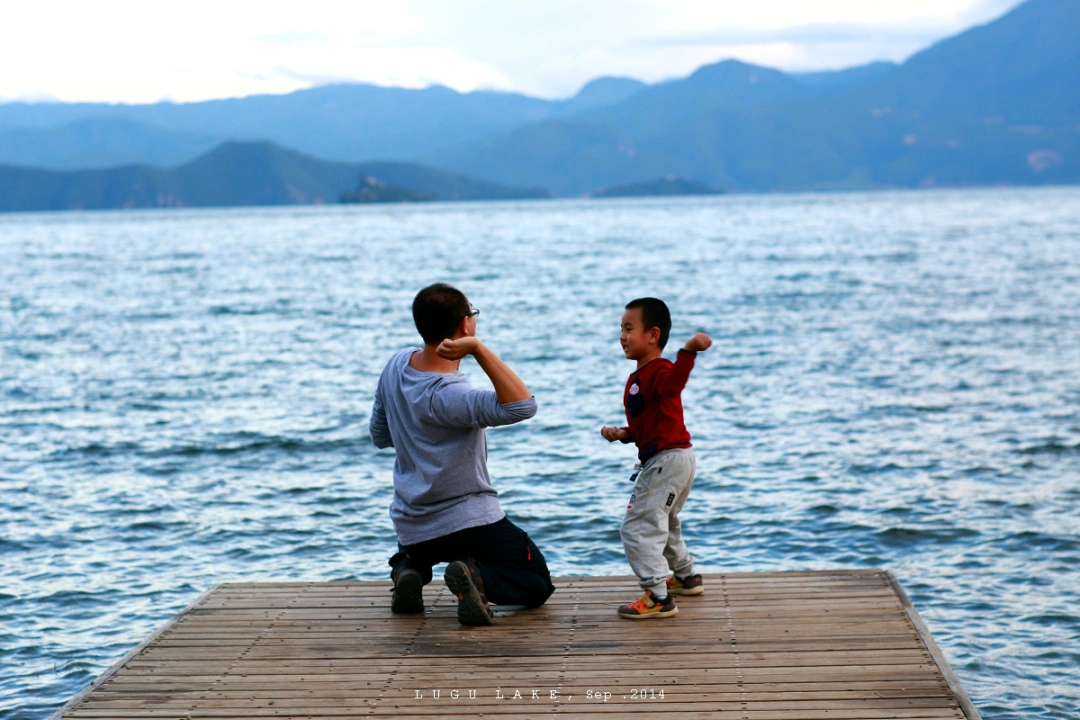
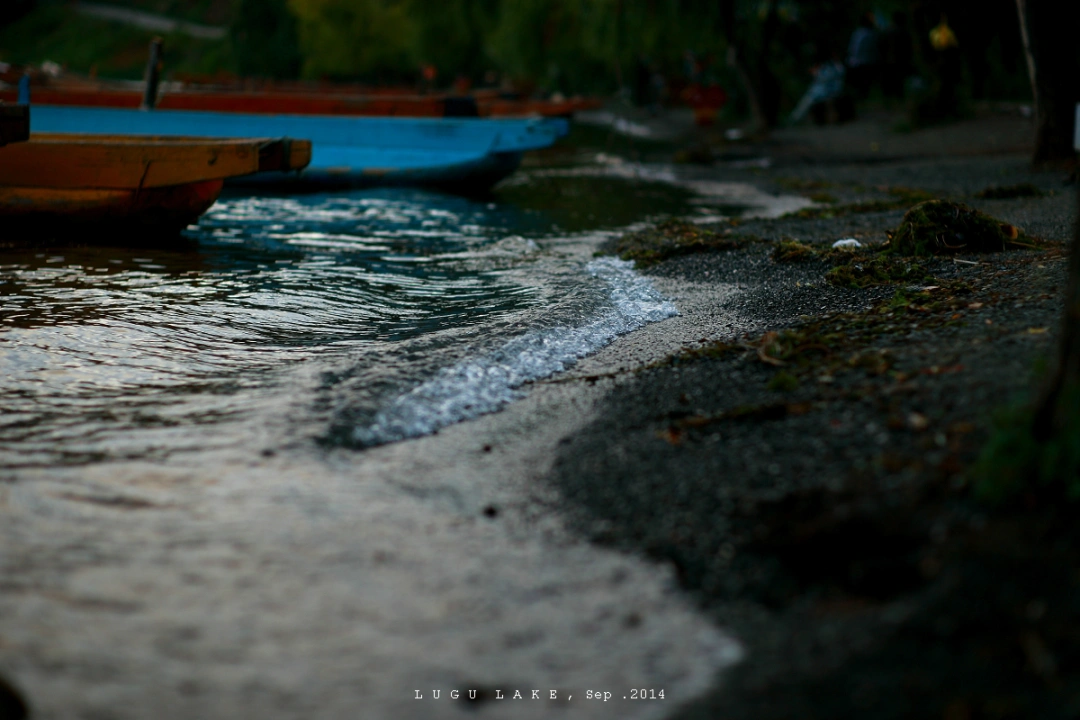
Who says travel has to be about famous attractions? Sometimes, doing nothing—just skipping stones with your child—is the most satisfying thing. Sitting quietly by the lake, watching the evening tide lap against the rocks, a long-lost feeling surfaced: simple happiness.
Back at the guesthouse, sitting on the balcony outside our loft, watching the sky darken, I whispered to myself: "Goodnight, Lugu Lake. See you tomorrow."
Day 4: Lige Village and Nisai Village
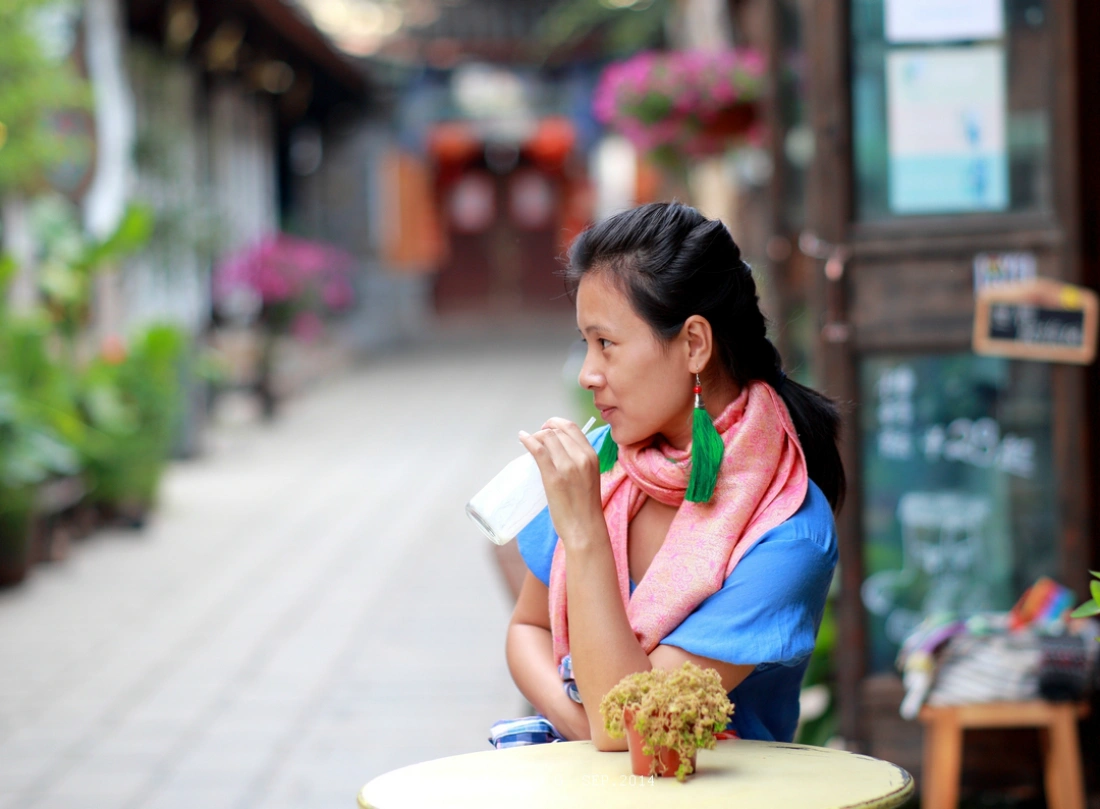
At 7 a.m., Lugu Lake was barely light. Thick mist clung to the hills behind the guesthouse, like a scene from a fairy tale.
Compared to Dayan Old Town, shops here opened earlier. The loft's floor, stairs, walls, and coffee table were all made of wood. Taotao was fascinated by the tea set.
A Day of Free Exploration
Today was a free day. We rented an electric scooter outside the guesthouse for 80 yuan per day. The owner said the battery could handle a full loop around the lake, but with Taotao and his mom on board, safety came first. We only planned to visit the nearest village, Nisai.
On the way, there was a viewing platform overlooking Lige and Lige Peninsula. Time for a "been here" photo!
Wish plaques were everywhere at scenic spots. We're flying!
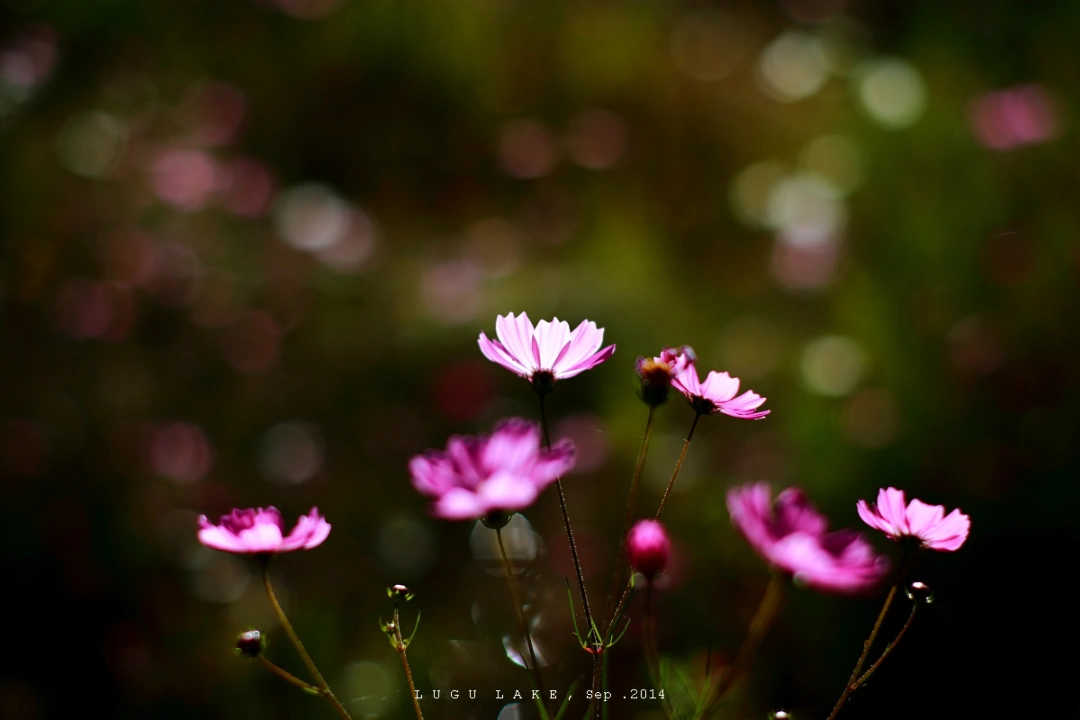
The road to Nisai was all winding mountain paths. After riding for about ten minutes—growing up on flat plains, we were nervous the whole time. Nisai's Gesang flowers stretched in a continuous patch, absolutely beautiful.
Since the morning light was harsh, we took a few quick shots and headed back to the guesthouse. We planned to return in the evening with the 80/1.4 lens.
Evening Surprise
After a midday nap at the guesthouse, we returned to Nisai Village. It was a fantastic spot for portraits. Although the next day's lake circuit would pass through here too, we'd only get a distant glimpse. So for those who just circle the lake without stopping—I wonder how much of Lugu Lake's beauty they truly experience.
The weather forecast had predicted rain every day of our trip in Lijiang and Lugu Lake. But once we arrived, we found that rain mostly fell at night, with occasional light showers during the day. Most of the time, the sun blazed. In the distance, a faint rainbow appeared.
The light was still too strong. We waited for the right moment. As the sun sank lower, we set up the tripod and started taking self-portraits!
Day 5: Lake Circuit Tour, a Unique Experience
Today's lake circuit was special—our transportation was a mix of car, pig-trough boat, and horse-drawn carriage.
We first went to Daluoshui Village, then to Lvjiawan for a farmhouse meal. Then came a two-hour carriage ride. A highlight: for the first hour, we were accompanied by a puppy named Niuniu, only a few months old.
A dog, a carriage, racing along under a blue sky and white clouds—pure joy. Midway, we stopped at the carriage owner's home, where we tasted homemade liquor made from barley, corn, and buckwheat. The owner also had taxidermy pieces he'd made himself.
For the second hour, Niuniu stayed behind at the owner's house, and our "escort" was replaced by a goat named Cuihua.
We passed through the Grass Sea and the Walking Marriage Bridge, completing the circuit.
Back at the guesthouse, we moved from the Blue Pavilion to the Pink Pavilion.
Day 6: Farewell to Lugu Lake, On to Shuhe
We said goodbye to beautiful Lugu Lake and set off for Shuhe.
Unlike the minivan that brought us here, the return vehicle was a 17-seat shuttle—something we hadn't anticipated. When we booked through the guesthouse, we specifically asked about the vehicle type, but only for the trip to Lugu Lake, not the return. Different vehicle, same price (100 yuan per person—a bit of a rip-off), different route, and an extra hour on the road.
The driver was a Mosuo man, talkative and straightforward: "When you travel, you've got to spend money." He admitted he didn't make much from driving, so he had to push add-ons. For instance, on the way from Lijiang to Lugu Lake, he'd recommend passengers join bonfire parties or dinner events. Those who declined were made to board last on the return trip, ending up in the bumpiest seats at the back.
First Impressions of Shuhe
Our guesthouse was called "Ashes of Time," near Xiaopingqiao Vegetable Market.
Mom was tired, so only Taotao and I went out for a walk. This area was a popular spot for wedding photos. We planned to come back the next day for some backlit shots, but for various reasons, we never got around to it before leaving Shuhe.
Xiaopingqiao Market mainly sold vegetables, with a few stalls offering tourist trinkets. One stall was unattended, except for two boys reading textbooks amidst the noisy market.
Crossing-Bridge Rice Noodles and Chickpea Jelly
For 38 yuan, the crossing-bridge rice noodles (guò qiáo mǐ xiàn) came with a generous spread of toppings: meat, dried shrimp, enoki mushrooms, jasmine flowers, quail eggs, and more. This dish is a specialty of southern Yunnan, with over a hundred years of history, and it spread to Kunming about fifty years ago. It consists of four parts: first, the broth, covered with a layer of hot oil; second, seasonings like chili oil, MSG, pepper, and salt; third, the main ingredients—raw slices of pork tenderloin, chicken breast, and snakehead fish, plus blanched pork kidney, pork tripe, and dried squid; and accompaniments like blanched pea shoots, chives, cilantro, scallions, bamboo shoot shreds, ginger, and tofu skin; fourth, the rice noodles themselves, briefly blanched in water. A layer of goose fat seals the surface, keeping the broth piping hot without visible steam.
The chickpea jelly (jī dòu liáng fěn), at just 8 yuan per portion, is also worth trying. Chickpeas, also called "chicken peas," are a wild legume unique to Lijiang. Rich in melanin, the jelly and soybean milk made from them have a dark color. The process involves soaking the peas, grinding them into a fine paste, straining, cooking until it turns gray-white, then pouring into containers to set into a jelly.
Day 7-8: Shuhe, Utterly Slow Living
We spent two full days in Shuhe, doing nothing but strolling, eating, taking photos, and sleeping—a complete vacation.
Xiaopingqiao Market was a great place for street photography. One stall sold wild honey for 40 yuan per catty. Interestingly, most of the vendors here were elderly women.
Day 9-10: The Journey Home
Early morning, we flew to Kunming. We stayed at the Qincheng International Youth Hostel, chosen for its proximity to Cuihu Lake and Zhengyi Road Pedestrian Street, and easy access via Airport Shuttle Line 2.
On the tenth day, we flew from Kunming back to Harbin. The trip was over.
Final Thoughts
On this journey, we didn't visit many so-called "must-see" attractions, nor did we rush to check off a list. We simply brought our child and our camera, walking slowly, observing slowly.
Taotao is five. For him, the meaning of travel isn't about how many sights he remembers. It's about the joy of skipping stones with Mom and Dad, the novelty of drumming rhythms in a music shop, and the laughter bouncing along on a horse-drawn carriage.
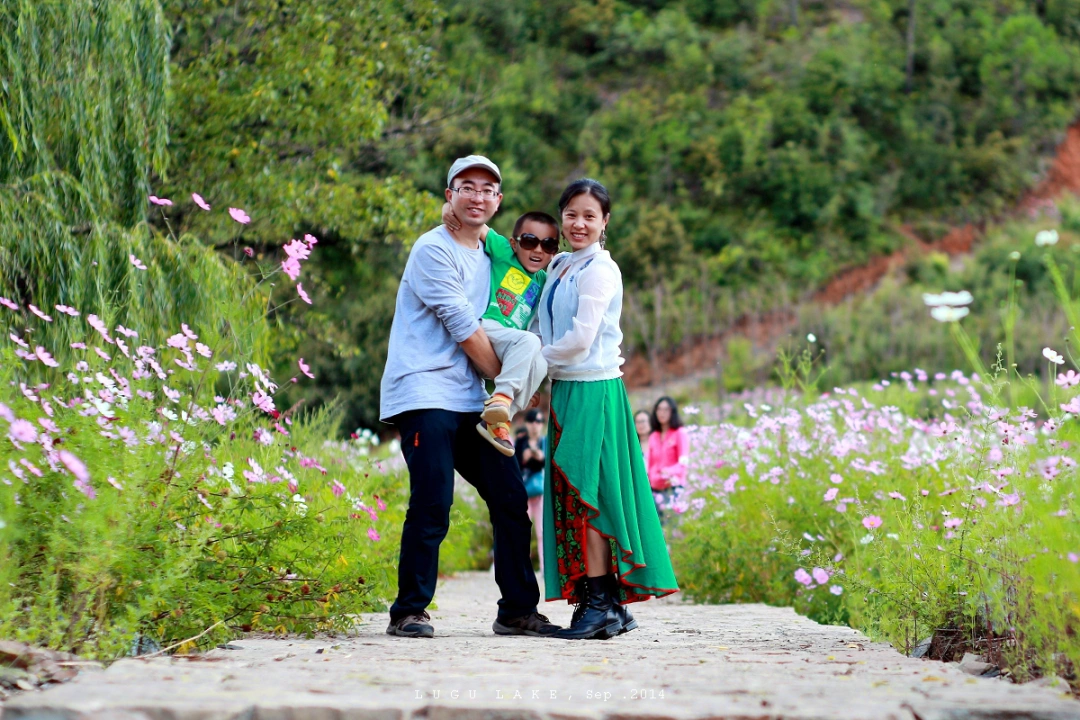
For us, the meaning of travel isn't about how far we've gone. It's about the fact that, during that time, we were all by each other's side.
The Gesang flowers at Lugu Lake bloom and wither. The ancient town's cobblestones are polished smooth by countless footsteps. But those warm moments will stay in our memories forever.
If you're planning a trip to Yunnan with your children, try to slow down. The most beautiful scenery is often not at the destination, but along the way.
This article is based on a real travel experience. All information is for reference only. Please verify the latest details before traveling.
You should also read:

Into the Hidden Valley: A Solo Journey Through the Mysterious Dulong River
Into the Hidden Valley: A Solo Journey Through the Mysterious Dulong River Deep in the northwestern corner of Yunnan Province, tucked away from the modern world, lies a place that feels like a secret whispered among mountains. The Dulong River Valley is not just a…
Continue reading...
God’s Abandoned Palette: A Self-Drive Journey Through Yunnan’s Dongchuan Red Land
God’s Abandoned Palette: A Self-Drive Journey Through Yunnan’s Dongchuan Red Land Travel has never been about reaching some distant geographic coordinate. It’s about encountering, along the way, the version of yourself buried beneath the rubble of daily routine. During this May Day holiday, I finally…
Continue reading...
Body in Hell, Heart in Heaven: A Pilgrimage Through Tiger Leaping Gorge — A Dialogue Between Heaven and Earth
Body in Hell, Heart in Heaven: A Pilgrimage Through Tiger Leaping Gorge — A Dialogue Between Heaven and Earth Introduction: When the Gorge Splits Open Beneath Your Feet Some say Tiger Leaping Gorge is the closest place on Earth to the border between "hell" and…
Continue reading...