Toward the Mountains: My Complete Record of the Reverse Hike on the Haba-Tianbao Trail
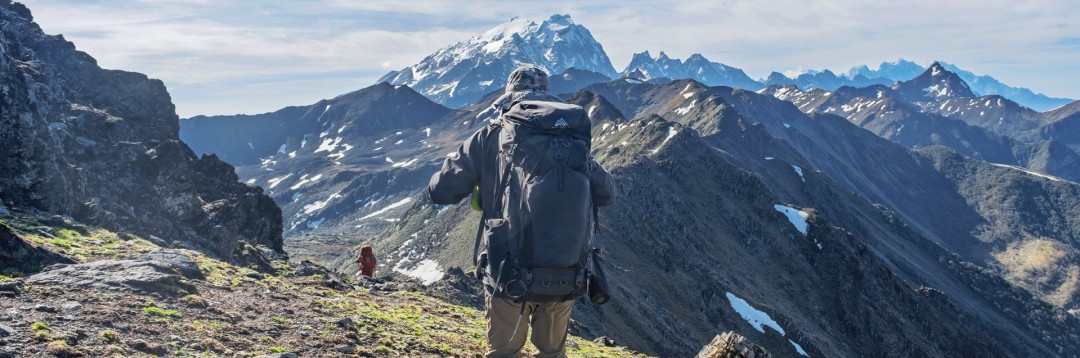
Toward the Mountains: My Complete Record of the Reverse Hike on the Haba-Tianbao Trail
Preface: When the Wild Calls
Some paths are destined to be measured by footsteps; some landscapes can only be earned through sweat.
In May 2023, as I stood on a street in Lijiang, my backpack stuffed with gear, staring at the faint outline of snow-capped mountains in the distance, my heart swelled not only with anticipation but also with a trace of unease. Over the next six days, we would traverse a route called the Haba-Tianbao Trail—from Haba Snow Mountain to Tianbao Snow Mountain, an 80-kilometer high-altitude trek across more than twenty passes above 4,000 meters and past over thirty alpine lakes. And I, battling a sudden cold, was stepping onto this journey toward the mountains.
The Haba-Tianbao Trail: An Underrated Hidden Gem
Route Overview
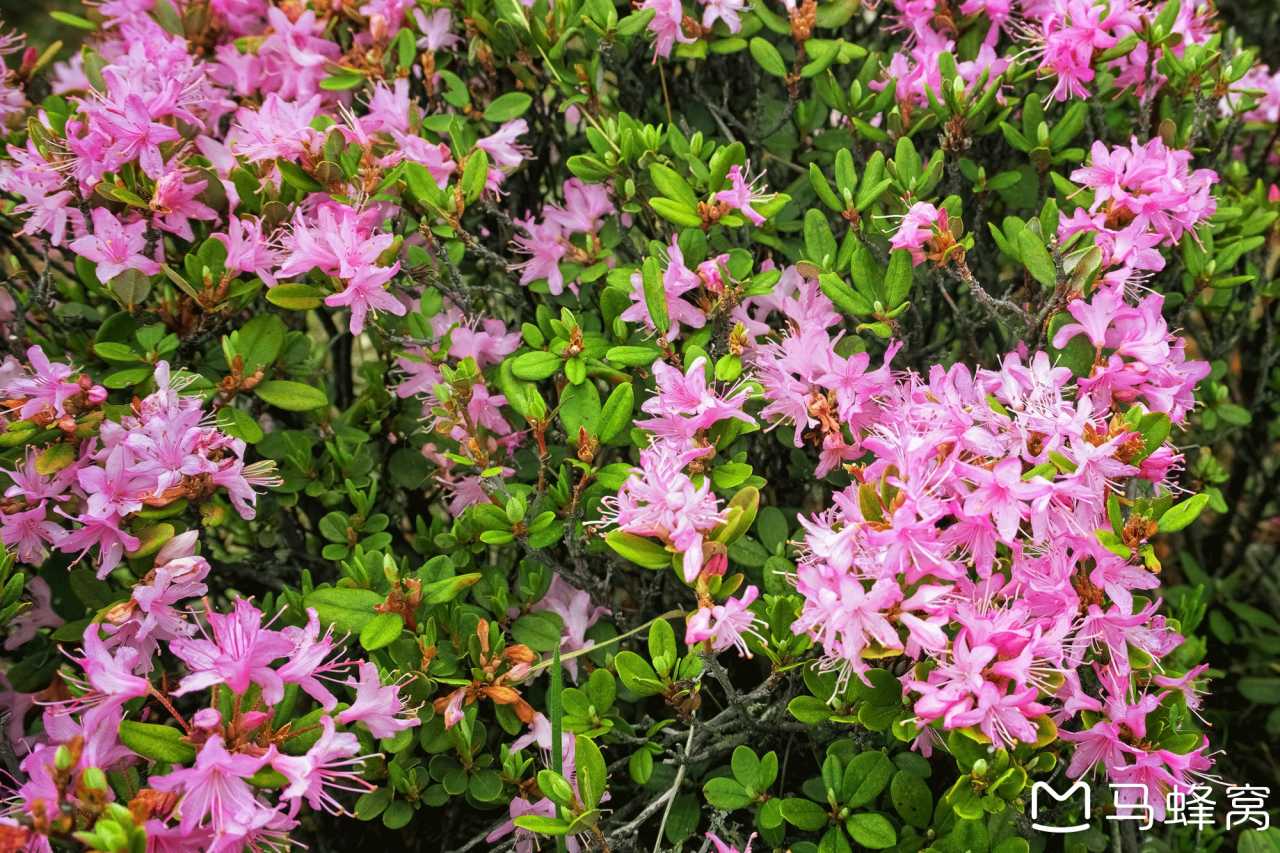
The Haba-Tianbao Trail, officially named the "Haba Snow Mountain–Tianbao Snow Mountain Crossing Route," is a classic high-altitude trek that spans the Shangri-La and Lijiang regions of Yunnan Province. The full distance is roughly 76 to 80 kilometers, with a cumulative elevation gain of about 3,500 meters, and it typically takes six to seven days. The trail's greatest charm lies in its diversity—you will cross more than twenty passes above 4,000 meters, pass by over thirty lakes of various sizes, and traverse alpine meadows, primeval forests, rhododendron flower seas, and even scree slopes and snow slopes.
Reverse Hike Itinerary
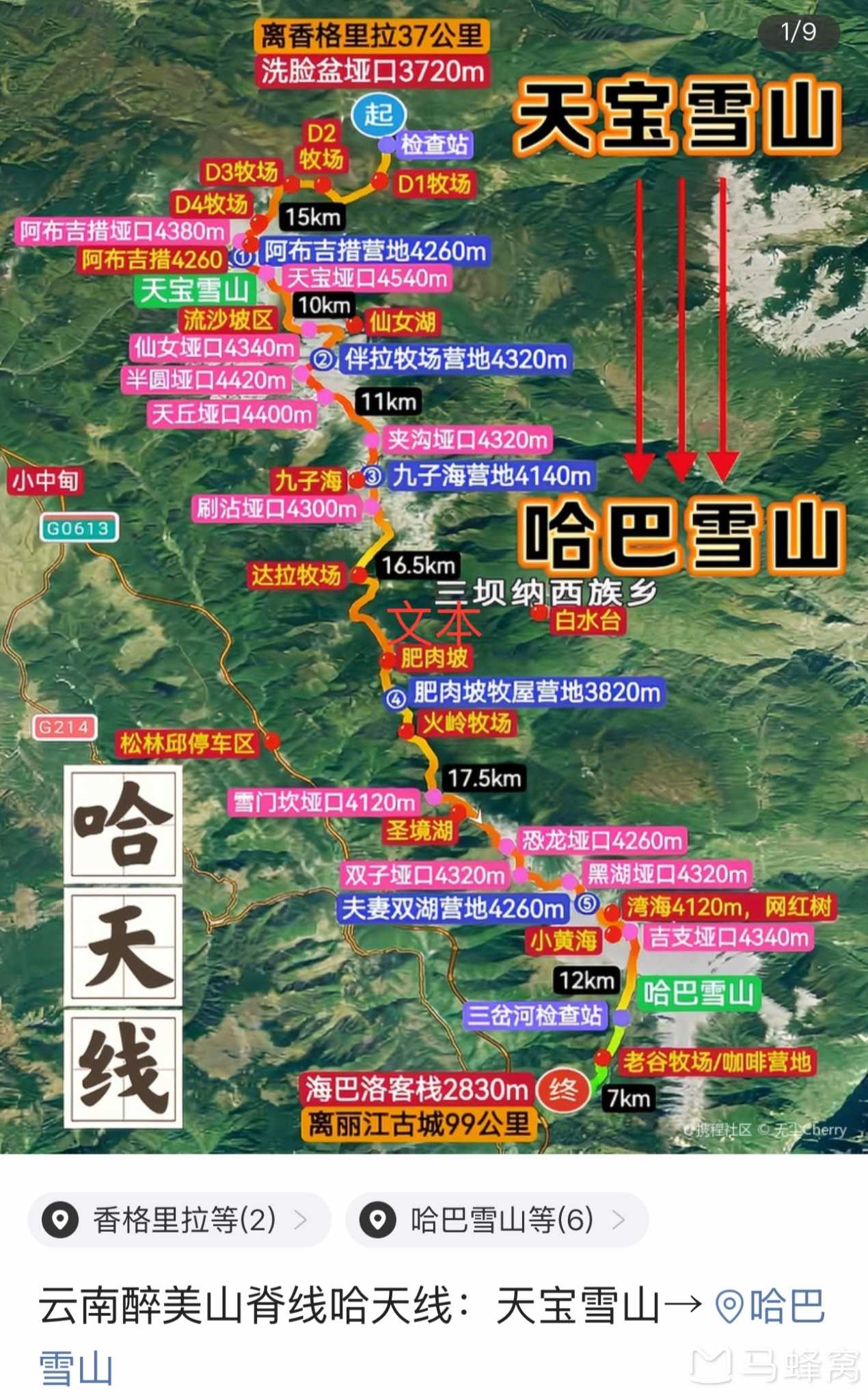
We chose the reverse route: starting at the Washbasin Pass (Xilianpen Yakou), at an elevation of 3,720 meters in Shangri-La, and ending at Haba Village. Our team of eight came from six provinces—Shandong, Hebei, Hubei, Sichuan, Guangdong, and Anhui. We gathered in Lijiang on May 16 and chartered a vehicle to the starting point on the 17th.
Reverse Route Map: Washbasin Pass → Pasture No. 4 Camp → Fairy Lake Camp → Yellow Sea → Bay Sea → Alpine Pasture → Rhododendron Forest → Fat Meat Slope → Dala Pasture → Nine Sons Sea → Tianqiu Pasture → Half-Cliff → White Wax Lake → Black Forest → Eye of Tianbao → White Wax Pass → Abuji Lake → Nigeza Pasture → Haba Village
Day One: From Washbasin Pass to Pasture No. 4 Camp
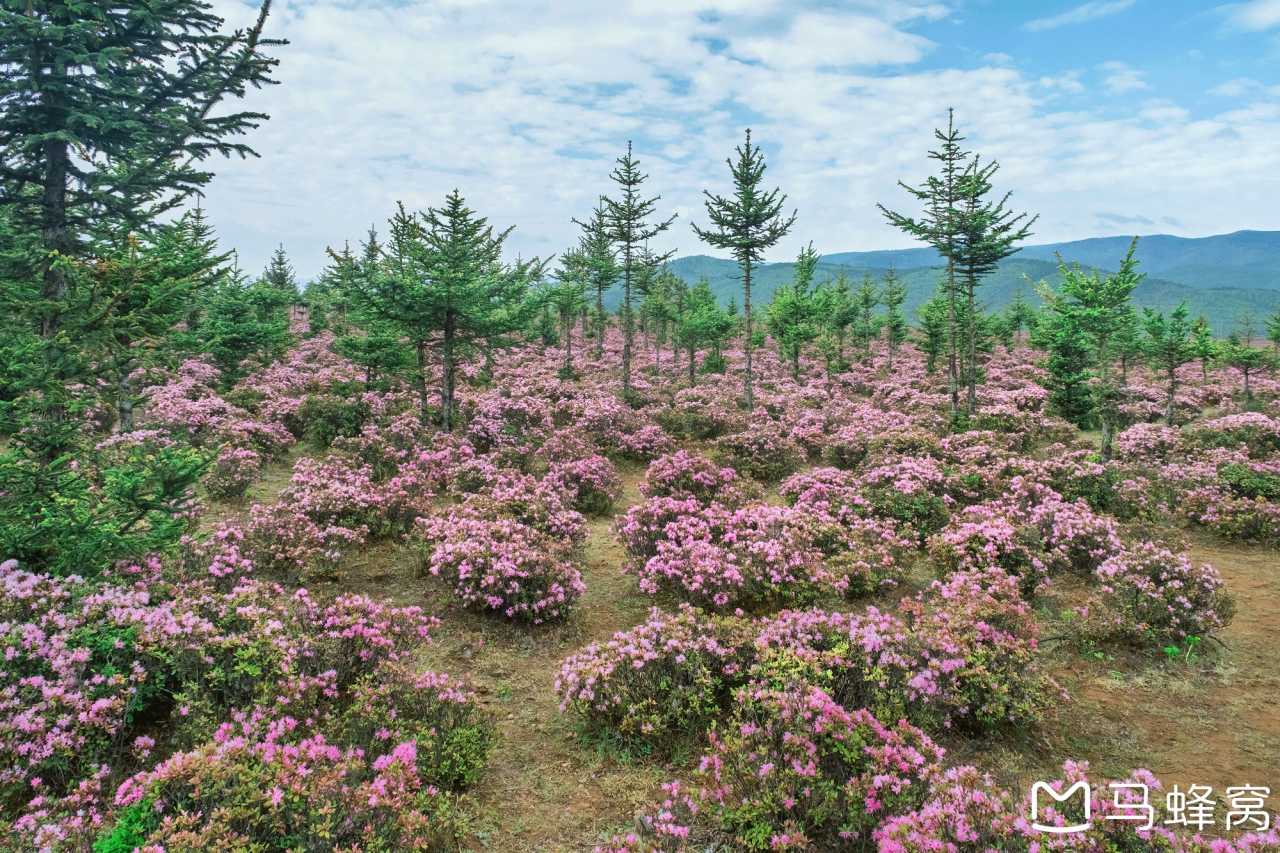
The Starting Point: Departure Beneath the White Stupa
At 10:30 a.m., we arrived at Washbasin Pass. A white stupa stood prominently against the blue sky and white clouds, the sunlight clear and the shadows sharp. For hikers, this kind of weather is both a feast for the eyes and a comfort for the soul.
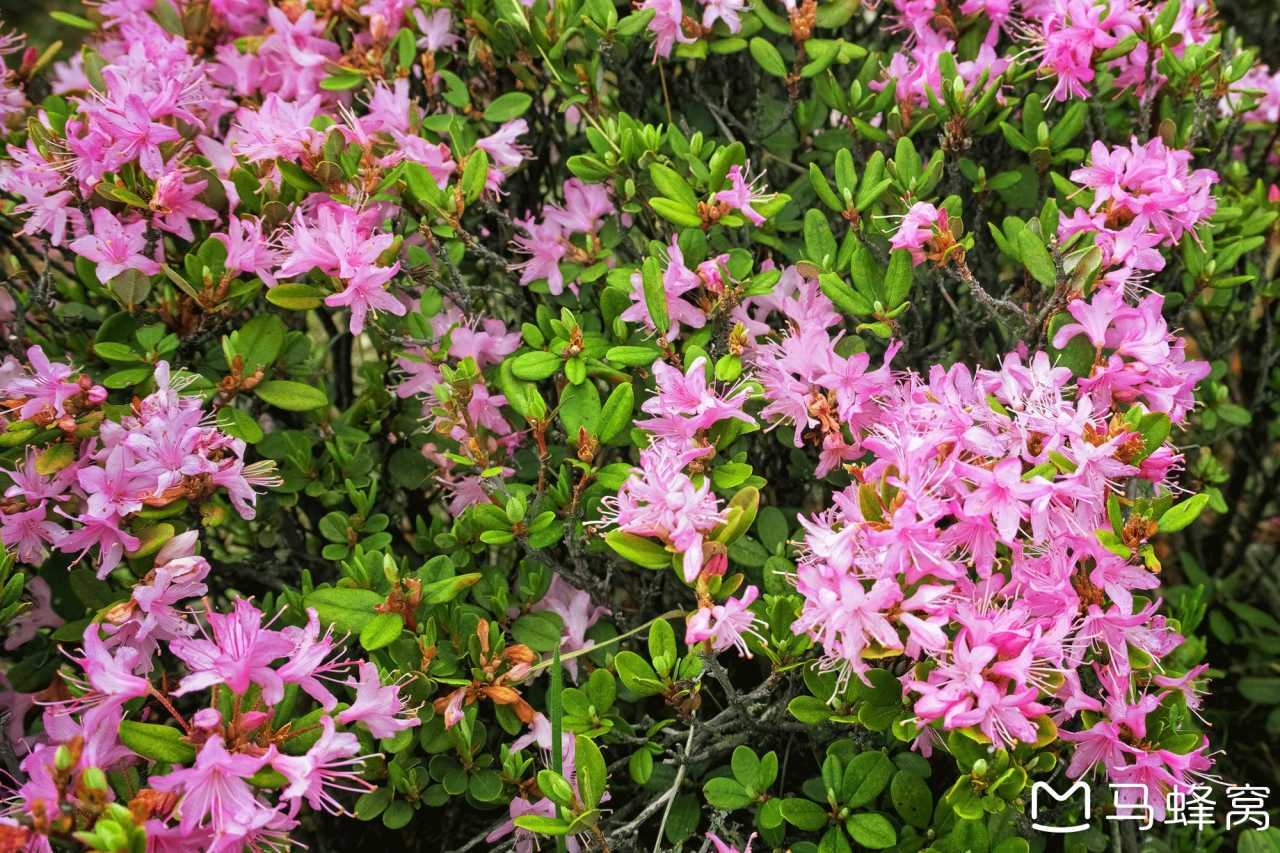
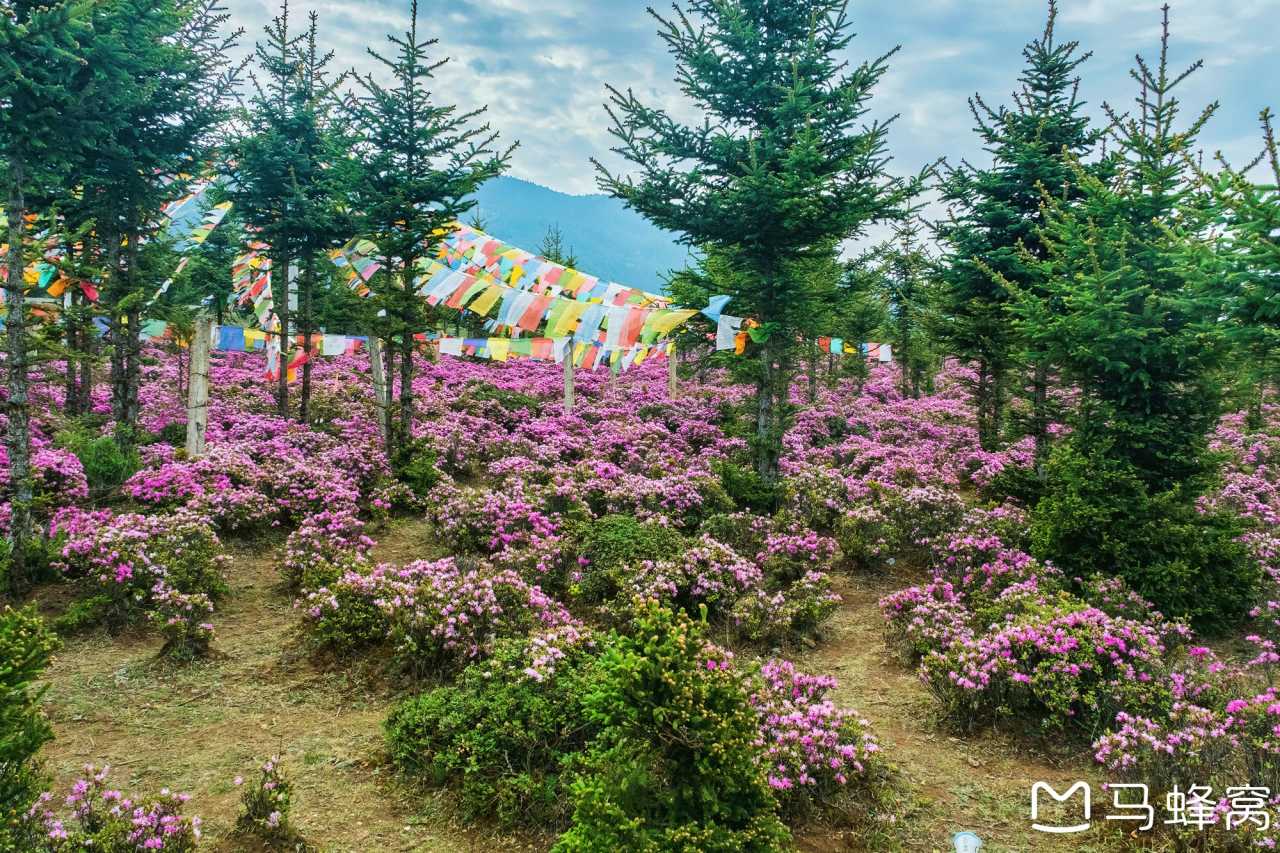
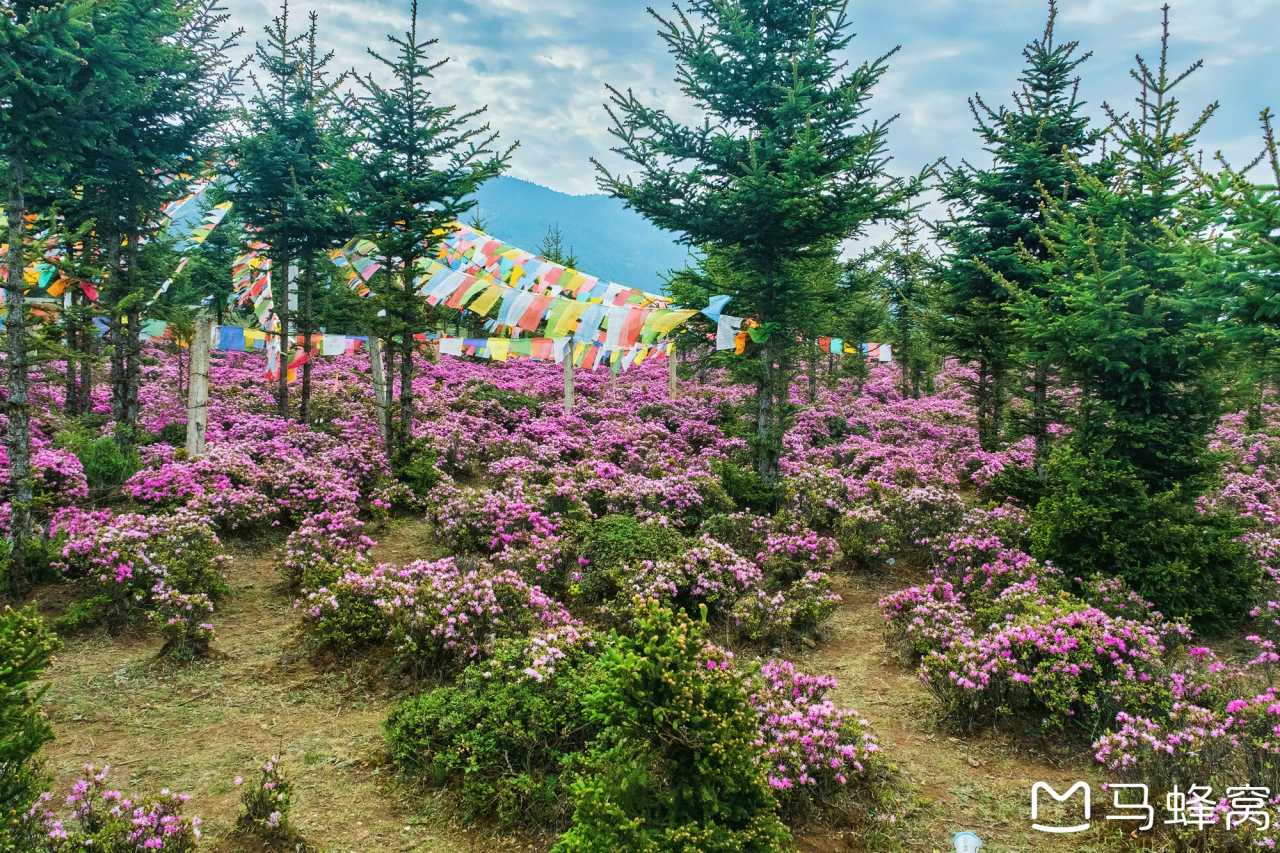
Right at the start of the trek, the low-growing rhododendrons along the roadside gave us a surprise—not in difficulty, but in sheer beauty. Clusters of pink and purple flowers spread out like finely embroidered brocade on the earth. Each blossom was delicate and dewy, swaying gently in the breeze as if whispering the secrets of the season. The blue sky, white clouds, and sea of flowers formed an absolutely stunning picture.
Wandering Through Pine Forests and Flower Seas

We moved through pine forests and seas of blossoms, our feet sinking into soft soil and fallen petals. Birds sang in our ears, their melodies mingling with the rustling of wind through the pines to create a natural symphony. From time to time, we stopped to inhale the fragrance of flowers, to touch the bark of trees, to feel the texture and warmth of nature. At that moment, the noise of the world was far behind us, and we were completely immersed in this poetic realm.
After passing the checkpoint, we registered one by one and filed through. In the distance, the silhouette of Tianbao Snow Mountain grew clearer, a striking contrast to the fallen, withered trees nearby—vibrancy meeting desolation, life intertwining with time.
Climbing in Elevation: From Pasture to Pasture
As we gained altitude, the trail turned muddy. The clouds thickened, layers of lead-gray masses piling up like ocean waves. We reached Pasture No. 1, where the distant snow peaks sharpened from hazy outlines into clear forms, a chain of mountains rising like the towering spine of a giant, gleaming with a sacred light.
Our leader, Canghai, walked at the front. The fierce mountain wind howled past, carrying the chill unique to snowy peaks. We knew Pasture No. 2 was not far off.
When Pasture No. 2 came into view, the clouds pressed even lower, almost within reach. The emerald-green grass spread like a soft velvet carpet to the horizon. The wooden huts on the pasture were rustic and cozy, while colorful prayer flags flapped noisily in the wind. The most captivating sight was a swing—simple ropes and a wooden plank—swaying gently in the breeze, as if inviting passersby to enjoy a moment of leisure.
Nightfall: The Challenge of Pasture No. 4
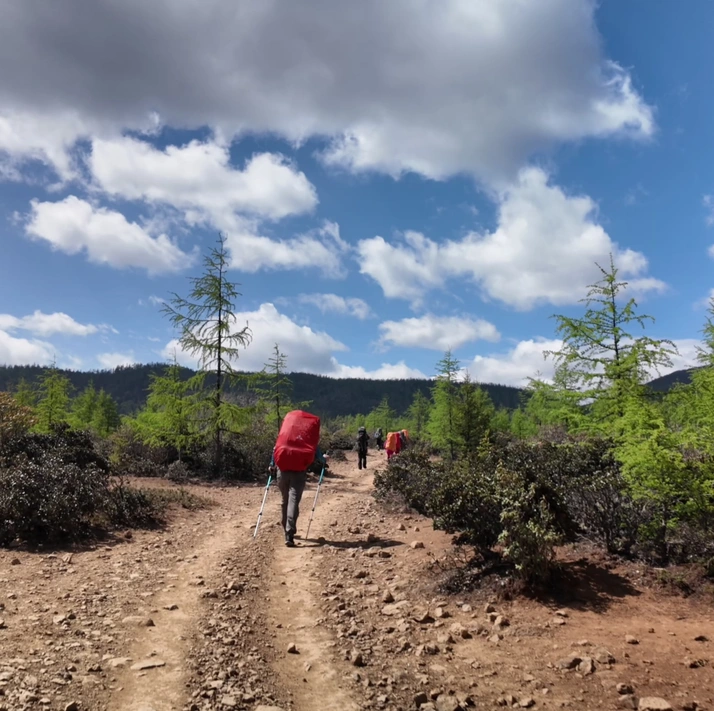
By evening, we reached Pasture No. 4 and found a relatively flat spot to set up camp. But the double assault of a cold and altitude sickness left me exhausted. My throat was inflamed, my head throbbed with pain. I took some medicine and lay down early, silently praying that I would feel better by morning. Otherwise, I would have no choice but to descend.
Day Two: From Pasture No. 4 to Fairy Lake Camp
The Torment of Altitude Sickness
I didn't sleep a wink. Altitude sickness gripped my head like an invisible hand; every slight turn sent sharp stabs of pain through me. My breathing grew heavy and labored, my chest felt as if a boulder were pressing down on it. My consciousness wavered between clarity and a foggy haze, and in the half-dream state, strange visions wove together.
When I unzipped my tent in the morning, a thick fog greeted me. I heard my teammate Xixi complaining of a headache too, saying she would descend at Abuji Lake. I thought to myself, maybe I should go down with her.
A Lifeline in the Snow
My teammate Bobo noticed my condition and asked how I was doing. He offered to carry some of my heavy gear. He took a large bag of dry food and two gas canisters, about five or six pounds. In that moment, my backpack felt lighter, but my confidence grew heavier. When it counts, you can always count on your buddies!
Abuji Lake in the Mist
We set off at 7:30 a.m. The first task of the day was a steep climb up to the Abuji Lake pass. Thick fog shrouded the mountaintop, so dense it seemed almost solid. The world was draped in a white curtain, with only faint outlines of distant peaks showing through.
Abuji Lake appeared like a fairyland hidden from the mortal world. Its waters shimmered with a deep blue glow—not as bright as the sky, not as vast as the ocean, but carrying a stillness and mystery all its own. A gentle breeze stirred the surface, and the blue light flickered and danced in the ripples.
To the right was a smaller lake, and beside it, a trail leading down. Here, we bid farewell to Xixi and Xingzhe—both from Shandong, sticking together through thick and thin. How wonderful it is to have companions who share your journey, whether up or down!
Tianbao Snow Mountain Pass: The 4,540-Meter Challenge
Now there were only six of us left. Our next target was the second pass—Tianbao Snow Mountain Pass, at 4,540 meters. It was a massive snow slope, the most difficult pass of the day. Jagged rocks jutted out from the slope like man-made cairns, adding a mysterious and eerie atmosphere to the mountainside.
We climbed the rocky slope with all our strength. Every step was grueling; the steep grade forced our bodies almost parallel to the ground. But the determination to keep moving upward drove us forward.
When we started toward the snow slope, Huolan, who had never climbed a snow slope before, was intimidated. Since Xixi and Xingzhe had only been gone for less than an hour, Huolan chose to descend as well. Our team of eight was now officially a five-person squad.
Footprints on the Snow Slope
Standing at the top of the snow slope and looking down, the steepness took our breath away. The slope hung like a white waterfall plummeting from the sky, nearly vertical before us. Its surface was smooth as a mirror, yet it exuded a chilling majesty.
When we grew tired, we turned back to look at the footprints we had left in the snow. Those rows of footprints, crooked yet firm, were embedded in the white surface, telling the story of our persistence and determination.
The Joy of Reaching the Summit
At 12:30 p.m., we finally climbed to the top of Tianbao Snow Mountain Pass at 4,540 meters. The thin air carried a biting chill, but it couldn't dampen the excitement and pride on everyone's faces.
From the pass, we looked out in all directions. The snow-capped mountains stretched like a giant dragon lying across the earth, gleaming with a sacred light under the sun's kiss. In the distance, ridges stacked upon each other, and clouds surged between the peaks like a dream. We posed energetically against the backdrop of the snowy mountains, and the sound of camera shutters filled the air, freezing this moment into eternity.
The Descent: From Snow Slope to Grass Slope

The way down was equally challenging. Snow slopes, jagged rocks, cliffs, and scree slopes—each terrain tested our endurance and skill. In the narrow gaps between cliffs, we took a wrong turn and had to backtrack, eventually finding the correct path to the left of the cliff.
As we descended in elevation, we stepped into a world of vibrant colors. On the large grassy slopes, every tiny flower was exquisitely delicate. A breeze swept across the meadow, carrying waves of grass and floral fragrance. In that moment, it felt as if all our fatigue was washed away by the picturesque landscape.
The Great Scree Slope: Three Kilometers of "Living" Terrain
After a stretch of gravel road, we unexpectedly entered the Great Scree Slope—a three-kilometer-long area of shifting stones. The moment we stepped onto the scree, the rocks flowed like water beneath our feet, as if the entire slope had come alive. Every step required careful searching for a foothold; otherwise, the sliding stones would throw us off balance.
Once we crossed the scree slope, we headed toward the last pass of the day—Fairy Pass. Beyond Fairy Pass, an endless expanse of jagged rocks stretched out like a barren ocean built of stone. Though the climb was grueling, every time we looked up toward the pass, a firm conviction surged within us.
At 6:00 p.m., we finally arrived at Fairy Lake Camp. That day, we had endured altitude sickness, fog, snow slopes, and scree slopes in succession. But every footprint bore witness to our perseverance and courage.
Practical Tips for Hiking the Haba-Tianbao Trail
Best Season
May and June are the months when rhododendrons bloom, making it the best time to hike the Haba-Tianbao Trail. The weather is relatively stable during this period, but at high altitudes, you still need to prepare for cold and rain.
Gear Recommendations
- Hiking boots: High-top, waterproof, to handle mud and scree
- Trekking poles: Use two poles to reduce pressure on your knees
- Snow goggles: To prevent snow blindness
- Warm clothing: Down jacket, fleece, and a waterproof shell
- Medication: Altitude sickness pills, cold medicine, anti-inflammatories
- Supplies: High-calorie snacks, energy gels, electrolyte powder
Important Notes
- Altitude sickness prevention: Acclimate to the elevation beforehand and avoid strenuous activity
- Teamwork: Don't go alone; communicate promptly when facing difficulties
- Environmental protection: Pack out all trash to protect the alpine ecosystem
- Navigation: Download offline maps in advance and mark key waypoints
Conclusion: Toward the Mountains, Toward the Heart
The six-day hike on the Haba-Tianbao Trail gave me a deep understanding of what it means to "go toward the mountains." The mountains are not there to be conquered; they are there so that, in the process of climbing, we can meet a better version of ourselves.
From the rhododendron sea at Washbasin Pass to the footprints on the snow slope of Tianbao Snow Mountain Pass; from the still waters of Abuji Lake to the thrilling dance across the Great Scree Slope—every step was inscribed with perseverance and breakthrough. I am grateful to my teammate Bobo for being a lifeline in my time of need, to our leader Canghai for guiding us, and to every fellow traveler for their companionship.
If you, too, long for such a journey, remember this: The mountains will not wait for you, but the scenery will. Bring your courage and your preparation. Go toward the mountains, and you will eventually find your own piece of the world.
You should also read:
The Ordeal of Yubeng: A Realistic Record and Survival Guide for Trekking Meili Snow Mountain in the Rainy Season
The Ordeal of Yubeng: A Realistic Record and Survival Guide for Trekking Meili Snow Mountain in the Rainy Season Prologue: When Dreams Meet Muddy Reality "Yubeng" – in Tibetan, the name means "scripture." But among hiking enthusiasts, there's a more blunt interpretation: a place that…
Continue reading...
Complete Guide to Fuxian Lake: A Yunnan Hidden Gem I've Visited Three Times – Ask Me Anything!
Complete Guide to Fuxian Lake: A Yunnan Hidden Gem I've Visited Three Times – Ask Me Anything! Why Fuxian Lake? If you ask me which place in China is worth visiting again and again, my answer isn't Lijiang or Dali – it's Fuxian Lake. In…
Continue reading...
The Call of the Snow Mountains: Discovering Another Self in Yunnan
The Call of the Snow Mountains: Discovering Another Self in Yunnan Prologue: Quitting My Job Wasn't an Escape—It Was a Search "You've lost your mind! You quit your job just to travel?" I've heard that line more times than I can count. Every time, I'd…
Continue reading...