Traveling with Parents: 29 Days, 7,000 Kilometers, $830 Per Person — A Heartwarming Self-Drive Journey Through Yunnan
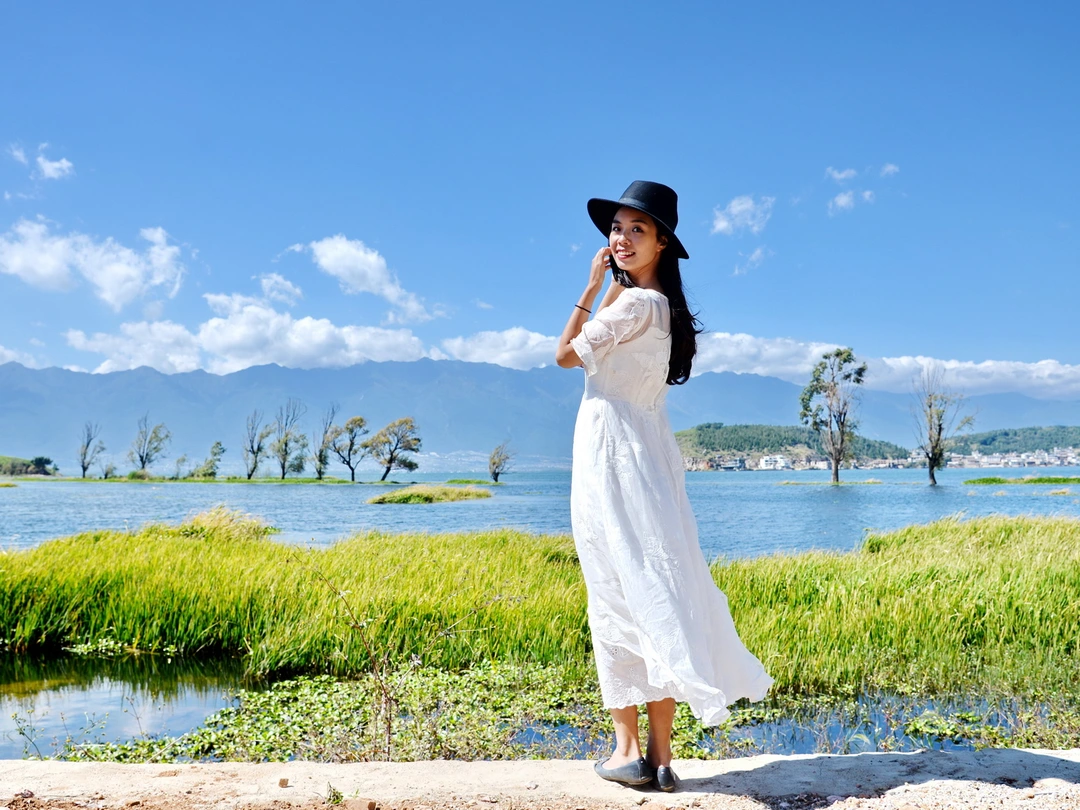
Traveling with Parents: 29 Days, 7,000 Kilometers, $830 Per Person — A Heartwarming Self-Drive Journey Through Yunnan
The world is vast, but the most precious scenery is often the road traveled with those we love most. In the fall of 2015, I quit my job. During the blank period while waiting for my partner to return from abroad, I made a decision that many would envy — I took my parents on a self-drive trip through Yunnan.
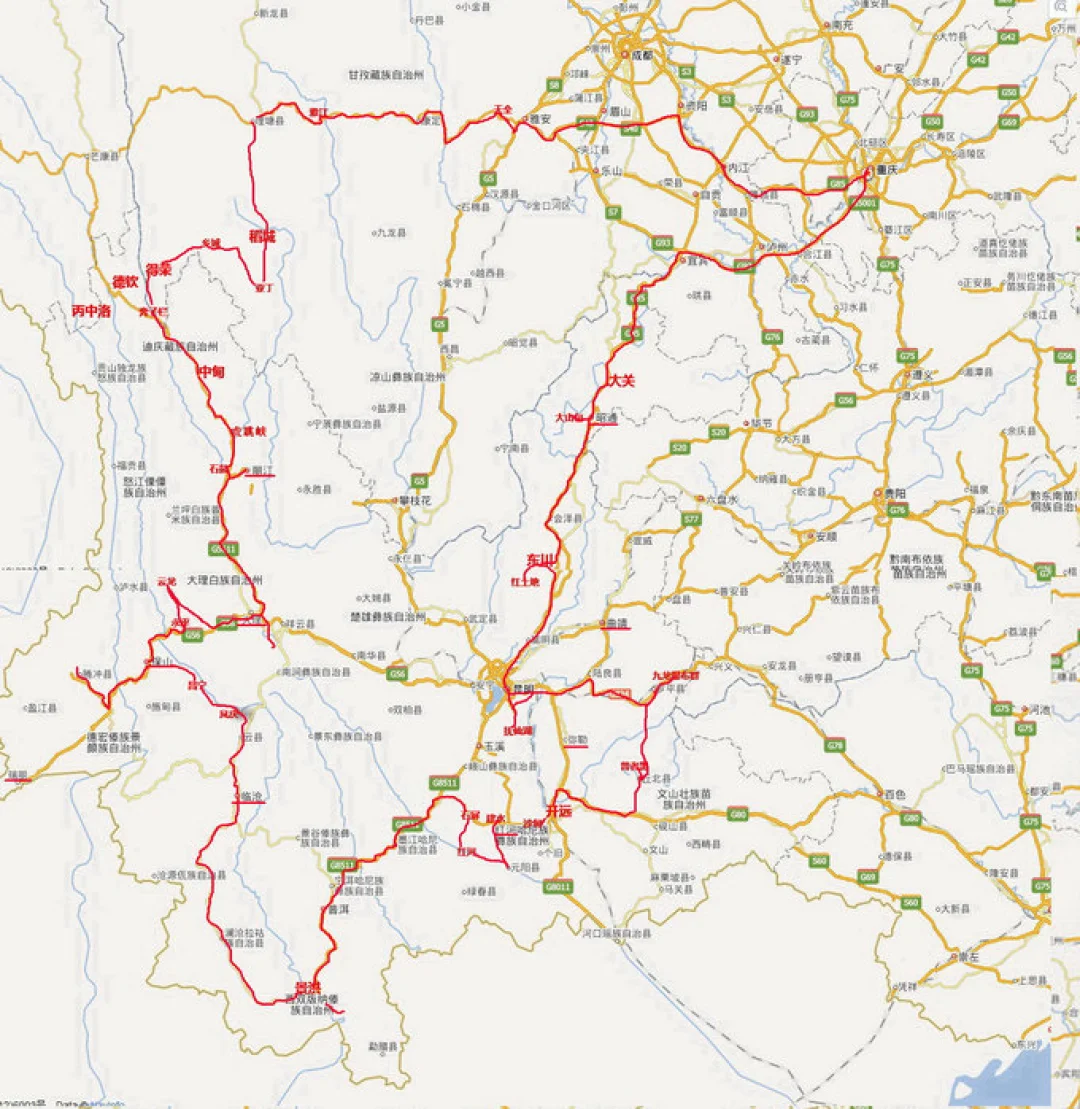
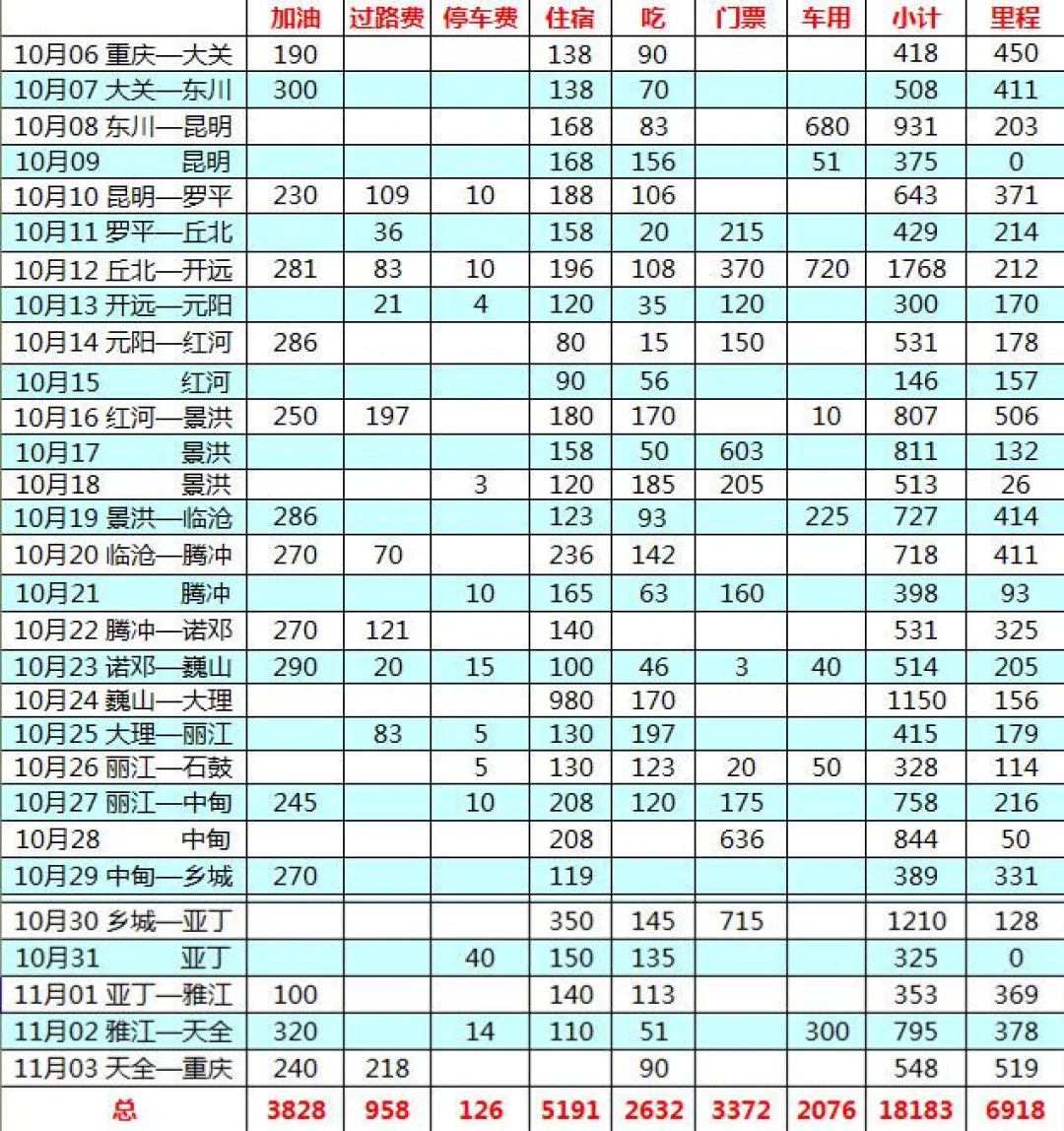
Twenty-nine days, 7,000 kilometers, and about $830 per person (approximately 6,000 RMB at the time). This wasn't a spur-of-the-moment adventure. It was a carefully planned journey, a travel memory written together with my parents. Starting from Chongqing, we crossed eastern, southern, and western Yunnan. We encountered fog, torrential rain, landslides, and a flat tire — but we also found clear skies, waterfalls, red earth, and those moments of laughter and unspoken understanding that only exist among family.
If you're looking for a way to deeply connect with your parents while still enjoying freedom and a sense of exploration, this article might just give you some inspiration.
Before We Left: The "Blank Period" After Quitting Was the Best Time to Be Together
I passed my visa interview at the end of August, submitted my resignation on September 1st, and had already booked a flight abroad for December. Before officially leaving, I had about 40 days of free time. My mom has always loved travel and photography. After retiring, my dad gradually became more willing to leave the house — that summer, we had just spent 42 days driving through Xinjiang, and that trip had made him more open to talking with strangers and more willing to embrace the unknown on the road.

So Yunnan became the obvious choice. Although both my mom and I had been to Yunnan before, we had only visited the classic routes — Kunming, Lijiang, and Shangri-La. The Dongchuan Red Land in eastern Yunnan, the Puzhehei wetlands in the south, and Tengchong in the west — all of this was uncharted territory for us.
We deliberately chose to leave on October 6th — to avoid the post-holiday traffic jam and still catch the last two days of free highway tolls. As it turned out, this was a smart move: the traffic heading out of the city was so light it put us in a great mood.
First Stop: The Peril of Dousha Pass and the Tiny Town of Daguan County
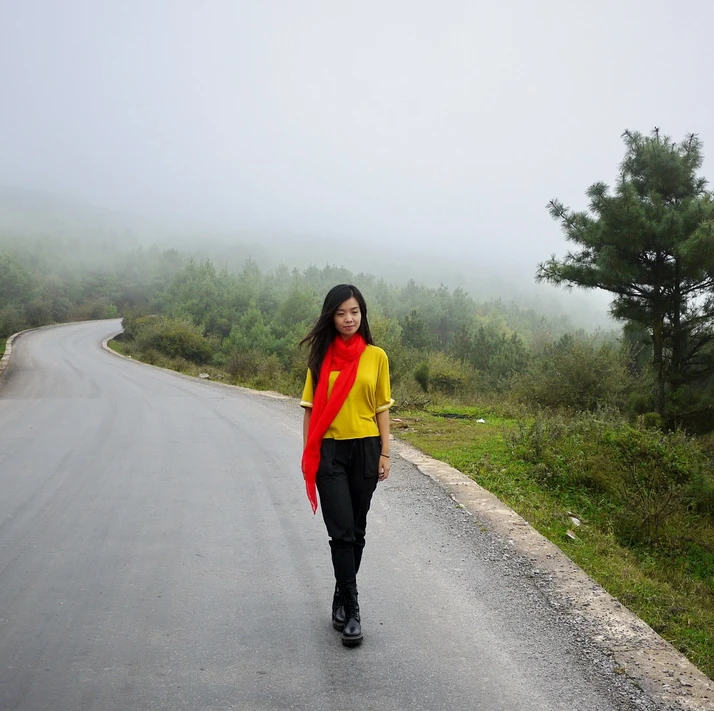
Dousha Pass: Stepping into a Millennia-Old Fortress
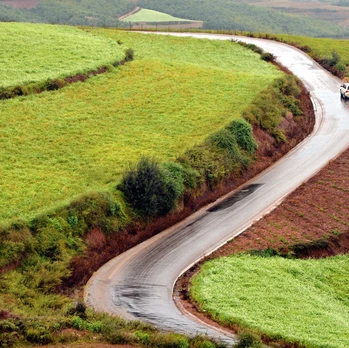
After driving 450 kilometers from Chongqing, we arrived at Dousha Pass in Yanjin County, Yunnan. At first, my dad showed zero interest in the ancient town, saying it was "no different from Ciqikou" (a famous old town in Chongqing). But Dousha Pass is different — historically known as Shimen Pass, it was the first major strategic gateway from Sichuan into Yunnan in ancient times. Rebuilt after an earthquake in 2006, it may look new, but it still carries a deep sense of history.
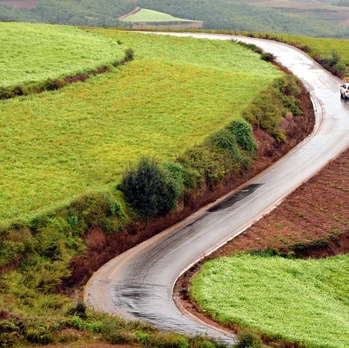
The most breathtaking sight was the sheer cliffs on both sides of the Guan River. Nature's craftsmanship had split the mountain in two, forming a massive stone gate. Inside the pass was the Central Plains; outside was the land of the "barbarians." The ancients guarded this spot with a wooden door 1.2 feet thick — truly a place where "one man can hold the pass against ten thousand."
Daguan County: A Small Town of 300,000 People with an Astonishing Number of Hospitals
We arrived in Daguan County in the evening and were stunned by the sheer density of hospitals — at least five or six in this tiny town. At breakfast the next morning, a local young man laughed and explained: though Daguan is small, it has a population of 300,000. Hospital beds are often unavailable, and patients have to sleep in the hallways. And that huge bowl of meat wontons? Only 6 RMB (about 80 cents). The low cost of living was eye-opening.
Second Stop: The Fog of Dashanbao and the Red of Dongchuan
Dashanbao: The Longest 11 Kilometers
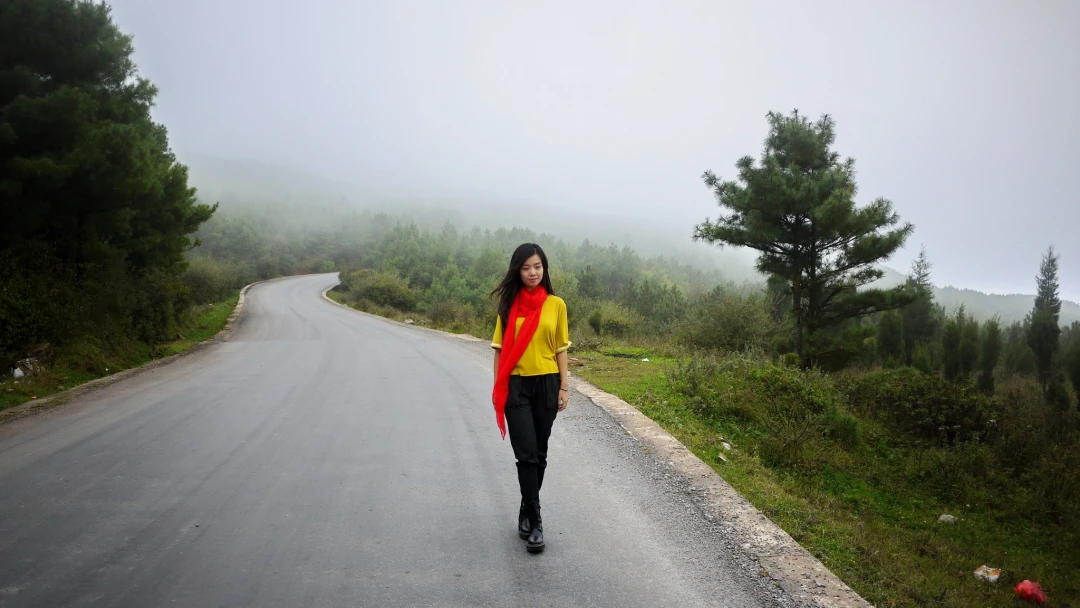
We originally planned to go to Dashanbao to see black-necked cranes, but we ran into thick fog. My dad said he had read a travel blog where the author stayed at Dashanbao for two days and never even got a clear view of the mountains. We thought we'd be different. But when we got up there, visibility was only 20 meters. We turned on the parking lights, fog lights, high beams, and hazard lights — all of them. The mountain road had no guardrails on the outer edge. A sign read: "Narrow road, steep slope, sharp turns, heavy fog, high mountain, deep valley." Those six phrases became the nightmare soundtrack of our trip.
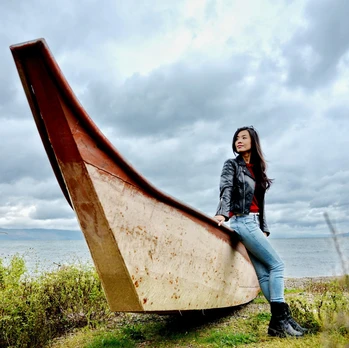
In the end, we couldn't even see the parking lot clearly. We took a few photos of wildflowers and turned back in disappointment. I never get carsick, but on that road, I felt nauseous.
Dongchuan Red Land: A Worn-Out Tire, But the Most Beautiful Surprise
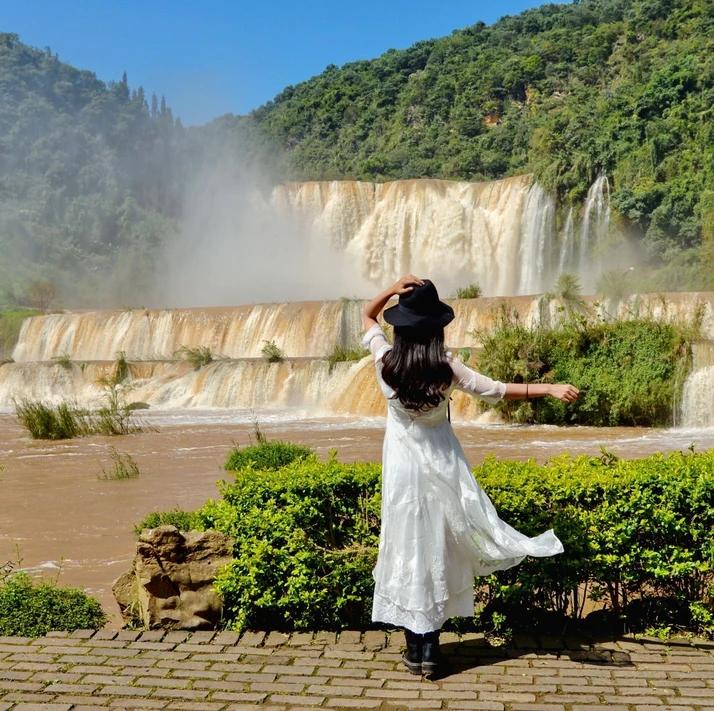
Coming down from Dashanbao, we headed toward the Dongchuan Red Land. On the way, there was a stretch of terrible road. Our left front tire scraped against the road edge a few times, and the tire pressure alarm went off. In the pouring rain, we didn't dare stop to change the tire. We crawled along at 30 km/h, with the tire pressure dropping by 0.1 every 3 kilometers. By the time we reached the core area of the Red Land, the pressure was down to 1.2.
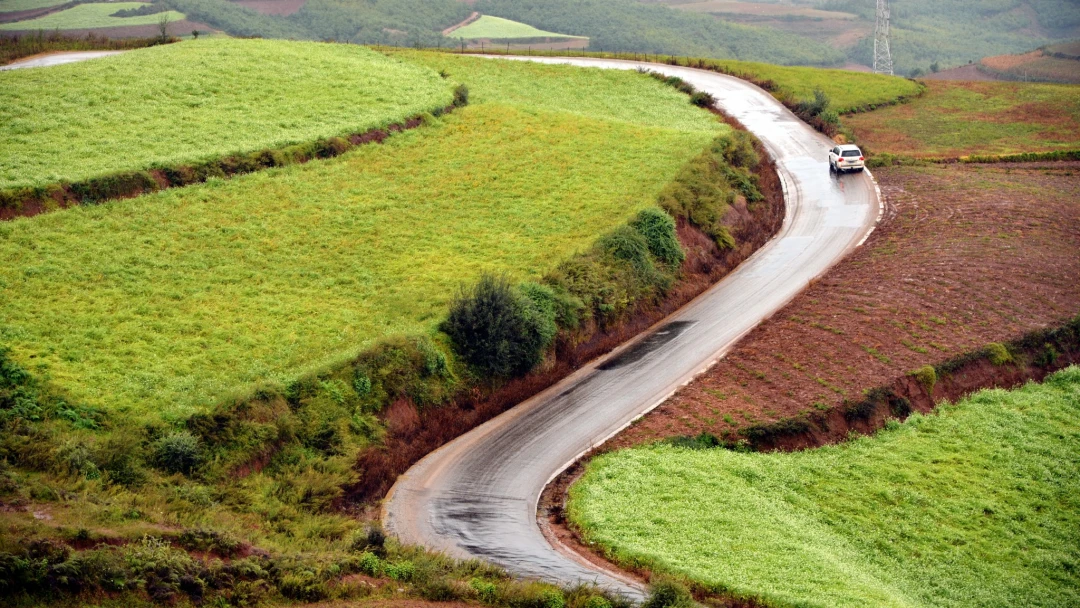
Luckily, we found a tire repair shop in a small village. Even luckier — despite the rain, the Red Land still took our breath away. It's not a single scenic spot; it's a vast area stretching for miles. Red soil, green crops, gray sky — if the weather had been clear, with a blue sky and white clouds, it would have been a masterpiece.
Third Stop: The Slowness of Kunming and the Blue of Fuxian Lake
Kunming: An Unexpected Surprise at Dianchi Lake
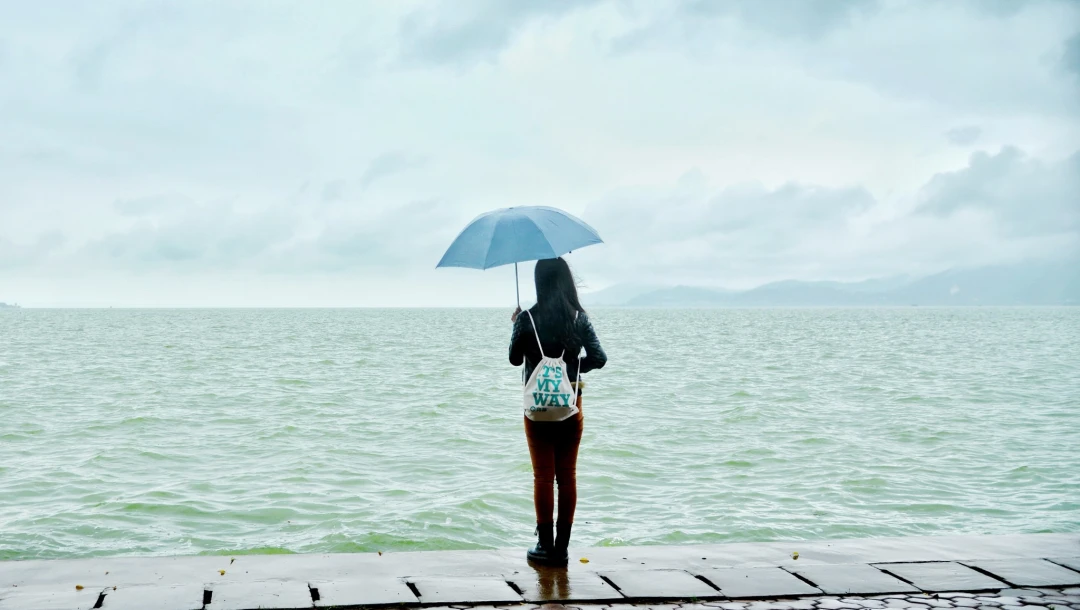
Originally, Kunming was just a transit point. But after my dad studied the route, he decided we should stay an extra night. We went to the Haigeng Park on the shores of Dianchi Lake. My mom's first exclamation was, "This completely overturns the impression I had when I visited the Western Hills back in the 1970s!" Even though the sky was gray, Dianchi Lake was still a vast expanse of gentle, shimmering blue.
Interestingly, we ended up walking 6 kilometers along the lakeshore before we got back to the hotel. We couldn't find a taxi, and the bus never came, so we just kept walking. Halfway through, the fog lifted, and the Western Hills finally appeared — at that moment, all our exhaustion was worth it.
Fuxian Lake: Clockwise Is the Right Way
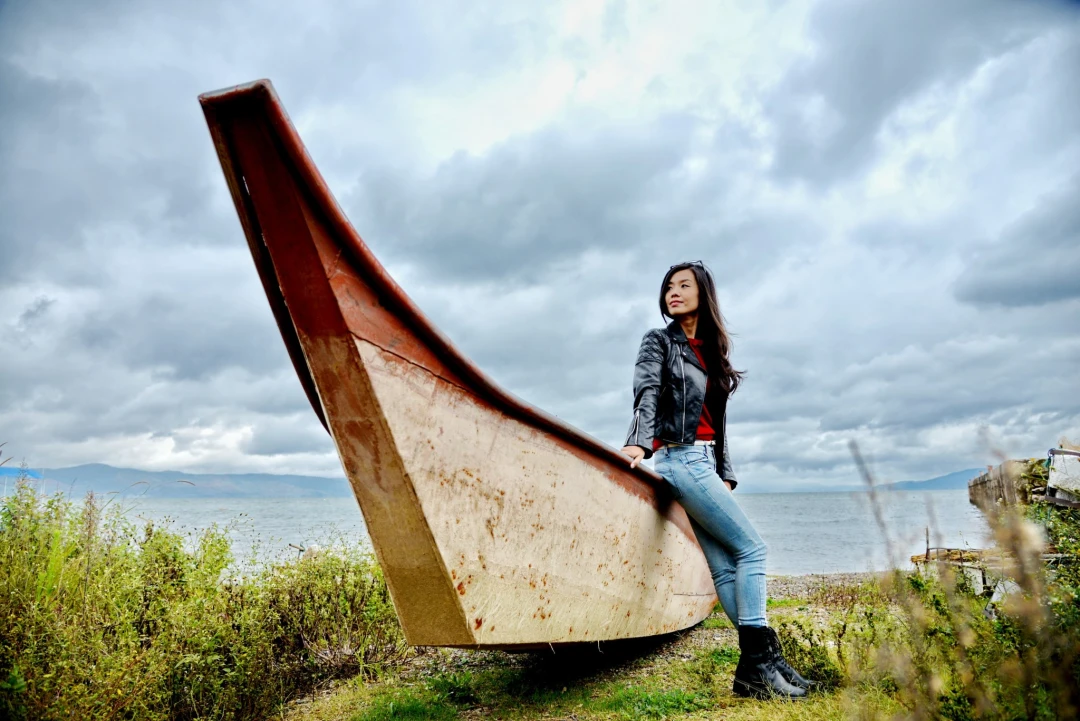
Fuxian Lake is known as "a thousand hectares of crystal" and is the largest deep-water freshwater lake in China. We chose to circle the lake counterclockwise, only to find that the lake was always on our left, separated by the road and guardrails, making it hard to see properly. We later learned that clockwise is the correct direction — the lake stays on your right, and you can just turn your head to see it.
The eastern shore is far more beautiful than the western one. The road runs right next to the lake, and the 1.4-kilometer-long lakeside promenade at Sakura Valley is so stunning you just want to lie down and soak up the sun. Some parts of the lake are polluted, but overall, Fuxian Lake is still well worth a visit.
Fourth Stop: The Waterfalls of Luoping and the Peaks of Jinjiling
Jiulong Waterfall: A Southern Wonder Rivaling Huangguoshu
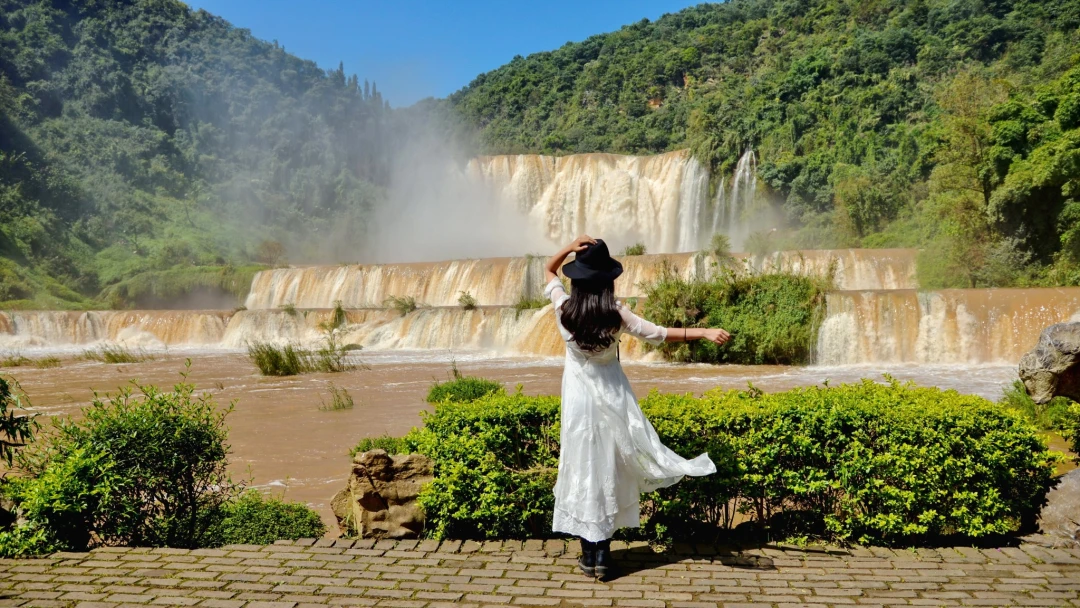
Finally, the skies cleared! In Luoping, we visited the Jiulong Waterfall cluster. Ten tiers of waterfalls — some majestic, some perilous, some graceful. The largest, Shenlong Waterfall, is 112 meters wide and 56 meters high, with an awe-inspiring presence. Experts say Jiulong's scale is comparable to Huangguoshu Waterfall, but its density of attractions far surpasses it — along just 4 kilometers of river, there are dozens of calcified shoals and over ten waterfall tiers.
We spent four hours exploring every corner, climbing until our legs gave out. But every single view was worth it.
Jinjiling: A $1.40 Ticket and a Free Pass for Students
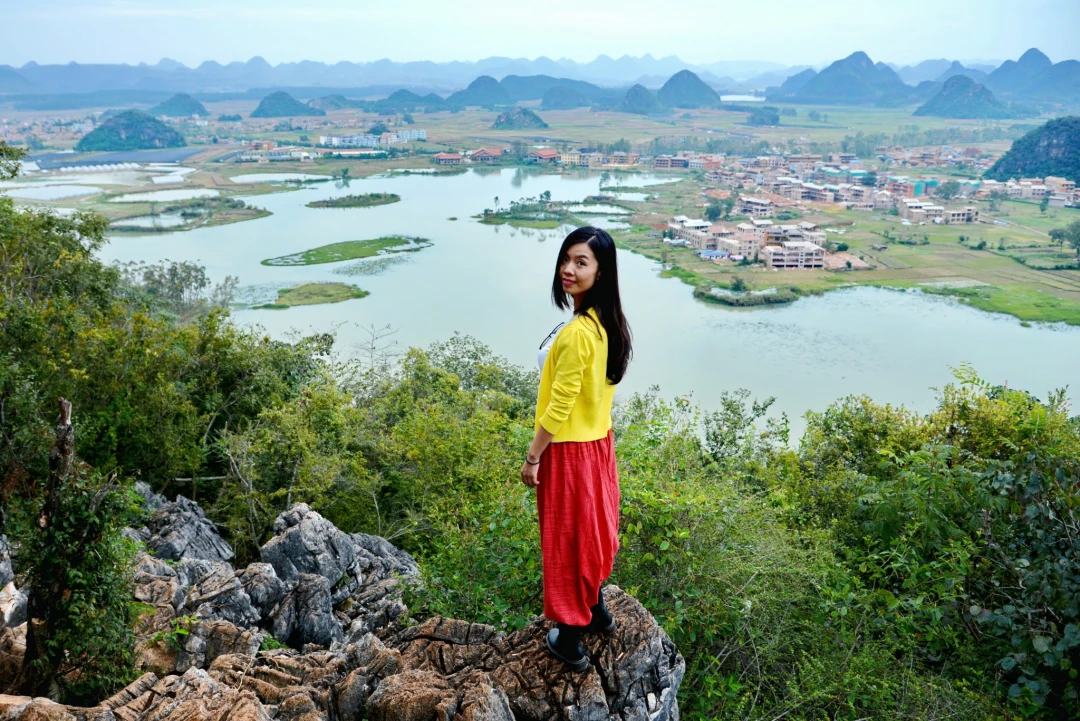
Jinjiling is a great place to see the karst peak forest. The entrance fee was only 10 RMB (about $1.40). The elderly ticket seller asked my mom if she was a student. My dad quickly answered "yes," and the old woman didn't even ask for a student ID — she just gave my mom a free pass. That kind of simple, trusting kindness made us smile.
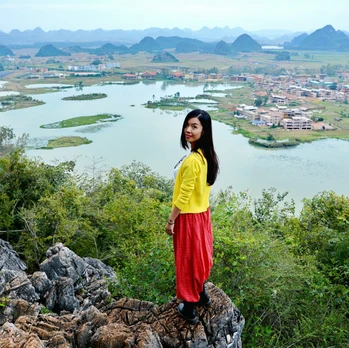
From the observation deck, the peaks stretched out before us in all directions. When mist rose, the peaks looked like a stampede of ten thousand horses, overwhelming in their power. If you came here in March during the rapeseed flower season, it would be almost unreal.
The "Accidents" and "Warmth" Along the Way
Flat Tires, Landslides, and Fog — The Required Lessons of Self-Driving
On this trip, we experienced a flat tire, a landslide, thick fog, and mountain roads with visibility under 20 meters. But every accident brought the family closer together. My dad learned how to change a spare tire. My mom learned to read the tire pressure warning. I learned to stay calm in a downpour.
The 6-RMB Wontons and the $19 Staff Guesthouse
The 6-RMB meat wontons in Daguan County, the 138-RMB (about $19) standard room at the Dongchuan power system staff guesthouse, the 10-RMB ticket at Jinjiling — behind these numbers lies the real cost of living in Yunnan. Travel doesn't have to mean five-star hotels and fancy meals. Sometimes, these down-to-earth experiences are the ones you remember most.
In the End: 29 Days, 7,000 Kilometers, $830 Per Person — Was It Worth It?
A lot of people ask me why I would take my parents on such a long self-drive trip. The answer is simple: time waits for no one.
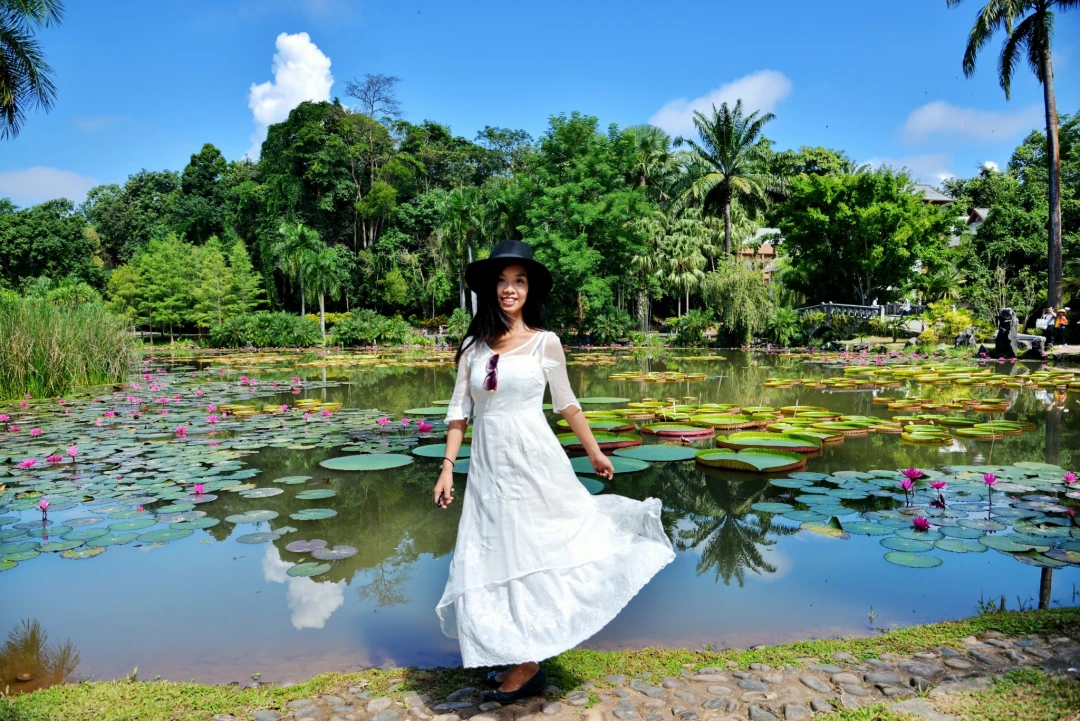
After my dad retired, his personality changed. He became more willing to go out. My mom has always loved to travel. And I, during the blank period after quitting my job, happened to have this uninterrupted stretch of time. Twenty-nine days, 7,000 kilometers, only about $830 per person. But the return on this "investment" cannot be measured in money.
We got lost in the fog. We got a flat tire in the rain. We marveled at the Red Land. We strolled along Dianchi Lake. We ate 6-RMB wontons, stayed in $19 guesthouses, and saw waterfalls that rival Huangguoshu. But more than anything — we were together.
The world is vast. But the most precious scenery is the road traveled with those we love most.
Practical Tips
- Timing: October is the rainy season in Yunnan. It's best to avoid it. The optimal seasons are March-April (rapeseed flower season) and November-December (best time to see the Red Land).
- Driving Route: Circle Fuxian Lake clockwise for the best lake views.
- Budget Control: Choose local staff guesthouses or family-run inns for accommodation. Eat local street food. $830 per person is entirely feasible.
- Essential Gear: Spare tire, tire pump, fog lights, rain gear, warm clothing (mountain areas have large temperature differences).
- Safety Tips: Mountain roads are winding and prone to fog. Drive during the day and avoid driving at night.
If you're thinking about taking your parents on a self-drive trip, consider starting with Yunnan. It's not perfect, but it's real. It's not luxurious, but it's warm.
You should also read:

Cloud Travelogue · Dali of Wind, Flowers, Snow, and Moon: A Three-Day, Two-Night Journey of a Free Spirit
Cloud Travelogue · Dali of Wind, Flowers, Snow, and Moon: A Three-Day, Two-Night Journey of a Free Spirit I am a cultured female foodie with a touch of rogue charm. I slung on my backpack, took my lover's hand, and set off on a spontaneous…
Continue reading...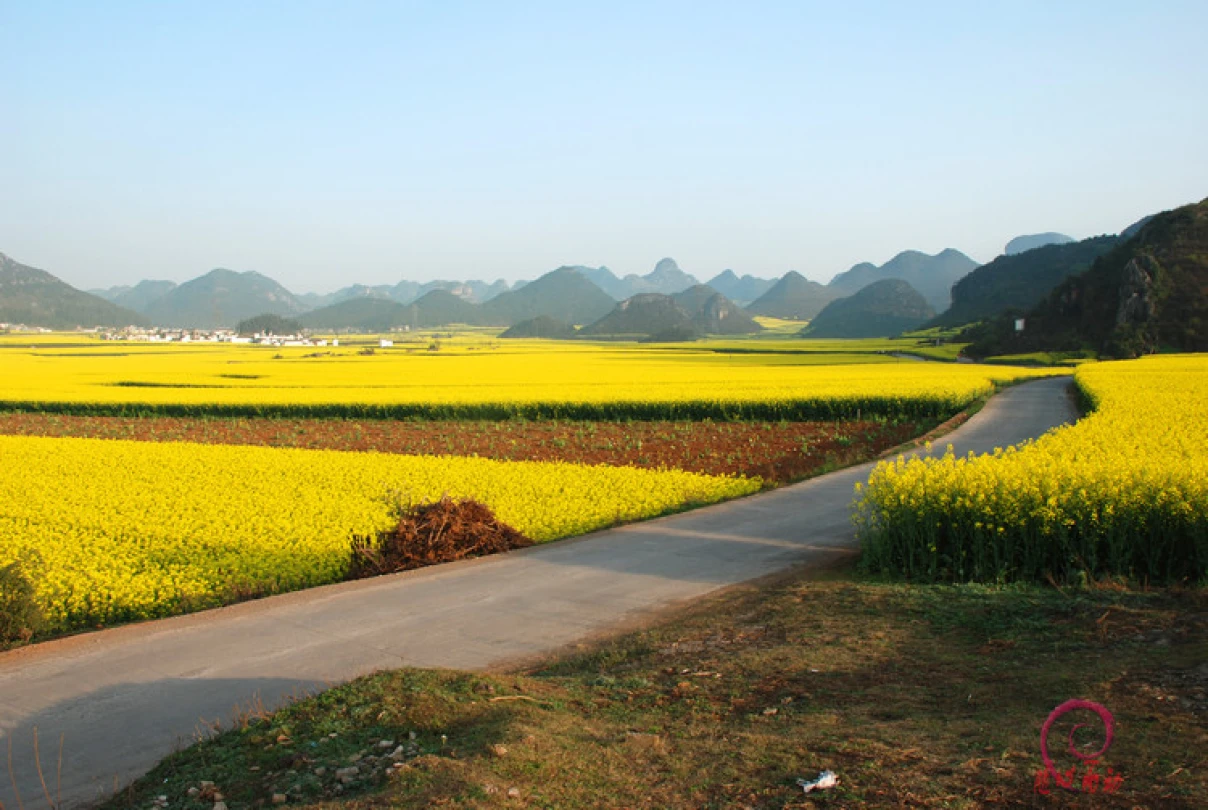
Golden Luoping: A Romantic Encounter with Sunshine and Seas of Flowers
Golden Luoping: A Romantic Encounter with Sunshine and Seas of Flowers Introduction: The Third Time's the Charm Some landscapes are destined to be seen at the right moment. For me, that was exactly the case with Luoping's rapeseed flowers. On February 22, 2011, the Luoping…
Continue reading...
The Meaning of Travel – A Tengchong Story: A Journey of the Heart and Personal Growth
The Meaning of Travel – A Tengchong Story: A Journey of the Heart and Personal Growth Setting Out, Only to Return a Better Self Some say travel is nothing more than leaving a place you're tired of, only to go to a place where others…
Continue reading...