Wandering Southern Yunnan | A Solo Slow Travel Journey: 5 Days Through Jianshui, Mengzi, and Kunming on a 3,000 RMB Budget
Wandering Southern Yunnan | A Solo Slow Travel Journey: 5 Days Through Jianshui, Mengzi, and Kunming on a 3,000 RMB Budget
Foreword: Why Southern Yunnan?
When the March winds blow, with a few days of annual leave still unused, that little beast inside me yearning for "distant places" starts to stir again. Scanning the map, my eyes unconsciously settle on Yunnan—this season offers perfect sunshine and pleasant temperatures, unlike the lingering damp chill of early spring in Jiangnan.
After scrolling through too many short videos, a small city called "Jianshui" quietly took root in my heart. I initially planned to pair it with Dali, but checking the route revealed they belong to different prefectures, separated by Kunming—half a day would be wasted on transportation alone. After much deliberation, I decided to look toward another off-the-beaten-path route: Jianshui, Mengzi, and Kunming. And so, my solo food-and-wander journey through Southern Yunnan quietly began on a mid-March morning.
Five days and four nights, with total expenses kept around 3,000 RMB. No crowds, no rush to check off destinations—just sunshine, delicious food, and those old buildings steeped in time. If you're also tired of influencer-style checkpoint tourism, perhaps my experience can offer you some different inspiration.
Pre-Trip Preparation: Budget and Itinerary Overview
💰 Expense Breakdown (Total ~3,000 RMB)
| Item | Cost | Notes |
|---|---|---|
| Major transport (flights) | 1,629 RMB | Round trip Hangzhou ↔ Kunming |
| Intercity transport | 122 RMB | Kunming → Jianshui (0 RMB with points), Mengzi → Kunming 66 RMB |
| Local transport | 240 RMB | Taxis + metro + buses + shared e-bikes |
| Accommodation | 336 RMB | 1 night airport hotel + 2 nights guesthouse + 2 nights hostel |
| Attractions | 259 RMB | Small train 114 RMB + 5-attraction pass 115 RMB + Tuanshan Village 30 RMB |
| Meals | ~470 RMB | Five days of eating and drinking |
📅 Five-Day Itinerary at a Glance
- Day 1: Hangzhou → Kunming → Jianshui, visit the Imperial Examination Hall, Daban Well, Zitao Street Night Market
- Day 2: Jianshui Small Train → Zhu Family Garden → Shuanglong Bridge at sunset
- Day 3: Lin'an Government Office → Chaoyang Tower → Mengzi, visit the National Southwest Associated University Memorial, Dashuzhai Night Market
- Day 4: Bisezhai Station → Honghe Prefecture Museum → Kunming, night visit to Dounan Flower Market
- Day 5: Zhuanxin Farmer's Market → Kunming Old Street → fly back to Hangzhou
Day 1|From Plane to Train, Heading South
The First Taste of Warmth in Kunming: Wild Mushroom Fried Rice
Departing from Hangzhou at 7:15 AM, I landed at Kunming Changshui Airport at 10:30 AM. After collecting luggage, I took the airport shuttle bus (25 RMB, departing on the hour) and arrived at Kunming Railway Station 50 minutes later. If you're also transferring from the airport to the train, make sure to leave at least 2 hours for the connection.
Starving, I found a small shop across from the station and ordered a portion of 鸡枞菌炒饭 (termite mushroom fried rice). Via Meituan group-buy, it cost 16 RMB—the rice grains were glossy and glistening, the mushroom aroma mingling with the wok-hei, paired with a complimentary bowl of chicken soup. Simple yet utterly satisfying. For a solo traveler, this kind of unpretentious comfort food hits the spot.
First Glimpse of Jianshui: Slow Life Under Chaoyang Tower
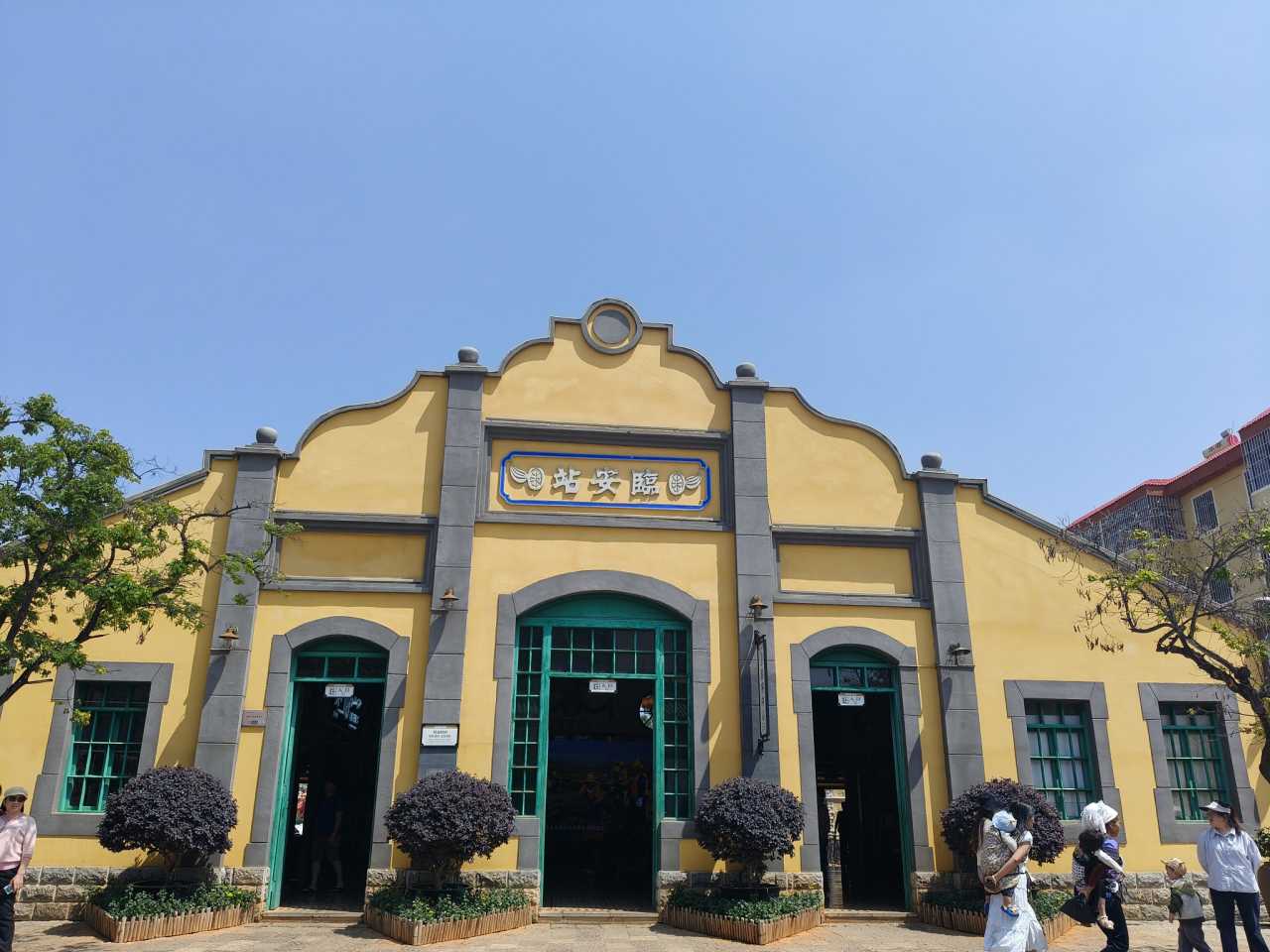
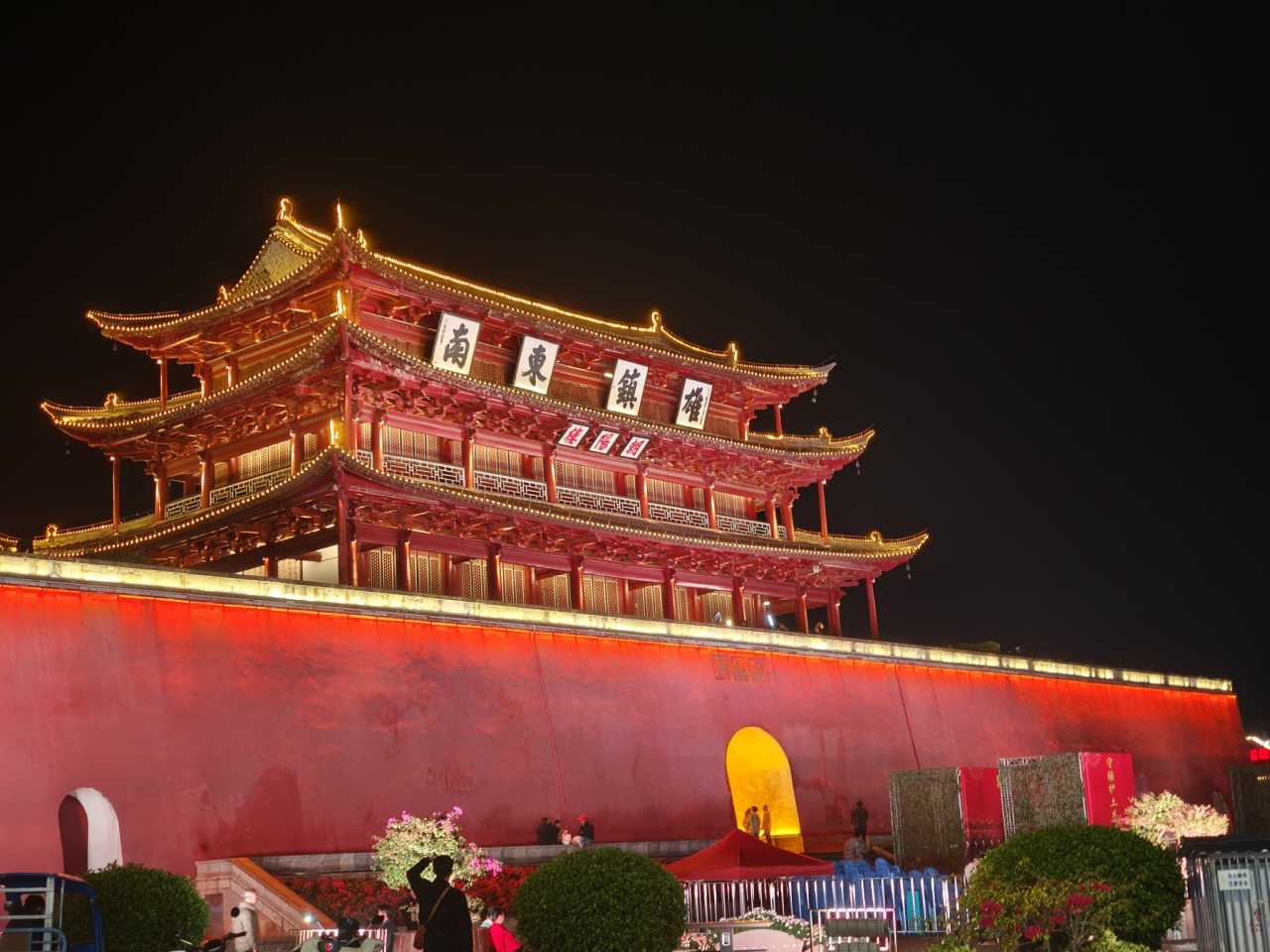
After a two-hour train ride from Kunming to Jianshui, I took a couple of bus stops from the station to reach the ancient town. Stepping off the bus and looking up, I was greeted by Jianshui's landmark—Chaoyang Tower. This 600-year-old gate tower, with its red walls and black tiles, exudes dignity and grandeur. In the early evening, a conscription ceremony was taking place below, while at night, the space transforms into a local square dance hub—one group on the left, another on the right, lively and carefree.
Climbing the tower (ticket 15 RMB), I found a photography exhibition inside, along with some old photos and cultural creative products. A creative ice cream bar costs 10 RMB—a fair price by tourist city standards.
The Imperial Examination Hall: A Century of Imperial Exam Memories
Around 4 PM, I wandered into the Imperial Examination Hall just before closing. At the entrance, two sets of statues vividly depict the reactions of candidates when exam results were posted: some hang their heads in defeat, others clasp their hands in prayer, one slaps his forehead in regret, and another beams with joy, ready to spread the news. On the other side, a scene shows a top scholar parading through the streets—a truly impressive sight.
This was once the examination venue for scholars in Southern Yunnan during the Ming and Qing dynasties. Inside, the cramped individual cubicles give you a visceral sense of the candidates' hardships—eating, drinking, and sleeping in these tiny spaces for days on end. No wonder Jianshui is called the "Land of Literature" and the "Southern Zou-Lu" (a reference to the cultural heartlands of ancient China). It's said that during each exam result announcement, Jianshui candidates would make up half the successful names—hence the term "Lin'an Half List" (临半榜).
The ticket is 20 RMB, but if you buy the 5-attraction pass (115 RMB, valid for 7 days), you save about 20-plus RMB. However, since I skipped the Confucian Temple, buying individual tickets worked out better for me. Plan according to your own itinerary.
Daban Well and Caoya Rice Noodles: The Soul of Jianshui
Leaving the examination hall, I walked about 20 minutes, passed through the Qingyuan Gate on the west side, turned into a narrow alley, and found Jianshui's most famous well—Daban Well. This 600-year-old well is still in use today, its water crystal clear. Locals regularly come with buckets to draw water. It's said that Jianshui's famous tofu owes its reputation entirely to the water from this well.
Next to the well is a tofu shop featured on "A Bite of China," packed with customers. I opted for another small shop instead, ordering a bowl of 草芽米线 (cattail shoot rice noodles, starting at 10 RMB) and a few pieces of grilled tofu. The cattail shoots were tender and crisp, the rice noodles smooth and silky, the broth rich and savory—paired with chili and condiments, one bowl left me thoroughly content. As for the grilled tofu—honestly, at 0.5 RMB apiece, they were grilled to a nice char, and the dipping sauce was decent, but the texture inside was a bit too firm and coarse. I stopped after four pieces. Maybe I didn't have it the right way? If you've had truly great Jianshui tofu, please let me know.
Night Stroll on Zitao Street
Zitao Street is far livelier at night than during the day. It's lined not only with pottery shops but also with barbecue stalls and rice noodle joints. The noodle toppings are laid out openly, with noodles cooking in the center—the atmosphere is fantastic. I tried to find two barbecue spots recommended in travel guides but couldn't locate them after wandering around, so I hailed a taxi back to the ancient town.
I had dinner at "Amao Small Barbecue" on Hanlin Street. You pick your own ingredients, and they tally the bill at the end. The per-skewer prices were similar to Hangzhou, but the portions were more generous. Grilled cattail shoots were wonderfully crisp and tender, paired with a cup of tamarind juice (5 RMB a cup—a throwback to five-yuan pricing) bought from the old Papaya Shop—a perfect ending to the day.
Day 2|The Small Train, a Grand Garden, and Sunset
The Jianshui Small Train: Riding Back in Time
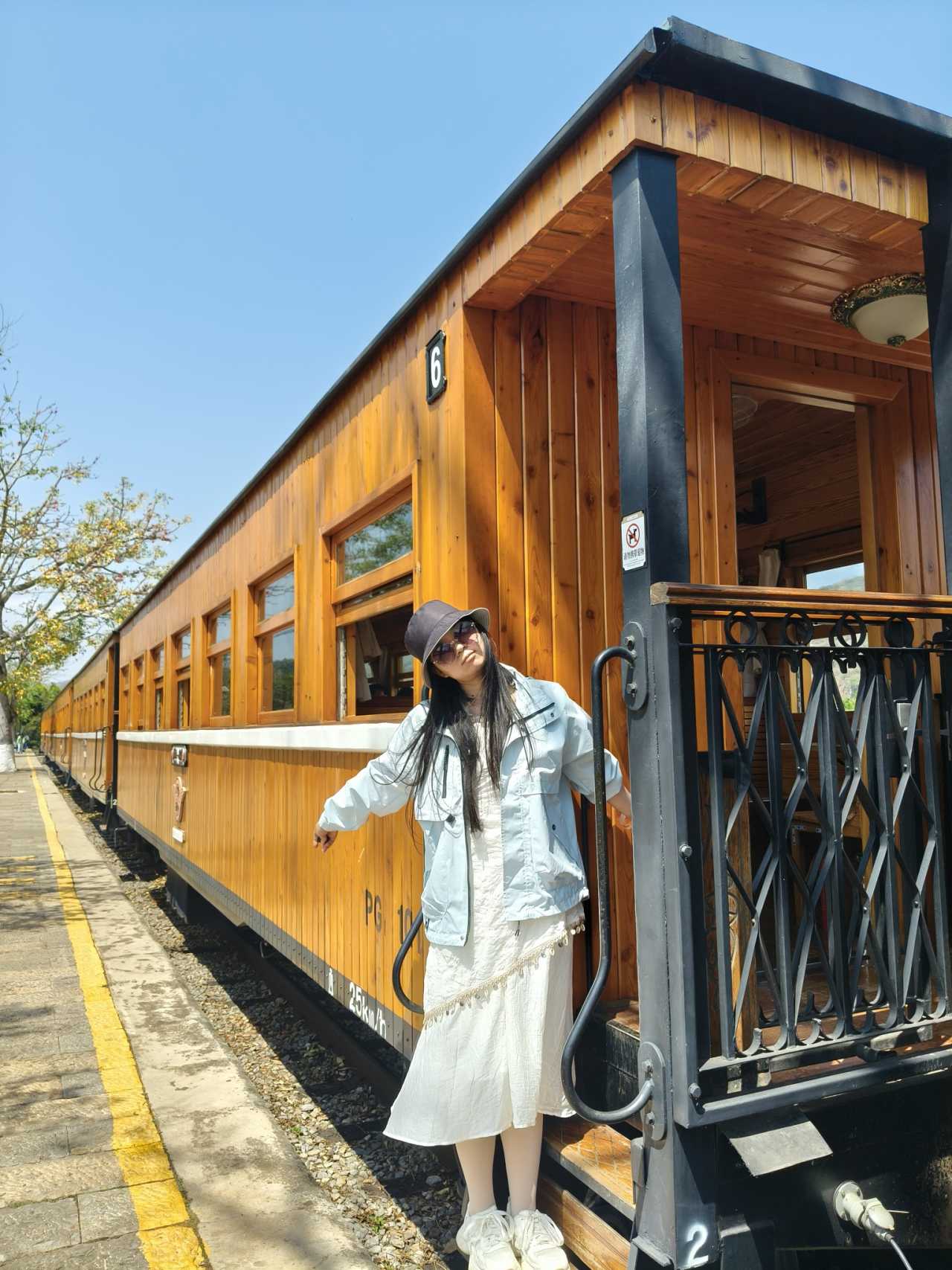
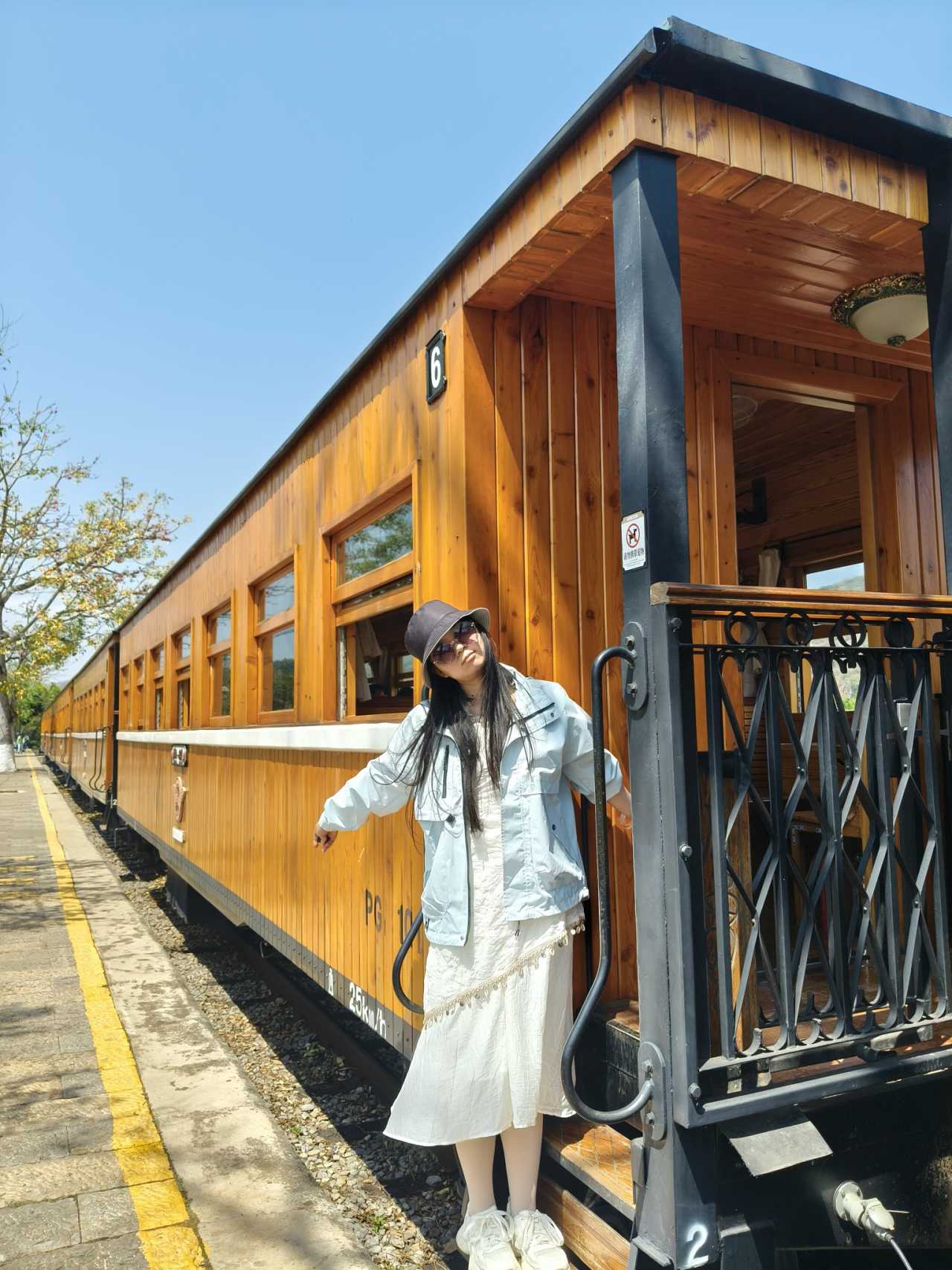
When in Jianshui, the small train is a must. I bought my ticket online 5 days in advance (114 RMB). There are only two departures daily: 9 AM and 2:30 PM. Remember to pick up your ticket half an hour early; during peak season, buying on the spot usually means standing room only.
The train departs from Lin'an Station (Jianshui's ancient name), passing through Shuanglong Bridge (the Seventeen-Arch Bridge), Xianghuihui Station, and finally arriving at Tuanshan Village. The entire journey takes about 4.5 hours. Stop times vary: 25 minutes each at Shuanglong Bridge and Xianghuihui, and 2.5 hours at Tuanshan Village (which requires a separate ticket—30 RMB).
The carriages are vintage and charming: wooden luggage racks, small electric fans, retro wall lamps, and water and pastries provided on the tables. As the train slowly chugs along, fields and villages recede outside the window, the breeze from the half-open windows carrying the scent of earth and vegetation.
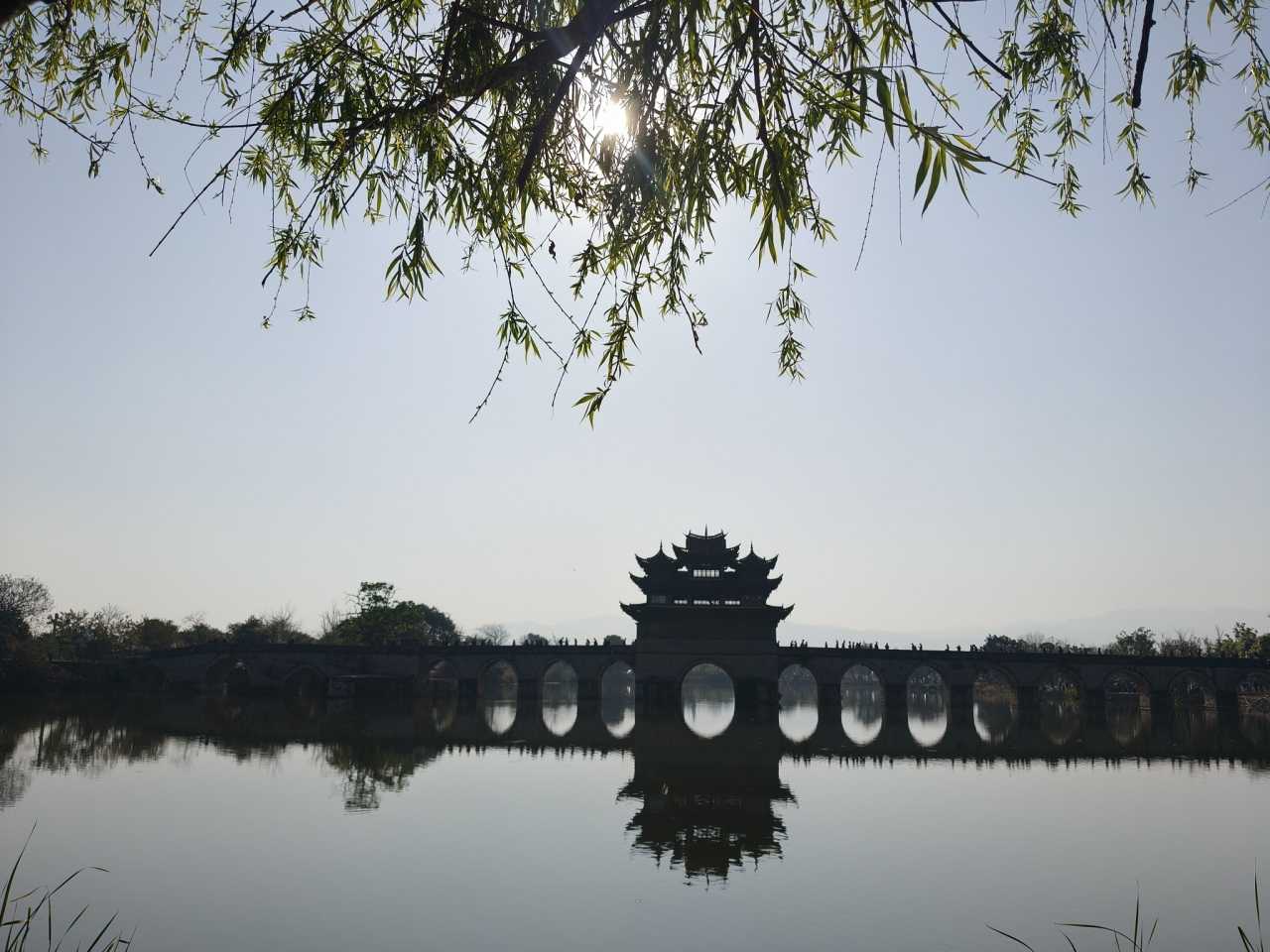
First stop: Shuanglong Bridge. The 20-minute stop felt a bit rushed—between the restroom, queuing, and taking photos, there was no time to walk across the bridge. So I took a taxi back in the afternoon specifically to watch the sunset. This seventeen-arch bridge is one of only two in China; the other is in Beijing's Summer Palace, but it lacks the central pavilion. As the sun set, the bridge was bathed in golden light, its reflection shimmering in the water—a scene of gentle beauty.
Second stop: Xianghuihui Station. It was packed with people, the French-colonial-style station swarming with tourists. If you're not keen on crowds, it's best to avoid the times when the train arrives.
Final stop: Tuanshan Village. This is the highlight of the small train journey. Ancient architecture, exquisite wood carvings, quiet alleyways—every door and window holds a story. My favorites were Liuyuan (Stay Garden) and the Zhang Family Garden, where the patterns on the windows are all unique, and the golden designs on the eaves sparkled in the sunlight. Tired from walking, I bought a bowl of cold rice rolls (凉卷粉) at the exit for 6 RMB, topped with sesame paste—sticky and unexpectedly delicious.
On the return trip, I leaned against the railing, watching the scenery recede, the only sound the rhythmic "clackety-clack" of the train. At that moment, I wished time would slow down, just a little more.
Zhu Family Garden: The Grand Garden of Southern Yunnan
After resting for two hours post-train, I visited the Zhu Family Garden in the afternoon. If Tuanshan Village is rustic and ancient, the Zhu Family Garden is opulent and magnificent. Known as the "Grand Garden of Southern Yunnan," this estate took thirty years to build, every detail reflecting the philosophy of "slow work yields fine products."
From the four courtyards named after plum, orchid, bamboo, and chrysanthemum, to the stage, rear garden, and long corridors—every corner rewards close attention. The patterns on the door lintels, still vibrant after a century, vary slightly between adjacent panels: a rabbit and a sheep on one, a deer and a horse on another—each one different. According to the guide, since the family were merchants, they taught their descendants to "follow rules and stay within bounds."
By day, the Zhu Family Garden reveals its layout and play of light and shadow. Passing by again at night, I truly noticed the intricacy of the wood carvings. The visitor center was closed, but the lights were still on, and several doors' carvings held my gaze—each panel a standalone work of art, yet harmoniously forming a complete series.
Steam-Pot Chicken and Grilled Tofu: The Flavors of Jianshui
Returning from watching the sunset at Shuanglong Bridge, I headed straight to "Jianshui Renjia" (Jianshui Home) on Hanlin Street. Finding a seat on the second floor, I ordered a small portion of 汽锅鸡 (steam-pot chicken, 38 RMB). The broth was clear and bright, neither greasy nor heavy, with a sweet, savory entrance. I finished all the soup but left half the chicken and barely touched my rice—it was that good.
Not ready to give up, I found another grilled tofu shop. 6 RMB for a portion, grilled and served directly with dry chili powder. It was better than yesterday's, but the interior still lacked the silky texture I'd hoped for. Jianshui tofu has quite a reputation—perhaps my expectations were too high.
Day 3|From Jianshui to Mengzi: History and Hustle
Lin'an Government Office: Stepping into Ming-Qing Officialdom

In the morning, I visited the Lin'an Government Office, the site of a fourth-rank yamen (government office). Originally built during the Ming Dynasty's Hongwu era, only the main gate and the front hall's rolled roof are original Qing Dynasty remnants. Passing through the ceremonial gate, the two side wings house the Six Departments (Civil Service, Finance, Rites, Military, Justice, Public Works)—essentially the ancient equivalent of modern government ministries.
Most intriguing was the lotus pond behind the main hall, a pun on the Chinese word for "integrity and shame" (廉耻, liánchǐ). Over it spans the Qingyun Bridge, its three steps symbolizing that "an incorruptible official will surely rise to great heights." Standing before the Zhong'ai Hall, I could almost hear the "Wei—wu—" cries of ancient court scenes, instantly bringing TV dramas to life.
Chaoyang Tower and Farewell to Jianshui
In the afternoon, I visited Chaoyang Tower again. Day and night reveal two completely different personalities—solemn and dignified by day, brilliantly lit and more tender by night. The photography exhibition upstairs is worth a look, with old photos documenting a century of Jianshui's transformation.
At noon, I took a bus from Jianshui to Mengzi (66 RMB), a journey of about two hours. After dropping off my luggage, I visited the National Southwest Associated University Memorial, feeling the academic perseverance amidst the flames of war. That evening, I explored Dashuzhai Night Market, where I encountered the most extravagant dipping sauce I've ever seen—a table full of condiments, allegedly so good that "you could dip your shoe soles in it and it'd taste amazing."
Day 4|Bisezhai Station and Dounan Flower Market
Bisezhai: Getting There Was Fine, Getting Back Was a Close Call
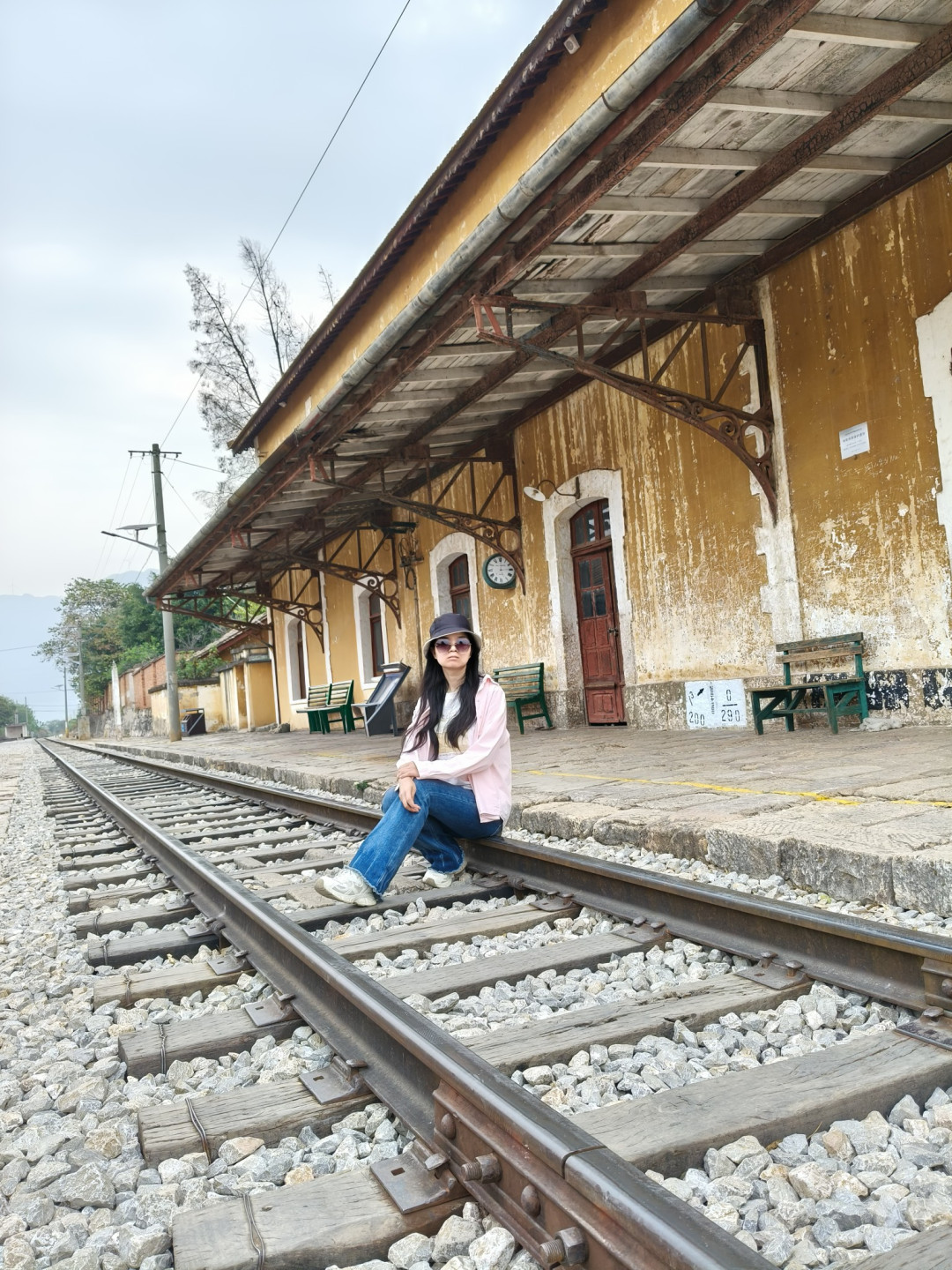
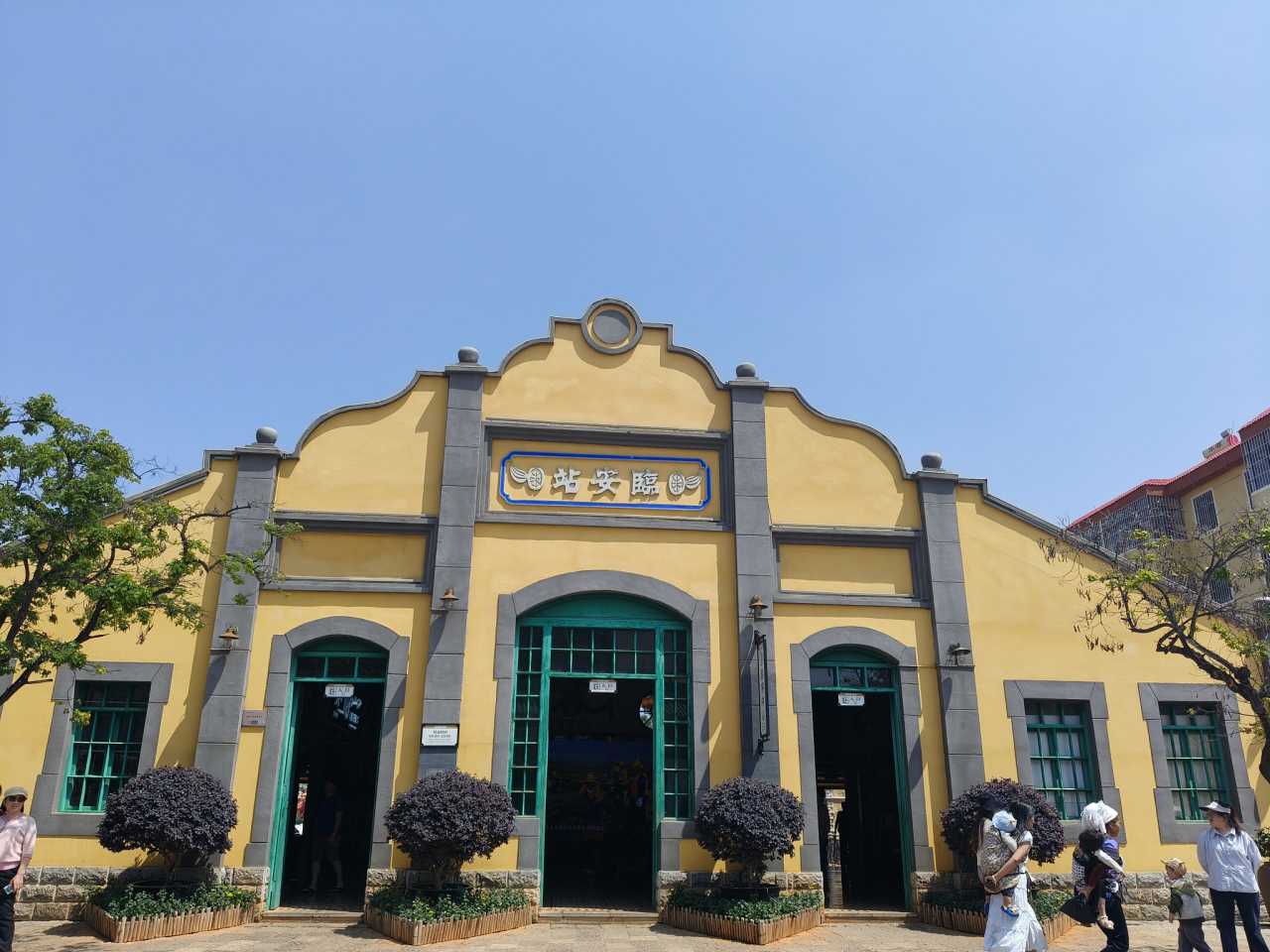
In the morning, I went to Bisezhai Station, a small railway stop that gained fame from the film "Youth" (芳华). It retains its French-colonial architecture and tracks—yellow station building, green doors and windows, weathered walls—every corner bearing the marks of time. However, I almost missed my return transport—the area isn't well-connected, so plan your timing carefully.
Dounan Flower Market: Romance by Night
In the afternoon, I took a bus from Mengzi to Kunming (66 RMB) and headed straight for Dounan Flower Market. This is China's largest fresh flower trading market, and it's even more vibrant at night than during the day. Bunches of flowers stacked like small mountains, priced so low it's almost unbelievable—who can resist carrying flowers back to their hotel? I skipped dinner just to explore the market, and I didn't regret it one bit.
Day 5|Kunming's Last Taste of Everyday Life
Zhuanxin Farmer's Market: A Food Lover's Paradise
On the final morning, I visited Kunming's Zhuanxin Farmer's Market. The variety of fruits was dizzying—羊奶果 (goat milk fruit), sugar apples, mangosteens, strawberries... I tried the goat milk fruit; it wasn't bad, but nothing spectacular—worth a taste if you come across it.
The biggest surprise was the small-pot rice noodles (小锅米线) and 饵丝 (Ersi, a type of rice noodle cake cut into strips), 12 RMB per portion, generous and filling, topped with crispy bits—absolutely satisfying. Sitting in the market, watching locals shop for groceries, haggle, and eat breakfast, that overwhelming sense of everyday life is what makes travel most moving.
Kunming Old Street and Farewell
In the afternoon, I strolled through Kunming Old Street—cobblestone paths, old-style buildings, artsy shops—perfect for a leisurely wander. At 7 PM, I boarded my flight back to Hangzhou, ending this five-day journey through Southern Yunnan.
Afterword: The Meaning of Travel
Five days, four nights, 3,000 RMB, solo. No anxiety about Instagram-worthy spots, no exhaustion from rushing—just sunshine, food, and stories hidden in the folds of time.
Jianshui's ancient town is "alive"—before 9 AM and after 9 PM, buses and taxis can enter the old town; locals dance square dances under the gate tower, draw water from the well, and eat grilled tofu on street corners. In Mengzi, the crossing-the-bridge rice noodle bowls are as big as basins, topped with chrysanthemum petals, the broth so savory you want to lick the bowl clean. Kunming's flower market and farmer's market make you fall in love with life's simple pleasures all over again.
Some say traveling alone is lonely. But I think traveling alone is the freest way to travel. You can change plans on a whim, stare at a bridge for half an hour, or be made happy for an entire day by a single bowl of rice noodles.
If you want to give yourself a break, come walk through Southern Yunnan. The sun is warm here, time moves slowly, the food is plentiful, and the stories are long.
A few practical tips to close:
- Book your Jianshui Small Train ticket well in advance; even standing tickets are hard to come by during peak season
- The 5-attraction pass isn't always a better deal—calculate based on your own itinerary
- There's no direct bus from Jianshui to Mengzi; you'll need to transfer through Kunming, so allow enough time
- Dounan Flower Market is livelier at night, and the flowers are cheap enough to make you want to buy in bulk
- For solo dining, Jianshui's steam-pot chicken and cattail shoot rice noodles are a perfect pair
Next time, maybe I'll go to Shiping, or Mile, or perhaps visit Jianshui again—just for that grilled tofu I never quite figured out.
You should also read:

Into the Hidden Valley: A Solo Journey Through the Mysterious Dulong River
Into the Hidden Valley: A Solo Journey Through the Mysterious Dulong River Deep in the northwestern corner of Yunnan Province, tucked away from the modern world, lies a place that feels like a secret whispered among mountains. The Dulong River Valley is not just a…
Continue reading...
God’s Abandoned Palette: A Self-Drive Journey Through Yunnan’s Dongchuan Red Land
God’s Abandoned Palette: A Self-Drive Journey Through Yunnan’s Dongchuan Red Land Travel has never been about reaching some distant geographic coordinate. It’s about encountering, along the way, the version of yourself buried beneath the rubble of daily routine. During this May Day holiday, I finally…
Continue reading...
Body in Hell, Heart in Heaven: A Pilgrimage Through Tiger Leaping Gorge — A Dialogue Between Heaven and Earth
Body in Hell, Heart in Heaven: A Pilgrimage Through Tiger Leaping Gorge — A Dialogue Between Heaven and Earth Introduction: When the Gorge Splits Open Beneath Your Feet Some say Tiger Leaping Gorge is the closest place on Earth to the border between "hell" and…
Continue reading...