Winter in Xishuangbanna: Finding Another Way of Life Between Ancient Temples and Dai Villages
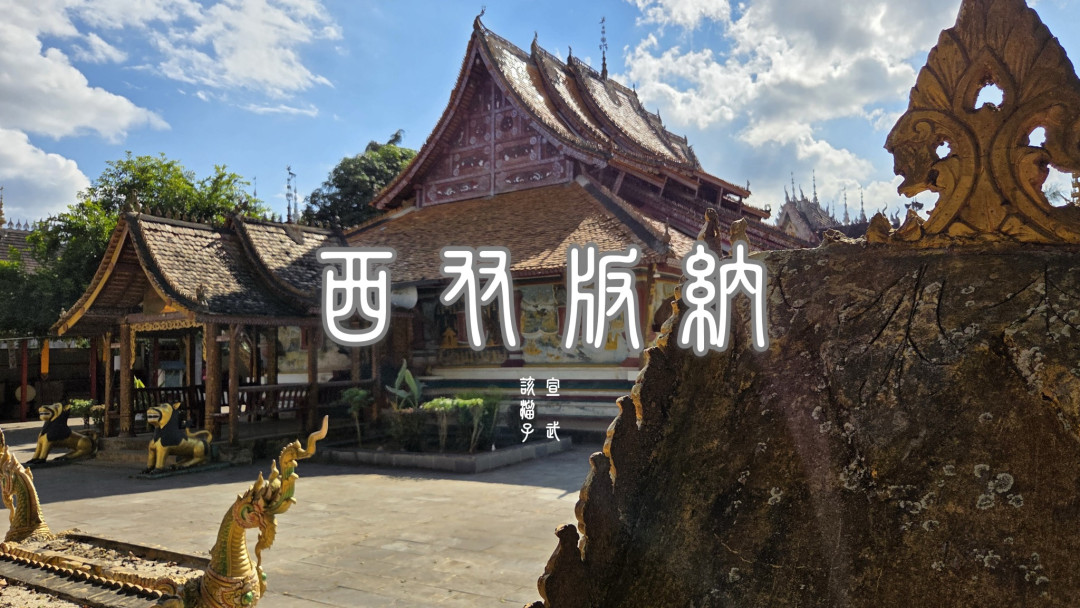
Winter in Xishuangbanna: Finding Another Way of Life Between Ancient Temples and Dai Villages
Last April, I accompanied my mother on a trip to Xishuangbanna. It was right during the Water Splashing Festival, and the streets were drenched in joy. This winter, my father finally had time to join us, but he had little interest in those "shuttle bus plus power-walking" scenic area tours. So we decided to rent a car, avoid the crowds, and explore those lesser-known places tucked away in the suburbs and county towns.
Xishuangbanna Dai Autonomous Prefecture governs one city and two counties—Jinghong City, Menghai County, and Mengla County. Most tourists stick to the areas around Jinghong, but we wanted to go to places where you can truly slow down and feel something.
Menghai: A Pilgrimage to Ancient Temples in the Land of the Brave
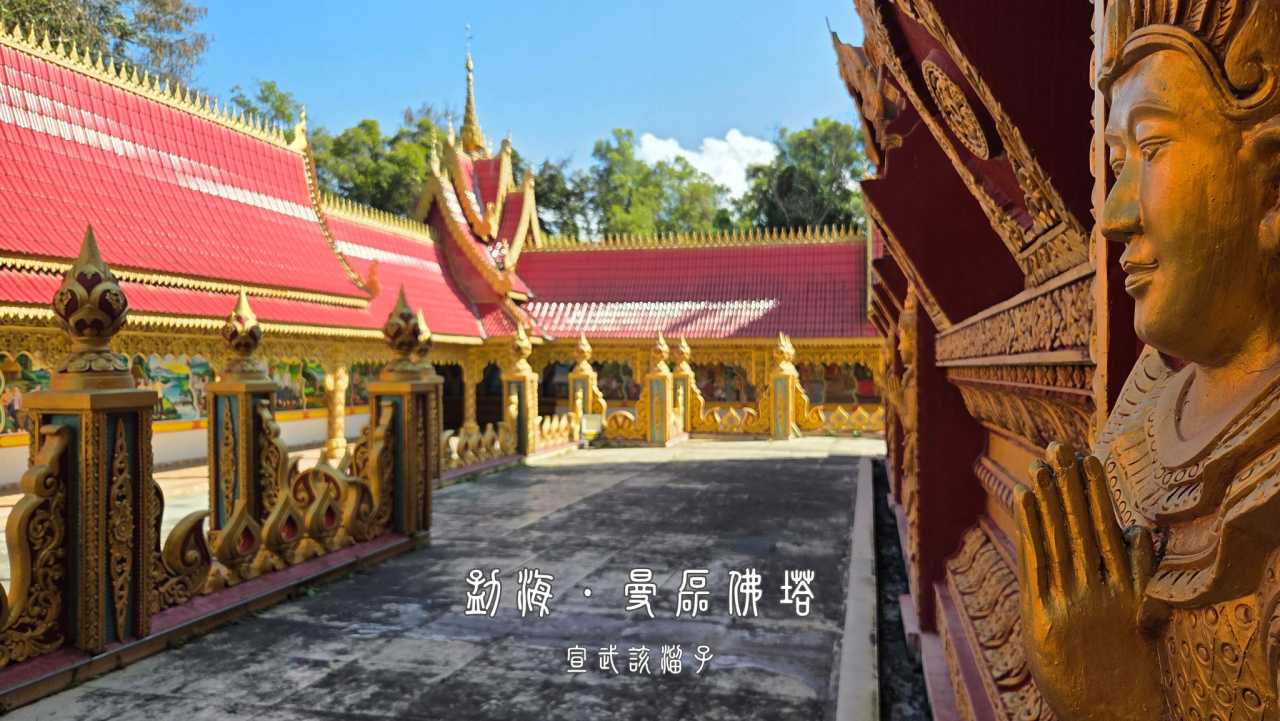
Menghai, in the Dai language, means "the place where brave people live." This land lies at the southern foot of the Hengduan Mountain range, on the west bank of the Lancang River, and is the highest point in Xishuangbanna. Here, you'll find two nationally protected cultural heritage sites—the Jingzhen Octagonal Pavilion and the Manduan Buddhist Temple, both precious remnants of Theravada Buddhism.
Setting out from downtown Jinghong, we headed straight for the Manlei Pagoda on the northwest side of Menghai County. This county-level protected site sits atop Turtle Mountain in Mengzhe Town and incorporates elements of Burmese pagoda architecture. If you're willing to take off your shoes and go inside, you'll find thousands of Buddha statues arranged in gradients on the third level—the visual impact of that orderly procession is enough to make you hold your breath. On the south side of the pagoda stands a 30-meter-tall wild mango tree, said to be an "old resident" of this land. Online information about this place is scarce, and some of it even contradicts what you see on the ground, but it's precisely this sense of being "undeveloped" that makes it feel so authentic.
Jingzhen Octagonal Pavilion: A Thousand-Petal Lotus
The Jingzhen Octagonal Pavilion sits on Jingzhen Mountain, west of Menghai County. Construction began in the 40th year of the Kangxi reign (1701 AD). This octagonal brick-and-wood structure is a key part of the Jingzhen Central Buddhist Temple. In Dai, it's called "Wosu," and it's said to have been built in the shape of the Buddha Shakyamuni's golden gauze hat, the "Kazhonghan," intended for senior monks to recite scriptures.
The eight corners of the pavilion represent the eight senior monks (Mahathing) at the Buddha's side. The four doors facing east, south, west, and north symbolize the spread of Buddhist teachings to all directions. The entire structure stands 15.42 meters tall, with a sixteen-sided floor plan. The Sumeru base, the pavilion body, the roof, and the spire stack one upon another like a blooming thousand-petal lotus.
The pavilion you see today was restored in the late 1970s. During the "ten years of turmoil" (the Cultural Revolution), it was nearly razed to the ground. The restoration followed the principle of "preserving the original appearance as much as possible," but the colored glass pieces that once adorned the walls, and the floral, animal, and human figures printed with gold and silver powder—those can never be fully recovered. Standing before the pavilion, you can feel the weight of history—what was destroyed and what was preserved both tell the same story.
The admission fee here is a voluntary 3 yuan sanitation fee, and parking is free. Around the courtyard, local women neatly arrange their stalls, selling snacks, local specialties, and prayer items. Their smiles are as warm and genuine as the octagonal pavilion itself.
Manduan Buddhist Temple: The Qing Dynasty Hall That Survived by Being a Warehouse
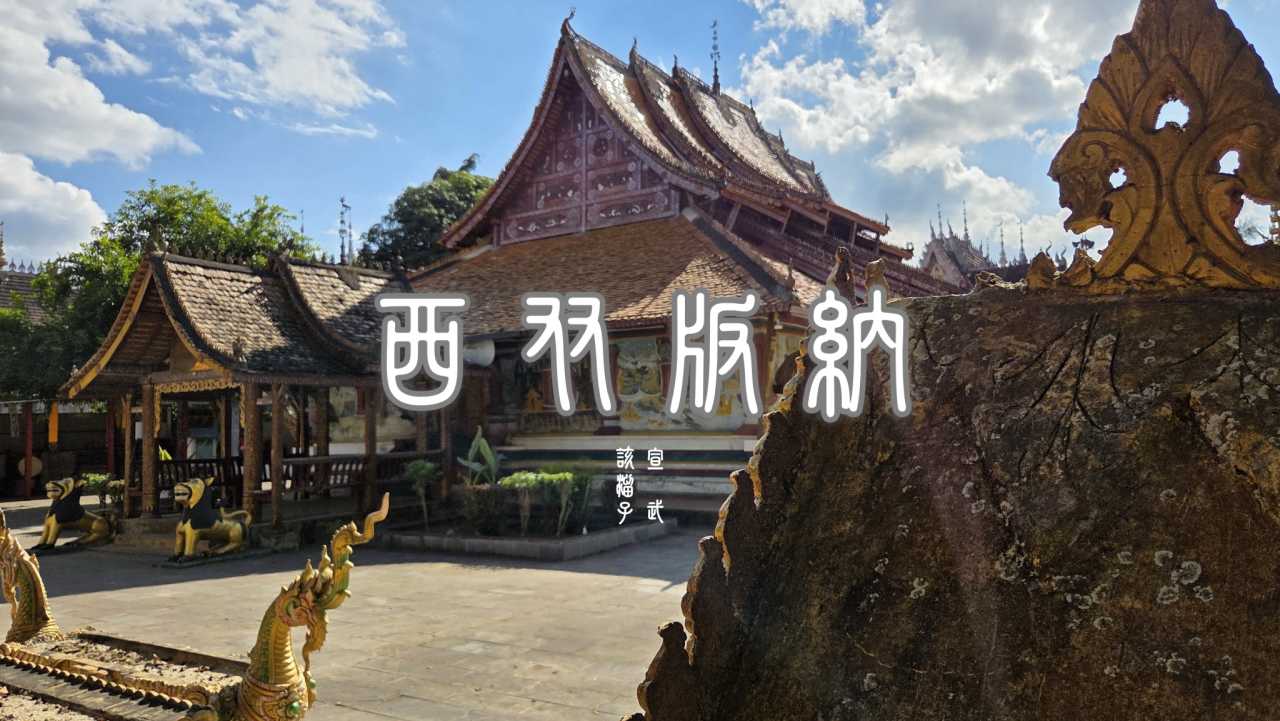
Manduan Buddhist Temple is located in Man'en Village, Mengzhe Town, Menghai County. It was first built in the 312th year of the Dai calendar (950 AD). The existing main hall is a Qing Dynasty structure, four bays wide, 14 meters across, and 19.4 meters deep. It features a double-eave hip-and-gable roof with an unusually large gable face, an extra eave layer, and multiple wooden dragon-shaped support pillars under the eaves. The northern and southern roof surfaces are divided into five sections, with the middle section highest and gradually descending outward. The entire roof stacks layer upon layer, as if giant books were placed astride the ridge.
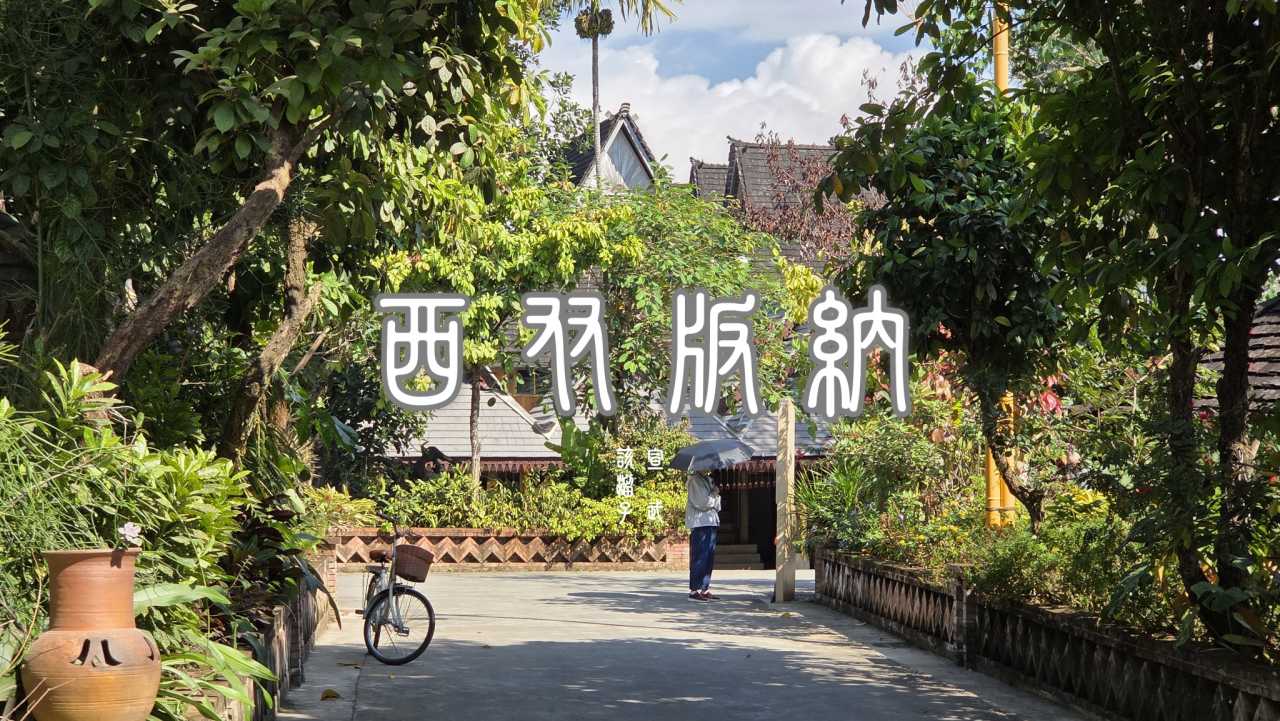
This hall survived because it was used as a warehouse during the "Destroy the Four Olds" campaign. The exquisite wood carvings, murals, and glazed ornaments were "protected" by sacks of grain and farming tools, escaping destruction. As a result, although Manduan Temple was added to the national heritage list three rounds later than the Jingzhen Octagonal Pavilion, it has the advantage of continuous transmission—it wasn't rebuilt but preserved.
That morning, the workers repairing the road near the temple's "mountain gate" were remarkably courteous, immediately making way for approaching cars and enthusiastically answering visitors' questions. This kind of simple kindness is more memorable than any scenic spot.
The Hill Northwest of the City: Overlooking Jinghong
It was still early on the way back, so we navigated to "Xianyun Shang Coffee Campground" to get a bird's-eye view of Jinghong. The mountain roads were narrow, winding, and lush with vegetation, but the pavement was decent. Along the way, there were three parking lots run by locals. We parked at Lot 1, closest to the campground, for 10 yuan.
On the top level of the terrace, two monks in saffron robes sat in chairs, enjoying the view and chatting. Younger people gathered in the shade playing cards, boasting, and smoking water pipes—yes, the traditional kind. Parents congregated on the lawn, by the swings, and near the small animals with their kids. Children from the hilltop village raced their little carts, slamming on the brakes when they saw a car coming, then staring at the tourists with wide eyes and grinning. The last time I saw a scene like that was in a village in Shannan, Tibet.
Jinghong's Ancient Villages: Stories That Begin with "Man"
In the Dai language, "Jing" means city (like Jinghong), "Meng" means region or county (like Menghai or Mengla), and "Man" means village or settlement. "Man" is the most basic unit of Dai society. The three Dai villages we visited this time were all on the outskirts of Jinghong.
Man Kong Dai Village: A Blend of Obscurity and Internet Fame
Man Kong Dai Village, in the Dai language, is historically called "Man Kong Na Man," meaning "the village where lamp oil is made." It's an ancient settlement caught between being obscure and being an internet sensation.
If you open the Baidu Baike entry for "Man Kong Dai Village," the main information still dates back to the end of 2010. The six pictures in the entry show village roads, rice paddies, a "telephone" scene, a fish pond, the town health center, and the town middle school from ten or twenty years ago. The promotional focus back then was on rural production materials and concrete public service facilities. It looked like nothing more than an ordinary, even slightly backward, southwestern village.
But if you're observant and click "expand all" in the references, you'll find eight brand-new "references" that appeared after 2023, three of which come from WeChat public accounts—those platforms somewhat disconnected from mainstream web systems. By then, Man Kong Dai's appearance had been completely transformed, and the promotional focus had shifted to traditional ethnic culture and rural tourism.
The developers preserved the core area of the village while building guesthouses and villas in traditional Dai architectural style on the periphery. This way, they didn't destroy the village's ancient charm while allowing tourists to enjoy modern, comfortable accommodations. The ancient village also put considerable thought into the details of its public spaces—except for three somewhat jarringly bright color bands on the ground, they successfully created a dreamy, Dai-culture-themed scenic area for us out-of-town visitors.
My mother said, "I think Man Kong Dai is the best. I didn't want to leave." On the way to the airport, we chatted with our DiDi driver, and he agreed with her: "Man Kong Dai has more character." Every time he takes guests to those already wildly popular internet-famous ancient villages, he recommends they come here too.
Man Yuan Village: A Place of Beautiful Scenery
A ten-minute drive north from Man Kong Dai brings you to Man Yuan Village, the second most famous Dai ancient village after Man Zhang Village. "Man Yuan" means "a place with beautiful scenery" in Dai. The village was originally called "Man Ba Mian," meaning "the sacred natural paradise where the king gazes."
Compared to the dreamy and tranquil Man Kong Dai, this place is noticeably more commercialized. About half the visitors come by private car, half by tour bus. The village offers many hands-on craft experiences, making it great for families with children. Opening the Baidu Baike entry for Man Yuan Village, it's much better than Man Kong Dai's—the main content includes descriptions like "vigorously developing tourism and farmhouse restaurants," and there's a separate photo album showcasing the village landscape.
Unsurprisingly, the village introduction in the second chapter still ends at 2010. The five pictures in the second album are similar to Man Kong Dai's: rubber forests, solar water heaters on rooftops, villagers herding cattle, the town health center (same photo as Man Kong Dai's, since both belong to Menghan Town), and a very period-appropriate photo of the town middle school computer lab with bulky CRT monitors. Honestly, it's kind of nice—it feels like looking at old photos.
Man Diu Ancient Dai Village: The Village That Carries Things
"Man Diu" means "the village that carries things" in Dai. Historically, this village was responsible for supplying goods to the Dai royal palace. After my mother ate a "tree-ripened" pineapple here last year, she couldn't stop thinking about Man Diu. She went back twice this year.
Man Diu Ancient Village is built into a hillside, giving it more visual depth than villages on the plains. At the village entrance, there's an ancient well with a "silver roof." The well water flows year-round, crystal clear, and is said to be warm sulfur water. Villagers regularly bathe and wash clothes here. Halfway up the hill, there's a "golden roof" village heart—the Dai people, whenever they migrate to a new place, follow the tradition of "establishing the village heart before building the village." The village heart can be a cobblestone or a wooden stake, buried with gold, silver, or other objects symbolizing vitality. Once the village heart is in place, the village is considered to have life, ensuring generations of descendants can thrive.
At the top of the hill sits an ancient temple with a "mud roof." From the steps at the entrance, you can see the "Zhuang Kai Grand Golden Pagoda" in the distance. Behind the hill is a vast rubber forest. Opening the Baidu Baike entry for Man Diu, the data cutoff is even earlier—the end of 2009. Looking at the album photo of a smiling Dai woman in traditional clothing making a call on a landline phone, it's another case of "a single glance spans ten thousand years."
Mengla: Laotian Hotpot and the Ancient Tea Horse Road
"Mengla" means "the land that produces tea" in Dai. This place borders Laos to the east, south, and southwest, and faces Myanmar across the Lancang River to the northwest. Its national border stretches 740.8 kilometers, the longest of any border county in Yunnan Province.
After a nearly two-hour drive from downtown Jinghong, we arrived at Man Longle Village, known for its market activities along the Nanla River. There's a Man Longle Buddhist temple here. After checking it out, we drove another 10 kilometers south to Man Ling Village, where the Dai settlement is more primitive and "rougher around the edges." Since it was inconvenient to park, we took a quick look and moved on.
The real reason for coming to Mengla was to try Laotian hotpot. We chose a long-established restaurant on the banks of the Nanla River. Before we went, I described Laotian hotpot to my mother like this: "It's a bit like Beijing-style copper pot hotpot, except the central 'chimney' is replaced by a raised 'lid' with small holes for grilling meat. The rendered fat drips directly into the broth below, making the vegetables you cook in it rich and fragrant."
The pork belly and fatty beef were the most satisfying. The restaurant's Laotian coffee and Laotian milk tea were also good. The owner was local and employed four Laotian staff. With few customers at lunchtime, only one Laotian waiter who spoke limited Chinese was on duty. He smiled shyly before speaking and served with a constant smile.
As for Mengla's only national heritage site—the Mengla section of the Ancient Tea Horse Road—if you have plenty of time and a taste for exploration, you can give it a try. This ancient road, centered on Yiwu Town, radiates out in eight two-meter-wide stone-paved routes leading to Kunming, Vietnam, Hong Kong, India, Laos, and beyond. But due to years of neglect and rerouted roads, only 19 relatively well-preserved sections remain, totaling about 10,617 meters.
Jinghong: Where to Stay and Eat
We stayed at the Four Points by Sheraton on the north side of downtown Jinghong. All rooms come with either a single or double bed plus a sofa bed, making them great for families. The hotel's surrounding facilities are decent, but you'll need to take a taxi to get to the old town—parking is a headache there.
Although it's a Marriott Select brand, the service here matches or even surpasses some higher-end hotels. Before check-in, they send emails and make phone calls to confirm details. After you check in, if your room is in the west wing, a staff member will drive a little train to take you and your luggage there. The breakfast variety and quality are also above par, and plates are cleared quickly. There are quite a few tour groups, but they usually leave by bus before 10 a.m., so if you're not an early riser, you can head to breakfast after 9 a.m.
Five Restaurants, Five Flavors
The first restaurant is on the south bank of the Liusha River in the city center, with a heavily Dai-inspired decor. The grilled pork ribs with lemongrass were unforgettable—the dish is almost entirely about the charcoal-grilled pork aroma, and the slightly charred lemongrass wrapped around the ribs doesn't overpower the meat at all. The mixed vegetable soup features small, flower-topped, thornless pumpkins and pumpkin vines. Simple ingredients, but the clear broth is surprisingly fresh and delicious. The pineapple rice finally gave my mother the taste she remembered from decades ago in southern Beijing. The Dai-style rice noodles were my mother's favorite, and even my father, who usually frowns at the mention of rice noodles, couldn't stop praising them.
The second restaurant is in a market near the west train station, on a second-floor terrace with rattan furniture. Their signature dishes include grilled chicken under a golden pagoda sign, grilled pork belly, oil-cured beef, stir-fried pumpkin flowers, and Hani-style hand-grabbed rice—let's just say it was a feast. The local free-range pork is the real deal, completely different from those "branded" supermarket versions.

The third restaurant is on the east bank of the Lancang River, specializing in boiled beef and offal. The dipping sauce is identical to the beef hotpot dip from Xingyi City, about 500 kilometers northeast—you dissolve "burnt" chili flakes in the hot broth. The beef and offal don't look fatty, but the beef fat congeals easily, which is probably a sign of good meat.
The fourth is the Laotian hotpot place in Mengla mentioned above.
The fifth is in the southern part of the city, specializing in mushrooms. After my mother had a mushroom hotpot here last year, she's been reminiscing about it. Although we still missed the wild mushroom season this time, the mushrooms were at least fresher than during the Dai New Year.
After that, I left the rest to my parents. At first, they dutifully followed recommendations from Beijing, but once they got comfortable, they started exploring on their own. After a few misses, they did find a small restaurant worth returning to. My mother's exact words: "The food was great, and the place was busy, but the quality noticeably dropped on weekends. We had the 'braised sharp-mouthed fish' twice—the fish broth mixed with rice was amazing. The Dai-style stir-fried yellow beef, pickled fish with Litsea cubeba, stir-fried minced yellow beef with mango, and stir-fried beef liver mushrooms were also good. The 'Modeng Baba' (a type of flatbread) reminded me of the 'Xizi Bing' from Beijing twenty or thirty years ago, but the crust was crispy and freshly baked. The 'stir-fried Donggua Pork' isn't what we think—it's not pork stir-fried with winter melon. There's no winter melon in it. Apparently, locals call this breed of free-range pig 'Donggua Pig' (winter melon pig)."
The Return Trip: Listen to the Old Folks
From behind the airline's sky-blue, razor-thin seats came the animated chatter of several "seniors." Their accent was exactly like Zhao Lirong's (a famous Chinese comedian). Eventually, I figured it out—they were from Tangshan.
"I spent over two months in Sanya this year. You still need the air conditioning on at night there." "The locals in Xishuangbanna are straightforward. Sometimes they can be a bit blunt... but they have faith, don't they? Their faith is genuine. They have no bad intentions..." "People here work so slowly. At our construction sites back home, we start before 7 a.m. Here, they take a midday break and knock off before dark." "Might as well travel while we can still move. When we're older, we won't regret it..."
Yeah, that last one is absolutely right. These old-timers have worked hard their whole lives. It's time for them to get out and see the world.
Final Thoughts
On this winter trip to Xishuangbanna, we didn't visit any of the famous attractions. Instead, we found a different rhythm among ancient temples and villages. The array of Buddha statues at Manlei Pagoda, the thousand-petal lotus of Jingzhen Octagonal Pavilion, the Qing Dynasty hall at Manduan Temple, the dreamy ancient village of Man Kong Dai, the lively atmosphere of Man Yuan, the layered hillside of Man Diu, and that Laotian hotpot in Mengla—these seemingly "off the beaten path" experiences were exactly what made this trip feel real.
If you're also tired of the "shuttle bus plus power-walking" style of tourism, rent a car and go to these places. You'll discover that the charm of Xishuangbanna isn't in those carefully packaged attractions. It's in the corners that haven't been overdeveloped, in the simple smiles, in the buildings worn smooth by time.
Might as well travel while you can still move. When you're older, you won't regret it.
You should also read:
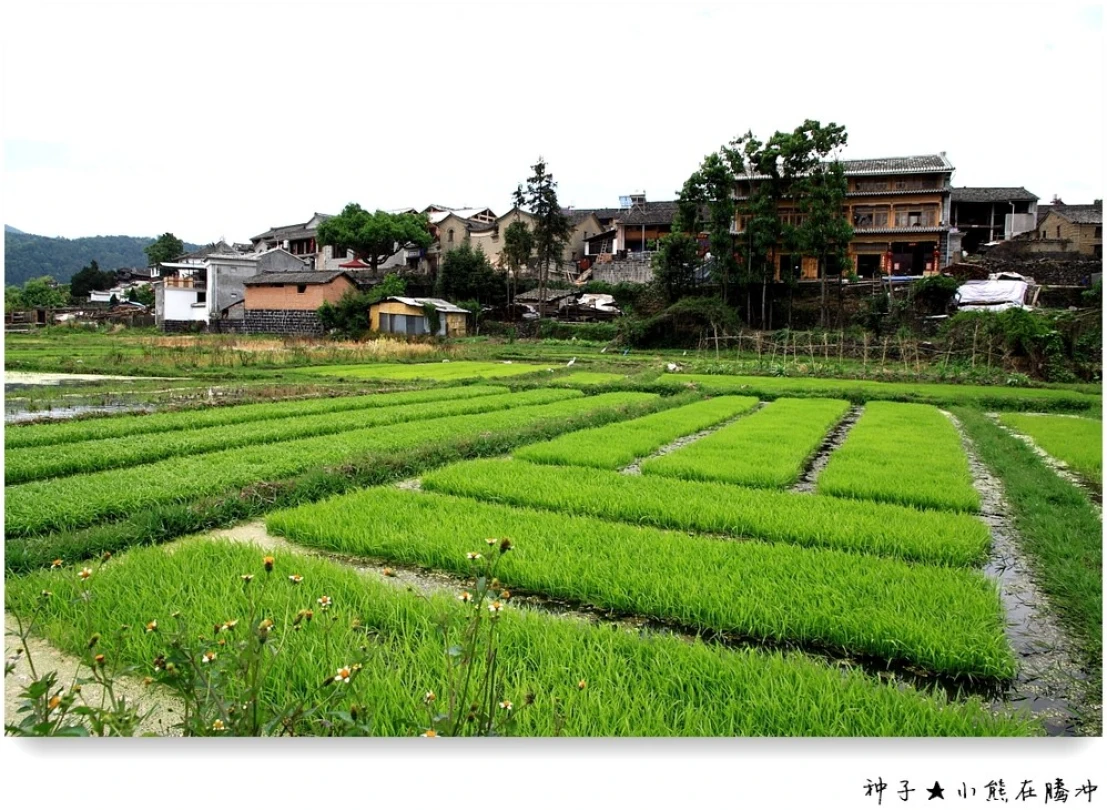
Tengchong·Heshun: Finding Life as It Should Be in a Border Town Where Time Stands Still
Tengchong·Heshun: Finding Life as It Should Be in a Border Town Where Time Stands Still The long journey of over twenty days was over. On my first day back at the office, I was still in a daze. My fingers couldn't find the keys on…
Continue reading...
Body in Hell, Heart in Heaven: A Pilgrimage Through Tiger Leaping Gorge — A Dialogue Between Heaven and Earth
Body in Hell, Heart in Heaven: A Pilgrimage Through Tiger Leaping Gorge — A Dialogue Between Heaven and Earth Introduction: When the Gorge Splits Open Beneath Your Feet Some say Tiger Leaping Gorge is the closest place on Earth to the border between "hell" and…
Continue reading...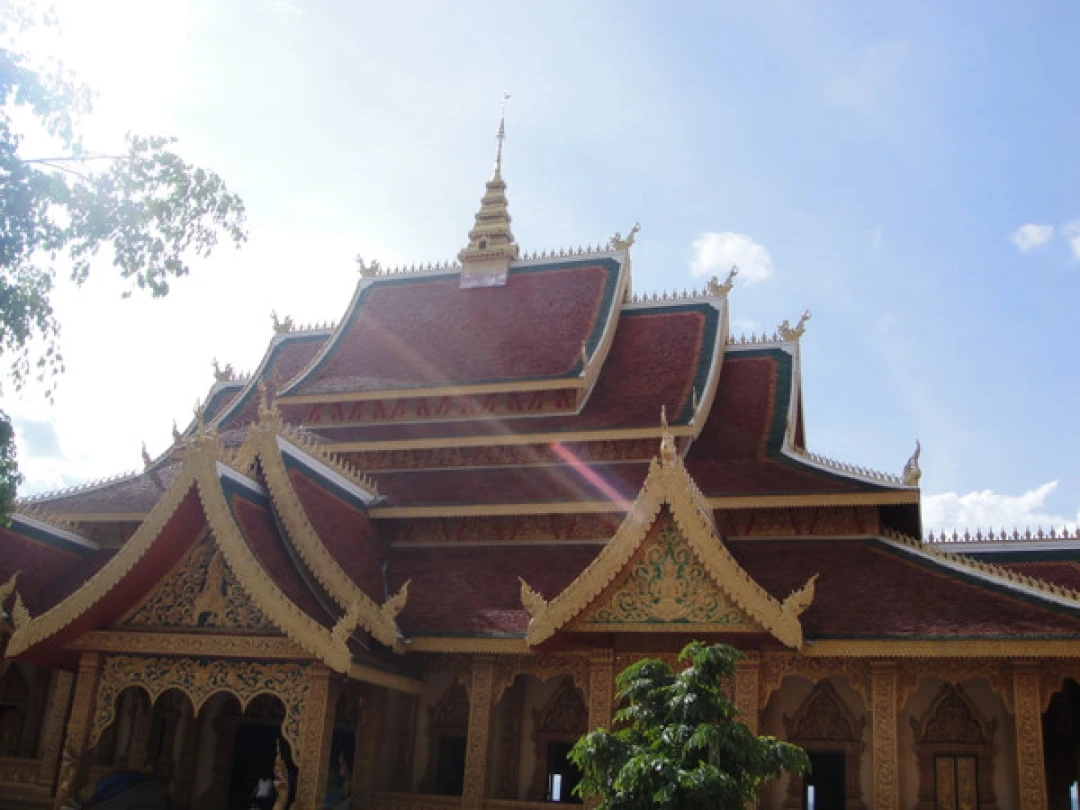
Xishuangbanna: Encountering an Ideal and Magical Paradise in the Green Wonderland at 21° North Latitude
Xishuangbanna: Encountering an Ideal and Magical Paradise in the Green Wonderland at 21° North Latitude If you ask me which place in China most resembles Southeast Asia, I would answer without hesitation: Xishuangbanna. This is not Thailand, yet it possesses an even richer Buddhist ambiance…
Continue reading...