Winter Tour of Southeast Yunnan: Searching for a Forgotten Paradise Between Puzhehei and Bamei
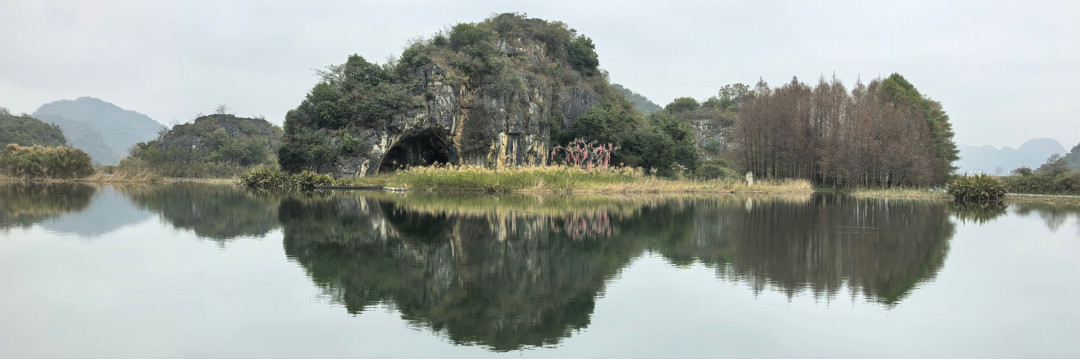
Winter Tour of Southeast Yunnan: Searching for a Forgotten Paradise Between Puzhehei and Bamei
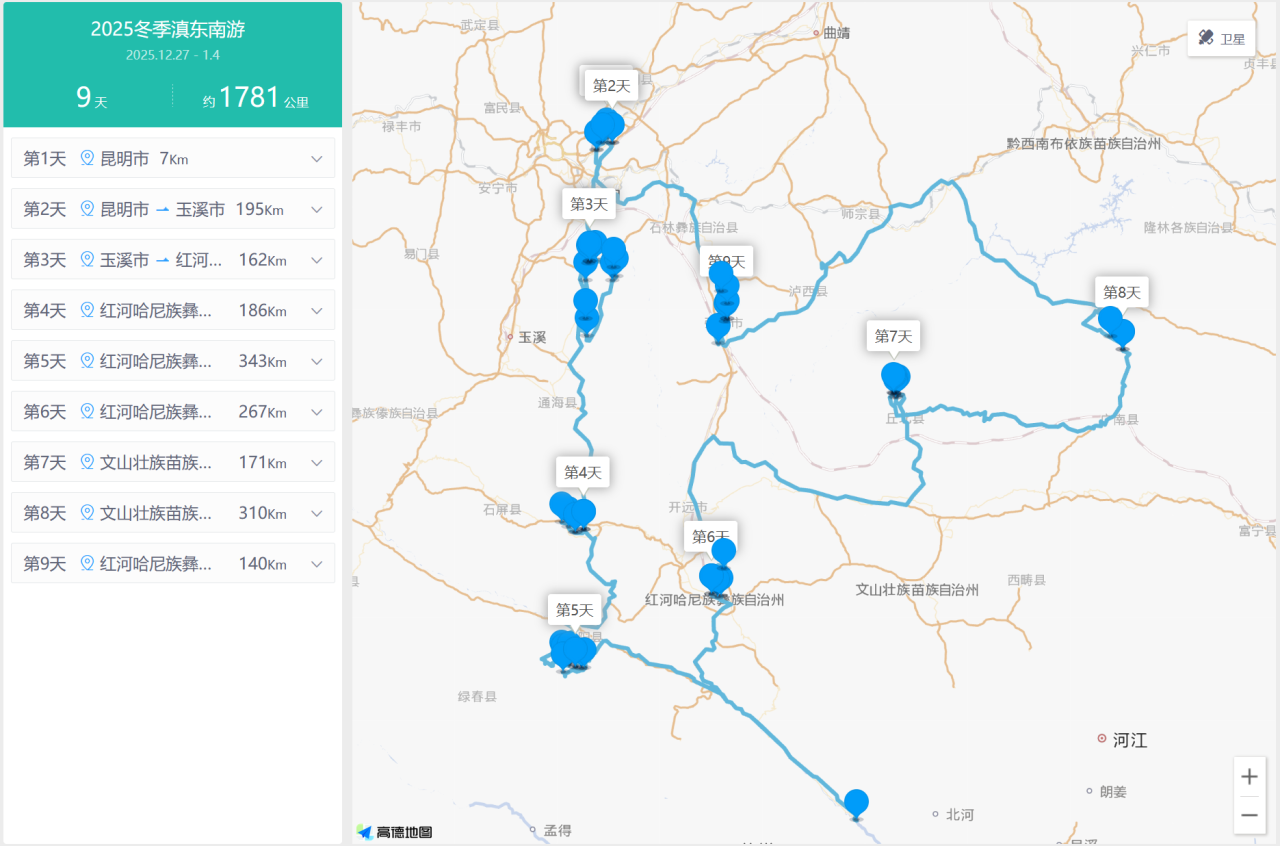
While the northern lands lie blanketed in snow and ice, the warm sunshine of the south becomes the most luxurious comfort of winter. I have set foot on Yunnan's soil three times before—from the snowy ancient charm of Lijiang, to the tropical allure of Xishuangbanna, and then to the loop tour of Dali and Tengchong. Each time, this magical land surprised me in different ways. This time, at the turn of 2025, I chose the gradually emerging route of Southeast Yunnan, driving solo across 1,777 kilometers to seek out those hidden corners nestled among mountains and waters.
Why Southeast Yunnan?
The Southeast Yunnan route has only recently entered the public eye, largely thanks to improvements in transportation infrastructure. This route connects the highlights of Fuxian Lake, Honghe Prefecture, and Wenshan Prefecture. Honghe boasts Jianshui Ancient Town, Yuanyang Rice Terraces, Mengzi, and Mile, while Wenshan is represented by Puzhehei in Qiubei and Bamei in Guangnan. Due to inconvenient public transport, self-driving or joining a tour group has become the most popular option. This time, I chose the freest way—renting a car and driving alone, marking the longest solo drive of my life.
My trip lasted from December 27 to January 4, a total of eight and a half days. Starting from Kunming, I passed through Fuxian Lake, Jianshui, Yuanyang Rice Terraces, Hekou, and Mengzi, finally arriving at Puzhehei and Bamei, ending in Mile. Today, I want to focus on the two stops that left the deepest impression on me during this journey—Puzhehei and Bamei.
Puzhehei: A Treasure That Requires Patience to Unearth
First Encounter with Puzhehei: Poetry in the Quiet
Setting off from Bisezhai (碧色寨) in Mengzi, I drove 254 kilometers to reach Puzhehei. Along the way, the scenery gradually transitioned from the hills of Honghe to the karst landscape of Wenshan. Occasionally, solitary peaks flashed past the window, like casual brushstrokes in an ink painting.
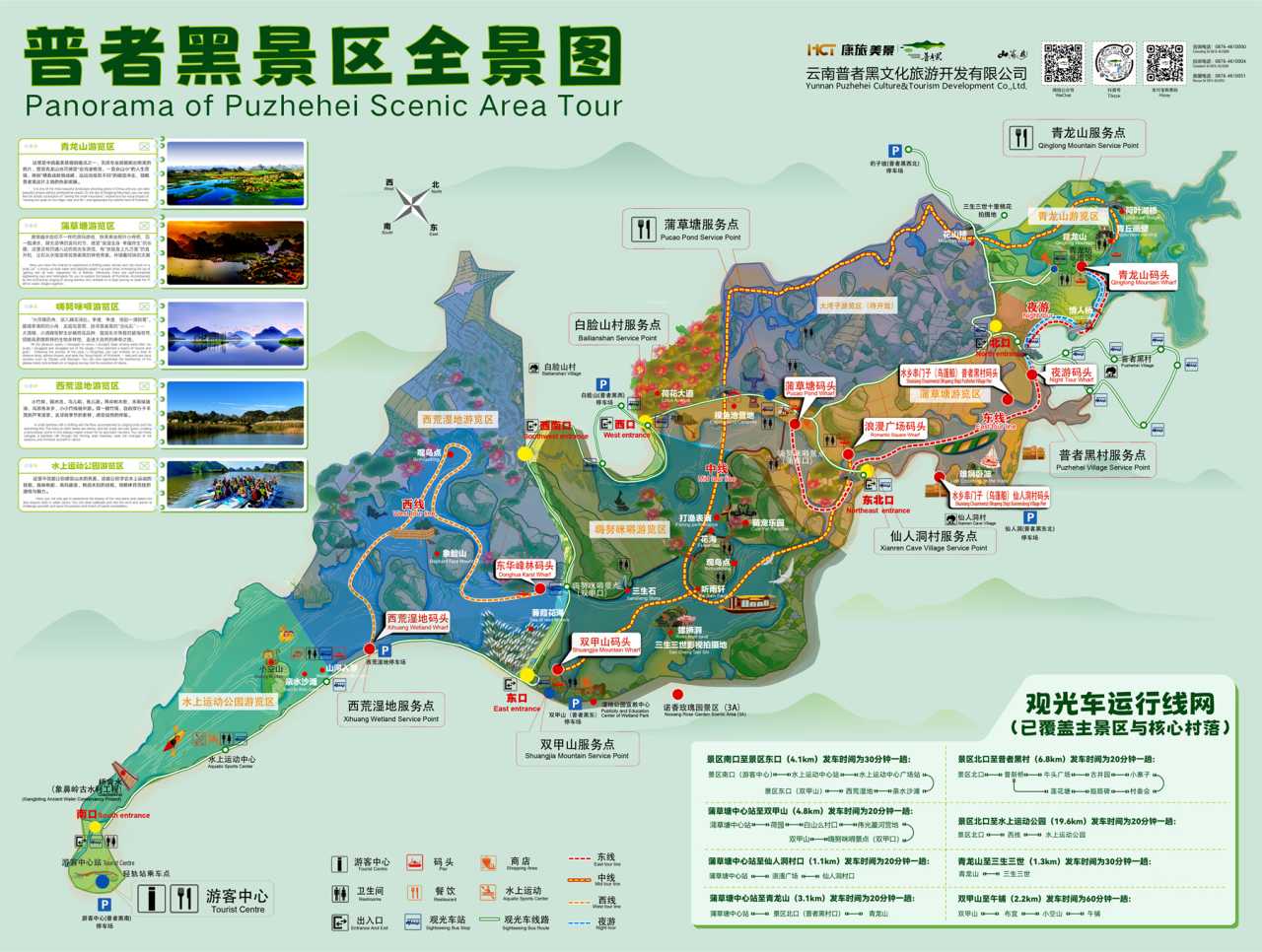
Puzhehei is an extremely complex scenic area—and one where you can spend absolutely nothing. If you just wander around the area, you won't need to pay anything beyond parking fees. The official tour options include sightseeing buses, boat rides (divided into western, central, and eastern routes), Swan Lake (Hainumidei, 嗨努咪嘚), and the separate Qingqiu Wall Painting (青丘画壁). Additionally, the filming location for the TV drama Three Lives, Three Worlds, Ten Miles of Peach Blossoms—Caishaojing Village (菜花箐村)—also charges a separate fee.
I originally bought a grand loop ticket, hoping to experience all three boat routes. However, when I arrived at Romantic Square Pier, I found it completely deserted—no staff, no tourists, just a few boats drifting idly on the lake. A light rain was falling as I stood by the pier, feeling like a passerby who had stumbled onto an abandoned film set.
In the end, under the "persuasion" of a local guide, I canceled the grand loop ticket and switched to the central route package. As it turned out, this wasn't a bad choice for winter.
Central Route Boat Ride: A Solitary Voyage in the Mist
At 2:30 PM, I rushed to Shuangjiashan Pier and boarded the central route boat. This enclosed vessel could normally hold 30 passengers, but today, including me, there were only three. The boat slowly pulled away from the pier, raindrops tapping against the glass windows, blurring the view outside.
Through the glass, I watched a flock of ducks swimming leisurely across the lake. In the distance, water buffalo grazed with their heads lowered by the shore, and a patch of rapeseed flowers at the foot of the mountain appeared strikingly bright in the rain. These scenes reminded me of the pastoral idylls described by Tao Yuanming—not the kind of deliberately crafted paradise, but a real, lived-in world filled with the smoke of daily life.
The boat sailed for about an hour before finally reaching Qinglongshan Pier. Though there were no summer lotus flowers to adorn the scene, winter Puzhehei still had its unique charm—the misty karst peaks appearing and disappearing, the lake surface rippling gently, everything so serene and timeless.
Swan Lake: A Solo Hike
After disembarking at Qinglongshan Pier, I took a sightseeing bus to the Shuangjiakou entrance of Swan Lake. Swan Lake (Hainumidei) has a long walking path, and I decided to hike it alone.
The path was empty in the rain, with only the occasional local villager passing by. I walked along the lake, watching the central route boat glide slowly in the distance, circles of ripples spreading across the water. When I took a selfie with my panoramic camera, I realized I had become the only embellishment in this landscape painting.
The path was lined with dense groves of small trees, and occasionally I spotted photo props—swings, flower racks—looking somewhat forlorn in the rain. When I reached the second small bridge, I met a cyclist who took a photo for me. Though the composition wasn't great, that moment of encounter warmed my otherwise solitary hike.
Qinglongshan: Climbing in Thick Fog
The next morning, the rain continued. I decided to climb Qinglongshan, hoping to get a panoramic view of Puzhehei from above. But when I reached the summit, I was greeted only by dense fog.
The mountain path was steep, and the rain had made the stone steps slippery, so every step required extra caution. I climbed using both hands and feet, finally reaching Viewing Platform No. 1 at 9:06 AM. Yet before me, there was nothing but a vast expanse of white fog. I stood there, feeling as if I were standing on a cloud, the world below completely hidden.
Continuing upward, when I reached Viewing Platform No. 2, the fog had lifted slightly, allowing me to vaguely make out the village and lake below. But when I tried to take a personal photo, the background was still a blank canvas. This feeling of "being inside the painting but unable to see it clearly" only added to my imagination of Puzhehei.
Caishaojing: The Desolation of the Filming Location
After coming down from Qinglongshan, I drove to the filming location of Three Lives, Three Worlds, Ten Miles of Peach Blossoms—Caishaojing Village. This spot was tucked away in a remote corner, with narrow roads and a parking lot that was nothing more than sandy ground. Beside the ticket checkpoint, I saw some crude props and sets, but the overall impression was very mediocre.
Perhaps because it was winter, or perhaps because of the rain, the place felt especially desolate. I took a few quick photos and left. To be honest, this attraction felt more like a "set" built for a TV drama than a destination worth a special trip.
The Revelation of Puzhehei
As I left Puzhehei, I felt a mix of emotions. This scenic area was clearly designed for summer—when the lotus flowers bloom, crowds swarm in, and everything is vibrant. In winter, it's like a sleeping giant—still magnificent, but lacking that vitality.
Yet, it was this very quietness that allowed me to see Puzhehei's most authentic side. No crowded throngs, no commercial clamor—only the tranquility and poetry between mountains and waters. If you also enjoy this kind of "off-season" experience, then winter Puzhehei might bring you unexpected surprises.
Bamei: A True Paradise
The Shock of Passing Through a Cave
Driving 174 kilometers from Puzhehei, I arrived at the Bamei Paradise Scenic Area. Unlike Puzhehei's complexity, Bamei's tour route is very simple—entering and leaving the village each involves a boat ride, with a section of plank road in between.
After arriving at the visitor center, I was told that even if I had booked a hotel inside the scenic area, I couldn't drive in directly. My luggage needed to be tagged with the hotel's label and delivered by the hotel, while I had to follow the regular route through the ticket checkpoint.
After passing through the gate, I boarded a sightseeing bus that wound along the mountain road toward the village. The scenery along the way was eye-opening—hillsides covered with tangerine trees heavy with fruit, winter cherry blossoms blooming by the roadside, and small but charming terraced fields. The bus traveled on the winding mountain road for about 20 minutes before finally reaching Chushuidong Village.
From here, I embarked on my first boat ride—crossing through a cave to enter Bamei Village. The boat slowly entered the cave, the light gradually dimming until it was pitch black. The screen of my phone became the only source of light. I could hear the sound of dripping water and feel the boat moving slowly forward in the darkness.
Suddenly, an opening appeared ahead, light streaming in like a door to another world. As the boat passed through the opening, the view opened up—a plain surrounded by mountains spread out before me: farmland, a village, a river, everything so peaceful and harmonious. At that moment, I truly understood the meaning of "paradise."
Bamei Village: A Day and Night of Paradise Life

After disembarking, I followed a small path into Bamei Village. The village was small but had everything it needed. Beside the central square stood a large banyan tree, and my hotel was just to the left of it. The owner arranged a room with a view, from which I could see distant farmland and mountains.
In the afternoon, I wandered around the village. Walking along the river, I watched a group of ducks playing in the water, while in the distance, General Peak (将军峰) appeared and disappeared in the clouds and mist. The village was full of tangerine trees; I picked one and tasted it—sweet and tangy. When I reached the waterwheel, I saw a few villagers working in the fields, their pace of life slow and unhurried, as if disconnected from the outside world.
In the evening, I returned to the hotel's restaurant for dinner. Eating alone in a small village like this was a bit inconvenient—no fast food, just ordering a dish with a bowl of rice. But this "slow life" experience actually left me feeling satisfied.
The 1314 Plank Road: A "Forever" Hike
The next morning, the rain started again. I packed my luggage and had the hotel deliver it to the visitor center, then headed to the boat pier. The second boat ride was very short, just a few minutes, from the Splash Zone Pier to the Monkey Climbing Rock Pier. After getting off, I began the hike along the 1314 Plank Road.
This plank road is exactly 1,314 meters long, a homophone for "forever" (一生一世) in Chinese. Though the name was romantic, the scenery was relatively monotonous. The path followed a small river, lined on both sides with dense banana trees and tangerine trees. The river water was sometimes swift, sometimes gentle, and occasionally I saw strange trees growing crookedly by the riverbank.
After walking for about 20 minutes, I reached the boat pier and boarded the third boat ride. This one also passed through a cave, but it was even more stunning than the first. The boat traveled through the pitch-black cave, stalactites overhead shimmering with mysterious light under the illumination. Ten minutes later, the boat arrived at the pier next to the visitor center, marking the end of my Bamei journey.
The Revelation of Bamei
Compared to Puzhehei, my experience at Bamei was far better. Though equally quiet, Bamei's tour route was clearer, and the management of the scenic area was more organized. More importantly, Bamei truly gave me the feeling of a "paradise"—when I passed through the cave and saw that plain surrounded by mountains, I felt as if I had truly entered a world cut off from everything else.
If you have only one day, I strongly recommend Bamei. It not only lets you experience the beauty of nature but also allows you to taste a way of life free from worldly strife.
Conclusion: Is Winter in Southeast Yunnan Worth It?
On this Southeast Yunnan loop, I didn't take the conventional clockwise route. Instead, I went counterclockwise—first to Fuxian Lake, then to Jianshui and Yuanyang Rice Terraces, then to Puzhehei and Bamei, and finally to Mile. After finishing, I finally understood why tour groups all choose to go clockwise—the clockwise experience gets better and better, while counterclockwise gets worse and worse.
The two stops in Wenshan, combined with the rainy and foggy weather, certainly diminished the experience. Puzhehei's chaos and Bamei's slight improvement left me with a mixed impression of Wenshan. However, judging by the infrastructure of these scenic areas, I felt they were designed more for local residents than for tourists from across the country. Coming here in summer would likely be a much better experience.
But despite this, I still feel this journey was worthwhile. At Puzhehei, I saw the most authentic karst landscape; at Bamei, I found a true paradise. These are experiences that no season can replace.
If you're also planning a winter trip to Southeast Yunnan, my advice is this: prepare yourself mentally, accept the quiet and the rain, but don't miss the beauty hidden in the details. After all, isn't the meaning of travel to discover those unseen landscapes?
You should also read:
Xishuangbanna Self-Drive Tour: Into the Tropical Wonderland at the Edge of the Sky (Complete Guide)
Xishuangbanna Self-Drive Tour: Into the Tropical Wonderland at the Edge of the Sky (Complete Guide) Introduction: A Dream Fulfilled Thirty Years Early Some journeys are destined to happen at a specific moment in time. For me, a self-drive trip to Xishuangbanna was originally the first…
Continue reading...
Big Bear and Little Cat Explore China: [A Self-Guided Tour of the Shangri-La Region: That Sky, So Blue It Feels Unreal!]
Big Bear and Little Cat Explore China: [A Self-Guided Tour of the Shangri-La Region: That Sky, So Blue It Feels Unreal!] Prologue: Why Shangri-La? In September 2011, my friend and I followed the Yunnan-Tibet Highway into the Greater Shangri-La region. Six days of travel, without…
Continue reading...
Yunnan! Paradise on Earth – The Yubeng Chapter: A Soul-Cleansing Journey into Seclusion
Yunnan! Paradise on Earth – The Yubeng Chapter: A Soul-Cleansing Journey into Seclusion Prologue: Why Yubeng? If you ask me which place in Yunnan is most worth hiking to, I would answer without hesitation: Yubeng. This is not an answer I give lightly. As a…
Continue reading...