Xishuangbanna: A 9-Day, 8-Night Southern Dream in the Pulse of the Tropical Rainforest
Xishuangbanna: A 9-Day, 8-Night Southern Dream in the Pulse of the Tropical Rainforest
Prologue: A Song and Two Generations' Faraway Place
For many Shanghainese, the name Xishuangbanna carries a complex emotional weight. It is the borderland of passion and sweat that our parents' generation speaks of—a distant second home from the sent-down youth years. For our generation, it might simply be the softly hummed melody of "Beautiful Xishuangbanna," a familiar yet mysterious southern Yunnan秘境 (hidden paradise).
In April 2026, I brought my family on this 9-day, 8-night Yunnan journey. From the wind, flowers, snow, and moon of Dali, to the spring-filled air of Kunming, to the tea-scented ancient roads of Pu'er, we finally drove southward into that tropical paradise crossed by the Tropic of Cancer—Xishuangbanna.
Heading South: A Highway Poem from Spring City to Rainforest
Dounan Flower Market: Packing the Fragrance of Spring City into Your Rearview Mirror
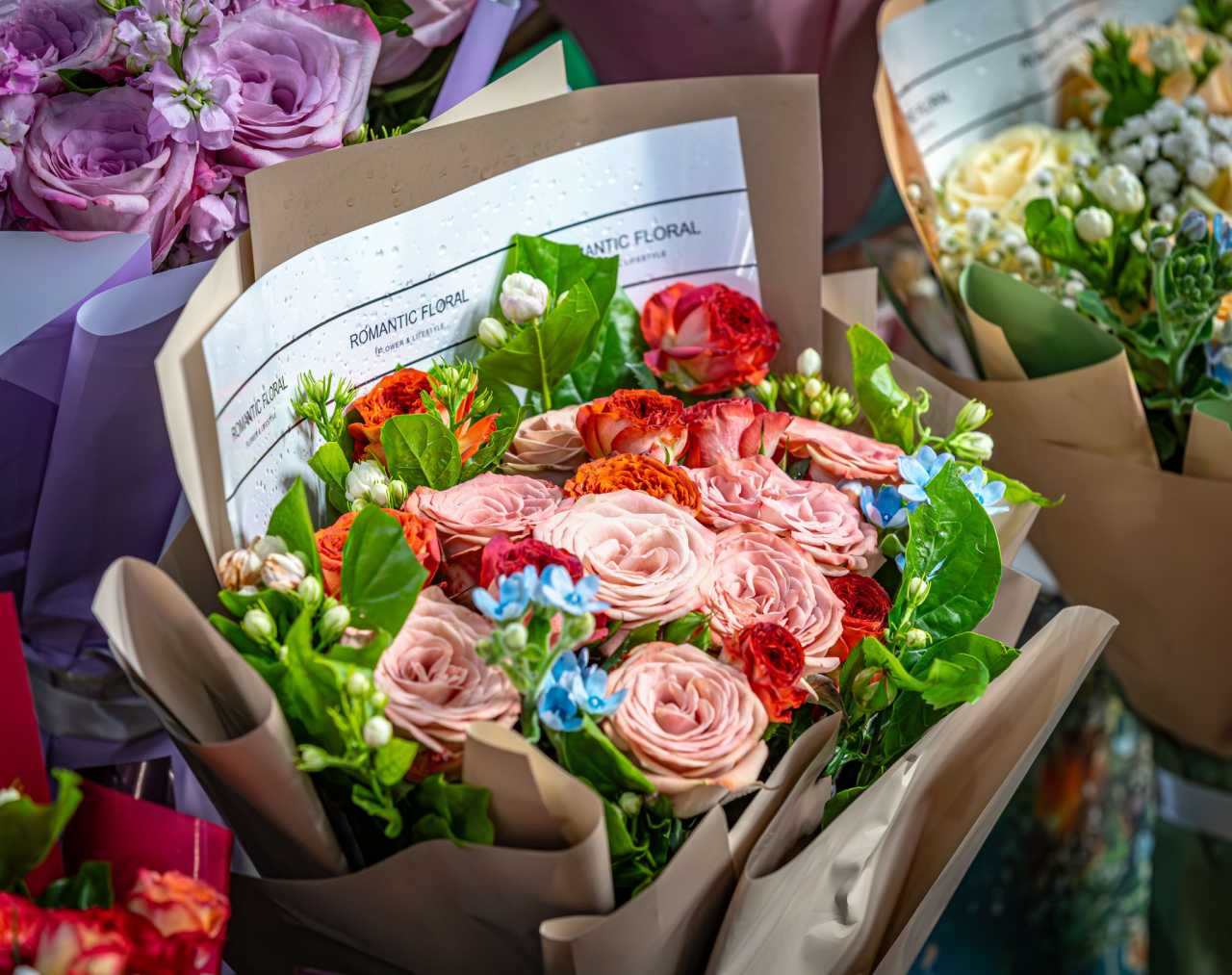
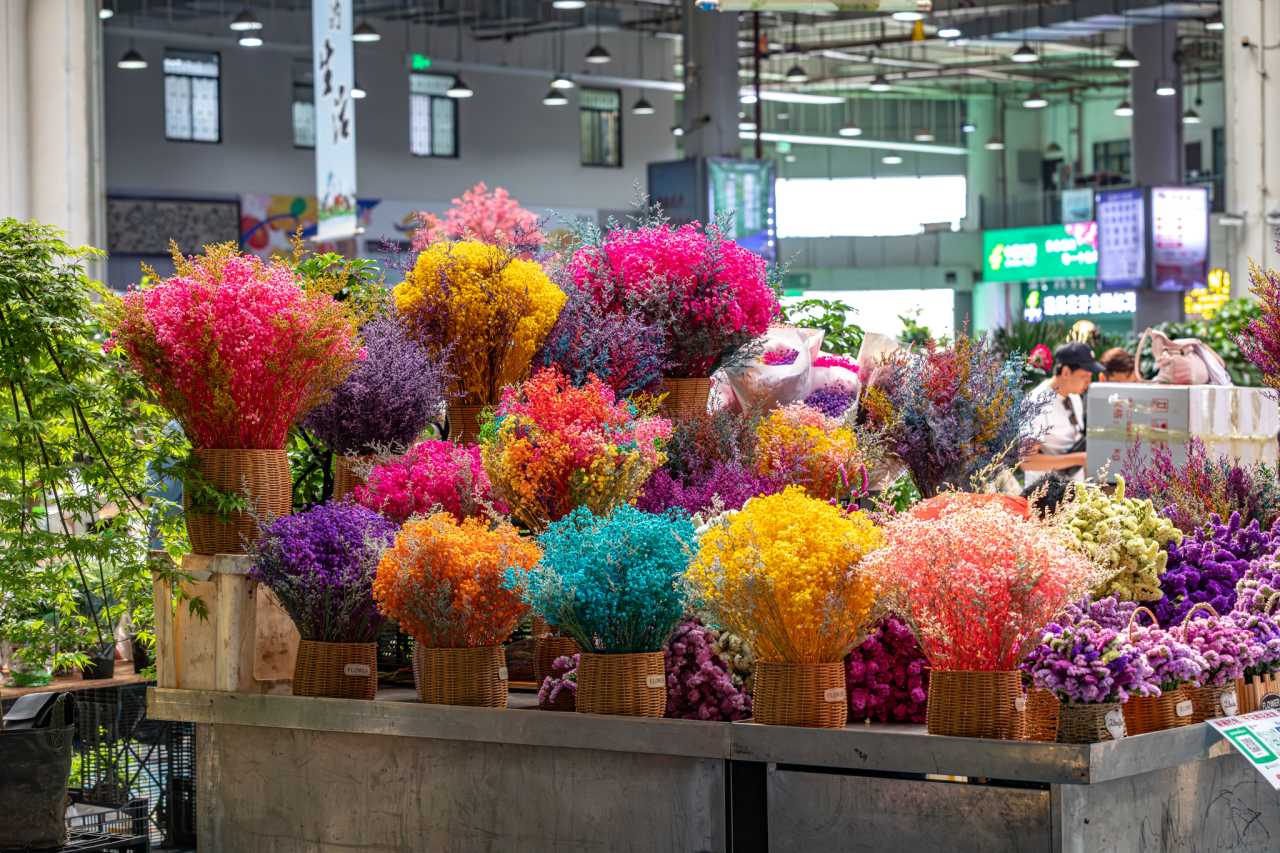
On the morning we left Kunming, we didn't rush to hit the road. Instead, we made a detour to a special place—the Dounan Flower Market. As the largest fresh-cut flower trading center in China, it's a tourist paradise by day and a battleground for vendors by night.
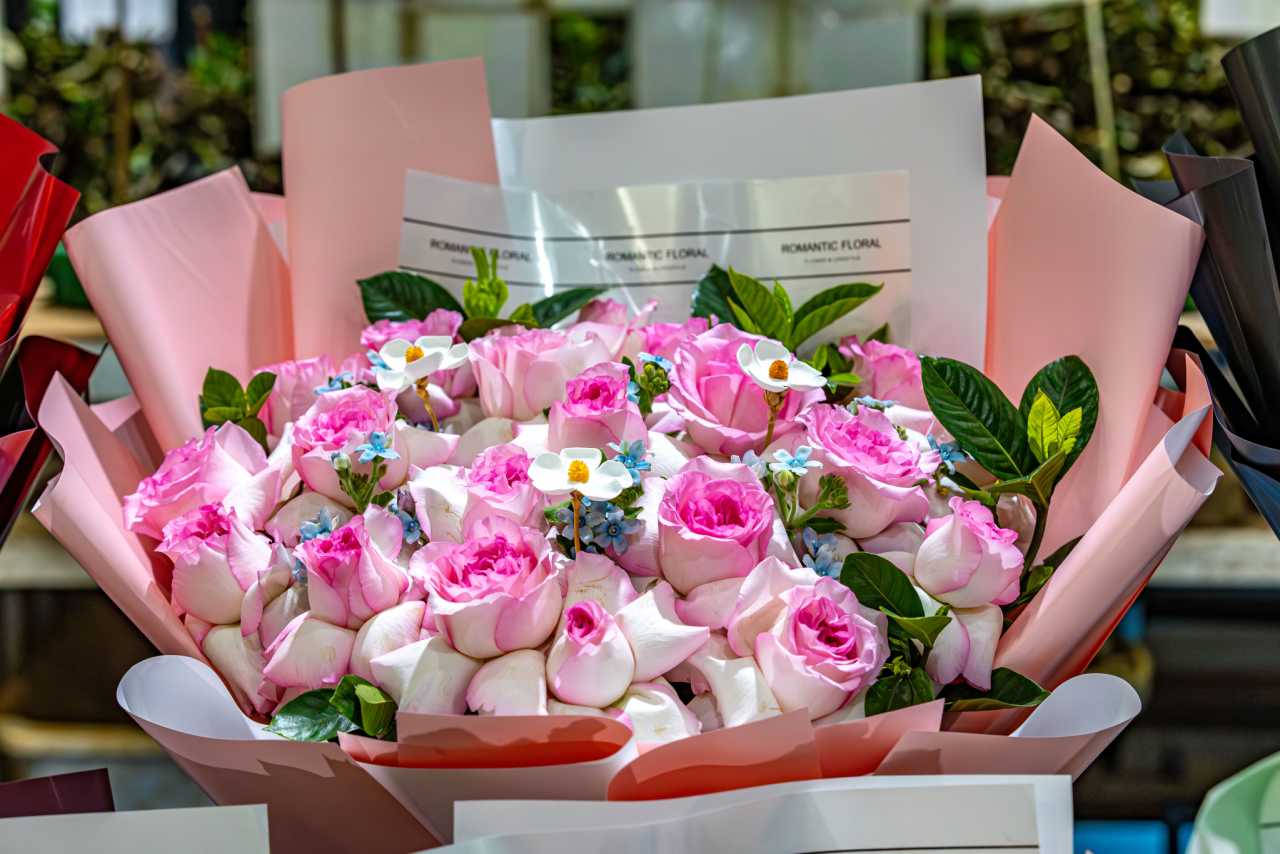
Stepping into the venue, you're greeted by a sea of blossoms in full glory. Roses, lilies, hydrangeas, sunflowers... every flower shows off its most vibrant self. The prices are so affordable they make you doubt your eyes—a few bunches of imported roses, plus a handful of jasmine, all for just a few dozen yuan. The vendor expertly packed them for cold-chain delivery back to Shanghai via SF Express, while I took that bunch of jasmine, broke it apart, stuffed it into a mesh bag, and tied it to the car's rearview mirror.
For the next seven-plus hours of driving, the entire cabin was filled with a faint jasmine fragrance. This was perhaps the gentlest farewell gift the Spring City could give to a traveler.
Mojiang: The Twin City on the Tropic of Cancer
Driving south along the G8511 Kunming-Mohan Expressway, we made a brief stop at the Mojiang service area in northern Pu'er. This unassuming little county town bears a fascinating label—the "Twin City." The rate of twin births here is said to be far higher than the national average, a mystery that remains unsolved to this day.
Beside the service area, an inconspicuous stone staircase leads up directly into the county town. Winding bluestone paths are flanked by white-walled, black-tiled southern Yunnan houses, their upturned eaves and corners exuding an ancient charm. I bought a local sugarcane from a Hani ethnic shop—golden-yellow skin, crisp and tender when bitten, with plenty of juice and little fiber. This sweetness straight from the earth was purer than any drink.
Nake Li: A Time Station on the Ancient Tea Horse Road
Continuing another 130-plus kilometers south, we stopped at the Nake Li parking area in southern Pu'er. In April, before the rainy season arrives, the afternoon temperature had already soared to 38°C (100°F). But unlike the oppressive humidity of coastal areas, the sun here, though scorching, felt relatively dry.
The Nake Li parking area has no gas station, no charging station—but it does have a small path leading to the former Ancient Tea Horse Road. This was once an important rest stop for caravan porters. The bluestone slabs still seem to bear the imprints of thousand-year-old hoofbeats. Nestled between mountains and rivers, with ancient trees and babbling streams, I stood on the ancient road and imagined the horsemen of a century ago cooking their meals and resupplying here, as if I could hear the jingle of bells echoing through the mountains.
First Impressions of Jinghong: The Passion and Tranquility by the Lancang River
A Welcome by a Downpour
From Nake Li to Jinghong, the final stretch of less than 150 kilometers saw the scenery along the road subtly transform. Tall palm trees and clumps of banana plants gradually replaced the ancient mountain charm, as the tropical landscape rushed toward us. Just as we passed through the last mountain tunnel, a thunderclap exploded and rain poured down in sheets.
The rain came quickly and left just as fast. After the storm, Jinghong's air was fresh and the temperature pleasant. As dusk fell, the cicadas began their chorus, making the city feel oddly quiet instead. Under a roadside palm tree, a cluster of orange-yellow fruits caught my eye. I pulled out my phone, used a plant identification app, and learned they were betel nut palms.
We checked into the Crowne Plaza Jinghong. In the lobby, two elegant peacocks became the brightest stars. Unlike their shy, tail-hiding counterparts in zoos, these birds strolled leisurely, unfurling their iridescent tail feathers with abandon, as if telling every guest: This is our territory.
Starry Night Market: The Sizzling Hustle and Bustle of Life
Like most tourists, we devoted our first evening in Jinghong to the Starry Night Market in Gaozhuang.
It had been just over a week since the Dai New Year Water Splashing Festival, and the festive energy still lingered. The area around Gaozhuang was buzzing with activity. The Great Golden Pagoda Temple stood majestically, its golden spire gleaming under the night sky. Walking into the market, you could see girls in traditional Dai costumes and silver hairpins everywhere, using the market's lights as a backdrop to capture their moment as "Dai princesses."
Stalls with Dai and Thai flair lined the streets, offering a dazzling array of Dai-style snacks, handmade accessories, ethnic clothing, and tropical fruits. Northeastern DJs had left their nightclubs to stand on outdoor stages, hyping the crowd with energetic beats, turning the whole scene into an open-air music festival.
A bowl of rich, fragrant wild mushroom hotpot washed away the day's dust. Sitting by the Lancang River, feeling the evening breeze and watching the bustling crowd, I suddenly understood—Dali is the serene tranquility of Cangshan and Erhai, while Xishuangbanna is the passionate vibrancy of the Lancang night. One is elegant and introverted, the other lively and extroverted. Each has its own charm; there's no better or worse, only what your heart prefers.
Into the Rainforest: Understanding Nature at the Botanical Garden
Manting Park and the General Buddhist Temple: A Thousand Years of Zen and Time
The next morning, we drove to Manting Park and the General Buddhist Temple. The two are connected. Manting Park is the over-1,300-year-old royal garden of the Dai kings, while the General Buddhist Temple is the highest-ranking Theravada Buddhist site in Xishuangbanna.
We parked near the General Buddhist Temple and entered from the south gate. The temple, with its golden roofs and red eaves, blends Dai, Thai, and Burmese architectural styles in a solemn, ancient elegance. A simple white pagoda stands quietly within—the resting place of the last Dai king, Dao Shixun. From royalty to scholar, his life witnessed the changes of times and the blending of ethnic groups.
Inside Manting Park, the Dai King's Palace was where the king once handled state affairs and held royal ceremonies. At its center sits a gilded throne, with intricate carvings of peacocks, curling grass patterns, and Buddhist motifs adorning the background wall and flanking pillars—a display of both luxury and authority. The fountain of the Dai queen fetching water, the scattered white pagodas, the giant mural of the Dai royal family on the palace walls... every detail carries a thousand years of Xishuangbanna's Zen and history.
Xishuangbanna Tropical Botanical Garden, CAS: Living in the Heart of the Rainforest
Driving over 70 kilometers from Jinghong, we arrived at the Xishuangbanna Tropical Botanical Garden, Chinese Academy of Sciences, located in Menglun Town, Mengla County. This is the only national 5A-level scenic area in Xishuangbanna and the largest botanical garden in China with the richest collection of species.
We chose to stay at the Wanglian Hotel within the garden. Run directly by the scenic area, the hotel's facilities are a bit dated, but it offers a unique perk—staying here waives two garden entry tickets, and more importantly, allows you to enjoy the garden's tranquility after it closes to the public.

At dusk, we strolled through the Shade Plant Garden. Hibiscus flowers unfurled their petals in the soft light. The fruits of the green palm went from unripe green to deep ripe red in a gradual spectrum. In the Palm Garden, rows of royal palms stretched straight toward the sky, while coconut trees spread their feathery fronds, casting dappled light and shadow on the lawn.
Rainforest Night Tour: Adventures in the Dark
Another major advantage of staying inside the garden was being able to join the rainforest night tour. As night fell, the entire botanical garden sank into a deep, quiet darkness. From time to time, the calls of wild peacocks echoed through the forest—ethereal and slightly eerie.
A group of about 15 people, guided by flashlight beams, followed our guide to explore the secrets of the night. A stick insect blending perfectly with a branch, a giant huntsman spider clinging motionless to a rock, the nest of weaver ants hanging from a tree... every discovery was a marvel.
The most unforgettable sight was a long-tailed silkmoth. Drawn by the light, it slowly fluttered down to the ground. Its pale yellow-green wings bore a pair of striking eyespots and tail extensions several centimeters long, like a dark forest spirit. The guide told us that this moth's mouthparts had already degenerated; after emerging from its cocoon, it would only live for about a week. Its entire purpose in life was mating and reproduction. To see one in the rainforest was truly a stroke of luck.
The Western Zone of the Botanical Garden: The Survival Rules of Tropical Plants
The next day, we set out from the hotel on foot to explore the garden's Western Zone. As larger tour groups began to arrive, the area gradually came alive. We admired the diverse forms of tropical plants while eavesdropping on guided tours, listening to the stories behind each species.
In the Banyan Garden, I witnessed two of the rainforest's most iconic phenomena—"a single tree forming a forest" and "strangler fig." The first occurs when the aerial roots of an ancient banyan tree take root in the ground and grow into supporting trunks, eventually forming a lush mini-forest. The second happens when a fig seed germinates on another tree, wrapping around and strangling its host until it eventually replaces it in a cycle of survival.
Gazing at this scene, I felt as if I had deciphered the survival rules of rainforest plants—here, there is no greenhouse protection, only the most brutal competition and the most tenacious will to live.
Border Journey: Experiencing the Wildness of Southern Yunnan on the Frontier
Mohan Port: The Quiet Weight of the China-Laos Border
Leaving the botanical garden, we continued southeast along the G8511 Kunming-Mohan Expressway to Mengla County, right on the border. Knowing that Laos was just a stone's throw away, I made a spontaneous decision to visit Mohan Port and snap a photo at the China-Laos border.
Unlike the bustling Horgos Port in Xinjiang, Mohan was eerily quiet. No rows of duty-free shops, no streams of tourists—just long lines of trucks patiently waiting to clear customs. Under the scorching afternoon sun and swirling dust, we quickly took our commemorative photos and left.
Manlongle: Slow Time by the Nanla River
That night, we checked into the Nanla River Panya Resort, located in Manlongle Village, 10 kilometers north of Mengla County, nestled along the winding Nanla River. Around the resort, tropical rainforest and vast rubber plantations intermingled. The spiral tapping marks on the rubber tree trunks were clearly visible, with small cups below collecting droplets of latex.
As evening approached, villagers were already busy at the market square, preparing for the next day's bazaar. We chose not to try the Nanla River rafting, but instead sat quietly by the riverbank, watching the dusk deepen and savoring a moment of peace on our journey.
Soft-Foot Lao Hotpot: A Unique Borderland Flavor
That evening, we drove into Mengla County to try the local specialty—soft-foot Lao hotpot. This hotpot is heated with charcoal. The iron plate in the center is for grilling meat, while the surrounding broth is for boiling ingredients. First, you put two pieces of lard on the grill to prevent sticking, then grill meat while boiling vegetables—a unique way of eating that captures the distinctive flavor of the border region.
Wangtianshu: The Rainforest's Flagship and a Final Farewell
Philip's Trail: Looking Up at Towering Giants
In late April, Xishuangbanna is in the transition period between dry and rainy seasons. At dawn, a thunderclap and a heavy downpour woke us up. We packed our bags and headed to our last stop—the Wangtianshu (Sky-Tree) Scenic Area.
The Parashorea chinensis, or "sky tree," is the flagship species of the tropical rainforest. It was the discovery of this species in this very area that led the world to officially acknowledge that a complete tropical rainforest ecosystem exists on Chinese soil at 21 degrees north latitude.
We took a boat upstream into the scenic area. As the boat glided across the emerald waters, layered rainforest vegetation lined both banks, giving a slight feel of navigating a river in the Amazon. Twenty minutes later, we arrived at the entrance. Following the Tropical Flower Avenue, we reached the canopy walkway, then walked counterclockwise along the 2-kilometer Philip's Trail.
Inside the Wangtianshu area, the ancient wooden boardwalk beneath our feet and the moist air all around us made for an immersive experience. The Parashorea chinensis trees along the trail soared over 30 meters high, straight and tall, piercing the sky. Looking up, you couldn't even see the full canopy. Occasionally, we encountered the natural wonder of strangler figs—their intertwining roots and crisscrossing branches silently telling the story of the rainforest's law of the jungle.
The Last Night in Jinghong: Farewell by the Lancang River
On our way back from Mengla to Jinghong, we deliberately took the G219 National Highway, known as the most beautiful border road, following the Lancang River the whole way. In April, the river flowed gently, and the tropical scenery on both banks flashed past the car window, as if bidding us a final farewell.
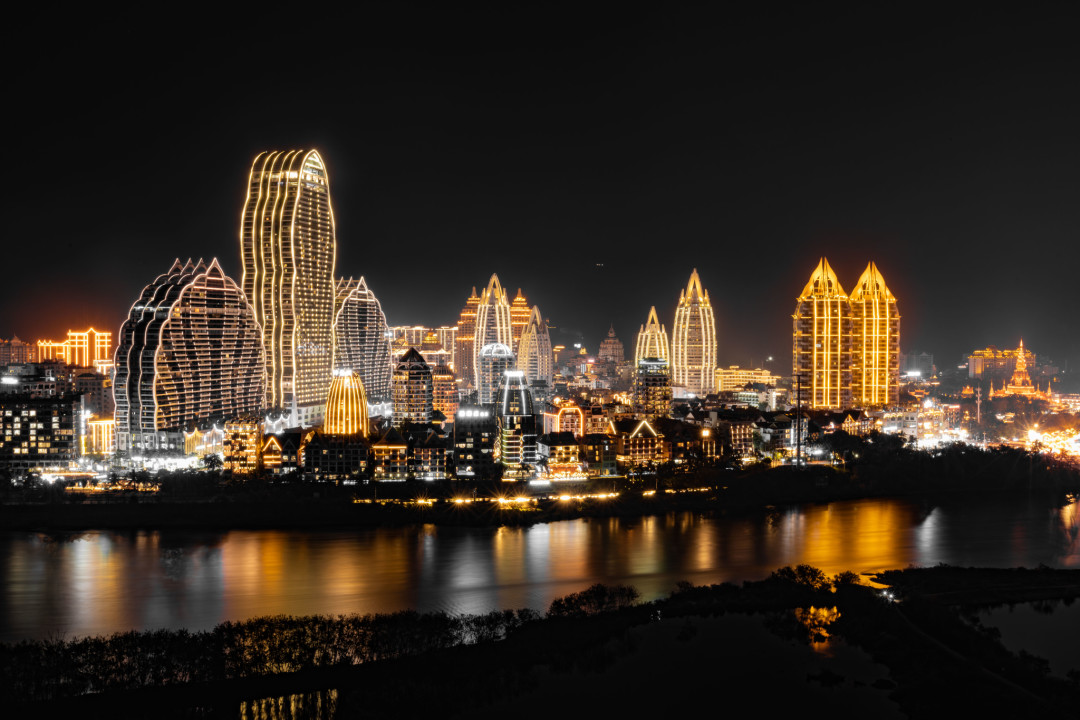
For our last night in Xishuangbanna, we chose a high-rise homestay near the Water Splashing Square, right by the Lancang River. After a Thai meal in Gaozhuang, we didn't chase the noise of the Starry Night Market. Instead, we returned early to our homestay to quietly enjoy the night view of the river.
By the Lancang River, lights glittered, and the water carried reflections as it flowed slowly. Gazing at this gentle nightscape, all the surprises and emotions of the past nine days and eight nights settled deep in my heart.
Epilogue: Farewell, Beautiful Xishuangbanna
Our afternoon return flight left us with a leisurely morning. We tasted the local specialty—mamalao Lao sticky rice—its soft, chewy texture wrapped in authentic flavors, capturing the final taste memory of this journey. We made a quick visit to the nearby Jinghong Farmer's Market, picked up some fruit and local specialties, then returned to the homestay to pack.
When we returned the car at the eHi Car Rental shop near the airport, I couldn't help but take a few extra glances at the Tesla Model Y that had accompanied us for 1,500 kilometers over 9 days and 8 nights. From Dali's Cangshan and Erhai to Xishuangbanna's rainforest and borderlands, it had witnessed all the scenery and joy along the way.
Returning to Yunnan, Wind rests in Dali, fragrance lingers in Kunming, Clouds drift over Pu'er, my heart stays in Xishuangbanna.
Farewell, Colorful Clouds of the South. Farewell, beautiful Xishuangbanna.
Final Notes: Some Practical Travel Tips
Transportation: Self-driving is the best way to explore Xishuangbanna. The G8511 Kunming-Mohan Expressway is in good condition, and most service areas along the way have charging facilities, making it stress-free for electric vehicles.
Accommodation: The Wanglian Hotel inside the Xishuangbanna Tropical Botanical Garden has dated facilities, but the ability to enjoy the garden's tranquility after closing is highly recommended. In Jinghong, consider a high-rise homestay near the Water Splashing Square for Lancang River night views.
Food: Soft-foot Lao hotpot, wild mushroom hotpot, and mamalao Lao sticky rice are must-try local specialties.
Best Season: Late April is the transition between dry and rainy seasons. Temperatures are high but the heat feels dry, and there are relatively fewer tourists.
Essential Tools: A plant identification app (like Doubao) is highly recommended. When you encounter unfamiliar plants or insects in the botanical garden or by the roadside, a quick snap can provide instant information—your "pocket encyclopedia" for the journey.
Itinerary Suggestions: Plan two days and one night for the Xishuangbanna Tropical Botanical Garden—night tour on the first day, daytime exploration of the Western Zone on the second. Visit the Wangtianshu Scenic Area in the morning to avoid the afternoon heat.
You should also read:
Xishuangbanna Self-Drive Tour: Into the Tropical Wonderland at the Edge of the Sky (Complete Guide)
Xishuangbanna Self-Drive Tour: Into the Tropical Wonderland at the Edge of the Sky (Complete Guide) Introduction: A Dream Fulfilled Thirty Years Early Some journeys are destined to happen at a specific moment in time. For me, a self-drive trip to Xishuangbanna was originally the first…
Continue reading...
Dreaming of Lijiang, Dreaming of Shangri-La: A Journey That Lets Your Soul Breathe Deeply
Dreaming of Lijiang, Dreaming of Shangri-La: A Journey That Lets Your Soul Breathe Deeply Life is like a long trek. We're always rushing through the concrete jungle, searching for a glimmer of light in the monotony of our days. Then one autumn, I heard the…
Continue reading...
Escaping Nanning, Falling Under Lijiang's Spell: Our Four-Person, Ten-Day Yunnan Dream
Escaping Nanning, Falling Under Lijiang's Spell: Our Four-Person, Ten-Day Yunnan Dream Before We Set Off: No Pain, No Obsession Have you ever had that impulse—suddenly tired of the office fluorescent lights, the crush of the subway, the endless parade of identical takeout boxes, and just…
Continue reading...