Xishuangbanna · A Feast of Youth, Refilling a Cup of Summer (October 2024)
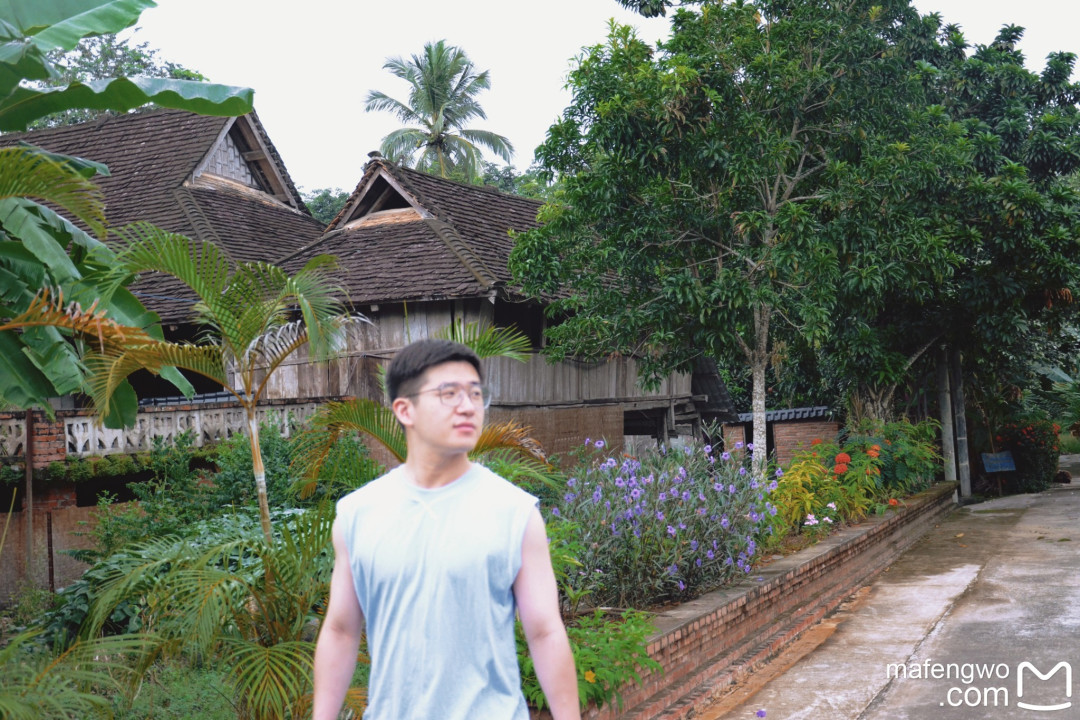
Xishuangbanna · A Feast of Youth, Refilling a Cup of Summer (October 2024)
The mountains, rivers, lakes, and seas told me: "Learn to find joy for yourself. Don't let yourself dissolve into dust in your emo moments."
Foreword: Youth Is a Long Goodbye
"His unruly face, like the sky at dusk. Her washed hair, like a flame in the heart. A brief狂欢, thinking it would last a lifetime. A long goodbye, the feast of youth."
When Faye Wong's "To Youth" began to play, I was sitting in front of my computer, scrolling through photos from eight years ago. Time, like a tide, has quietly reshaped who we are—smoothing our sharp edges, teaching us to reconcile gently with the world. Yet looking back at that lost, unruly youth, what surges within me is still a deep longing for it.
That feeling is like lying on a verdant lawn, gazing up at the vast starry sky—reaching out to touch it, but knowing it's forever out of reach.
So I found a place that echoes with those memories—a place where coconut palms sway, where the weather changes as swiftly as a dream, a place blessed by the goddess of nature itself: Xishuangbanna.
Itinerary Overview: 5 Days, 4 Nights, ¥3,100 per Person
Basic Info
- Destination: Xishuangbanna
- Travel Dates: October 1–5, 2024 (5 days)
- Travel Companions: Friends (three of us)
- Cost per Person: ¥3,100 (includes round-trip flights and taxi fares)
Schedule
| Day | Date | Main Activities |
|---|---|---|
| Day 1 | Oct 1 | Arrive in Kunming → Nanqiang Night Market |
| Day 2 | Oct 2 | Southeast Asian cuisine → Manting Imperial Garden → General Buddha Temple → Dai-style BBQ |
| Day 3 | Oct 3 | Wild Elephant Valley → Primitive Forest Park → Mushroom Hotpot → Starry Night Market |
| Day 4 | Oct 4 | Boruo Temple → Dai Ethnic Village → Dai farmhouse meal → Riverside Night Market |
| Day 5 | Oct 5 | Cured Rib Hotpot → Dianchi Lake Fish-catching River → Departure |
Essential Packing List
Clothes for both short and long sleeves: In October, the temperature difference between Kunming and Xishuangbanna is extreme—Kunming feels like autumn-winter, while Banna is pure summer. If you plan to join the water-splashing activities, bring an extra set of clothes to change into. Raincoats are unnecessary; they're useless anyway. Flip-flops are a must—you can buy them locally or use the ones from your hotel. If you want to take photos, prepare some Dai-style accessories, or buy them at the night market for very cheap.
Essential oil or mosquito repellent: Banna is a kingdom of greenery, especially if you plan to "hike" through the tropical rainforest (we were too tired to go). Mosquito repellent is essential. Essential oil is effective and compact.

Umbrella: Yunnan loves to rain. It usually clears up quickly, but you'll still need an umbrella.
Waterproof phone pouch: Essential for the water-splashing festival at the Dai Ethnic Village. You can buy three for ¥10 at the entrance, and the quality is decent enough that it doesn't affect photo-taking.
Anti-diarrhea medicine: If you're not used to ethnic minority food, you might get an upset stomach. I prepared蒙脱石散 (smectite powder for diarrhea), though I didn't end up needing it.
Day 1: Late-Night Food Hunt, Kunming's First Taste of Life
Plans never keep up with changes. We originally expected to meet up in Kunming by 10 p.m., but by the time we all gathered, it was almost midnight. Bravely, I stood in the cold wind in my tank top, shivering, telling myself, "I'm not cold."
Despite the delay, we stubbornly headed to Nanqiang Night Market—located near the Golden Horse and Jade Rooster Archways. We wanted to grab a drink, but one look at the prices instantly discouraged us. The market stays open until midnight, so we quickly found a place called Big Bowl Small Pot Rice Noodles (胖大碗小锅米线) for dinner. Even at this late hour, the place was packed. The taste was okay, but not as good as the rice noodles I'd once had from a Yunnan chef I knew. Price: ¥14.8.
Most stalls had already closed, leaving only the grilled milk fan (烤乳扇) still going strong. Under my "enchantment," my two roommates also tried this Dali specialty. Well... the taste was a bit strange. Price: ¥10 each.
Day 2: First Glimpse of Banna, Starting with a Southeast Asian Meal
We left Kunming South at 8 a.m., and after a three-and-a-half-hour bullet train ride, we arrived in Xishuangbanna. As soon as we stepped out of the station, we were greeted by a torrential downpour—our hearts sank a little. We stayed on Mengbang Road, an area packed with food options and featuring a stunning avenue lined with coconut palms.
Originally, we planned to eat Southeast Asian cuisine in Gaozhuang, but since we were heading to Manting Park today, which was close to our lodging, we randomly picked a highly-rated restaurant called Shuguang (舒光).
The restaurant was tiny, hidden on the second floor of an old town in Manjinglan. Finding it nearly drove us crazy. But once we arrived, the sky suddenly cleared, and our mood brightened along with it. Under the sunlight, the canna lilies glowed with a vibrant, life-filled green.
Our Order: - Minced pork with Thai basil rice (猪肉打抛饭) × 3 - Passion fruit and black chicken soup (百香果乌鸡汤) × 1 - Fish sauce fried chicken wings (鱼露炸鸡翅) × 1
Cost per person: ¥60 (the most expensive meal of the trip)
Review: - Minced pork with Thai basil rice: The rice was a bit hard, but the mix-ins were delicious, loaded with many Thai-style spices. - Passion fruit and black chicken soup: Very sour, but I loved it—authentic ingredients, with a strong passion fruit flavor. - Fish sauce fried chicken wings: Crispy texture, average taste.
Manting Park: The Dai King's Imperial Garden, the Garden of Souls
After eating our fill, we finally set foot on our first scenic spot. The heavens were kind—the rain stopped. We passed an alley called "Spring Full Lane (春满巷)," whose street sign design and characters had a very local flavor.
We compared ticket prices across various platforms and ended up paying only ¥30—after all, with consumption downgrading, every expense had to be carefully calculated.
Manting Park is a must-visit in Banna. It was originally the imperial garden of the Dai king, built during the reign of the eighth Mengle King (1286–1345), with a history of over 1,300 years. The Dai people call it "Chunhuan," meaning "Garden of Souls."
We arrived after 3 p.m., missing the peak tourist hours. The park's best performances are mostly in the morning—but it had been raining, so I guessed they didn't get to see them either, haha.
Regular Performance Schedule: - Elephant show at the Royal Elephant Cultural Park: 10:30, 14:50, 16:30 - Parrot show at Parrot Paradise: 09:50, 12:00, 15:40 - Dai King's Procession at the Royal Palace: 11:00 (the only one I wanted to see, but we missed it)
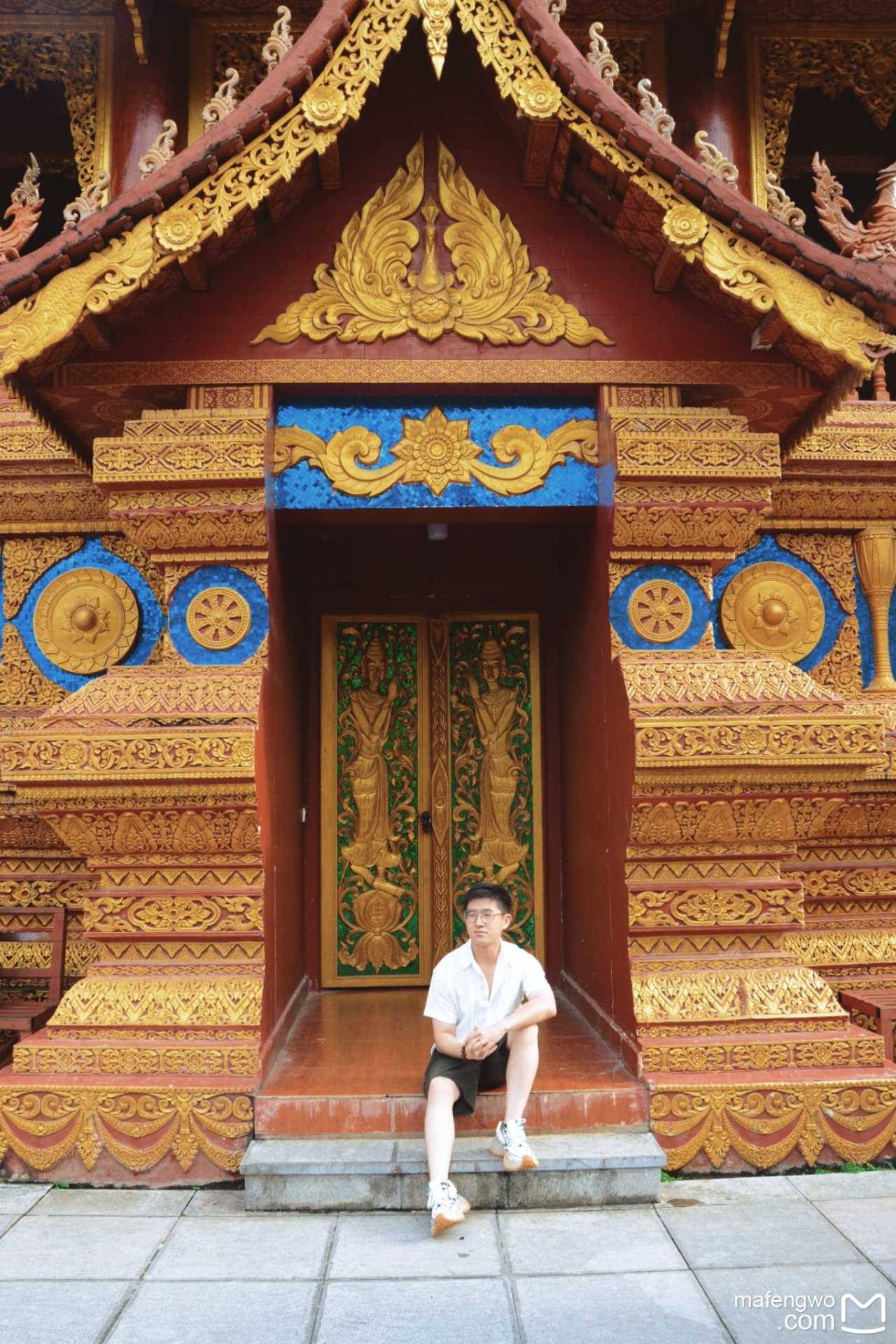
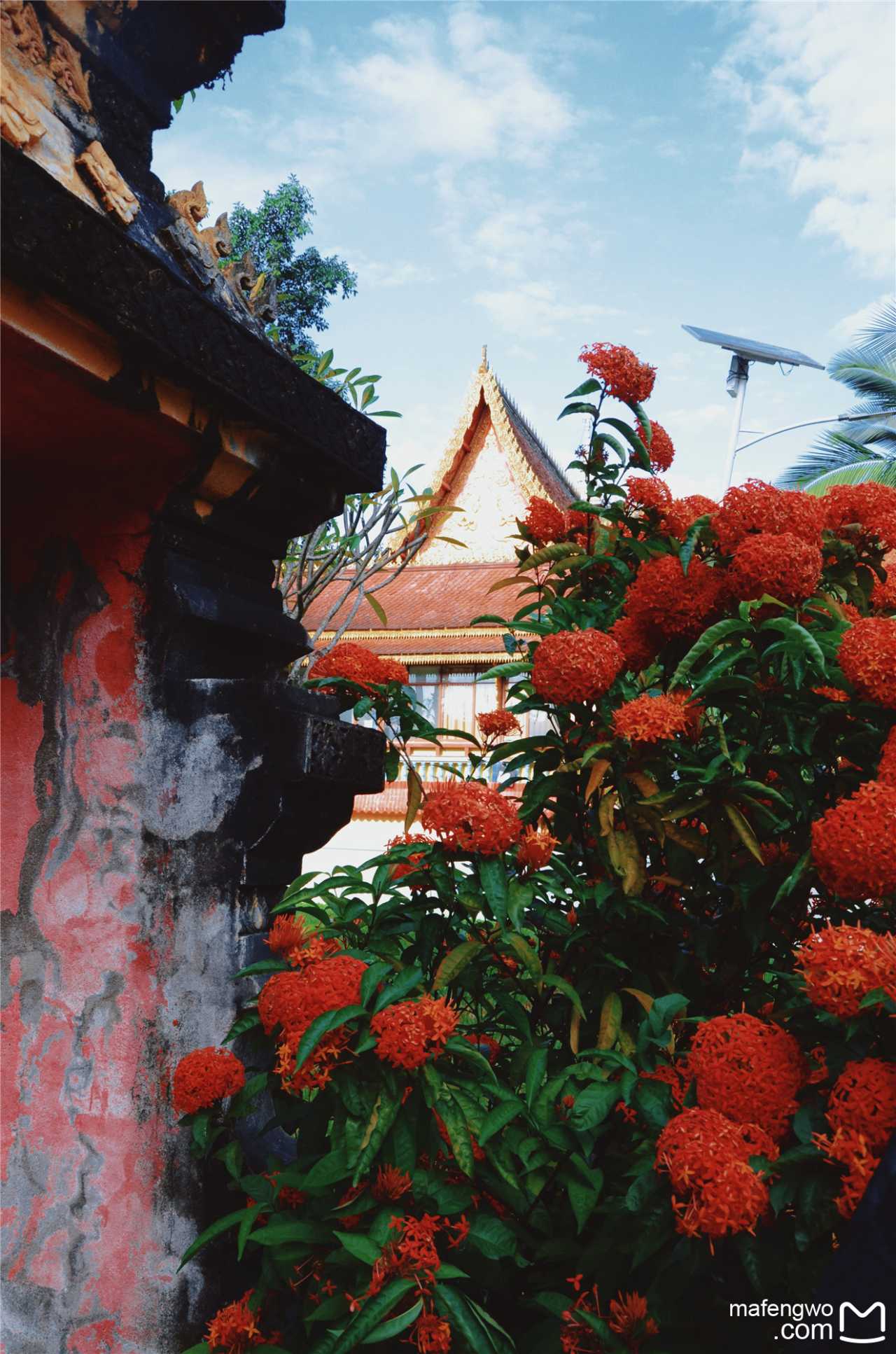
The scale of the Dai King's Palace surprised me—it was quite small. Inside and outside the palace, the walls were practically plastered with young women taking travel photos. We had no choice but to take a detour, snapping a picture of the architectural patterns along the way—Dai architecture favors motifs of plants, flowers, birds, animals, text, and geometric shapes, symbolizing peace and good fortune, reflecting their reverence for nature.
We planned to enter the General Buddha Temple before 5 p.m. (it closes at 6 p.m.), aiming for at least an hour of visiting time. With time to spare, we strolled through Manting Park, passing the Royal Orchid Garden, the Leaf Garden, the Octagonal Corridor Bridge, and the Release Pond. These spots, perfect for photos, were almost entirely occupied by travel photo groups, which was a bit annoying.
The White Pagoda of Manfeilong, by the Goddess's Handwashing Pool, consists of one main pagoda and eight smaller ones surrounding it. From a distance, they look like bamboo shoots breaking through the ground, earning them the name "Bamboo Shoot Pagoda." Originally pure white, they've now been weathered black by time.
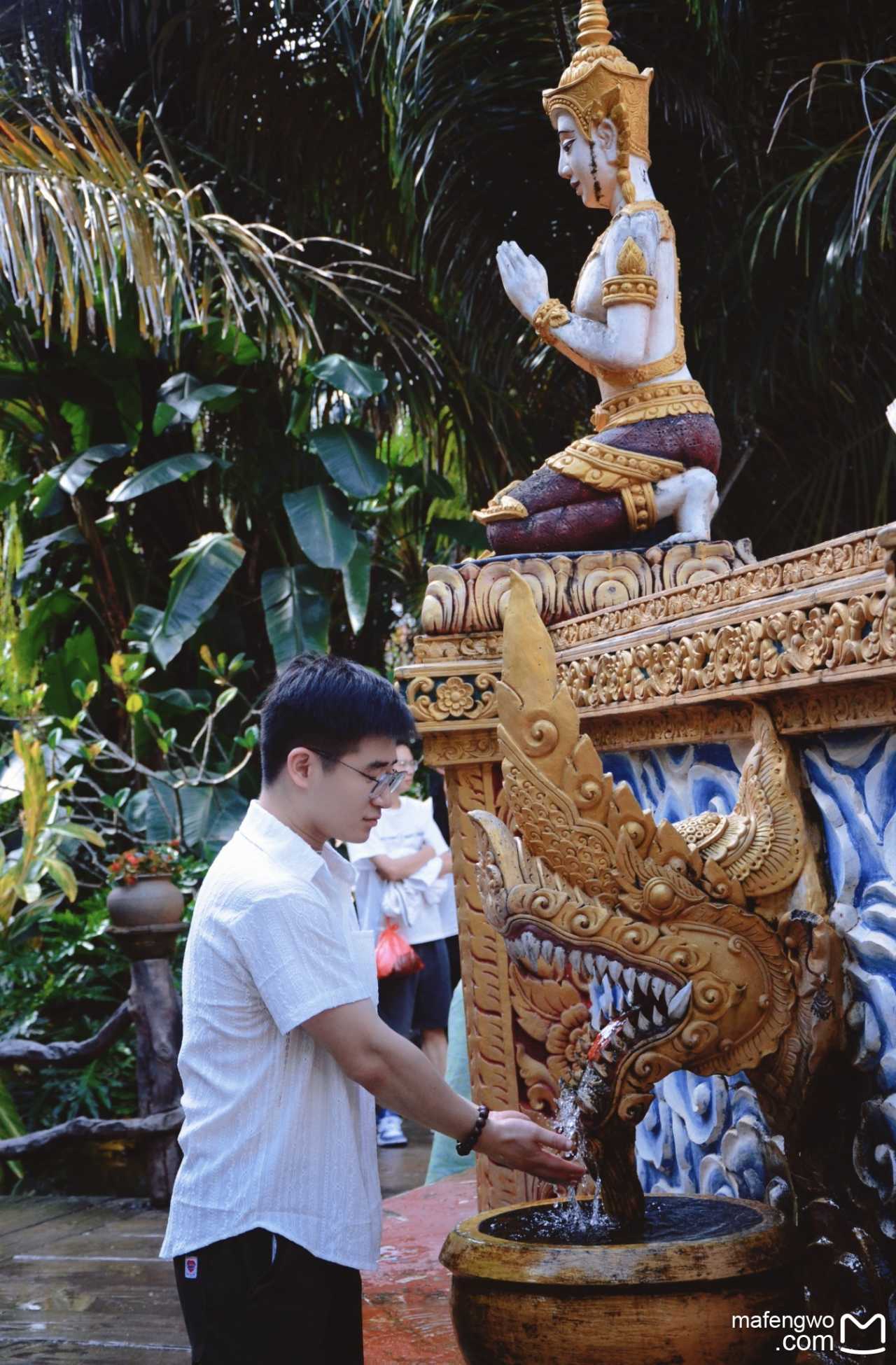
The fountain of the Earth Goddess statue has an octagonal base, surrounded by eight dragon-head sculptures spouting holy water into a handwashing pool for visitors to cleanse their hands and pray for blessings. It's said that washing your hands here can wash away bad luck and misfortune, bringing good fortune. With reverence, we all experienced this mysterious power—hoping for smooth sailing from now on.
But honestly, I felt a bit disappointed. My expectations for Banna were high, and this first stop—Manting Park—ended without giving me a direct sense of the charm of this ancient imperial garden.
General Buddha Temple: Visual Impact, Southeast Asian Vibes at Full Force
The General Buddha Temple is connected to Manting Park. As soon as we stepped through the gate, a strong Southeast Asian atmosphere hit us. I can only say: The General Buddha Temple is far more beautiful than Manting Park.
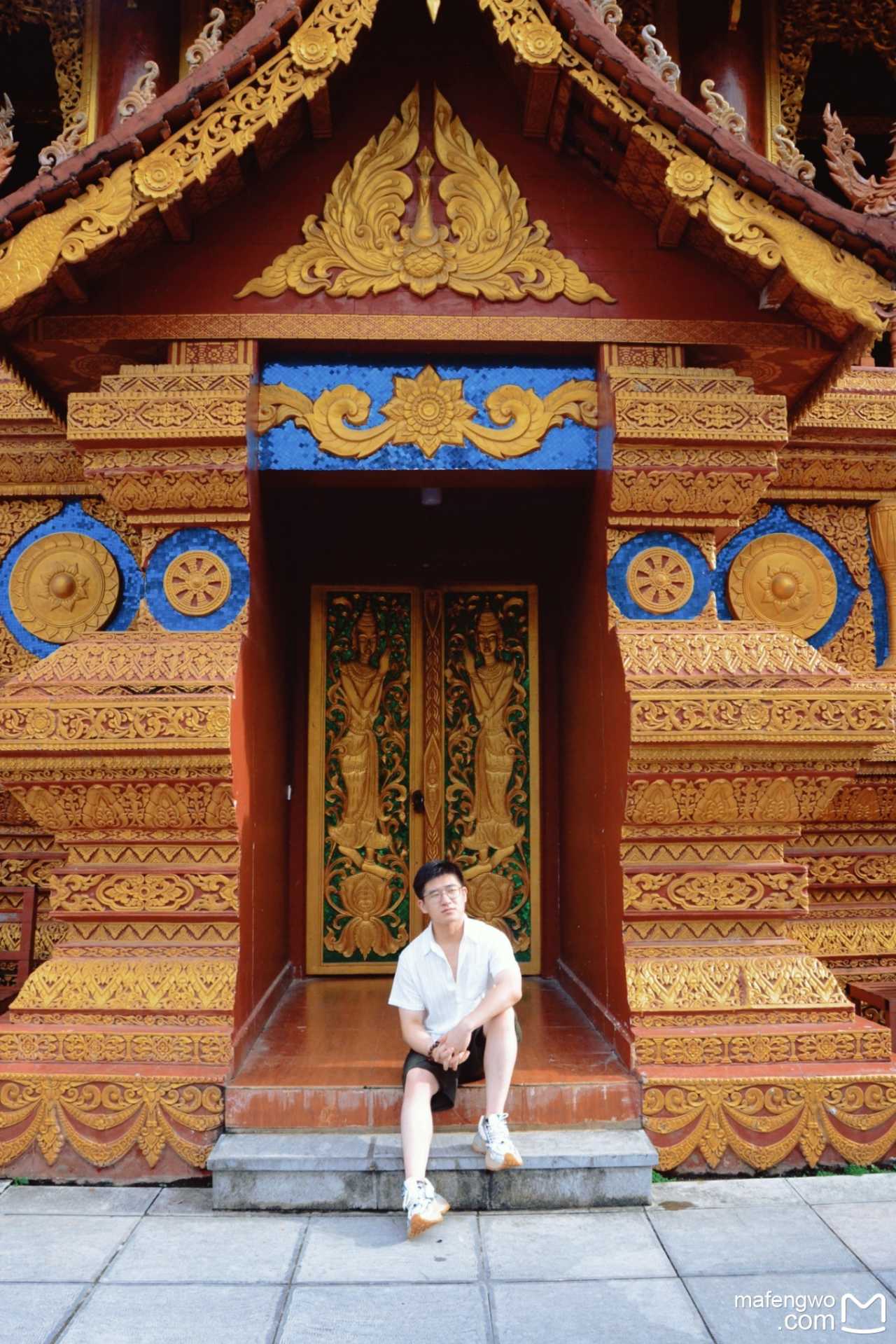
First, the buildings are dense and vividly colored. Second, there's a towering golden Buddha statue in front of the main hall. The porch features ten celestial guardians in different poses and colors. And most importantly—the General Buddha Temple prohibits travel photography and skimpy clothing. Finally, we could calm down and truly appreciate it.
The General Buddha Temple of Xishuangbanna was built in 615 AD, over 1,400 years ago, making it the first Theravada Buddhist temple to arrive in Banna. Its main structure follows Dai architectural techniques, with a strict layout including the main hall, precept hall, drum tower, and bell tower.
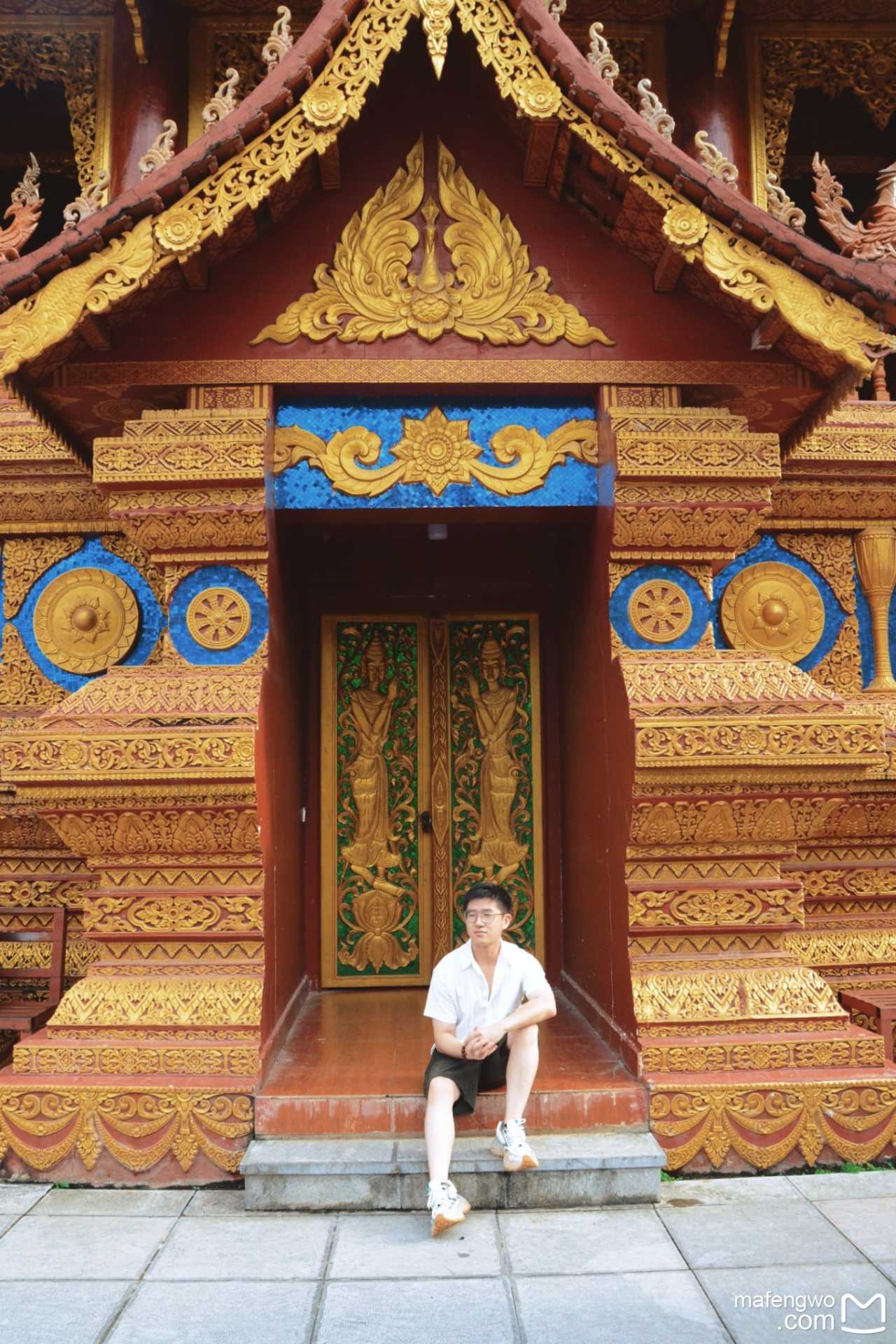
The outer walls of the main hall are decorated with reliefs of the twelve zodiac signs and eight sub-signs. The ten doorways are carved with ten celestial guardians. Under the sunlight, the silver treasure urn atop the main hall gleams, and the entire building is bathed in a golden glow, as if enveloped by the Buddha's light.
As the highest-level Buddhist sacred site in Banna, the first floor of the main hall is a place for monks to preach and believers to pray, while the second floor is a solemn space for Buddhist ceremonies and celebrations. Inside the first-floor inner sanctum, there's a bamboo-woven Buddha statue, handmade in 2015 by a senior monk from Myanmar. Simple and unadorned, it carries profound Buddhist meaning. The second floor houses a revered copper Buddha statue, consecrated jointly by the Thai Supreme Patriarch and members of the Thai royal family.
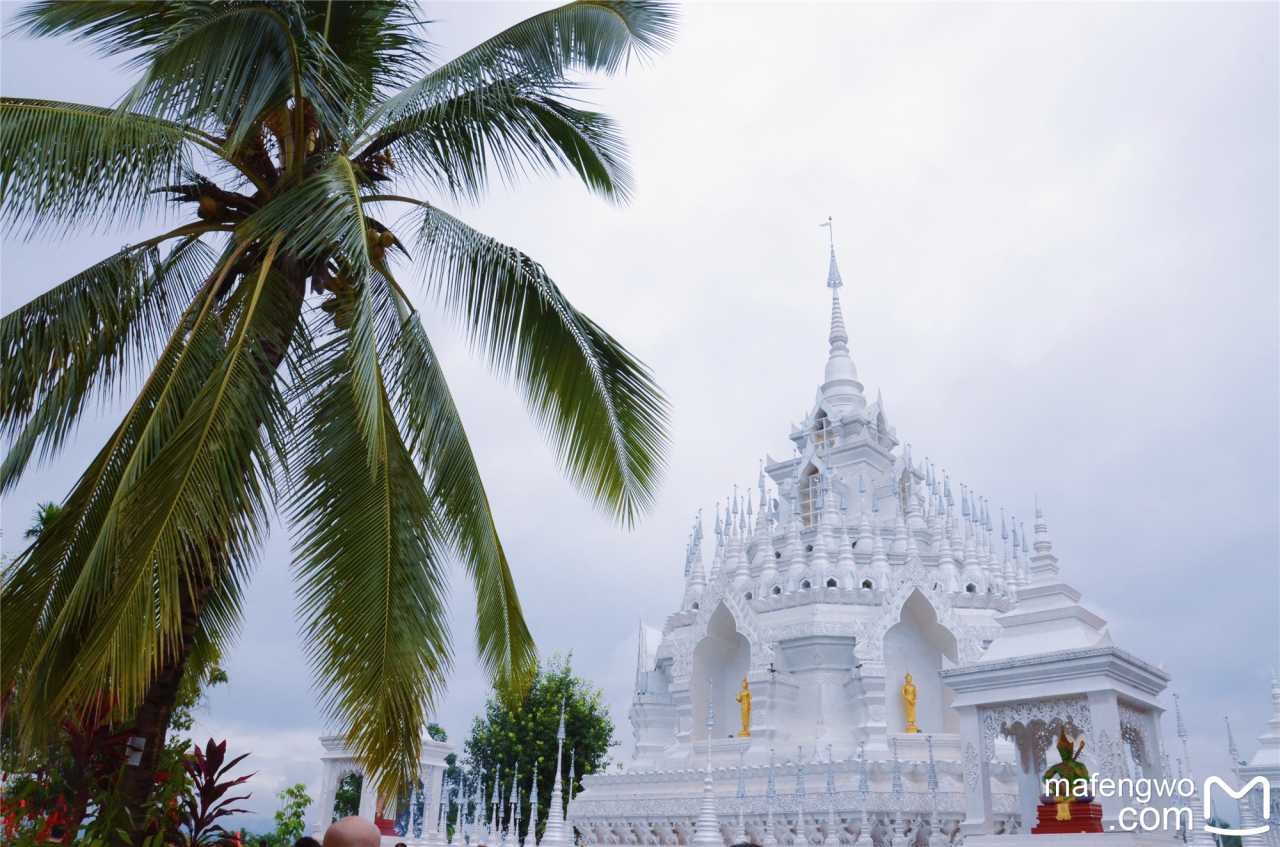
Passing through the main hall, we reached the main gate of the General Buddha Temple. From this perspective, the building complex and Buddha statues are layered with striking clarity, especially enchanting against the backdrop of lush greenery. Many devout worshippers gathered here, kneeling on the ground and silently making wishes.
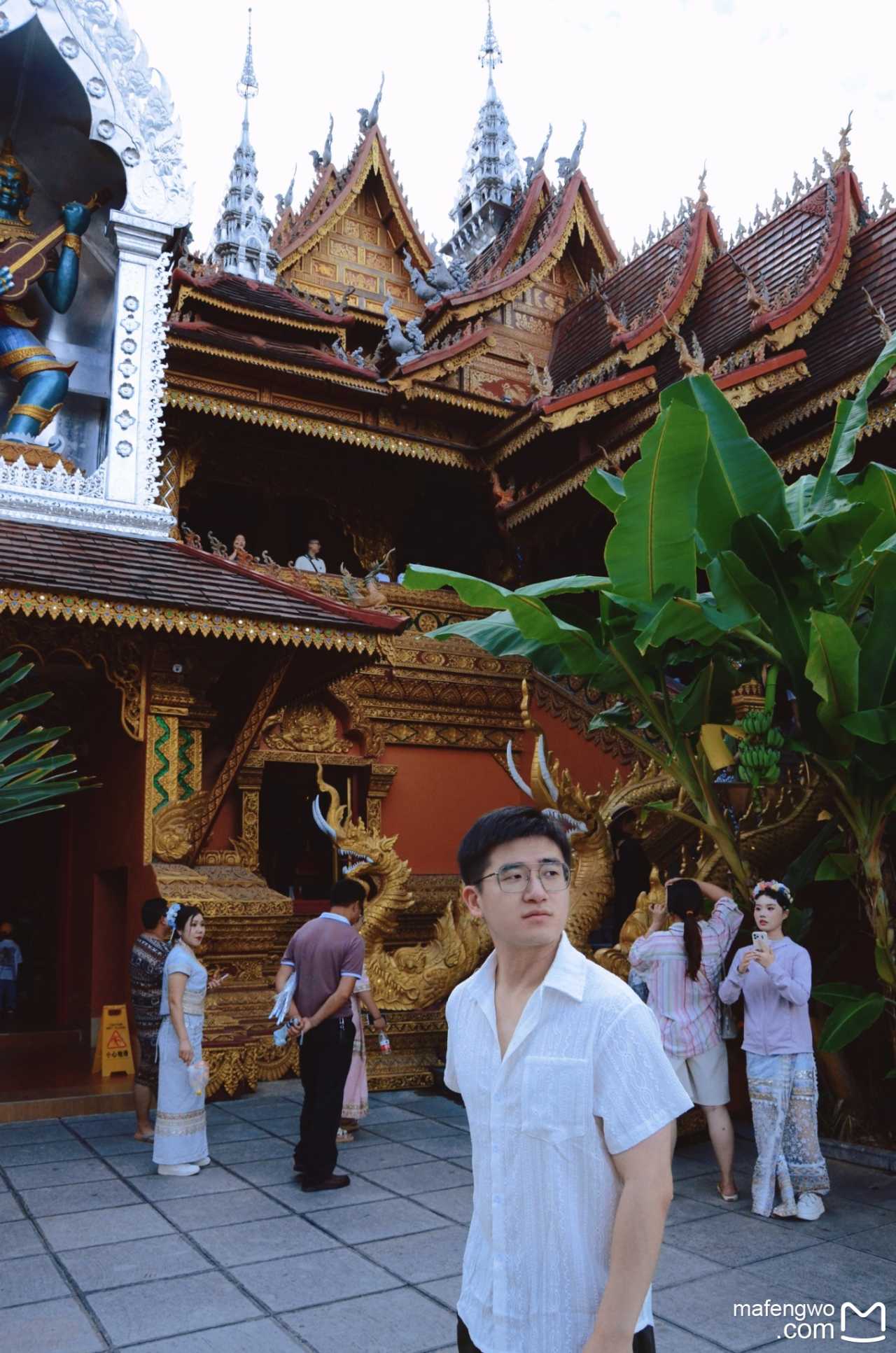
We climbed to the second floor of the main hall—nothing important was happening, so the second floor was closed. We walked along the corridor, gazing at the surroundings from above. Dai Buddhist temples are very different from Han Chinese ones: the roofs are sharply pointed and elongated, with a purplish-red hue, adorned with jewel-like decorations, vibrant and colorful.
Near the bell tower, we found a spot with no one around and quickly snapped a few photos. For someone who loves architecture, this was a pure adrenaline rush—my pupils dilated several times over. The headache I'd had from lack of sleep and catching a chill quietly disappeared.
As I wandered, I lost track of my two companions. We kept calling each other, using location sharing, then losing each other again. I guessed they weren't very interested, but I was the complete opposite—they must have missed a lot of the scenery.
By then, the sky had cleared, finally revealing a rare patch of blue. I ventured further and further off the main path, deliberately ducking into empty corners to study the details.
Outside one hall, there was an introduction written in Dai, Thai, and Chinese. Dai script and Thai script look almost identical, just a bit rounder. No wonder people say coming to Banna feels like being in a mini-Thailand—everything from folk customs, architecture, food, to writing confirms it. According to the text, the General Buddha Temple has close cultural exchanges with Thailand.
First Night Dinner: Dai-style BBQ, Starting Low but Rising High
After making a full circle, we decided to eat. We randomly chose a well-reviewed BBQ place called De Si Jia BBQ (德四家烧烤). Along the way, we noticed that many local houses like to decorate their gates with peacock motifs. Besides coconut trees, the streets were also lined with a very fragrant tree—I still don't know its name, but its scent was especially fresh and comforting to smell.
The BBQ place was located under the Riverside Night Market. As we walked over, we saw someone selling longan fruit (龙宫果). Out of curiosity, I asked how much a bunch cost. The vendor weighed it, and when we didn't buy it, she scolded us—"Are you crazy?"—Strange, isn't it? Asking without buying makes you crazy?
We sat down and ordered a set meal: cold mixed clams, a vegetable platter, grilled tilapia, grilled chicken... Except for the cold mixed clams, nothing else was edible. Especially the vegetable platter—it was so bad it made us laugh. The grilled chicken had no flavor at all.
Although the meal was unsatisfying, at least we were full—mainly from bloating ourselves with Sprite. This meal instantly killed my interest in Banna cuisine, but luckily, it was a low start that rose high.
We returned to the hotel early to rest. To save money for the next day, we signed up for a one-day tour—Wild Elephant Valley + Primitive Forest Park, for only ¥96, including a meal. We decided to give it a try.
Day 3: Wild Elephant Valley, A Magical Encounter with Elephants
Wild Elephant Valley is north of Banna, a 40-minute bus ride. Along the way, the guide told us all kinds of strange and interesting stories. I thought she was just livening up the trip, but it turned out to be a prelude to pushing ticket sales—the Primitive Forest Park's underwater world for ¥128, and the Mekong River speedboat for ¥168.
I double-checked our booking record, which promised no forced purchases. But the guide's tone was coercive: "You'll all pay me later. Don't come here saying you don't want to do anything—then why did you even come?"
The guide was a local middle-aged woman. The moment we met, she said her phone had been cut off because she'd made too many long-distance calls, asking us to call her if we had any issues and demanding we obey her. At first, I naively believed her phone really was cut off.
Even though we had a guide who seemed like a scammer, making us nervous, we couldn't let it ruin the fun. We arrived a little after 8 a.m., when the park wasn't crowded yet. We checked off the snake and lizard garden, the butterfly garden, one by one—don't expect much; the main reason to come here is to see the elephants.
Wild Elephant Valley isn't just home to elephants—there are also pythons, lizards, monkeys, civet cats, and more. The guide arranged a 3-hour visit, with a meet-up at 11 a.m. If we wanted to walk the elevated observation boardwalk, we could only do a section of it—the full length is 2 km, 4 km round trip, and finding the elephants takes time.
Almost everyone comes here for the elephant show. Showtimes: 10:00, 11:40, 14:00, 16:30, four shows daily. The guide arranged for us to see the 10 a.m. show and told us to grab seats early.
Wild Elephant Valley is the area with the highest density of wild Asian elephant activity in China. If you're lucky, you can see herds of wild elephants strolling and foraging through the forest from the boardwalk. Given my current personality, I didn't hold out hope for such a low-probability event—but surprisingly, on our way back, we actually heard the sounds of wild elephants moving, and even saw them flicking their trunks in the jungle! But the leaves were too dense, and we couldn't get a photo.
Apparently, from November to just after the Chinese New Year, when the weather is mild and the rain has cleared, is the period with the highest frequency of wild elephant sightings.
We returned to the Rainforest Theater half an hour early. At the entrance, there was an elephant interaction area. We spent ¥30 on a small basket of fruit and cucumbers (four pieces). We ended up picking a clever and picky elephant—it only ate apples, carrots, and bananas, none of which were in our small basket (the large basket, at ¥60, had them). It used its trunk to take the cucumbers, placed them on the table, ate its favorites first, and only then ate the cucumbers.
In the past, the theater had many elaborate performances, including elephant rides. But since this is a wildlife protection base, going against its mission drew criticism from animal lovers, so many complex acts were canceled and replaced with elephant knowledge education.
The show started quickly. We timed our arrival and couldn't get seats, so we stood by the side railing for a close-up view—aside from sore feet, the experience was top-notch.
The elephant family made a glorious entrance! They moved with an unstoppable, majestic pace, using their trunks to gently hold the tail of the elephant in front—both imposing and adorable.
The 40-minute show began with a科普 session on how elephants obtain food—apparently, their intelligence is equivalent to that of a 5-year-old child, and they even know how to use tools. They also shared fun facts: an elephant will change its teeth five times, growing a total of six sets of teeth.
Don't let their muddy, slightly scruffy appearance fool you—elephants love sandy, muddy ground, enjoying rolling around in the dirt. It's a natural habit and a form of natural skin protection. Conversely, they're not fond of cold concrete floors.
The elephants enthusiastically curled their trunks to greet the audience, making the children laugh with joy. I'm not opposed to animal performances per se, but I oppose results obtained through animal abuse—even though human civilization itself is a result of domestication.
According to the introduction, these elephants were once wild elephants from this primeval forest. They were rescued and treated for injuries, and after giving birth to calves, they began working at Wild Elephant Valley. They perform with great effort every time, but as soon as the show ends, they turn and leave just like us.
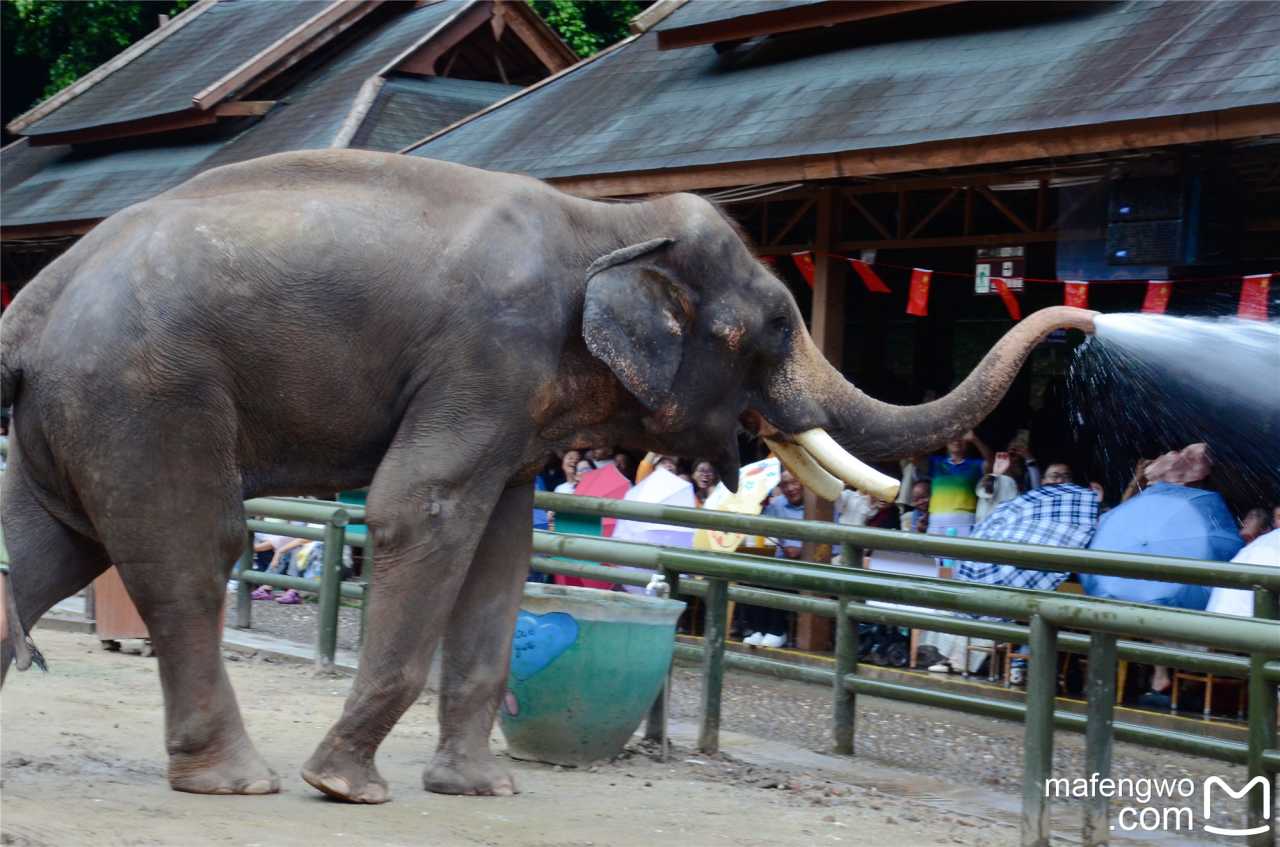
Next came the segment where elephants use their trunks to suck up water and spray it at the audience. I didn't expect them to actually spray—my phone was still recording video—and a trunkful of water hit me directly. That precious footage is still saved on my phone.
But the elephant in front of me had a bit of a "worker's attitude," slacking off and getting scolded by its trainer. No matter how much we shouted, it remained Zen-like, doing things its own way. Meanwhile, the elephant on my right got addicted to spraying water, drenching the audience on that side so much that they had to open umbrellas, and I could almost see the mischievous joy on the elephant's face.
Primitive Forest Park: The Bonus Attached to the Day Tour
After the show, we obediently left—after all, it was a group tour. Expectations for the group meal were low; "edible" was the passing standard. I'd thought we might eat "elephant meal" (象餐), but clearly, I was overthinking it. The guide auntie worked hard, helping us hurry the food and serve it, which made me a bit embarrassed. I secretly asked other group members if they'd paid for the optional tickets the guide had mentioned—the guide had bluffed that only one family hadn't paid, but it turned out we weren't the only ones. We were pretty scared at the time, because the guide had taken our IDs as soon as we got on the bus.
It's a romantic city, but these people were ruining the atmosphere. She even had the nerve to ask each of us why we hadn't paid. We simply refused. The families who didn't pay were left to roam freely.
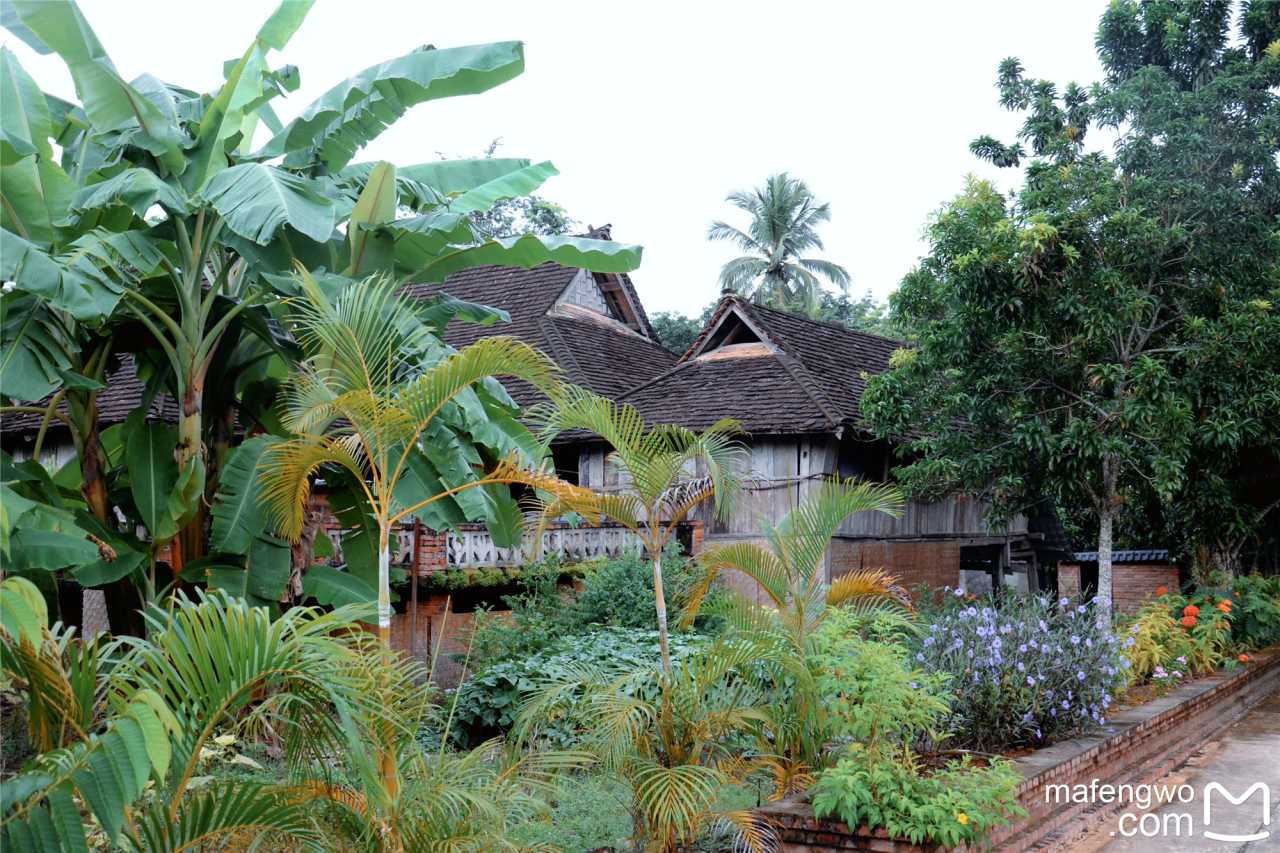
The weather was very uncooperative that day—it started raining as soon as we arrived at the Forest Park. I wasn't originally interested in peacocks, but I'd heard the peacock release was worth seeing. My plan: watch only this show, then wander around. The guide arranged 4 hours, with a meet-up at 4 p.m.
Maybe because of the National Day crowds, the peacock release was held despite the rain. After watching two shows, my only rating was two words—"Just okay."
We had way too much time on our hands. Afterwards, we went to the Aini Stockaded Village and the Rainforest Splash Party. The Aini Stockaded Village was basically a tourist dining center, not worth visiting. The Rainforest Splash Party was a bit awkward—a kind of Dai-style disco (if you could even call it that), with almost no Dai elements at all. Except for the ethnic minority aunties in front who were dancing with genuine joy, which brought a smile to our faces.
I suspect the most interesting thing here is the jungle zip-line, divided into sections A and B, each costing around ¥160. Most people do one section. But the three of us were too tired to go. If you're not afraid of effort and love tropical rainforests, the price is similar, and hiking at Jinuo Stockaded Village should be a great option.
Mushroom Hotpot: The Turning Point of Our Banna Impression
Bored in the Forest Park, I searched and found Fengshali Wild Mushroom Hotpot (风沙里野生菌火锅)—located near Gaozhuang, on the negative first floor of a hotel, right by the pool. When I first said we'd be eating hotpot by the pool, they were skeptical. When we arrived, everyone laughed—it was true! A first-time experience: eating hotpot by a swimming pool.
The atmosphere was elegant, with natural breezes and pleasant music playing. The value for money was incredible—a three-person meal was only ¥160, including 15 types of mushrooms: termite mushrooms (鸡枞菌), bamboo fungus (竹荪), black porcini (黑牛肝), matsutake (姬松茸), see-hand-green (见手青), deer antler fungus (鹿茸菌), and more. A pot was brought directly to the table with water added, and we didn't recognize half of them. There was also a plate of chicken and Xuanwei ham. The most impressive part—a self-service buffet of over 20 types of vegetables, fruits, and snacks, all of decent quality—I was stunned!
In Closing: The Feast of Youth, To Be Continued
Five days of travel, a budget of ¥3,100, from Kunming to Banna, from Nanqiang Night Market to the General Buddha Temple, from Wild Elephant Valley to mushroom hotpot. Along the way, there were disappointments and surprises, regrets and moments of emotion.
The mountains, rivers, lakes, and seas told me: "Learn to find joy for yourself. Don't let yourself dissolve into dust in your emo moments."
Xishuangbanna is that refilled cup of summer. The feast of youth is to be continued.
See you next time, Banna.
You should also read:
LaLa's Summer at Lugu Lake: A Yunnan Wedding Journey with the "Crazy Squad"
LaLa's Summer at Lugu Lake: A Yunnan Wedding Journey with the "Crazy Squad" Simple, Free, Happy Weibo: @ZY_FC @Super王拉拉拉 Yunnan—a land blessed by nature—has a way of weaving vibrant colors and mystical vibes together in an almost extravagant manner. And Lugu Lake, like a sapphire…
Continue reading...
The Hidden Paradise Under the Stars: A Borderland Expedition Through Pu'er, Ximeng, and Xishuangbanna
The Hidden Paradise Under the Stars: A Borderland Expedition Through Pu'er, Ximeng, and Xishuangbanna Introduction: While Everyone Rushed to Lijiang, I Chose Another Path On China's tourism map, Lijiang and Dali have long become pilgrimage sites for "artsy youth"—swarming with tourists and heavy with commercialization.
Continue reading...
Facing the Erhai Sea, Spring Blossoms: A Belated Summer Dream in Yunnan
Facing the Erhai Sea, Spring Blossoms: A Belated Summer Dream in Yunnan Some places captivate you with their name alone. Yunnan—south of the clouds—had lingered in my heart for years. Not because I didn’t want to go, but because the perpetually high airfare and the…
Continue reading...