Facing the Erhai Sea, Spring Blossoms: A Belated Summer Dream in Yunnan
Facing the Erhai Sea, Spring Blossoms: A Belated Summer Dream in Yunnan
Some places captivate you with their name alone. Yunnan—south of the clouds—had lingered in my heart for years. Not because I didn’t want to go, but because the perpetually high airfare and the less-than-friendly prices kept pushing my plans back into the depths of my drawer. Until one day, I caught a glimpse of a photo of Shuanglang on a travel website: a floor-to-ceiling window, a massive bathtub in front of it, the dark, surging waters of Erhai Lake outside, and the rolling silhouette of Cangshan Mountain in the distance. At that moment, I couldn’t sit still any longer.
So, in the sweltering heat of August, I took ten days and finally set foot on this long-cherished land, to fulfill a promise of “facing the Erhai Sea, with spring blossoms in bloom.”
Shuanglang: The Guesthouses I Passed, Stayed At, and Fell for
First Impressions of Shuanglang: Dust and Surprises Side by Side

To be honest, the moment I arrived in Shuanglang, I felt a twinge of disappointment. The place was a construction zone—potholed roads, dust flying everywhere. I dragged my little pink suitcase through narrow, winding alleys, its wheels nearly shaking apart. I’d heard the town often had power outages; luckily, we didn’t experience any, but the innkeeper told us that just a few days earlier, the electricity went out almost every afternoon until nightfall. If you’re planning a trip to Shuanglang, my advice is—wait a few more years, until it truly grows into the picture you have in your mind.
But Shuanglang has a certain magic. The graffiti on the corners, the painted tricycles, the hand-drawn signs at the entrance of every guesthouse—they all tell you: this is a place worth getting lost in a few times before you find your own path.
Lanting Bieyuan (Orchid Garden Retreat): Starry Nights and Noisy Mornings
Since “Banyan Tree No. 63” (Bando 63) was fully booked—you need to reserve it half a year in advance—I settled for Lanting Bieyuan. Its sea-view rooms share a similar charm with Banyan Tree No. 63, so I booked two nights.
The room’s windows mostly faced the courtyard, but honestly, the soundproofing was so poor it made me question my life choices. A group of boisterous middle-aged guests partied in the courtyard until the early hours, and every morning, the sound of any door opening was crystal clear. I nearly developed a nervous breakdown.
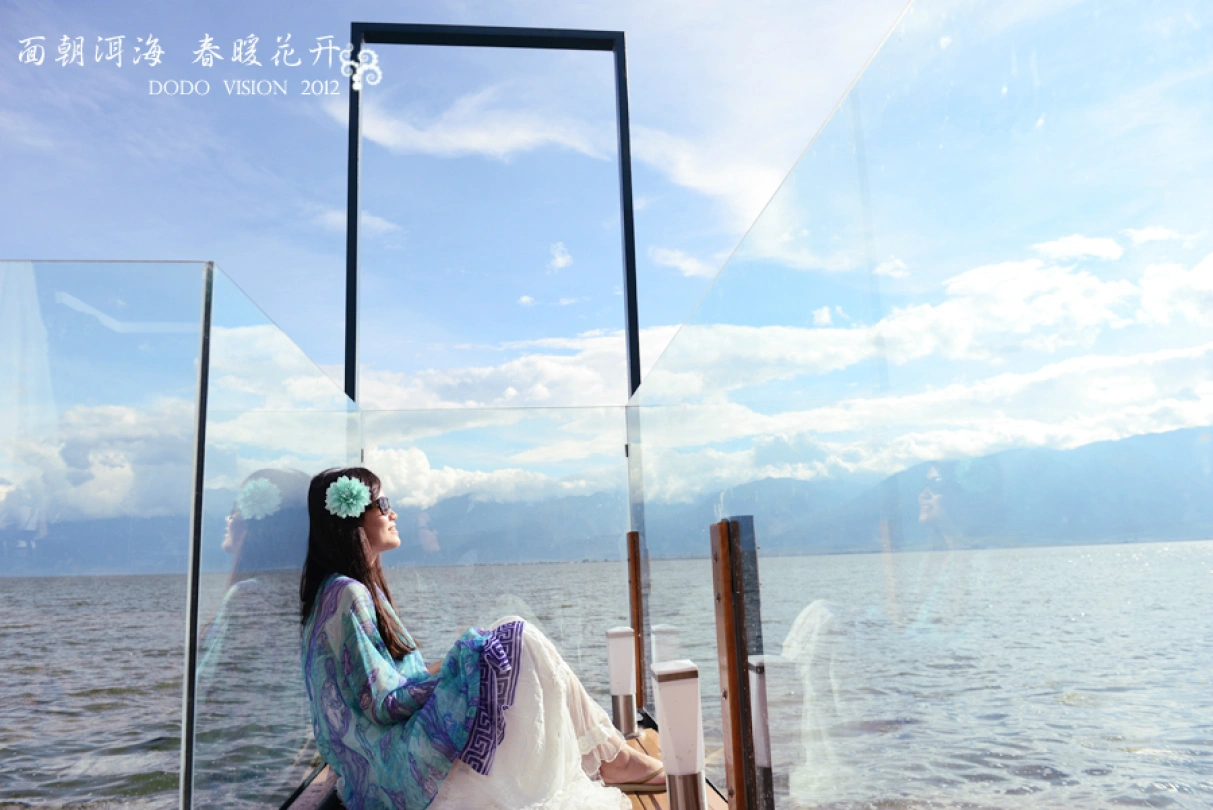
But its virtues made it hard to complain. The room had a small balcony with a view. At night, my sister and I wrapped ourselves in blankets, wrapped in starlight, with the sound of Erhai Lake lapping against the shore. We chatted, and the silence didn’t feel too heavy. There was also a nearly three-sided transparent bathtub room. I never dared to actually soak in it, but I took plenty of “private photos” and “ghostly shots” there—so it was worth it.
Haidi Shenghuo (Sea and Life): Making Posing a Ritual
A few days later, we moved to Haidi Shenghuo. This is one of the earliest guesthouses in Shuanglang, sprawling across several courtyards. We were lucky enough to get into the newly finished No. 4 Courtyard—few people, clean, and private. You needed a key card to enter the courtyard gate, and we became the first guests in that sea-view room. The bedding was more comfortable than in some star-rated hotels. But falling asleep to the sound of the water at night—romantic in theory, terrifying in practice. Try it, and you’ll know what I mean.
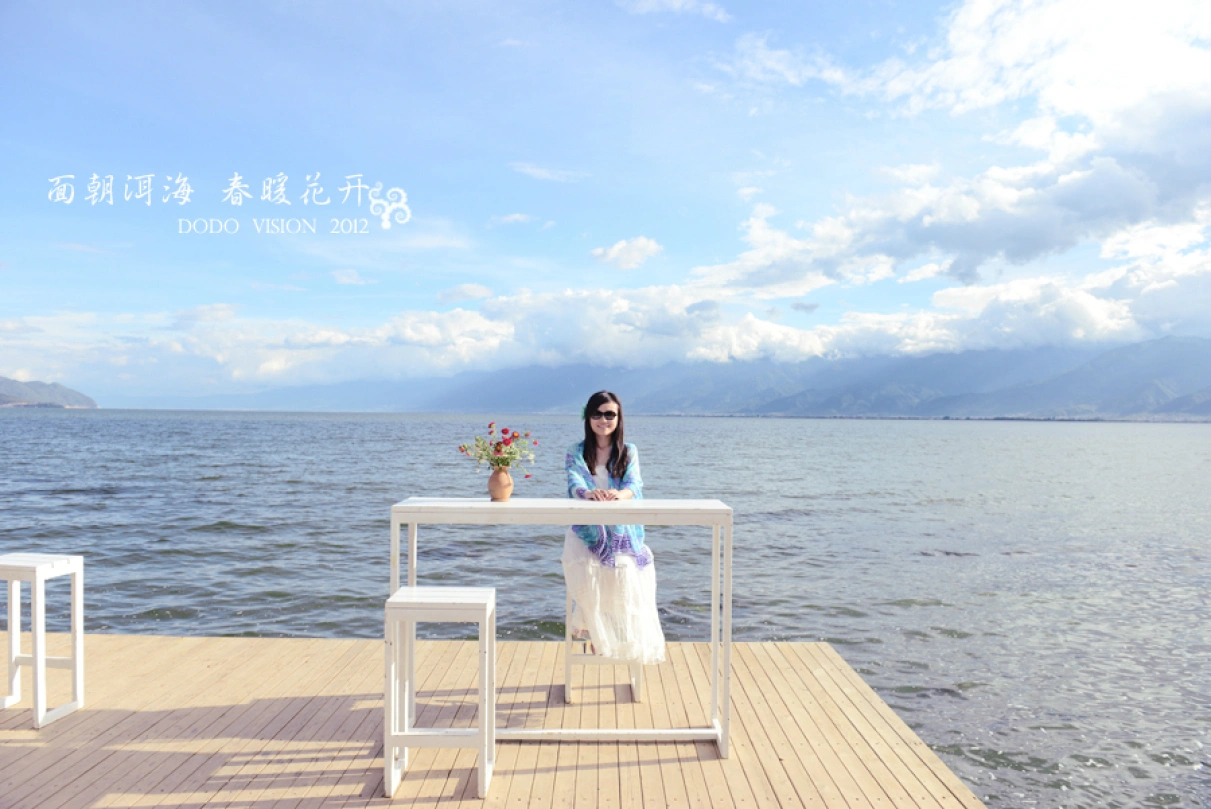
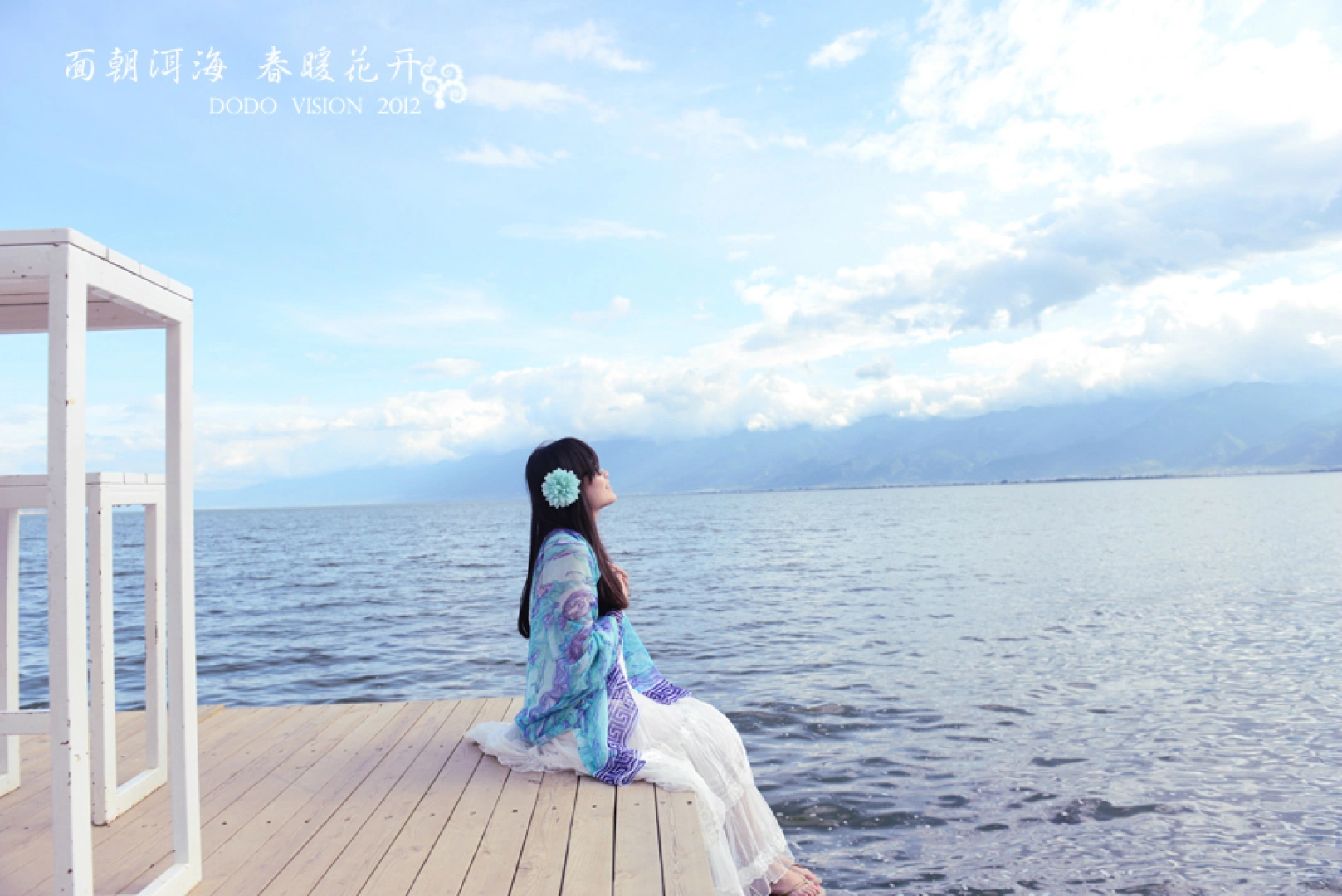
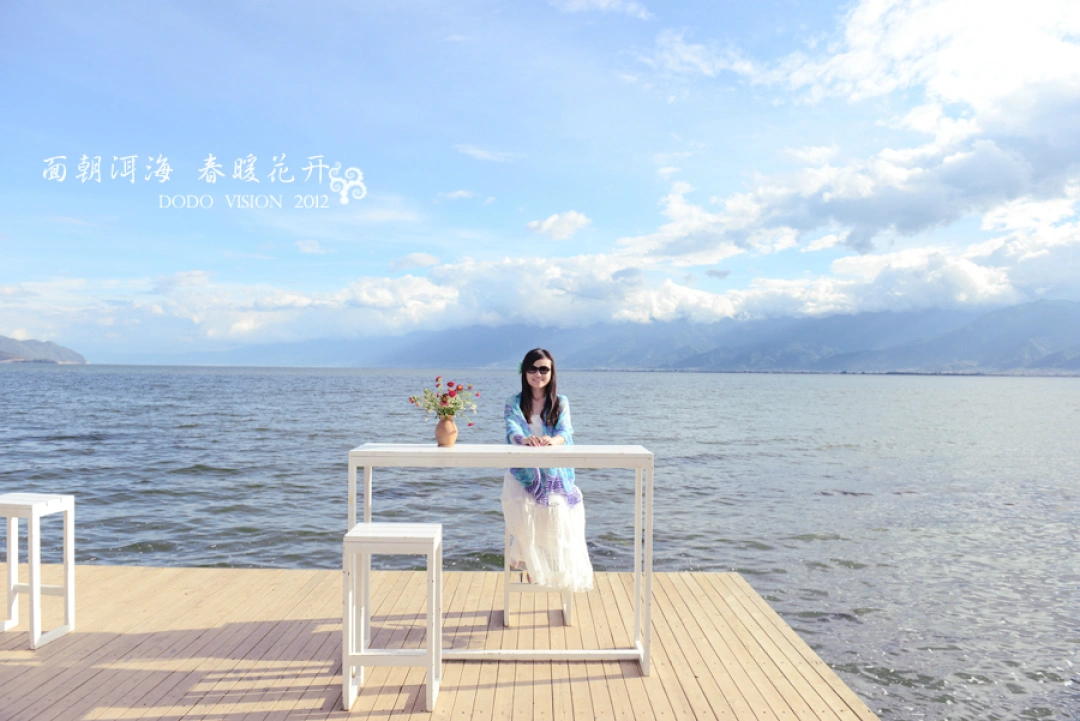
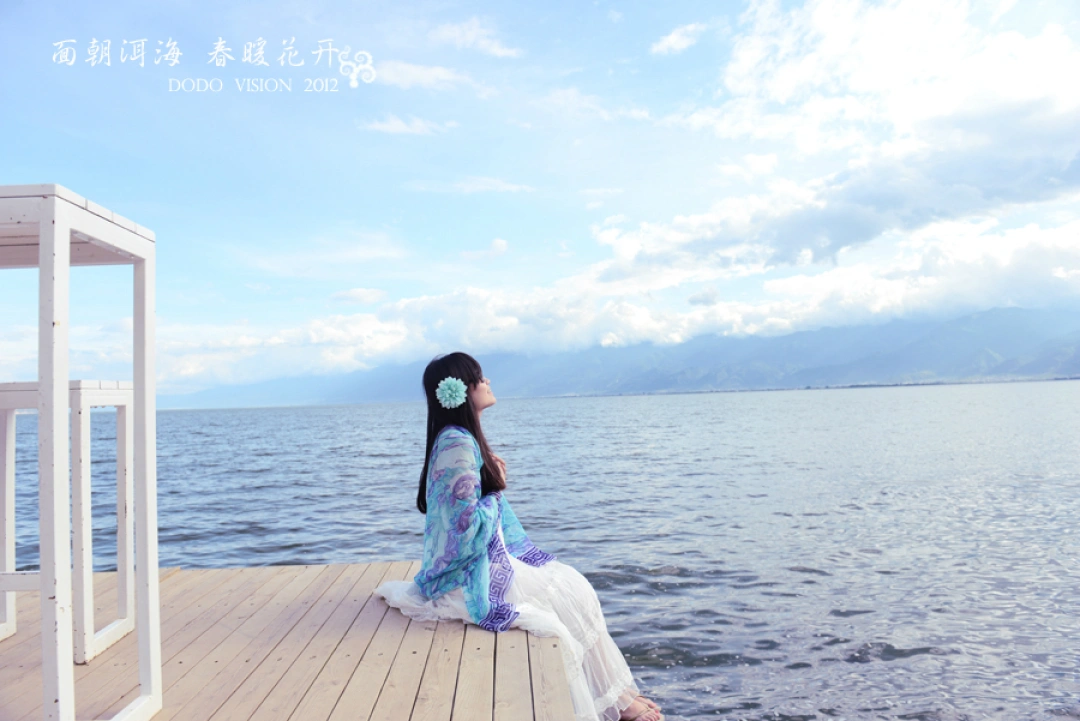
What captivated me most about Haidi Shenghuo was its white terrace, designed specifically for posing. White tables, transparent doors, with Erhai Lake and Cangshan Mountain in the distance—every angle was a masterpiece. Every afternoon, my sister and I came here to take sister photos. In the evening, we’d head to the main hall of Courtyard No. 1 to mooch off the Wi-Fi, feed the mosquitoes, and use her data. As the older sister, that’s about all I’m good for.
Taiyang Gong (Sun Palace): A Must-Experience
If there’s one place in Shuanglang that made me think “you’ll regret not experiencing it,” it’s Taiyang Gong. Perched on Yuji Island, it faces Zhao Qing’s Qinglu across the water, like two artworks that shouldn’t be disturbed.
The entrance to Taiyang Gong is small, with a bolt permanently drawn. Tourists want to visit? Only if you’re willing to spend over 200 RMB per person for afternoon tea. I understand this approach—after all, there are only a few guest rooms. If everyone came in just to take photos, it would turn into a zoo.
Once inside, you have to take off your shoes, store them, and either wear slippers or walk barefoot on the stone—like being in your own courtyard. In the center stands a century-old banyan tree, acting as the architectural axis, giving life to the cold bricks and tiles. A young Bai ethnic guide showed us one of the guest rooms: simple wooden beds, oil lamps, round basins, candle holders—spacious without feeling cluttered. Room rates range from 3,000 to 5,000 RMB. A bit wasteful for two people, but for a whole family, it wouldn’t feel cramped.
What I envied most was that Taiyang Gong has its own dock and boat, which can pick up guests from any dock in Dali. Lunch and dinner can even be delivered via boat takeout. This kind of “secluded” luxury—that’s the real vacation.
Lijiang: Time Lingering in Gentle Waves
A Solo Trip to Shuhe, a Rainy Goodbye
Leaving Shuanglang, we arrived in Lijiang. Unexpectedly, because my travel companion fell ill, I ended up exploring Shuhe Ancient Town alone.
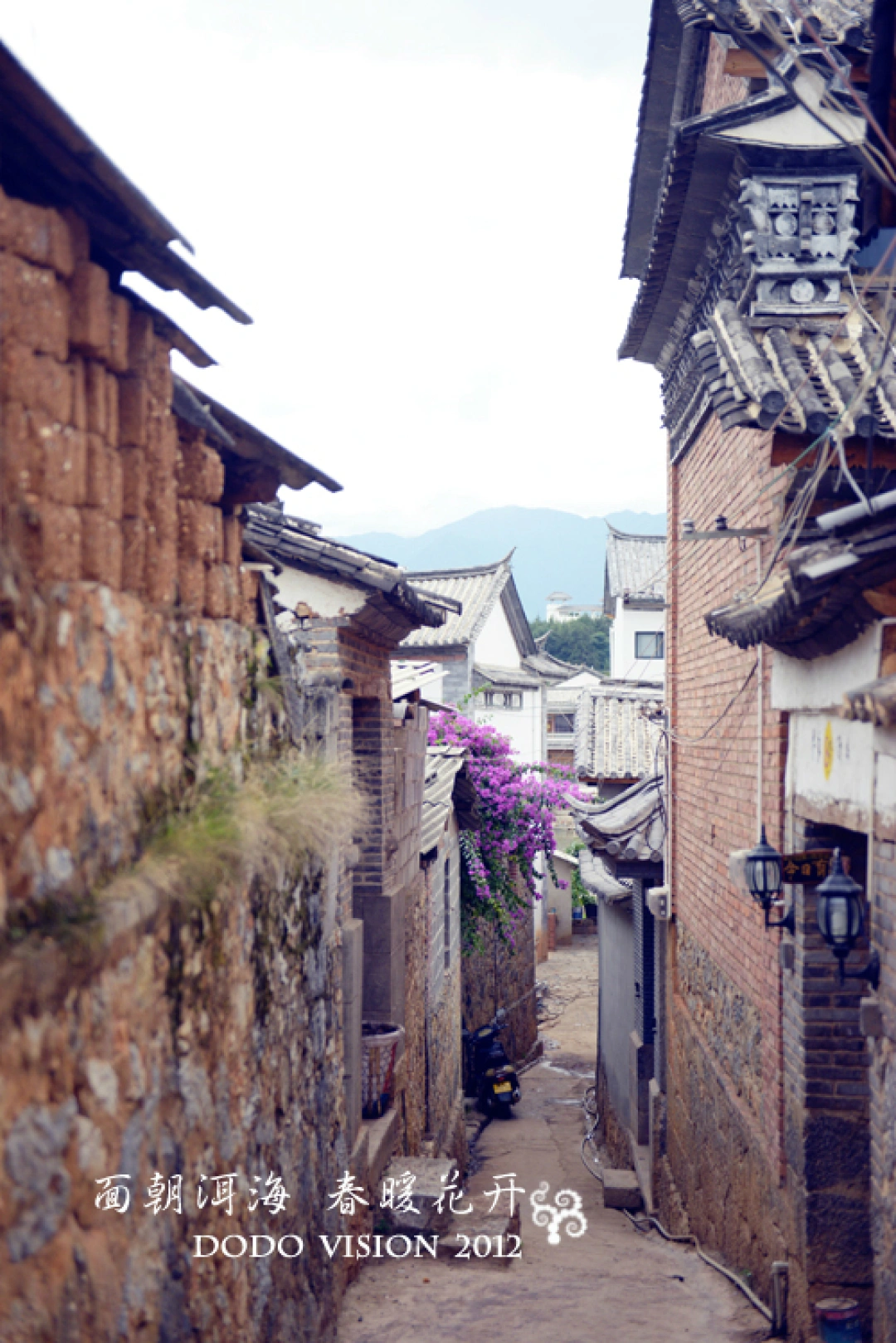
Shuhe wasn’t quite what I imagined—it greeted me with a ticket gate. I wandered with my camera, passing shop after shop, with the sound of wandering singers in the air. But the stream that runs through the town, keeping vegetables fresh with its spring water, showed me a vibrant slice of everyday life.
I walked the same path back and forth many times. Without the bustling crowds of Sifang Street, the stream was lined with quiet restaurants and small shops. I ducked into a second-floor shop along the street. Rain was about to fall; everything remained calm, no one in a hurry. The rain came and went, the stone paths drying and wetting again. As evening fell and tourists left, I had a fantastic dinner at “Thousand Miles Alone Riding” (Qianli Zou Danqi), listened to a singer’s songs all night, and said goodbye to Shuhe in a torrential downpour.
The Ancient Tea Horse Road: Slow Down, My Horse
The next day, the Ancient Tea Horse Road was blessed with clear weather. The horse I rode was named Julian—gentle by nature, with the only flaw being that he stopped to eat everything he saw along the way, forgetting to move forward. My family teased me endlessly, saying, “Like rider, like horse—a true foodie.” My sister’s horse was named Heifeng (Black Wind), charging ahead aggressively, not allowing any other horse to overtake.
When the horses galloped, laughter scattered along the path. But my posture was off, and for days afterward, my whole body ached. Whenever I saw a horse after that, I couldn’t help but sing: “Horse, horse, slow down a little.”
Wenhai (Literature Sea): The Lijiang Flavor I Love
A local friend said that a trip to Lijiang would be incomplete without visiting Wenhai. From June to August each year, this meadow is carpeted with colorful wildflowers. We drove up winding mountain roads, crossing several peaks, and stopped by the roadside. In the distance, the entire green grassland was dotted with scattered blossoms.
But throwing yourself into this sea of flowers wasn’t easy. The uneven grassland was full of “traps”—puddles and cow dung. As I ran, my friend taught me the names of the flowers: the purple ones were primroses, the blue ones mixed in were called “dog poop flowers.” There was also a beautiful cow that everyone wanted to photograph, but it maintained an “I don’t care about you” attitude the whole time.
Descending from Wenhai, we looked down at the villages beneath the clouds. Along the way, my friend picked tiny wild strawberries for me to taste. This—this was the Lijiang flavor I loved. I almost didn’t want to go back to the old town.
Epilogue: A Dream You Want to Dream Again
On our last day, we inevitably took a stroll through Dayan Ancient Town. The sky was overcast, making the walk feel dull. I sat in “Two Cats Coffee” (Liang Zhi Mao Kafei), staring blankly like the cat upstairs. It’s said to be one of the best-view cafes in Dayan Ancient Town.
On the way back, I kept thinking: the dust of Shuanglang, the poor soundproofing at Lanting, the startling water sounds at Haidi Shenghuo, the expensive afternoon tea at Taiyang Gong—these “imperfections” made the trip feel more real. And that Erhai Lake, those clouds, those stars, those laughs—those are the things truly worth remembering.
If you ask me whether it’s worth going, I’d say: yes. But give it some time, and give yourself some patience. Wait until everything is ready, then go—face the Erhai Sea, and let the spring blossoms bloom.
Practical Tips: - Book guesthouses in Shuanglang at least half a year in advance, especially “Banyan Tree No. 63” and “Taiyang Gong” - The town is under construction; consider visiting after facilities are improved - The Western-style breakfast at Haidi Shenghuo is better than the roadside rice noodles - Afternoon tea at Taiyang Gong costs 200+ RMB per person, but the experience is worth it - Wenhai is currently free, but the road is already paved—it won’t be free for long - Carpool information boards are everywhere; it’s easy to get back to Dali or Lijiang
This travelogue is based on personal experience. Any resemblance to other accounts is purely coincidental.
You should also read:
Yunnan! Paradise on Earth – The Yubeng Chapter: A Soul-Cleansing Journey into Seclusion
Yunnan! Paradise on Earth – The Yubeng Chapter: A Soul-Cleansing Journey into Seclusion Prologue: Why Yubeng? If you ask me which place in Yunnan is most worth hiking to, I would answer without hesitation: Yubeng. This is not an answer I give lightly. As a…
Continue reading...
Yunnan Travel Mastery: From Beginner to Pro-Level Player – A Complete Guide
Yunnan Travel Mastery: From Beginner to Pro-Level Player – A Complete Guide "Either travel or read, but your body and soul must be on the road." This quote has been repeated countless times, but very few people truly manage to be "on the road" and…
Continue reading...
Solo in Yunnan: A Wanderer’s Guide to the Land of Eternal Spring
Solo in Yunnan: A Wanderer’s Guide to the Land of Eternal Spring There’s something magical about traveling alone. No compromises, no schedules to keep, no one to please but yourself. I’ve been on the road for nearly three months now, and not once have I…
Continue reading...