Xishuangbanna: Be a Wild Child of Nature on the Last Pure Land
Xishuangbanna: Be a Wild Child of Nature on the Last Pure Land
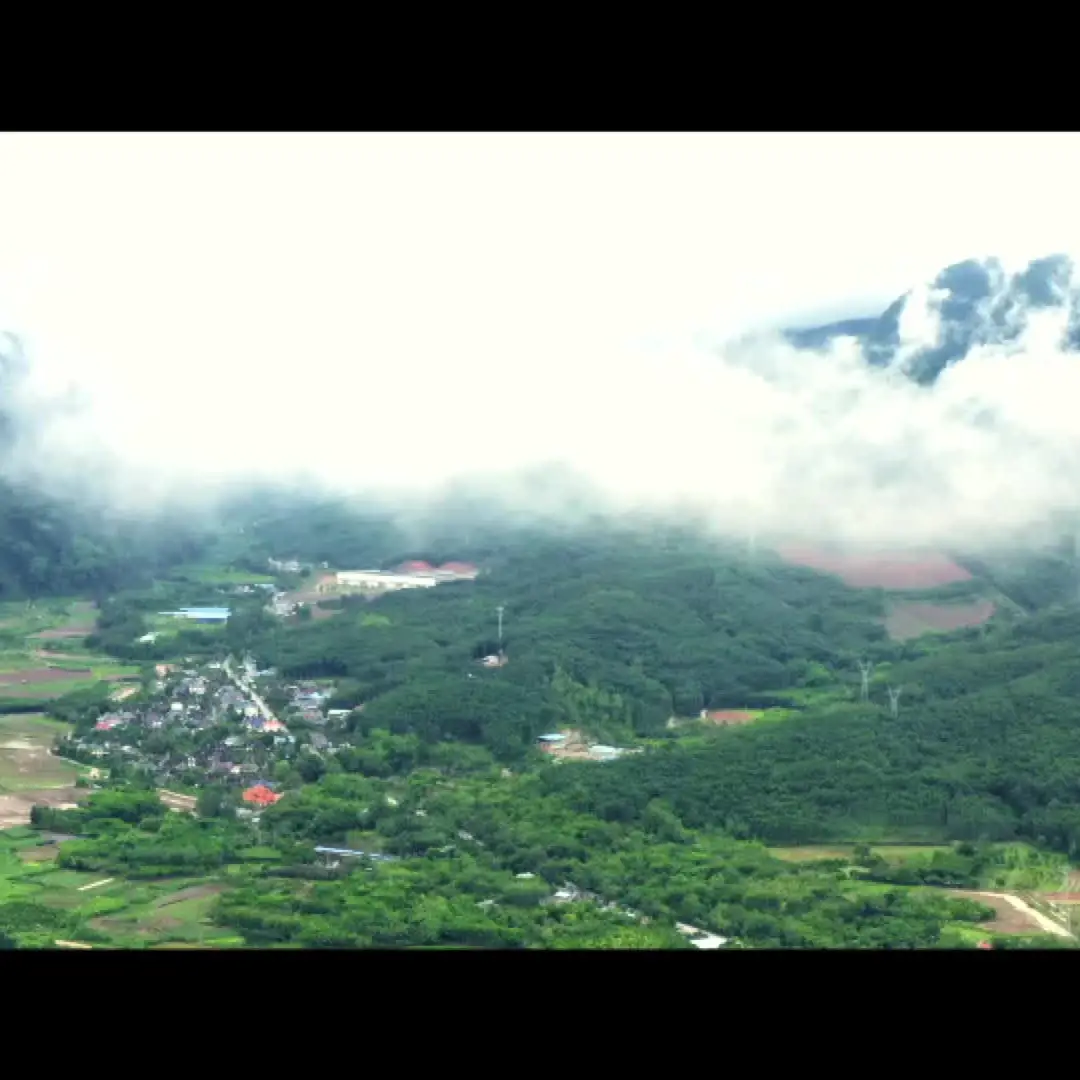
As the airplane's wing cuts through the clouds, looking down through the window, the landscape of Yunnan Province resembles a peacock spreading its tail—the Lancang River and the Jinsha River flow like veins, nourishing its magnificent and enormous tail feathers; while the tropical rainforest stretching south forms the peacock's foot reaching toward Laos. This is Xishuangbanna.
The plane descends slowly, passing through low-lying clouds, and the contours of the Hani tea mountains become clear from blurry. Fatigue is swept away by this breathable, touchable scenery before our eyes. White clouds dot the sky, green hills roll endlessly, and a massive river coils like a giant dragon, bending around one mountain after another. Soon, a moderately sized city appears—Jinghong has arrived.
This land, isolated by mountains and detached from the world, belongs to Yunnan yet doesn't quite feel like Yunnan. It is the ancestral home of thirteen ethnic groups including the Dai, Hani, and Han, as well as the habitat of rare animals and plants such as peacocks, Asian elephants, and towering parasol trees. If you think watching a few National Geographic documentaries counts as knowing Xishuangbanna, you're in for a surprise—knowing these things at best makes you a beginner. To unlock deeper ways of exploring, you need to follow Huya and step by step walk into this last pure land.
A Kaleidoscope of Multiculturalism: The Marvelous Daily Life on the Streets of Banna
The richness of Xishuangbanna lies precisely in the coexistence of its diverse ethnicities, cultures, languages, and religions. Walking down the streets of Banna, you'll see scenes like this: Dai girls in long skirts chatting amiably with tourists from afar; in the city's temples, visitors of different faiths sharing the solemn architectural space with devout Buddhists; in Dai restaurants, curious food lovers with blonde hair and blue eyes devouring sour and spicy dishes with gusto; at the night market, "Shao Duoli" and "Mao Duoli"—Dai young men and women in ethnic costumes—swaying to rock music.
If you're an experiential traveler, Xishuangbanna is paradise.
You can change into Dai clothing and elegantly learn etiquette in the Dai king's palace; or dive into a Dai village and experience a real Water-Splashing Festival, then enjoy an authentic Peacock Feast. If you're hands-on, cooking Dai cuisine yourself is also a great choice.

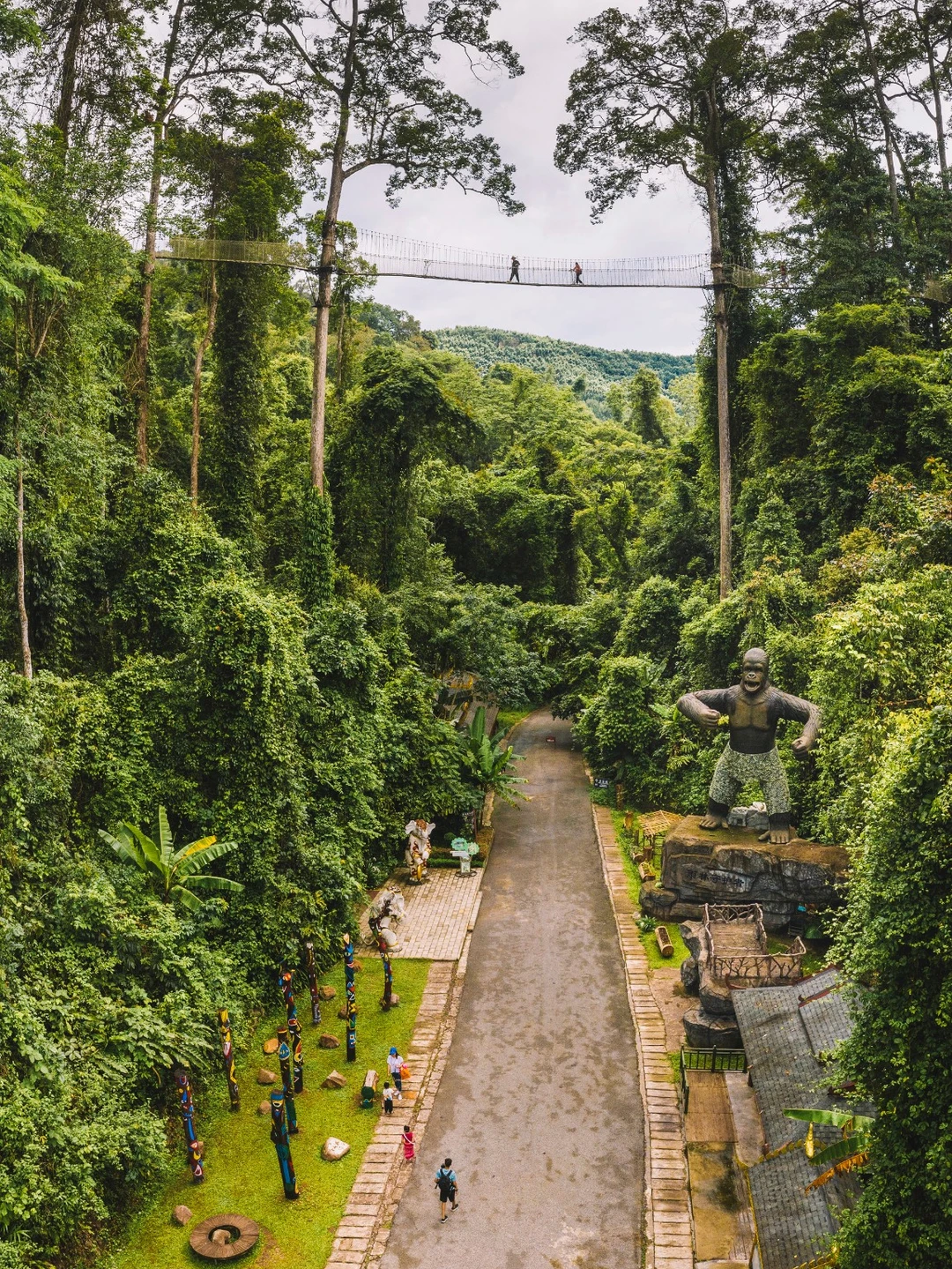
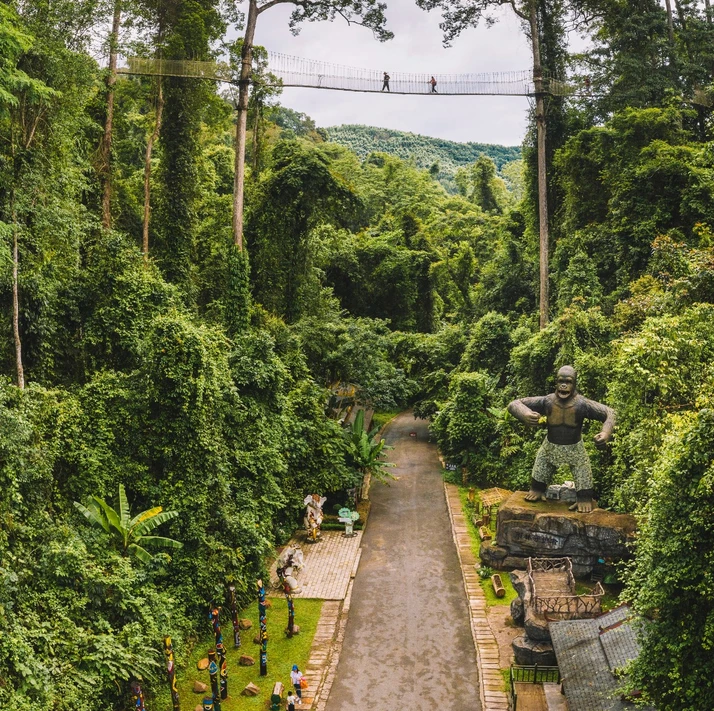
You can trek deep into the tropical rainforest, raft down rivers, or venture into the dense woods, wobbling across a 36-meter-high canopy walkway through the enormous forest of parasol trees, witnessing the brutal phenomenon of strangler figs and encountering various animals and insects.
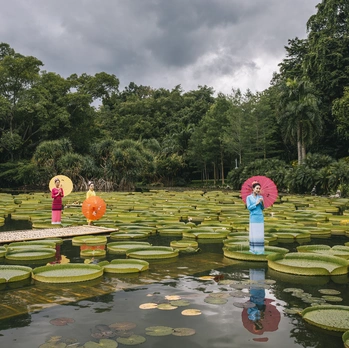
You can also stand on a giant Victoria Amazonica lily pad and float on the water without any support—like a martial arts master from The Legend of Sword and Fairy. Of course, the lily has its requirements: if you want it to carry you, your weight shouldn't exceed that of the Dai girl giving explanations at the Tropical Botanical Garden.
The most romantic experience comes late at night—when your vision is almost zero, follow a guide into the paths of the Tropical Botanical Garden or the Parasol Tree Scenic Area. Turn off the flashlight, let your eyes adjust to the darkness, and under the starry sky, the chirping of insects accompanies hundreds of fireflies swirling around you.
If you're traveling with family and children, it's even more suitable. Spend 70 yuan on a set of Dai clothing—the bright colors look cool and comfortable as you walk through the rainforest. Traditional folk customs and natural sciences, knowledge that can only be seen but not touched in books, come to life before your eyes, within reach. Kids can experience it firsthand, and adults should also perk up their ears to brush up on their knowledge, lest they lose face when their little ones ask tough questions.
Manting Imperial Garden: A Millennium-Old Dai Royal Paradise
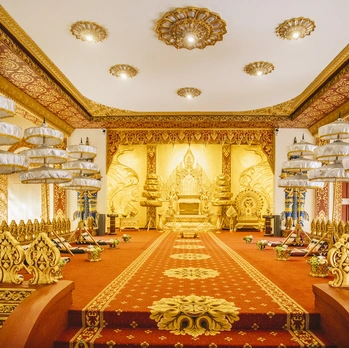
The Dai people like to name their villages with the character "曼" (Man), so you'll see many place names starting with "Man." Xishuangbanna Prefecture has numerous "Mans" large and small, but none is as famous as this one called "Manting" in Jinghong City. Unlike other "Mans," Manting is an imperial garden—for the past 1,300 years, it was a place where Dai kings and chieftains came to play, with flowers blooming all year round, song, and dance.
Though the imperial garden has sat quietly through the ages, its magnificent architecture cannot conceal its illustrious origins. Once a playground for royalty and nobility, it is now freely enjoyed by travelers and locals alike.
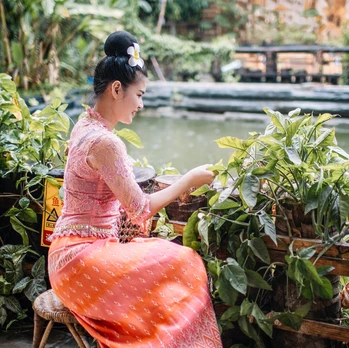
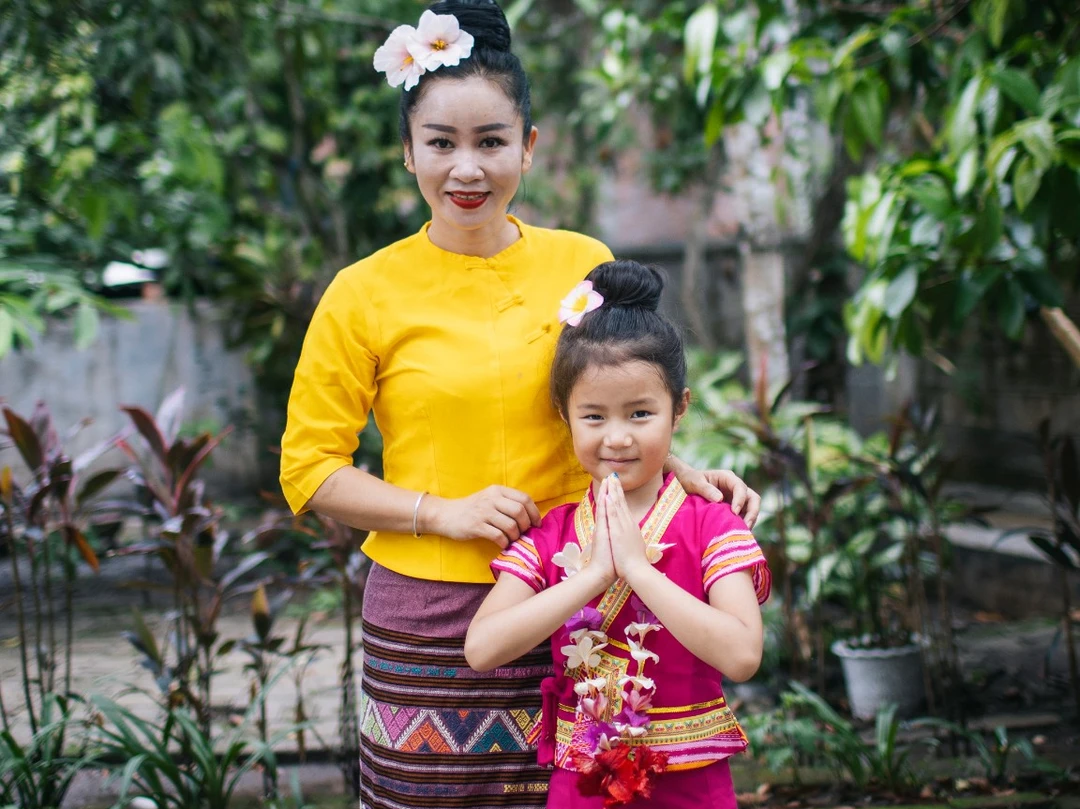
"Sawasdee" is the most commonly heard Dai phrase, meaning "hello" in Chinese. Walking through the Dai garden, the soft, delicate Dai language softens the heart and slows the pace. Dressed up Amy in a set of Dai attire, with her hair tied up, the splendid palace and intricately carved buildings all exude nobility.
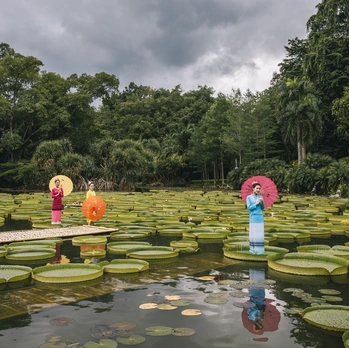
Wearing the Dai outfit, stepping out of the palace and strolling among pavilions and towers. This Dai clothing sweeps away Amy's usual tomboy image—the long, flowing skirt is elegant, and the fitted top is flattering. The lotus flowers in the pond are in full bloom, and a red oil-paper umbrella looks like an open petal as she walks among the giant lotus leaves.
Returning to the Dai king's palace, we take off our shoes according to Dai custom and step onto the place where the king once entertained guests. A teacher, also dressed in Dai attire, teaches the children Dai etiquette. Hearing the Dai language, it sounds a bit like Thai, and looking at the greeting gestures, the resemblance is even stronger. The wai gesture (hands pressed together) is positioned differently depending on the age and status of the person you're greeting. For peers, bring your hands together at chest level; for elders or respected individuals, raise your hands to forehead level to show respect.
Walking through Manting Imperial Garden, you might feel like you're in Thailand—many passersby are stylish men and women, elderly gentlemen and ladies in Dai clothing, as if stepping into a green painting. At 11:00 AM every day, the Zhangha Pavilion in the square by the dense forest plays Dai songs and dances, with melodies that are lyrical and melodious, as if telling a story.
Although Manting Imperial Garden is located in the bustling area of Jinghong, nature lovers can still find a peaceful retreat. The garden has over 100 acres of ancient ebony trees, with vines winding around them, lush and verdant, making for a very pleasant walk. The park has a large water area, with rippling blue waves, perfect for zoning out and leaving the city's noise and bustle far behind.
For a child like Amy, the beautiful environment provides a safe and pleasant place to play. But for energetic kids, beautiful scenery alone isn't enough—fun shows and hands-on experiences are what truly make them happy.
Elephant Show: Interacting with Giants of Six-Year-Old Intelligence
The elephant show and interaction was the activity Amy loved and remembered most. In ancient times, whenever a new Dai king ascended the throne, he would be matched with a new royal elephant as his mount, also a symbol of power and status. Back then, Manting Park kept many elephants, and the Dai king would choose the best one for himself, training the rest as war elephants for battle.
I've heard that elephants have high intelligence, equivalent to that of a six-year-old child—they can give massages, play soccer, and do math problems. At Manting Park, the majestic royal elephants showcase their abilities with their enormous yet agile bodies.
The elephant show has a fixed schedule, starting promptly at 4:30 PM daily. No separate ticket is needed—the show is included in the Imperial Garden entrance ticket, which costs only 40 yuan. Walking such a large park, watching a Dai song and dance performance, and then an elephant show—what a bargain! Before the elephant show, you can also learn plant collage—the plants used for the collages are all collected leaf by leaf by the teachers from within the park, making it very eco-friendly. Kids can use their imagination to create different patterns with leaves. Adults can also take a break, order a drink, and enjoy the breeze passing through, feeling the coolness in the tropics.
Dai Pottery Experience: Letting Time Flow Like the Wind
Making Dai pottery satisfied Amy's love for playing with mud. Of course, this mud play has a purpose—a Dai pottery teacher gives on-site instruction, teaching children how to turn a shapeless lump of clay into an exquisite cup. The clay is soft and formless, but through the processing of human hands, it can take on countless shapes, which is why both adults and children love it.
Seeing her so focused, I didn't want to disturb her. Back home in Xi'an, we're always rushing against time—time to get to school, time to eat, time for art class after meals, squeezing in English lessons on weekends… But here, time flows as freely as the wind.
The General Buddhist Temple and Release Lake: A Sanctuary for the Soul
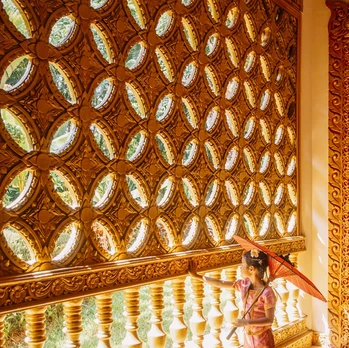
The back gate of Manting Imperial Garden connects to the General Buddhist Temple. Built in 615 AD, 1,400 years later, it still governs all the temples large and small in Xishuangbanna and was once the royal temple of the Dai kings.
Architecture enthusiasts will love this temple—it combines Buddhist art with Dai artistry, and though it has aged, it still retains its aesthetic and artistic brilliance. Carefully examine every eaves and every pillar, and you'll be moved by its rich details.
The Release Lake next to the General Buddhist Temple was consecrated by a revered senior monk who organized a hundred eminent monks to perform the ceremony. It is a place dedicated for Xishuangbanna Buddhists to release captive animals and is one of the most famous release lakes in Southeast Asia. The path leading to the Release Pavilion is a quiet trail lined with wish plaques. Have a wish? You can come here to make one and hang a wish plaque yourself—it's quite meaningful.
Lancang River · Mekong River Night: A Symphony of Bonfires and Water Lanterns
As evening falls, the sun sets, and the dappled light in the forest gradually fades. Time flows unhurriedly outside the window, and the secluded theater awaits visitors.
To enjoy the Lancang River · Mekong River Night Song and Dance Bonfire Party, you first have to go through the Hani people's "butt-bumping" welcome ceremony, then the Dai girls' welcome ritual, fill your stomach with a buffet dinner, and finally enter the theater.
The process may seem long, but the experience is rich. The Hani people welcome guests by bumping butts—beautiful women line up on both sides, and guests walk through the middle, bumping butts to express a warm welcome. You wiggle, you sway, you bump… navigating through a row of beautiful women's butts is a bit challenging, but you can feel the full ethnic enthusiasm. It's said that Hani women use butt-bumping to find a partner, to test if a young man is sturdy.
The Hani aesthetic standards might be similar to those of the Tang Dynasty: "Tea should be hot, and a wife should be plump." They believe women need to work in the mountains, and the plumper they are, the stronger, so they consider dark skin and plumpness beautiful, and their clothing is mostly black.
The buffet dinner is included in the ticket price. The all-you-can-eat Dai cuisine features authentic grilled meat and fish, and the fruit and ice jelly are especially refreshing in the summer heat.
After dinner, night falls over the packed theater, and stage lights shine like stars. The host, dressed in ethnic costume, steps onto the stage. The chatter fades, the lights dim. After a brief introduction, a beautiful dance unfolds—on the banks of the Lancang River, on a starry night, the river murmurs, the moon rises, and a Dai Shao Duoli (young woman) waits for her lover.
The show is divided into three parts: Song of the Lancang River showcases the brilliant and colorful history and culture along the Lancang River; Charming Dai Customs traces the origins of Dai culture; Rhythm of the Mekong River expresses the folk songs, ballads, music, dance, and costume styles of Banna's various ethnic groups. The twelve ethnic minorities living in Xishuangbanna appear on stage one by one, and the songs and dances of Laos, Thailand, Cambodia, Myanmar, and Vietnam—countries along the Mekong River—are also showcased.
The stage effects are impressive, and the interactive segments in between are also fun. Unmarried young men should definitely raise their hands enthusiastically to get on stage—you'll experience the open and inclusive nature of Xishuangbanna people, and there might be surprises!
The show ends, but the excitement is just beginning. The crowd files out of the hall, each person receiving a water lantern to hold in their hands. Accompanied by the chanting of a Dai elder, they walk through a pitch-black ebony forest to the Release Lake. The lake is illuminated by the warm glow of the water lanterns. People bend down and set their lanterns adrift on the water. The gentle ripples accompany the murmurs of silent wishes, and the wishes drift away with the red glow of the lanterns.
Stars in the sky, water lanterns on the lake, wishes in the heart. In this Buddhist city, the heart finds extraordinary peace.
Just as the serene blessing ceremony by the Release Lake moves you, and before the water lanterns have drifted far, music and song come from the speakers on the other side, and people have already formed a circle. Outward expression, unrestrained song and dance, swaying bodies—the inner wishes have already ascended to heaven from the Release Lake, while the wild bonfire burns away the joys and sorrows of the mortal world.
People gather under the monument to Premier Zhou Enlai's Water-Splashing, joyfully dancing and reveling around the bonfire with ethnic girls and boys, feeling the passion and exuberance of the minorities. No professional moves are needed—just follow the performers' lead, and a simple sway is enough to blend into the hundreds-strong group dance. Strangers hold hands, put arms on each other's shoulders, and circle the bonfire together, sharing the wonder, freedom, and joy of travel in the southwest corner of the motherland.
Manting Imperial Garden · Travel Tips
- Ticket: 40 yuan/person
- Opening Hours: 08:00-17:00
- Included Activities:
- Elephant Show: 10:30 / 14:50 / 16:30 (three shows daily, 30 minutes each)
- Zhangha Performance: 11:00 (one show daily, 30 minutes)
- Parrot Show: 9:30 / 12:00 / 15:40 (three shows daily, 10 minutes each)
- Free Admission: Seniors 70+, children under 1.2 meters, disabled persons, active military personnel
- Half Price: Seniors 60-70, minors under 18
Lancang River · Mekong River Night Song and Dance Bonfire Party · Travel Tips
- Tickets: Standard 280 yuan / VIP 380 yuan / Premium 480 yuan
- Entry Time: 18:30-19:00
- Dinner Time: 19:00-19:30
- Show Time: 19:40-20:40
- Water Lantern Time: 20:40-21:00
- Bonfire Dance Time: 21:00-21:30
Accommodation Recommendation: Free as the Wind
The owner of "Free as the Wind" seems a bit "unconventional"—he travels between ethnic villages, taking photos, editing videos, and documenting disappearing folk customs like Dai pottery, ethnic markets, and traditional craftsmen.
When you step into "Miman Hostel," every folk artifact seems to radiate the light of this land, telling its own story, with a magic that calms the mind. As you wander through and slow down, you'll realize: what brings peace isn't the objects, but the wandering heart finding its home.
- Very close to Manting Park, rooms are spacious
- Features rock climbing, billiards, a book bar, tea room, and swimming pool—perfect for vacations and family trips
- Many decorations come from Xishuangbanna, collected by the owner from various villages
- Listening to the owner's stories is more interesting than going out sightseeing
- If you have time, watch the owner's videos—they show many traditional aspects of Xishuangbanna that outsiders rarely see
Dai Ethnic Garden: Be a Little Dai Girl for a Day
Many people's memories have been nourished by another homeland. It brings insight, joy, and gives transformative power to shape a person. Travel is the same—travel to experience is what writing was to Shakespeare. We still remember that proverb today: "Read ten thousand books, travel ten thousand miles."
The biggest rain we experienced in Banna wasn't captured on camera. The car sped away from Jinghong City, heading dozens of kilometers to Ganlanba (Olive Dam). The wind was strong, the rain heavy, and the car raced along—impossible to hold the camera steady. Everyone sat in silence—today we were supposed to experience real Dai folk life in a Dai village, but with such heavy rain, could we continue?
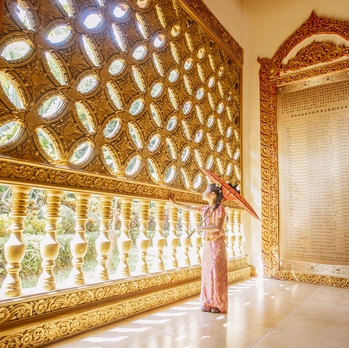
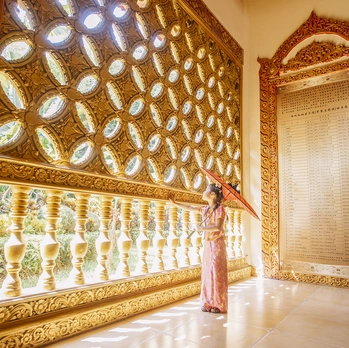
We transferred to the scenic area's electric cart. When we arrived at Man Chun Man Buddhist Temple, built during the Sui Dynasty, the weather relented, and the rain began to lighten. An ancient, Dai-style temple appeared before us. For over 1,400 years, the temple has been repaired and rebuilt many times, surviving wind and rain and still standing. Man Chun Man Temple is the central Buddhist site for the surrounding villages; on major Buddhist festival days, believers and monks from various temples come to worship.
The Dai people are devout Buddhists. The restoration of temple buildings relies entirely on donations of money and materials from the people and faithful followers. Temples and residential houses blend together, and Buddhism is closely intertwined with Dai daily life.
The Dai people are skilled in song and dance. From major traditional festivals like the Water-Splashing Festival and the Closing Door Festival to smaller events like moving into a new house, making offerings to Buddha, weddings, and harvest celebrations, they invite Zhangha (singers) to perform. Zhangha means "singer" in Chinese, but an outstanding Zhangha must not only have a beautiful voice and extensive knowledge but also rich imagination and quick wit to improvise songs—covering ancient myths and epics, historical stories, religious tales, moral teachings, literary ballads, astronomy, geography, prayers, and more, touching on all aspects of Dai society, history, and culture.
The Dai village cluster, consisting of five ancient Dai villages with a thousand-year history, is full of mystery. For the lively and active Amy, the Intangible Cultural Heritage Experience Zone has a mysterious power that makes her calm down.
Palm-Leaf Sutras and Ancient Crafts
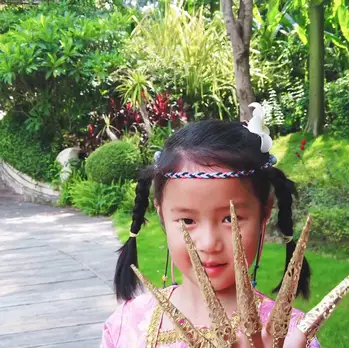
The teacher in the village slowly and methodically explained the history of palm-leaf sutras. Without palm-leaf sutras, Dai culture, history, Buddhist scriptures, and legends would not have been passed down to the present day. Similar to European vellum books or ancient Chinese bamboo slips, they are carriers of civilization, a product of local resources and wisdom.
Yunnan rice noodles are famous nationwide, but few people understand the traditional process of making them. The new grain is husked with a wooden mortar, soaked in water for a day, then pounded into rice flour with the wooden mortar, cooked into a paste, cooled, rubbed until fine and sticky, wrapped in banana leaves, and left to ferment for two or three days. Once the rice cake has fermented, it can be put into the "Gan Hao Nong" (a cylindrical press) to be processed into rice noodles. The wooden mortar is heavy and has rarely been used since the 1980s, and it's seldom seen anymore. In the Dai village, you can still see these traditional rice-pounding tools, and if you want to try your hand, no problem.
The traditional sugar press looks a bit like a northern millstone, using circular force to drive a central wooden crusher that squeezes sugarcane to extract juice for consumption.
Dai Hospitality
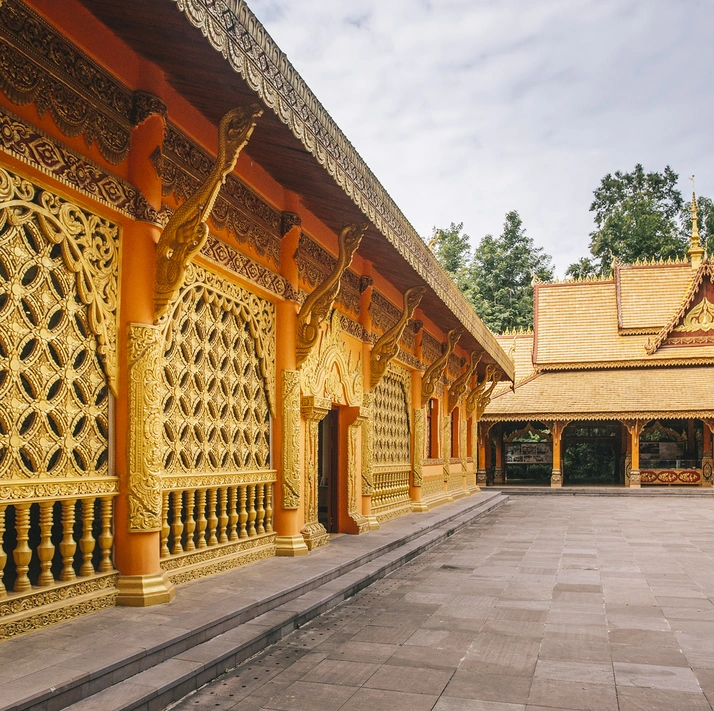
The Dai people are warm and hospitable. Though not as fiery as the Hani or Miao, they always welcome you with a gentle, unhurried, and refined hospitality. In the Dai Ethnic Garden, a Dai elder brother might "spar" with the children in Dai boxing, while a Shao Duoli (young woman) might take out an oil-paper umbrella and chat about their daily lives.
Water-Splashing Festival Carnival: The More Water, The More Blessings
A Water-Splashing Festival carnival is in full swing. No matter where you're from, no matter who you are, everyone changes into Dai clothing to experience the coolness and luck brought by water. Of course, since you're in a Dai village, the Water-Splashing Festival is no simple child's water fight—just look at the two thoroughly washed elephants joining in, and you know it's special.
The carnival doesn't start with everyone splashing wildly. Instead, following the host's directions, participants strike different poses to experience the Dai people's most important festival—the Water-Splashing Festival. For the Dai, the Water-Splashing Festival is the New Year, usually lasting three days: the first day is like New Year's Eve, featuring dragon boat races, launching skyrockets, and throwing love pouches; the second day involves activities like building sand pagodas and cockfighting; the third day is the most grand—"Bathing the Buddha," where everyone splashes water on each other as blessings—the more water, the more blessings.
Of course, if only tourists were splashing water here, it would lack authenticity. Over a hundred Dai villagers join in the carnival, celebrating in true Dai style.
The best part is the final free-for-all splashing. At this point, there are no rules—splash whoever you want, and the more you splash, the more blessings you give. The most thoughtful thing about the Water-Splashing Festival carnival? The clothes you're wearing aren't yours! You can splash and play freely, and when you're done, just change back into your own clothes and stay dry for the meal or next activity.
Amy had a blast. The 30-minute splashing felt too short—she wanted to play another round. Worried that the adults might splash too hard, Amy stayed on the sidelines and started splashing back and forth with a local Dai grandmother. The grandmother clearly held back, which gave Amy a great sense of accomplishment, and she kept splashing the old lady. When we told her the next session wasn't until tomorrow afternoon, she was actually a bit sad. Kids never get tired of playing with water—and since Xishuangbanna is in the tropics, joining this Water-Splashing carnival is the coolest thing you can do.
Dai Cuisine Class in the Chef's Village
After the Water-Splashing carnival, we returned to Manzha Village. This village used to train people to cook for the chieftain's衙门 (yamen, government office), earning it the name "Chef's Village." Because of their culinary skills, this village now offers Dai home-stay dining experiences, where you can learn to cook Dai dishes and taste authentic Dai flavors.
We signed Amy up for a Dai barbecue-making experience—adults can also learn a thing or two. Today's menu: pineapple rice, grilled pork belly, and grilled fish. To make pineapple rice, you hollow out the pineapple, mix the pineapple flesh thoroughly with sticky rice by hand, stuff the rice back into the pineapple, and steam it.
The key to grilled pork belly and grilled fish isn't the grilling itself, but the marinating beforehand. For delicious grilled pork belly, the marinade is crucial. To ensure the marinade penetrates the meat, you need to give the pork a massage with your hands. The fish is cut open and flattened, then stuffed with spices and lemongrass, so it comes out fragrant when grilled.
After learning to make Dai-style grilled meat, it was time to taste the dishes. Dai cuisine features sticky rice, sour flavors, and grilled meats and fish, mostly using wild or cultivated plants as spices, such as lemongrass. Almost every dish is paired with a unique dipping sauce, typically characterized by sour, bitter, and spicy flavors.
When the chef placed a large Peacock Feast platter on the table, we realized it contained dozens of meat and vegetable dishes, arranged on clean banana leaves. Fruits were in the center, surrounded by sticky rice, purple rice, and fried rice. Many ingredients came from local sources—various flowers, grasses, and mushrooms might appear as dishes. The ingredients are very healthy, and the cooking process uses minimal salt, MSG, or other seasonings, mostly replaced by natural spices.
Huya believes that Dai cuisine combines the characteristics of Northern Thai cuisine and Yunnan cuisine, making it more accessible to us than Thai food, and it's very tasty.
Lemongrass grilled fish is Huya's favorite dish and an essential part of Dai cuisine. After grilling, the fish becomes very fragrant, and paired with a special lemon sauce or Naanmi (a Dai-style dipping sauce), it's absolutely delicious. Naanmi is a Dai word for a sauce made by roasting tomatoes over charcoal, peeling them, and mixing them with onions, garlic, cilantro, Vietnamese coriander, wild Sichuan pepper, chopped bird's eye chilies, and salt—sour and spicy.
Of course, there's one important thing about eating Dai cuisine: drinking. Shao Duoli (young women) in full dress raise their glasses, and melodious songs flow. This is the Dai character—gentle, never losing politeness, their warmth and hospitality expressed through song and wine.
Let us drink to our hearts' content to the sound of these songs.
Dai Ethnic Garden · Travel Tips
- Ticket: 45 yuan/person
- Opening Hours: 08:00-17:30
- Water-Splashing Carnival: 13:30 / 15:30 (two shows daily, 30 minutes each)
- Song and Dance Performance: 14:20 (one show daily, 1 hour)
- Intangible Cultural Heritage Exhibition: 09:00-16:00
- Free Admission: Seniors 70+, children under 1.2 meters, disabled persons, active military personnel
- Half Price: Seniors 60-70, minors under 18
Tropical Botanical Garden: Up Close with 13,000 Plant Species
In early July, the daytime temperature in Menglun Town hovers around 33°C (91°F). We finally arrived at a place that can call Kunming "the north," yet the air here is even fresher than in Kunming. The atmosphere is similar to Chiang Mai—humid wind with a hint of earth, pointed wooden houses, and more importantly, the ever-present Dai cuisine, layered white clouds, wide rivers, and vibrant plants.
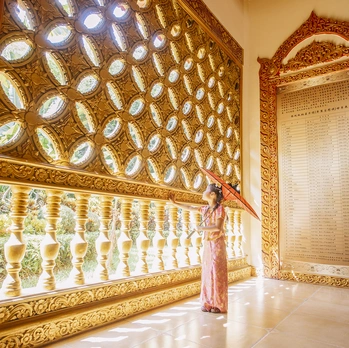
Entering the Tropical Botanical Garden from the main gate requires crossing a large bridge. You're not just crossing a river—you're entering a huge island. It feels a bit like How to Train Your Dragon's Toothless, after a long journey through clouds and over hills, finally discovering a hidden paradise.
As Xishuangbanna's only 5A-level scenic spot, the Tropical Botanical Garden was founded in 1959 under the leadership of Professor Cai Xitao. Originally located too close to the border with poor security, it was moved to Hulu Island (Gourd Island). Since then, the boundary of the now 11.25-square-kilometer garden—about a quarter the size of West Lake in Hangzhou—was formed and has remained. The island has a lovely name—Hulu Island—wrapped by the Luosuo River like a gourd.
The garden was originally established solely for tropical plant research. Through continuous expansion and renovation, it has become China's largest botanical garden with the richest collection of species and the most plant categories, as well as a scenic area integrating scientific research, species conservation, and science education.
With such a vast area, every inch of land is covered by plants. Seen from above, the roads become like tiny streams threading through the rainforest. Ten... (The original text appears to be cut off here. The translation continues to the end of the provided source material.)
You should also read:

Stillness and Motion: A Yunnan Journey in Golden October – A Dialogue Between Soul and Landscape
Stillness and Motion: A Yunnan Journey in Golden October – A Dialogue Between Soul and Landscape From October 15 to 30, 2012, I embarked on a 16-day journey through Yunnan, starting in Lijiang, passing through Lugu Lake, Shangri-La, Meili Snow Mountain, and Yubeng, finally ending…
Continue reading...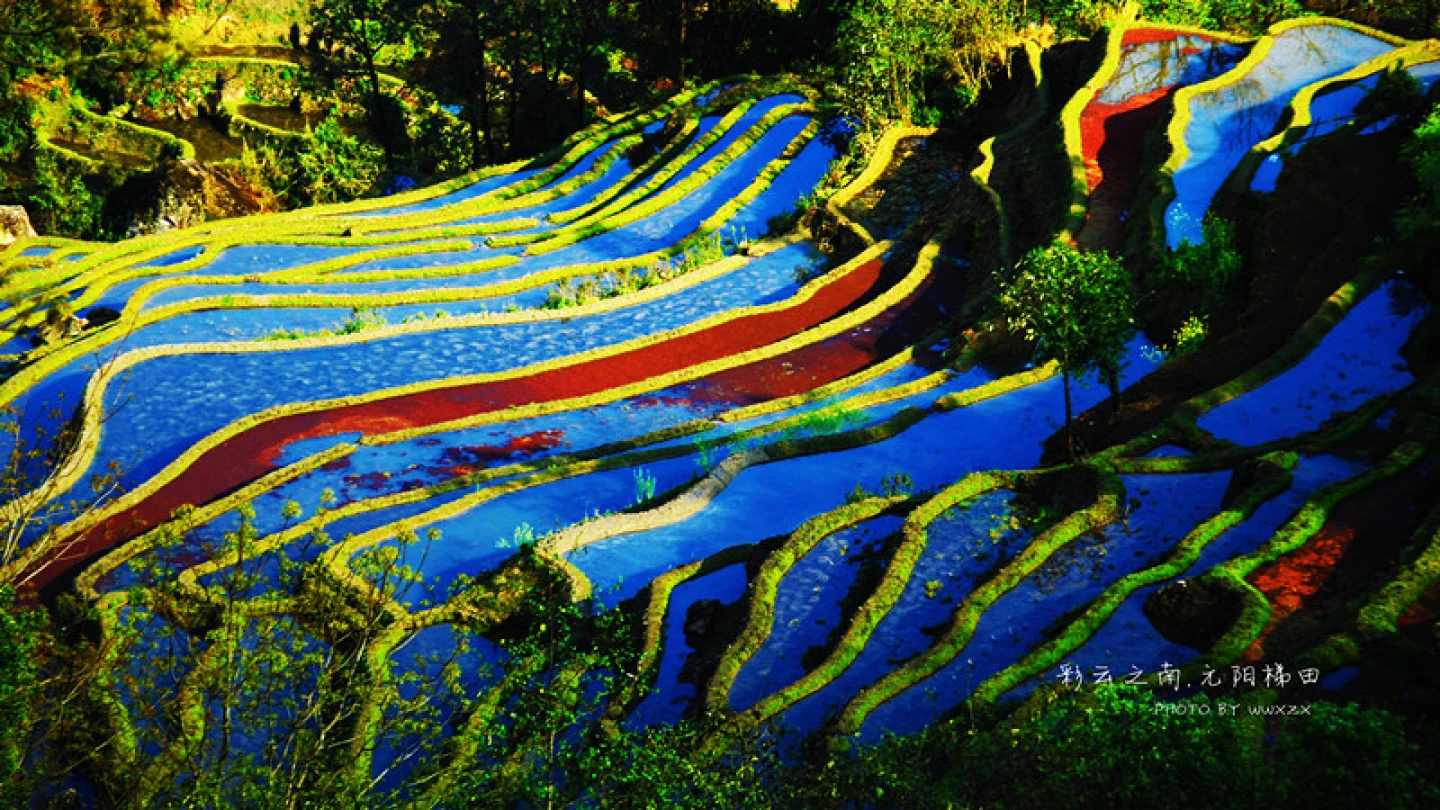
The Grand Beauty of Yuanyang: A Land Carved by Cultivation
The Grand Beauty of Yuanyang: A Land Carved by Cultivation A Belated Journey Chengdu has finally cleared up. After several consecutive days of rain, the sunset gently pours through the window. I sit in front of my computer, staring blankly at over three thousand photos.
Continue reading...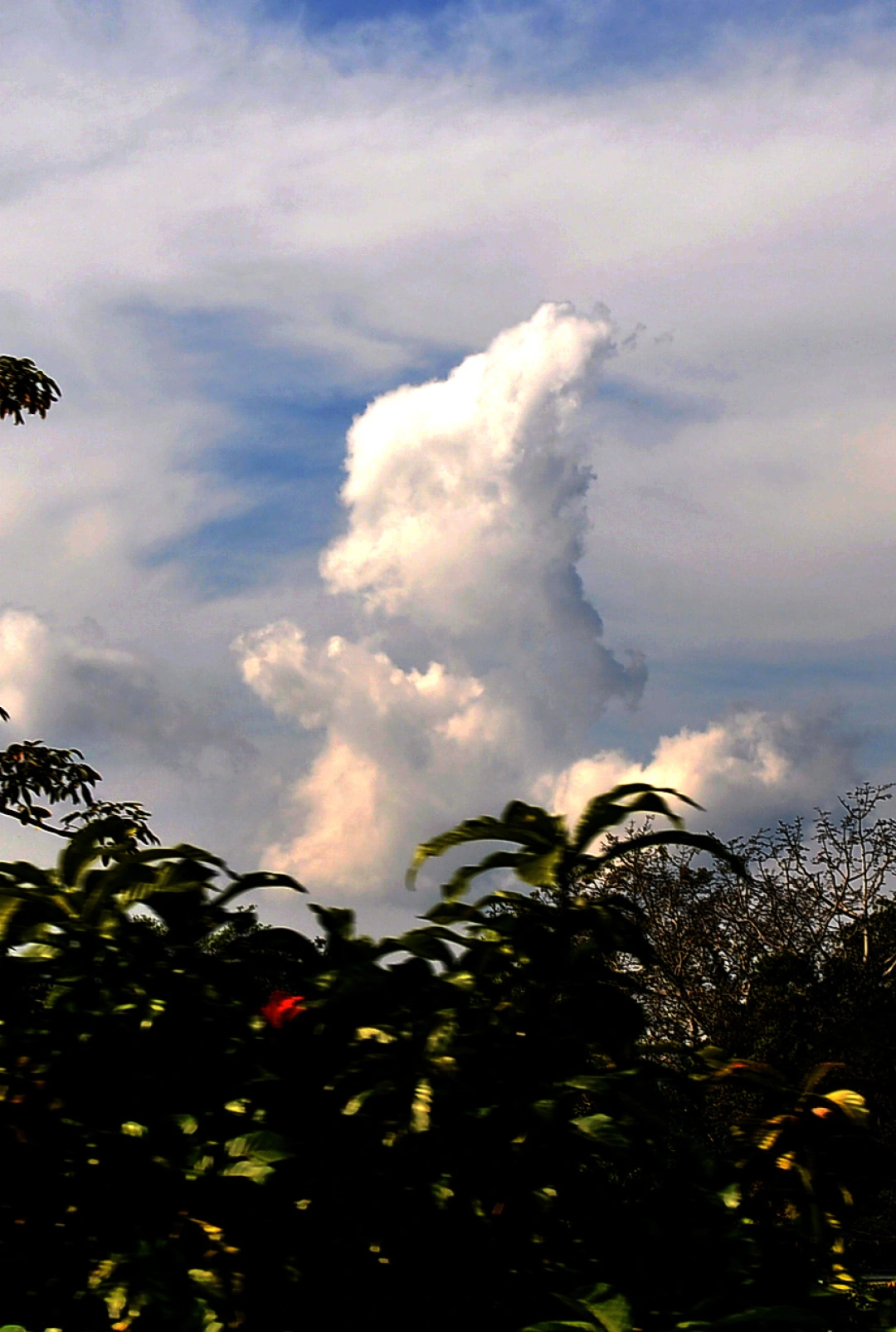
Xishuangbanna Self-Drive Tour: Into the Tropical Wonderland at the Edge of the Sky (Complete Guide)
Xishuangbanna Self-Drive Tour: Into the Tropical Wonderland at the Edge of the Sky (Complete Guide) Introduction: A Dream Fulfilled Thirty Years Early Some journeys are destined to happen at a specific moment in time. For me, a self-drive trip to Xishuangbanna was originally the first…
Continue reading...