Xishuangbanna: Encounter the Most Vibrant Yunnan in the Breath of the Tropical Rainforest
Xishuangbanna: Encounter the Most Vibrant Yunnan in the Breath of the Tropical Rainforest
If your impression of Yunnan is still stuck on the flowing waters of Lijiang's Old Town or the snow-capped peaks of Dali's Cangshan Mountain, you've missed the most vivid stroke on China's southwestern frontier—Xishuangbanna. The name itself carries an exotic mystique, like a long, melodic Dai folk song that, with just a hum, sets your heart wandering.
Traveling over two thousand kilometers from the water towns of Jiangnan, I boarded that rattling hard-seat train. The moment my plane touched down at Xishuangbanna Gasa Airport, a wave of heat hit me, as if to say: "Welcome to the real tropics."
What Magic Does Xishuangbanna Hold?
The Story Behind the Name
The four syllables of "Xishuangbanna" roll off the tongue, but behind them lies a piece of history. During the Ming Dynasty, this area was a gathering place for Dai tribes, which gradually formed tribal alliances. In the Dai language, "Sip Song Panna" means "twelve administrative districts," and as the phrase passed through Chinese, it became the name we know today: Xishuangbanna.
The region has a tropical monsoon climate, warm and humid year-round. Even in December, a short-sleeved shirt is perfectly adequate. However, the temperature difference between day and night can be significant—evenings bring a chill—so it's wise to carry a light jacket.
Practical Tips Before You Go
What to Wear: In December, short sleeves work for daytime, but temperatures drop noticeably at night. Pack a thin jacket.

Food Map: Authentic local cuisine is mostly concentrated around the Water-Splashing Square area. The flavors are sour and spicy, full of tropical character. One piece of advice: try not to eat in Gaozhuang—it's overpriced and mediocre, with terrible value for money.
Accommodation: Traveling in the off-season is a money-saver. Rooms near Gaozhuang go for as little as 100 RMB a night, but I'd recommend staying around Water-Splashing Square instead—that's where the real food scene is.
Getting Around: Taxis are convenient. You can also rent an electric scooter from your hotel (about 30 RMB per day), or use Didi's station bus service, which connects directly to most popular attractions.
An Immersive Four-Day Itinerary: From the Dai King's Royal Garden to the Depths of the Rainforest
Prologue: Arrival, Meeting the Night
Departing from Hangzhou, I traveled 2,360 kilometers, endured four hours on a hard seat, and finally landed in Xishuangbanna. Stepping off the plane, the heat wrapped around me, thick with humid air. On the cab ride to the hotel, I chatted with the driver:
"December is Xishuangbanna's coldest month, right in the off-season. In another month, when school's out for winter break, the peak season starts." "Of the three villages—Mandiu, Manyuan, and Manzhang—I'd personally recommend Manzhang." "If you're not into plants, you can skip the Tropical Botanical Garden." "Xishuangbanna is close to Myanmar, but the Burmese don't speak Chinese. The middlemen are mostly Chinese—basically, Chinese people scamming other Chinese people."
These tidbits planted themselves like seeds in my anticipation of the city.
Day 1: The Chinese Woman Who Must Have Her Photo
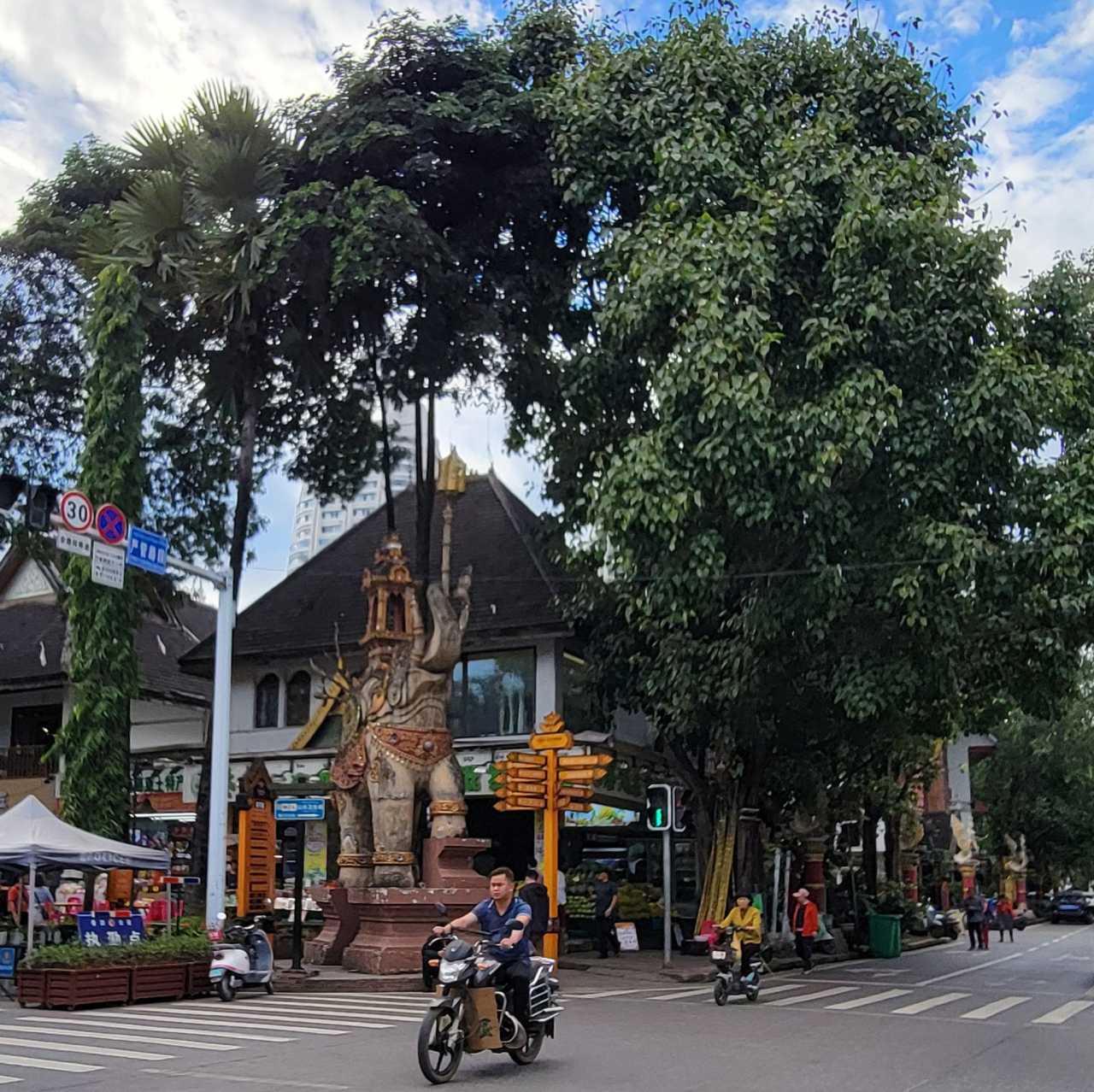
My friend and I met at the hotel in the morning, amazed by the region's distinctive folk architecture along the way. Triangular roofs, elephant stone carvings, tropical palm trees—a rich Southeast Asian vibe.
The elephant is Xishuangbanna's mascot, symbolizing peace, good fortune, and wealth. The peacock represents happiness and luck. Pineapple rice and pineapple sweet-and-sour pork are local specialties.
First Stop: Manting Park—The Dai King's Royal Garden
Admission is 40 RMB, which includes the General Buddhist Temple. The park features parrot shows (9:50 AM, 12:00 PM, 3:40 PM), elephant shows (10:30 AM, 2:50 PM, 4:30 PM), and an interactive "Meet the Dai Princess" experience (10:00 AM).
The park entrance was packed—more photographers than tourists. Everyone passing by asked, "Miss, want a photo?" In the end, I paid 100 RMB for 30 follow-shots (no retouching), covering four or five photo spots.
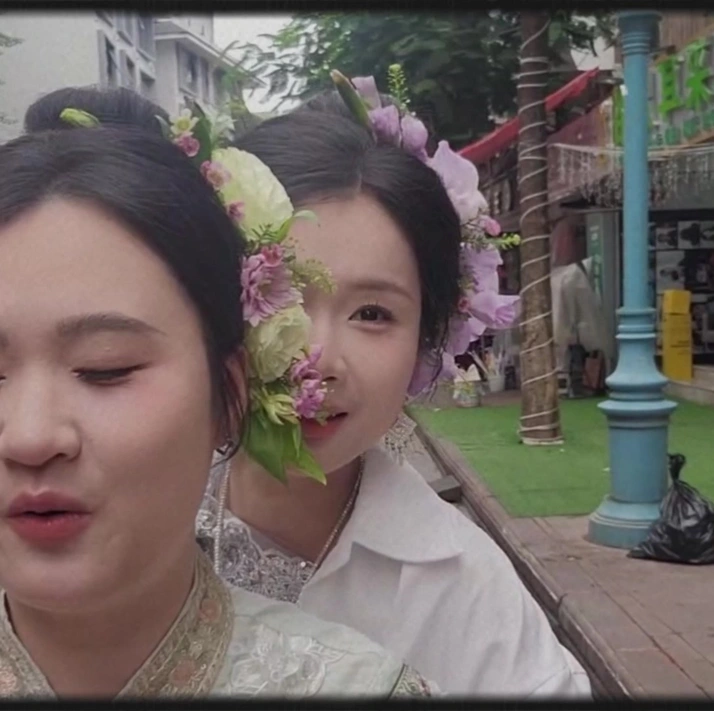
The park was full of "Dai princesses"—tourists in ornate Dai costumes. I was so busy posing I barely explored. After the shoot, I strolled along the river and finally caught the 3 PM elephant show. It was mostly families with kids; the host presented it as an educational talk. At the end, an elephant sprayed me with water from its trunk—I knew it was a blessing.
There were also adorable parrots and peacocks, bringing the royal garden to life.
Second Stop: The General Buddhist Temple
This is the highest-ranking temple in Xishuangbanna, dripping with Dai character and perfect for photos. But dress code matters: no bare shoulders, legs, or backs.
After four hours of power-walking through Manting Park, I was starving. For dinner, I chose the Xiawang Restaurant near Gaozhuang—nice for photos, but the food was average, no different from Thai food in Hangzhou.
Third Stop: The Starry Night Market
Right next to the Great Golden Pagoda Temple, it's overrun with assembly-line photographers, lights, and "Dai princesses." Endless stalls and vendors—you could walk forever and never see it all. By now, Xishuangbanna is basically run by northeastern Chinese. One piece of advice: try not to spend money around Gaozhuang—the chances of getting ripped off are high.
We returned our rented costumes before 10 PM and planned to remove makeup, wash our hair, and get a massage. That was a mistake. The massage place in Gaozhuang was bad—rough technique, high prices. My scalp was sore. I came out furious.
Day 2: Market Day and Water-Splashing, All Joy
Woken by voices outside the inn. Time to go! At 10 AM, I boarded the station bus heading to Ganlanba.
First Stop: Ganlanba Market
Open every Saturday; best to go in the morning. It's a highly local market full of character, close to the Dai Ethnic Garden—you can combine them into one trip.
The market was crowded, shoulder to shoulder, filled with the aroma of street food. I wandered, ate, and browsed, even spotting a Corgi out shopping. Pineapple rice was cloyingly sweet, Lao coffee bitter, bamboo rice fragrant and chewy, coconuts refreshing. There were all kinds of strange fruits—whatever you do, don't buy and eat the "demon fruit"!
Dai-style barbecue is a highlight: grilled frogs, insects, tofu, and more. Meat and seasonings wrapped in banana leaves, served on banana leaves. After a feast, I was stuffed—perfectly solving the brunch dilemma.
Second Stop: Dai Ethnic Garden
Admission is 45 RMB, not including the 40 RMB for the sightseeing cart. The Water-Splashing Carnival runs at 2:00 PM and 3:40 PM (ticket holders get a basin), and peacock dance performances are at 11:00 AM, 3:00 PM, and 5:00 PM.
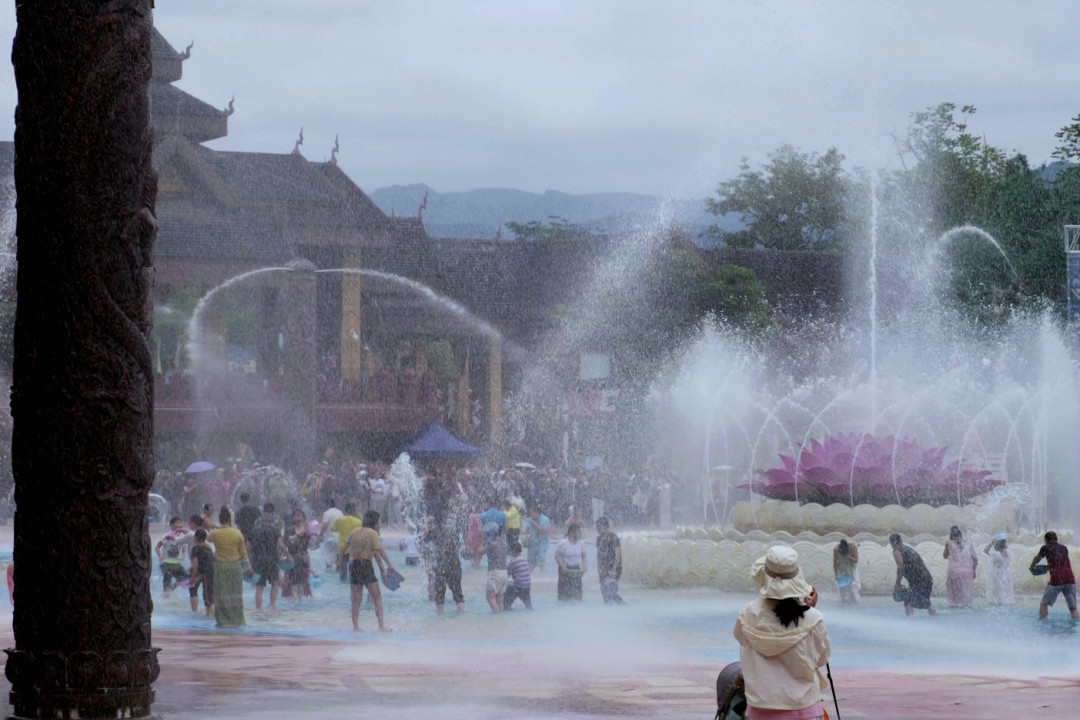
I hadn't brought a change of clothes, so I skipped the water-splashing—but it looked so joyful! The ceremony began with the host's enthusiastic announcements. A float parade circled once, then everyone followed the host's rhythm: "Splash~ splash~ splash splash splash~" The scene was spectacular and lively. I got my pants soaked by an unexpected spray from a water outlet. After the splashing came the Dai disco, and a song called "The Most Dazzling Ethnic Style" got an older guy behind me so excited. Finally, Dai girls paraded through the crowd—it was the perfect picture of "the elderly full of energy, the young listless and lifeless."
Each attraction is about 1.2 kilometers apart. If you're a good walker, skip the sightseeing cart—the road itself is scenic, with authentic Dai stilt houses to see.
I rushed to catch the 3 PM peacock dance performance. Note: it's a peacock dance, not peacocks performing. There was a pen of peacocks nearby—pay a feeding fee for close interaction. For someone like me (no house, no car, no savings), taking photos from outside the fence was fine.
By the time I reached the border pier, the soles of my feet were aching. This "border" isn't a real one—it's a filming location for the movie Operation Mekong. Across the way is the Six Kingdoms City, built with massive investment from Jack Ma. The railing overlooks not the Mekong River, but the Lancang River—which becomes the Mekong once it leaves China.
Manyuan Village is close to the Dai Ethnic Garden; if you have time, you can plan them together. Short on time, I skipped Manzhang Village. There were plenty of buses back to the city at the entrance—10 RMB!
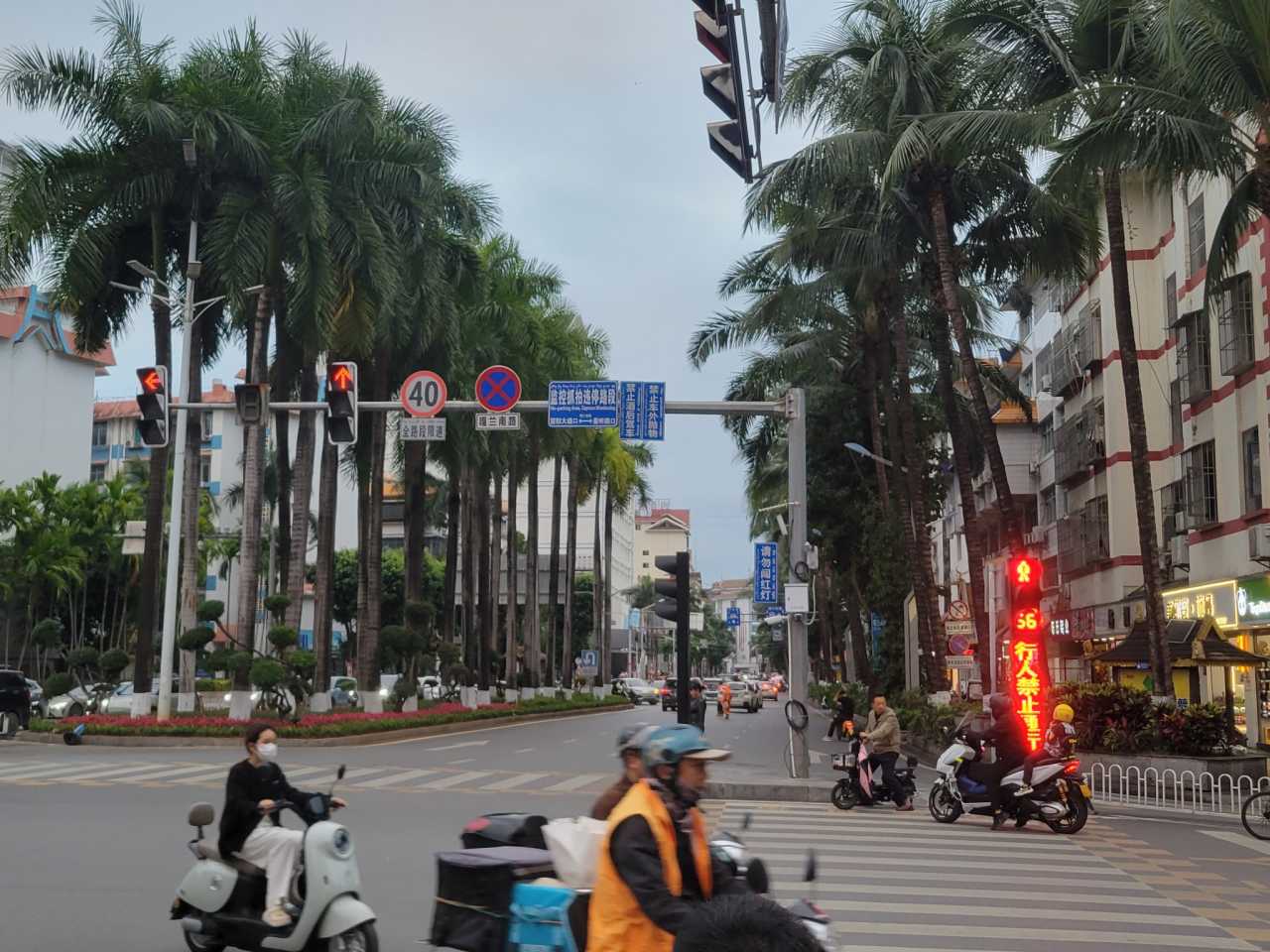
The bus stopped at Jinshatan Station. The palm trees along the road were beautiful. The Luoluo Ice House was right by the road, so I had dinner there. Afterward, I strolled through the Riverside Night Market, under the Xishuangbanna Bridge. It wasn't as lively as the Starry Night Market. Time to head back, wash up, and sleep.
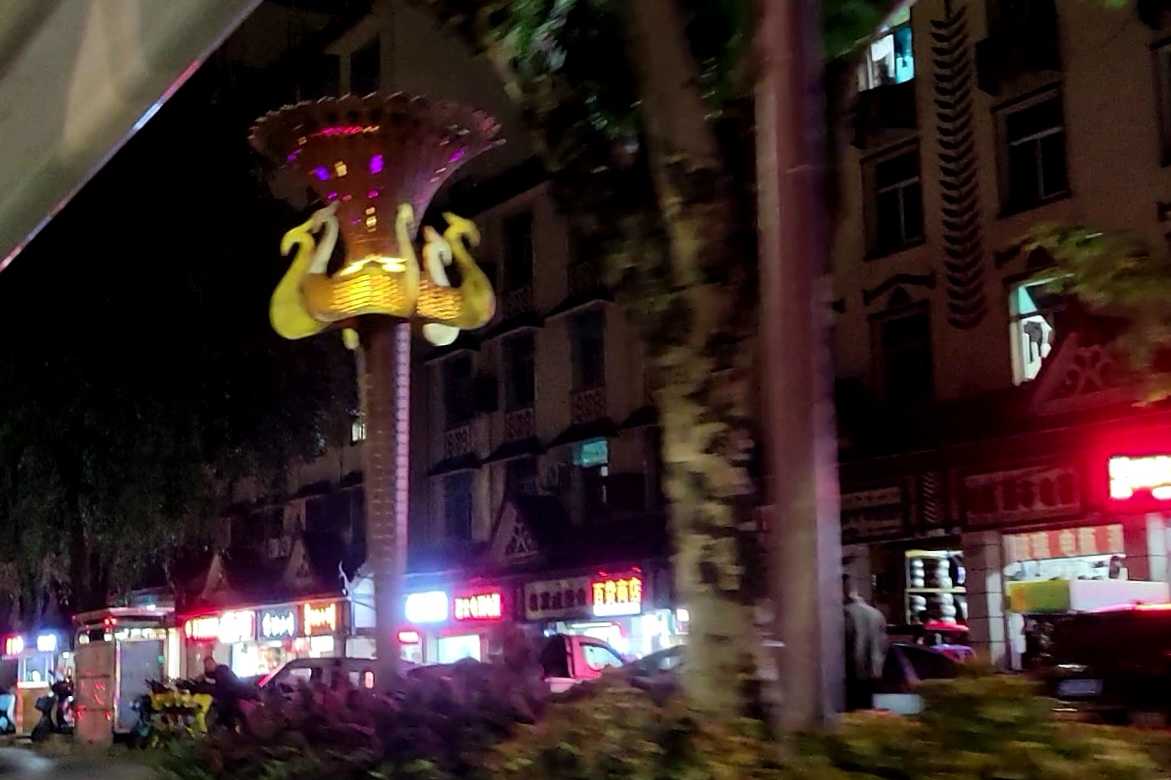
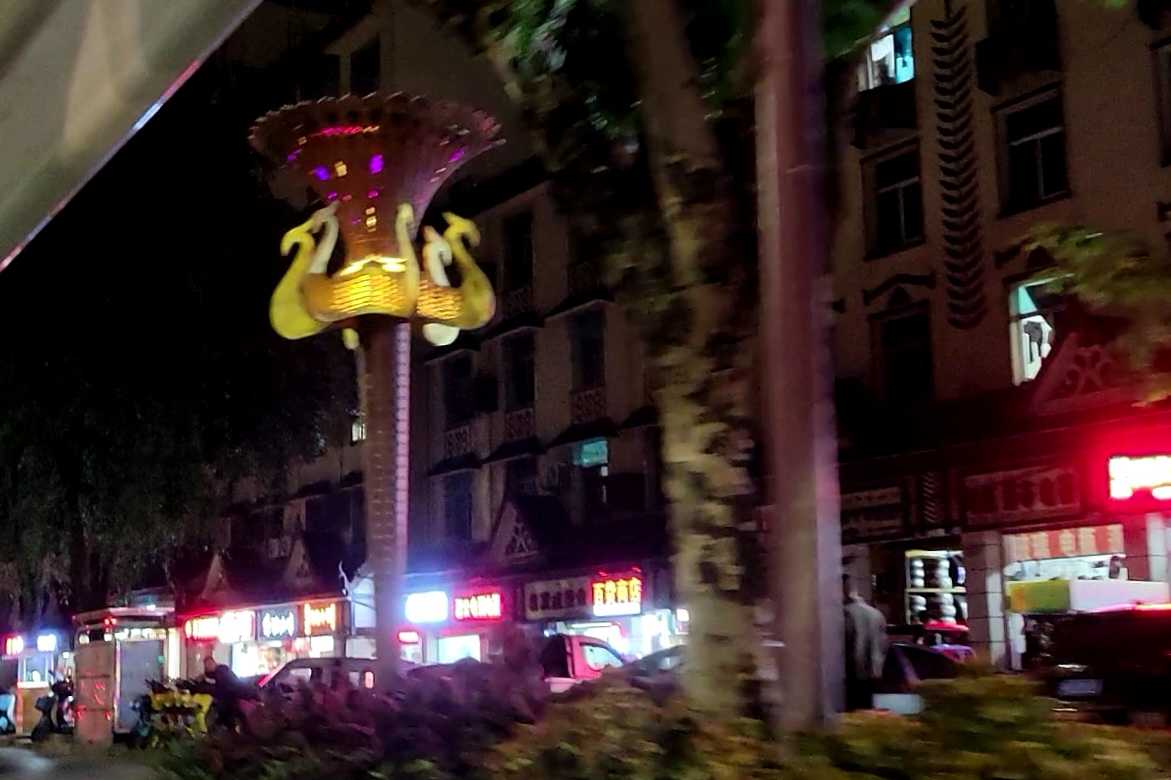
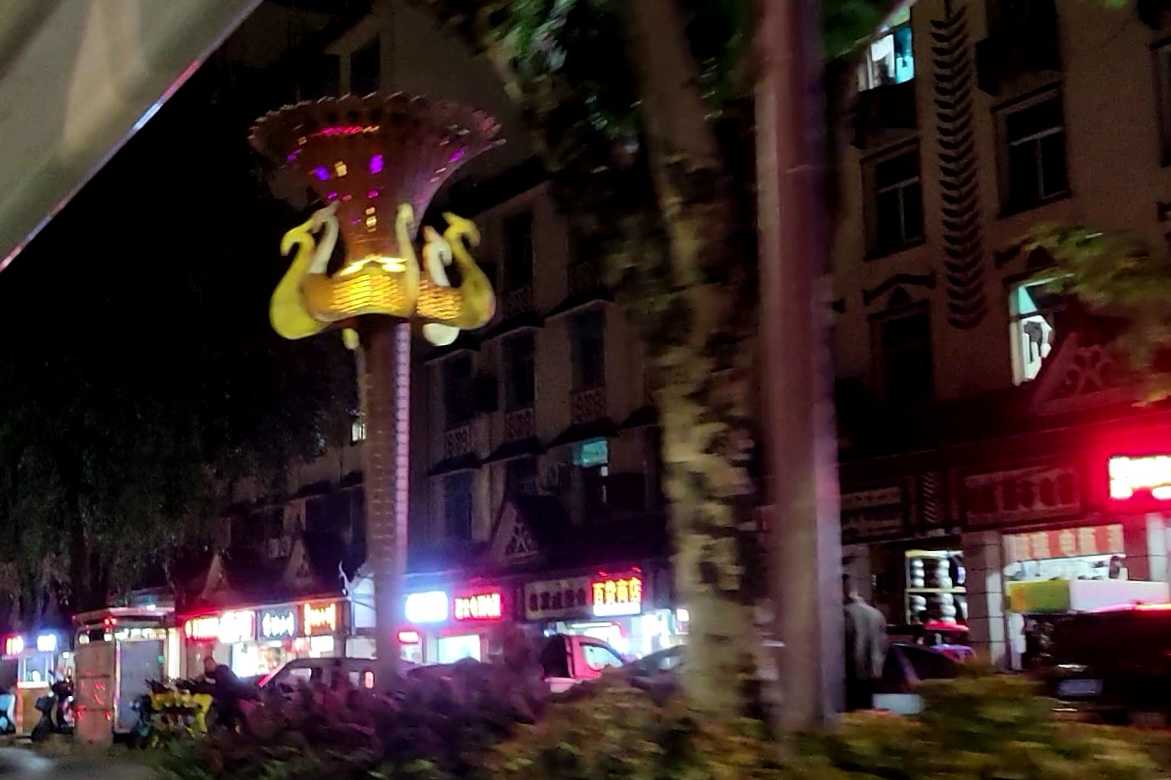
The Peacock Tower, Xishuangbanna's landmark—even the locals laugh at it.
Day 3: Jinuo Mountain Rainforest Hike—Finding Yourself in the "Forest" Breath
Jinuo Mountain is the homeland of the Jinuo people, China's 56th ethnic group, and one of the six major tea mountains for Pu'er.
Hiking Tips: - Choose between 4 km and 8 km routes. The 4 km is suitable for most people, taking about 5 hours; experienced outdoor enthusiasts can try the 8 km. - A guide is essential! I found Guide A Jie on Xiaohongshu (Little Red Book). Small group of 4–6 people, total cost 280 RMB, including: round-trip transport from the city, rainforest meal, tree descent, swing, bamboo raft, stone painting, hunting technique explanations, plant education, insurance, drinking water, and more. - Bring rain boots and mosquito repellent—the mosquitoes here are vicious! - It's cooler in the morning in the mountains; pack some snacks in case you get hungry on the trail. - Wear bright colors—they pop in photos! - Off-season is great—smooth operations, hardly any lines.
The rainforest hike was the most anticipated part of the trip—escaping the grind of office work, purifying the soul by getting close to raw nature.
Our group had six people: me and two mother-daughter pairs. We left the inn at 8:30 AM and started the hike at 10 AM. The virgin forest is full of plants and animals—don't touch anything out of curiosity; always listen to the guide, especially if you're a parent with kids.
Before entering the forest, the guide focused on plant education, tracing Jinuo Mountain's history, and explaining hunting techniques. Topics included banyan trees, figs, Pu'er tea, and sour ants.
A First for Me: Eating Live Sour Ants
The guide casually picked an ant from the roadside, crushed its head, and offered it to us to taste. When in Rome... I gave it a try.
We walked a bit before truly entering the forest. First stop: a high-altitude swing. Not crowded—my turn came in about ten minutes. The first swing gave me that drop-in-your-stomach feeling, but it was amazing—wild, free mountain wind and open space.
The rain boots weren't for nothing—next came the water section! Wading through streams, painting stones—nature is truly incredible. My fellow hikers all had cameras and kept snapping shots of me the whole way—one model, four photographers.
After the water crossing, we reached the farthest point of the hike: the strangler fig tree descent. Difficulty level: five stars. My first time rock climbing—no technique, just pure determination. Rain boots made it hard; the people below were anxious watching me. The second half was exhausting, my legs shaking... but how could a Chinese woman who must have her photo give up?
Just then, the sun broke through, pouring through gaps in the towering canopy. Light and shadow intertwined, and everything was gilded.
Archery practice was next door—five arrows per person. Predictably, I hit nothing.
I can never resist a swing—this one had a 60-meter rope. Jaw-dropping.
Wild lingzhi mushrooms growing in the virgin forest—must be expensive.
From here, we turned back. We passed villagers from the local settlement having a wild barbecue—freshly caught fish, freshly made soup, crackling fire. Too bad it wasn't our lunch. A little disappointed, we headed back, wading through water the whole way, climbing upstream. At the photo spots, we took turns posing.
In the forest at 10 AM, out by 3 PM. It didn't feel that tiring—easy. But I was starving. The rainforest meal was just okay—cold food, fishy fish. Nobody ate much.
The trip ended, and we said goodbye to the guide. Thankful for all the spontaneous photos he took along the way.
The promised Dai disco on the ride back never happened. Instead, I rented an electric scooter and roamed the city aimlessly. First stop: Wuhao Menghun Niu Sapa Mixian (a rice noodle place). I was so hungry that the first bite blew my mind.
Full and happy, I headed to the nearby Water-Splashing Square. It's just a massive square for dancing. I imagined how lively it must be every April.
An electric scooter is perfect—stop and go as you please. At Manting Park, I realized the Dai King's Palace, shown separately on the map, was inside. Going deeper, the smell of everyday life grew stronger—closer and closer to how locals live. When in Rome, I tried the street-side fruit salads. I picked three fruits I'd never seen before: spring plums, spring duoyi, and sour flat fruit. But locals seemed to prefer mango.
Maybe it's the heat, but there are lots of cold salads here, leaning sour and spicy—very different from Jiangnan.
A gentle breeze, clouds painted by sunset. Lacking the vocabulary for such beauty, all I could say was: "So beautiful."
By the time I reached Peacock Park, it was fully dark. Elderly folks were playing instruments—a peaceful, glowing picture of retirement life.
I circled around but never got to eat peacock rice. Local food places close around 8 PM. I ended up ordering takeout.
Day 4: Mandiu Village, Drawing the Journey to a Close
Woke up early and headed to the local market—Jinghong Farmers' Market. The food and goods were similar to Jiangnan, except for the sticky rice and tropical fruits.
Back to the hotel to pack, then off to Mandiu Village (near the airport). The security guard must have been crazy—charging 10 RMB an hour for luggage storage. No way—I just carried my bags.
Mandiu Village is a bit commercialized, but most of it still retains the original residents' way of life. It was pleasant to wander around. The banana trees at the village entrance—I'd never seen them like that. I didn't have much time, so I only explored the outskirts. Lunch was at the Mandiu Xiaoyuan restaurant, then off to catch my flight.
The village didn't seem to have much distinctive character. Locals said to check out the temple. Personally, it felt similar to other Dai villages.
It's over. It's really over.
Final Thoughts: What Needs to Be Said
Xishuangbanna—a tourist city "conquered" by northeastern Chinese, offering a terrible experience. That sounds harsh, but it's my honest feeling.
As a border town in Yunnan, a gathering place for ethnic minorities, and a kingdom of virgin forests, Xishuangbanna has incredibly rich folk character. But everywhere you go, there are short-sighted northeasterners overcharging and scamming. Everyone's focused on immediate profit, steadily dragging down the visitor experience. Honestly, many places in China have this same murky, predatory tourism model. A lot of people just accept it with the phrase "since I'm already here."
But Xishuangbanna is still worth visiting—as long as you know where to go and how to play.
Avoid the traps of Gaozhuang and step into the everyday life of Water-Splashing Square. Say no to assembly-line travel photography and take a slow walk along the river in Manting Park. Don't let the northeastern-run massage shops turn you off; go to the local markets and experience real life.
Xishuangbanna is a place that requires patience and curiosity to explore. It won't cater to you, but if you're willing to step into it, it will respond with tropical winds, the breath of the rainforest, and the smiles of the Dai people.
Finally, a few tips for those about to go:
- Travel in the off-season: December is the best time—fewer crowds, lower prices, better experience.
- Avoid Gaozhuang: For food, accommodation, and shopping, stick to the Water-Splashing Square area.
- Do your research: Book a guide in advance, especially for the rainforest hike.
- Stay alert: Say "no" to the "since I'm already here" spending traps.
- Slow down: Xishuangbanna isn't for rushing. It's for walking slowly, looking carefully, and feeling deeply.
May you find your truest self in Xishuangbanna.
You should also read:
Escaping Nanning, Falling Under Lijiang's Spell: Our Four-Person, Ten-Day Yunnan Dream
Escaping Nanning, Falling Under Lijiang's Spell: Our Four-Person, Ten-Day Yunnan Dream Before We Set Off: No Pain, No Obsession Have you ever had that impulse—suddenly tired of the office fluorescent lights, the crush of the subway, the endless parade of identical takeout boxes, and just…
Continue reading...
God’s Abandoned Palette: A Self-Drive Journey Through Yunnan’s Dongchuan Red Land
God’s Abandoned Palette: A Self-Drive Journey Through Yunnan’s Dongchuan Red Land Travel has never been about reaching some distant geographic coordinate. It’s about encountering, along the way, the version of yourself buried beneath the rubble of daily routine. During this May Day holiday, I finally…
Continue reading...
Golden Luoping: A Romantic Encounter with Sunshine and Seas of Flowers
Golden Luoping: A Romantic Encounter with Sunshine and Seas of Flowers Introduction: The Third Time's the Charm Some landscapes are destined to be seen at the right moment. For me, that was exactly the case with Luoping's rapeseed flowers. On February 22, 2011, the Luoping…
Continue reading...