Xishuangbanna: Heading South to Embrace 28°C Sunshine and Freedom
Xishuangbanna: Heading South to Embrace 28°C Sunshine and Freedom
When the bitter winds of the north swept in with snow, wrapping the entire city in a gray winter shroud, I scrolled through the steadily dropping temperature forecasts on my phone. Suddenly, a number struck me—Xishuangbanna, 28°C. In that instant, it felt as if a beam of sunlight pierced through the screen, warming my soul still bundled in a down jacket. So, on December 27, 2014, when my daughter Luelue had just turned seven years and three months old, our family of three set off on this "winter escape" journey without a second thought.
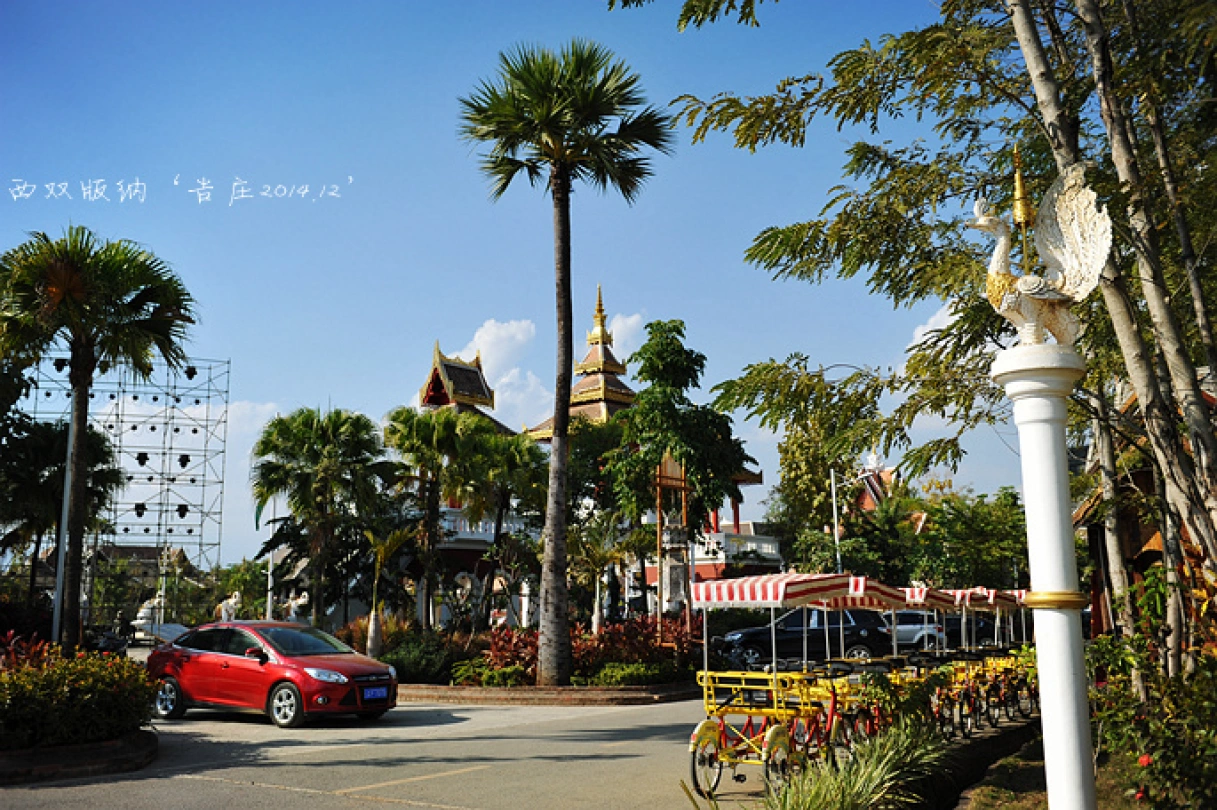
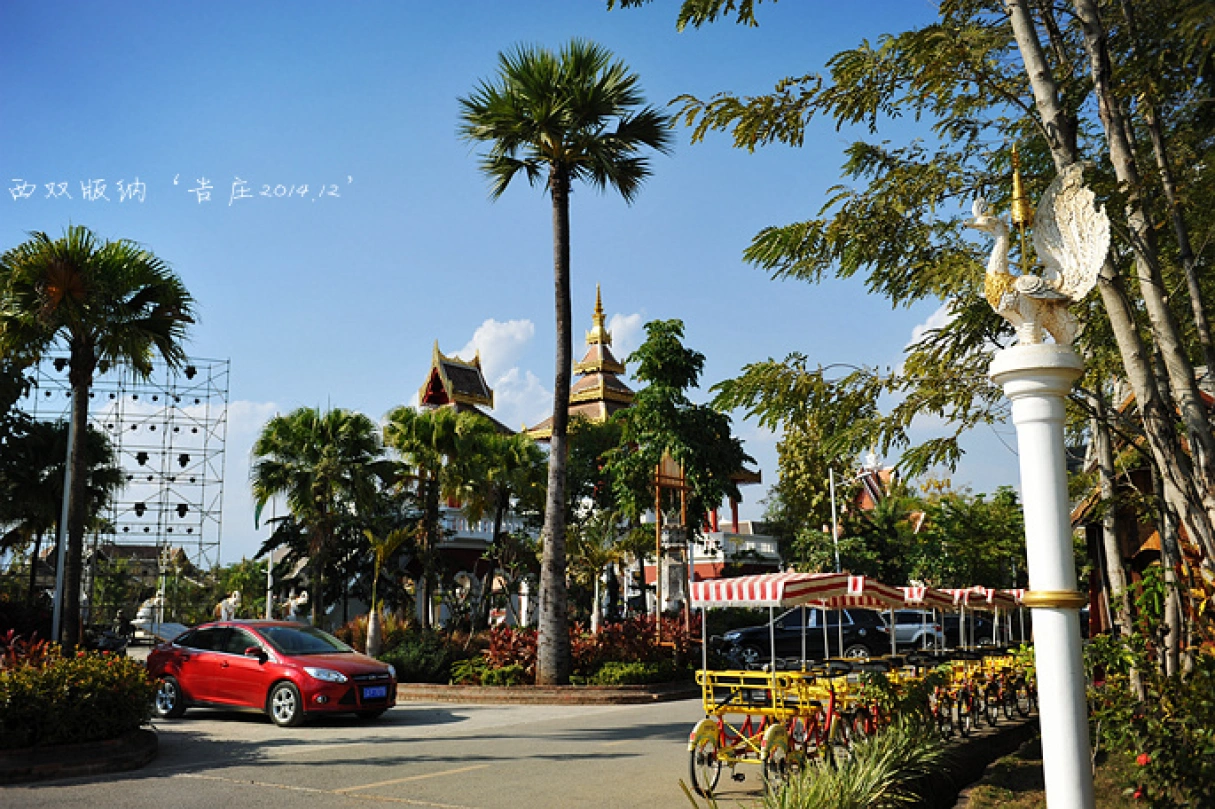
When the plane landed at Jinghong Airport, night had already fallen. As we stepped out of the cabin, the warm, humid air wrapped around us like a soft blanket. I couldn't wait to shed my heavy winter coat, as if shedding the weight of an entire season. Our driver was already waiting at the exit, his tanned face beaming with a genuine smile. He took our luggage and skillfully drove us toward Gaozhuang Xishuangjing (a popular tourist district known as "Little Southeast Asia"). At eleven o'clock at night, Xishuangbanna's streets were quiet and cool. Palm trees and towering golden pagodas along the roadside shimmered with a mysterious golden glow under the lights. When the car stopped in front of a guesthouse adorned with Dai ethnic elements—carved wood, brocade, and tropical flowers—Luelue squealed with delight and dashed inside. Ignoring that the night market had already closed, my husband took her hand and went out in search of tropical fruit. A moment later, the little one came bouncing back, empty-handed but shouting excitedly, "Mommy, no fruit, but Daddy bought beer!"
When staying at a guesthouse in Xishuangbanna, always choose a room with a balcony. Sipping a couple of beers in that balmy air is the simplest kind of romance here. I jokingly complained that there was no snack to go with the beer, and my husband immediately went out again. Two minutes later, he called up to me softly from below. Over the balcony railing, a pack of peanuts flew straight into my hands. As for Luelue, she rolled around on the rattan chair one moment and bounced on the bed the next, too excited to remember the exhaustion of the journey. Xishuangbanna, with its warmth and exotic charm, had completely won us over on that very first night.
First Impressions of Gaozhuang: A "Little Southeast Asia" You Never Want to Leave
Before coming, I checked the weather forecast and saw rain predicted, which made me a bit anxious. Later, I learned that from October to April each year, Xishuangbanna is in its dry season, with almost no rainfall. Even if a few drops fall, they're just brief passing showers. In the dry season, the weather here is nothing to worry about—slightly cool in the morning with a thin mist, then the sun grows generous around midday. By two in the afternoon, it's time for short sleeves, and the blazing sun can make your arms sting.
Our breakfast in Yunnan naturally started with a bowl of rice noodles (米线). The steaming broth held silky noodles and a flavorful soup base, topped with a spoonful of pickled vegetables and chili—an instant wake-up call for the taste buds.
Our home base was Gaozhuang Xishuangjing, a recently developed tourist district. It's filled with two- to three-story wooden Dai-style houses, each one a charming guesthouse, restaurant, dessert shop, or café. With its Southeast Asian-style golden pagodas, towering tropical plants, and brilliant blue sky, the place is captivating at first glance. It's not in downtown Jinghong, but it's the gateway to all the major attractions. We arranged a private car through our guesthouse—200 yuan per day for local trips (260 yuan for slightly farther ones)—and the driver could even help us buy discounted tickets. Visiting two attractions a day was both time-saving and budget-friendly. For us, taking it slow with a child, we only visited one attraction per day at the same price, but the ease was heartwarming: get in the car at the guesthouse, enjoy the sights, and get back in when you're done. Every guesthouse in Gaozhuang has its own drivers, with service so attentive it's hard to find fault.
A Food Lover's Paradise: Manfeilong Roast Chicken and Dai Feast
Wandering around Gaozhuang became our greatest daily pleasure. The sheer variety of restaurants here is dizzying, offering every flavor imaginable. The Dai cuisine we craved isn't vast in variety, but the roast chicken at Manfeilong Roast Chicken Restaurant (曼飞龙烤鸡店) was so delicious that I ate it three days in a row! I always wanted to take one back to the guesthouse at night to go with our beer. The lemongrass grilled fish was also superb—tender with a fragrant herbal note. However, Dai dishes tend to be quite spicy. Most vegetables come as wild greens with dipping sauce, mixed vegetable wraps, or tomato nam phrik (a spicy tomato-based chili dip). Luelue's favorite was pineapple rice (菠萝饭), sweet and filled with fresh pineapple chunks. The wild greens platter included fiddlehead ferns, stinkweed (臭菜), and mint. The stinkweed's stems are thorny like roses, and my husband, without a second look, popped one in his mouth—only to scratch his throat. After that, we switched to stinkweed omelets (臭菜蛋饼), which were soft and not prickly at all.
When we got tired, we'd stop for coffee and dessert. The sun was warm, and time seemed to slow down.
The Starry Night Market and the Golden Pagoda by Night
Gaozhuang's nights belong to the Mekong River Starry Night Market (湄公河星光夜市). After seven in the evening, countless spherical lights illuminate the area like a brilliant galaxy. The market doesn't sell anything particularly precious—mostly snack stalls and trinket vendors—but the relaxed atmosphere, combined with the pleasant climate, makes it impossible to leave. Luelue's daily priority was to visit the market, drink a fresh juice, and watch a folk dance performance. The golden pagoda, bathed in lights at night, took on an even more mysterious and majestic air than during the day.
A Home Away from Home: Mekong Source River View and Langxi Guesthouses
Our favorite "home" in Gaozhuang was the Mekong Source River View Guesthouse (湄公源望江客栈). We booked a suite with two large beds separated by a bathroom and hallway—essentially two rooms with a terrace. Every window in Xishuangbanna houses is wide, a sign that it's warm and free of mosquitoes here, with no need to worry about drafts. What I loved most was the large terrace with a hanging basket chair. As soon as Luelue saw it, she declared, "I want to settle down in Xishuangbanna!" She'd often be playing outside, then suddenly ask to go back to this "temporary little home." The owner was incredibly generous: on our departure day, he personally drove us to the Forest Park, charging only a bit for gas, helped us buy discounted tickets, and even escorted us all the way to the entrance.
The terrace faced the Lancang River (Mekong River). One night, as I was sipping beer, music suddenly drifted across the water. A colorful, jewel-like boat slowly approached, stopped right in front of me, played a song, and then drifted away like a dream.
Later, because the Mekong Source was fully booked, we spent one night at the Langxi Guesthouse (廊夕客栈). It offered incredible value—free airport pickup, a computer in the room, a balcony with rattan chairs, 24-hour hot water, a full set of toiletries, and breakfast for two—all for just 178 yuan. The only downside was the small bed, which wasn't ideal for families with children. The owner was also very kind: Luelue could eat as much breakfast as she wanted, and they even cooked her three bowls of rice noodles. My husband drank a bottle of water from the room and forgot to mention it; when he went to pay later, they refused. In short, it was warm and thoughtful—recommended for those traveling without kids.
We spent the first three days experiencing ethnic-style guesthouses, then moved to a five-star hotel for the final two days. I thought the contrast might be disappointing, but this time I was completely wrong. After moving into the hotel, I regretted it terribly and missed Gaozhuang's convenience, liveliness, and warmth.
Exploring Xishuangbanna: Elephants, Peacocks, and the Tropical Rainforest

Xishuangbanna's mascots are elephants and peacocks. The Dai people's reverence for them permeates every aspect of life. Before coming, I'd read some reviews saying Xishuangbanna's attractions were overpriced and mediocre. But I can honestly say that these attractions offer far better value than those in our home province of Shandong. After all, understanding a culture is far more interesting than just looking at scenery.
Wild Elephant Valley: Close Encounters with Elephants
At Xishuangbanna's attractions, children over 1.2 meters need full-price tickets, but Luelue had just passed that mark, and the staff didn't ask or measure—she got through easily. Wild Elephant Valley (野象谷) costs 65 yuan for admission, not including the cable car. Honestly, you don't need the cable car ticket because the chances of seeing wild elephants are now almost zero. While the scenery isn't spectacular, the area is vast and lush, making you feel like you're walking through a primeval forest. First, we saw several plump wild boars roaming around without a care. In the Butterfly Garden, butterflies danced gracefully; in the Hundred Birds Garden, birds chirped among the flowers.
What excited Luelue most was, of course, riding an elephant. I hadn't realized how tall elephants are, and climbing up was a bit scary—I was afraid it might misbehave and throw us off. Luelue bravely let the elephant lift her with its trunk. In that moment, I realized she was truly growing up. During the elephant training show, we were busy riding and couldn't get good seats, so we watched from the back. Luelue bought a 20-yuan bag of bananas to feed the baby elephants—she always loves feeding animals. For a child, getting so close to elephants is an unprecedented and unique experience, enough to fill her with joy and lasting memories.
Forest Park: The Rare Spectacle of Peacock Release
The Forest Park (森林公园)—just hearing the name, you know it's another green woodland. But its biggest draw is the peacock release (孔雀放飞). I never imagined peacocks could fly. My husband laughed at me: "Silly, haven't you heard the song 'Peacocks Fly Southeast'?" But in my mind, peacocks are so big—how could they possibly fly? This time, I was truly amazed!
Before the show began, peacocks came out at the sound of whistles to eat. There was a huge flock—we'd never seen so many peacocks in our lives. Luelue raised her compact camera and snapped away. We hiked up the mountain and took the electric cart back down when we got tired. Walking along the quiet mountain path, sunlight filtered through the leaves, casting golden rays that made everyone look like forest spirits. We timed our descent carefully, and I secured a prime spot. As music began, a small boat drifted across the lake. The Peacock Princess called out from the boat, and peacocks started flying down from the opposite hill—a sky full of peacocks! Everyone gasped in awe. They flew across the lake, landed on the shore, and then had to fly back again. For this performance alone, the 50-yuan ticket (at the discounted price our guesthouse owner helped us get) was more than worth it!
Xishuangbanna Tropical Botanical Garden: A Treasure Trove of Species
The Chinese Academy of Sciences Tropical Botanical Garden (中科院植物园) is the largest botanical garden in China with the most preserved species. The variety of trees was mind-blowing—an absolute must-visit in Xishuangbanna. We only explored the West Zone, taking the electric cart, and spent over four hours without even finishing the last stop. To see both the East and West Zones, you'll need a full day, and remember to bring food—there are no restaurants inside. There's a tree called the "flame tree," whose flowers bloom like red flames, dazzling and brilliant. Luelue spotted a flower bed arranged to spell "2015" and excitedly ran over for a photo—that day, there were just three days left until 2015.
Dai Ethnic Village: The Filming Location of "Debt of Love"
This village was the filming location for the TV drama "Debt of Love." It's small—you can walk around it in half an hour. As soon as we reached the entrance, a "saoduoli" (骚哆哩, a term for a beautiful Dai woman) in traditional Dai clothing greeted us and invited us to visit her home. In Dai culture, men are called "maoduoli" (猫哆哩) and women "saoduoli." They have only three surnames: women take "Yu" (玉), men take "Ai" (岩, pronounced "ai"), and nobles take "Dao" (刀). Unlike Han Chinese, the Dai celebrate the birth of a girl with fireworks and cattle slaughter, while a boy's birth is quiet—neighbors might say, "Another loss-making child," because when a boy marries, he must bring half the family's assets into the bride's home and serve three years of labor.
Our "guide," Xiao Yu, led us into her home, where photography was not allowed. The rules for entering a Dai home are "one take off, two touch, three don't look": take off your shoes, touch the lucky pillar, and don't look at the owner's bedroom. In the bedroom, three generations share one room, distinguished only by the color of the mosquito nets. Xiao Yu showed us the silver belt around her waist and explained Dai silverware. Before marriage, a man must make four silver items for his woman; the wider the belt, the greater his sincerity. After the introduction, she lifted a red cloth to reveal a table full of silver items and began her sales pitch. Luelue fell in love with a silver bracelet engraved with a small fish. At 23.5 yuan per gram, we bought one as a souvenir for her.
Jinuo Mountain Village: The Last Officially Recognized Ethnic Group
The Jinuo people are the 56th and last officially recognized ethnic group in China, confirmed only in 1979. Legend says their ancestors were a brother and sister who married, so "Jinuo" means "descendants of the uncle." They have their own language but no written script. The 165-yuan ticket (even the group rate our driver helped us get was over 100 yuan) was the only attraction on this trip that felt overpriced. I expected it to be large, but we reached the exit after just two hours, including 20 minutes of tea tasting. Still, learning about a little-known ethnic group was interesting. The Jinuo people's tea and liquor are distinctive, and inheritance passes to the youngest son. The village elder holds a very high status. There were also martial arts performances: licking fire with the tongue and climbing a mountain of knives. The shows lasted only a few minutes, and then—that was it. The exit was right there, and it was truly goodbye.
Final Days: The Small Regret of Crowne Plaza
The Crowne Plaza Hotel was certainly upscale, but it was designed like a maze—we often couldn't find our room. The massive courtyard felt empty and deserted, especially eerie at night. Staying here turned out to be a bit of a regret; it was too remote, making travel and dining inconvenient, as if we were trapped inside. The only thing that delighted Luelue was that the hotel kept peacocks and pheasants. Every morning, she would be unusually happy to go to breakfast. In the sunlit Western restaurant, the keepers would drive the peacocks over, and children could feed them freely. The wall at the restaurant entrance was actually made of cookies, giving off a lovely aroma. This was the hotel's biggest feature.
Epilogue: Planting Sunshine in the Heart
In the quiet of the night, lost in memories, I find myself back in those vivid, beautiful moments. I remember the day we left, Luelue's eyes brimming with tears as she said, "I don't want to leave—I want to move our home here!" Honestly, I didn't want to leave either—not the warmth, not the air, not the unique ethnic culture.
In the years ahead, I hope her schoolwork won't be too heavy, and that her holidays will be a little longer. I want to hold her hand and keep traveling, chasing more sunshine and freedom.
Travel Tips at a Glance: - Best Time to Visit: October to April (dry season), almost no rain, abundant sunshine - Accommodation: Guesthouses in Gaozhuang Xishuangjing (with balcony), such as Mekong Source River View Guesthouse and Langxi Guesthouse - Transportation: Private car from guesthouse at 200 yuan/day; can help purchase discounted tickets - Must-Visit Attractions: Wild Elephant Valley (elephant riding), Forest Park (peacock release), Chinese Academy of Sciences Tropical Botanical Garden, Dai Ethnic Village - Food: Manfeilong roast chicken, lemongrass grilled fish, pineapple rice, wild greens platter, stinkweed omelet - Notes: Dai cuisine tends to be spicy; children over 1.2 meters need full-price tickets (though enforcement is usually lenient); Jinuo Mountain Village offers average value for the price
You should also read:
South of the Clouds: A 13-Day Journey of the Free Spirit
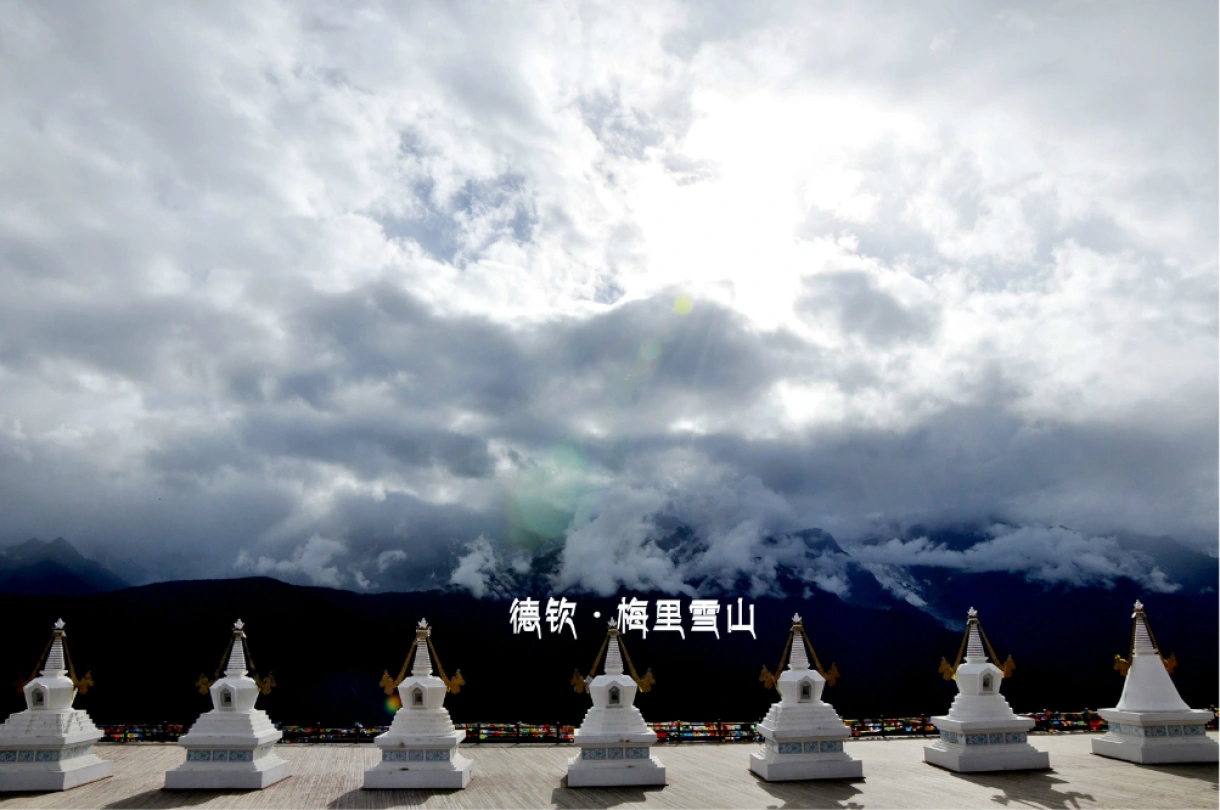
South of the Clouds: A 13-Day Journey of the Free Spirit As the plane cut through the clouds and that patch of land—seemingly splattered with colors from God's own palette—came into focus outside the window, I knew: Yunnan, I’ve arrived. This wasn’t a whirlwind tour,…
Continue reading...
South of the Clouds: A Spontaneous Lijiang Wanderlust
South of the Clouds: A Spontaneous Lijiang Wanderlust Prologue: When the Soul Meets Freedom Some places have names that alone stir the heart with longing. Lijiang is one such place. It exists like an unfinished poem, a melody left hanging in the air, echoing softly…
Continue reading...
Golden Luoping: A Romantic Encounter with Sunshine and Seas of Flowers
Golden Luoping: A Romantic Encounter with Sunshine and Seas of Flowers Introduction: The Third Time's the Charm Some landscapes are destined to be seen at the right moment. For me, that was exactly the case with Luoping's rapeseed flowers. On February 22, 2011, the Luoping…
Continue reading...