South of the Clouds: A 13-Day Journey of the Free Spirit
South of the Clouds: A 13-Day Journey of the Free Spirit
As the plane cut through the clouds and that patch of land—seemingly splattered with colors from God's own palette—came into focus outside the window, I knew: Yunnan, I’ve arrived. This wasn’t a whirlwind tour, but a deep dive entirely on my own terms. Over 13 days, from Lijiang to Dali, from Shangri-La to Meili Snow Mountain, and then to Lugu Lake, every step I took was in sync with the heartbeat of this land "South of the Clouds."
Pre-Departure Essentials: Wisdom in Your Pack
Clothing: A Symphony of Sun and Temperature Swings
The sun in Lijiang and Shangri-La is blindingly warm. Sunglasses aren’t an accessory; they’re a survival essential. When I first arrived in Lijiang at the end of August, the glare was so intense I could barely keep my eyes open. Sunscreen is a must-carry item. Even with diligent application, when I returned to Chongqing eleven days later, both my friends and I noticed my skin had darkened by at least one shade.
There’s an old saying in Yunnan: "The weather changes every ten miles." The temperature swings between morning and evening catch you off guard. A shawl or scarf becomes your lifesaver. No worries if you didn’t bring one—shawl shops in Lijiang and Shangri-La outnumber restaurants, with handwoven ones ranging from 15 yuan to several hundred. And of course, an umbrella is indispensable, because the plateau weather changes on a dime.
Food: Don’t Expect a Street Food Paradise
Locals put it bluntly: "Yunnan has never been famous for its street food." If you’re coming for the cuisine, you might be a bit disappointed. But as a national 5A-level scenic area, Lijiang has plenty of fast-food joints and Sichuan restaurants, so three meals a day won’t be a problem. The plateau climate is dry, so I recommend carrying a water bottle. Most hostels and inns provide hot water 24/7.
Accommodation: The Hostel Culture—More Than Just a Place to Sleep
The inns in Lijiang, Shangri-La, and Dali each have their own character. During the off-season, there’s absolutely no need to book in advance. If you’re a budget traveler, international youth hostels are your best bet—affordable (dorm beds from 35 to 50 yuan, private rooms from 80 to 220 yuan). More importantly, these are hubs for young people. Travelers from all over China and the world gather here, and your next adventure might start from a casual chat.
Transportation: A Well-Connected Network

As a major tourist hub, Lijiang has excellent transportation. City buses, as well as coaches to Shangri-La, Dali, and Lugu Lake, are all convenient. How exactly to get around? The itinerary ahead will reveal all.
Day 1: First Impressions of Lijiang
On the afternoon of August 27, my plane landed at Lijiang Sanyi Airport. I had booked the tickets a month in advance—round trip for just 1,060 yuan, incredible value.
After exiting the airport, I took the airport bus (20 yuan per person, about half an hour) to Lantian Hotel. Many people opt for a taxi to the Old Town, but a more budget-friendly option is to walk out of the hotel intersection, find the bus stop next to the Agricultural Bank of China, and take Bus No. 11 to the Old Town entrance (1 yuan per person). Important tip: Contact your inn in advance to confirm its exact location! Dragging your suitcase over Lijiang's cobblestone streets will break your heart for the suitcase—and your feet.
After dropping off my luggage, I finally had free time to wander. But beware—Lijiang is full of silver jewelry shops, and it’s hard to tell real from fake. I bought a bracelet. The shopkeeper started at 200 yuan, and I ended up paying 20. Since I’m just wearing it for fun, authenticity didn’t matter much.
Day 2: Crossing from Lijiang to Shangri-La
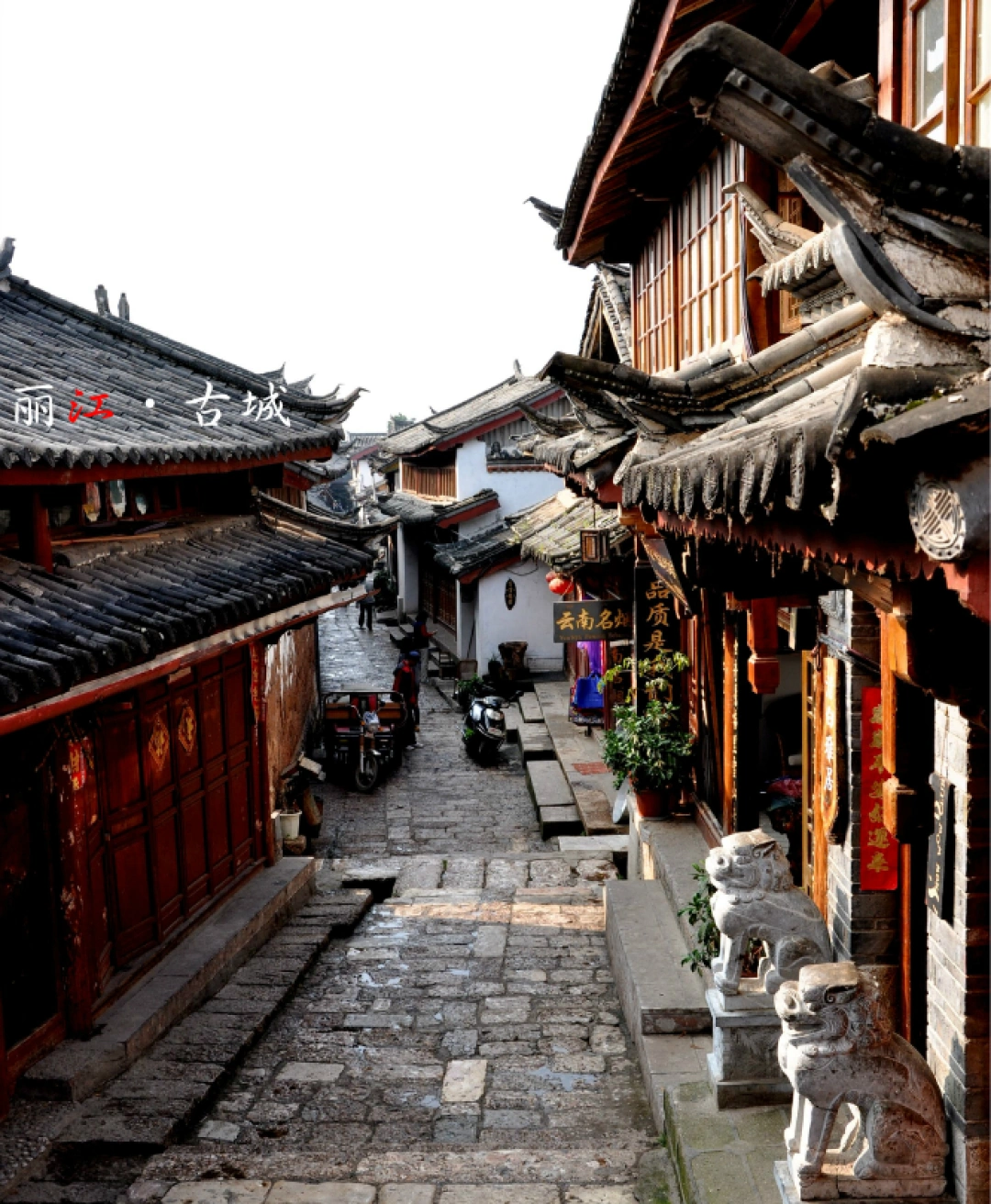
Early morning in Lijiang Old Town is the golden hour for photos. There’s no off-season here; only by waking up early can you avoid the crowds. First, head to the High-Speed Bus Station to buy a ticket to Shangri-La for 2:30 PM (69 yuan per seat). From the Old Town, take Bus No. 11 or a taxi (7 yuan) to get there.
Must-visit recommendation: Lion Hill—the best spot for a panoramic view of Dayan Old Town.
Had a quick lunch. Near the Big Waterwheel, there are KFC, McDonald’s, and Pizza Hut, plus plenty of Sichuan restaurants. In the afternoon, I set off for Shangri-La. The drive takes about four and a half hours. Note: Lijiang sits at over 2,000 meters above sea level, and your body might not react much. But Shangri-La is over 3,000 meters—avoid strenuous activity and do plenty of deep chest breathing exercises. Still, the beauty of Shangri-La is worth a little altitude sickness.
Arrived at Shangri-La bus station around 7 PM, then took a taxi (10 yuan) to Dukezong Old Town. We stayed at the Highland Barley Youth Hostel at the Old Town entrance—perfect location. Food options in Shangri-La are indeed limited. Near the Old Town parking lot, there’s a chicken hotpot place, but as a Chongqing food lover, I can only say it was "average." At night, Dukezong Old Town, known as "Moonlight City," was breathtakingly beautiful.
Day 3: Pilgrimage to Songzanlin Monastery
Today’s goal was Ganden Sumtseling Monastery, the largest monastery in Shangri-La. Took Bus No. 3 (1 yuan per person) from the Old Town parking lot to the terminal. Entrance fee: 85 yuan, or 55 yuan with a student ID. After buying the ticket, a shuttle bus takes you to the gate, and a free guide accompanies you throughout the tour—since this is a sacred site of Tibetan Buddhism with many rules and taboos, they want to prevent visitors from unintentionally offending.
Leaving the monastery, turn left facing the main entrance and walk along the wall. You’ll see a white stupa. That’s the perfect photo spot. Songzanlin Monastery is also called "Sunshine City of Shangri-La."
Took Bus No. 3 back to the Old Town at noon. Food options in Shangri-La are truly scarce. The KFC near the Old Town parking lot is far, so we settled for some Sichuan food nearby—can’t compare to Chongqing’s, but when you’re hungry, you don’t complain. Originally planned to visit Napahai Lake, but the weather turned bad, so I just strolled around the Old Town. Turtle Mountain Park has Asia’s largest prayer wheel. You have to join others to spin it with all your strength—the feeling is indescribably powerful.
Day 4: Heading to Meili Snow Mountain
Last night, I asked the innkeeper to arrange a carpool to Meili Snow Mountain. Found people to share the ride this morning. Round-trip carpool: 160 yuan per person, one-way 80 yuan. Departed at 9 AM. The scenery along the way was stunning, and we could ask the driver to stop anytime for photos. Had lunch in Benzilan, and arrived at Feilaishan (Flying Temple) around 4 PM. The drive took six to seven hours on winding mountain roads, but the sky was a mesmerizing blue.
At the Feilaishan viewing platform, I found the Juesexiang Youth Hostel—50 yuan for a bed in a four-person dorm. After dropping off my bags, I explored the Feilaishan viewing platform and the temple itself. Note: The temple is about a 15-minute walk back along the road you came, with a downhill section—hard to find, so ask the friendly locals for directions. Dinner was noodles and fried rice, decent enough—when traveling, a full stomach beats a gourmet meal.
Day 5: The Disappointment and Surprise of Golden Sunrise
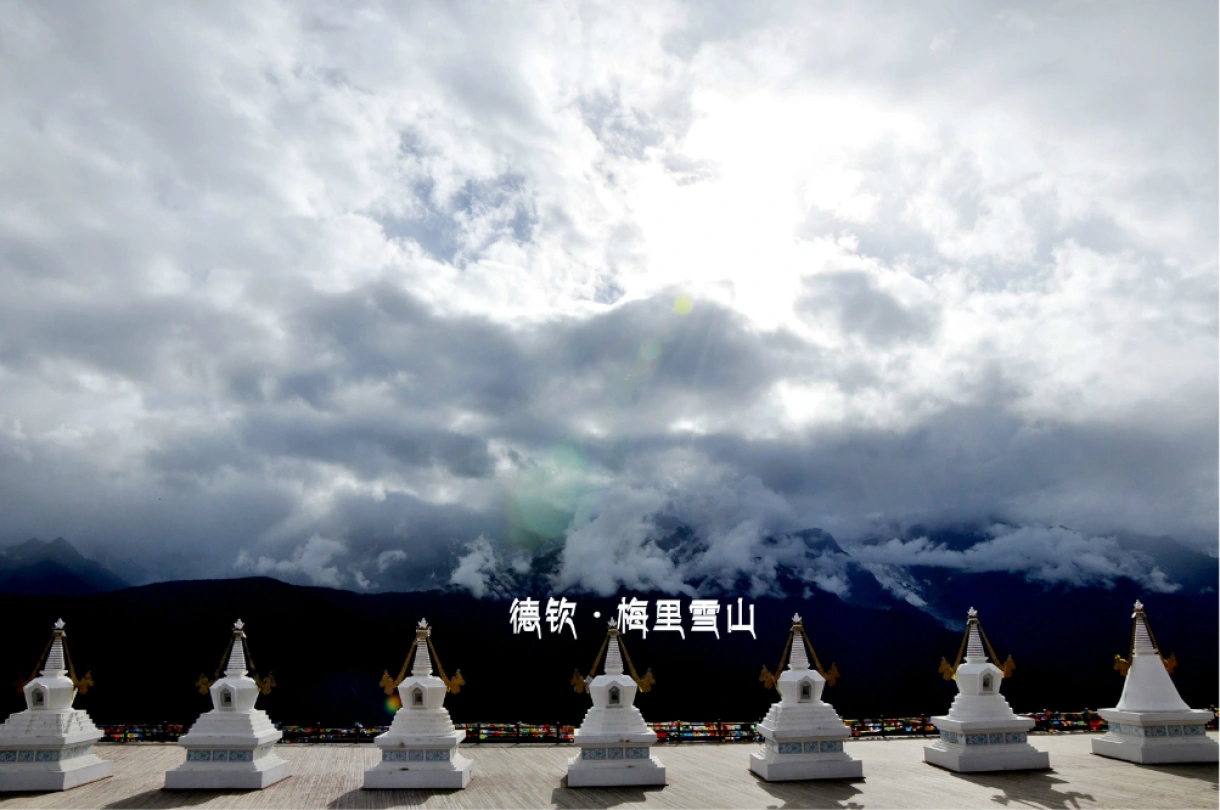
Woke up at 6 AM to see the "Golden Sunrise" on Meili Snow Mountain. Actually, the best time to view this is from October to April, when the chances are highest. We weren’t lucky—thick clouds blocked the mountain. After waiting two hours with no luck, we had to head back. But the heavens gave us a surprise: on the return trip, the other side of Meili Snow Mountain revealed itself.
Got back to Shangri-La Old Town around 3 PM. Traveling in Yunnan means being prepared for long bus rides—just sleep, and you’ll arrive. Visited the Shangri-La Museum, then returned to the hostel to write postcards. Important tip: The post office in Shangri-La is right at the Old Town parking lot, and postcards cost only 1 yuan each. We had bought some in the Old Town for 2 yuan, and the post office ones were prettier.
Bought a ticket in advance for the next day’s high-speed bus back to Lijiang (departing at 8:30 AM).
Day 6: Back to Lijiang, Discovering Shuhe
Had breakfast at 8 AM (ask your innkeeper for nearby breakfast spots), then took a taxi to Shangri-La Bus Station. Arrived in Lijiang around 1 PM.
In the afternoon, I visited Shuhe Ancient Town. From the Old Town entrance, take Bus No. 11 to Shuhe, but you still need to walk another 20 minutes—better to take a taxi directly. For dinner, I tried the legendary Yujie Pickled Pork Ribs at Xiangshan Market. As a Chongqing foodie, I genuinely found it not spicy, but the portion was generous. Two of us spent 86 yuan, and the amount of meat was astonishing.
Day 7: Lugu Lake—Bumpy Roads, Beautiful Views
Booked a tourist shuttle to Lugu Lake from the Lijiang individual traveler reception center—160 yuan per person round trip. The driver called the night before to confirm the meeting point. We gathered at the Big Waterwheel at 7:30 AM. The ride felt a bit "rip-offish"—1 yuan for a toilet stop, and the farmhouse restaurant where we stopped for lunch was mediocre; we only ordered two vegetable dishes.
Important tip: The tourist shuttle goes to Lige Village. If you take the regular bus, it only goes to Daluoshui Village, which is over 10 kilometers from Lige. At Daluoshui, the driver makes you take a boat to a small island—30 yuan round trip. I heard that skipping it might get you "trouble" from the locals, but since you’re out traveling, a boat ride doesn’t hurt.
Lugu Lake entrance fee: 100 yuan, half price with a student ID. We stayed at Zhengmei Inn in Lige—80 yuan per night for a standard room, two nights in a row. Incredible value.
Day 8: 76 Kilometers of Lakeside Cycling
There’s a small supermarket in Lige with very high prices. I recommend buying snacks and chocolate in Lijiang—much cheaper. Started cycling around the lake at 8:30 AM. By 1 PM, I reached Lugu Lake Town in Sichuan Province and had a bowl of noodles. Stopped frequently for photos. Got back to Lige at 5:30 PM. To reward myself, I ordered extra meat for dinner—I’m a carnivore at heart.
Day 9: Visiting a Mosuo Household
The driver picked us up at 9 AM for a home visit with a Mosuo family. Only after this visit did I truly understand Mosuo customs and traditions. Key fact: The "Mosuo" are not one of China’s 56 officially recognized ethnic groups; they are classified under the Naxi people. And "walking marriage" is not casual—it’s a monogamous system.
Day 10: Dali—The Spirit of the Nanzhao Kingdom
Took the train to Dali today (35 yuan per person, tickets booked in advance). Departed from Lijiang Railway Station (newly built, can’t find it on phone maps). The ride took 2 hours. At Dali Railway Station, took Bus No. 8 (1.5 yuan per person, 30 minutes) to the Old Town. Dali Old Town feels much grander than Lijiang’s—after all, it was the ancient capital of the Nanzhao Kingdom.
Around 4 PM, I went to Caicun Village (on the shore of Erhai Lake), taking Bus No. 2 from the Old Town. Honestly, the water of Erhai isn’t as beautiful as Lugu Lake’s. Stayed at a youth hostel in Dali Old Town—80 yuan per night, no private bathroom.
Day 11: Xizhou and Shuanglang—Bai Culture and Erhai Scenery
In the morning, took a minibus from the West Gate of the Old Town to Xizhou (6 yuan per person, 25 minutes). Xizhou is mainly about Bai ethnic architecture and culture. After an hour of sightseeing, I walked to the Dali-Lijiang Highway and waited for a bus to Shuanglang (10 yuan per person, 50 minutes).
Shuanglang was originally a small fishing village on Erhai Lake, touted as the best spot to view Cangshan Mountain and Erhai. But now, construction is everywhere—calling it a giant construction site is no exaggeration. Many people go to the Hai Di Youth Hostel to check in, which has a public lounge facing the mountain and lake, stunningly beautiful like being by the sea. I heard you need to book a room there a month in advance.
From Shuanglang, took a bus to Xiaguan (14 yuan per person, 1.5 hours), then transferred to Bus No. 8 to the train station, catching the 5 PM train back to Lijiang. Some people charter a car directly from Shuanglang to Lijiang for 80 yuan per person. Back in Lijiang, I ate at KFC more times than I care to count.
Day 12: Farewell to the Land South of the Clouds
On the day I left Lijiang, an earthquake struck Yiliang County in Yunnan. May the departed rest in peace, and the living remain strong.
Final Thoughts: What 13 Days Gave Me
Over these 13 days, I learned to slow down on the plateau, to wait patiently in front of a snow mountain, and to feel time pass in an ancient town. Yunnan’s beauty isn’t in any single attraction—it’s in every moment of the journey: from the blinding sun to the sudden rain, from altitude sickness to a bowl of hot noodle soup, from a stranger’s smile to the turning of a prayer wheel.
Practical Tips Summary: 1. Sun protection is priority one—sunglasses and sunscreen are non-negotiable. 2. Confirm your inn’s location in advance—dragging a suitcase while searching is a nightmare. 3. Buy postcards at the post office in Shangri-La—cheaper and prettier. 4. Cycling around Lugu Lake is physically demanding but worth it. 5. Shuanglang is undergoing massive development—visit sooner rather than later.
Yunnan isn’t a place you can see in one go. It’s like a book you can never finish flipping through, each page offering a different view. And me? I can’t wait to turn to the next page.
You should also read:

Into the Hidden Valley: A Solo Journey Through the Mysterious Dulong River
Into the Hidden Valley: A Solo Journey Through the Mysterious Dulong River Deep in the northwestern corner of Yunnan Province, tucked away from the modern world, lies a place that feels like a secret whispered among mountains. The Dulong River Valley is not just a…
Continue reading...
God’s Abandoned Palette: A Self-Drive Journey Through Yunnan’s Dongchuan Red Land
God’s Abandoned Palette: A Self-Drive Journey Through Yunnan’s Dongchuan Red Land Travel has never been about reaching some distant geographic coordinate. It’s about encountering, along the way, the version of yourself buried beneath the rubble of daily routine. During this May Day holiday, I finally…
Continue reading...
Cloud Travelogue · Dali of Wind, Flowers, Snow, and Moon: A Three-Day, Two-Night Journey of a Free Spirit
Cloud Travelogue · Dali of Wind, Flowers, Snow, and Moon: A Three-Day, Two-Night Journey of a Free Spirit I am a cultured female foodie with a touch of rogue charm. I slung on my backpack, took my lover's hand, and set off on a spontaneous…
Continue reading...