Xishuangbanna: Living Like a Tropical Poem, Living the Life You Dream Of
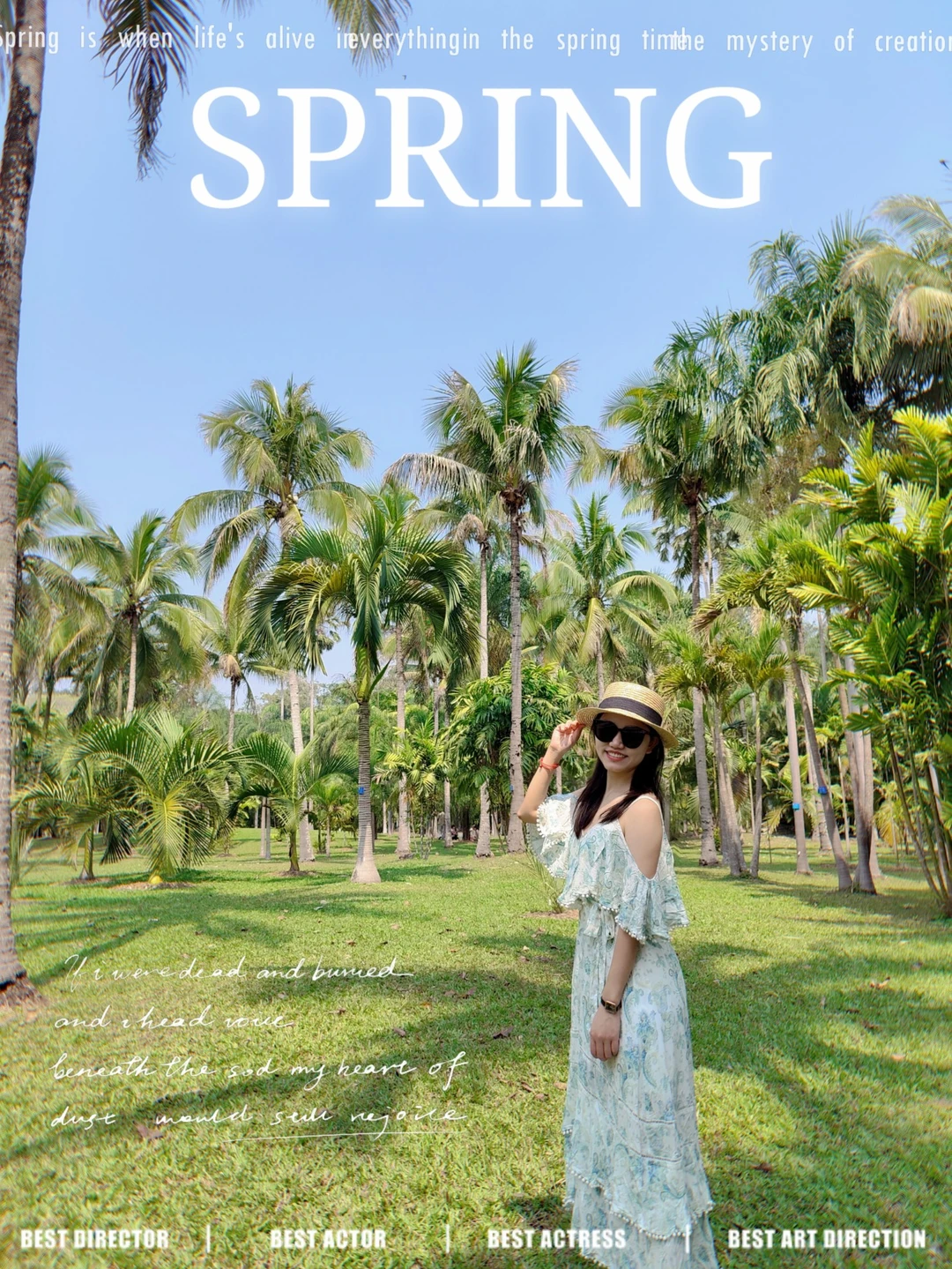
Xishuangbanna: Living Like a Tropical Poem, Living the Life You Dream Of
When I was a child, Xishuangbanna was a painting in my Chinese textbook—Premier Zhou Enlai, dressed in Dai ethnic clothing, splashing water with the crowd, droplets flying, smiles radiant. Even then, I thought: this place must hold some special magic, something that makes people happy just imagining it.
As I grew older, that thought never faded. Instead, it was reignited by the Chinese reality show Back to Field (向往的生活). The Mushroom House, the Dai bamboo stilt houses, the unhurried days… Xishuangbanna felt like a corner forgotten by time, preserving life as it should be.
So when a flash sale plane ticket appeared before me, I didn't hesitate for long. Sentiment and value for money, all in one—why not?
As it turned out, this trip not only fulfilled a childhood dream but also gave me a new understanding of "the life you dream of." It's not just about slowing down—it's about the warmth of everyday life, the richness of ethnic culture, the tropical charm, and the night markets you never get tired of.
Before You Go: What You Can't Miss
Xishuangbanna has a tropical rainforest climate—the sun is fierce, UV rays are strong, and sun protection is the top priority. I put together a practical checklist for you to follow before you pack:

Essentials: ID card, power bank, mosquito repellent, UV-protective clothing, sunscreen, body lotion, sunglasses, straw hat, summer clothes, comfortable sandals
Special Note: Low-risk areas currently don't require nucleic acid testing, but you must apply for the Yunnan Health Code in advance—it's needed to enter scenic spots and night markets.
Itinerary at a Glance: The Rhythm of Five Days and Four Nights
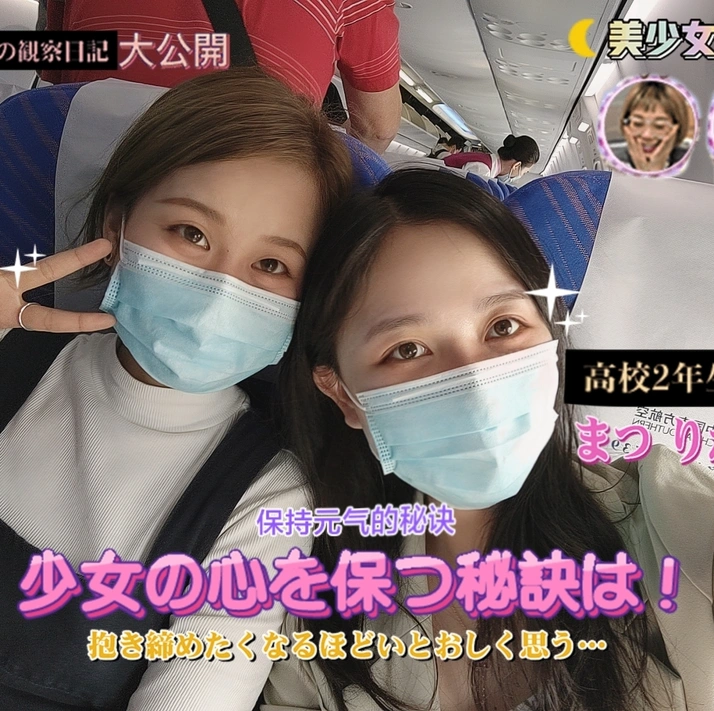
My schedule wasn't too packed—I had the luxury of sleeping in every day, and the thrill of wandering until one or two in the morning. If you want to go, you can follow this rhythm:
- Day 1: Guangzhou → Xishuangbanna → Gaozhuang Night Market
- Day 2: Wild Elephant Valley → Fruit Market → Gaozhuang Night Market
- Day 3: Manting Park → General Buddhist Temple → Night Market Portrait Shoot
- Day 4: Botanical Garden → Chill at the Guesthouse → Gaozhuang Night Market
- Day 5: Sleep In → Massage → Explore Local Shops → Return Trip
You'll notice that Gaozhuang Night Market appears almost every day. It's not deliberate—it's just that it's so much fun, you never get tired of it.
Day 1: From the Office to the Rainforest, Just One Plane Ticket Away
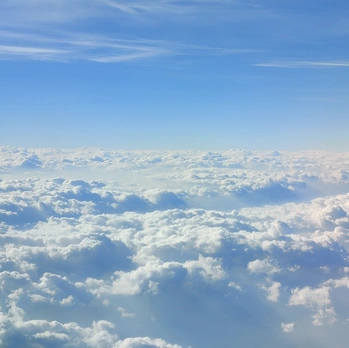
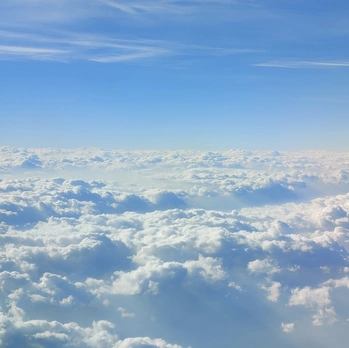
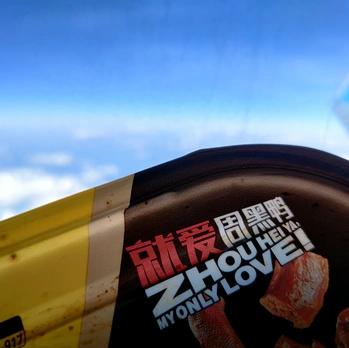
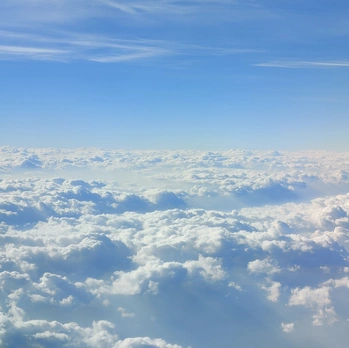
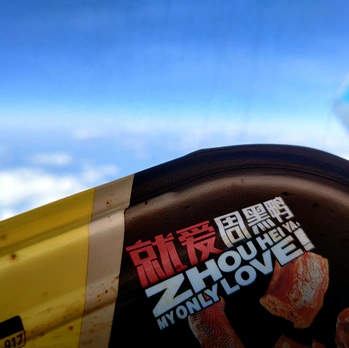
At noon, I was still staring blankly at a PowerPoint in the conference room. By 3:30 PM, I was sitting on a plane bound for Xishuangbanna. I was so excited that I fell asleep right after takeoff and missed the in-flight meal—but who cares? When I woke up, there were blue skies and white clouds outside the window, a bag of Zhou Hei Ya (spicy duck snacks) in my hand, and a like-minded colleague by my side. This is probably the perfect way to experience "a spontaneous trip."
We were scheduled to land at 6:55 PM, but we arrived nearly an hour early. The driver was already waiting at the exit, which immediately boosted my好感度 (favorable impression) of the guesthouse I'd booked.
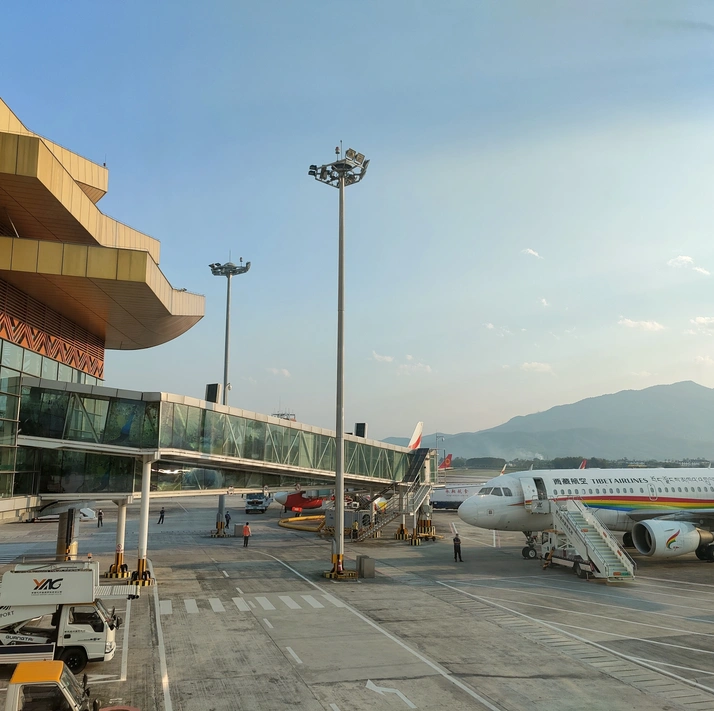
The airport had a distinct Xishuangbanna flavor—golden eaves glittering in the sunlight, even the jet bridges exuding Dai ethnic charm. At the exit, we had to show the Yunnan Health Code. The process was quick, and within half an hour, we had our luggage and were walking out.
When the big sign reading "Xishuangbanna Welcomes You" came into view, my mood soared. The driver's car was easy to spot, so I found him right away.
The drive from the airport to Gaozhuang wasn't long, but there was a lot of traffic and traffic lights, plus the occasional scooter weaving through. It took about half an hour. Chatting with the driver, I learned that he, too, was someone "kept" by Xishuangbanna—so many tourists come and don't want to leave, so they just settle down here.
As we passed the Water-Splashing Square, the driver talked about the grand Water-Splashing Festival from April 13 to 15, his voice full of love and longing. Hearing him describe the splashing water and the thousands of revelers made me even more excited for the trip ahead.
The attractions in Xishuangbanna are quite spread out, so staying in Gaozhuang is a good choice—convenient transportation and close to the night market. I chose a guesthouse this time, affordable at 170 yuan per night, with an open kitchen, a balcony with a view, and a washing machine. The room matched the photos exactly. Opening the window, I could see the Gaozhuang Twin Towers, and below was the lively street scene.
After dropping off my luggage, I met up with a local friend. Our first meal had to be a Dai ethnic specialty.
The grilled chicken and grilled meat were tender and not dry, paired with a dry dipping powder that was simply divine. The tilapia had firm flesh and a unique texture. The fried pork skin was crispy, like a snack you couldn't stop eating. Mint leaves and wild vegetables could be dipped directly in sauce. The sticky rice and pineapple rice were very filling—the pineapple rice was steamed inside a pineapple, with a natural sweetness that wasn't cloying. The four of us couldn't finish the entire table of food, and it cost less than 200 yuan. For dessert, we had tropical fruits so sweet they melted your heart.
After eating and drinking our fill, my friend took us to the night market. Entering through the main gate of the Great Golden Pagoda, we had to show the health code, scan a QR code for a ticket, and wear masks.
When we reached the back of the Great Golden Pagoda, I was stunned—the entire night market was brightly lit, stalls clustered together, with ethnic charm and Dai characteristics hitting you from every direction.
You absolutely must try 舂鸡脚 (pounded chicken feet)! A Dai girl put boneless chicken feet and a dizzying array of spices and vegetables into a wooden mortar and pounded them: tomatoes, carrots, water spinach, green limes, bird's eye chilies, small red chilies, long beans, cilantro, garlic… It was sour and spicy, opening up the appetite—I fell in love at first bite.
Lao-style iced coffee came in a bag, generous in portion, and incredibly satisfying to drink. There were also handmade essential oil aromatherapy, wooden fridge magnets, cowhide handbags… I ended up buying three bags for less than 30 yuan each. Dai ethnic clothing and Thai sarongs were also very distinctive, but I figured I'd never wear them outside of here, so I gave them up.
The night market was so fun to browse—I couldn't help stopping at every stall. When I passed a sandal stall, I saw some hilarious sandals and couldn't stop laughing.
We wandered into the food street, but since we'd eaten so much for dinner, I could only buy a small pineapple to satisfy my craving. There was a bridge by the night market, near the Six Kingdoms Water Market, with a great view—I could even see the Gaozhuang Twin Towers where my guesthouse was.
By the time we got back to the guesthouse, it was late, but the lights were still bright.
Day 2: The Surprise of Wild Elephant Valley—Seeing a Wild Elephant Herd
In Yunnan, the best breakfast is always rice noodles (米线). I searched on Dianping (a review app) and found a chain restaurant—9.9 yuan per bowl, with a flavorful broth.
During the day, the night market streets were empty, stalls neatly arranged, not a piece of trash left behind. It was a stark contrast to the lively night.
My friend drove us to Wild Elephant Valley. The south gate was too crowded, so we parked by the roadside. If you're driving yourself, I recommend going straight to the north gate—there's a huge parking lot.
The ticket plus one-way cable car cost about 100 yuan. After entering the scenic area, we first passed the Asian Elephant Museum, which explained the origins and habits of elephants. There was also a life-sized elephant model—huge.
Walking further, we took a boardwalk for about 30 minutes. Since it's a tropical rainforest, the negative ion content was high, so I secretly took off my mask to breathe fresh air. My friend said the boardwalk was built elevated because wild elephants might appear. We didn't see any wild elephants along the way, which was a bit discouraging.
There was a rest stop halfway, and for those with mobility issues, there were人力轿子 (sedan chairs carried by people). The boardwalk had interesting information about elephant habits.
We finally reached the cable car point. The cable car was very small, seating only two people, with an open design—if you want to take photos, make sure to hold your phone tight.
The entire route was long, about half an hour. Going up and down looked thrilling, but sitting inside, it didn't feel like much. Just as I was taking a selfie, I suddenly spotted wild elephants below! And not just one—several! Even locals don't always get to see them. We were incredibly lucky.
With excitement, we returned to the foot of the mountain. The lush green pathways and fruit and drink stalls made for great photos.
Wild Elephant Valley also had other animals: sika deer, a butterfly house (where you could attract butterflies by dipping your finger in honey), and peacocks (available for paid photos).
The elephant show was at 2 PM, but it was still early, so we had lunch first. We ate at a place called "Imagine Bar" (想象吧), ordering an "elephant meal"—another feast of Dai cuisine and rice noodles. The four of us couldn't finish it, and it cost only 148 yuan.
After eating, we went to the elephant cafeteria to buy feed for photos, 20 yuan per portion. Then we entered the Elephant School and lay on massage chairs to watch the show—my friend was so clever; after walking all morning, being able to lie down and watch was pure bliss.
The elephant show was very entertaining: raising the flag, spinning in circles, jumping rope, choosing a "goddess"... The program was rich and varied, more like an educational demonstration than a commercial performance. After the show, the elephants returned to the cafeteria to be fed.
On the way back, my friend took us to a fruit wholesale market. Cherries were fresh and cheap—less than 30 yuan per catty (about 500g). We bought 5 catties and achieved cherry freedom.
Back at the guesthouse, we snacked on duck necks, ate cherries, watched variety shows, and lazed around—nothing could be more comfortable.
In Xishuangbanna, it gets dark late—the sun sets around 7:30 PM. My guesthouse had an unbeatable river view, perfect for watching the sunset every day.
In Xishuangbanna, you're never bored. And if you are, just go to the night market.
Tonight, we focused on food. First, a bag of Lao-style iced coffee to wake up, then a serving of 舂鸡脚 (pounded chicken feet) to whet the appetite, followed by a taste of one of Yunnan's "Eighteen Oddities"—包浆豆腐 (stuffed tofu). Then we continued strolling. At the Six Kingdoms Water Market, you could take a boat ride or float water lanterns. There were many tourists on fruit-shaped boats taking portrait photos.
We ended the night with a bowl of cross-bridge rice noodles (过桥米线), completely satisfied, and returned to the guesthouse.
Day 3: Manting Park and the General Buddhist Temple—A Day of Portrait Photography
Manting Park is in the city center, so we decided to sleep in. Naturally, we didn't wake up until noon, skipping breakfast entirely.
My friend recommended a small eatery near Manting Park—Yang Yang Xiaochi (杨杨小吃). It was tucked away in an alley and not easy to find, but the Meituan map had the right location. The shop wasn't big; since we arrived late, we sat directly in the backyard. The environment was average, but plenty of people came seeking it out.
We ordered four dishes, totaling 61 yuan: pounded cucumber (舂黄瓜), oil-fried potatoes (油呛洋芋), golden toast (黄金吐司), and stir-fried rice noodles (炒米干). Turns out, "洋芋" (yangyu) is just another name for potatoes—different regions call them differently. The stir-fried rice noodles were the most amazing—they were different from 河粉 (ho fun), not greasy, with a chewy texture and just the right softness, paired with pickled vegetables and small red chilies—absolutely divine. We wanted to order more, and my friend even wanted to buy the pickled vegetables to take home.
If you go to Manting Park, you must visit Yang Yang Xiaochi, and you must order the stir-fried rice noodles.
After eating until our stomachs were round, we noticed pickled fruit at the street corner. We planned to buy some on the way back, but when we came out of the General Buddhist Temple, the auntie had already packed up—what a regret.
Manting Park sells tickets on-site, 40 yuan per person. The park isn't big, so a sightseeing car isn't really necessary.
Our route: Dai King's Palace → Imperial Garden → Imperial Elephant Cafe → Dai Pottery Experience Hall → Parrot Paradise → Imperial Elephant Culture Park → General Buddhist Temple.
The Dai King's Palace was open for photos, but you had to take off your shoes. The exterior walls made great backdrops—any shot looked good. The Imperial Garden had the most bougainvillea; find the right angle and you could get stunning shots. The architecture and colors of the Imperial Elephant Cafe were also very photogenic.
The pottery hall offered a chance to try your hand at pottery. Parrot Paradise was very small—most people went to see the elephant show. After watching the elephant school performance at Wild Elephant Valley, the commercial show here felt a bit less spirited.
After the show, we walked toward the General Buddhist Temple, passing Peacock Paradise along the way. It was my first time seeing a white peacock and a peacock spreading its tail—so lucky.
The General Buddhist Temple wasn't large, more of a place for worshipers to pray, with very few people taking photos.
After exploring enough, we went back to the guesthouse to lounge. Originally, I wanted to go out early to scout some shops and prepare for the evening portrait shoot, but since it gets dark so late in Xishuangbanna, I felt it was too early to go out and wait.
My friend recommended a photography studio—Jingyi旅拍 (Jingyi Portrait Photography) on Ganbai Street. The shop was spacious, and the service was good. The market price was 199 yuan, including all accessories like nail covers, with no extra charges.
After changing clothes, the makeup artist was already waiting. The makeup station was clean and tidy, using disposable sponges. The artist suggested adding a pair of natural-looking false eyelashes (10 yuan per pair) to make side profiles look better. Since we arrived late, we had the photographer all to ourselves, just the two of us. We finished shooting in less than an hour—super lucky.
The raw photos were sent to me the next day, with retouching taking about ten days.
Day 4: The Botanical Garden—Even a Glance Brings Joy
Today, my friend drove us again. After breakfast at the guesthouse, we met up and headed to the Botanical Garden.
The garden is divided into East and West sections. For a relaxed, photogenic experience, go to the West section; the East section is mostly hiking and tropical rainforest. The park is quite large, so I recommend taking the sightseeing car. Tickets plus the car cost about 125 yuan.
There weren't many people now. As soon as we got off, we saw fallen leaves everywhere. After entering, we took the sightseeing car directly and got off at Palm Garden.
Palm Garden was beautiful—it would have been perfect if the sky were a bit bluer. My friend, a seasoned visitor, had brought snacks and drinks, so we found a pavilion to rest. The small Thai pineapples were delicious.
After eating our fill, we continued wandering, a bit casually, taking very few photos. The Hundred Flowers Garden was huge, and it got especially hot after noon, so we gave up walking. There was also a hot air balloon inside.
The outdoor handwashing stations were very stylish, complete with tissue boxes. The National Tree and National Flower Garden was also interesting, but there were too many trees to bother photographing each one.
After our casual tour, we returned to the guesthouse to drink iced coffee, enjoy the air conditioning, and relax.
In the evening, the sky looked beautiful. We went to the Nepalese restaurant we couldn't get into last night, but the food wasn't good and was expensive—the only decent thing was the flatbread.
After dinner, we wandered around the night market. Taking photos of the Great Golden Pagoda from the side, the nearby alley was very quiet, with many guesthouses. It wasn't dark yet, and there were few people.
At night, we craved barbecue. Based on reviews, we went to a place called Man Bar (蔓吧). The ingredients were fresh, and the prices were reasonable. In addition to barbecue, we ordered stir-fried rice noodles again—it was really that good.
Xishuangbanna's nights could still be a bit cool. In short sleeves, it got colder as the night went on, so we went back to the guesthouse to lounge.
Day 5: Sleep In, Massage, and Explore to Wrap Up
On the last day, I had no plans. I slept in, ate some food, got a massage, had afternoon tea, and then headed back.
I chose a Chinese-style massage with a milk foot bath—90 minutes for around 100 yuan, very comfortable. After the massage, I strolled around the neighborhood. The Great Golden Pagoda during the day felt a bit less impressive than at night.
For afternoon tea, I went to a trendy spot called Wantai Lao-style Iced Coffee (婉泰老挝冰咖啡). I came for the coconut ice cream—it looked beautiful and was comforting, and it was really delicious.
The trip ended with a sunset at the airport, a perfect finish to a wonderful journey.
Final Thoughts: The Life You Dream Of Is the Courage to Slow Down
My five-day trip to Xishuangbanna gave me a new understanding of the phrase "the life you dream of."
It's not about escape—it's about choice. Choosing to slow down. Choosing to wander the night market until the early hours. Choosing to watch the sunset from the guesthouse balcony. Choosing to stumble upon a wild elephant herd in Wild Elephant Valley. Choosing to have a portrait shoot at Manting Park.
Xishuangbanna's charm lies in its blend of the slow pace of rural life and the lively烟火气 (bustling atmosphere) of the night market. It makes you forget time, forget your worries, and remember only the joy of the present moment.
If you, too, long for this kind of life, why not buy a plane ticket and go explore Xishuangbanna? You'll discover that life can be lived this way—neither rushed nor restless, but full of flavor.
Practical Tips Summary:
- Sun protection is a must—the tropical rainforest UV is intense
- Apply for the Yunnan Health Code in advance
- Staying in Gaozhuang is the most convenient—close to the night market and well-connected
- For Wild Elephant Valley, park at the north gate
- Don't miss Yang Yang Xiaochi near Manting Park—order the stir-fried rice noodles
- Night market portrait shoots cost 199 yuan—ask if all accessories are included
- For the Botanical Garden, just visit the West section—it's relaxing and photogenic
- Night market barbecue isn't always good—check reviews to find a spot
- Lao-style iced coffee and coconut ice cream are must-try treats
Finally, thank you to everyone I met on this trip—the airport driver, my friends, the guesthouse owner, the night market vendors, the makeup artist, the photographer… You all made this journey so wonderful.
Xishuangbanna, we'll meet again next time.
You should also read:
Dreaming of Lijiang, Dreaming of Shangri-La: A Journey That Lets Your Soul Breathe Deeply
Dreaming of Lijiang, Dreaming of Shangri-La: A Journey That Lets Your Soul Breathe Deeply Life is like a long trek. We're always rushing through the concrete jungle, searching for a glimmer of light in the monotony of our days. Then one autumn, I heard the…
Continue reading...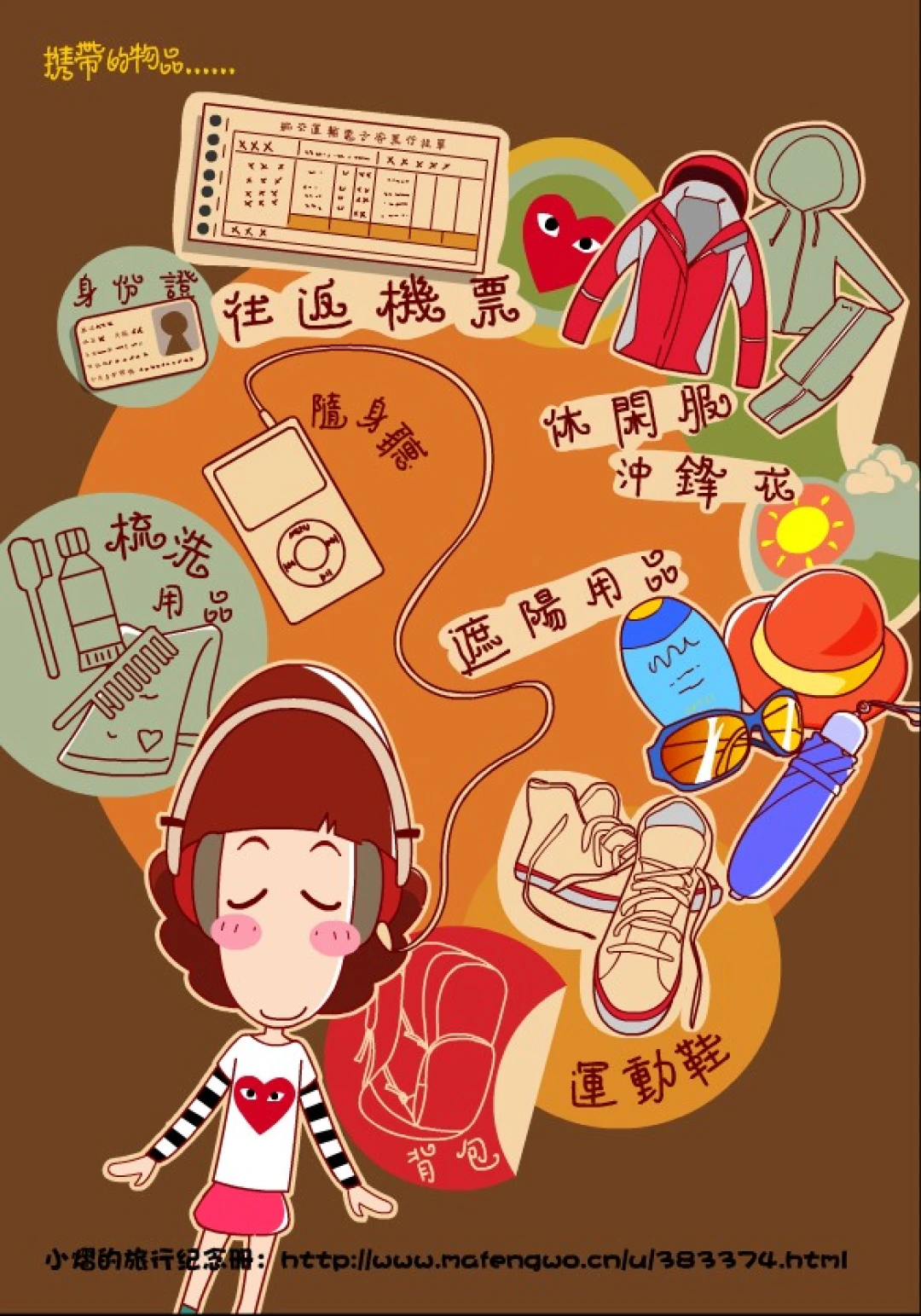
Dreamland – Lijiang: A Talking Comic Travel Guide
Dreamland – Lijiang: A Talking Comic Travel Guide Prologue: When Lijiang Takes Root in Your Heart Some places leave a mark on you forever. They're like an old song on repeat, suddenly playing in your mind on an ordinary afternoon. For me, Lijiang is that…
Continue reading...
Escaping Nanning, Falling Under Lijiang's Spell: Our Four-Person, Ten-Day Yunnan Dream
Escaping Nanning, Falling Under Lijiang's Spell: Our Four-Person, Ten-Day Yunnan Dream Before We Set Off: No Pain, No Obsession Have you ever had that impulse—suddenly tired of the office fluorescent lights, the crush of the subway, the endless parade of identical takeout boxes, and just…
Continue reading...