Xishuangbanna Station | A Buddhist-Style Trip Pretending to Be in Thailand
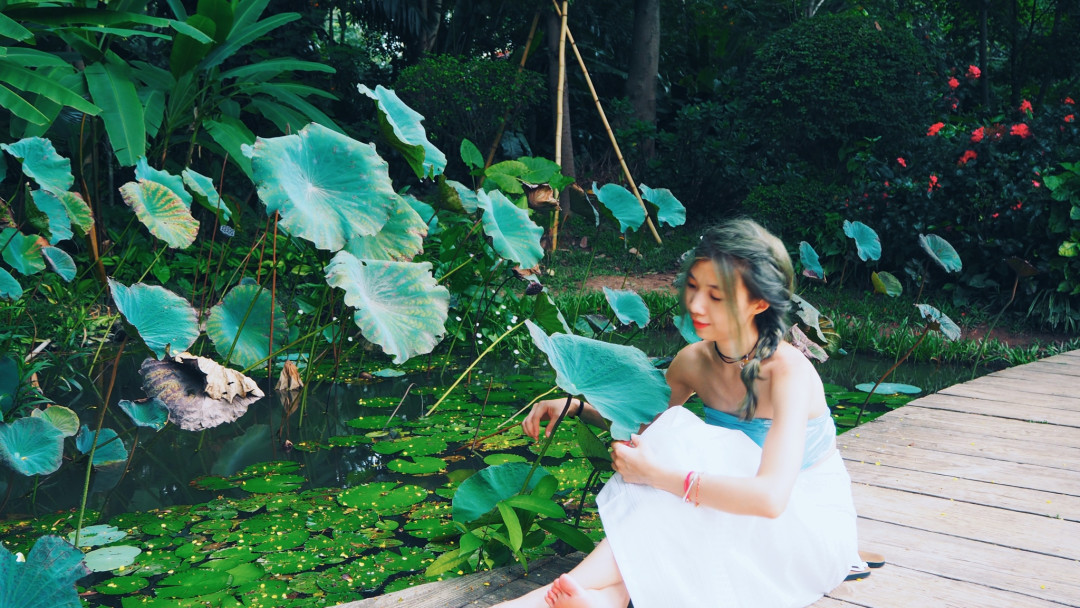
Xishuangbanna Station | A Buddhist-Style Trip Pretending to Be in Thailand
I'm the kind of person who loves to bounce around but tans super easily. Compared to majestic mountains and rivers, I prefer the hustle and bustle of everyday life; rather than working out, I'd rather lie down and listen to gossip. Lazy, afraid of getting tired, but with a restless heart that yearns to wander.
In September 2022, my friend Ye and I embarked on a Yunnan adventure, and Xishuangbanna was the first stop on our trip. Why Banna? Simple answer: it had been too long since we'd been abroad. Since we couldn't fly to Bangkok or Chiang Mai for now, heading to Banna seemed like the next best thing—stroll through night markets, eat Thai food, visit Buddhist temples, pretend we'd left the country, and satisfy that restless urge.
But to be honest, this trip to Banna wasn't all sunshine and roses. Words like chaotic, over-commercialized, and over-hyped kept popping into my head. That said, complaints aside, we didn't miss out on the fun, the food, or the photos. If you're thinking of visiting Banna, take a look at this "real-deal" travelogue first, brace yourself, and then decide whether to go.
Zero | A Trip Where Plans Never Survive Reality
Our original Yunnan itinerary was supposed to be:
Xishuangbanna → Dali → Lijiang → Shangri-La → Lugu Lake
But due to various reasons, it ended up as:
Xishuangbanna → Kunming → Dali → Lijiang → Shangri-La
As the first stop, I ambitiously listed a ton of things to do: night markets, photoshoots, the Grand Golden Pagoda, Manting Park, the Giant Buddha Temple, the Botanical Garden, Manyuan Village, rooftop climbing, the Dai Ethnic Village... I thought we could squeeze the whole world into five days.
Reality, however, had other plans—a sudden downpour, scorching heat, and a crowded photo spot could ruin everything. In the end, our actual Banna itinerary looked like this:
- Day 1: Arrival → Night market food crawl → Dai-style BBQ
- Day 2: Gaozhuang District → Grand Golden Pagoda → Ganbai Street → Buy Dai clothing → Starry Night Market → Water Market
- Day 3: Daytime night market → Manting Park → General Buddhist Temple → Rain, stuck at hotel
- Day 4: Chinese Academy of Sciences Botanical Garden (strolling in the rain) → Rooftop night views → Wear Dai outfit to night market
- Day 5: Transfer to Kunming
We didn't visit many attractions, but it felt just right. The only regret was not renting that adorable Snoopy electric scooter—it was way too cute!
One | Gaozhuang by Day, Quiet Beyond Belief
We didn't have a detailed plan, just a few places we wanted to see, and figured we'd figure things out once we arrived.
On the first official day of sightseeing, we planned to explore Gaozhuang and the Grand Golden Pagoda in the morning, then head to the Botanical Garden in the afternoon. But reality was full of "surprises":
- Wearing tank tops, we got turned away at the Grand Golden Pagoda—had to go back to the hotel to change.
- Forgot to charge the camera battery, so it died after a few shots.
- Got lost in Gaozhuang District, wandering around with no idea where we were.
- The midday sun was brutal, so we had to find a place to rest.
So, the Botanical Garden plan was scrapped. We decided to stop rushing, found a café with Ye, chilled for a bit, and then started shopping.
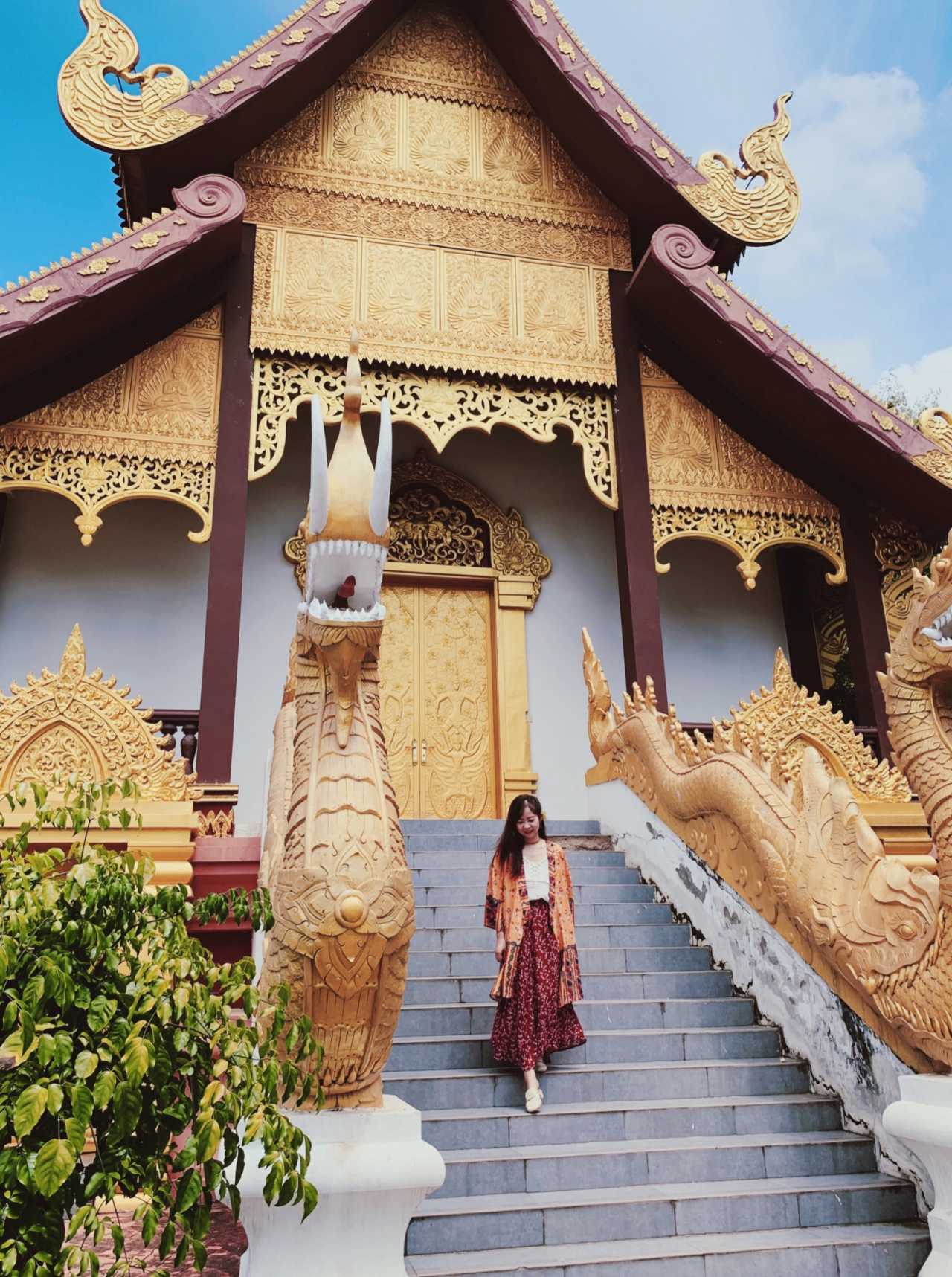
During the day, Gaozhuang District was surprisingly quiet. We linked arms and wandered aimlessly, descending some stairs to an area with tiled-roof houses. At first, I thought it was residential, but as we got closer, we realized it was Ganbai Street.
During the day, Ganbai Street was empty, most shops closed, but each one had its own charm. As two people with severe "awkwardness disorder," we loved this deserted place—taking photos in a crowd always makes us freeze up.
Coming out of Ganbai Street, we ran into a couple riding a Snoopy electric scooter who asked us to take their photo. The girl struck a different pose every second without repeating—professional level, seriously impressive. And that Snoopy scooter? Absolutely gorgeous.
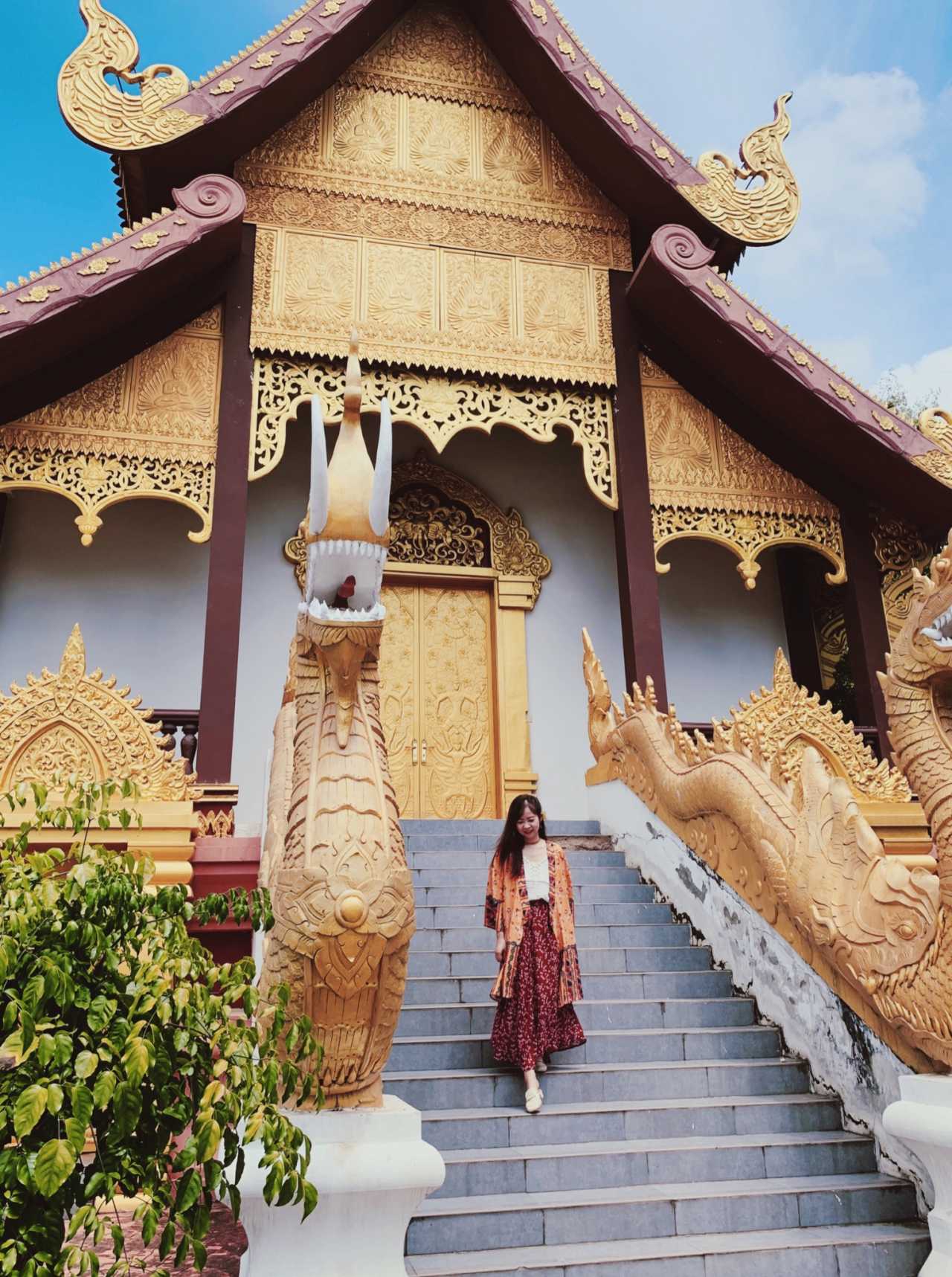
After lunch, we wandered around the commercial district, with one main goal: buy a set of Dai clothing. Since we were already here, taking our own "costume change" photos sounded fun. Paying for a professional photoshoot? No thanks—I'd be too embarrassed.
The prices for Dai outfits were pretty standard: 50 to 60 RMB per set, three pieces: a tube top, a skirt, and a shawl. Sets without padding were 50 RMB, with padding 60 RMB. We checked several shops, and the prices were all similar. Just pick whatever color you like.
Two | Tank Tops and Mini Skirts? The Grand Golden Pagoda Says "No"
Tank tops and short skirts (above the knee) aren't allowed inside the Grand Golden Pagoda—we both broke the rule. Ye even wore a knee-length skirt, but that wasn't allowed either. No choice but to go back to the hotel and change.
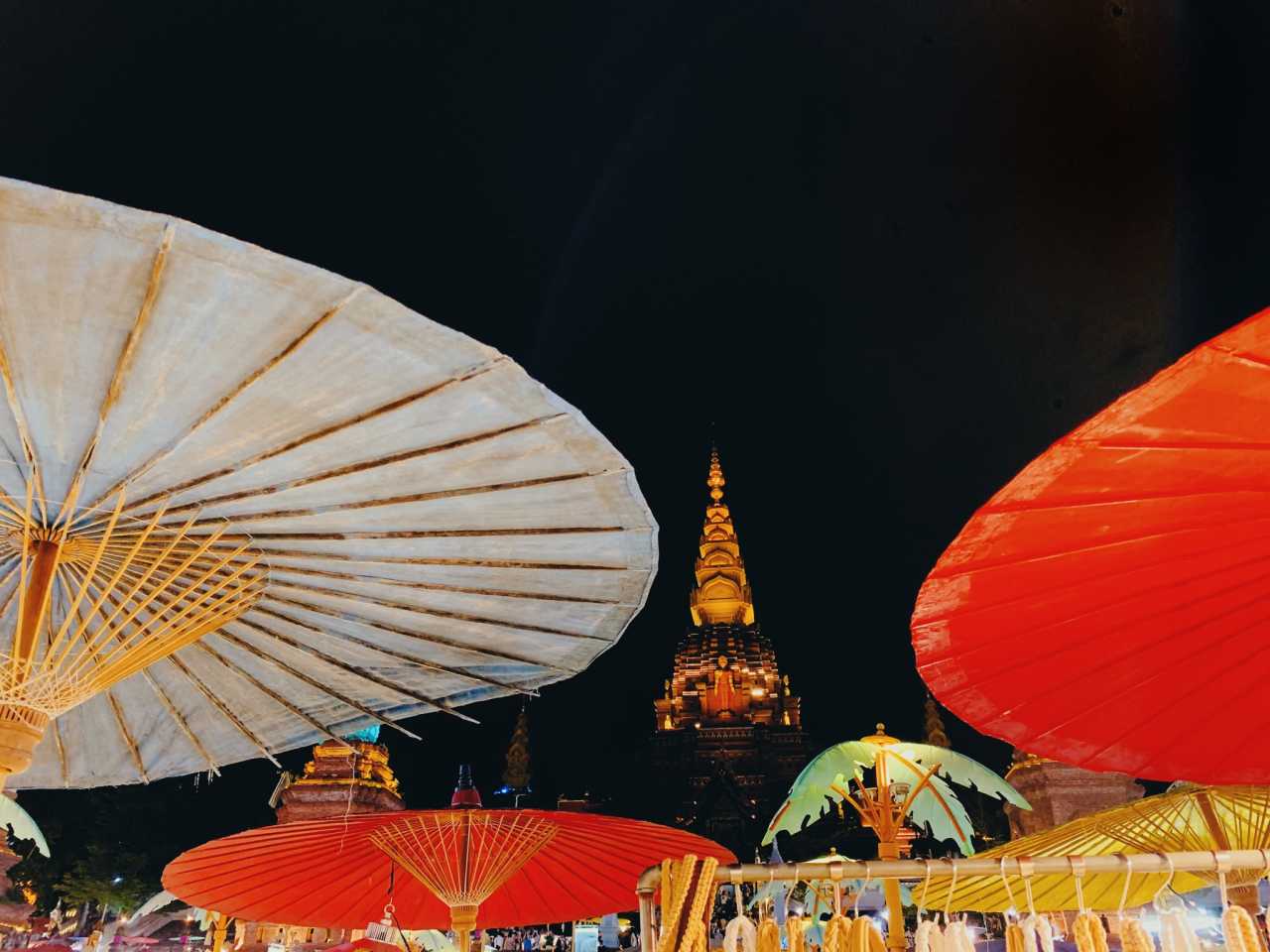
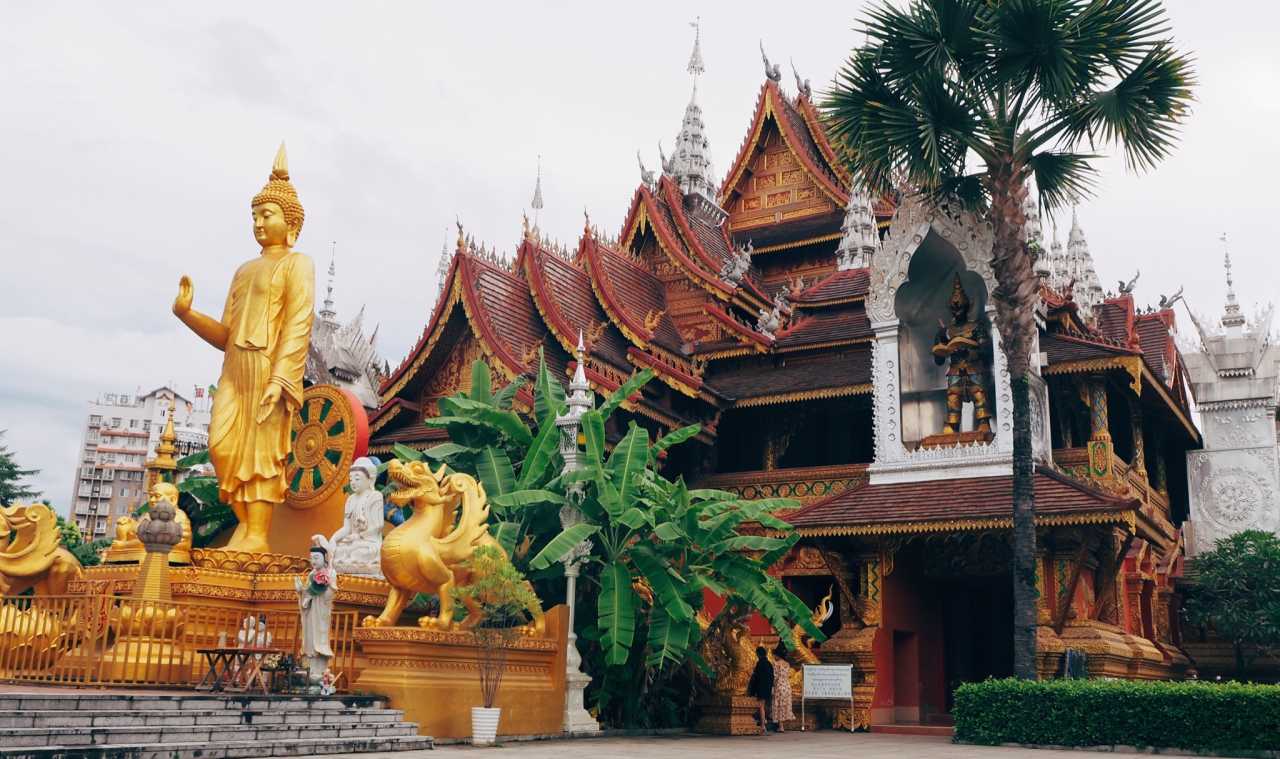
Inside the pagoda, cameras aren't allowed, but phones are fine. I heard that each side of the pagoda has a Buddha statue, representing China, Thailand, Laos, and Myanmar. Sure enough, under the blue skies and white clouds of Yunnan, the pagoda was stunningly beautiful, bringing a sense of peace.
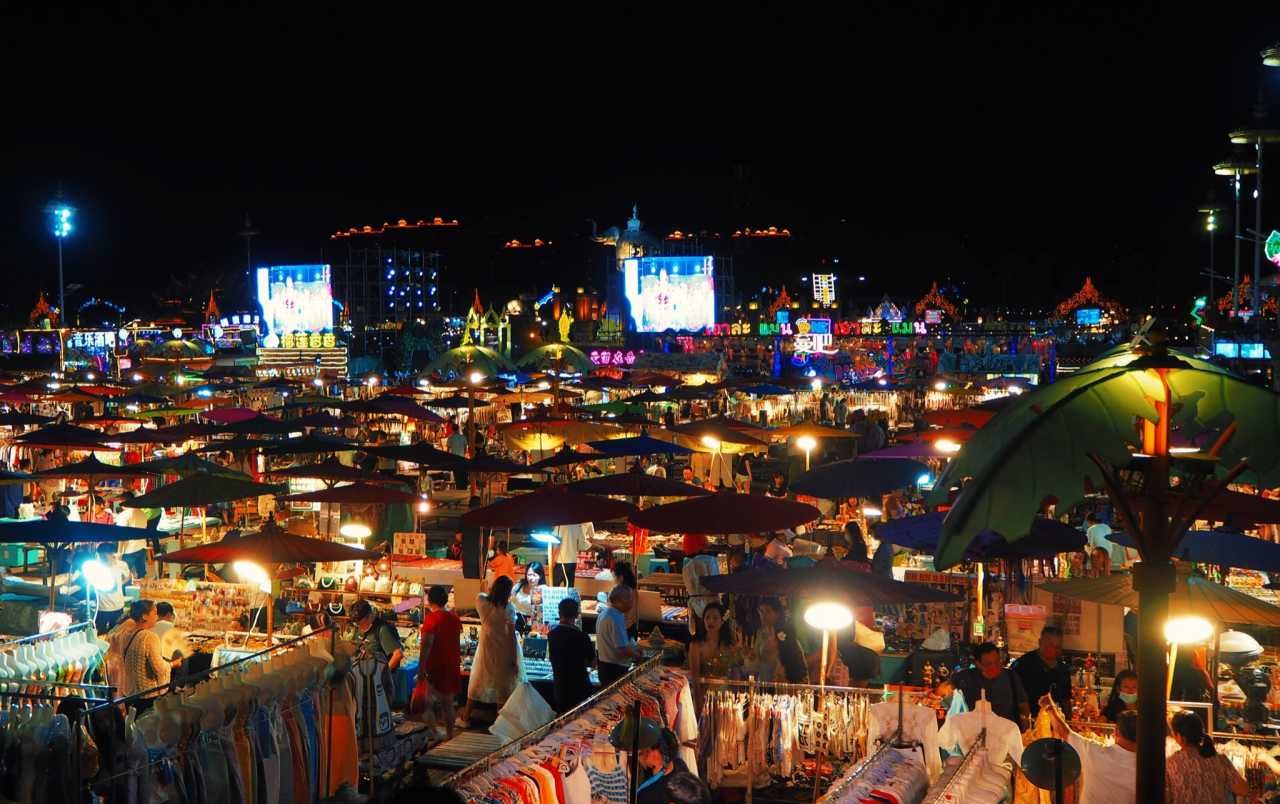
Behind the pagoda, at the bottom of the stairs, lies the Starry Night Market. At night, it lights up like a sea of stars.
Three | New Clothes, Morning Market Stroll
Once you buy new clothes, you've got to show them off. On the second morning, with no attractions planned, we put on our new Dai outfits and went to explore the Starry Night Market in the early hours.
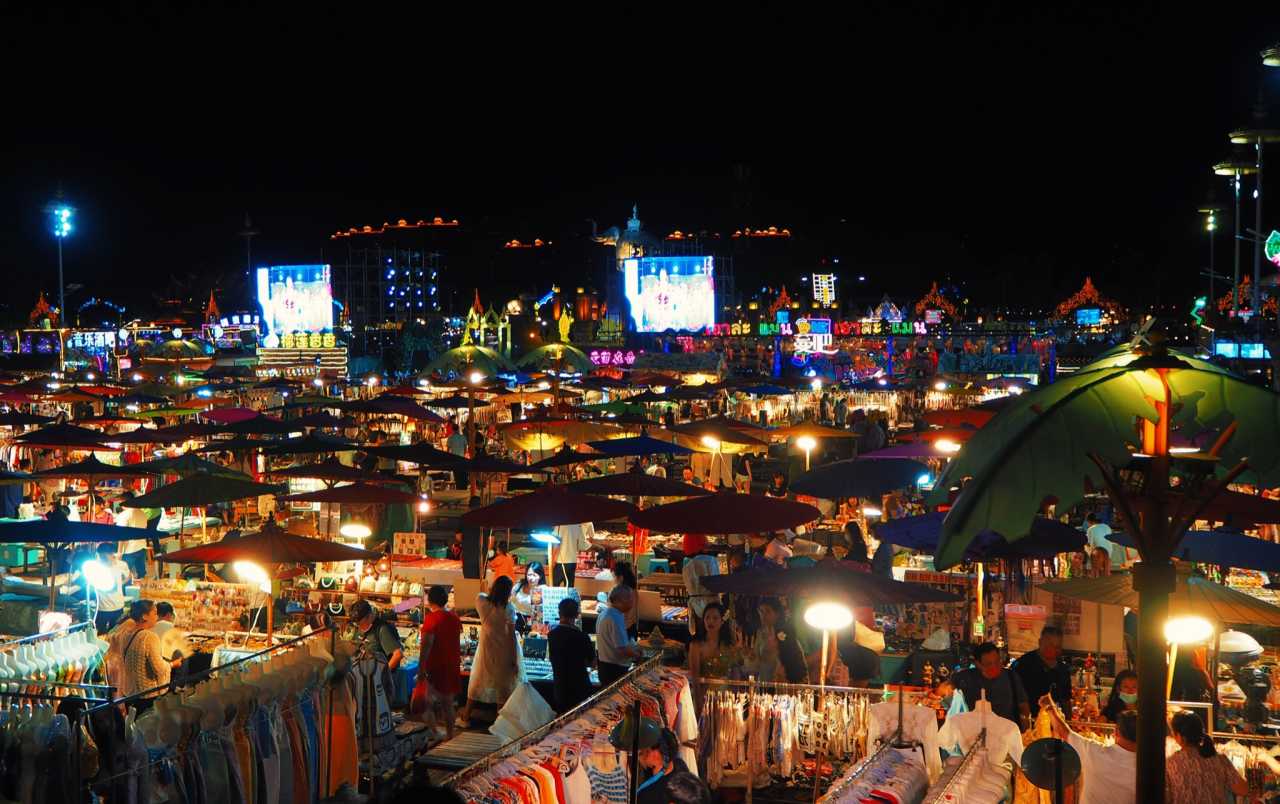
During the day, the market is just a square filled with wooden stalls. Ye said it was hard to imagine that such a simple place could transform into something so lively and dazzling at night. We walked through the empty square, imagining the evening bustle—it had a unique charm.
We crossed the bridge behind the Six Countries Market, took photos on the other side, sat for a while on the steps of the Grand Golden Pagoda—nothing much, just photos to fill the time.
Four | The Golden Splendor of Manting Park and the General Buddhist Temple
In the afternoon, we headed across the river to Manting Park and the General Buddhist Temple.
We had a silly moment before leaving: while waiting for our Didi ride, a taxi pulled up. I glanced at the license plate—it looked similar to the one we'd booked—so I hopped in. When I asked the driver to confirm the last digits of the phone number, he froze—only then did I realize we'd gotten into the wrong car... Facepalm.
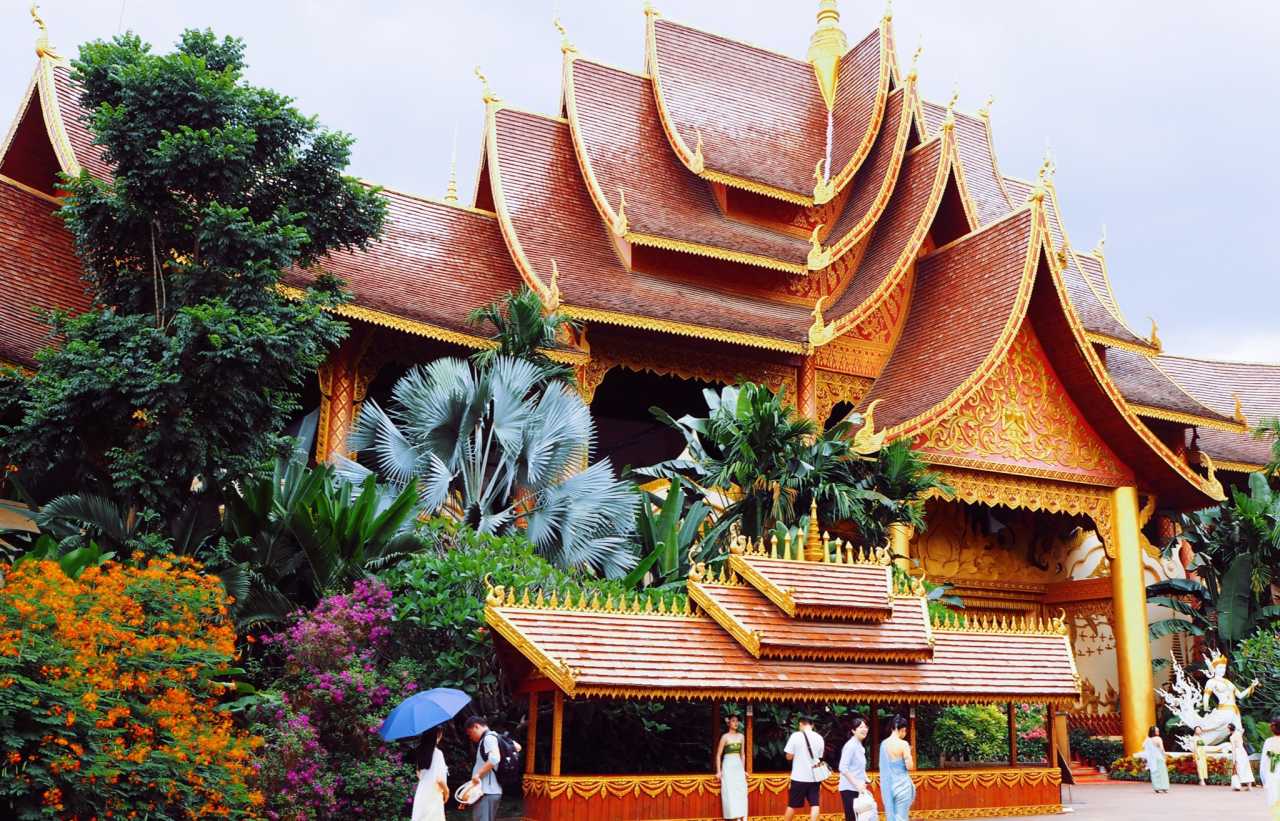
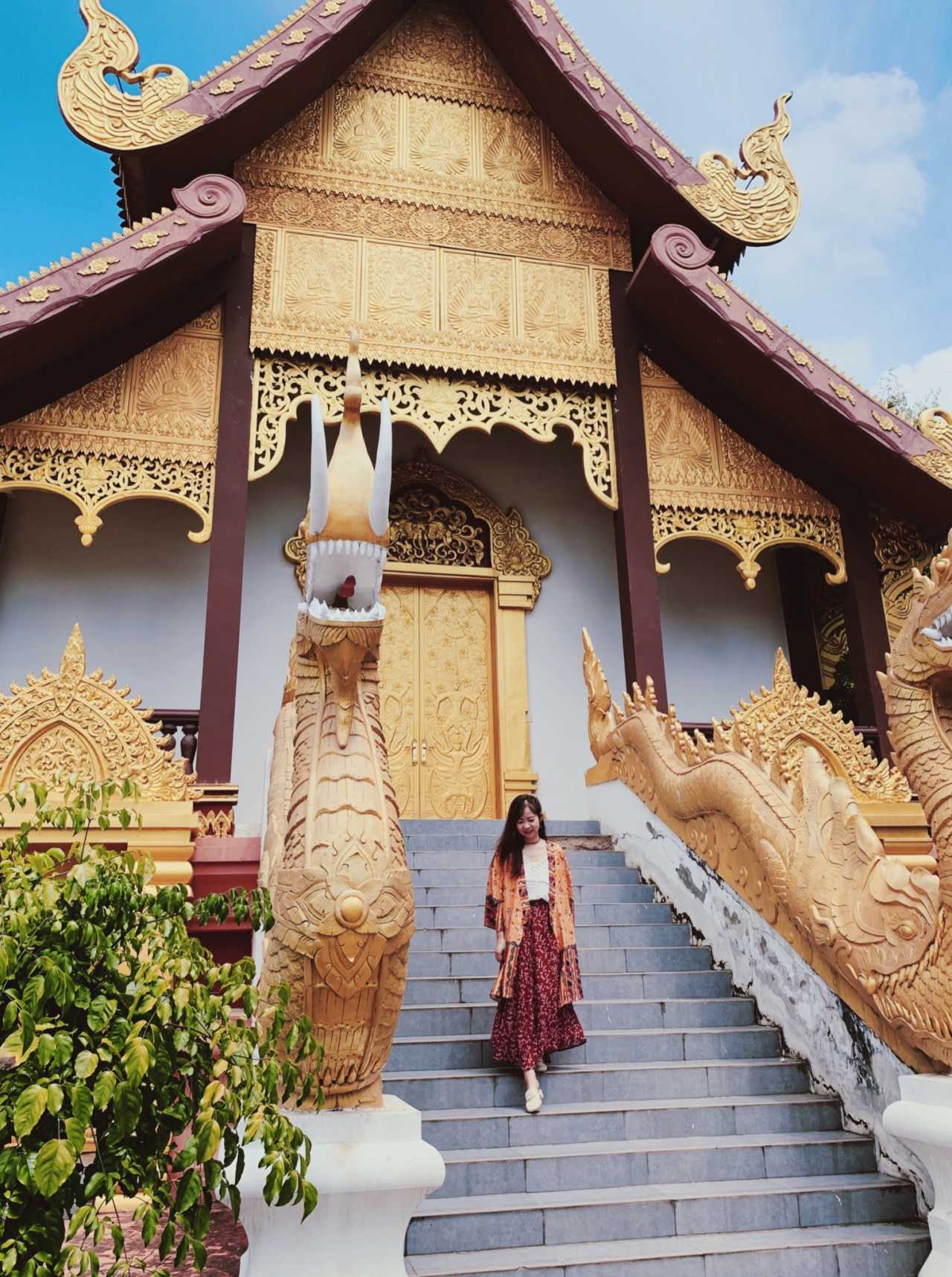
Manting Park was once the royal garden of the Dai king in Banna. The architecture and temple styles are very Southeast Asian, all gold and glitter, making you feel like you're wandering through a Thai palace. The park isn't huge, but it's scenic. I heard there are evening shows, water-splashing activities, and bonfire parties, but the night tickets are pricey.
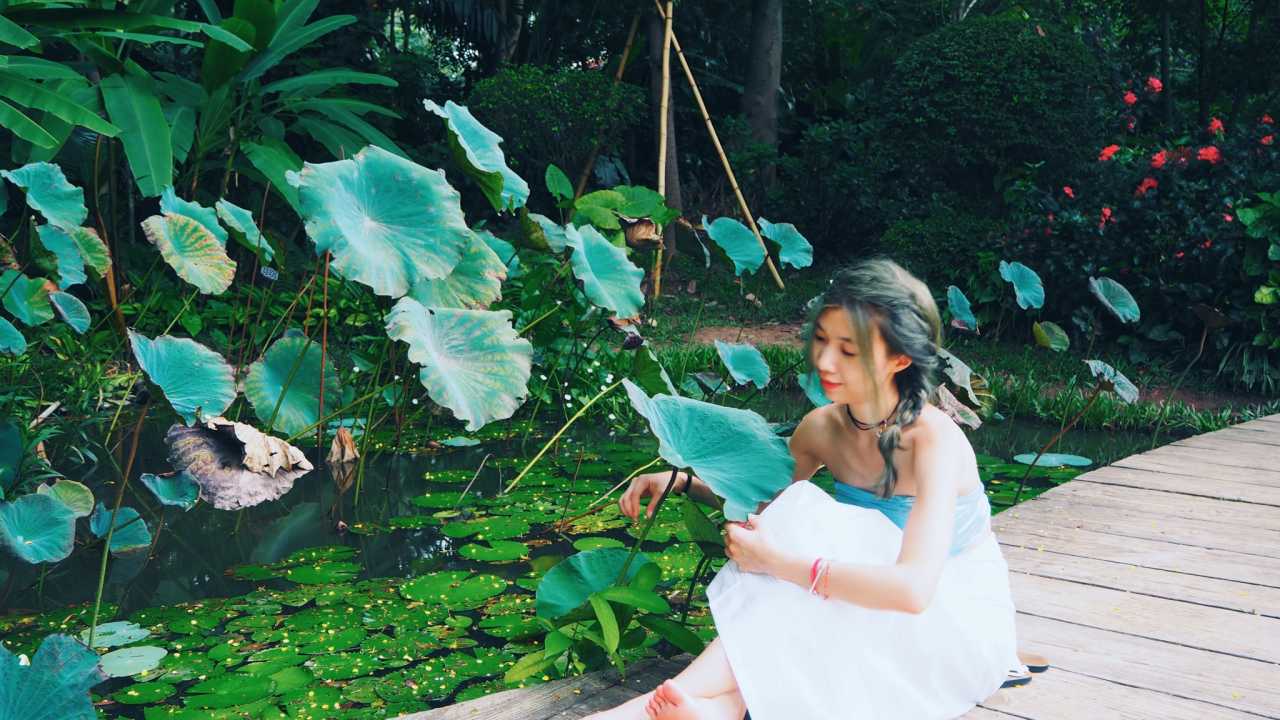
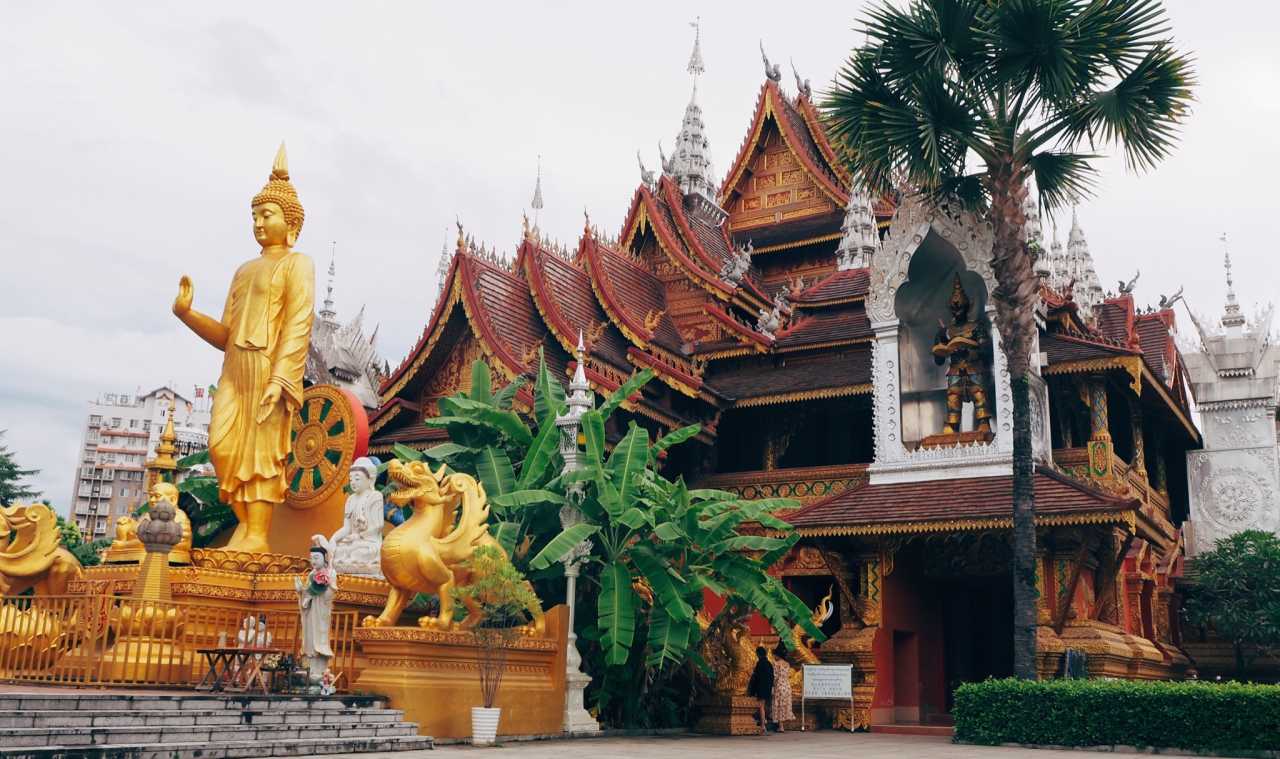
Inside the General Buddhist Temple, there's a release pond filled with koi and silver carp—those carp were enormous, honestly a bit creepy. There's also a four-faced Buddha statue, possibly specially brought in. The temple grounds include a lotus pond where many couples take wedding photos.
Manfeilong White Pagoda is an empty shrine that looks great in photos; lots of girls pose here.
Manting Park and the General Buddhist Temple are connected, so you can walk directly between them. The temple is free, but if you want to return to Manting Park from the temple, you'll need to show your ticket again, so keep it safe.
Five | A Rainy Stroll Through the Tropical Botanical Garden
At the Chinese Academy of Sciences Botanical Garden, we experienced a weather cycle of "rain—overcast—rain—sun—overcast." Our moods swung between "we're here anyway," "what bad luck," "so cold," "so hot," and "so lucky."
With limited time, we had to choose between the Botanical Garden and the zoo. Ye said the zoo would smell like poop everywhere, and neither of us was into animals, so we picked the garden.
The night before, we agreed to sleep in. But we ended up taking our sweet time waking up, doing makeup, changing clothes—by the time we left, it was past 11 a.m.
When we reached the station, a bus was parked by the roadside. The driver waved at us, asking if we were heading to the Botanical Garden—lucky break, we caught a bus about to leave.
The ride took about an hour, passing through several villages and simple markets. It was sunny when we left, but halfway there, it started raining, and it got heavier.
After getting off, we passed a small market with stalls selling fruit, clothes, and food—just a few basic wooden sheds. With the rain pouring and lunchtime approaching, we ordered a bowl of migan (rice noodles) at one of the sheds. The owner added a bunch of condiments—chili, fermented black beans, and more—and it was delicious! Honestly, the best migan I had in Xishuangbanna. I finished every last bite.
While waiting for the rain to stop, we chatted with a nearby clothing vendor. She said the rain wouldn't last long. Sure enough, it cleared up soon after.
We only explored the West Zone, taking the shuttle to the Aquatic Plant Garden, Palm Garden, Exotic Flowers Garden, Banyan Garden, and Hundred Flowers Garden. We even got lost while sheltering from the rain, had to study the map to get back on track. After that, Ye never trusted my sense of direction again...
Aquatic Plant Garden
 Just a lotus pond filled with various lotuses and seed pods. There was a bamboo raft bridge, but it cost extra.
Palm Garden
Tall palm trees everywhere. We eavesdropped on a guide's explanations about the plants' uses. It started raining again when we reached the Palm Garden, so we walked along covered paths and ended up lost.
Banyan Garden
 Impressive old banyan trees, probably centuries old. The paths were muddy after the rain, and the trunks were wet—otherwise, Ye would've climbed one for a cool photo.
Exotic Flowers Garden
Lots of quirky little plants. We wandered around, listening in on various tour guides, amazed by the strange and wonderful flora. Even the leaves were heart-shaped!
Hundred Flowers Garden
Stepping off the shuttle, we were greeted by a sea of red flowers—or were they leaves? I forgot the name, though I checked the sign at the time. A vast, beautiful sight. There was also a lone tree standing proudly on a small hill, with blue sky and white clouds visible through its leaves—serene enough to calm the mind.
From this area, we could see a hot air balloon rising slowly in the distance. Passing a small pond, I captured the balloon's reflection. On the lawn near the balloon, lots of girls were posing for photos.
After leaving the garden and getting a COVID test, we walked back toward the bus stop. Halfway there, a bus approached, and the driver waved, asking if we were heading back to Jinghong—another lucky day.
Six | Starry Night Market, Like a Sky Full of Stars
Except for the rainy night, we visited the night market almost every evening.
Coming to Banna, my top priority was the night market. Sure, many of the goods come from Yiwu, but I just love the atmosphere. Maybe because I spent so much time in Southeast Asian night markets in previous years, they've become a must-do on every trip.
On our first night in Banna, we only circled the outer area—a few streets of stalls. I thought that was the Starry Night Market and felt a bit disappointed. The next day, after wandering around, we finally found the real market—if you're not looking carefully, you might miss it.
The market has food, art, trinkets, clothing... The adjacent Ganbai Street is also unique, and we bought some beautiful postcards.
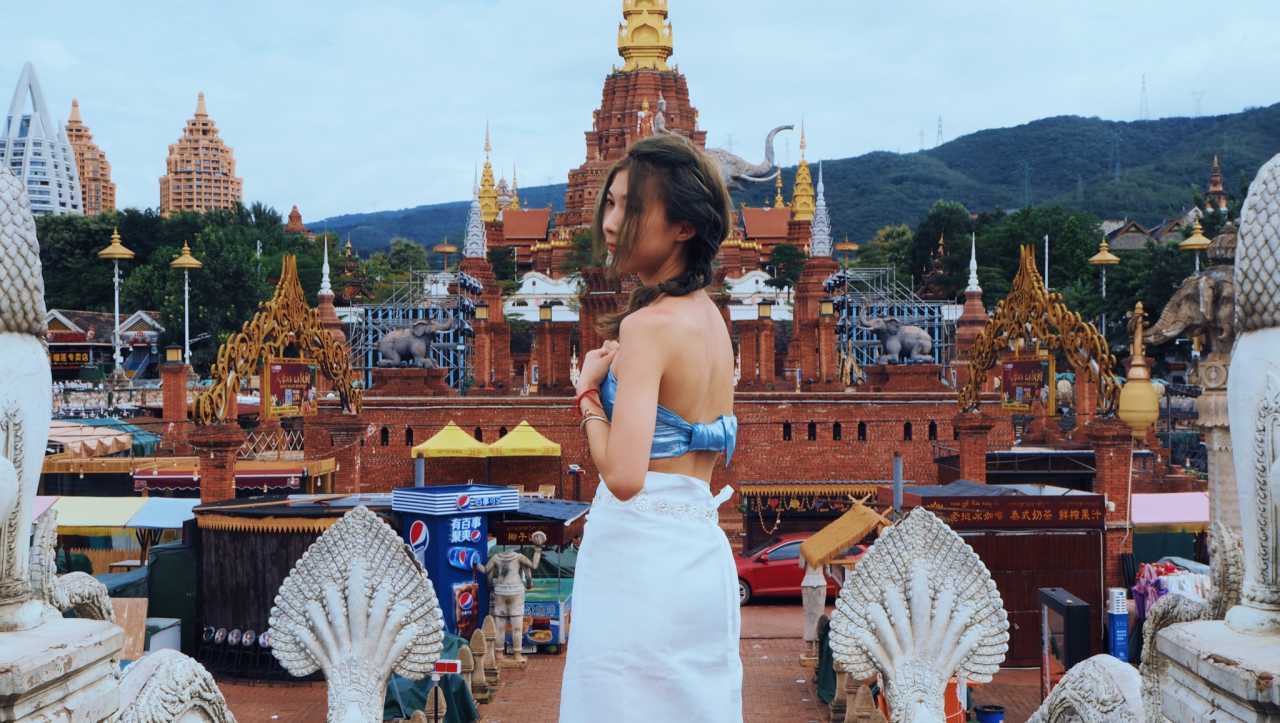
When I saw the real market, I was genuinely thrilled. But the biggest surprise was the Grand Golden Pagoda at the central axis—the blend of Buddhist pagoda and earthly烟火 (bustling life), faith and prosperity, had an indescribable beauty. I don't know why, but I'm drawn to cultural landmarks with religious and ethnic character.
There's also a stage in the market with small performances, like peacock dances and Dai Disco—a newly popular Dai-style disco dance with a quirky, upbeat rhythm that's really fun to move to.
One City, One Bar
Whenever Ye and I travel together, we always hit a local bar—even though I can't really drink.
Crossing the bridge, there's a small path leading to the Six Countries Water Market, another popular spot for photos. The bridge was packed with girls doing professional photoshoots, in all kinds of styles, especially Hani ethnic outfits.
Ye and I found a small bar by the roadside to rest. The view turned out to be amazing—we could see the reflections on the river.
Rooftop Night Views
 We climbed a building to get a bird's-eye view of the night market, even overlooking the entire Gaozhuang area. Unfortunately, we missed the sunset—it would've been beautiful to watch the sun go down, see the lights flicker on one by one, and then the whole place glow.
Dai Outfit Chaos
The night market was packed, so we had to squeeze between crowds for photos. Our go-to line was: "Just strike any pose, and I'll snap whatever." We even met a cool photographer girl who offered to light us with her phone—love those kind people.
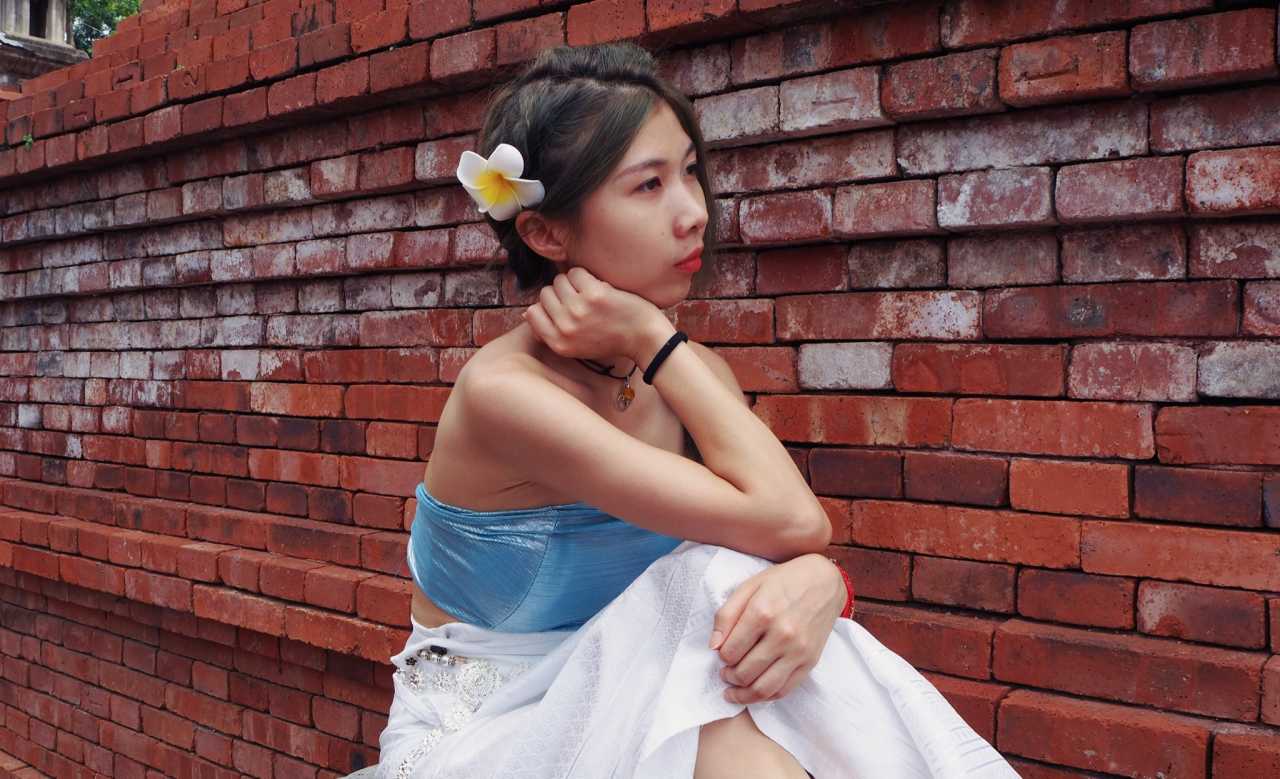
Here are some random night portraits: champagne tube top, teal tube top, white tube top street style, and my own clothes—just random poses, random shots, take them as you will.
Seven | Those Exotic Flavors
Xishuangbanna is full of trendy food spots, and as typical tourists, we checked a few out. Of course, we also did plenty of eating at the night market.
Wantai Iced Coffee
A popular spot. I'm not much of a coffee drinker, so I can't judge it too harshly—it was okay. But I love coconut juice, so the coconut ice was a real treat.
"Chun" Everything
 These are everywhere at the market—basically cold salads with various seasonings mixed together, all "chun" (pounded). We tried it on the first day, ordering a seafood mix. It was good, with the Southeast Asian flavors I love.
Spring Rolls
Delicious, especially with chili sauce. So good I forgot to take a photo until I was halfway through.
Milk Tea and Lemon Tea
 A daily must—one cup of milk tea or lemon tea, without fail.
Manfeilong Roast Chicken
Another famous spot. The roast chicken was indeed good, not a huge portion, but still too much for two girls. We also ordered fried rice noodles—these were amazing, super thin and silky, a total surprise from the first bite.
Dai-Style BBQ
On our first night in Banna, we arrived around 7 or 8 p.m. After picking up luggage, getting a COVID test, and taking a taxi to the hotel, it was already 10 p.m. We were starving. Luckily, our hotel was near the night market, so we walked over to find food. After the chun seafood, we ordered some BBQ—Dai-style, pretty good, but different from the BBQ we're used to.
Pearl Dumplings
 These are made from tapioca pearls, dipped in fried garlic, dried chili, and Thai sauce—really tasty. You wrap them in lettuce leaves. It was past 10 p.m., and the vendors were sitting around chatting, sharing a big plate of cold salad with all kinds of sauces. Just looking at it made my mouth water.
Malatang (Spicy Hot Pot)
We were craving malatang, so we ordered a Dai-style version at the market. It was pretty good.
Stuffed Tofu
Tofu wrapped in tofu—the inside was soft, the outside grilled. Ye said it was tasty, but I thought it was just okay.
Ye and I have small appetites, so we didn't eat much. We always left a lot of food behind at big meals, and many restaurants went untried. No regrets, though—we made up for it later in Lijiang with a massive mushroom feast.
Eight | Tips That May or May Not Be Useful
Transportation
Getting There During the pandemic years, domestic flights have been cheap. Over two years ago, a flight from Guangzhou to Banna cost over 1,000 RMB, even close to 2,000 during non-holiday periods. Now, 500 to 600 RMB is common. However, fuel surcharges have skyrocketed—last year they were 50 RMB, now 190?
Getting Around - Shuttle buses: Many attractions are far from the city. Shuttle buses are available, but getting back might be inconvenient. - City buses: Fine for within the city, but I didn't use them. Walk for distances under 2 km, take a Didi for anything farther. - Private car/self-drive: A bit pricey, but worth it for groups. - Electric scooters: Rent a Snoopy scooter in the city for 20 to 30 RMB per hour, or use shared e-scooters if you can find them. But parking is restricted at night, and the night market area gets chaotic.
Accommodation
Stay in Gaozhuang for easy access to the night market.
Photoshoots
 Didn't do one, so no advice. They're everywhere—the industry is well-established.
Attraction Tips
Chinese Academy of Sciences Botanical Garden
- Ticket: 80 RMB (includes East and West Zones)
- Shuttle bus: 50 RMB (West Zone only; East Zone costs another 50 RMB)
- Time needed: 3 to 4 hours for the West Zone; East Zone is reportedly huge
- COVID rules: 24-hour nucleic acid test required; you can also get tested at the entrance
- Getting there: Far from the city. Options: self-drive, private car (300 to 400 RMB), taxi/Didi, or take a bus from "Jinghong Bus Station" or "Banna Bus Station Jiangbei Ticket Point" (25 RMB, 1 hour)
How to buy bus tickets: Purchase online via the "Banna Bus Station" WeChat official account for buses to "Menglun" (departures every 30 to 60 minutes). If staying in Gaozhuang, navigate to "Banna Bus Station Jiangbei Ticket Point" and wait—no need to buy in advance.
How to return to Jinghong: No worries about finding a ride. Near the drop-off point, there's a small booth for tickets and waiting. Buses heading back to Jinghong stop here for 15 minutes. They also pass by the Botanical Garden parking lot and ask if anyone's going to Jinghong.
How to explore: If only visiting the West Zone, you can skip the shuttle, but bring a map to avoid getting lost. For both zones, you'll need the shuttle—the East Zone is huge. Unless you're a plant researcher, just do the West Zone; it has most of the photogenic spots.
Is the shuttle worth it?: Looking back, we actually took a detour—probably designed to make visitors ride through the entire East Zone. Walking the popular spots in the West Zone is about 4 to 5 km; no problem if you don't get lost. Honestly, 80 RMB for just the West Zone is a bit steep, and adding 50 RMB for the shuttle makes it 130 RMB—not the best value.
Manting Park & General Buddhist Temple
- Ticket: 40 RMB (daytime)
- Time needed: 2 to 3 hours (closes after 5 p.m.)
- COVID rules: 24-hour nucleic acid test
- Getting there: Didi, taxi, bus
Manting Park and the temple are connected. The area is small—you can finish in an hour if you're quick, but longer if you're taking photos. Evening shows cost over 200 RMB and include elephant performances, water lanterns, water-splashing, and bonfire activities.
Grand Golden Pagoda Temple
- Ticket: Free
- Time needed: 1 hour
- COVID rules: Nucleic acid test (there's a testing station across from the pagoda's main gate, 5 RMB for mixed testing)
- Getting there: Near Starry Night Market in Gaozhuang; walk, taxi, or bus
- Note: Strict dress code—no tank tops, no exposed thighs; no cameras inside, but phones are allowed
Starry Night Market
- Ticket: Free
- Time needed: Multiple evenings
- COVID rules: Green健康码 (health code)
- Getting there: Walk, taxi, or bus
Final Thoughts: Is Banna Worth It?
Xishuangbanna is a place you'll both love and hate.
If you want a set of exotic ethnic-style photos for your social media feed—Banna is worth it. If you're looking for a taste of Southeast Asia to satisfy your wanderlust, or want to experience a water-splashing festival—Banna is worth it. But if none of that interests you and you're just chasing freedom and faraway places—Banna might not be for you.
The night markets are lively, but most goods come from Yiwu. The temples are golden and grand, but everywhere there's sales pitches and photoshoots. The tickets are expensive, but the scenery is unique.
I ate delicious migan here, wore beautiful Dai clothes, took decent photos, and also got rained on, got lost, and got into the wrong car. There were surprises and disappointments. But isn't that what travel is all about? Plans never survive reality, but the unexpected twists are what make the journey meaningful.
If you're going to Banna, prepare yourself mentally—keep your expectations low, and the surprises will feel all the sweeter.
You should also read:
It's So Good to Have You All! My 2012 Trip to Yunnan · Lijiang After Quitting My Job
It's So Good to Have You All! My 2012 Trip to Yunnan · Lijiang After Quitting My Job Prologue: When Life Hits the Pause Button 2012 was, for me, an absolutely terrible year — work was going nowhere, my personal life was a mess, and…
Continue reading...
Travel: A Spiritual Journey of Life (A Trip to Lijiang)
Travel: A Spiritual Journey of Life (A Trip to Lijiang) Introduction: When Youth Meets the Horizon Some say that if you still have youth left, you should go to the horizon. I'm not sure how much youth I have left, but I'm certain that a…
Continue reading...
Xishuangbanna Self-Drive Tour: Into the Tropical Wonderland at the Edge of the Sky (Complete Guide)
Xishuangbanna Self-Drive Tour: Into the Tropical Wonderland at the Edge of the Sky (Complete Guide) Introduction: A Dream Fulfilled Thirty Years Early Some journeys are destined to happen at a specific moment in time. For me, a self-drive trip to Xishuangbanna was originally the first…
Continue reading...