It's So Good to Have You All! My 2012 Trip to Yunnan · Lijiang After Quitting My Job
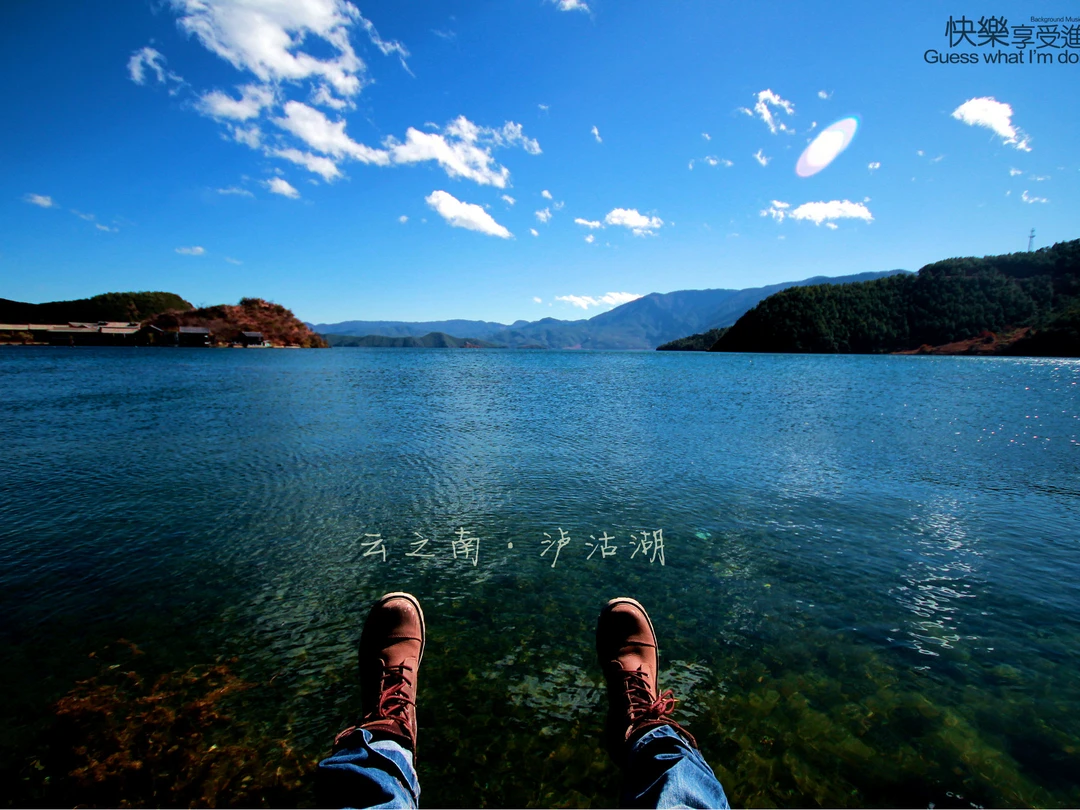
It's So Good to Have You All! My 2012 Trip to Yunnan · Lijiang After Quitting My Job
Prologue: When Life Hits the Pause Button
2012 was, for me, an absolutely terrible year — work was going nowhere, my personal life was a mess, and it felt like everything was conspiring against me. Finally, on an ordinary day in November, I made a decision that was anything but ordinary: I quit.
The first thing I did after resigning wasn't updating my resume or worrying about the future. Instead, I opened a map and booked a flight to Yunnan. From making the decision to actually setting off, it took barely a week. This was what people call a "just-go" trip — not too much planning, not too many worries, just a desire to escape the familiar and find a place where I could breathe again.
A special thank you to the Mafengwo travel platform, where I found a travel companion from Xi'an before departure — Jiao Jiao. So there we were, two complete strangers, united by a shared longing, embarking on the same journey.
This was my second time backpacking solo. Compared to my first trip to Tibet, which was filled with nerves and meticulous preparation, this time I was practically traveling naked — I printed out a single Yunnan travel guide from Mafengwo, grabbed my bag, and left. But it was precisely this spontaneity that filled the entire trip with unexpected surprises and warmth.
Trip Overview: 20 Days, Three Cities
This Yunnan trip lasted a total of 20 days. Since my original intention was to clear my mind, I allocated most of my time to Lijiang. As it turned out, this was absolutely the right decision.
- DAY 1: Xi'an → Kunming (stay one night)
- DAY 2-DAY 4: Kunming → Dali (stay two nights)
- DAY 5-DAY 20: Lijiang (stay fifteen nights)
Kunming: First Impressions of the Spring City
A Little Joy on the Plane

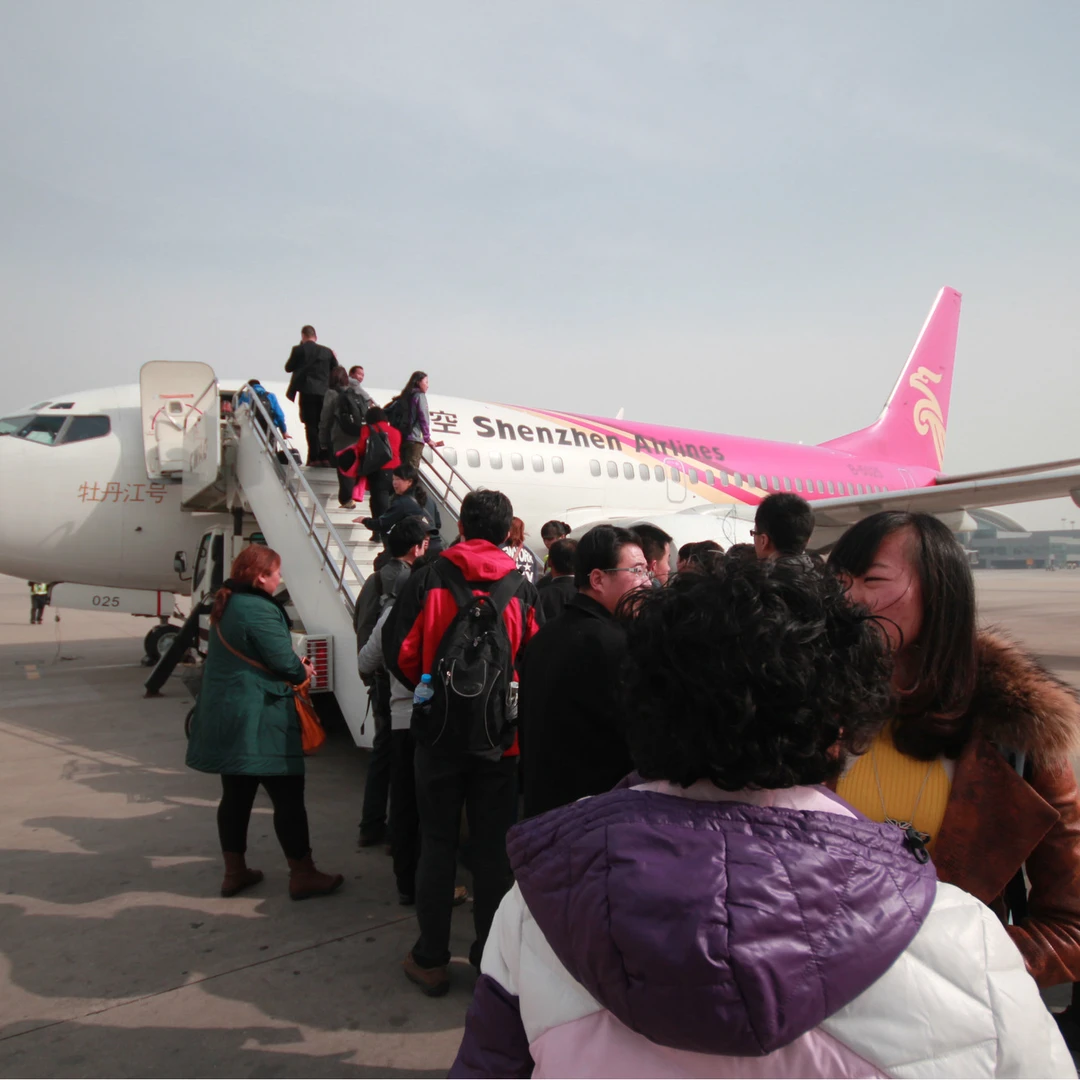
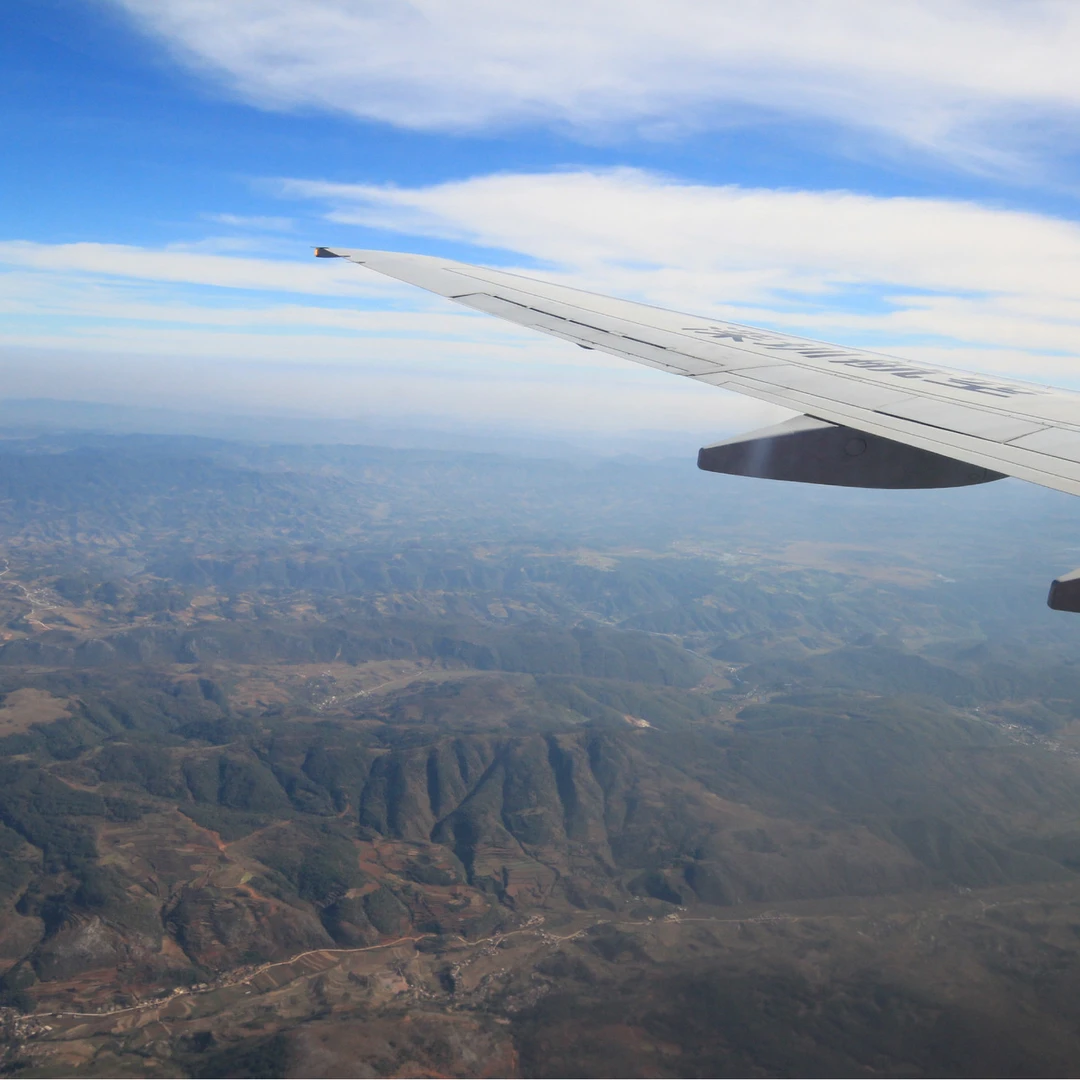
I booked a Shenzhen Airlines flight. When we took off from Xi'an, all I could see outside the window was layer upon layer of clouds. But as the plane approached Kunming's airspace, the clouds suddenly parted, revealing the magnificent mountains and rivers below. In that moment, it hit me — no wonder Yunnan is called "the Land of Colorful Clouds." The sky here is naturally blue.
Even more fortunate was the woman sitting next to me, who ran a business in Kunming. After a few casual exchanges, she offered to give us a ride from the airport to our hotel. This kindness from a stranger became the first warm moment of my journey.
A 120-Yuan Surprise
The hotel I booked on Ctrip turned out to be a pleasant surprise — a standard room with two large beds, and it only cost 120 yuan a night, right in the city center. We dropped off our luggage around 5 PM and headed straight for the Golden Horse and Jade Rooster Archways (Jinma Biji Fang), with one clear goal: to eat a bowl of authentic cross-bridge rice noodles (guoqiao mixian).
Walking through Kunming's streets, I noticed something interesting — they still had those extra-long articulated buses, which were already a distant memory back in Xi'an. There were also green-colored Dicos fast-food restaurants, something I'd never seen anywhere else. I later learned that the green and yellow Dicos are essentially the same, just different store designs.
In late November, the roadsides in Kunming were covered in bougainvillea and countless other flowers I couldn't name, filling the air with the scent of spring. The famous Qiaoxiangyuan Rice Noodles from the travel guides was right next to the Golden Horse and Jade Rooster Archways. Starving, we rushed in and ordered two portions — one more expensive, one cheaper, the difference being the variety of toppings. The total for both of us was just over fifty yuan, excellent value for money.
The Golden Horse and Jade Rooster Archways area is basically a small commercial district with two archways. We walked around and realized that was it — a bit disappointing, but still an experience. Unfortunately, my camera battery died right then, so I missed the chance to capture it.
Dali: The Awe of Cangshan Mountain and Erhai Lake
From Xiaguan to the Ancient Town
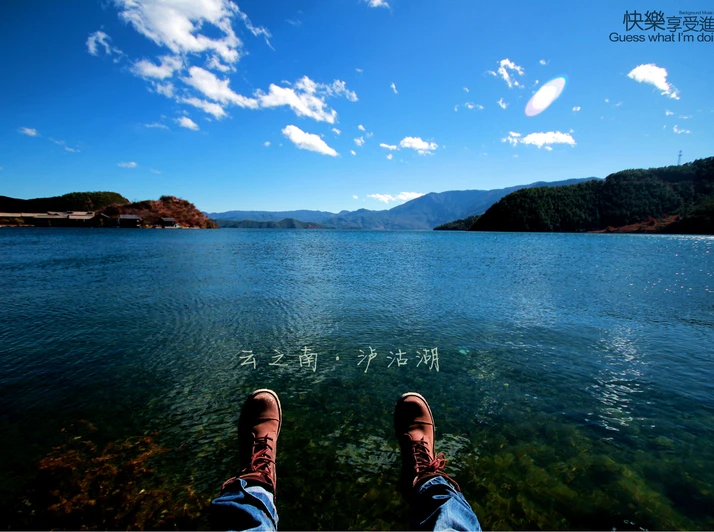
The next morning, we caught the 9 AM train to Dali. Seven hours later, when our feet touched Dali's soil, both Jiao Jiao and I were stunned — the sky was impossibly blue, and the air was so fresh it made you want to take deep breaths.
Dali's train station is in Xiaguan (the new city), a fair distance from Dali Ancient Town and our hotel. A taxi to the ancient town takes about forty minutes and costs 50 yuan. Our booked hotel was in Caicun Village, even farther than the ancient town. We eventually negotiated a fare of 50 yuan with a local woman who was soliciting passengers.
Looking back, taking that woman's ride was one of the best decisions we made. She was a member of the Bai ethnic group. Along the way, she taught us some Bai phrases and enthusiastically shared local travel tips. It turned out she also ran a guesthouse in the ancient town herself. Since there weren't many other sources of income locally, most locals worked in tourism. We had already booked our first night's hotel on Ctrip, but she invited us to check out her guesthouse, and we decided to stay there on the second night.
The Auntie's Guesthouse and Wanghaiting Inn
The auntie's guesthouse was a cozy Bai-style courtyard, with a nice atmosphere and reasonable prices — 90 yuan a night for a room with a computer. We immediately decided to stay there for the second night.
After that, she drove us to our first booked hotel, "Wanghaiting Inn" (Sea-Viewing Pavilion Inn). This inn was right next to Erhai Lake — it took only a minute to walk from the entrance to the lakeshore. The Caicun area had many lake-view guesthouses, but they were significantly more expensive than those in the ancient town. During the off-season, the cheapest lake-view rooms started at over 200 yuan, and during peak season, they could go for 400 to 500 yuan or even more.
We had booked a standard room without a lake view for 150 yuan a night. Although we couldn't see the lake from our room, the lake was just outside the door, and the inn's top floor had a large terrace, which provided an excellent spot for me to photograph the sunrise the next morning. The owner was from Northeast China and was very welcoming.
Erhai Sunset and First Glimpse of the Ancient Town
After hastily unpacking, we couldn't wait to head out. We happened to catch sunset, so I quickly grabbed my camera to capture the beauty of Erhai Lake.
After taking a few photos, it was already dark. We took a bus from Caicun to Dali Ancient Town — the fare was just one yuan, and it took about ten minutes to reach the north gate. Starving, our first priority was finding food.
Dali Ancient Town is full of Bai-style restaurants, with ingredients displayed right at the entrance, looking incredibly appetizing. We picked a busy one and ordered four dishes: ginseng fruit stir-fried with cured meat, rose omelette, crucian carp soup, and a dish with the enticing name "shuixin yanghua" (watery flower) — actually a type of aquatic plant from Erhai Lake. Paired with Dali beer, the total for two people was under 100 yuan. The taste and price were both very satisfying.
After eating and drinking our fill, we wandered around the ancient town. On Foreigner Street (Yangren Jie), there was a bar run by foreigners, packed with expats, with all the owners being foreigners too. It was said to be one of the hottest bars on Foreigner Street at the time. The postcard shops in the ancient town were very creative, though photography wasn't allowed inside. But those postcards were truly unique — I collect postcards myself, so I especially loved this place.
Dali's famous snack, roast milk fan (kao ru shan), cost 3 yuan each, but I gave up after just one bite — I really couldn't get used to the taste. The archway on Foreigner Street is an iconic landmark, looking especially atmospheric under the night lights.
Since we had a full day ahead the next day, we took a quick stroll and then grabbed a taxi back to the inn. A word of caution: there are very few licensed taxis in Dali; most are private cars driven by Bai locals offering rides. Although they're all "unlicensed," people line up to wait for passengers, negotiate a price, and then hop in. At night, fares generally range from ten to twenty yuan.
Erhai Sunrise: An Unforgettable Scene
Back at the inn, we chatted with the owner for a bit and then went upstairs to sleep. The past two days of travel had been exhausting, and I fell asleep as soon as my head hit the pillow. When I opened my eyes, it was already light. I quickly threw on my clothes, didn't even wash my face, grabbed my camera, and rushed up to the inn's terrace.
The moment I climbed onto the terrace, I was stunned by the view — before sunrise, Caicun was incredibly peaceful, with the morning glow painting the clouds and the village in shades of red. The typical Bai-style buildings, none of them tall, were arranged in neat rows. After waiting for a while, the sun was finally about to rise. I saw many people on their own guesthouse terraces, cameras already set up, waiting for that moment.
And then it came — Dali · Erhai · Sunrise. In that moment, I felt that all the exhaustion was worth it.
A Day Trip Around Erhai Lake
After taking photos and freshening up back at the inn, we started the day's itinerary. Many of Dali's attractions are scattered along the route circling Erhai Lake, so we decided to rent a car for the loop. The auntie from earlier had told us that if we rented her car for the loop, she could give us a discount. We found a driver at the inn who quoted 300 yuan. We called the auntie, and she said if we stayed at her guesthouse for the second night, she'd do the loop for 150 yuan, the guesthouse would be 90 yuan a night, and on the third day, she'd give us a free ride to Dali train station. We agreed without hesitation.
At 9 AM the next day, the auntie arrived punctually to pick us up. Once we were in the car, she started discussing the day's route with us. The first stop was the Three Pagodas of Chongsheng Temple. The entrance fee was over 100 yuan, and all you could do inside was look at the pagodas — nothing else special. We had checked online beforehand, and the inn owner had said the same thing, so we decisively skipped going in, took a photo at the entrance, and moved on.
The sky was still that incredible blue, with big, fluffy clouds. Breathing in the fresh air, I was in a fantastic mood. As someone from Xi'an, I was honestly jealous — in Xi'an, we're lucky to have even a week of weather like this in an entire year.
The second stop was Xizhou, mainly to see Bai-style residential architecture. The entrance fee was 60 yuan. Inside, there were cultural performances, tea tastings, and demonstrations of handicraft production. To be honest, this attraction was skippable — the things inside weren't really worth it. The Bai cultural performance was decent, followed by a tasting of the Bai's "three-course tea" (san dao cha) — the taste was strange and hard to swallow. The Bai handicrafts were interesting; there was a pure silver "囍" (double happiness) character, priced quite high. In the tea room, we sampled four types of tea named "Wind, Flower, Snow, Moon" (feng, hua, xue, yue) — very evocative names. I ended up buying a set for 100 yuan.
After leaving Xizhou, there were many roadside vendors selling Xizhou flatbread (baba). The auntie told us to give her the money — 3 yuan each, whereas tourists would be charged 10 yuan. We asked her to buy two, one sweet and one savory, and devoured them in the car. This flatbread was a bit like Shanxi's scallion oil pancakes — soft and with a good texture.
The third stop was Tianlong Cave (Tianlong Dong), said to be the karst cave used for filming the TV series "The Demi-Gods and Semi-Devils" (Tianlong Babu). The entrance fee was 60 yuan (including the cable car). After taking the cable car up, we entered the cave and had to climb stairs — very tiring, especially at altitude. I'd recommend skipping it if you're not physically fit or prone to altitude sickness. There wasn't much to see inside the cave, but the view from the back exit left me speechless — standing on Cangshan Mountain, overlooking the blue sky, white clouds, Erhai Lake, villages, and farmland, it was breathtakingly beautiful.
The next stop was Shuanglang, where Yang Liping's villa is located. When we arrived in Shuanglang, the first thing that caught our eye was a blend of classical architecture with a modern vibe. The famous guesthouse "Qingchen" from the travel guides had its sign just lying on the ground, full of personality. Inside, there was a large bougainvillea plant. Imagine sitting there drinking tea — I'll leave the rest to your imagination.
We had lunch in Shuanglang: lotus root stewed with pork ribs, yellow-braised chicken, "shuixin yanghua," plus a bottle of "Wind, Flower, Snow, Moon" beer. Three hearty dishes for 120 yuan, pretty reasonable. After lunch, we passed by Xiaoputuo Island. Since you needed to take a boat to get there, we just took photos and moved on.
Saying Goodbye to Dali
After finishing the Erhai Lake loop, we checked into the auntie's guesthouse. In the evening, we headed back to the ancient town for food — this time, the main dish was steam pot chicken (qiguo ji), which was quite good. After dinner, we went bar-hopping. We visited the previously mentioned BAD MONKEY, which was packed. Interestingly, the custom there was to share tables — if a table wasn't full, you could just sit down. At our table, we ended up with three groups of people, and the atmosphere was great. Since we were heading to Lijiang the next day, we returned to the guesthouse promptly at 11 PM to rest.
The next morning, there was a small hiccup — we stayed out too late at the bar and overslept. The auntie was busy, so she arranged for a guy to pick us up. He called to say he was at the door just as we were waking up. Due to some minor delays, we missed the train. Luckily, we hadn't bought tickets yet, so we took a bus to Lijiang instead — only two hours away.
The sky was still a brilliant blue. Lijiang, here we come.
Lijiang: The Beginning of Slow Living
Finding Our Home Base
The iconic landmark of Lijiang Ancient Town — the Big Water Wheel (Dashuiche) — was our first check-in spot after arriving. Since it was the off-season, we hadn't booked a guesthouse in advance. As we were dragging our luggage through the ancient town, several local women approached us, offering to show us their guesthouses. That's how we ended up at our current guesthouse — the room was spacious, the environment was nice, and most importantly, we could sit in the courtyard drinking tea and soaking up the sun every day. At 90 yuan a night, it was a steal. This became our temporary base in Lijiang, and it was here that we met so many friends.
A word of caution: there's a profession in Lijiang of "touts" — people who don't own guesthouses themselves but earn commissions by bringing guests to them. During the off-season, a reasonable price for a guesthouse is generally between 100 and 150 yuan. Some famous guesthouses cost over 200 yuan. It's advisable to compare several options.
Laodao Fang: A Surprise for the Taste Buds
After settling into the guesthouse, it was lunchtime again. The guesthouse owner recommended "Laodao Fang" (Naggy Kitchen) — said to be run by local Naxi people and quite affordable. When we went there, we found that this place truly lived up to its reputation. Naxi-style grilled fish (Naxi kao yu), Naxi-style dried liver (Naxi chui gan) — every dish was generous in portion, reasonably priced, and delicious. The owner was a local Naxi man, and he was the only cook in the entire restaurant, personally preparing every dish. It was hard work.
I especially recommend the cured pork ribs (la paigu) and black goat meat (hei shanyang) — they're a great deal here. The only downside was the dining environment — you had to get your own bowls, chopsticks, and rice. But that was understandable; as long as the food was good, nothing else mattered. If you're going to Lijiang, you absolutely have to try this place for authentic local cuisine.
Meeting the Crew
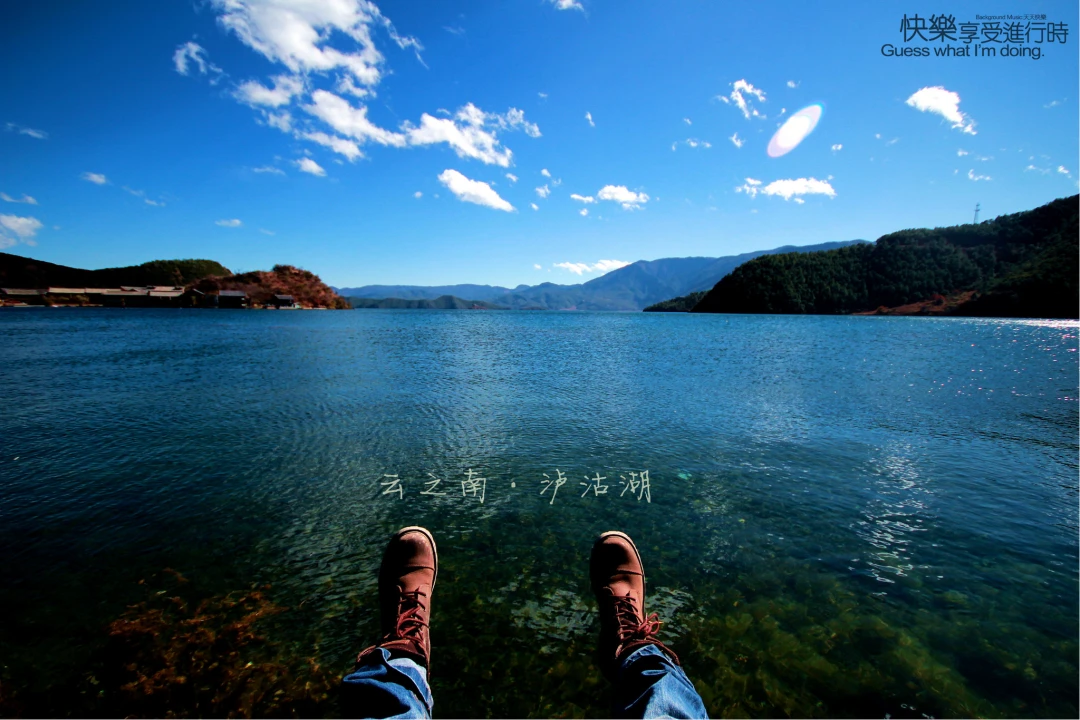
After eating, we couldn't wait to explore Lijiang Ancient Town. From this point on, the characters started to appear, which became a major highlight of this trip — it's so good to have you all.
First, a special introduction to Jiao Jiao, whom I met on Mafengwo. She's from Xi'an and works as a yoga instructor. At Sifang Street (Square Street), we ran into another friend we'd met on Mafengwo — Han Ye, a Singaporean girl with Northeast Chinese roots. Our group had grown to three.
We walked along Qiyi Street, where we saw Naxi weaving techniques, and then reached the snack street — countless vendors hawking their wares, mostly 10 yuan per portion. The Naxi people have their own fascinating writing system, and the walls were covered with Naxi characters alongside Chinese translations, which was really interesting. I learned that "地老天荒" (til the end of time) is depicted in a unique way in their script.
Mu's Mansion and Wanggu Tower
The highlight of the day was Mu's Mansion (Mu Fu). The entrance was very imposing. The TV series "The Legend of Mu's Mansion" (Mu Fu Fengyun) was filmed here. When we arrived, they were still shooting. There was a handsome guy in period costume in the middle — guess what role he was playing?
At the back of Mu's Mansion, there was a small hill. Climbing it gave you a view of almost the entire ancient town — it's one of the highest points in Lijiang Ancient Town. If you go further up through a small gate, you'll reach the absolute highest point — Wanggu Tower (Ten-Thousand-Ancient-Tree Tower). Photography enthusiasts absolutely must go there.
The view of the ancient town from the top of Wanggu Tower was incredibly expansive. Unfortunately, I got separated from my group here. I took a small path down from Wanggu Tower to look for them, but instead, I discovered some beautiful things.
As I was walking, I suddenly heard a beautiful voice. Following the sound, I found an unassuming girl singing — it was the first time I truly felt Lijiang's cultural charm. Then I saw a guesthouse, each one with its own unique character. As I continued through the ancient town, I suddenly saw a crowd of people pointing their cameras at something — I looked up, and there was Jade Dragon Snow Mountain (Yulong Xueshan) right in front of me.
Lijiang Daily Life
I found a small bar on the third floor of a building on Sifang Street, sat down to listen to music, and waited for my friends. Soaking up the sun while listening to songs and watching the crowds below was incredibly relaxing. The benches downstairs were filled with people just resting — maybe this is what happiness is. Even doing nothing in Lijiang is a form of happiness.
When my friends came over, we had Lijiang's specialty, cured pork ribs (la paigu), for dinner. The taste was okay, but not as good value as Laodao Fang. In the evening, there was only one place to be in Lijiang — the bars.
On the second day in Lijiang, with no pressure to rush anywhere, we slept in naturally. Then it was just eating, drinking, and strolling. I summed up what you can do in Lijiang: drink tea, eat, shop, and hit the bars.
At noon, we headed to the new city (xincheng) to try the famous salmon (sanwenyu). Important note: to get good salmon, you have to go to the new city; the stuff in the ancient town isn't authentic. There's a whole street in the new city dedicated to salmon. A taxi from the ancient town costs 7 yuan. Just find a busy-looking place and go in.
Meeting Yao Yao
In the afternoon, the girls went shopping while I found a tea house to drink some tea. Speaking of Pu'er tea, there's a little story. I was taken to the tea house by a local guy I'd met at a bar the night before. The tea house was very welcoming, letting you sample tea for as long as you wanted, but it felt awkward not to buy anything. Because of that awkwardness, I ended up spending 500 yuan there. Later, after meeting many new friends, I learned that the best way to buy tea is to ask your guesthouse owner. Many owners know where to get it cheap, or they'll take you directly and get you a significant discount.
While drinking tea that afternoon, I met Yao Yao — a Beijing girl who had come to Lijiang to escape relationship troubles. She was a Korean returnee and a Korean language teacher. Lijiang is truly a magical place — Yao Yao and I connected on WeChat and somehow ended up meeting in person. From then on, we had another teammate.
Bars and Songs
After tea, it was still early, so we found a bar to listen to music. A few Yi ethnic minority guys were singing. When they sang "Don't Be Afraid" (Bu Yao Pa), I was blown away again — I genuinely felt that Yi guys are better suited for this song. The bar was filled with all kinds of witty sayings, like "Three bowls and you can't cross the ridge" (San wan bu guo gang) and "What we're drinking isn't alcohol, it's loneliness." Maybe this is also part of Lijiang's culture — bold, individualistic, and unrestrained.
We had dinner in the new city, with lots of local specialties. Unfortunately, I was too busy eating to take photos. After dinner, we went back to the ancient town for more bar-hopping. On the pedestrian overpass outside the ancient town, I had a sudden inspiration and took a photo — compared to the tranquility of the ancient town, just on the other side of the railing, the outside world was bustling with traffic, full of modern energy. I was truly grateful for this pocket of peace.
The highlight of the evening was the bar "Shuibo Liangshan" (Water Margin). The resident singers were A Cha and Xiao Xiao, and their signature drink was plum wine (san wan bu guo gang). Xiao Xiao had an amazing female voice, singing all the familiar songs. A Cha and his band were part-owners of the bar, and he sang with incredible passion and swagger.
Epilogue: It's So Good to Have You All
This Yunnan trip showed me a meaning of travel I had never experienced before. I was especially happy to have made so many good friends along the way — Jiao Jiao, A Feng, Jian Peng, Yao Yao, Han Ye, A Ke, Mei Zi, Lu Lu, Uncle Bird (Niao Shu), Xi Xi, Lin Xi, and the police couple, among many others.
During those fifteen days in Lijiang, we drank tea, ate, shopped, and went to bars. Every day was in slow motion. There was no anxiety about rushing to see sights, no pressure to check off a list. We simply enjoyed life. This is probably Lijiang's charm — it makes you forget time, forget your worries, and only remember the beauty of the present moment.
2012 may not have been a good year, but this trip taught me something: sometimes, life needs a pause button. When you stop, you see different scenery, meet different people, and experience different kinds of joy.
It's so good to have you all. It's so good to have Lijiang.
Practical Tips Summary:
- Camera Equipment: Canon 600D, lenses: Canon 55-250 and Sigma 10-20
- Kunming Accommodation: Zhouli Hotel (cheaper if booked through group deals)
- Dali Accommodation: Caicun Wanghaiting Inn (lake-view rooms 370+ yuan in off-season, standard rooms 150 yuan); Bai Auntie's guesthouse in the ancient town (90 yuan/night)
- Lijiang Accommodation: 100-150 yuan is reasonable in off-season; compare several options
- Food Recommendations: Laodao Fang (Naxi grilled fish, cured pork ribs); salmon in the new city; Qiaoxiangyuan Rice Noodles
- Shopping Tip: Ask your guesthouse owner to take you when buying Pu'er tea; you can get significant discounts
- Transportation Tip: Few licensed taxis in Dali; negotiate fares with private cars; taxi from Lijiang ancient town to new city costs 7 yuan
- Background Music: "Yi Shun Jian" (In an Instant) by Xiao Qian — you'll hear it everywhere in Lijiang's streets and alleys
You should also read:

Solo in Yunnan: A Wanderer’s Guide to the Land of Eternal Spring
Solo in Yunnan: A Wanderer’s Guide to the Land of Eternal Spring There’s something magical about traveling alone. No compromises, no schedules to keep, no one to please but yourself. I’ve been on the road for nearly three months now, and not once have I…
Continue reading...
God’s Abandoned Palette: A Self-Drive Journey Through Yunnan’s Dongchuan Red Land
God’s Abandoned Palette: A Self-Drive Journey Through Yunnan’s Dongchuan Red Land Travel has never been about reaching some distant geographic coordinate. It’s about encountering, along the way, the version of yourself buried beneath the rubble of daily routine. During this May Day holiday, I finally…
Continue reading...
Two Girls' Graduation Trip: Dali and Shuanglang – A Poetic Farewell to Mountains and Sea
Two Girls' Graduation Trip: Dali and Shuanglang – A Poetic Farewell to Mountains and Sea Preface: Catching the Tail of Youth, Heading South During our senior year of college, my roommate and I – two girls studying in Beijing – decided to bid farewell to…
Continue reading...