Yunnan: Four Encounters, Each One a First Love
Yunnan: Four Encounters, Each One a First Love
Some places you visit once — that's travel. Visit four times, and that's destiny.
My connection with Yunnan has spanned twenty years. From my first steps on this land in 2006 to another journey during the Spring Festival of 2026, I've returned to this "Colorful Yunnan" four times — this time with my two children and my mother. At the start of the new year, I reunited with Lijiang Old Town, met Jade Dragon Snow Mountain for the first time, reconnected with Dali after two decades apart, and made a second visit to Xishuangbanna.
If you ask me why I keep coming back to Yunnan again and again, the answer is simple: this place doesn't offer breathtaking scenery that leaves you speechless. Instead, it offers a sense of ease that makes time slow down.
Thirteen Days and Nights: A Classic Yet Heartwarming Route
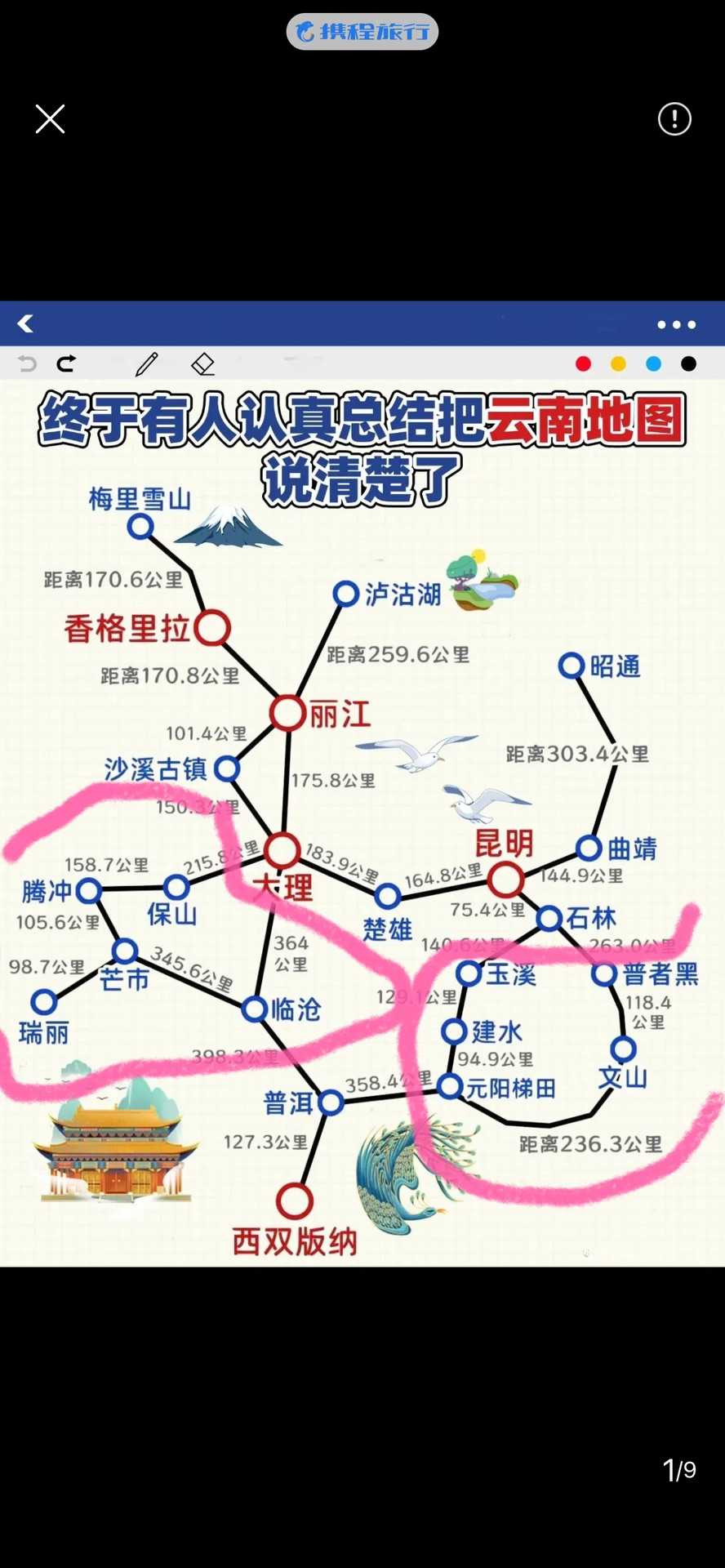
This trip ran from February 9th to the 21st — thirteen full days. Since both children and my mother were visiting Yunnan for the first time, I chose the classic "Kunming-Dali-Lijiang" route, while my husband (the kids' dad) joined us in Xishuangbanna for the New Year.
Quick Itinerary:
- Feb 9: Flew from Shenyang to Kunming, stayed near Changshui Airport
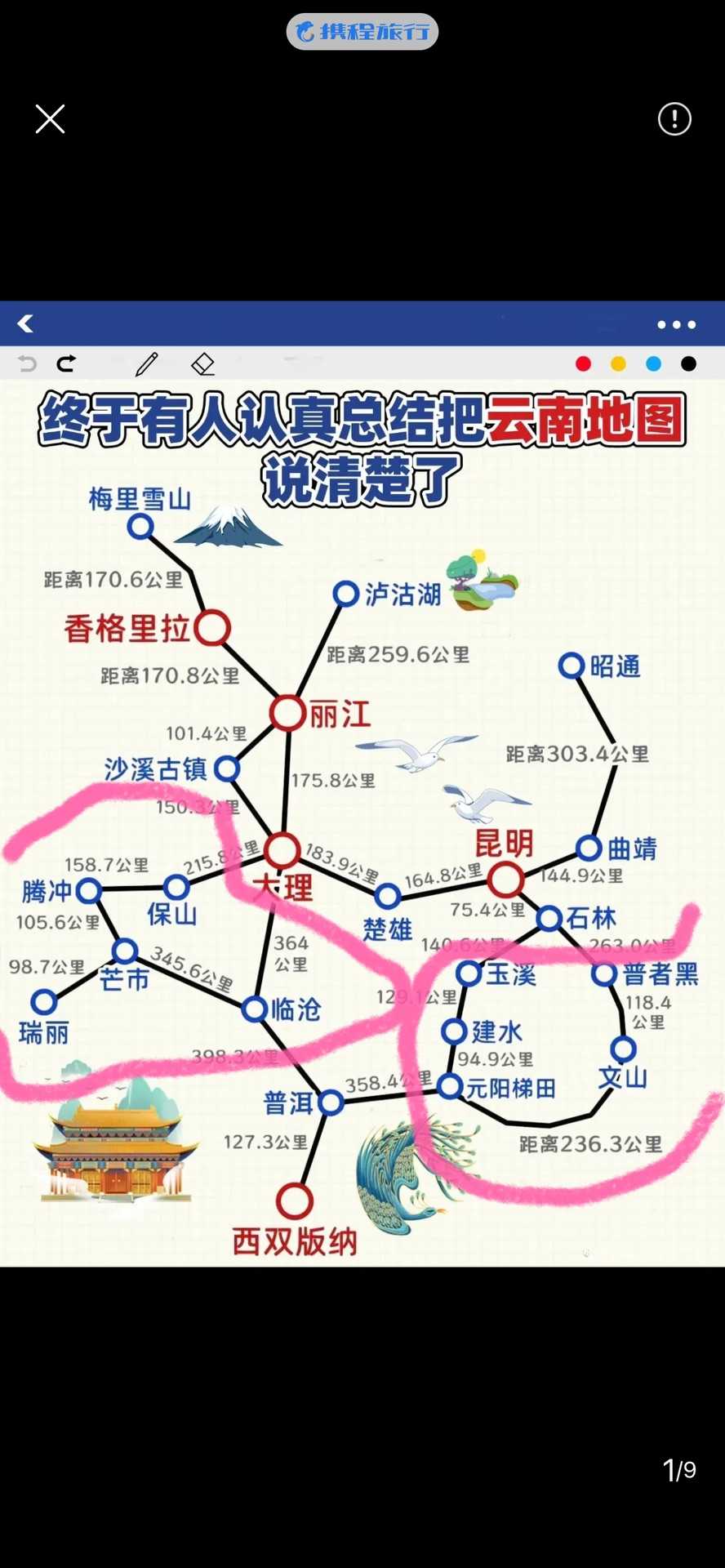
- Feb 10: Kunming → Lijiang (high-speed train, 3 hours 49 minutes)
- Feb 10-12: Three nights in Lijiang Old Town
- Feb 13: Lijiang → Dali (high-speed train, 2 hours 15 minutes)
- Feb 13-14: Two nights in Dali
- Feb 15: Dali → Kunming (high-speed train, 1 hour 58 minutes), met up with dad
- Feb 16: Kunming → Xishuangbanna (high-speed train, 3 hours 55 minutes)
- Feb 16-19: Four nights in Xishuangbanna
- Feb 20: Xishuangbanna → Kunming (high-speed train, 3 hours 49 minutes)
- Feb 21: Early morning flight back to Shenyang
Throughout the journey, little Dingdong kept himself entertained on the trains, taking care of himself without fussing or complaining — calm and composed. This kid is definitely going to be a great travel companion in the future!
Lijiang Old Town: Four Meetings, Still Captivating
A friend once asked me: "Isn't Lijiang Old Town completely commercialized now? Why do you still love it so much?"
I answered at the time: "Because it's the kind of commercialization I don't mind." Looking back, that answer wasn't complete.
Lijiang Old Town was the first ancient town I ever visited — like the first contestant to perform in a competition, it set the standard in my mind. Later contenders came close, but none surpassed it. So to this day, it still holds the highest score in my personal ranking of ancient towns — and for the record, the closest runners-up are Yangshuo West Street and Gulangyu Island in Xiamen.
Why does it always score so high?
First, the climate. Yunnan is spring year-round. No matter when you walk through the old town, you never feel irritable. When you're in a good mood, everything looks lovely — even the little street-side shops seem to have character.
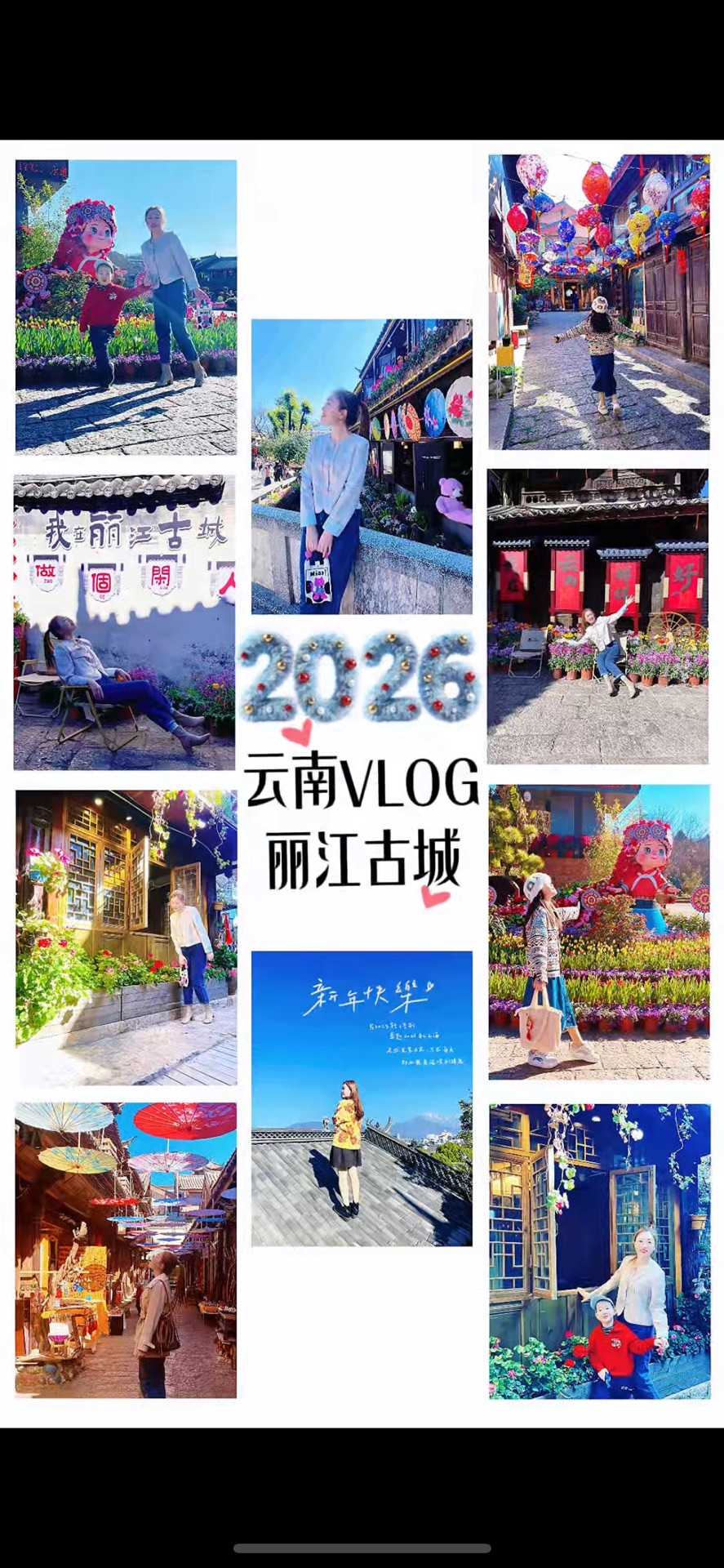
Second, the flowers. Yunnan is a kingdom of blooms. Rare and exotic flowers are everywhere. Against this backdrop, every snapshot looks like a masterpiece. Our family is full of photography enthusiasts — my old-school mother, the new-generation Meixia, and this time I discovered Dingdong is a true fanatic, demanding photos at every turn. His poses are limited, but his enthusiasm is boundless. Thank you, Meixia, for photographing both your mom and your brother — you worked hard!
Third, it always feels brand new. When I first visited Lijiang in 2006, the guide proudly mentioned five-star public restrooms. So many years later, those might not earn five stars anymore, but the pavilions, towers, little bridges, and flowing water still sparkle.
As I always say: In Lijiang, time is the cheapest thing. Listen to music, sip wine, drink coffee, make handicrafts... pick any one activity, and time quietly slips away.
Zhu Ziqing wrote in Rush: "Counting silently, more than eight thousand days have slipped through my fingers." Perhaps what I love about Lijiang Old Town is exactly this kind of "rushing" — it gives time a tangible texture.
On Food: The Rice Noodle Champion
We stumbled upon a highly-rated rice noodle shop in the old town — "Zha Zha Rice Noodles" (渣渣米线). From the ambiance to the quality to the service, everything was impeccable. The broth was rich, the toppings generous, and they offered free noodle refills — the whole experience felt ceremonial. This was our first bowl of rice noodles on this Yunnan trip, and it ended up being the best.
The server even explained the order of adding toppings and eating. The kids listened with rapt attention — it was like a living lesson.
On Accommodation: The Ups and Downs of Yaxi Hotel
We stayed at "Yaxi Hotel" near the Big Waterwheel. I chose it mainly because it was close to the old town — no need to drag suitcases over cobblestone streets — and it offered breakfast. After the major fire in Lijiang Old Town, most inns inside the ancient city stopped serving meals. With elderly and children, going without breakfast was just impractical.
We booked a three-story loft room with two large beds, two showers, two sinks, and two toilets, plus a tea table (the kids' favorite). It cost about 600 RMB per night. But after checking in, we discovered several issues:
- It was a ten-minute walk to the Big Waterwheel, not right downstairs
- No panoramic view of the old town or the "sunrise over golden mountain" spectacle
- The loft design wasn't very safe — the railing was a bit low. I couldn't sleep soundly for three nights, worried the kids might fall in their sleep
- Poor soundproofing — we got complaints from neighbors on the first day
The rooftop had a viewing platform for drying clothes, and the kids could play in the water, swing on the swing set, and play with some dusty toys. Photos depended entirely on angles and post-processing — don't expect too much. I spent forty minutes shooting with Meixia and only got a few decent shots.
Overall, I'd rate this hotel as "average."
However, near the hotel was a mushroom hotpot restaurant — "Mushroom Village, Yunnan Authentic Wild Mushroom Hotpot" (菌村,云南地道野生菌火锅). The flavor was delicious, and they boil it for exactly twenty minutes. It was slightly on the salty side, so just ask for more water. This was also our first mushroom hotpot of the trip — and it too became the champion.
Jade Dragon Snow Mountain: Waited Four Times, Finally Met You
When the innkeeper heard I'd been to Lijiang four times without ever visiting Jade Dragon Snow Mountain, she was astonished. I can't recall the exact reasons — probably because cable car tickets were always sold out. This time, thanks to her reminder, I remembered to book in advance.
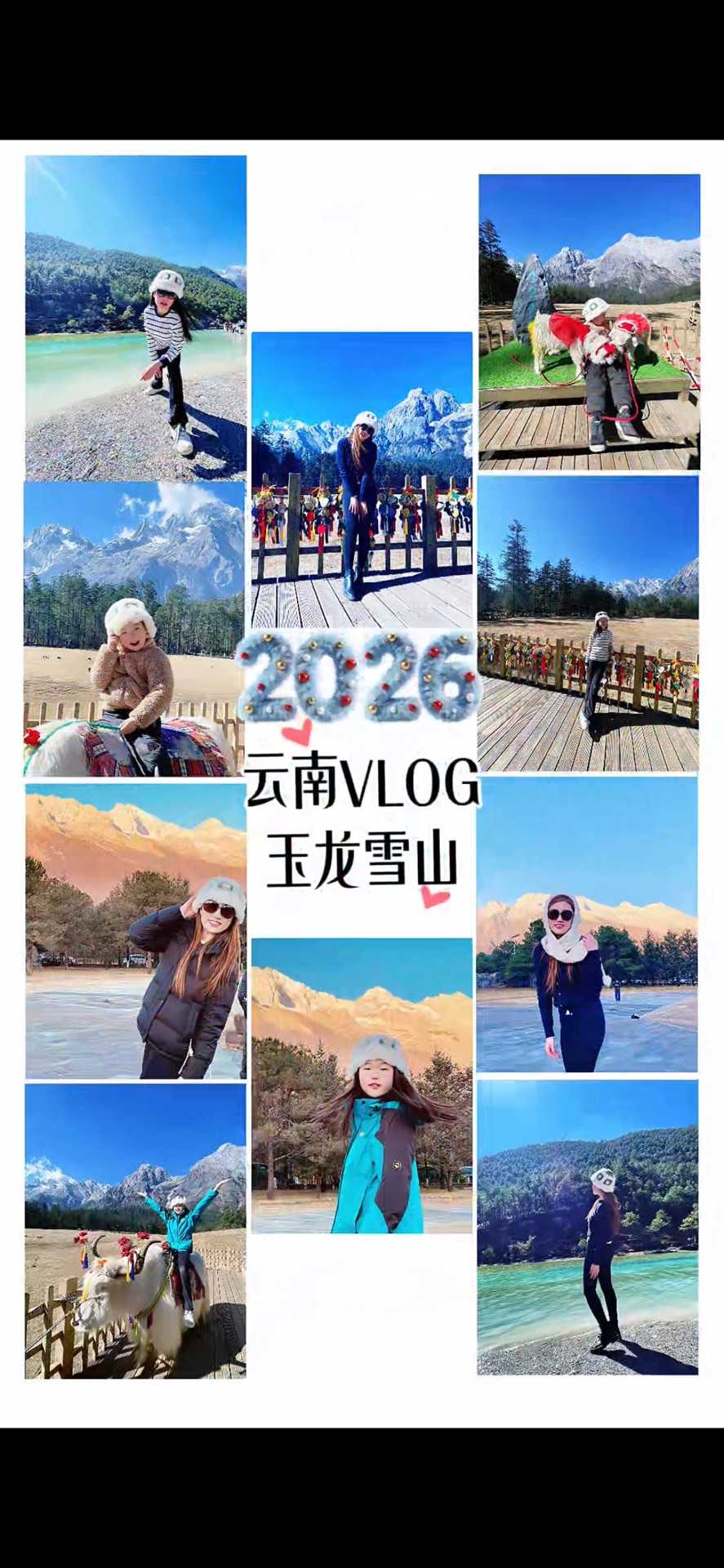
Because I acted early, both the big and small cable car tickets were available. But considering the elderly and children, we decided to go with the smaller cable car first. And so began my first encounter with Jade Dragon Snow Mountain — bathed in the sunlight of the new year.
Jade Dragon Snow Mountain is a group of snow-capped peaks standing silently, like a massive backdrop. Unlike lush, green mountains, the snow mountain's cool, aloof aura carries a natural majesty — ethereal and mysterious.
Tips: How to Make the Most of Jade Dragon Snow Mountain
You can purchase tickets for Jade Dragon Snow Mountain up to seven days in advance through a mini-program, including the entrance ticket and cable car ticket. Entrance tickets are always available; the challenge is the cable car tickets. The main cable car (大索道) must be booked exactly seven days ahead — morning tickets are largely monopolized by tour agencies. The medium and small cable cars are easier but still require advance booking, and morning tickets remain tight.
From Lijiang Old Town to the snow mountain scenic area takes about an hour with smooth traffic. You can take a bus from Zhongyi Market in the old town, or carpool for about 20 RMB per person.
Since our group included elderly and young children who shouldn't be pushed too hard, I decided to let the innkeeper earn some money and arranged a private car day trip. It cost 330 RMB per person (620 RMB for the main cable car), with Dingdong free. This included hotel pickup and drop-off, plus lunch. All I had to do was take care of the kids — hassle-free. The innkeeper was happy too, and she treated us with extra care.
Sunrise over Golden Mountain: A Grand Ceremony
To see the "Sunrise over Golden Mountain" (日照金山), you need to leave at 6:00 AM. I initially refused, thinking Dingdong wouldn't wake up. But the algorithm kept pushing videos at me, and in the end, I couldn't bear to miss it. The night before, I put Dingdong to bed early. As it turned out, the child was far more capable than I expected — no morning grumpiness.
According to the innkeeper, the "Sunrise over Golden Mountain" phenomenon became famous after a tourist accidentally captured it on video and it went viral. So when I visited Lijiang my first three times, this attraction didn't even exist yet.
At 6:00 AM, our driver — a woman driving a Wuling minivan — arrived punctually. Yunnan gets light late, so it was still pitch black and bitterly cold. After about a fifty-minute drive, we reached the snow mountain scenic area. Another thirty minutes brought us to the best viewing spot for the sunrise — Ganhaizi (甘海子).
Around 7:30 AM, the sky began to lighten. Jade Dragon Snow Mountain stood fully revealed before me, still in shades of gray. I went into photo frenzy — Mom and my sister weren't photogenic in this light, but my brother looked pretty good.
At about 7:45 AM, the sun rose...
Sunrise over Golden Mountain — ten thousand years of fortune.
To be honest, it didn't have the overwhelming intensity shown in videos. The color flowed slowly, gradually, until the entire mountain turned gold. The videos circulating online are heavily processed, presenting effects far more dramatic than what the naked eye can see. But the photos are genuinely moving — so the beauty of this phenomenon truly shines in playback.
A friendly reminder: It's really cold. You can never wear too many layers. Gloves, hat, mask — don't skimp on any of them.
Cloud Fir Meadow and Blue Moon Valley: Where Austerity Meets Gentleness
By 8:30 AM, the sun was high and we were gradually warming up. Our cable car tickets were for 10:30 AM, so we rested at the visitor center. The dining options at Jade Dragon Snow Mountain's visitor center are decent — most major tea and coffee brands are represented. We grabbed some hot oden and Luckin Coffee for breakfast.
The day trip included cold-weather gear, oxygen canisters, and water. The cold-weather gear had done its job; now it was time for the oxygen. The only one experiencing discomfort was me — the elderly and children were perfectly fine. My altitude sickness manifested as a need to take deep breaths, which subsided naturally after about forty minutes. Meixia, on the other hand, just took a couple of puffs out of curiosity to see what it felt like.
The small cable car to Cloud Fir Meadow (云杉坪) takes only eight minutes. At 3,240 meters above sea level, everyone was fine. A leisurely walk around the entire meadow takes about an hour. But with kids, all the interest goes to the paid activities — first some cows, then some sheep — and we ended up spending over 200 RMB on photos.

This season, the grass at Cloud Fir Meadow hadn't turned green yet, lacking some depth, and the snow mountain's austerity dominated the landscape.
We didn't complete the full loop because the wooden boardwalk wasn't stroller-friendly. After covering about a third, we took the cable car back down and headed to Blue Moon Valley (蓝月谷).
To be honest, I had low expectations for Blue Moon Valley — "After Jiuzhaigou, no other water scenery matters." But Blue Moon Valley surprised me. I thought it would be just a single pool of water, but instead it was stretch after stretch of sapphire blue — lakes of various sizes connected side by side, vast and serene. All you need to do is sit quietly by the lake, watching the shimmering water and listening to the gentle breeze.
By noon, Jade Dragon Snow Mountain was getting hot, and the crowds were growing. We started descending around 2:00 PM, and the bus stop had a long line. Because we had a young child, we received some priority and got down relatively smoothly. We ate a chicken hotpot at a restaurant arranged by the guide — enough to fill the kids' stomachs.
This was Peach Blossom's first close encounter with a snow mountain, and she was moved. I hope we'll have the chance to climb even higher, even more impressive mountains.
Dali: A Reunion After Twenty Years
It had been exactly twenty years since my first visit to Dali in 2006. My memories of that first trip were hazy — no stunning images lingered, only a photo of Peach Blossom and Brother Bao (my husband) at the gate of Dali Old Town.
Looking at that old photo, I couldn't help but sigh at the passage of time, while also feeling grateful for the peace of the intervening years.
I read plenty of travel guides, but none seemed to suit our group. Cycling around Erhai Lake? Grandma and Dingdong couldn't handle it. Watching the sunrise? Getting up early wasn't an option either. Our group's motto was "steady." To stay steady, we needed to go slow — which meant spending time at the hotel. So this time, we splurged a bit on accommodation in Dali.
Mi Na Duan Hotel: A Landscape You Can Live In
The entire three-story hotel sat halfway up a hillside. Every room except ours had a balcony with a view. The front desk and restaurant were combined in one small but elegant space, with everything you'd need. Breakfast was surprisingly delicious — Dingdong fell in love with "volcano rice" (烧卖, shumai).
Apparently, our room used to be the owner's personal residence — a 220-square-meter flat. Meixia and Dingdong were thrilled. They curled up on the sofa enjoying complimentary afternoon tea, scattered flower petals in the soaking pool, while Grandma fell in love with the foot bath.
The room was so large that we didn't dare sleep separately at night. Grandma took the two kids in the master bedroom, Mom slept on the sofa, and one room sat empty. It seems we commoners aren't yet ready to handle such extravagant luxury.
"Mi Na Duan" hotel offered pickup and drop-off service. I asked the driver about local cuisine, and he recommended "水上人家" (Shuishang Renjia, "Waterfront House"). A quick map search showed there was a branch near the hotel. After settling in, we strolled along Erhai Lake in the evening, then went for a small meal — which turned into a feast.
The restaurant had a down-to-earth style, reminiscent of Shenyang's Wanghouyuan. We ordered a Meituan set meal for 160 RMB for three people, and we were stuffed. The portions were huge and delicious — even Dingdong ate nearly two bowls of rice. Highly recommended! Yunnan cuisine truly elevates taro (芋, yu) to an art form, and I was quite proud of myself for enjoying it.
Slow Time by Erhai Lake
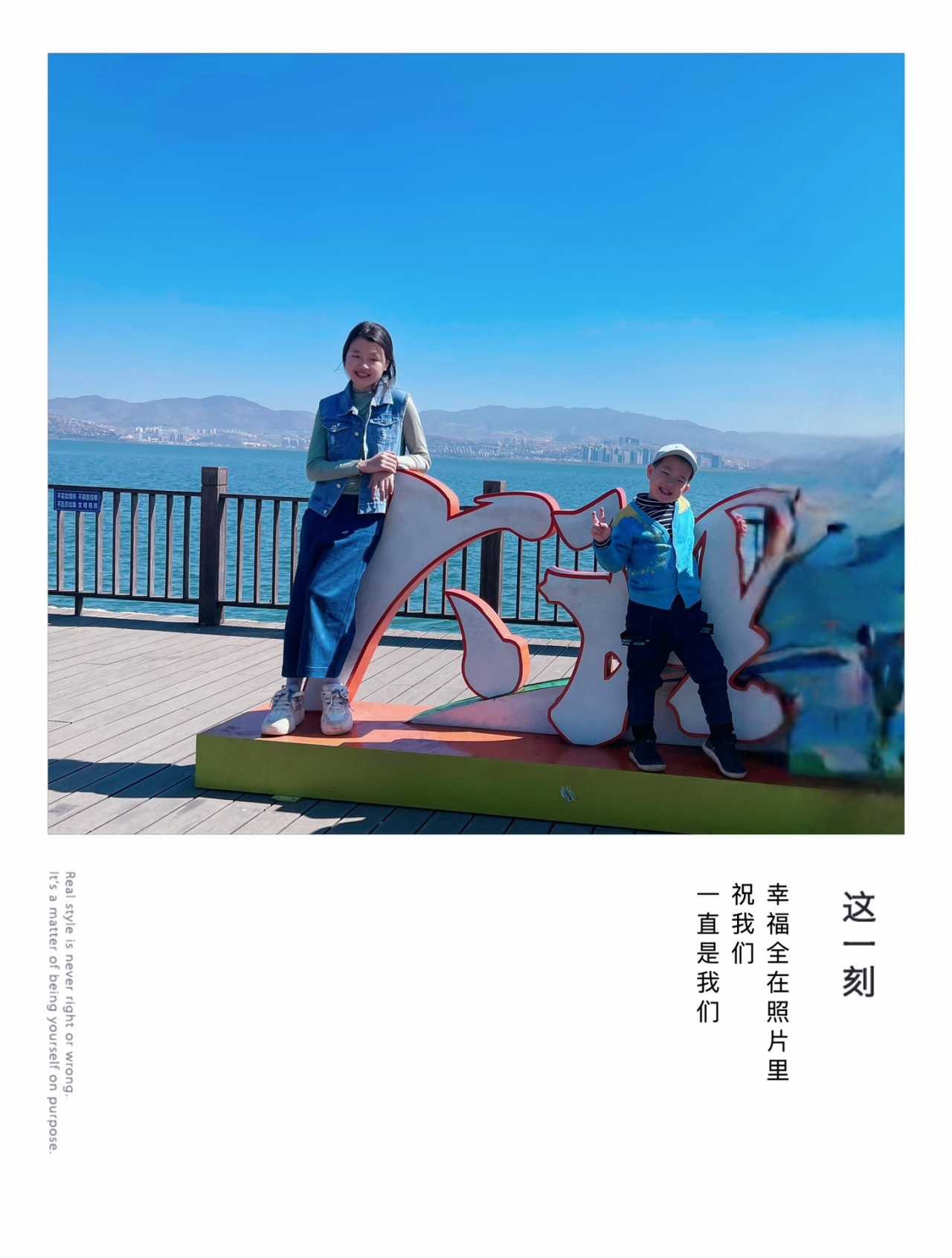
On our second day in Dali, we went for a leisurely walk along the Erhai Lake promenade after breakfast. The sun was brilliant, and as expected, we encountered a 10-RMB-per-photo street photographer.
The resulting photos captured a hint of blue, adding a vintage feel and expressing Dali's ethnic, artistic character. According to the photographer, aside from the main entrance, it's hard to get a taxi from other points along the promenade. So we didn't walk far before turning back.
By this time, it was a sunny midday. Layers of blue — deep and shallow — spread from the lake's center toward the shore. White clouds cast enormous shadows on the water, accompanying us as we walked, accompanying the two precious children in the beautiful spring light.
Back at the hotel, we planned to take a nap together, then go out for a stroll and find food. But Dingdong was too excited to settle down. He only showed signs of tiredness around 4:00 PM, so we had to wait for him to fall asleep.
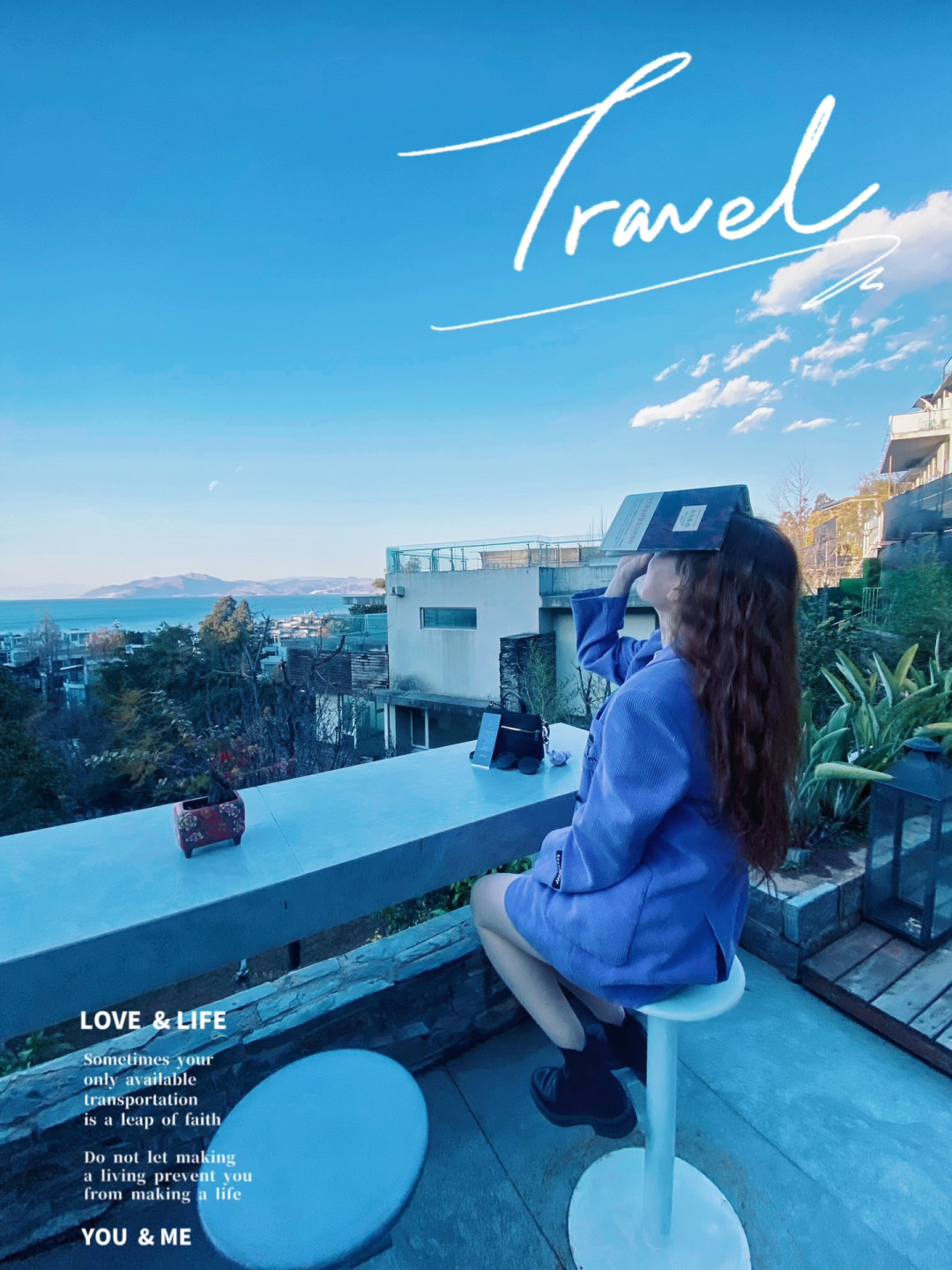
Not being able to go far was fine. I sat on the hotel's viewing terrace reading a book, enjoying some time for self-reflection. Meixia inherited Peach Blossom's photography genes and seems to be taking them even further. Thank you, my princess photographer!
You could say Dali had no itinerary at all. Combined with the hotel's home-like experience, it felt like we were spending three days and two nights in our own home. Strolling through the compound, admiring flowers by the lake, reading, daydreaming, bickering, then quieting down again...
Dali, thank you for the "peace of the passing years."
Xishuangbanna: The Scenery Is on the Roadside
We spent New Year's Eve 2026 in Xishuangbanna. I'd experienced empty cities during Spring Festival before, so I was a bit worried. As it turned out, our dear Dai friends don't celebrate Chinese New Year — though they still enjoy the statutory holiday.
When I first visited Xishuangbanna, I wrote a travelogue using the phrase "beneath its great reputation, it falls short." My second visit left me with the same feeling: Xishuangbanna's charm lies on the roadside, not in its attractions.
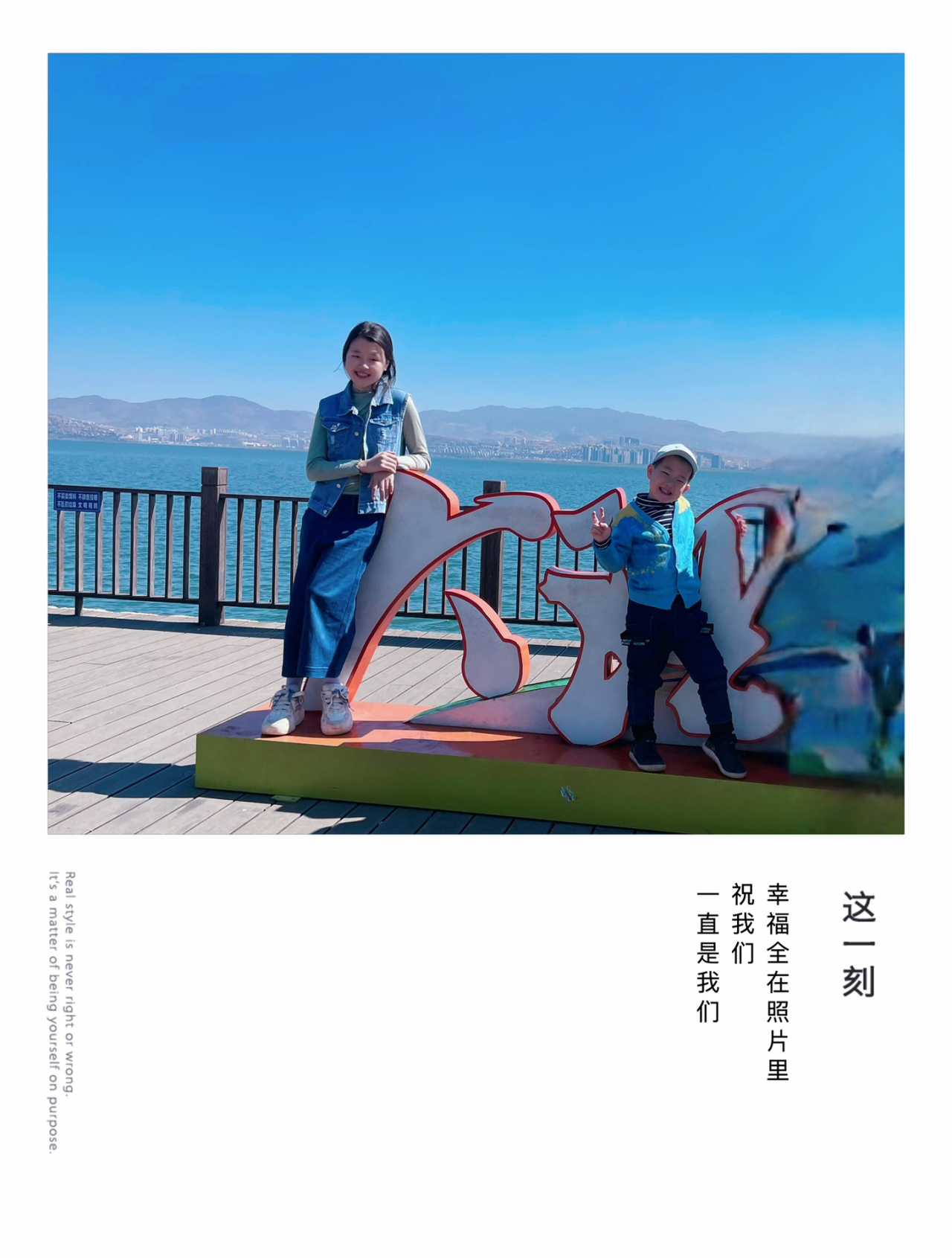
Let me explain what I mean by "the roadside." Everywhere you look, there are buildings and plants with exotic, foreign characteristics. The streets are clean and tidy, and the fruit stalls by the road sell fresh produce. All of this gives the city a vibrant, lively energy.
This time, we stayed in Gaozhuang (告庄), which was incredibly lively. During the New Year, it was absolutely packed. On the first day of the lunar new year, I felt like a hundred million people had descended on Gaozhuang. The roads were completely gridlocked — drivers just locked their cars and walked away. But at least you never had to worry about food here — restaurants and delivery services were working overtime without hiking prices.
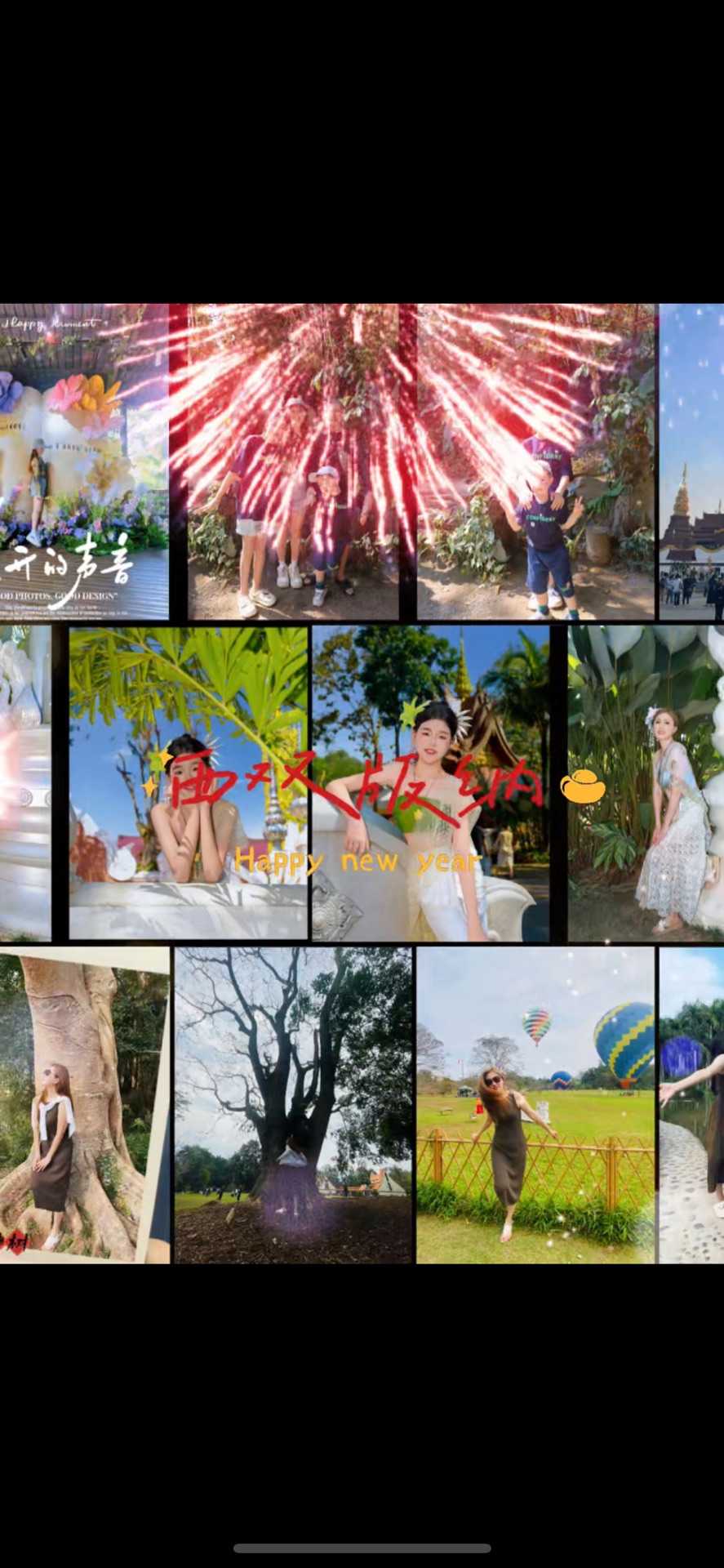
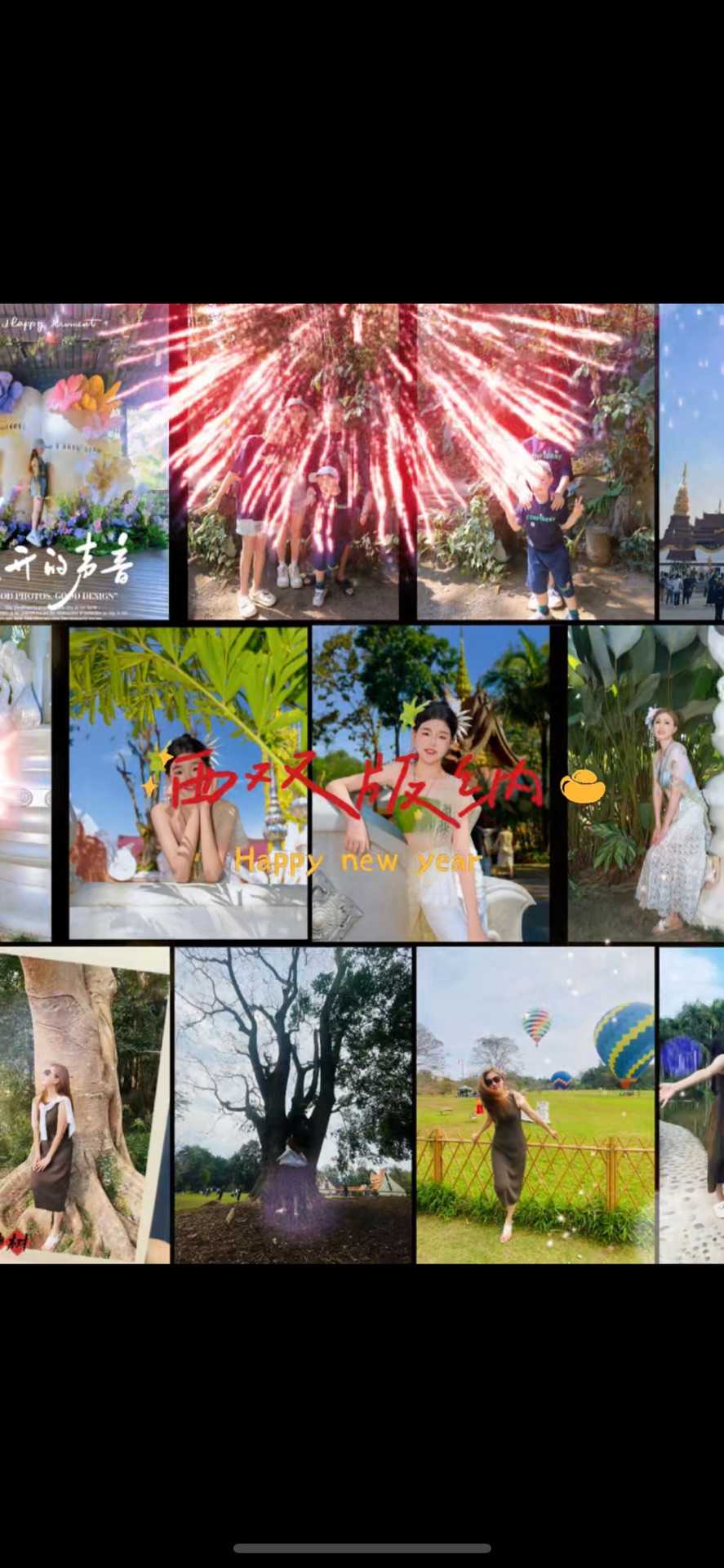
Gaozhuang can be divided into two parts: the Starlight Night Market (星光夜市) and the area surrounding it. The latter is better for shopping. The night market essentially offers two main activities: "street food + costume photography." I've heard the photography packages can be tricky. There are also some small amusement rides, but Dingdong preferred the free laser light show.
From New Year's Eve to the second day of the new year, the Starlight Night Market hosted fireworks displays and large-scale parades. While watching, I suddenly realized that the hotel I'd stayed at during my first visit to Xishuangbanna was right across the street — and more memories came flooding back.
The area surrounding the Starlight Night Market is vast, with shops of all sizes packed together, plus temples. Just Gaozhuang alone showcases half of Xishuangbanna's character, so this visit still brought me pleasant surprises.
Those "Disappointing" Attractions
Over five days and four nights, we visited only three attractions. The rest of the time, we just wandered around Gaozhuang.
First: Dai Ethnic Park (傣族园)
If you're sure you can join the water-splashing battle, it might be worth the trip. For everyone else, I'd strongly advise against it.
We went to Dai Ethnic Park for a photoshoot, which turned out to be a failure. It's still worth getting Dai-style photos taken in Xishuangbanna. I initially arranged a photographer I'd worked with in Shenyang who now works in Xishuangbanna, but timing issues prevented it. So we found a studio near the hotel that offered shoots at either Starlight Night Market or Dai Ethnic Park. 399 RMB for two people, each with one outfit, ten retouched photos, and fifty raw images.
I thought daytime might produce better photos, so I chose Dai Ethnic Park — a mistake.
The park was far away, and with Xishuangbanna's terrible traffic, the thirty-plus-kilometer drive took nearly two hours. The photography studio's staff were purely assembly-line workers — fixed locations, fixed angles, fixed poses, just enough to meet the quota, then done. The post-processing was a one-click filter that distorted everything beyond recognition.
That wasn't Peach Blossom at all! So out of the ten retouched photos, I only selected eight of Meixia. Meixia has really blossomed — after her successful weight loss, she truly suits the Dai style. At 165 cm and 48 kg, my eleven-year-old Meixia has become a little beauty.
Dai Ethnic Park has three main attractions: the Water Splashing Square, border jet skis, and a peacock garden. I'd prepared all the gear, ready to lead Dingdong into battle at the Water Splashing Square. But when the music started, Dingdong got scared, and we had to retreat. Dingdong wasn't tall enough for the jet skis. So we spent an entire day just to feed some peacocks — not worth it.
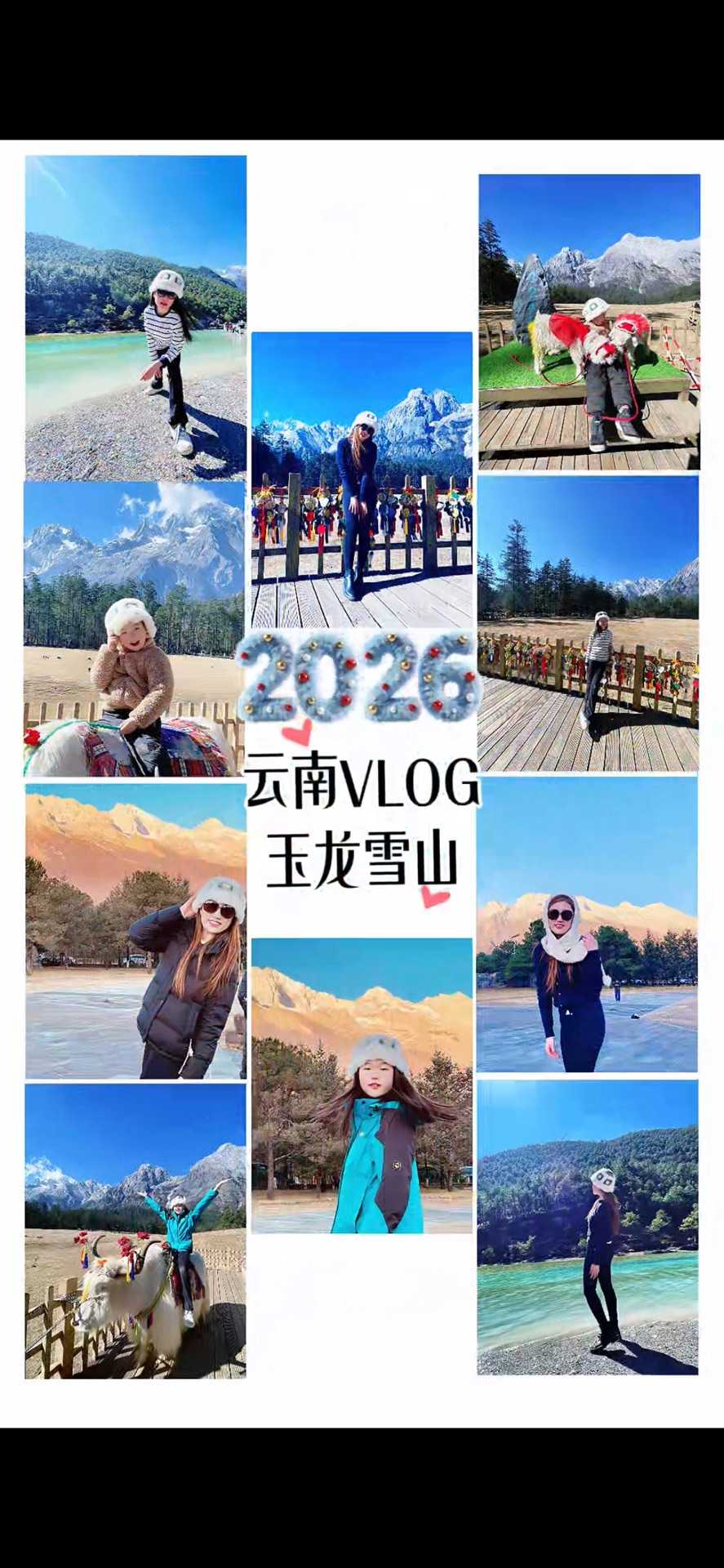
Second: Wild Elephant Valley (野象谷)
Of course, we went to this attraction for the kids. As an adult, I was indifferent. However, the elevated boardwalk at Wild Elephant Valley is worth recommending — it has a vibe similar to Singapore's Gardens by the Bay. The tropical vegetation is dense, and the layout is layered and well-designed, making it quite scenic.
Wild Elephant Valley is a well-thought-out attraction, with many thoughtful details. For example, the food in the restaurant is freshly prepared, and there are live performances during meals (pure performances, no hard selling). It makes both eating and watching more enjoyable. The viral "Paoluda" (泡鲁达, a coconut-milk dessert drink) was delicious.
In short, if you can overlook Xishuangbanna's traffic problems (still thirty-plus kilometers, still nearly two hours by car — though leaving at 7:00 AM avoids the congestion), Wild Elephant Valley is worth a visit.
Third: Xishuangbanna Tropical Botanical Garden (中科植物园)
Famous and well-regarded, it's Xishuangbanna's only 5A-rated scenic area. Traffic is still the primary issue — either leave early or get stuck in traffic. We couldn't leave early, so we were stuck in "traffic, traffic, traffic."
Like most Yunnan attractions, you take a shuttle bus after entering, then choose between an electric cart or walking. Our group had to take the electric cart. The park's layout means the walk from the shuttle bus stop to the electric cart station is exceptionally crowded. After navigating that stretch, you just want to stay on the electric cart and never get off. But actually, the park is enormous — those crowds are no problem once you go deeper, and you'll find wide-open, empty spaces. It's just the initial congestion that affects the experience.
The Botanical Garden is, after all, a "botanical garden" — essentially the same as Shenyang's botanical garden: greenery, exotic flowers, plus a hot air balloon. The hot air balloon was too expensive, so we could only take photos.
Throughout the garden, you could see painters sketching and photography enthusiasts. I felt they were the ones truly merging with nature, while we were just "passing through" as spectators. So whether the Botanical Garden is good or not depends on what kind of person you are.
Five days and four nights was enough for Xishuangbanna. The area isn't actually that big, but transportation is difficult. The best vehicle is an electric scooter. If you can, you absolutely must ride your beloved little scooter, weaving through those tropical plants and exotic vibes, far away from the hyped-up attractions.
That's when Xishuangbanna is at its most beautiful.
Bonus: A Moment of Terror
February 17, 2026, the first day of the lunar new year, 11:05 PM.
A magnitude 4.6 earthquake struck Menghai Town in Jinghong City, Xishuangbanna, at a depth of 10 kilometers. The epicenter was about 12 kilometers from downtown Jinghong.
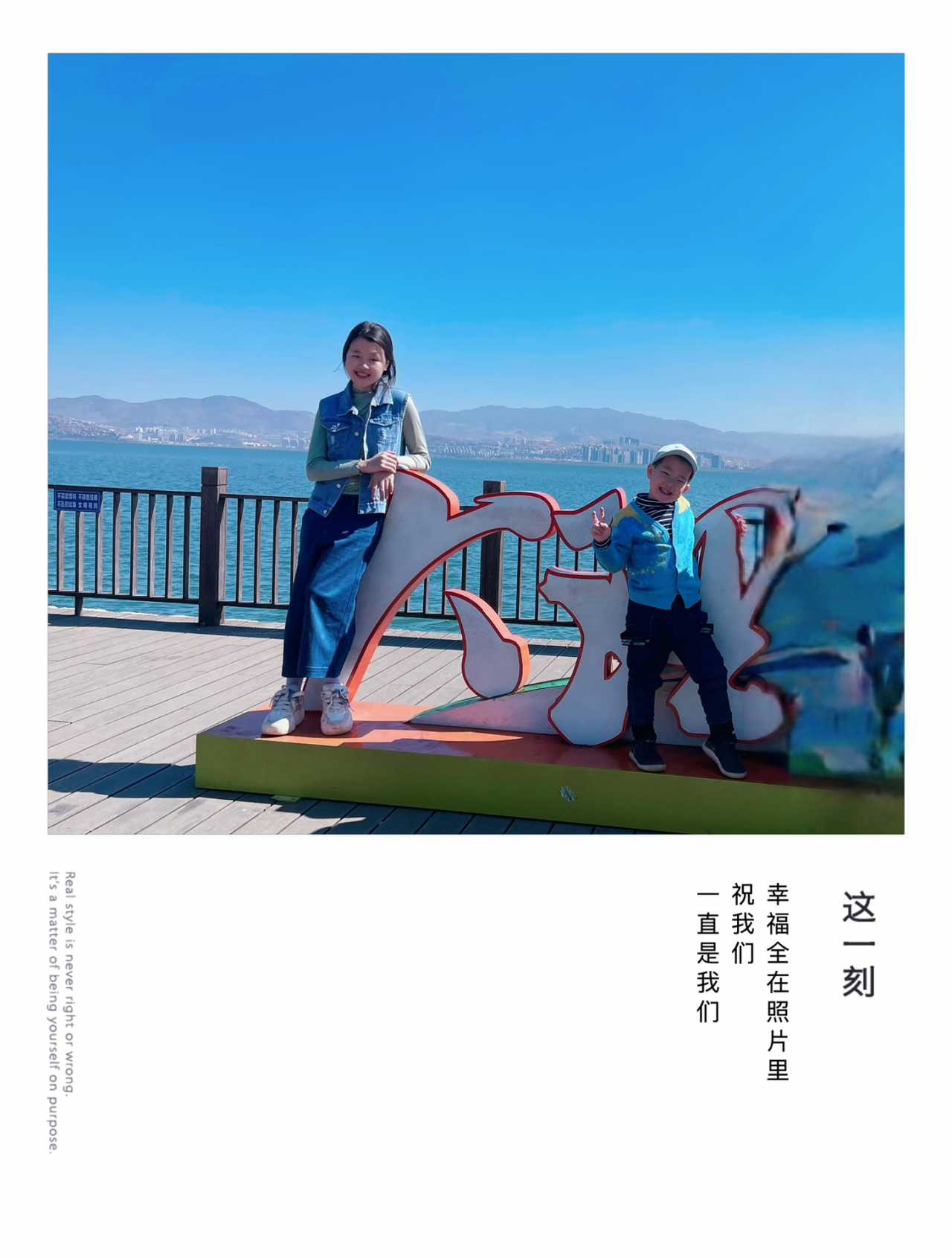
When the earthquake hit, we were right there.
My younger son and I had just returned from outside when we saw people at the hotel running out half-dressed, shouting that there had been an earthquake. We had no idea — we hadn't felt anything on the street. Back in the room, Dingdong was already fast asleep. Meixia and Grandma said they'd felt the bed shake noticeably. When I opened my phone, it was flooded with news about the Jinghong earthquake. Meixia was so frightened she cried and couldn't calm down for a long time.
The first day of the lunar new year, 2026 — a moment of terror.
Colorful Yunnan: Plenty of Time Ahead
Yunnan, twenty years, four meetings. My connection with this land runs deep.
These four visits also represent four stages of Peach Blossom's life. Traveling to the same place with different people, telling different stories — it's a strange and wonderful feeling.
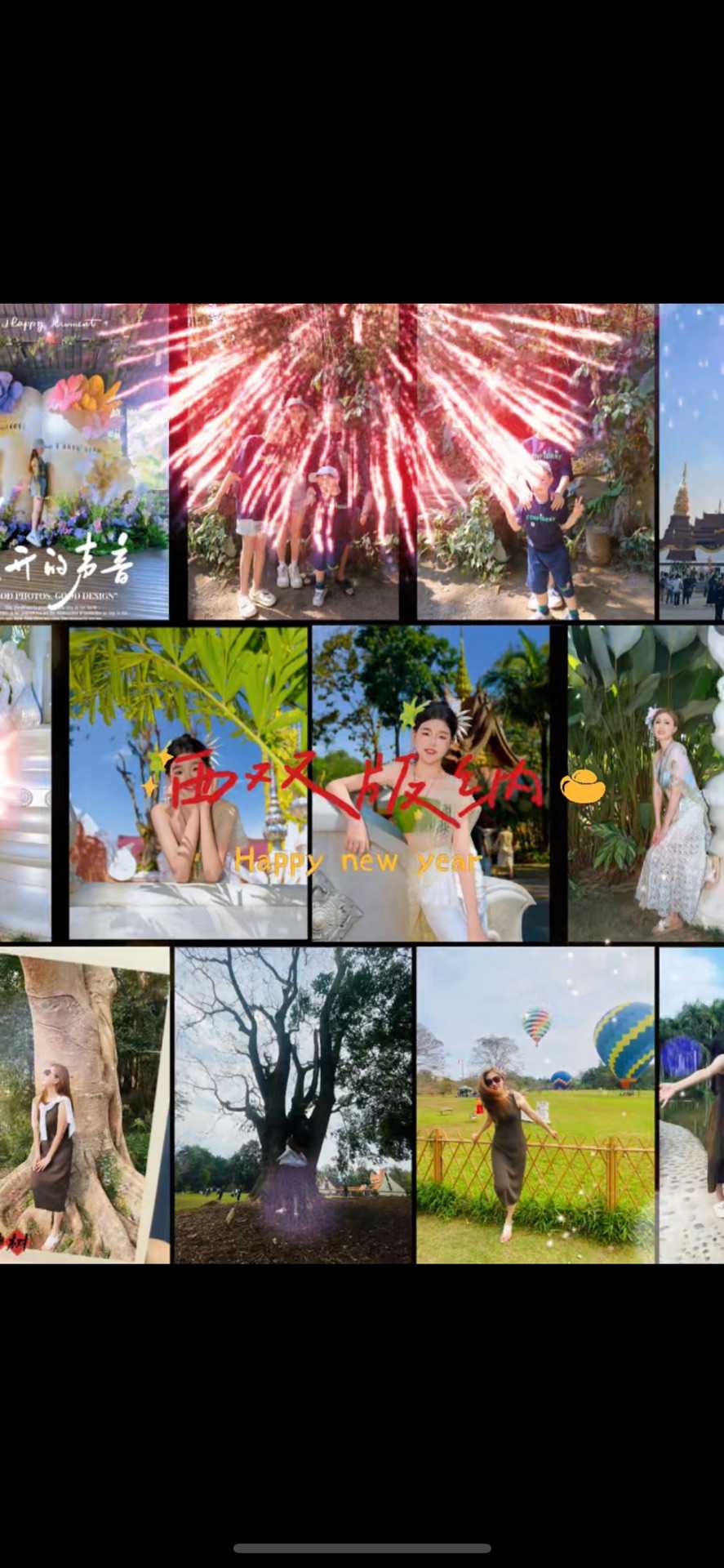
Coincidentally, as I'm writing this, my one and only follower asked a question: "Why do you say every place is wonderful in your travelogues?"
That's not entirely true. There are places I wanted to express dissatisfaction with, but perhaps my clumsy writing skills failed to convey my true feelings. But as for Yunnan, Peach Blossom clearly loves it. So I hope there will be plenty of time ahead.
The 2026 Spring Festival journey has come to a圆满 conclusion (圆满礼成, a perfect ending).
May 2026 bring good fortune and happiness.
Practical Tips for Travelers
On Transportation: - Yunnan's high-speed rail network is well-developed, making inter-city travel very convenient - Xishuangbanna's traffic is the biggest pain point — renting an electric scooter is recommended - For Jade Dragon Snow Mountain, consider a private car or tour group for a hassle-free experience
On Accommodation: - Most inns inside Lijiang Old Town don't serve breakfast — keep this in mind if traveling with elderly or children - Dali is perfect for "hotel vacations" — choose a good one and enjoy your holiday - Gaozhuang in Xishuangbanna is lively but congested — staying on the outskirts might be more comfortable
On Attractions: - Jade Dragon Snow Mountain cable car tickets must be booked seven days in advance; the main cable car is especially competitive - The best spot to view "Sunrise over Golden Mountain" is Ganhaizi — you need to leave at 6:00 AM - Attractions in Xishuangbanna are hit-or-miss; Dai Ethnic Park is only worth it if you plan to join the water-splashing - The Botanical Garden suits nature lovers; casual tourists may find it unremarkable
On Photography: - Lijiang Old Town offers photo opportunities everywhere — Yunnan's climate and flowers are natural filters - The 10-RMB street photographers along Dali's Erhai Lake promenade offer decent value - For Dai-style photos in Xishuangbanna, choose Starlight Night Market — daytime shoots aren't necessarily better
Final Tip: If you're traveling with elderly or children, slow down. Yunnan's beauty isn't in how many attractions you check off, but in those slowly flowing moments of time.
You should also read:
Glorious Youth: Four Madmen Cycling from Guangzhou to Lijiang in the Fall of 2012
Glorious Youth: Four Madmen Cycling from Guangzhou to Lijiang in the Fall of 2012 18 Days, 1,700 Kilometers, Four Bicycles – A Wild Last Hurrah of Youth Some roads are meant to be measured by the soles of your feet. Some landscapes only reveal their…
Continue reading...
A Solo Journey to Yunnan: Shuanglang Chapter — Meeting Your Truest Self by the Erhai Lake
A Solo Journey to Yunnan: Shuanglang Chapter — Meeting Your Truest Self by the Erhai Lake Introduction: When a Dream Finally Becomes Reality Some say Yunnan is a place meant for solo travelers. It took me three full years to truly understand that. Two years…
Continue reading...
A Soulful Journey to the South of the Clouds: A Love at First Sight
A Soulful Journey to the South of the Clouds: A Love at First Sight Prologue: When Destiny Took a Detour Some journeys are meticulously planned; others arrive as unexpected gifts from fate. I had always believed that Tibet was my soul's true destination—the lover to…
Continue reading...