A Soulful Journey to the South of the Clouds: A Love at First Sight
A Soulful Journey to the South of the Clouds: A Love at First Sight
Prologue: When Destiny Took a Detour
Some journeys are meticulously planned; others arrive as unexpected gifts from fate.
I had always believed that Tibet was my soul's true destination—the lover to whom I would devote my entire being. Yunnan? Just a stopover, nothing more. But destiny has a wicked sense of humor. When a chance opportunity brought me to this land south of the clouds, and I experienced ten days of dreamlike wonder, I had to admit: I fell in love. Not the calculated, measured kind of love, but the dizzying, head-over-heels rush of a first crush—unreservedly given to this auspicious land floating above the clouds.
Chapter One: The Impulse of a Spontaneous Departure
The Spark: A 12-Hour Mad Decision
August 12, 2007. I was buried in work, stressed to the breaking point. My friends Li Zhi, Gao Da, and Liu Bowen had already planned a trip to Yunnan, needing just one more person to round out the group. I initially couldn't join because of work commitments, but then I discovered I was eligible for annual leave after completing one year on the job—combined with some free time before and after, I could just squeeze out about ten days.
That same evening, I booked a flight to Kunming departing at 8:40 AM on the 14th. The next morning, I rushed to the office to request leave, then frantically packed my bags that night without even glancing at the itinerary. I bought a map and travel guide at the airport just before boarding. For someone who never embarks on a journey unprepared, this was pure madness.
Yet it was precisely this uncertainty that made the entire trip so irresistibly alluring.
Chapter Two: First Encounters in the Spring City
Soaring into the Clouds
The moment the plane lifted off, as the houses below shrank into matchboxes, my heart soared with it. White clouds cradled the aircraft, and they cradled my restless soul too—after a month suffocating in Guangzhou, the air here finally let me breathe.
The girl sitting next to me nervously asked how to fasten her seatbelt. Curious, I asked if it was her first flight. "No," she replied. "I used to fly with my husband, so I never had to worry about anything." A pang of sadness hit me. Having someone to rely on can make you lose your independence. And here I was, someone who had been forced by life to learn everything on my own—I wasn't sure whether to feel fortunate or pitiful.
The Bridge Fragrance Garden's Crossing-the-Bridge Rice Noodles
At 10:40 AM, the plane landed in Kunming. Looking out the window, lush green rice paddies and verdant forests greeted my eyes. The exhaustion from three sleepless days of work, the irritability accumulated in Guangzhou—all vanished the moment I breathed in the fresh air of this Spring City.
Kunming Airport was small. I bought a map at a little shop and headed straight to "Bridge Fragrance Garden" (Qiaoxiangyuan), the most famous chain restaurant for crossing-the-bridge rice noodles in Yunnan. The taxi fare started at 8 yuan, and the meter didn't even tick.
The restaurant's facade was modest, but inside it opened into a space decorated with ethnic flair. To the right, a row of dozens of local spicy snacks filled the air with mouthwatering aromas. To the left, I scanned the menu and ordered the "Scholar's Crossing-the-Bridge Rice Noodle Set" for 8 yuan.
There's a beautiful legend behind this dish: A hundred years ago in Mengzi, Yunnan, a scholar was studying in isolation on an island. His wife crossed a bridge every day to bring him meals. One day, she carried chicken soup in an earthenware pot and dozed off on the way. When she woke, the soup was still piping hot, so she blanched thin slices of meat in it—tender and delicious. She prepared this soup with rice noodles for her husband, who declared, "Today's success is owed to the bridge crossing." Later, he came first in the imperial examinations, and the dish became known as "Champion's Rice Noodles."
Serving the noodles was a ritual: first, small plates of raw and cooked ingredients; then a large bowl of boiling hot soup; finally, the fine white rice noodles. Unfortunately, I was too busy photographing everything and forgot to add the ingredients first. By the time I remembered, the soup had cooled, and some ingredients couldn't be added—what a waste of my "first lunch." But the photos weren't wasted: cold chicken, fish fillets, squid, raw quail eggs, spicy vegetables, dried tofu skin, pickled mustard greens, soybean sprouts, scallions, and cilantro... I couldn't resist any longer. I set down my notebook and devoured the meal, taking nearly an hour to finish.
Lost and Waiting
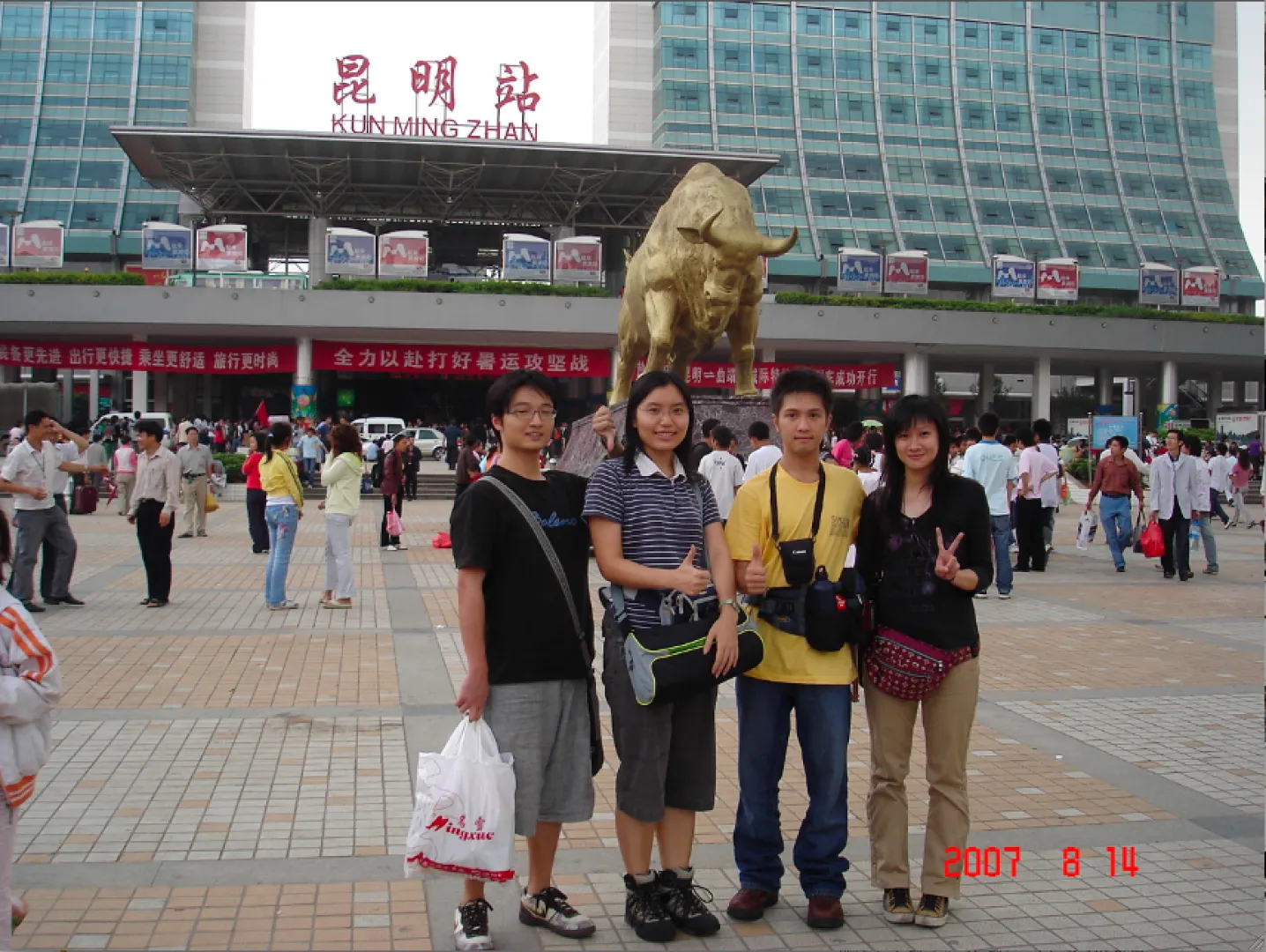
After eating, I wobbled toward the train station with my nearly 10-kilogram backpack. Directionally challenged as I am, I passed the same bridge pillar three times before finding the right way. When I'm lost, I don't like asking for directions—I enjoy the aimless wandering. It might be a bit risky, but it's just who I am.
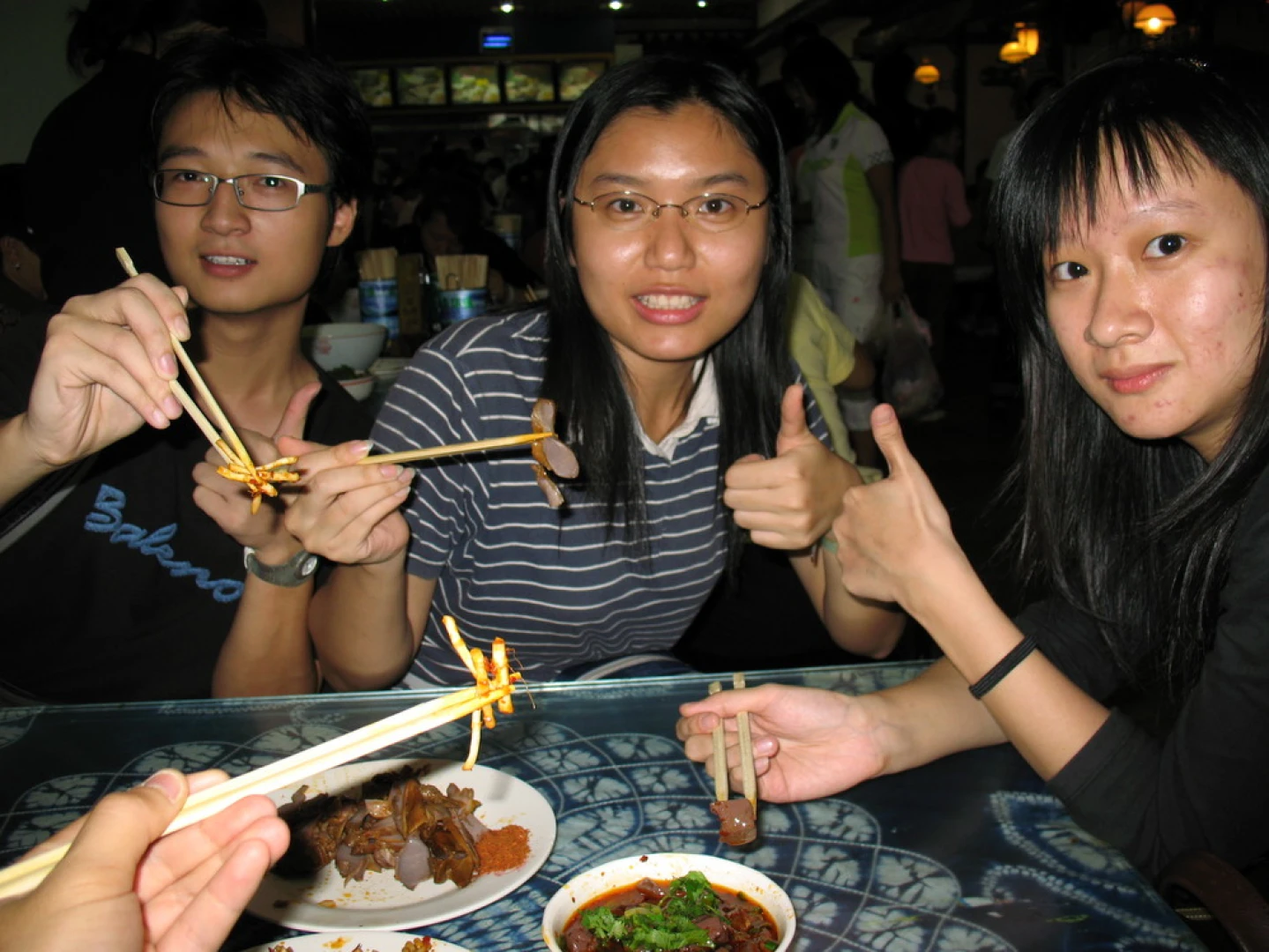
I waited two hours at the station exit before finally getting a call from my friends. We bought four sleeper bus tickets to Lijiang at the bus station, stored our luggage, and returned to Bridge Fragrance Garden for another feast. I highly recommend the blood curd (secret-recipe pig's blood)—spicy and delicious, just 2 yuan for a small bowl, an absolute steal. As for the fish mint herb (Houttuynia cordata)—skip it. It smells as bad as its name suggests, and even the spiciness can't save it.
Chapter Three: Basking in Shuhe
The Night Bus Ordeal
Departure at 8:40 PM, arrival at 6:30 AM. That overnight sleeper bus was a true test of endurance: the smell of moldy blankets and unwashed feet could kill half your brain cells; the sudden drop in temperature left me shivering; snoring, crying children, glaring VCD screens, and the unavoidable cigarette smoke formed a symphony of misery. On top of that, I forgot to remove my contact lenses, and my eyes were painfully dry. Sleep was utterly impossible.
I later learned that taking a sleeping pill before boarding is a brilliant idea—not to actually sleep, but to endure this "living hell."
First Impressions of Shuhe
In the pale dawn light, the outline of Lijiang's old town gradually emerged. We took a minibus into the city for 2 yuan per person, then transferred to another minibus heading to Shuhe Ancient Town. We stayed at the Ruyifang Inn, run by Auntie Wu from Guangzhou. After dropping our bags and washing our clothes, we collapsed into a blissful sleep.
Shuhe Ancient Town consists of well-preserved Ming and Qing dynasty houses, with small bridges at every doorstep and flowing water through every alley. The streets are paved with "five-flower stone" (wuhuashi)—a natural stone unique to Lijiang, shimmering with five colors. After centuries of wear, it's scarred and uneven, giving the whole place an ancient, weathered feel.
Slow Life in the Old Town
At noon, near Sifang Street, we tried Lijiang flatbread (baba), Naxi grilled meat, various mushrooms, Naxi grilled fish, and scrambled eggs with azalea flowers (I never knew azaleas could be cooked). After eating, we wandered through the town but found it overly commercialized—Naxi locals leading horses asked if you wanted a ride, and souvenir shops occupied most of the space. I wondered what this place was really like before development.
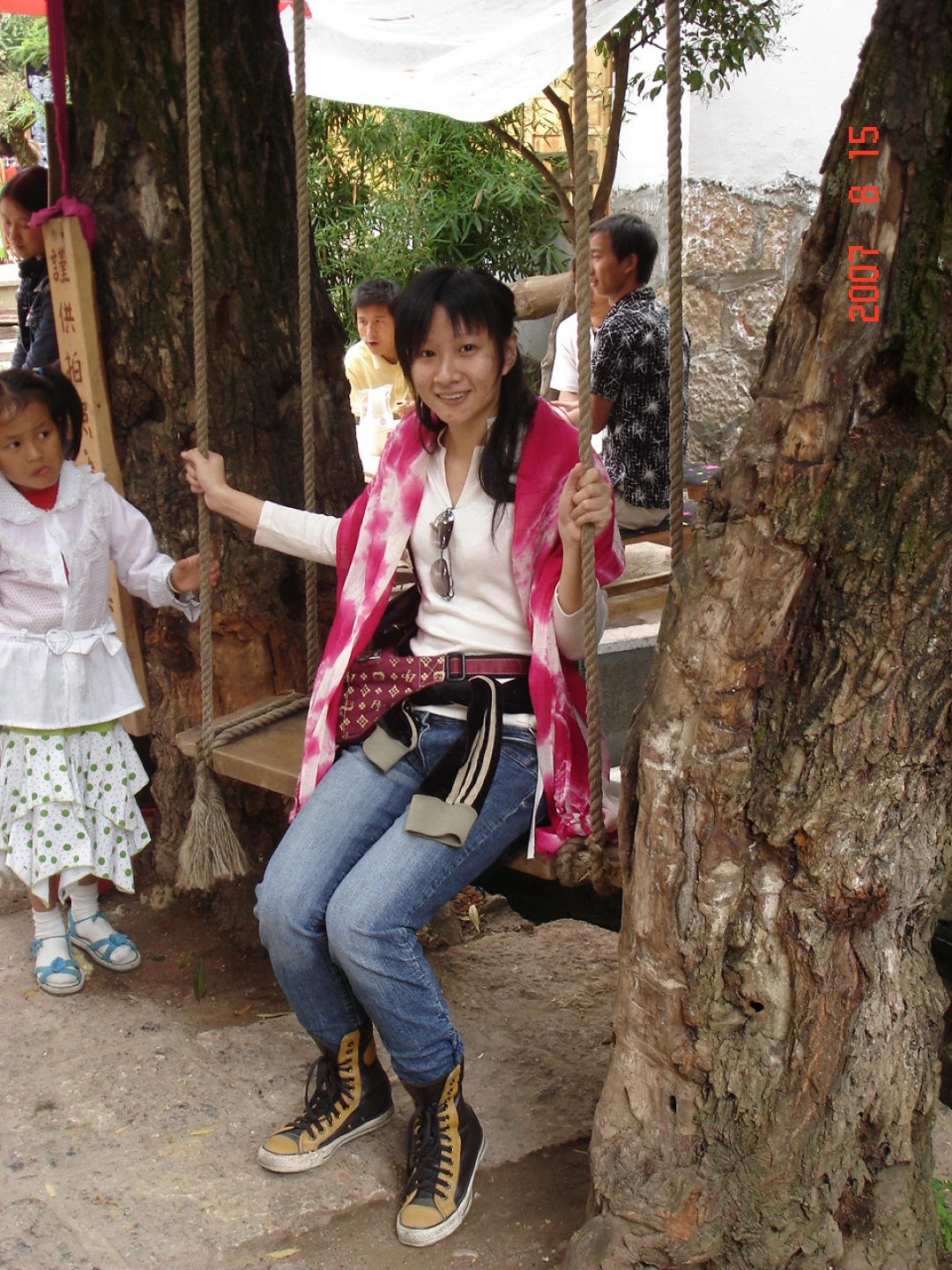
Still, a woman can't resist so many beautiful things. I bought a pink batik scarf from the Dongba people for 8 yuan—it bleeds color, but it was love at first sight. I also got a mid-sleeve blouse with strong ethnic patterns and a modern fitted waist for 24 yuan.
The guys found their own fun too—one of Yunnan's "Eighteen Oddities" is "good tobacco is seen but not sold." The scent of raw tobacco leaves was rich and smooth, not harsh on the throat. We also tried "woodmelon water" (a jelly-like dessert made from woodmelon powder with sugar water) and "rice cake grilled in a pan" (shao erkuai)—a thin pancake grilled until it puffs up, then flattened, spread with sauce, and folded. The taste was average, but the process was entertaining.
Bonfire Night
Dinner was at a restaurant playing Naxi folk music while we ate roasted free-range chicken. The raw, earthy vocals paired with lively rhythms made me ravenous. Around 8 PM, nearly a dozen middle-aged Naxi women in traditional dress formed a circle around a bonfire and began dancing. I got lost on my way back from the restroom and returned to find the crowd had doubled. Having danced circle dances with Slavs at Moscow's Maslenitsa festival, I wasn't about to miss learning the Naxi version. The flames painted everyone's joyful faces a brilliant red, and even the drizzling rain couldn't dampen the spirits.
Eventually, the crowd thinned. The restaurant turned into a bar, and thumping disco drowned out the Naxi music. We walked single file back to the inn, flashlights in hand. Shuhe is a place without defenses—its simple, honest folk left an unforgettable impression.
Tip: Shuhe has large temperature swings between day and night. The stones get slippery in the rain. At over 2,000 meters elevation, you might feel slightly breathless at first. UV rays are strong—beauty-conscious travelers should bring sunscreen.
Chapter Four: Heart-Pounding Romance with Shangri-La
Setting Out
On the morning of the 16th, Auntie Wu prepared a hearty breakfast, featuring her homemade apple jam—it was the season when apples were ripe enough to inspire Newton.
We hired Brother Basong's car for a 7-day trip to Shangri-La. Brother Basong, a former special forces soldier, knew the roads like the back of his hand and drove steadily, even while multitasking on his phone around mountain curves. Six of us paid 1,380 yuan each for the package—car, accommodation, and guide for seven days. A fair price.
The First Bend of the Yangtze River
When I woke up, the rain-soaked First Bend of the Yangtze came into view. The mighty river, roaring down from the Tibetan Plateau, suddenly makes a sharp turn at Shigu Town, forming a rare "V"-shaped bend. Unfortunately, the rain obscured the view, and photos were useless. We only saw half the bend through the trees before giving up in disappointment.
Tiger Leaping Gorge
Tiger Leaping Gorge is the deepest canyon in the world, famous for its towering cliffs, deep valleys, and raging rapids. Stretching over 20 kilometers with 18 dangerous shoals, the gorge drops 213 meters, with the narrowest section of the river only about 20 meters wide. It's named after a legend that a tiger leaped across the river using a rock in the middle.
The thunderous roar of the waterfalls, the frantic whitewater vanishing from sight—even someone as unflappable as I was left stunned. But the viewing platform was far too small, and pedestrians had no sense of order. Every time someone stopped for a photo, the whole path jammed. I squeezed my way to the exit, bought a cucumber for energy, and spent 6 yuan on a hand-drawn map at a small shop near the entrance. It had Chinese and Tibetan postmarks from Tiger Leaping Gorge—a treasure for a stamp collector like me.
Shangri-La: Love at First Sight
Two hours later, I groggily opened my eyes. "Wow! So beautiful!" I shouted, waking everyone in the car.
Outside the window, endless green grasslands stretched out, dotted with herds of cattle and sheep roaming freely through this green paradise. Tibetan faces with their characteristic high-altitude blush, copper bells clinking on yak necks, prayer stones and five-colored prayer flags fluttering past—I breathed deeply, gazed into the distant blue sky, rolled down the window to let the breeze touch my face, and screamed in my heart: "Beautiful Shangri-La, I've finally arrived!"
The origin of the name Shangri-La is almost legendary: In 1933, British writer James Hilton, inspired by the experiences of survivors from a plane crash, published the novel Lost Horizon, naming this magical land "Shangri-La"—which closely resembles the Tibetan pronunciation of "Diqing." In 2002, the Chinese State Council approved renaming "Zhongdian County" to "Shangri-La County."
Epilogue: The Meaning of Travel
Ten days in Yunnan—from a spontaneous departure to a journey that filled me to the brim—taught me this: some encounters seem accidental but are truly destined. Life always offers a glimmer of hope when you're at your most desperate, encouraging you to accomplish what once seemed impossible.
Yunnan isn't Tibet. But it has its own unique charm—not the intense, earth-shattering kind of love, but a gentle, lingering, first-love dizziness. It taught me this: don't cling to what you think should be. Instead, embrace what can be.
Sometimes, the most beautiful scenery is found the moment you decide to set out.
You should also read:
A 9-Day Yunnan Journey: From Lijiang to Dali to Tengchong – A Trip Toward Self-Reconciliation
A 9-Day Yunnan Journey: From Lijiang to Dali to Tengchong – A Trip Toward Self-Reconciliation Some say travel is simply going from a place you're tired of to a place other people are tired of. It stings to hear, but it's painfully true. Yet there's…
Continue reading...
God’s Abandoned Palette: A Self-Drive Journey Through Yunnan’s Dongchuan Red Land
God’s Abandoned Palette: A Self-Drive Journey Through Yunnan’s Dongchuan Red Land Travel has never been about reaching some distant geographic coordinate. It’s about encountering, along the way, the version of yourself buried beneath the rubble of daily routine. During this May Day holiday, I finally…
Continue reading...
Cloud Travelogue · Dali of Wind, Flowers, Snow, and Moon: A Three-Day, Two-Night Journey of a Free Spirit
Cloud Travelogue · Dali of Wind, Flowers, Snow, and Moon: A Three-Day, Two-Night Journey of a Free Spirit I am a cultured female foodie with a touch of rogue charm. I slung on my backpack, took my lover's hand, and set off on a spontaneous…
Continue reading...