Yunnan | Hidden in the Cracks of Time: A Three-Day Journey Through Tengchong, Mangshi, and Ruili
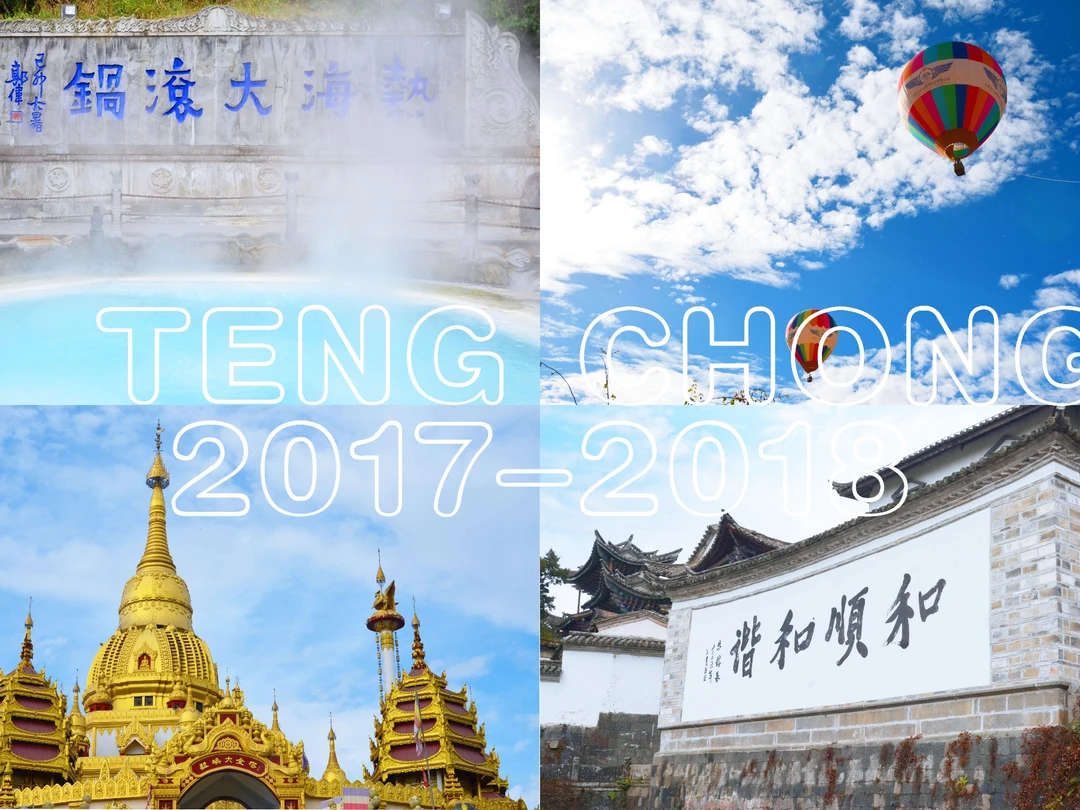
Yunnan | Hidden in the Cracks of Time: A Three-Day Journey Through Tengchong, Mangshi, and Ruili
When Lijiang and Dali have long been overrun with tourist crowds, three small cities in Yunnan's southwestern corner lie quietly along the national border like pearls forgotten by time. Here, there are no shoulder-to-shoulder crowds, no cookie-cutter souvenir shops. Instead, you'll find volcanic hot springs shrouded in mist, the dazzling golden glow of pagoda spires, and countless untold stories along the border.
In the final days of 2017, a spontaneous trip took us through Tengchong, Mangshi, and Ruili—a soulful journey spanning the old year and the new.
How It Began: A Budget Flight That Started It All
If not for the newly launched direct flight from Zhuhai to Tengchong, we might never have clicked on this unfamiliar destination on a budget airline page.
Tengchong, known as "China's Ultimate Border City," occupies a uniquely strategic position—take one step east and you're on the Eurasian continent; one step west lands you on the Indo-Pakistani subcontinent. In January, the daytime sun is so warm you can wear short sleeves, but the morning and evening chill is no joke—a down jacket is essential. Every morning, the entire city is shrouded in clouds and mist, as if still dreaming.
For this trip, we chose to hire a private driver—a local who handled everything from airport pickup to drop-off, from Tengchong to Mangshi and Ruili, plus all the popular sights around Tengchong. Three days, one car, one guide—that was all we needed.
Day One: Borderline Misadventures

Longjiang Bridge: A Steel Dragon in the Morning Mist
Sunrise in Tengchong comes over an hour later than in eastern China. At eight in the morning, the sky was just beginning to lighten. We set off with the rising sun, heading for Ruili.
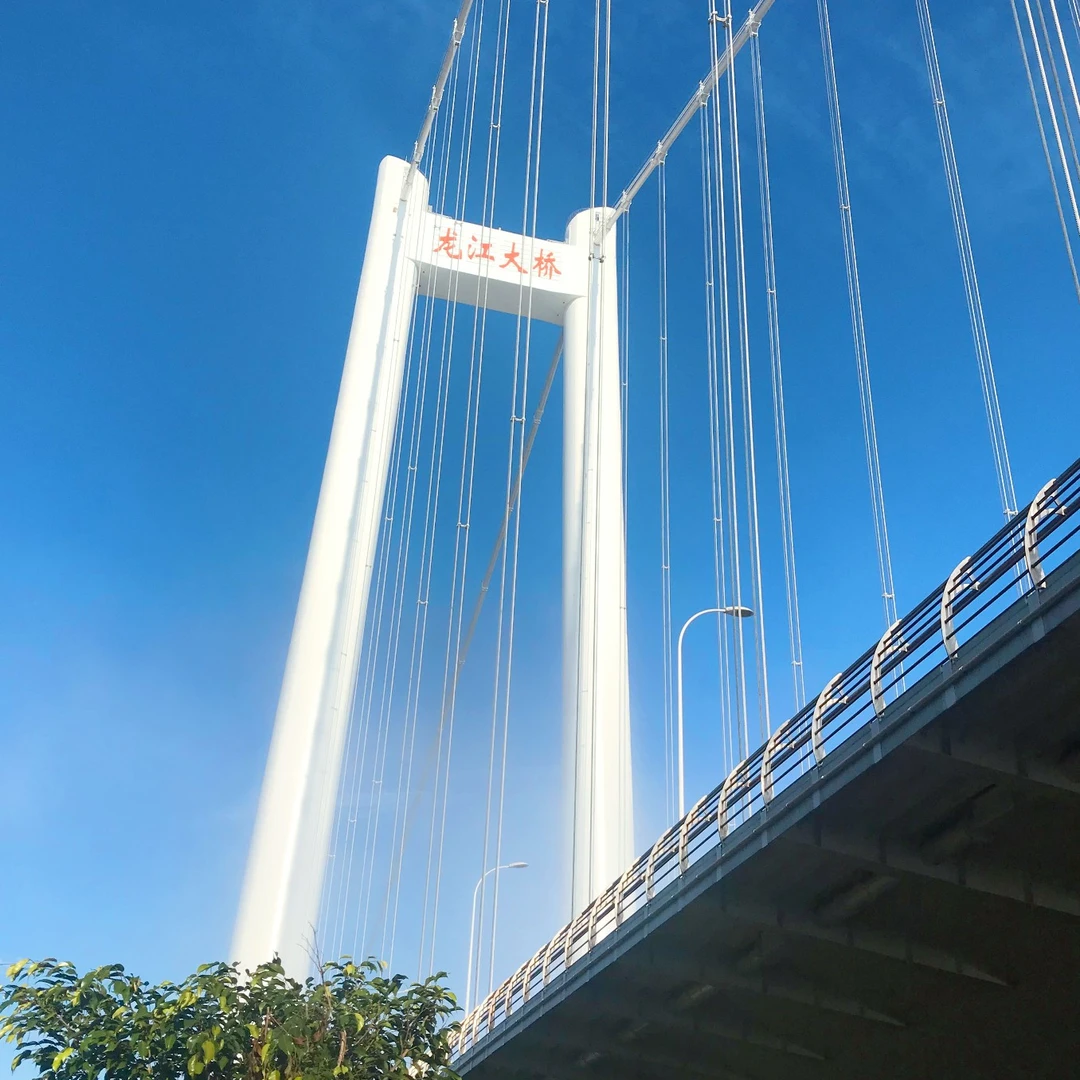
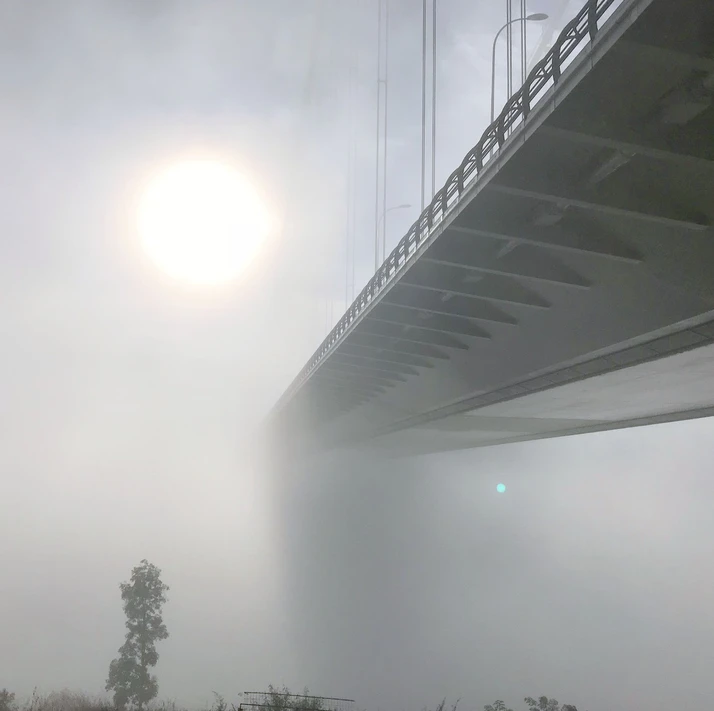
Along the way, we crossed the Longjiang Bridge. This suspension bridge spans the towering mountains of the southwestern frontier, designed in the same style as San Francisco's Golden Gate Bridge—a single-span, double-tower steel box girder structure. The morning fog made the far end of the bridge appear and disappear, the whole structure seeming to float in the air without any visible supports, radiating an air of mystery. The bridge has a designated rest area for tourists to take photos, and we didn't miss the chance to capture its beauty in the misty dawn.
Ruili: A Marathon Throws Everything Off Course
We left at nine in the morning and didn't arrive in Ruili until noon. But we were greeted with an once-in-a-lifetime "surprise"—Ruili was hosting an International Friendship Marathon! The route ran from Ruili, China, all the way into Myanmar, passing through every single attraction we'd planned to visit—including the "One Village, Two Countries" site and the Jiegao Border Port.
The roads were closed.
In that moment, our hearts sank. We were told the roads wouldn't reopen until four in the afternoon. We were standing in Ruili, but could only gaze at the sights from a distance. Our driver made a quick decision: abandon Ruili and head straight for Mangshi.
"You've got to leave some regrets behind, so you'll come back next time," he said with a smile.
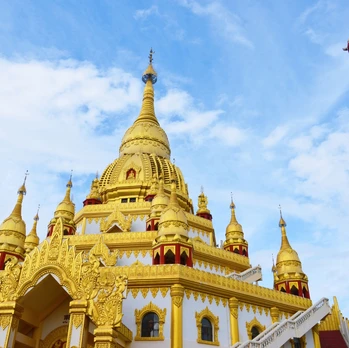
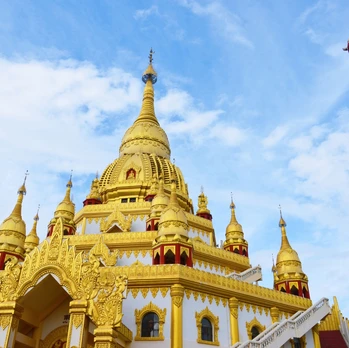
Mangshi's Menghuan Grand Golden Pagoda: Transported to a Southeast Asian Buddhist Kingdom
The drive from Ruili to Mangshi took another two hours. By three in the afternoon, we finally reached our first real attraction—the Menghuan Grand Golden Pagoda.
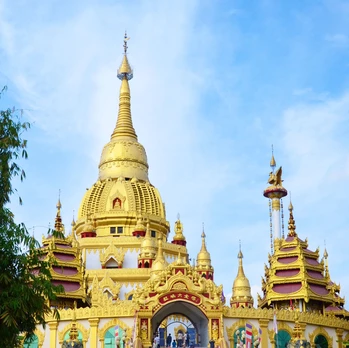
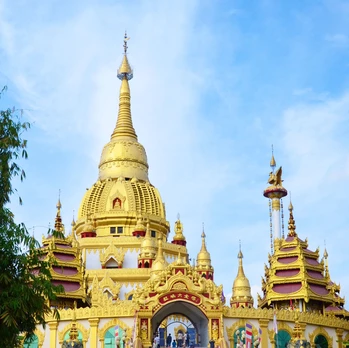
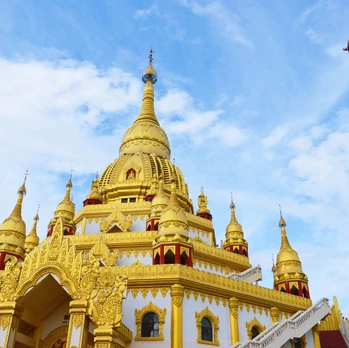
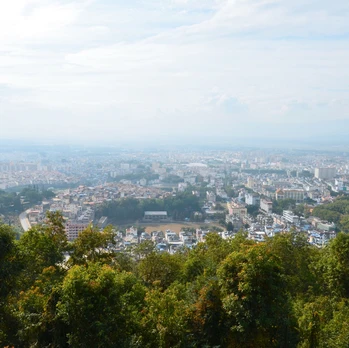
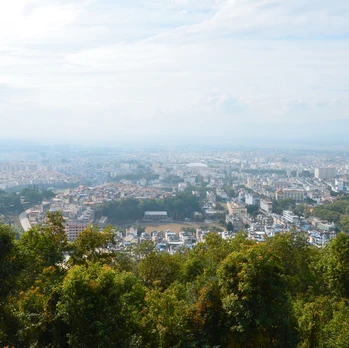
This golden pagoda exudes a strong exotic atmosphere, blending with a primal, untouched air. In an instant, you feel as if you've been transported to a Buddhist kingdom in Southeast Asia. Climbing to the top, we took in a panoramic view of Mangshi. Though Southeast Asian pagodas all share a certain similarity, standing here, you still feel a unique sense of peace and solemnity.
At the base of the pagoda, many fruit sellers were young girls from Myanmar. When we tried to buy a cup of avocado juice, they insisted on cash—a rare demand in this age of mobile payments. After some negotiation, they agreed to accept WeChat Pay. Their Mandarin, however, was surprisingly fluent.
In the distance, a white pagoda was still under construction, visible only from afar. The purple sweet potato cakes sold by an elderly roadside vendor turned out to be unexpectedly delicious.
Mengbana Rare Plants Garden: An Unexpected Peacock Sighting
Our next stop was the Mengbana Rare Plants Garden. The most prominent structure in the garden is a pagoda built in memory of Premier Zhou Enlai. To be honest, the kapok trees in winter were nothing but bare trunks, and we couldn't really appreciate the rare plant species, jade stones, or wood carvings.
But there was one unexpected highlight—free-roaming peacocks. Male and female peacocks perched proudly on the kapok trees, strolling leisurely through the garden. Just as we were about to leave, a peacock suddenly fanned out its tail! In that moment, all the waiting was worth it.
As evening fell, we headed back to Tengchong under the setting sun. That night, we watched a performance of "Dream Tengchong." If you want to quickly get to know this city, this show is a must-see—it condenses Tengchong's history, culture, and folk traditions onto the stage, giving you a deep understanding of this border town in just one hour.
Day Two: Volcanic Hot Air Balloons and Hot Sea Hot Springs
Volcanic Hot Air Balloon: A Fairyland Above the Clouds
No trip to Tengchong is complete without experiencing its hot springs and volcanoes. And riding a hot air balloon to overlook the volcanic cluster is an experience not to be missed.
Hot air balloons are extremely weather-dependent—rain or wind means no flight. After waking up and confirming clear skies, we booked our tickets on Mafengwo (a Chinese travel platform). Orders placed after ten in the morning wouldn't be accepted, but if the flight was canceled, refunds were available. You can also buy tickets on-site, but if it's too crowded, they stop selling them late in the day. Online ticket holders, however, were guaranteed a flight.
Tengchong's hot air balloon season is short—roughly from ten in the morning to noon. Each basket holds five or six people. The ascent happens in an instant, and you only get to stay at the top for less than ten minutes before coming down. At the peak, when the wind blows, the balloon sways slightly, and your heart sinks a little. But the operator remained completely calm, which put us at ease.
Even though the basket was cramped, we managed to swap positions for photos. In the early morning, the volcanoes were tinged with mist, creating a fairyland-like scene. After descending, we climbed one of the volcanoes—Tengchong's volcanoes are dormant, with the last eruption believed to have occurred around 6000 BC. Starting the new year by climbing high and looking far—a good omen.
At the volcano entrance, pomegranate juice was incredibly sweet, and fresh "black plums" (which we could never quite tell apart from grapes) cost 10 yuan per pound. By the time we reached the Hot Sea scenic area, the same fruit was 30 yuan per pound.
Hot Sea Hot Springs: Sulfur Eggs at the Big Boiling Pot
Tengchong's geothermal activity goes hand in hand with its volcanic history. The Hot Sea is an attraction in itself. We decided to visit the "Big Boiling Pot" first, then head to Yuechun Hot Spring in the evening—our driver recommended Yuechun because it's less crowded.
The shuttle bus at the Hot Sea is worth the round-trip fare, because there's a long walk to the first attraction, and by the time you've slowly made your way to the top (where the Big Boiling Pot is located), you're exhausted and won't want to walk back. Along the way, bubbling hot springs line the path. If you don't feel like hiking, the shuttle can take you directly to the Big Boiling Pot.
Many people buy eggs and cook them in a small pot next to the Big Boiling Pot. The temperature is so high that the steam alone can cook them. We followed the crowd and downed a dozen sulfur-flavored eggs. Along the way, we also spotted a banana tree in bloom—a pleasant surprise.
Day Three: A Quiet Border Town Far from the Crowds
Heshun Ancient Town: The Peaceful Place Praised by Xu Xiake
On our last morning, we decided to take a leisurely stroll through this small ancient town. The Ming dynasty traveler Xu Xiake once praised it as a "peaceful place," and it's hard not to compare it to Lijiang or Dali. Heshun has less commercialism and noise, and more of a calm, unhurried beauty.
That said, many parts of the town were under renovation, and new guesthouses were being built, which somewhat dampened the experience. Walking along the outskirts, perhaps because it was still early, the shops felt a bit quiet. But fewer people meant better photo opportunities! The winter wetland near the town had its own unique charm.
Many elderly women in the town sell "pine flower cakes" (a local pastry made with pine pollen). Five yuan for three. Maybe because I'd eaten too much for breakfast, I found them just okay. Compared to Lijiang's nightlife—where you can hear drumming every few meters and find bars open until late—Heshun's evenings are almost nonexistent. By ten o'clock, it's very quiet, because local residents still live within the ancient town, and the bar street closes early.
If we'd had more time, I would have loved to stay a few extra days, savoring this leisurely pace of life. The wetland beside the town looked like a scene straight out of autumn.
The National Memorial Cemetery of the Expeditionary Force: A Dose of Patriotism
I wasn't keen on visiting such a somber place, but after watching the anti-Japanese war scenes in "Dream Tengchong," I felt a deep sense of respect and decided to go and stir up some patriotic feeling.
The cemetery is a memorial to the Chinese Expeditionary Force soldiers who died fighting the Japanese. Standing there, looking at the young faces in the photographs, I felt a profound reverence for history and a renewed appreciation for peace. Never forget the past, cherish the present—that might be one of the most meaningful takeaways from any trip.
Guesthouse Experience: A Pleasant Surprise Compared to Lijiang and Dali
Coming to Tengchong isn't just about hot springs and hot air balloons—experiencing the local guesthouses is also a highlight. Overall, both the service and the environment were far better than what we'd encountered in Lijiang or Dali.
Every guesthouse called ahead to confirm our itinerary and check-in time. Some even turned on the heating in advance—a detail that truly touched us. Complimentary airport transfers were standard, and breakfast was always included. And the rice noodle soup (米粉) for breakfast was absolutely delicious.
Zuoyouke Boutique Inn: Impeccable Service
This was the first guesthouse we checked into after landing, located in downtown Tengchong. We arrived around eleven at night. In this border town, besides scanning your ID card, you also had to do a facial recognition check-in. Shortly after we settled in, a staff member brought us a small basket—containing fruit, milk, flower cookies (鲜花饼), steeped high-mountain tea, a face mask, and a warm handwritten note. The room was clean, small but not cluttered. The slippers and comb were of such good quality that I almost wanted to take them home. Breakfast was a buffet, and the local rice noodle dish (饵丝) was the highlight—incredibly tasty.
Xiaodao Bieyuan: Great Value for Money
This guesthouse was located across from the ancient town, offering views of both the wetland and the town. Walking along the wetland, you could reach the town quite quickly. The decor was traditional Chinese style, with large floor-to-ceiling windows that offered a glimpse of the wetland. The breakfast setting was lovely—accompanied by the sound of ducks in the wetland, with a view of the scenery outside. The location was slightly lower than the nearby Anzhi Rusu guesthouse, and the furnishings were a bit older, but the price was fair.
Anzhi Rusu: A Guesthouse with Star Power
Because Hunan TV's show "Idols Are Coming" filmed at Haiyantang Cultural Tourism in Heshun Ancient Town, the rooms at Haiyantang were incredibly popular—impossible to book during holidays like New Year's. Our group split up: some stayed at Haiyantang's Academy branch inside the ancient town, while my companion Pei Shu and I stayed at Anzhi Rusu.
Anzhi Rusu is located halfway up a hill near Haiyantang. I was drawn to it partly because of its crowdfunding video, which had a very emotional, heartfelt vibe, and partly because celebrities like Le Jia and Jin Zhiwen had stayed there—star power creates expectations.
The guesthouse has only six rooms, managed by a single older woman. We checked into Room 7 (there was no Room 4). The moment we opened the door, it felt amazing—a wooden-style tatami room, floor-to-ceiling windows, a large balcony, and even a bathtub on the balcony. The open design was bold. Pei Shu was eager to try it, but I stopped him—it was way too cold!
The scene made me want to sing the song "Perfect Day": "I want a big house, with large floor-to-ceiling windows, sunlight spilling on the floor, warming my blanket." Like Zuoyouke, they also brought us a small basket with coffee, fruit, and a note. There was a common area with free snacks, perfect for friends to sit and chat. The view was stunning—the ancient town spread out before us, the wetland in full view. The breakfast setting felt like a homey open kitchen. In short, I fell in love with Tengchong's rice noodles.
Apparently, there are plans to expand the guesthouse. They've already raised tens of millions in crowdfunding, and the design alone cost one million yuan. I'm looking forward to seeing an even more perfect version next time.
Haiyantang Academy: A Peaceful Retreat with a Literary Vibe
When we dropped off our friends, we took a quick look around. Based on the photos they sent later, the environment was also fantastic. Pei Shu preferred its scholarly atmosphere. They said the best part was that the heating was turned on before they arrived—Tengchong has a big temperature difference between day and night, and at night you'd shiver even in three layers. Walking into a warm room was truly touching.
Guesthouse Summary: - Zuoyouke: Choose for the service - Xiaodao Bieyuan: Choose for value - Anzhi Rusu: Choose for the view of the ancient town and wetland - Haiyantang Academy: Choose for a quiet, immersive experience in the ancient town
Eating and Drinking: A Culinary Journey Through Dai Flavors and Mountain Delicacies
Every time I visit a new destination, I open the apps to see which local dishes top the charts. Tengchong's specialties include "Dajiu Jia" (a stir-fried rice cake dish said to have saved a Ming emperor), boiled rice noodles (饵丝), "sapie" (a cold rice noodle dish with a bitter dipping sauce), clay pot stew (土锅子), and pine flower cakes (松花糕). I wanted to eat everything.
Dehong Peacock Feast: A Feast for the Eyes and Stomach
We ate this Peacock Feast in Mangshi. By the time we arrived, we were starving. The owner warned us that it would take a while, because all the dishes had to be served at once. But we had to wait for the food. And it didn't disappoint—it was perfect for posting on social media. The dish was originally a hand-grabbed rice platter (手抓饭), but it had been adapted for tourists who weren't used to eating with their hands. My favorite was the fried wild vegetables; the chicken feet were also good. Our driver said Mangshi is famous for its chicken feet. The best part? Sixteen dishes for less than 300 yuan! Four stars out of five.
Tengchong Night Market Snacks: A Taste of Local Life
Our driver took us to a local night market, where there were indeed many locals. A group of Jingpo people sat next to us, eating, drinking, and singing. We ordered sapie (cold rice noodles with dipping sauce), hand-grabbed rice, stir-fried rice cakes (饵块), and barbecue. The sapie was like a cold noodle dish, and the hand-grabbed rice was a mini version of the Peacock Feast, eaten properly with your hands. Overall, it was decent. Three stars.
Zhaowei Copper Pot Beef Hotpot: Affordable and Delicious—Five Stars
This place came highly recommended on many apps, and our driver also gave it a thumbs up. We tried to go on the first night, but the owner said they'd run out of beef—and it was only six o'clock! Business was booming. We didn't miss it the next time. Six of us ordered two pounds of beef plus some sides, and we still couldn't finish. Generous portions, great flavor, and affordable. Five stars!
Cuizhuyuan Wild Mushroom Hotpot: The Taste of the Mountains
This restaurant had decent ratings on Dianping (China's Yelp). How could we come to Yunnan and not eat wild mushrooms? We took a taxi there. The driver said many locals eat here, and he insisted we had the wrong address—he thought it was behind the botanical garden. But when we arrived, we found out they'd moved a month ago to the address we'd entered.
We arrived after one in the afternoon, and the place was empty—our logic was: if it's good, it should be packed. As someone who grew up in the mountains, I'm no expert on mushrooms, so we let the owner recommend. We ordered matsutake (松茸), termite mushrooms (鸡枞), porcini mushrooms (牛肝菌), and dry-fried termite mushroom fried rice (干巴菌炒饭). The chicken stock base, combined with the wild mushrooms, was incredibly flavorful and fresh. We drank the soup and ate the mushrooms until we were stuffed. Four stars—the price was still a bit high.
An Unnamed Farmhouse Restaurant: A Pleasant Surprise
Our driver took us to an unnamed farmhouse restaurant. He strongly recommended their chicken soup, and it didn't disappoint—it rivaled the chicken soup we'd had in Longji Rice Terraces.
Practical Tips
About the car hire: If you're in a group, hiring a car is well worth it. We paid 1,500 yuan total, including airport pickup on the first night, drop-off, and all transportation for the next two days, plus tolls and gas.
The Ginkgo Village regret: We didn't visit the famous Ginkgo Village, because the autumn foliage season was over. That regret, along with missing out on Ruili, will have to wait for next time.
Heshun Ancient Town tickets: You don't need a ticket to enter the town. The 80-yuan ticket is only required if you want to visit the library and other indoor attractions.
Anzhi Rusu's downsides: Our room's bathroom had no exhaust fan and no window—a real problem. If a couple stays there, using the bathroom might be... awkward. Also, it was the only guesthouse that didn't call ahead to confirm our check-in time.
Night market safety: Our driver warned us to be careful when eating at local night markets. Many ethnic minority groups enjoy drinking, and conflicts can arise. Avoid getting into arguments.
Booking online: Prices are very transparent. Even with our driver's "tour guide discount" on some tickets, the savings were minimal.
Final Thoughts
This is truly a magical place—jade and jadeite, wild mountain delicacies, hot springs and volcanoes, a civilized small city, exotic charm, ancient town scenery, border defenses, and a thousand years of history.
If you have the time, you could easily stay here for a while. Sit in a teahouse in the ancient town, watch the mist-shrouded mountains in the distance, listen to the locals chatting in their dialect, and soak in the slow pace of life in this border town.
Tengchong, Mangshi, and Ruili—these three hidden gems tucked away in the cracks of time may not appear on most people's travel lists. But if you're willing to spend a few days here, they'll reward you with an unexpected surprise—on the edge of the national border, in the mist of volcanic hot springs, and in the golden glow of pagoda spires, you'll find a long-lost sense of peace and freedom.
Perhaps that's what travel is all about—not how far you've gone, but who you meet along the way.
You should also read:

Body in Hell, Heart in Heaven: A Pilgrimage Through Tiger Leaping Gorge — A Dialogue Between Heaven and Earth
Body in Hell, Heart in Heaven: A Pilgrimage Through Tiger Leaping Gorge — A Dialogue Between Heaven and Earth Introduction: When the Gorge Splits Open Beneath Your Feet Some say Tiger Leaping Gorge is the closest place on Earth to the border between "hell" and…
Continue reading...
Cloud Travelogue · Dali of Wind, Flowers, Snow, and Moon: A Three-Day, Two-Night Journey of a Free Spirit
Cloud Travelogue · Dali of Wind, Flowers, Snow, and Moon: A Three-Day, Two-Night Journey of a Free Spirit I am a cultured female foodie with a touch of rogue charm. I slung on my backpack, took my lover's hand, and set off on a spontaneous…
Continue reading...
The Meaning of Travel – A Tengchong Story: A Journey of the Heart and Personal Growth
The Meaning of Travel – A Tengchong Story: A Journey of the Heart and Personal Growth Setting Out, Only to Return a Better Self Some say travel is nothing more than leaving a place you're tired of, only to go to a place where others…
Continue reading...