⭐ A Spontaneous 21-Day Trip to Xishuangbanna: Becoming "Royal Dai" ⭐
⭐ A Spontaneous 21-Day Trip to Xishuangbanna: Becoming "Royal Dai" ⭐
May I always be on the road.
Destination
Yunnan Province
Travel Dates & Duration
December 29, 2023 – 21 days
Average Cost per Person (RMB)
 [Not specified in original]
Travel Companions
Couple / Married
On December 21, 2022, my partner (whom I'll call "Brother") had a fever. On the 23rd, I got one too. Then on Christmas morning, Brother asked me, "Do we still need to report travel now?" I said no. She said, "Then let's go to Xiamen and Wuhan." Before we even booked tickets, she told a friend we were planning a trip. The friend asked, "Sanya? Xiamen? Xishuangbanna?" I said, "How about Xishuangbanna?" We'd both been to Xiamen separately. And just like that, on Christmas night, we booked tickets to Yunnan for the 29th.
That same night, I couldn't breathe properly and couldn't sleep. I wondered if I'd been too impulsive.
This was our first trip after years of being "locked down" in Panjin (Liaoning Province). It was the first time in ages I'd pulled out my old skills to plan an itinerary—and I was excited. It was also the shortest preparation time for the longest trip we'd ever taken: a truly spontaneous adventure.
While planning, I searched on Douyin (China's TikTok) for a local Dai-style disco called Funsix Six Kingdoms Music Live. Suddenly, I heard a familiar background track. It was the same one from a video I'd saved in June about Xishuangbanna. I'd watched that video several times back then, remembering how bittersweet it felt—I had no idea when I'd ever be able to travel again. At the time, I told myself: when the pandemic ends, I'll come here with Brother. Six months later, that "liked" video had long been buried and forgotten. But somehow, fate worked its magic. When restrictions lifted, my first trip really was here. Yes, it sounds a bit cliché, but it's true: everything happens for the best.
D1 – Dec 29: Shenyang → Chengdu
Drove to Shenyang, flew to Chengdu. Stayed in Chengdu. Ate 手提串 (hand-held skewers) + 醉途美蛙 (drunken bullfrog).
I barely slept the night before, too excited about the trip. Woke up at 5 a.m.
Left at 7 a.m., bought some steamed buns on the way, and hit the highway. Took a break at the Liaozhong service area, then continued. Parked the car near the tram station and took the tram to the airport. Bought a burger for lunch. Checked luggage, entered the waiting lounge.
Four-hour flight from Shenyang to Chengdu. Three years of the pandemic flashed by—no trips, no flights. I couldn't help feeling how quickly youth passes.
Arrived in Chengdu. Called our accommodation—turns out I'd booked near Shuangliu Airport, but the flight was arriving at Tianfu Airport. Quickly canceled and rebooked. The shuttle van was already overloaded; Brother held me on his lap, and we sat squished together. The driver was terrifyingly aggressive, fiddling with his phone while driving.
Our lodging was in a small town–style area with a street full of food stalls. Since it was far from downtown Chengdu, we decided not to bother going into the city and just ate nearby.
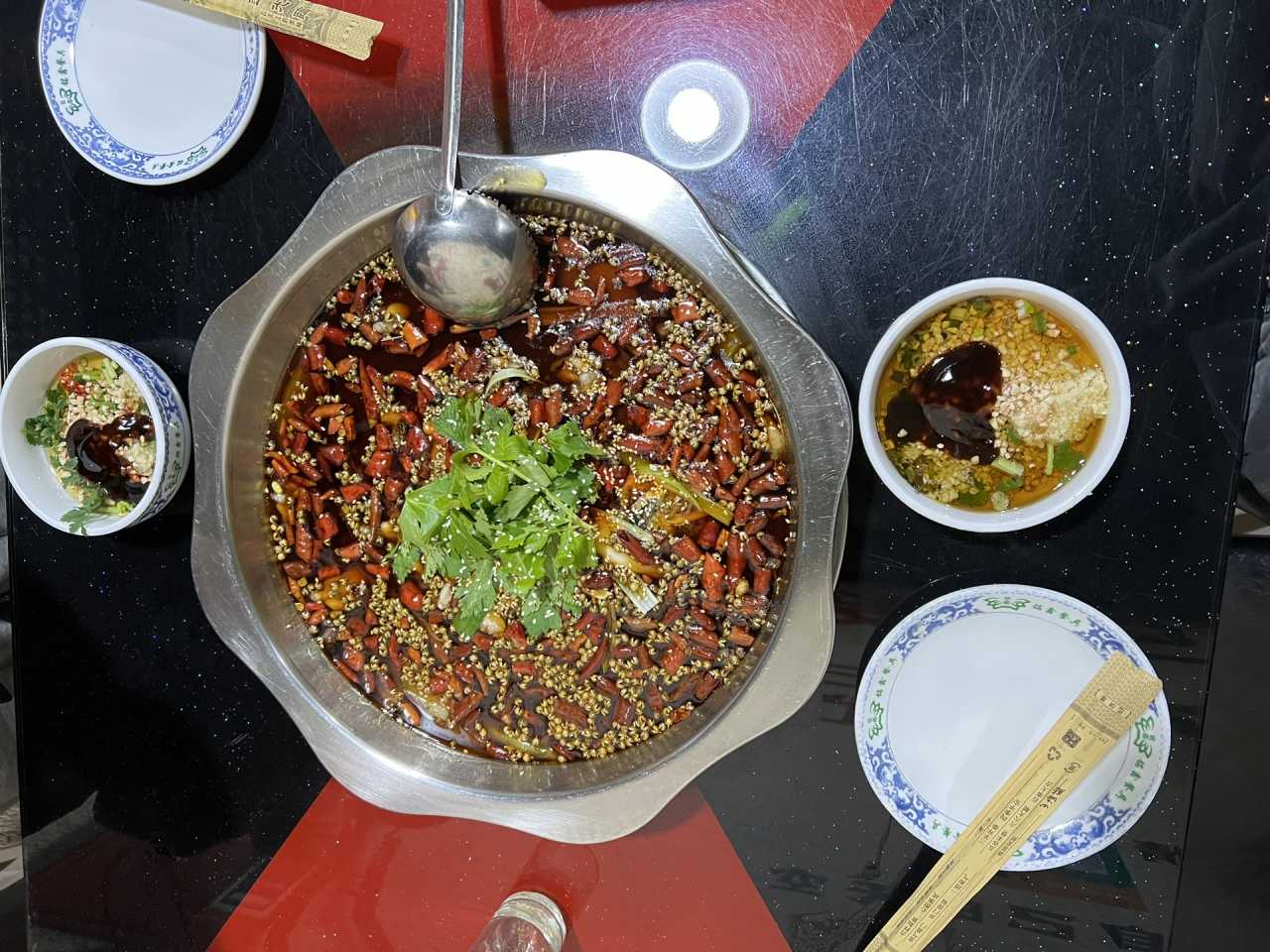
We picked a place packed with locals: 醉途美蛙 (Drunken Bullfrog). Two jin (about 2.2 lbs) of bullfrog with one free, plus a whole fish head. The two of us couldn't finish it—only 139 RMB (~$19).
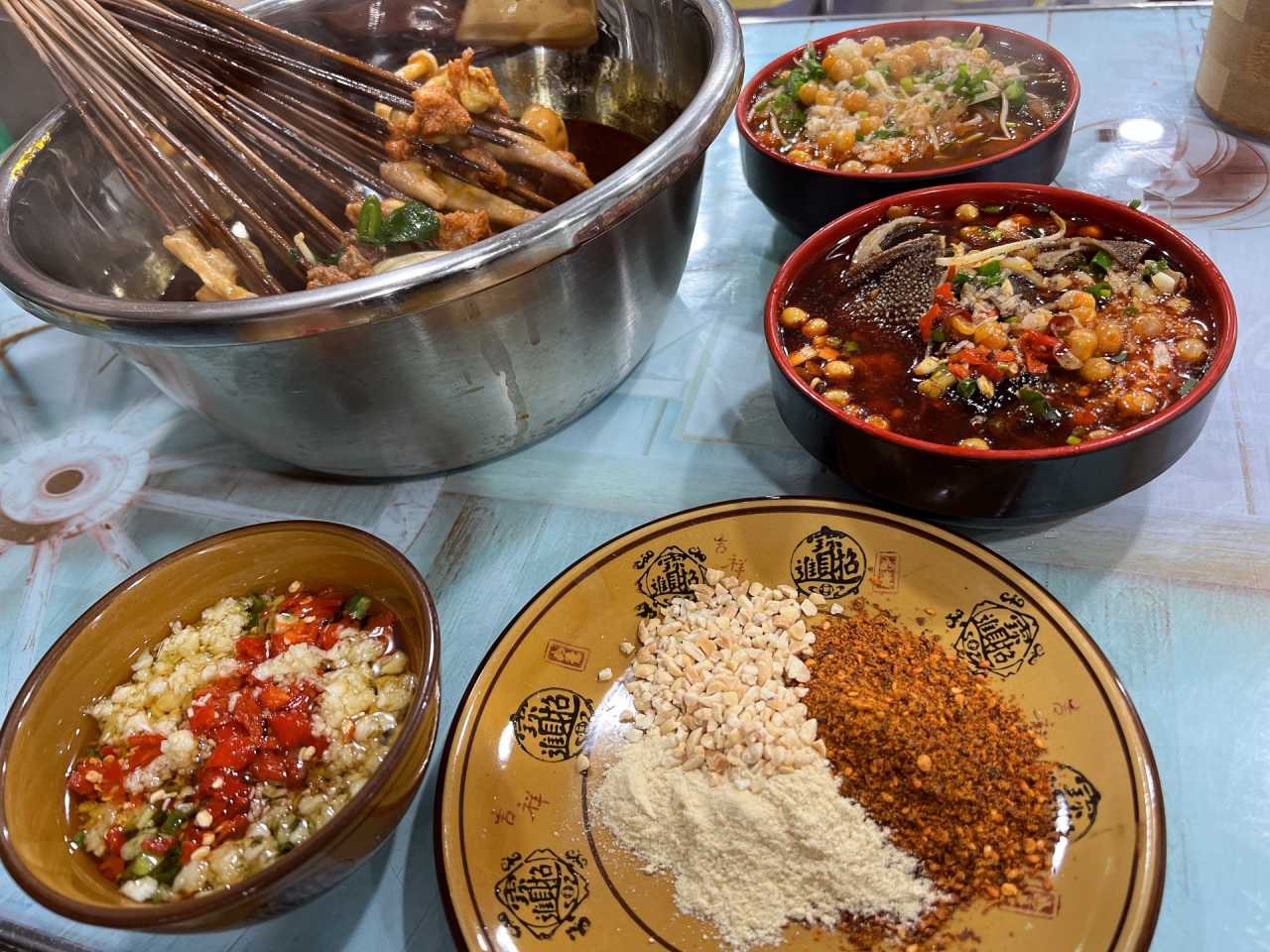
Back at the hotel, the owner told us locals only go to that shop for bullfrog. We'd chosen well. He also recommended a place he and his friends frequent: 手提串 (Hand-Held Skewers). We rested a bit and headed out again. 76 RMB (~$10.50), no pot fee, and delicious.
Two big meals in one night. Totally satisfied. Back to the hotel to sleep.
D2 – Dec 30: Chengdu → Lijiang
Flew to Lijiang. Ate 阿妈腊排骨 (Ama's Cured Pork Ribs). Entered Lijiang Old Town at 6:30 p.m. Viewed night scenery from Wangu Tower.
Morning: a bowl of wontons + braised pork intestine noodles. The area near our hotel had so many snacks. Chengdu people really know how to eat—even a small village near the airport has amazing food. Satisfied, we set off.
The flight to Lijiang was under two hours, on a smaller plane. I felt a bit dizzy. Being up in the air always makes me feel insecure. Finally landed just after noon—half an hour late. Our homestay sent a driver to pick us up, but it took another hour of bumpy roads to get there.
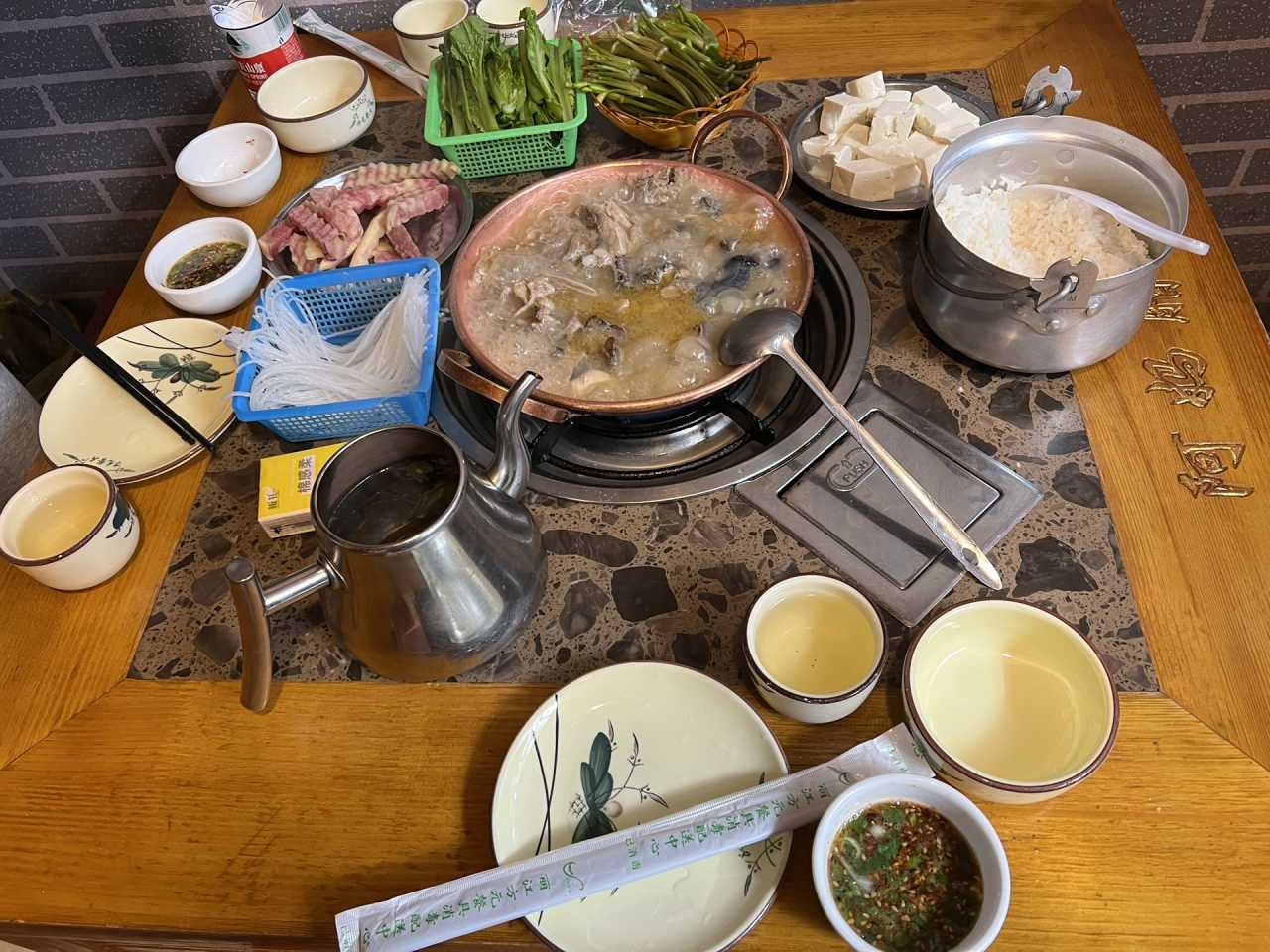
Settled in quickly, then went for lunch. Brother had already researched and led us straight to 阿妈腊排骨 (Ama's Cured Pork Ribs). The place was pretty good and very characteristic. Lijiang's specialty is cured pork ribs—we'd see many shops like it later.
The pink things in the photo are Yunnan's colorful "rainbow potatoes."
The restaurant was set in a small courtyard with just a canopy roof—no walls. Definitely a warm-climate setup.
Brother had a good appetite and enjoyed it. I couldn't eat much—probably still dizzy from the flight and car ride. Had some vegetables and soup. Packed the leftovers.
To avoid overexertion, we went back for a nap. Woke up around 6 p.m. and headed to the old town.
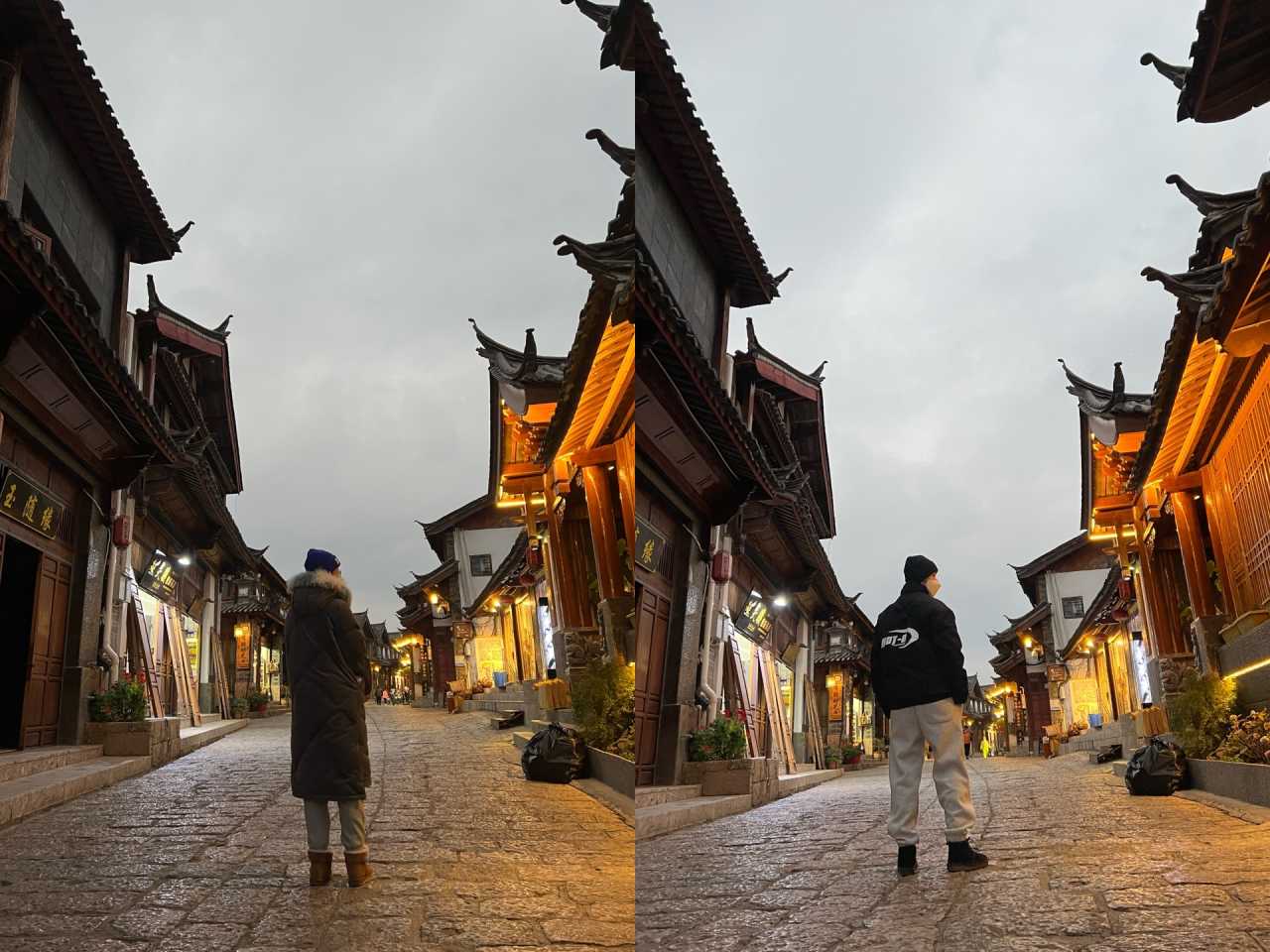
The ancient stone-paved streets were beautiful at every turn. Small shops lined both sides. We wandered into anything that caught our interest.
Walked to Sifang Street and saw the Umbrella Street and Bar Street. Followed the road uphill to Wangu Tower, where you can see the night view. We took a wrong turn at first and struggled to find it. By the time we finally made it, we thought, "We've come this far—might as well go in." But inside, there was more climbing. I was getting tired.
The view was nice, but there weren't many people—just a few tourists, no staff. Poor signage. Eventually we found our way out. Bought a fresh juice (cantaloupe + mango). Then started walking out of the old town. Halfway back, we were both exhausted. What an ordeal.
It was already past 10 p.m., so we skipped going out to eat. Bought some groceries at the supermarket and ate the leftover pork ribs at the hotel. Having a portable pot is really convenient.
D3 – Dec 31: Lijiang – Lashihai Lake
Lashihai + Old Town. 汽锅鱼 (steam pot fish).
Morning: decided to go horseback riding at Lashihai. Booked a last-minute day tour on Qunar: 118 RMB (~$16.50) per person.
Ate breakfast, waited for the bus, and set off. An hour later, we were at Lashihai. Rode horses along the Ancient Tea Horse Road, then went rowing in a tiny pond. We did two laps—our coordination was perfect. A nearby couple: the guy said, "Look how well they work together!" The girl replied, "Then go join their boat." Ha! We also found a "Sky Mirror" photo spot and took some pictures.
There were two shopping stops along the way. We bought some beef jerky. Yes, it's commercialized, but having fun is what matters. My only thought: whoever came up with the "Sky Mirror" concept as a tourist attraction was really creative.
It was my first time on a horse. The ride was so long that I actually got tired of riding. Haha.
After returning, we went back into the old town. First, we ate at 央金汽锅鱼 (Yangjin Steam Pot Fish) inside the old town. Then we wandered around, taking photos.
Brother took me to learn the hand drum—30 RMB (~$4). Played for a while; it lifted my mood. That was the most fun part.
We walked through Bar Street to soak up the atmosphere. Brother couldn't stand the noise, so we left.
Back at the hotel, we watched Hunan TV's New Year's Eve countdown show to feel the festive vibe.
I'd known Lijiang was heavily commercialized, so I had no expectations and no disappointment. But Lijiang—you have to visit at least once.
D4 – Jan 1: Lijiang → Dali by Train
Train to Dali. Dali Old Town. Lunch: roadside 美蛙鱼头 (beautiful bullfrog fish head). Dinner: grilled skewers in the old town.
Woke up and took a taxi to Lijiang Railway Station. At the station, we saw Jade Dragon Snow Mountain in the distance. We hadn't planned to visit it—too cold and tiring. But seeing it on our way out was a nice bonus.
We had an hour to kill at the station. Spent 30 minutes on massage chairs—time flew.
The train was unusual: each car had two levels. From outside, it looked like a sleeper car, but inside, the upper bunks were for luggage and the lower bunks had four people sitting.
We played, napped, and snacked on the train. Across from us were a college couple also heading to Dali. The train made several 30-minute stops. Finally arrived around 1:10 p.m.
Found the bus stop and rode to our lodging, just outside Dali Old Town—a short walk across the street.
Nearby, we found a 美蛙鱼头 (beautiful bullfrog fish head) place. Another bullfrog meal, but this time the frog seemed frozen—nowhere near as good as Chengdu's.
Back at the hotel for another two-hour nap. Left around 6 p.m. toward the old town. Maybe because we'd just come from Lijiang, the old town felt a bit... numb.
There were tons of restaurants. When it came time to decide what to eat, we had our first argument of the trip. I went back to the hotel. Brother bought grilled skewers and brought them back: 1 RMB (~$0.14) each—delicious and cheap. We never found such a deal again.
Back at the hotel, we booked an electric scooter for the next day. Then rested.
D5 – Jan 2: Dali – Erhai Lake
Caicun Village + Longkan Pier + Panxi Village + Xizhou Ancient Town.
Morning: the scooter owner delivered the vehicle. We set off.
Passed through the old town and bought breakfast: fried dough sticks, black rice porridge, and a local flatbread.
Rode the scooter to Caicun Village. Couldn't take it right to the lake—had to rent a bike. We scanned shared bikes and stopped frequently for photos. Locals were renting bikes for 10 RMB (~$1.40) each, unlimited time. We went with the shared bikes.
Cycled to Longkan Pier. Found the spot for tomorrow's sunrise.
Continued on the scooter in the opposite direction to Panxi Village. The scooter route was tricky—lots of weaving through alleys. Around noon, we found a restaurant. Ordered two dishes and a bowl of rice noodles. The noodles were terrible—so bad that we avoided local rice noodles for days afterward. (Turns out no other place made them like that. I still don't understand.)
At Panxi, we rented a bike from a local—a tandem-style one. 20 RMB (~$2.80), unlimited time.
The scenery was stunning. Lots of couples taking wedding photos.
We walked around, took pictures, returned the bike, and found a sunny café. Ordered a latte and sat for a while, soaking up Dali's afternoon sun. But with so many tourists, it was hard to feel truly at peace—it felt more like checking off a trendy spot.
We debated whether to go back or push on. Decided to continue to Xizhou Ancient Town. Saw the yellow wall and the corner tower. Also visited a tie-dye workshop. But we arrived too late—tie-dye takes two hours, so we missed out. The sky, clouds, and sunlight here make everything photogenic.
Rode back to the old town. Cruised around on the scooter, then chose a 白族石板烤肉 (Bai-style stone plate BBQ). Pretty good.
Back to the hotel.
Travel Tips:
- Rent a scooter from multiple places to compare prices.
- Longkan Pier, Caicun, Panxi, and Xizhou can all be done in one day.
- Consider splitting your Dali stay: half in the old town, half at a favorite spot on the east side.
- Inside Erhai, rent a local's bike for about 10–15 RMB (~$1.40–$2.10), unlimited time.
- Sunscreen is a must at Erhai. Even though it felt cool, I didn't apply any for one day and my face got sunburned—took days to fade.
D6 – Jan 3: Erhai Sunrise + Cangshan Mountain
Sunrise + Cangshan + Jizhao Temple. Dinner: 柴火鸡 (wood-fired chicken).
Sunrise: woke at 7 a.m., washed up, and left. Half an hour on the scooter to Longkan Pier. Lots of young people waiting together. You have to see a sunrise at least once. In Dali, Longkan Pier is the best spot.
Watching the sun rise little by little with Brother—the process itself was more romantic than the sunrise.
Afterward, we headed back.
Breakfast at the hotel: same fried dough sticks and black rice porridge from yesterday, plus a 梅干菜扣肉饼 (preserved vegetable and pork belly flatbread). Brother was still hungry and cold, so he cooked instant noodles at the hotel.
Rested briefly, then set off for Cangshan Mountain.
We took the Ximatan Cable Car. The ride was bumpy. When we arrived, we learned that due to strong winds, only the lower half of the cable car was operating. If only half is open, you're better off taking the Gantong Cable Car instead. But since the ride had been so rough, we didn't have the heart to suggest changing.
The top wasn't particularly special. We walked along the Jade Belt Road to the Gantong Cable Car—4.5 km (about 2.8 miles). That stretch was beautiful. Walking through the mountains, surrounded by nature, felt so relaxing. We chatted and took photos along the way. The path wasn't crowded—we'd only see other tourists every so often. It felt peaceful.
Except for the stairs at the beginning and end, most of the path was flat. We walked for hours: started the cable car at 11 a.m., reached Gantong at 3 p.m. We took it slow—both of us had just recovered from COVID, and we were worried about myocarditis. Even so, we still walked a lot every day.
After the cable car, we headed straight to Jizhao Temple. That was the most exhausting part—constant uphill climbing. If you don't want to enter Cangshan proper, just visiting Jizhao Temple is a good option; it's still a hike.
Jizhao Temple was crowded. They serve vegetarian meals there. We didn't stay to eat. Exited the scenic area, took a taxi back to Ximatan to pick up the scooter, and returned to the hotel.
We were both tired today. Lay down for a while before dragging ourselves to dinner. Nearby, there was a 柴火鸡 (wood-fired chicken) place that Brother had spotted on day one.
Since we were so exhausted, we called the owner ahead and asked him to start cooking. It would be ready in half an hour. We showed up 30 minutes later and ate immediately—pure happiness. The chicken was amazing. The peppers here seemed spicier, full of flavor. Packed the leftovers.
Originally, we planned to rent a high-mileage scooter the next day to circle Erhai Lake. But after today's hike, we decided to downgrade to a lower-mileage one. Also, today's scooter was terrible, and we wanted to ask the owner for a better one. But when we picked it up, we discovered he'd overcharged us by 20 RMB per day (compared to his normal rate). The owner was ridiculous. If today's scooter hadn't been so bad, we wouldn't have gone to his shop. We'd wanted to negotiate for a better one, but this left a bad taste.
On the mountain today, Brother said it was his favorite day so far. Erhai was beautiful but commercialized—he couldn't fully immerse himself, just felt like a tourist. But hiking in the mountains, with few people around and amazing scenery you can't capture on a phone—that was the real experience. Trendy photo spots don't matter; beautiful scenery does.
Travel Tips:
- You must visit Cangshan in Dali. It's stunning.
- If you have time and energy, take Gantong Cable Car up and Ximatan down. The 4.5-km walk is wonderful.
- Jizhao Temple is a popular photo spot. If you don't want to enter Cangshan, you can just hike here—about 20–30 minutes uphill.
D7 – Jan 4: Jizhao Temple + Luge Theme Park
Jizhao Temple + Luge Theme Park + Erhai Loop.
Morning: decided to go back to Jizhao Temple for the vegetarian lunch.
Took a bus, passed a Guanyin temple, then took a taxi to Cangshan. Another hike. After yesterday's climb, our calves were incredibly sore. But we pushed through to Jizhao Temple. We set a goal: arrive by 11:30 a.m. when lunch starts. We made it at 11:29—just in time. For food, we'll go the extra mile. The line was long when we arrived, and it was still long when we finished.
After eating, we explored Jizhao Temple thoroughly, took photos, and found a place to draw fortune sticks. We each drew one, then moved on.
Took a taxi back to the hotel to rest. Decided to pick up the rental car early. Took the bus to the rental location.
Drove to Luge Theme Park—Brother had found it this morning. It was really nice, with an Aranya-like vibe. The winding mountain road to get there was stressful for me—unfamiliar car, unfamiliar roads, average driver skills.
Great photo opportunities. There's a go-kart track, but we didn't ride. Soaked in the scenery and moved on. Highly recommend this place, whether for photos or just fun. Saw wedding photos being taken too.
Dali is beautiful—lots of wedding shoots.
Since we had the car, we decided to do the Erhai loop, visiting places we hadn't seen. That meant another two hours of driving. The sun set gradually; the last hour was basically driving in the dark.
We barely stopped along the loop. The scenery was beautiful the whole way, following the lake.
Finally made it back to the hotel.
Drove into the old town and bought grilled skewers. The stall from before wasn't open, so we found another—much more expensive. Bought various skewers and grilled pork belly (a whole strip grilled, then chopped into pieces, served with lettuce). Also got fried potatoes and 漾濞卷粉 (Yangbi rice rolls). Dinner sorted.
Travel Tips:
- If you have time or are driving, GO to Luge Theme Park!
- The full Erhai loop isn't necessary—the scenery is similar. Pick a few spots and enjoy them properly.
D8 – Jan 5: Dali → Xishuangbanna by Car
Drove to Xishuangbanna. Riverside Night Market. Dinner: steak buffet.
Woke at 6 a.m., left at 6:30. Filled up the gas tank in the city. Drove through winding mountain roads before hitting the highway. Took one break. Just as I thought, "One more stretch," we exited the highway and ended up on local roads. More winding mountain roads. On the highway, it was endless tunnels. Highway was easier, but both were exhausting—required intense focus. About three hours on local roads felt incredibly draining. Finally got back on the highway, rested, and drove straight to the destination.
Highway has its struggles; local roads have theirs.
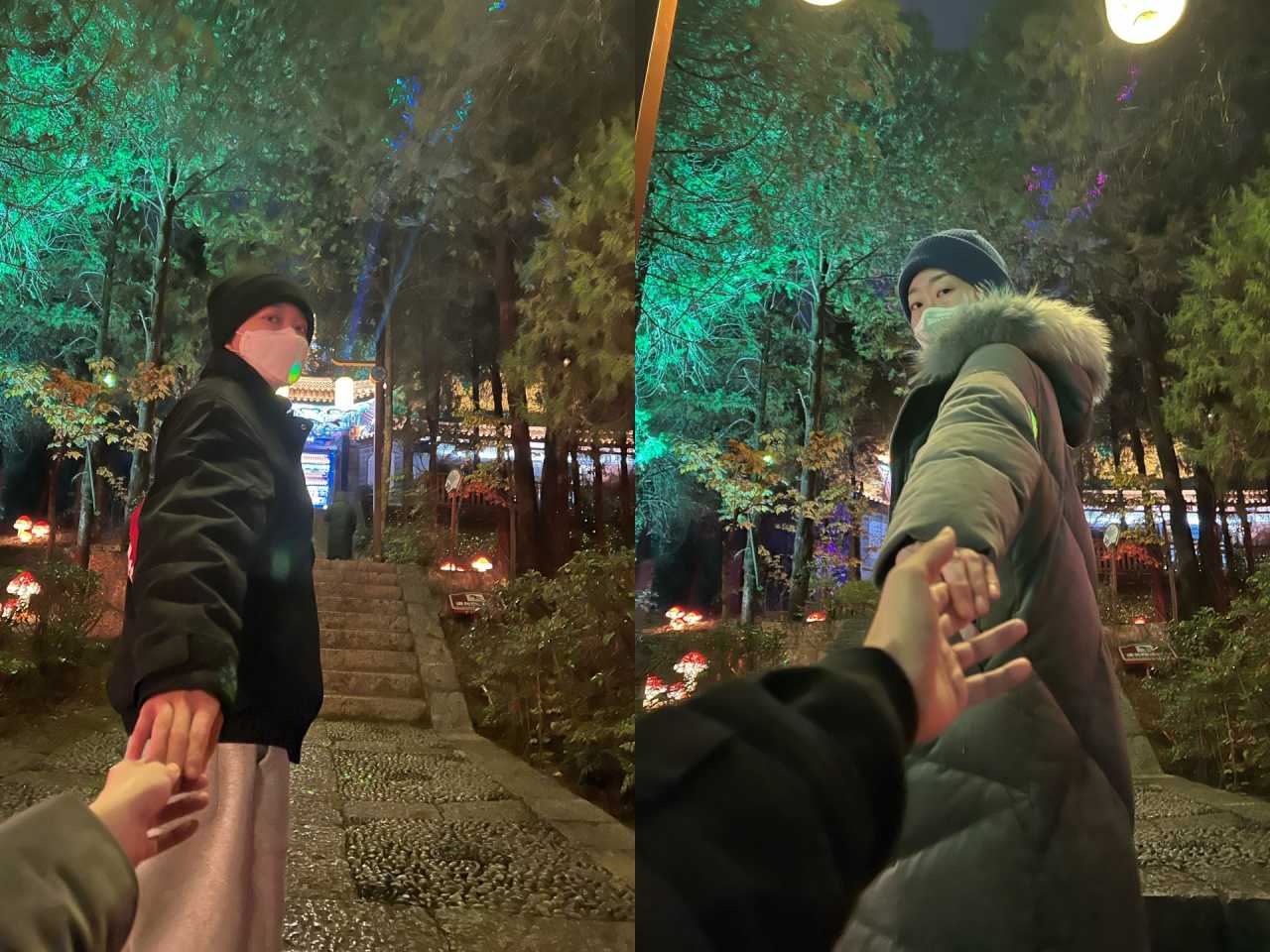
Exited the highway, entered the city, parked the car, and settled into our lodging.
Both of us were exhausted from the full day of driving. The driver was tired, the passenger was tired, and our calves still hurt from climbing Cangshan. After parking, walking up the stairs was fine, but coming back down was excruciating.
Starving, we found a nearby steak buffet. After eating, we explored the area and found the Riverside Night Market (Jiangbian Night Market). Took a quick look, then went back to the hotel. Since we were finally in a warm place, I craved fruit. Ordered a fruit platter online and ate local mini-pineapples—I fell in love with them.
Watched Reply 1988 while eating. Perfect contentment.
D9 – Jan 6: Xishuangbanna – Gaozhuang
Xishuangbanna State Market + Gaozhuang.
Probably tired from yesterday's drive, we slept until 10 a.m. Decided to visit a local farmers' market. Chose the Xishuangbanna State Market nearby. Took a scooter. It had fruits, seafood, vegetables, and meat—just a regular market. Experiencing local life is something we always enjoy.
Bought cherries, blueberries, pears, corn, and sticky rice cakes. The local mini-corn was delicious—very glutinous.
On the way back, found a Chongqing-style noodle shop. Lunch sorted.
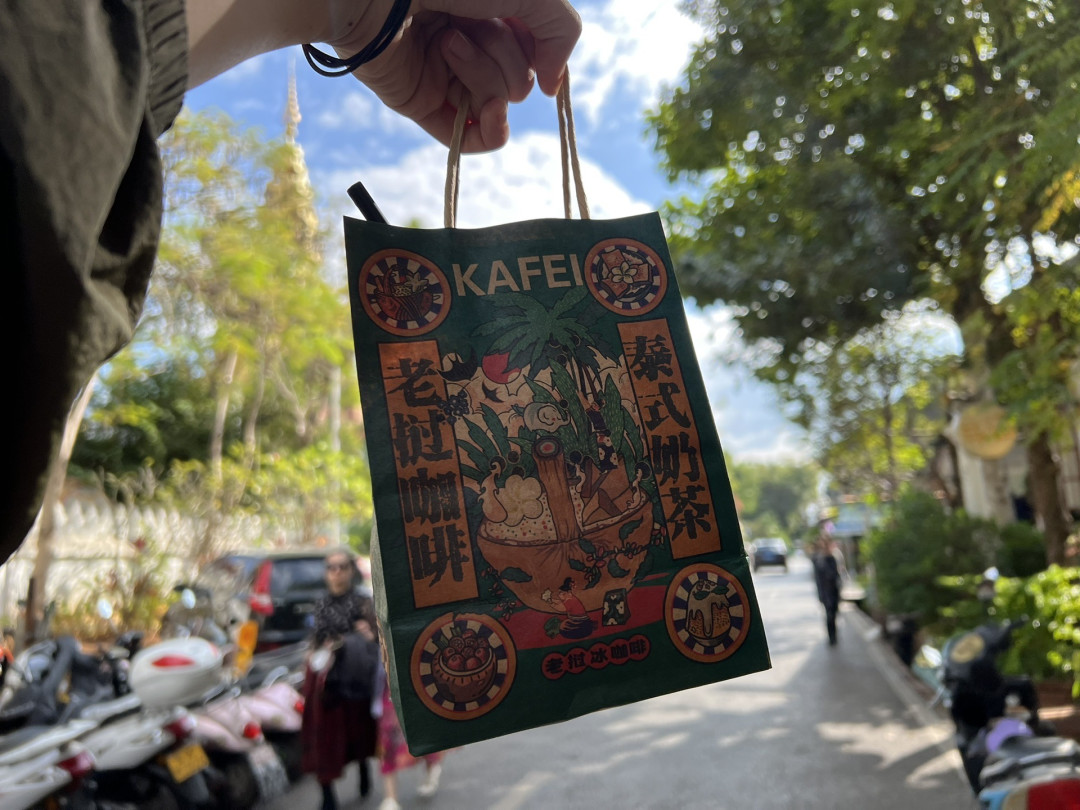
Back at the hotel for another nap. Woke at 2 p.m. and headed out again—this time to Gaozhuang Xishuang Jing (Gaozhuang Scenic Area). Jinghong Grand Golden Pagoda and the Mekong River Six Kingdoms Water Market are here. Took photos. Bought a Lao-style iced coffee.
At this time, the Starlight Night Market was just setting up. Bought a top for Brother. Continued walking and found a 孔雀宴 (Peacock Feast) —recommended by a friend. Experienced local ethnic flavors. Really enjoyed it.
After dinner, it was dark. The Starlight Night Market was completely transformed—vibrant and lively. Lots of ethnic clothing, delicious food, and temporary tattoo/body painting stalls. Brother said, "It feels like everyone who comes to Xishuangbanna can have a great time here."
D10 – Jan 7: Xishuangbanna – Manting Park
Manting Park + Lao-style Hotpot + RT-Mart + Fruit Platter.
Woke at 9 a.m. and headed out. On the way, we found a jianbing guozi (Chinese crepe) stall. Bought two—no shredded potatoes inside, not as good as home, but filling. Continued.
Walked to Manting Park in about 10 minutes. Along the path, many young women in Dai ethnic costumes with full makeup were taking photos. After walking for a while, we found a restroom, and I changed into my Dai outfit. But soon after, we reached the General Buddhist Temple (Zongfo Temple). Brother bought 30 RMB (~$4) worth of incense and went in to pray. Inside, we bowed. Brother said he also paid 2 RMB (~$0.28) as an offering.
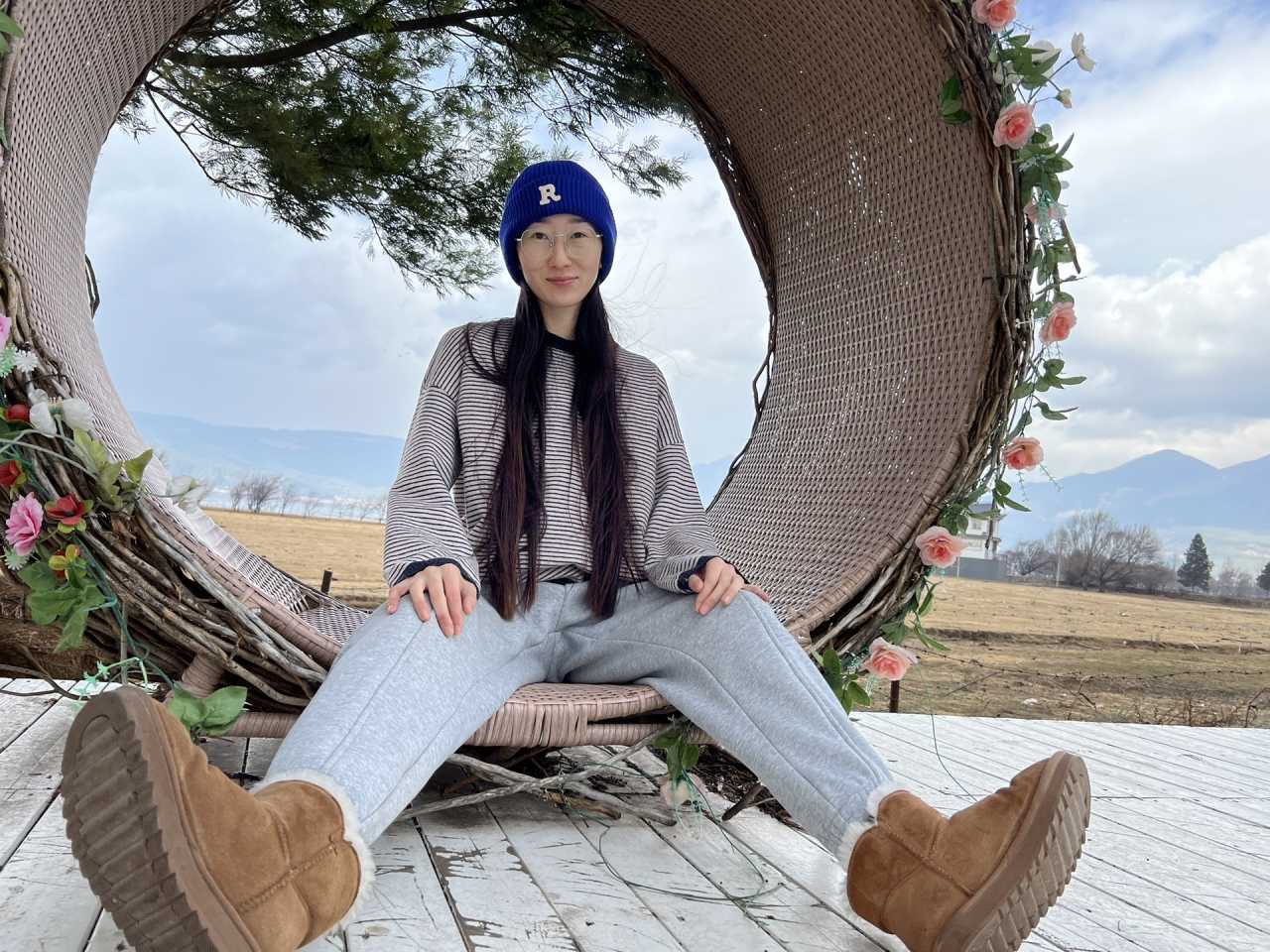
Exited the temple, returned to Manting Park, and headed to the elephant show.
We arrived early and waited over an hour at the elephant area—also a chance to rest. Many people were sitting on the elephants' backs for photos, 40 RMB (~$5.50) per person.
We met a new couple of friends here, whom I'll call Z.
After the elephant show, we watched the parrot show. Then we left Manting Park. On the way back, we spotted a fruit shop and bought plantains—a whole plate for just 5.5 RMB (~$0.76). Great deal. Went to a Lao-style hotpot place. I found it unique: the grill is on top, and the hotpot is underneath. Quite tasty. After eating, we walked to RT-Mart (a supermarket chain) and bought some snacks. Back to the hotel.
Couldn't resist: ordered another fruit platter and ate more mini-pineapples—10 RMB (~$1.40) for three.
Travel Tips:
- Lao-style hotpot is really distinctive. If you like both hotpot and BBQ, go for it.
- If you have time, Manting Park + General Buddhist Temple can easily fill a whole day—shows and scenery are comprehensive.
D11 – Jan 8: Xishuangbanna – Chinese Academy of Sciences (CAS) Tropical Botanical Garden
CAS Botanical Garden + Hotpot at the hotel.
Left just after 8 a.m., drove on the highway. Parked at 9:50, exchanged tickets, and entered. The CAS Botanical Garden was the highlight I was most looking forward to, so I chose a day when I felt energetic. The park is divided into two sections. The first half is the West Zone—a series of themed gardens. We walked through each one.
Initially, we didn't buy the tram ticket. But when we considered walking to the tropical rainforest area, it seemed too far. So we went back and bought tickets for the East Zone. Originally, we planned to walk the West Zone and take the tram in the East.
In the West Zone, we found a fruit garden. Saw banana trees, star fruit trees, and jackfruit trees. The funniest moment: we actually picked a star fruit from the tree. It was a bit astringent. Ate one anyway. Also picked two fruits that looked like "milk fruit"—they oozed white sap. We didn't dare eat them. (Later I realized this was bad behavior—don't copy us. There were no "don't pick" signs, but obviously you shouldn't. We were lucky not to get fined.)
We had a great time. Found a rest area, ate some fruit we'd brought—green mangoes with chili powder (a local thing). Couldn't quite get used to it. By then, we wanted to go to the East Zone but were too tired to walk. Decided to find the tram.
At 1:30 p.m., we took the tram to the East Zone. Good thing we did—it would have been impossible to walk. The East Zone has only two main stops. At the first, we walked for an hour inside before coming out. The second was the tropical rainforest. We took a photo at the entrance and left—too exhausted to continue. It looked huge; even an hour wouldn't be enough, and it's a loop—you can't turn back halfway.
Luckily, the East Zone tram took us back to the exit. Picked up the car and returned. Left the park at 4 p.m. Tip: if visiting the CAS Botanical Garden, walk the West Zone and take the tram in the East—otherwise you won't finish.
Exited the park, drove back to the city, parked, and first changed rooms at the hotel. Neither of us had slept well the night before—the air conditioner outside was unbearably loud.
This new room faces the street. Not sure how tonight will go.
After settling in, we walked to RT-Mart again. Bought a box of lamb rolls, beef meatballs, and some vegetables. Brother returned... [The original text cuts off here.]
[End of translated article. The original Chinese text appears to be incomplete at the end of D11.]
You should also read:
Bring a Tripod, Travel Lijiang Alone: A Winter Sun Solo Journey
Bring a Tripod, Travel Lijiang Alone: A Winter Sun Solo Journey When winter in the north wraps itself in smog and biting winds, painting the sky in shades of gray, the dream of Lijiang I'd been harboring began to grow wild and unstoppable. Can a…
Continue reading...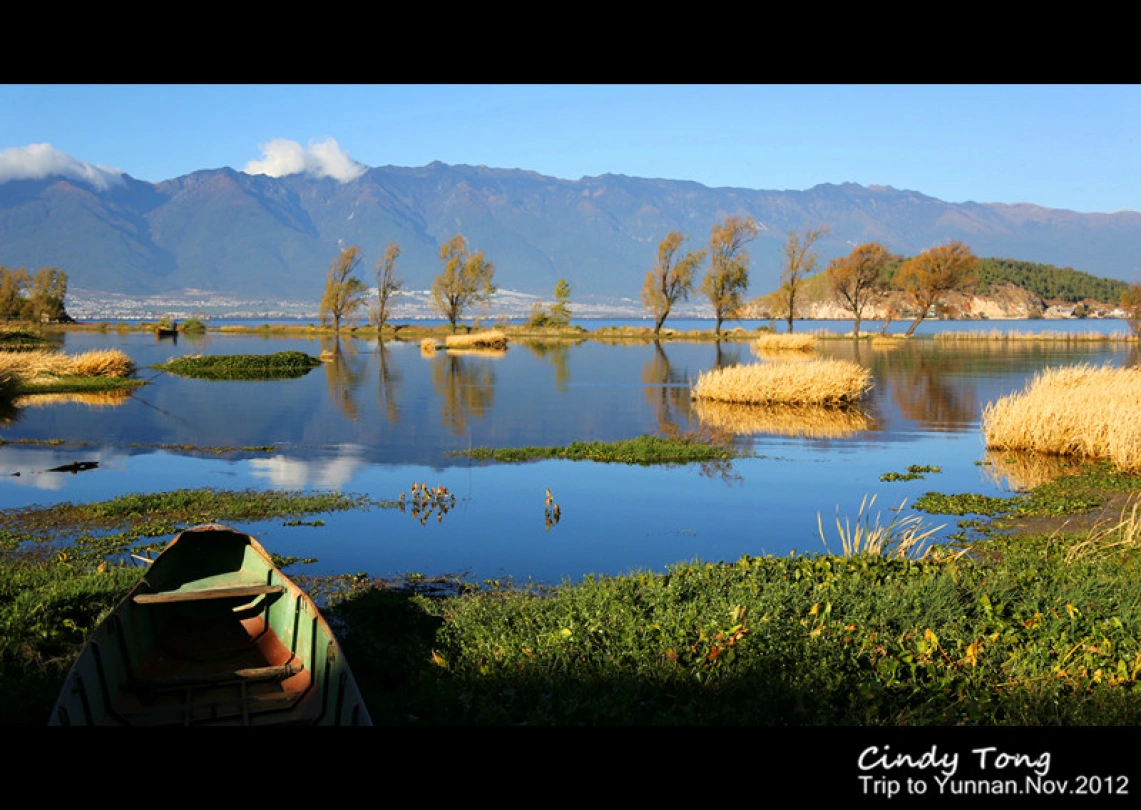
Yunnan: A Spontaneous Journey Through Western Yunnan
Yunnan: A Spontaneous Journey Through Western Yunnan Some trips are meticulously planned—three pages of攻略 (travel guides), hotels booked well in advance, and even a checklist of what to eat each day. And then there are trips where you simply throw a bag over your shoulder,…
Continue reading...
South of the Clouds: A Spontaneous Lijiang Wanderlust
South of the Clouds: A Spontaneous Lijiang Wanderlust Prologue: When the Soul Meets Freedom Some places have names that alone stir the heart with longing. Lijiang is one such place. It exists like an unfinished poem, a melody left hanging in the air, echoing softly…
Continue reading...