15 Days in North India: Encountering the Real India Between Architecture and Faith
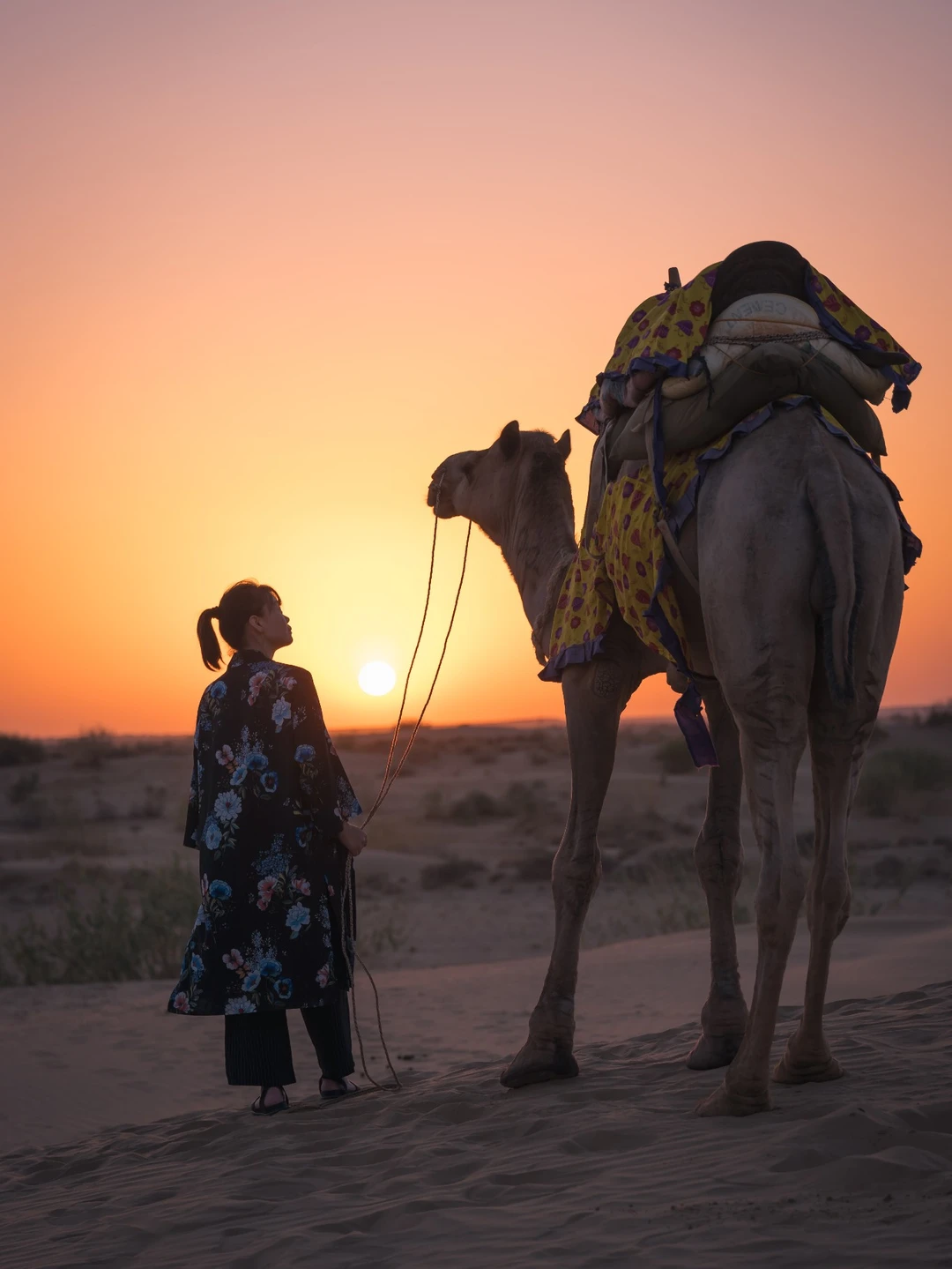
15 Days in North India: Encountering the Real India Between Architecture and Faith
Prologue: When the World Is Full of Malice Toward India
"India? Are you out of your mind?"
That was the most common response I got when I told friends I was planning a trip to India. In their imagination, it was a land of endless scammers, ubiquitous harassment, suffocating filth, and an unending stream of news headlines—robberies, rapes, frauds—as if the entire country was steeped in some indescribable malevolence.
But I went anyway.
Not out of ignorance or fearlessness, but because of the world masters who had returned from India—whether the architectural genius Le Corbusier or director Danny Boyle—bringing back works, thoughts, and inspirations that tugged at me like an invisible thread, drawing me toward this land nourished by civilization and tempered by suffering.
Seventeen days, five cities, from Delhi to Rajasthan's "Four Color Cities." We weren't there to check boxes or gawk at curiosities. My husband and I—one who loves to photograph, the other who loves to write—wanted to use architecture as a thread and footsteps as a measuring stick to gauge a real India.
As it turns out, India won't disappoint you—it will only make you ricochet between delight and dismay.
Pre-Departure Preparation: Maximizing the Game Plan

The Art of Itinerary Planning
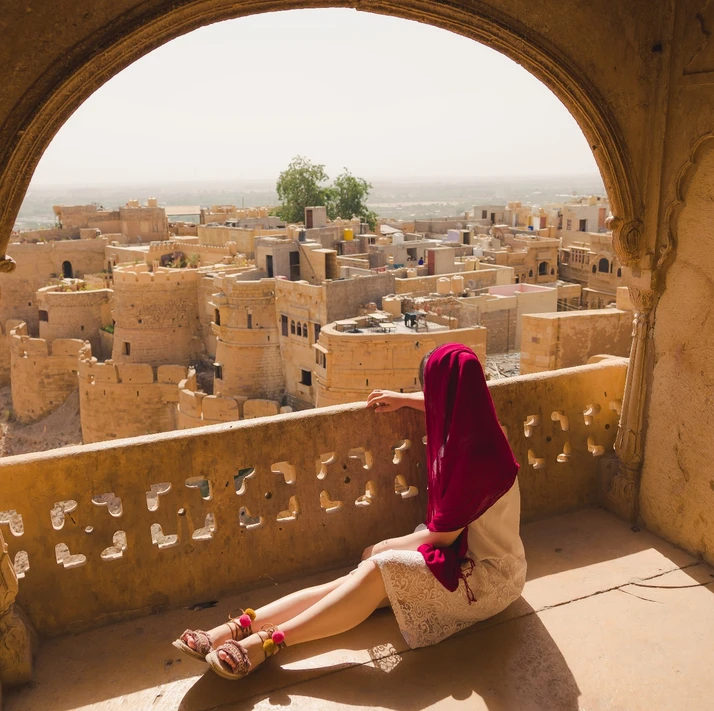
Rajasthan is known as the "Land of the Four Color Cities"—the Golden City of Jaisalmer, the Blue City of Jodhpur, the White City of Udaipur, and the Pink City of Jaipur. Add Agra, the jewel of the Mughal Empire, and Delhi as a transit hub, and this route covers virtually the most essential architectural heritage of North India.
I spent nearly a month poring over hundreds of thousands of words of travel guides, "stealing wisdom" from seasoned travelers across various platforms. The biggest change: Jaisalmer now has an airport, which meant we could skip that dreaded 14-hour train ride and devote more time to things truly worth experiencing.
Practical Tip: India's e-visa (EVISA) is extremely convenient. We landed in Delhi at 10:40 PM, filled out the arrival card, and cleared customs in just 20 minutes—faster than many domestic airports in China. The widely circulated claim about "glacial e-visa lanes" simply didn't hold true for us.
The Scam Survival Guide: From Krav Maga to Mental Preparation
Before leaving, I did two seemingly absurd things: first, I systematically studied the "81 classic tricks" of Indian scams; second, I squeezed in a few sessions of Krav Maga (Israeli martial arts) to practice self-defense and escape techniques.
As it turned out, these preparations weren't superfluous—but India's tricks always catch you off guard.
Delhi: A Jarring Welcome and the Tenderness of Ancient Ruins
The Lost Luggage Saga
After all my meticulous planning, the last thing I expected upon landing was losing my luggage.
Standing in front of the baggage carousel for half an hour, that sinking feeling became reality. Air India staff handed us a stack of forms to sign and said they would compensate us 4,000 rupees each (about 40 USD). As Chinese travelers, our instincts kicked in—paying out usually means they're at fault, and the luggage might really be gone for good.
Luckily, the suitcase contained only clothes—though they were carefully selected outfits. Even luckier, I had set aside a full day in Delhi as a buffer, which turned out to be perfect for handling this mishap.
The next day, the luggage was delivered to our hotel. India's opening act hit us like a pungent appetizer.
Humayun's Tomb: The "Practice Draft" for the Taj Mahal
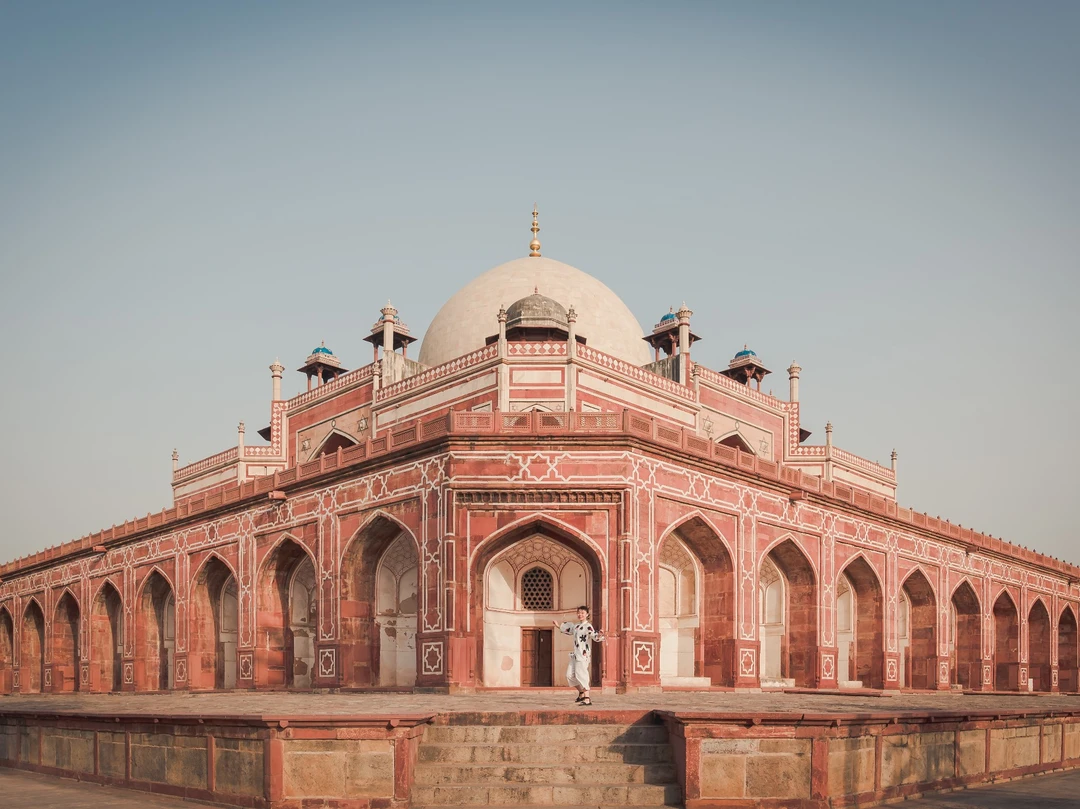
After adjusting our schedule, our first stop was Humayun's Tomb. This UNESCO World Heritage site is the precursor to the Taj Mahal—a solid, symmetrical Persian-style structure that, while not breathtaking, invites quiet contemplation.
Architecture 101: Want to quickly tell Islamic architecture from Hindu architecture? Remember two key points—
Islamic architecture: Massive domes, pointed minarets, strict geometric symmetry. Their faith seeks tranquility and peace, and the architecture reflects this sense of order.
Hindu architecture: Lotus-shaped archways, sinuous curves, intricate carvings. Their gods can be monkeys, elephants, or even a pillar—because there are so many deities, each with an extended family, and their stories are longer than Game of Thrones.
Qutub Minar: A 700-Year-Old "Lego Set"

The Qutub Minar is one of the Seven Wonders of India and one of the earliest UNESCO World Heritage sites. Built around 1200 AD, it was erected as a victory monument after the Muslim conquest of India.
No modern equipment—just stones stacked one upon another, with intricate patterns carved into the surface. Thinking about our ancestors building structures without CAD software makes the 50-yuan (about 7 USD) entrance fee seem like a steal—back home, can you see a world heritage site for that price? Without tacking on an 80-yuan (11 USD) shuttle bus, a scenic spot wouldn't even dare call itself a "scenic spot."
Jaisalmer: Falling into a Thousand and One Nights World

A 60-Yuan "First Class" Seat
From Delhi to Jaisalmer, 570 kilometers (354 miles), I chose SpiceJet. At check-in, the ground staff suggested we upgrade—600 rupees (about 60 yuan or 8 USD) per person for "extra legroom and a view to the world."
"We've come all this way"—those four words are the most powerful consumer justification for Chinese travelers. So, for 60 yuan, we got a taste of "first class."
The Golden City: A Living Fairy Tale
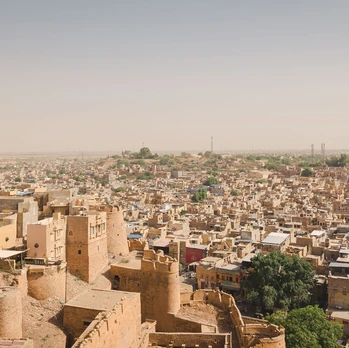
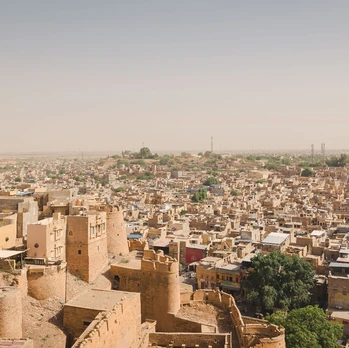
As the plane descended, I saw the aircraft's shadow on the ground for the first time—a vast expanse of Gobi desert, swirling yellow sand, the entire city glowing with a golden hue. Just 100 kilometers (62 miles) ahead lay Pakistan.
Jaisalmer is the original setting for A Thousand and One Nights. Ancient forts, palaces, camels, deserts… the stone gates of Ali Baba and the Forty Thieves leaped from the pages of a storybook into reality. One evening, we dined at a rooftop restaurant; in the distance, a couple danced, silhouetted against the endless fortifications. At that moment, I finally understood what it meant to say a city has "peace."
Heads-up: Summer temperatures in the Golden City can hit 45°C (113°F), and air conditioning feels useless. Best to go out in the early morning or evening and retreat indoors at noon.
The Thar Desert: A Sunset in a "Vegetable Patch"
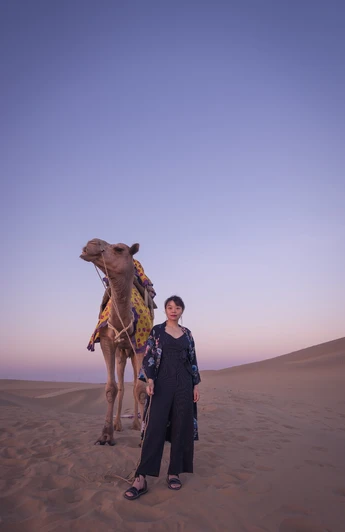
We signed up for a desert tour—ranging from 60 to 120 yuan (8 to 17 USD)—which included a jeep ride, camel riding, sunset viewing, and a desert dinner. Compared to the Badain Jaran Desert I'd visited before, the Thar felt more like a "vegetable patch"—but its sunset had a peculiar tranquility.
Just 100 kilometers (62 miles) away was Pakistan. I pulled out my phone to check my location, and for the first time, my footprints were this close to a country that constantly pops up in the news. As Gao Xiaosong once said: Many countries share borders but know nothing about each other—like China and India, India and Pakistan. History is like a bulldozer, pushing different people in different directions, but everyone keeps moving forward.
Jodhpur: A Real-Life Monument Valley
The Blue City's Double Life
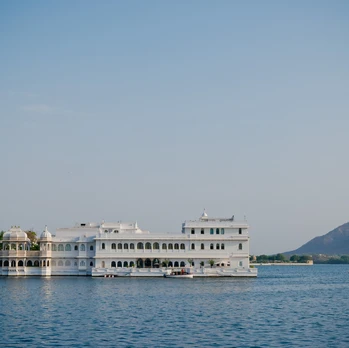
Jodhpur is known as one of the world's three Blue Cities, alongside Chefchaouen in Morocco and Santorini in Greece. But unlike those Instagram-famous blue towns, Jodhpur's blue is mixed with garbage and pollution.
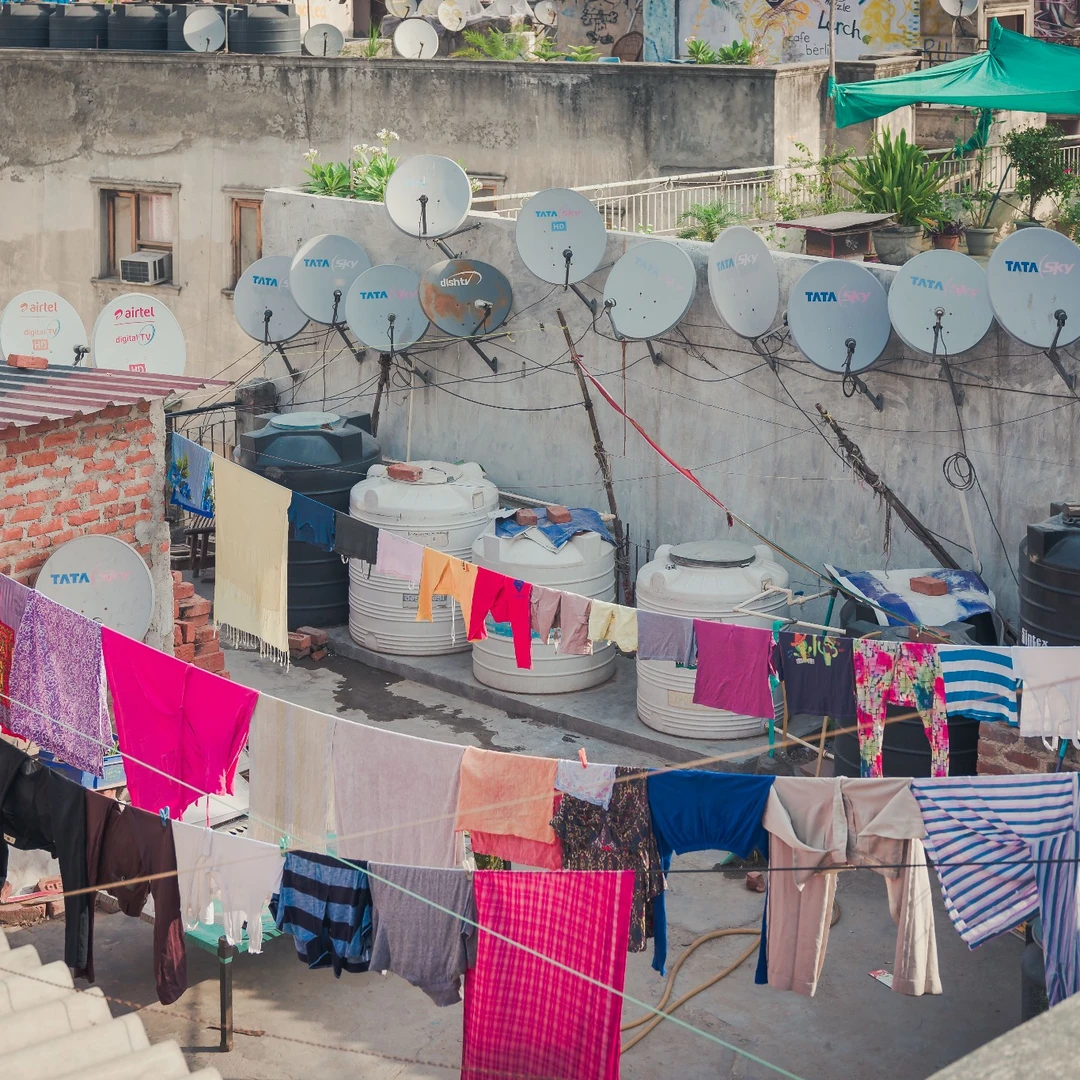
Wandering into the alleys, I didn't encounter a single Chinese tourist. Everyone I passed stared at me for a solid five seconds—that feeling of being "scoped out" made me feel ashamed just walking down the street. A group of kids played on a rooftop, while across from them lay an enormous pile of household waste—the smell, I might remember for a long time.
But that didn't stop me from loving this city. Sometimes, when you've lived too comfortably, seeing hardship up close makes reality feel that much more authentic.
Stepwells: The Soul of Indian Aesthetics
Stepwells were the architectural form I became most obsessed with on this trip. Faced with chronic drought, Indians ingeniously created these stepped reservoirs. They are the inspiration for the game Monument Valley and deeply influenced Japanese architect Tadao Ando.
Jodhpur's stepwell has become a diving spot for local teenagers—countless "amateur Olympians" leap from various heights, sending water flying in all directions. We found a stylish café; two coffees and a soda cost just 30 yuan (about 4 USD)—less than a single Starbucks drink.
Mehrangarh Fort: The Nobility of Looking Down on the World
If the Golden City is a living, breathing marketplace, then the Blue City's fort is a magnificent memorial. Mehrangarh Fort stands at Jodhpur's highest point, its cannons and walls telling tales of past warfare. Kings lived here, and when they died, their queens were buried alive with them—under royal power, there are no fairy tales.
I wore a traditional Hanfu (Chinese silk robe) into this fort, and it felt like a spinning dance. The essence of every civilization lives on through its bricks and mortar, carrying centuries of wear and leaving us with endless imagination.
Udaipur: A Glimpse Across 300 Kilometers That Lasts a Lifetime
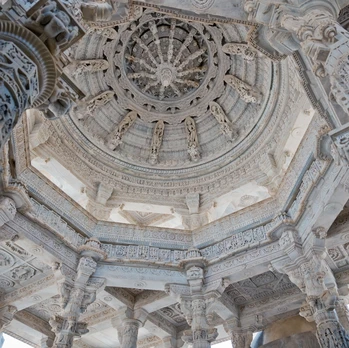
The Thousand-Pillar Temple: Awe-Inspiring Faith
From Jodhpur to Udaipur, 300 kilometers (186 miles)—no railway, only roads. We detoured 100 kilometers (62 miles) to see a Jain temple known as the "Thousand-Pillar Temple"—the Ranakpur Temple.
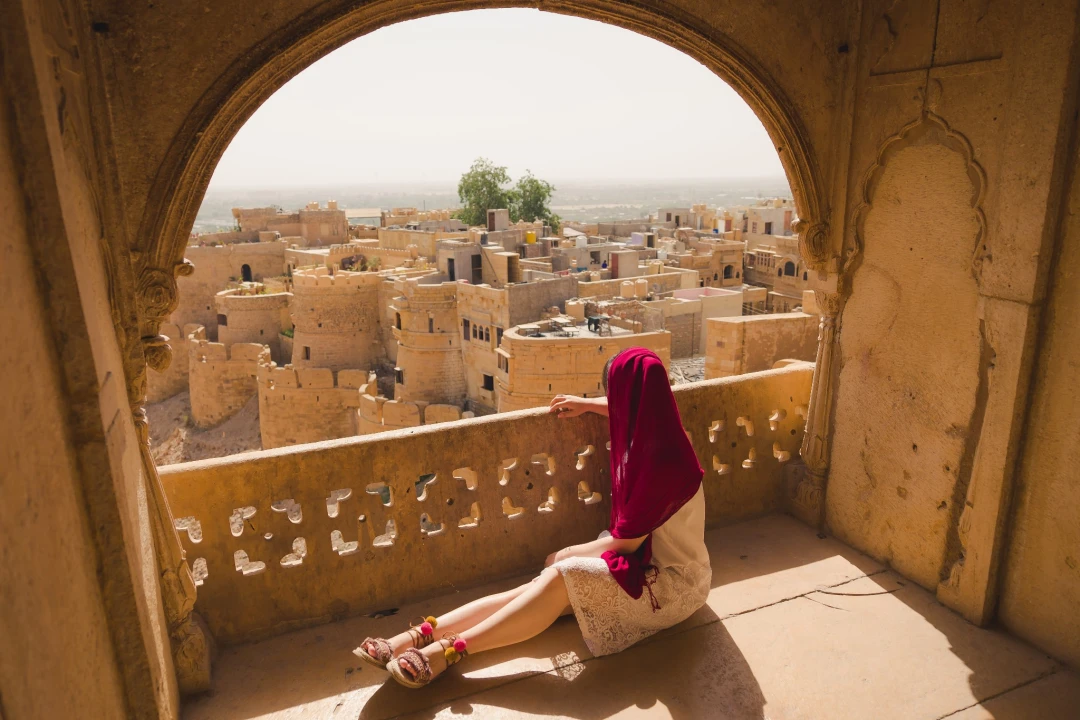
The name is simple: it contains over a thousand pillars, each with a unique carving. Using my elementary-school vocabulary, the only word I can muster is "breathtaking."
Jainism is one of India's oldest religions, said to predate Buddhism. Its founder, after marrying and having children, found life bland and meaningless, so he turned to religion in search of happiness—in modern terms, he was "finding himself."
A reflection: Ancient people had no smartphones or TV to distract them, so they poured their hearts into creation. Because that was their only spiritual refuge beyond food, clothing, and shelter—they built and preached with all their might. And us moderns? We worship the almighty yuan (or dollar), serving money above all else. That path eventually leads to a never-ending loop. Reflection is a required course in travel.
Epilogue: Is India Worth Visiting?
Seventeen days, five cities, 90% completion.
India isn't for everyone. It's dirty, chaotic, full of tricks—but also full of surprises. The exquisite architecture, the devout faith, the smoky energy of the streets, and the contentment people maintain despite hardship—these are the energies you bring back from travel, energies that will guard your life and surround you with light.
Some say India is fake—that the photos are all lies. But I say: the India we saw is real. It's just that everyone sees a different side of the same elephant. Like the blind men touching the elephant—one feels the leg and says it's a pillar, another feels the tail and says it's a rope. Both are right, but neither is completely right.
So don't ask if India is worth visiting. Ask yourself: Are you ready to face a real India?
A few final practical tips:
- The Golden Rule of Scam Avoidance: Pretending you don't understand is a universal cure. Against thick-skinned people, the only solution is to be thicker-skinned yourself.
- Ticket Value: The most expensive entry is the Taj Mahal at 1,000 rupees (about 12 USD); the rest range from 200 to 500 rupees (2.50 to 6 USD). Compared to Chinese scenic spots, you'll feel Indians are truly "generous."
- Transportation: With Jaisalmer's new airport, prioritize flying to save time. The train experience is very "Indian," but a 14-hour ride is torture for most people.
- Best Season: October to March—avoid the 45°C (113°F) summer heat.
- Mindset: In India, anything can happen—lost luggage, delayed trains, getting scammed. Accept this, and your trip will be much smoother.
After all, when we complain about India, let's not forget—our ancestors once went through the same. India is just a few steps behind.
You should also read:
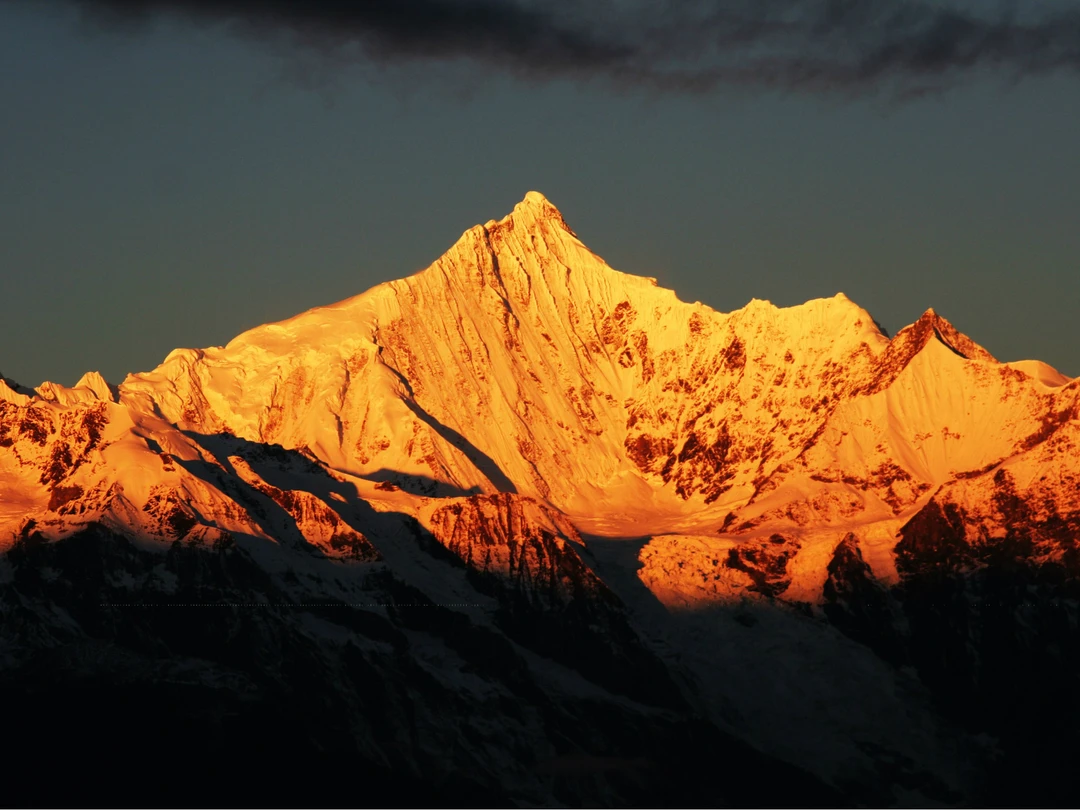
Stillness and Motion: A Yunnan Journey in Golden October – A Dialogue Between Soul and Landscape
Stillness and Motion: A Yunnan Journey in Golden October – A Dialogue Between Soul and Landscape From October 15 to 30, 2012, I embarked on a 16-day journey through Yunnan, starting in Lijiang, passing through Lugu Lake, Shangri-La, Meili Snow Mountain, and Yubeng, finally ending…
Continue reading...
Take Me to the Distance: Ten Days in Yunnan, a Poetic Journey Through Our Youth
Take Me to the Distance: Ten Days in Yunnan, a Poetic Journey Through Our Youth Prologue: Setting Off, Just to Be Together Some trips are planned for ages, yet always lack that final spark of spontaneity. We were students, with a tight budget but limitless…
Continue reading...
Never Stop Walking: A Solo Journey Through Yunnan – 19 Days of Wandering Through Lugu Lake, Lijiang, Shangri-La, Dali, Shuanglang, and Kunming
Never Stop Walking: A Solo Journey Through Yunnan – 19 Days of Wandering Through Lugu Lake, Lijiang, Shangri-La, Dali, Shuanglang, and Kunming Weibo / WeChat Official Account ID: Fan Nuan Backpacking far and wide, with good wine always by my side The land of colorful…
Continue reading...