2025 Summer Family Trip to Yunnan: A Complete 8-Day, 7-Night Guide to Kunming, Dali, Lugu Lake, and Lijiang

2025 Summer Family Trip to Yunnan: A Complete 8-Day, 7-Night Guide to Kunming, Dali, Lugu Lake, and Lijiang
A Note Before We Begin: Why Yunnan?
"Mom wants to go to Yunnan." My wife had been saying this for years.
Her ideal destination is simple—not too cold in winter, not too hot in summer, with mountains and water, but just the water part, no climbing. Yunnan checked every box on her list.
As for me? I had several college buddies from Yunnan. They all shared the same traits: sun-kissed skin, down-to-earth personalities, and a strong work ethic. That left me with a natural fondness for the place. Sure, the internet is full of warnings about Yunnan tourism being "full of traps," but in my experience—as long as you don't chase cheap deals or sign up for cut-rate tours, you'll be fine. And it turned out that everyone we met on this trip was genuinely friendly, with local businesses going out of their way to make things easy for visitors (more on that later).
And the kids? They had zero concept of Yunnan. Wherever Mom and Dad go, they follow. Hoping they'd soak up the local culture or learn some history? Dream on. Their interests boiled down to exactly four things: catching fish, feeding sheep, riding horses, and watching TV while eating ice cream (more on that later, too).
Two Classic Routes—Why We Chose the Northern Loop
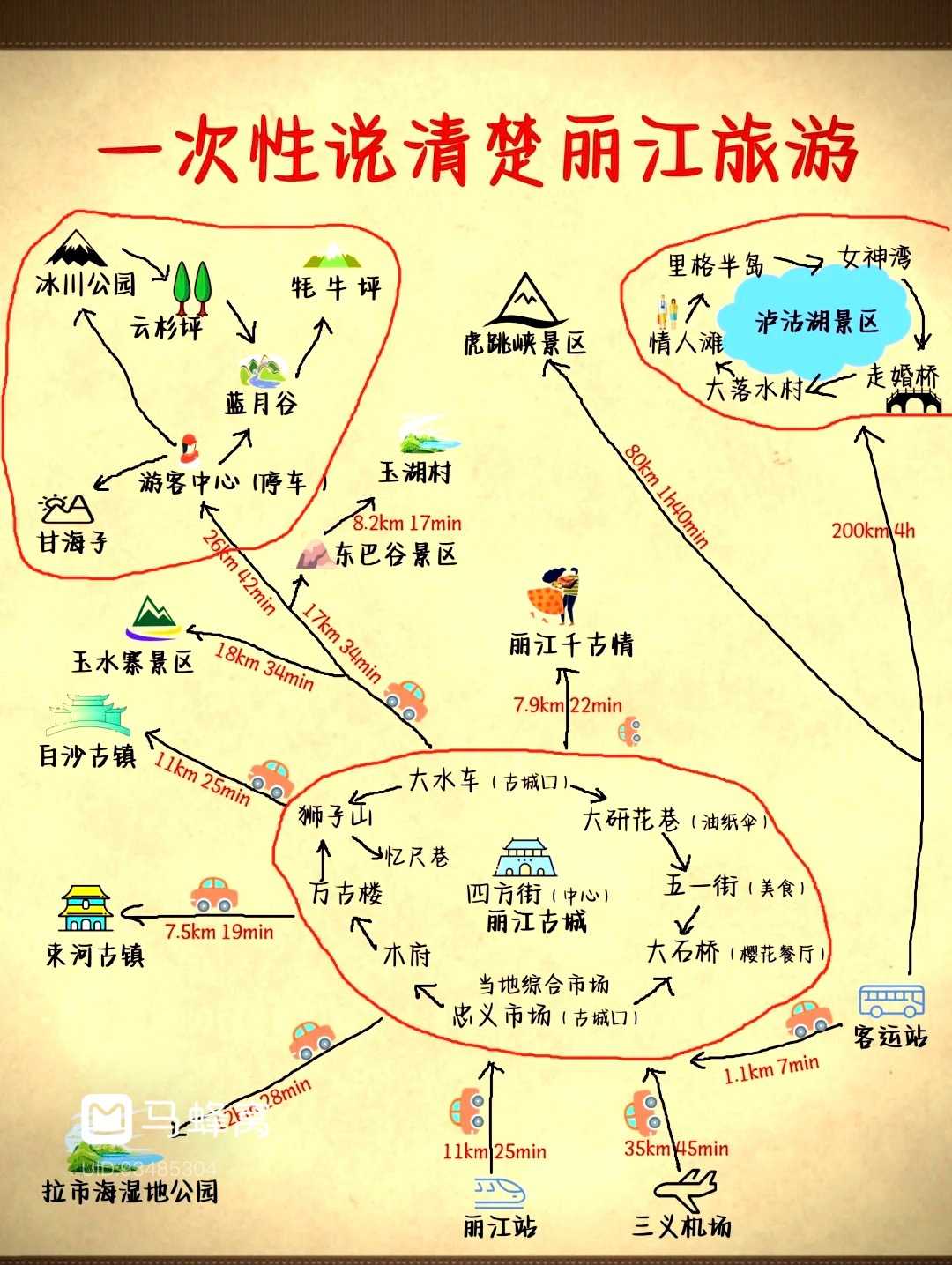
Yunnan has two main tourist circuits, both starting from Kunming:
- The Northern Route: Kunming → Dali → Lijiang (Lugu Lake) → Shangri-La
- The Southern Route: Kunming → Xishuangbanna
If you have enough time, you could do both—fly from Shangri-La to Xishuangbanna. But we went with the northern route for one simple reason: the south is just too hot. A summer trip to Xishuangbanna? We'd have been roasted alive.
Four Destinations, Each With Its Own Vibe
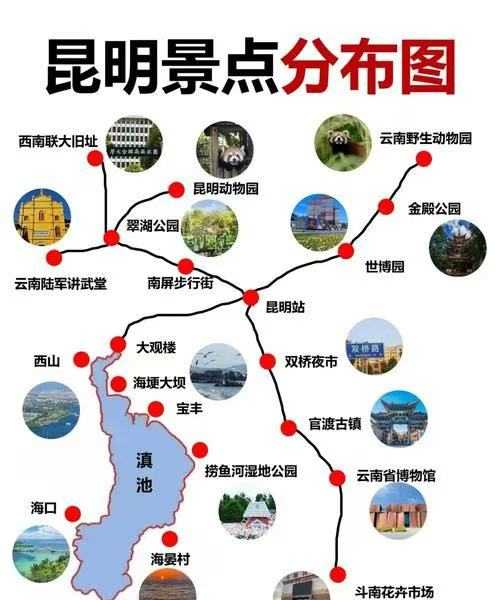
Kunming: More Than Just a Transit Hub
As the capital of Yunnan, Kunming enjoys spring-like weather year-round. Natural highlights include Dianchi Lake (seagulls flock here from October to March), Cuihu Park, and the Stone Forest. On the cultural side, you've got the Yunnan Provincial Museum, the旧址 of Southwest Associated University, the Yunnan Military Academy, and Asia's largest flower market, Dounan. Many travelers treat Kunming as just a jumping-off point, but I think it's a worthy destination in its own right. We stayed at the Southwest Hotel near Kunming Station—convenient for parking, getting around, and transferring to trains.
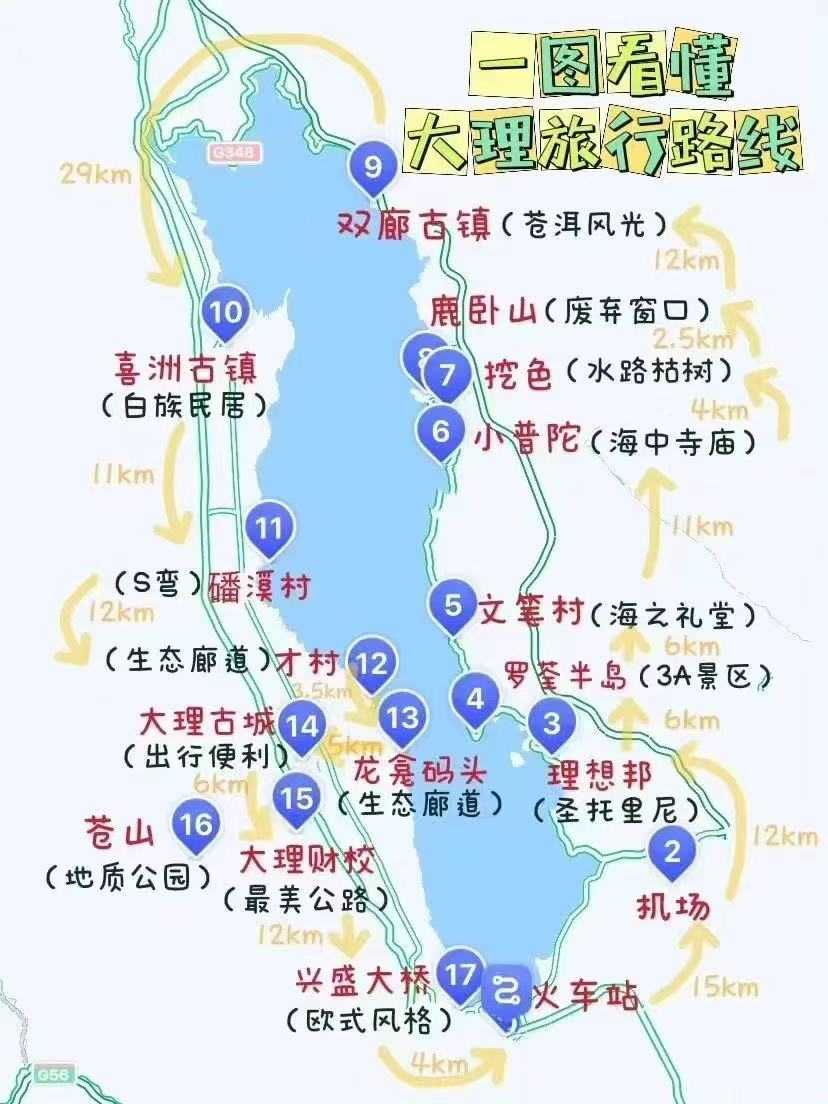
Dali: Erhai Lake Is the Star

It's a 2.5-hour bullet train from Kunming to Dali (about 4 hours by car). Dali's attractions mostly revolve around Erhai Lake and Cangshan Mountain. The lake loop is about 140 kilometers, split into an eastern and western route—the west is more cultural, the east more natural. Accommodation options each have their pros and cons: Dali Ancient Town is lively, Xizhou Ancient Town is quieter, while Shuanglang, Wase, and Wenbi Village offer stunning lakeside views from their guesthouses.
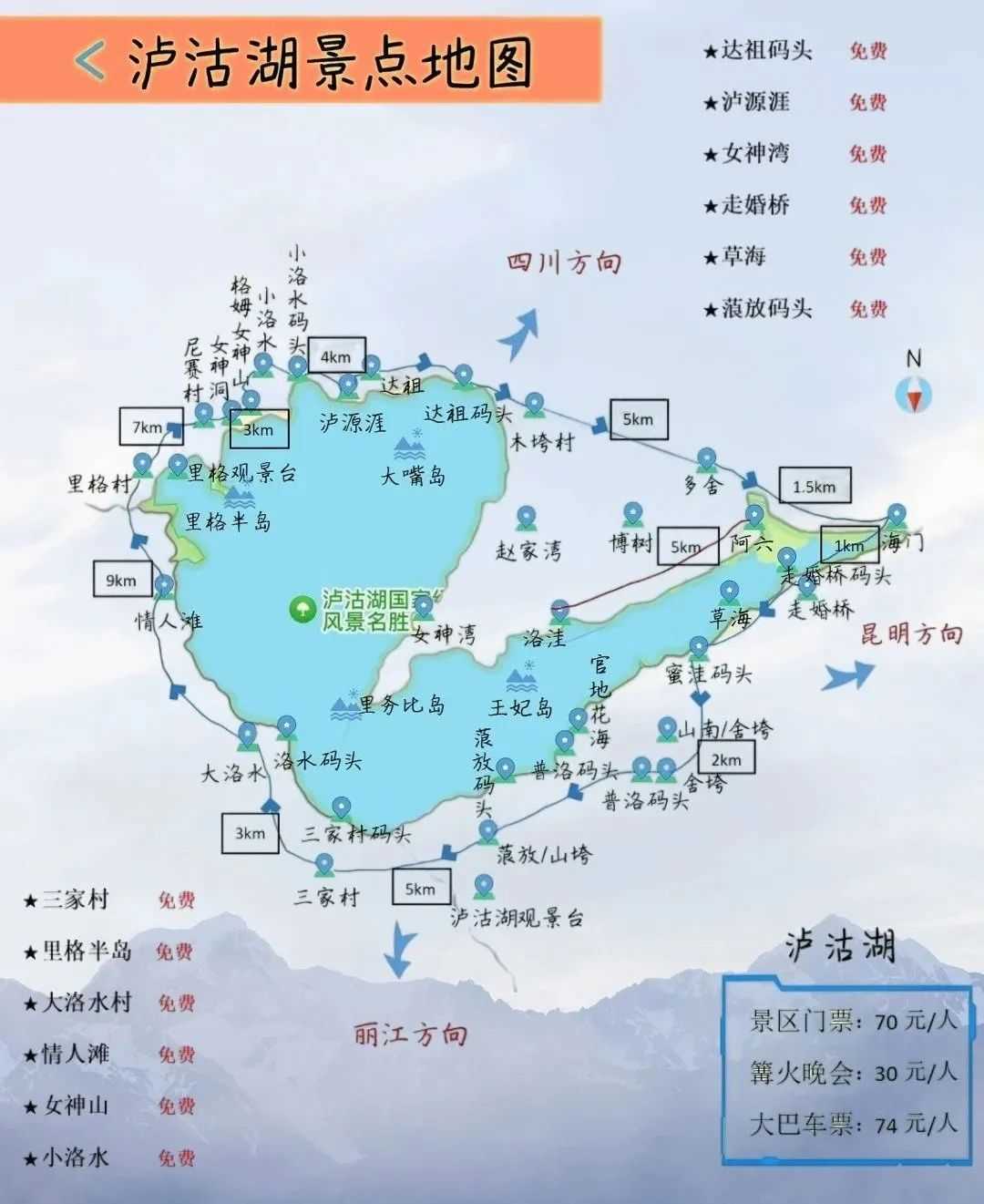
Lugu Lake: A Gem on the Plateau
Lugu Lake sits on the border between Yunnan and Sichuan. It's the third deepest freshwater lake in China, at an elevation of 2,690 meters, with crystal-clear water that offers visibility up to 12 meters. The Mosuo people's "walking marriage" tradition is famous far and wide. Direct buses run from Lijiang or Dali, and the entrance fee is 70 RMB. The best way to explore is simple: circle the lake clockwise. Key stops include Daluoshui Village (well-developed, with solid infrastructure), Lige Peninsula, Lugu Cliff (for a half-mountain view of the lake), Goddess Bay (sunset spot), and the Walking Marriage Bridge.
Lijiang: The Internet-Famous City Needs No Introduction
Lijiang is so popular it barely needs explaining. Major attractions include Lijiang Ancient Town, Jade Dragon Snow Mountain (with Impression Lijiang show, Blue Moon Valley, Yak Meadow, and Spruce Meadow), Baisha Ancient Town (at the foot of the snow mountain), Shuhe Ancient Town (quieter and more laid-back), and the Lijiang Eternal Love show.
8 Days, 7 Nights: The Detailed Itinerary
Day 1: Jinhua → Quzhou (fly to Kunming) → Pick up rental car → Southwest Hotel → Nanqiang Pedestrian Street → Dounan Flower Market → Guandu Ancient Town
Day 2: Site of Southwest Associated University → Wenhua Lane (lunch) → Cuihu Park → "Paper-thin Building"
Day 3: Kunming to Dali by bullet train → Pick up rental car → Xianglin Garden (lunch) → Guesthouse check-in → S-Bend (photo spot) → Xizhou Ancient Town
Day 4: Guesthouse → Tie-dye experience → Shuanglang Ancient Town → Wenbi Village → Dali Ancient Town
Day 5: Dali (drive to Lugu Lake) → Check into Daluoshui Village → Stroll → Dinner
Day 6: Daluoshui Village (pig-trough boat ride) → Lige Peninsula → Lugu Cliff → Walking Marriage Bridge → Drive to Lijiang Ancient Town
Day 7: Gesang Flower Sea → Baisha Ancient Town → Shuhe Ancient Town → Hotel
Day 8: Lijiang → Nanchang → Jinhua
Day 1: Departure to Kunming—Surprises and Mishaps
A 4:30 AM Start
After comparing flights to Kunming from various cities, we found Quzhou was the best option—a 7 AM departure, landing at 9:30, so we could start exploring the same day. Ticket prices were reasonable, too.
The night before, after their baths, both kids started shouting, "I'm so excited! I can't sleep!" My wife and I were pretty hyped, too. But we had to be up at 4:30 AM and at Quzhou Airport by 6. The older brother popped right up as soon as he heard movement. The younger one? We dressed him half-asleep, carried him to the car, and he only slowly woke up as we neared the airport.
My mother-in-law had gotten up at 4 AM to prepare a feast of a breakfast: steamed dumplings, black rice, corn, steamed buns, eggs, and milk. Unfortunately, the little guy wasn't having it—he insisted on instant noodles. Once the older brother saw that, the dumplings in his hand suddenly lost their appeal. He dropped them and joined in. My wife, ever the social butterfly, ended up giving the leftover breakfast to the airport security staff on duty.
Rental Car Tips: The Key to Independent Travel
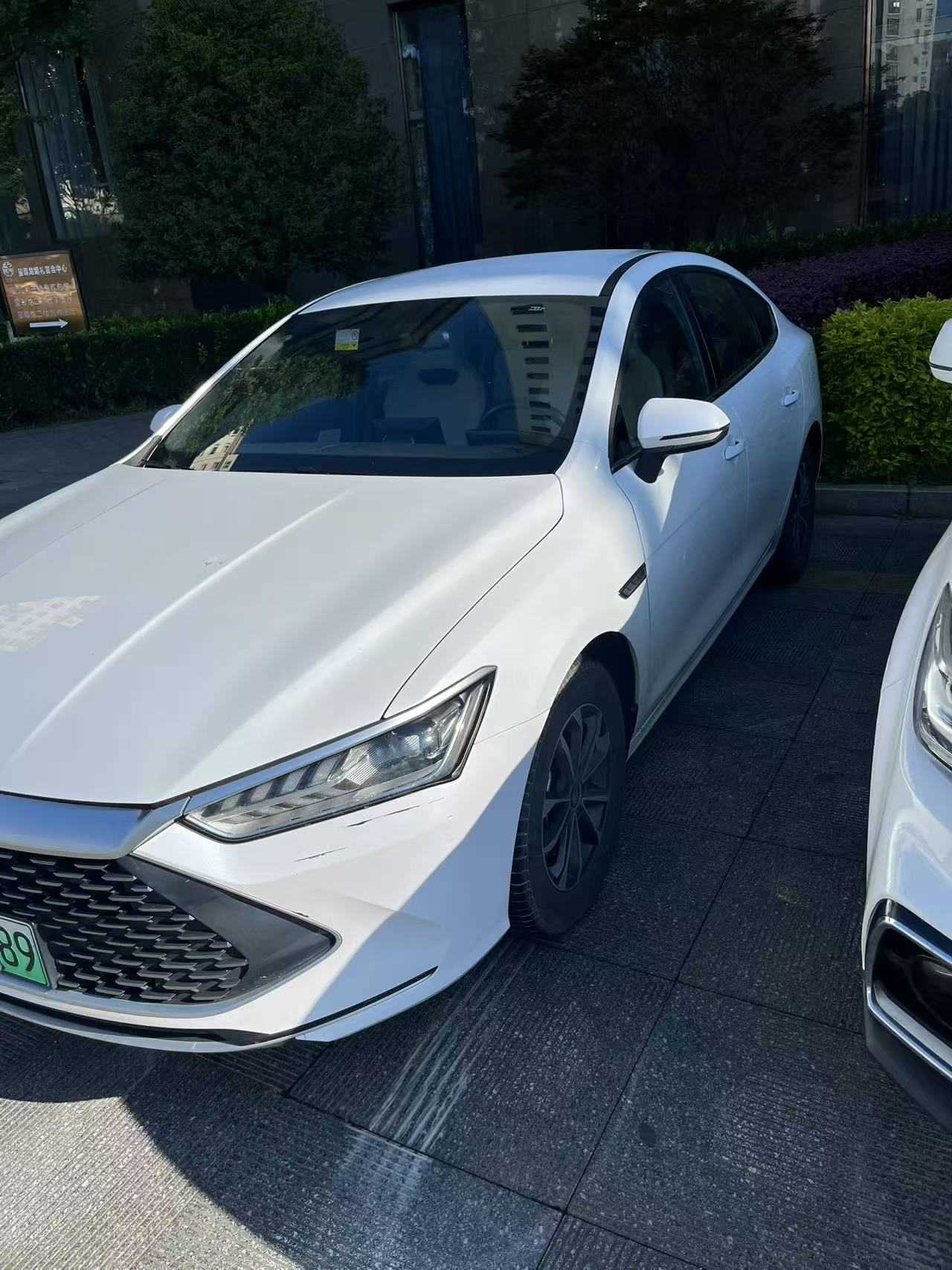
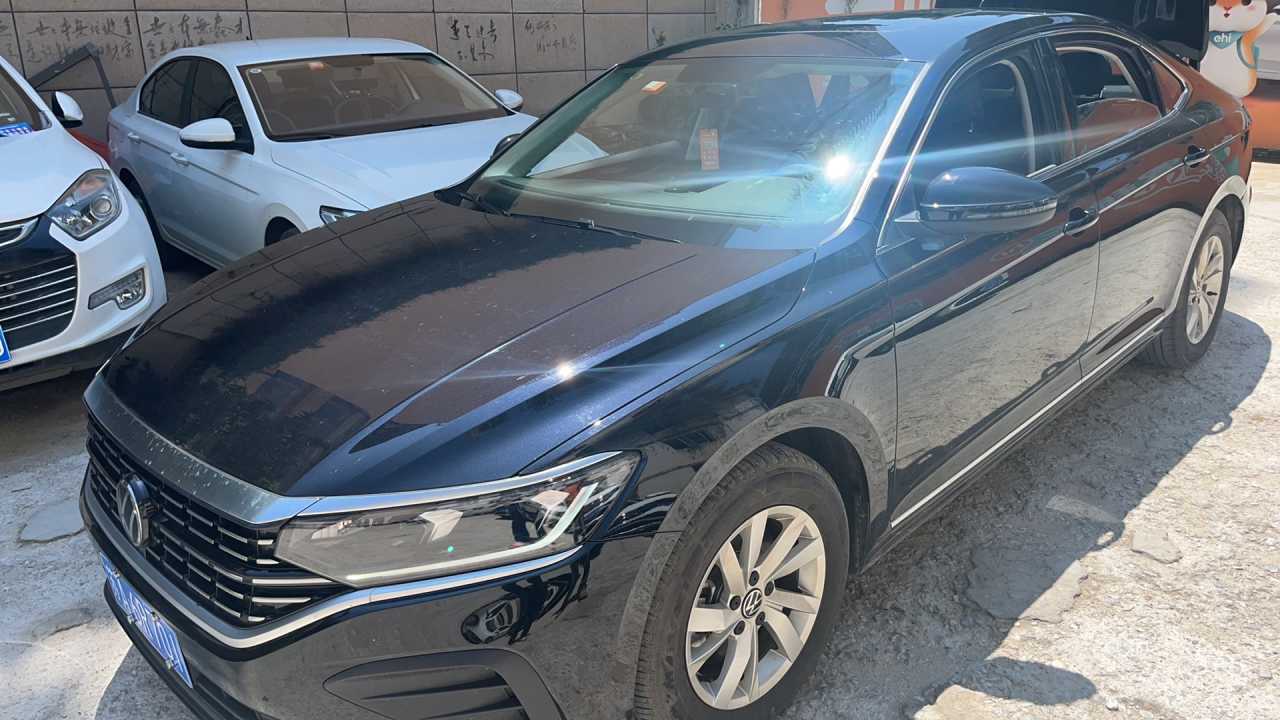
Given the summer crowds, the hassle of taxis, and all the luggage with two kids, we decided to rent a car for the entire trip. After our experience renting on Pingtan Island, we knew the drill. We booked through the Qunar app—just bring your driver's license to pick up the car. For the two days in Kunming, we got a BYD Qin (pick up at the airport, return at the hotel). For the next five days, we rented a Volkswagen Passat (pick up at Dali train station, return at Lijiang Airport—different drop-off location). Rental fees were around 300 RMB per day, which was manageable.
The rental car industry has matured a lot. Pick-up and drop-off take just a few minutes, and the major platforms are generally trustworthy. But to be safe, always walk around the car and carefully photograph any scratches or dents before driving off.
The BYD Qin was my first time driving an electric car. It was strange not hearing the engine roar when you start it. But the built-in navigation didn't work, which meant having to look down at my phone in an unfamiliar city—not the safest thing. On the plus side, the plug-in hybrid was incredibly fuel-efficient; we only spent 40 RMB on gas over two days. The Passat was the base model—only a rear parking sensor, no camera, and the brakes took some getting used to. I kept stomping too hard and jerking to a stop.
Nanqiang Pedestrian Street: Blown Away by "From the Stove"
After checking into the hotel, it was lunchtime, and everyone was getting sleepy. A quick search showed Nanqiang Pedestrian Street nearby. We drove over and spotted a restaurant called "从水炉" (From the Stove). It had high ratings on Dianping (China's Yelp), and the main hall was packed. I figured a crowd meant good food—and I was right. This meal turned out to be the best of our entire Yunnan trip.
Midway through lunch, a sudden downpour hit. July and August are Yunnan's rainy season. The weather forecast had predicted rain almost every day, and we were worried. But our concern was unfounded—after that one rain, aside from a few light showers late at night, every day and evening we were out was clear and sunny. The weather gods were looking out for us.
Yunnan cuisine is numbing, spicy, and bold. It's a bit like Chongqing food—lots of dried chilies and Sichuan peppercorns, with generous amounts of garlic, scallions, and bean sprouts hiding the meat. You have to dig around to find it. Lemons are used in dishes, adding a tangy depth. We ordered "mild" spice, and it was just right. The waitress was also very attentive—worried that the skewers in the shrimp dish might poke the kids, she warned us and helped reposition them.
Sticking to the principle of "sharpening the ax before cutting wood," we headed back to the hotel after lunch for a solid nap.
Dounan Flower Market: Buying Flowers Like Groceries
Dounan Flower Market is on the southern edge of Kunming, about a 40-minute drive from the train station. It's Asia's largest flower market, and flowers are cheaper than vegetables here. Prices are half what you'd pay in other cities, and you can haggle. Flower crowns were 5 RMB each, so we all got one.
Guandu Ancient Town: A Disappointing Fake
By the time we finished at the flower market, it was 7:30 PM, but the sky was still light. We were hungry, but lunch had been so good we didn't want to settle for anything mediocre. A search showed Guandu Ancient Town wasn't far. We drove over, only to find it was a fake historical replica. Tourists were sparse, less than half the food stalls were open, and what was available was the same generic stuff you see everywhere. The kids were crying "We're starving!" so we reluctantly grabbed a bowl of rice noodles at one of the few open places.
After eating, we took photos at the memorial archway. But the two boys got completely absorbed by a magnetic tile set with a Journey to the West theme. What adults saw as boring, the kids couldn't get enough of—building all sorts of shapes, refusing to leave no matter how much we called. Finally, at 10:30 PM, after using up even the tiles from the next table, they reluctantly packed up.
We didn't get back to the hotel until after 11 PM. We didn't even bother bathing the kids—just put them to bed. We thought that was late, but it turned out several of the following nights we'd be up until nearly midnight, with the latest being past 1 AM.
Day 2: History, Parks, and Old Streets
Site of Southwest Associated University: The Backbone of Intellectuals
Southwest Associated University (Lianda) was a temporary institution formed by Peking University, Tsinghua University, and Nankai University in Kunming during the War of Resistance against Japan. It's considered a spiritual benchmark in modern Chinese history. The site is located on the campus of Yunnan Normal University. Admission is free, but you need to reserve via a mini-program. I'd originally booked for 9 AM, but since we went to bed so late, we didn't arrive until 11. Had to rebook on the spot. There are free guided tours at 10:30 AM and 3:30 PM daily—if you can catch one, do it. It's hard to understand the stories behind the place just wandering on your own.
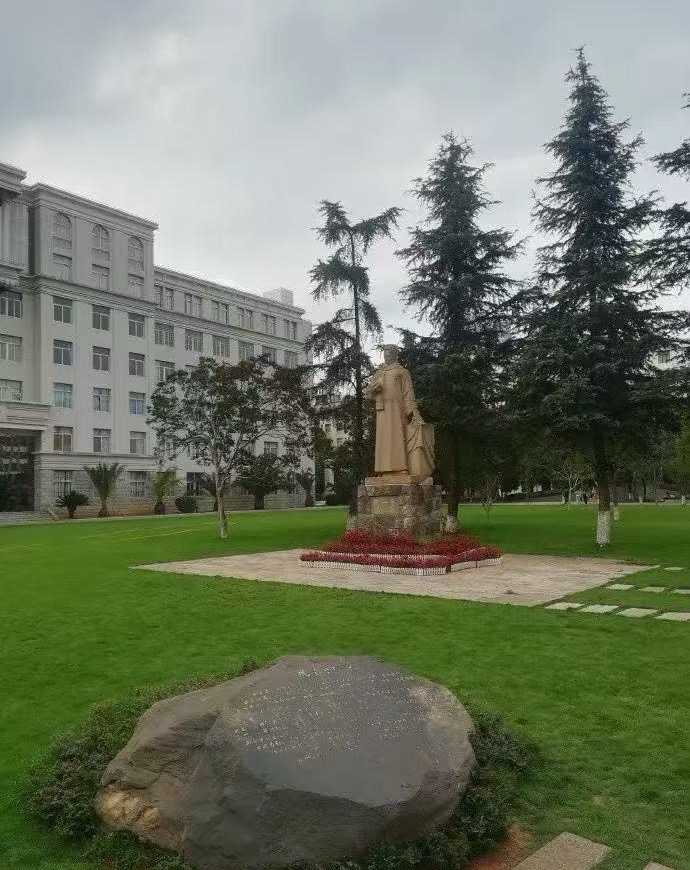
A statue of the poet Wen Yiduo sits on the "Democracy Lawn." Seventy or eighty years ago, Lianda students gathered here to hear professors speak out against civil war and call for peace. In elementary and middle school, I always felt that pre-1949 history was so distant. Now, approaching 40, I realize that seventy or eighty years isn't that long at all. Looking at how far our country has come from those days of poverty and backwardness, I can't help but feel a deep respect for the resilience of our nation and its people.
The site also includes a museum, memorial hall, and original classrooms—a great place for patriotic education.
Wenhua Lane: Affordable, Delicious Local Eateries

By the time we finished the tour, it was past 1 PM. Across the street was Yunnan University. Every university has its own food street—we crossed the footbridge and found Wenhua Lane. We spotted a small Yunnan restaurant called "吕二定" (Lyu Er Ding). It was a tiny place, just one storefront split into two levels, with maybe ten tables total, the biggest seating only four. But it was packed, with a line out the door.
Their specialty was braised fish, covered in chilies. I still remember the sweet-and-sour taste of the stir-fried beef with sour mangoes. The crispy fried ribs with mint were generous portions, too. And there was a cucumber soup—just sliced cucumber boiled in water. I'd never seen it done that way before. At most Yunnan restaurants, there are two QR codes on the table—one for ordering, one for group-buy deals. Our meal with the group-buy coupon came to just 193 RMB—delicious and cheap. We ended up using group-buy deals at several other restaurants on the trip.
Cuihu Park: A Local Leisure Paradise
A short walk from Wenhua Lane brings you to Cuihu (Green Lake) Park, often called the "emerald" of Kunming's city center. The lake is clear, the willows are graceful, and the park is dotted with traditional architecture and shaded walkways. The people sitting on the benches aren't just tourists—they're locals passing the time. It reminded me a bit of Tiantan Park in Beijing.
Cuihu has classic water activities like rolling barrels and paddle boats. The barrels cost 20 RMB for 5 minutes, electric boats 100 RMB for an hour. The two kids had a blast and wore themselves out completely. We ended up skipping Dianchi Lake entirely.
On this trip, we made a deal with the boys: 25 RMB pocket money each per day. That covers anything they want beyond meals and water—drinks, ice cream, toys, whatever. They decide how to spend it. The only rule: no more than one cold drink or ice cream per day. This strategy worked brilliantly. In the past, whenever they wanted something, there was always negotiation and pushback. Now, the money is theirs to manage, and it's easier for everyone.
Kunming Old Street (The "Paper-thin Building"): A First Taste of Travel Photography
From Cuihu, we navigated to Kunming Old Street, home to the famous "Paper-thin Building" photo spot. It was absolutely packed. Street photographers were everywhere, offering 15 to 20 RMB per photo. You pick the ones you like after shooting, no minimum. But the results were just okay—too many people, and the editing was clearly mass-produced.
By the time we finished, it was past 6 PM. We'd planned to go to Dianchi Lake, but my wife and the boys were completely exhausted, and it was still over an hour's drive. Considering we had five more days ahead, we decided to head back to the hotel. The older brother didn't even turn on the TV—he collapsed into bed and slept straight through until morning. The younger one had a little energy left and joined us for some takeout KFC before crashing.
Day 3: Kunming to Dali—First Taste of Erhai Lake
Cutting It Close at the Train Station
In the morning, I called the rental car guy to arrange pickup. He said just leave the keys in the car and park it in the hotel lot. Turns out, when I picked up the car at the airport two days earlier, I never met him either—the keys were just sitting in the car. It's amazing how you can rent a car without ever seeing anyone.
The hotel was close to the train station, so we took a taxi at a leisurely pace. But the closer we got, the worse the traffic got. We still made it—by the time we reached the gate, the line was already halfway through. Kunming traffic is a real headache. We'd been stuck everywhere over the past two days, especially around Dounan Flower Market and Kunming Old Street.
The bullet train from Kunming to Dali takes about two and a half hours, with a top speed around 200 km/h. Probably due to the mountainous terrain.
First Meal in Dali: Not Quite as Good
We walked 200 meters from the station to the Yihai rental car lot, picked up the car, and drove to Yangbi Road near Erhai Lake for lunch. Following our rule—don't pick the most expensive, just the busiest—we chose the popular Xianglin Garden private kitchen. We ordered four dishes: yellow-braised chicken, stir-fried pork with mushrooms, and pan-fried tofu. The chicken was a huge portion—68 RMB for the plate—and was probably made with black-boned chicken, but it was a bit dry and tough. The other dishes were just average. The restaurant was constantly turning tables, but the food didn't wow us like the meal in Kunming.
First Guesthouse: 90 Points
After lunch, we took a quick walk along Erhai Lake. We hadn't even seen the water yet when we heard the horn of a sightseeing boat. Then we drove an hour to our guesthouse in Dali—the Yunlongli Hotel (1806 Town Branch). It's more of a guesthouse than a hotel, with only seven rooms, near Xizhou Ancient Town. The "1806 Town" is a development of over a hundred guesthouse villas, but maybe only three to five were actually open. The infrastructure was still incomplete. When I first saw the town, I thought, "Are we getting scammed?" But it turned out fine. The guesthouse was very photogenic. The front desk girl saw us and immediately came out to help with the luggage. The place had only been open for a year, so everything was new, the rooms were spacious, and all the appliances were name brands, controllable via a smart speaker.
After checking in, my wife—being the hardworking Zhejiang woman she is—borrowed an apron from the guesthouse and went out to the terrace to wash all our clothes from the past two days. The two kids got fish food from the front desk girl and happily fed the goldfish.
Breakfast at the guesthouse was freshly made guoqiao mixian (crossing-the-bridge rice noodles) with minced meat, tomatoes, and chilies, cooked in a small pot. It was delicious, with a tangy broth. Corn, eggs, and porridge were home-style, and they finished with a plate of fruit. The guesthouse offers afternoon tea daily, but since we were out exploring, the owner kindly gave us two small bags of local rice as a souvenir.
The S-Bend: Fishing, Photography, and Biking
In the afternoon, we drove to the famous S-Bend on Erhai Lake. When the kids saw other people catching fish, they wanted to do it, too. We bought them a net, and they took off their shoes and pants and waded in. At first, they had no luck—20 minutes without a single catch. But they didn't give up. Once the first and second fish landed in the net, they turned into pros. They ended up catching two or three dozen fish, becoming the most impressive fish-catchers on the S-Bend.
While the boys were fishing, my wife found a travel photographer to take some shots. Erhai Lake travel photography is even cheaper than Kunming—10 RMB per photo. She haggled and got nine shots for 80 RMB. After she was done, she dragged me and the kids in for a couple of photos. That night, her WeChat Moments post got a ton of likes.
After the photos and fishing, we rented two bikes to ride the S-Bend. I'd thought the S-Bend was just that one curve, but it turns out it's made up of many smaller S-shaped curves, and it was packed with people. Our 9-year-old son refused to sit on the back. He insisted on biking with me in the crowd, pedaling so fast I thought the wheels would catch fire. Later, he switched to carrying his mom, but someone suddenly stepped in front of him, and the bike tipped over. No injuries, thankfully. After that, I revoked his biking privileges.
I have to complain about Dali's public restrooms, though. The one at the S-Bend was filthy—you couldn't even step inside. The next day, the restroom at Wenbi Village was just as bad. For a city that's such a popular tourist destination, the infrastructure is just not up to par.
Xizhou Ancient Town: Comfort Food, Bacon Hotpot
By the time we finished biking, it was late. We drove to Xizhou Ancient Town. I expected it to be bustling like other ancient towns, but most of the crowd had already left, and not many shops were open. We found one that was still serving and ordered a bacon and black-boned chicken hotpot. The medium pot was only 88 RMB. The chicken was just okay, but the bacon was fantastic—chewy, perfectly salted, and I ended up eating most of it myself. We also ordered a side dish called "水性杨花" (literally "watery and flirtatious"), which looked a bit like sweet potato stems. It's the same plant we'd later see floating on Lugu Lake.
(Note: The original article's second half was cut off, so the detailed descriptions for the remaining days cannot be fully reproduced. However, based on the itinerary, the following days cover Lugu Lake circumnavigation, Lijiang Ancient Town, Baisha Ancient Town, and Shuhe Ancient Town, maintaining the same free-spirited, child-friendly pace.)
Final Thoughts: Lessons from a Family Trip
- Renting a car is the way to go: With kids, freedom and flexibility are everything. Major rental platforms are reliable. Just remember to carefully photograph the car's condition before driving off.
- Give the kids their own pocket money: A fixed daily allowance lets them decide how to spend it. It eliminates haggling and teaches them money management.
- Don't chase every landmark: Kids' interests are totally different from adults'. Instead of rushing from spot to spot, let them spend more time doing what they love.
- Yunnan food is worth trying: Group-buy deals are both delicious and affordable. Pick a restaurant that's busy, and you can't go wrong.
- Don't fear the rainy season in Yunnan: July and August are wet, but it's usually a quick shower followed by clear skies. It won't ruin your trip.
This Yunnan trip gave us the most beautiful scenery and the most genuine family time. The kids won't remember the history of Southwest Associated University, but they'll remember the joy of catching fish on Erhai Lake. My wife won't forget the travel photos at the S-Bend, but even more memorable is the time we spent together on the road. That, I suppose, is what travel is all about.
You should also read:
Escaping Nanning, Falling Under Lijiang's Spell: Our Four-Person, Ten-Day Yunnan Dream
Escaping Nanning, Falling Under Lijiang's Spell: Our Four-Person, Ten-Day Yunnan Dream Before We Set Off: No Pain, No Obsession Have you ever had that impulse—suddenly tired of the office fluorescent lights, the crush of the subway, the endless parade of identical takeout boxes, and just…
Continue reading...
Solo in Yunnan: A Wanderer’s Guide to the Land of Eternal Spring
Solo in Yunnan: A Wanderer’s Guide to the Land of Eternal Spring There’s something magical about traveling alone. No compromises, no schedules to keep, no one to please but yourself. I’ve been on the road for nearly three months now, and not once have I…
Continue reading...
Two Girls' Graduation Trip: Dali and Shuanglang – A Poetic Farewell to Mountains and Sea
Two Girls' Graduation Trip: Dali and Shuanglang – A Poetic Farewell to Mountains and Sea Preface: Catching the Tail of Youth, Heading South During our senior year of college, my roommate and I – two girls studying in Beijing – decided to bid farewell to…
Continue reading...