2025 Summer Yunnan Escape Guide: The Cool Hidden Gem in Honghe Prefecture – Gejiu, the Tin Capital
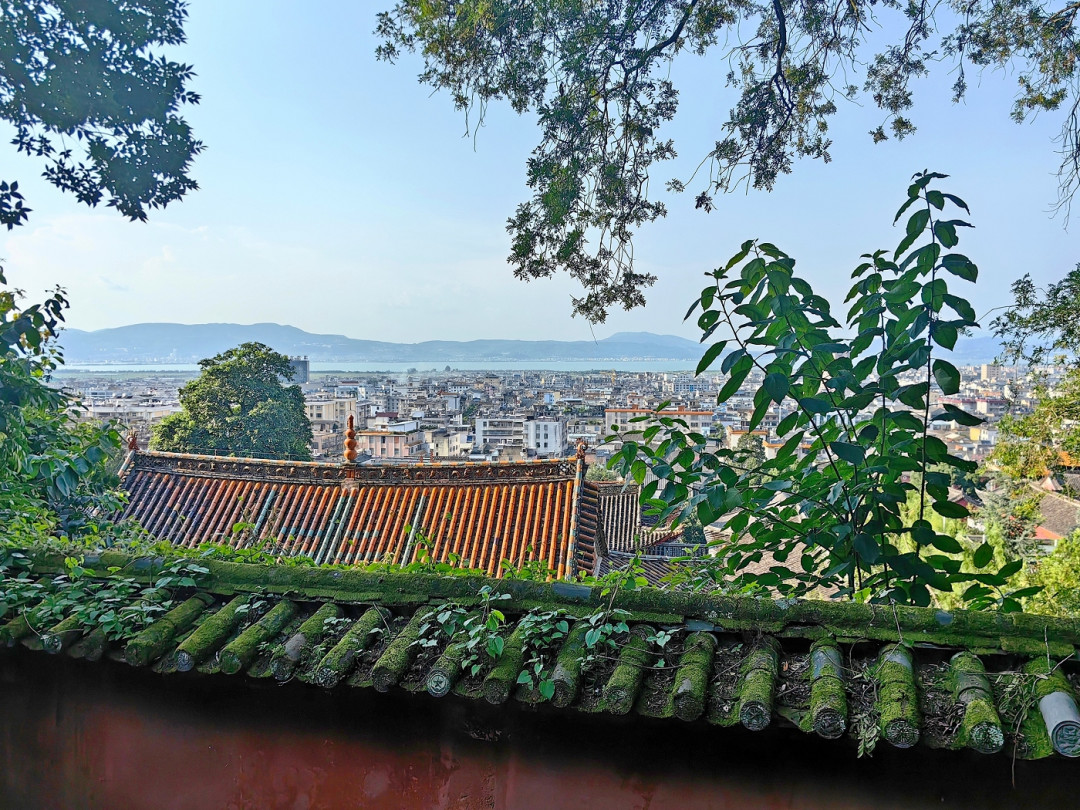
2025 Summer Yunnan Escape Guide: The Cool Hidden Gem in Honghe Prefecture – Gejiu, the Tin Capital
Introduction: When Chengdu Hit 40°C, I Found a 23°C Summer
In late July 2025, the sky over Chengdu felt like it was on fire. For ten consecutive days, temperatures soared to 38–40°C, and even air conditioners began humming with exhaustion. On every street corner, people talked about only one thing: "Where do we go to escape the heat?"
The Yunnan-Guizhou Plateau naturally became the top choice. Liupanshui, Bijie, Zhaotong, Qujing, Mile – these names kept popping up in heat-escape guides. But there was one place rarely mentioned, hidden among the mountains of Honghe Prefecture. Once glorious, now low-key, it boasts a stunningly cool summer.
That place is Gejiu – a city that rose with tin, declined with tin, and has now been reborn thanks to its climate.
Gejiu: A Forgotten "Tin Capital" Turned Discovered Summer Sanctuary
From "Tin Capital" to Summer Retreat: A City's Fateful Transformation
Gejiu's history is a legend of tin. It was once China's largest tin-producing region, earning the title "World Tin Capital." In 1950, Gejiu was elevated to a provincial-level city; in 1958, the Honghe Prefecture government moved in; in 1988, it became a separately listed city under Yunnan Province – those were Gejiu's glory days.
However, as tin mining output gradually declined, the Honghe Prefecture government relocated back to Mengzi in 2003, and Gejiu was downgraded to a county-level city. This decline in status brought lower prices, a shrinking population, and a slower pace of life. But as the saying goes, "a loss may turn out to be a gain." This very "downgrade" allowed Gejiu to retain a rare tranquility and leisure. Combined with its得天独厚 (uniquely favorable) climate, it has become an ideal summer retreat.
A Cool Miracle on the Tropic of Cancer
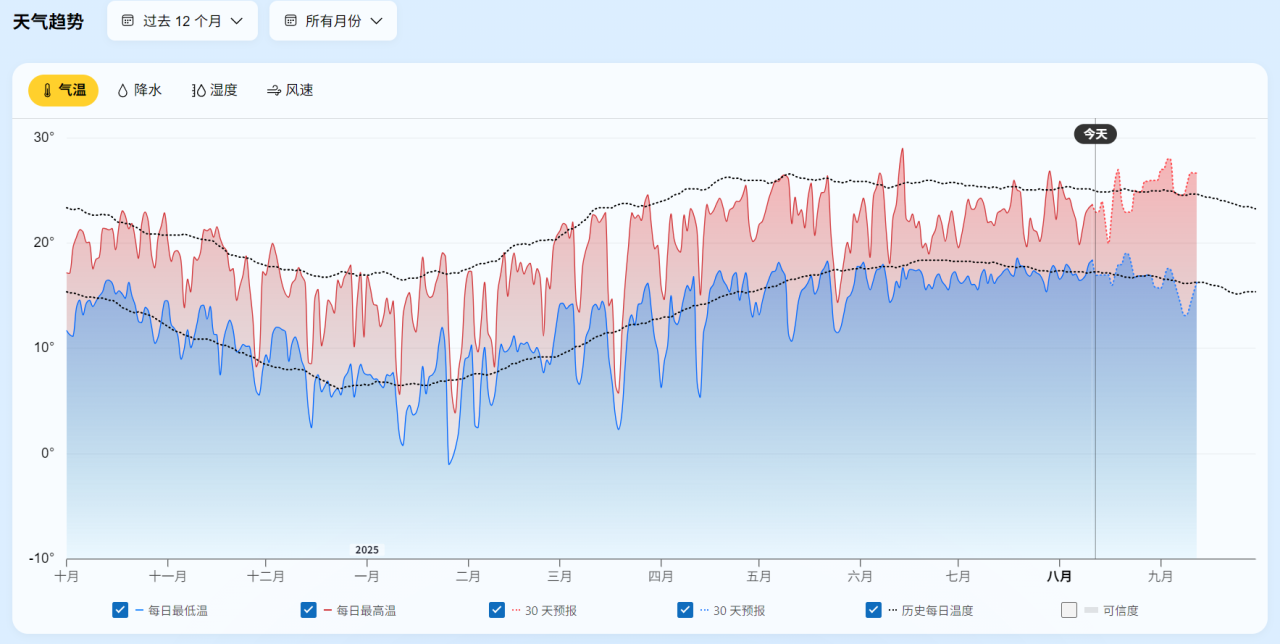
Gejiu sits on the Tropic of Cancer, with an average urban elevation of about 1,685 meters – roughly 400 meters higher than Mengzi. Flanked by mountains, this topography keeps summer highs at just 26°C, with average maximum temperatures around 23–24°C, about 6°C cooler than Mengzi. While Chengdu residents struggle through 40°C heatwaves, Gejiu locals might be strolling along Jinhu Lake in light jackets.
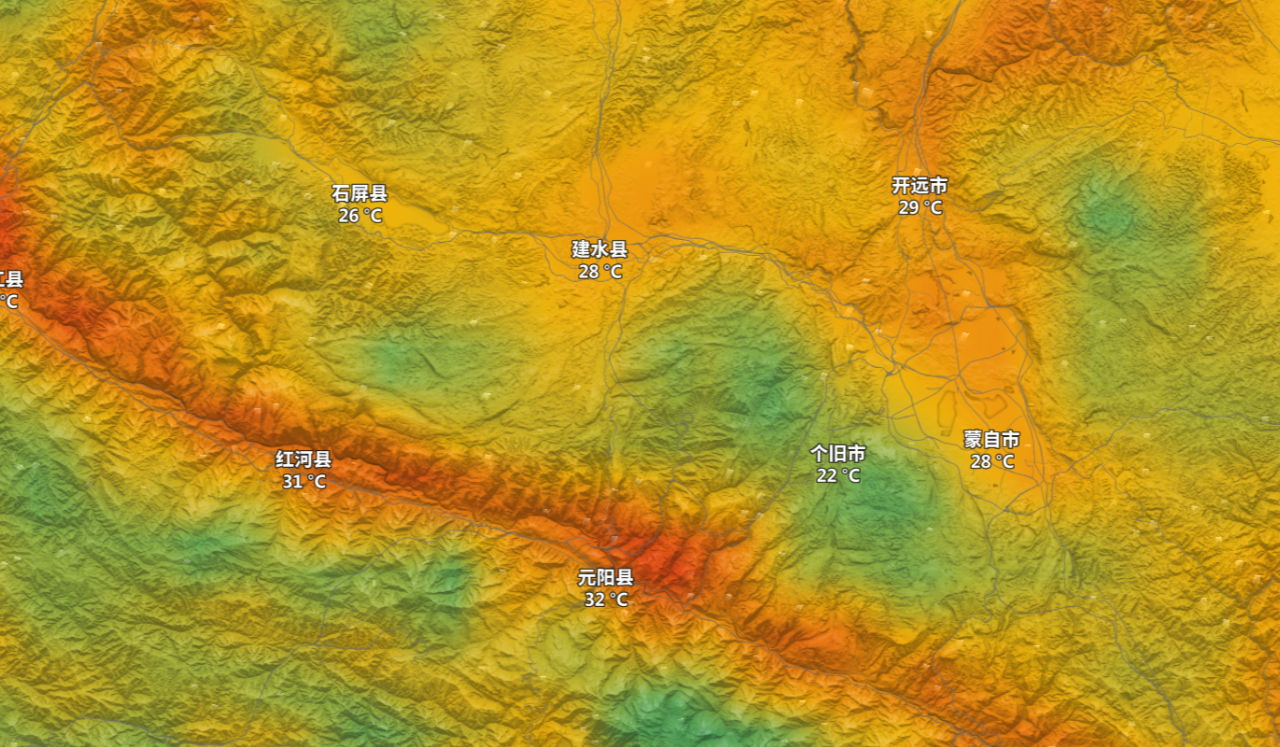
A heat map from August 9, 2025, clearly shows that at the same time, Gejiu's temperature was 5–6°C lower than Mengzi's. This isn't a fluke – it's a cool miracle created by geography and elevation working together.
Road Trip Guide: From Chengdu to Gejiu – A Journey Through Coolness
Three-Day Slow Route: Travel, Explore, and Savor Every Moment
Day 1: Chengdu → Zhaotong (488 km, about 5 hours 50 minutes)
Departing Chengdu, you'll reach Zhaotong, a city on the Yunnan Plateau, on the first day. It's already a cool place here – streets are packed with heat-escaping crowds filling small hotels and sidewalks. I recommend staying near Wanghai Lake for a quieter experience than the old town area.
Day 2: Zhaotong → Tonghai (445 km, about 5 hours 15 minutes)
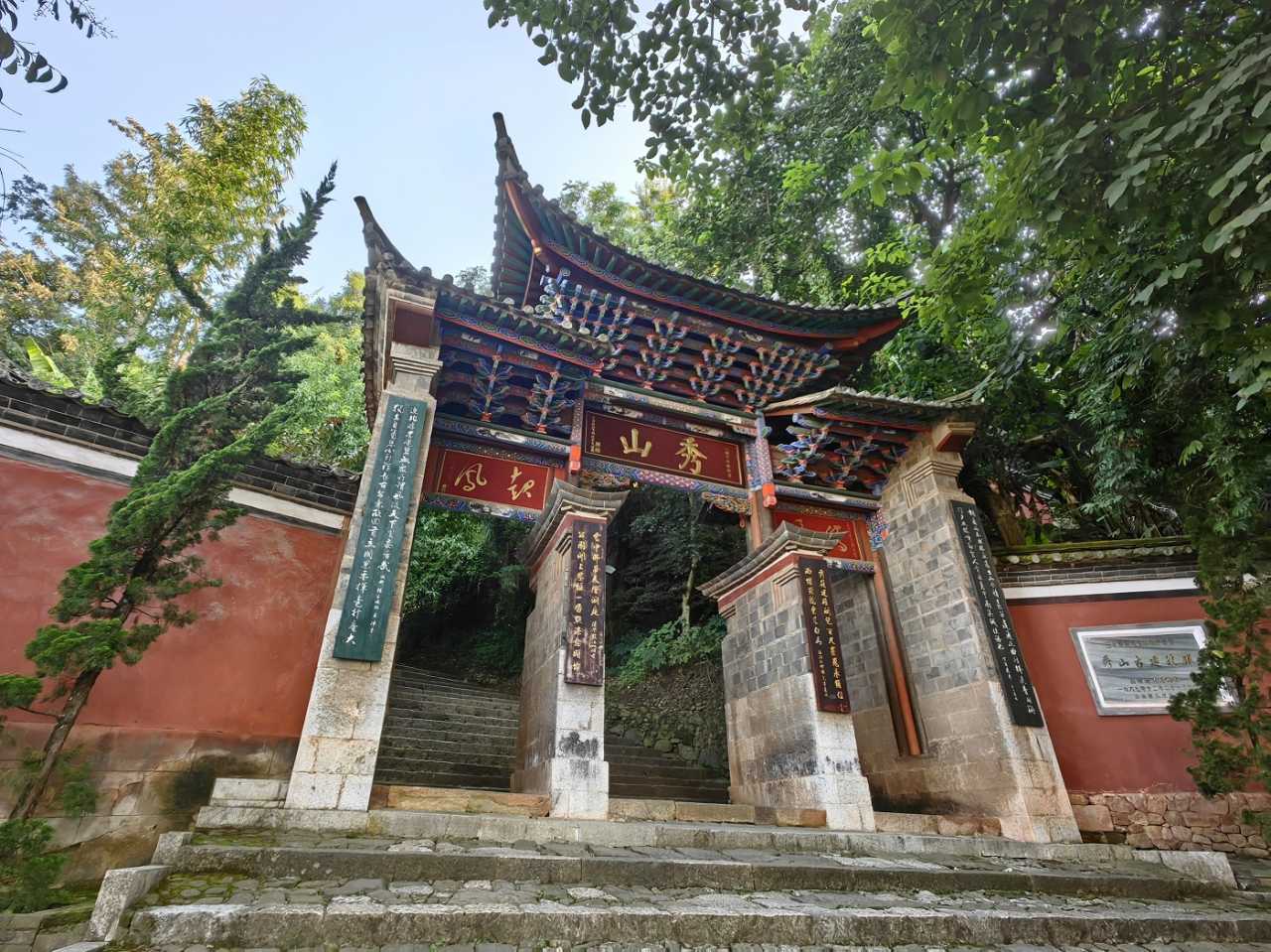
Tonghai County, under Yuxi City, isn't famous in Yunnan but hides two treasures: Xiushan (one of Yunnan's four great mountains) and Qilu Lake (one of the province's nine plateau lakes). Spend a day exploring Xiushan Park and experiencing the unique charm of the "mountain-city-lake" landscape.
Day 3: Tonghai → Gejiu (134 km, about 1 hour 45 minutes)
Pass through Jianshui along the way and visit the Shuanglong Bridge, Jianshui Confucian Temple, and Chaoyang Gate. The Jianshui Confucian Temple, first built in 1285 (Yuan Dynasty), is second only to Qufu's and Beijing's Confucian Temples in scale and preservation. It was listed as a national key cultural relic in 2001. Compared to Nanjing's Fuzi Temple, Jianshui's Pan Pool is enormous – arguably the largest in the country.
Two-Day Direct Route: Efficiency First
If time is tight, you can do it in two days:
Option 1: Chengdu → Huize (600 km, about 6 hours 50 minutes) → Gejiu (432 km, about 5 hours) Option 2: Chengdu → Zhaotong (488 km, about 5 hours 50 minutes) → Gejiu (554 km, about 6 hours)
I personally recommend Option 1 – go farther on day one and take it easier on day two.
Cost Reference
For the three-day slow route (via Tonghai and Mengzi), covering about 1,200 km, tolls and fuel come to around 1,300 RMB, averaging about 1.1 RMB per kilometer.
Train Travel: Another Way to Arrive
Chengdu → Kunming
| Train Type | Duration | Fare |
|---|---|---|
| D (EMU) | 8 hours | Second class 264 RMB, First class 424 RMB |
| G (High-speed) | 6 hours | Second class 522 RMB, First class 850 RMB |
| Z (Direct) | 8.5 hours | Hard sleeper 207 RMB, Soft sleeper 324 RMB (overnight, arrives morning – tickets hard to get) |
| K (Express) | 10.5 hours | Hard sleeper 207 RMB, Soft sleeper 324 RMB (not daily) |
Kunming → Gejiu
C (Intercity EMU): 2 hours 40 minutes, second class 64 RMB. Four departures daily (8:25, 12:52, 13:25, 18:35).
Alternatively, take a D train from Kunming to Mengzi (Honghe Station): 1 hour 30 minutes, second class 68 RMB, with more frequent departures.
Stations to City Center
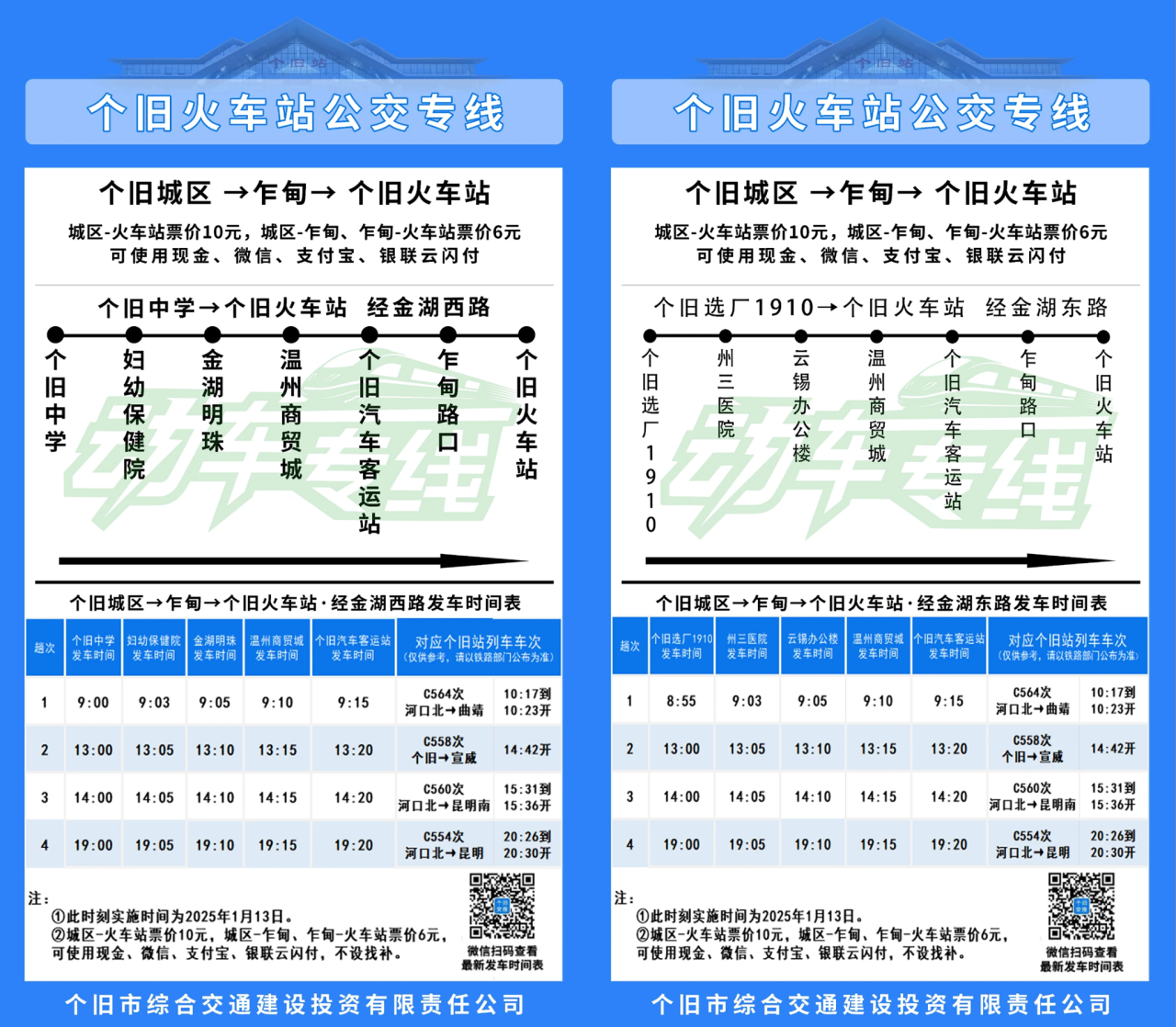
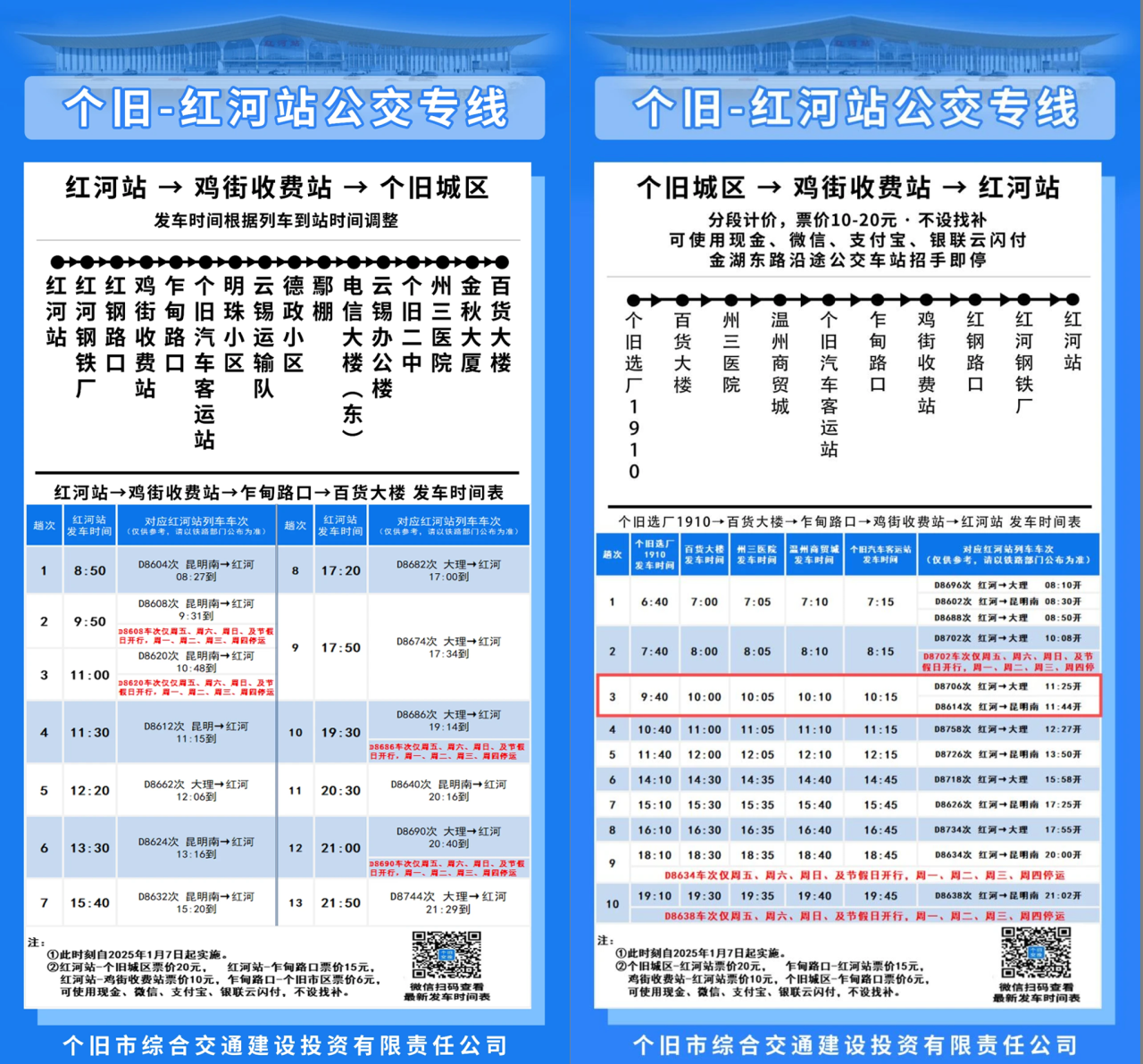
- Gejiu Station: Special bus line to Gejiu Middle School, passing Jinhu West Road or Jinhu East Road. Fare: 10 RMB.
- Honghe Station: Special bus line to Department Store Building, passing Gejiu Bus Station. Fare: 15 RMB.
Departure times align with train arrivals. Check the latest schedule via WeChat by searching "个旧交投公司" (Gejiu Transportation Investment Company).
Accommodation Guide: Lakeside or City Center?
Accommodation for Self-Drivers
For road trippers, parking is key. We chose the Shangyuan Hotel near Jinhu Lake – convenient parking, right across from the lake. A lake-view room on Qunar costs 147 RMB, but it's right next to the road and noisy from passing cars; a similar standard room at the back costs 130 RMB but is unavailable on weekends. Every day, we saw long-term guests buying groceries upstairs – mostly locals from tropical areas like Honghe and Yuanyang counties escaping the heat.
Accommodation for Non-Drivers
If parking isn't an issue, your options widen. The most convenient area is near the Department Store Building in the city center – close to the station bus line, plenty of restaurants, and an easy walk to Jinhu Lake.
Over 200 RMB: Generally not recommended Over 100 RMB: Thank Inn (with breakfast), Home Inn, Liangyou, Weiye, Yitong, etc. Under 100 RMB: Jinglan, Jinyuan, Kailai, Sunshine, etc.
Special Note
Most hotels in Gejiu don't include breakfast – even the four-star Century Plaza Hotel. Only a few chain hotels like Hanting and Thank Inn offer it. I recommend bringing a small electric cooking pot to buy eggs and milk from the supermarket for breakfast.
Dining Guide: Solving the "Dinner Problem" in Gejiu
A Peculiar Dining Scene
During our stay in Gejiu, we noticed an interesting quirk: many noodle shops only serve breakfast and lunch, closing by 2 PM. For example, the Chongqing Xiaomian (Chongqing-style noodles) shop next to Shangyuan Hotel was packed in the morning, but we never managed to eat there for dinner.
Breakfast Recommendations
- No. 53 Xinjie Old Shanghai Wonton (新街53号老上海馄饨): Clean and hygienic, freshly made on the spot. Noodles served from breakfast until 2 PM.
- Old-School Traditional Thousand-Layer Crispy Baozi Shop on Xinjie (新街上的老牌传统千层破酥包子店): Long queues in the morning, filled with locals. Fresh pork buns are 3.5 RMB (0.5–1 RMB more than regular), but worth the wait.
- Regular baozi shops: Buns cost 2.5–3 RMB, but the eggs are usually long-boiled tea eggs. Better to bring your own electric pot for fresh eggs.
Lunch Recommendations
1. French Building Restaurant (法国楼餐厅) (at the former Gebilinping Railway Company site) - Elegant atmosphere – one of Gejiu's best. - Recommendations: Squirrel Fish (松鼠鱼, sweet and sour fish), Tomato with Loofah (番茄丝瓜). - Cost for two: 100 RMB, 82 RMB after Meituan coupons.
2. Qiezi Qiaqia (茄子恰恰) (No. 4 Wuyi Road) - Yunnan creative cuisine, specializing in Crispy Little Duck (脆皮小麻鸭). - Recommendations: Chicken with Termite Mushroom Stew (小鸡枞焖鸡, mushroom aroma, tender chicken), Dry-Fried Cauliflower (干烧花菜). - Cost for two: 82 RMB, save 5 RMB with Meituan coupons.
3. Qi Coffee Garden Restaurant (柒·咖啡花园餐厅) (Jinhu Lake) - The setting is like a food stall, but business is booming. - Recommendations: Innovative Pineapple Braised Pork (创新菠萝红烧肉, sweet and sour pineapple, slightly fatty pork belly), Stir-Fried Wood Ear Mushroom with Yam (木耳炒山药). - Cost for two: 99 RMB, 88 RMB after Meituan coupons.
4. Haoke Fengqing Restaurant (好客风情餐厅) (No. 101 Renmin Road) - Elegant and quiet, few people at lunch. - Recommendations: Passion Fruit Golden Soup Fish Fillets (百香果金汤鱼片, tangy and delicious), Stir-Fried Vegetable Tips (素菜炒瓜尖). - Cost for two: 79 RMB, no coupons available. - Western options: pasta 26 RMB, small pizza 29 RMB, regular fried rice around 15 RMB.
5. Xidu Hotel (锡都饭店) (No. 48 Ronglu Street) - Budget-friendly, average 17 RMB per person. - Serves snacks, fast food, specialty dumplings, buns, and stir-fries. - Hours: Breakfast to 2 PM, dinner 5–7 PM. - Convenient for visitors near the Department Store Building.
Dinner Recommendations
- Niu Dada Small Pot Rice Noodles (牛大爹小锅米线): Popular, small portion 9 RMB, kids' portion 6 RMB.
- Yuanji Yun Dumplings (袁记云饺): National chain, consistent taste, small wonton portion 15 RMB.
A Noodle Lover's "Self-Rescue Plan"

If you love noodles, Gejiu might not fully satisfy you. I suggest buying semi-dry noodles online (more moisture than dry noodles) and Chongqing-style mixed sauce (豌杂面臊子, less than 3 RMB per 50g packet). Bring a mini electric pot (300–600W) – boil for 3 minutes and you're done. Use the pot for eggs in the morning and noodles at night – two uses in one.
Leisure in Gejiu: Jinhu Lake, Laoyin Mountain, and a Century-Old Railway
Jinhu Lake: The City's Heart
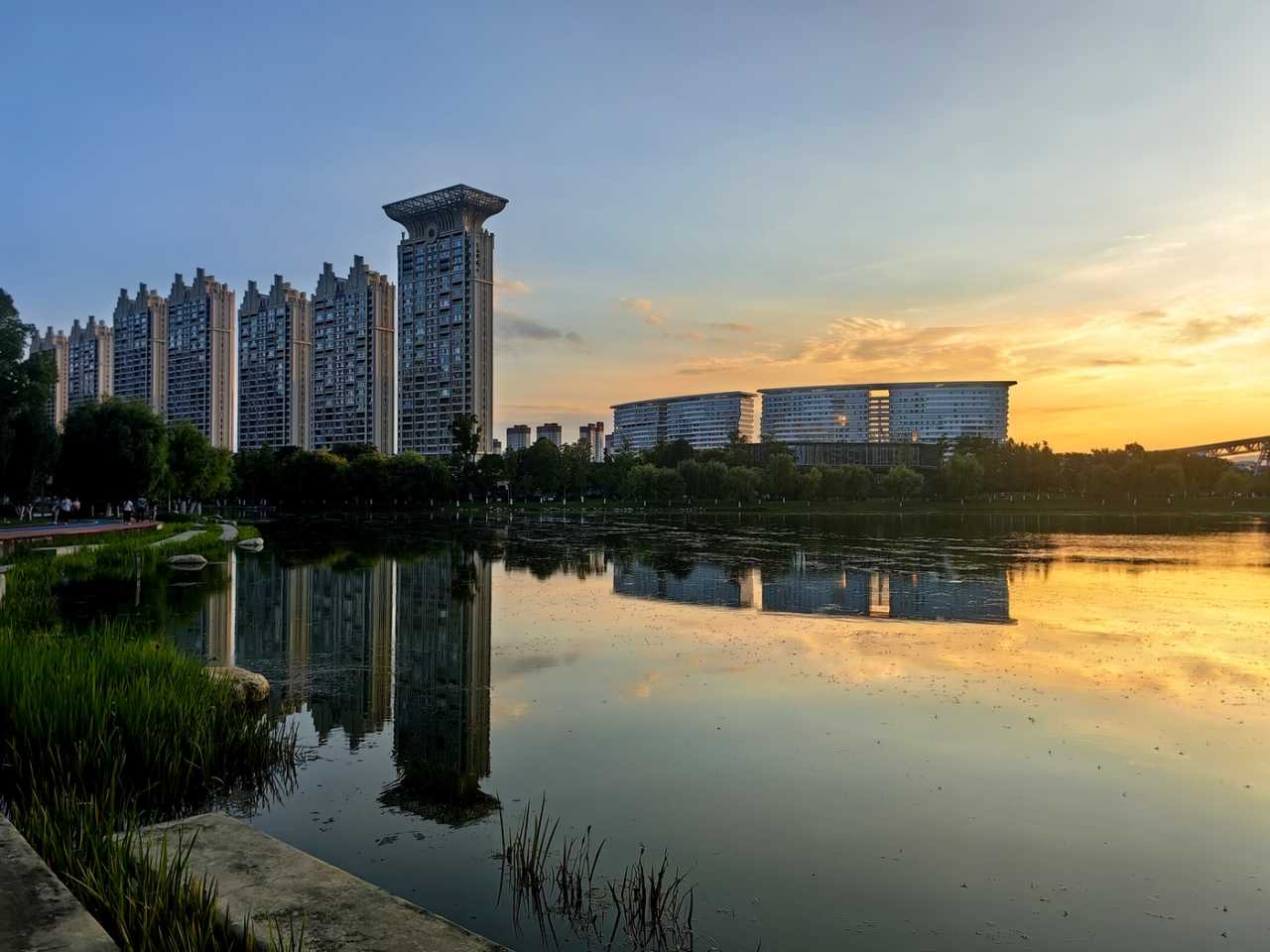
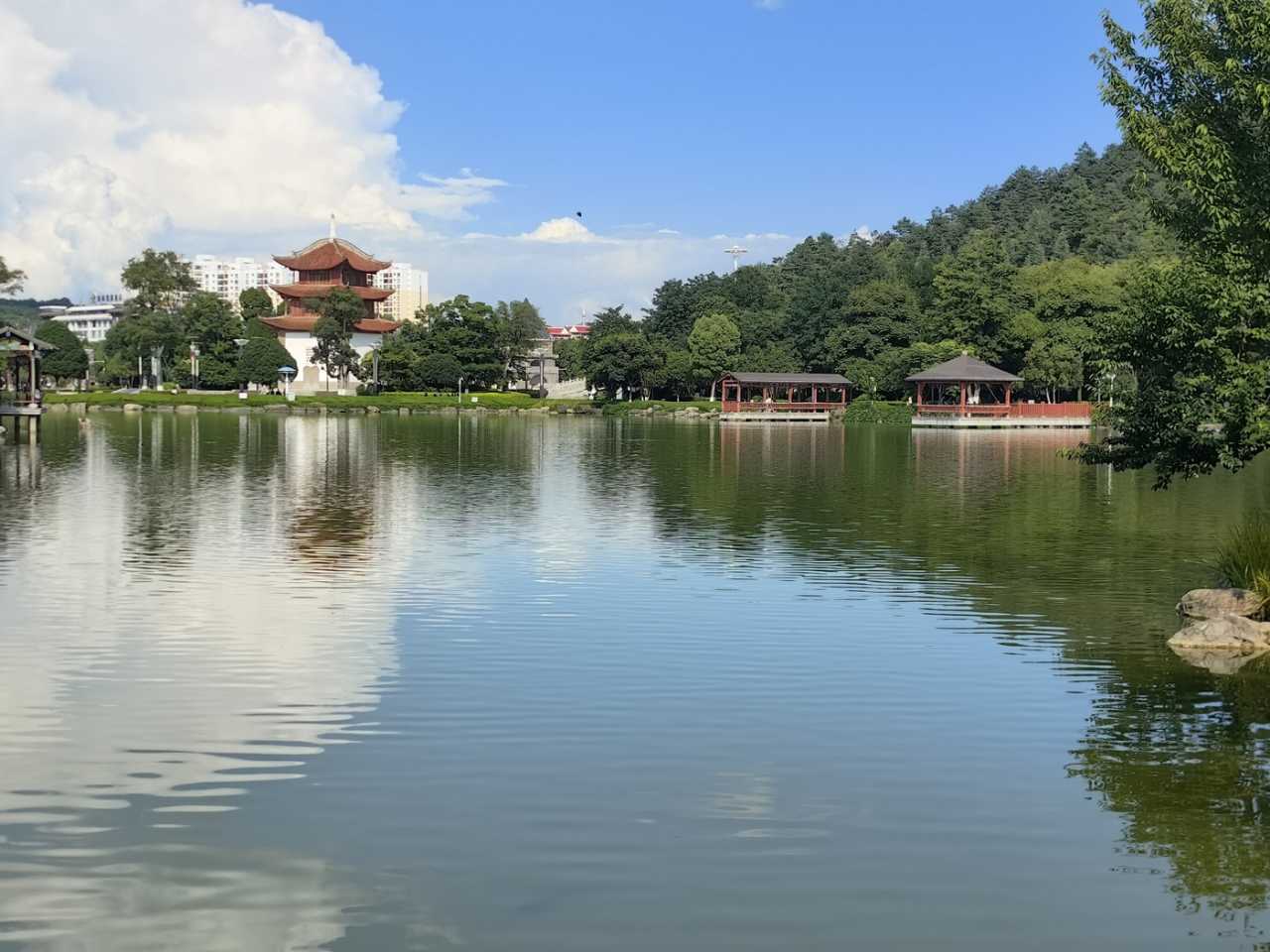
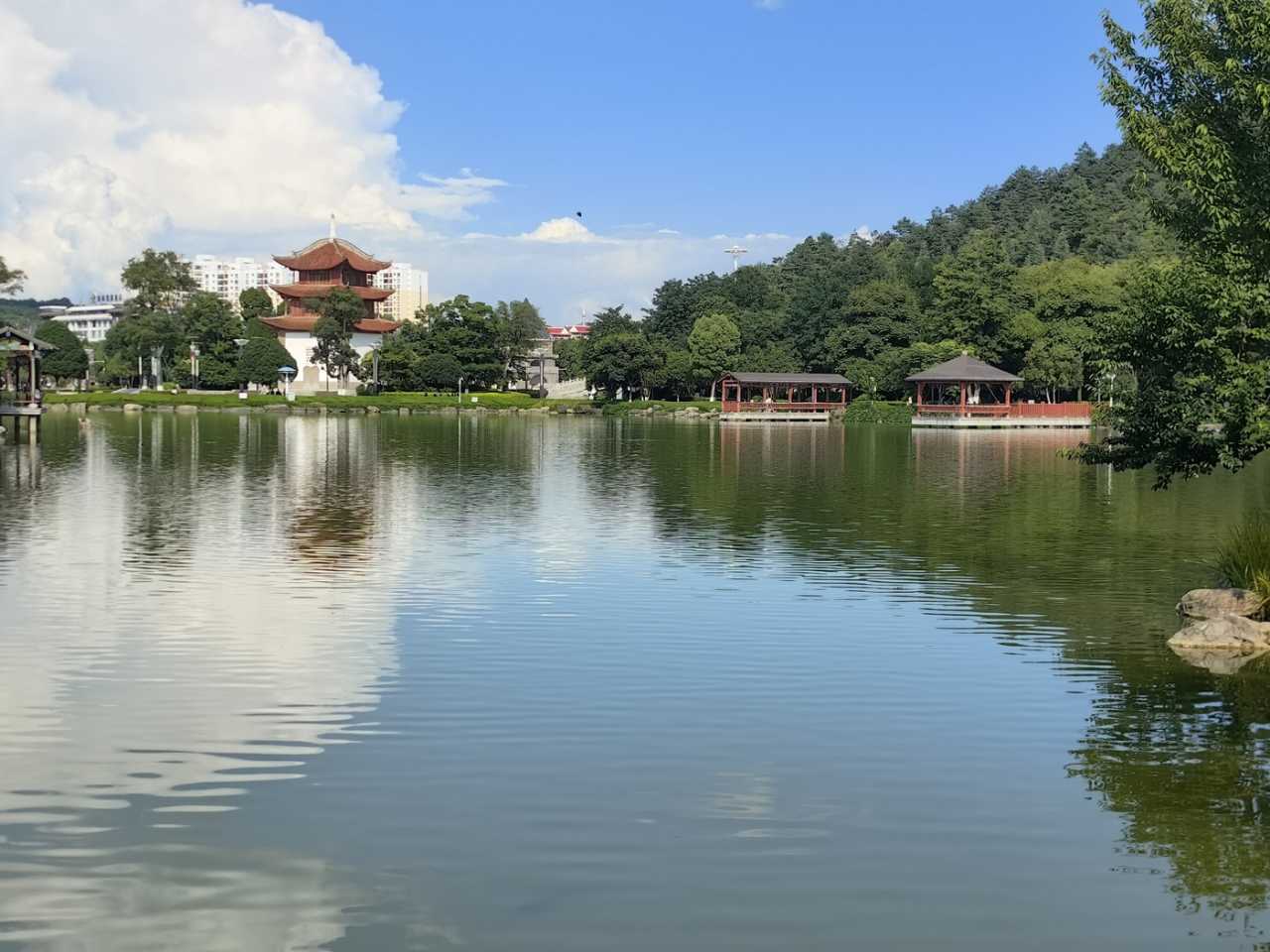
Gejiu's city center is compact – everywhere is within walking distance. A full loop around Jinhu Lake is 4 km. At a pace of 0.6 meters per step, that's 6,666 steps – just the right amount of exercise.
- Daytime: Sparkling ripples or mirror-like stillness.
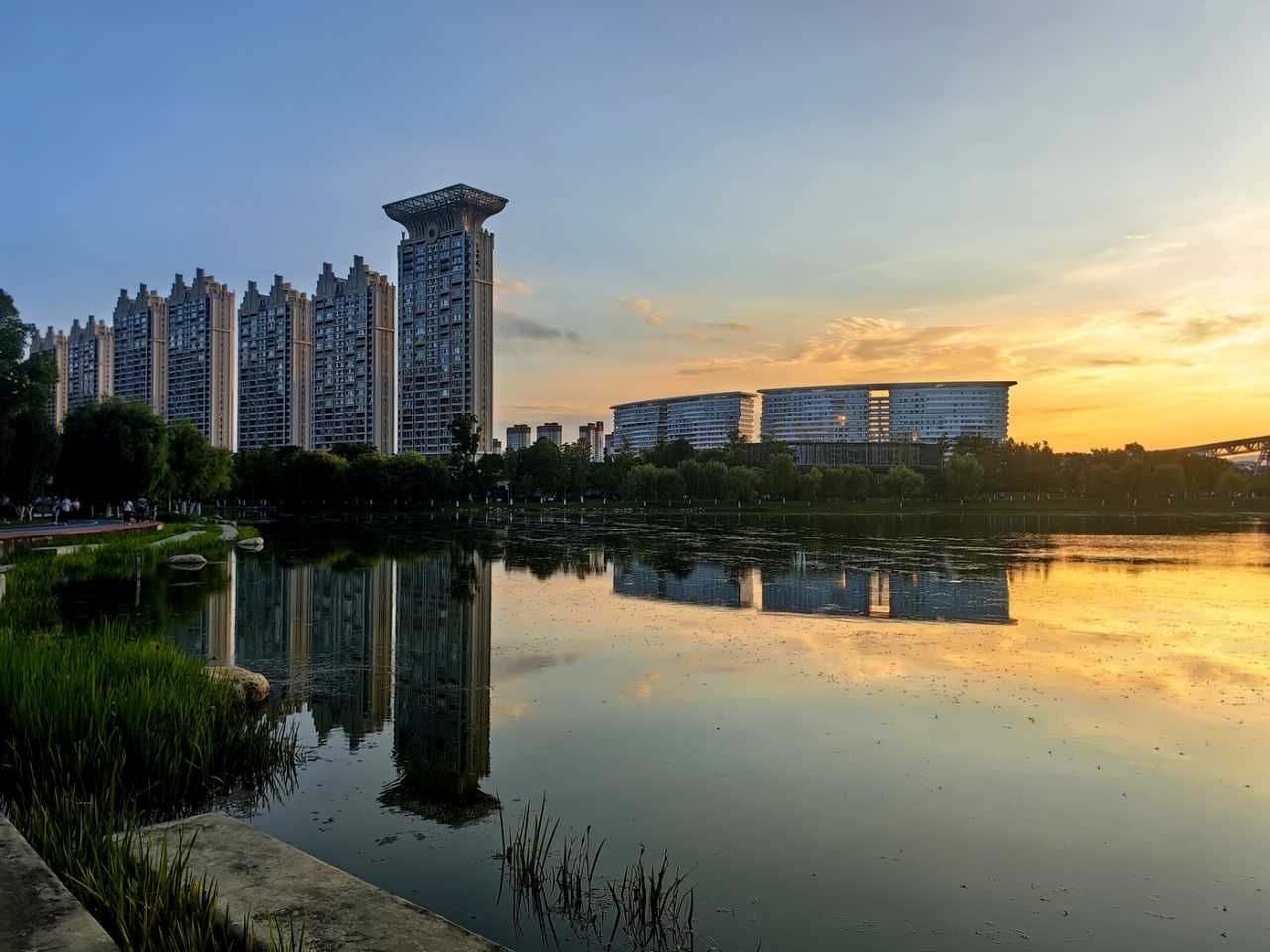
- Sunset: Evening glow reflects on the lake. Around 7:30 PM in summer, a cool breeze picks up after dinner – perfect for a leisurely stroll along the lake.
The Gepishi Railway: A Century-Old Memory of China's First Private Railway
By Jinhu Lake, you'll find the Gejiu Narrow-Gauge Station, next to the former Gebilinping Railway Company site. Construction began in 1915, and the full 177-km line opened in 1936. Using 0.6-meter narrow-gauge tracks, it was China's first private railway funded entirely by private capital.
In 1970, the Bisezhai to Shiping section was converted to meter-gauge; the Jijie to Gejiu section kept the narrow gauge until it ceased operation in 1991. Today, the preserved narrow-gauge tracks, locomotives, freight cars, and passenger carriages have become tourist attractions. Some carriages have been converted into tea lounges for visitors to rest.
Laoyin Mountain: A Perfect Spot for a Panoramic View
Laoyin Mountain's main peak stands at 2,163 meters, with a 478.4-meter elevation difference from the city. The temperature at the summit is about 2°C cooler than downtown. Those who don't hike can take the Baohua Cable Car – a round-trip ticket costs 40 RMB.
Summit Highlights: - Views of sea clouds and mountain landscapes - Baohua Temple Pagoda (nine-story pagoda, entry fee 6 RMB) - Glass walkway and glass platform (for thrill-seekers) - Baohua Buddhist Temple Upper Hall (a blend of Han Chinese and Theravada Buddhist architecture, featuring a Copper Buddha Hall, Reclining Buddha, and White Elephant cultural elements)
Baohua Mountain Temple and Baohua Buddhist Temple: A Curious Coexistence of Taoism and Buddhism
At the foot of Baohua Mountain in the city center, two temples sit side by side:
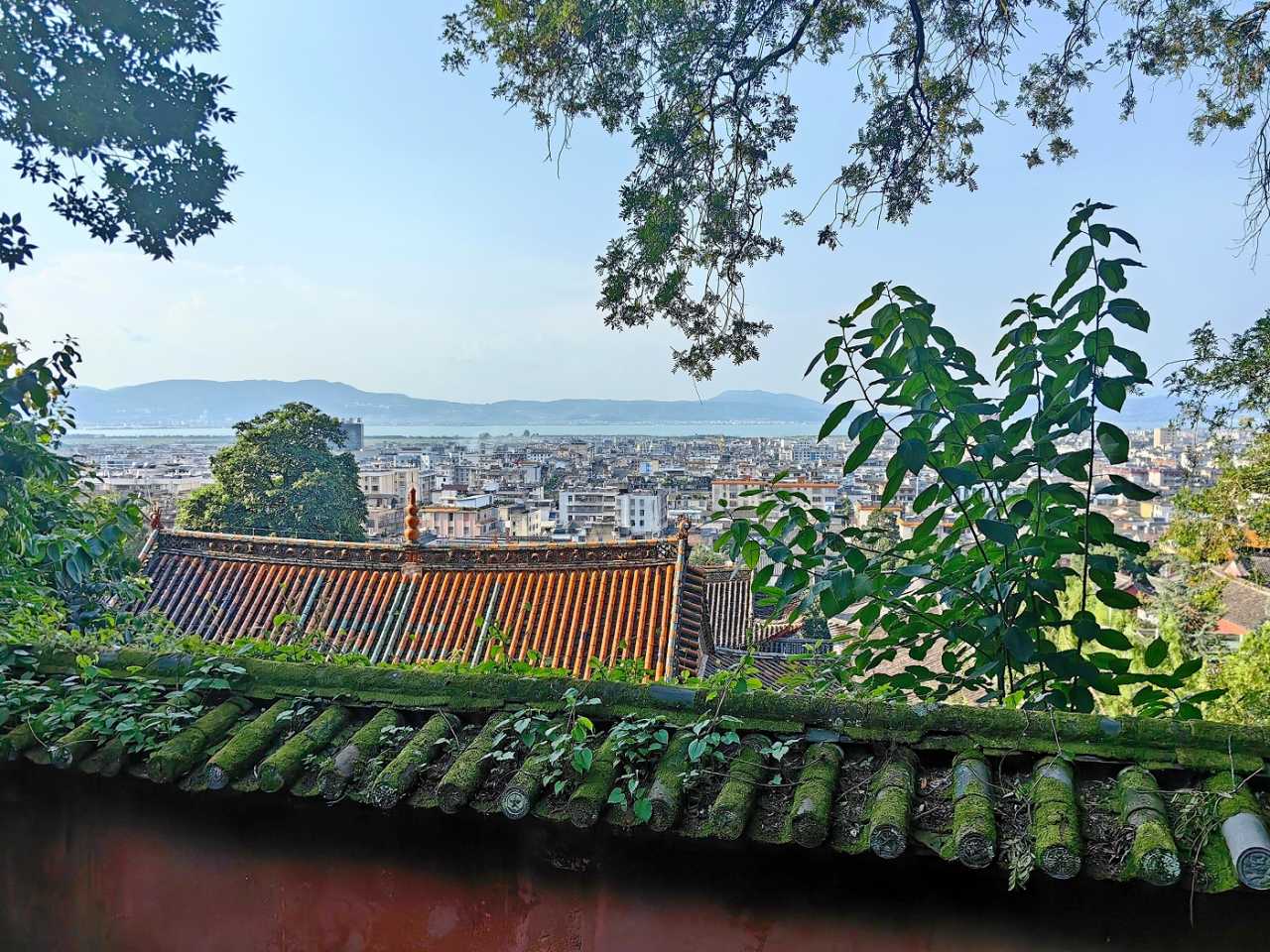
Baohua Mountain Temple (Baohuashan Si) (Taoist temple) - Free entry - Features Sanqing Hall, Yaowang Hall, Leishen Hall, Lingxiao Pavilion, and Wenchang Pavilion - Special recommendation: Gongwang Hall (硔王殿), dedicated to Zhao Tianjue, a representative figure of Gejiu's tin mining industry during the Qing Dynasty's Kangxi era
Baohua Buddhist Temple (Baohua Fosi) (Han Chinese Buddhist temple) - Gejiu's Buddhist Association and religious activity site - Features Mahavira Hall and Guanyin Hall - Behind the Mahavira Hall, ancient trees reach the sky, tied with red prayer ribbons
Note: Baidu Maps may mislabel these – Baohua Mountain Temple and Baohua Buddhist Temple are two separate temples. Gaode Maps and Tencent Maps have correct labels.
Tin Capital Museum and Processing Plant 1910: Understanding Gejiu's Soul
Located on the eastern shore of Jinhu Lake, at the foot of Laoyin Mountain, Processing Plant 1910 (选厂1910) was built in 1910. It was a mineral processing plant that emerged after the completion of the Yunnan-Vietnam Railway, built by the French. Today, abandoned sedimentation ponds have been transformed into a plaza, preserving industrial relics like giant funnels.
The adjacent Gejiu City Museum and Tin Capital Museum (个旧市博物馆及锡都博物馆) provide a detailed history of Gejiu's tin industry: - Indigenous tin smelting techniques date back over 1,000 years - The lead and tin used for "Kangxi Tongbao" coins during the Qing Dynasty's Kangxi era came from Gejiu - In 1905, the Gejiu Tin Mining and Smelting Company (predecessor of Yunnan Tin Group) was established - Today, Yunnan Tin Group produces 50% of China's tin and one-quarter of the world's supply
Baohua Gate and Yun Temple: Silent Stories of Century-Old Architecture

Baohua Gate (Baohua Men): Gejiu's southern city gate, built in 1921, originally named "Lingyun Pavilion." Constructed for the tin industry, it is a Honghe Prefecture cultural relic protection site.
Yun Temple (Yun Miao): Also known as "Yunnan Guild Hall." First built in 1765 (Qing Dynasty, Qianlong era) and extensively renovated in 1918, it was the core venue where industrial and commercial leaders discussed tin business during the late Qing and Republican periods. Listed as a Yunnan provincial cultural relic in 1993. Unfortunately, it is not open to the public – you can only view it from afar.
The Funicular Cable Car: A 1-RMB Journey Through Time
Gejiu's funicular cable car, built in 2000, serves as transportation for residents living on the mountain, costing just 1 RMB. For outsiders, especially younger visitors, it offers a nostalgic ride. In fact, China's earliest funicular was in Chongqing (1944), with the most famous being the one from Caiyuanba to Lianglukou (built 1953, closed 1996). The only one still running today is in Changshou District, Chongqing.
Conclusion: Gejiu – An Underrated Summer Paradise
Gejiu, once the glorious "Tin Capital," now quietly hides among the mountains of Honghe Prefecture. It doesn't have Liupanshui's fame or Zhaotong's convenience, but it possesses a unique charm:
- Climate: Summer highs of 26°C, averages of 23–24°C, 6°C cooler than Mengzi
- Prices: After its status decline, prices are reasonable – accommodation around 100 RMB
- Pace: Life is leisurely, perfect for slowing down
- Culture: Rich history of the tin capital, narrow-gauge railway, Taoist-Buddhist coexistence
- Access: Self-drive or train – three days from Chengdu
If you're tired of crowded, popular heat-escape destinations, if you want a truly cool, quiet, and storied place, then Gejiu is worth a dedicated trip.
There, you can stroll along Jinhu Lake, ascend Laoyin Mountain, trace history along a century-old railway, and find peace among Taoist and Buddhist temples. Most importantly, when you walk through a 23°C summer night in a light jacket, you'll be glad you found this forgotten cool sanctuary.
Practical Tips: - Must-bring: Sun-protective clothing, light jacket, small electric cooking pot (for breakfast) - Optional: Swimwear (there are hot springs, but they're far from the city center) - Note: Noodle shops mostly serve breakfast and lunch only – find other options for dinner - Recommended: Lakeside accommodation, accommodation near the Department Store Building, dining at Xidu Hotel
Gejiu, a city where you forget about summer in summer.
You should also read:
Walking Yunnan — A 23-Day Solo Journey, A Pilgrimage of Faith
Walking Yunnan — A 23-Day Solo Journey, A Pilgrimage of Faith Foreword: That Lonely Planet and a Long-Planned Escape In the winter of 2011, Songjiang, Shanghai was bone-chillingly cold. I huddled in a corner of my dorm room after lights-out, covered in hand warmers, clutching…
Continue reading...
A 9-Day Yunnan Journey: From Lijiang to Dali to Tengchong – A Trip Toward Self-Reconciliation
A 9-Day Yunnan Journey: From Lijiang to Dali to Tengchong – A Trip Toward Self-Reconciliation Some say travel is simply going from a place you're tired of to a place other people are tired of. It stings to hear, but it's painfully true. Yet there's…
Continue reading...
Yunnan! Paradise on Earth – The Yubeng Chapter: A Soul-Cleansing Journey into Seclusion
Yunnan! Paradise on Earth – The Yubeng Chapter: A Soul-Cleansing Journey into Seclusion Prologue: Why Yubeng? If you ask me which place in Yunnan is most worth hiking to, I would answer without hesitation: Yubeng. This is not an answer I give lightly. As a…
Continue reading...