2025 Western Yunnan Travelogue (VIII): Dali – The Mortal World Amidst Wind, Flowers, Snow, and Moonlight
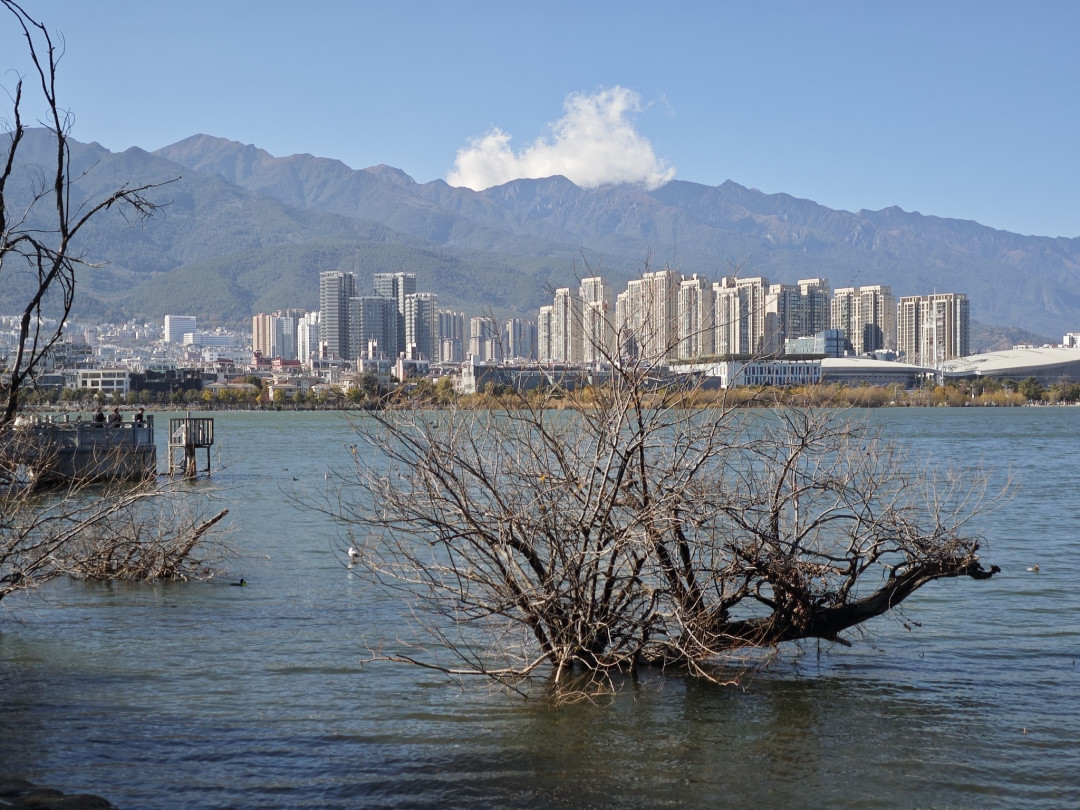
2025 Western Yunnan Travelogue (VIII): Dali – The Mortal World Amidst Wind, Flowers, Snow, and Moonlight
Introduction: A City's Reunion and First Encounter
If the journey through western Yunnan is a long narrative poem, then Dali is undoubtedly its most magnificent movement. On December 25, 2025, when I set foot on this land again, a full decade had passed since my last hurried visit. This time, I came with a longing for a slower pace of life, and also with the regret of never having properly explored the ancient town. I planned to spend three days carefully reading the past and present of this ancient Nanzhao kingdom.
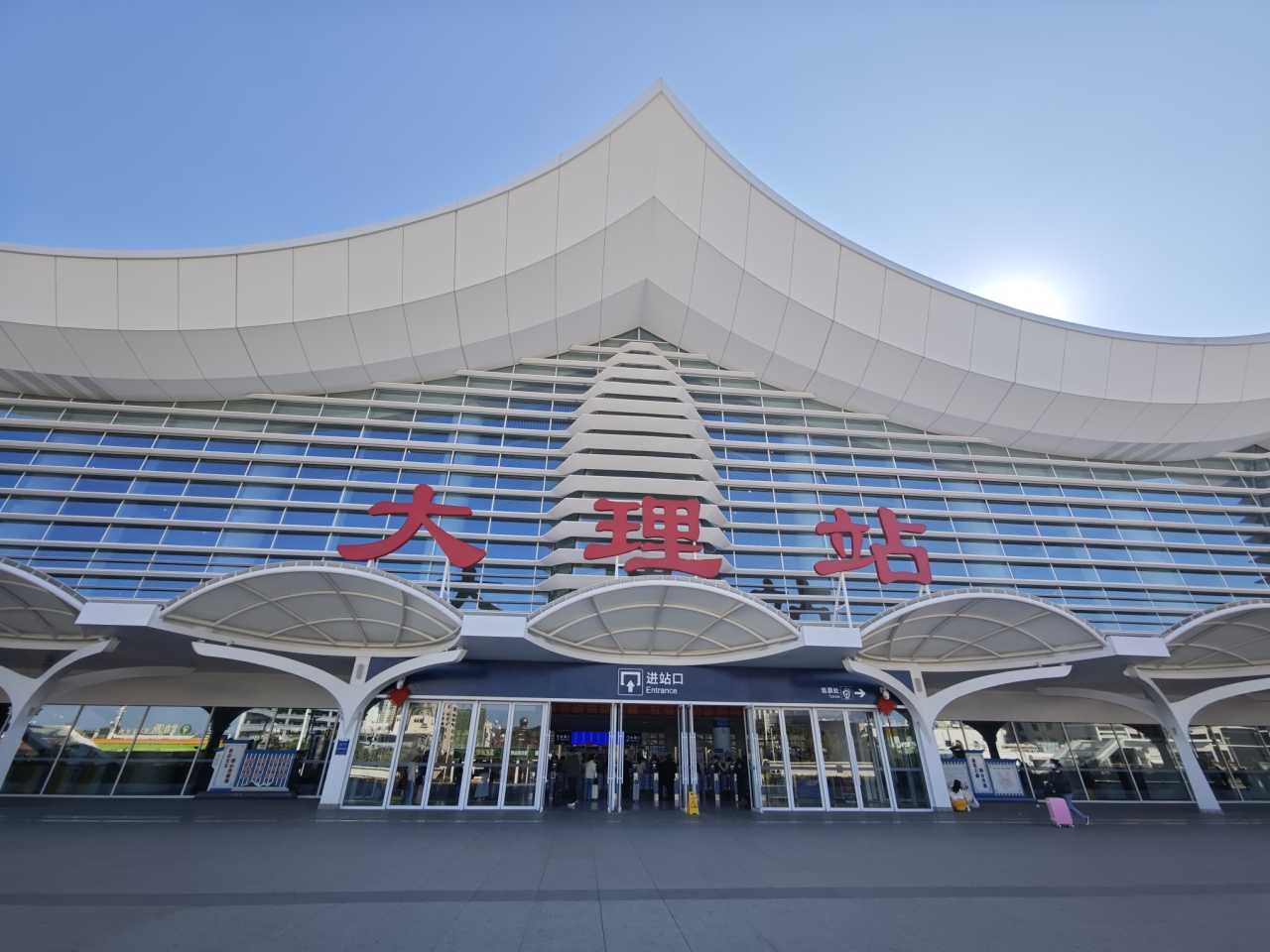
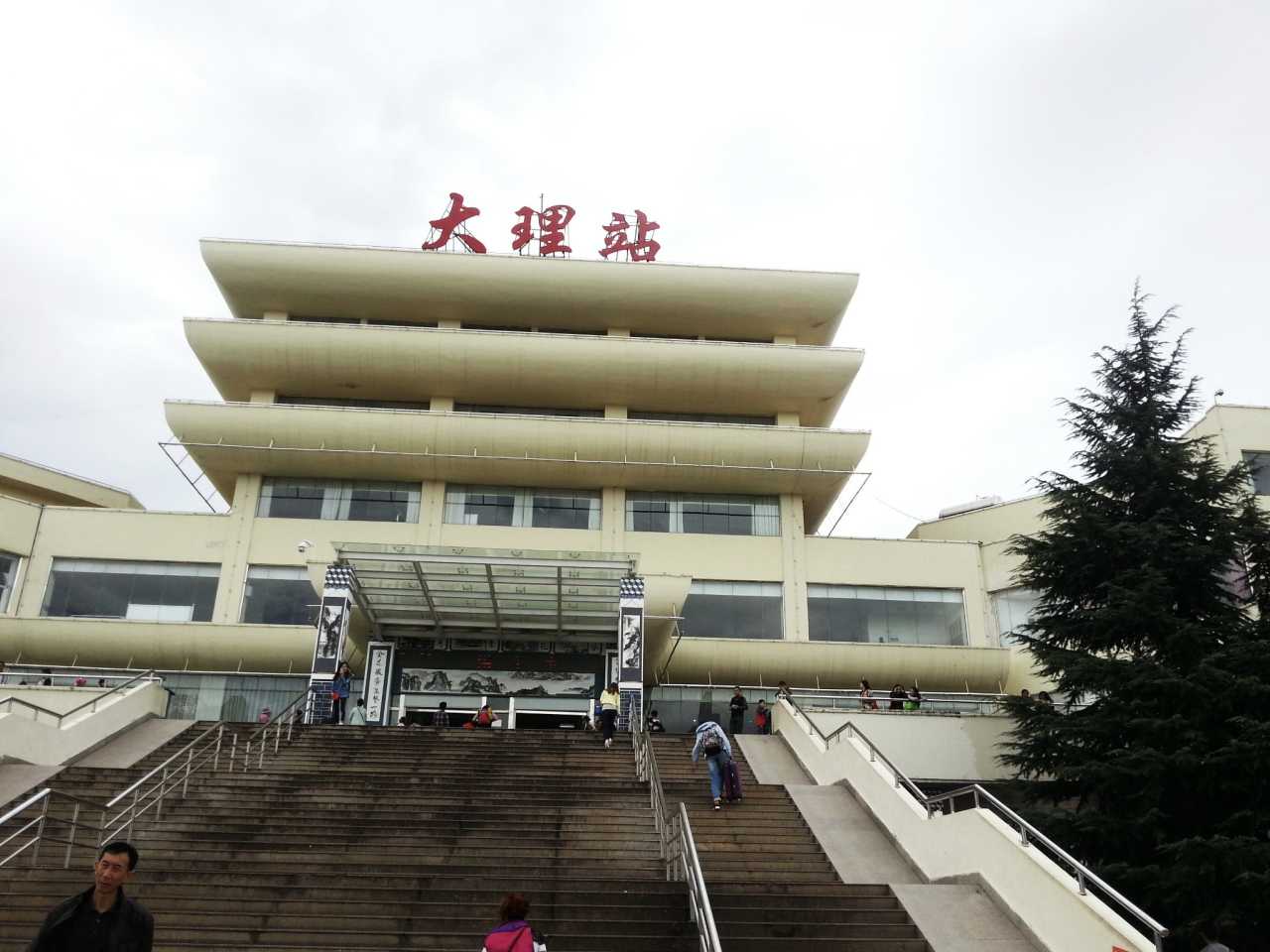
From Weishan to Dali, the bullet train takes only 22 minutes. The moment I stepped out of the station, the scene before me made me feel dazed—the once rather简陋 train station from ten years ago had been completely transformed. The square was spacious, and the crowds were bustling. Dali was telling me in its own way: time flows on, but its charm has never faded.
Accommodation: A Cost-Effective Choice
My husband had done his homework thoroughly this time, booking the "Dali Heyun Yuan Hotel" just outside the east gate of the ancient town. It's close to the pedestrian street and convenient for getting around. I arrived at the hotel around 4 p.m. and managed to get a special rate room for just 55 yuan a night—the listed price was only a little over 80 yuan. The climate in Dali is dry, so staying on the first floor was perfectly fine. We stayed for two consecutive nights; the price went up slightly on the second day, but it was still a good deal.
Erhai Lake: Disappointment and Surprise in the Wind
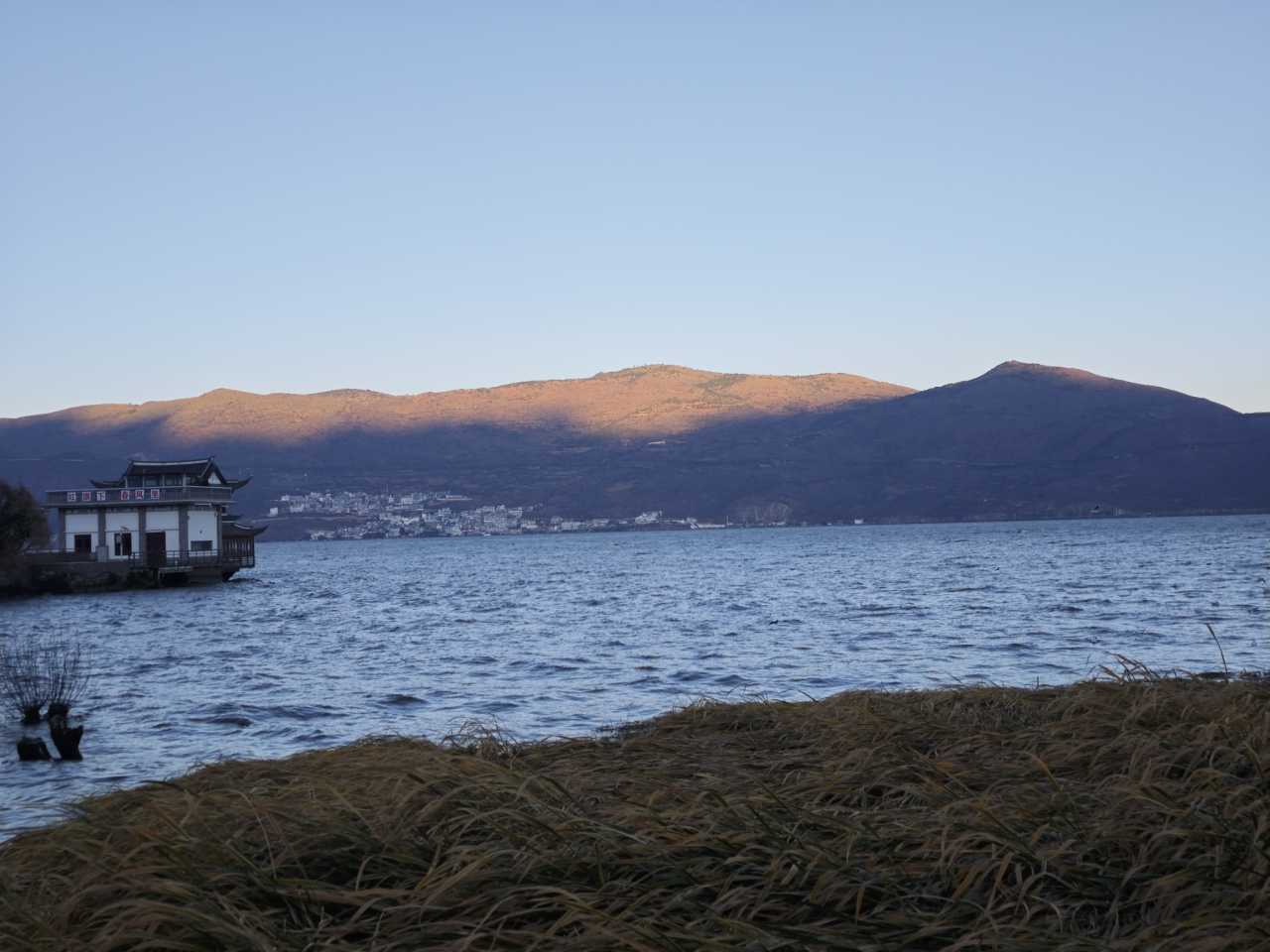
Caicun Wharf: A Decade of Change
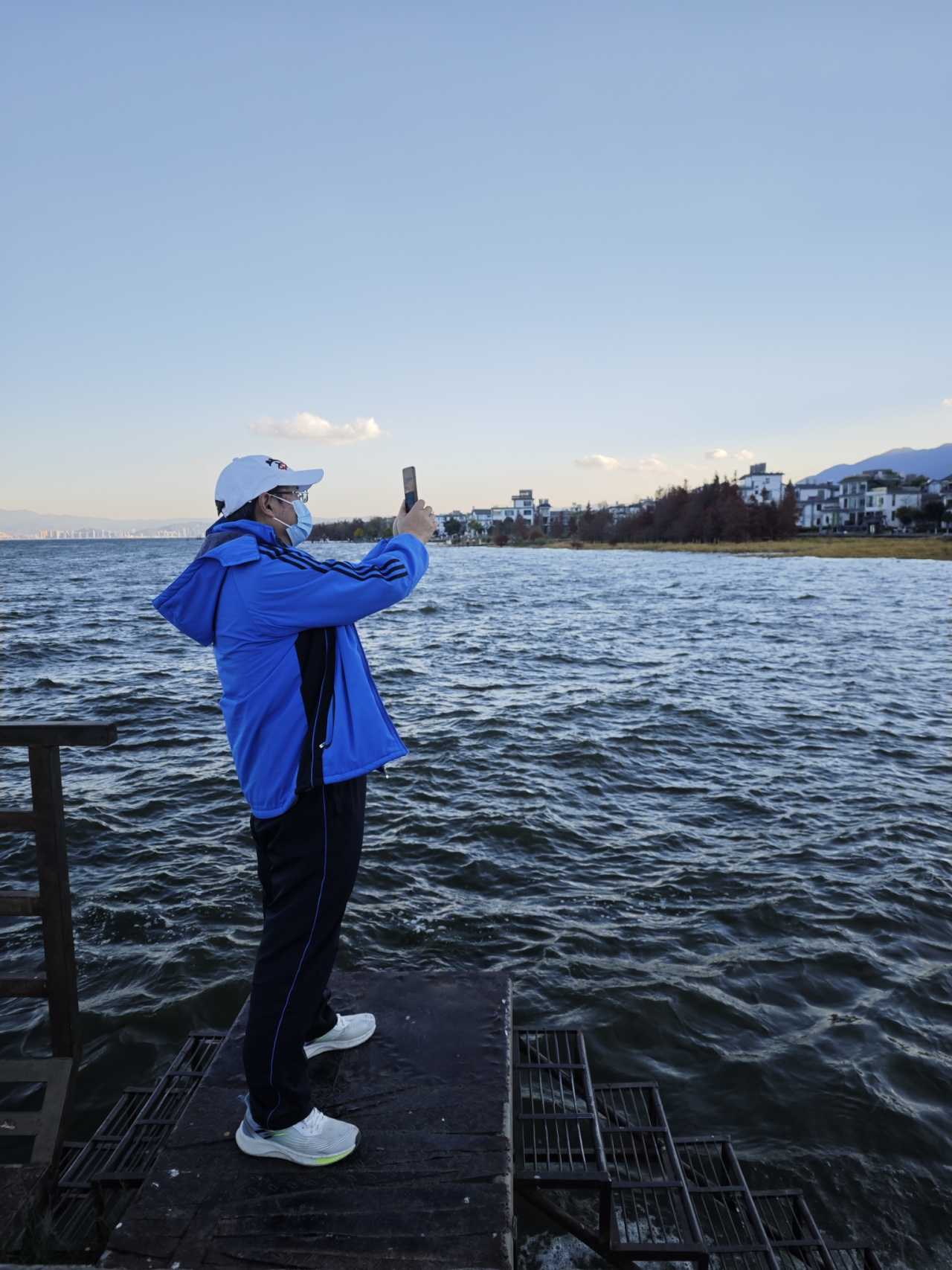
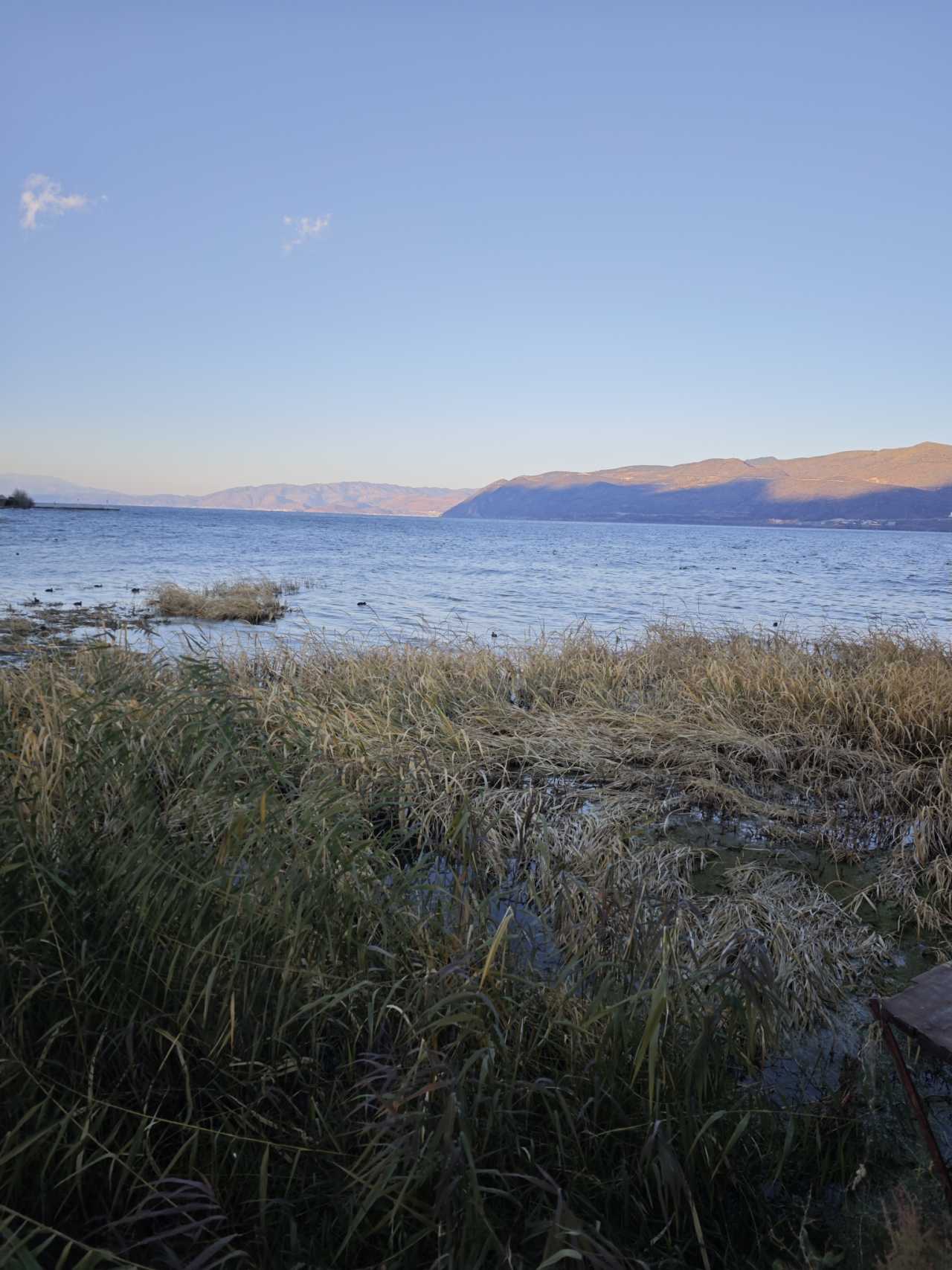
Taking bus C2 to Caicun Wharf, the scene before me stirred up a flood of emotions. Ten years ago, there were few tourists here, and you had to walk through the grass to reach the lakeside, stumbling along the way. Now, the road around the lake was crowded with motorcycles, bicycles, cars, and shuttle buses. Shared bikes could only be parked far away, and rental prices had doubled. Relying on our own feet, we trudged forward on the exposed muddy ground, battling the strong wind. Dust flew everywhere, and we quickly put on our masks.
It was my husband's first time at Erhai Lake, and his impression wasn't good. We headed toward Longkan Wharf but turned off halfway onto a rural road and walked back to the ancient town. People kept calling out to us along the way, offering us rides, but we insisted on walking all the way back.
Erhai Park: An Unexpected Comfort
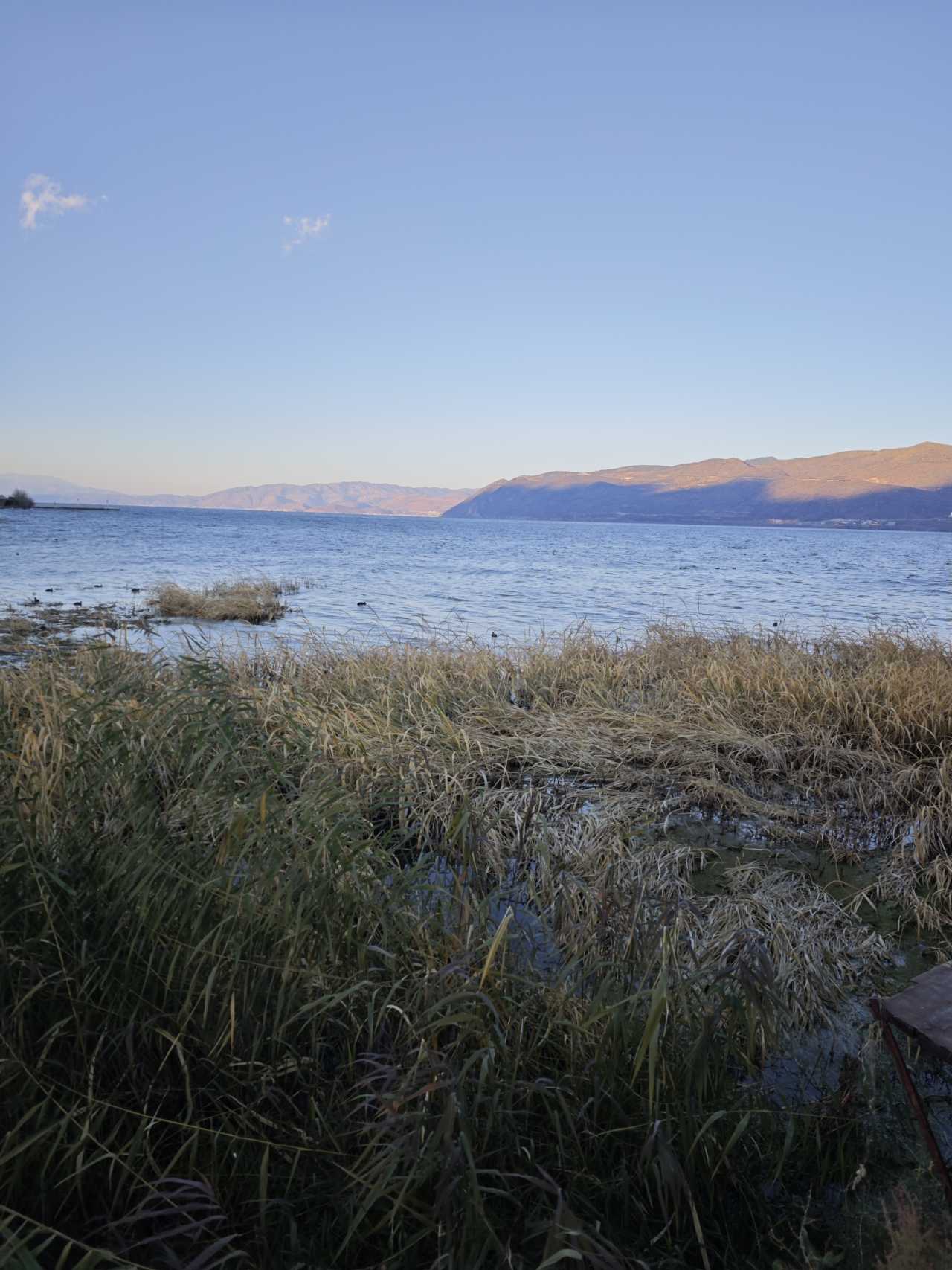
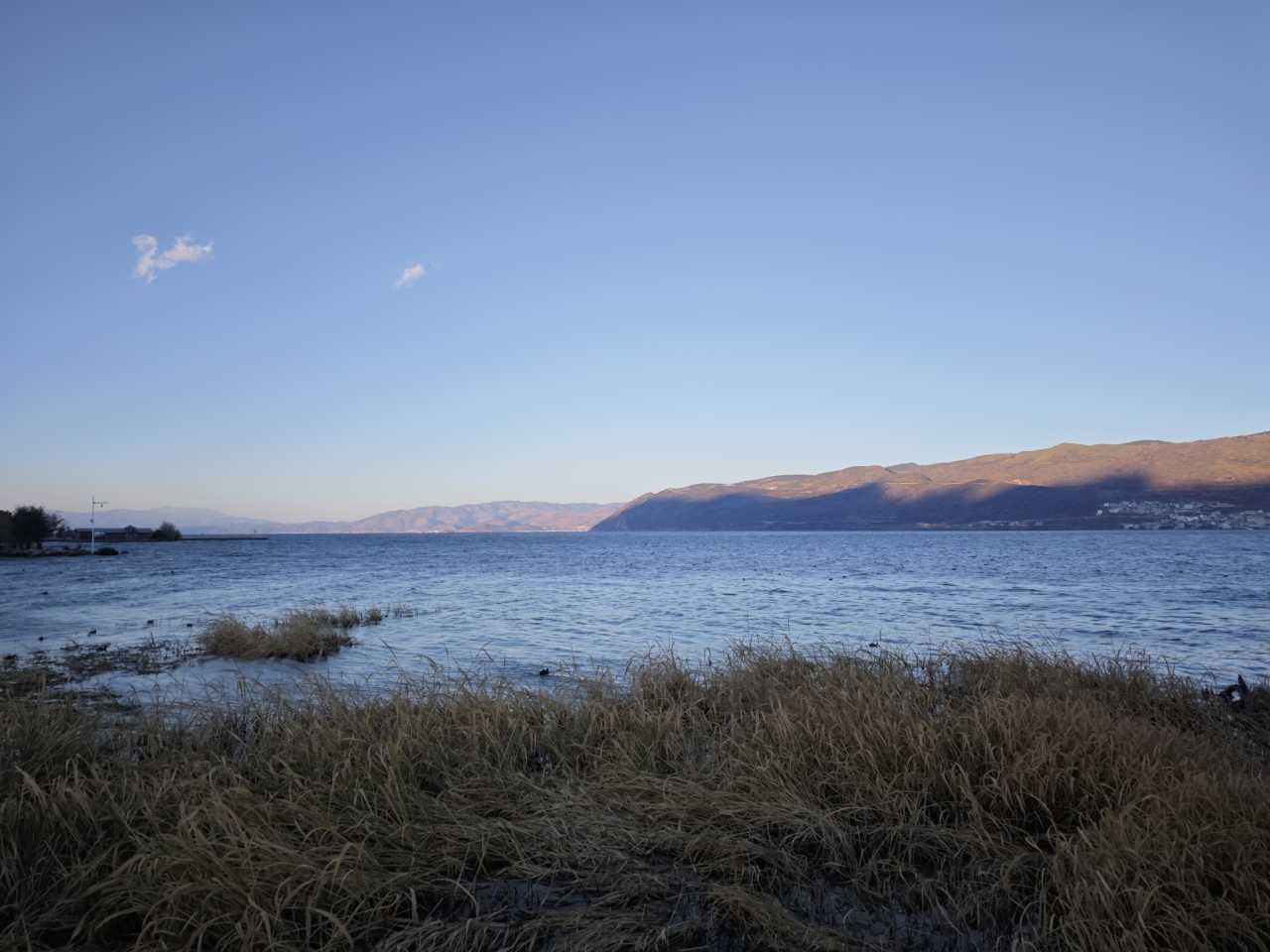
The real surprise came on the last day. We rode bicycles from the train station to the north gate of Erhai Park—the southernmost point of Erhai Lake. It was quiet here with few people, and Erhai finally showed its应有的 azure blue. My husband stood by the lakeside, completely satisfied, and said, "This is the Erhai I wanted to see."
Erhai Lake, historically known as "Yeyu Marsh" and "Kunmi River," is the site of the "Moon over Erhai," one of the four scenic wonders known as "Wind, Flowers, Snow, and Moonlight." With its three islands, four islets, five lakes, and nine bends, the lake water is crystal clear and is often called "the flawless jade amidst the mountains." Although it's called a "sea," it is actually a lake—it is said that the Bai people named it so to express their longing for the sea.
Food: A Taste of Dali
Bailu Private Kitchen: A Flavor of Dali You Can't Take Away
My husband was in charge of finding food this time, and the "Bailu Private Kitchen" he chose was indeed excellent. The warm fireplace in the restaurant, the enthusiastic service, and the quiet atmosphere made for a pleasant dining experience. A group-buy set meal of four dishes cost only 98 yuan.
- Handmade Yangbi Walnut Bun: Rich and creamy with a strong milky flavor.
- A Peng Torch Shrimp: Spicy, fresh, and full of flavor.
- Yangbi Walnut Stir-fry: Tender walnuts stir-fried with vegetables, light and refreshing.
- Nanjian Wuliang Mountain Black Chicken: A specialty of Nanjian County in Dali, recognized as a national agricultural product with geographical indication. The chicken in Yunnan is indeed better than what we have in Chongqing—the meat is firm, and the flavor is rich and savory.
Pounded Chicken Feet: Sour, Spicy, and Aromatic
My husband bought some pounded chicken feet on the street for 30 yuan a portion. This is a traditional Dai snack from Yunnan. The chicken feet are boiled and then plunged into ice water to maintain their elasticity. They are then repeatedly pounded in a wooden mortar with shredded carrots, roasted chili peppers, lemongrass, and culantro, and seasoned with lime juice. After being chilled, the result is a complex flavor that is sour, spicy, salty, and aromatic.
A Misstep: "Zombie Tangyuan"
On the second morning, my husband wanted some tangyuan (glutinous rice balls with filling) and went into a shop run by a Fujianese owner. A bowl of tangyuan with a poached egg cost 12 yuan, but it took a long time to be served—the tangyuan were all misshapen, the soup was murky, and the dough was still raw. I figured they were "zombie tangyuan" that had been stored in the freezer for too long, losing their moisture and becoming impossible to cook through. This was the second disappointment of the trip, but my husband still quietly finished his bowl.
Strolling Through the Ancient Town: Imprints of Time

Yu'er Garden: A Century-Old Landscape
Located on the north side of the middle section of Yu'er Road, this garden was originally an agricultural experiment station in the late Qing and early Republican eras. During the War of Resistance against Japan, it was renamed "Zhidan Park," and after liberation, it became a forestry nursery base. It was rebuilt in 1995 and named "Yu'er Garden."
Jiang Gong Memorial Temple: A Shrine to a Qing Dynasty General
Located at 123 Yu'er Road, this temple is dedicated to General Jiang Zonghan of the Qing Dynasty. It features the traditional Bai architectural layout known as "four courtyards and five patios" and was upgraded to a provincial-level cultural relic protection unit in 2019.
March Street Market: A Serendipitous Encounter
Exiting the Cangshan Gate leads directly to March Street. It happened to be a market day—locals told me that the market is held on the 2nd, 9th, 16th, and 23rd of each lunar month. We were in luck! The street was bustling with activity. There were vendors selling tuotuo tea (compressed tea cakes), broad beans in their pods, and unglazed clay pots. My husband spent 42 yuan on a teacup, and I spent 5 yuan on a small clay pot for brewing tea, which I still use today.
March Street Market dates back to the Yonghui era of the Tang Dynasty, evolving from a temple fair closely tied to the spread of Buddhism. Every year from the 15th to the 21st day of the third lunar month, millions of people from all over China and abroad come to participate.
Chongsheng Temple and the Three Pagodas: A Distant View Suffices
Located at the foot of the eastern slope of Cangshan Mountain, the temple was first built during the Kaiyuan era of the Tang Dynasty and flourished in the Song Dynasty. The three pagodas consist of one large and two smaller ones. The large pagoda is called the Qianxun Pagoda, and together with the smaller pagodas to the north and south, they form a tripod-like configuration. We didn't go inside—the 5A-rated scenic area would have taken too much time. Ten years ago, I had a clearer view from the bus; now the walls around it seem even taller.
Foreigner Street: A Changed Landscape
Stretching 1,000 meters and paved with bluestone slabs, this street was named after the National Protection Movement in the early Republican era. This time, I noticed that Foreigner Street was no longer bustling. Instead, Fuxing Road and Renmin Road were teeming with tourists, and the area around Honglongjing was packed with people. On Foreigner Street, I saw a group of foreign tourists using their phone calculators to bargain. An Indian woman tried to haggle for a scarf at half price but didn't make the deal.
Presidential Military Marshal's Mansion
Located on the southern section of Fuxing Road, this building was originally the Yunnan Governor's Office, built during the Kangxi era of the Qing Dynasty. In the sixth year of the Xianfeng era (1856), the anti-Qing uprising led by Du Wenxiu, primarily involving the Hui people of western Yunnan, captured Dali and established a regime, converting the Governor's Office into the Marshal's Mansion. The architectural complex is grand in scale, featuring a front hall, rear hall, noon gate, Heavenly Son's Platform, and a red-painted courtyard, commonly known as the "Forbidden City."
Dali Bedsheet Factory Art District
Located at 56 Cangping Street, this area was originally the old factory building of a state-owned bedsheet factory. It was renovated in 2014 and opened in 2015, earning the reputation as "the most artistic spot in Dali Ancient Town." It's essentially a creative industrial park—worth a stroll, but don't expect to buy bedsheets here.
Dali Christian Church
First built in June 1904, this church blends Western church architecture with traditional Bai craftsmanship. The bell tower houses a 150-kilogram bronze bell made in London in 1904. We happened to be there when it struck the half-hour, and it rang for a full minute.
Dali Rural Film History Museum
Located at 459 Fuxing Road, this museum opened in 2011 and was converted from the original Dali Cinema. It showcases the history and culture of rural cinema in Dali. I saw posters of the "22 Great Stars" from Chinese cinema, which brought back childhood memories.
Practical Tips
Transportation
- Dali Train Station to Ancient Town: Direct bus, about 40 minutes.
- Within the Ancient Town: Walking is best; you can also rent a bicycle.
- To the Airport: It's recommended to take a taxi. Don't take the bus to the terminal stop and then walk—the last three kilometers are uphill with sharp curves and no sidewalks.
Shopping
- March Street Market Days: 2nd, 9th, 16th, and 23rd of each lunar month.
- Souvenirs: Unglazed clay pots, tea, and tie-dye fabrics are all good choices.
- Bargaining: Yunnan women don't speak softly and are not inclined to haggle.
Weather
Dali is very windy, especially in Xiaguan. Local drivers say that February and March are windless, but the rest of the year is generally windy. Winter days are warm, but nights are cold, so dress in layers.
Epilogue: Farewell, Dali
On the last day, we continued exploring the ancient town in the morning, checked out at noon, and headed to the area near the train station in the afternoon. On Cangshan Road, my husband insisted on taking the bus to the airport—he wanted to save on taxi fare. But bus No. 7 ended at Puhe Village Entrance, still three kilometers from the airport. The wind in Xiaguan was howling, and dust was flying on the dirt embankment. I couldn't be bothered to move and just watched to see what he would do. He pulled out the Gaode Maps app and called a car—3 kilometers for 7.5 yuan.
Fengyi Airport sits at an altitude of 2,155 meters, making it a high-altitude airport. We arrived early. He ate a bowl of instant noodles, and I munched on a bag of bread. The boarding gate was changed from Gate 1 to Gate 10, and we were moved from the second floor to the first floor—sure enough, we had to take a shuttle bus.
The plane arrived early at Chongqing's T3 terminal. We took the monorail people mover home, and the subway ride felt unhurried. The ten-day journey through western Yunnan had come to an end.
Dali, I've visited three times, and this time I finally explored it properly. But I know I'll come again—because this city always has new stories waiting for you to discover.
You should also read:
Escaping Nanning, Falling Under Lijiang's Spell: Our Four-Person, Ten-Day Yunnan Dream
Escaping Nanning, Falling Under Lijiang's Spell: Our Four-Person, Ten-Day Yunnan Dream Before We Set Off: No Pain, No Obsession Have you ever had that impulse—suddenly tired of the office fluorescent lights, the crush of the subway, the endless parade of identical takeout boxes, and just…
Continue reading...
God’s Abandoned Palette: A Self-Drive Journey Through Yunnan’s Dongchuan Red Land
God’s Abandoned Palette: A Self-Drive Journey Through Yunnan’s Dongchuan Red Land Travel has never been about reaching some distant geographic coordinate. It’s about encountering, along the way, the version of yourself buried beneath the rubble of daily routine. During this May Day holiday, I finally…
Continue reading...
Two Girls' Graduation Trip: Dali and Shuanglang – A Poetic Farewell to Mountains and Sea
Two Girls' Graduation Trip: Dali and Shuanglang – A Poetic Farewell to Mountains and Sea Preface: Catching the Tail of Youth, Heading South During our senior year of college, my roommate and I – two girls studying in Beijing – decided to bid farewell to…
Continue reading...