9 Days, 8 Nights of Slow Living in Yunnan: Finding a Haven for the Soul in Kunming, Lugu Lake, Lijiang, and Dali
9 Days, 8 Nights of Slow Living in Yunnan: Finding a Haven for the Soul in Kunming, Lugu Lake, Lijiang, and Dali
Introduction: When "Slow" Becomes a Luxury
In an era driven by efficiency, we've grown accustomed to hitting the "fast-forward" button on every day. Work needs to be fast, meals need to be fast, and even travel has turned into a rushed "check-in" affair—three days and two nights covering five cities, a nine-grid photo on social media captioned "The world is so big, I want to see it," before returning to our cubicles, gasping for air.
But true travel has never been about covering ground. It's about feeling the ground beneath you.
In December 2019, my wife and I spent 9 days and 8 nights traveling through Kunming, Lugu Lake, Lijiang, and Dali. No packed itineraries, no 4 a.m. alarms—just spontaneous stops and starts. This journey taught us one thing: slowing down isn't about escaping life. It's about embracing it more fully.
Before Departure: A "Spur-of-the-Moment" Impulse
Why Yunnan?
2019 was a non-stop year for us—wedding preparations in early spring, renovating our new home in summer, and the formal ceremony in November. We'd been in "hustle mode" all year, barely catching our breath. As the year wound down, we decided to give ourselves a gift: a trip that would truly let us unwind.
Initially, we considered Southeast Asia. But we'd been to Thailand too many times, and Vietnam and Cambodia somehow didn't feel right. Then one evening, my wife suddenly said, "How about Yunnan?"
The moment "Yunnan" left her lips, images of sunshine, blue skies, and eternal spring flooded my mind. Without a second thought, we booked our flights that very night. Later, we discovered that winter in Yunnan isn't exactly warm—especially in Lijiang and Lugu Lake, where the temperature difference between day and night is astonishing. But since the tickets were already bought, we decided to make the best of it.
Pre-Trip Checklist

- Medications: Cold relief granules, pain relievers, cephalosporin (strongly recommend bringing digestive medicine—local flavors might not agree with you; don't forget motion sickness pills—the road from Lugu Lake to Lijiang is full of sharp turns)
- Skincare: Sunscreen, moisturizing toner and lotion, face masks—winter in Yunnan has strong UV rays and dry air. Don't be fooled by the phrase "eternal spring"
- Carry-on items: Scarf, shawl, hat, gloves, sunglasses, ID card
- Clothing: Down jacket, turtleneck sweater, fleece-lined pants—staying warm is the top priority. Photos can wait
9-Day Itinerary Overview
| Date | Itinerary | Accommodation |
|---|---|---|
| Day 1 | Shanghai → Kunming | Kunming Pinhua Yuejia Hotel |
| Day 2 | Kunming → Lugu Lake | Lugu Lake Xingye Homestay |
| Day 3 | Lugu Lake Circumnavigation | Lugu Lake Xingye Homestay |
| Day 4 | Lugu Lake → Lijiang | Lijiang Old Town Old Mill Sifang Street Branch |
| Day 5 | Lijiang Old Town + Shuhe Ancient Town | Lijiang Old Town Old Mill Sifang Street Branch |
| Day 6 | Jade Dragon Snow Mountain + Blue Moon Valley | Lijiang Old Town Old Mill Sifang Street Branch |
| Day 7 | Lijiang → Dali | Dali Old Town Wang's Courtyard Homestay |
| Day 8 | Erhai Lake Day Trip | Dali Old Town Wang's Courtyard Homestay |
| Day 9 | Dali → Kunming → Shanghai | Return Journey |
Expense Breakdown (for Two)
- Flights: 3,910 RMB (Shanghai → Kunming, Kunming → Lugu Lake, Kunming → Shanghai)
- Trains: Lijiang → Dali 68 RMB, Dali → Kunming 290 RMB
- Transportation: Lugu Lake Airport Shuttle 60 RMB, Scenic Area Maintenance Fee 140 RMB, Lugu Lake → Lijiang 130 RMB
- Accommodation:
- Kunming: 251 RMB/night
- Lugu Lake: 498 RMB/night
- Lijiang: 227 RMB/night
- Dali: 414 RMB/night
- Total: Approximately 10,000 RMB (including meals, tickets, and personal expenses)
Day 1: Kunming—First Encounter with the Spring City's Floral Splendor
From Shanghai to Kunming: A "Convenient" Flight
Our 10 a.m. flight from Pudong gave us plenty of time to sleep in. We left my in-laws' place at 8 a.m., and as a non-driver, I hitched a ride again—my top priority for 2020 was to learn how to drive, all in preparation for future road trips.
At boarding, we discovered this was actually a flight to Dubai, with Kunming as a stopover. The experience on a large aircraft was indeed pleasant—snacks, drinks, and a movie made the three and a half hours fly by. We landed in Kunming at 1:45 p.m., grabbed our luggage, and headed straight for the metro.
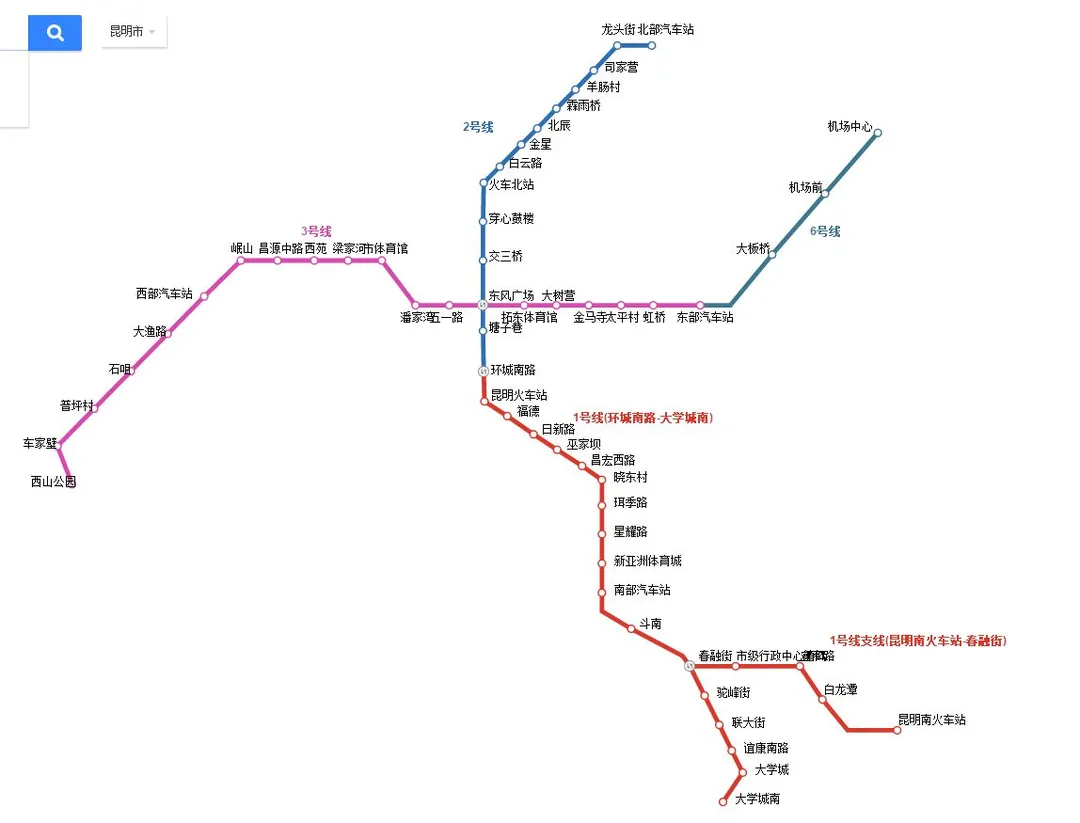
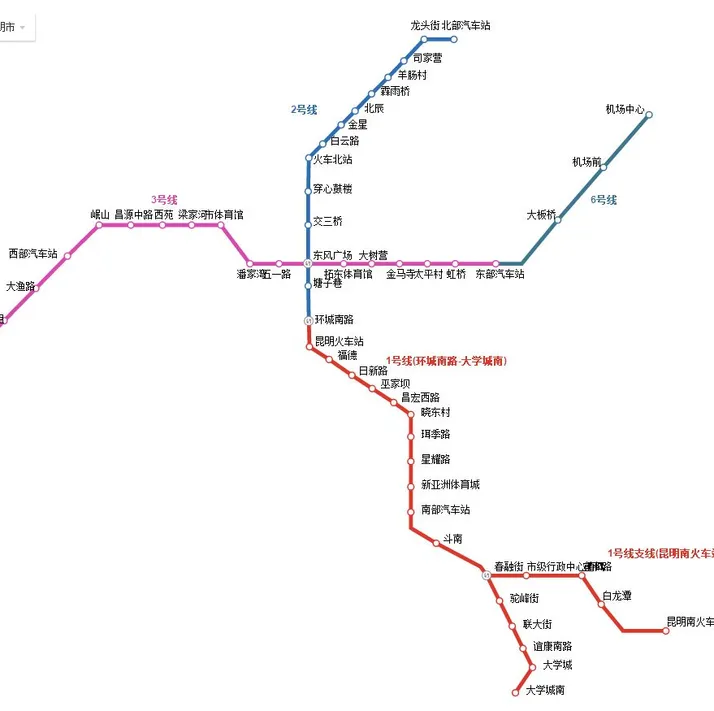
A quick tip: You can activate Kunming's metro and bus QR codes on Alipay in advance, saving you the trouble of queuing for tickets. We endured a "Line 6 → Line 3 → Line 2" metro journey, followed by a 15-minute walk. To conserve energy, we decisively called a DiDi.
Pinhua Yuejia: A Peaceful Retreat in the Midst of Bustle
The hotel was located on a commercial street, right next to Dayue City Mall, making shopping and dining very convenient. The room was clean and comfortable, and the service was attentive—though I won't go into too much detail, lest this sound like an advertisement.
Dounan Flower Market: Catching the Floral Feast Before Closing
After dropping off our luggage, we headed straight for Dounan Flower Market. Emerging from the metro station around 4 p.m., we saw many people walking toward the station carrying bouquets of flowers. Following the signs, we first passed the Dounan Potted Plant Trading Market, filled with various succulents, but not many fresh flowers.
After another 10-minute walk, we finally reached the core area of Dounan Flower Market. Entering through Market Building No. 2, we initially saw only storefronts and thought it seemed small. But after turning a corner, the scene before us was astonishing—stalls lined the outdoor area, and inside, the place was buzzing with activity, almost like a vegetable market at peak hour.
Unfortunately, we arrived late. Vendors were gradually packing up. If we'd come earlier on our return trip, we could have haggled in peace—they even offer courier services to send flowers directly home.
First Taste of Cross-Bridge Rice Noodles: An Unexpected "Culture Shock"
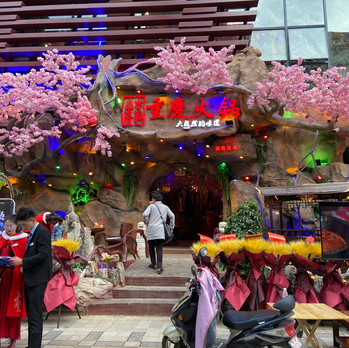
By the time we left the market, it was already dark. Checking Dianping, all the highly-rated restaurants nearby were at least 3 kilometers away. Since we had an early flight to Lugu Lake the next day, we settled for a cross-bridge rice noodle (过桥米线) shop near the market.
To be honest, this first encounter with Yunnan cuisine didn't wow me. The tofu was cold, the dessert was too sticky, and the texture of the rice noodles didn't quite suit my palate. A colleague later recommended the "Zhuangyuan" (champion) version from Laodian Cross-Bridge Rice Noodles, but we didn't get a chance to try it. Still, every trip needs a few regrets—it gives you a reason to come back.
Day 2: Kunming → Lugu Lake—From the City to a Fairyland
Morning in Kunming: The Ritual of a Bowl of Rice Noodles
We woke up at 7:15 a.m., freshened up, checked out, and headed to the hotel restaurant for breakfast. It opened at 8 a.m., and we were the first guests. My wife opted for a mix of rice noodles and Western-style breakfast—a fusion of East and West. I stuck with my "old-timer's taste"—fried dough sticks, congee, shredded cabbage, pickled vegetables, and finished off with a few slices of watermelon. Any restaurant that serves watermelon gets a thumbs-up from me.
Flying to Lugu Lake: A "Bumpy" Adventure
At 8:20 a.m., we took a taxi to the metro station and endured another "Line 2 → Line 3 → Line 6" journey to Kunming Airport. Our 10:30 a.m. China Eastern flight was the only one heading to Lugu Lake that day. I'd read travel guides saying that sometimes flights turn back mid-journey due to bad weather, and I spent the whole time worrying if we'd be that unlucky.
Fortunately, the weather was good, and we boarded without issue. The flight was smooth, but during the final half-hour before landing, our small plane hit mountain air currents and started bouncing up and down violently. My wife gripped my hand tightly, while I tried to stay calm and said, "It's fine—just think of it as a roller coaster ride."
Lugu Lake Airport: A Small but Beautiful "Hidden Paradise"
We landed at Lugu Lake Airport at noon. The airport was small. After collecting our luggage, we found two shuttle buses waiting outside: one heading to Daluoshui Village and Lige Peninsula (the western shore), and the other to Langfang Village (the eastern shore). Our homestay was in Langfang Village, and by the time we got on, there were only 6 passengers—most people still prefer the more commercially developed Daluoshui Village.
The driver usually waits about 20 minutes before departing. If you miss it, you'll have to find your own ride. We contacted our homestay owner in advance and got off at "Grandma's Flavor" stop, paying 30 RMB per person. Along the way, as we entered the Lugu Lake scenic area, we had to get off first to purchase the 70 RMB scenic area maintenance fee before continuing.
Xingye Homestay: Meeting a "Semi-Free-Range" Cat
At 12:45 p.m., we got off at "Grandma's Flavor" stop. The owner was out buying groceries, so he asked his mother to pick us up. Within 5 minutes, we arrived at the homestay—a small building tucked away in Langfang Village, with a courtyard full of plants and a semi-free-range cat.
This cat spent its days playing in the hills behind the house and would return to the door at night, waiting for someone to let it in. Over the next few days, every time we came back to the homestay, we'd first spend some time petting the cat. It always lay there lazily, occasionally opening its eyes to glance at us before closing them again, as if to say, "Humans, you're disturbing my sleep again."
Firewood Chicken: Lugu Lake's First "Hearty Meal"
After dropping off our luggage, we headed to a firewood chicken (柴火鸡) restaurant recommended by the owner. A 5-minute walk brought us there. One table was already occupied by people who had just finished a private car tour around the lake. We ordered half a chicken and a few side dishes and sat down to wait.
While waiting, I noticed a huge map of Lugu Lake hanging on the wall. Twenty minutes later, the firewood chicken arrived—it was somewhat similar to chicken pot (鸡公煲), with tender meat. The potatoes needed a bit more cooking to become soft. The local konjac (魔芋) was surprisingly large; at first, we thought it was shredded konjac, but it turned out to be long strips, almost like rice cakes. The napa cabbage became wonderfully flavorful after simmering, and we devoured the entire meal.
The Electric Scooter "Disaster": A Failed Attempt
During lunch, we asked about ways to explore Lugu Lake. We'd originally planned to rent an electric scooter, but Langfang Village had no rental points, and borrowing one required a phone reservation. In the end, we had to go back to the homestay and ask the owner for help.
The owner's mother was very kind. She lent us the homestay's electric scooter and even cleaned it for us. She said it hadn't been used for a while, but it should be fine for a round trip to Daluoshui Village. It started off well, but after just 200 meters, the power noticeably dropped. I was overconfident, thinking we could make it to Daluoshui Village and find a place to charge.
Along the way, we passed a few scenic spots and stopped to take photos. It was the off-season, so there weren't many people—everyone took turns posing for pictures. It was hard to imagine what it would be like during peak season. Near the homestay, there was a dock with pig-trough boats (猪槽船) departing for various attractions. Different docks had slightly different prices depending on the distance.
After visiting two spots, we continued toward Daluoshui Village. But halfway there, the scooter completely gave out—even with the throttle pushed to the max, it could only crawl forward inch by inch. In the end, we had to get off and push. After walking for over 10 minutes, we found an abandoned restaurant. There was no one inside, but it still had electricity. We quickly plugged in the scooter to charge and left a note: "Owner temporarily away, charging—please excuse the inconvenience."
Hitchhiking: From "100 RMB Fee" to "Free Kindness"
After leaving the abandoned restaurant, we started walking toward Daluoshui Village. My wife pulled out the hitchhiking method she'd used in Tibet—standing by the roadside and waving at passing cars. Most vehicles drove right past. A few did stop, but they wanted to charge 100 RMB for a 10-minute drive to Daluoshui Village.
In the end, a local好心人 (kind-hearted person) gave us a free ride. Along the way, he shared stories about Lugu Lake—how the area used to be very poor, but tourism had developed and life had improved. When we got out, we tried to offer him money, but he waved his hand and said, "No need. You're guests. Helping out is only right."
Daluoshui Village: The Tug-of-War Between Commerce and Nature
As soon as we arrived in Daluoshui Village, we could feel the strong commercial atmosphere. Various homestays lined the lake—some with a minimalist aesthetic, some European-style, and others featuring local ethnic architecture. The winter wind was strong, and walking along the lakeshore sent a chill through us.
During this season, seagulls flock to Lugu Lake to spend the winter. The gulls in the lake aren't afraid of people—they know tourists will feed them. Though they don't come right up to you, they circle within a meter's range, waiting to snatch dried fish or bread from your hands.
While feeding the gulls, we discussed how to handle the next day's lake circumnavigation. The electric scooter was out of commission, so we'd have to borrow a car or hire a private driver. Just then, a local driver came up and asked if we wanted to join a shared tour around the lake. The entire loop takes about 4 hours, covering spots like the Grass Sea, the Walking Marriage Bridge, the Lamasery, Lover's Beach, Goddess Bay, Goddess Mountain, and Lige Peninsula Observation Deck—excluding the pig-trough boat ride—for just 50 RMB per person.
We joined two other tourists, making a group of four. We added the driver on WeChat and agreed to meet at 10 a.m. the next day.
Sunset at Lugu Lake: An Unexpected "Rescue"
We wandered around until about 5 p.m., then prepared to go back for the scooter. We took a taxi to where we'd left it charging, but it still wouldn't start. In the end, we called the homestay owner, who drove over to pick us up. When he arrived, he tried the key and realized we'd missed pressing a button—the battery had actually charged.
We rode the electric scooter back to the homestay, with the owner following behind in his car as "escort." Along the way, we captured the sunset over Lugu Lake—the sky was dyed half-red, and the lake surface was like a mirror, reflecting the colors above.
Steam Pot Fish: A "Private Dining" Dinner
Back at the homestay, the cats had returned. We spent some time petting them before heading out for dinner. The steam pot fish (气锅鱼) place the owner recommended was a bit far to walk, and the temperature had dropped significantly at night. So we found a restaurant near our accommodation—rated four and a half stars on Dianping.
Following the navigation for 3 minutes, we arrived at the entrance of a homestay. We called the owner, and she came out to meet us—the restaurant was hidden down a small side path. We picked a 3.2-pound fish, and the owner butchered it on the spot. We were the only two customers, giving us a taste of "private dining." The owner even threw in a free serving of each vegetable.
The "yellow croaker" (大黄鱼) they referred to locally wasn't the kind we knew. It resembled crucian carp but was larger, with a yellowish head. The meat was excellent, with very few bones, and the fish soup was deeply flavorful. Between video calls with family, we unknowingly finished the entire 3.2-pound fish. When we stood up, we realized we were completely stuffed and had to lean on each other as we slowly walked back to digest.
Altitude Sickness: An Unexpected "Guest"
After showering that evening, I felt a slight headache. A quick search on Baidu confirmed it was mild altitude sickness. I'd been fine during the day, but it hit me at night. I lay in bed watching a show for a while before falling asleep, worried it might affect the next day's lake tour.
Day 3: Lugu Lake Circumnavigation—A "Date" with the Seagulls
Morning at Lugu Lake: The "Slow" Time of Sunrise and Breakfast
We woke up at 8 a.m., freshened up, and went downstairs for breakfast. Sitting in the lobby, eating while gazing at Lugu Lake—this kind of leisurely feeling is something you can never experience in the city.
Sunrise at Lugu Lake is around 8 a.m. If you want to catch it, you can time your departure accordingly (but the temperature difference between morning and night is significant, so dress warmly). The lakeside inns on Lige Peninsula are great spots for watching the sunrise, though the rooms are expensive and in high demand.
The Lake Tour: 50 RMB Per Person—"Best Value for Money"
At 9:45 a.m., the driver was waiting for us at the homestay entrance. Today, there were three couples in our shared tour—it seemed the driver had picked up two more people yesterday. Once everyone was assembled, we set off!
Our first stop was a dock near Langfang Village (located within Sichuan Province). There were very few people around in the morning, and no one was taking the pig-trough boats. After discussing with the group, we decided to visit the scenic spots first and come back for the boat ride in the afternoon—when the weather would be warmer and more pleasant.
The Grass Sea and Walking Marriage Bridge: A "Different Beauty" in the Withered Season
The second stop was the Grass Sea (草海) and the adjacent Walking Marriage Bridge (走婚桥). During the winter off-season, there were indeed far fewer tourists, but the scenery also had its "flaws"—the Grass Sea was nothing but withered yellow weeds, far from the lushness of autumn. The Walking Marriage Bridge had few visitors, leaving plenty of room for photography enthusiasts.
The driver waited for us at the Lamasery on the other side of the bridge, giving us half an hour to explore. The Walking Marriage Bridge isn't long—you can cross it in 10 minutes. What takes time is the commercial alley after exiting the bridge. At 11 a.m., few stalls were set up, and tourists trickled by in small numbers. About 40% of the shops were closed. The open ones mainly sold yak meat, corn, roasted sweet potatoes, and jewelry.
After passing through the alley and crossing a commercial street, we reached the Lamasery. Photography wasn't allowed inside, so I took a picture from outside. Of the six tourists in our group, I was the only one interested in going in. The interior was all wooden structure, with murals covering the walls—very古朴 (ancient and unadorned), and completely empty. I bowed on a meditation cushion, took a brief look around, and left.
Lover's Beach: A "Showdown" Between Two Lovers
Lugu Lake has two Lover's Beaches (情人滩)—one in Sichuan Province and one in Yunnan Province. We visited the Sichuan one first.
The driver dropped us off at the beach. Actually, if you see a长廊 (long corridor) by the shore, it's better to ask the driver to stop there—the photo angle is better. You can walk along the corridor into the lake for pictures, and there are many seagulls around. Where we stopped, walking back would have taken 20 minutes round trip. Since the others were waiting, we didn't go. There was also a pavilion at the beach that was locked, preventing anyone from going up—another letdown.
Luyuan Cliff: The Temptation of "Mirror of the Sky"
Next, the driver took us to an observation platform—I believe it was Luyuan Cliff (泸源崖). At the top, there was a wooden fence separating the two sides, but a sign said "You May Cross," and steps had been placed for climbing over. On the other side, we found a photography team stationed there, offering "Mirror of the Sky" (天空之境) shots. It cost 20 RMB per scene, charged per person, with each scene involving four or five different poses. Props included a bench, a moon, a hemisphere, and a grass wreath.
Gemu Goddess Mountain: Lunch During Cable Car Maintenance
The driver took us to the Gemu Goddess Mountain (格姆女神山) cable car, but we found the entrance under maintenance. It was nearly 1 p.m., so everyone had lunch at a small restaurant near the entrance.
Lige Peninsula: An Afternoon "Fairyland"
Half an hour later, we continued to the Lige Peninsula observation deck. The road was winding, but after enough twists and turns, we arrived. The afternoon scenery was indeed beautiful—blue sky and white clouds above, stunning lake views below.
Yunnan's Lover's Beach: The Joy of Feeding Seagulls
The last stop was Yunnan's Lover's Beach. There were more tourists here, with buses coming and going, and people feeding seagulls. We wandered around for a bit, and that marked the end of the day's shared tour.
Pig-Trough Boat: An "Intimate Encounter" with the Seagulls
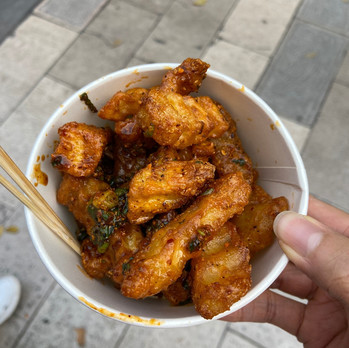
A couple in our group needed to catch a bus, so the driver dropped them off at Daluoshui Village. Another couple wasn't interested in the pig-trough boats and got off at their inn. We asked the driver to take us back to the morning's dock to see if there were others to share a boat.
At the dock, there were many more people than in the morning. We chose the "Princess Island + Dear Inn" route. We gathered a group of 8 and set off. The entire trip lasted 1 hour and 10 minutes—rowing took about an hour, and we had 10 minutes to go ashore for photos. Princess Island couldn't be landed on due to environmental protection, so we could only admire it from a distance. Dear Inn had become a dedicated photo spot due to too many visitors making it unsuitable for operation. The boat could only dock for 10 minutes; photos from outside were free, but entering the interior cost 20 RMB per person.
Throughout the boat ride, the happiest part was feeding the seagulls. They followed alongside the boat, constantly waiting for our "attacks" of food, their counterattack being to gobble down whatever we threw.
Returning to the Homestay: A "Light" Dinner of Three Dishes and Soup
We finished the whole tour around 5 p.m. and called the homestay owner, who kindly drove over to pick us up. Since we'd eaten quite heavily over the past two days, and I was still feeling the altitude sickness a bit, I didn't have much appetite. I'd let the owner know in advance that we'd eat at the homestay that evening and asked for something light.
Back in our room, we freshened up and rested for a while. At around 6 p.m., we were called for dinner. Three dishes and a soup (there was also a shredded meat dish I didn't manage to photograph), with some pickled vegetables on the side—it was quite good. You can't keep eating heavy food all the time; it's good to give your digestive system a break.
Day 4: Lugu Lake → Lijiang—A "Heart-Pounding" Journey
The Last Bit of Slow Time: Petting the Cat and Egg Fried Rice
We'd booked a 1 p.m. van to Lijiang—a 4-6 person group, with a 3.5-hour journey. The morning was ours to sleep in lazily, then get up, freshen up, head downstairs for breakfast, and of course, pet the cat.
I told the owner we'd check out at noon and asked if we could have some egg fried rice and soup for lunch at the homestay. We went back to the room and lazed around until 11 a.m., then started packing. At 11:30, we brought our luggage downstairs, had lunch, and checked out.
There were more guests at the homestay today, coming and going in waves. The owner made two trips to pick people up. We weren't in a hurry. After eating, we used the spare time to pet the cat as much as possible. At 12:40, the owner drove us to the meeting point, where he also needed to pick up two more passengers.
Waiting: A "Long" Wait
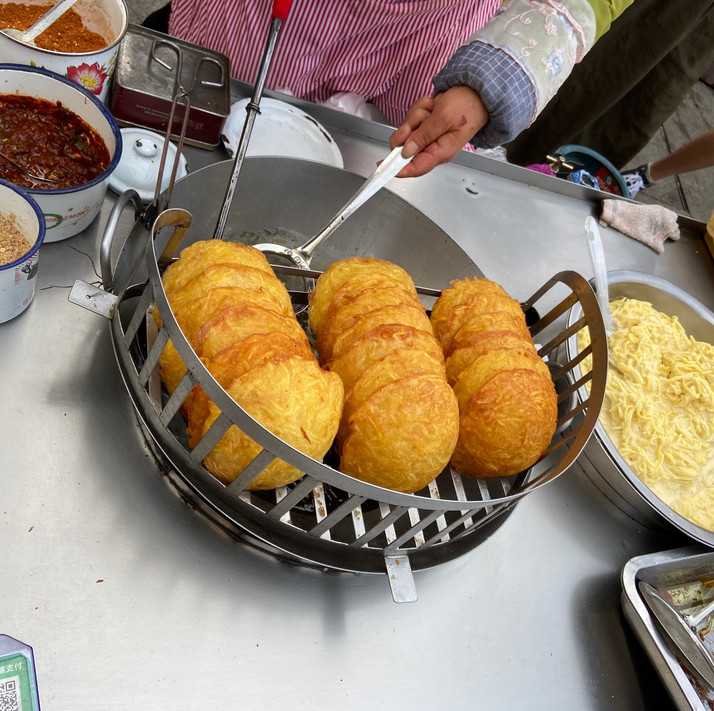
The owner dropped us off at the Sanjia Village meeting point, but the driver heading to Lijiang said he wouldn't arrive until 2 p.m.—we were the last to be picked up, and he still had four others to collect along the way. We dragged our luggage to a nearby restaurant to sit down. The staff knew we were waiting for a ride and kindly told us to make ourselves comfortable.
At 1:50 p.m., we headed back to the meeting point. At 2:05 p.m., the driver arrived, and we began our journey to Lijiang.
The Winding Mountain Road: A "Terrifying" Ride
The entire drive took 3.5 hours, and we arrived in Lijiang at 6 p.m. The driver stopped at a rest area for a meal along the way. There were countless sharp turns on the road. The locals were used to it, but I watched in terror—on one side were cliffs, on the other, the lake.
During the ride, I suddenly realized I hadn't seen my key pouch in a while. It contained both of our ID cards and credit cards. Could it have fallen out? From that moment on, a "miserable" journey began.
The driver dropped us off at the entrance to Lijiang Old Town. I searched through all our luggage but couldn't find the key pouch. At that moment, my heart sank—if we'd lost our IDs, what would happen to the rest of the trip?
Days 5-9: Lijiang and Dali—The "Slow Life" Continues (Unfinished)
(The original article was interrupted here, so the full itinerary for the remaining days cannot be presented. However, through the first four days of the journey, we can already grasp the true essence of "slow living": it's not about being sluggish or lazy, but about letting speed "retreat" and making life more detailed.)
Conclusion: Slow Down to See the Real Scenery
Our 9-day, 8-night Yunnan trip had its hiccups—the electric scooter breakdown, altitude sickness, the missing key pouch—but these "accidents" became the most unforgettable memories.
At Lugu Lake, we learned to hitchhike. On the Walking Marriage Bridge, we learned to stroll. On the pig-trough boat, we learned to feed seagulls. These seemingly "time-wasting" activities were precisely the most precious parts of the journey.
As "slow living" advocate Carl Honoré put it: "Slow living" isn't about dawdling, and certainly not about laziness. It's about letting the speed indicator "retreat" and making life more refined.
Travel is like this. And so is life.
The next time you plan a trip, try slowing down: don't rush from one attraction to another, don't treat it like a checklist, and don't take photos just for the sake of taking photos. Find a place you love, settle in, and live like a local—go to the morning market for flowers, spend your afternoons daydreaming in a café, and take evening walks by the lake.
You'll discover that the world is more beautiful than you ever imagined.
Practical Tips Summary:
- Transportation: Activate Kunming metro/bus QR codes on Alipay in advance; Lugu Lake airport shuttle waits 20 minutes before departing—if you miss it, you'll need to find your own ride
- Accommodation: Langfang Village in Lugu Lake is quieter than Daluoshui Village, ideal for those seeking peace
- Lake Tour: Shared tours cost 50 RMB per person, cheaper than booking through travel apps; pig-trough boats can be arranged on-site with other travelers
- Clothing: Winter in Yunnan has large temperature differences between day and night—a down jacket is essential
- Medications: Motion sickness pills, digestive medicine, and cold remedies—don't skimp on any
- Documents: Keep your ID card on you at all times; it's best to have a photocopy or digital backup
You should also read:

Cloud Travelogue · Dali of Wind, Flowers, Snow, and Moon: A Three-Day, Two-Night Journey of a Free Spirit
Cloud Travelogue · Dali of Wind, Flowers, Snow, and Moon: A Three-Day, Two-Night Journey of a Free Spirit I am a cultured female foodie with a touch of rogue charm. I slung on my backpack, took my lover's hand, and set off on a spontaneous…
Continue reading...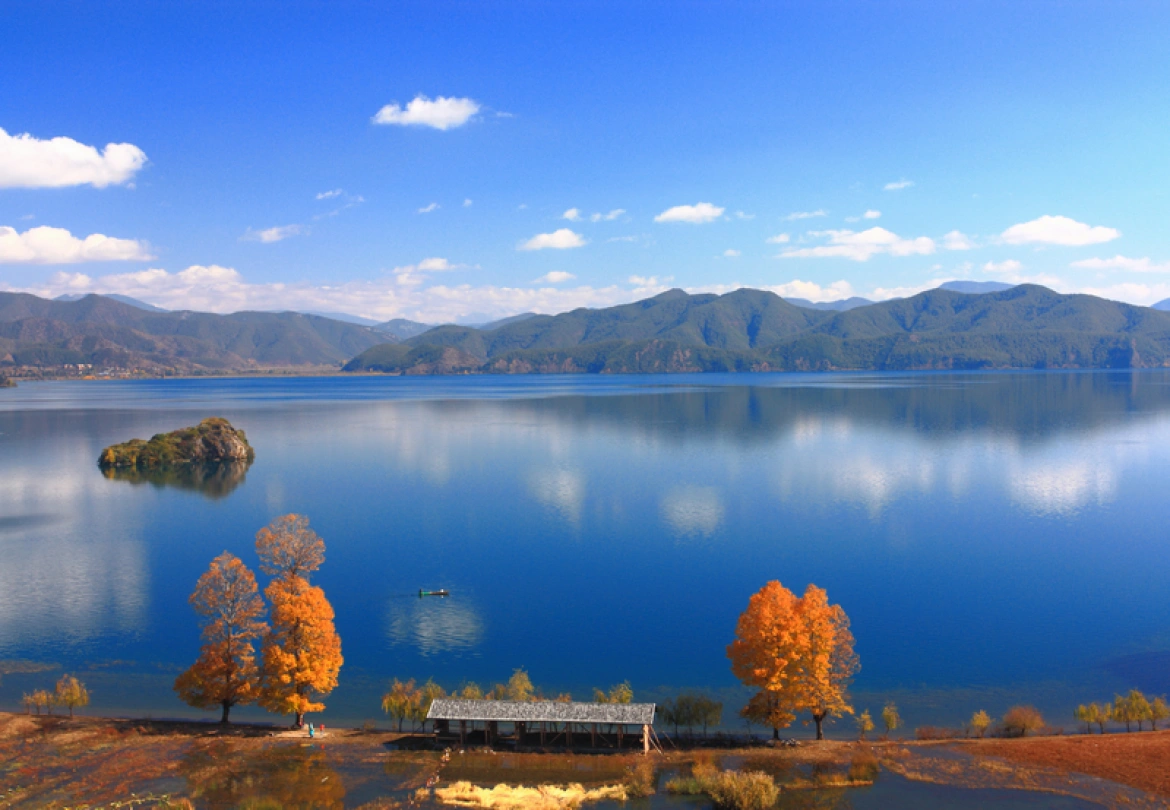
A Spiritual Journey to Lugu Lake in Lijiang: Experiencing the Legend of the Kingdom of Women! (Reproduction and Hotlinking Prohibited)
A Spiritual Journey to Lugu Lake in Lijiang: Experiencing the Legend of the Kingdom of Women! (Reproduction and Hotlinking Prohibited) Off-road自驾, food, hotel and民宿 reviews, Featured Traveler, Tank 300 owner, 200,000 km of self-driving experience. WeChat: y01294987 Ninglang Yi Autonomous County 2010.11.08 · 7 days…
Continue reading...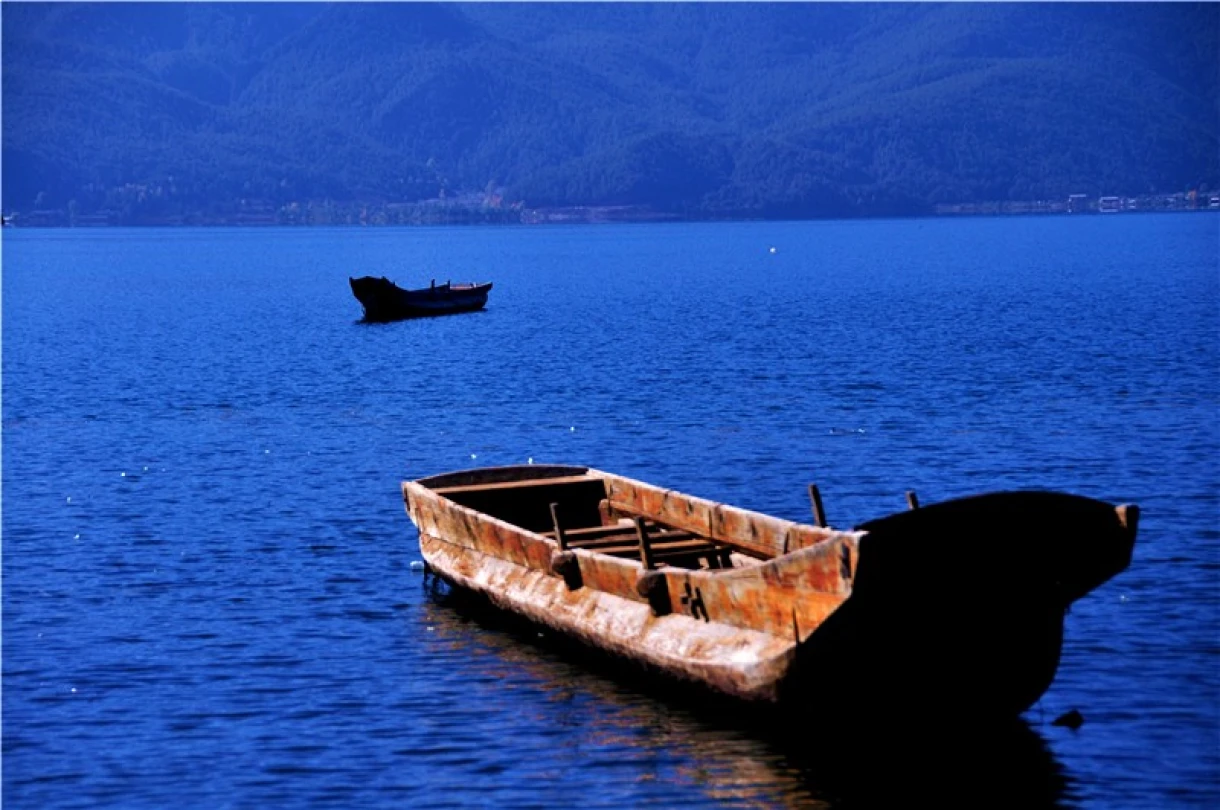
Hiking Around Lugu Lake: Measuring This Mysterious Highland Pearl on Foot
Hiking Around Lugu Lake: Measuring This Mysterious Highland Pearl on Foot Introduction: A Date with the Lake At the border between Yunnan and Sichuan provinces lies a highland lake embraced by mountains, embedded like a sapphire in the folds of the Hengduan mountain range. Here,…
Continue reading...