A 5-Day Central Yunnan Wander: Embracing Spring in Kunming, 2023
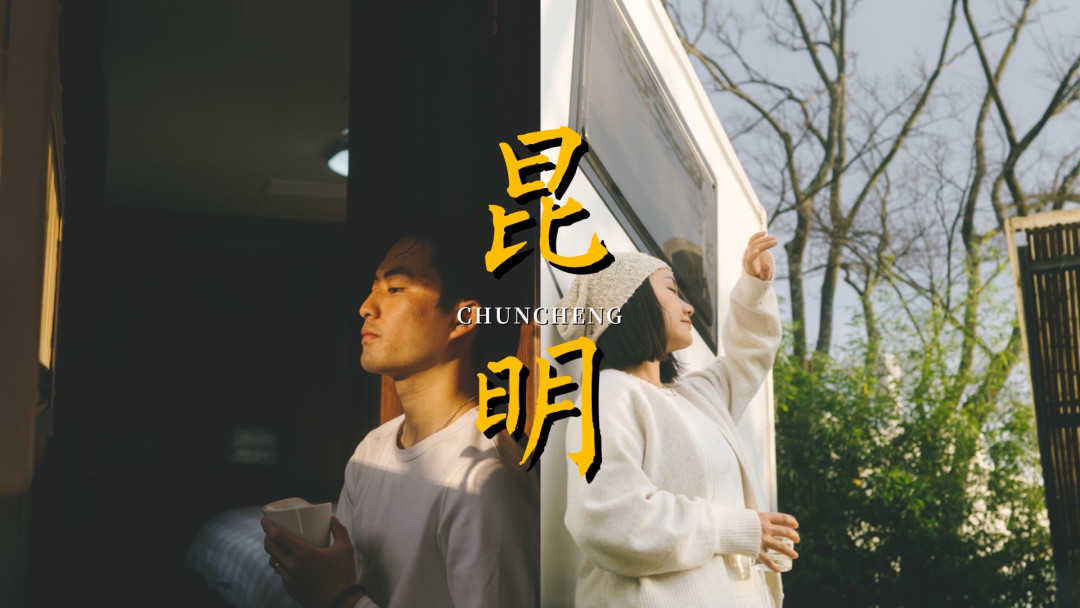
A 5-Day Central Yunnan Wander: Embracing Spring in Kunming, 2023
Prologue: When the Spring Breeze Sweeps Through the Spring City
The changing of seasons always happens without notice. Just as the last plane tree leaves fall before the door, spring in Kunming quietly arrives. February in the Spring City is the gentlest time of the year.
As a photographer couple born in the mid-1990s, we're used to capturing life's cinematic moments through our lenses. This year, we decided to take an unconventional route—no cherry blossoms at the zoo, no hanging winter jasmine at Green Lake. Instead, we chose a Central Yunnan itinerary to explore the corners around Kunming that spring has kissed.
From the ancient fishing village on the southeastern shore of Dianchi Lake to the flower fields beside Yangzonghai Lake; from the Flower Avenue at the Expo Garden to the billion-year-old karst caves in Jiuxiang; and finally ascending Jiaozi Snow Mountain to savor the tail end of winter in early spring's chill—this journey was about pocketing the entire spring.
Wolong Ancient Fishing Village: A Time Tunnel Through 600 Years
A Forgotten Fishing Village
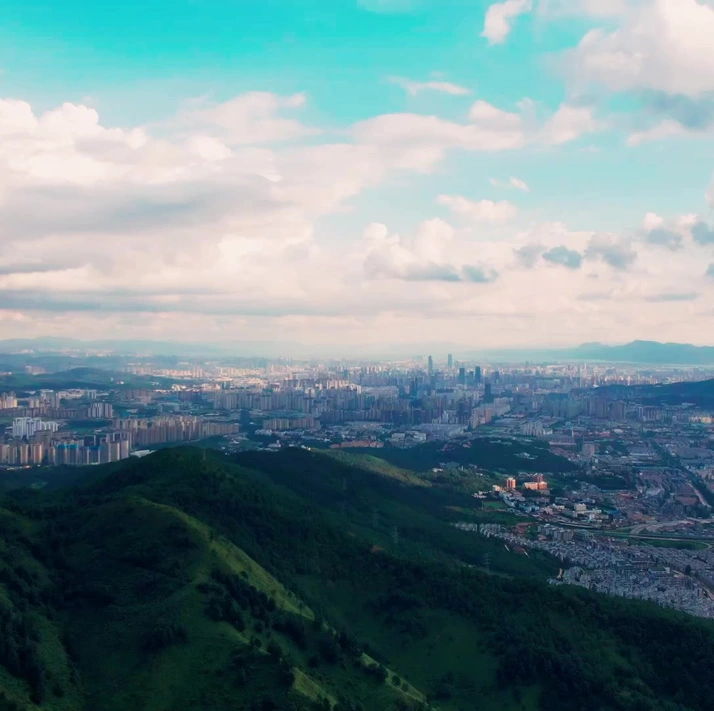
Wolong Ancient Fishing Village—the name itself carries a poetic air. Nestled on the southeastern shore of Dianchi Lake, backed by Qixing Mountain and facing the lake, its history dates back to 1381, over 600 years ago. This was once the original setting of "Fishing with Star Lanterns," one of the eight scenic views of ancient Chenggong. Imagine it: fishing fires flickering, stars twinkling in the night sky—what a picture that must have been.
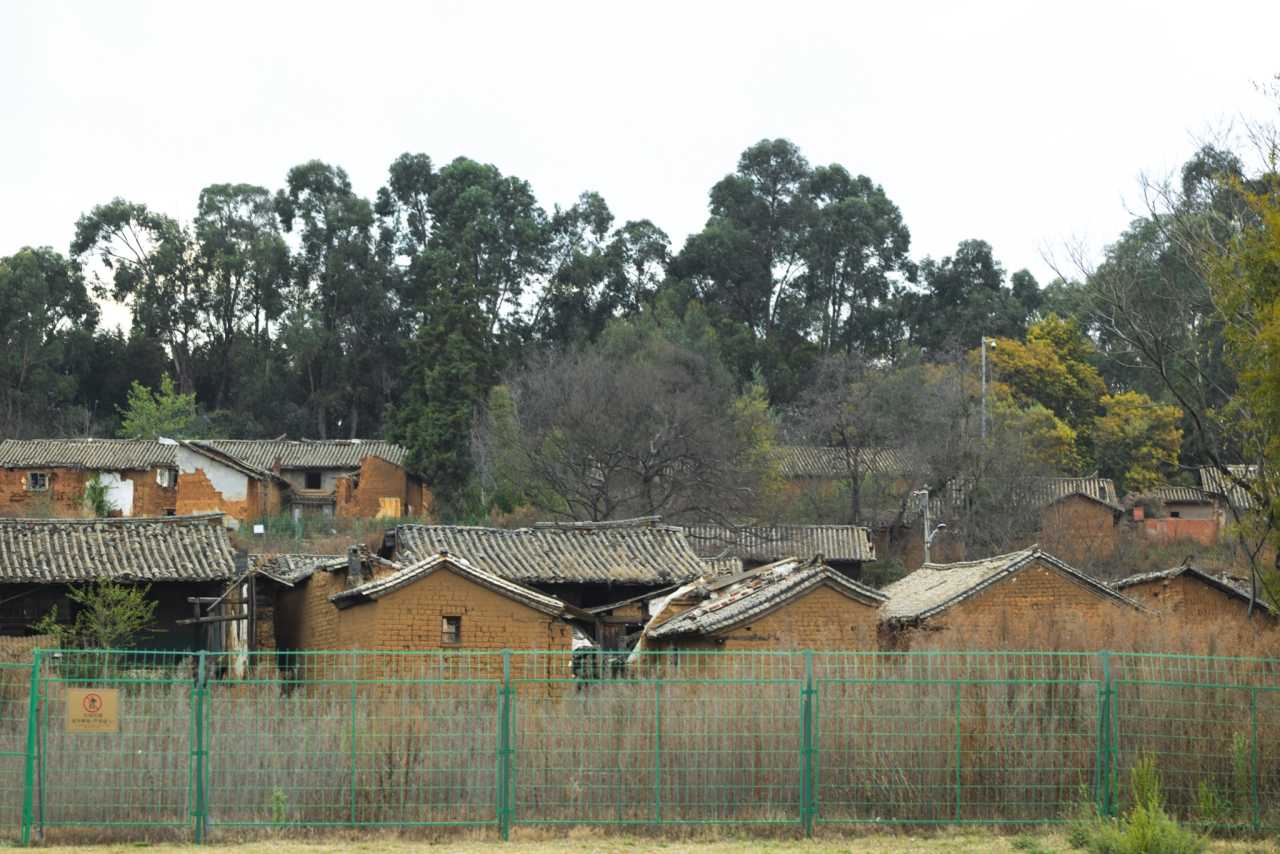
Originally named "Wolongpu" (Crouching Dragon Cove), the village got its name from a stone inscription at the Chuien Temple: "Mountains dwell like a crouching dragon; near the sea, it's called a cove." Today, it preserves a wealth of Qing Dynasty and Republican-era buildings. Though some have fallen into disrepair, that sense of time's sedimentation is strangely captivating.
A "Seal-Form" House in the Rapeseed Flower Fields
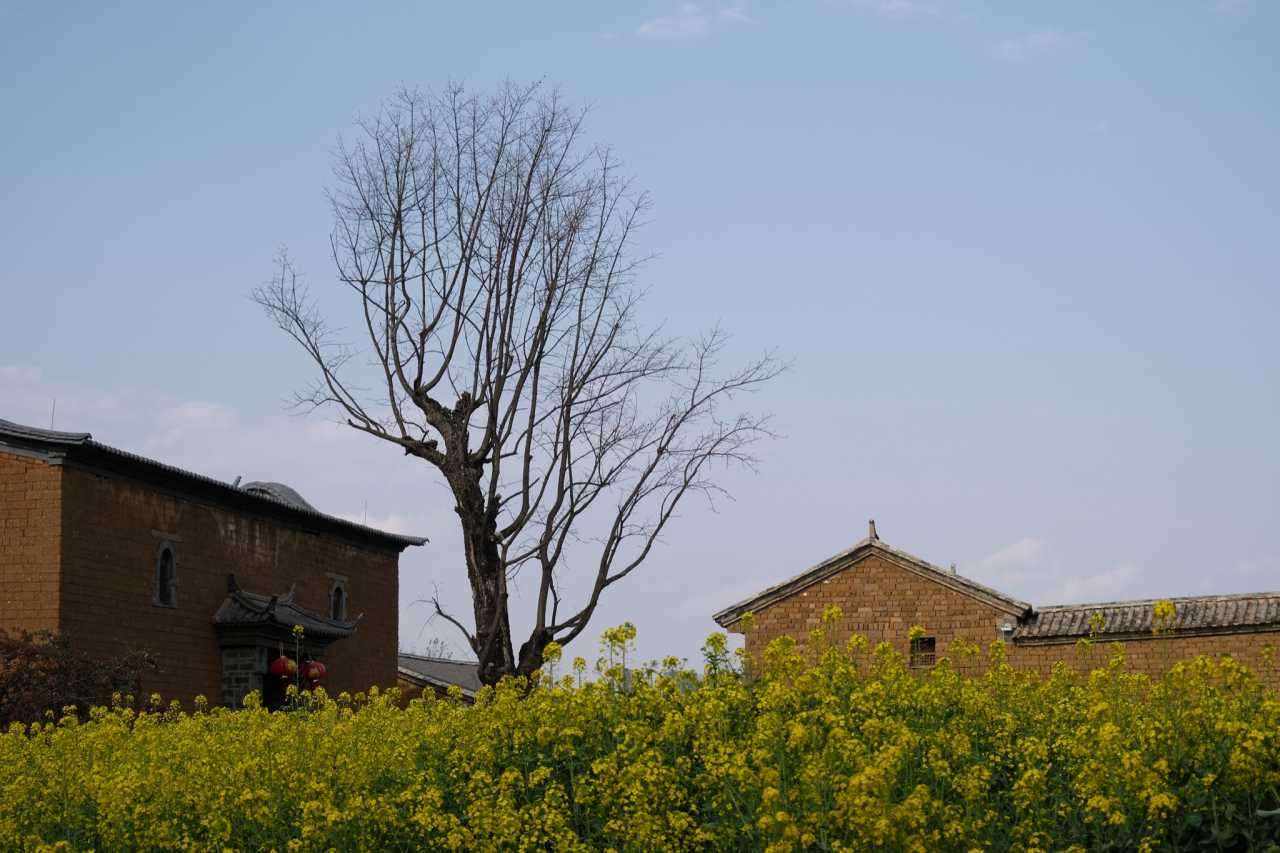
Entering the ancient village, buildings on the left are fenced off with green barriers. Through the gaps, you can see collapsed beams and exposed mud bricks. But it's this very decay that makes the still-standing structures seem even more precious.
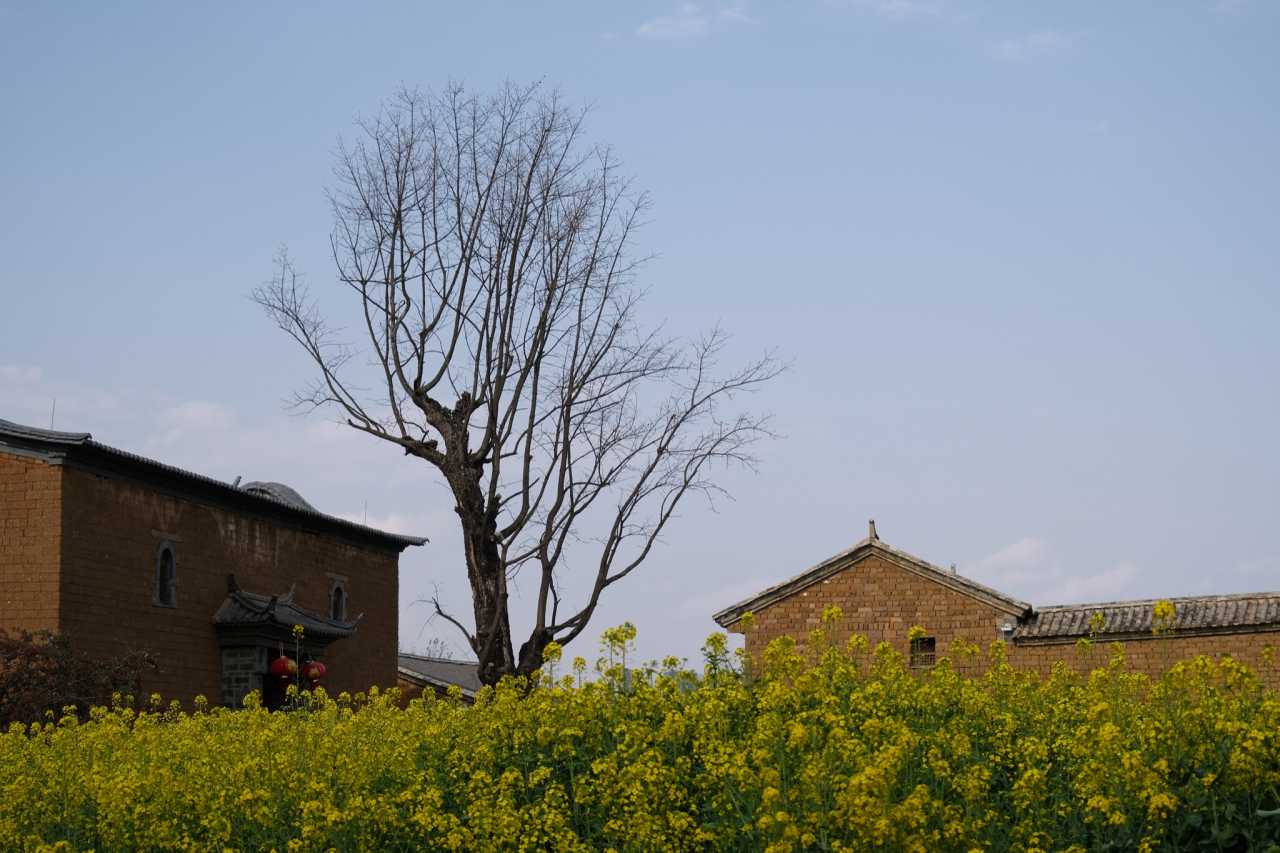
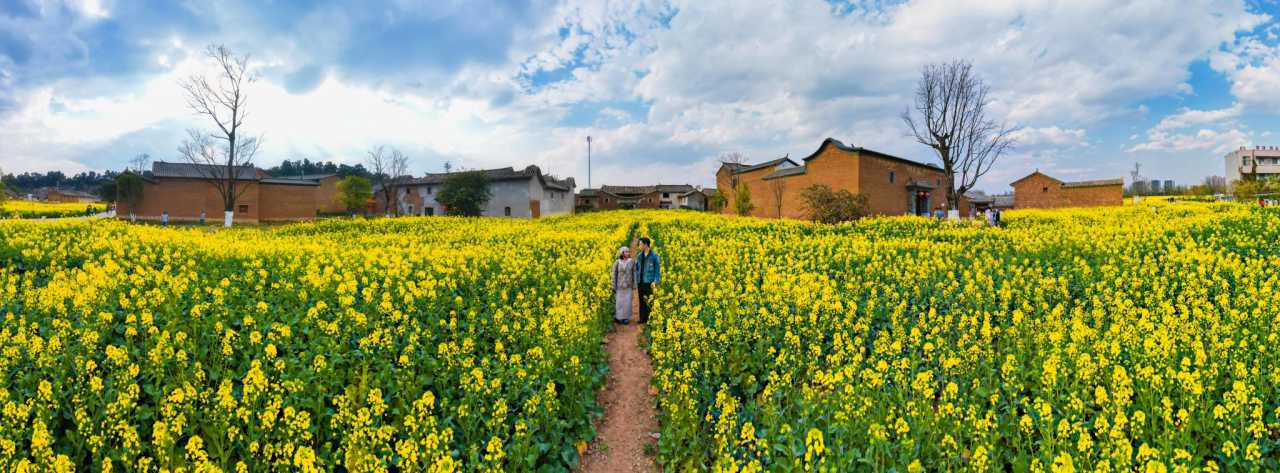
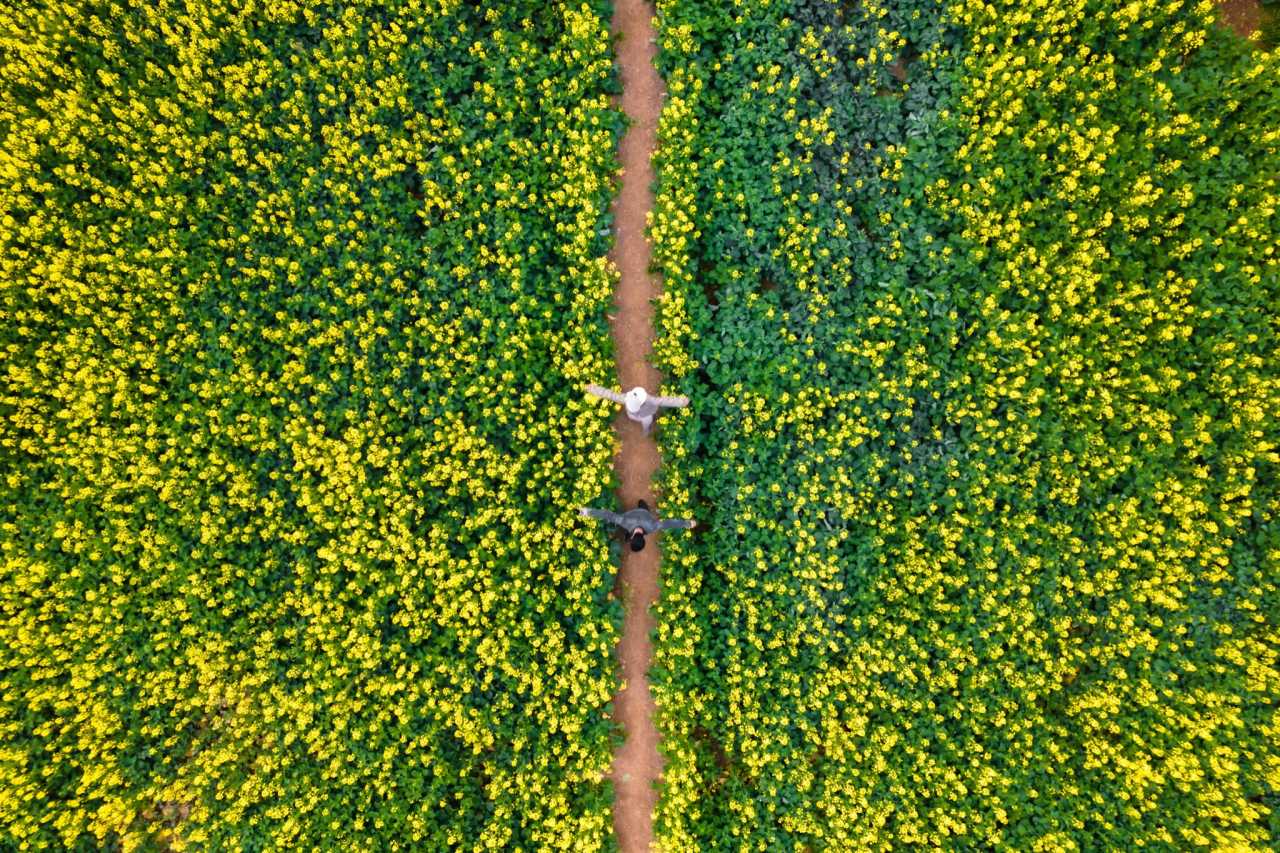
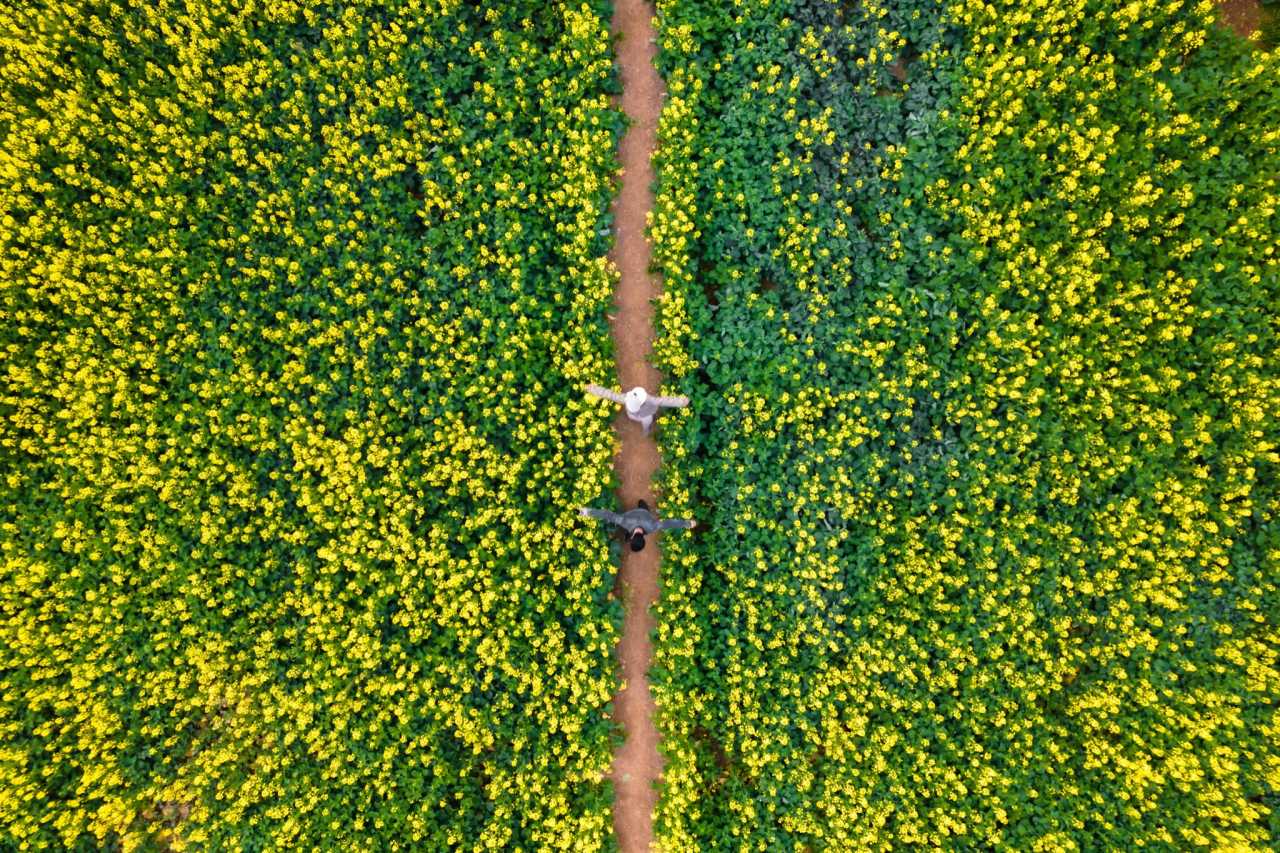
At a fork in the road, we were completely drawn in by a golden sea of rapeseed flowers. In Wolong Ancient Fishing Village, the most typical dwellings are Kunming's unique "one-seal" buildings (yī kē yìn)—a Han-style courtyard house centered around a patio, surrounded by main rooms, side rooms, and a reverse hall, forming an introverted, private space. The ochre walls intertwine with the golden flowers like a warm-toned oil painting.
At the heart of the rapeseed field stands one such "one-seal" building, now converted into a library. Walking in, we happened upon an exhibition called "Transforming Truth into Beauty, Seeing All Beings," featuring portraits of Yunnan's ethnic minorities. Sunlight streamed through the patio, casting dappled shadows on the wooden doorframes, lending the ancient space a lively touch.
The Legend of Huaguang Temple
At the fork, a temple surrounded by green barriers caught my eye—Huaguang Temple. The horizontal plaque above the door read "Boundless Dharma Power," sparking my curiosity about its story. Later, I found the answer at the museum: legend says Huaguang was the Fire God, upright and filial. At the time, a dragon king was wreaking havoc, tormenting the people, and Huaguang's father fell to the dragon king's hand. Huaguang avenged his father, ultimately slaying the dragon king. The temple was built in the 18th year of the Republic of China (1929) and still enshrines the Great Emperor Huaguang.
Sunset Surprise by Dianchi Lake
As evening fell, we headed toward Dianchi Lake along the direction of Jinhai Pavilion. Seagulls still circled overhead, reluctant to leave the Spring City. I thought the cloudy sky would deny us a sunset, but then the dark clouds suddenly parted, revealing a massive sun. In that moment, the sky blazed with sunset colors, dyed an intense orange-red. It was the first time I'd seen such a stunning sunset in Kunming—it felt like being back on a Malaysian beach.
This, I think, is why we love our hometown—it always gives you endless surprises when you least expect them.
Kunming Expo Garden: New Ways to Enjoy an Old Park
From 1999 to 2023
Many people's memories of the Expo Garden are stuck in 1999. That year, the Kunming World Horticultural Exposition was held here, with mascots of two monkeys holding flowers. In the summer of 2000, almost every Kunming kid was brought here by their parents to take photos with those monkeys. Returning years later, the little monkeys at the entrance still hold their bouquets, but I've grown from a little girl into a woman nearing thirty.
The Poppy's Moment in the Spotlight
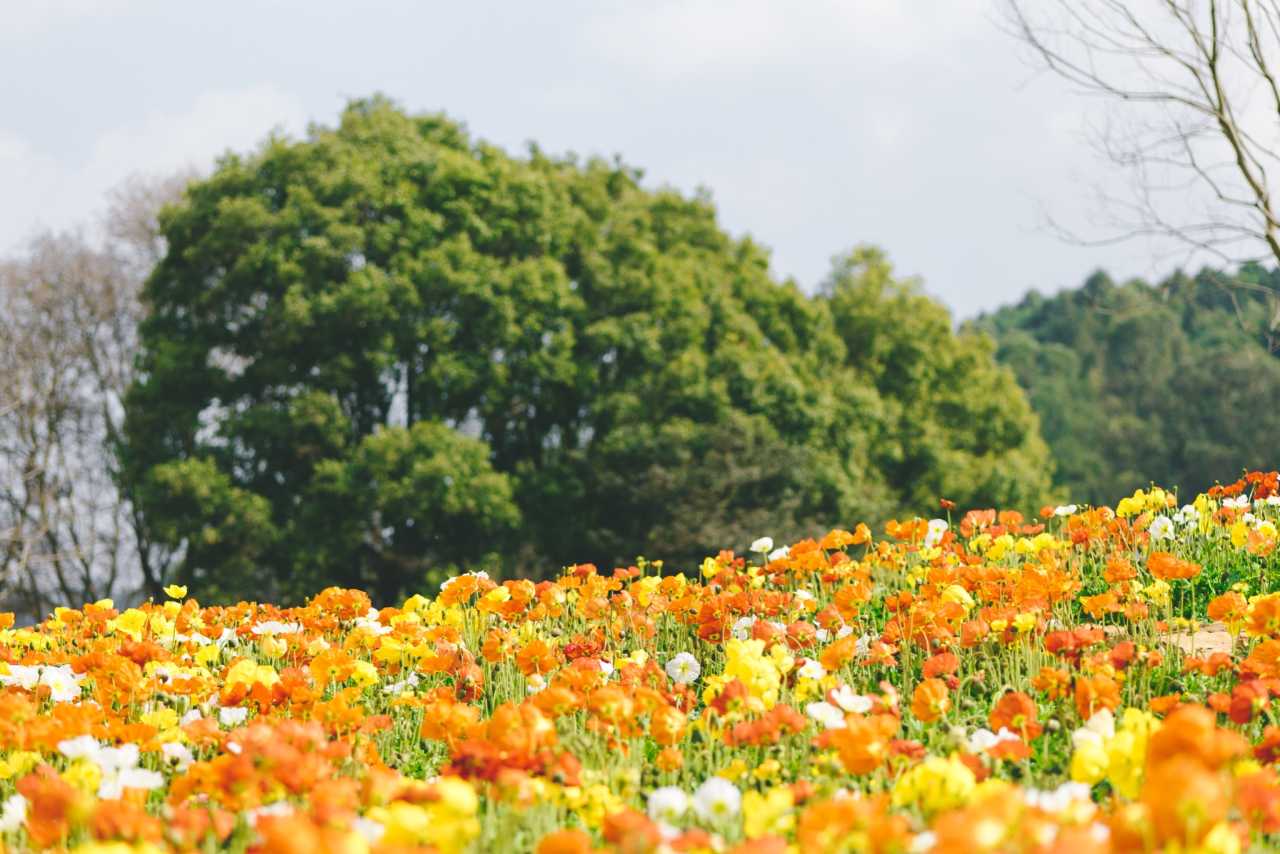
Strolling along Flower Avenue, this year's star—the poppy—was in full bloom. Their light heads swayed in the breeze, red, yellow, pink, white, like a flock of dancing butterflies. Spring has that magic—it makes the whole world feel lighter.
Relaxation in the Bonsai Garden
The cloudy sky suddenly cleared, and we ducked into the Bonsai Garden to cool off. The combination of square pavilions and covered corridors exuded Eastern charm. Bonsai trees were arranged in perfect harmony, playing with the sunlight. Elderly couples sat on stone benches before a pond of spring water, where red, white, and yellow koi circled around people feeding them. Admiring the view and watching the fish—this is the greatest pleasure of a spring day.
A Trip to Southeast Asia
At the end of Flower Avenue stands the iconic seven-color peacock flower sculpture. But the Expo Garden has changed in other ways too—the former Laos Garden has become a Thai restaurant, with Southeast Asian street food stalls out front. The Pakistan Garden and Vietnam Garden areas have been transformed into the Zeng Xiaolian Art Museum, with red brick walls, white drapes, and greenery pouring in, making you feel like you've truly arrived in Southeast Asia.
Springtime in a Camper Van
What surprised me most was the Xingyunxuan Camper Van Campground. Each private courtyard had a trailer camper parked inside, complete with hot springs, stargazing, and barbecue facilities. The white interior was a world unto itself—bedroom, shower, lounge, reading area—everything you needed. Evening sunlight broke through the clouds, casting cinematic shadows inside the camper. Standing in the courtyard, spring was right above you.
The next morning, we went to Songyuan Road near Gate 3 of the Expo Garden, where a new "heart-shaped" fitness trail had been built. The white heart wound through green forest, with cherry blossoms and emerald bamboo lining the path—the most delightful spring morning imaginable.
Yangzonghai Lake: Kunming's "Second Sea"
A Blue Gem on the Plateau
Yangzonghai Lake is one of Yunnan's nine major plateau lakes, spanning Chenggong, Chenggong District, and Yiliang County. We drove out of Kunming city to find spring in the surrounding area. As the car passed through villages, we heard the whistle of a train overhead—the century-old Yunnan-Vietnam Railway, still in operation today.
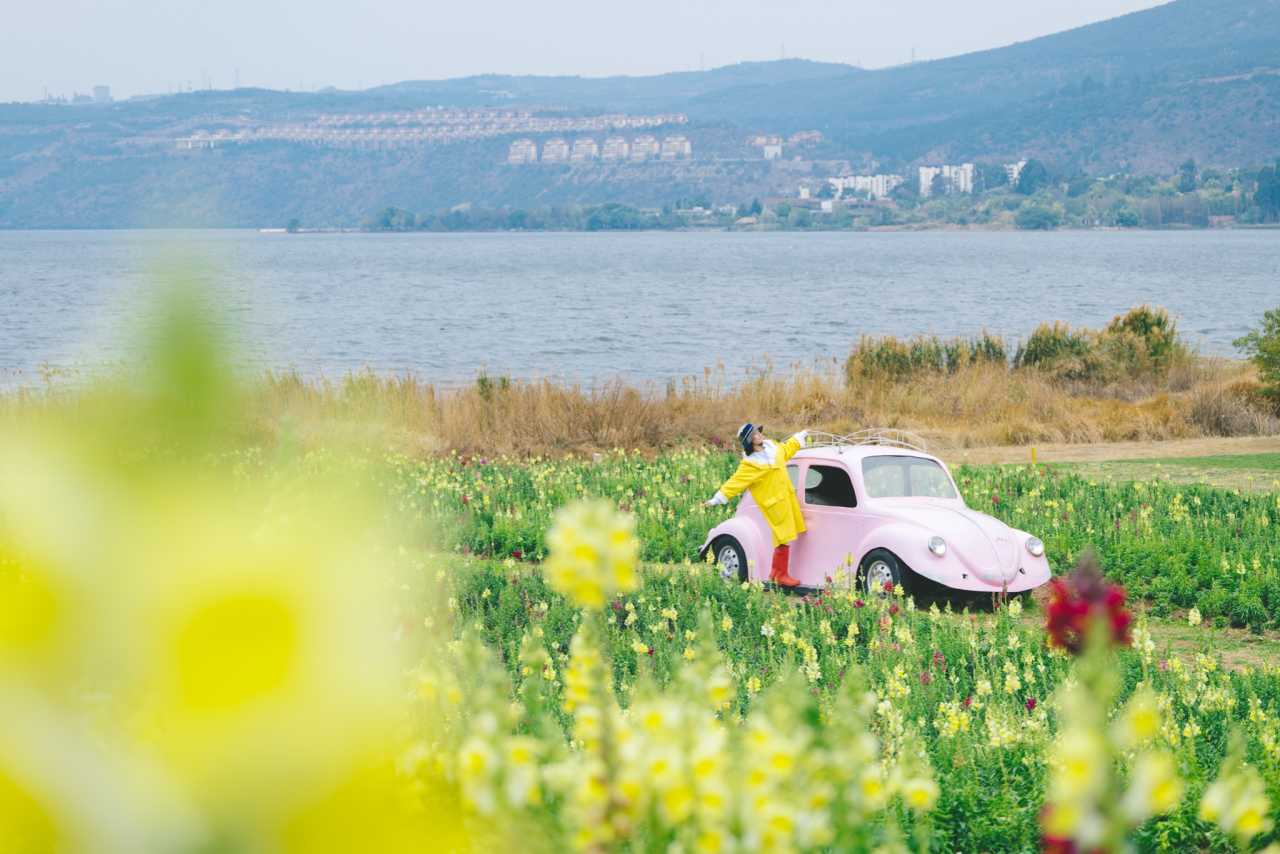
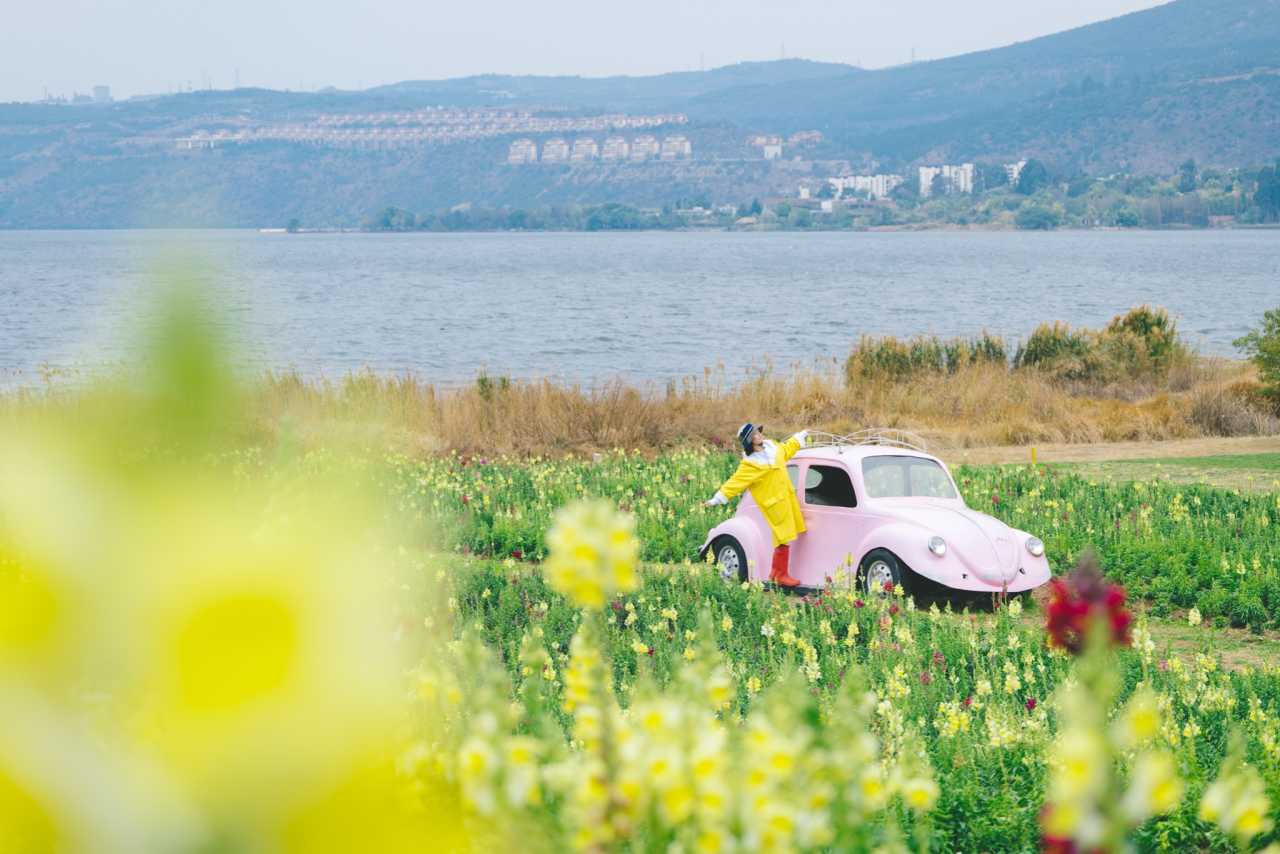
At the Lakeside Wetland Park of the OCT Kunming Yangzonghai Resort, spring's goldfish flowers were already showing their faces. A gentle breeze brought wafts of fragrance, while distant chimneys and the flower fields below created a scene straight out of a comic book. The lake water lapped softly against the shore; waterbirds glided on the surface. Even on an overcast day, it was breathtakingly pure.
Pastoral Fun: Getting Up Close with Animals
Higher up in the hills, there was a camp called "Pastoral Fun." As we approached the entrance, a dopey alpaca stared at us fixedly. The auntie managing the camp gave us two stalks of lettuce, and I took the chance to touch its nose—softer than I'd imagined.
Next to it, a chicken coop housed a breed I'd never seen before, with the lovely name "hat chickens" (màozi jī). One stood out: a tiny head and body, but with flamboyant feathers and a majestic comb, strutting around with incredible poise. Further in, there were ostriches and lambs. The ostriches curiously peered into our lens, while the lambs showed no fear—if you got close, a whole flock would come running toward you.
Hilltop Coffee and a European Manor
Following the mountain path upward, we found a hilltop coffee camp. On a clear day, you could order a coffee and watch the romantic sunset over Yangzonghai Lake, a uniquely Kunming experience. Higher still, we reached the Qunyinghui Hotel—a red-walled European-style retro manor. Green vines climbed the exterior walls, and metal-framed fences added a fairy-tale atmosphere. Staying here, you look up to green mountains and step out to blue lake views. No wonder Yangzonghai is called Kunming's "second sea."
Jiuxiang: A 600-Million-Year Time Capsule
Entering Yinxi Gorge by Boat
As native Yunnanese, this was our first time visiting the Jiuxiang Karst Caves. Formed in the Sinian Period 600 million years ago, the site boasts over a hundred caves of various sizes, making it China's largest and most numerous cave system, earning the title "Cave Museum."
In February, the road to Jiuxiang was lined with blooming cherry blossoms. We took an elevator down one level, put on safety helmets, and boarded a white electric boat to enter Yinxi Gorge. The gorge stretches 600 meters, with ancient cliffs on both sides and a clear, deep green stream below. This was one of the filming locations for the movie The Myth.
The Lion Hall and Underground Wonders
After disembarking, we followed the boardwalk into the cave complex. The first sight to greet us was a "Prehistoric Wonder"—stromatolites, fossils formed by the accumulation of dead blue-green algae that grew in ancient marine tidal environments 600 million years ago. Nature's brush can create such orderly, straight lines—it's awe-inspiring.
Further in, we reached the Lion Hall, a massive underground chamber covering 15,000 square meters—the largest underground plaza in the world, capable of holding tens of thousands of people. The entire ceiling is a single intact slab with several spiral depressions embedded in it, seemingly seamless. Under the dazzling lights, the cave's various formations were magnified, sparking endless imagination.
The Male and Female Waterfalls and the "Divine Fields"
The last cave held the Male and Female Waterfalls, another Myth filming location. Two waterfalls plunge from a 30-meter-high cliff into a pool over 10 meters deep, with a thunderous roar. Standing outside the cave, you couldn't hear each other speak—only gestures worked. The majestic, powerful scene was like two romantic lovers, inseparable.
Further down, we encountered the "Divine Fields"—scientifically known as rimstone dams. Over 100 square meters of large-scale rimstone lake groups, some over 10 meters deep, were arranged in layered patterns. Among the fields stood a "Solitary Peak," a cave stalagmite formed by layers of calcite deposits wrapping around fallen rock, hailed by international cave experts as a world wonder.
A Glimpse from the Cable Car
After exploring, we took the cable car out. Spanning nearly 1,000 meters, it soared like a rainbow over green mountains and forests. Just before reaching the end, we saw the Zhangkoudong ancient human site below—spanning tens of thousands of years, it was profoundly moving.
Jiaozi Snow Mountain: Early Spring on "Yunnan's Five Sacred Peaks"
Southerners' Obsession with Snow

Jiaozi Snow Mountain, one of Yunnan's five sacred peaks, stands at 4,344.1 meters above sea level. Named for its shape resembling a bridal sedan chair (jiàozi), it sits at the border of Luquan County and Dongchuan District. It's the northern hemisphere's lowest-latitude snow mountain and the highest peak in Central Yunnan.
Every winter, endless streams of visitors come here to indulge their obsession with snow. But in early spring, Jiaozi Snow Mountain is no longer a world of pure white—fresh green spreads across the mountainsides, with only a few snow-covered pines near the summit.
Icefalls and Snowy Pines
We arrived at 1:00 PM, only enough time for a short loop. Following the boardwalk upward, past Flower Stream and Flying Waterfall, our final destination was Little Heavenly Pond. For the first time, we saw an icefall up close—it was spectacular. When the sun peeked through the clouds for a few seconds, illuminating the icefall, it became crystal clear.
The higher we climbed, the closer we got to the snow-laden pines. The overcast sky made them look especially still, as if we were in a Nordic forest. The frost on the trees had been shaped by the dry wind into angular dry ice crystals, hanging from the branches with a unique charm.
Little Heavenly Pond: The Place Closest to the Sky
After several steep, vertical boardwalk staircases, we finally reached the end of the loop—Little Heavenly Pond. At an altitude of about 3,900 meters, every tree around us was coated in ice and snow. On snowy mountains, heavenly ponds are always seen as the places closest to the sky, pure and flawless. The dark gray water and the snow-covered pines on the shore created an otherworldly scene.
We thought about pushing for the summit, but we were told it would take at least an hour, and time was running out. For safety, we gave up on reaching the sedan chair peak. But the view before us was already healing enough. Walking properly is never easy—it requires focus and intention. On a journey, it's always the harder paths that lead to the best views.
At 5:30 PM, we made it to the cable car just before it stopped running. I heard that in April, you can see the red azaleas blooming below from the cable car. In early spring, though we hadn't yet seen the azaleas in full bloom, we could still let Southerners cling to winter for a few more days.
Epilogue: Spring City, Forever Home
Five days of travel have ended, but spring's story is just beginning.
From the rapeseed fields of Wolong Ancient Fishing Village to the poppies of the Expo Garden; from the goldfish flowers of Yangzonghai Lake to the billion-year-old caves of Jiuxiang; from the icefalls of Jiaozi Snow Mountain to the sunset over Dianchi Lake—Kunming's spring is an eternal romance.
Everything in the city is infused with romantic color by spring, and our hearts are as warm as the season. No matter how far the world stretches, for Yunnanese, nothing compares to the spring of our hometown. Because here, in every unexpected moment, lies infinite surprise.
Practical Tips: - Best Time: Late February to early March, when cherry blossoms, rapeseed flowers, and poppies bloom simultaneously - Transport: Self-driving recommended; attractions are far apart - Accommodation: The camper van camp at the Expo Garden and the Qunyinghui Hotel at Yangzonghai Lake are both worth trying - Gear: Warm clothing needed for Jiaozi Snow Mountain; temperatures are low inside the caves - Food: The Thai restaurant in the Expo Garden and the farm stays around Yangzonghai Lake are excellent choices
Original article by @Chen Meigui Zheng Meili. Reproduction requires permission from the author.
You should also read:
Yunnan Travel Mastery: From Beginner to Pro-Level Player – A Complete Guide
Yunnan Travel Mastery: From Beginner to Pro-Level Player – A Complete Guide "Either travel or read, but your body and soul must be on the road." This quote has been repeated countless times, but very few people truly manage to be "on the road" and…
Continue reading...
Escaping Nanning, Falling Under Lijiang's Spell: Our Four-Person, Ten-Day Yunnan Dream
Escaping Nanning, Falling Under Lijiang's Spell: Our Four-Person, Ten-Day Yunnan Dream Before We Set Off: No Pain, No Obsession Have you ever had that impulse—suddenly tired of the office fluorescent lights, the crush of the subway, the endless parade of identical takeout boxes, and just…
Continue reading...
Solo in Yunnan: A Wanderer’s Guide to the Land of Eternal Spring
Solo in Yunnan: A Wanderer’s Guide to the Land of Eternal Spring There’s something magical about traveling alone. No compromises, no schedules to keep, no one to please but yourself. I’ve been on the road for nearly three months now, and not once have I…
Continue reading...