A City Bathed in Purple: A Solo Five-Day City Walk in Kunming
A City Bathed in Purple: A Solo Five-Day City Walk in Kunming
Prologue: A Long-Planned Rendezvous with Purple
The May breeze carries the crispness unique to the Yunnan-Guizhou Plateau, gently brushing every corner of this Spring City. For a romantic soul obsessed with the color purple, the blooming season of jacaranda trees is an irresistible summons. After meticulously comparing the flowering schedules of China's two premier flower-chasing destinations—Kunming in Yunnan and Xichang in Sichuan—I ultimately set my sights on Kunming. A decade ago, I had rushed through this city, sparing it only a few fleeting hours. Ten years later, I packed my tripod and two cameras and embarked alone on this five-day flower pilgrimage.
Many people ask me: Is Kunming really worth five days?
The answer is a resounding yes. This city is tailor-made for city walks and cycling, especially when jacaranda blossoms become the guiding thread. Flower viewing, park strolling, food hunting, market exploring, exhibition browsing—each day brims with surprises. In April and May, the plateau offers perfect temperatures, brilliant sunshine, and a gentle breeze. Beyond the jacarandas, roses, bougainvillea, and hydrangeas are all in full bloom, as if the entire city has turned into an overturned palette, bursting with the most vivid colors imaginable.
About Jacaranda: A Forty-Year Romance
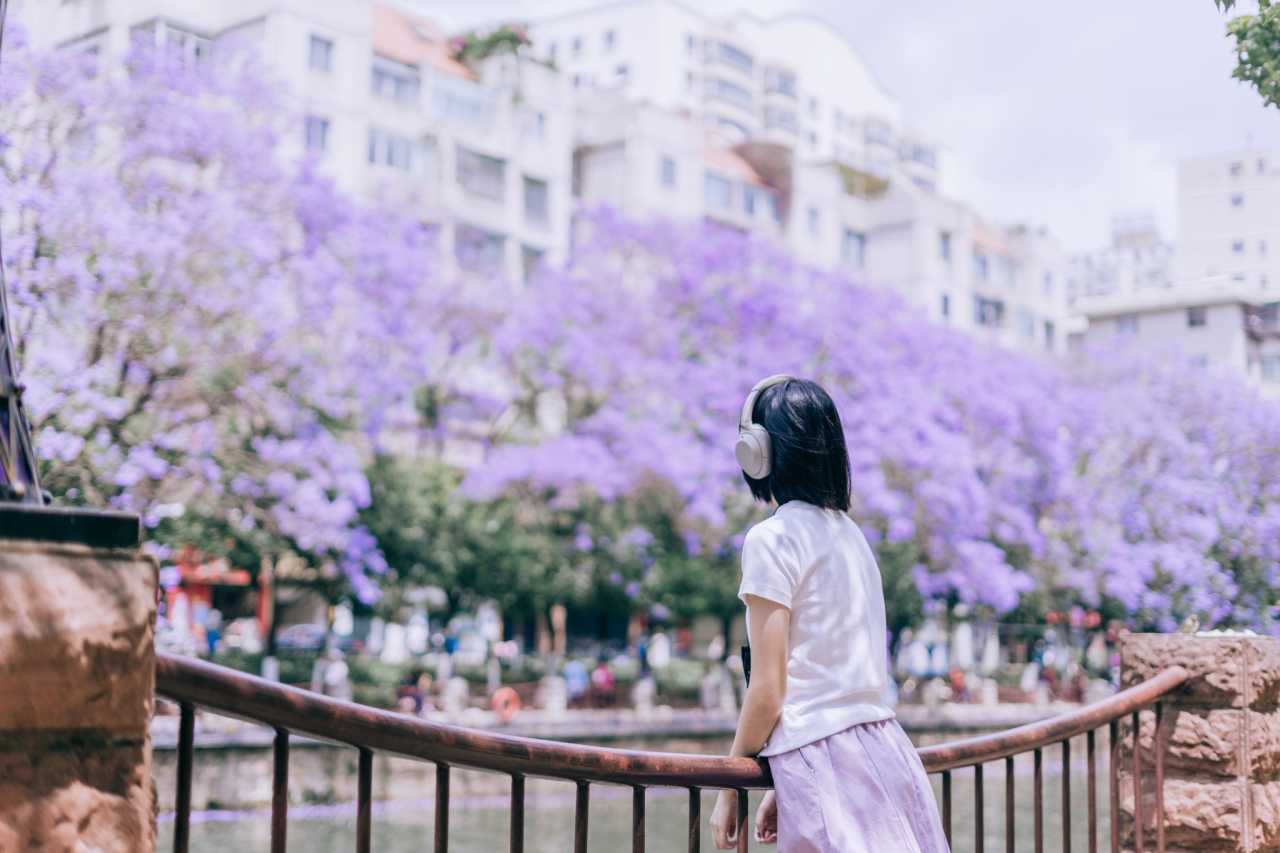
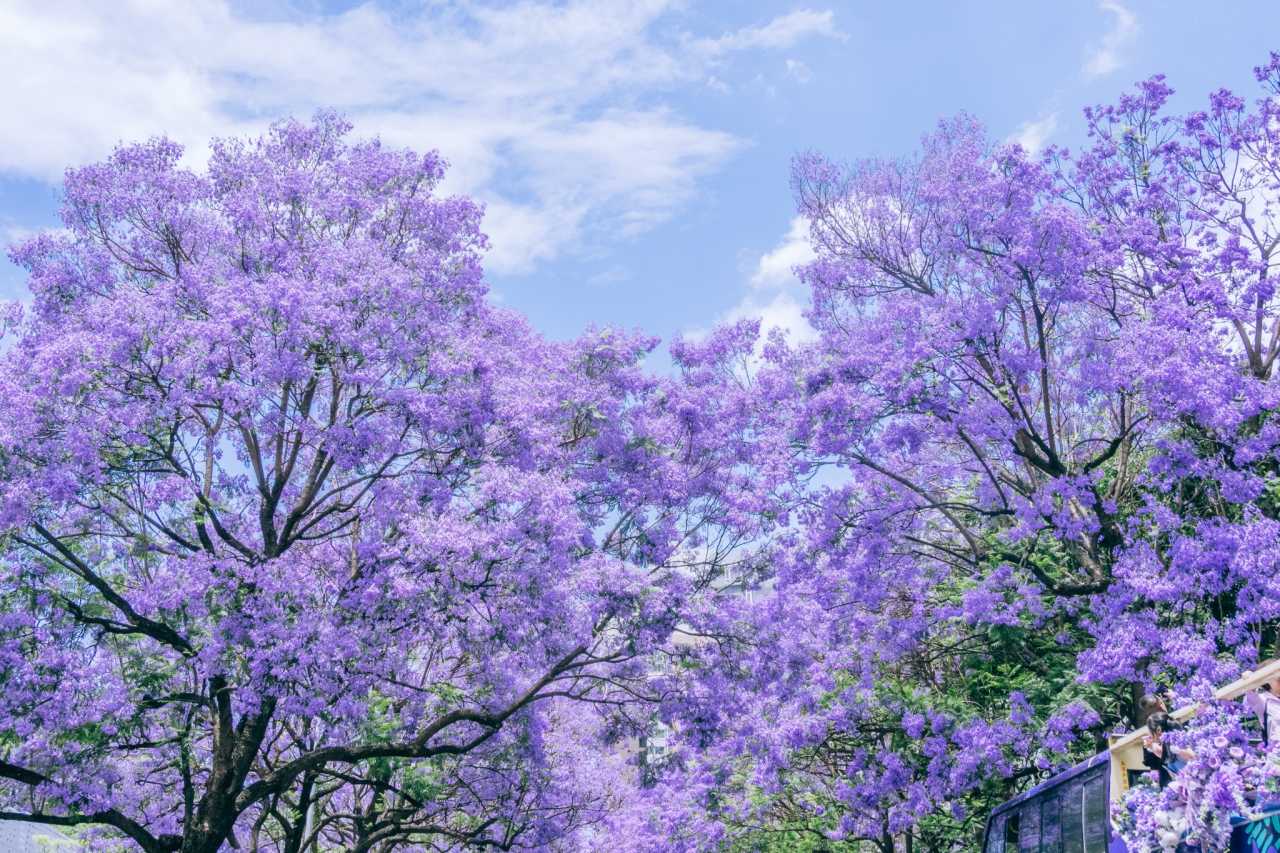
The jacaranda tree is native to South America—Brazil, Bolivia, and Argentina. In 1984, the Kunming Institute of Botany at the Chinese Academy of Sciences first introduced the species from Algeria. From that moment, this purple spirit began to take root and flourish across Kunming and the surrounding areas of Yunnan. Forty years later, every April to May, half the streets of this Spring City are immersed in purple romance.
In its native habitat, the jacaranda's flowering period can last over two months. But in Kunming, it typically lasts only a single month, with the peak bloom barely a week. This brevity makes its beauty all the more precious.
Day 1: Along the Panlong River, First Glimpse of That Purple
Guangzhou had been drenched in rain for an entire month straight, and I was desperately craving sunshine. A seven-hour high-speed train ride is nothing new for a working stiff accustomed to long journeys to save money. I arrived at Kunming South Station in the early hours, just in time to catch the last subway train into the city center. In 2014, Kunming's Metro Lines 1 and 2 had just fully opened; by 2024, the city had woven an extensive underground transit network.
I didn't fall asleep until 2 a.m., and when I naturally woke at 8 a.m., drowsiness nearly overwhelmed me. Yet the moment I stepped outside my hotel, all traces of morning grumpiness vanished—Kunming's cool, crisp air and clear blue skies were a world apart from Guangzhou's sticky, humid climate. I hopped on a little yellow shared bike and pedaled toward the Panlong River.
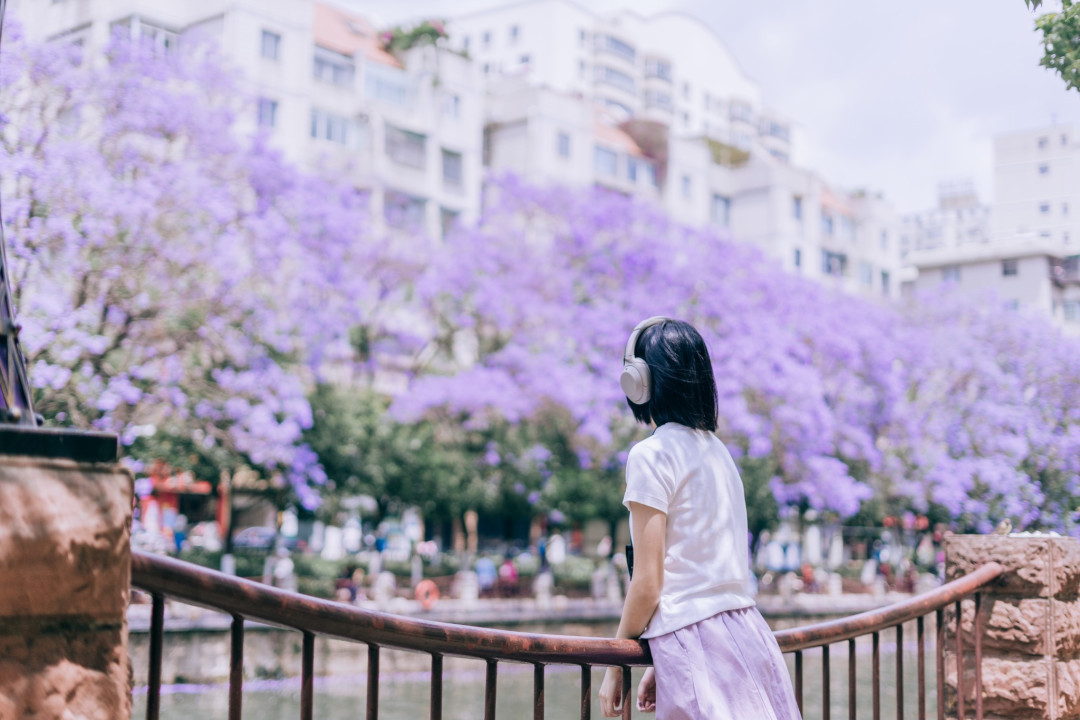
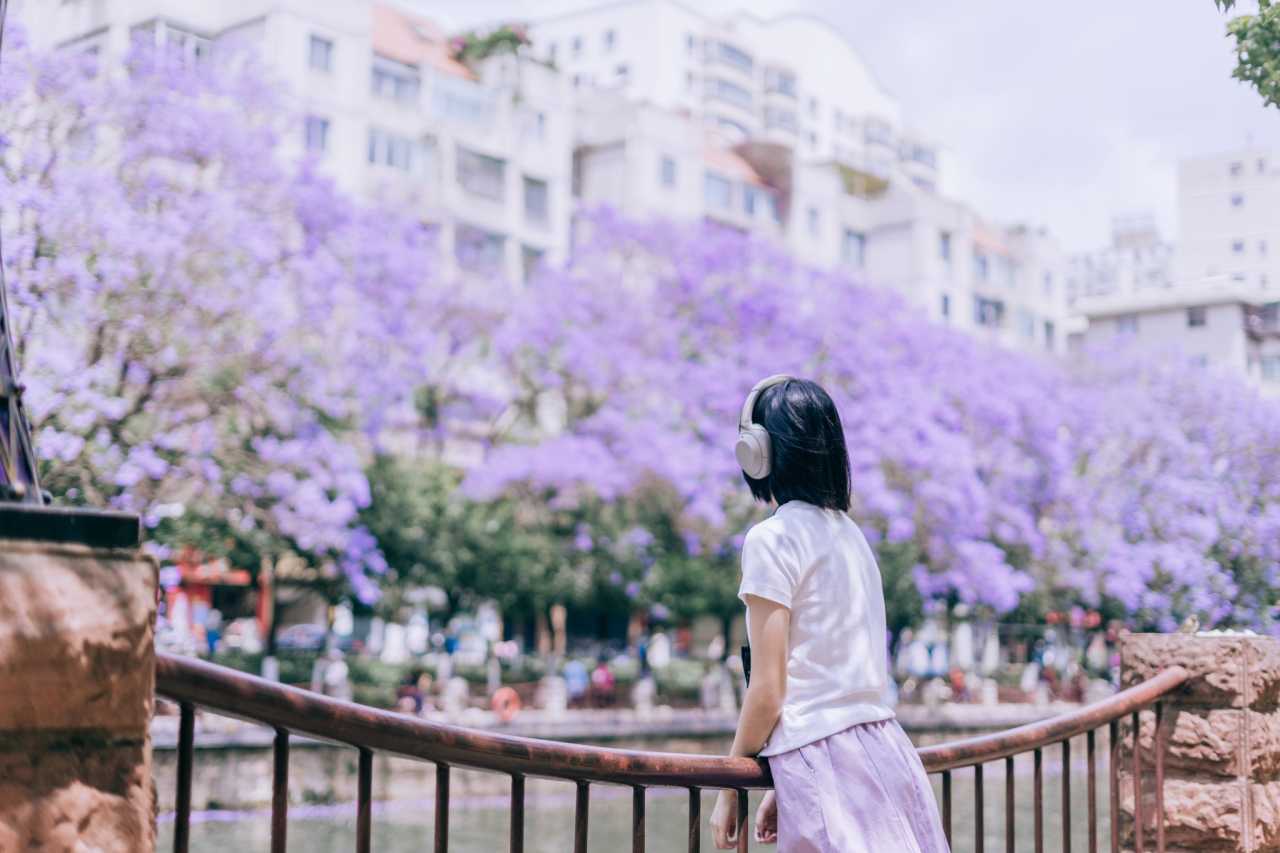
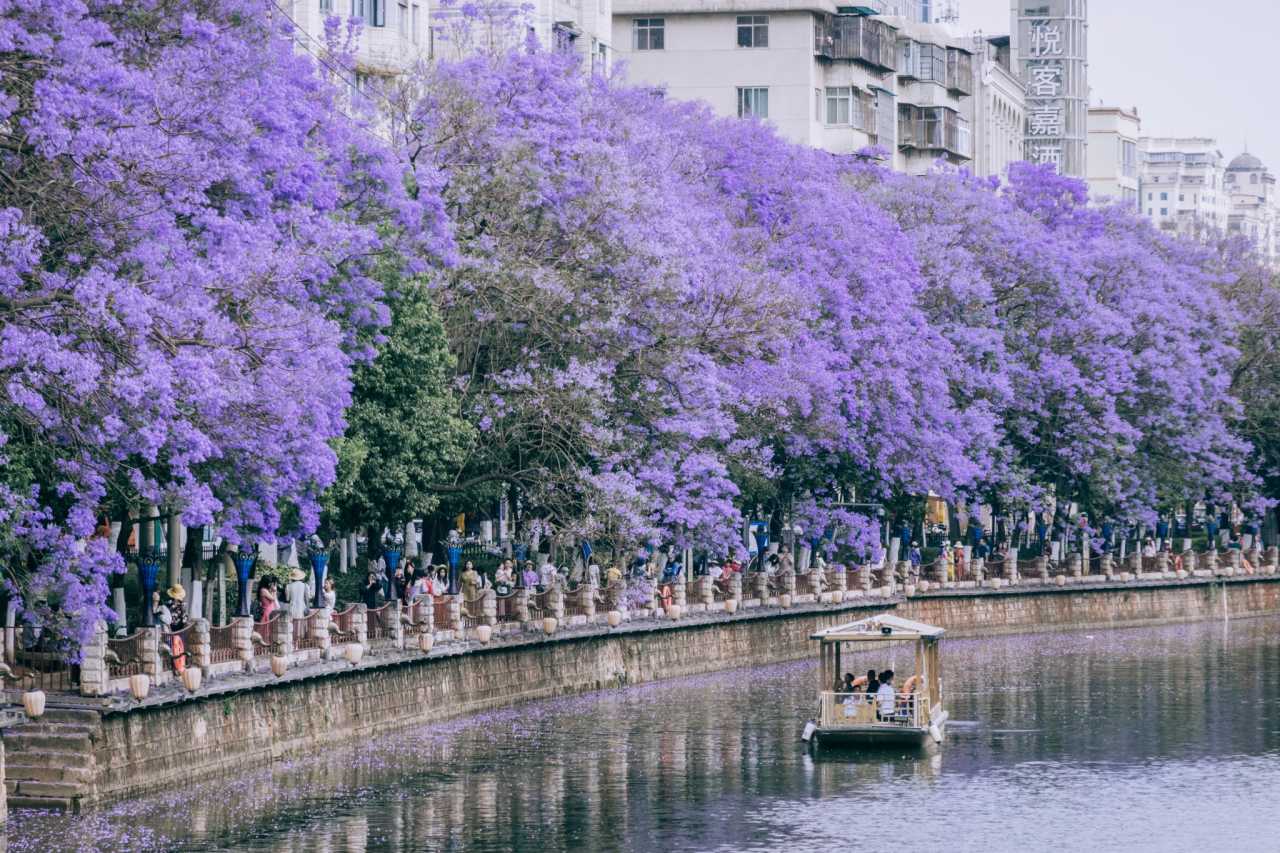
The Panlong River is one of Kunming's few waterways. Following the direction of cameras held by people on the bridge, that brilliant patch of purple came into view. Along the river's west bank, a row of jacaranda trees was in full bloom, their branches hanging low, almost touching the water's surface. On the dark green water floated purple petals carried by the wind, while a yellow-legged egret occasionally skimmed across the river or perched atop a jacaranda tree.
I've photographed Guangzhou's pink cherry blossoms, rose-red bauhinia, golden trumpet trees, and white silk floss trees—but this was my first time shooting purple jacarandas. The sheer astonishment of it is still unforgettable.
The riverside was relatively quiet in the morning. While the jacarandas here aren't as spectacular as those on the internet-famous Jiaochang Middle Road, the interplay of river scenery and blossoms has its own unique charm. The flowers are mainly concentrated on the west bank; shooting portraits from the east bank with a telephoto lens yields excellent results. Several veteran photographers were lugging their "big cannons" to chase shots of the egrets. I set up my tripod on the east bank, found a good vantage point, and when I got tired, I simply sat on a bench watching little sparrows forage for food, admiring the flowers from across the water in perfect contentment.
The Panlong River also operates a jacaranda-themed boat tour. Nearby, on Taoyuan Street, I picked a long-established Kunming restaurant and tried stinky tofu rice noodles (臭豆腐米线, chòu dòufu mǐxiàn)—despite the name, it's not at all stinky, and I found it quite tasty on first try.
Continuing my city walk along Jiangbin West Road, I spotted more jacaranda trees and even encountered a stunning display of bougainvillea. Along the way, I met kind-hearted young women who offered to take photos of me, and I returned the favor by capturing shots of solo female travelers with my camera. The awkward part was that I've completely forgotten how to pose—my hands had nowhere to go.
Near the Youguan Bridge riverside, the Xiaojiayuan residential area was lined with jacaranda trees. The peak bloom was already past its prime, and the ground was carpeted with fallen purple petals. Busy locals wove through the scene, blending everyday urban life with romantic beauty. I envied the people living here—able to wake up to this view every day.
Cycling away from the river and through Wanhua Road, jacarandas appeared everywhere in Kunming's streets and alleys. Lianmeng Road was also lined with jacaranda trees on both sides. My energy was spent, so I didn't complete my originally planned route through Chuanjin Road, but today's itinerary was already fulfilling enough: Panlong River → Taoyuan Square → Jiangbin West Road → Xiaojiayuan → Wanhua Road → Lianmeng Road.
That evening, at a mall near my hotel, I finally tasted the long-awaited cross-bridge rice noodles (过桥米线, guòqiáo mǐxiàn). This restaurant was said to be quite authentic. Cross-bridge rice noodles are a specialty of southern Yunnan, originating in Mengzi. The serving platter was laden with raw pork tenderloin slices, chicken breast slices, snakehead fish slices, medium-cooked pork kidney slices, pork tripe slices, dried squid slices, raw shrimp, chives, shredded scallions, white radish slices, pickled mustard tuber, shredded tofu skin, and quail egg liquid. On my first try, I nearly dumped everything into the soup at once—luckily, a grandmother at the next table kindly guided me: first beat the quail egg liquid, coat the ingredients with the egg mixture, then add them in order to the boiling-hot broth. The rich, savory soup base paired with the smooth, fragrant rice noodles—so this is what cross-bridge rice noodles really taste like.
Stepping out of the mall, I was greeted by Kunming's evening sunset glow—honestly, it had been so long since I'd last seen one.
Goodnight, Kunming.
Day 2: Jiaochang Middle Road, The Crown Jewel of Purple Seas
When it comes to Kunming's jacaranda hotspots, none surpasses Jiaochang Middle Road. These jacarandas were among the first batch planted in Kunming, so they have the fewest leaves and the densest blossoms. Stretching for two kilometers, the road is lined with towering jacaranda trees, and at peak bloom, the street transforms into a sea of purple.
Exiting Sujiatang Metro Station, I simply followed the crowd to reach Jiaochang Middle Road. During the May Day holiday, it was predictably packed—point my camera lens even slightly downward, and all I saw were heads. But the unbroken canopy of purple jacarandas overhead was enough to make me temporarily forget the commotion below.
I set up my tripod for portraits, but an endless stream of passersby kept photobombing my shots. So I asked two young women taking photos with their phones to press the shutter for me, then used my camera to take their pictures and sent them over. There's something truly beautiful about women helping each other out.
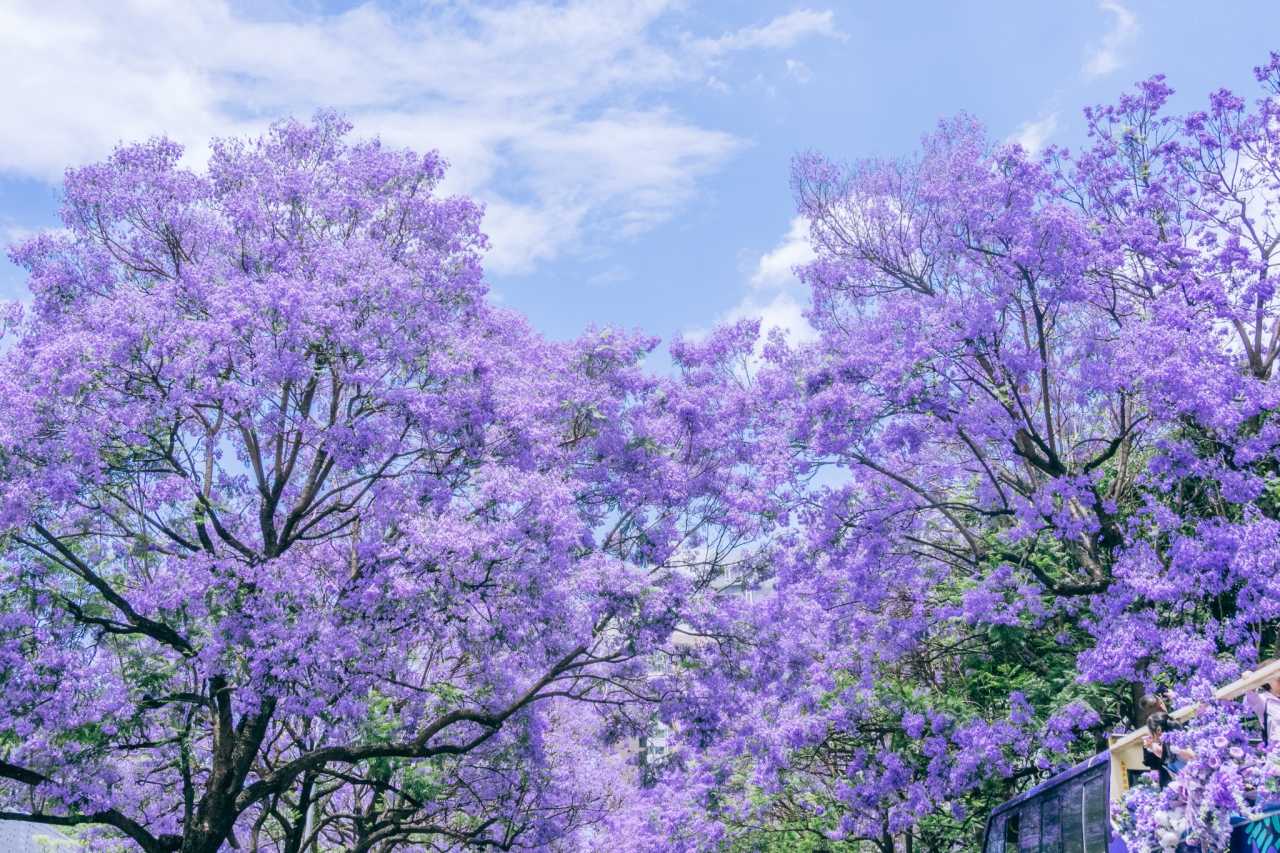
Along the road were numerous photography stalls offering ladders—business was booming. Climbing up a ladder to shoot upward was the only way to avoid the crowds. The girls I'd just met and I spent 10 yuan to rent a ladder for five minutes, borrowed a fake flower from a stall as a foreground prop, and managed to snap a few tourist shots.
Kunming's Jacaranda Art Festival was already in its sixth year. The site featured many jacaranda-themed creative stalls where I could browse, snack, and collect stamps. I arranged some petals on the ground to form my own logo, and one of the girls took a Polaroid of me—giving me a "Polaroid for the books."
The weather gradually cleared, and the endless jacaranda canopy rippled like waves in the wind. Sunlight filtered through the petals, making them sparkle. Even the nearby kindergarten was adorned with jacaranda-themed decorations.
Lianhua Comprehensive Market is located right on Jiaochang Middle Road, with plenty of eateries nearby. Here, I tried Shiping-style grilled stuffed tofu (石屏烤包浆豆腐, shípíng kǎo bāojiāng dòufu) for the first time—30 pieces for just 10 yuan, incredibly affordable and delicious! As a tofu enthusiast, I fell completely in love with it. Both Shiping tofu and Jianshui tofu use natural groundwater from the ancient cities as a coagulant, resulting in tender, smooth tofu with a crispy exterior and soft interior, rich with the aroma of soybeans. I also sampled Yunnan-style wood-lemongrass chicken feet (木姜子鸡爪, mùjiāngzǐ jīzhuǎ) and pineapple sticky rice.
Yunnan University: A Century-Old School, A Decade Passed
Yunnan University's Donglu Campus is just a short distance from Jiaochang Middle Road—a ten-minute electric bike ride to the northeast gate, where entry is granted with a simple ID card scan.
In 2014, I had briefly visited this campus alone. Ten years later, standing before the same mirror, I felt that Yunnan University hadn't changed at all—it was exactly as I remembered. And me? I seemed the same too.
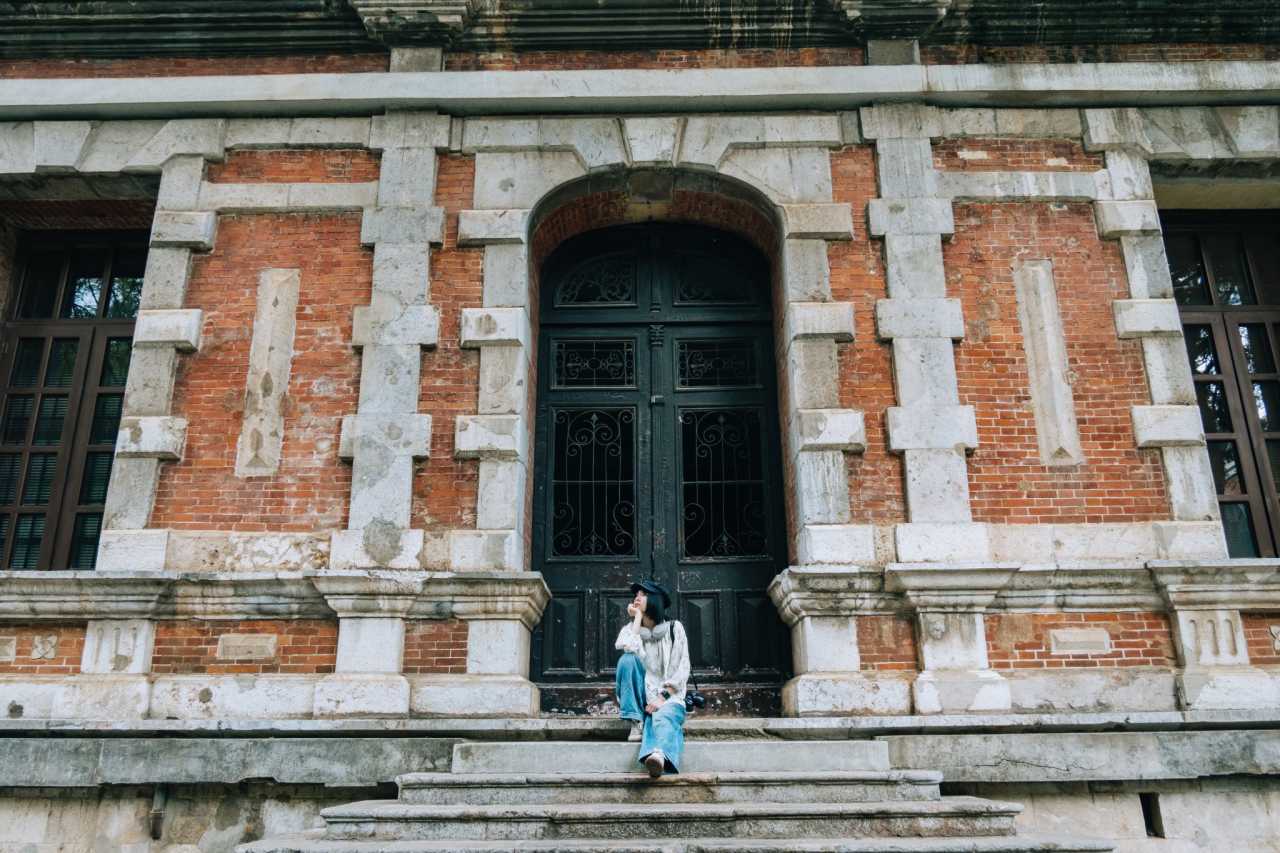
I sat on a bench under a tree, soaking in the lush greenery of Yunnan University. Huize Hall, the university's landmark building, blends Western elegance with Chinese classicism, standing tall and proud after a century. The Zhigong Hall was exactly as I remembered it. The afternoon sun filtered through the trees, casting dappled light that slowly drifted across the century-old red brick walls.
Farewell, Yunnan University. Perhaps in another ten years, I'll come back to see you again.
Wenlin Street: Bougainvillea and Coffee Shops
The south gate of Yunnan University opens directly onto Wenlin Street. A myriad of small coffee shops, bars, and independent bookstores line the street, exuding a relaxed, artistic vibe. This might be one of the most romantic streets in Kunming. If I had more time, I would have ordered a cup of coffee, found a lounge chair, and basked in the sun for an entire afternoon.
Bougainvillea cascades were everywhere along the street, blooming so vibrantly, their vitality truly astonishing. I also encountered a very stylish elderly man running a street stall—a bicycle, a tiny摊位 (tānwèi, stall). He must have many stories to tell.
Feeling tired, I went to "上山喝茶" (Shàngshān Hēchá, "Go Up the Mountain for Tea"), a Kunming-exclusive brand, and ordered a Yunnan black tea latte (滇红拿铁, diānhóng nátiě). A college girl at the next table turned out to be from Guangzhou too. In our chat, I learned it was her first solo trip, and she was heading back tomorrow. I asked why she wasn't staying longer. She said solo travel was too lonely—seeing beautiful things with no one beside her to share the moment instantly. I lowered my head, thought for a moment, and replied, "Yeah." Maybe after a few more solo trips, she'll get used to it—how should I put it—used to this kind of free and happy solitude.
My final city walk destination for the day was Green Lake Park (翠湖公园, Cuìhú Gōngyuán) across the street. Unexpectedly, Kunming—which hadn't seen rain in a month—suddenly unleashed a downpour, catching everyone without an umbrella off guard. Luckily, the girl I'd met had an umbrella, and our hotels were in the same direction, so we walked a kilometer together through the rain back to our accommodations, ending the day's itinerary.
Today's route: Jiaochang Middle Road → Zhengjiao Road → Lianhua Comprehensive Market → Yunnan University (Donglu Campus) → Wenlin Street
Day 3: Yunnan Provincial Museum—The Mysterious Ancient Dian Kingdom
If you come to Kunming, don't miss the Yunnan Provincial Museum. The bronze artifacts of the ancient Dian Kingdom are among the most artistically distinctive I've seen in any museum. Their exquisite craftsmanship and unique style are breathtaking—the bronze civilization created by the Dian Kingdom rivals that of the Sanxingdui and Jinsha cultures, and can even stand comparison with any bronze civilization in the world.
The cowrie-shell container (贮贝器, zhǔbèiqì) is one of the Dian Kingdom's most representative bronze artifacts. Here, I also learned about the Dali Kingdom, so frequently mentioned in martial arts novels.
The Grand Theatre is located directly across from the museum. I cycled to the Guandu Ancient Town opposite for lunch—commercial ancient towns all seem the same across China, but this one is indeed good for eating and drinking. At the market near the entrance, I bought a refrigerator magnet made from a real mushroom and tried another Kunming specialty: tofu pudding rice noodles (豆花米线, dòuhuā mǐxiàn)—silken tofu paired with rice noodles, a perfect marriage of bean and rice aromas.
Dianchi Exhibition West Road: The Purple Blossom Avenue
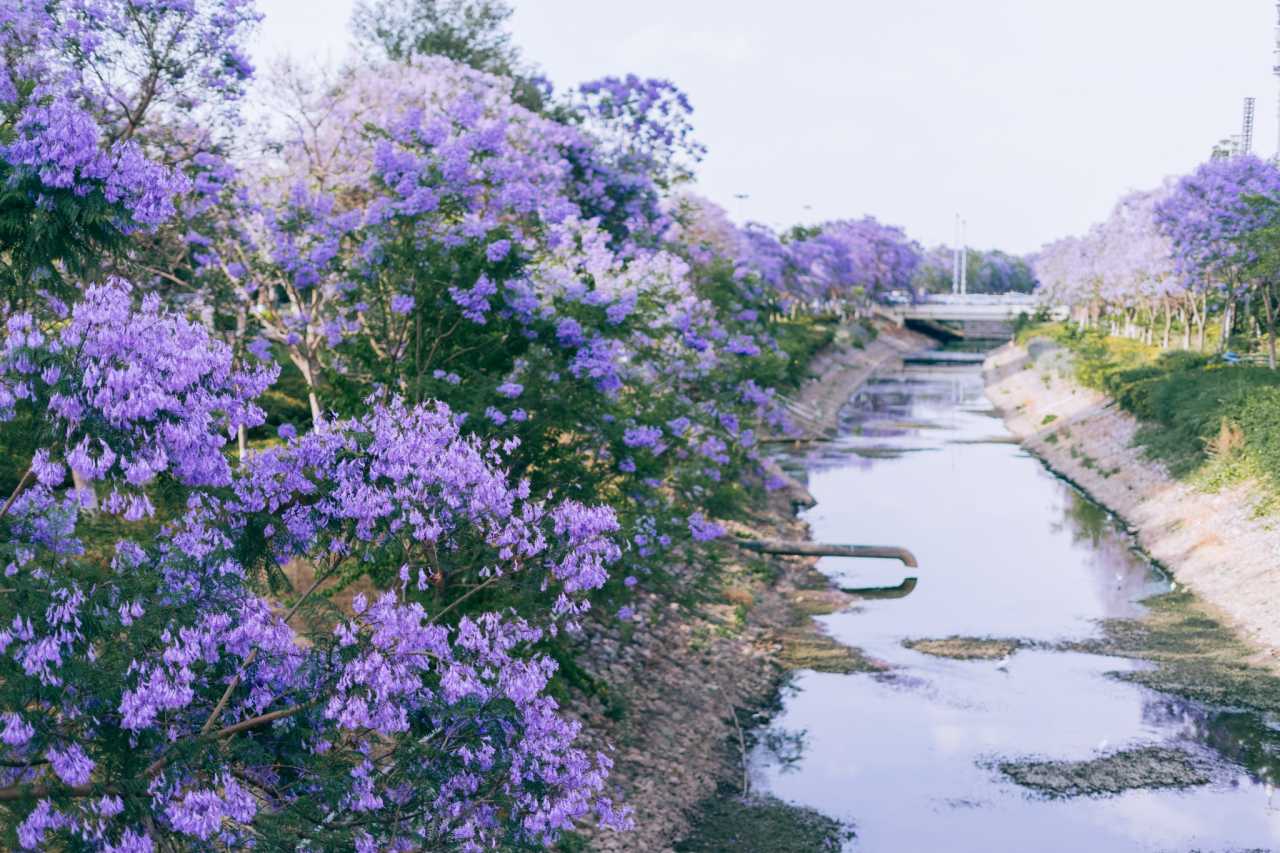
From Guandu Ancient Town, I took a taxi to the Dianchi Convention and Exhibition Center to complete another day's jacaranda photo mission. The jacarandas in this area were a delightful surprise—probably because it's farther from the city center and the area is larger, there were very few people. Along the riverbank and the roadside, row after row of jacaranda trees stretched endlessly. Some were still at their peak, and with the blue sky and strong wind, petals danced through the air like something out of a dream.
After hauling my tripod all day, I discovered that the fixing screw had fallen off. I was about to beat my chest in frustration when a mother taking photos with her daughter saw my full gear and asked if I could do a paid shoot for her daughter. I shook my head, saying I wasn't skilled enough yet—later, I regretted it. I should have earned some extra cash in Kunming.
On the bridge in front of Hall 4, there was a relatively large jacaranda tree with some dense low branches, perfect for portraits. There's a foreign superstition: if a jacaranda petal falls on you, you'll fail your exams—so many students are afraid to stand under jacaranda trees. The flower language of jacaranda varies across different cultures. Because of its blue-purple hue, people have assigned it meanings of tranquility, profundity, melancholy, and aloofness, and even "waiting for love in despair." But to me, this is clearly such an uplifting, romantic flower.
The setting sun infused the cool-toned jacaranda trees with warm hues. As darkness fell, I cycled from Dianchi West Road to the metro station—the entire road was lined with jacaranda trees, the ground carpeted with petals, like a purple avenue. Truly "walking the flower path."
Today's route: Yunnan Provincial Museum → Guandu Ancient Town → Dianchi Convention and Exhibition Center → Dianchi Exhibition West Road
Day 4: Huanggong East Street—Kunming Yellow
Today, Kunming was bathed in brilliant sunshine. Cycling toward Huanggong East Street, I rounded a corner and was greeted by a jacaranda tree in full bloom. Last night's heavy wind and rain had already stripped most of the blossoms from Denghua Street.
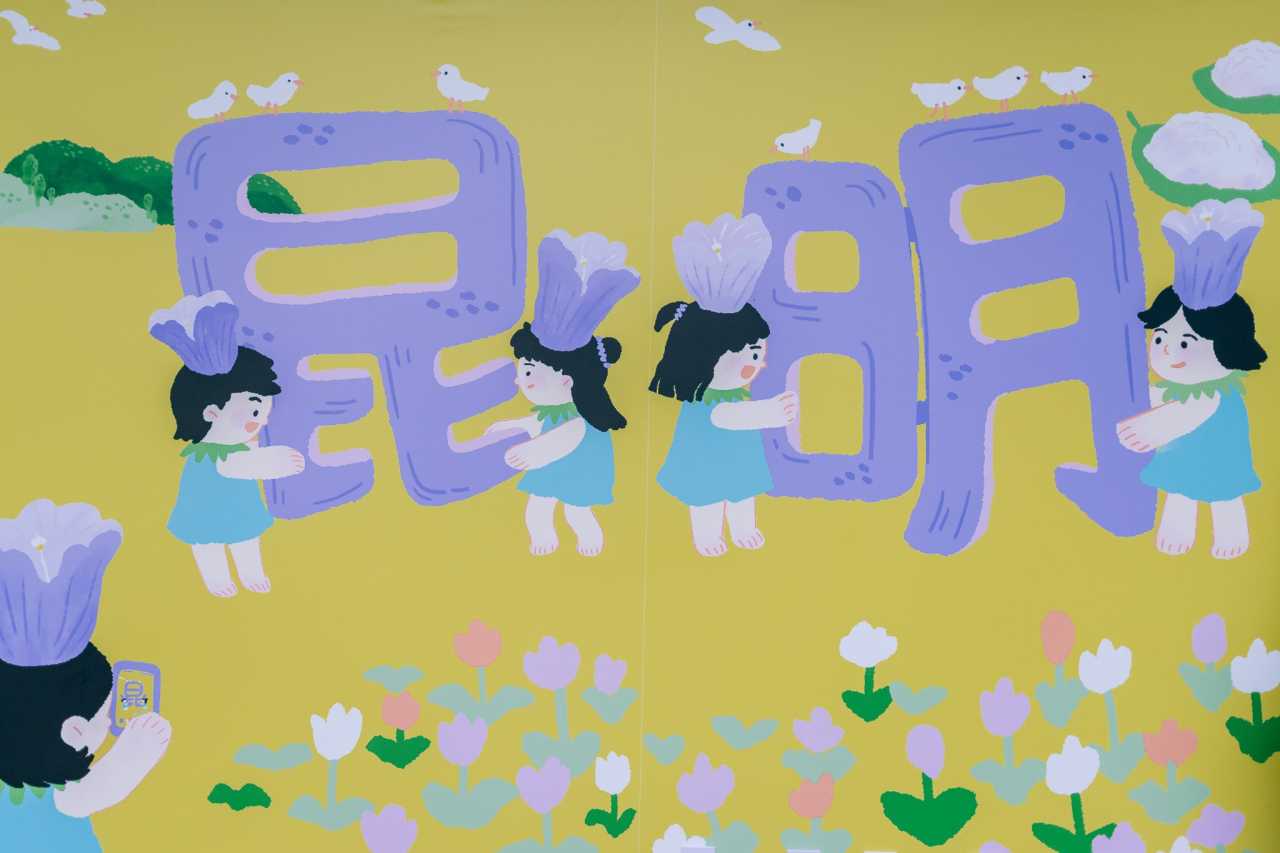
The yellow wall on Huanggong East Street is a long-time internet sensation—it's actually the back wall of the Yunnan Liberation Memorial Hall. The green bench nearby was surrounded by a queue of young women waiting to take photos. Since I was already here, I joined the line, quickly snapped a picture, then went inside to visit the memorial hall.
Today felt like the most comfortable day in Kunming. Walking under the clear, pleasant weather, I even started toying with the idea of retiring in Kunming.
A short walk from Huanggong East Street brought me to the Yunnan Military Academy and Green Lake Park. The Yunnan Military Academy was a historically renowned military institution, founded in the turbulent year of 1909, which produced many famous generals including Zhu De and Ye Jianying. The architecture of the former site, like the Yunnan Liberation Memorial Hall, features the characteristic "Kunming Yellow." The museum spans two floors, with interconnected exhibition halls across the four buildings in the courtyard. Each artifact and the stories inscribed on the walls narrate the dramatic changes in China's history over just a hundred years.
Green Lake: A Park of Vibrant Colors
"Without Green Lake, Kunming would not be Kunming." Green Lake was originally a bay of Dianchi Lake outside the city walls. In the past, Dianchi's water level was very high; as it receded, Green Lake gradually formed into a small lake.
Walking around Green Lake was a true delight. With the beautiful weather, you could find every color imaginable here—red, yellow, blue, purple, white, green—as if you'd stumbled into a vibrant island world of early summer.
"Every day, Green Lake offers the people of Kunming so much worldly comfort and spiritual healing. Therefore, the people of Kunming—including visiting wanderers—are filled with gratitude for Green Lake." — Wang Zengqi, Reflections on Green Lake
There aren't many jacaranda trees around Green Lake, but two relatively large ones on Cuihu East Road were still at their peak. Jacaranda trees that have grown to this size must be well over a decade old. They're located near the Bamboo Island area of Green Lake Park—worth a look when you're strolling through.
I made it a point to try different Kunming foods every day. Today, I had cold-mixed rice shreds (凉拌饵丝, liángbàn ěrsī)—another new dish to add to my list. Rice shreds originated in Tengchong, Yunnan, and are mainly made from rice. The difference between them and rice noodles lies in the texture: rice noodles are smooth and springy, while rice shreds are chewy and fragrant.
Yunnan Art Museum: Artistic Sedimentation
The Yunnan Art Museum was formerly the old building of the Yunnan Provincial Museum. After the new museum was completed in 2014, this building was converted into the Yunnan Art Museum. Its architecture follows a Soviet-style design, and the interior—with its grand chandeliers, wrought-iron windows, and marble staircases at every turn—exudes a refined elegance. Especially in the afternoon, when light filters through the patterned windows and falls on the simple stone floors of this old Kunming building, the interplay of light and shadow is breathtakingly beautiful.
After visiting Green Lake, I cycled over to see the exhibitions. Even during the May Day holiday, there were very few people here—it was wonderfully quiet. After viewing the exhibits, I rested on a bench in the third-floor atrium, facing a large stained-glass window suffused with light, and felt a strange sense of traveling through history.
Poetry of the Clouds—an oil painting exhibition by female Yunnan artists—featured over eighty works by thirty-three women artists from Yunnan. As a fellow female art student, I could feel the tender delicacy and vibrant passion of feminine emotions in the colors, brushstrokes, and lines that composed their works.
Tiepi Lane: A Hidden Gem
Because of the jacarandas, this ordinary little lane has become famous. I looked up the origin of the name "Tiepi Lane" (铁皮巷, tiěpí xiàng, "Iron Sheet Lane")—apparently, because the area was once home to many small artisans who worked with iron, using scrap metal sheets to roof their houses. When it rained, the drops would clatter against the iron roofs, so old-time Kunming residents called it "Iron Sheet Lane."
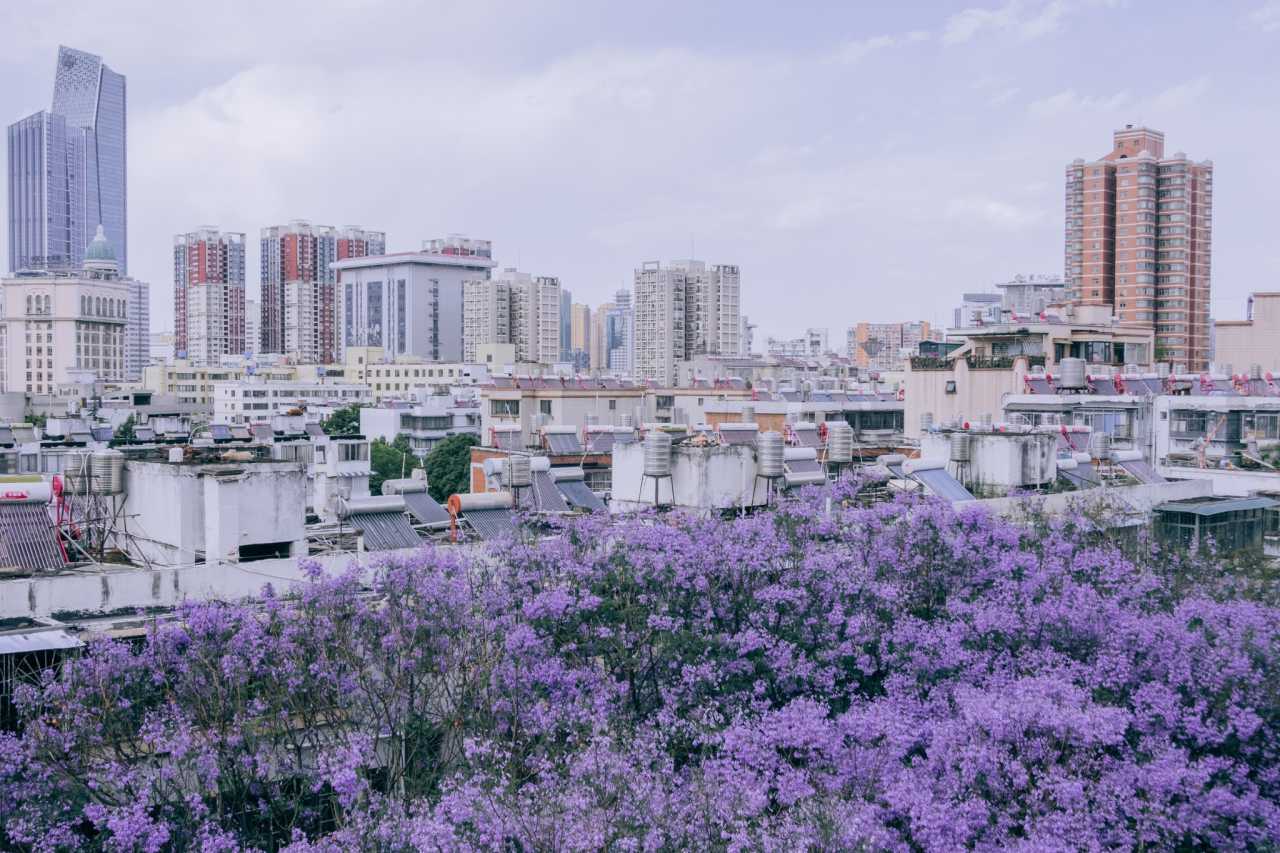
The jacarandas on Tiepi Lane were already in their final stages. Except for the relatively dense cluster opposite the Caili commercial complex, most of the trees on both sides of the lane had already shed their blossoms. The best spots for portraits are on the third-floor terrace of Caili (which belongs to a beauty salon and isn't open to the public), the sixth-floor rooftop of Caili, and the open-air staircase of the No. 6 Rubber Factory building. The jacaranda trees on Tiepi Lane are taller than those on Jiaochang Middle Road and along the Panlong River. If you catch them at peak bloom, this is an excellent spot for flower photography—the purple blossoms set against the yellow walls and red bricks of old factory buildings, combined with Tiepi Lane's many specialty coffee shops, make it a wonderful place to sit, sip a drink, and enjoy the flowers.
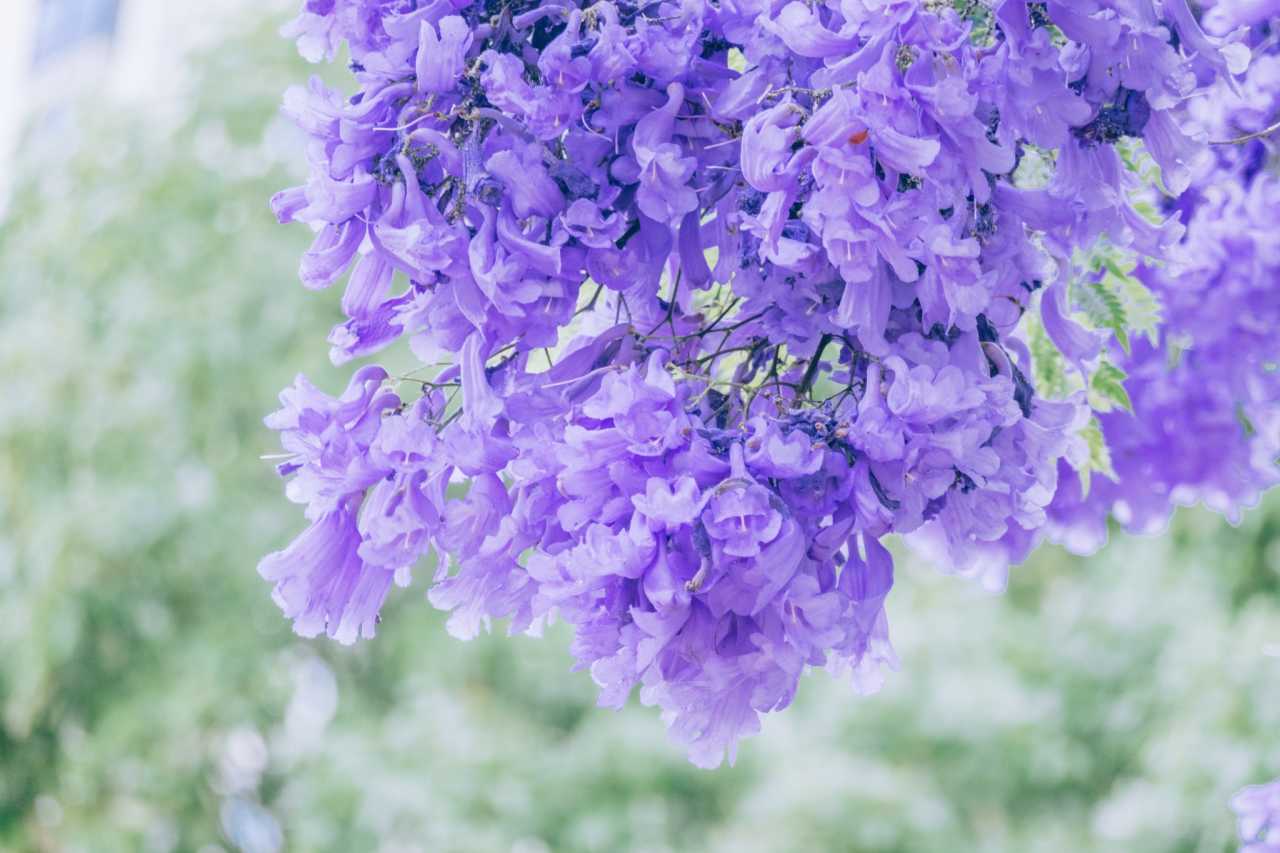
My jacaranda photo mission for this trip concluded here at Tiepi Lane.
According to official sources, jacaranda trees in Kunming's urban area are also distributed in: Wuhua District's Renmin Road, Nanping Street, and Datang Road; Xishan District's Qianwei West Road (South Second Ring Road to Guangfu Road), Qingnian Apartment Lane, Qianfu Road (Qianwang Road to Hehong Road), and Jinlan Road; Guandu District's Guandu Square, Chunlin Garden, Fude Road, and Baohai Park; Chenggong District's Shilong Road, Zhiyuan Road, and Yuehua Street; as well as Gaoxin Avenue's Gaojiacun section in the High-Tech Zone and Jinhe Road in the Dianchi Resort area. Jacarandas have truly woven themselves into the fabric of Kunming's streets and alleys.
I passed a Jianshui-style barbecue restaurant and had dinner there. Someday, I must go to Jianshui itself for the most authentic experience.
Dounan Flower Market: Asia's Flower Capital
I thought the Jianshui barbecue would be the absolute limit of my energy for the day—but then I realized it was still light out at 7 p.m. in Kunming. Since I was already here, I decided to make the most of it and headed straight for my final planned stop of the day: the Dounan Flower Market, to experience this "3A-rated scenic spot" that is Asia's largest flower market.
Between 8:00 and 8:30 p.m., vendors are setting up, and the market closes to visitors during this time. As soon as the doors opened, I surged in with the crowd—tourists and buyers packed every aisle to the brim, the atmosphere electric. I had never seen so many flowers in my entire life—roses alone came in over a dozen colors. It was an eye-opening experience. Definitely worth a visit.
Another fulfilling day. Today's route: Huanggong East Street → Yunnan Military Academy → Green Lake → Yunnan Art Museum → Tiepi Lane → Dounan Flower Market
Day 5: Zhuanxin Farmers' Market—The Heartbeat of the City
Farmers' markets are the epitome of local life, the birthplace of authentic urban cuisine. There's a type of travel called "going to the market"—no matter which city I visit, I always find time to explore its local markets and bazaars. Kunming's markets were something I was particularly looking forward to.

With so many markets in Kunming, why choose Daguanguan Zhuanxin Farmers' Market? Although some online reviews say "overhyped, avoid it," after visiting, I felt it might not be the cheapest market in Kunming, but it's definitely the one with the widest variety of ingredients and the most visually appealing. The stall owners are all masters of color coordination, and the way their goods are displayed could cure OCD. Walking around, eating and drinking, weaving through stalls of all sizes, discovering vegetables I'd never seen before—shopping at a farmers' market is pure joy!
Jianshui stinky tofu (建水臭豆腐, jiànshuǐ chòu dòufu) has a slight odor when grilled, but it doesn't taste stinky at all, with a slightly coarser texture than stuffed tofu. The owner added fish mint (鱼腥草, yúxīngcǎo) to the dipping sauce—as a useless Cantonese person trying it for the first time, I still couldn't handle the taste of fish mint.
I arrived at the high-speed rail station loaded with bags, enjoying my food while waiting for the train—pure bliss! Kunming, I'll be back!
Epilogue: A Solo Purple Memory
Over five days of flower-chasing, I carried my tripod and two cameras, visiting five blossom-viewing spots—Jiaochang Middle Road, the Panlong River, Tiepi Lane, the Dianchi Convention and Exhibition Center, and Green Lake. I feel like I've used up a lifetime's worth of jacaranda viewing. Seeing an entire city bathed in purple romance for the first time—photos and videos simply cannot capture the震撼 (zhènhàn, awe-inspiring impact) of what I saw with my own eyes.
I visited museums, art galleries, flower markets, farmers' markets, and a university campus. Like a time management master, I averaged 20,000 steps a day on city walks. I ate authentic cross-bridge rice noodles, stinky tofu rice noodles, small-pot rice noodles, tofu pudding rice noodles, cold-mixed rice shreds, Shiping stuffed tofu, Jianshui barbecue, and Jianshui stinky tofu, and achieved blueberry and fruit freedom. Kunming is truly a city friendly to solo diners.
I met many young women chasing flowers alone, and also encountered older women and aunties traveling solo with their tripods—it felt like seeing past and future versions of myself.
"The ancients no longer walk east of Luoyang city, yet today's people still face the wind-blown falling petals. Year after year, the flowers look the same; year after year, the people are different."
Beautiful things have an expiration date, but they will bloom again on schedule next year. Looking at my photos, I noticed the traces that time has left on my face—but I hope that time won't take away the courage to set out alone.
Where to next?
Kunming City Walk Mini Guide
About the Weather
Temperatures in Kunming during May and June aren't very high, but the温差 (wēnchā, temperature difference) between day and night is significant, and both UV rays and wind are particularly strong. It's advisable to bring a sun-protection jacket or a light coat. The climate is very dry, so moisturizing is essential.
About Transportation
Kunming is large, and some attractions are far apart—for example, the Dianchi Lake area is vast. Dounan Flower Market, Yunnan Museum, Yuhe Park, and Xishan Scenic Area are all far from the city center, so plan your route in advance. During holidays, try to avoid taking taxis for short distances; opt for a combination of city walking, cycling, and the metro. Kunming has an abundance of shared electric scooters, but relatively fewer shared bicycles.
About Accommodation
Choose your accommodation based on your itinerary. Generally, staying in the city center near metro stations is recommended. Good options include Tangzi Alley (Line 6), Dongfang Square (Lines 5 and 3), Wuyi Road (Lines 5 and 3), Panjiawan, and Jiaoqiao Bridge, all major transit hubs. Both Kunming Changshui Airport and Kunming South High-Speed Rail Station are far from the city center, requiring about an hour's travel time.
About Photography
A telephoto lens with a focal length of 200mm or more is recommended for excellent portrait results. If you don't have a camera, use your phone's telephoto function. For jacaranda portraits, wear light-colored clothing—avoid all-purple or dark color schemes.
A solo journey is both freedom and loneliness. But in this city steeped in purple, I found my own romance.
You should also read:

Clouds Over the Rainbow: A Five-Day Soul Journey Through Kunming, Dali, and Lijiang
Clouds Over the Rainbow: A Five-Day Soul Journey Through Kunming, Dali, and Lijiang Prologue: The Decision to Fly into the Clouds In February, the chill of the North still lingered. A single discounted airfare sparked this spontaneous trip. Round-trip from Beijing to Kunming—1,700 yuan made…
Continue reading...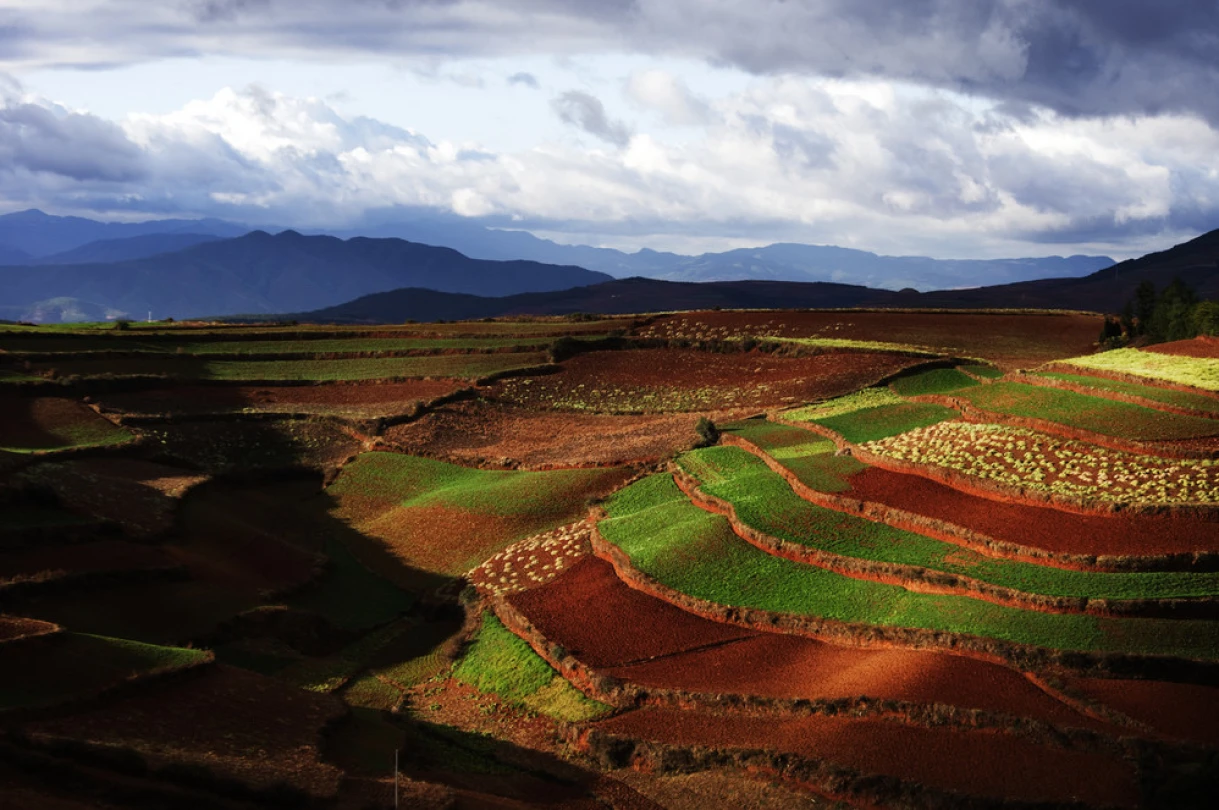
Walking Yunnan — A 23-Day Solo Journey, A Pilgrimage of Faith
Walking Yunnan — A 23-Day Solo Journey, A Pilgrimage of Faith Foreword: That Lonely Planet and a Long-Planned Escape In the winter of 2011, Songjiang, Shanghai was bone-chillingly cold. I huddled in a corner of my dorm room after lights-out, covered in hand warmers, clutching…
Continue reading...
Idle Clouds in Autumn, a Moonlit City: A Slow Travelogue Through Lijiang and Shuhe
Idle Clouds in Autumn, a Moonlit City: A Slow Travelogue Through Lijiang and Shuhe When the autumn wind brushes across the ancient city's eaves, when sunlight spills onto the mottled cobblestone streets, when the melodies of folk songs mingle with the aroma of plum wine…
Continue reading...