A Hundred Birds of Western Yunnan – Chasing the Dance of the Spirits
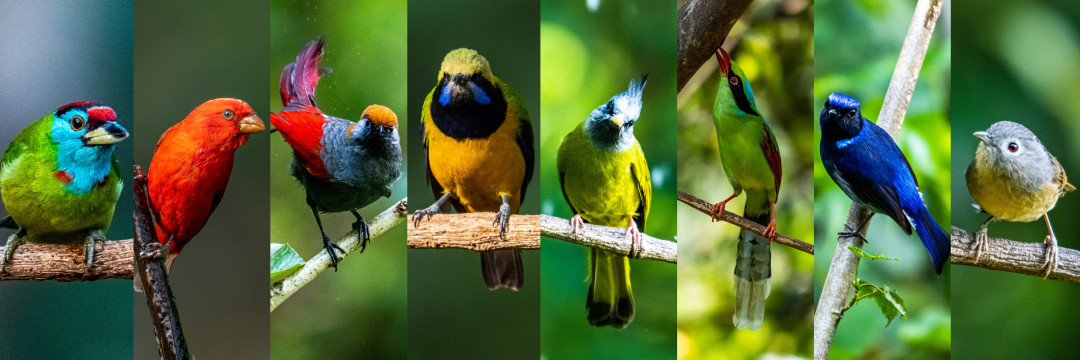
A Hundred Birds of Western Yunnan – Chasing the Dance of the Spirits
Prologue: The Meaning of Travel Goes Far Beyond Scenery
Over the years, I've traveled to many places—the vastness of the Pamir Plateau, the desolate beauty of northern Shaanxi, the vibrant life of western Yunnan, and the profound history of Anyue. Each place is like a unique gem, embedded in my memory.
The Pamir Plateau was about "seeing and hearing"—its magnificent landscapes and exotic cultures taught me the breadth of the world. Northern Shaanxi was about "exploration"—those undeveloped areas held unexpected surprises. Western Yunnan was about "observation"—tracking wild birds introduced me to the dazzling diversity of life on Earth. Anyue was about "appreciation"—the weight of history and human creativity sharpened my aesthetic sense and enriched my inner world.
Someone once asked: What is the meaning of travel? I think it's not about where you go, but the mindset you bring with you. Even spending an entire day staring blankly at a snow-capped mountain has value. Because "the mountain remains the same mountain, but seeing it with your own eyes versus watching it through a screen makes all the difference to a photographer—photography is about the person, not the mountain."
Among these four types of travel, "observation" has the highest threshold—especially observing animals. To see pandas, you go to Sichuan; to see Tibetan antelopes, you go to Tibet; to witness wildebeest migration, you go to Tanzania. But the easiest for ordinary people is birdwatching and insect-watching. Insects aren't to everyone's taste, but birds have many admirers. Follow their calls, and you'll quickly discover that birdwatching is the best gateway to ecological observation.
Why Western Yunnan? – China's "VIP Room" for Birdwatching

If you ask a seasoned birdwatcher where in China offers the most thrilling experience, the answer is almost certainly Dehong Prefecture in Yunnan.

Dehong is home to 732 bird species—over 50% of China's total. And Yingjiang County, a border town so small you might not find it on a map, boasts 719 species. With such density, calling Yingjiang a "super VIP room for birdwatching" is no exaggeration.
What's even more remarkable is not just the quantity, but the "celebrities"—all three of China's hornbill species (the Great Hornbill, the Oriental Pied Hornbill, and the Wreathed Hornbill) are concentrated in western Yunnan and southeastern Tibet. The only wild breeding ground for the Wreathed Hornbill is a small patch of primary forest where Yingjiang County meets Myanmar.
This region features deep gorges, dense forests, and minimal human disturbance—a natural gathering place for birds. If you search for "China Hornbill Valley" on a map, you'll find its core area—but don't expect a tourist attraction. There are no boundaries, no entrance fees, and barely any signage. It's simply a pristine, wild stretch of forest and river valley.
May: A Glimpse of the Hornbill That Lasts a Thousand Years
May is breeding season for many birds, and one of the best times for birdwatching. Hornbills are usually elusive, but because they nest in fixed tree cavities to raise their young, if you find the right hole, you can observe the entire process of the male leaving to forage and returning to feed.

We drove into Hornbill Valley along a road that doubles as the China-Myanmar border. The river below, the Daying River, marks the frontier. A chain-link fence runs along one side of the road, but no matter how tight the barrier, it can't stop the flow of nature—especially creatures with wings.
With guidance from a local, we slipped through the fence and descended halfway down a slope to a simple bird hide. Several people were already waiting inside, all holding their breath and whispering. Most of the photographers were retirees who had been watching birds here for years; one was over 80—truly admirable.

We set up our tripods, aiming at a very tall tree in the ravine ahead. A tree cavity was clearly visible halfway up. The veterans said the bird had just left and would return after a while. I gazed into the valley, my mind completely at ease. The empty mountains were silent, layer upon layer of green. All around, there was only the wind and the occasional short bird call. Waiting didn't feel anxious—it felt full of anticipation.
After about 40 minutes, the father hornbill arrived right on schedule. The veterans spotted him first—they had been observing for so long they knew exactly where he would come from. Following their guidance, I aimed my lens at the bird perched on a nearby tree.
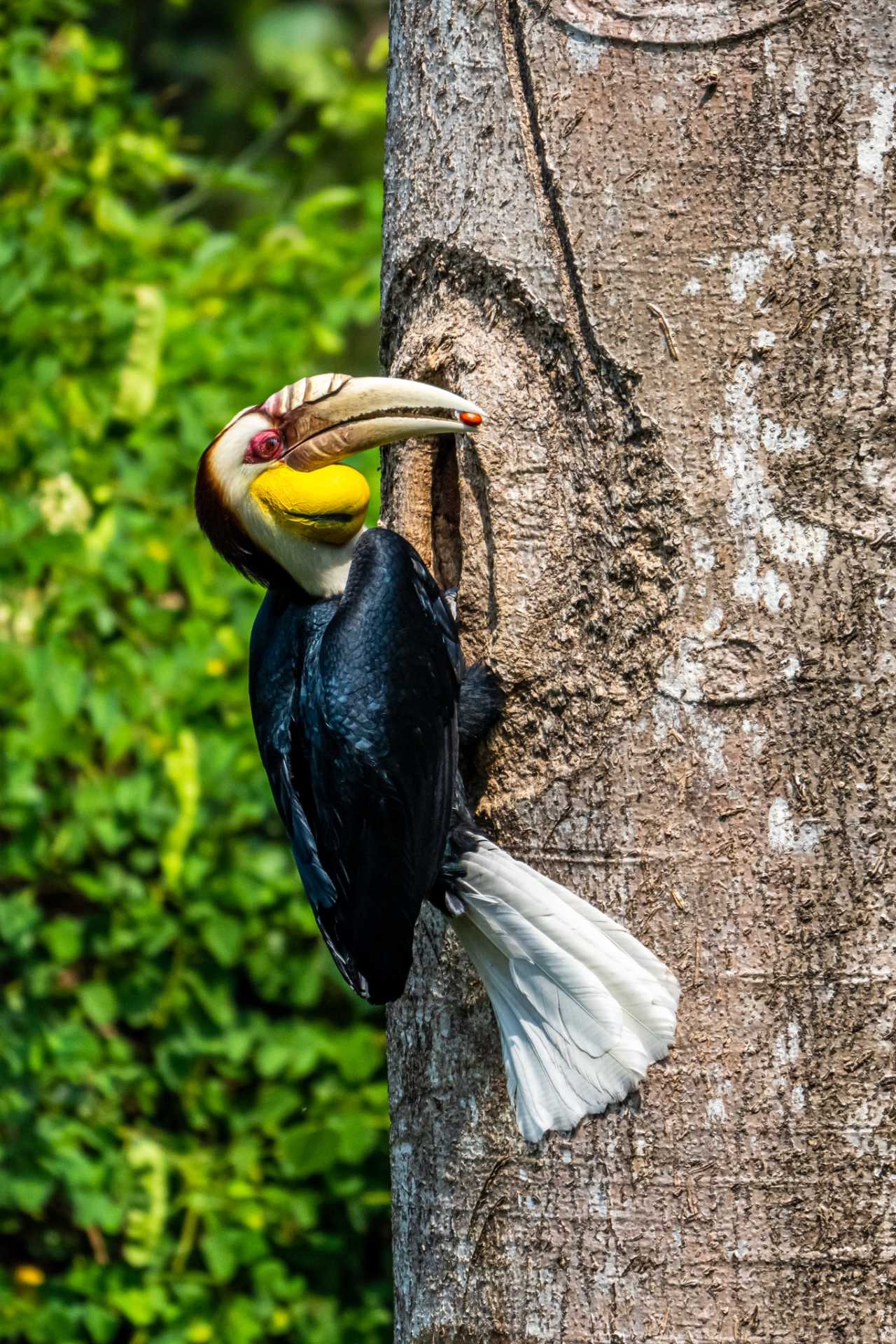
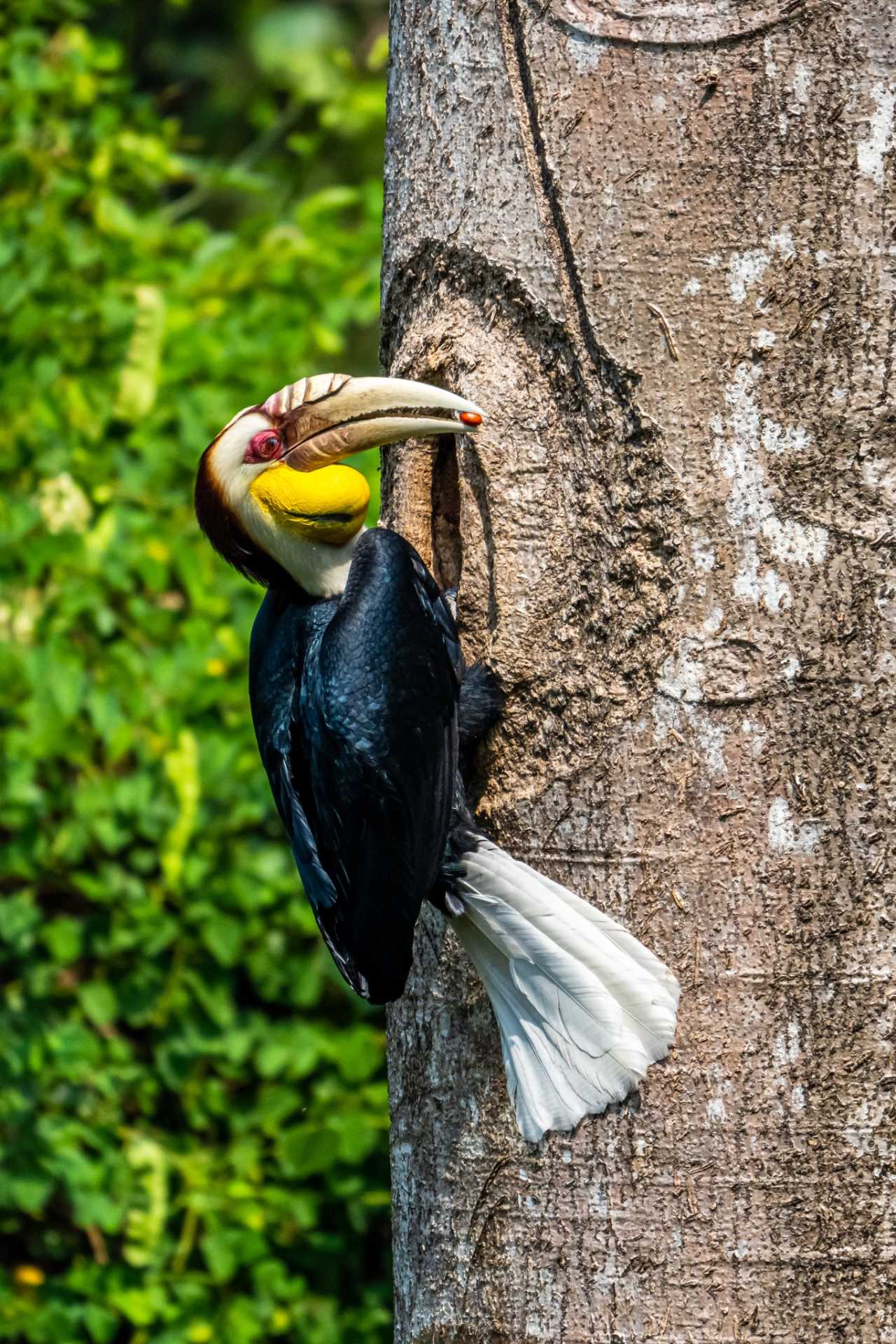
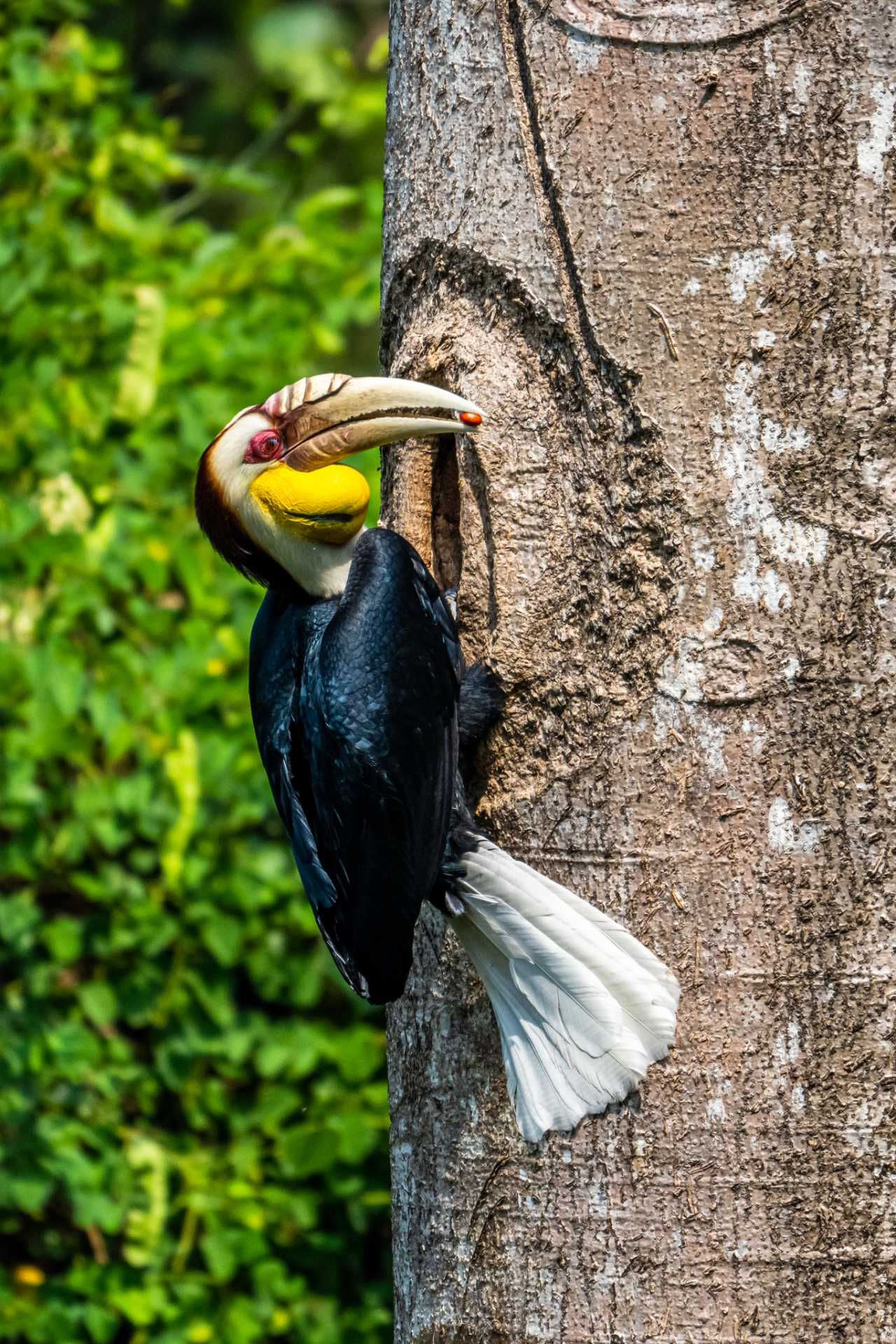
It was a Wreathed Hornbill—its long beak accounted for a third of its total body length, and its head stood out vividly against the green forest. My daughter used 8x binoculars, while I used a 600mm telephoto lens—I could even see its long eyelashes.
The male was extremely cautious, not rushing toward the nest. He looked left and right from the tree, double-checking his surroundings, before finally flying home. As the hornbill spread its wings and descended, its wings were broad, its posture graceful, its presence magnificent—such a pity that this bird is mainly vegetarian, almost a waste of such an impressive physique. It gripped the trunk firmly with its claws, jerked its head, and spat out a red fruit from the pouch under its beak, then thrust its long beak into the cavity. It repeated this motion several times before spreading its wings and vanishing into the jungle. The entire process lasted only a few minutes.
Those few minutes felt like a thousand years in an instant. To observe such a rare, first-class protected species in China—and to witness the entire feeding process so clearly—was incredibly fortunate. Hornbills are monogamous, forming lifelong bonds. After laying eggs, the female seals the tree cavity further with mud and stays inside for a month, caring for the chicks without leaving. During this time, she depends entirely on the male's regular deliveries, roughly once an hour. If something happens to the male, the female and chicks likely won't survive. This absolute dependence and trust, though common in nature, is still deeply moving.
Bird Ponds: A "Win-Win" for Humans and Birds
In Hornbill Valley, I also visited a local villager's "bird pond." A bird pond is an area cleared in the forest, where water is introduced and food is regularly provided to attract birds. A hide is built discreetly on one side, allowing visitors to enter quietly and observe through windows.
This method somewhat alters the natural environment, but without harming the birds, it lowers the barrier for human contact—a shortcut, but a smart one. Villagers benefit economically, creating a sustainable path forward.
At the bird pond, I photographed common species like the Red-whiskered Bulbul and the Black-throated Laughingthrush. While not as rare as hornbills, watching them bathe, play, and forage was still a joy. After its bath, the Red-whiskered Bulbul shook its wet feathers dry, dancing in the water—absolutely adorable.
January: A Winter Birdwatching "Feast"
If May is the hornbill's "home turf," January wins on sheer variety. Some birds, like the Blood Pheasant, are only visible in winter. If you want to see as many species as possible at once, winter is the season of choice. Plus, Yunnan's winter weather is mild and sunny—pleasant enough for a long stay, even just to escape the cold.
In January, I returned to western Yunnan, this time to Baihualing Village. Blood Pheasants frequently appeared before my eyes—their stunning beauty made me want to feature them early. Their feathers are a vivid red, like fresh blood, blazing against the green forest—one of winter birdwatching's greatest delights.
Beyond forest birding, western Yunnan also offers wetland birdwatching. The Daying River, Beihai Wetland, Xiang'e Lake, and Kaibangya Lake are all excellent spots. At Xiang'e Lake, you take a bamboo raft deep into the wetlands; at Kaibangya Lake, this beautiful reservoir offers great winter scenery, but the birds are scattered, requiring plenty of time and patience.
Birdwatching Gear: From Beginner to Advanced
Birdwatching equipment ranges from basic to high-end, and the entry barrier can be low or high. But for a quality experience, preparation is key.
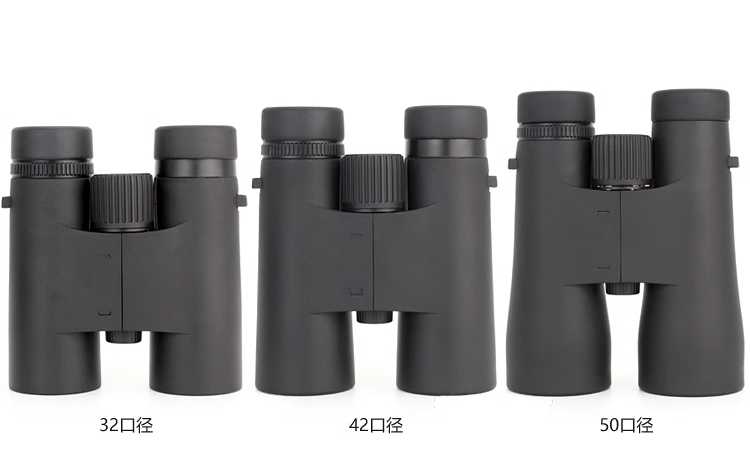
Binoculars: 8x or 10x magnification is usually sufficient. I use 8×42, the standard size. A domestic model costing between 500–1000 RMB (roughly $70–140) should work fine. Spotting scopes can reach 20x magnification but require a tripod; a domestic model around 1000 RMB is a good choice.
Camera: Modern mirrorless cameras with high resolution, good stabilization, and fast continuous shooting are ideal. The lens is crucial—the longer the focal length, the better, but quality super-telephoto primes are extremely expensive, heavy, and bulky. I personally use a 180–600mm zoom—it's not top-tier, but it's convenient and balanced.
Other gear: Clothing and insect repellent go without saying. In the forest, wear dark, non-reflective clothing to avoid startling the birds.
Epilogue: Birdwatching – A Mutual Encounter with Nature
Birdwatching ranges from basic to advanced—easy to start, but with a very high ceiling. Eventually, it always leads toward more diverse, rarer species in completely natural settings. A lifetime isn't enough, and the challenges only grow.
But western Yunnan can be the starting point for all of this. Here, you can easily gain a sense of achievement—watch hornbills raising chicks in May, see Blood Pheasants dancing in January, and find different surprises in every season.
As we travel through mountains and rivers, we pause before the true masters of this landscape—and we look at each other. That's the diversity of travel.
Since my daughter learned to read, her favorite magazine has been Natural History (Bówù). She's endlessly fascinated by everything in the natural world. Birds are one of her favorite creatures, and we search, observe, and identify them together. Birdwatching has become a wonderful parent-child activity.
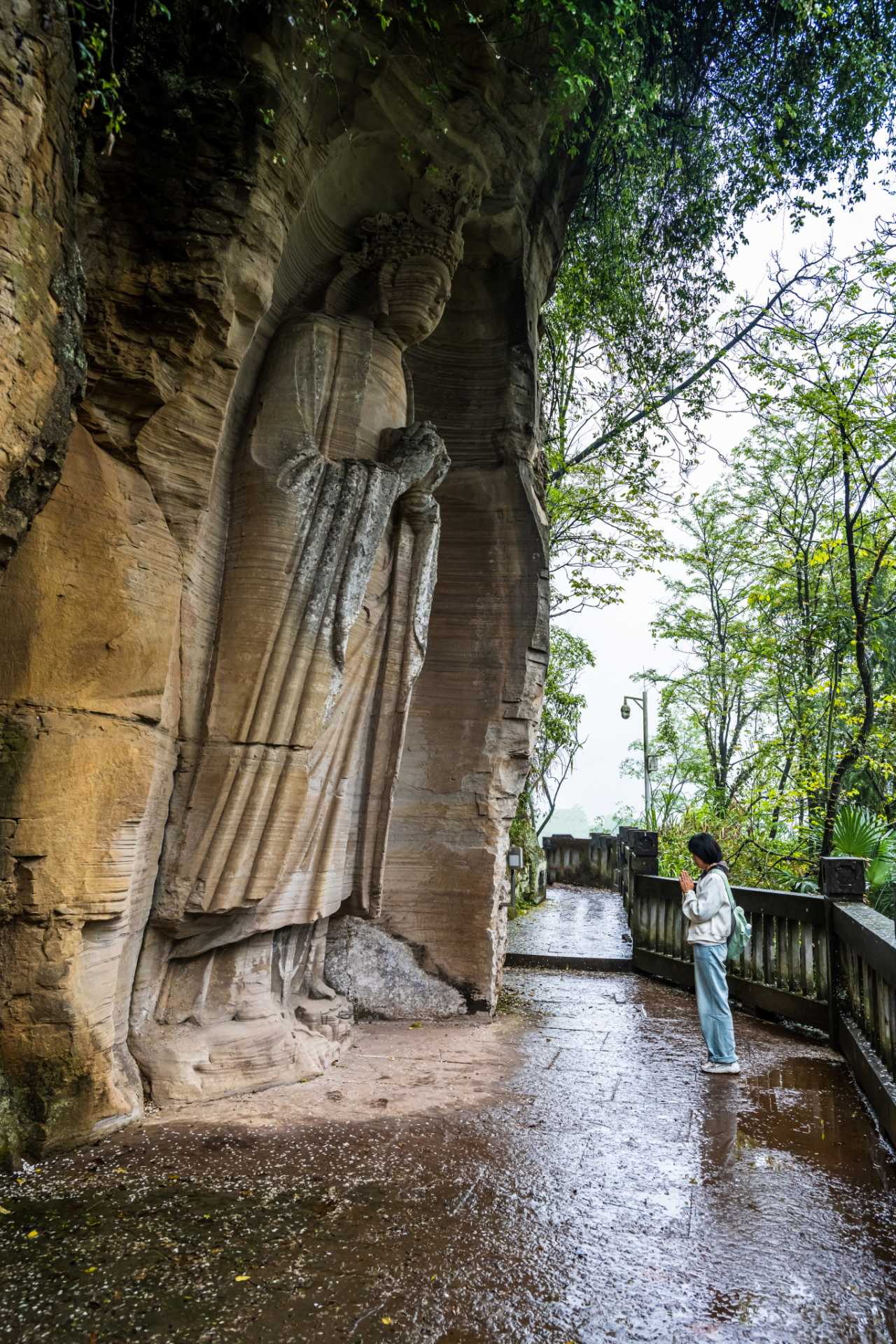
In the end, we leave nothing behind. What we can do is be present—accompanying everything nature unfolds. When the oil runs out and the lamp goes dark, what matters isn't what we left behind, but what we possessed in the moment.
I came. I left. I was here. I was not. Behind it all is simply what I wanted. Travel can return to its simplest essence.
And birdwatching in western Yunnan is one of the most beautiful expressions of that essence.
Appendix: Quick Guide to Birds Mentioned - Wreathed Hornbill: resident, Bucerotidae family, body length 80cm, weight 2500g, first-class protected species - Red-whiskered Bulbul: resident, Pycnonotidae family, body length 22cm, weight 28g, least concern - Black-throated Laughingthrush: resident, Leiothrichidae family - Blood Pheasant: winter visitor, Phasianidae family, visible only in winter
Best Birdwatching Seasons: May (breeding season, hornbill chicks), January (most species variety, including Blood Pheasant)
You should also read:
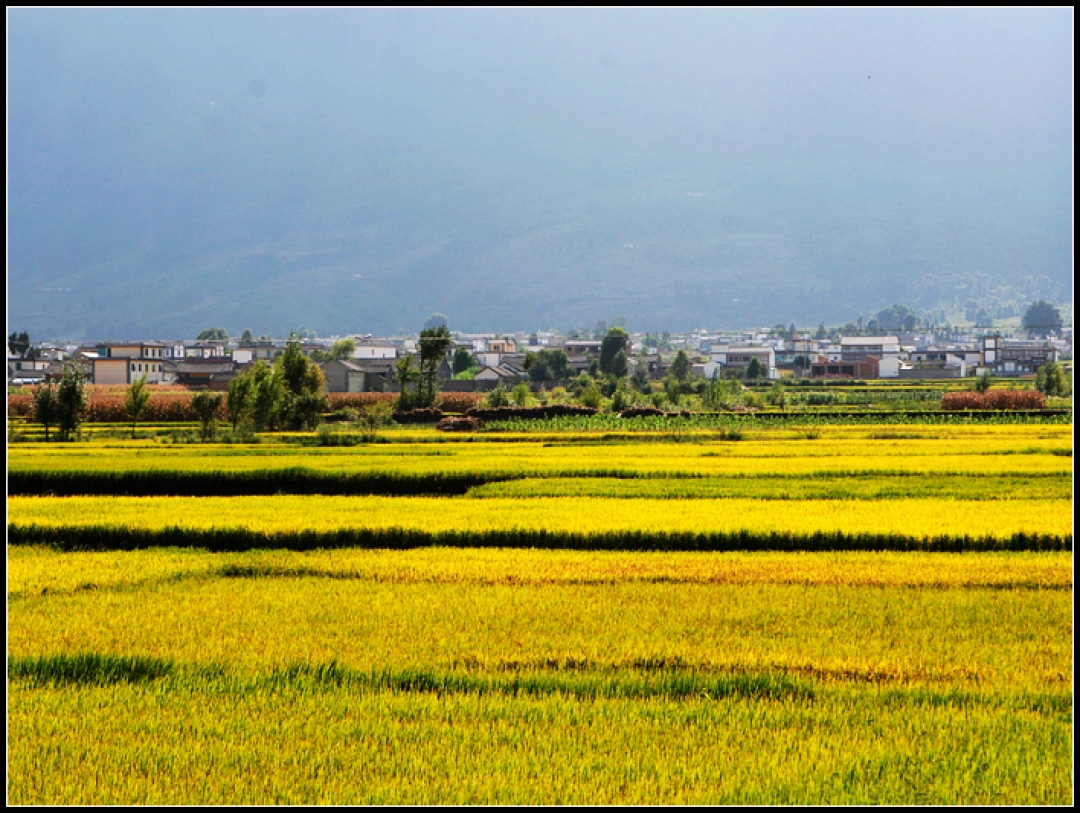
A 9-Day Yunnan Journey: From Lijiang to Dali to Tengchong – A Trip Toward Self-Reconciliation
A 9-Day Yunnan Journey: From Lijiang to Dali to Tengchong – A Trip Toward Self-Reconciliation Some say travel is simply going from a place you're tired of to a place other people are tired of. It stings to hear, but it's painfully true. Yet there's…
Continue reading...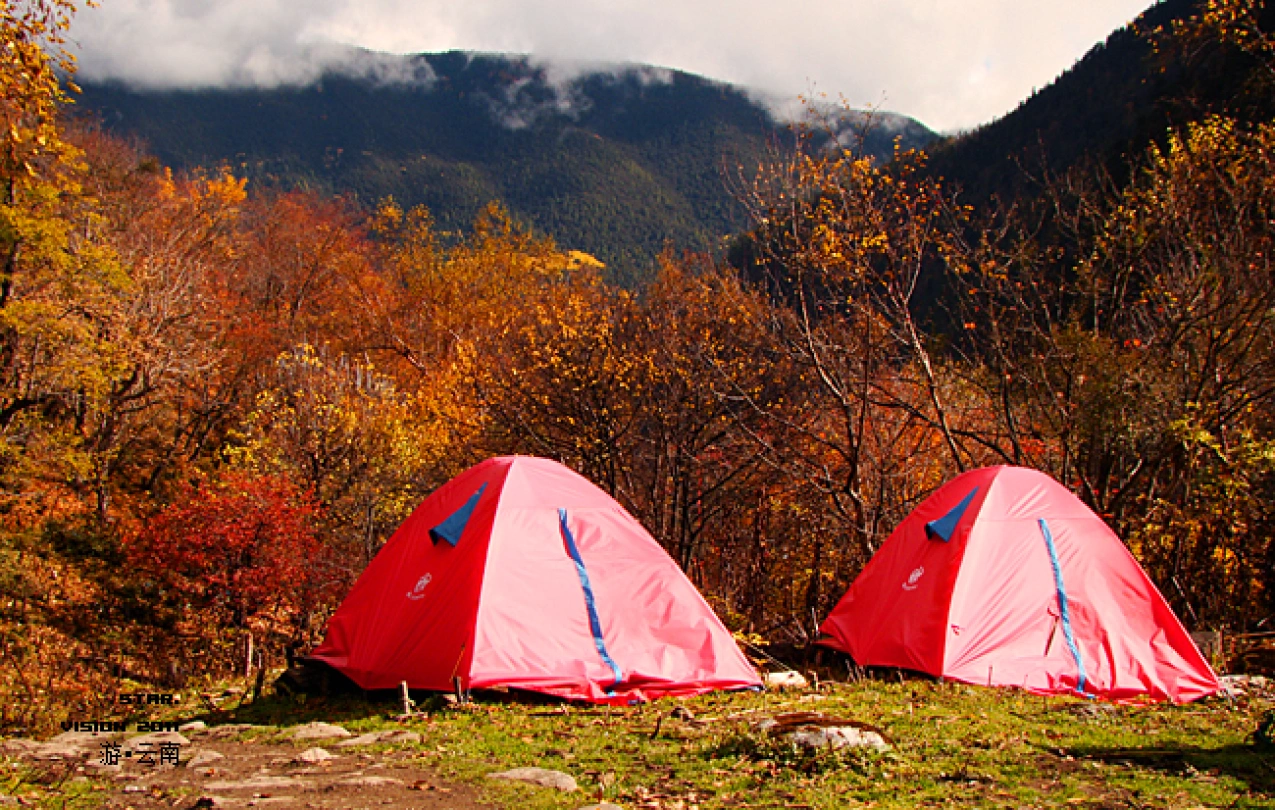
Yunnan! Paradise on Earth – The Yubeng Chapter: A Soul-Cleansing Journey into Seclusion
Yunnan! Paradise on Earth – The Yubeng Chapter: A Soul-Cleansing Journey into Seclusion Prologue: Why Yubeng? If you ask me which place in Yunnan is most worth hiking to, I would answer without hesitation: Yubeng. This is not an answer I give lightly. As a…
Continue reading...
Yunnan Travel Mastery: From Beginner to Pro-Level Player – A Complete Guide
Yunnan Travel Mastery: From Beginner to Pro-Level Player – A Complete Guide "Either travel or read, but your body and soul must be on the road." This quote has been repeated countless times, but very few people truly manage to be "on the road" and…
Continue reading...