A Journey to Shangri-La: In Search of the Sun and Moon in Your Heart
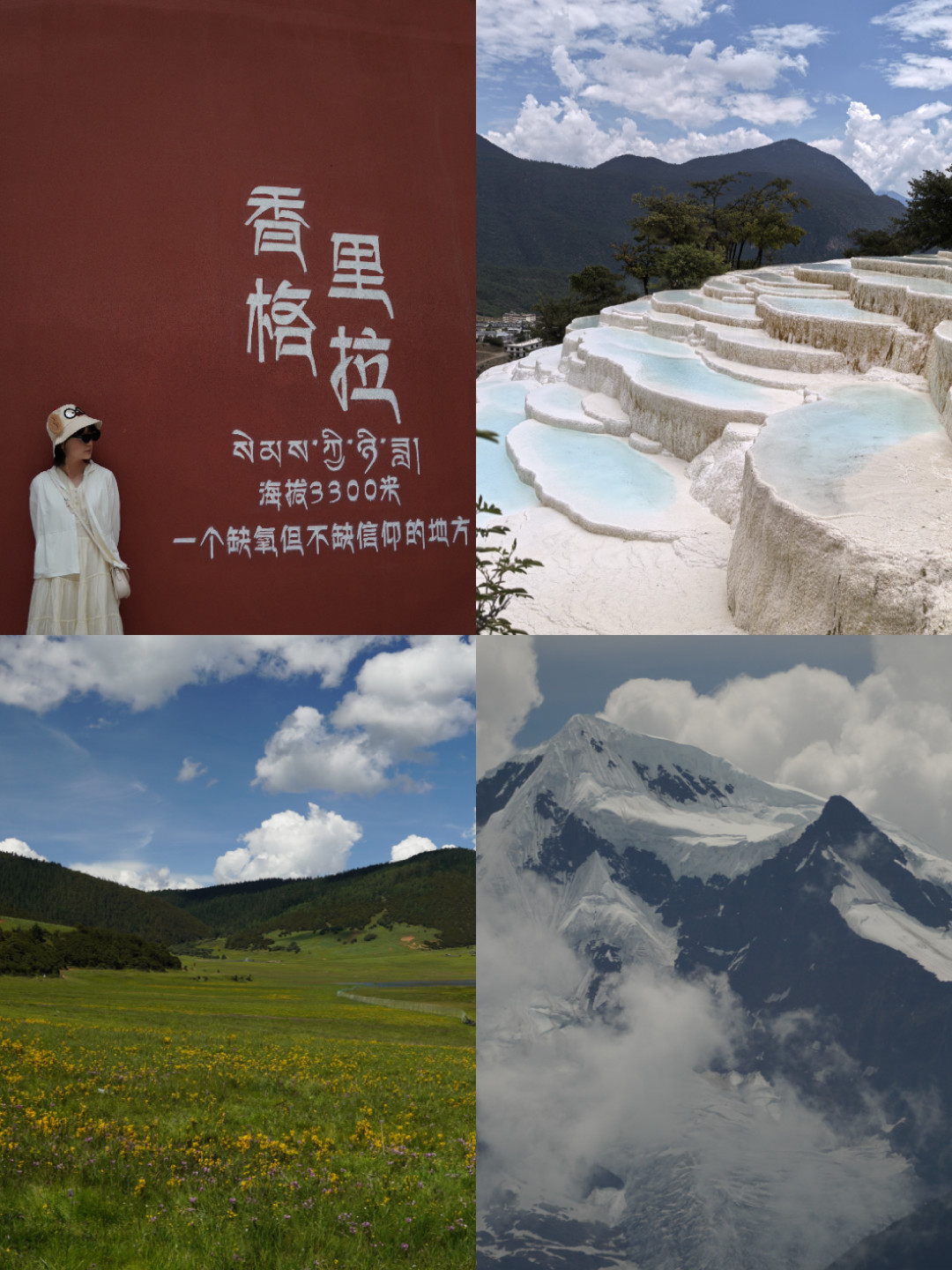
A Journey to Shangri-La: In Search of the Sun and Moon in Your Heart
Introduction: A Spontaneous Graduation Trip
When our daughter's high school entrance exam results finally came in, we decided to celebrate this milestone of her youth with a trip. Our initial destination was Shandong, but the relentless heatwave in the north stood like an invisible wall, deterring us. Just then, Shangri-La in Yunnan caught our eye—a place with an average summer temperature of around 20°C (68°F), as if nature had tailor-made it as our perfect summer retreat.
The name "Shangri-La" originates from Tibetan, meaning "the sun and moon in the heart," symbolizing humanity's infinite yearning for a beautiful life. Its other name, "Shambhala," is translated as "paradise" or "utopia." Carrying our憧憬 (longing) for this mysterious land, our family of three embarked on this eight-day journey.
Itinerary and Cost Breakdown
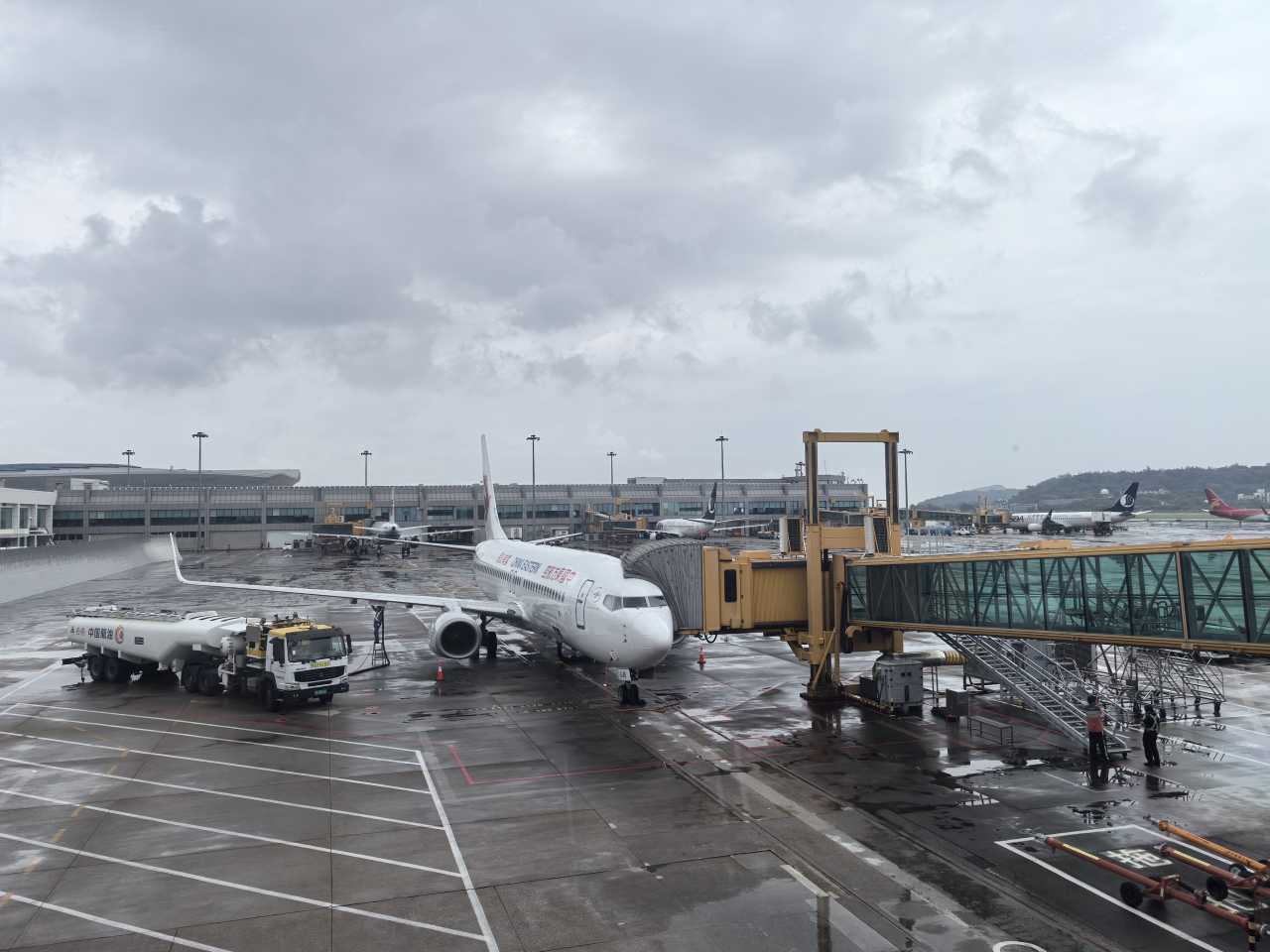
Eight-Day Schedule
Day 1: Zhuhai → Kunming → Dukezong Ancient Town, Shangri-La (Flight: 1,446 RMB per person)
Day 2: Songzanlin Monastery (Ticket: 90 RMB per person) → Napahai Lake (Free) → Taxi 75 RMB, Bus 15 RMB
Day 3: Potatso National Park (Shuttle + Ticket + Scenic Bus: 534 RMB for three, Cycling: 270 RMB)
Day 4: Baishuitai (White Water Terrace) + Tiger Leaping Gorge (Tickets + Escalator + Shuttle for three: 997.5 RMB, Horse Riding: 270 RMB)
Day 5: Meili Snow Mountain (Shuttle: 240 RMB for three)
Day 6: Meili Snow Mountain → Shangri-La (Shuttle: 240 RMB) → Kunming (High-speed train: 260 RMB per person)
Day 7: Kunming Citywalk
Day 8: Kunming → Zhuhai (Flight: 1,229 RMB per person)
Accommodation and Total Cost

Shangri-La hotel (4 nights): 2,300 RMB
Meili Snow Mountain guesthouse (1 night): 330 RMB
Kunming (2 nights): 860 RMB
Including all transportation, the total came to approximately 15,500 RMB (excluding meals and souvenirs).
That number may sound hefty, but when you find yourself amidst those breathtaking landscapes, you realize every penny was well spent.
Departure: From Zhuhai to Shangri-La
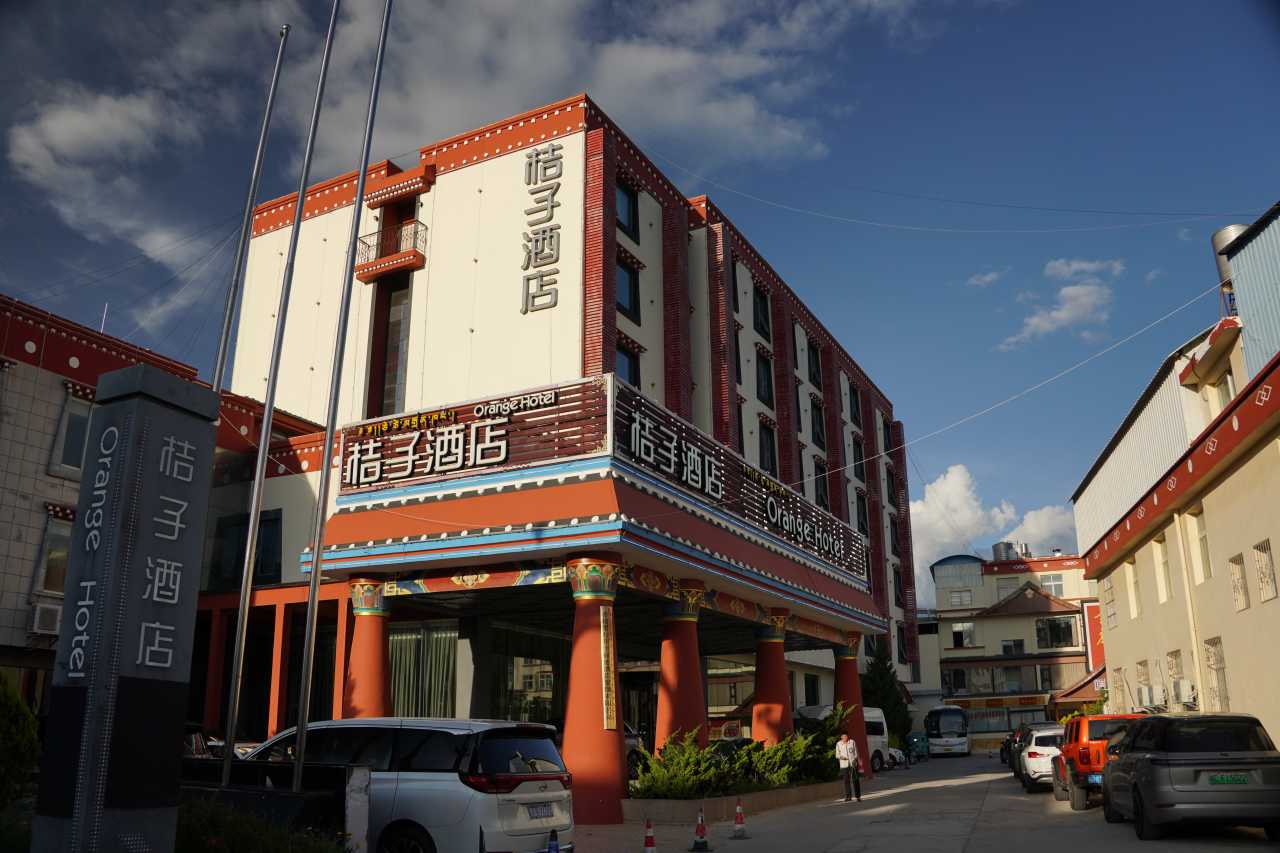
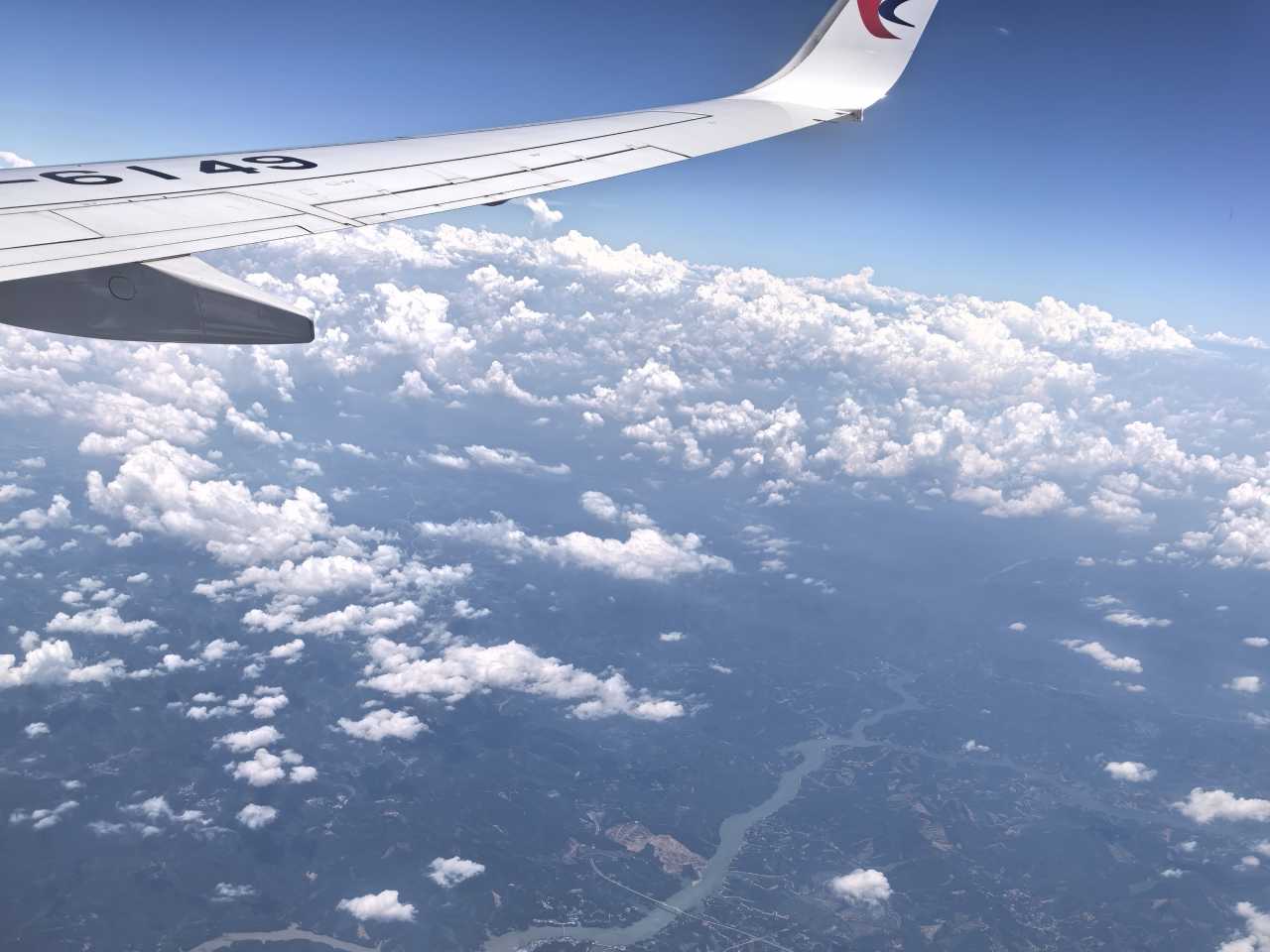
At 11:40 AM, we boarded a China Eastern flight from Zhuhai to Kunming. The cabin was completely full—clearly, Yunnan was drawing a massive crowd this season. Though Zhuhai had been overcast for days, the flight took off on time, as if even the weather was making way for us.
We landed in Kunming at 2 PM, with four hours to kill before our connecting flight. It was an awkward stretch—too long to just sit, too short to venture into the city. So we whiled away the time in the airport lounge, sipping coffee and watching the clouds drift by outside the window.
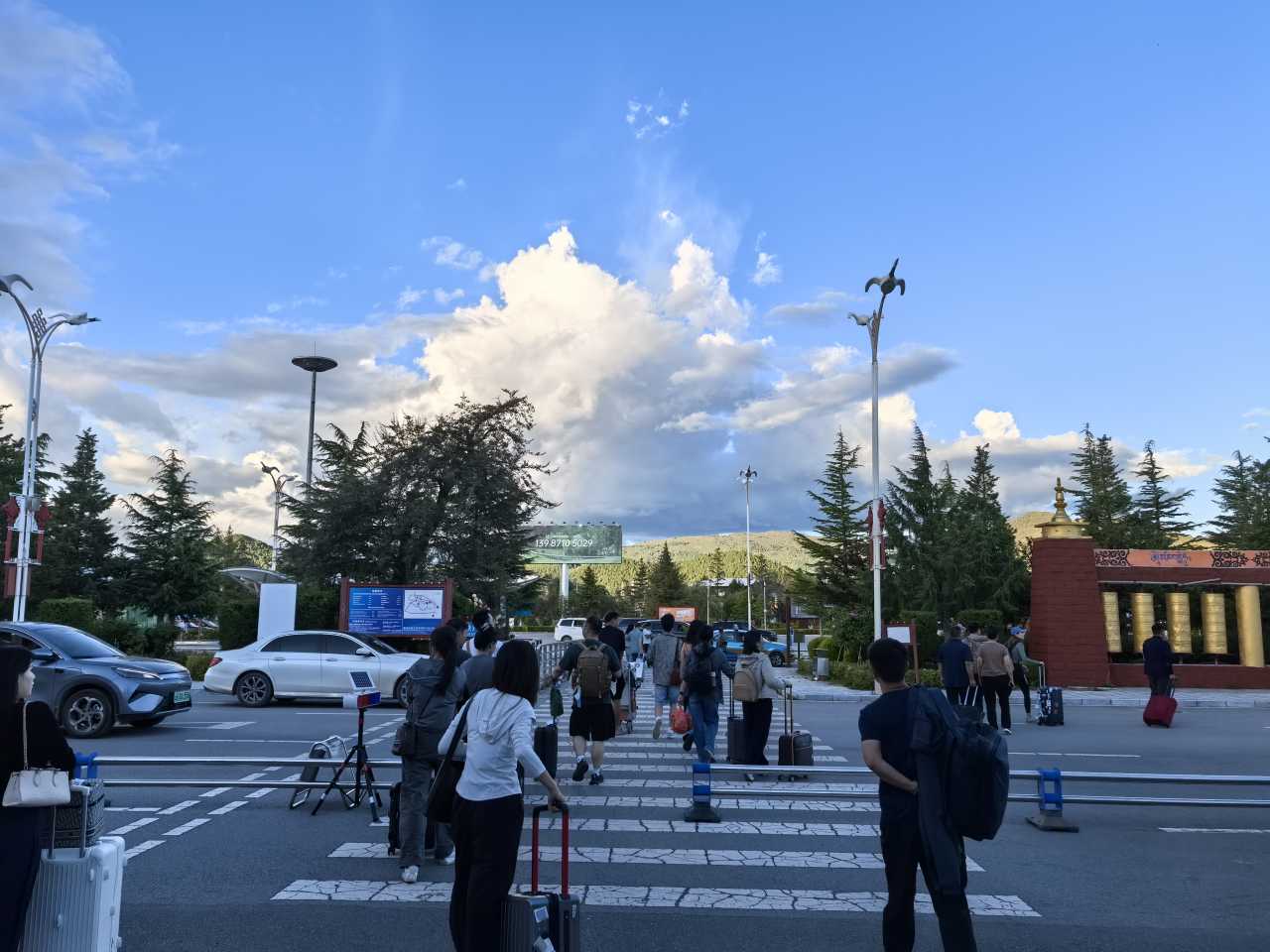
At 7:30 PM, the plane touched down at Shangri-La Airport. The moment the cabin door opened, a wave of cool, fresh air hit us—around 20°C (68°F), a stark contrast to the muggy 30°C-plus (86°F+) of Zhuhai. That refreshing sensation made us fall in love with the place instantly.
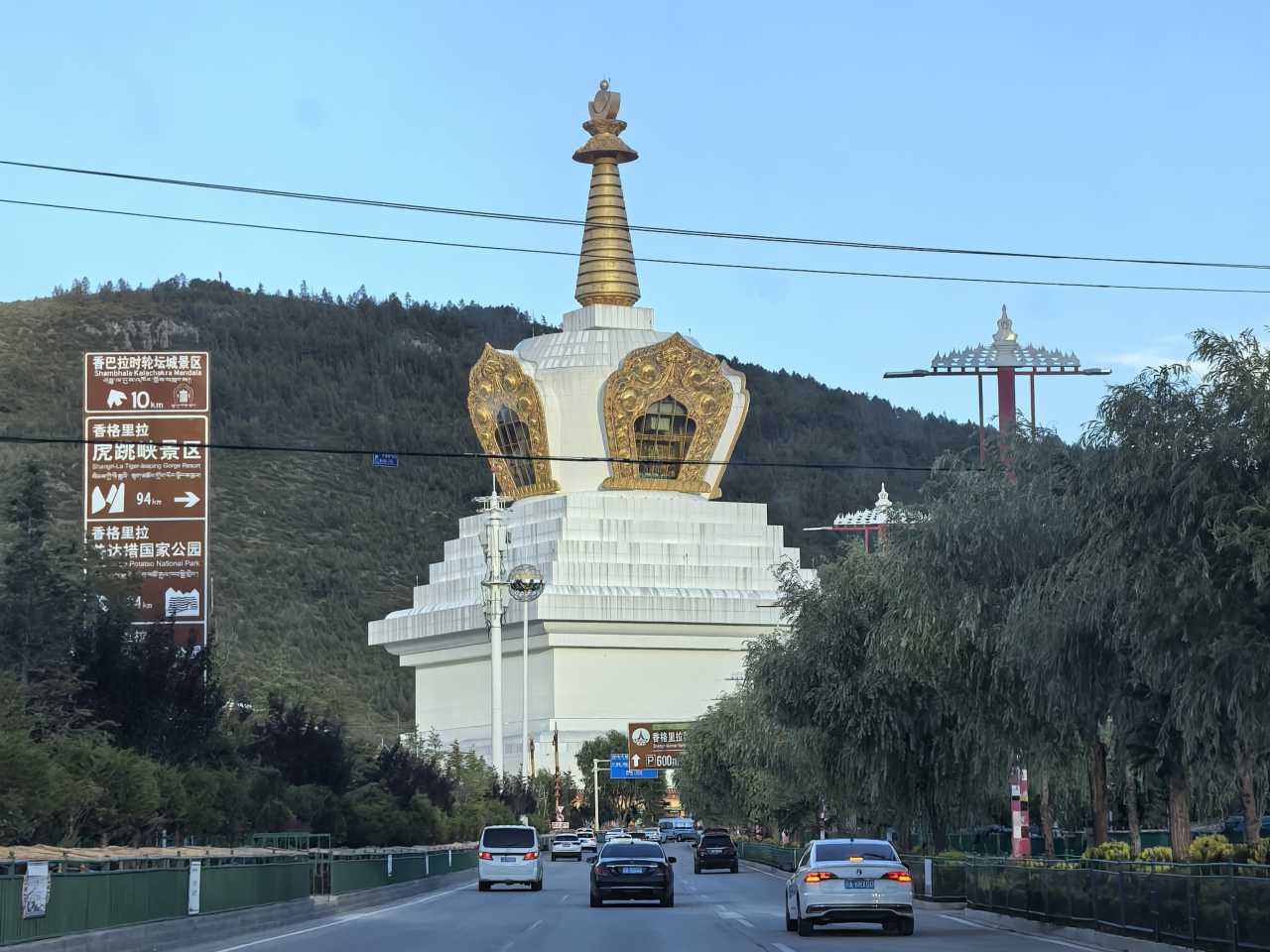
On the taxi ride to our hotel, we passed the He Xie Ta Zhong Ta (Harmony Pagoda in the Pagoda), its majestic white silhouette standing solemnly in the twilight.
Dukezong Ancient Town: A Millennium Post Station Under Moonlight
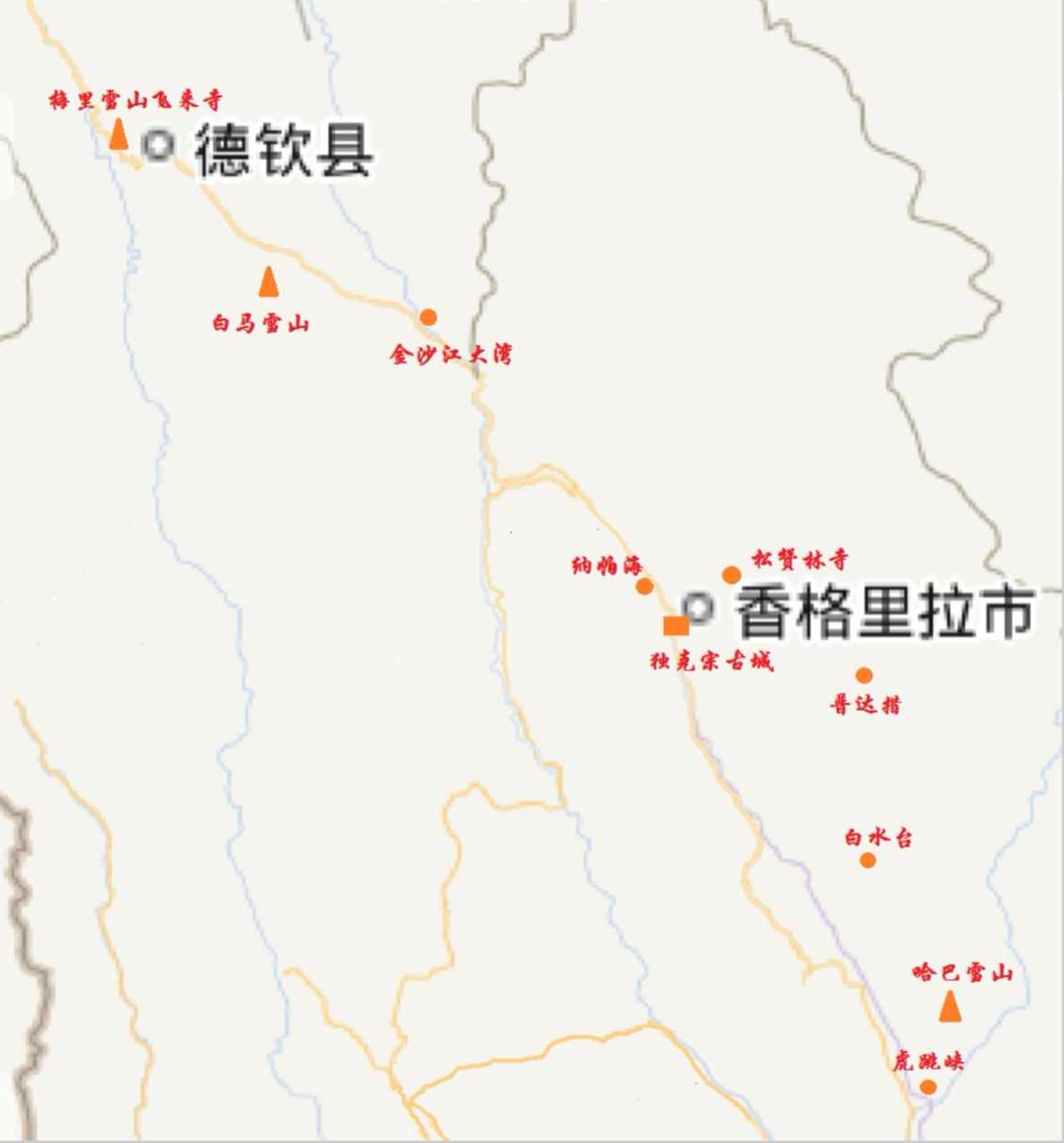
We checked into the Orange Hotel near the north gate of Dukezong Ancient Town, right next to Red Sun Square, just a few minutes' walk from the old town. After dropping our luggage and grabbing a quick dinner, we couldn't wait to step into this ancient town with over 1,300 years of history.
Shangri-La's streets were clean and tidy, dominated by Tibetan-style architecture with red-and-white walls that stood out vividly against the night. Dukezong Ancient Town was a key post station on the Yunnan-Tibet section of the Ancient Tea Horse Road, built according to the Buddhist vision of the Shambhala utopia. Its Tibetan name, "Dukezong," means "Moonlight City" and "Castle Built on Stone," echoing the historical "Sunlight City" (Niwangzong) that once existed, together forming the beautiful metaphor of "the sun and moon in the heart."
The town was first built during the Tubo Dynasty of the Tang Dynasty (634 AD) and later became a military stronghold under the Mu family chieftains of the Naxi people during the Ming Dynasty. The entire town is centered around Turtle Mountain, radiating outward in the shape of an eight-petal lotus—a layout rich in religious symbolism and aesthetic value.
Strolling along the cobblestone streets, we passed shops selling local specialties, Tibetan restaurants, creative stores, and bars. We found a Tibetan eatery and ordered a small yak meat hotpot with rice and drinks, costing 152 RMB for all three of us, and we left completely full. As night fell, the ancient town grew livelier, with music drifting from the bars, mingling with the moonlight.
Turtle Mountain Park and the Giant Prayer Wheel
Turtle Mountain Park is a must-visit in the ancient town—free of charge, with just a simple reservation through a mobile app. Although there was a queue when we visited, it moved quickly. The park's highlight is undeniably the world's largest prayer wheel. This massive cylinder requires the combined strength of many people to turn, surrounded by devout worshippers and curious tourists.
From the top of Turtle Mountain Park, we overlooked the entire Shangri-La city, with its twinkling lights blending into the distant mountains—a scene so beautiful it was intoxicating.
Songzanlin Monastery: The Solemnity of the Little Potala Palace
On the second morning, we headed to Songzanlin Monastery, often called the "Little Potala Palace." It's just a short taxi ride from the ancient town, or you can take bus No. 3 directly there.
Songzanlin is the largest Tibetan Buddhist monastery in Yunnan, with an entrance fee of 90 RMB, payable at the self-service ticket machines in the visitor center. Standing at the foot of the monastery, looking up at the row of golden Buddhist ornaments atop the entrance gate shimmering under the sun, an involuntary sense of reverence washed over us.
Passing through the gate, we were greeted by steps leading up to the golden main hall. We climbed slowly, looking up to see three golden halls towering against the brilliant blue sky, with flocks of crows circling above, adding an air of mystery to the monastery.
Following monastery etiquette, we toured clockwise—photography was prohibited inside the halls. Inside, the halls were filled with Buddha statues, and the walls were covered in vibrantly colored murals depicting Buddhist stories. In one hall, we saw many lamas chanting sutras, with an elderly lama speaking in a deep, resonant voice that carried through the space.
The rooftops were adorned with various mythical beasts, and the ridgepoles were decorated with dragon heads—details that showcased the unique charm of Tibetan Buddhist art.
Napahai Yila Prairie: Half Lake, Half Grassland
After leaving Songzanlin, we headed to Napahai. There were many drivers soliciting business at the monastery gate, and we hired one, only to be taken to a horse-riding spot where the cost was over 200 RMB per person. We decisively declined and called a Didi (ride-hailing) to take us to the "Halfway to Boiling" café.
As the car drove along the shores of Napahai Lake, the driver told us that during the rainy season, Napahai is a lake, but in the dry season, it transforms into a grassland. In the rainy season, the water can rise several dozen centimeters over the road, creating a "water highway"—and if you're not careful, you could drive right into the lake. Now, with water levels controlled, the area presented a unique landscape of half lake and half grassland.
The "Halfway to Boiling" café sat right by Napahai, next to a bus stop, making it very convenient. We settled in, gazing at the lake and mountains outside the window, enjoying a rare moment of tranquility.
Beside the lake was Napahai Village, where locals had set up wooden racks for drying highland barley, and free-roaming horses painted a pastoral scene. Along the lakeside road, there were large wetlands filled with colorful wildflowers—a feast for the eyes.
After leaving the café, we took bus No. 12 for a loop around the lake. The bus had two routes, A and B, both running along the lakeshore and eventually returning to Red Sun Square. The fare was only 5 RMB, payable by scanning a QR code when boarding. Sitting on the bus, watching the lake and grassland pass by, it felt like we were riding a water bus skimming across the surface.
Potatso National Park: A Paradise for Hiking and Cycling
On the third morning, we took a direct shuttle from the east gate of the ancient town to Potatso National Park. The ride took about half an hour, and tickets and round-trip bus passes could be booked in advance via a WeChat public account.
Potatso sits at an altitude of 3,500 to 4,159 meters (11,483 to 13,645 feet) and mainly consists of three areas: the river valley forest, Shudu Lake, and Bida Sea. The park is primarily for hiking and cycling, divided into three sections: the first is a 2-kilometer forest hike, the second is Shudu Lake (where you can hike, cycle, or take a boat), and the third is Bida Sea.
After entering the park, we took an internal bus to Youyou Manor, where we began our hike. This was a gravel path along a river, featuring forest and valley scenery, with plenty of rest stops along the way—it wasn't too strenuous. The first section ended at a bus stop near a small waterfall, where we caught another bus to Shudu Lake.
At Shudu Lake, we chose to cycle, costing 90 RMB per person. Before cycling, we had to sign a liability waiver—one per family was fine. The cycling route started on a dirt road along the lake, crossed a floating bridge, then quickly entered a lakeside forest, and finally emerged at the endpoint—Pier No. 3.
After returning the bikes at the pier, we took a boat to the opposite shore. Next to the pier was a meadow full of blooming flowers, so beautiful we didn't want to leave. Once across, we could either take a bus back to the park entrance or transfer to Bida Sea. Since it was nearly 5:30 PM and one of us was suffering from altitude sickness, we decided to skip Bida Sea and head back.
Baishuitai: The Gradually Blooming Lotus
On the fourth morning, we returned to the shuttle station at the east gate of the ancient town and boarded a bus to Baishuitai and Tiger Leaping Gorge. These two attractions are on the same route, so visiting them in one day made sense.
The bus ride took over two hours, and we arrived at Baishuitai around noon. The driver arranged for us to have lunch first, then we explored on our own. From the ticket gate, we had to climb a hill to reach Baishuitai. At the entrance, locals with horses were offering rides up the hill. They initially said 20 RMB per person, but once we were on the horses, they claimed 20 RMB only covered a short trial ride, and riding to the top would cost 100 RMB. We negotiated and paid 270 RMB for the three of us.
Baishuitai is located in Baidi Village, Sanba Township, Shangri-La City, at the northern foot of Haba Snow Mountain, at an altitude of about 2,380 meters (7,808 feet). Over millennia, calcium bicarbonate-rich spring water has deposited carbonate sediments, forming step-like terrace formations resembling layers of rice paddies. This is also the birthplace of Naxi Dongba culture, and local Naxi people call it "Babuzhi," meaning "the gradually blooming lotus."
During the Ming Dynasty, Naxi chieftain Mu Gao described Baishuitai's splendor in a poem: "Cloud waves and snow billows in three thousand ridges, jade ridges and silver mounds in countless thousands." Standing there, looking at the layered white terraces, you can't help but marvel at nature's craftsmanship.
Tiger Leaping Gorge: The Roar of the Jinsha River
After leaving Baishuitai, we passed the Haba Snow Mountain viewpoint, where the driver stopped for photos. Unfortunately, the mountain was completely shrouded in clouds, and we couldn't see the summit. The driver said he was from Haba Village and had once worked as a mountain guide, sharing stories about Haba Snow Mountain with great familiarity.
After a two-hour drive, we reached Tiger Leaping Gorge. It's best to buy tickets for the escalator along with the entrance ticket, as taking the escalator down into the gorge is much faster and saves you the effort of climbing over 2,000 steps on the way back.
Tiger Leaping Gorge is a deep canyon carved by the Jinsha River along the edge of the Qinghai-Tibet Plateau. At its narrowest point, the river is only about 20–30 meters wide, while the canyon reaches depths of up to 3,900 meters (12,795 feet). Two snow-capped mountains stand majestically on either side—to the east is Jade Dragon Snow Mountain (5,596 meters / 18,359 feet), and to the west is Haba Snow Mountain (5,396 meters / 17,703 feet). The river roars and surges through the gorge with breathtaking force, and at its center sits the Tiger Leaping Rock. Legend has it that a tiger once used this rock to leap from Jade Dragon Snow Mountain to Haba Snow Mountain.
The gorge is divided into three sections: upper, middle, and lower. The upper section is the narrowest and the earliest developed, with the best facilities. The main attraction here is the Tiger Leaping Rock and the surging river. Watching the water roar through the canyon, you feel the overwhelming power of nature.
We returned to the hotel around 8 PM. The next day, we planned to visit Meili Snow Mountain, so we booked shuttle tickets through the same WeChat public account—80 RMB per person, with a travel time of about four hours. We also booked a guesthouse near Feilai Temple (Flying Temple) by Meili Snow Mountain for one night, hoping to see the "Sunshine on Golden Mountain" at sunrise.
Jinsha River Big Bend and Baima Snow Mountain
On the fifth morning at 9 AM, we arrived at the shuttle station at the east gate of the ancient town. This time, it was a nine-seat minibus. After departing, the driver mentioned he had to pick up one more passenger—a Swiss girl heading to Yubeng for a hike.
Soon after leaving the city, we entered the mountains. The driver said the pass we'd cross today was at 4,000 meters (13,123 feet). After about an hour, we began driving along the Jinsha River, with Sichuan Province on the opposite bank. Suddenly, a stone-carved red flag appeared on the cliffside, below which was the Jinsha River Bridge—this was where the Red Army crossed the Jinsha River during the Long March. From here, we entered Deqin County.
When we reached the Jinsha River Big Bend, the driver stopped for photos. Here, the Jinsha River flows around Rizhui Peak in Derong County, Sichuan, making a 180-degree turn that forms an Ω shape around the mountain—truly spectacular.
Leaving the Jinsha River, we quickly entered the Baima Snow Mountain area. The altitude rose rapidly, and after passing through a tunnel, we reached over 4,000 meters. Standing there, looking at an unnamed peak across the way, an indescribable sense of awe welled up inside me.
After crossing the pass, we descended along the mountain road, and the altitude dropped quickly. Soon, we arrived at Deqin County town, where the Swiss girl got off to transfer to Yubeng. We continued on, with our final stop being the Meili Snow Mountain viewpoint.
Meili Snow Mountain: Watching Over the Sacred Peak
Our guesthouse was near Feilai Temple, about 800 meters from the Meili Snow Mountain viewpoint. It was a two-story Tibetan-style building, with the entire courtyard enclosed by a glass frame—likely for insulation. The courtyard was filled with lush succulents, growing vigorously.
After dropping our luggage, we walked to the viewpoint. The viewpoint had a creative shop and a restaurant, where you could enjoy the mountain view while resting. When we arrived, the snow mountain was completely covered in clouds—nothing was visible. We decided to wait, so we ordered lemon tea and buckwheat pancakes at the "Meet Meili" creative supermarket, while our daughter bought a DIY oil painting of Meili Snow Mountain and started painting.
The rooftop of the creative shop featured a "Sky Mirror" photo spot, accessible to customers. We sipped our drinks and waited. Slowly, the clouds began to part, and the peaks of Meili Snow Mountain started to emerge from the mist.
The main peak of the Meili Snow Mountain range, Kawagebo Peak, stands at 6,740 meters (22,112 feet). In Tibetan, it means "White Snow Mountain" and is revered as the "Foremost of the Eight Sacred Mountains in Tibetan Regions." It remains an "unclimbed virgin peak"—no human has ever reached its summit. In 1991, a Sino-Japanese joint expedition lost all 17 members during their summit attempt, one of the most tragic mountaineering disasters in history. Since then, out of respect for religious beliefs, the Chinese government has officially banned climbing this mountain.
To the right of Kawagebo Peak are Burong Songjie Wuxue Peak (6,000 meters), Cugui Laka (5,933 meters), Nairi Dingka (6,379 meters), and Zhadui Wuxue (6,365 meters). To the left are Bawu Bameng Peak (6,000 meters) and further left, Miancimu Peak (6,054 meters), said to be Kawagebo's wife, meaning "Goddess of the Sea," elegant and graceful, also known as the "Goddess Peak."
Watching these snow peaks appear and disappear among the clouds, you feel a profound sense of tranquility and solemnity beyond the mundane.
The Missed Sunrise on Golden Mountain
That night, it rained continuously. By morning, the rain had stopped, but the sky remained overcast. The viewpoint was already crowded with people, all hoping to wait it out—after all, the weather here can change quickly. But the miracle didn't happen. By 7:30 AM, the mountains were still invisible.
Although missing the "Sunshine on Golden Mountain" was disappointing, this experience taught me that nature's beauty isn't always on display. Sometimes, regret is a kind of beauty in itself.
Kunming: The Final Chapter
At 10 AM, we took the shuttle back to Shangri-La, then transferred to a high-speed train to Kunming. We still had two days of holiday left and planned to explore Kunming properly.
We arrived back at the north gate of the ancient town at 2 PM, had lunch, and still had three hours before the train departed. We found a café in the old town, ordered coffee, and rested. On the 12306 app, tickets from Shangri-La to Kunming initially showed only standing room, but luckily, we managed to get reserved seats. The train departed at 5:17 PM and arrived in Kunming at 10 PM.
The next day, we woke up at noon and took a taxi to Haiyan Village by Dianchi Lake. The road was under construction, and outside vehicles weren't allowed into the village—either you walked or took a tuk-tuk from the village entrance. The roadside was lined with food stalls, as was the lakeshore. The sunset here was said to be beautiful, but it was still early, so we didn't wait and headed back to the hotel to prepare for the next day.
On the last day, we visited Kunming's Old Street. Located in the heart of Kunming's historic district, the street layout dates back to the Ming and Qing dynasties. In the late Qing and early Republic periods, the area around Qianwang Street was Yunnan's commercial and financial center, lined with banks and exchange houses. The district now has 15 cultural heritage sites at various levels, including the Victory Memorial Hall and Fulin Tang (a traditional pharmacy) as national-level protected sites, as well as Nie Er's Former Residence and the former site of the Fuchunheng Trading Company as provincial-level protected sites.
Walking along the old streets, surrounded by ancient buildings, it felt like we had traveled back in time.
Conclusion: The Sun and Moon in Your Heart
The eight-day journey passed in a flash, but the memories Shangri-La left us will be treasured forever. This place is not only about magnificent natural landscapes but also about profound Tibetan culture and devout faith. Every corner exudes an air of mystery and tranquility, making you involuntarily slow down and soak it all in.
The most precious gift Shangri-La bestows upon every traveler is an inner light and peace. This trip helped us find a sense of calm and strength within ourselves. I believe I will return to this magical land again, to continue seeking the beauty I have yet to discover.
If you, too, are searching for the sun and moon in your heart, take a trip to Shangri-La. Here, you'll find that the most beautiful scenery is often found along the journey itself.
You should also read:

Cloud Travelogue · Dali of Wind, Flowers, Snow, and Moon: A Three-Day, Two-Night Journey of a Free Spirit
Cloud Travelogue · Dali of Wind, Flowers, Snow, and Moon: A Three-Day, Two-Night Journey of a Free Spirit I am a cultured female foodie with a touch of rogue charm. I slung on my backpack, took my lover's hand, and set off on a spontaneous…
Continue reading...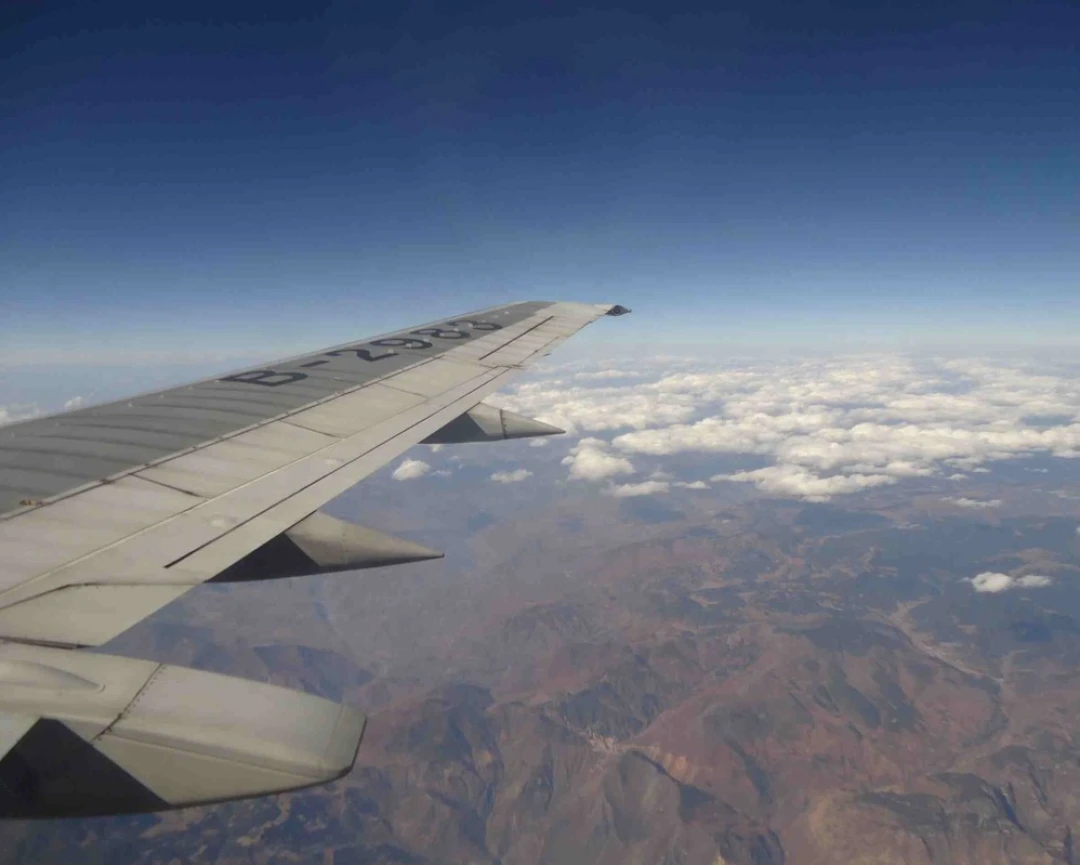
The Meaning of Travel – A Tengchong Story: A Journey of the Heart and Personal Growth
The Meaning of Travel – A Tengchong Story: A Journey of the Heart and Personal Growth Setting Out, Only to Return a Better Self Some say travel is nothing more than leaving a place you're tired of, only to go to a place where others…
Continue reading...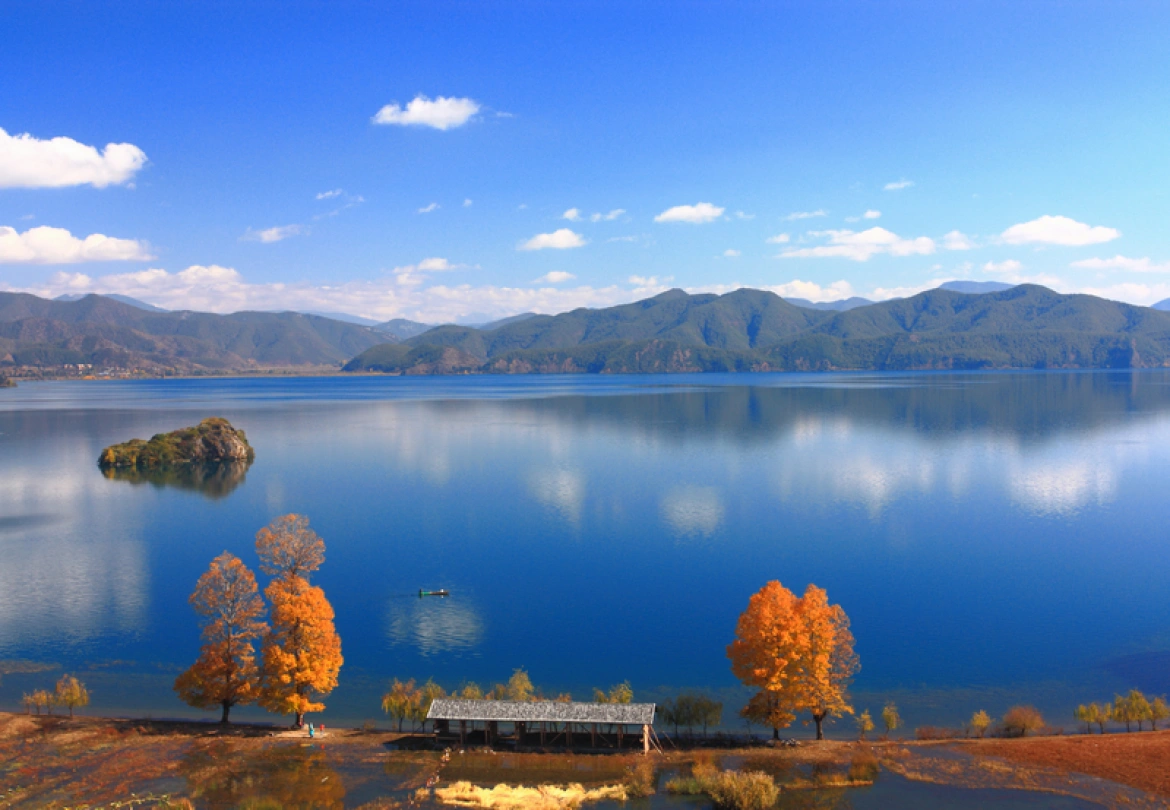
A Spiritual Journey to Lugu Lake in Lijiang: Experiencing the Legend of the Kingdom of Women! (Reproduction and Hotlinking Prohibited)
A Spiritual Journey to Lugu Lake in Lijiang: Experiencing the Legend of the Kingdom of Women! (Reproduction and Hotlinking Prohibited) Off-road自驾, food, hotel and民宿 reviews, Featured Traveler, Tank 300 owner, 200,000 km of self-driving experience. WeChat: y01294987 Ninglang Yi Autonomous County 2010.11.08 · 7 days…
Continue reading...