A Memorable Journey, Gifted to You — A Wandering Tale of Lijiang, Lugu Lake, and Shangri-La
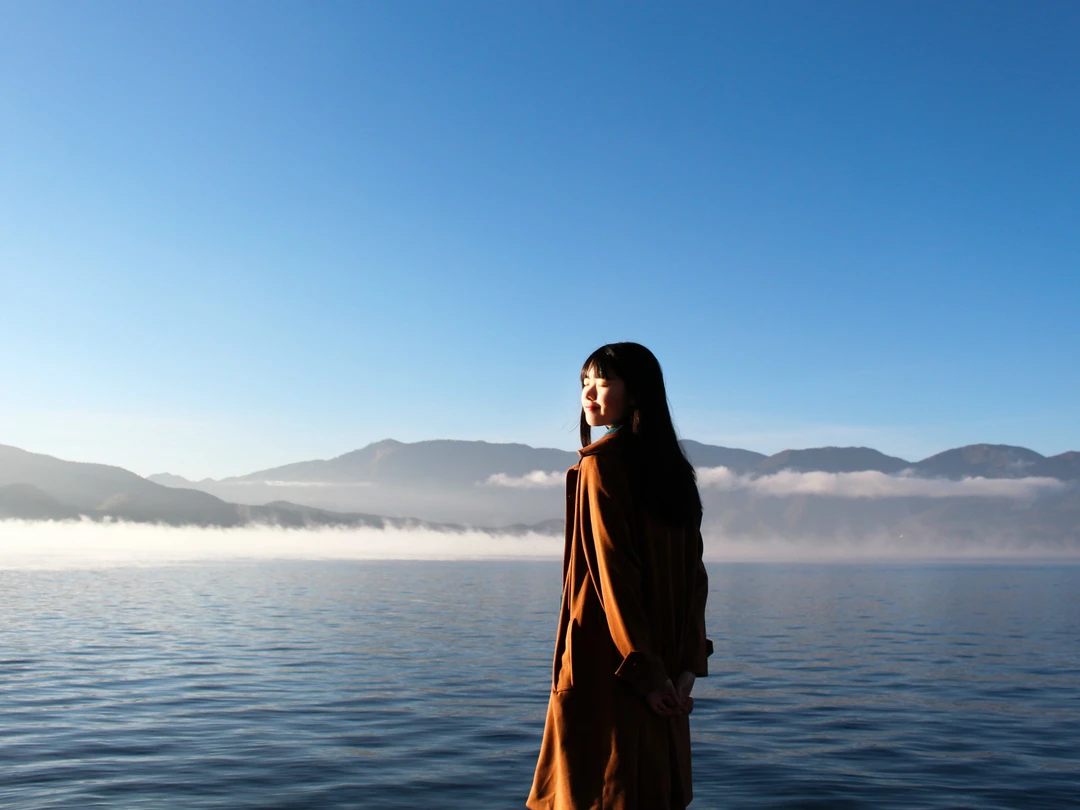
A Memorable Journey, Gifted to You — A Wandering Tale of Lijiang, Lugu Lake, and Shangri-La
Prologue: On Distant Lands, We Shall Meet
Have you ever asked yourself why you set out?
Two years ago, I stumbled upon a line from a travel diary called Notes from Afar: "On the road, you never know whether the next turn will bring sunshine or rain, or whom you'll meet at the next second. You set off with anticipation for what lies ahead, carrying nothing but the desire to see with your own eyes the landscapes others have described." At that moment, my heart was gently touched.
One weekend, after watching Your Name with Z, we spoke almost simultaneously on the way home: "Let's go to Yunnan. No more waiting."

And so, a spontaneous journey began in the winter of December 2016. Over eight days, we set out from Guangzhou, passed through Kunming, and traveled westward—through the morning light of Lijiang, the tranquility of Lugu Lake, and the devotion of Shangri-La.
I want to write down this journey and offer it to anyone still hesitating about whether to take that first step.
Pre-Trip Preparation: Be Prepared
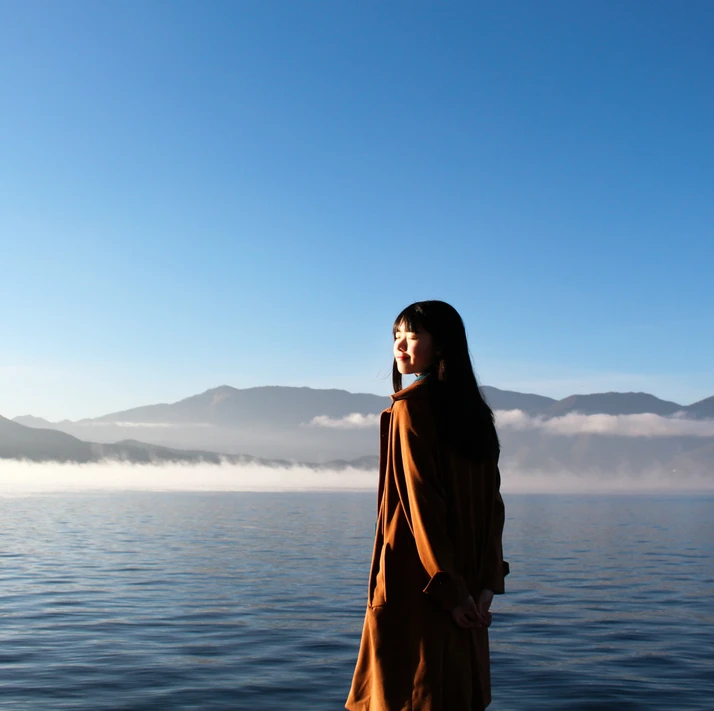
Before leaving, we did some research and compiled a checklist. Here it is, for those who share your longing for Yunnan:
Transportation & Budget
- Flights: Guangzhou → Kunming, Kunming → Lijiang, Lijiang → Guangzhou. Total for two: 2,626 RMB
- Local Transport: Lijiang to Lugu Lake by chartered car: 80–100 RMB per person; renting an electric scooter at Lugu Lake: 80 RMB per day
Essentials
- Medications: Cold relief granules, ibuprofen, digestive tablets, anti-diarrhea medicine, smectite powder, thermometer (bring digestive meds—unfamiliar food can upset your stomach, and temperature swings make colds easy)
- Skincare: Sunscreen, moisturizing toner and lotion, face masks—the UV rays are so intense they'll make you question your existence
- Clothing: Go for warm tones—turmeric, cream, and brown photograph best. Scarves, shawls, and sunglasses are non-negotiable.
- Gear: Canon 700D with kit lens, Sony mirrorless NEX-3N, iPhone 6s
Itinerary Overview
Day 1: Guangzhou → Kunming → Lijiang (first glimpse of the old town)
Day 2: Lijiang → Lugu Lake
Day 3: Cycling around Lugu Lake
Day 4: Lugu Lake → Lijiang → Shangri-La
Day 5: Songzanlin Monastery, Dukezong Old Town
Day 6: Shika Snow Mountain, Napahai
Day 7: Wandering through Dukezong Old Town
Day 8: Lijiang Old Town → Return
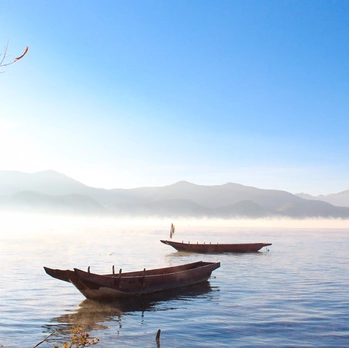
Day 1: Lijiang — Sunshine and Slow Time
At 5:30 a.m., the sky above Baiyun Airport looked like a watercolor painting. Our flight was scheduled to depart at 7:25 but was delayed by nearly two hours. My heart raced like an ant on a hot pan—our flight from Kunming to Lijiang was at 12:50. What if we missed it?
Z saw my anxiety and said calmly, "Relax. We'll make it. If we don't, we'll just buy new tickets. I'd rather spend a bit more than see you upset."
In that moment, I realized that the meaning of travel might not just be about seeing sights, but about who you see them with.
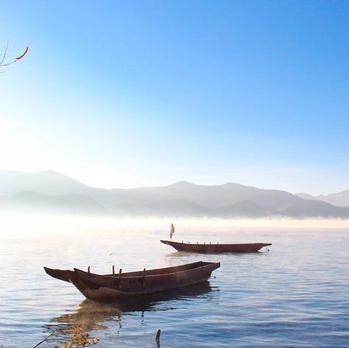
Luckily, we made it. During our layover in Kunming, we sprinted through the airport, used the VIP security lane, and boarded just as the gate was closing. Breathless and exhausted, but filled with relief.
At 2 p.m., our plane landed at Lijiang Sanyi Airport. We took a shuttle to Lantian Hotel (20 RMB per person, about 50 minutes), then transferred to bus No. 13 to the old town (1 RMB). Finally, we stood on Lijiang's soil.
Since Lijiang was just a transit point, we stayed at Yijia Inn outside the old town. In the off-season, Lijiang was quiet. For just over 70 RMB a night, the owner upgraded us to a larger room for free. The succulents at the inn's entrance, the bougainvillea along the roadside, the golden ginkgo leaves carpeting the ground—for a kid from Guangdong who had never seen autumn, it was all impossibly beautiful.
After 6 p.m., the old town waived its entrance fee. We changed clothes and wandered in. At Sifang Street, the melody of Little Baby drifted from a hand-drum shop, music floating through every alley. Standing at the entrance of Iris Library, I thought: this is Lijiang—where sunshine is the most valuable thing, and time the least valuable.
For dinner, we tried the local specialty, cured pork ribs hotpot. To be honest, it was too salty. Not recommended.
Day 2: Lugu Lake — A Dream Made Real
Before 8 a.m., while the staff hadn't started work, we sneaked back into the old town for a stroll. Sifang Street was eerily quiet in the morning light, as if the whole city was still asleep.
At 9:30, our driver arrived. The road to Lugu Lake was newly paved, taking about 4–5 hours. The driver, a gruff-looking but kind-hearted man, gave us a thorough briefing on cycling around the lake: big temperature differences between morning and evening, icy patches on the shaded side of the mountains—slow down early, don't brake suddenly.
On the road, I gazed at the winding mountain paths outside the window, occasionally glancing at Z beside me. Sunlight fell on his face, warm and reassuring.
In Fortress Besieged, it's said that couples should travel together before marriage, to see each other's true colors through day-to-day closeness. Z and I had our first trip together to Xiamen, where we had a minor spat over watching the sunrise. But he never argued with me—he always soothed me first, then calmly explained his point. Since then, we've never really fought.
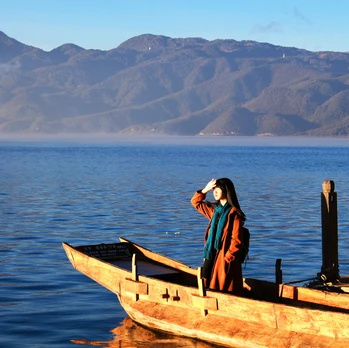
By 3 or 4 p.m., we arrived at Dazu Pier on Lugu Lake. As we entered the scenic area and caught the first glimpse of the lake, I couldn't help but gasp: "Oh my god, how can a place be this beautiful?"
We stayed at Banshan Hushui Inn (also called Flower of the Other Shore), right by Dazu Pier. Our room faced the lake; sitting on the balcony rocking chair, we could see the shimmering ripples of Lugu Lake. The owner was from Hebei Province. He had originally worked in construction and came to Lugu Lake to help his sister renovate the inn. But he was so captivated by the scenery that he dissolved his construction team and stayed to run the place. Now, he spends his days drinking tea by the lake, practicing calligraphy, living like a poem.
At dusk, we strolled along the shore. The setting sun scattered across the lake, shattering into tiny flecks of gold. He held my hand, and I said, "We're really here. It's exactly how I imagined."
That evening, two couples who had driven from Sichuan joined us at the inn. We ate, drank, and chatted together. The owner told us about Mosuo culture and customs. Strangers from all corners of the country gathered without a hint of distance. In that moment, I understood: the meaning of travel is perhaps meeting strangers and talking to them like old friends.
I woke up thirsty in the middle of the night. Z got up to boil water for me. After I drank and went back to sleep, he took his camera and tripod to the balcony to photograph the stars. His equipment was limited, and the photos weren't stunning, but the thought behind them shone brighter than any star.
Day 3: Cycling Around the Lake — The Most Beautiful Scenery Is on the Road
I woke up at dawn and pulled back the curtains. I froze—mist swirled over the lake, and the sunrise painted the entire surface gold, like a fairyland.
Forgetting breakfast, I ran straight to the shore. The cosmos flowers below the inn, the flower-lined path to the lake, the morning stillness of Lugu Lake—it was all impossibly quiet. In the off-season, Lugu Lake revealed its truest self.
We rented an electric scooter for 80 RMB a day. The owner assured us the battery would last a full loop around the lake. I bundled up—shawl, mask, sunglasses, gloves—and we set off.
You absolutely must wear sunscreen! I applied it in the morning but got lazy about reapplying. By the end of the day, my face was sunburned, red and dark. I regretted it deeply.
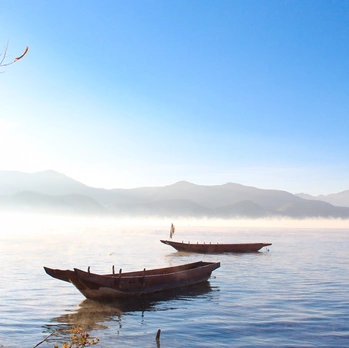
From Dazu Pier to the Walking Marriage Bridge, we passed Lover's Beach and Xiaoluoshui. This stretch, I believe, is the most beautiful. Especially from Lover's Beach to Xiaoluoshui—it looked like a painting. No camera could capture what my eyes saw.
Near the Walking Marriage Bridge, I imitated the calls of wild ducks in the grass sea, laughing uncontrollably. Z doubled over laughing, calling me a fool. But I knew he loved me like this.
We got lost near the grass sea and took a long detour before finding our way back to the shore. At Lover's Beach, we had a bowl of shredded pork noodles. It looked heavy but wasn't too spicy—and it was delicious.
At 3:30 p.m., I changed into a skirt and we continued riding toward Lige. From Dazu Pier to Lige was about a 40-minute ride, with many curves—we took it slow. Stopping frequently to take photos, we reached the Lige viewing platform at 5 p.m. From afar, Lige Peninsula looked like a pearl set into the lake.
On the way back, the sunset was perfect. We stopped by the roadside for a photo together. In that moment, I felt a pang of regret—we should have stayed an extra day at Lugu Lake.
Day 4: From Lugu Lake to Shangri-La
At 10 a.m., our driver picked us up to return to Lijiang. On the way, we passed through Daluoshui Village and took a quick look—it was livelier than Dazu, with more dining options, but it lacked the tranquility.
At Lijiang's bus station, we bought tickets to Shangri-La (the last bus was at 5:10 p.m.; tickets could be purchased via WeChat). On the ride, I played Waa Wei's Shangri-La on repeat through my earphones—a song I'd heard hundreds of times, and now I was finally about to arrive.
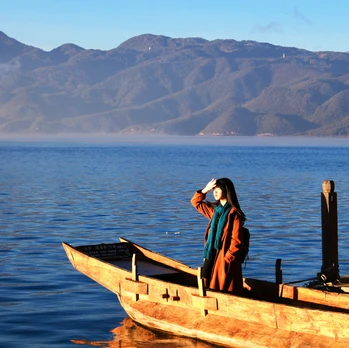
Many people say Shangri-La is just a beautiful name, and you'll be disappointed. But I thought: whether it brings surprise or disappointment, I'll meet it with an open heart.
At 9 p.m., we arrived in Shangri-La. The outdoor temperature had dropped below freezing. We checked into the IU Hotel across from the bus station—127 RMB a night, far cheaper than Guangzhou.
As we got off the bus, a swarm of drivers surrounded us, offering rides. My advice: book your accommodation and itinerary in advance, and don't trust random touts on the street—you're likely to get scammed.
On your first day in Shangri-La, avoid showering. You'll catch a cold easily, and a stuffy nose can trigger altitude sickness. I caught a cold the next day, but aside from getting winded climbing stairs, I was fine.
Day 5: Songzanlin Monastery and Dukezong Old Town
The next morning, we planned to visit Napahai. While eating breakfast at a small restaurant, a burly man in a red down jacket burst in and handed us a business card, offering a chartered ride. We made an excuse about feeling unwell and headed back to the hotel, but he followed us. Later, we asked the hotel staff and learned that Shangri-La has many shady drivers—they offer low prices but force you into expensive purchases once you're in the car.
So we changed plans and headed to Songzanlin Monastery instead. We couldn't find the bus stop for route No. 3, so we just walked—about 1 kilometer.
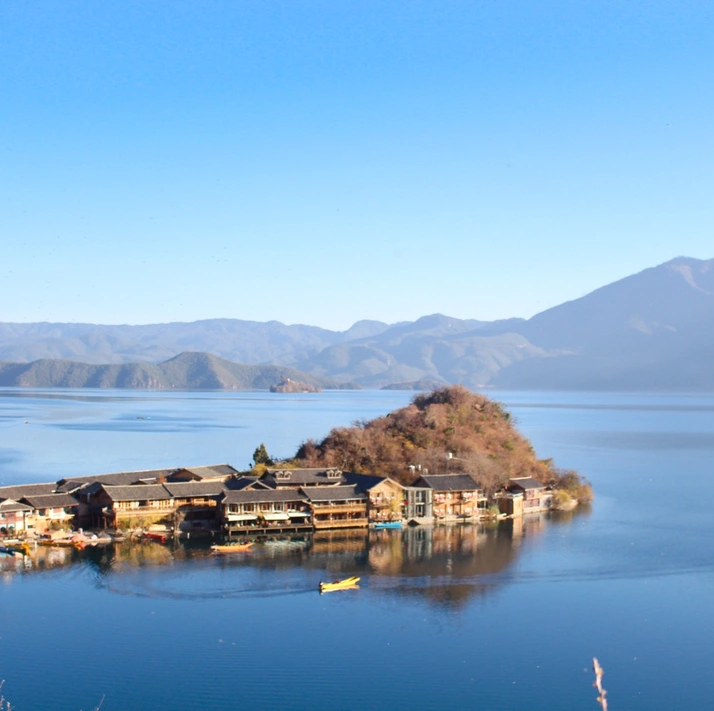
Songzanlin Monastery's ticket was 115 RMB (including the shuttle bus and guided tour), with a student discount at 75 RMB. The monastery was magnificent, gold and glittering against the blue sky and white clouds. After exploring, we took the scenic area bus to Dukezong Old Town for 1 RMB.
The old town has Turtle Mountain Park, with a giant prayer wheel that felt both massive and sacred. We wandered briefly, planning to return tomorrow.
For dinner, we had highland barley pancakes and highland barley rolls. Honestly, they weren't good.
Day 6: Shika Snow Mountain and Napahai
We booked tickets to Shika Snow Mountain through the hotel: 200 RMB per person (including the entrance fee and cable car). Later, we realized we'd been overcharged—the price was much higher elsewhere. But we paid for peace of mind.
Worried about altitude sickness, we bought oxygen canisters in advance—30 RMB each. Once we got to the mountain, we found it was completely unnecessary—the mountain was bare, with very little snow. As kids from the south who had never seen snow, we arrived full of excitement and left disappointed. My advice: ask locals if it has snowed recently before going, or you'll just waste your money.
While taking photos on the mountain, we met A Shi. He took a photo of us together, and we started chatting. He'd been traveling for eight months after quitting his job. We agreed to visit Napahai together. He booked tickets through Fliggy (a travel app) for just over 20 RMB per person, including transport and entrance.
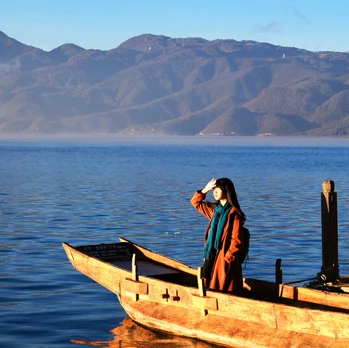
Napahai isn't actually a sea—it's a wetland meadow. Local Tibetans have fenced it off and charge an entrance fee of 60 RMB per person. But since we came with a tour group, we didn't have to pay extra. After we got off, the ticket seller enthusiastically recommended horse riding, starting at 180 RMB per person. When we said we just wanted to take photos and walk in, her face fell: "It's all wetlands inside. You can't walk in." We insisted on walking anyway, which annoyed her to no end.
A word of caution: if you charter a car to Napahai on your own, be careful. Many drivers only handle transport and will abandon you if you don't go horseback riding.
At Napahai, we took lots of photos. A Shi was into photography and wanted me to model for him. Encouraged by his enthusiasm, we decided to stay an extra day.
That evening, we moved to a guesthouse in Dukezong Old Town. We had dinner at a café near the north gate of the old town—the food was good, but I've forgotten the name.
Day 7: Slow Time in Dukezong Old Town
On our last day in Shangri-La, we did nothing but wander through the old town.
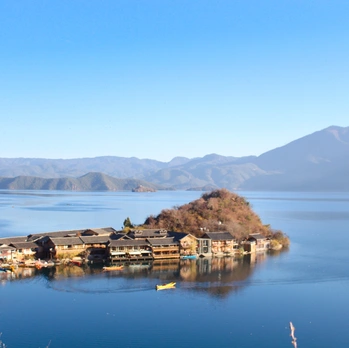
We passed a bookstore, but when we went in, we found it was actually a specialty shop selling souvenirs packaged to look like books. The old town was quiet, with only the occasional tourist passing by, footsteps echoing on the cobblestones.
I thought: this is how the last day of a trip should be. No need to rush to attractions or check off a list. Just quietly feel the breath of a city.
Epilogue: A Memorable Journey, Gifted to You
Eight days of travel—from the morning light of Lijiang to the tranquility of Lugu Lake, from the devotion of Shangri-La to the slow time of Dukezong—each chapter felt like a poem.
Some say travel is about going from a place you're tired of to a place others are tired of. But I think travel is more like finding your truest self in someone else's life.
Watching the stars from the balcony at Lugu Lake, running across the grasslands of Napahai, getting lost in the alleys of Dukezong—in those moments, I felt a peace I hadn't known in a long time.
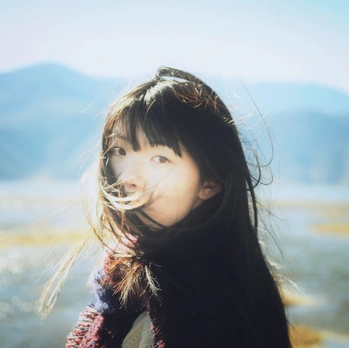
So if you're still hesitating about whether to set out, I want to tell you: go.
Go meet the unknown landscapes. Go meet the stranger that is yourself. Go pick up a piece of memorable time.
Because you and I will meet again at the next turn.
Key Takeaways:
- Apply sunscreen religiously — the UV rays can burn you in a single day
- Bring digestive medication — unfamiliar food can upset your stomach
- Travel in the off-season — fewer crowds, more beauty, better value
- Be cautious with chartered cars — especially in Shangri-La, where scams are common
- Stay at least two nights at Lugu Lake — one day for cycling, one day for doing nothing
- Don't shower on your first day in Shangri-La — prevent colds and altitude sickness
- Learn to be包容 (tolerant) on the road — traveling with a partner is the best way to grow together
You should also read:
September: Finding Unexpected Warmth in Yunnan (Kunming, Dali, Shuanglang, Lijiang, Lugu Lake)
September: Finding Unexpected Warmth in Yunnan (Kunming, Dali, Shuanglang, Lijiang, Lugu Lake) Foreword: One Person's Journey, A Crowd's Story Before I set off, like every first-time solo traveler, I printed out a thick stack of travel guides and rehearsed countless possible scenarios in my head—getting…
Continue reading...
Dreaming of Lijiang, Dreaming of Shangri-La: A Journey That Lets Your Soul Breathe Deeply
Dreaming of Lijiang, Dreaming of Shangri-La: A Journey That Lets Your Soul Breathe Deeply Life is like a long trek. We're always rushing through the concrete jungle, searching for a glimmer of light in the monotony of our days. Then one autumn, I heard the…
Continue reading...
A Spiritual Journey to Lugu Lake in Lijiang: Experiencing the Legend of the Kingdom of Women! (Reproduction and Hotlinking Prohibited)
A Spiritual Journey to Lugu Lake in Lijiang: Experiencing the Legend of the Kingdom of Women! (Reproduction and Hotlinking Prohibited) Off-road自驾, food, hotel and民宿 reviews, Featured Traveler, Tank 300 owner, 200,000 km of self-driving experience. WeChat: y01294987 Ninglang Yi Autonomous County 2010.11.08 · 7 days…
Continue reading...