A Pilgrimage to the Land of Colorful Clouds: Shangri-La, Meili Snow Mountain, Dali, and Lijiang
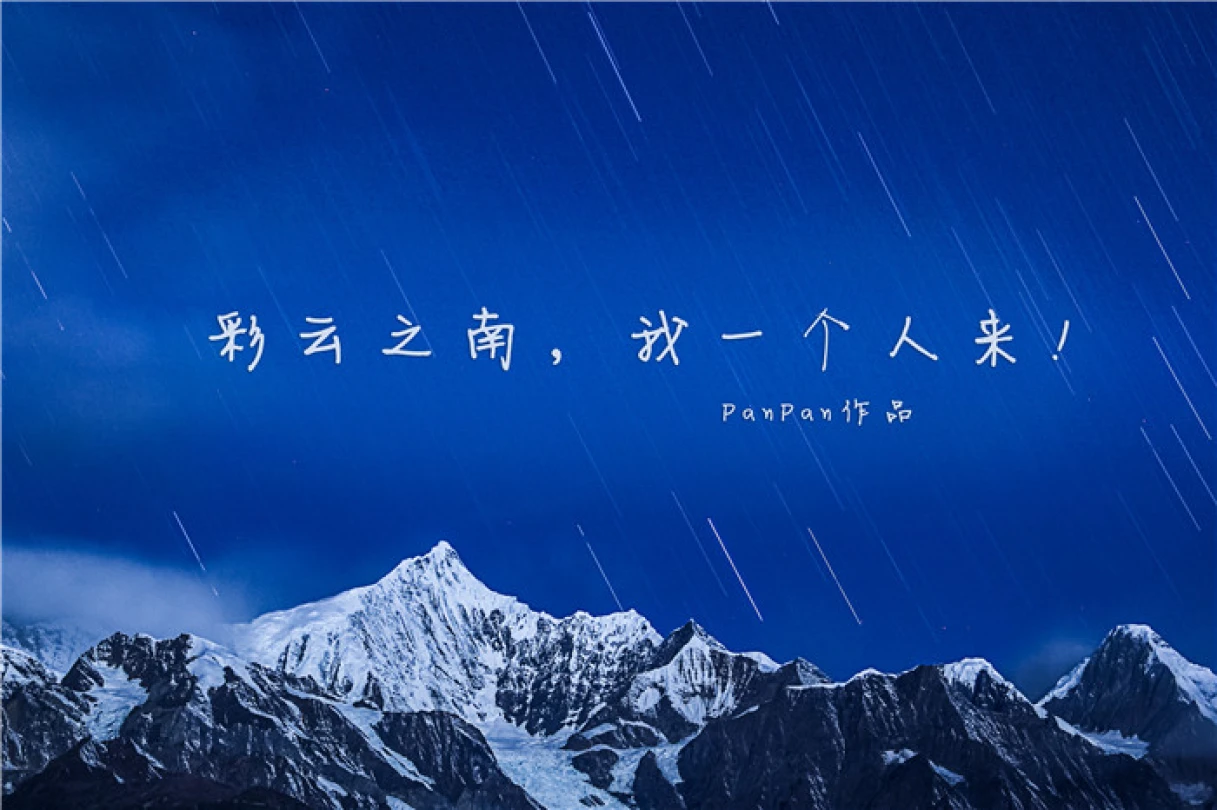
A Pilgrimage to the Land of Colorful Clouds: Shangri-La, Meili Snow Mountain, Dali, and Lijiang
Some trips are meticulously planned; others are born from spontaneity. My journey to Yunnan fell into the latter category—a voyage destined to be extraordinary from the moment my plans fell apart.
In November 2014, I shouldered my backpack and set foot on this land known as "the Land of Colorful Clouds." Over seven days, I traversed the ruins and rebirth of Shangri-La, gazed up at the sacred majesty of Meili Snow Mountain, immersed myself in Dali's languid charm, and finally found my own rhythm in the ancient alleyways of Lijiang.
Departure: The Birth of a Hasty Decision
My annual leave was about to be swallowed up by trivial matters. None of my friends' schedules aligned, but I made up my mind anyway—I would go alone, to a place I'd never been before. The chill of the Chengdu plain was deepening, and Yunnan beckoned as a warm sanctuary.

The night before departure, I mindlessly scrolled through travel guides on Mafengwo, loosely targeting Lijiang, Shangri-La, and Meili Snow Mountain. To me, Lijiang seemed more like a transit hub—plenty of flights, convenient transport, ideal as a base. To keep things simple, I even contacted a budget tour group departing from Lijiang on Taobao, planning a whirlwind visit.
Plans were lovely, but reality had other ideas. The next morning, I intended to buy a last-minute evening flight, only to wake up and realize time had slipped away. Without hesitation, I booked China Eastern flight MU5844 from Chengdu to Kunming, then a connecting flight to Shangri-La.
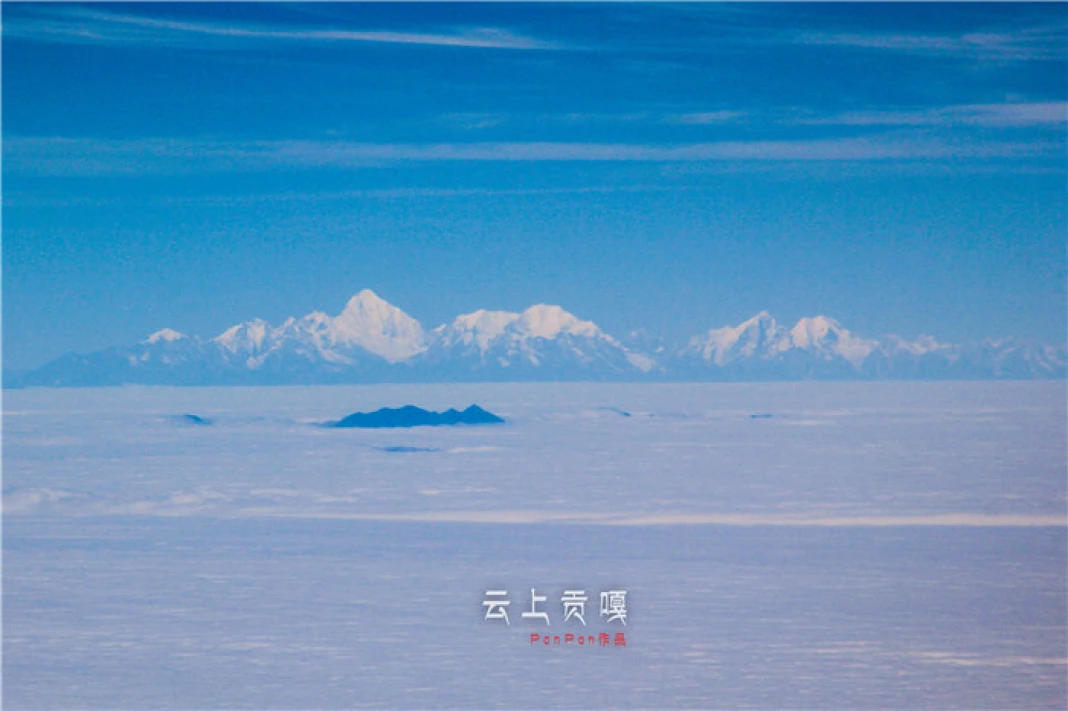
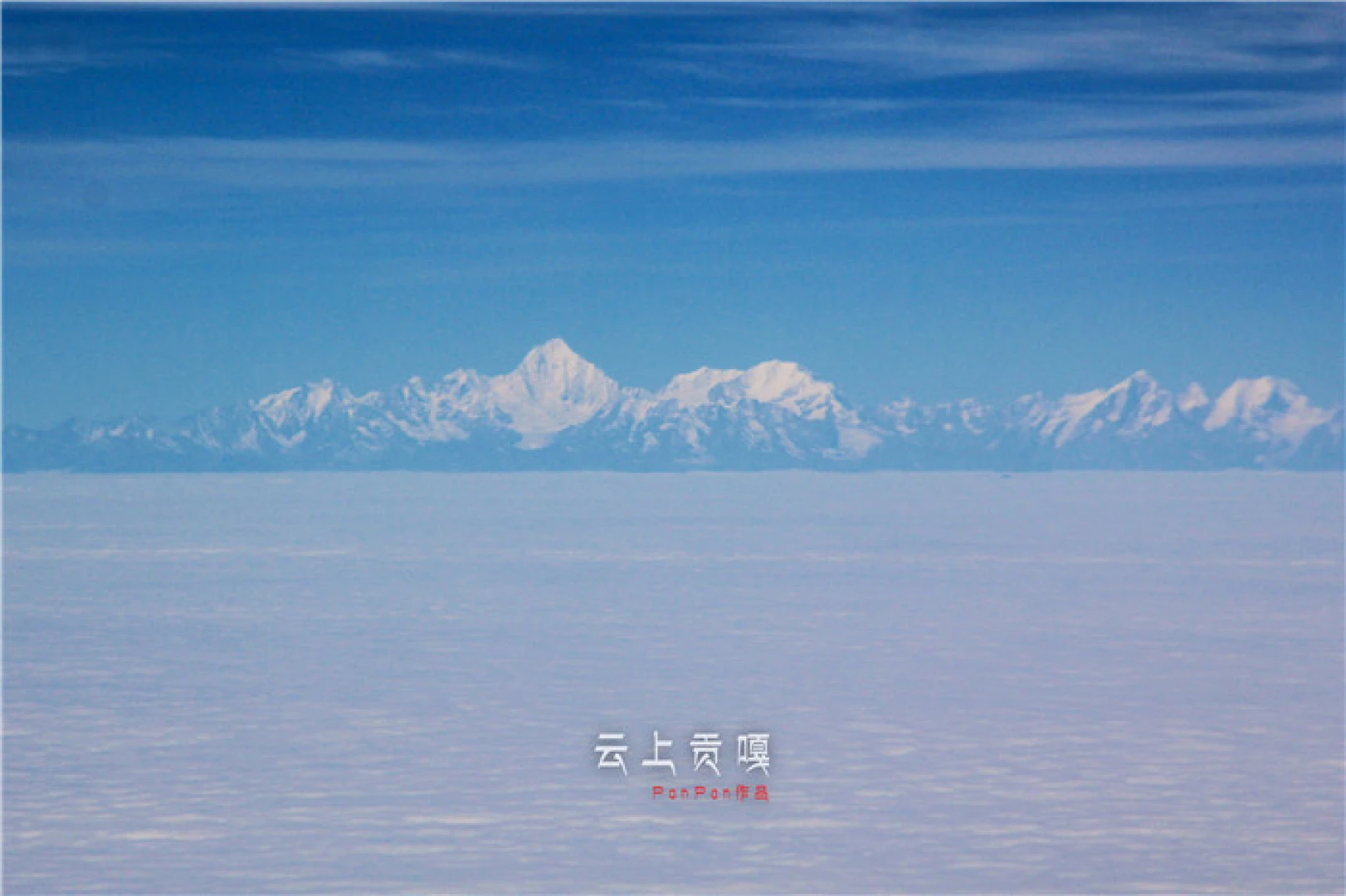
As the plane took off, Chengdu's gloom quickly fell away. Through thick clouds, I habitually glanced out the window—and there it was: Mount Gongga. The peak I had admired from Mount Emei, Xinduqiao, Hailuogou, Niubei Mountain, and elsewhere now stood silently above the clouds. I was so excited I practically danced in my seat. The girl by the window politely offered to swap seats. In that moment, I knew this trip would be blessed with good fortune.
Shangri-La: The Phoenix Rising from the Ashes
Dusk at Dukezong
My plane touched down at Shangri-La Airport at five in the afternoon. The airport was only five kilometers from the county town, and my guesthouse had arranged a free pickup. I had booked a room at the Gesajibu Inn in Dukezong Ancient Town—a 150-yuan-a-night tatami single. The off-season meant I was the only guest that day—well, it wasn't the first time I'd had a place to myself.
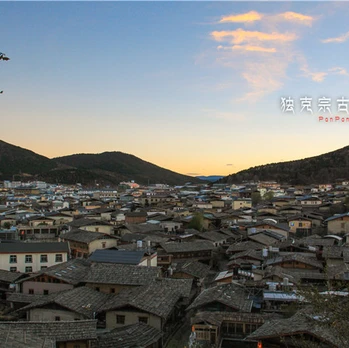
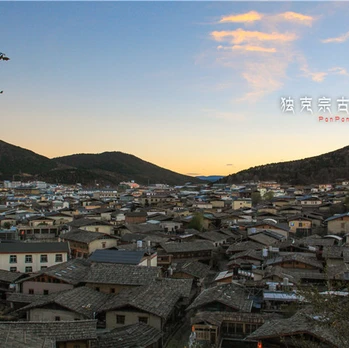
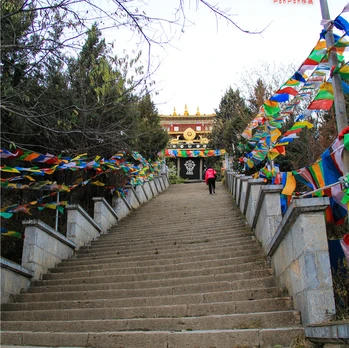
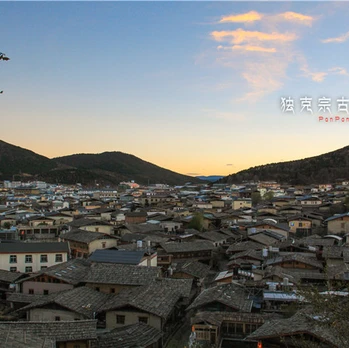
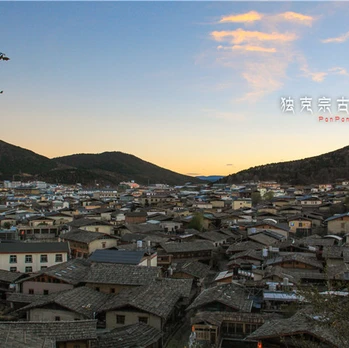
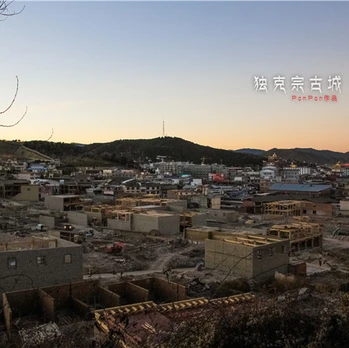
Dropping off my luggage, I grabbed my camera and followed the map to Turtle Mountain Park. Dukezong was tiny; within minutes, I reached the central park. Built during the Kangxi era, the park climbed the hillside, with the Chaoyang Tower at the summit offering the best panoramic view. Though the altitude was 3,300 meters, the climb was easy. From the top, the "Moonlight City" of Dukezong lay spread out before me.
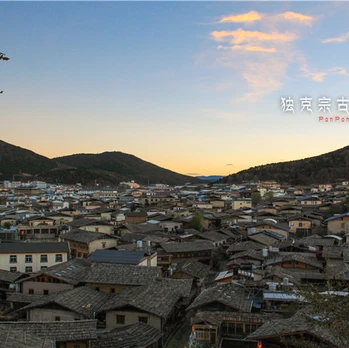
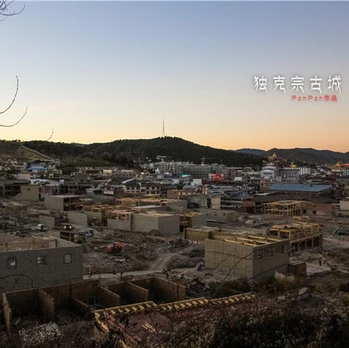
Dukezong, meaning "Moonlight City" in Tibetan, has a history of over 1,300 years. It was built according to the Buddhist ideal of Shambhala, serving as a vital stop on the Ancient Tea Horse Road. But in January 2014, a massive fire destroyed two-thirds of the old town. Now, the ground beneath my feet was being rebuilt, rising from the ashes.
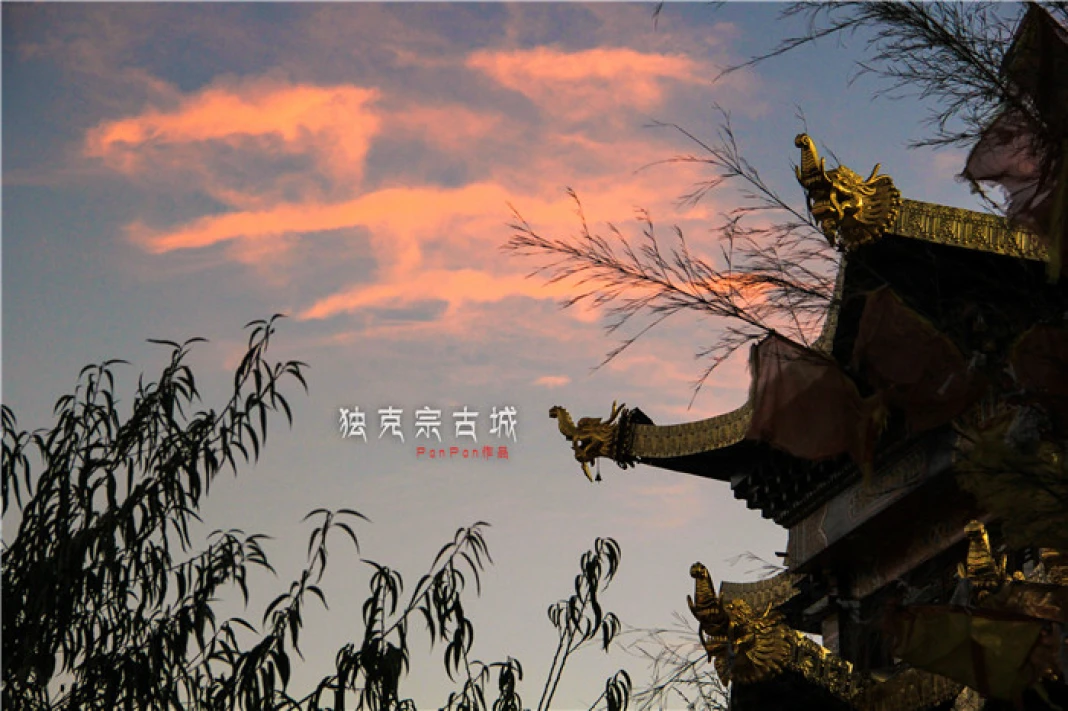
At the summit stood the world's largest prayer wheel—a 21-meter-tall, 60-ton monument of gilded copper, erected to commemorate the renaming of Zhongdian County to Shangri-La County. The setting sun bathed the wheel in golden light, while a blaze of fiery clouds painted the sky, as if blessing the ancient town.
Night in the Ancient Town
The early winter night in Dukezong was bitingly cold. Descending from Turtle Mountain Park, I was both freezing and famished. Passing by Moonlight Square, the aroma of hotpot wafted from a nearby restaurant—how could a Sichuan native resist? I stepped inside and ordered yak meat, tripe, and three vegetable dishes. The portions were enormous, covering the entire table. The bill came to 108 yuan, with plenty of greens left uneaten. My first proper meal in Yunnan ended in glorious indulgence.
At night, Dukezong's bar street came alive. Music echoed through the ancient town, but the streets were mostly filled with locals. As I walked, I mulled over the next day's plans. I'd originally intended to visit Potatso National Park and Songzanlin Monastery, but my mind kept drifting to Meili Snow Mountain. For days, I'd been checking the weather forecast for Deqin—and from the 12th onward, conditions were deteriorating. This gnawed at me, because seeing Meili Snow Mountain was the whole reason I'd come to Yunnan.
No time to waste—I decided to head for Meili the next day!
Back at the inn, I asked the owner about carpooling. The landlady mentioned the "Shouwang 6740 Inn" near Feilai Temple, which offered shared rides to and from Shangri-La. I called, only to be told the service had been suspended due to the off-season. But the person on the line said to call again in the morning, as they might help find a ride.
Despite the uncertainty, my mind was made up—I would reach Feilai Temple tomorrow, no matter what. If all else failed, I'd take the bus!
Meili Snow Mountain: A Thousand Miles for a Single Glimpse
The Pilgrim's Path
I woke at 7:30 the next morning. After washing up and packing, I bought two steamed buns and withdrew some cash from an ATM (there were no ATMs near Feilai Temple). At 8:00 sharp, there was still no word on a ride. I hailed a taxi to the Shangri-La bus station and boarded a coach bound for Deqin. The ticket was 67 yuan, and the bus departed promptly at 8:20.
The coach wound along the Jinsha River, reaching Benzilan Town at 10:00. Past Benzilan, we began climbing. Nearby was a viewing platform for the First Bend of the Jinsha River, but apart from the paid platform, newly built walls blocked the view. I'd readied my camera, but came up empty.
Beyond Benzilan, we entered the territory of Baimang Snow Mountain. Colorful autumn forests flashed past the window, but I was seated on the wrong side and missed even a glimpse of the main peak, Zhalaqueni. As we crossed the pass, distant snow peaks appeared—part of the Meili Thirteen Peaks.
The first sight!
When Kawagebo Peak appeared before me, unobstructed, I nearly wept. Though I'd seen it countless times in photographs, seeing it with my own eyes made every hardship worthwhile.
At 12:05, the bus arrived at Deqin Bus Station. I teamed up with two fellow travelers—a guy from Chengdu and another from Nanjing—and we shared a minivan to Feilai Temple for 40 yuan each. Feilai Temple is a small monastery along the Yunnan-Tibet Highway, and the nearby town of Feilai Temple has become a hub for tourists seeking the best view of Meili Snow Mountain. The town was lined with hotels and inns. We found the Kawagebo Hotel, run by a man from Suining, Sichuan. Its fourth-floor viewing platform faced Meili Snow Mountain directly. The Chengdu guy and I shared a four-bed dorm for 25 yuan per bed, thrilled to have the room to ourselves.
First Glimpse of the Meili Thirteen Peaks
After dropping our bags, the three of us headed to the Feilai Temple viewing platform. The ticket was 150 yuan, covering three spots: the Feilai Temple platform, Wunongding, and the First Bend of the Jinsha River—no single-site tickets available. For those planning to trek to Yubeng, a 230-yuan combo ticket was mandatory. This bundling was a glaring example of Yunnan's over-commercialized tourism. However, the Kawagebo Hotel's rooftop platform offered an even better view than the official one. If you weren't going to Yubeng, there was no need to buy a ticket.
From the platform, the Thirteen Peaks stretched in a line. From south to north, they included Miancimu (Goddess Peak), Jiwaren'an (Five-Guan Peak), Bujiongsongjie Wuxue, Kawagebo, Mabin Zhala Wangdui, Nairidingka, and Cuquilaka. The main peak, Kawagebo, was a perfect pyramid of snow and ice, standing at 6,740 meters, unconquered to this day.
As early as 1902, a British expedition attempted Kawagebo. From 1987 to 1996, Japanese, American, and Sino-Japanese teams launched successive assaults, all failing. Between November 1990 and January 1991, a 17-member Sino-Japanese team tried to summit, only to be wiped out by an avalanche. Their remains weren't discovered until July 1998, found by local Tibetan herb gatherers.
Before this trip, I'd heard countless legends about Kawagebo. It was said to be one of the hardest peaks in the world to see—even more elusive than Everest or Namcha Barwa. An article in Chinese National Geography told of a photographer who waited three months for a single shot during the rainy season. These stories had me on edge.
Before coming, I'd thought: If I don't see it, I'll stay another night. If I still don't see it, I'll keep staying until I do. But in truth, I'd traveled all this way to pay homage. If he chose to reveal himself, it was fate; if not, my heart had already made the journey.
Meili: In Search of the Mountain
The Feilai Temple viewing platform was tiny; we finished exploring in ten minutes. Just as we were lamenting the wasted money, we spotted a small path beside the platform, marked with a sign: "XXX Ring Road, approximately 9 kilometers." With nothing else to do, we decided to follow it.
Before long, we came to a fork. One branch descended into the valley; the other was a dirt trail leading to a neighboring hilltop. As the saying goes, "People strive to climb higher," so we unanimously chose the dirt path.
The trail was empty, winding deep into the forest. After about twenty minutes, we reached a bullfighting arena, decorated with lights and banners, as if a recent event had taken place. I later learned that every autumn, townships across Deqin County hold traditional bullfighting competitions.
We pressed on, deeper into the mountains. The trail spiraled upward, dense trees blocking all views. We couldn't see the snow peaks, nor could we tell where we were. The trees were draped in "tree beards"—lichen known as songluo, which grows only in high-altitude, unpolluted environments, serving as a natural environmental monitor.
We trekked for over an hour, seeing nothing but endless trees. All three of us were parched—we'd left with nothing but a desire to see the snow mountain, and no water.
Just as we decided to turn back, a gap appeared in the forest. We had reached the side of "Goddess Peak," Miancimu. Clouds were already gathering; "Five-Guan Peak," Jiwaren'an, wore a crown of mist. Bujiongsongjie Wuxue churned with clouds, its massive icefall clearly visible.
As we prepared to retreat, an old man came down the trail, smiling.
"Sir, where does this path lead?" "To the top." "What's up there? How much farther?" "Two pagodas and a building. Another half hour." "Can we see the snow peaks?" "Yes! But take the main road, or you might get lost."
His words reignited our determination. Pagodas at the summit, with views of the snow mountain—this had to be a local pilgrimage site! That's what we convinced ourselves.
After another half hour of dense forest, a flash of gold appeared—the "pagodas" the old man had mentioned. They were two cell towers, one for China Unicom and one for China Mobile. The "building" was a forestry observation post, with five characters painted on it: "Meili Observation Tower."
We climbed the tower, and the view was different from Feilai Temple's platform. The wind was fierce, and clouds were rolling in. The observation tower stood on a flat hilltop, perfect for camping—on cold nights, you could pitch a tent inside. We unanimously agreed this spot deserved to be shared.
The old man who had guided us at the crucial moment was later dubbed "Mountain God." Without him, we would never have persevered.
Meili: Sunset and Starlight
We returned to the Feilai Temple platform at 5:00 PM. We parted ways to rest, agreeing to meet later for sunset.
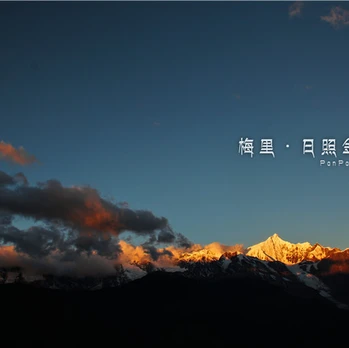
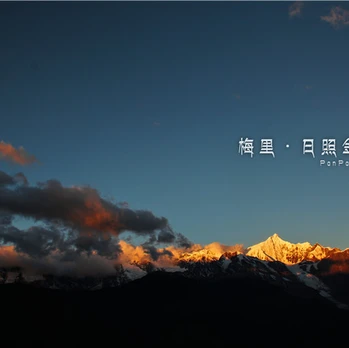
At 5:30, we climbed to the Kawagebo Hotel's viewing platform. Soon, the sun dipped behind the peaks. Then came the spectacle: a small patch of fiery clouds drifted directly over Kawagebo's summit. A local Tibetan guide who saw me capture the moment said it was a "divine sign" and asked me to send him the photo.
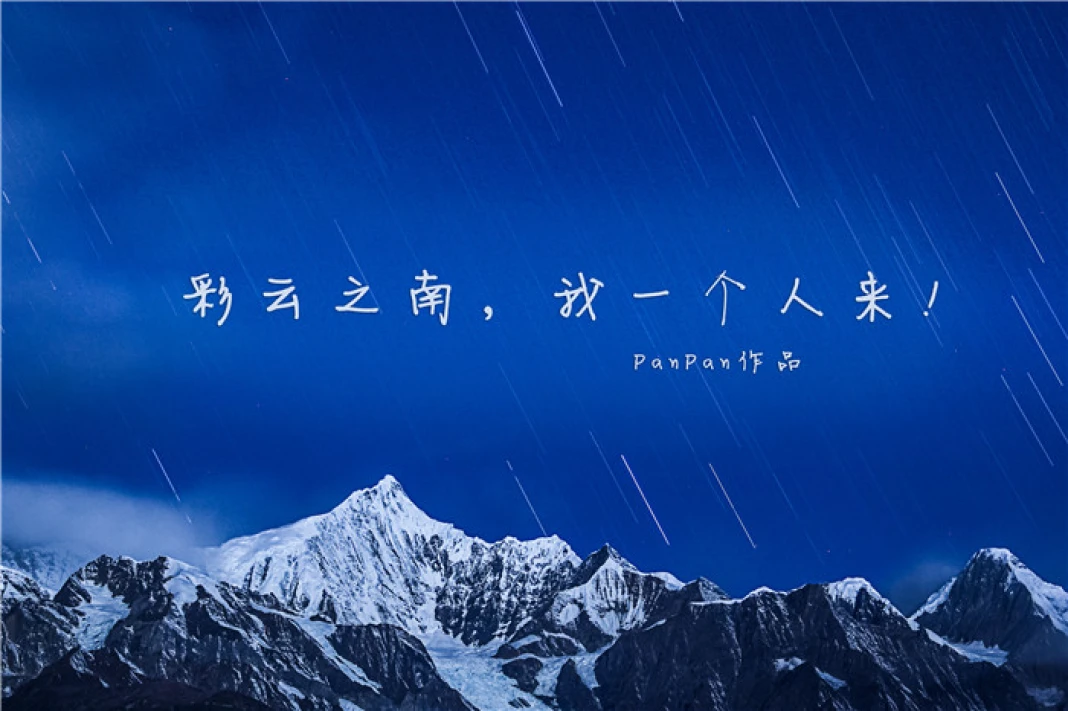
At 8:30 PM, the Chengdu guy and I climbed to the rooftop again. The dark sky was studded with stars. Though it was early winter, the summer Milky Way still lingered, with Sagittarius and Scorpius hanging above the peaks.
After a while, clouds crept in, and the weather worsened. I checked the moon phase—70% illumination, rising around 10:30 PM. I decided to rest in my room until the moon was about to appear.
Back in the dorm, two new friends had arrived. One was from Henan, fresh from a Yubeng trek. He recounted his adventures with enthusiasm: no signal for China Unicom throughout Yubeng, three days cut off from the world; visits to the Sacred Waterfall and Ice Lake (skipping the Sacred Lake due to lack of gear); a bullfight in Yubeng village; and a night at a Tibetan home when he emerged from Nilon after dark with no transport. The other was from Beijing, also just back from Yubeng.
It seemed solo trekkers to Yubeng were common.
At 10:15, I climbed to the rooftop once more. The wind had died down, and the clouds had thinned. Though the moon hadn't risen, the sky was noticeably brighter. I called the Chengdu guy, and we each carried a tripod back up.
Moonlight illuminated Kawagebo, and the stars grew sparse. Clouds flowed like water; the moon was bright, the stars few. I attempted some star trail shots, but the moon climbed higher, the sky grew brighter, and the stars vanished. By 11:00 PM, there were too few stars to capture. Seeing no creative potential, we retreated to our rooms, praying for clear skies in the morning.
Dali and Lijiang: Soft Times and Ancient Streets
Dali: Leisure at Longkan and Sunrise at Shuanglang
After leaving Meili Snow Mountain, I arrived in Dali. Longkan was a quiet village, far from the bustle of Dali Ancient Town. Here, there was only the breeze off Erhai Lake and the lazy sunlight. I stayed for two days, waking naturally each morning, then cycling along the lake. Occasionally, I'd stop at a roadside stall for fresh juice, gazing at the distant Cangshan Mountains, thinking of nothing, doing nothing.
The sunrise at Shuanglang was another kind of awe. At 5:00 AM, I rose in the dark and walked to the lakeshore. The sky gradually lightened to a pale gray, then blushed with red, and finally, the sun rose over Erhai, painting the entire lake gold. In that moment, I remembered the sunset at Meili Snow Mountain—the same awe, but a different gentleness.
Lijiang: Strolling Through Dayan and Shuhe
Lijiang was the final stop on my journey. Dayan Ancient Town was bustling and noisy, with bar street music blaring from morning till night. I did a quick tour, not lingering long. I much preferred the tranquility of Shuhe Ancient Town. Here, there were fewer tourists, and the streets were古朴 (ancient and simple) and tidy. I spent an afternoon in a small café, watching people pass by, and suddenly realized that traveling alone could be beautiful.
Epilogue: A Solo Pilgrimage, a Tapestry of Stories
Seven days of travel, from Shangri-La to Meili Snow Mountain, then to Dali and Lijiang—I covered many places and met many people. The "Mountain God" who guided us at the foot of Meili, the Henan guy who trekked Yubeng for three days, the Chengdu guy who shot star trails with me on the Kawagebo Hotel rooftop—they made this journey anything but lonely.
Someone once asked me, "Don't you get lonely traveling alone?" I said no. Because when you truly embark on a journey, you discover that there are countless people like you in the world. They may come from different places, with different stories, but at this moment, you're all under the same sky, watching the same scenery.
Travel is never about escape; it's about encounter. Encountering unknown landscapes, encountering the stranger within yourself, and encountering those other souls who, like you, are on the road.
If you're planning a trip to Yunnan, here's my advice:
- Shangri-La: Though Dukezong Ancient Town suffered a fire, it's being reborn. The prayer wheel at Turtle Mountain Park and the dances at Moonlight Square are must-sees.
- Meili Snow Mountain: The best viewing period is November to March, when clear skies offer the "Golden Sunlight on the Snow Mountain." If you're not trekking Yubeng, skip the combo ticket—the Kawagebo Hotel's rooftop platform offers a better view.
- Dali: Longkan is perfect for idling away time; Shuanglang is ideal for sunrise; and Xizhou's baba (a local flatbread) is delicious.
- Lijiang: Dayan Ancient Town is too commercialized; Shuhe Ancient Town is quieter, perfect for a leisurely stroll.
Finally, may you find your own "Land of Colorful Clouds."
You should also read:

Cloud Travelogue · Dali of Wind, Flowers, Snow, and Moon: A Three-Day, Two-Night Journey of a Free Spirit
Cloud Travelogue · Dali of Wind, Flowers, Snow, and Moon: A Three-Day, Two-Night Journey of a Free Spirit I am a cultured female foodie with a touch of rogue charm. I slung on my backpack, took my lover's hand, and set off on a spontaneous…
Continue reading...
A Spiritual Journey to Lugu Lake in Lijiang: Experiencing the Legend of the Kingdom of Women! (Reproduction and Hotlinking Prohibited)
A Spiritual Journey to Lugu Lake in Lijiang: Experiencing the Legend of the Kingdom of Women! (Reproduction and Hotlinking Prohibited) Off-road自驾, food, hotel and民宿 reviews, Featured Traveler, Tank 300 owner, 200,000 km of self-driving experience. WeChat: y01294987 Ninglang Yi Autonomous County 2010.11.08 · 7 days…
Continue reading...
Hiking Around Lugu Lake: Measuring This Mysterious Highland Pearl on Foot
Hiking Around Lugu Lake: Measuring This Mysterious Highland Pearl on Foot Introduction: A Date with the Lake At the border between Yunnan and Sichuan provinces lies a highland lake embraced by mountains, embedded like a sapphire in the folds of the Hengduan mountain range. Here,…
Continue reading...