A Romantic Escape: Returning to Dali — Where Winter Never Comes and Spring Never Leaves
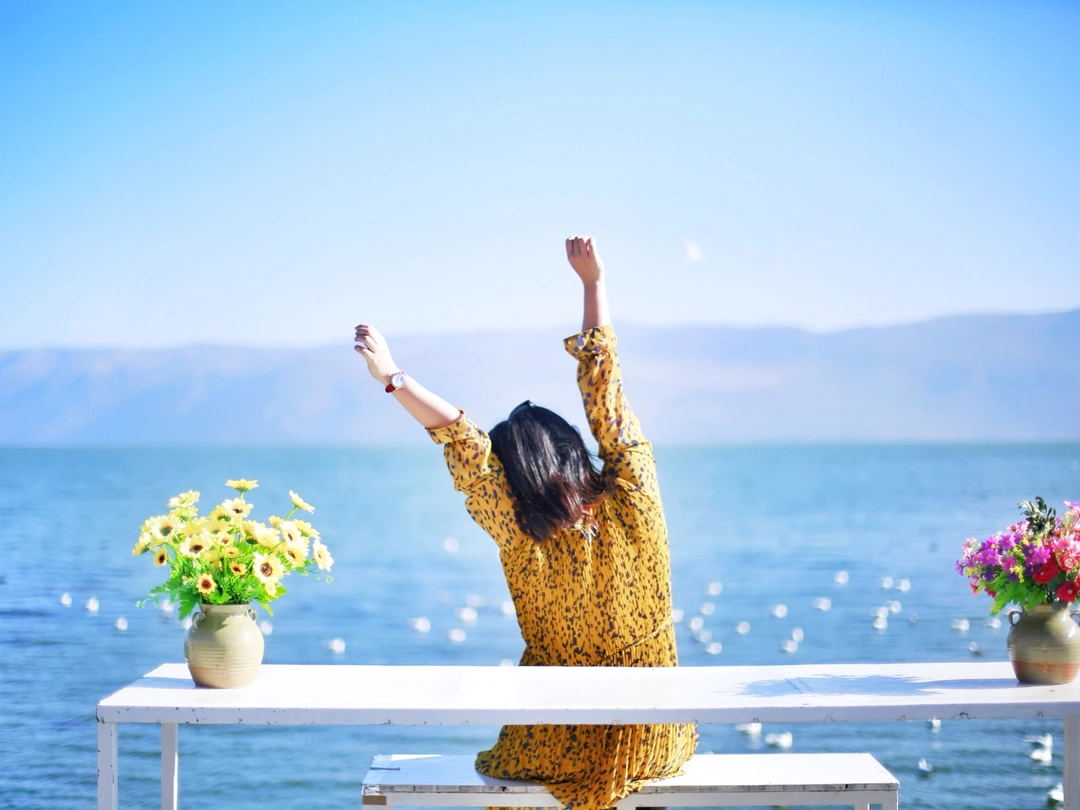
A Romantic Escape: Returning to Dali — Where Winter Never Comes and Spring Never Leaves
Seven years ago, I set foot on the soil of Dali for the first time. Back then, I didn’t truly understand the meaning of travel; I was simply moved by the scenery before my eyes. Seven years later, when Chengdu’s smog arrived on schedule and time mercilessly stole another year from my life, I decided to use my remaining annual leave to give myself an “escape”—a return to Dali, to see Erhai Lake once more.
On December 5, 2017, I silently booked this travelogue in my mind. At the time, I had no idea that this short trip on a tight budget would become the perfect finale to 2017. The “never end” promise I made in 2016 finally found its complete resolution this winter.
The Philosophy of Spontaneity
On this trip, my friend Shasha and I used the ancient city as our base, embarking on what we called the “circumference tour” and “area tour” of Erhai Lake. Our travel philosophy was simple: do whatever comes to mind.
Although we had done some research before departure, nothing could compete with the fresh ideas sparked by real-life scenes. Locals kept asking where we were headed next, and our answer was always the same: nowhere in particular. What we wanted was to combine research with spontaneity, leaving behind the most perfect memories of Dali.
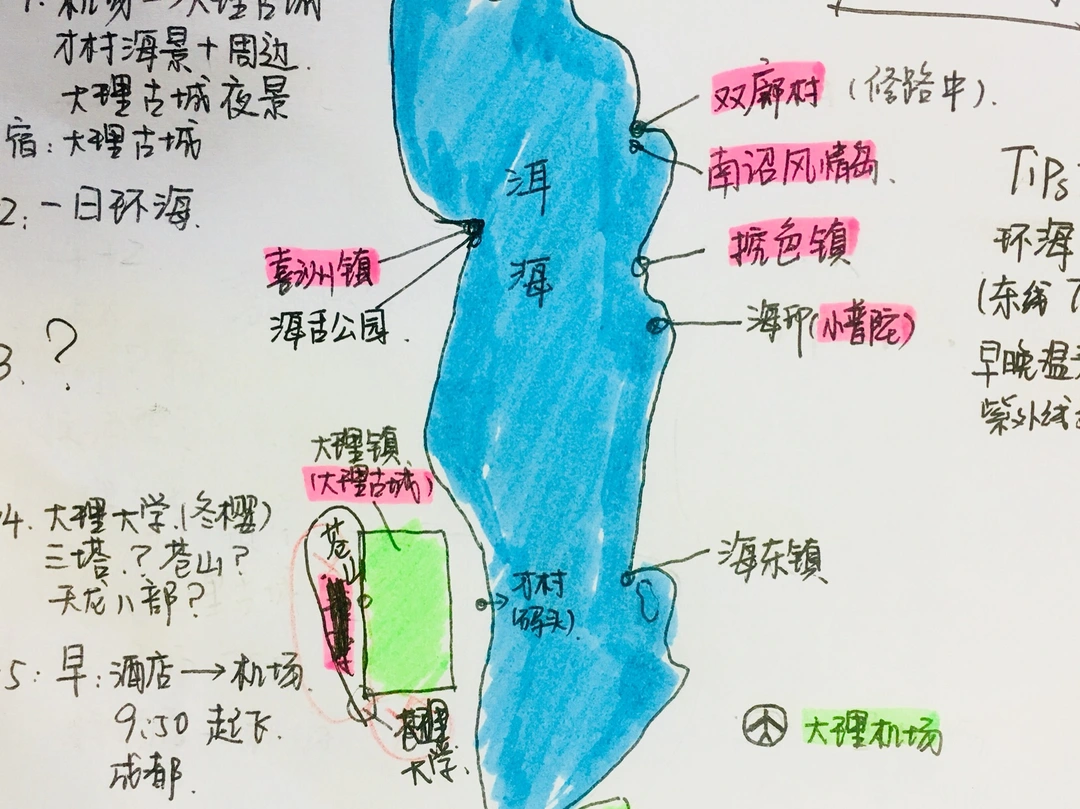
Before leaving, I hand-drew a map of Erhai Lake. That rough sketch became our compass for the four-day journey.
A Taste of Dali: Street Stalls Are the Soul
In Dali, we followed the principle of “eat whatever you see.” Whenever we spotted a food stall, Shasha and I would exchange a knowing glance. No one needed to suggest it; our feet naturally led us toward the same destination.
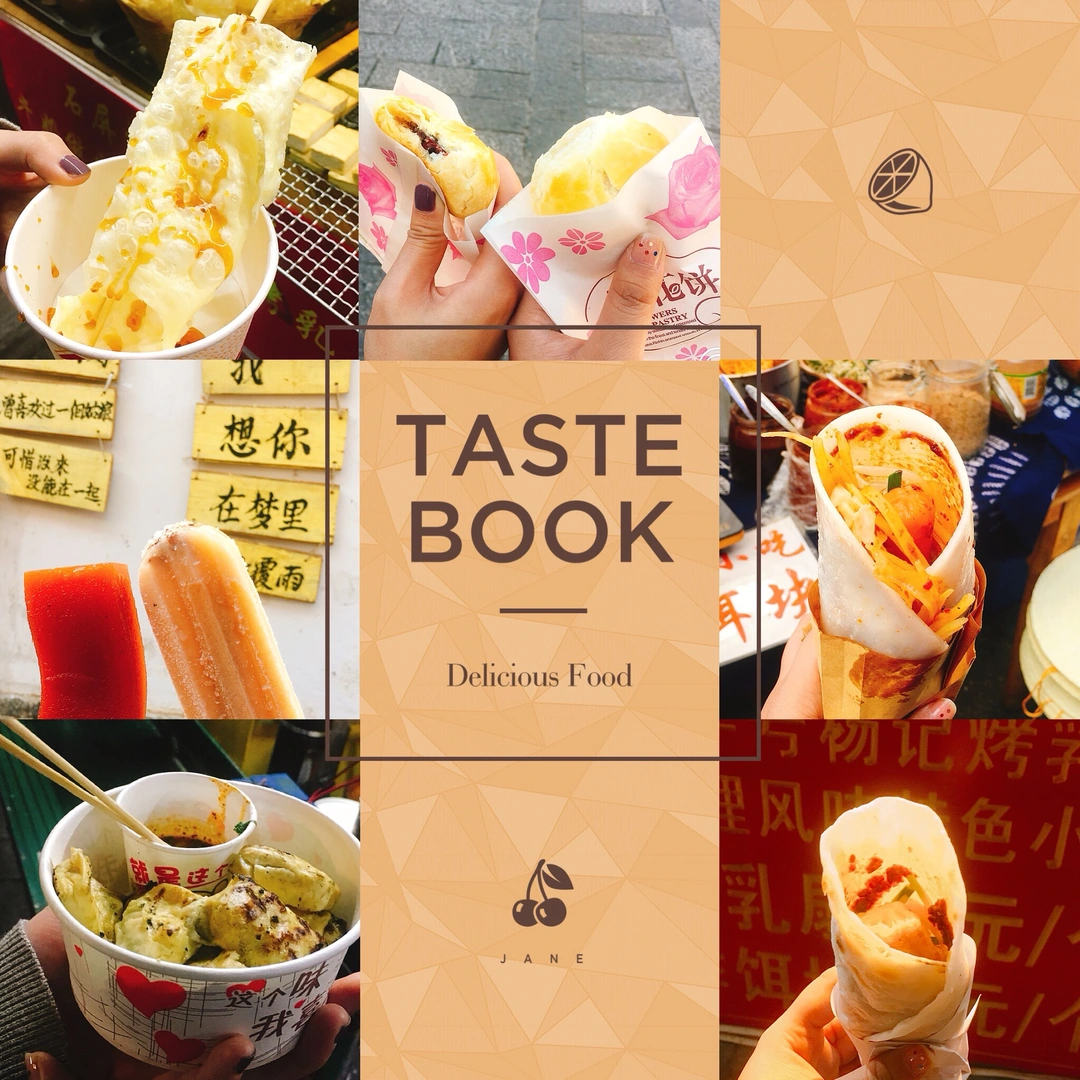
Basic Street Food Reviews
Roasted Milk Fan (烤乳扇): 5 yuan each. Essentially a grilled milk sheet, drizzled with sugar syrup. It has a strong milky smell and must be eaten hot. Ours had gone cold, making it quite tough to chew and significantly diminishing the experience.
Grilled Er Kuai (烤饵块): Yunnan’s version of a wrap, prepared similarly to a Chinese crepe. The basic version comes with fried dough sticks and chili sauce, while the upgraded version includes sausage, fried egg, and bean sprouts. The wrapper is white, with a delicate and dense texture. Once it puffs up from grilling, fillings are added, and it’s best eaten immediately after rolling.

Flower Pastry (鲜花饼): 1 yuan each. A rose-filled flaky pastry—decent, but nothing special. Every shop’s version tastes about the same.
Stuffed Tofu & Jianshui Tofu (包浆豆腐 & 建水豆腐): 10 yuan for a mixed platter. The stuffed tofu contains soy milk inside, giving it an incredibly satisfying texture. The Jianshui tofu is drier and just okay.
Xizhou Flatbread (喜洲粑粑): Bought at the entrance to Haishé Park for 10 yuan each. The sweet version has rose filling, while the savory one has meat. Seven years ago, I tried one at a street stall and was blown away—it remains my most vivid taste memory of Dali. Seven years later, the filling was noticeably scantier. I heard some stalls sell them for 5 yuan, but a passing local uncle scoffed: “How could a 5-yuan flatbread be any good?” So stick with the 10-yuan version.
Rose Ice Pop & Hawthorn Cake: Eating ice pops in December makes your teeth ache. There are plenty of flavors, but nothing special. The hawthorn cake tastes good on the first bite, but finishing an entire piece becomes cloying.
Seafood on Xiaoputuo Island
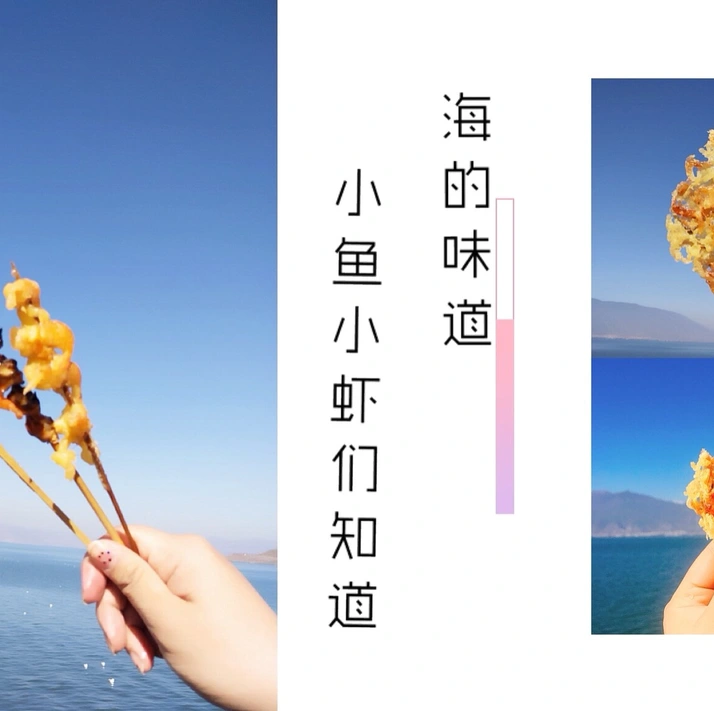
When the boat reached Xiaoputuo, the small square was packed with elderly women running food stalls, also selling fruit and seashells. Shrimp cakes were 10 yuan for three, and fried shrimp and conch were 10 yuan for eight skewers. The conch was a bit fishy, but the fried shrimp were tasty. The shrimp cakes were adorable—just be careful not to let the seagulls snatch them. To protect Erhai Lake and the birds, please don’t feed them.
An Afternoon at a Rose Garden
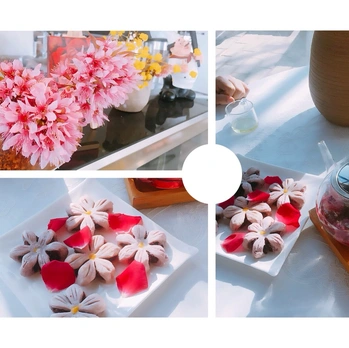
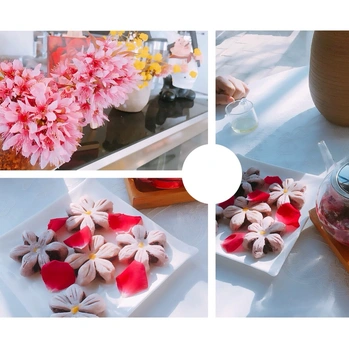
At a rose garden along the western lakeside road, we drank rose tea paired with flower pastries. Large rose blossoms steeped in hot water, the tea gradually changing from green to red. Sunlight streamed through floor-to-ceiling windows, with Cangshan’s clouds visible outside and the scent of rose tea in hand. If the roses had been in full bloom, we could have stayed all day.
An Unexpected Hotpot Experience
As natives of Sichuan and Chongqing, we actually ended up eating hotpot in Dali. The place was called “Miss Flower · Private Hotpot” (花姑娘·私房火锅), a quaint little restaurant with an entire wall of flowers and a glass roof. The tableware was inscribed with “toxic chicken soup” quotes, like: “All roads lead to Rome, but some people are born there.” On Dianping (China’s Yelp), the restaurant had an additional tag—photo shoot location.
Yiheng Restaurant: Signature Dishes from a 20-Year-Old Institution
For our last dinner in Dali, we chose this legendary restaurant that’s been around for 20 years. Inside, there was a hand-painted mural of Cangshan and Erhai Lake.
Sour and Spicy Fish (酸辣鱼): 28 yuan per jin (about 500g), this portion was 1.6 jin. The first bite was stunning. The sourness came from pickled vegetables, the spiciness from generous chili powder. The extraordinary sour-spicy combination suppressed any fishy taste. The whole fish was cooked, and the broth over rice was incredible. It got a bit salty toward the end, so pair it with plain rice.
Fragrant Herb Ribs (香草排骨): 6 yuan per piece (the photo showed two pieces). Crispy on the outside, tender inside, with a grilled, natural flavor. At that price, it was a steal—I regretted not ordering more.
Pre-Meal Appetizers: Fried peanuts are the standard drinking snack in Southwest China—plump, crispy, and sprinkled with salt for a lingering fragrance. Simple salted white radish was refreshing and appetite-stimulating.
Old Lady Potatoes (老奶洋芋): Like the mashed potatoes and semi-crushed potato chunks from childhood street stalls, mixed with chili oil and pickled vegetables, offering a rich layering of textures.
Circumference Tour of Erhai: A Light-Chasing Jeep Adventure
There are many ways to circle Erhai Lake: renting a car, riding an e-scooter, cycling… We chose a one-day jeep tour with photo stops, where the driver doubled as a guide and photographer.
The entire perimeter of Erhai is a photo paradise. Any rock near the water, any tree, becomes a scene. From sunrise to sunset, from the western lakeside road to the eastern lakeside road, we took in all the blues of Erhai and all its trees.
Majiuyi: A Frenzy of Seagulls and Props
Seeing seagulls by Erhai Lake this season was the biggest surprise. A long time ago, glass balls and white benches existed only at the Haidi Life Hotel in Shuanglang. But as Shuanglang grew more popular, Majiuyi’s shoreline sprouted countless replicas of these props, charging 10 yuan per person for photos.
Cars, people, and props took up most of the road—it was like a massive outdoor photography studio. The shop owners had written on the props: “Who will wait for you in Dali? Who are you waiting for in Dali?”—my advice: practice your calligraphy.
Rose Field: Out-of-Season Romance
Past the blooming season, the field had no roses in full blossom, but there was a distinct smell of freshly applied fertilizer. The estate had a wooden house with floor-to-ceiling windows, and the rooms carried a faint rose scent. Sipping rose tea and eating flower pastries, I imagined the field covered in roses. On the lawn in front, there was a blue-and-white bus—the perfect colors for a travel theme.
Haishé Park: Nature’s Palette
On the map, this piece of land juts into Erhai like a tongue, earning it the name “Tongue of Erhai.” It’s a free ecological wetland park, a botanical paradise with distinct seasonal changes on the western shore.
At noon, sunlight hit the water directly, shifting from turquoise to light blue to deep blue. Yellow reeds and pine forests, green banyan trees—everywhere you looked, nature’s colors were vibrant. The trees by the water grew freely, their trunks carrying the scent of sun-warmed wood and a soft warmth. The park wasn’t large, but we spent an hour walking through it. Every tree had a unique shape; they were like brushes outlining the blue sky.
Xizhou Ancient Town: A Lament for Commercialization
When Shuanglang became popular, many people flocked to Xizhou. By the time Xizhou got popular, we were visiting it for the first time. Most of the time we were in the car, so I only remember narrow streets lined with plants. The famous corner building was under renovation. Our guide said it had once served as a post office and telecommunications building, playing an important role in history.
Unfortunately, as Shuanglang underwent renovations, tourists began shifting to Xizhou, slowly imbuing it with a commercial atmosphere. The winter fields were dormant, and for hundreds of meters, all you saw was early winter desolation. Only the “couple trees” still stood side by side, their dark green leaves swaying in the wind. Despite iron railings around them, newlyweds lined up for wedding photos. I heard sometimes one tree turns yellow first—that must mean the “couple” had a fight.
Xizhou’s winter cherry blossoms had bloomed. Besides using mirrors for selfies, they also made great props for group photos.
Eastern Lakeside Road: Highway Chic at Sunset
In the afternoon, the sun moved toward Cangshan, casting oblique light onto the eastern lakeside road. Unlike the western shore with its trees, villages, and fields, the eastern road hugs the coastline, offering intimate contact with Erhai.
At a rocky area, three or four couples were taking wedding photos. In contrast, we felt a bit awkward wearing veils over our casual clothes. I had bought the veil from Taobao specifically for these lake views, and our photographer worked hard holding both the veil and the camera, nearly falling into the water.
The deep blue sea began to turn leaden gray. At three in the afternoon, sunlight scattered diamond-like sparkles across the water. Our ride—a cool jeep—stood in stark contrast to the blue of Erhai, its only downside being how easily it got dusty.
As the sun was about to set, wind picked up by the shore. In the golden light of dusk, our highway photos came to life. Night fell, and the sun sank behind Cangshan’s peaks, ending our final frolic by Erhai. The last photo was titled “Fake Hit-and-Run”—enjoy the Oscar-worthy acting.
Area Tour of Erhai: Slow Time on the Lake’s Heart
Erhai feels quiet to me. Beyond the ripples stirred by the wind, the lake surface remains calm. Perhaps it’s because there are no bridges or fishing boats on Erhai. Among the lake’s visitors, the happiest are the seagulls that flew all the way from Siberia. They can roam freely over the lake or rest on its surface—I’m incredibly envious.
So we dedicated one day to boarding a boat that ventured deep into Erhai. Along the way, the stern churned up white, rolling waves, and these wave-chasing spirits circled and followed us, delighting everyone on deck.
Longkan Pier
The boat departed from Longkan Pier, crossing Erhai to first stop at Xiaoputuo, then Nanfeng Customs Island, and finally docking at Taoyuan Pier.
Xiaoputuo: The Tiniest Lake Island
Xiaoputuo is a round, rocky islet off the eastern shore, sitting on Erhai like a seal stamp—hence its alternative name, “Sea Stamp.” The island has only a temple, surrounded by trees. A single path circles the island, taking maybe five minutes to complete. It’s the smallest lake island I’ve ever seen, and a favorite resting spot for seagulls.
As soon as the boat docked, the island was instantly crowded. But its very smallness added curiosity and fun to the visit. On this densely packed islet, every perfect photo spot had a queue.
Nanfeng Customs Island: A Lonely Beauty
We only had 20 minutes on Xiaoputuo before hurrying to Nanfeng Customs Island. Once ashore, we could take a sightseeing car (10 yuan per person for a loop), but we felt walking was the best way to experience it.
Climbing the steps to the White Jade Guanyin statue, we passed through the Nanfeng Palace before turning back. Perhaps because Shuanglang was under renovation and fewer tourists were around, the island—facing Shuanglang across the water—had very few visitors. Compared to Xiaoputuo’s bustle, it felt quite desolate. Only the lush trees continued growing undisturbed under the warm sun.
From the observation deck, I looked at Shuanglang on the opposite shore. Once the renovations are complete, it should regain some of its former liveliness.
Heart of Erhai: Seagulls and Three-Course Tea
The greatest joy on the boat was getting up close with the seagulls. Taking advantage of fellow passengers feeding them, we enjoyed an aerial performance. When I looked at the photos later, I noticed one little bird eyeing me sideways, its gaze full of reproach for only taking pictures and not feeding it.
Despite the sunny day, the wind sweeping across the lake still carried a chill. The boat also featured a “Three-Course Tea Performance”: bitter first, sweet second, and an aftertaste third, representing three stages of life. Tourists watch it once, but the performers have done it hundreds or thousands of times, so you could see them trying to force polite, slightly awkward smiles out of their routine.
Among the crowd, I was probably the only one watching the performance and drinking the tea for the second time. Seven years ago, I loved the second, sweet tea the most. Now, I’ve reached an age where I prefer the third, aftertaste tea.
As the boat sailed into the heart of Erhai, we stood on deck, watching the shore blur into mist, gazing at the floating clouds over Cangshan, feeling the cool breeze on our faces, and soaking in the warm winter sun—it felt almost like being at the sea. Perhaps Erhai is a quiet sea.
Focus Tour of Dali Ancient City: Time in the Alleys
Our accommodation was a bit far from the ancient city center, but we needed to go there for meals and shopping, so we walked through the city’s streets every day. Some routes we walked so often that I could roughly remember the shop names along them. Despite the ancient city’s strong commercial atmosphere, there were still some focal points worth lingering over and new charms to discover.
Sunrise and Sunset: Poems of Light and Shadow
On the first day, our flight was delayed, and we only arrived at Dali Airport at 4 p.m. Locals said that in winter, there are rarely clouds in Dali’s sky. On the airport bus, we enjoyed our first sunset—the sun disappearing behind Cangshan, always accompanied by one or two clouds. Most clouds must have hidden behind the other side of the mountain, leaving only these two, curious to see the blue of Erhai, only to be dyed red by the sun.
The next day, I got up early and climbed to the rooftop of our inn to watch the sunrise. From 7:40 a.m., I waited. The eastern sky turned pink, silhouetting the wind turbines on the mountaintops. Behind the ancient city, Cangshan was still a gray haze. Around 8 a.m., the sun’s trajectory rose, and the peaks of Cangshan were the first to bask in the early sunlight. Then the pink light gradually descended from the mountaintops. The vegetation slowly became clear, the curtain of light opened, until sunlight flooded the entire ancient city—Dali’s first morning had finally fully arrived.
On the night before leaving Dali, I happened to take the road back to the inn before dark. This path by the South Reservoir was our daily route. The day before we arrived, it had just finished repairs, and the streetlights hadn’t been installed yet, which gave us this perfect play of light and shadow. Some farmer had led a horse onto the embankment. In the sunset’s afterglow, the horse grazed with its head down, while the farmer relaxed nearby. Tangled power lines sketched a staff across the sky, and I felt as if the sounds of life in this quiet little village on the edge of the ancient city had been composed into a song.
Dali University: Winter Cherry Blossoms and Youth
From the North Gate of the ancient city, take bus C2 for about 20 minutes to reach Dali University. December is exactly when winter cherry blossoms are in full bloom. Walk to the left after entering the main gate and keep going uphill to see a vast sea of red flowers. The road leading to the flower sea is named “Future.”
It seemed the peak bloom had passed; new leaves were already sprouting on the cherry trees. The sunlight was perfect, and we caught the tail end of the season. The blue of the sky, the pink of the cherry blossoms—nature has always been the master of color. Passing by the sports field, some students were playing team-building games. Youth is wonderful.
Besides cherry blossoms, the most common flowers were clusters of bright orange blooms. A quick Baidu search told me they were called “firecracker flowers,” blooming from January to June. Dali’s uniqueness extends to its plant seasons. The day we visited coincided with the CET-4 and CET-6 exams, so the teaching areas were off-limits, and we couldn’t enter the classrooms. From the square, we had an unobstructed view of Erhai Lake. The sun, already past four in the afternoon, shone from behind Cangshan’s peak, stretching our shadows. How wonderful it must be to study and live here.
Wuhua Tower: A View from Above
Entering the ancient city from the South Gate, you can soon spot it on the central axis. You can climb the tower by entering a shop selling Indian incense. Ancient architectural aesthetics in both structure and color use are breathtaking. Hundreds or thousands of years later, these buildings have witnessed the passage of time and history. Colorful wood carvings adorn Wuhua Tower’s splendor. Behind it are the most common clusters of Bai-style folk houses. If you get the chance, listen to locals explain the features of Bai architecture, then see and walk through these buildings yourself—it would be a wonderful experience.
Wandering the Ancient City: Tiny Surprises
In every travel destination, I’ve made it a habit to wander and capture unexpected moments. Every day, I walked through the ancient city, recording countless small details. They occupy only a small part of my travel memories, but they complete every journey.
The Ancient City at Night: Near the South Gate, the passage through the city wall is lit with warm yellow lights at night, like stepping through a time tunnel. Once through, you’re transported back to Dali’s slow, ancient time. A night-blooming cherry tree under Wuhua Tower, elderly women in Bai ethnic costumes dancing in the square, the night view of the East Gate (Erhai Gate).
Walking into the ancient city at night felt like entering a music party. Every ten meters, there was a bar, with live singers performing different genres as background music. From dusk onward, one person, one seat, one guitar—familiar and unfamiliar songs drifted out from every shop. Some bars were semi-open, and through carefully decorated windows, you could catch a glimpse of the singer sitting quietly on stage. Below, two or three guests smoked, drank, or listened intently, each carrying their own thoughts.
Some bars were hidden deep in alleys, with only a signboard listing the night’s performer or band. One such bar we visited was called GALA (Chinese name “旮旯,” meaning a corner). Walking through a long corridor lined with rose petals, we suddenly found ourselves in a courtyard. On the right, a band was already performing on stage. We ordered two cocktails—one called “Magic,” the other a Tequila Sunrise. The band played English songs all night, a mix of jazz and light rock. The bar had a massive Alaskan Malamute, about the size of an adult man, friendly and gentle, named “Fifteen.”
The Ancient City in the Afternoon: The morning and evening chill meant the ancient city only slowly woke up after noon. Passing by a house, firecracker flowers bloomed over the wall, making the whole small courtyard feel festive. Elderly women selling goods by the street played mahjong to pass the time, while dogs and cats guarding shops had long grown accustomed to tourists’ gazes.
We stumbled into “Yu’er Garden,” much like city gardens everywhere. Elderly people played chess, sang, walked, and soaked up the sun. Tucked away in a corner of the ancient city, it felt completely cut off from the outside bustle. A giant banyan tree in the garden bore the weight of shading the entire square. Ginkgo trees were still golden, and winter cherries were in full bloom.
Winter Never Comes, Spring Never Leaves
For Shasha, Dali was a first encounter; for me, it was a reunion. We completed this journey with different mindsets.
Seven years. Time had left its marks on me and on Dali separately, then brought us together again in space. If there are places in life worth visiting many times, I think Dali is one of them.
Throughout the trip, Shasha would inadvertently say things like, “Next time if I come to Dali again, I’ll do this or that.” I think she, like me seven years ago, will find herself, at some point in the time after visiting Dali, wanting to return—to see Erhai Lake once more.
Because in Dali, everything is bathed in warm sunlight—as if winter has never truly arrived, and spring has never left.
Quick Practical Info: - Duration: December 14, 2017, 4 days - Per Person Cost: Not specified, but on a tight budget - Transportation: Jeep tour around Erhai with photo stops, boat cruise, public bus - Accommodation: Near the ancient city - Food Recommendations: Yiheng Restaurant’s sour and spicy fish and fragrant herb ribs; Xizhou flatbread (10-yuan version); stuffed tofu - Photo Spots: Majiuyi (glass ball 10 yuan/person), Haishé Park (free), Eastern Lakeside Road, Xiaoputuo - Special Reminders: Don’t feed the seagulls; large temperature difference between morning and evening in December, dress warmly
You should also read:
September: Finding Unexpected Warmth in Yunnan (Kunming, Dali, Shuanglang, Lijiang, Lugu Lake)
September: Finding Unexpected Warmth in Yunnan (Kunming, Dali, Shuanglang, Lijiang, Lugu Lake) Foreword: One Person's Journey, A Crowd's Story Before I set off, like every first-time solo traveler, I printed out a thick stack of travel guides and rehearsed countless possible scenarios in my head—getting…
Continue reading...
A 9-Day Yunnan Journey: From Lijiang to Dali to Tengchong – A Trip Toward Self-Reconciliation
A 9-Day Yunnan Journey: From Lijiang to Dali to Tengchong – A Trip Toward Self-Reconciliation Some say travel is simply going from a place you're tired of to a place other people are tired of. It stings to hear, but it's painfully true. Yet there's…
Continue reading...
Solo in Yunnan: A Wanderer’s Guide to the Land of Eternal Spring
Solo in Yunnan: A Wanderer’s Guide to the Land of Eternal Spring There’s something magical about traveling alone. No compromises, no schedules to keep, no one to please but yourself. I’ve been on the road for nearly three months now, and not once have I…
Continue reading...