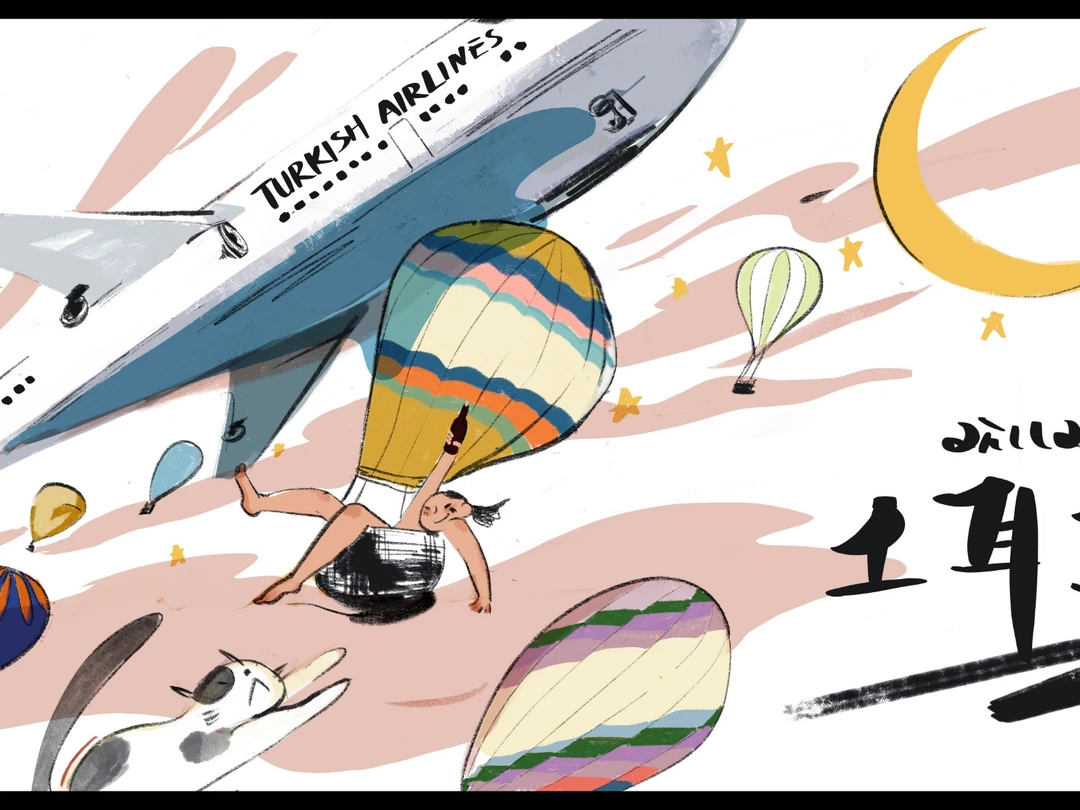
A Solo Journey Through Turkey: Ten Days of Wine, Cats, and Pink Clouds
A Solo Journey Through Turkey: Ten Days of Wine, Cats, and Pink Clouds
Prologue: The Moments That Make Ordinary Days Shine
We’re always searching for reasons to keep the mundane from sinking into mediocrity. For me, those reasons hide in specific moments: a perfectly poured glass of wine, an unexpected kindness from a stranger, the warmth of a cat brushing against your ankle, or the sight of someone you’ve missed already opening their arms to embrace you.
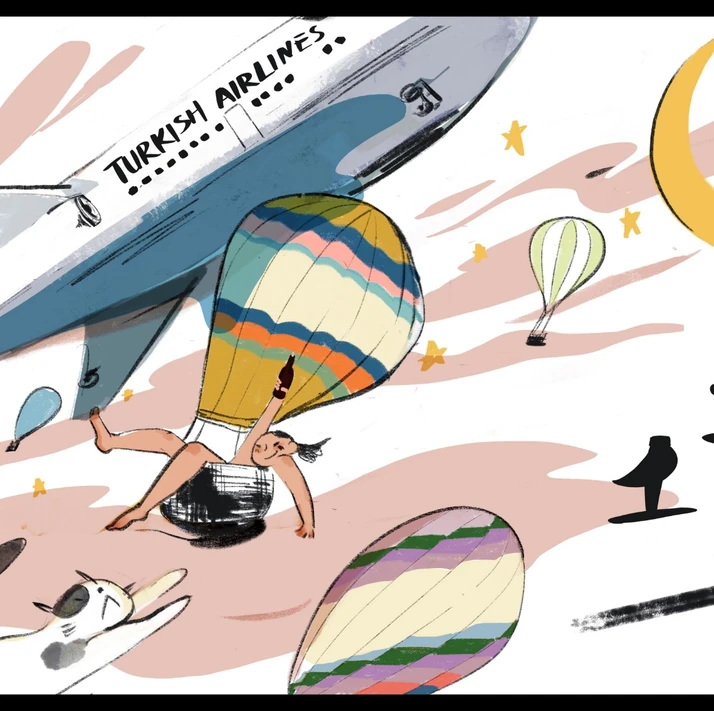
In the late autumn of 2018, I traveled alone to Turkey, camera and paintbrush in hand. Over ten days, I found streets where cats would come if you simply crouched down, a steaming glass of red wine in a valley, and clouds painted pink—moments that crystallized into the warmest amber in my memory.
Chapter One: Cappadocia—Valleys, Warm Wine, and Stories from Strangers

An Unexpected Encounter After Sunrise
In Cappadocia’s Rose Valley, after photographing the sunrise, I realized the valley that had been buzzing with voices moments ago was suddenly empty. The spectacle of hot air balloons rising into the sky felt like a collective hallucination. Nervous, I packed my gear and hurried down the mountain.
Just then, a Turkish man appeared from the side of the road, holding several flatbreads: “Hey, want to try some real Turkish bread?”
I declined warily and kept walking.
“My mom made them. Cheese flavor,” he added from behind.
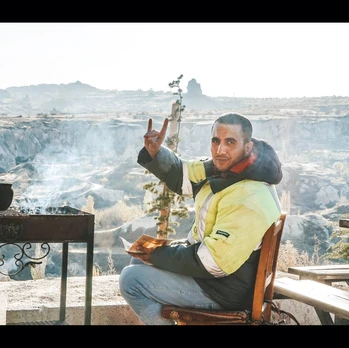
I walked a hundred meters, hesitated, turned around, and saw him sitting alone at the valley’s edge. I went back: “Sorry, can I take your photo?”
His name was Gökhan. He made a hand gesture and told me it meant “wolf”—once a significant symbol of a Turkish political party that had won 12% of the national vote. That gesture later became my key to conversations beyond the tourist track.
I set down my photography gear and sat beside him. At that moment, my Turkish journey truly began to “speak”—and it was only my second day.
“I work the night shift at a hilltop café, watching tourists come and go. At sunrise, this place is like a party. You know? Twenty-five years ago, there wasn’t a single tourist in this valley. Just a few locals coming up the mountain. Every family grew grapes, made wine. Then overnight, balloons and tourists flooded in, and the vineyards almost disappeared.”
I stayed silent.
“Pigeons are important to us,” he continued. “Their droppings and bodies buried under grapevines make the best fertilizer. Back then, vineyards were everywhere, like that one behind you.”
I turned and saw a thin grapevine.
“Yeah, but it’s beautiful here,” I said, struggling to match his wistful tone.
“I don’t have much to do. Work here at night, hang out at the café in town during the day. Look, now I’m off work, and the bread’s all gone.”
I realized I’d unknowingly eaten all of someone’s mother’s flatbread—the taste of a Turkish mother’s kitchen.
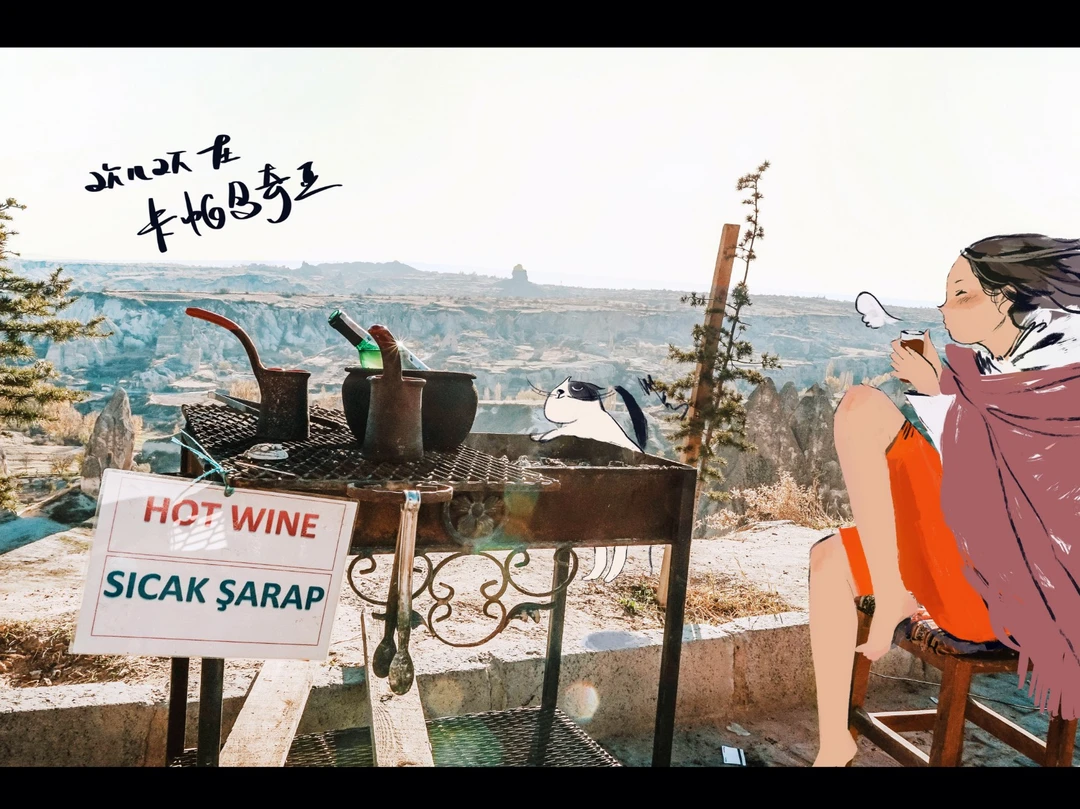
I declined Gökhan and his colleague’s offer of a ride and abandoned my plan to rush down the mountain. Alone on the cliff’s edge, the charcoal fire in the stove still warming the wine, I faced the Rose Valley, drank a cup of hot wine in the cool breeze, and savored the quiet after the balloon feast.
Practical Tips: Accommodation and Balloons in Cappadocia
I stayed three days in Cappadocia, choosing two hotels. I highly recommend HARMAN CAVE HOTEL—the terrace is less crowded, perfect for solo travelers taking selfies. I splurged on the Fairy Chimney room type, which has a private terrace outside and a decorated cave viewing area inside. If you want to shoot candlelit night scenes, bring your own candles.
The hotel also has a puppy obsessed with shoelaces—one of the reasons I loved it there.
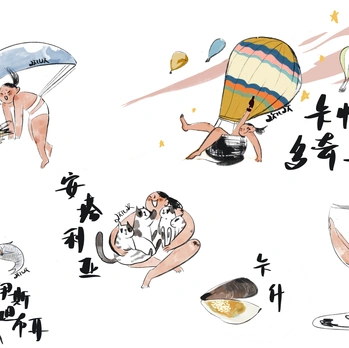
I booked the hot air balloon through the hotel, €150 per person. We departed a little after five in the morning. It was cold, but the burner’s warmth soon set in. The flight lasted an hour, offering views of Göreme Open Air Museum, Rose Valley, and Uçhisar. The Swiss couple next to me and the South African couple were taking romantic photos together, while I could only manage remote selfies.
Besides the balloons, I also recommend Göreme Sunset Point—where I met Gökhan. At sunset, Rose Valley glows gold and red; at sunrise, it’s the stage for the balloon spectacle. From the viewpoint, you can also see Uçhisar Castle, the highest point in Göreme.
I chose the Red Tour (9:30am–4:30pm), which leans toward history and culture. Paşabağ has Cappadocia’s tallest fairy chimneys—basalt mushroom-shaped pillars formed by volcanic rock shaped by earthquakes and wind erosion. Uçhisar is a massive sixty-meter rock, originally a fortress for the Hattians and later a caravanserai for Silk Road merchants.
Chapter Two: Istanbul—The Millennium City That Never Rushes
A Late-Night Conversation with Mr. Kadir
“It’s only in recent years that the fish have been getting smaller,” Mr. Kadir said. “You rarely see big ones anymore.”
I’d met this middle-aged Turkish man at the hotel, and we ended up talking late into the night. His friend joined in spontaneously. Tea after tea was consumed in the lobby.
Kadir looked to be in his forties or fifties, unmarried, living with his sister. “Turks and Chinese are a bit alike—living with parents before marriage is normal. But Kadir’s case is special,” his friend added.
“A few years ago, my parents passed away one after the other,” Kadir said, his tone remarkably flat.
We’d gotten so chatty because we discovered Turkey and China share similar historical arcs—the Ottoman Empire’s decline from glory, much like the late Qing Dynasty coveted by Western powers. Neither of us was a scholar, but our disgust for war and greed was mutual.
Travel is travel, but why was I discussing history and politics with a local, even listening to him complain about Nobel laureate Orhan Pamuk? I wondered: was this man some kind of “party loyalist”?
Galata Bridge: The City’s Heartbeat
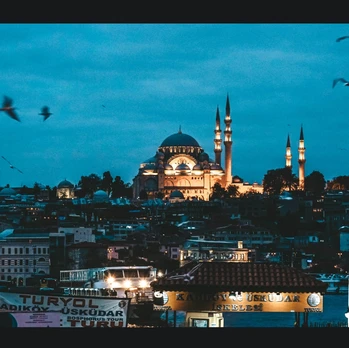
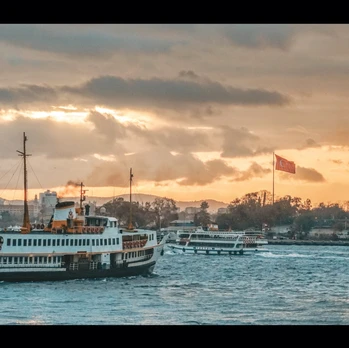
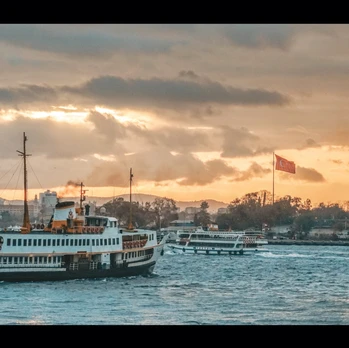
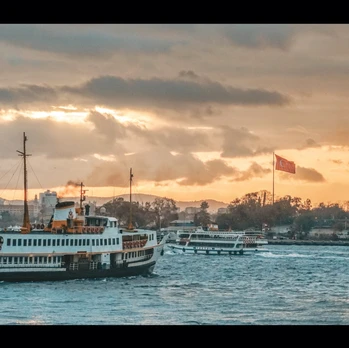
Istanbul’s sunrise comes around seven in the morning, after the call to prayer. I walked alone through the streets, waiting for the city to wake. Heading toward Galata Bridge, I saw early risers already arriving by ferry. Of all the great historical sites in this city, Galata Bridge is my favorite place to linger.
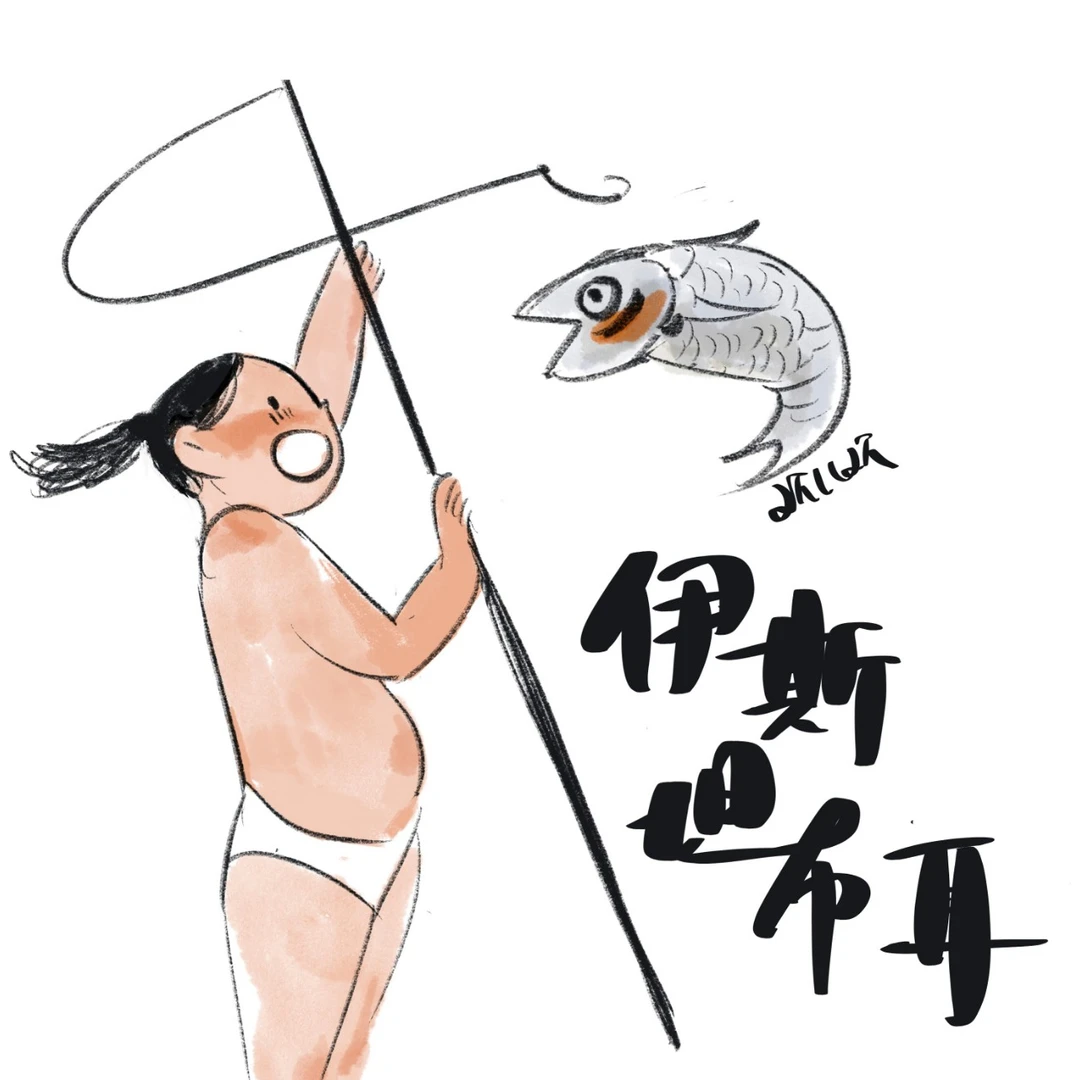
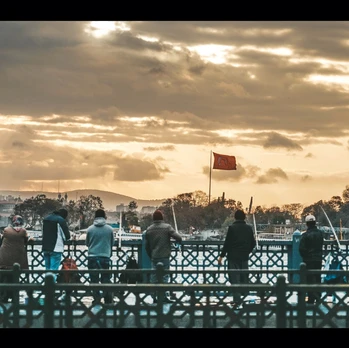
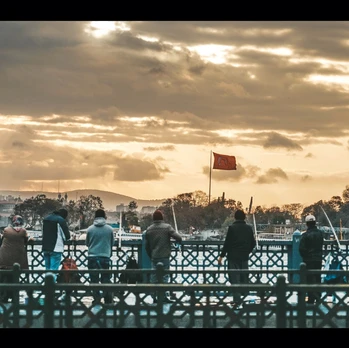
People start fishing as early as four or five in the morning, often staying all day. Mobile vendors sell sweet tea and bread—one lira per cup. I’d come here often to squat and watch: the ferries passing, the fishing rods lined up like a forest.
Galata Bridge spans two shores, with the Bosphorus Strait connecting Europe and Asia. In Turkish, “Bosphorus” and “throat” are the same word. Pamuk interprets it as “a place to breathe fresh air.” He once compared the canals of Amsterdam and Venice, the rivers of Paris and Rome, and found the Bosphorus more passionate—something that probably takes time to feel.
People fish leisurely on the bridge, while restaurants and fish markets bustle below. I looked around and indeed saw no big fish.
Where History and Reality Intersect
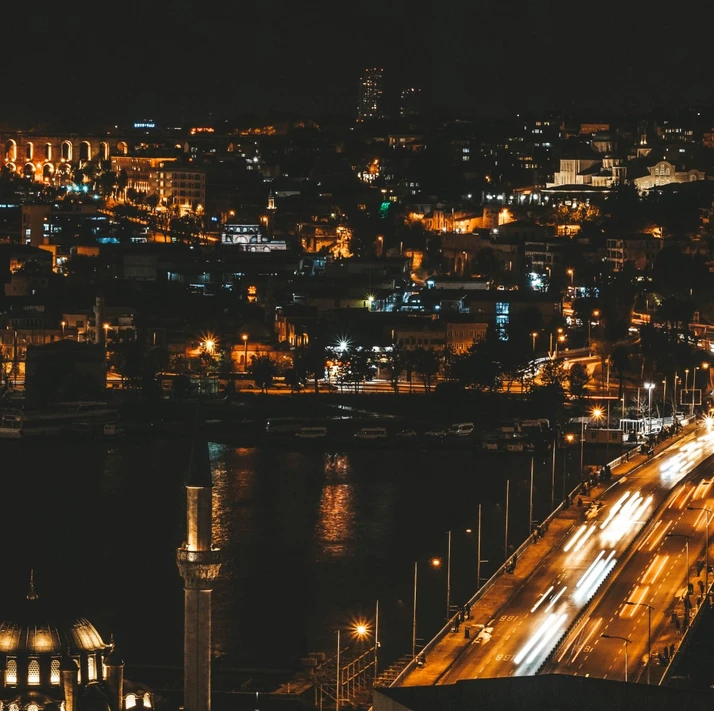
Napoleon once called Istanbul “the center of the world.” From Byzantine Constantinople to the star-and-crescent continent conquered by Ottoman warriors, to the Turkish Republic saved by Kemal after World War I—with such a long and painful history, looking at this city inevitably stirs a touch of melancholy.
“After the Turkish Republic was founded in the 1920s, everything changed. Even the calendar and numbers. We used to use Roman numerals, then suddenly switched to Arabic. My mother’s generation still used the Ottoman calendar. But I love today’s Turkey—that’s also why I don’t like Pamuk. He doesn’t act Turkish at all; he acts like a European!” Kadir said without holding back.
Many young Turks I met are deeply patriotic. Men must serve one year in the military. Before they leave, everyone—friends and strangers alike—gathers for a farewell parade, shouting “Our soldier, Big soldier!” as they lift the soon-to-be soldier onto their shoulders and onto the bus. I witnessed this scene on a late-night bus, watching strangers sing the national anthem for that young man. From the bottom of my heart, I cheered for the Turkish people.
City Strolls: From Hagia Sophia to Istiklal Avenue
Istanbul’s streets are perfect for long walks. What’s delightful about the architecture is how much of the past remains, coexisting beautifully with modern buildings.
Hagia Sophia (Aya Sofya) is both a Christian church and a mosque—that alone makes it special. Originally a Byzantine church, it was converted into a mosque by the Ottomans in 1453, then opened as a museum after the founding of the Turkish Republic. No demolition, no waste—just repurpose it. The Ottoman sultan’s decision deserves applause.
Walk up the ramp to the second floor, and you’ll see surviving Christian mosaics. When it was converted to a mosque, some iconographic images were plastered over. I recommend arriving at 9:00 a.m. when it opens to avoid queues and catch the light streaming through the windows.
Across the street from Hagia Sophia is the Blue Mosque, which took seven years to build. Its walls are decorated with blue-and-white Iznik tiles, and it has six minarets—the only mosque in the world with that many. Legend has it that only the mosque in Mecca was allowed six minarets, but the architect misheard the sultan’s order for “golden” minarets and ended up building six instead.
Topkapi Palace (the Old Palace) is a ten-minute walk away. It witnessed the decline of the Byzantine Empire and the rise of the Ottoman golden age, serving as the sultan’s residence and seat of government.
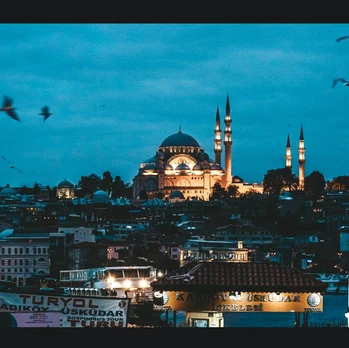
I’d always wanted to see a Turkish whirling dervish ceremony, though Kadir dismissed it as tourist-oriented theater. I still went to the Galata Mevlevi Museum—only to find out performances are held exclusively on Sundays.
Next to the museum is Istiklal Avenue, about four kilometers long, stretching from Galata Tower to Taksim Square. As bustling as Shanghai’s Nanjing Road, the nostalgic tram is a major attraction. It moves slowly enough that you can safely “hang” onto it.
Walking down Istiklal Avenue to Galata Tower at dusk, I found the tower seven stories high—a perfect spot for sunset, overlooking the Bosphorus Strait and the Eurasia Bridge in the fading light. If you don’t want to queue for the tower, the surrounding neighborhoods are worth exploring—cafés, restaurants, and small shops everywhere.
Before coming to Turkey, I thought Cappadocia’s hot air balloons would be the highlight of my photos. But when I sorted through my pictures, I found Istanbul had captured even more of my heart. Amid the busy tourist streets, there were always people sitting quietly in corners—yes, unhurried is exactly how I felt Istanbul to be.
On my last day, with some time to spare, I queued for Galata Tower. I waited nearly an hour, passing the time by photographing the people around me. When I reached the top, half the red sun remained. Seagulls stopping by became live models for tourists scrambling for photos. As the city lights came on, night had not yet fallen—Istanbul, a city you could never tire of watching.
Another evening, I went to the Maiden’s Tower for sunset. Perched on a small island in the Bosphorus, this lighthouse draws Turkish couples as night falls. I heard several versions of its tragic love story—originally built for military purposes, it gained a romantic aura over the centuries.
That was my first brief encounter with Istanbul—unhurried, and unforgettable.
Chapter Three: Fethiye—Freedom in the Sky and Sea
Paragliding: Leaping from a Cliff into the Sky
“Have you flown before?”
“I’ve done skydiving.”
“That’s completely different from paragliding.”
With that, my instructor guided me straight toward the cliff.
Ölüdeniz Beach is a vast stretch of sand and turquoise pine forest coastline, offering views of the ultra-blue lagoon nestled among the mountains. I thought having an instructor with me would make it less thrilling—until he performed rapid spins and weightless maneuvers, and I screamed internally: I’m going to be sick—
He said this was the maximum speed I’d requested, any faster and we’d fly out of control. Looking at his innocent face, I didn’t admit how miserable I’d felt.
After the flight, we ate pomegranates from his family’s garden. He recommended I visit Patara afterward—“That’s where Saint Nicholas was born.”
Saint Nicholas? The real-life Santa Claus!
On the Road: From Fethiye to Antalya
I stayed at Hotel Unique in Fethiye, located in the city center near the bay with speedboats and ferries. For sun and sand, Ölüdeniz Beach is the better choice.
I teamed up with a girl I’d never met for a three-day road trip—she turned out to be the perfect drinking companion. We met at the hotel, then drove five minutes to a viewpoint overlooking the entire city. In the morning, it was empty, with wooden chairs still bearing traces of the previous night’s conversations and drinks.
It was pomegranate season, which let me—someone who’d never seen a pomegranate tree—indulge my curiosity. At night, Fethiye glowed quietly under the lights, serene and beautiful.
Chapter Four: Kaş—Santa Claus’s Hometown and Real Home Cooking
Stumbling Upon the Patara Ruins
“Isn’t Turkish food all flatbread, meat, and kebabs?”
“Not at all!”
In Kaş, I finally discovered authentic Turkish home cooking and the country’s peculiar national drink.
Driving from Fethiye to Kaş, we passed the ancient ruins of Patara and Kaputaş Beach along the D400, one of the most scenic coastal roads. My paragliding instructor had kept recommending the Patara coastline, telling me it was Saint Nicholas’s birthplace—the real Santa Claus.
Saint Nicholas was a real historical bishop in Turkey. Born on the Mediterranean coast in Patara at the end of the third century, he came from a wealthy family but was generous and loved giving anonymous gifts. After his death in 346 AD, he was canonized, and his deeds evolved into the Christmas legend we know today.
I love trips that surprise me with unexpected knowledge. I discovered this ruin by accident—my GPS was set to Patara Beach, but it led me here instead, and I ended up buying a multi-entry ticket.
Turkey is full of ancient Lycian ruins. At the center of the Patara ruins is a massive abandoned theater. Climbing to the top of its steps offers a panoramic view of the surrounding rolling hills, with the Patara beach and sea not far away.
Leaving Patara and driving toward Kaş along the coastal highway, it’s easy to find Kaputaş Beach. The beach is small, and since the peak tourist season had passed, it wasn’t crowded. Parking was easy. I flew my drone from the roadside—the view was stunning.
Kaş at Dawn and the Mediterranean Blue
Early one morning, while my travel companion was still asleep, I went alone to the hotel’s backyard and discovered a small theater ruin. It wasn’t as impressive as Patara’s, but climbing up to it at sunrise, I could see the Mediterranean in the distance.
The ancient Greeks and Romans really loved their theater—ruins are everywhere. Researching later, I found that Romans two thousand years ago knew how to enjoy life more than we imagine: bathing, watching plays, and gladiator fights were their three great passions. Bathing was done at public baths; plays and gladiator shows were held in open-air theaters.
Should I stand up for a selfie? I hesitated, then chickened out and stayed seated. Lesson learned: don’t wear black when flying a drone for selfies.
The Mediterranean blue was so deep it made you want to dive right in.
Epilogue: The Moments I Brought Home
From my ten-day journey through Turkey, I brought home not souvenirs, but moments—
On the cliff’s edge in Rose Valley, drinking that cup of hot wine, the wind was cold, but my heart was warm.
On a street in Istanbul, a black cat suddenly appeared inside Hagia Sophia, stealing everyone’s attention.
At Cappadocia’s sunset viewpoint, Gökhan said, “Pigeons are important to us”—and I understood then that every memory on this land is tied to people, to animals, to wine, and to love.
If you ever go to Turkey—
Say hello to Gökhan for me in Rose Valley.
Sit on Galata Bridge and watch one sunrise.
Drink a cup of Turkish tea, even if it’s just one lira.
Crouch down and wait for a cat to come to you.
Because those moments are the reasons we keep going through the ordinary days.
You should also read:

Solo in Yunnan: A Wanderer’s Guide to the Land of Eternal Spring
Solo in Yunnan: A Wanderer’s Guide to the Land of Eternal Spring There’s something magical about traveling alone. No compromises, no schedules to keep, no one to please but yourself. I’ve been on the road for nearly three months now, and not once have I…
Continue reading...
Into the Hidden Valley: A Solo Journey Through the Mysterious Dulong River
Into the Hidden Valley: A Solo Journey Through the Mysterious Dulong River Deep in the northwestern corner of Yunnan Province, tucked away from the modern world, lies a place that feels like a secret whispered among mountains. The Dulong River Valley is not just a…
Continue reading...
God’s Abandoned Palette: A Self-Drive Journey Through Yunnan’s Dongchuan Red Land
God’s Abandoned Palette: A Self-Drive Journey Through Yunnan’s Dongchuan Red Land Travel has never been about reaching some distant geographic coordinate. It’s about encountering, along the way, the version of yourself buried beneath the rubble of daily routine. During this May Day holiday, I finally…
Continue reading...