A Solo Yunnan Self-Drive Photography Journey: Chasing Sights I've Never Seen
A Solo Yunnan Self-Drive Photography Journey: Chasing Sights I've Never Seen
Prologue: Why Yunnan Again?
To be honest, even I find it strange—I've already been to Yunnan over a dozen times, visited Meili Snow Mountain and Lijiang twice each. Yet every holiday season, that little voice inside still pipes up: "Go to Yunnan."
For the 2024 Chinese New Year, I packed my bags again and set off alone for this land. This time, I didn't choose those well-worn tourist spots. Instead, I fixed my gaze on a single phrase—"never been there before." The starry sky at Wunongding, the reflections at Xueda Lake, the morning mist at Songzanlin Monastery, the Dai-style architecture in Mangshi... These names pulled at me like magnets.
A seven-day self-drive journey. What I wanted was simple: to see different scenery, take different photos, eat different food, and most importantly—to get away from the crowds and enjoy my own peace and quiet.
Why Choose a Self-Drive Trip in Yunnan?
If you ask me for reasons to recommend it, I can rattle off a long list:
The diversity of landscapes is the biggest highlight. Snowy mountains, lakes, temples, palaces, culture, starry skies—for photography enthusiasts, this is paradise. During the Spring Festival period, Yunnan's weather is mostly sunny, temperatures are generally above freezing, road conditions are good, and you rarely encounter snow-blocked roads. What's more, Yunnan has an extensive network of flights and high-speed rail, making it easy to reach from major cities at reasonable prices.
What surprised me most was that accommodation and dining prices during the Spring Festival weren't outrageously inflated. Rooms were plentiful, and I could even book just a day or two in advance. On this trip, I encountered few crowds, no traffic jams, reasonable prices, and great weather—so comfortable that I wanted to just stay and never leave.
My Itinerary: Designed for Those Who "Haven't Been There"
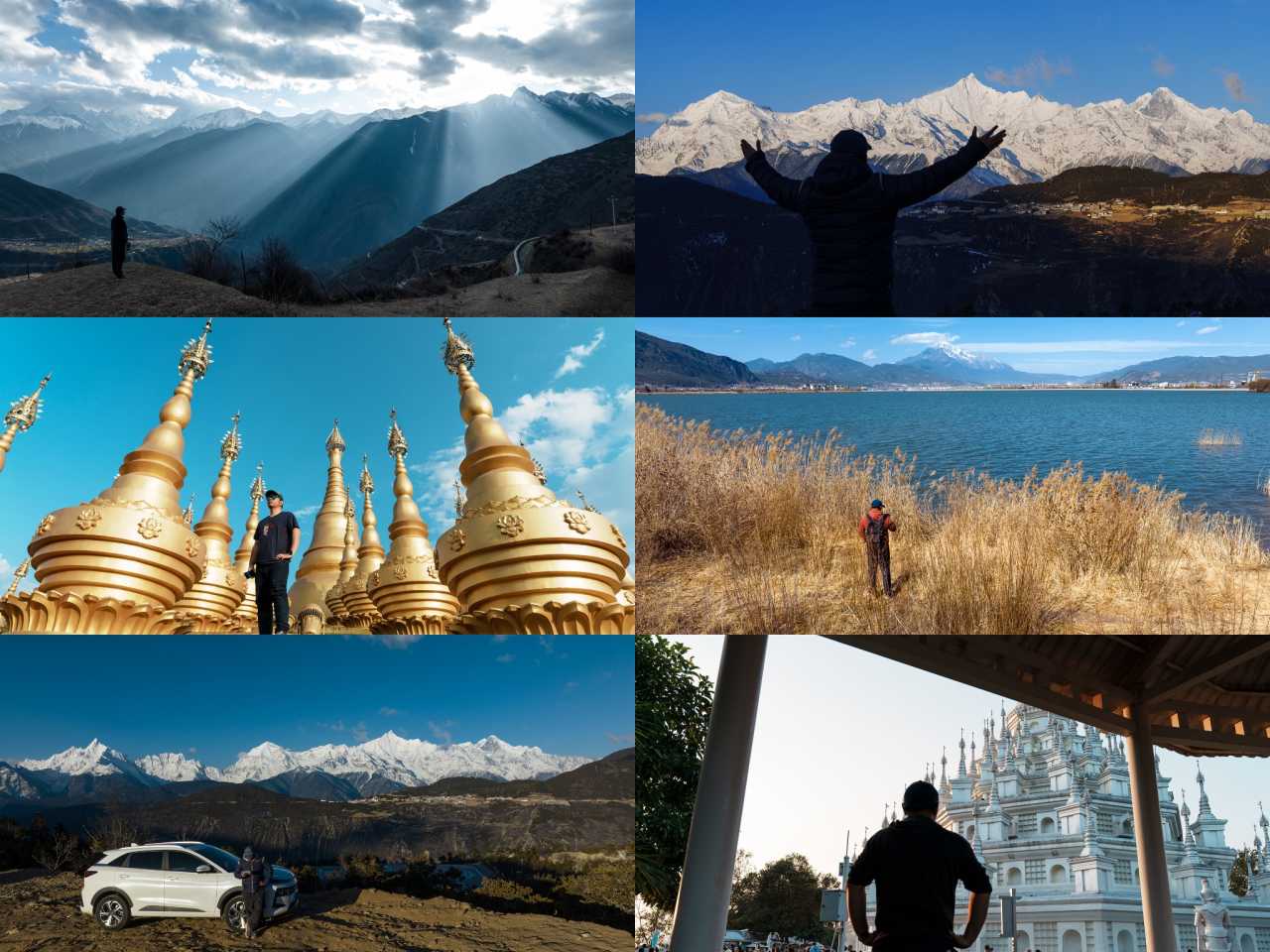
To be honest, my route isn't the conventional one. If you're looking for guides on how to explore Lijiang, circle Lugu Lake, or wander through Shangri-La, you might be disappointed. My itinerary is better suited for people who've already been to Yunnan multiple times but still have places they've missed—especially those who love photography.
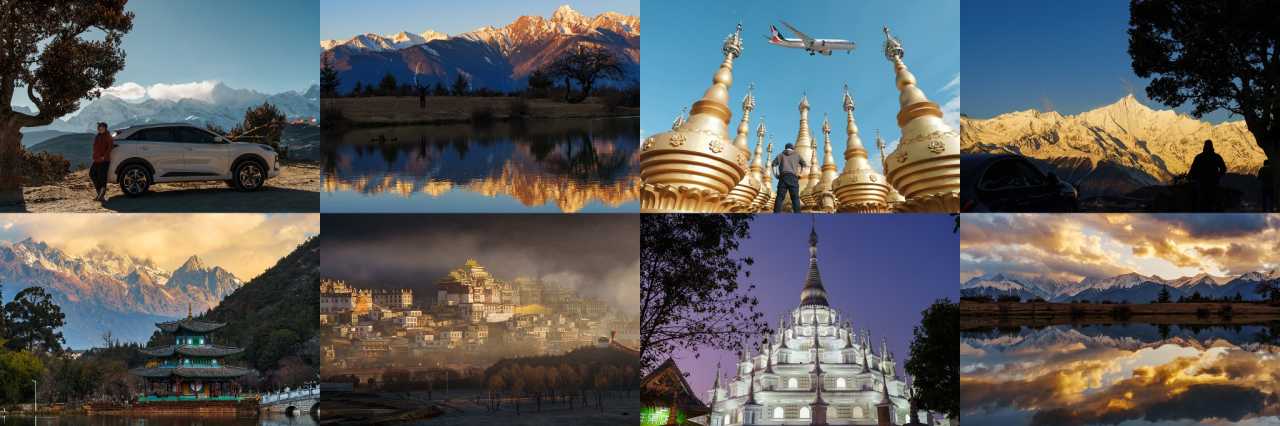
The whole trip is divided into two main parts: Highland Scenery and Mangshi Vibes. The highland section revolves around Lijiang's Jade Dragon Snow Mountain and Diqing's Meili Snow Mountain, connecting spots I'd never visited before. Mangshi serves as the trip's finale, rewarding myself with Dai cuisine and architecture.
The itinerary took 8-9 days, making full use of the Spring Festival holiday. Interestingly, I only finalized the daily schedule a week before departure—as a landscape photography enthusiast, I needed clear weather forecasts and the probability of seeing the "sunshine on golden mountain" phenomenon at Meili Snow Mountain. Here's a little tip: use the "Mountain" app to predict the chances of seeing the golden sunrise, and combine it with "Lijing Weather" to check cloud cover. Double-checking like this gives you about 80-90% accuracy.
Overview of the Specific Itinerary
- Day 1: Guangzhou → Lijiang → Shangri-La → Wunongding → Deqin
- Day 2: Wunongding starry sky → "One Tree" golden sunrise → Feilaishi → Foshan Township → Shuoda Village → Xueda Lake camping
- Day 3: Xueda Lake → Shangri-La → Songzanlin Monastery (stay inside the scenic area)
- Day 4: Songzanlin Monastery morning mist → Lijiang → Lugu Lake
- Day 5: Lugu Lake morning mist → Lijiang → Wenbi Reservoir → Black Dragon Pool Park
- Day 6: Black Dragon Pool golden sunrise → Baisha Ancient Town → Lijiang Airport → Mangshi
- Day 7: Mangshi → Tuanjie Street → Puti Temple → Tree-Wrapped Pagoda → Menghuan Grand Golden Pagoda → Menghuan Grand Silver Pagoda → Ruili Live Crabs
- Day 8: Mangshi Zhenqi Garden → Library → Mengbana Xi Food City → Golden Peacock Avenue
- Day 9: Mangshi → Kunming → Guangzhou
The first six days were spent driving a rental car; the last two days in Mangshi, I switched to an electric scooter—a whole different kind of fun.
Wunongding: A First Encounter Under the Stars
After picking up my rental car at Lijiang Airport, I headed straight north toward Deqin. It was the first day of the Lunar New Year, and the roads were surprisingly empty with very little traffic. Passing near Wunongding, a road leading into the village caught my eye—and as I ventured in, I discovered that the road below the Wunongding viewing platform was itself a scenic route. It ran parallel to Meili Snow Mountain with wide-open views, offering countless spots to pull over and take photos.

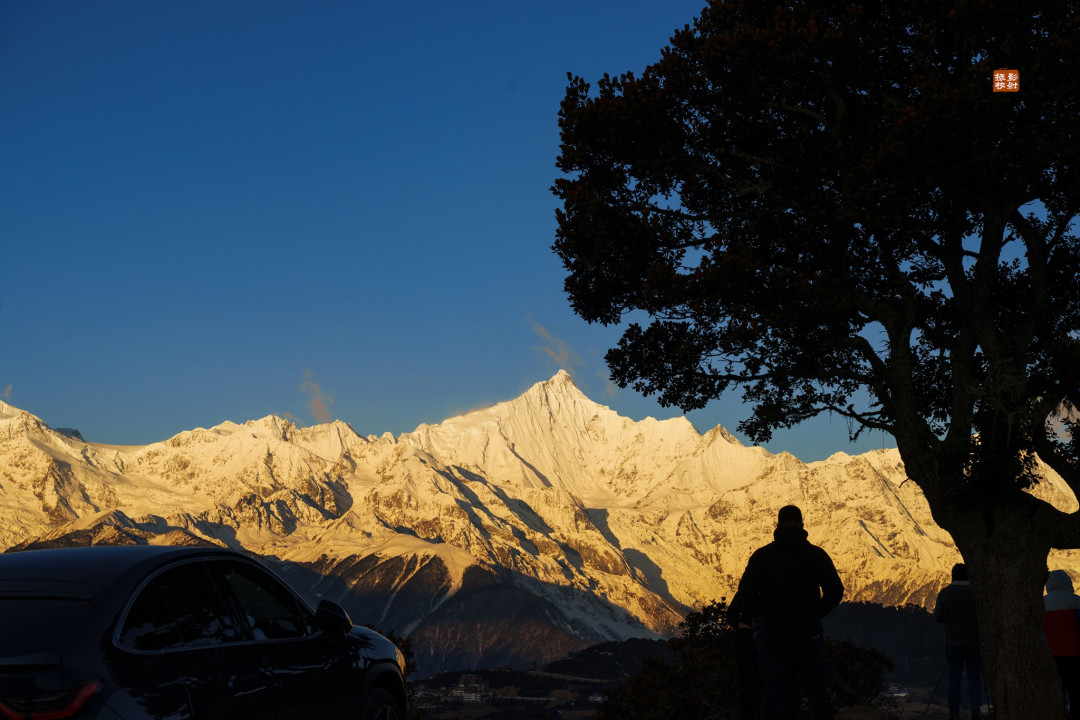
Looking into the distance at Kawagebo Peak, this was my third time seeing it. Each encounter felt different. The Wunongding viewing platform is now fully equipped with cafes, hotels, and guesthouses. Although I didn't book a room here, I strongly recommend Wunongding as a spot for photographing Meili Snow Mountain's golden sunrise and starry skies—the location is open, and more importantly, the eye-level perspective makes the mountain look even more magnificent, with more foreground options.
In the evening, I drove 18 kilometers to Deqin County to check in. During the Spring Festival, many shops were closed, the hotel was nearly empty, and the price was very cheap—though finding food was a bit inconvenient. I chose this location mainly for convenience: it was just a 20-minute drive to Wunongding for shooting the starry sky and sunrise.
Friendly reminder: Between January and February, the road from Wunongding down to Deqin has a lot of black ice and melting ice water, and it's downhill, making it easy to slip. I encountered this on my way down and was extra careful going up the next day, sticking to the dry area on the right side to make it up safely.
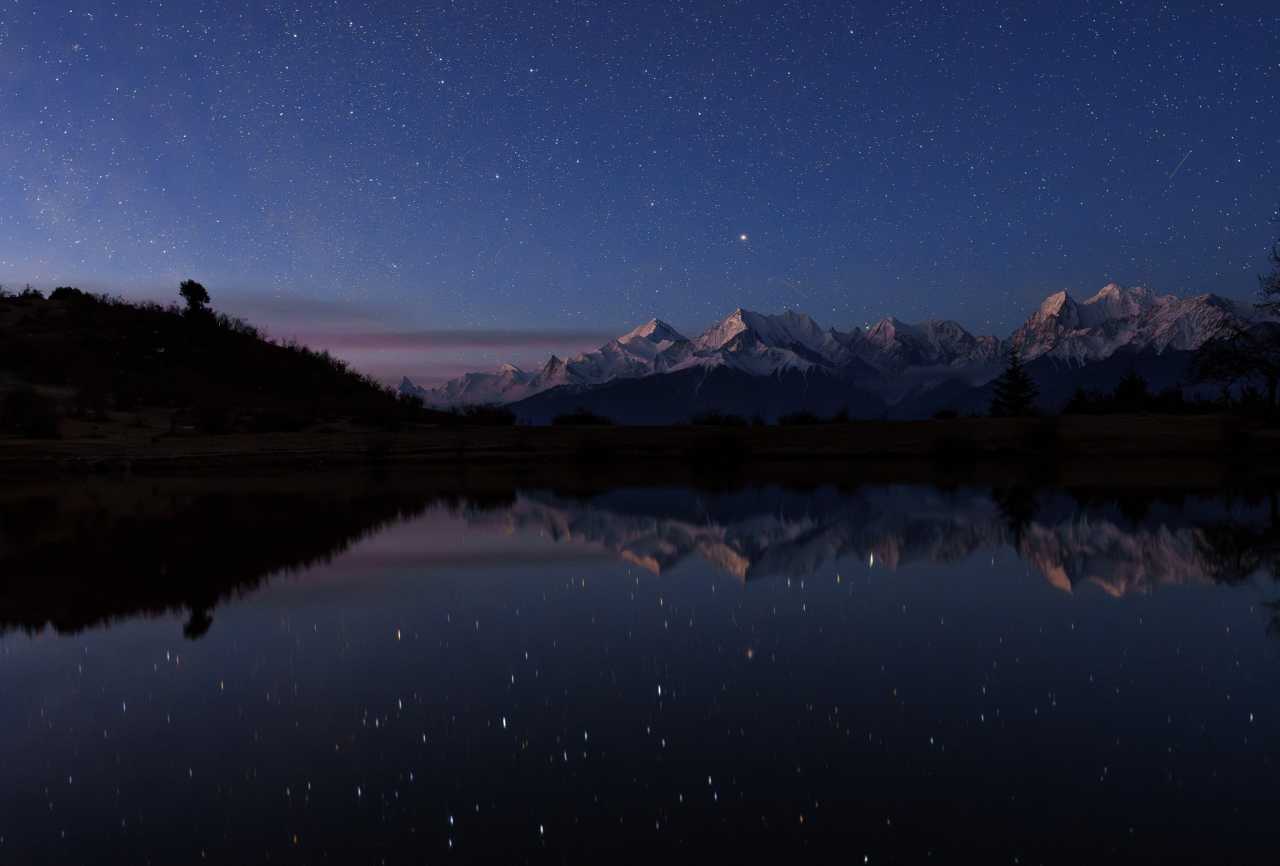
At 4 a.m., the starry sky at Wunongding was a breathtaking painting. The 13 white pagodas looked magnificent under the starlight, with Kawagebo clearly visible ahead. The only downside was some light interference from roadside hotels—it wasn't completely pitch black. I used an 85mm lens to capture the snowy mountain and stars. The Milky Way was rising from the east side of Meili Snow Mountain—not directly overhead—but the sky full of stars against the snowy mountain was already stunning enough.
"One Tree": The Perfect Spot for Golden Sunrise
If you ask me whether Wunongding is good, I'd say yes—but there's an even better place. Follow the cement road on the right side of Wunongding down about 200 meters, then turn onto a dirt road and go another 100 meters, and you'll arrive at a place called "One Tree." In recent years, photography enthusiasts have discovered this spot, and it's become an internet-famous location.
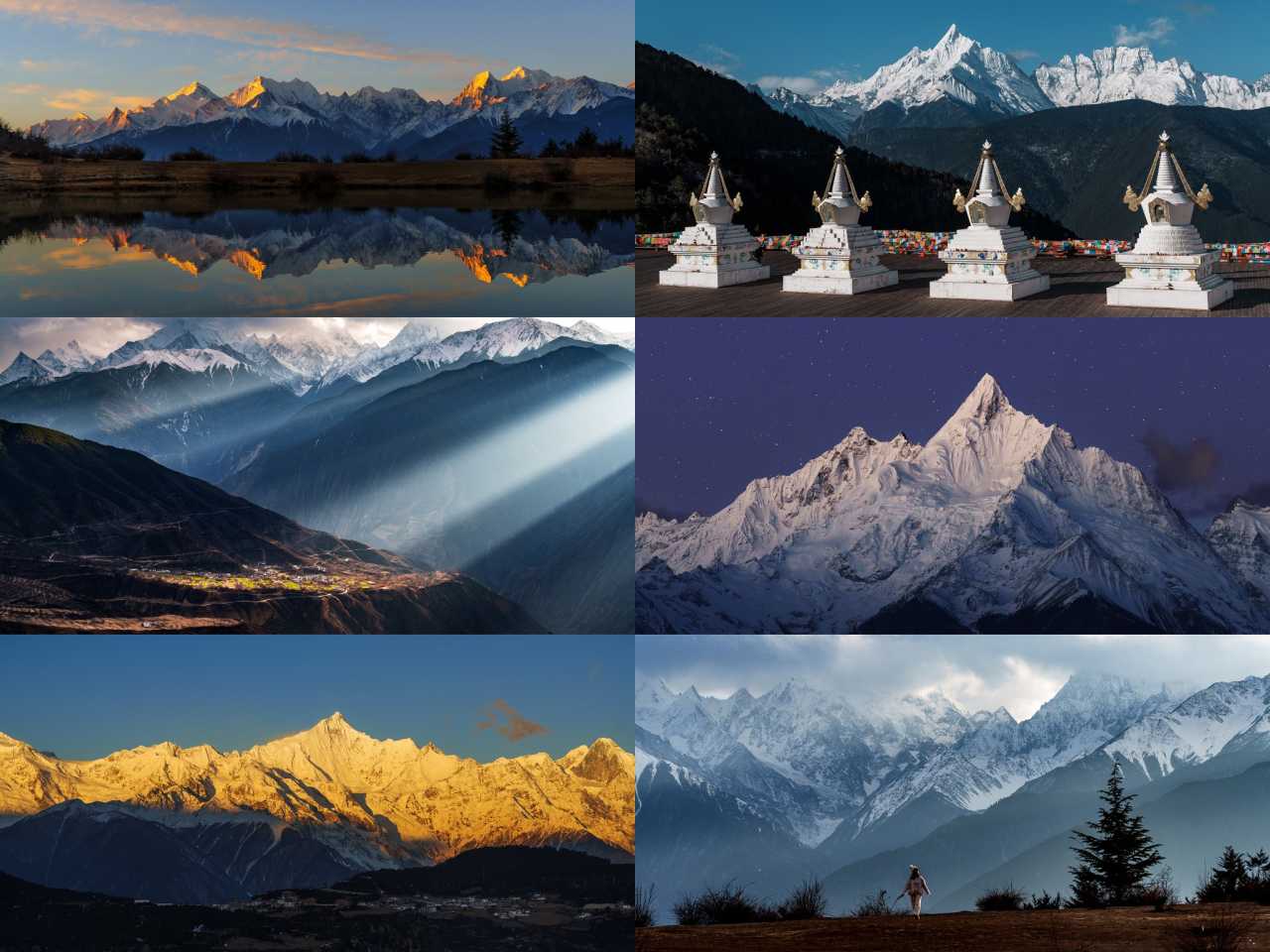
"One Tree" is exactly what it sounds like—a lone tree standing in front of Meili Snow Mountain, perfectly framing the peak. It's also open, eye-level, and free from light pollution, with very dark surroundings—perfect for shooting stars. I picked a spot next to the tree, parked my car nearby, set up my gear, and waited quietly for sunrise.
Between 5 a.m. and 7 a.m., it was still very dark, and the stars were clearly visible. As the light shifted, the distant snowy mountain gradually brightened. According to the "Mountain" and "Lijing Weather" forecasts, today would be a clear day with no clouds in sight. But it wasn't until I saw the actual conditions around 7 a.m. that I finally relaxed—today, I would definitely see the golden sunrise!
At 8:02 a.m., the tip of the snowy mountain began to glow with a pinkish light. When the entire summit was covered in gold, everyone there was thrilled. Seeing the golden sunrise over Meili Snow Mountain on the first day of the Lunar New Year—what an auspicious omen. This was my third time here, and I finally embraced Meili Snow Mountain with both hands.
Shuoda Village and Xueda Lake: A Solo Camping Adventure in a Hidden Paradise
Leaving Wunongding, passing through Feilaishi, I continued driving toward Foshan Township. Here's a special recommendation: after leaving Feilaishi, drive another 10 kilometers further. The road is in good condition, and around every bend, you'll encounter Kawagebo. Every time I turned and saw it, I couldn't help shouting, "Kawagebo!" Along the way, there are several viewing platforms, and even a paid glass reflection platform and a small coffee shop where you can sip coffee while gazing at Meili Snow Mountain.
Before the Foshan Township gas station, I bought water and food, filled up the tank, and prepared to head to Shuoda Village for camping.

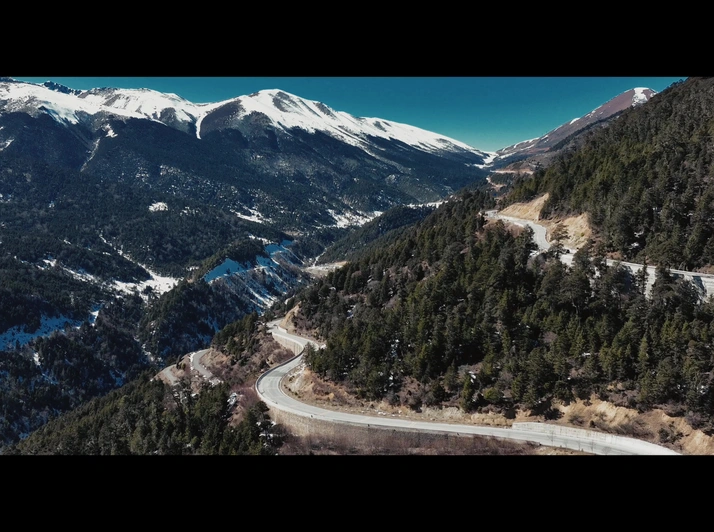
Special attention needed for the road to Shuoda Village: - From Foshan Township, it's an 18-kilometer winding mountain road, taking about 40 minutes - The entire road is cement, with a solid foundation, but mostly single-lane with passing spots - There are falling rocks, and some sections have many, large, and sharp curves, including cliff-edge sections without guardrails - Not recommended for novice drivers, especially those with a fear of heights - Not suitable for rainy days due to high risk of falling rocks
On the way to Shuoda Village, the cliffside road accompanied by snowy mountains was beautiful, but I had to keep my focus on driving. When I arrived at Xueda Lake, I met a few photographers who were also there to take photos. They left after watching the sunset, but I chose to stay overnight.
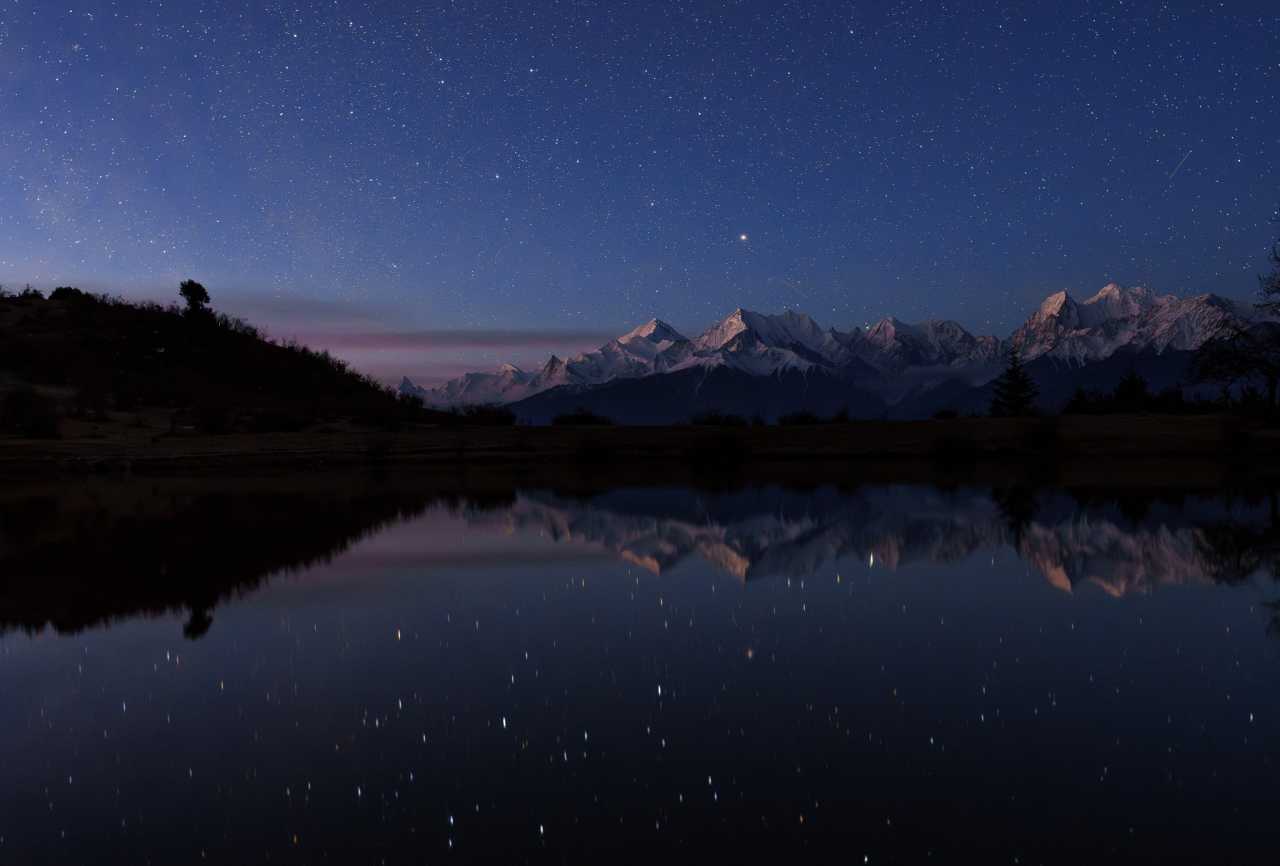
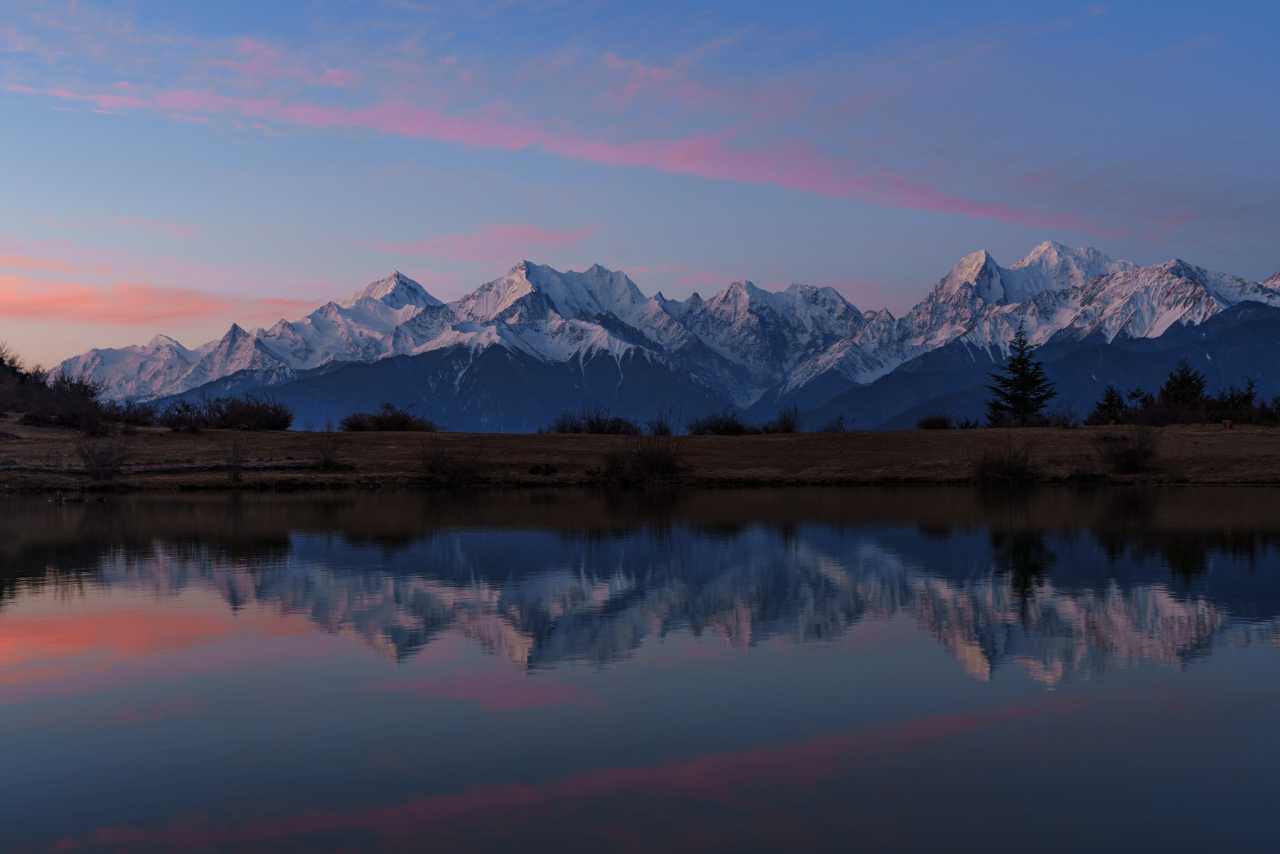
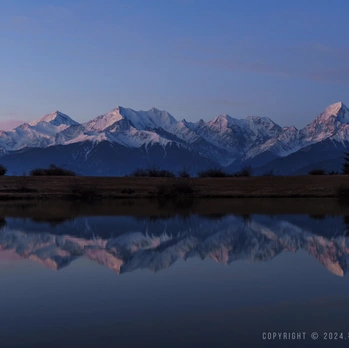
Xueda Lake is probably the best place to see reflections of Meili Snow Mountain. It's still very raw, peaceful, and free from light pollution. At night, the starry sky was brilliant, the Milky Way hung in the trees, and it was so quiet it was almost unsettling. This was my first time camping—I slept in my car. At Xueda Lake, I captured the perfect combination of snowy mountain, reflection, and starry sky. The next morning, I also saw the golden sunrise—seeing the golden light over Meili Snow Mountain from multiple angles in a row was incredibly lucky.
Best time to photograph reflections: Before 10 a.m. or after 5 p.m., when the wind dies down and the lake surface becomes as smooth as a mirror. At other times, the wind is stronger, and you won't see the effect.
Enjoying this beautiful scenery all to myself, I couldn't help running forward and shouting "I love you" toward Meili. My only regret was that, with such perfect weather and such a beautiful reflection, I happened to be wearing dark clothes. A friend later joked, "You could have just taken your clothes off!" Ha, I really regret not taking his advice.
Songzanlin Monastery: Solemnity in the Morning Mist
Coming down from Xueda Lake, I raced back to Shangri-La and checked into a guesthouse inside the Songzanlin Monastery scenic area. I chose to stay here for two reasons: first, to go to Songzanlin Monastery again to pray for blessings, and second, to conveniently photograph the sunrise and morning mist from the hill behind the guesthouse the next day.
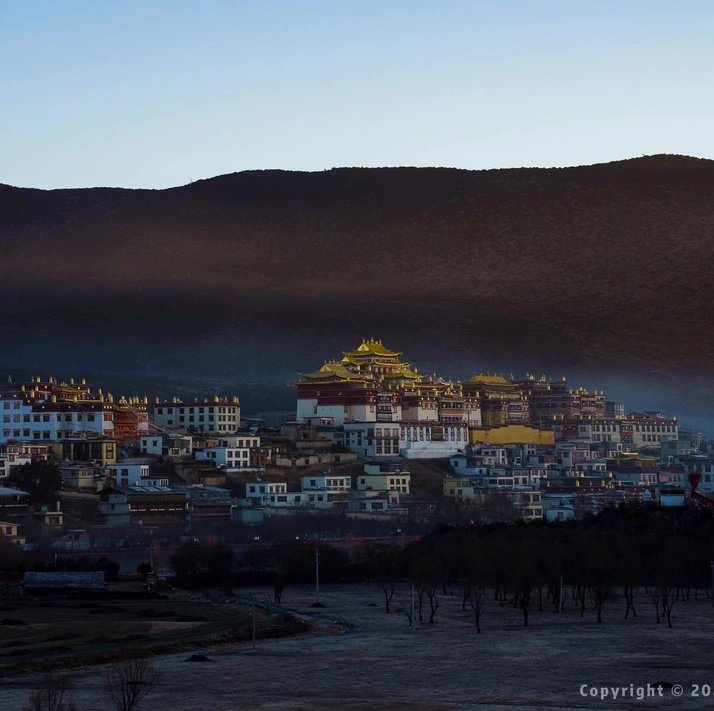
Songzanlin Monastery is now packed with tourists—completely different from when I visited six years ago. Everywhere you look, there are visitors dressed in Tibetan costumes taking photos, which takes away from the monastery's sense of quiet contemplation. However, the Xianggelila Patu Jiayuan Guesthouse I stayed at was a pleasant surprise. The owner and his wife were incredibly warm, the room was spacious, and the Spring Festival price was very reasonable. When I mentioned I wanted to try yak meat hotpot, they immediately made one for me—pure yak meat, so generous that I felt like I was eating three portions by myself.
There are two main spots for photographing the morning mist at Songzanlin Monastery: one is the hillside next to the national highway (free but farther away), and the other is down the small path to the right of the Xianggelila Qudeng Naicang Guesthouse, then up a small hill. I recommend the second option—fewer people, a wide view, and you can avoid the utility poles. The downside is that you need to buy a ticket.
You don't need to arrive too early. It takes only 5-6 minutes to walk from the hotel to the back hill. I suggest arriving around 7:45 a.m., or 15 minutes earlier if you want to find a better spot. I used two cameras—a Sony A7CR and a Sony ZV-E1—with 85mm and 135mm lenses respectively, one for wide shots and one for close-ups. The most suitable focal length range would be 70-200mm.
Lugu Lake and Black Dragon Pool: A Duet of Morning Mist and Snowy Mountains
From Songzanlin Monastery, passing through Lijiang and then taking the expressway to Lugu Lake, the entire journey took nearly five hours. The main holdup was traffic jams on the winding mountain road to Lugu Lake, plus many people hadn't bought tickets in advance and were stuck at the entrance, so I didn't arrive at the Langfang Pier hotel until 4 p.m.
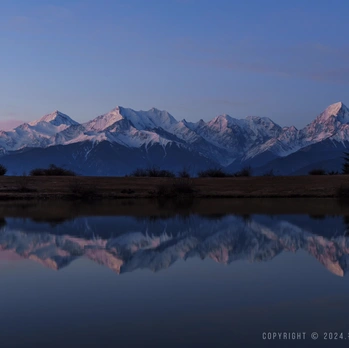
This time, I stayed at the Yingyue Hu Pan Hotel by Langfang Pier. Even during the Spring Festival, the price was only around 400 yuan, offering great value for a lake-view room. Although I'd already been to Lugu Lake three times, coming for the morning mist still filled me with anticipation. The results were... so-so, but I did capture a cool shot of black-headed gulls landing.
From Lugu Lake, I returned to Lijiang and checked into a hotel near Black Dragon Pool Park. Black Dragon Pool Park is a classic spot for photographing Jade Dragon Snow Mountain, with ancient architecture in the foreground adding layers to the composition. On the morning of the fifth day of the Lunar New Year, people started lining up at the west gate before 7:30 a.m., and the park opened for free entry at 7:45 a.m. Once inside, I turned right and rushed across the bridge, and by around 8 a.m., I was able to capture the golden sunrise.
Black Dragon Pool is located at the foot of Xiangshan Mountain in the north of the city, with ancient structures including the Dragon God Temple, the Moon-Embracing Tower, and the Locking Emerald Bridge. The Locking Emerald Bridge is a covered bridge built during the Jiaqing reign of the Qing Dynasty, with ancient plaques reading "漾青" (Rippling Green) and "锁翠" (Locking Emerald) at its ends. The reflection of the Five-Arch Bridge, the Moon-Embracing Tower, the snowy mountain, and their mirror images in the pool has long been a classic postcard image of Lijiang.
Wenbi Reservoir: A Hidden Gem Even Locals Don't Know
Turquoise blue water, reedy wetlands, and a distant view of Jade Dragon Snow Mountain—this spot probably hasn't been visited by many, and even Lijiang locals don't know much about it. I met an older man there who told me that this area used to be a golf course and villa district for the wealthy, and it's only been open to the public in recent years.
Navigate to Wenbi Reservoir. If you're driving, continue on the small road ahead for 5-10 minutes to find a place to park, then walk in to reach the reedy wetlands. This vantage point of Jade Dragon Snow Mountain is truly beautiful, and the key is that there are very few people. Unfortunately, I didn't manage to arrange a model for a photo shoot this time—otherwise, standing in the middle of the reeds for an outdoor portrait session would have produced stunning results.
Mangshi: Golden Pagoda, Silver Pagoda, and Street Food
Flying from Lijiang to Mangshi, my journey entered its second half. Mangshi, this small city rich in Dai ethnic culture, gave me so many surprises.
Menghuan Grand Golden Pagoda: Many people suggest only visiting the Silver Pagoda and skipping the Golden Pagoda, but I disagree. In fact, the Golden Pagoda is also great for photography—whether it's architecture, portraits, or landscapes, you can get great shots. I arrived around 3 p.m., took a lap of photos outside the gate, then went inside the Golden Pagoda to shoot clockwise, followed by a tour of the pagoda's interior. Afterward, I went down the hill to the Silver Pagoda across the way to continue shooting. For the Silver Pagoda, I recommend walking up the left-hand slope—it takes about 15 minutes to reach the top, and you can keep shooting until nightfall.
Menghuan Grand Silver Pagoda: Known as the premier pagoda of Southern Buddhism in China. The Silver Pagoda is based on a silver-white color scheme, standing 66 meters tall with a diameter of 46 meters. Its body is composed of 80 small pagodas, and the entire structure is meticulously crafted from Dai silver or silver-plated materials. The Silver Pagoda is indeed beautiful for portraits, but it's best to come when there are fewer people—either early in the morning or after 4 p.m. The Silver Pagoda looks even better after dark, with a blue-violet sky contrasting against the shimmering silver body—so beautiful you can't look away.
From the halfway point of the Silver Pagoda hill, you can photograph the Golden Pagoda across the way. After nightfall, the Golden Pagoda also lights up—don't miss this view.
Street Photography and Food in Mangshi: Mangshi is perfect for slow-paced travel. Rent an electric scooter and weave through Tuanjie Street, Puti Temple, and the Tree-Wrapped Pagoda—every snapshot is a scene worth capturing. And the food is incredibly rich: Chan Jiemei Clear Broth Beef Breakfast, Ruili Live Crabs, Mengbana Xi Food City... The only worry is that your stomach isn't big enough to eat it all.
Epilogue: One Person's Journey, a World of Scenery
Over seven days of self-drive photography, I traveled through snowy mountains, lakes, temples, and cities, capturing the golden sunrise, starry reflections, morning mist, and Dai architecture. Every frame was a sight I'd never seen before; every moment was a memory all my own.
If you want to try a trip like this, my advice is: - Check the weather in advance, using professional apps to predict the chances of golden sunrise and starry skies - Do your homework on road conditions, especially winding mountain roads and sections with black ice - Bring the right photography gear—a 70-200mm lens is the best choice for shooting snowy mountains and architecture - Keep an open mind—sometimes plans change, but surprises often await around the corner
Most importantly—just go. Some scenery, you can only understand its beauty by seeing it for yourself. Some roads, you can only appreciate their meaning by walking them yourself.
A solo journey isn't lonely. Because the whole world's scenery is traveling with you.
You should also read:
Escaping Nanning, Falling Under Lijiang's Spell: Our Four-Person, Ten-Day Yunnan Dream
Escaping Nanning, Falling Under Lijiang's Spell: Our Four-Person, Ten-Day Yunnan Dream Before We Set Off: No Pain, No Obsession Have you ever had that impulse—suddenly tired of the office fluorescent lights, the crush of the subway, the endless parade of identical takeout boxes, and just…
Continue reading...
Solo in Yunnan: A Wanderer’s Guide to the Land of Eternal Spring
Solo in Yunnan: A Wanderer’s Guide to the Land of Eternal Spring There’s something magical about traveling alone. No compromises, no schedules to keep, no one to please but yourself. I’ve been on the road for nearly three months now, and not once have I…
Continue reading...
Into the Hidden Valley: A Solo Journey Through the Mysterious Dulong River
Into the Hidden Valley: A Solo Journey Through the Mysterious Dulong River Deep in the northwestern corner of Yunnan Province, tucked away from the modern world, lies a place that feels like a secret whispered among mountains. The Dulong River Valley is not just a…
Continue reading...