A Spontaneous Journey, Slow and Leisurely: An 11-Day Healing Trip from Dali to Kunming
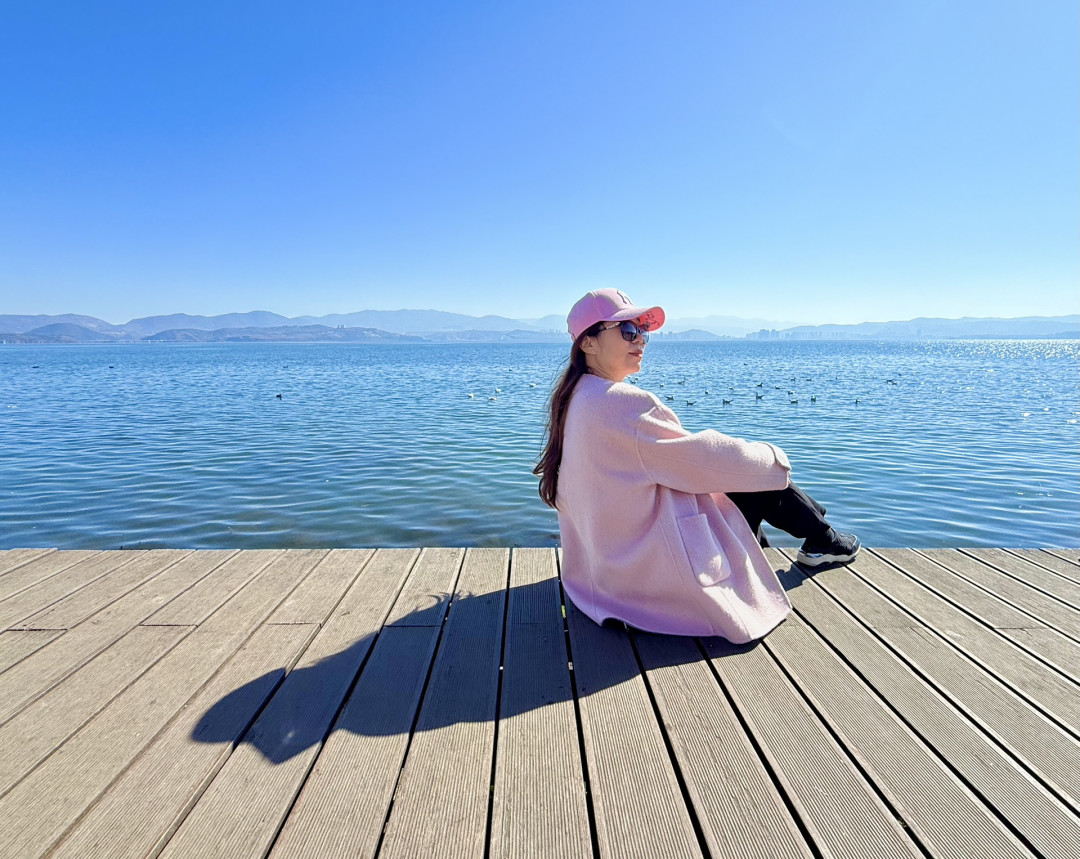
A Spontaneous Journey, Slow and Leisurely: An 11-Day Healing Trip from Dali to Kunming
When my planned trip to Osaka fell through due to various reasons—flights and hotels already canceled, but annual leave already approved—I stared at the warm southwestern corner of the map and made a sudden decision: go to Yunnan. No detailed itinerary, no carefully crafted攻略 (travel guide). I only booked a flight to Dali and the first night's hotel, roped in a last-minute travel companion, and just like that, a "spontaneous, slow and leisurely" journey began.
The Origin: A Last-Minute Shift from Japan to Yunnan
Originally, I was supposed to fly to Osaka in late November to meet my sister for an 11-day trip along the San'in-Sanyo route. But when the Japan trip was abruptly canceled, and after refunding the flights and hotels, I looked at the approved annual leave and decided not to waste this rare stretch of free time. Since I wanted to "wander," I figured I'd pick a warm place. Dali—that fabled land of "wind, flowers, snow, and moonlight" that everyone talks about—became my impromptu destination.
I bought a ticket to Dali and a return flight from Kunming, booked a few nights' accommodation, and left the rest to fate and mood.
Day 1: Arriving in Dali, First Taste of "Lying Flat" at Indigo
When the plane landed in Dali, I was still running a low fever. I'd been battling a cold for days, my body feeling weak and heavy. But the moment I stepped out of the cabin, the high-altitude sunshine and crisp, fresh air hit me—and somehow lifted my spirits.
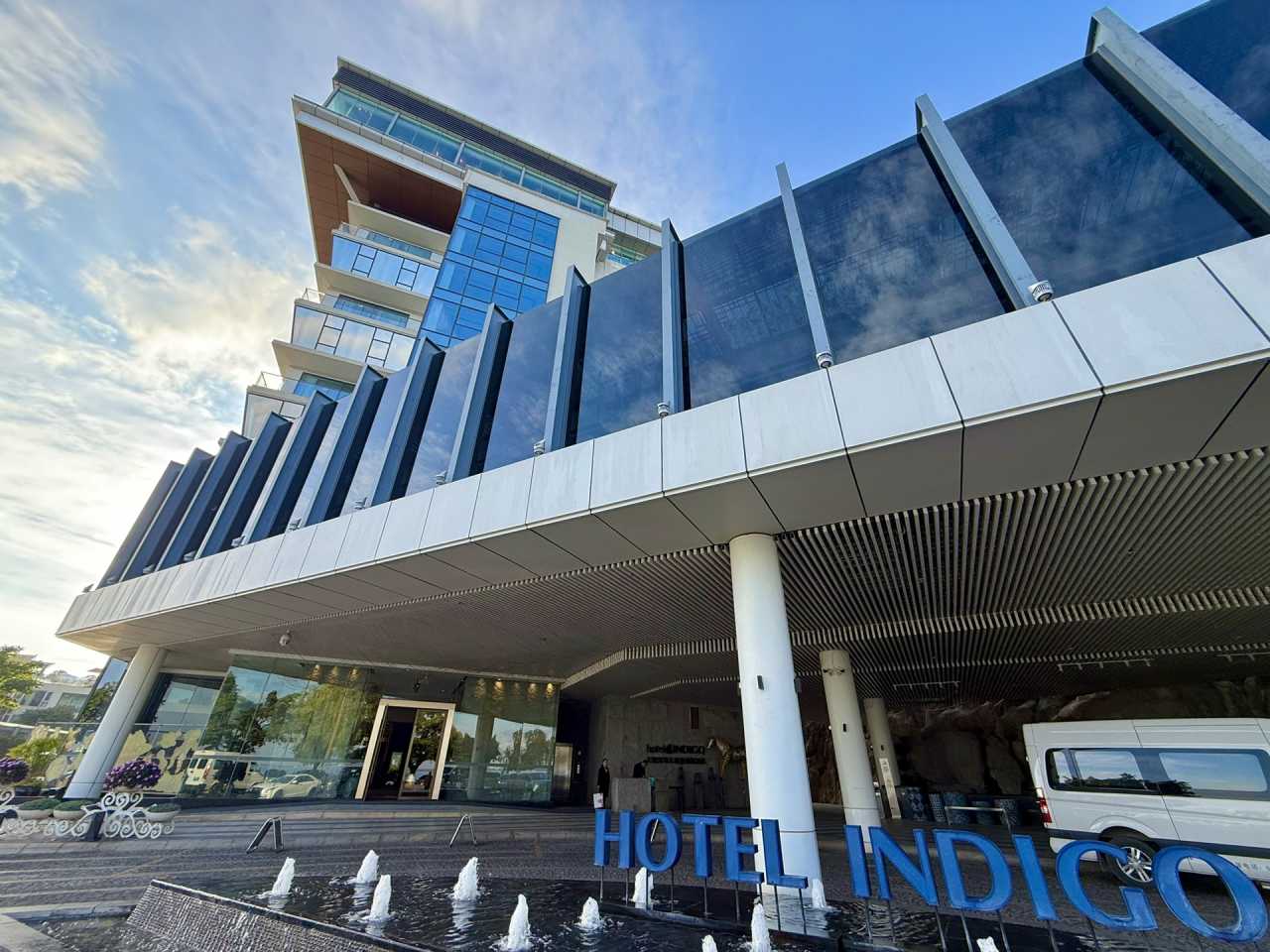
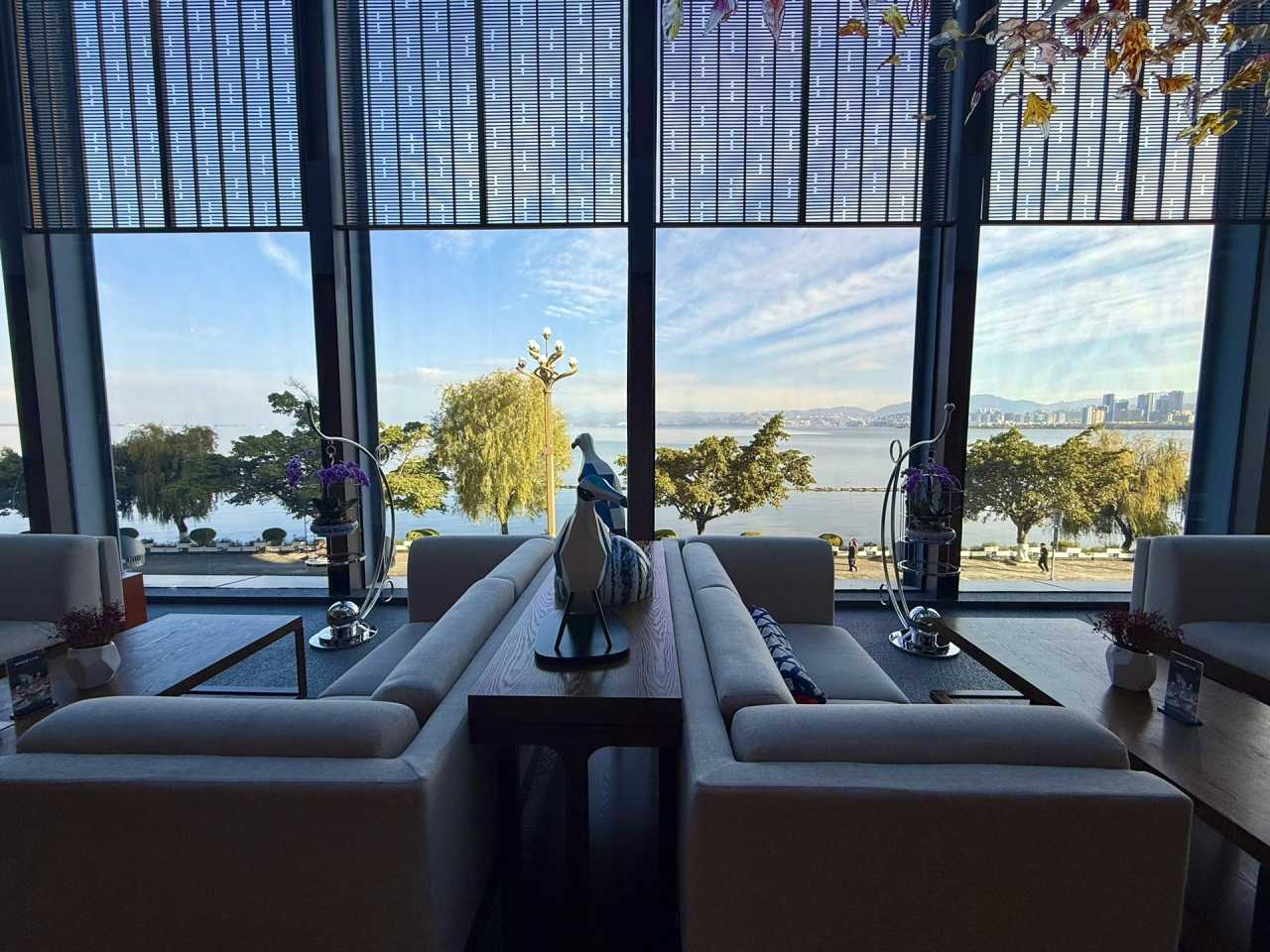
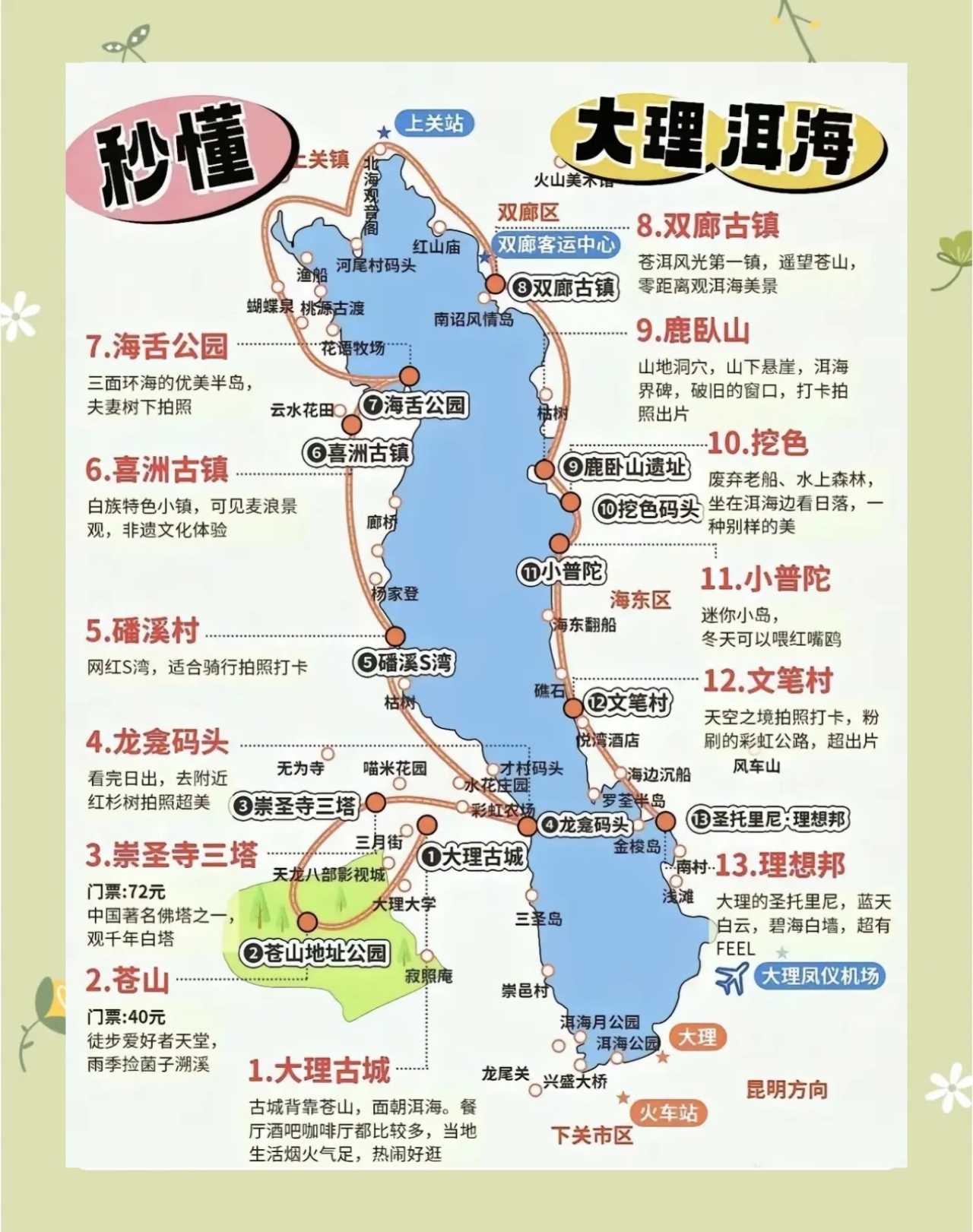
I checked into the Indigo Hotel on Erhai Lake. Although the hotel has been around for a few years, its location is unbeatable—close to both the airport and the high-speed rail station. Turn right out the door, and you're on the west lakeside route; turn left, and you're on the east side. It's practically the "golden starting point" for circling Erhai. I had only booked two nights, but at the front desk, I extended my stay on the spot and found it cheaper than any online platform. Traveling in the off-season—this trick really works.
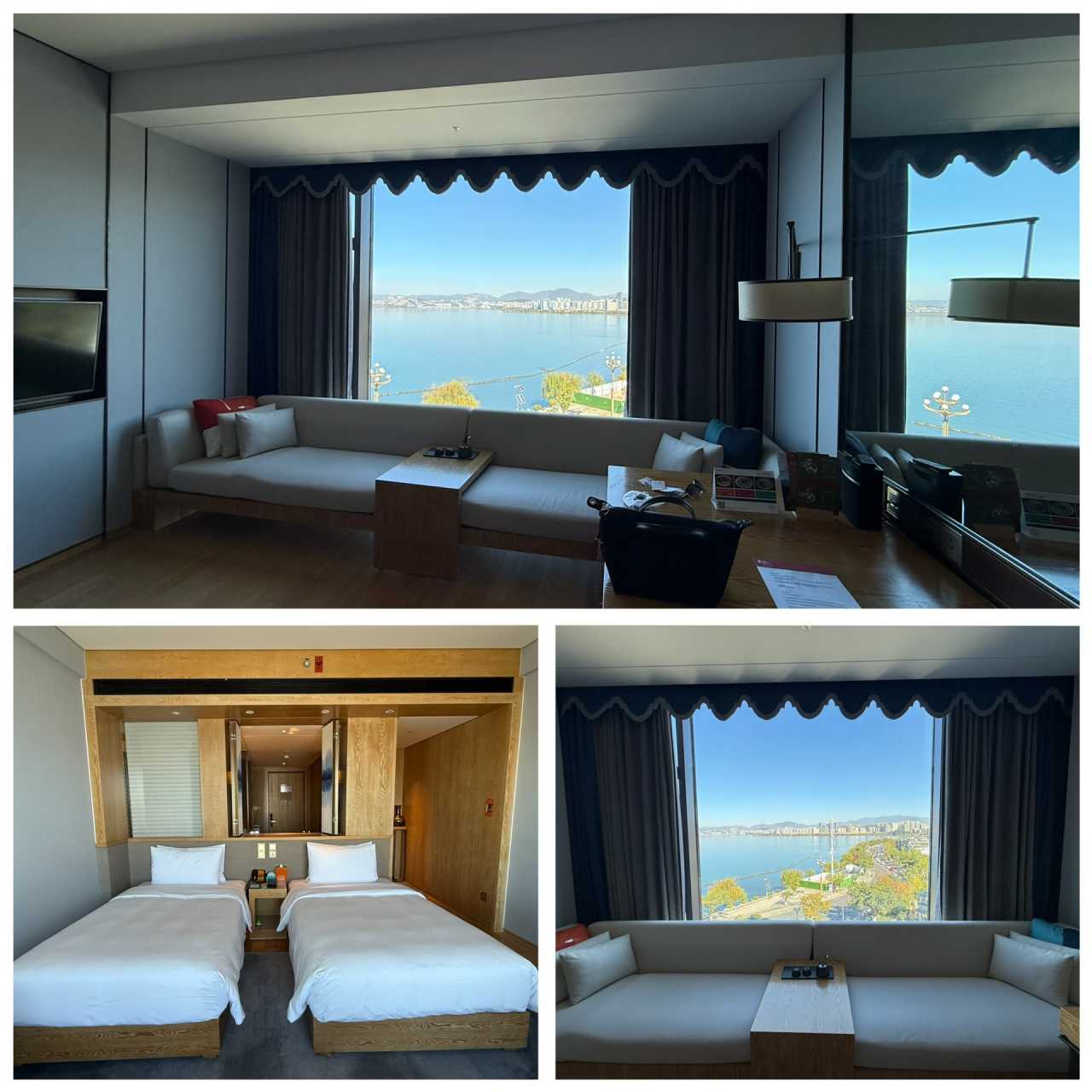
The sea-view twin room wasn't large, and the beds were a bit small, but it had a spacious sofa. Whether lying on the bed or the sofa, you face Erhai Lake directly. Being surrounded by that blue water instantly relaxed me, even in my sick state. The first thing I did after arriving at the hotel was—lie flat. I slept from afternoon until dusk, as if trying to sleep off all the fatigue and fever of the past few days.
Day 2: The West Lakeside Route—A Slow Stroll from Yangnanxi to Caicun
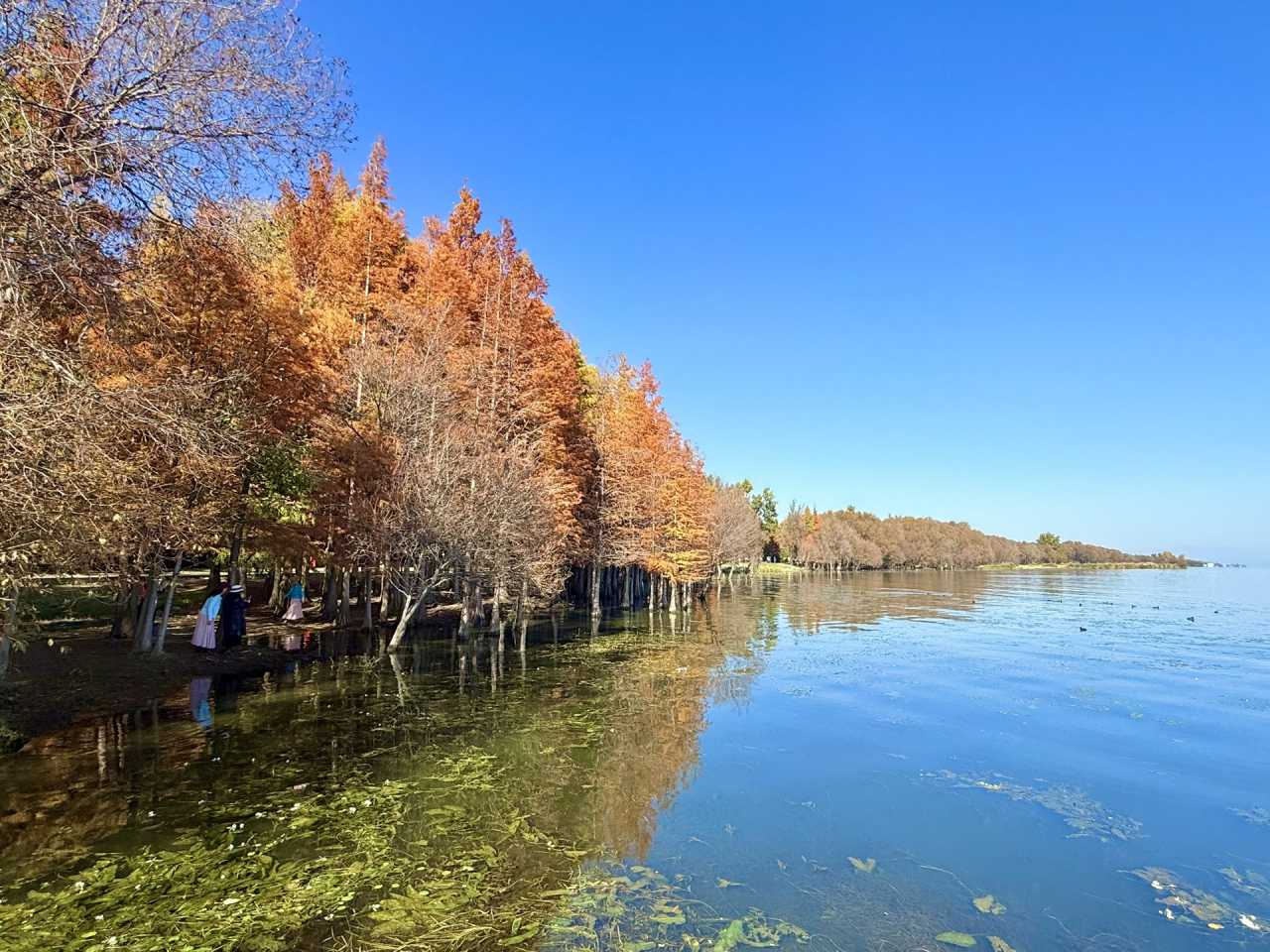
When I woke up the next day, I still felt a bit weak, but sunlight streamed through the curtains, and the air carried the dampness of Erhai Lake, tempting me to go out for a walk. After breakfast, I studied the Erhai map and decided to start my day at Yangnanxi, the beginning of the ecological corridor.
Yangnanxi: An Unexpected Delight at the Starting Point
When I took a taxi to Yangnanxi, I was still debating whether to take the eco-shuttle. But then I thought, since I can always wave down a ride if I get tired, why not just walk first? Unexpectedly, this section from the starting point became my favorite part of the entire trip. Few people, stunning scenery—every step revealed a different view of Erhai Lake. I walked, stopped, took photos, and before I knew it, two hours had slipped by.
Sansheng Island: An Afternoon Break at Xindi Café
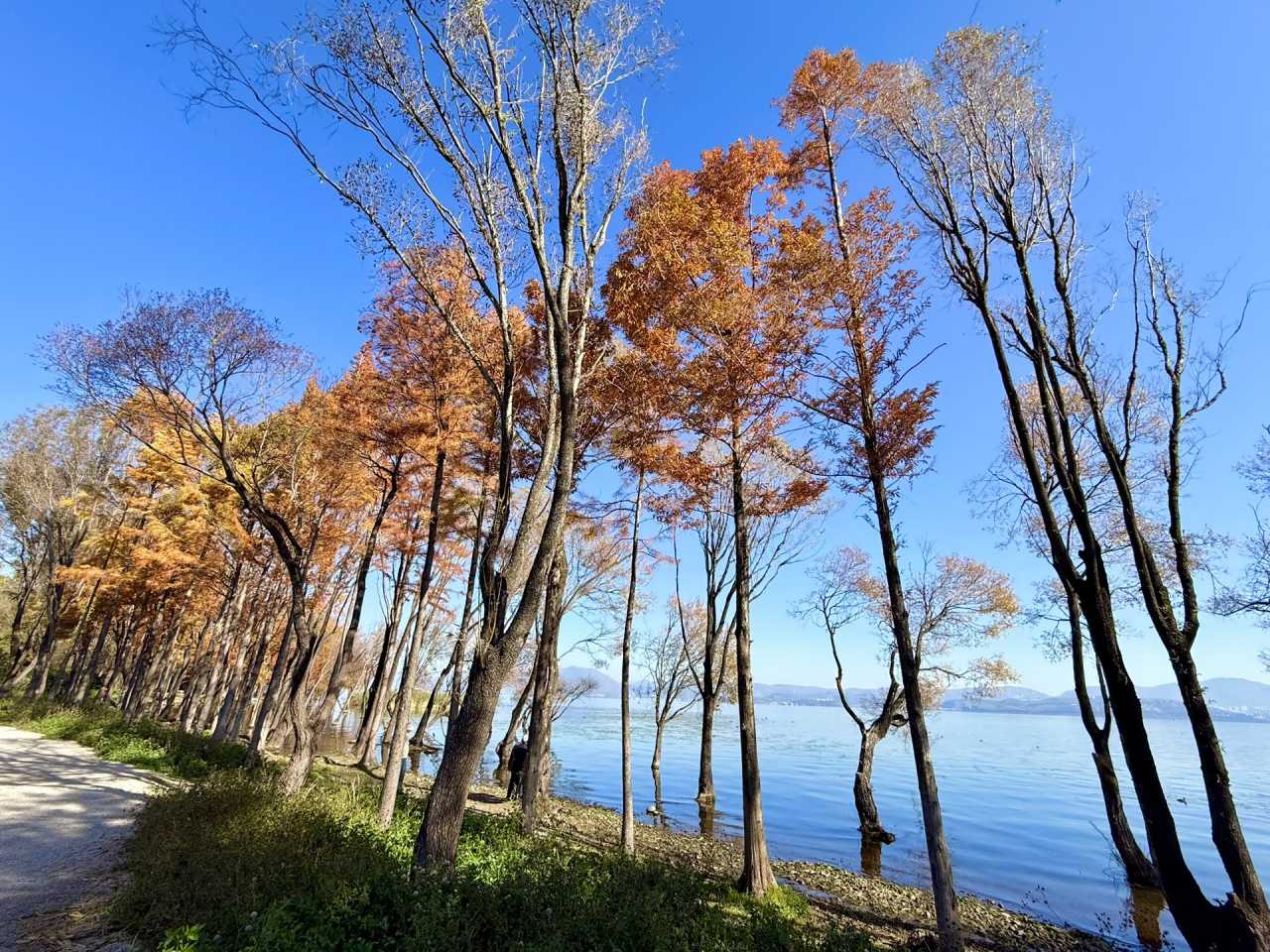
When I got tired, I waved down the eco-shuttle and got off at Sansheng Island. By then, I could already see quite a few black-headed gulls. They strolled leisurely by the lakeside, occasionally flapping their wings and taking flight, adding a touch of liveliness to the calm water.
Xindi Café is the landmark here. The café is spacious and atmospherically decorated, with plenty of young women taking photos for social media. I found a seat by the window, ordered a coffee, and called it lunch. The ecological corridor I'd walked earlier was very quiet, but here, I finally felt the "human touch."
Longkan Pier and Caicun: From Bustle to Tranquility
I continued on the eco-shuttle to Longkan Pier—one of the best spots to watch the sunrise over Erhai. The crowds were noticeably thicker here. I snapped a few quick photos and hurried on to the next stop, Caicun.
Starting from Caicun, the number of tourists dwindled. From here, you could continue the west lakeside tour to Xizhou Ancient Town or the S-bend. But since I still wasn't fully recovered, I decided to call it a day and took a taxi to Dali Old Town for dinner.
Dali Old Town: A Slow Meal in the Courtyard of Meizijing Restaurant
Old towns are the kind of places where you think, "Since I'm here, I might as well take a look." During the off-season, Dali Old Town wasn't crowded. I wandered around casually before ducking into a small alley to find Meizijing Restaurant (梅子井酒家).
This restaurant is tucked away in an old courtyard house. Sitting in the courtyard, surrounded by the scent of flowers, sipping a glass of the house-made plum wine (梅子酒), time seemed to slow down. After dinner, I left the old town through the Erhai Gate and headed back to the hotel as night fell. This was just the beginning of my first day's journey.
Day 3: Chartered Car on the West Lakeside—Heading to the Place Where the Wind Blows
I booked a chartered car on Fliggy (飞猪) yesterday. In the off-season, a five-seater car for 9 hours a day costs only 240 RMB—an absolute steal. Today's plan was to visit Chongsheng Temple and finish the remaining part of the west lakeside route. With plenty of time to spare, I also squeezed in the complimentary photoshoot the hotel offered.
The Windy Courtyard: When a TV Drama Comes to Life

The drama Meet Yourself (去有风的地方) put Dali on the map for many, and it's one of the few Chinese TV series I've actually finished. Fengyangyi, a small village hidden along the ancient Tea Horse Road, sits with its back to Cangshan Mountain and faces Erhai Lake, preserving its old cobblestone streets. The Windy Courtyard (有风小院) is here, and these days, you can't get in without a reservation.
Stepping into the courtyard, every scene felt so familiar it was almost disorienting—as if Liu Yifei might walk out from some corner at any moment. After the photoshoot, we continued on our way.
Chongsheng Temple and the Three Pagodas: Dali's Only 5A Scenic Spot
Chongsheng Temple is Dali's only 5A-rated scenic area. We opted for the electric cart to get around. The weather was impossibly good—the ginkgo trees blazed yellow, the sky was a crystal-clear blue, and everything looked just perfect. We had a vegetarian meal at the temple. It wasn't the famous vegetarian meal at Jizhao Nunnery on Cangshan, but it was still quite good.
The S-Bend and Xizhou: Checking In and Wandering Around
The S-bend is a must-visit spot on the west lakeside. Even though we'd already done the photoshoot earlier, I couldn't resist snapping a few more pictures by the roadside. My friend's photography skills were, shall we say, "basic," but in Yunnan, every spot is a photographer—point and shoot, and you get a masterpiece.
Xizhou Ancient Town is a Bai ethnic settlement, well-preserved with many traditional Bai houses. The most distinctive building looks a bit like a Bai version of the Wukang Building in Shanghai, with crowds of tourists taking photos at its entrance. The wheat fields had just been harvested, and the little train had turned into a "muddy little train," but the town's lively, down-to-earth atmosphere was still endearing.
Dali West Lake: An Unexpected Surprise
I hadn't originally planned to visit Dali West Lake, but our chartered car driver thought we had too much time on our hands and recommended this place at the source of Erhai Lake. It was nearly dusk, yet the sun was still blazing. On the lake, there was no one else besides the two of us. We took a small boat rowed by a Bai woman and drifted slowly across the water—it turned out to be the best experience of the day.
Day 4: The East Lakeside Route—Jinsuo Island, Shuanglang, and Sunset at Wenbi Village
Today, we continued with the chartered car to explore the east lakeside route. I'd only planned for Shuanglang Ancient Town, Xiaoputuo, and Wenbi Village, but the driver thought it was too relaxed and recommended Jinsuo Island.
Jinsuo Island: A Mix of Man-Made and Natural
When we arrived at Jinsuo Island, I found that the tour groups waiting for the ferry outnumbered all the tourists I'd seen in the past few days combined. The ferry schedule was chaotic. Now that my cold had finally cleared up, I thought, "Since I'm here, I might as well go," and boarded the island. The island featured man-made karst caves, Bai ethnic song-and-dance performances, and that网红 (internet-famous) panoramic view of "Dali's Santorini." I took a quick stroll around—well, I was here.
Shuanglang Ancient Town: Slow Time at a Lakeside Restaurant
Shuanglang is completely different from Xizhou. Surrounded by mountains on three sides and facing water on one, the lakeside restaurants and guesthouses here boast the most beautiful views of the lake. I found a lakeside restaurant, ate and drank, fed the seagulls, and whiled away the afternoon in blissful idleness.
The Sun Palace (太阳宫) is almost impossible to get into with a free reservation, but money can solve that problem. However, since I'd just eaten, I wasn't in the mood for afternoon tea, so I just took a photo at the entrance. In the middle of town, we stumbled upon a traditional wedding banquet. The ancient nunnery square was packed with bustling crowds, and a line from a poem came to mind: "The finest flavor in the world is simple joy; nothing beats the warmth of everyday life."
Xiaoputuo and Wenbi Village: Seagulls and Sunset
Leaving Shuanglang, we passed by Xiaoputuo, which was buzzing—not with tourists, but with seagulls. At Wenbi Village, we drove up the Rainbow Road to overlook Cangshan Mountain and Erhai Lake, arriving just in time for a romantic sunset.
Days 5-6: Mile—From Dongfengyun to Mile Temple
Leaving Dali, I took the high-speed train through Kunming and arrived at Mile (弥勒) in just over three hours. This county-level city in Honghe Prefecture was even warmer than Dali. After getting off the train, I took a taxi directly to the Meijing Jingge Hotel (美景憬阁酒店) inside the Dongfengyun scenic area.
Dongfengyun: The Artistic Appeal of Red Brick Architecture
The hotel was right inside the scenic area, just a 10-minute walk to the main attractions. The red brick buildings echoed the kaleidoscope structure, with very distinctive architecture. The rooms were spacious, each with a terrace. The hotel's complimentary hot pot set meal was generous and delicious. After eating, I took a walk in the night, enjoying a kind of serene beauty.
Jinshan Mountain Mile Temple: A Pilgrimage Up 1,999 Steps
The next day, I checked out and moved to a hotel near Huquan Ecological Park. In the afternoon, I took a taxi to Jinshan Mountain, where a 19.99-meter-tall statue of Maitreya Buddha was built in 1999. To reach it, you need to climb 1,999 steps. But there's an eco-shuttle to take you up the mountain, and then you can slowly walk down, so it wasn't too tiring.
Fochen Shangdu: The Lively Vibe of a Local Market
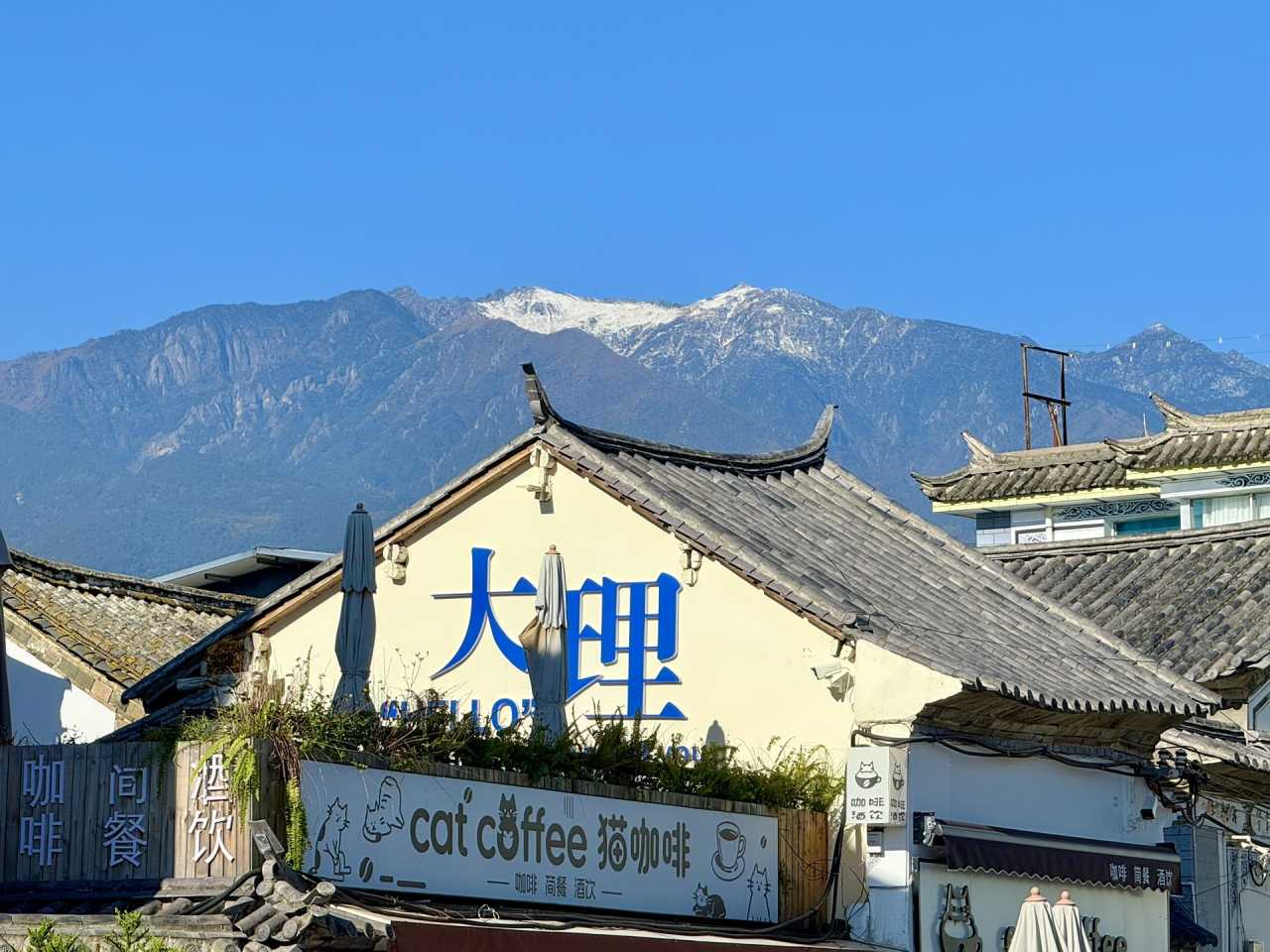
I'd read a quick introduction to Mile and decided to visit Fochen Shangdu (佛城商都). The first floor is a food market and snack stalls, with fruit stalls that looked great for photos. The upper floors selling clothes were skippable. The streets outside had even more snacks. The line for crispy pork was the longest, so my friend immediately joined it—and sure enough, it was delicious.
Days 7-11: Kunming—A Slow Wander from Dianchi Lake to Cuihu Lake
From Mile to Kunming, it's only half an hour by high-speed train. I stayed in Kunming for four nights, moving from the InterContinental Hotel by Dianchi Lake to the Cuihu Hotel by Cuihu Lake, taking it slow all the way.
Haihong Wetland Park: Metasequoia Trees and Black-Headed Gulls
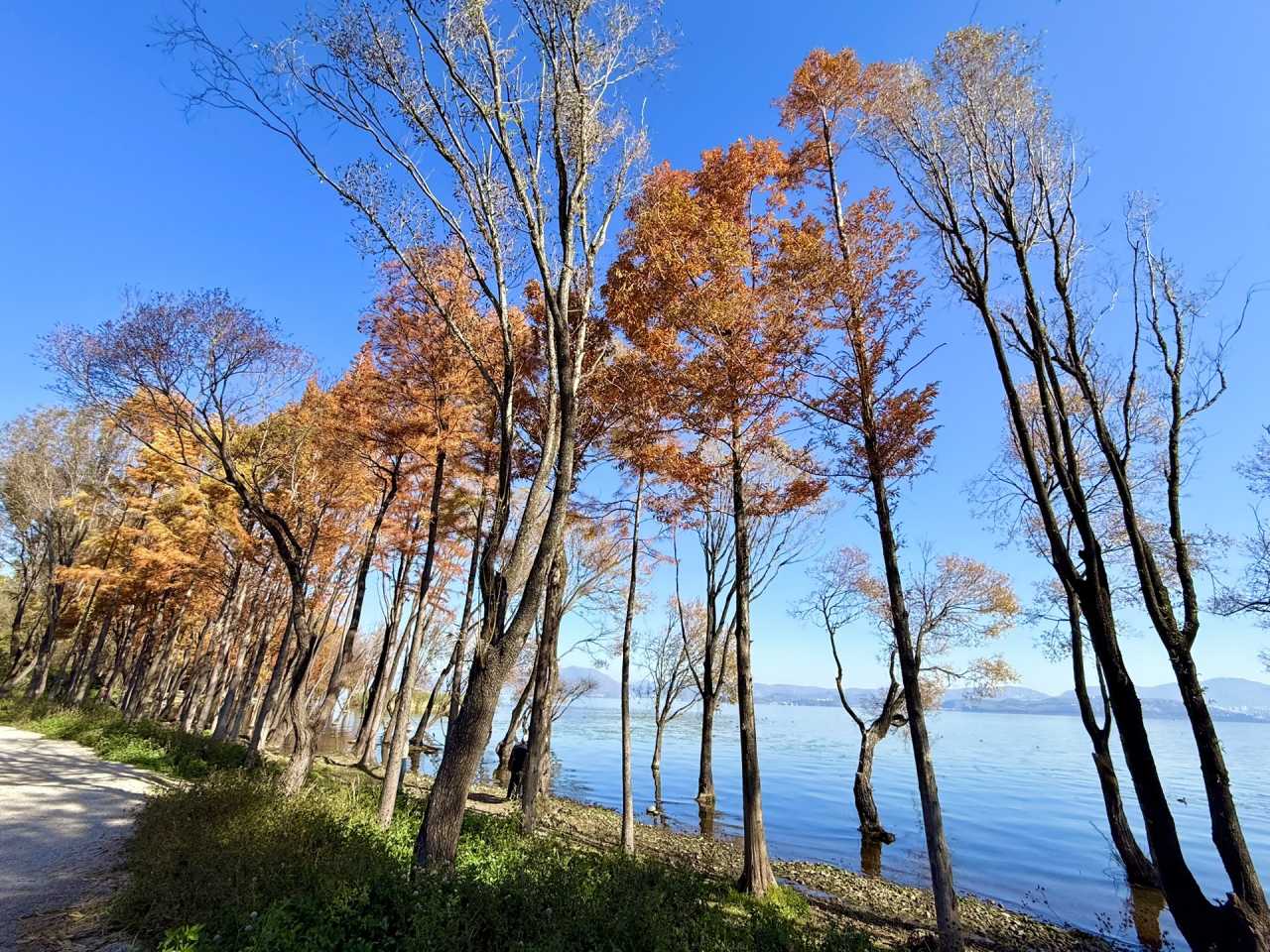
The InterContinental Hotel is huge, with a Southeast Asian-style garden. In the afternoon, I took a taxi to the nearby Haihong Wetland Park, which is planted with large numbers of metasequoia trees. You can even take a transparent boat to glide through the forest. At sunset, black-headed gulls flew over the lake, creating a scene so beautiful it made me forget the time.
Xishan Mountain: A Cable Car Ride with Panoramic Views of Dianchi Lake
The cable car at Xishan Mountain is fantastic—it crosses Dianchi Lake and goes up the mountain, offering stunning views all the way. At the top, there are photo props like a "sky mirror" and a transparent staircase. Since I was there, of course I took some pictures. Outside Taihua Temple, there's a ginkgo tree planted by Emperor Jianwen. Bathed in sunlight, the golden leaves were breathtakingly beautiful.
Wangguan Wetland and Dounan Wetland: Untouched Tranquility
After coming down from Xishan, I went to Wangguan Wetland near Dounan. It's a bit farther out, more pristine, with very few tourists—but you can get close to the seagulls. Walking from Wangguan Wetland to Dounan Wetland, I saw fields of lavender swaying in the wind. It was impossibly beautiful.
Around Cuihu Lake: The Final Stop of a City Walk
On the last day, I started from Cuihu Hotel and walked along Huanggong East Street, the Skywalk, the National Anthem Square, Duoyue Building, Wenmiao Straight Street, all the way to Wenlin Street, lined with golden ginkgo trees. This city walk was the perfect ending to my Yunnan trip.
Epilogue: A Spontaneous Journey, Slow and Leisurely
An 11-day trip through Yunnan—from Dali to Mile to Kunming. No packed itinerary, no must-see attractions, just the spontaneity of "going with the flow" and the ease of "taking it slow." Sometimes, the best trips aren't the ones you plan, but the ones you decide on a whim and take as they come.
If you want to try a trip like this, remember a few things: travel in the off-season and book directly at the hotel—it's often cheaper. Chartering a car isn't expensive, especially in the off-season. You can try a photoshoot, but don't expect too much. And most importantly—bring a good mood, and leave the rest to fate.
After all, the finest flavor in the world is simple joy; nothing beats the warmth of everyday life.
You should also read:
Slow Sounds, Gentle Steps: My Wandering Journey Through Lijiang
Slow Sounds, Gentle Steps: My Wandering Journey Through Lijiang Prologue: A Spontaneous "Red-Eye" Escape Some journeys begin just like Lijiang itself—with a touch of spontaneity and a hint of laziness. Late one Sunday night, I was scrolling through my phone while lying in bed when…
Continue reading...
September: Finding Unexpected Warmth in Yunnan (Kunming, Dali, Shuanglang, Lijiang, Lugu Lake)
September: Finding Unexpected Warmth in Yunnan (Kunming, Dali, Shuanglang, Lijiang, Lugu Lake) Foreword: One Person's Journey, A Crowd's Story Before I set off, like every first-time solo traveler, I printed out a thick stack of travel guides and rehearsed countless possible scenarios in my head—getting…
Continue reading...
A 9-Day Yunnan Journey: From Lijiang to Dali to Tengchong – A Trip Toward Self-Reconciliation
A 9-Day Yunnan Journey: From Lijiang to Dali to Tengchong – A Trip Toward Self-Reconciliation Some say travel is simply going from a place you're tired of to a place other people are tired of. It stings to hear, but it's painfully true. Yet there's…
Continue reading...