A Three-Day Spring Festival Trip to Xishuangbanna: From Rainforest Secrets to Dai Ethnic Charm
A Three-Day Spring Festival Trip to Xishuangbanna: From Rainforest Secrets to Dai Ethnic Charm
Travel has never been just about sleeping and eating in a different place. It’s a conversation with the unknown, a gentle rebellion against the routines of daily life. For the 2025 Spring Festival, I chose to escape familiar Fuzhou and take my entire family to Xishuangbanna — a destination that, on the Spring Festival travel rankings, had even surpassed Sanya as a “dark horse” choice.
Why Xishuangbanna? Because here, there’s not just sunshine, but stories. No matter how blue the sea in Hainan is, you’ll get bored after three days. But Xishuangbanna’s tropical rainforests, Dai temples, exotic cuisine, and cross-border vibes are like a book you can never finish — every page holds a surprise. The choice of 4.0358 million visitors doesn’t lie.
First Stop: Kunming as a Transit Hub, an Unexpected Encounter with Dianchi Lake’s Spirits
Direct flights to Xishuangbanna were painfully expensive, so we opted to transit through Kunming. Little did we know, this “necessary evil” would become an unexpected highlight of the trip.
Haihong Wetland Park: A Winter Romance of Redwoods and Seagulls
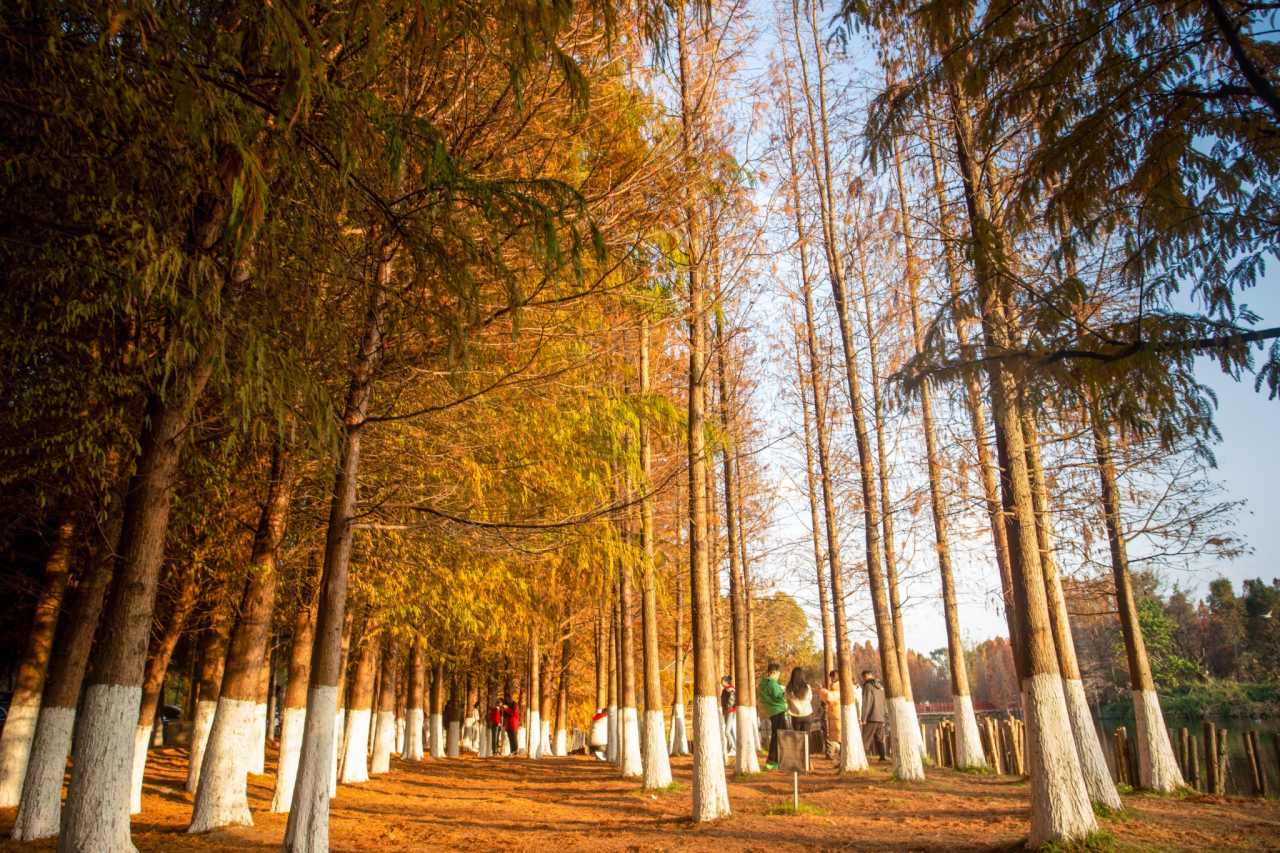
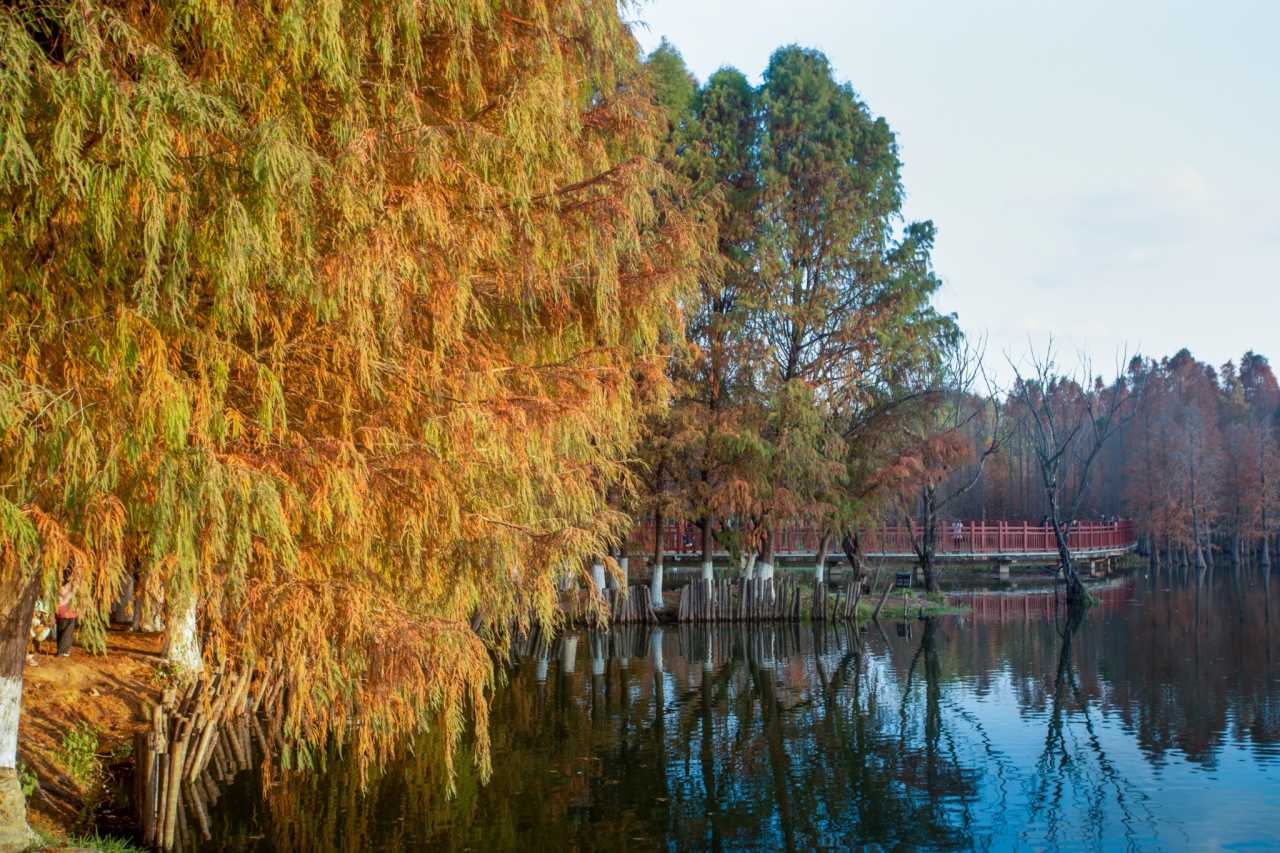
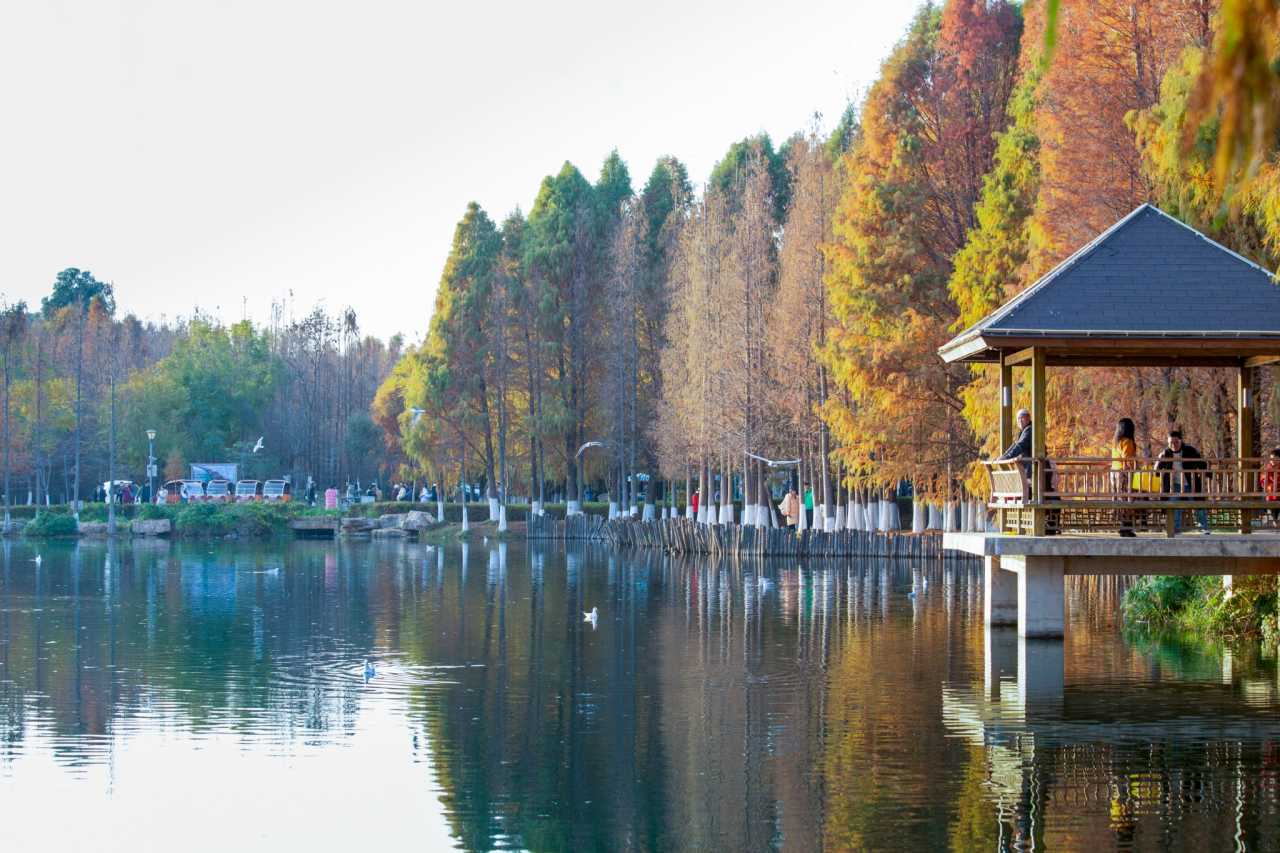
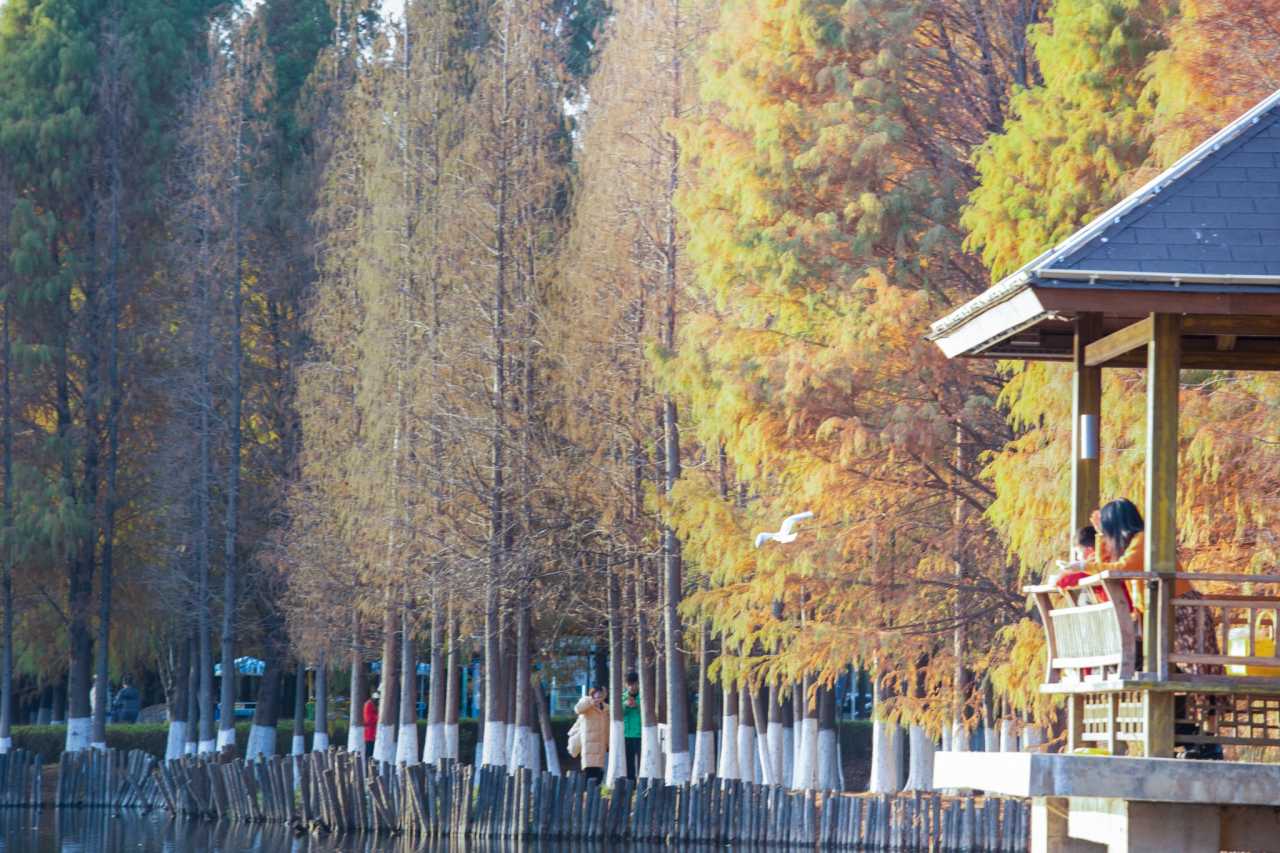
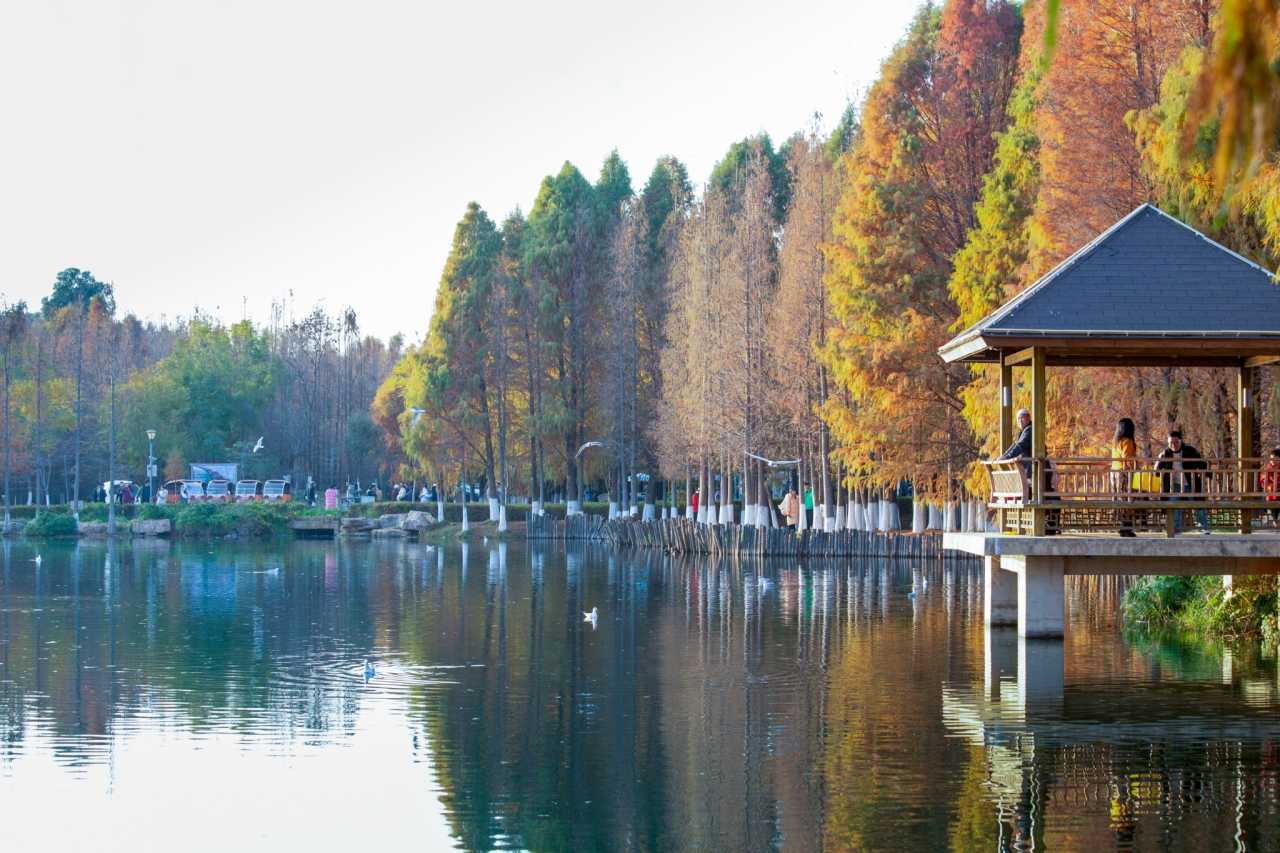
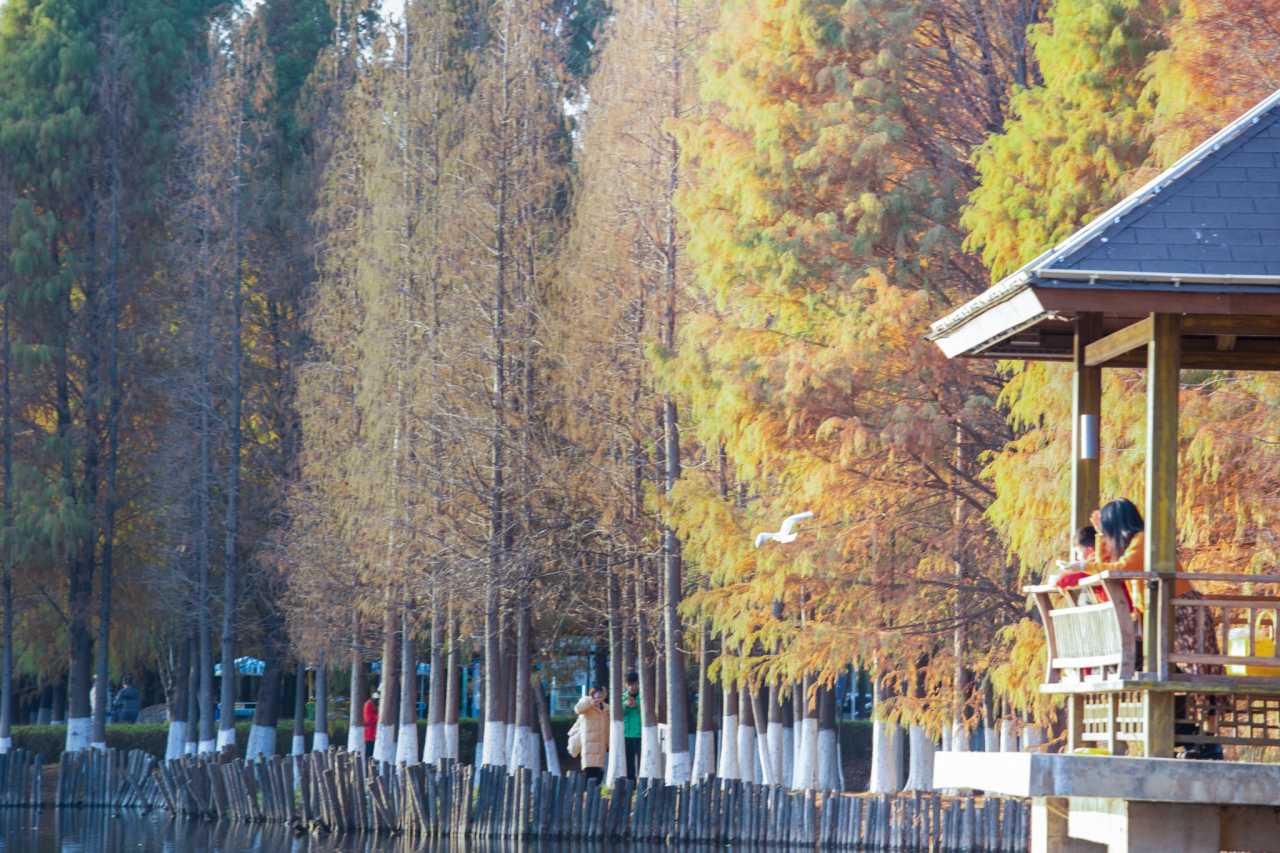
From Kunming Airport, we took the metro straight to Haihong Wetland Park, arriving just before sunset to get up close with the black-headed gulls. In winter, Dianchi Lake comes alive thanks to these white spirits migrating all the way from Siberia. The dawn redwoods at the west entrance were at their peak — a fiery red that intertwined with the white gulls to create an oil painting.
The gulls along the Dianchi Lake shore were overwhelming, circling, diving, and precisely pecking at the bird food held by tourists. Want to capture the perfect photo of a gull snatching food? Good luck. They’re too agile, like a bunch of mischievous kids that fly away the moment you press the shutter.
Fuzhao Lou: A Taste of Yunnan’s Memory
As the sun set, we rode an electric scooter to Fuzhao Lou near Kunming Station. This century-old establishment, founded in 1937, is a representative of traditional Yunnan cuisine. A Bite of China once described its steamed chicken pot (汽锅鸡, qì guō jī) as “a cooking method somewhere between boiling and steaming: the broth turns into steam, rises through the central channel of the pot, condenses in each layer, and turns back into liquid.” Simply put, the steam circulates inside the pot, locking the chicken’s umami into the soup. One sip, and it’s so delicious it makes you want to sigh.
Golden Horse and Jade Rooster Archways and the East and West Pagodas: Echoes of History Before Dawn
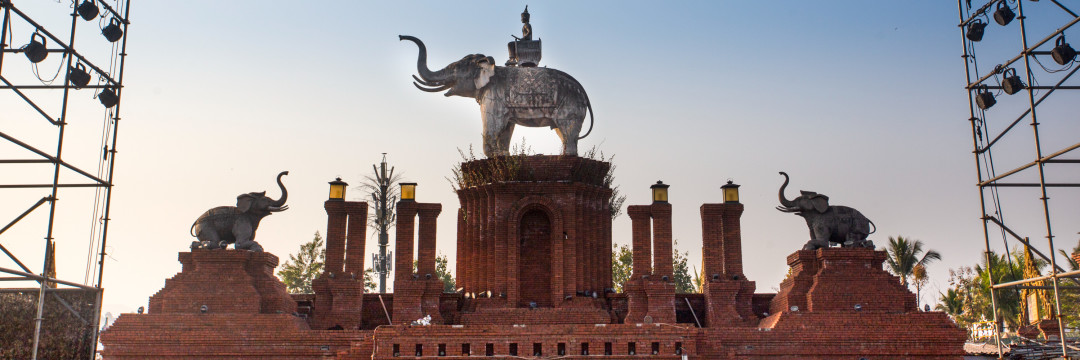
Early the next morning, before departing, we visited two of Kunming’s landmarks. The Golden Horse and Jade Rooster Archways (金马碧鸡坊, jīn mǎ bì jī fāng) sit on the city’s central axis — the eastern arch faces Golden Horse Mountain, the western one faces Jade Rooster Mountain. With intricate carvings and paintings, they are stunningly beautiful. Even though it wasn’t yet fully light, the paintings on the archways still shimmered, as if telling stories of over 400 years of vicissitudes.
Next were the East Pagoda (东寺塔, dōng sì tǎ) and West Pagoda (西寺塔, xī sì tǎ). The West Pagoda was first built during the Nanzhao Kingdom period, standing in silent opposition to the East Pagoda. At the four corners of the East Pagoda’s top sit four copper-plated golden roosters, each holding a copper tube with holes at both ends, containing a metal reed inside. Legend has it that when the wind blew, the reeds would vibrate and produce a pleasant chirping sound — unfortunately, we missed that era.
On the way back to Kunming Station, we passed by Green Lake Park (翠湖公园, cuì hú gōng yuán). This is a popular spot for watching black-headed gulls in winter, but early in the morning, the gulls were still sleeping in — we didn’t see a single one.
Second Stop: First Impressions of Xishuangbanna — A “Second Home” Overrun by Northeasterners
At 8:30 AM, we departed from Kunming Station by intercity train for Xishuangbanna. The carriage was packed, with many people like us — “migratory birds” heading to Banna for the New Year. Later, we heard that self-driving tourists had it worse — the Kunming-Mohan Expressway was gridlocked.
Northeastern Accents in the Guesthouse
Upon arriving in Banna, the first thing was to check into our guesthouse. The residential complex we booked, Wangjiang Yuan (望江苑), was a typical development “taken over” by Northeasterners. From the ride-hailing driver to the auntie selling vegetables at the community gate, everyone spoke with a Northeastern accent. It’s said that developments by Vanke and Century Golden Resources are practically “enclaves” for Northeasterners.
But having Northeasterners dominate Banna wasn’t a bad thing for us. During Spring Festival, a two-bedroom, one-living-room suite cost 1,500 RMB per night, and we could cook our own meals — great value for money. Compared to standard rooms in Gaozhuang West (告庄西, gào zhuāng xī) that easily cost over 1,000 RMB a night, this was a steal.
Gaozhuang West: A Traffic Nightmare

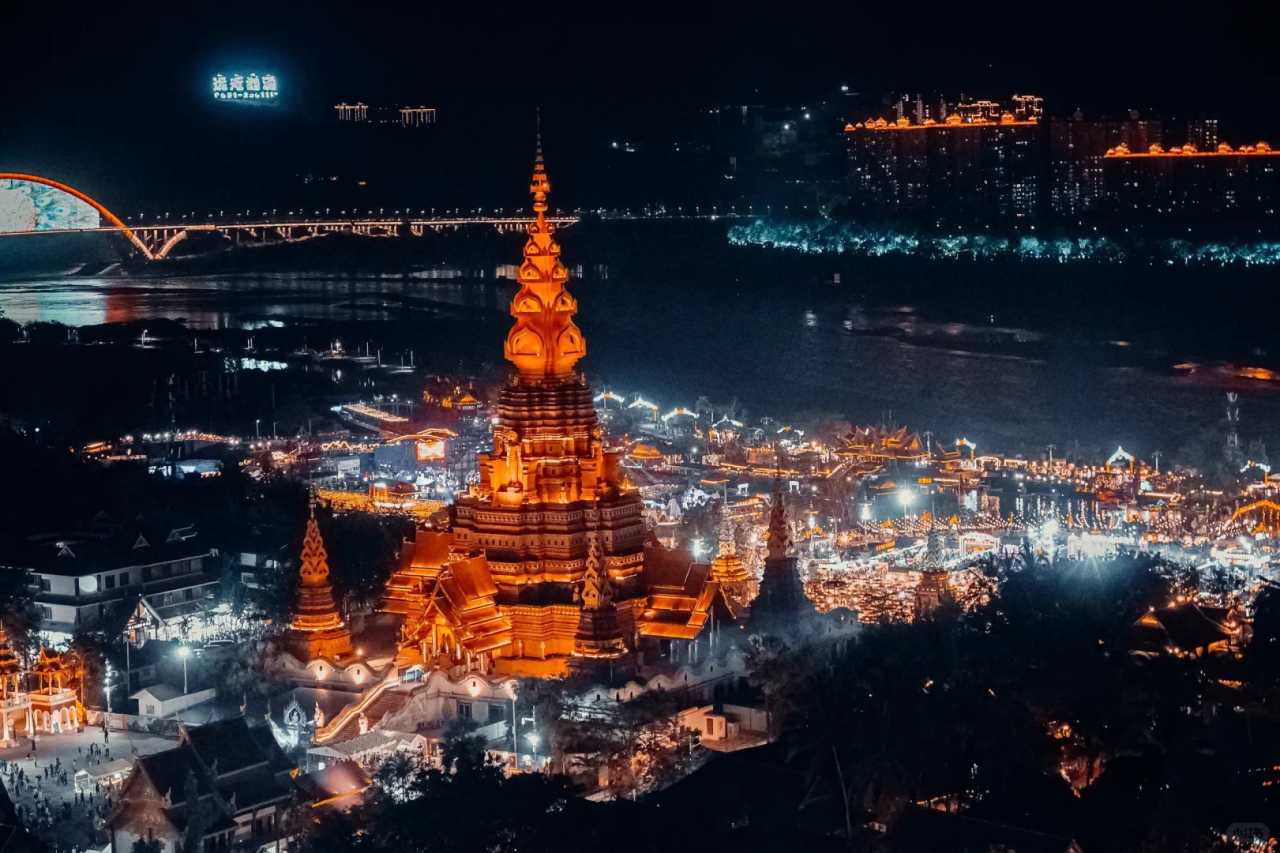
Speaking of Gaozhuang West, I have to rant about its traffic. This is Banna’s largest guesthouse cluster, home to attractions like the Great Golden Pagoda Temple (大金塔寺, dà jīn tǎ sì) and the Starry Night Market (星光夜市, xīng guāng yè shì). But it’s also a major traffic node connecting the city to Kunming, the Botanical Garden, and other spots. Two bridges over the Lancang River converge here, with vehicles and pedestrians intermingling. During holidays, it becomes a massive parking lot. Cars go in but can’t get out — the chaos is unspeakable.
So, my strong recommendation is to stay in Jinghong city center instead. Better value for money and much more convenient for getting around.
Third Stop: Manting Garden and the General Buddhist Temple — Where Faith and Daily Life Intertwine
Around 4 PM, we arrived at Manting Garden (曼听花园, màn tīng huā yuán) and the General Buddhist Temple (总佛寺, zǒng fó sì). These two attractions are right next to each other. The General Buddhist Temple is free, while Manting Garden costs 40 RMB.
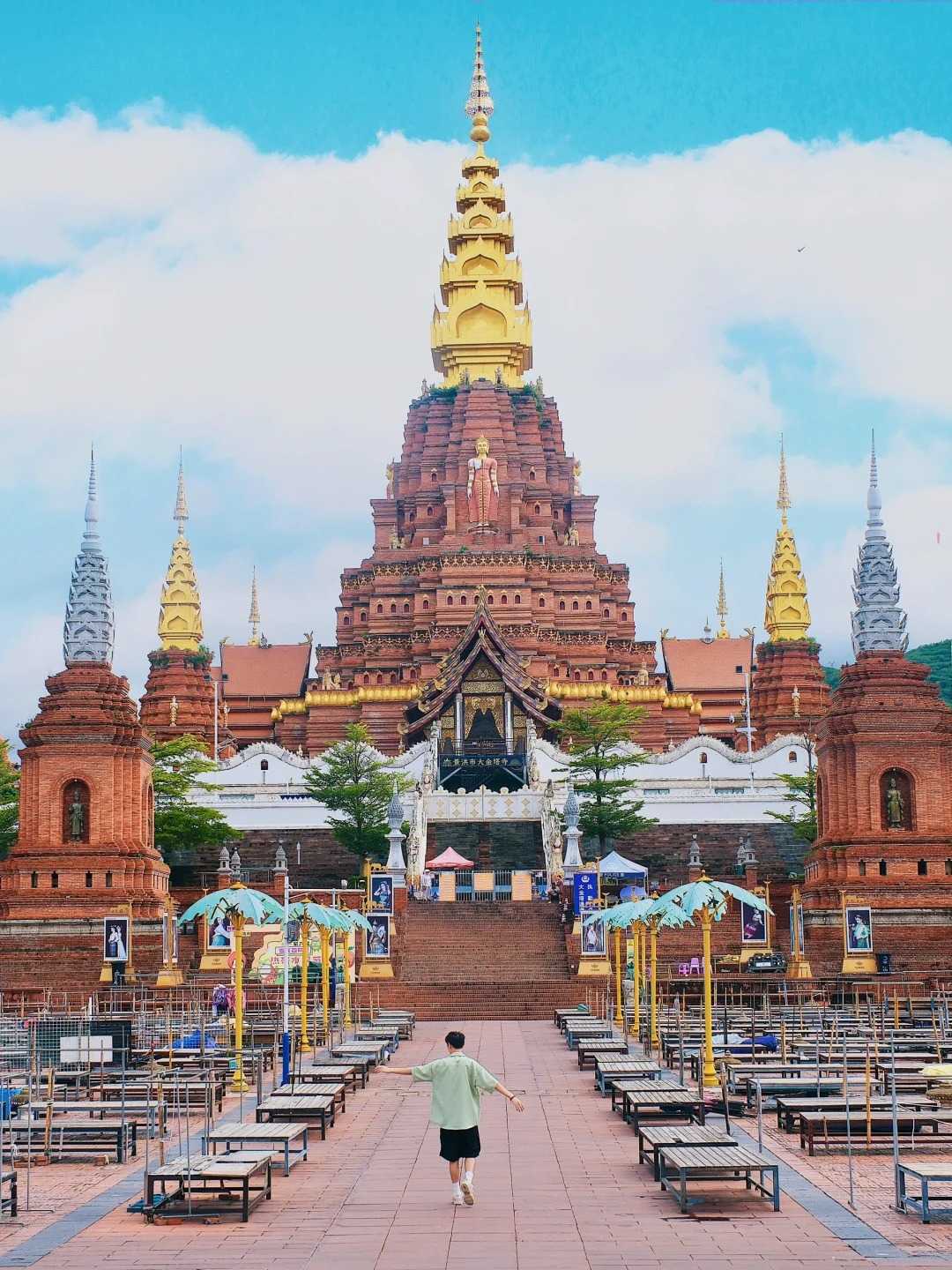
Entering through the General Buddhist Temple, we found tourists everywhere taking photos. Having visited Thailand and Malaysia before, I no longer felt a sense of mystery about Dai-style Buddhist temples. But I have to admit, the architecture here is exquisite — golden pagodas, intricate murals, every detail radiating devotion and craftsmanship.
The kids were tired and didn’t want to go into Manting Garden. I heard that the evening “Lancang River • Mekong River Night” song-and-dance bonfire party is the real highlight, but we missed it.
Riverside Boardwalk: Slow Time Along the Lancang River
After leaving the General Buddhist Temple, we cycled along the riverside avenue. This boardwalk runs along the Lancang River, which originates from the Tanggula Mountains in Qinghai Province, flows through Tibet and Yunnan, and after leaving China, is renamed the Mekong River. It stretches about 4,880 kilometers in total. The section within Jinghong city, about 25 kilometers long, is one of the most beautiful parts of the Lancang.
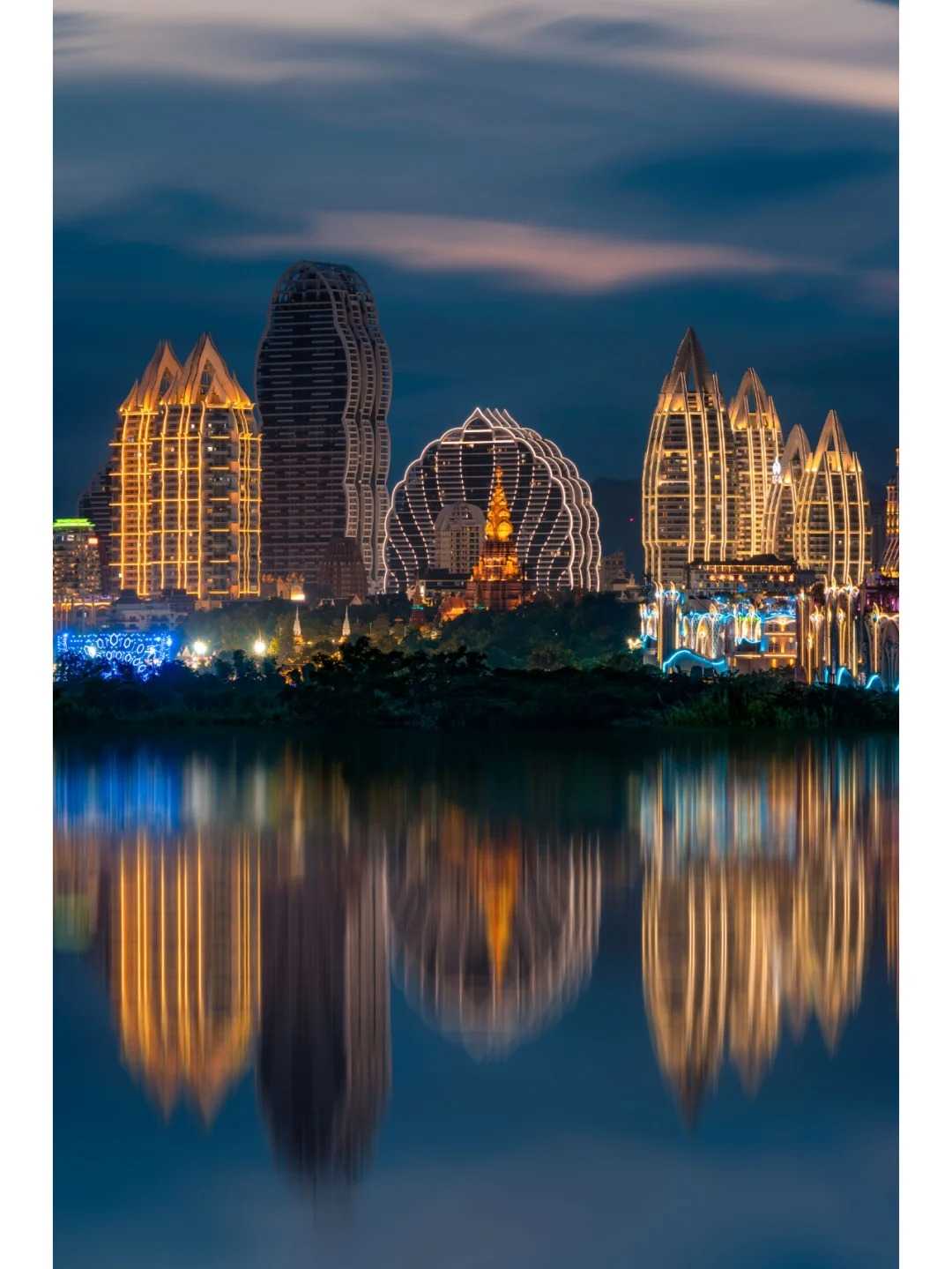
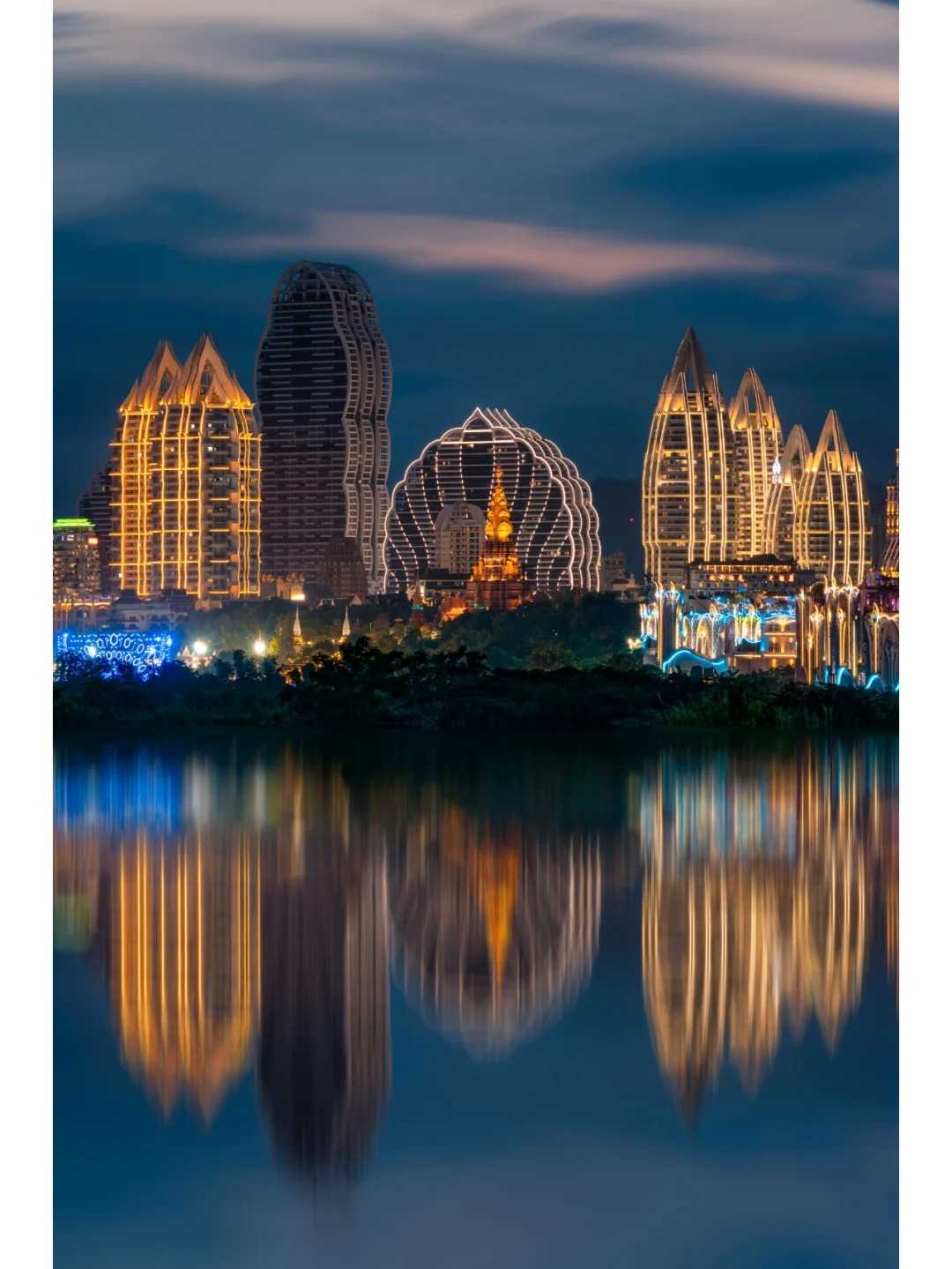
Across the river, in Gaozhuang West, the Peacock Building occasionally peeked out from behind the treetops, reflected in the clear water. In the distance, the red Liming Bridge arch stood out brilliantly under the setting sun. The arch was decorated with 2025 New Year greetings, exuding warmth in the twilight.
Back at Wangjiang Yuan, looking out the window, the new city of Jinghong was lit up with countless lights — a scene of peace and harmony.
Day Four: Zipping Through the City by E-Scooter, Five Attractions in One Day
In downtown Xishuangbanna, the most convenient mode of transport is the electric scooter. Shared scooters and rentals are both available. If you need to hop between multiple attractions, renting one for 80 RMB a day is excellent value.
Zoo: The Joy of Feeding Elephants and Giraffes
The Xishuangbanna Wildlife Zoo (西双版纳野生动物园, xī shuāng bǎn nà yě shēng dòng wù yuán) is a compact zoo covering only 40 mu (about 2.7 hectares), with an admission fee of 40 RMB. But don’t underestimate it — the variety of animals is impressive: two tigers (one of them a white tiger), four lions, two giraffes, two hippos, two kangaroos… plus flamingos, cranes, and macaws in the bird park.
What attracts kids the most is the chance to feed the elephants, giraffes, and alpacas. Arriving around 9 AM is best, as the animals are having breakfast and are more active. There’s also a small playground at the zoo entrance where kids can play a bit longer.
Tropical Flower Garden: A Visual Feast of Exotic Plants and Fruits
The Tropical Flower Garden (热带花卉园, rè dài huā huì yuán) covers 120 hectares and is home to over 1,000 species of tropical plants. Admission is 40 RMB, and the electric cart costs 30 RMB per person.
As soon as we entered, the guide introduced the “see-blood-seal-throat tree” (见血封喉树, jiàn xuè fēng hóu shù) — a highly toxic plant. Its milky sap, if it enters a wound, can cause cardiac paralysis, blood vessel blockage, and death by suffocation. Just hearing the name sent a chill down my spine.
Next was the Premier Zhou Enlai Memorial Monument, commemorating the 1961 meeting between Premier Zhou and the Prime Minister of Myanmar at this very spot. Opposite was the Egg Flower Garden (鸡蛋花园, jī dàn huā yuán). Although it wasn’t blooming in winter, the gnarled tree crowns were quite peculiar.
In the tropical fruit zone, the electric cart whizzed by while the guide rattled off facts. We listened, mostly confused. In the end, the only fruits we remembered were jackfruit and durian — since there were no fruits on the trees in winter, it was all too abstract.
In the palm grove, a kid found a coconut and was overjoyed, clutching it like a treasure all the way.
Manhena Ancient Village: A Dying Dai Settlement
In the afternoon, we headed to Manhena Dai Ancient Village (曼贺纳傣族古寨, màn hè nà dǎi zú gǔ zhài). Founded in 780 AD, the name means “the village on top of the fields.” Historically, the villagers provided pottery and tobacco pipes to the ruling lords.
But today, the ancient village is surrounded by high-rise buildings, right next to Vanke Poly and the InterContinental Hotel. The only relatively traditional structure left is the clan temple on the hill behind. Commercialization has stripped away its original character. After a quick walk around, we felt it was nothing special.
Riverside Night Market: The Bustle of Everyday Life
That evening, we visited the Riverside Night Market (江边夜市, jiāng biān yè shì). Xishuangbanna has two famous night markets: the Starry Night Market and the Riverside Night Market, both along the Lancang River, facing each other across the water. The Riverside Night Market stretches about 2 kilometers, offering a dazzling array of food, trinkets, and clothing.
The most eye-catching were the fruits — beyond the usual mangoes, bananas, mangosteens, and durians, there were some I’d never seen before. One fruit was covered in spikes, reportedly very sour, requiring honey to be edible. The Dai-style cold dishes were both sour and spicy — I gave up after a few bites.
Day Five: Jinuo Mountain Rainforest Trek — The Wildest Experience
On the third day, we chose a rainforest hike on Jinuo Mountain (基诺山, jī nuò shān). This is a relatively new activity that has become popular recently, far more interesting than the overcrowded attractions like the Botanical Garden or Wild Elephant Valley.
Trekking Through the Rainforest: The Earth in Its Most Primitive Form
We opted for a 5-person private group organized by Youle Mysterious Rainforest Hiking Cultural Company (悠乐神秘雨林徒步文化公司, yōu lè shén mì yǔ lín tú bù wén huà gōng sī). We set off at 10 AM, with a guide from the Jinuo ethnic group who knew the rainforest inside out.
Before entering, the guide explained safety precautions and basic skills. Then we began stream trekking. Along the way, we saw tropical rainforest wonders: buttress roots, epiphytic and parasitic plants, flowers blooming on old trees, and strangler fig phenomena. Towering trees intertwined with babbling streams, making us feel like we had stepped into the world of Avatar.
At noon, we enjoyed a Jinuo-style feast at a rainforest camp. After lunch, we tried a rainforest swing, caught fish and crabs in the stream, collected rainwater, and climbed and rappelled down a giant banyan tree. The kids had a blast.
In the afternoon, we hiked about 1 kilometer uphill, exiting the rainforest to reach the pick-up point. Then we visited an old Jinuo village to experience the ancient craft of spinning thread and weaving cloth, a tradition passed down for millennia.
Boruo Temple: A Pure White Sanctuary in the Morning Light
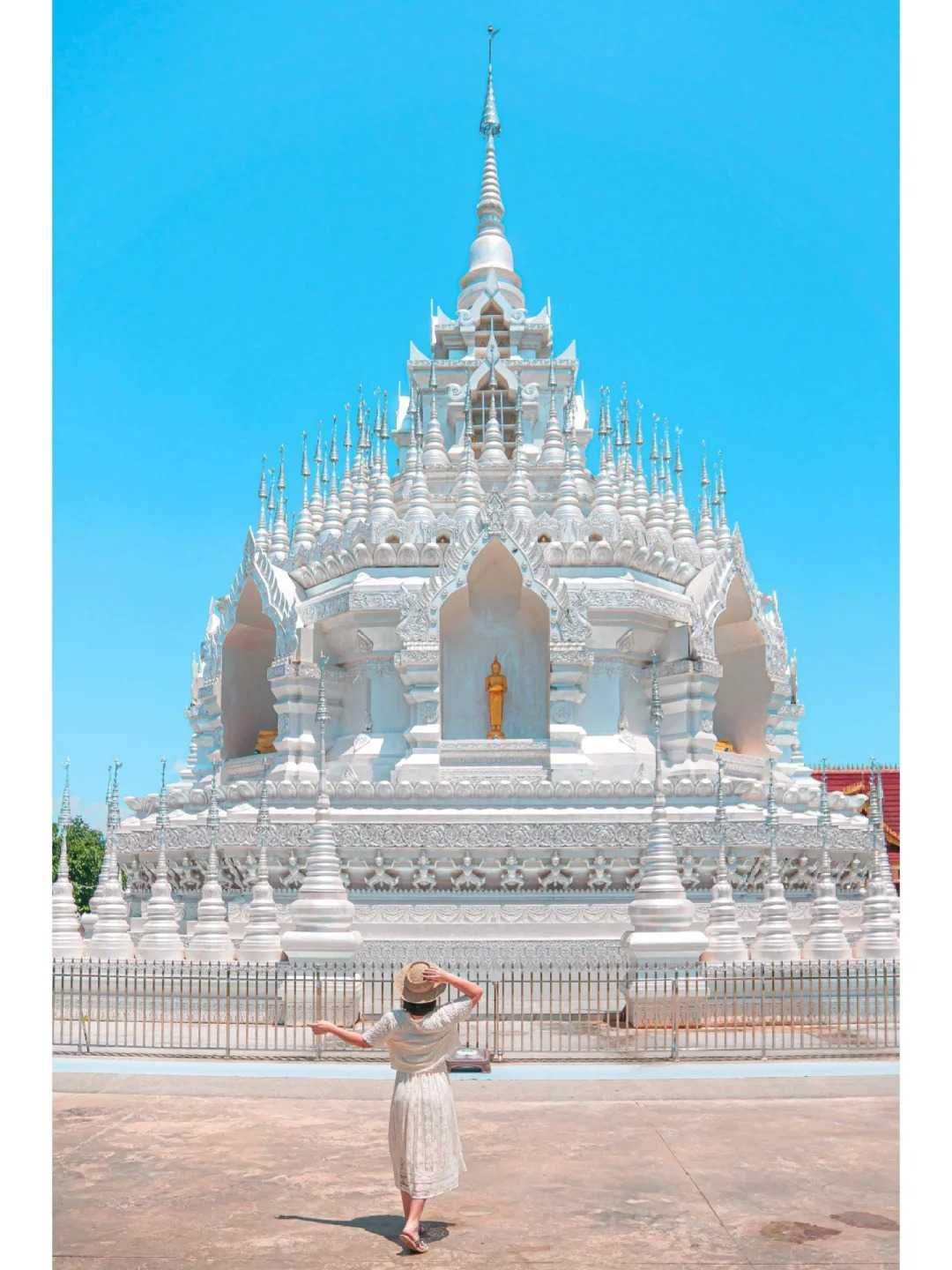
Before heading into the rainforest, I rode my scooter alone to Boruo Temple (般若寺, bō rě sì). In the early morning, the first rays of sunlight fell on the silver-white pagoda, making it look sacred and majestic. This pagoda, blending Han, Dai, and Burmese architectural styles, shimmered in the sun. Its pure white body symbolizes the purity and liberation of the soul.
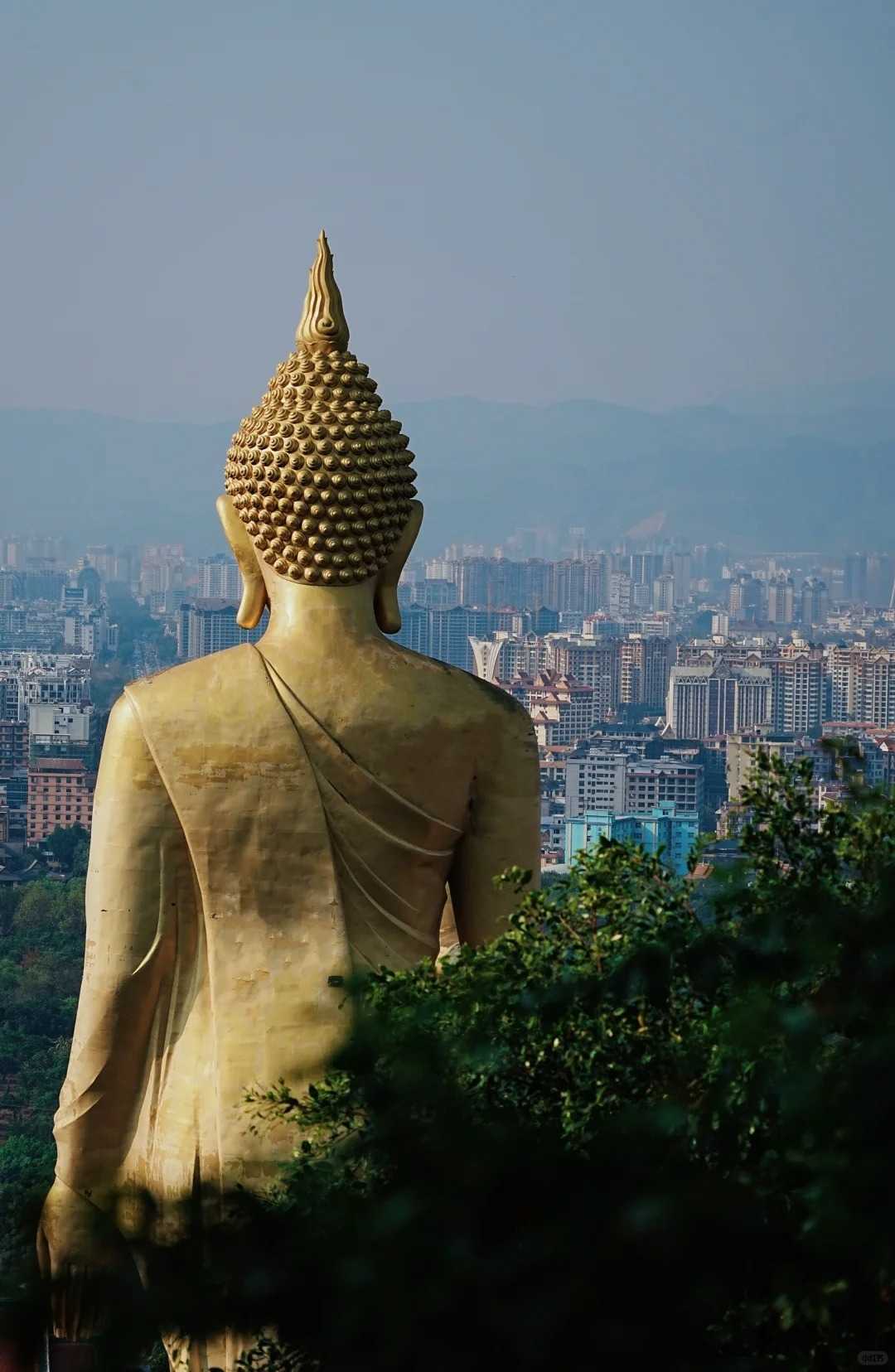
Boruo Temple sits on Little Elephant Mountain (小象山, xiǎo xiàng shān). From the top, you can take in the entire beauty of Xishuangbanna: dense tropical rainforests, winding rivers, and scattered villages — everything in perfect harmony.
Great Golden Pagoda Temple: A Morning Pilgrimage Away from the Crowds
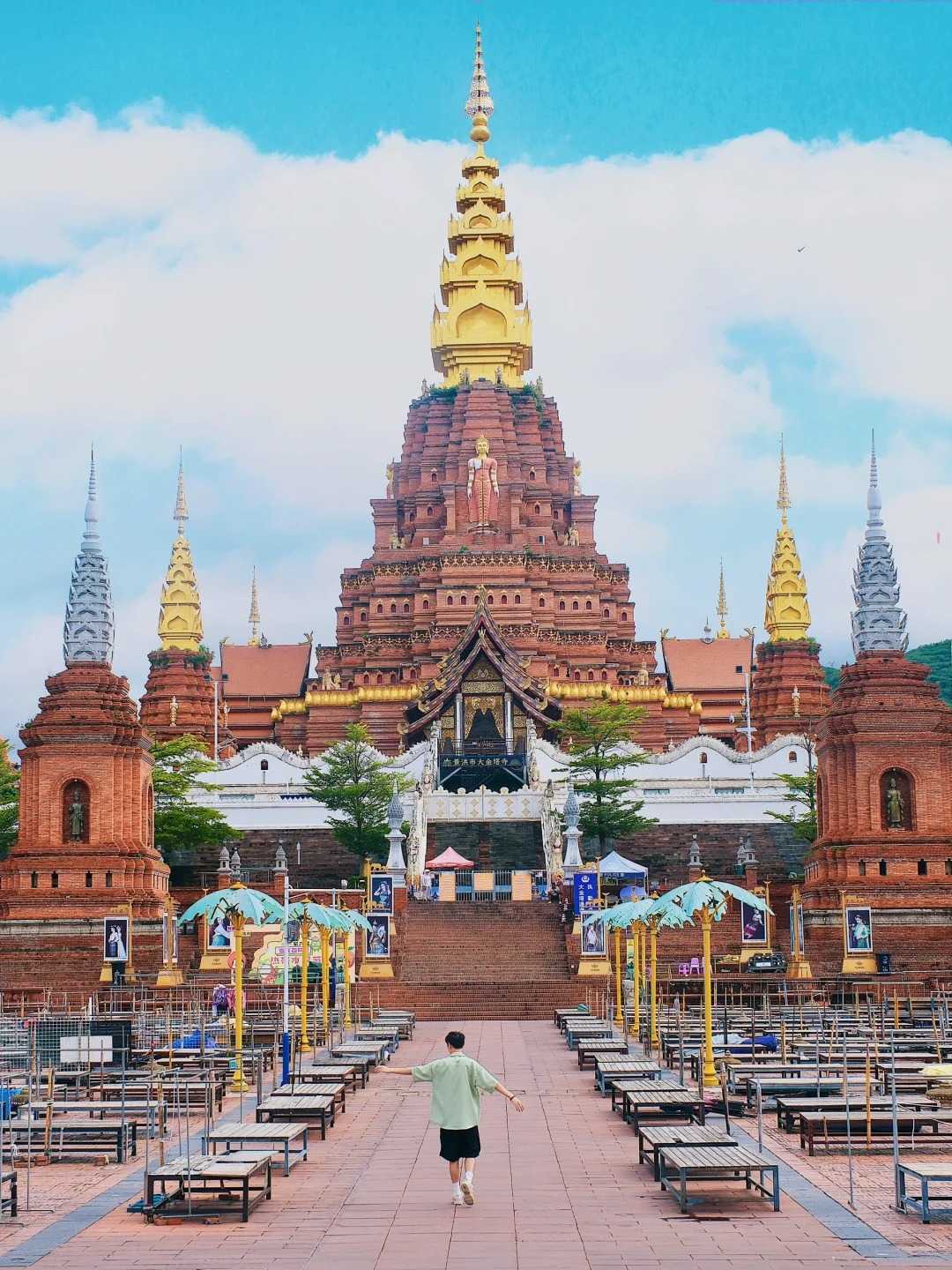
After leaving Boruo Temple, I drove to the Great Golden Pagoda Temple (大金塔寺, dà jīn tǎ sì) in Gaozhuang West. Before 10 AM, it was still quiet, without the daytime crowds.
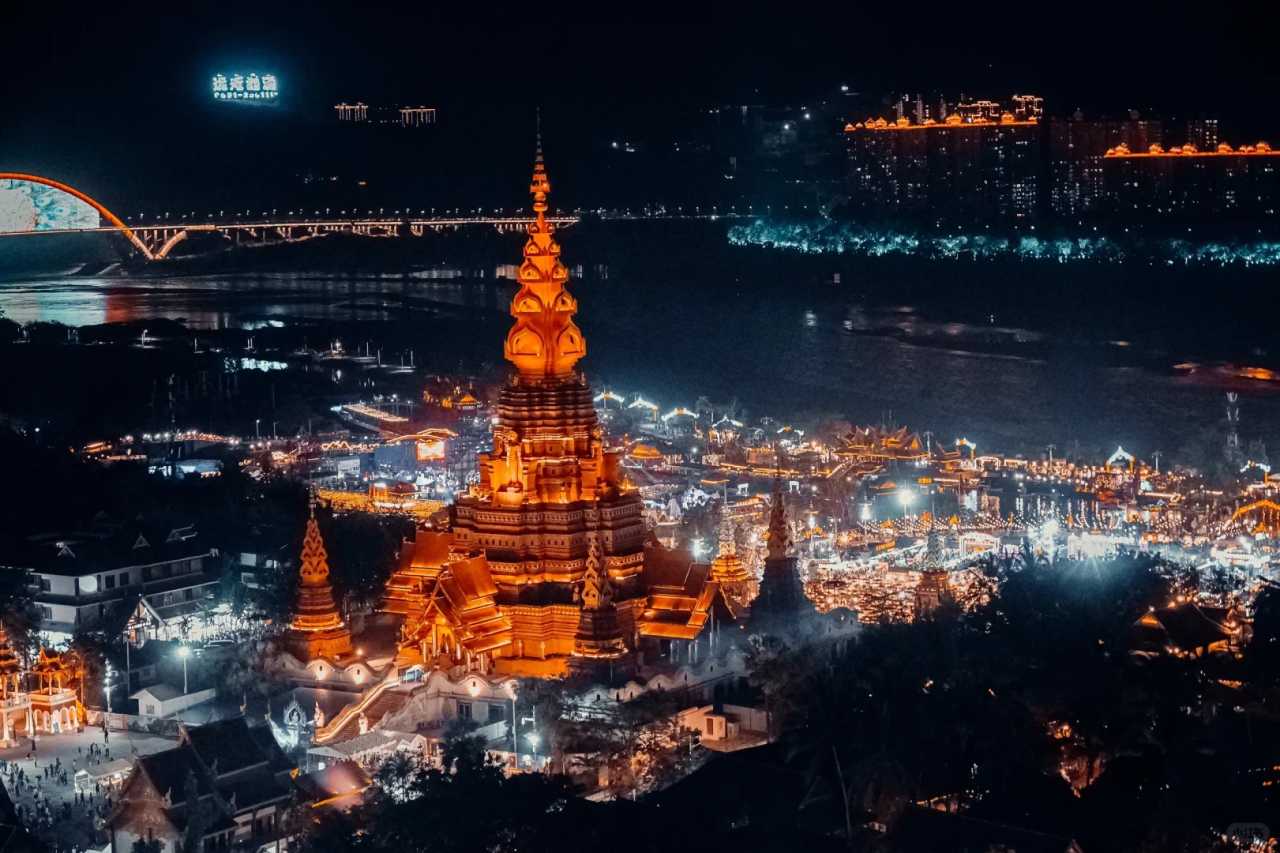
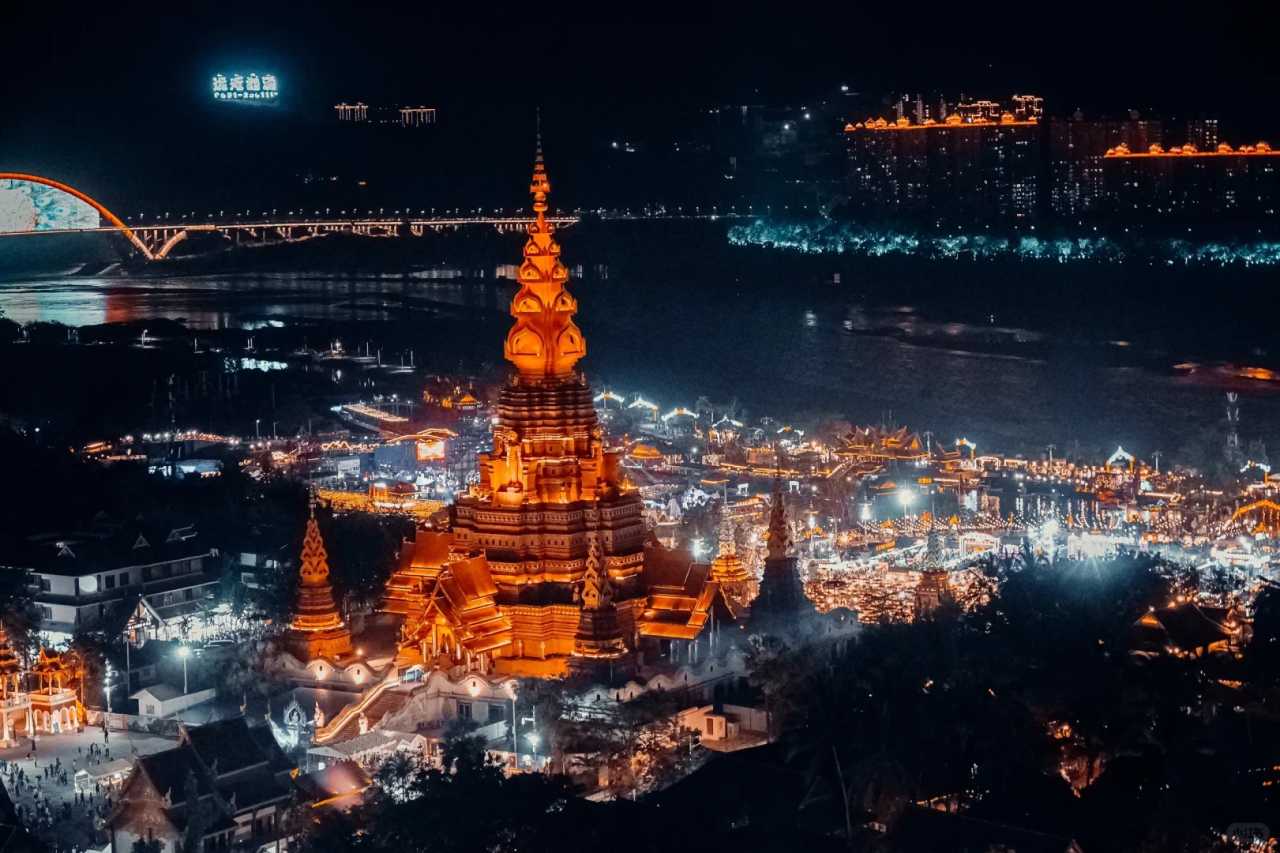
The main pagoda of the Great Golden Pagoda Temple stands 66.6 meters tall, symbolizing “one river connecting six countries” — the six nations the Lancang-Mekong River flows through. The base is a square, 30 meters per side; the body is circular, 18 meters in diameter; and the spire is shaped like a lotus flower. Surrounding it are four solid smaller pagodas, representing Kengtung in Myanmar, Kengrai and Chiang Mai in Thailand, and Luang Prabang in Laos.
On the riverside in front of the Great Golden Pagoda Temple lies the Starry Night Market. Though it was still early morning, I could already imagine the dazzling lights and lively bustle that would come at nightfall.
Conclusion: Xishuangbanna — More Than Just a Place to Escape the Cold
Three days of travel, from Kunming to Banna, from city parks to primeval rainforests, from Dai temples to Jinuo villages — Xishuangbanna, with its diversity and inclusiveness, gave me a perfect Spring Festival trip.
It lacks the monotony of Sanya but offers richer cultural landscapes. It has none of the northern cold but is filled with a warmer, more vibrant energy. Whether it’s the bonfire party at Manting Garden, the clamor of the Riverside Night Market, or the raw mystery of the Jinuo Mountain rainforest — every place leaves you wanting more.
If you’re also planning a trip to Xishuangbanna, remember a few key points: stay in the city center, not Gaozhuang West; rent an electric scooter for the easiest travel; and for rainforest trekking, always hire a professional guide. And most importantly — bring a heart willing to explore. Because the stories here are far more exciting than any travel guide can capture.
You should also read:
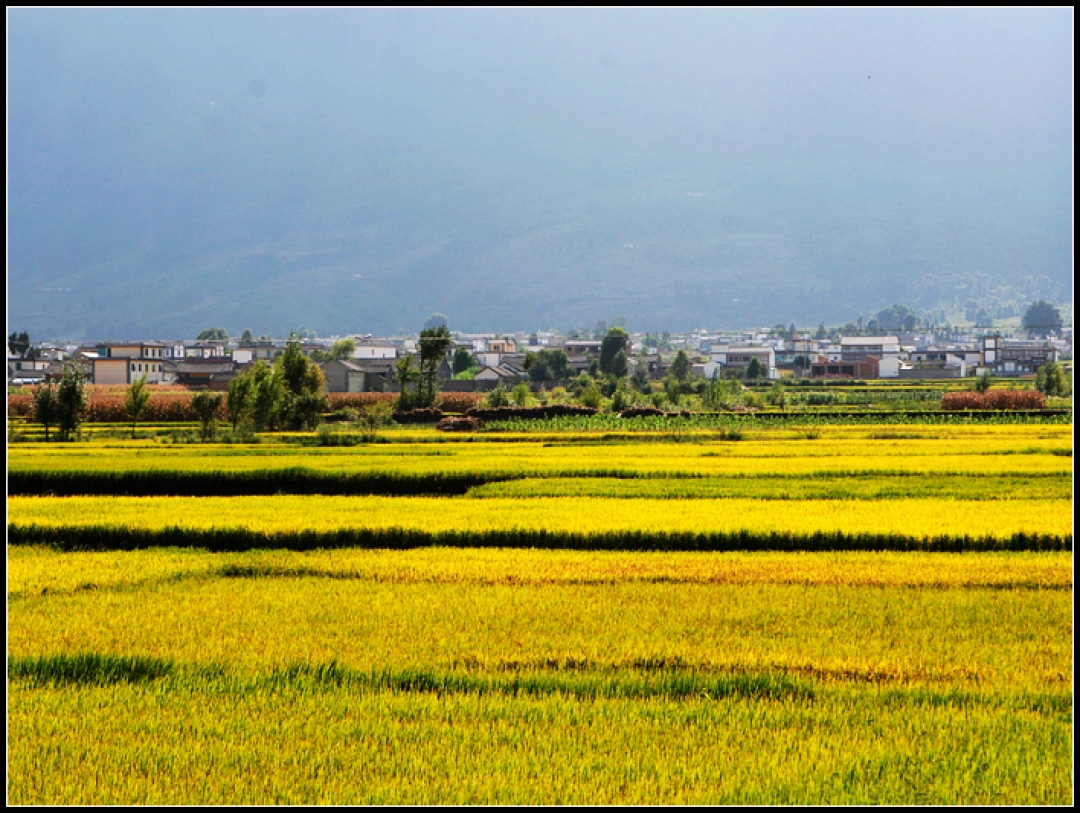
A 9-Day Yunnan Journey: From Lijiang to Dali to Tengchong – A Trip Toward Self-Reconciliation
A 9-Day Yunnan Journey: From Lijiang to Dali to Tengchong – A Trip Toward Self-Reconciliation Some say travel is simply going from a place you're tired of to a place other people are tired of. It stings to hear, but it's painfully true. Yet there's…
Continue reading...
Yunnan Travel Mastery: From Beginner to Pro-Level Player – A Complete Guide
Yunnan Travel Mastery: From Beginner to Pro-Level Player – A Complete Guide "Either travel or read, but your body and soul must be on the road." This quote has been repeated countless times, but very few people truly manage to be "on the road" and…
Continue reading...
Solo in Yunnan: A Wanderer’s Guide to the Land of Eternal Spring
Solo in Yunnan: A Wanderer’s Guide to the Land of Eternal Spring There’s something magical about traveling alone. No compromises, no schedules to keep, no one to please but yourself. I’ve been on the road for nearly three months now, and not once have I…
Continue reading...