A Three-Inch Slice of Time in the Palm of My Hand — A Dali Journal

A Three-Inch Slice of Time in the Palm of My Hand — A Dali Journal
Prologue: When Travel Becomes a Ritual
In an era dominated by short videos and fragmented notes, writing a full-length travelogue feels almost out of step with the times. People have grown accustomed to distilling a city's soul into a 15-second clip, declaring a trip complete with a nine-grid photo collage. But for me, travel has never been a game of check-ins. It is a ritual to be treated with reverence.
Just like Mr. Bean and I — every time we set off, we stubbornly lug our bulky DSLR, packed with telephoto, wide-angle, and prime lenses. In a world where a phone can produce stunning images, this insistence seems a bit clumsy. But this is our way of documenting the world — capturing light and shadow through the lens, preserving warmth with words.
2019 was a difficult turning point in my life. I said goodbye to too many things I cherished, moved to a strange city alone, and started over. That year, my heart was flooded with negative emotions. I, who used to fall asleep the moment my head hit the pillow, became an insomniac tossing and turning all night. Yet I still believed in beauty, still longed for my heart to become clear again. Dali was the soft beam of light that streamed into that dark time.
Travel doesn't change anything. It's just a small waystation on the road of life. But sometimes, a single waystation is enough to give us the strength to set off again.
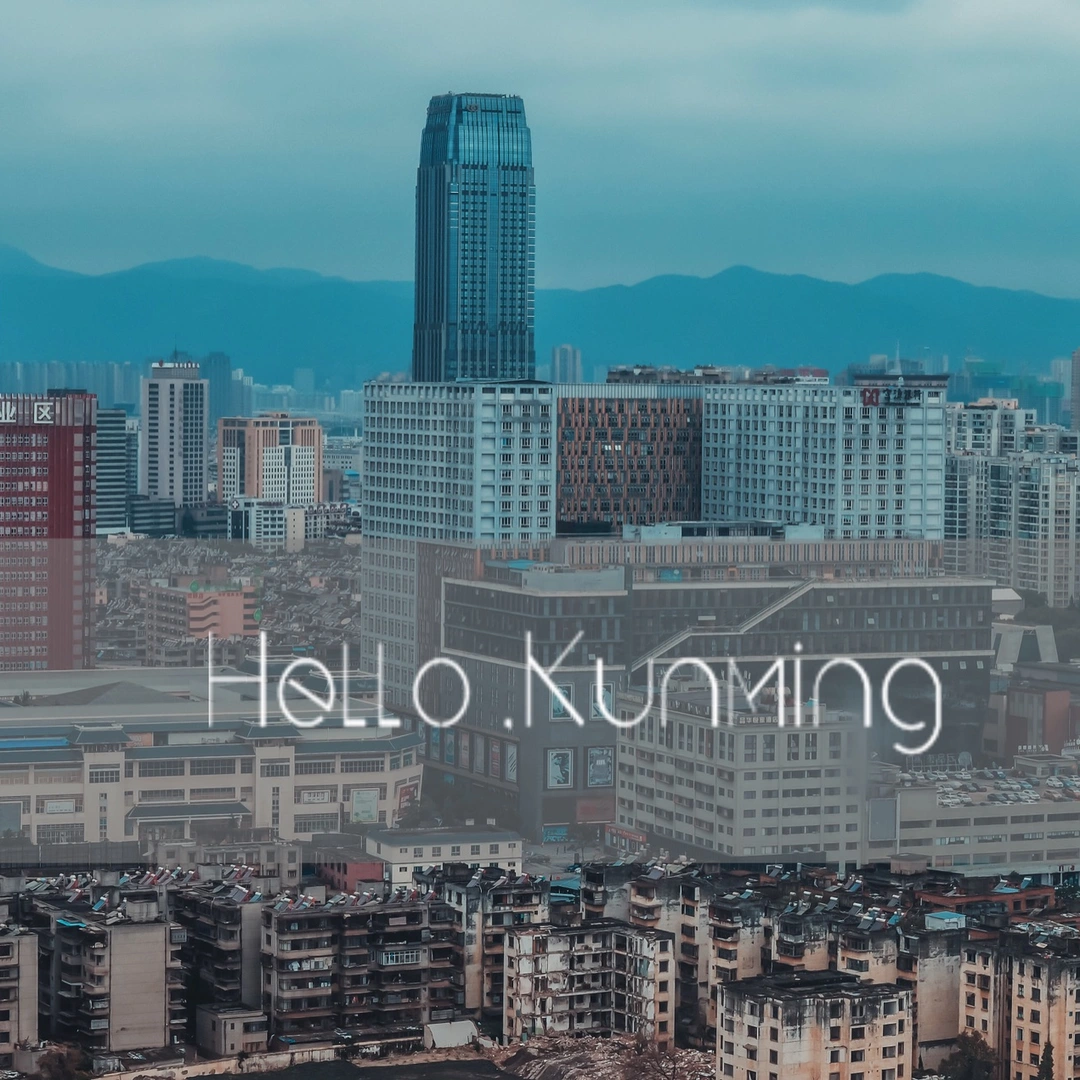
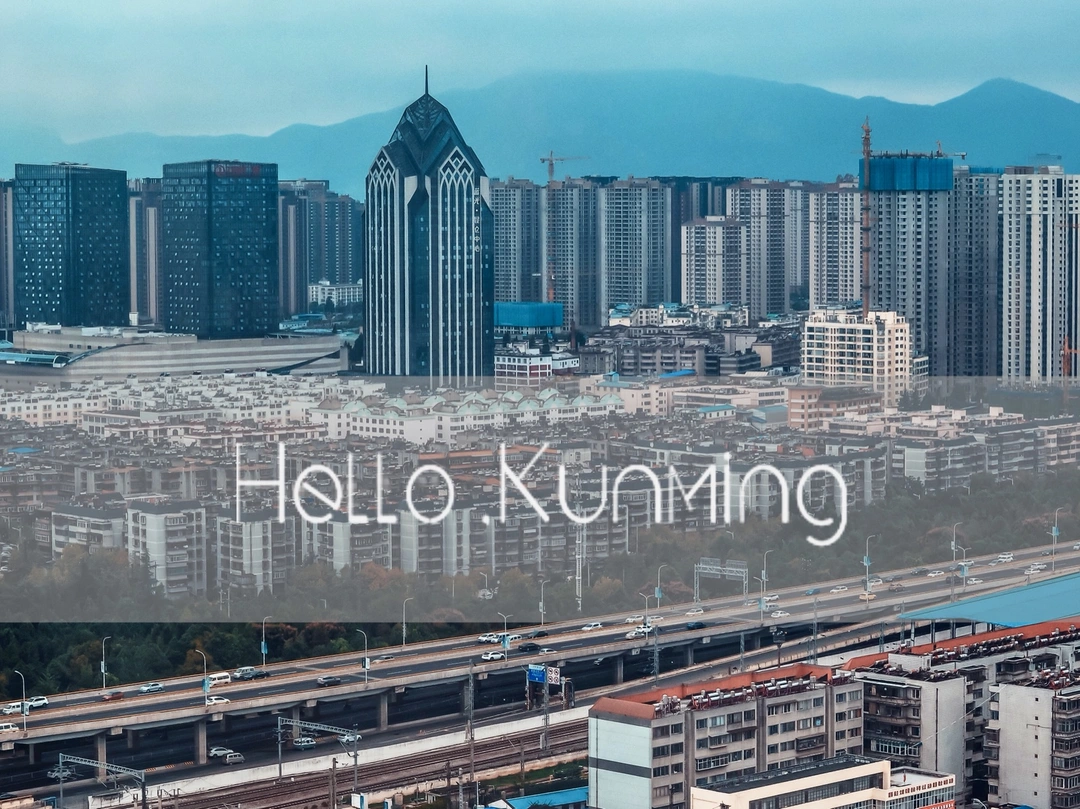
Hello, Kunming: The Taste of Time in a Bowl of Rice Noodles
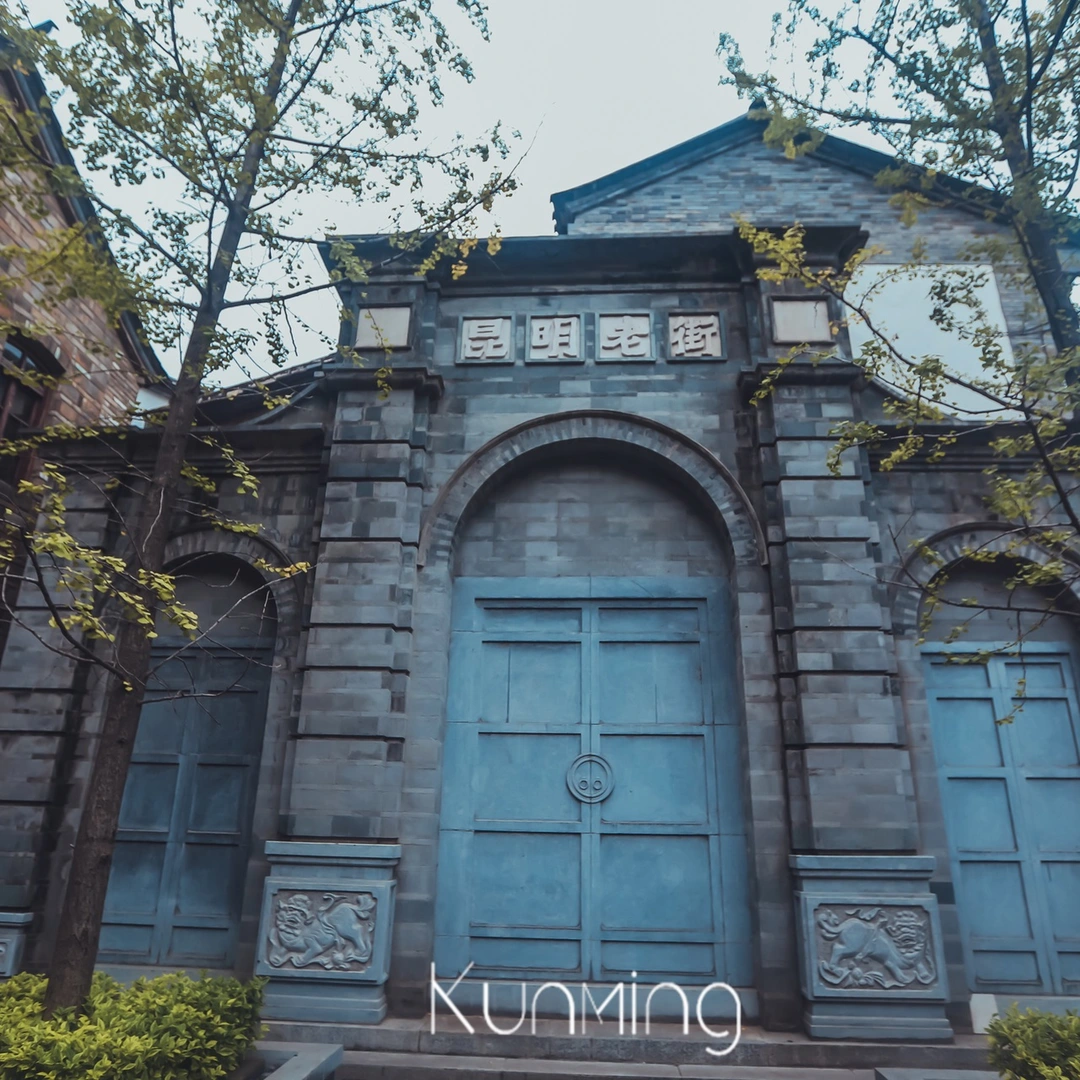
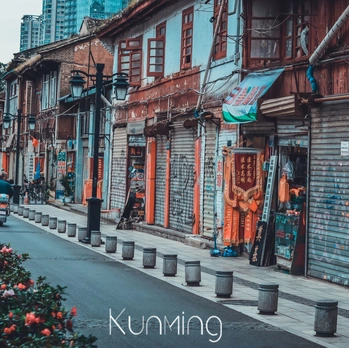
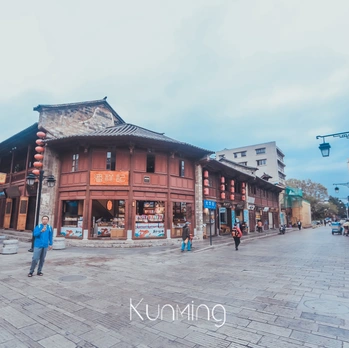
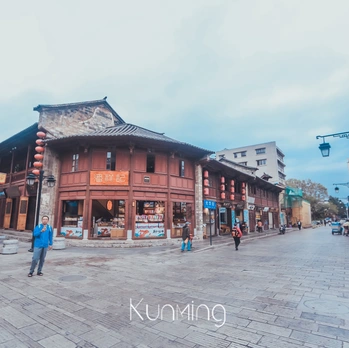
Kunming woke up in the hazy dawn. We decided to take a stroll through the old streets.
If I only had half a day to spend in a city, I would always recommend wandering its old streets. Walking through the alleys is the only way to touch a city's true pulse. Old streets are the city's historical memory bank — they are not just material remnants, but spiritual anchors. Those weathered walls, ancient shops, and the aromas drifting through the air all carry memories that cannot be replicated.
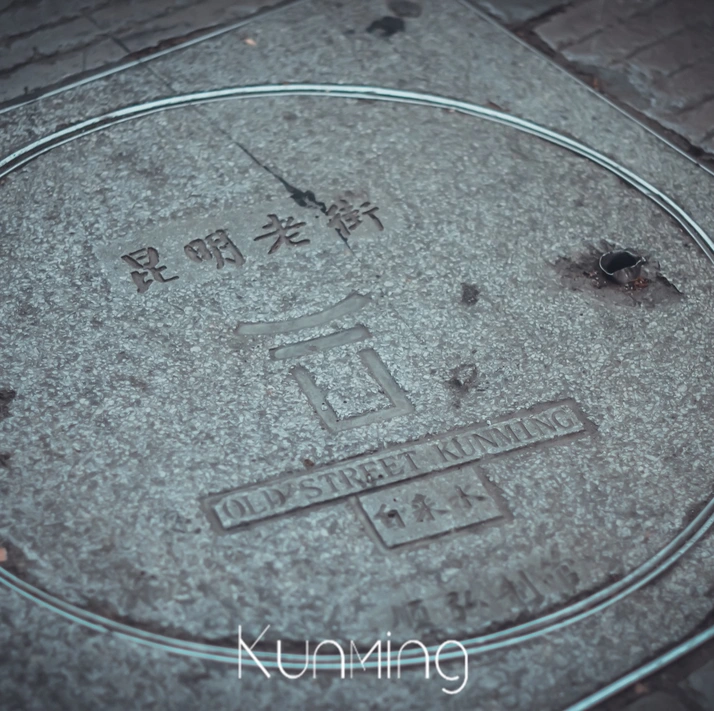
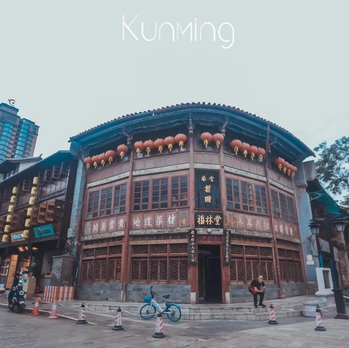
In Kunming's old streets, we found Pan Xiang Ji — the famous flower-pastry shop — and Fu Lin Tang, the oldest surviving pharmacy in Yunnan. At a street corner, a uniquely shaped building silently told the story of the city's past.
Of course, the soul of any old street is its street food. Stinky tofu, grilled squid, fresh milk cake, and artisanal milk tea sold under the banner of "old street" ... But the one thing you absolutely cannot miss in Kunming's old streets is rice noodles (米线, mixian).
We walked into Jian Xin Yuan, a time-honored brand of cross-bridge rice noodles (过桥米线, guoqiao mixian) that dates back to 1906. Old Kunming locals still crave its flavors, willingly waiting in long lines. A bowl of 旺肠米线 (wangchang mixian, rice noodles with pork intestines) went down, and instantly awakened the life and memories preserved in the passage of time. This is the taste of rice noodles, the taste of joy, and the taste of time itself. These flavors have blended with long years and the emotions of homeland — they leave the tongue, only to settle in the heart.
Sell Flowers in This Life, Be Beautiful in the Next
In Kunming, a warm little story has always touched me: a girl met an elderly flower seller at a subway entrance, her hair silver-white. The girl asked, "Aunty, you're so old, why are you still out selling flowers? Isn't it hard?" The old lady smiled and replied, "Little girl, you don't understand. Sell flowers in this life, be beautiful in the next."

When I read this story, I couldn't help but smile. This aunty must be someone whose heart is full of beauty and whose love for life is boundless.
Kunming is home to Asia's largest wholesale flower market — Dounan Flower Market. Unfortunately, we didn't have time to go. But we found the Chajie No. 1 Flower Market in the city center. Though not as big as Dounan, it was still dazzling. Roses were 10 to 20 yuan a bunch, dried flowers 10 to 30 yuan a bunch, and they could even be shipped nationwide. People in this flower city are truly blessed.
My favorite, baby's breath (满天星, mantianxing), I bought a big bunch of — it felt like I had brought the entire spring back to the hotel.
Dali Practical Tips: Essential Prep Before You Go
Transportation
In 2019, the high-speed train from Kunming to Dali opened, taking just over 2 hours. Compared to the long bus rides I read about in old travel guides, it's now incredibly convenient. Once in Dali, we mostly relied on Didi (ride-hailing) to get around. If you stay in Dali Old Town, it's closer to the train station; if you stay in Shuanglang, a taxi ride costs about 100+ yuan.
Accommodation
Dali has so many guesthouses it's overwhelming, mainly concentrated in Shuanglang and Dali Old Town. We traveled during the off-season and didn't book ahead — we booked one day at a time. Over 4 nights, we stayed in 3 different hotels, each with a distinct style. All get a ten-star recommendation.
Food
Yunnan cuisine has very high standards for ingredients, and the produce we ate locally was exceptionally fresh. Steam pot chicken (汽锅鸡, qiguoji), cold rice noodles with chicken (凉鸡米线, liangji mixian), grilled rice cakes (烧饵块, shao erkua), baked milk fan (烤乳扇, kao rushan), Dali sour-spicy fish (大理酸辣鱼, dali suanla yu), wild mushroom soup (野菌汤, yejun tang), small-pot rice noodles (小锅米线, xiaoguo mixian), Xizhou pastries (喜洲粑粑, xizhou baba) — every single one left a lasting impression.
Weather
In a place with mountains and water, weather forecasts are basically not to be trusted. It's sunny one moment, raining the next, but it rarely disrupts plans. July and August are the rainy season; this year it was delayed, so September saw rain almost every day. But trust me — the sun always comes out after the rain.
Service
The service in Dali is heartwarming. Whether it's accommodation, taxis, or dining, everyone seems to have been trained the same way, making you feel warm and comfortable. This might be related to the gentle nature of Yunnan people.
Itinerary
We spent 5 days in Dali. Because it rained often, we spent a lot of time just daydreaming in cafes or at the hotel. I'd recommend at least 3 days: one day to circle Erhai Lake, one day to explore Dali Old Town, and one day for Shuanglang and Xizhou. Slow wandering is the only way to match Dali's rhythm.
If Sunshine Had a Hometown, It Would Be Dali
Dali is the ancient birthplace of the Dali Kingdom founded by the Duan family in "The Demi-Gods and Semi-Devils" (天龙八部, Tianlong Babu); it's the paradise from "My Fair Princess" (还珠格格, Huanzhu Gege) where every home has flowers and every household has birds; it's the pure land in songs where you can leave your troubles behind; it's the poetic wonderland of "wind in Xiaguan, flowers in Shangguan, snow on Cangshan, and moon over Erhai" (下关风,上关花,苍山雪,洱海月).
For photography enthusiasts, Dali is heaven. The shimmering Erhai Lake looks as if all the sunlight has been poured into its waters.
The Guesthouse I Never Got Tired Of — Hua Qian Xun
When in Dali, how could you not stay in a lake-view room?
Hua Qian Xun Seascape Garden Boutique Hotel (花千寻海景花园美宿) is located between Wase Town and Shuanglang Town. The moment I saw the photos online, my heart was captured. The bright, spacious room, the warm and cozy round bed, the floor-to-ceiling lake-view window, and the pink bathtub by the window. Pull the cream-white gauze curtain, and the room is filled with a soft romance like strawberry milk; open the curtain, and a gentle breeze blows in, revealing the lake and mountains.
This is the very definition of a romantic room.
On a cloudy evening, the sky and lake outside the window merged into a deep, rich blue, harmonizing beautifully with the pink room. There was a small garden on the first floor, but I loved the hydrangeas in the neighboring courtyard even more — I shot a series of portraits there.
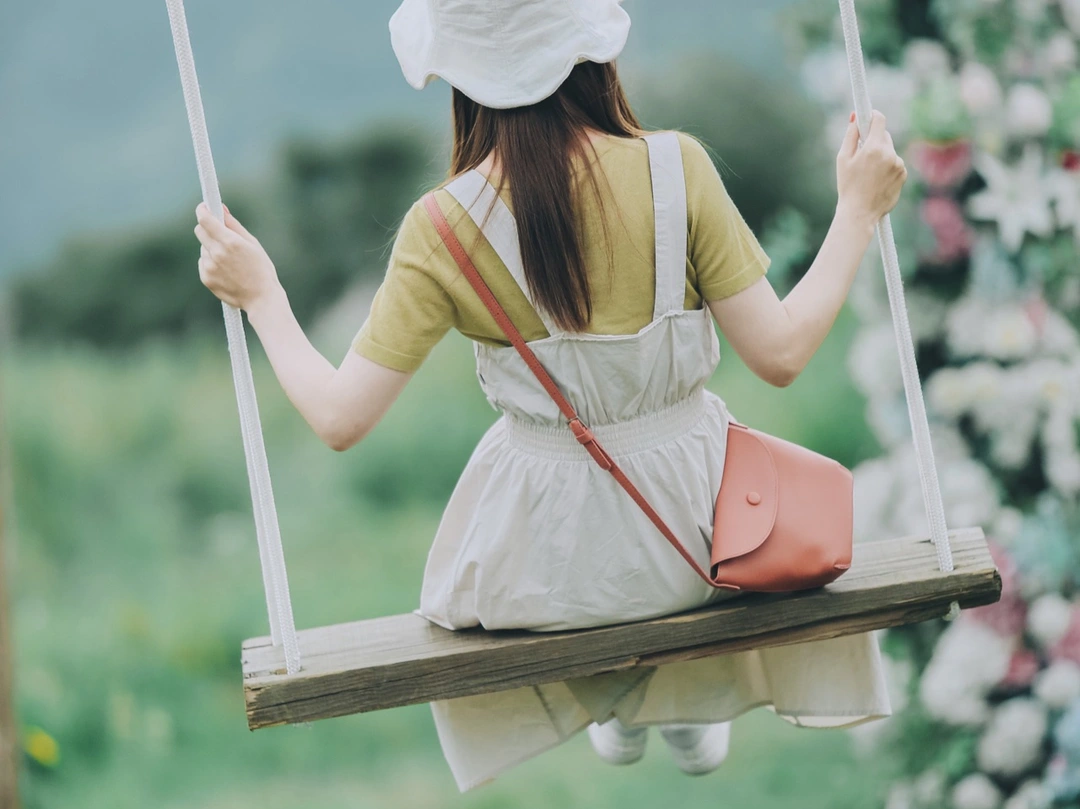
On the morning of September 1st, I sat on the rocking chair on the balcony, feeling the soft breeze, gazing at the fresh Erhai Lake, rocking back and forth. I wished time could stop forever in that moment.
The Guesthouse I Never Got Enough of Shooting — Ji Yi Si
The second guesthouse, Ji Yi Si Historic Garden Guesthouse (己已巳古迹花园客栈), is located in Xizhou.
A completely different style — an ancient-style guesthouse full of design and heartfelt details. The first floor is a lounge area, the second floor the bedroom, with a white gauze canopy hanging over the bed and a small skylight in the ceiling. On clear nights, you could lie in bed and gaze at the stars.
This guesthouse was converted from an old-style "walking-horse turning-corner" building (走马转角楼, zouma zhuanjiao lou) built in 1949, the 38th year of the Republic of China. The original owner was one of the four great merchant families of Xizhou. The gables, eaves, window lattices, and pillars still bear the original inscriptions, murals, couplets, and reliefs — a masterpiece of Bai ethnic architecture.
Bamboo and banana trees complemented each other, flowers and trees were lush. The courtyard was perfect for photography. We had originally planned to circle Erhai Lake, but this courtyard hijacked our plans. Doves carried messages over the black-tiled roofs, fish played among lotus leaves under the half-moon pavilion. Shooting the courtyard from the second floor offered the perfect angle. I heard that during peak season, many people come specifically to take wedding photos here, but I think this courtyard is better suited for quiet enjoyment — ancient and natural, listening to the flowing water, the birdsong, and the cicadas.
You could sit alone under the eaves with a cup of tea, or head to the coffee bar for a pour-over crafted by a professional barista.
The Guesthouse I Never Slept Enough In — Li Mi Qing Su
The third guesthouse, Dali Old Town Li Mi Qing Su Guesthouse (大理古城厘米·轻宿客栈).
If the first was about lake-view girlish romance, and the second about the historical details of an ancient courtyard, then this one was all about comfort — the kind of comfort you crave when you're tired from exploring and just want to curl up at home. From the bedding, the sink, the shampoo, to the towels — every detail spoke of quality. For a guesthouse to achieve this, it deserves nothing but praise.
The bar counter in the guesthouse also had great atmosphere — perfect for a nightcap.
Eating, Eating, Eating: What to Eat in Dali?
Gu Shi Hui Private Kitchen — Dai Ethnic Hand-Grabbed Rice
Located in Dali Old Town, it's a bit hard to find, tucked away in a small alley. The setting is modest, but it's incredibly popular, with long queues during meal times. The two-person portion was huge — we couldn't finish it. You just put on plastic gloves, grab the food, and dip it in sauces — it reminded me of Indian hand-grabbed rice. A good mix of meat and vegetables, no duds. If you go with eight to ten people, a huge platter comes out — quite a spectacle.
Canned Rice Noodles (罐罐米线, guanguan mixian)
I already love rice noodles, so in Yunnan I couldn't miss them. Canned rice noodles are cooked in small ceramic pots, filled with a broth simmered for over three hours, then layered with rice noodles, meat, vegetables, and seasonings. When it comes out, the rich broth and noodles are fused together, with a deep flavor and a unique earthy taste from the pottery.
Baked Milk Fan (烤乳扇, kao rushan)
One of Yunnan's "Eighteen Oddities" — milk is concentrated into thin sheets and grilled. But I ... really couldn't eat it.
Fisherman's Home Cooking (渔民家常菜)
Located in Wase Town, the decor is simple, but the second-floor balcony offers a pleasant view of the lake while you eat with the breeze. Fried ribs with mint (薄荷炸排骨, bohe zha paigu), Erhai fish (洱海鱼, erhai yu), and wild mushroom soup (野菌汤, yejun tang) are all local specialties.
Corner Time · Food & Dining (转角时光·食光餐厅)
Located in Shuanglang, a popular internet-famous restaurant. Homemade yogurt with local rose sauce was delicious. Steam pot chicken (汽锅鸡, qiguoji) is a famous Yunnan dish — no water is added to the pot; all the broth comes from the steaming process, making the chicken tender and the soup sweet and clear. "Watery Yang Flower" (水性杨花, shuixing yanghua) is a lake vegetable that grows in Erhai — worth trying. Bai ethnic five-color cold rice noodles with chicken (白族五彩鸡丝凉米线, baizu wucai jisi liang mixian) is a Dali specialty — a must-try.
Dali Lord Duan · Demi-Gods and Semi-Devils Themed Experience Restaurant (大理段公子·天龙八部特色体验店)
Located in Dali Old Town, with an antique ambiance, looping songs from "The Demi-Gods and Semi-Devils," and staff dressed in ancient costumes. But after trying some internet-famous places, I'd recommend going to older restaurants for authentic local flavors. These themed spots are more about gimmicks, lacking the sense of time and history that makes local cuisine special.
Xizhou Hanlin Restaurant (喜洲翰林餐厅)
Located in Xizhou, with a large courtyard in the traditional Bai "three rooms, one screen wall" (三房一照壁, sanfang yizhaobi) architectural style. When we went, the huge courtyard had only our table — I almost wondered if they were even open. Jasmine flower omelette (茉莉花煎蛋, molihua jiandan), grilled rice cakes (烧饵块, shao erkua), and sour-spicy fish (酸辣鱼, suanla yu) were all delicious. They also had a dish called "raw skin" (生皮, shengpi) — raw pork. Apparently, only pork from Dali can be used for this, and you can't get it anywhere else. I didn't have the courage to try it, but adventurous foodies should give it a go.
Sky Mirror: Looking at Dali's Sky
There are many places in Dali to photograph "Sky Mirrors." I originally thought they were reflections in water, but seeing them in person, I realized they were reflections in mirrors.
The small garden at Hua Qian Xun guesthouse had a Sky Mirror. It was rainy weather, with only a brief moment of sunshine, revealing just a corner of luxurious blue sky. But shooting with a wide-angle lens on a cloudy day also gave a sense of vast, atmospheric grandeur.
At night, a staff member at the guesthouse would set up a moon prop on the Sky Mirror for guests to photograph.
The Ting Hua Tang Guesthouse (听花堂客栈) Sky Mirror is the best in Dali. It's set up on a third-floor terrace, so you don't need to find a special angle — the mirror naturally connects with Erhai Lake and the sky. There's also an infinity pool on the second floor. From a low angle, the pool and the lake seem to merge. This Sky Mirror is only open to guests. The staff at Hua Qian Xun told us they share the same owner as Ting Hua Tang, so they recommended we go there to shoot.
At the entrance of Ting Hua Tang, there was a huge bougainvillea climbing the wall — my absolute favorite.
Driving My Dear Little Four-Wheeler Around Erhai Lake
There are several ways to circle Erhai Lake: electric scooters are flexible but tiring and expose you to the sun; renting a car — you can choose a Smart, a Beetle, a Jeep, etc., with prices ranging from 200-300 to 700-800 yuan per day; or you can hire a photographer who will drive you and stop at photogenic spots.
We chose to rent a car — a little yellow one. But this little yellow car was incredibly difficult to drive, like a four-wheeled tractor. Floor the accelerator, and it just chugged forward a bit. But we weren't in a hurry anyway. Driving my dear little four-wheeler, it never got stuck in traffic.
White tables are the most iconic symbol of Shuanglang. You'll encounter countless white tables along the way, but the best spot is at the Hai Di Life Guesthouse (海地生活民宿). Although the guesthouse is no longer there, the white tables remain. Locals have fenced the area off and charge for photos — 10 to 20 yuan per person. I absolutely love these white tables by Erhai Lake. It feels like you haven't really been to Dali without a photo here.
I also blew up a huge bunch of balloons. The pump was broken, so I inflated them all with my own breath. I couldn't let them go to waste — I had to take lots of photos to replenish my energy.
Internet-Famous Photo Spots: A Set of Posed Shots
Dali has many internet-famous photo spots with artificial props. The most recommended one is near Xizhou — 20 yuan per person for entry.
Since we were there, of course we had to shoot a set of posed portraits worthy of the 20-yuan ticket. I couldn't remember the last time I had laughed so hard. Mr. Bean said that in this scene, I should put on a big laughing expression. Even though it was a posed expression, looking at the photos later, I still felt quite joyful.
Open spaces with misty distant mountains — this kind of setting is always my favorite backdrop for photos. The little red minivan was especially photogenic. I recommend taking a mix of long shots, close-ups, small-figure shots, and large-figure shots. Put them together in a collage, and you'll have an amazing set of portraits.
I Heard Shuanglang Is a Place for Daydreaming
Shuanglang is located on the northeastern shore of Erhai Lake, embraced by small islands on both sides, hence the name "Shuanglang" (Double Bays). It used to be a small fishing village, with most residents making a living by fishing. It's said that Shuanglang has the best lake views in Dali, right by the rippling Erhai, with a distant view of the Cangshan nineteen peaks. Many photographers capture stunning shots of the Cangshan and Erhai here.
Shuanglang underwent a major renovation and only fully reopened its guesthouses and restaurants in 2019. A Bai grandmother asked, "Little girl, want to get your hair braided? Ten yuan for six braids." I got some colorful little braids.
I'm not sure if it was because of the redevelopment, but Shuanglang didn't have a particularly ancient feel. It seemed more like a rest stop for people taking a break from circling Erhai. It rained most of the time we were in Shuanglang, so we found a café, ordered a coffee or a pot of flower tea, and with soft music playing, we just sat and daydreamed for an afternoon. This, too, is Shuanglang time.
Facing the sea, with spring blossoms. Some of the lake-view rooms in Shuanglang have windows that open directly onto Erhai. Staying in Shuanglang is convenient for dining, and you can also visit a music bar in the evening.
Beautiful Xizhou
When I think back on Xizhou, the first word that comes to mind is "beautiful." And that beauty comes mainly from the rice fields.
In the show "We Are in Love" (幸福三重奏, Xingfu San Chong Zou), Lang Lang and Gina rode bicycles past those very rice fields. The setting sun gilded the green paddies with a shimmering golden light. The bougainvillea in front of the Hanlin Restaurant made me fall hopelessly in love again.
Compared to Shuanglang, Xizhou is more ancient and richer in history and culture. Whether it's the culture, architecture, or style, it has a distinct and strong Bai ethnic character. The iconic buildings of Xizhou Ancient Town tell the story of this old town's glory.
Lao She wrote in his "Short Travel Notes of Yunnan" (滇行短记, Dianxing Duanji): "Xizhou Town is a miracle. I can't think of any remote place in China where I've seen such a decent town ... Entering the town, it felt like being in Cambridge, England, with flowing water running alongside the streets ... Less than a mile away is Erhai Lake. Less than five or six miles away are the high mountains. A town nestled between mountains and water — truly a paradise!"
Listening to Music in Dali Old Town
Although Dali Old Town has a history of over a thousand years, I still didn't feel that ancient town atmosphere. The streets were too new, the commercialization too heavy. But it was a great place to relax.
So, I spent two evenings listening to music in Dali Old Town. I asked a pretty girl to sing my favorite song, "Fairytale Town" (童话镇, Tonghua Zhen). There are so many music bars in Dali — a whole ancient street is filled with them. Find a little shop you like, go in, and listen to songs all night. It was a beautiful way to end our days in Dali.
Epilogue: A Three-Inch Slice of Time in the Palm of My Hand
In September, the sunlight danced on Erhai Lake. Looking up at the skylight you had opened for me, a sliver of sunlight fell into my palm — three inches long.
Looking back on this trip to Dali, I want to say:
Travel is not about escaping life, but about falling in love with it again. Dali didn't solve any of my problems. But it gave me a soft, gentle stretch of time, giving me the strength to keep moving forward.
The best travel isn't about how far you go, but the ability to let your heart be still. In Dali, we learned to daydream, to slow down, to make friends with time.
There are many ways to document a journey. What matters is finding the one that's yours. Whether it's a bulky DSLR or the click of a phone, as long as you put your heart into it, you can capture the most beautiful moments.
Finally, a parting thought: If life has worn you out, head west to Dali. There, you'll find the hometown of sunshine, the fairy tale of wind, flowers, snow, and moon, and a three-inch slice of time resting in your palm.
May we all, on our journeys, rediscover that clear, pure version of ourselves.
You should also read:
September: Finding Unexpected Warmth in Yunnan (Kunming, Dali, Shuanglang, Lijiang, Lugu Lake)
September: Finding Unexpected Warmth in Yunnan (Kunming, Dali, Shuanglang, Lijiang, Lugu Lake) Foreword: One Person's Journey, A Crowd's Story Before I set off, like every first-time solo traveler, I printed out a thick stack of travel guides and rehearsed countless possible scenarios in my head—getting…
Continue reading...
A 9-Day Yunnan Journey: From Lijiang to Dali to Tengchong – A Trip Toward Self-Reconciliation
A 9-Day Yunnan Journey: From Lijiang to Dali to Tengchong – A Trip Toward Self-Reconciliation Some say travel is simply going from a place you're tired of to a place other people are tired of. It stings to hear, but it's painfully true. Yet there's…
Continue reading...
Tengchong·Heshun: Finding Life as It Should Be in a Border Town Where Time Stands Still
Tengchong·Heshun: Finding Life as It Should Be in a Border Town Where Time Stands Still The long journey of over twenty days was over. On my first day back at the office, I was still in a daze. My fingers couldn't find the keys on…
Continue reading...