A Visual Feast in Southeast Yunnan: A Journey Through Color
A Visual Feast in Southeast Yunnan: A Journey Through Color
Prologue: Why Southeast Yunnan?
Some places stir the soul the moment you hear their name. Yunnan is one of those places. And Southeast Yunnan—滇东南 (Diānnán)—feels like a carefully guarded treasure hidden within this already magical land.
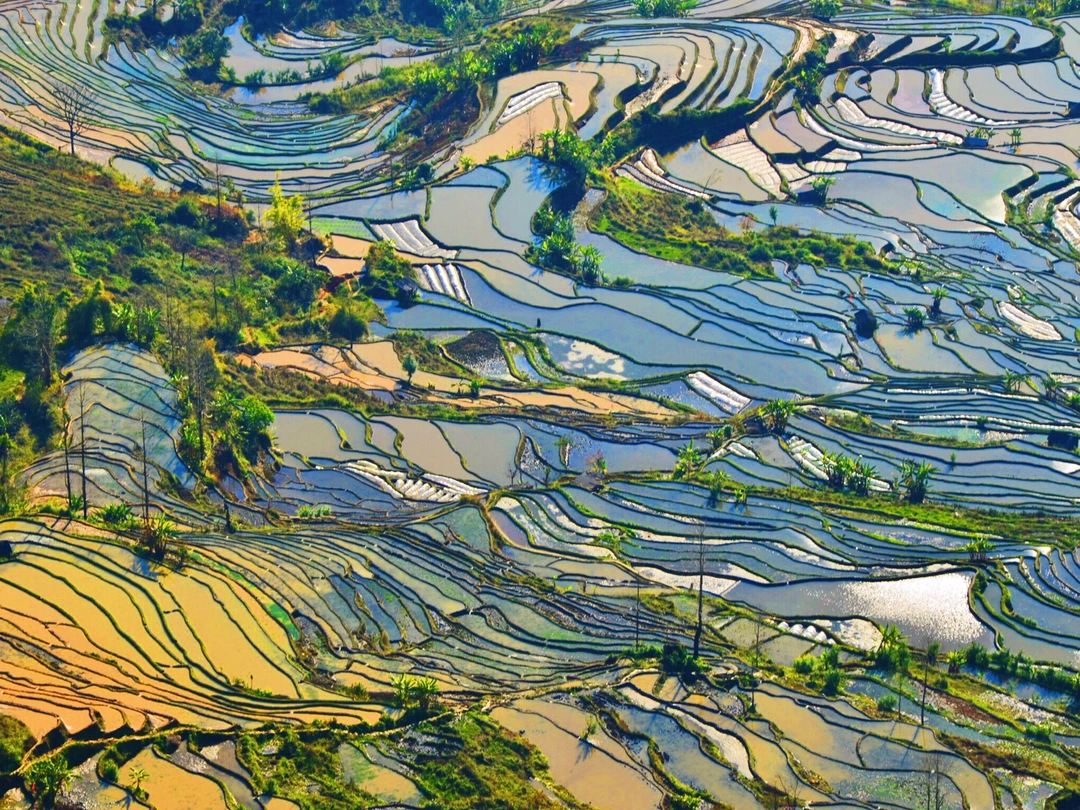
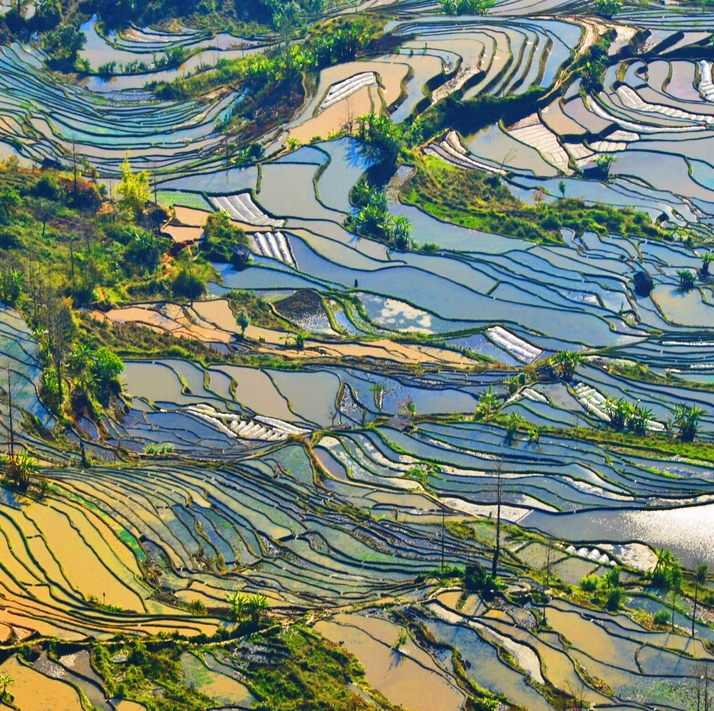
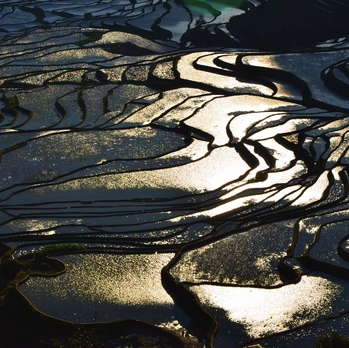
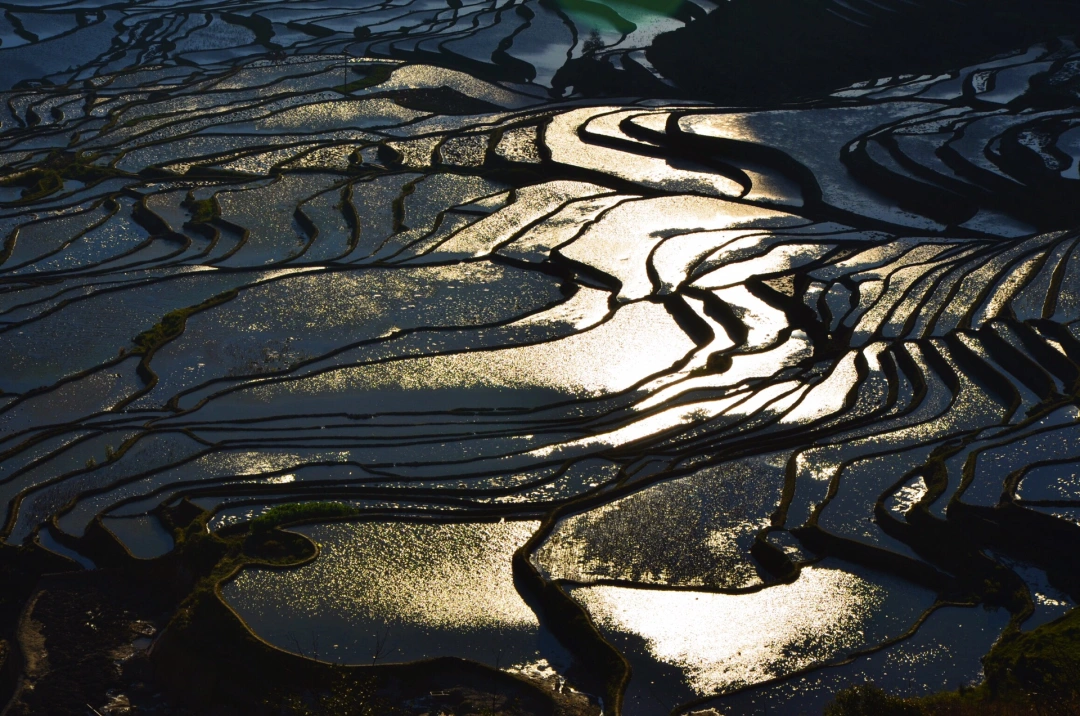
The February wind still carried a chill, but I couldn't wait any longer to begin this long-anticipated journey. It all started with a single photograph: the Yuanyang rice terraces emerging from the morning mist, layer upon layer of water reflecting the sky like the fingerprints of the earth, or perhaps lines casually drawn by God. In that moment, I knew I had to see it with my own eyes.
And so, a photography route linking Kunming, Jianshui, Yuanyang, Puzhehei, Luoping, Dongchuan, and the Yuanmou Earth Forest took shape in my mind. Ten days, one car, a group of like-minded friends—a rendezvous with color and light.
Kunming: The Gentle Welcome of the Spring City

First Glimpse of the Spring City
As the plane touched down at Kunming Changshui Airport, a brilliant blue sky and white clouds greeted us. February in the Spring City—the sun shines just right, neither too hot nor too cold, as if saying, "Welcome to Yunnan."
Renting a car was a smart move. I booked through Avis on Ctrip, and the staff gave us a crucial warning: Yunnan's traffic violation system isn't yet connected to the national database. If you get a speeding ticket, you'll have to return here to deal with it in person. That warning kept us extra cautious throughout the trip—the freedom of self-driving comes with responsibility.
We stayed at the Home Inn Select near Cuihu Park (翠湖公园, Green Lake Park), 288 RMB per night—great value. No parking lot, but the room was clean and comfortable, and the location couldn't be better.
First Taste of Yunnan
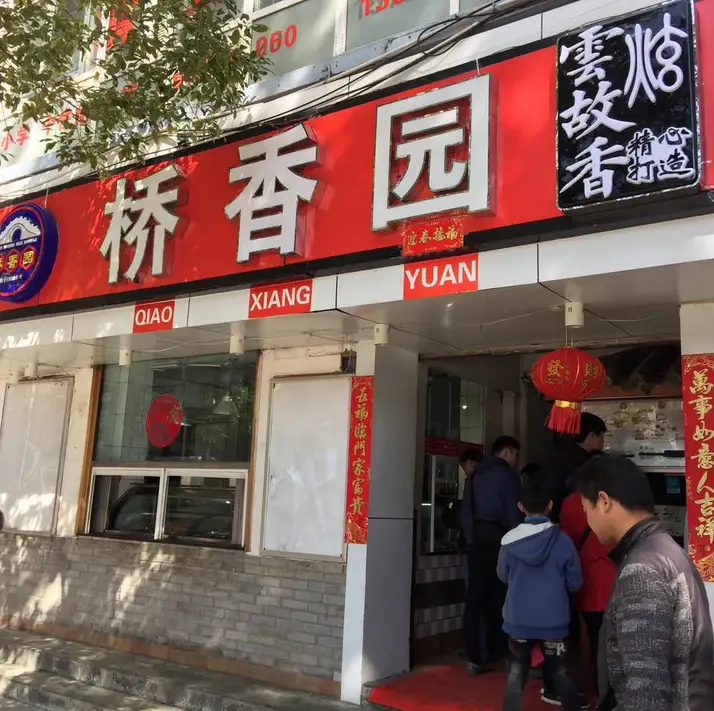
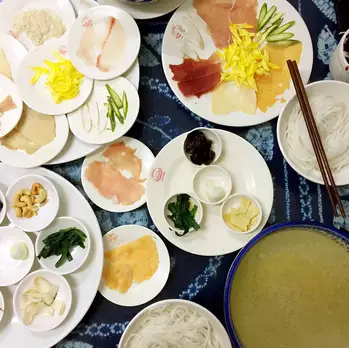
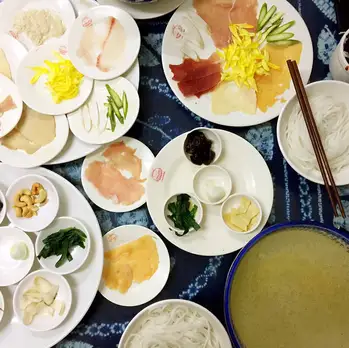
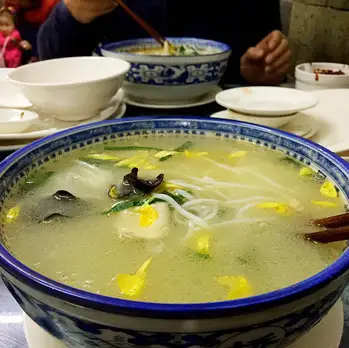
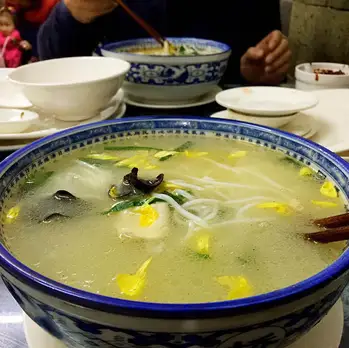
For our first meal in Yunnan, it had to be 过桥米线 (Crossing-the-Bridge Noodles). The Qiaoxiangyuan restaurant across from our hotel became our little blessing. A tray piled with small dishes arrived—raw meat slices, fish fillets, vegetables, and rice noodles—and for a moment, I had no idea where to start. Thankfully, the waiter patiently guided us: meat first, then vegetables. Drop the raw meat and fish into the boiling chicken broth to cook, then add the vegetables and noodles.
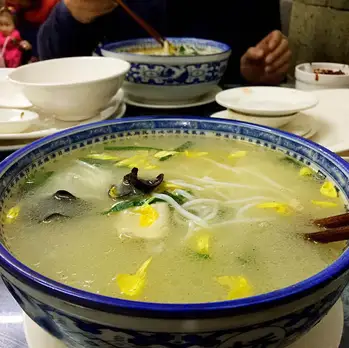
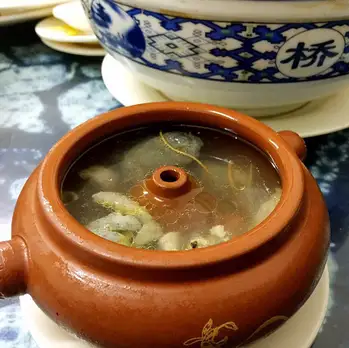
My set meal also came with 汽锅鸡 (steam pot chicken), and the rich, savory broth was so delicious I could've drunk it forever. The portion was enormous, and it taught me one thing: Yunnan never skimps on food.
Gulls at Green Lake
Evening at Cuihu Park was lively. People singing, dancing, sitting around—everyone soaking up the Spring City's leisurely vibe. Narcissus, magnolias, and tulips bloomed in profusion, and the air was thick with spring.
The next morning, I got up early to see the black-headed gulls. Sunrise in Yunnan is around 8 a.m., and in the soft morning light, flocks of these gulls flew in to feed at the lake. They floated quietly on the water, then suddenly took to the air in整齐 formation, their calls echoing across the lake—a spectacular sight.
Jianshui: The Ancient City Time Forgot
A Journey Through Time
From Kunming to Jianshui (建水) is about 218 kilometers—Kunming to Yuxi to Tonghai to Jianshui, roughly three and a half hours by car. Not all highway, but the scenery along the way was already refreshing.
Jianshui, once known as "Lin'an" (临安), carries the weight of history in its very name. It wasn't until 1994, when it was designated a National Historical and Cultural City, that this ancient town began to draw attention. The city walls are intact, the gates still stand, and walking on the cobblestone streets feels like stepping back to an era when horse-drawn carriages ruled the roads.
The Zhu Family Garden: A Century of Dreams
Highly recommended: the Zhu Family Garden (朱家花园)! Built in the late Qing Dynasty by the wealthy Zhu brothers, this sprawling complex of family home and ancestral hall covers an enormous area, with 42 courtyards and 214 rooms. Curved roofs, flying eaves, intricate carvings—every detail speaks to the owner's taste and wealth.
Walking through it, I couldn't help imagining life here a hundred years ago—the morning birdsong, the afternoon tea fragrance, the evening lantern light. What a vivid picture it must have been.
Double Dragon Bridge and the Taste of Jianshui
Outside the old city, the Double Dragon Bridge (双龙桥), commonly known as the "Seventeen-Arch Bridge," was first built during the Qianlong reign of the Qing Dynasty, with three arches initially, then fourteen more added during the Daoguang reign. Standing on the bridge, gazing at the mountains and water in the distance, the weight of history felt palpable.
Jianshui's street food is also unique. Grilled tofu (烤豆腐) is a must-try. You sit around a charcoal grill, dip the cooked tofu in sauce, and eat. Personally, I found it just okay, but the experience was special. Another specialty is pickled pear (腌梨), said to be good for coughs. The flavor is distinctive—not for everyone.
For dinner, we went to a restaurant called "Fuji Cai" (福籍菜), which was packed, with cars lined up outside. We ordered 草芽炒肉 (stir-fried grass shoots with pork), 炒青花 (stir-fried greens), and 汽锅鸡 (steam pot chicken). Every dish was outstanding. The steam pot chicken, in particular, became my favorite dish in all of Yunnan from that point on.
Accommodation recommendation: 涵书香园艺术客栈 (Hanxiang Shuyuan Art Inn), 88 RMB per night. Close to the Zhu Family Garden, clean and comfortable—incredible value.
Yuanyang: The Art of the Earth, the Lines of God
The Winding Road to Heaven
From Jianshui to the Yuanyang Rice Terraces (元阳梯田) scenic area is about 180 kilometers, with only a short stretch of highway. The rest is winding mountain roads, taking nearly five hours. Route: Jianshui—Gejiu—Yuanyang County—Xinjie Town—the terraces. If you're not driving, you can take a long-distance bus from Kunming to Yuanyang county town, then transfer to the scenic area.
A World Heritage Site's Power
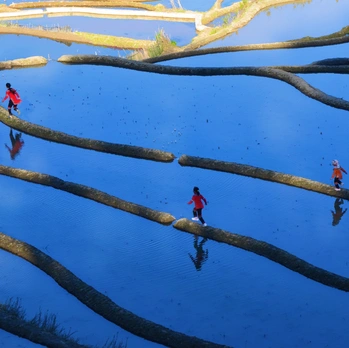
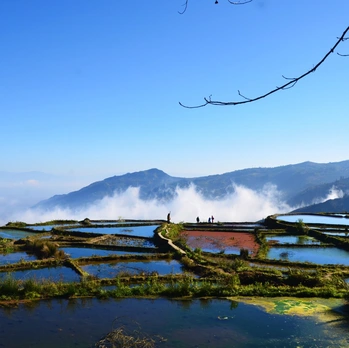
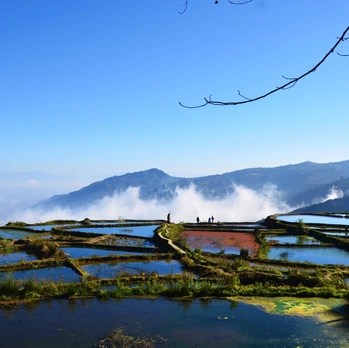
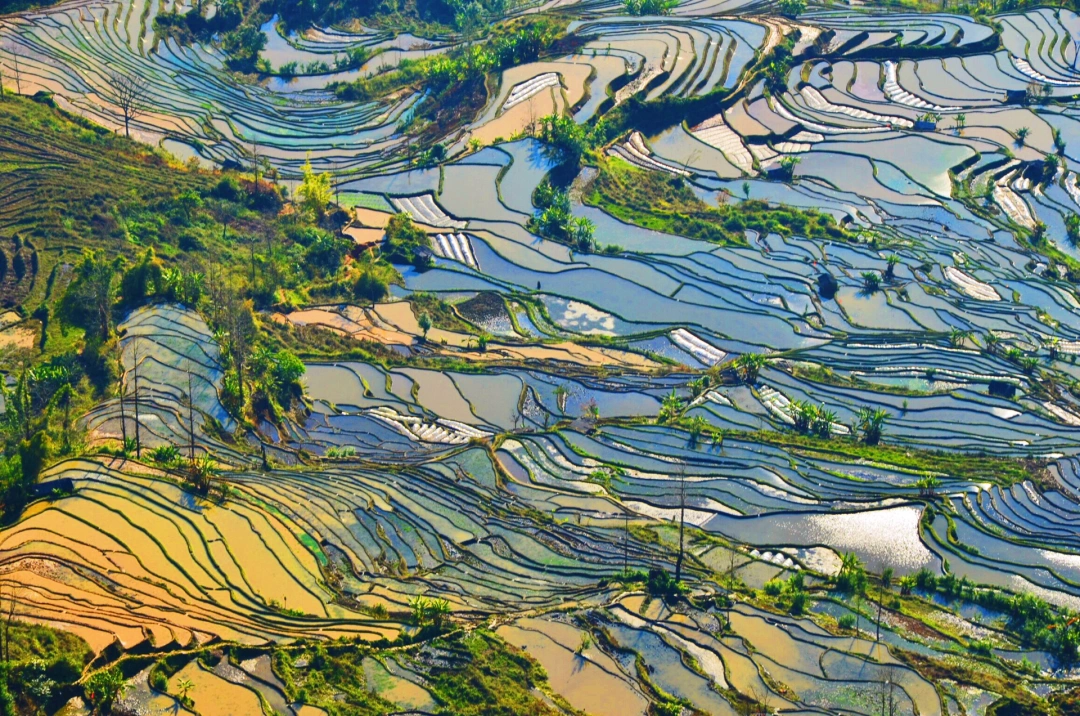
The Hani Rice Terraces of Yuanyang are flooded after the autumn harvest each year, and January and February are the best viewing months. In 2013, the Honghe Hani Rice Terraces were inscribed on the UNESCO World Heritage List, becoming China's 45th World Heritage site.
Entry to the scenic area costs 100 RMB per person for a two-day pass, granting access to viewpoints like Duoyishu, Laohuzui, Bada, and Jingkou.
Sunrise and Sunset: All Up to Luck
In Yuanyang, there's an unwritten rule: shoot sunrise at Duoyishu, sunset at Laohuzui, and the blue terraces at Aichun around 9 a.m. But Yuanyang is also a place that really tests your luck—to capture stunning shots, you need clouds, sun, and mist all working together.
I stayed at the Yuanyang International Youth Hostel right next to the Duoyishu viewing platform. The conditions were basic—damp bedding, no air conditioning, just an electric blanket—but the location was unbeatable. You could walk to the viewing platform.
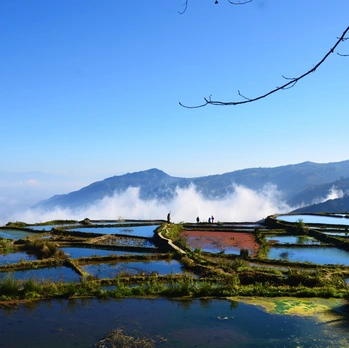
At 6 a.m., bundled in my down jacket, I waited at Duoyishu for the sunrise. Stars glittered like diamonds overhead. The wind was bitter, my legs numb. Unfortunately, the weather was clear as a bell—not a cloud in sight, so no spectacular sunrise with colorful skies. But luckily, morning mist filled the valleys, creating a dreamlike, almost celestial atmosphere.
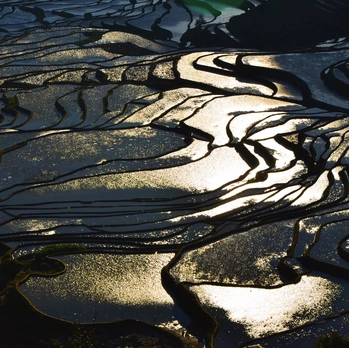
I didn't get the epic shots I'd hoped for, but when I followed the small path below the hostel into the Pulao Gaozhai village, I discovered another kind of beauty. Walking along the narrow ridges between the terraces, watching Hani people working in the fields, sunlight sparkling on the water—in that moment, I understood what "the art of the earth" truly means.
Farewell to the Blue Terraces
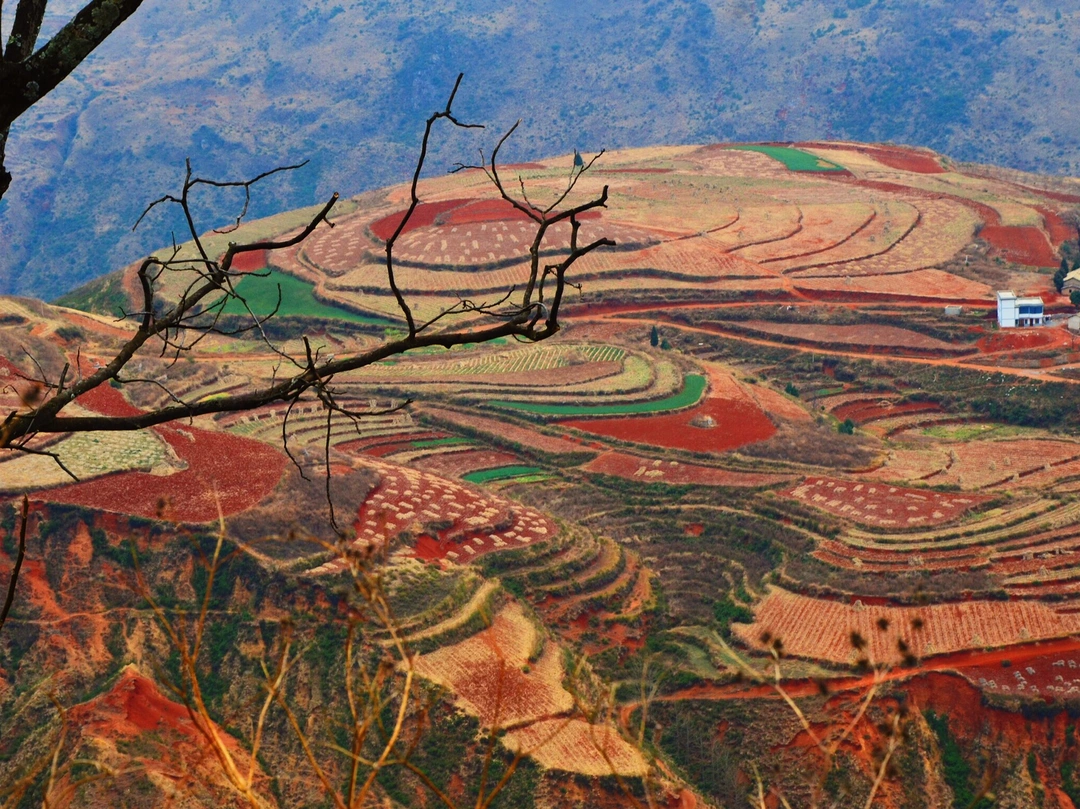
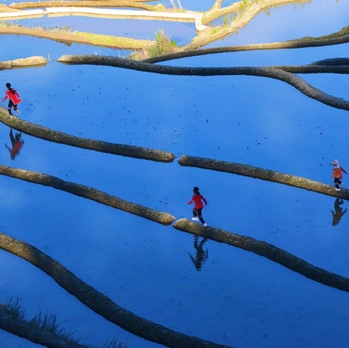
At 9 a.m., we drove to Aichun to photograph the blue terraces. About 5 kilometers from the Duoyishu viewing platform, local villagers charge a small fee for access. That pure, deep blue became the most beautiful memory of my farewell to Yuanyang.
Tip: If the weather cooperates, here's a good schedule—morning at Duoyishu for sunrise, then Aichun for the blue terraces, afternoon exploring the villages, and evening at Laohuzui for sunset. The next day, you can visit Bada Terraces and continue exploring.
Puzhehei: The Peach Blossom Land of Three Lifetimes
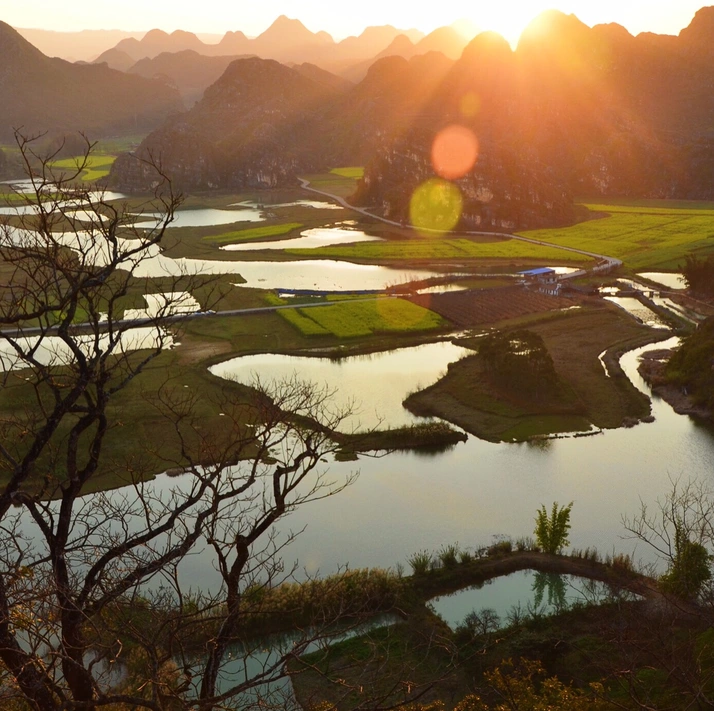
The Tenderness of Karst
From Yuanyang to Puzhehei (普者黑) is about 380 kilometers of mountain roads and rural lanes, taking over six hours. I arrived at Qinglong Mountain (青龙山) just in time for sunset, panting as I climbed to the top.
I chose the "Puzhe Sunshine" guesthouse near Qinglong Mountain Pier. Traditional architecture, a big courtyard, spacious and comfortable rooms—great value. Meals were also served at the guesthouse; tasty, if a little salty.
Waiting on Qinglong Mountain
Qinglong Mountain isn't high—a 20-minute climb to the top, with sunrise and sunset viewing platforms offering panoramic views of Puzhehei. The next morning, I got up again for sunrise, but the weather didn't cooperate—overcast, threatening rain. I trudged back down, grumbling to myself: the heavens have been stingy with me on this trip.
The Quiet of the Off-Season
Winter is the off-season at Puzhehei. No summer lotus flowers stretching for miles, but the hillsides covered in blooming rapeseed flowers offered a different kind of surprise. I didn't buy a boat ticket or visit the caves. I just wandered aimlessly. Few people, peaceful and quiet—exactly the pastoral charm I love.
The filming location for the hit TV series Three Lives, Three Worlds, Ten Miles of Peach Blossoms (三生三世十里桃花) is here. The original set is still standing, ethereal and dreamlike. Even with bad weather, you could imagine the fantastical scenes from the show.
Puzhehei has three main accommodation areas: near Qinglong Mountain Pier (convenient for climbing the mountain and close to the filming site), near Xianrendong Cave (the liveliest area, great for lotus-viewing and relaxing), and Puzhehei Village (the original old village, more rustic).
Luoping: A Sea of Rapeseed Flowers
The Magic of the Screw Field
From Puzhehei to Luoping (罗平) is about 170 kilometers—more mountain roads, taking over four hours. The closer we got to Luoping, the more rapeseed flowers we saw, covering the hills in a breathtaking sea of yellow.
Our first stop was the Niujie Screw Field (牛街螺丝田). The strange, crop-circle-like patterns carved into the hills were astonishing. Navigate to Niujie, and a friendly reminder: don't stop at the private pay-per-view platforms halfway up the hill. Keep driving higher, and you'll find free viewing spots.
The Misty Beauty of Jiulong Waterfall
In the afternoon, we visited Jiulong Waterfall (九龙瀑布), entry fee 95 RMB per person—a bit pricey. The weather was still misty and rainy, so all my photos came out hazy. But climbing the stairs to the viewing platform, the waterfall cascaded down in a series of steps, creating a unique charm.
The colorful rice sold in the scenic area looked beautiful, but I didn't dare try it—they said it was dyed with flowers and herbs, but who knows?
The Grandeur of Golden Rooster Peak
The next morning, we drove to Golden Rooster Peak (金鸡峰丛) for a panoramic view of the karst landscape. Individual limestone peaks stood tall on the flat plain, a sight so magnificent it left me speechless. There's a small temple next to the viewing platform, nothing special.
Dongchuan: God's Palette
The Grueling Mountain Road
From Luoping to the Dongchuan Red Land (东川红土地) is about 370 kilometers, a six-hour drive. This stretch of mountain road was the toughest of the entire trip—narrow, steep, and terrifying at every turn, especially when meeting oncoming traffic, fearing we'd be squeezed off the cliff. Sure enough, we witnessed a rollover accident along the way, making us even more cautious.
We stayed at a guesthouse in Luosiwan, just inside the Dongchuan Red Land area. No air conditioning, 70 RMB per night. The upside: we could watch the sunrise right from the guesthouse. Unfortunately, the weather still refused to cooperate.
The Regret of the Wrong Season
Truth be told, this wasn't the best season for the Red Land. You have to wait until May or later, when the crops are lush and colorful, to see the true "God's Palette."
Dongchuan Red Land has several viewpoints: Dakaman, Jinxiuyuan, Qicaipo, Luoxiagou, and Lepu'ao. Since it was off-season, I just took a quick look around and snapped a few photos.
Yuanmou Earth Forest: A Spectacle from a Fantasy World
Sunset's Stunning Glow
Since it wasn't the right time for the Red Land, we didn't linger. We headed straight for our final destination—the Yuanmou Earth Forest (元谋土林). From Dongchuan to Yuanmou, mountain roads plus highway, about 250 kilometers, six hours.
We arrived at the Wumao Earth Forest (物茂土林) just as the sun was setting. The earth pillars were bathed in a fiery red glow, and once again, I was awestruck by Yunnan's grandeur.
We stayed at the Wumao Hotel, 70 RMB per night—a budget hotel in the nearest town to the scenic area. Good value.
A Fantasy World at Dawn
We'd heard you could enter the scenic area early to watch the sunrise, so we arrived at 7:30 a.m. the next day. We took the park shuttle to the top of the hill and waited half an hour for the sun to slowly peek over the ridge. The Wumao Earth Forest was painted in a fiery red light, like a scene from a fantasy world.
Millions of years of geological movement and wind and rain have sculpted the Yuanmou landscape into bizarre, otherworldly shapes. There were very few visitors—just us and a couple from Sichuan. We descended the stairs into the forest, surrounded by strange earth pillars reaching toward the sky, like walking into a sci-fi movie set.
The loop took about two and a half hours. As more tourists began to arrive, we said goodbye to the Earth Forest and headed back to Kunming. From Wumao to Kunming is about 245 kilometers, a little over three hours.
Epilogue: This Visual Feast
My ten-day journey through Southeast Yunnan was a visual feast—from the Spring City to the ancient town, from the rice terraces to the earth forest. The weather wasn't perfect, and I didn't capture every scene at its most glorious. But those moments—the gulls at Green Lake, the ancient charm of Jianshui, the terraces of Yuanyang, the peace of Puzhehei, the sea of flowers in Luoping, the red earth of Dongchuan, the earth pillars of Yuanmou—are all etched deeply in my memory.
Yunnan is a place worth visiting again and again. In winter, come to escape the cold, feast your eyes on stunning landscapes, and eat incredible food. If you, too, long for a feast for the eyes and the soul, just go.
After all, some sights you only truly possess when you see them with your own eyes.
You should also read:

Solo in Yunnan: A Wanderer’s Guide to the Land of Eternal Spring
Solo in Yunnan: A Wanderer’s Guide to the Land of Eternal Spring There’s something magical about traveling alone. No compromises, no schedules to keep, no one to please but yourself. I’ve been on the road for nearly three months now, and not once have I…
Continue reading...
Into the Hidden Valley: A Solo Journey Through the Mysterious Dulong River
Into the Hidden Valley: A Solo Journey Through the Mysterious Dulong River Deep in the northwestern corner of Yunnan Province, tucked away from the modern world, lies a place that feels like a secret whispered among mountains. The Dulong River Valley is not just a…
Continue reading...
God’s Abandoned Palette: A Self-Drive Journey Through Yunnan’s Dongchuan Red Land
God’s Abandoned Palette: A Self-Drive Journey Through Yunnan’s Dongchuan Red Land Travel has never been about reaching some distant geographic coordinate. It’s about encountering, along the way, the version of yourself buried beneath the rubble of daily routine. During this May Day holiday, I finally…
Continue reading...