Absolutely Unbelievable! The Graduation Season Yunnan "Awkward Trip": A Fantastical Voyage of Four Drama Queens and One Old Driver
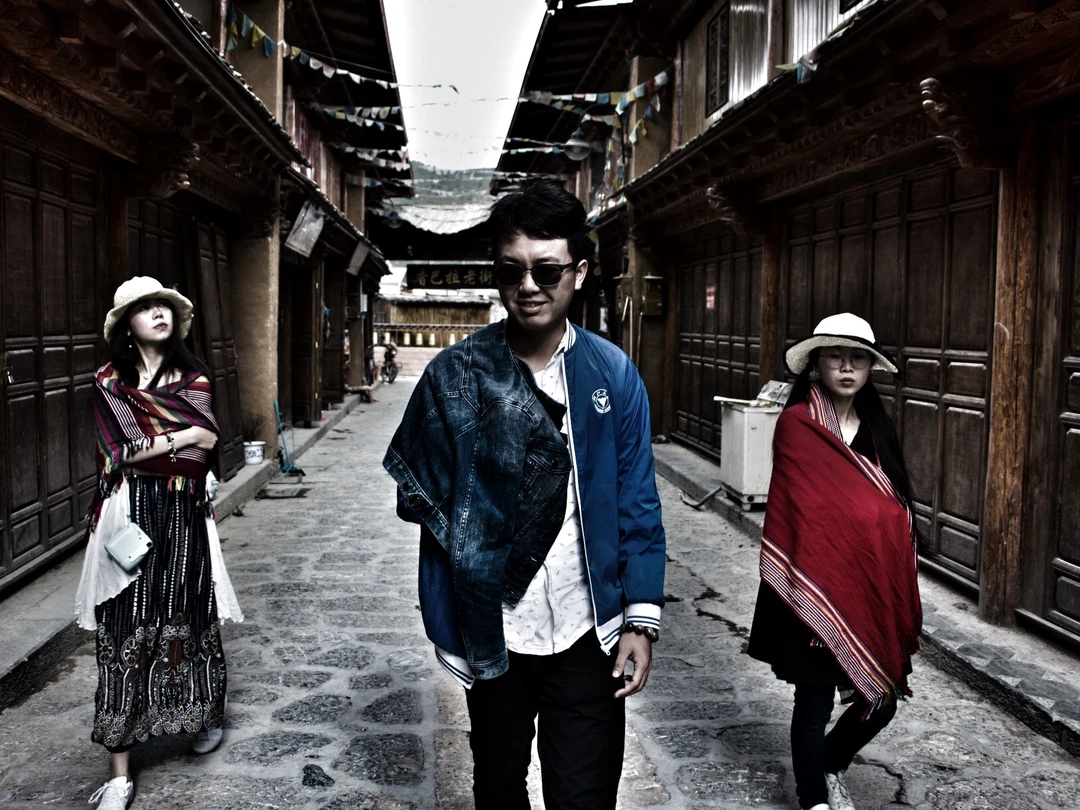
Absolutely Unbelievable! The Graduation Season Yunnan "Awkward Trip": A Fantastical Voyage of Four Drama Queens and One Old Driver
Preface: A Spontaneous "Long-Planned" Journey
Before I could even figure out which city—Kunming, Dali, or Shangri-La—was in charge of which, Yunnan had already taken root in my blood like a seed. Over four years of college, this obsession grew like wild grass, finally blooming in the summer of graduation.
There were five of us—a Northeastern girl (that's me), a Yunnan local we called "Brother Hao" (the social king), a Zhejiang couple "Lushen & Yueyue" (the lovebirds), and a guy with a magical bag named "Dora A-Di" (our human Swiss Army knife). Together, we formed the most unreliable Yunnan graduation trip squad in history. Brother Hao was in charge of handing out cigarettes, toasting drinks, and carrying the whole group; Lushen and Yueyue were responsible for shamelessly flirting, keeping us from starving on their love; Dora A-Di's backpack contained magical tools like extension cords and hand sanitizer; and I was responsible for grinning like an idiot and living in a dream.
The theme of this trip was just one word: Absolutely Unbelievable!
Itinerary Overview: A 9-Day, 8-Night "Absolutely Unbelievable" Journey

| Day | Location | Keywords |
|---|---|---|
| Day 1 | Hangzhou → Kunming → Dali | Train turns to plane, copper-pot beef saves the day |
| Day 2 | Caicun → Majiuyi → Shuanglang | Desolate Erhai Lake, rainbow braids |
| Day 3 | Dali → Lijiang → Lugu Lake | Endless mountain curves, first glimpse of Lugu Lake |
| Day 4 | Around Lugu Lake | Sunny surprise, barbecue party |
| Day 5 | Lugu Lake → Lijiang Old Town | Mountain road terror, maze-like bar |
| Day 6 | Jade Dragon Snow Mountain | 4,680 meters, icy rain and glory |
| Day 7 | Lijiang → Shangri-La | Tiger Leaping Gorge roars, Napahai tricks |
| Day 8 | Potatso → Dukezong | Eight Tibetan treasures, the prayer wheel |
| Day 9 | Dukezong → Return | Sunlight floods the city, goodbye Yunnan |
Day 1: Surprise! Surprise!
From High-Speed Rail to Plane: Magical Realism
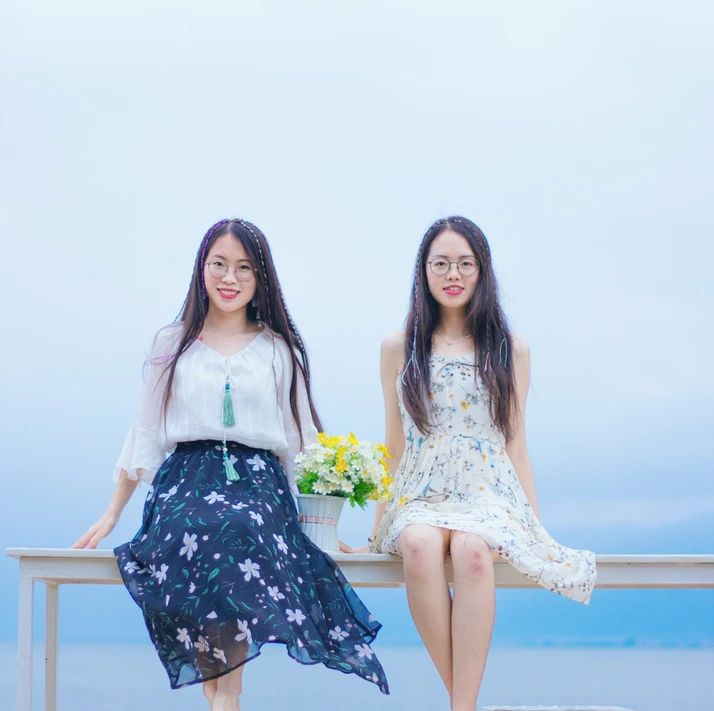
We had planned everything perfectly: take G1373 from Hangzhou East Station to Kunming, then transfer to K9632 hard sleeper to Dali. Heavy rain in the Yunnan-Guizhou region had canceled several trains, but we'd checked—G1373 wasn't on the cancellation list. "Well-planned, well-stocked," I thought, glancing at my watch, feeling like everything was under control.
But then, just before boarding, "plans never survive reality" slapped us hard in the face. The train wasn't canceled—but its final stop had been changed to Changsha.
Refund tickets, check flights, rebook—within an hour, we were racing to Ningbo. From Ningbo, we flew to Kunming, had a nearly 10-hour layover, then flew to Dali. By the time we finally arrived at the "Shanshui Jian" villa complex, it was already afternoon.
Copper-Pot Beef: The Magic Cure-All
Five of us squeezed into a small villa, our bewildered souls finally finding a place to settle. We went out to find food and stumbled upon the Tengchong Halal Flavor Garden on Hongsheng Road. Rice noodles (米线), rice shreds (饵丝), stir-fried dishes, beef hotpot—they had everything. I highly recommend the copper-pot beef hotpot (铜瓢牛肉火锅)—70 yuan per pound of cooked beef. After a hearty feast, we felt completely revived.
Dali Old Town: Yiwu Souvenirs and Original Creativity
As dusk fell, we wandered into Dali Old Town. It wasn't big, but it was full of colorful ethnic shops selling shawls, jewelry, car CDs—a dazzling array of Yiwu-style souvenirs. Nice to look at, but that's about it. The flower cakes (鲜花饼) and grilled milk fan (烤乳扇) were somewhat unique. Remember: for flower cakes, stick with Jiahua!

At the end of Yangrenjie Street, there was a small handmade crafts market. It was tucked away in a corner, but it had some genuinely interesting items. The prices for goods you could wholesale on Taobao were reasonable, while the artisans who had put real effort into their work sold with pride. "All my ideas are in here—they're my originals," said Zaxi Nalamu, a woman making flower accessories, answering my question eagerly.
On our way back, we stopped under the city gate, listening to a street singer perform "Chengdu" and "Southern Girl" while taking selfies against the headlights of passing cars. We bought one of the singer's original CDs as a thank-you—the album was full of defiant folk songs, and it had been raining in Dali all day.
Day 2: Meeting the Desolate Erhai Lake
Caicun and Majiuyi: Quiet Enough to Break Your Heart
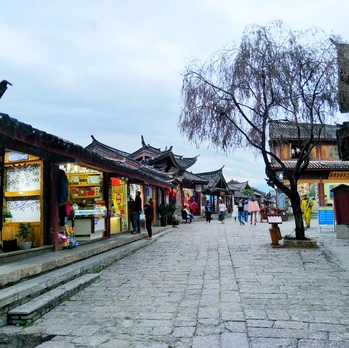
As many of you know, most shops along Erhai Lake had been shut down for renovations, giving the whole area a desolate, almost barren feel. The once-lively decorations behind glass windows were now locked away under heavy padlocks. But this version of Erhai Lake was incredibly peaceful.
Caicun had nothing to offer except boat rides, so we moved on to Majiuyi. The road was bumpy, and the scenery lacked its usual polish. I spent 10 yuan to get "Rainbow Yunnan Braids" (七彩云南辫) and felt incredibly exotic when taking photos. There were many photo props by the water at Majiuyi, but you never knew when a local might pop up to charge you—just look, and if you want photos, go to Shuanglang.
Shuanglang: A Frenzy of White Tables and Glass Balls
We spent 300 yuan to hire a 7-seater car for a round trip to Shuanglang (ask taxi drivers for leads). Circling Erhai Lake, the quiet lake was still beautiful.
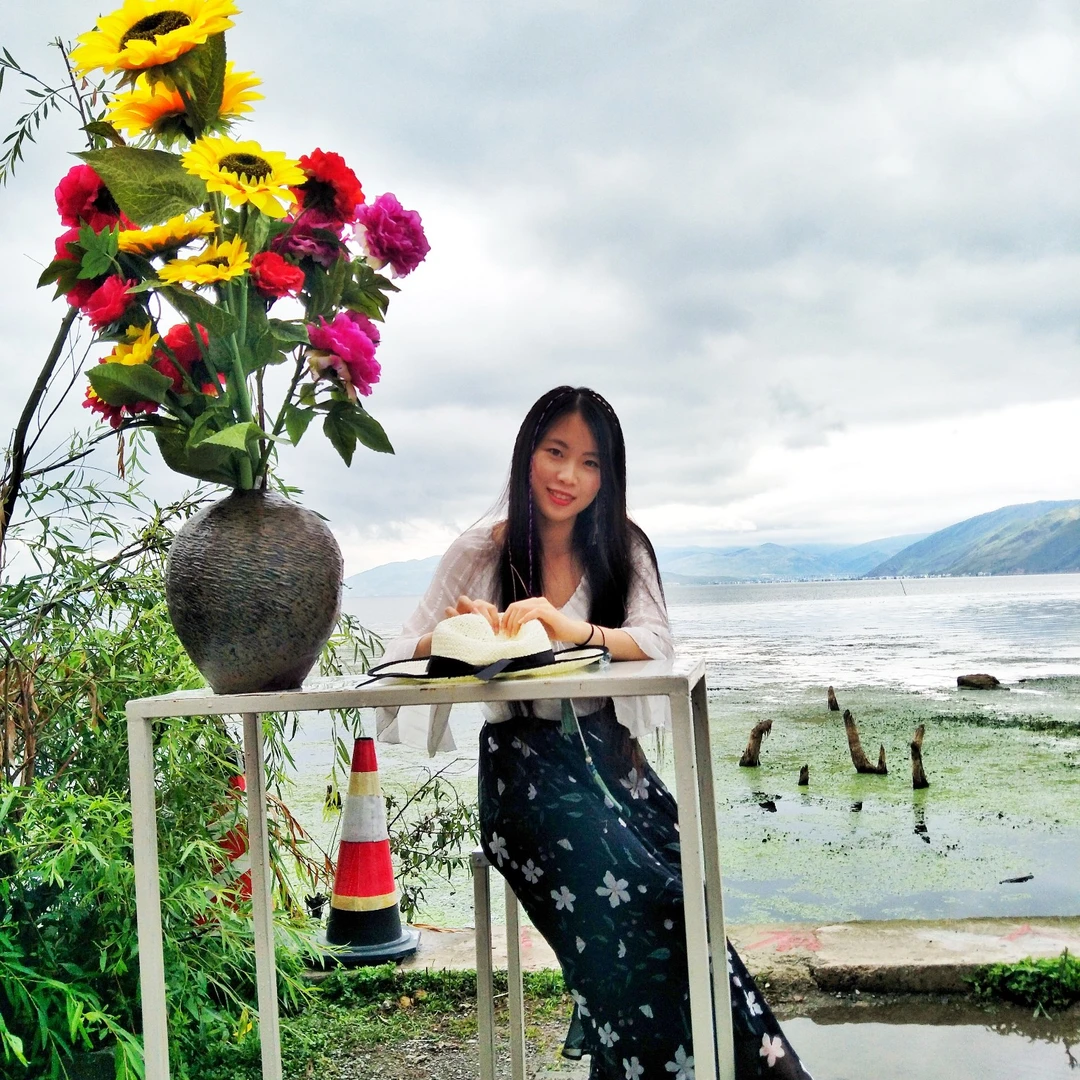
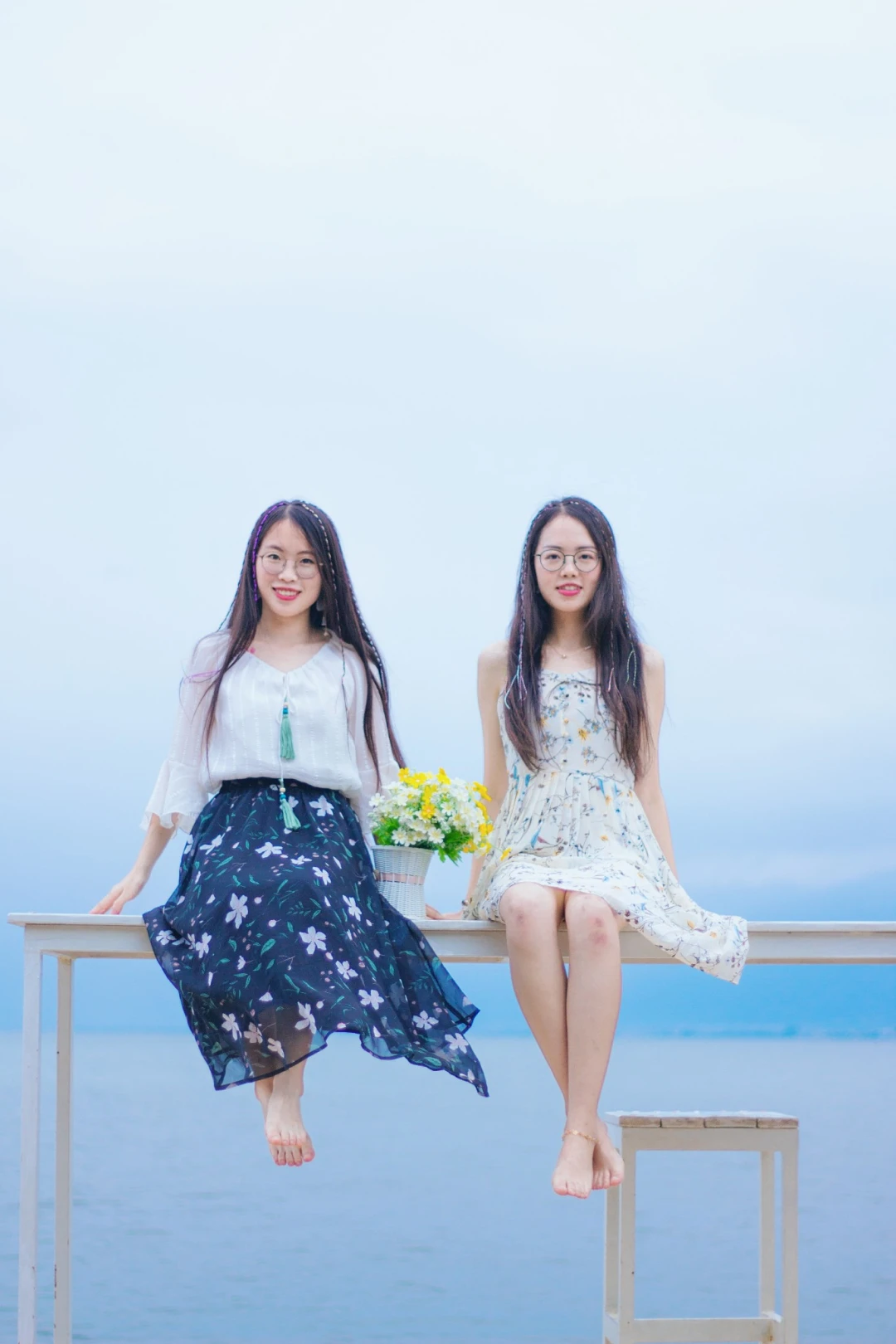
The white tables and glass balls at Haidi Life were Instagram-famous spots, and we happily took a bunch of tourist photos. Similar props were scattered along the lakeshore, each with slightly different angles, all charging 5 yuan per person. The advantage of fewer tourists was clear—this little courtyard became our private photo studio.
We got so lost in taking photos at Shuanglang that we lost track of time. On the way back, we found a small shop on Hongsheng Road and had cold chicken rice noodles (凉鸡米线)—highly recommended again.
The weather forecast had said moderate rain, but it was overcast all day, with even a few minutes of sunshine. Lesson one: weather forecasts in Yunnan are useless. Lesson two: thank the heavens for the good luck.
Day 3: We Meet by Chance, No Need for Acquaintance
Hard Sleeper as Hard Seat: A Windblown Group Photo
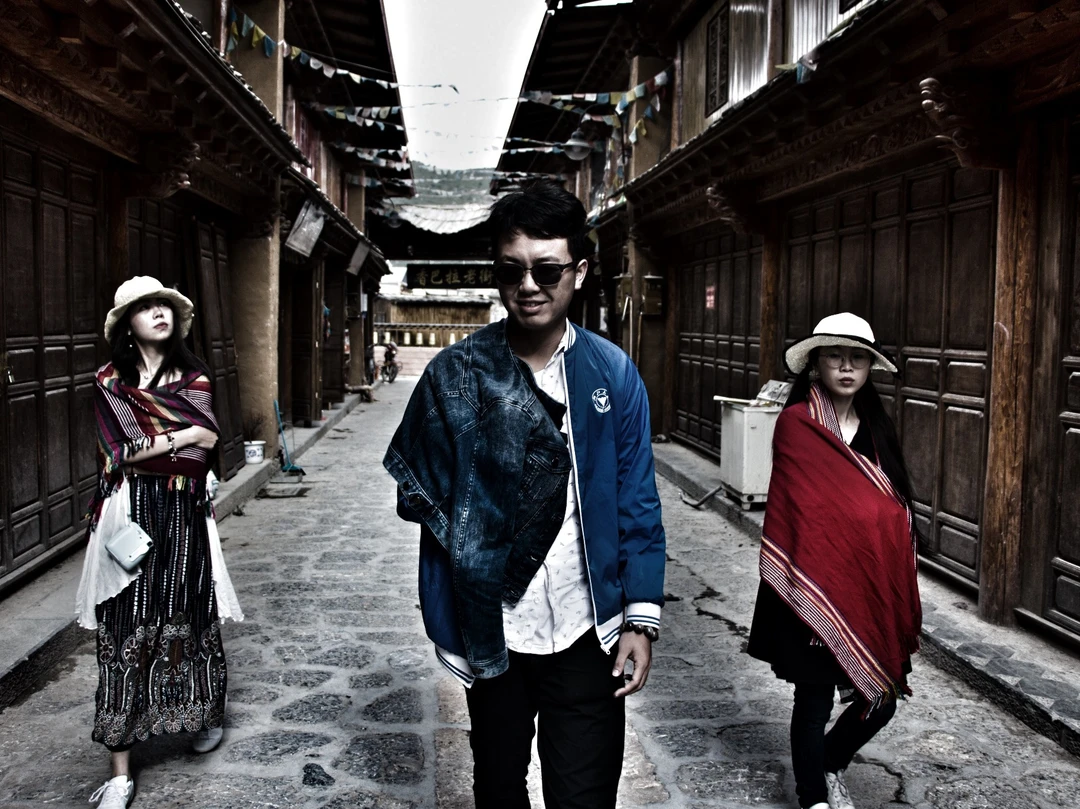
Before dawn, we dragged our luggage to Dali Train Station and boarded the 5:50 K9603, a "hard sleeper as hard seat" train to Lijiang. We took a windblown group photo in front of the station—so messy we didn't even bother mirroring the image.
Lushen: "I edit photos in daylight, I edit photos at night, and I have to be a pillow for Yueyue. I quit! My eyes need a break!"
Yueyue: "Oh, you~ you naughty thing~"
Dora A-Di, Brother Hao, and I: "Absolutely Unbelievable!"
Lugu Lake: First Sight, Eternal Memory
We arrived at Lijiang Train Station at 8:30, took a taxi to the bus station, and immediately caught the 10:00 bus to Lugu Lake. Nearly four hours of winding mountain roads gave us a true taste of Yunnan's terrain—endless 180-degree hairpin turns that left us dizzy and terrified, too scared to move, eyes squeezed shut. At a rest stop, we bought sour green plums that helped settle our stomachs. At noon, the bus stopped at a restaurant for half an hour—a 20-yuan buffet with six dishes.
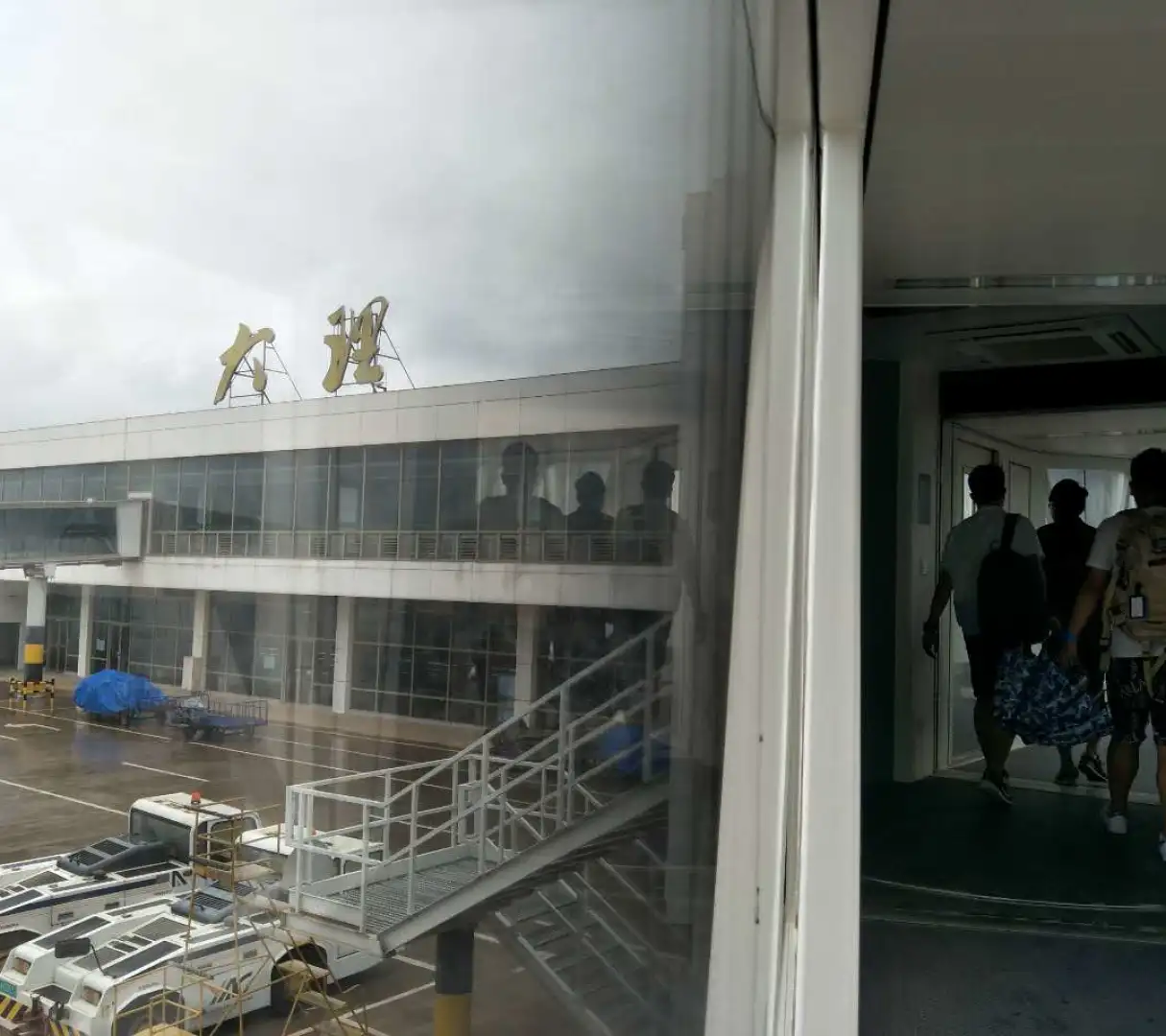
Friendly tip: On Yunnan's mountain roads, don't get too lively. Before you bounce, you're a sprite; after you bounce, you're a mess.
In the afternoon, after much effort, we finally reached Lugu Lake. The guesthouse we'd booked, Yanyuan Xinna Mimi, was actually on the Sichuan side of the lake, a half-circle away from where the bus dropped us off. We called the owner, but he said he couldn't send a car—the Yunnan and Sichuan transport teams weren't the same. Frustrated and helpless, we hired a car. But soon, all our worries melted into the waters of Lugu Lake.
I don't know how to describe the awe and love I felt when I first saw Lugu Lake. The water was so pure you could see straight to the bottom. Surrounded by green mountains and trees, dotted with simple traditional houses, it was as if the lake itself could soothe your soul just by looking at it.
The Mosuo Family: Green Plum Wine and Lake Fish
With a gentle breeze accompanying us, we arrived at a Mosuo village. The guesthouse owner, Brother Tao, was Mosuo. Since we'd been introduced by a friend, he was exceptionally warm. Green plum wine, bitter buckwheat tea, melon seeds, snacks—his mother piled the table with food and drinks to welcome us.
Brother Tao took us to the lakeshore, where we sat at low tables on the grass, enjoying lake fish against a backdrop of green mountains, blue sky, and white clouds. The fish was cooked in lake water with just a few seasonings, resulting in a delicate, milky-white broth and incomparably fresh meat. Accompanied by sentimental beer and carefree singing, we all let down our guard and laughed at the world.
Joining us were two girls from Chongqing. Life is full of chance encounters—why need a reason to connect? We imitated each other's dialects, strangers yet familiar. Brother Tao talked about his dreams of building up his hometown, while we traded jokes both highbrow and lowbrow. All that mattered was the laughter and the moment.
It got dark very late—I remember twilight didn't fully fade until nearly 9 PM. Brother Tao settled us down with tea before being called away by friends for drinks. The landlady was graceful and bold, with an air of authority, yet gentle and warm when teaching her son. She had stunning eyes that crinkled like autumn peach blossoms when she smiled. We finished two plates of grapes before Brother Tao returned, slightly drunk, exchanged a few more words with the landlady, and finally walked home under the moonlight.
The sky wasn't clear that night—only a few stars peeked through—but the moon generously coated the lake in silver. Occasionally, we could hear songs drifting from the lakeshore—parties that hadn't yet ended.
Day 4: What a Night, What a Day
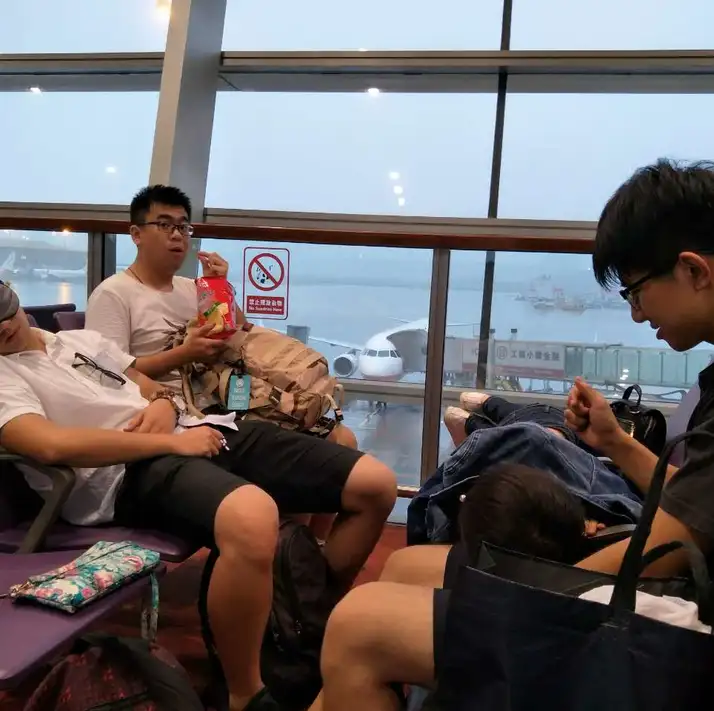
A Gift of Sunshine
Blessed by Goddess Gemu, Lugu Lake—which had been drenched in rain for over half a month—finally cleared up. Luck, pure and simple. Electric scooters were banned, so we hired a car to circle the lake. Different scenic spots were scattered like pearls around Lugu Lake. The sunlight was intense, and the shimmering lake surface looked like a silver mirror, reflecting the sky and blending mountains with water.
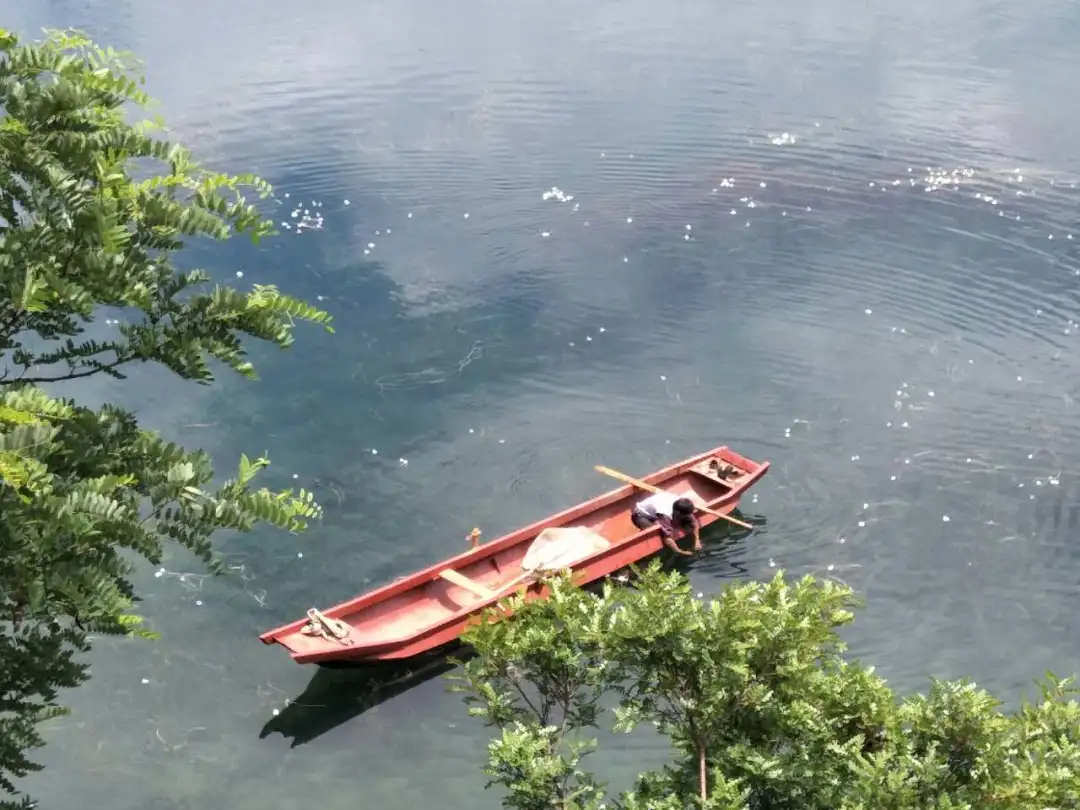
The Marriage Bridge wound through the sea of grass, supposedly a place where Mosuo boys and girls would meet. Delicate white flowers floated on the water, called "water-loving flowers" (水性阳花), which could also be eaten.
The Mosuo Ancestral House: Stories by the Fire
After circling the lake, we returned to the guesthouse in the evening to rest. Suddenly, a downpour arrived, and the sunshine vanished like a doused flame. We witnessed once again the fickleness of southwestern weather.
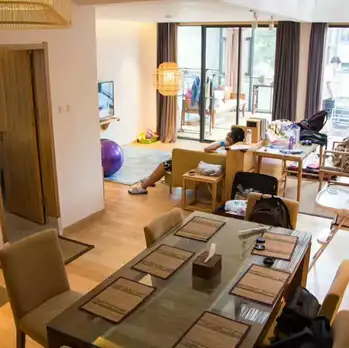
That evening, Brother Tao took us to visit a Mosuo ancestral house. These houses typically include a scripture tower, a flower tower, and a grandmother's room. The grandmother's room was spacious, but the door was low—designed so that younger generations would bow when entering, as a sign of respect. Inside, there were two pillars and five beams, representing yin-yang and the five elements; an upper and lower fire pit for worship and daily use; a wine cabinet with a wealth god statue beside it; a fire god stone tablet near the fire pit; and a large cross-stitch reading "Harmony Brings Prosperity" alongside a big-screen LCD TV. Two elementary school students from the family were playing with tangrams on mats near the fire god, their Lugu Lake Elementary uniforms dirty but shiny, with old-fashioned knot buttons at the collar.
The room was dim, but the fire was bright. We sat around the fire pit, chatting about everyday things. The Mosuo people use alcohol to welcome guests. As soon as we entered, Brother Long brought out cups and poured medicinal wine for everyone, and we sipped it while munching on melon seeds.
After a few cups of wine, even the stormy weather didn't feel cold. When the time was right, Brother Tao took us out for barbecue. This time, even more strangers joined us, and songs of all tones echoed back and forth. Grilled cucumber, grilled rice cakes (饵块, niangao), and grilled potatoes were surprisingly delicious. We ended the day to the sound of pouring rain.
Day 5: Waiting for Your Return, My Little Darling
Mountain Road Terror
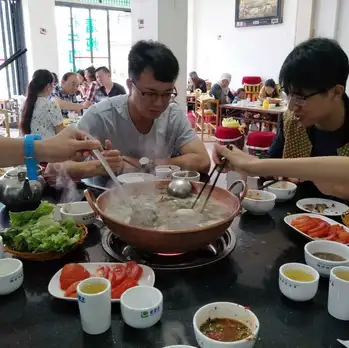
The rain didn't stop in the morning, giving us an excuse to sleep in. Before leaving at noon, we plucked two green apples from a roadside tree for snacks. Brother Tao said they weren't ripe and would be sour and bitter, but I loved them.
In the afternoon, we hired a car for 300 yuan to take us from Lugu Lake to Lijiang Old Town. The twisting mountain roads were terrifying, with falling rocks appearing out of nowhere. At times, we drove through thick fog with visibility under 10 meters, leaving us staring at each other in silence, speechless. But the driver remained calm, never slowing down, so we decided not to borrow trouble.
The driver's playlist was mostly loud, far-reaching mountain songs, except for one bright, cheerful tune that stood out—unforgettable. Little did we know we'd hear it again so soon. Almost every hand-drum shop in Lijiang played that sweet female voice, singing about "waiting for your return."
Lijiang Old Town: A Night in the Labyrinth
We arrived at Lijiang Old Town near dusk. There are three cultures you must experience in Lijiang: guesthouse culture, tea culture, and bar culture. We checked into Guose Tianxiang Guesthouse, tried Uncle A Niu's five excellent teas, and had dinner at Yunxueli Restaurant. As the lights came on, the old town began to heat up.
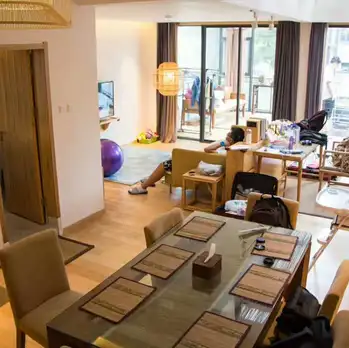
Maze Bar. The female lead singer had a sweet voice with a hint of grit, while the keyboardist cracked jokes and bantered. When the singer left, the keyboardist used a voice changer to carry the whole show. As the drinkers got into the mood, the bar owner grabbed a guitar and jumped on stage, shouting rock and roll. Brother Hao mistook "The You I Once Knew" (曾经的你) for "Blue Lotus" (蓝莲花) and then misidentified a song called "Hangzhou"—he got mercilessly roasted from the inside out.
"Wind, Flower, Snow, and Moon" (风花雪月)—a beautiful name for a beer with a very mild taste. I could feel the intoxicating atmosphere permeating the city: flirtatious glances, dreamy eyes. With righteous indignation, I watched men and women weave threads of hormones, entangling others and binding themselves. I went to bed early that night—definitely not because I didn't have a romantic encounter, but because I had to get up early to climb the mountain tomorrow.
Day 6: 4680
Blue Moon Valley and the Summit
We booked a one-day small group tour on Mafengwo for about 450 yuan per person. We set off early and arrived at the scenic area in about half an hour. First stop: Blue Moon Valley. The sightseeing car cost 50 yuan per person, but hiking might have been nice too. It was cool on the mountain, and we wore bright red winter jackets, turning into a colorful streak against the cold, beautiful backdrop.
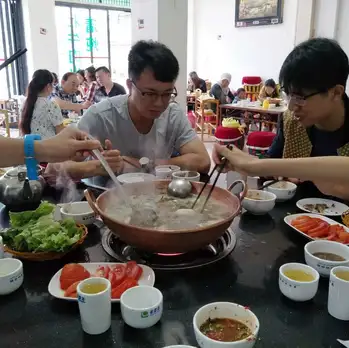
While waiting for the cable car, we goofed around with our oxygen tanks, posing for photos. After a 15-minute cable car ride to 4,571 meters, the grueling climb up the boardwalk began. To help visitors gradually adjust to the high altitude, the boardwalk was gently sloped but very long—only about 100 meters in elevation gain, but stretching much further. Cold, icy rain slapped our faces—not a pleasant feeling.
Surprisingly, the signal on the mountain was excellent. On a whim, I video-called my parents on WeChat, giving them a live broadcast. My friends and I supported (and teased) each other, stopping to catch our breath, adjusting our pace, and soon enough, we reached the summit.
After descending, we had a preserved pork rib hotpot (腊排骨火锅) and then visited Ganhaizi Meadow. Ganhaizi was a vibrant green carpet dotted with small white and yellow flowers, with tall pine forests in the distance.
Wandering the Old Town: Dogs and Flower Cakes
Back in Lijiang's Dayan Old Town in the evening, we explored the still-sober city. Many shops kept giant, famous-breed dogs—they either chased each other or slept peacefully, making us a little envious. There were two dogs that moved in perfect sync, and a pair of Samoyeds that looked like they'd been raised as bears.
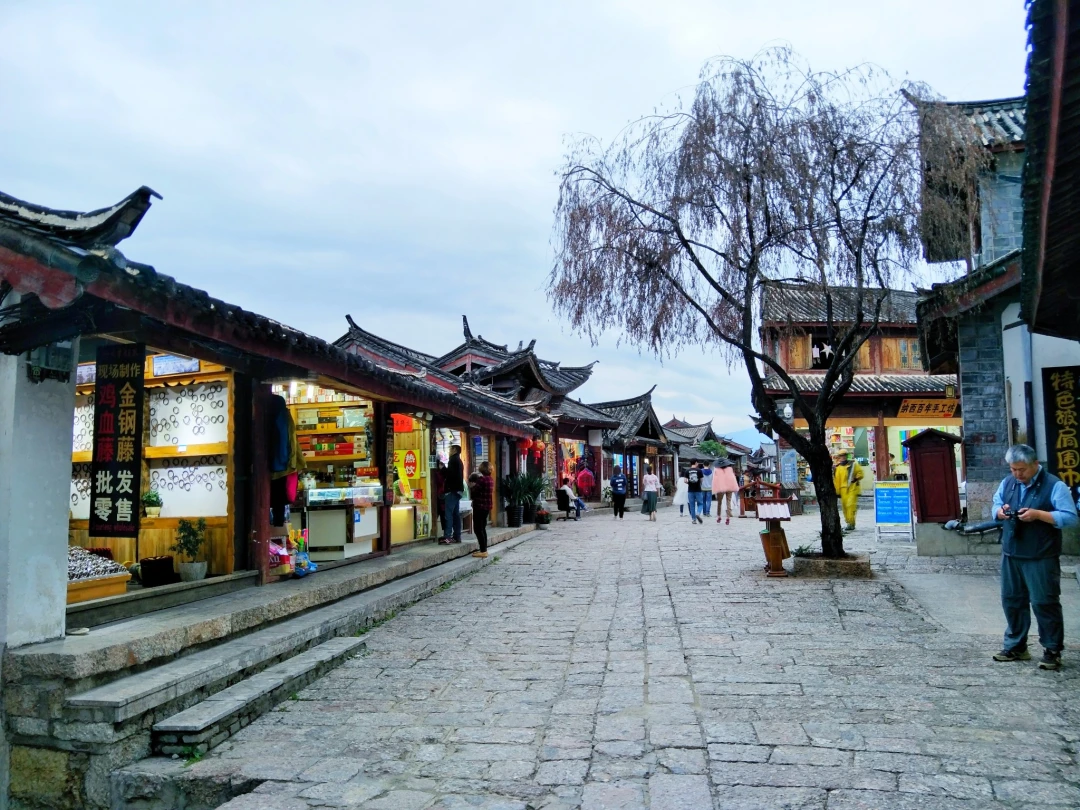
The old town was bursting with flowers, every corner showing careful, artistic design. Turning each street corner, "Little Darling" (小宝贝) played on loop from hand-drum shops. The Naxi script was beautiful, primitive, and full of life. Taking a moment to recognize a few characters felt magical.
As night fell, lanterns lit up one by one. Following online tips, we tried "Erkuai Time" (饵块时光)—the savory version was better than the sweet, but either way, it wasn't enough. So, we once again bowed to the power of Jiahua flower cakes.
Day 7: Zaxi and Zhuoma
Tiger Leaping Gorge: Nature's Roar
For the Shangri-La portion, we booked a two-day small group tour on Mafengwo for about 860 yuan per person. It rained all day, with a chill in the air. Following our guide, we exchanged "Tashi Delek" greetings and set off from Lijiang toward Shangri-La.
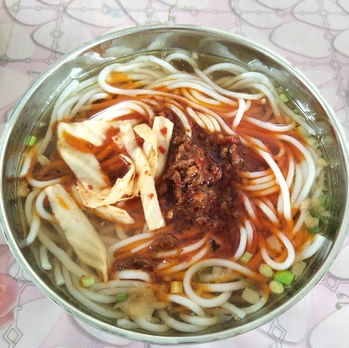
Tiger Leaping Gorge was the first major stop, located on the border between Lijiang and Shangri-La. Before we even walked down the boardwalk, we could hear the roaring river, like thunder in a rainstorm.
Guide Sun: "Don't jump in. If you jump, it won't be Tiger Leaping Gorge anymore—it'll be Human Leaping Gorge."
Us: "Then it could be called Tiger-Human Leaping Gorge..."
The green mountains looked as if sliced by a knife, and the muddy yellow torrent surged past with a deafening roar. The churning waves were dizzying, the thunderous sound overwhelming. The towering cliffs on both sides stood immovable, while small, clear waterfalls flowed quietly between them—extreme motion and extreme stillness coexisting in perfect harmony. Faced with nature's awe-inspiring power, humans seemed so small.
Napahai: Getting Tricked with a Smile
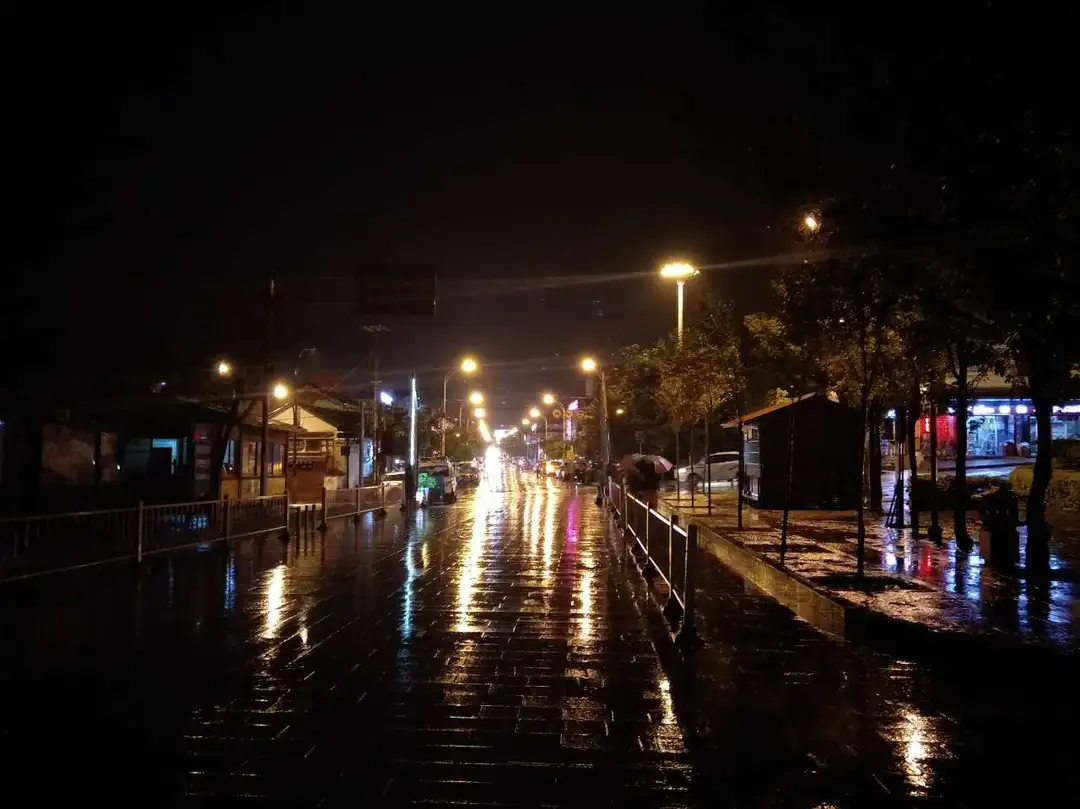
Honestly, we got tricked at Napahai. I won't even mention the overpriced shoe covers. We rode horses led by Tibetan locals for over an hour, and I couldn't shake the feeling that it wasn't just the horses being led.
By chance, a Zhuoma (Tibetan woman) let my little yellow horse walk freely, and it happily started trotting. I bounced on the saddle for a minute and was overjoyed. Yueyue's horse was old and wise, calm and steady, not greedy for food, so it didn't need to be led and walked freely. The rainy grassland looked like a vivid oil painting, with puddles forming a sea, like mercury poured onto a green blanket. Unbridled cattle and horses grazed leisurely in the distance.
Songzanlin Monastery: Little Potala Palace
The "Little Potala Palace," Ganden Sumtseling Monastery, has a history of over 300 years. Built on a hillside, it was grand and imposing. As we climbed the steps toward the main hall square, even without religious faith, a sense of reverence arose in our hearts. The Tibetan guide from the scenic area stood tall and straight, telling stories about the monastery while cracking serious jokes.
Inside the main hall, incense smoke curled gently, and the Buddha statues were solemn. Monks sat in a corner, chanting scriptures. The wooden structure inside was exquisitely intricate and unmatched—vibrant colors without being garish, detailed carvings without repetition. The faithful had poured all their devotion into making the monastery beautiful, and their transparent sincerity seemed to earn the gods' protection.
Looking down from the top floor of the main hall—nearby greenery, distant dark mountains, still water, clear sky, human life, and Buddhist chants—everything was harmonious, like a paradise.
The Eight Tibetan Treasures—precious umbrella, golden fish, treasure vase, lotus, white conch, endless knot, victory banner, and dharma wheel—we silently memorized them and identified their decorative motifs on every building, feeling we had made a small acquaintance with Tibetan Buddhism.
The Chieftain's Feast: An Ocean of Khatags
Dinner was called the "Chieftain's Feast." Holding cups of barley wine, feasting on yak meat, watching Zaxis and Zhuomas sing and dance, with a small hotpot bubbling in front of us that stubbornly refused to boil.
The host introduced his father, who had married three wives and had 16 children—true or not, he certainly downed three bottles of strong liquor without hesitation. The singing Zhuoma had a sweet, clear voice like mountain snowmelt, her posture straight, her smile like a spring breeze. The audience rushed the stage, offering khatags (Tibetan ceremonial scarves) and taking photos. The Zhuoma bent down again and again, smiling as she accepted them, her voice never breaking, her breath steady—but she was almost drowning in a sea of white khatags.
Me: "So this is how they recycle the khatags."
Brother Hao: "Yeah."
Me: "But I don't know why... it makes me uncomfortable."
Brother Hao: "Yeah, me too."
Three Zaxi guys and three Zhuoma girls handled all the dance performances—graceful and dignified, lively and light, masculine and feminine—they performed everything excellently. When they held up five-colored khatags and performed a full prostration before us, I felt deeply uneasy and barely stopped myself from kneeling in return.
One Zhuoma girl was stunningly beautiful, with a supple body and flawless dance moves. She wore a cold, aloof expression, like a thin, crystalline petal on a snowy mountain—cold and noble, impossible to look away from.
One Zaxi guy was handsome and tall. Seeing me captivated, Brother Hao dragged me over to ask for a photo together. During the photo, the Zaxi teased, "Can I kiss you?" Fearless, I replied, "Sure." When he suddenly leaned in but realized I hadn't flinched, he froze for a moment. I thought he was as cute as a fawn.
Brother Hao: "What the f***."
Day 8: Fresh Yak Milk with Barley Flour
Potatso National Park: 99.81% Purity
Potatso is mainland China's first national park, consisting of Shudu Lake, Militang Subalpine Meadow, and Bita Lake. The scenic area is connected by sightseeing buses, and the Zhuoma on board would introduce the beautiful legends of Potatso. With abundant species and pure air, a 99.81% vegetation coverage rate made me feel like I was the 0.19% ruining this paradise.
Walking through Bita Lake, I felt even more out of place in this beautiful landscape. Of course, Yueyue complemented the scenery perfectly.
The biggest takeaway from the hike was learning the Tibetan pronunciations of the Eight Treasures from the signs: duo, si-niang, beng-ba, bai-ma, dang-gei, ba-wei, gu-lu. Except for the victory banner, we saw and remembered the other seven.
Dukezong: The Prayer Wheel and Post-Fire Desolation
This is the world's largest prayer wheel—it takes over twenty people working together to turn it. After circling it clockwise three times, we sat on wooden benches, overlooking the entire Dukezong Old Town. Every inch was filled with a sense of peace.
Zhima Kaihua Guesthouse was inside Dukezong Old Town, with a courtyard featuring a hanging bed draped in gauze curtains. Each room had different decor, but the style was generally quite "suggestive"—the bathroom and bedroom were separated by a transparent glass window, but the curtain was on the bedroom side. The designer's intentions were truly... thoughtful.
On January 11, 2014, a massive fire swept through Dukezong Old Town. The town's desolation might have started from that day—the once-vibrant old streets now held only passing tourists and their茫然 (bewildered) memories.
In the evening, we had barbecue at a nameless小店 (small shop). Grilled cucumber and grilled rice cakes were as delicious as ever. Fresh yak milk with barley flour was more palatable than sour yak milk with sugar. But make sure to ask the price clearly—you might end up paying 10 yuan per cup for fresh milk instead of the same price as sour milk.
Yueyue's Polaroid skills improved steadily—by the last stop, we had a table full of decent photos.
Day 9: Sunlight Floods Dukezong
The Last Breakfast
Barley cakes, butter tea, beef rice noodles—a warm, gentle breakfast to start a clear morning. The walls of the shop were covered with colored paper slips, each carrying the writings of passing travelers, always wanting to leave something behind. We grabbed some colored paper and scribbled a few thoughts.
The morning old town hadn't fully woken up. A Tibetan elder in a headscarf was already turning prayer beads and pushing the prayer wheel. Rays of morning sunlight slanted down, warming our eyelids. In the Tyndall effect, light dust floated in the air, still visible before the noise of the day began.
Turning a corner, we suddenly found a stone tablet inscribed with the Tibetan pronunciation of the "Victory Banner"—Ji-shen. That single glance completed our collection of the Eight Treasures, like a beautiful fable.
Then, the morning wash water, carrying away sleepiness, slowly flowed through the gaps between the stone slabs, evaporating in the sunlight. Sunlight flooded the city, and the old town woke up.
Epilogue: To Be Continued
What a night, what a day, to meet such wonderful people. Seeing them, worries fade, sharing the journey through wind and rain.
The dream ends here, but our story is to be continued. One day, I'll return here, and he'll sing, "Waiting for your return, my little darling."
Wishing everyone a bright future.
Let's say it one more time together: Absolutely. Unbelievable!
Practical Tips Summary
Transportation: Yunnan has many mountain roads—bring motion sickness medicine. Train tickets can be canceled last minute, so have backup plans ready.
Accommodation: At Lugu Lake, stay at a Mosuo-run guesthouse for an authentic cultural experience. In Lijiang Old Town, the guesthouse culture is worth experiencing.
Food: Copper-pot beef hotpot (Dali), cold chicken rice noodles (Dali), grilled rice cakes (Lugu Lake), Jiahua flower cakes (Lijiang), fresh yak milk with barley flour (Shangri-La).
Photography: Haidi Life in Shuanglang (5 yuan/person) is more worthwhile than Majiuyi. Rainbow Yunnan braids cost 10 yuan each.
Altitude Sickness: Jade Dragon Snow Mountain is at 4,680 meters—oxygen tanks are essential. Adjust your breathing and pace when climbing the boardwalk.
Cultural Respect: Bow when entering a Mosuo ancestral house. Turn the prayer wheel clockwise three times. Learning the Eight Tibetan Treasures is worthwhile.
Avoiding Scams: Ask about horse riding prices at Napahai upfront. Fresh milk prices in Dukezong may double. Photo props may come with hidden fees.
You should also read:
Escaping Nanning, Falling Under Lijiang's Spell: Our Four-Person, Ten-Day Yunnan Dream
Escaping Nanning, Falling Under Lijiang's Spell: Our Four-Person, Ten-Day Yunnan Dream Before We Set Off: No Pain, No Obsession Have you ever had that impulse—suddenly tired of the office fluorescent lights, the crush of the subway, the endless parade of identical takeout boxes, and just…
Continue reading...
Solo in Yunnan: A Wanderer’s Guide to the Land of Eternal Spring
Solo in Yunnan: A Wanderer’s Guide to the Land of Eternal Spring There’s something magical about traveling alone. No compromises, no schedules to keep, no one to please but yourself. I’ve been on the road for nearly three months now, and not once have I…
Continue reading...
God’s Abandoned Palette: A Self-Drive Journey Through Yunnan’s Dongchuan Red Land
God’s Abandoned Palette: A Self-Drive Journey Through Yunnan’s Dongchuan Red Land Travel has never been about reaching some distant geographic coordinate. It’s about encountering, along the way, the version of yourself buried beneath the rubble of daily routine. During this May Day holiday, I finally…
Continue reading...