Across Mountains and Seas, Becoming Myself—Yunnan in the Clouds (Dali·Lijiang·Shangri-La)
Across Mountains and Seas, Becoming Myself—Yunnan in the Clouds (Dali·Lijiang·Shangri-La)
Prologue: A Journey of Growth and Freedom
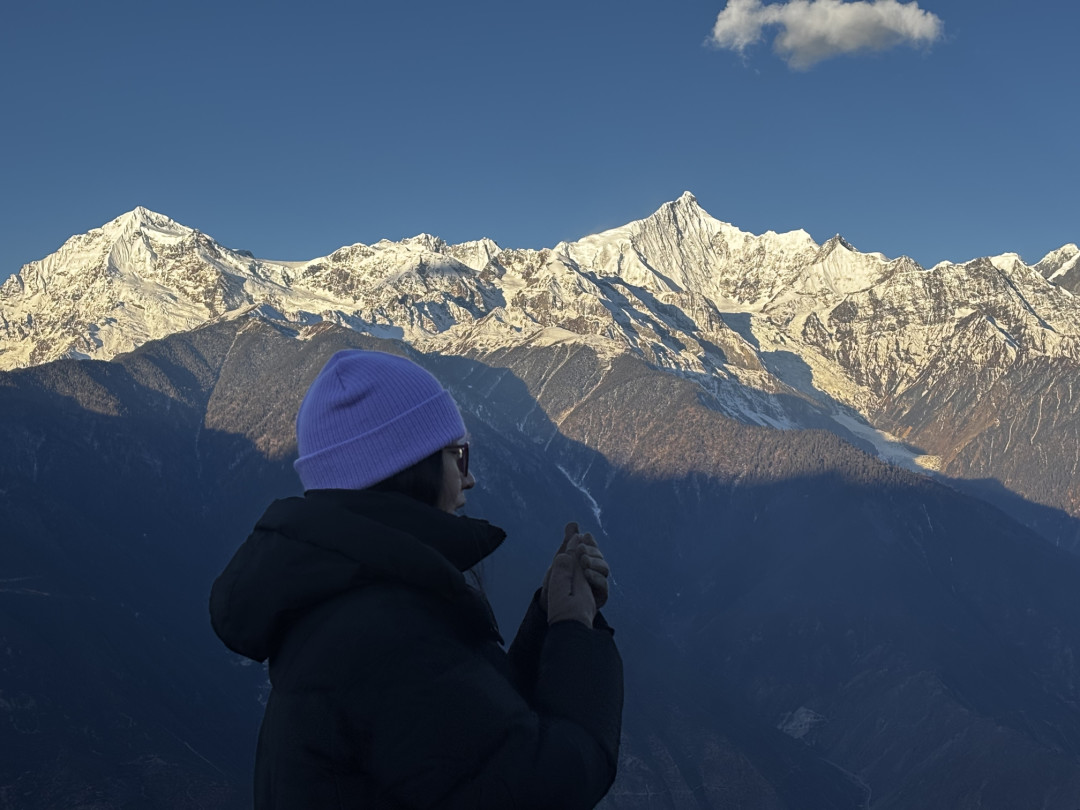
On my birthday, we stood on the highlands of Shangri-La. The cold wind brushed across my face as sunlight pierced through the thin air and landed softly on my skin. My son pressed the shutter and captured that moment of me. When I sent the photo to my best friend, she replied: "Across mountains and seas, you become yourself." In that instant, I understood that the meaning of this journey had long surpassed the scenery itself—it was a shared search for self between a mother and her son.
We spent 10 days and 9 nights traveling from Dali to Lijiang, then to Shangri-La, heading ever westward and ever upward. There was no airtight plan—only a general direction and small expectations. My son asked me: "Since we planned it, why change it randomly?" I told him: "A plan is the skeleton; spontaneity is the flesh and blood. It's the same with life—learn to go with the flow, and you'll often reap more surprises."
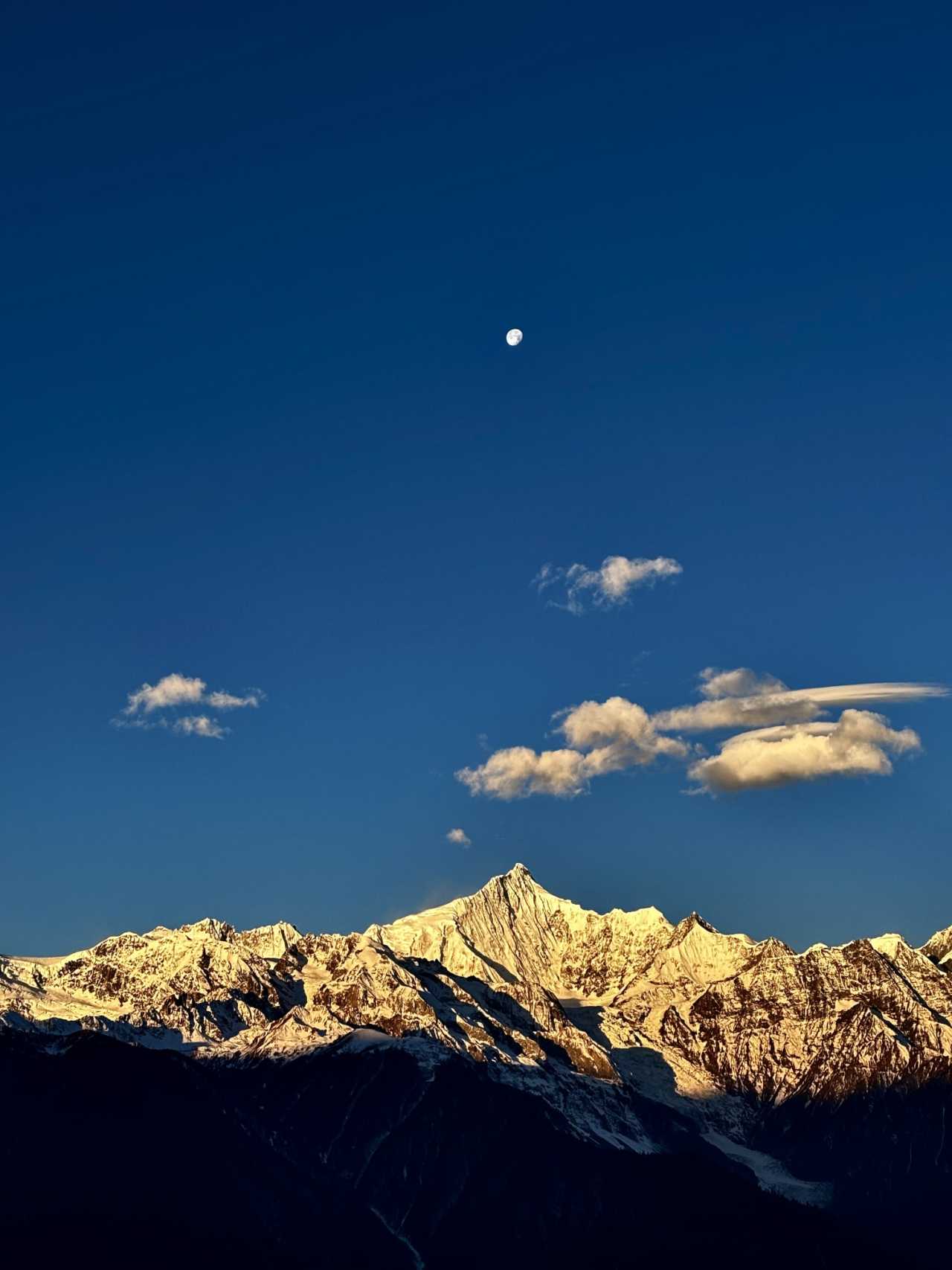
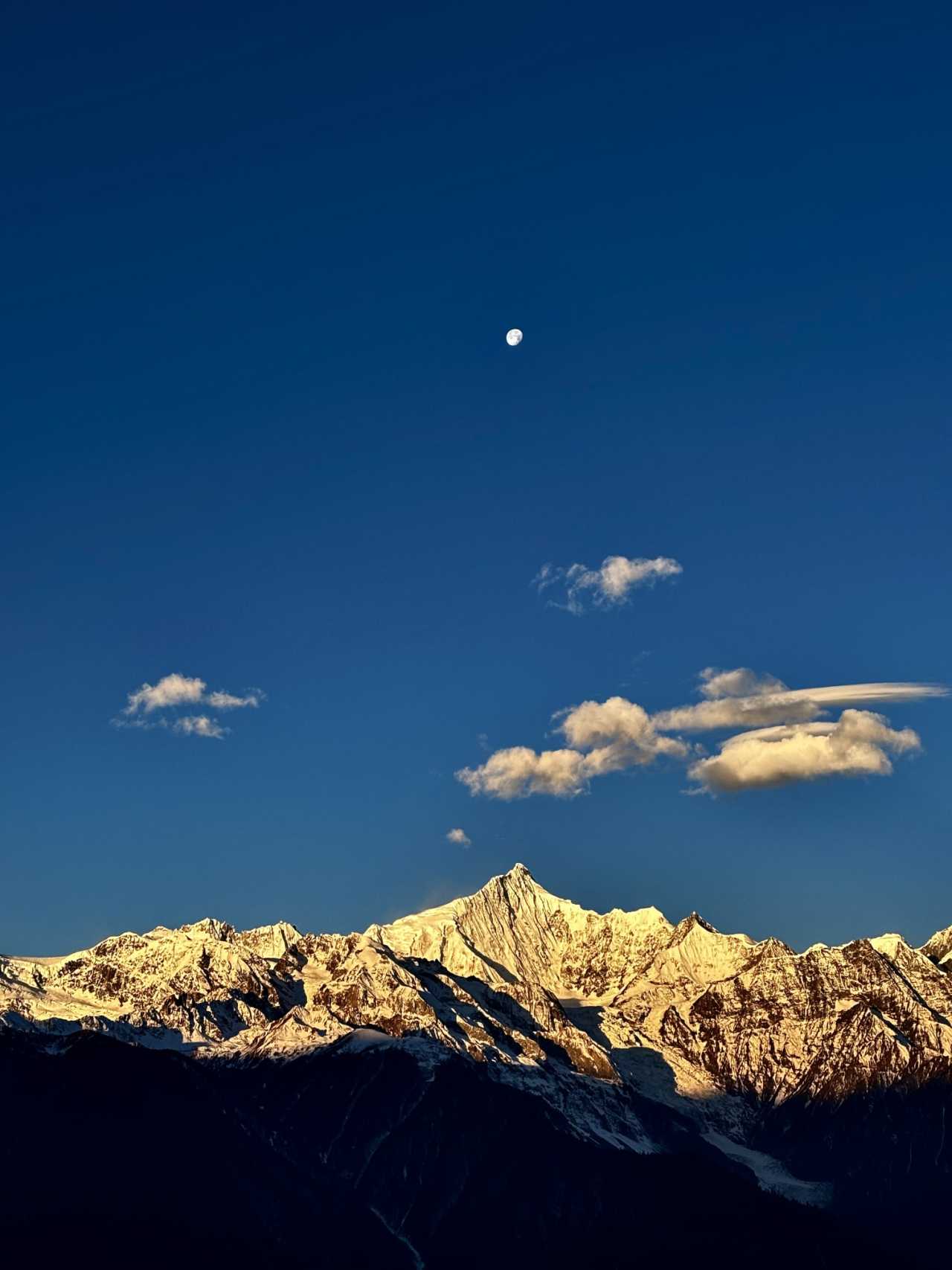
As it turned out, this "planned spontaneity" let us catch the sunrise over Erhai Lake, the golden glow on Jade Dragon Snow Mountain, and the golden peak of Meili Snow Mountain. It also let us snag tickets for the Jade Dragon cable car, rest in the morning mist, bask in the afternoon sun, and sing together in a small room late into the night. No regrets—only memories to savor.
Itinerary Overview: A 10-Day, 9-Night Yunnan Journey
Day 1: Beijing to Dali (via Wuhan, with a layover that let us snag some airport perks), dinner of 菌子火锅 (wild mushroom hotpot)
Day 2: Erhai Lake Eco-Corridor → Xizhou Ancient Town → Dali Old Town (Da Bing's Little House)
Day 3: Xingsheng Bridge → Yunxiang Mountain → Haidong (Lixiangbang, Wenbi Village, Xiaoputuo) → Lijiang (Da Bing's Little House)
Day 4: Lijiang Old Town—wandered all day
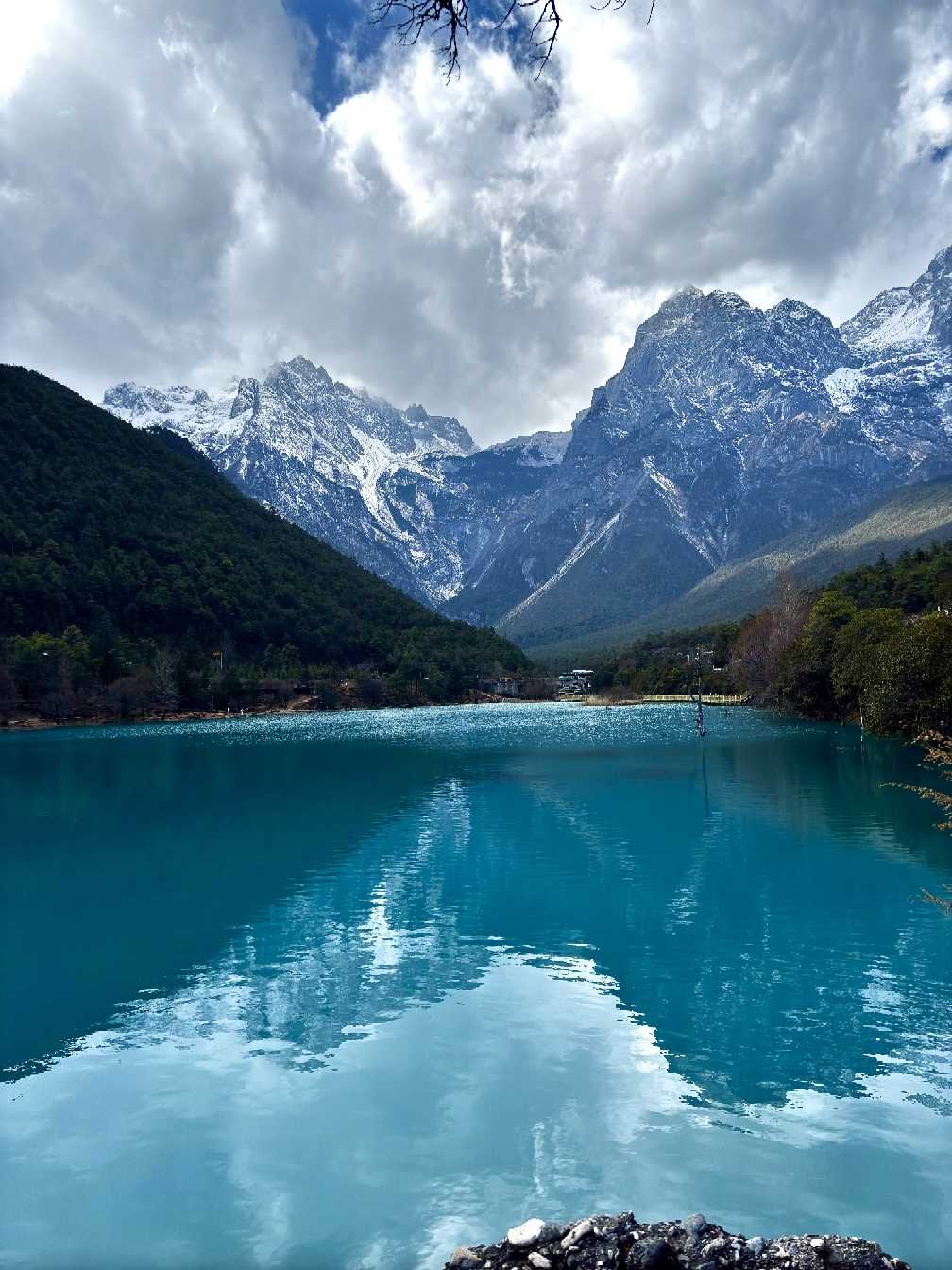
Day 5: Jade Dragon Snow Mountain + Blue Moon Valley
Day 6: Yundian'an Coffee → Baisha Ancient Town → Tiger Leaping Gorge → Haba Snow Mountain viewpoint → Shangri-La
Day 7: Napahai Lake (Alpine Botanical Garden, Black Bean Coffee) → Feilai Temple
Day 8: Meili Snow Mountain → Dukezong Ancient Town → Guishan Park
Day 9: Songzanlin Monastery + Songzan viewing platform (for morning mist and chimney smoke) → Dukezong → Lijiang
Day 10: Lijiang to Beijing by air
Erhai Sunrise: A Promise to Myself
I don't know when this obsession with sunrises began. Over more than a decade of travel, I've been chasing them—chasing a sunrise, waiting for a sunset—as if welcoming new life or bidding farewell to an ending. In life, what you care about, the universe seems to respond to. Expectations are eternal; encounters are random. Going with the flow is a practice from calm acceptance to serene detachment.
In Dali, sunrise comes around 8:10 AM. At 7:30, my son jolted awake from a dream, thinking I'd already left. He's just like me: whenever there's something important the next day, he can't sleep soundly, and his dreams are full of missed opportunities. That trait, it turns out, is hereditary.
We navigated to Longkan Pier, taking nothing but narrow village roads. Narrow roads weren't the problem—it was the fear of choosing the wrong fork. When I had to turn around in a tight spot, my palms were sweating with tension. My son helped me check the rearview mirror while reassuring me: "It's okay, take your time." In that moment, I couldn't help but think: the greatest gain from this journey isn't the scenery—it's this boy who stays calm, doesn't panic, and knows how to comfort me.
When we reached the pier, the sky was already tinged with red. I love light and shadow. I love the moment they blend with everything around them, and I love the quiet. For me, seeing this was enough. Because I know that once the sun fully rises, everything loses its color, and the world returns to its everyday self—people start rushing, toiling. But this moment—it's mine alone.
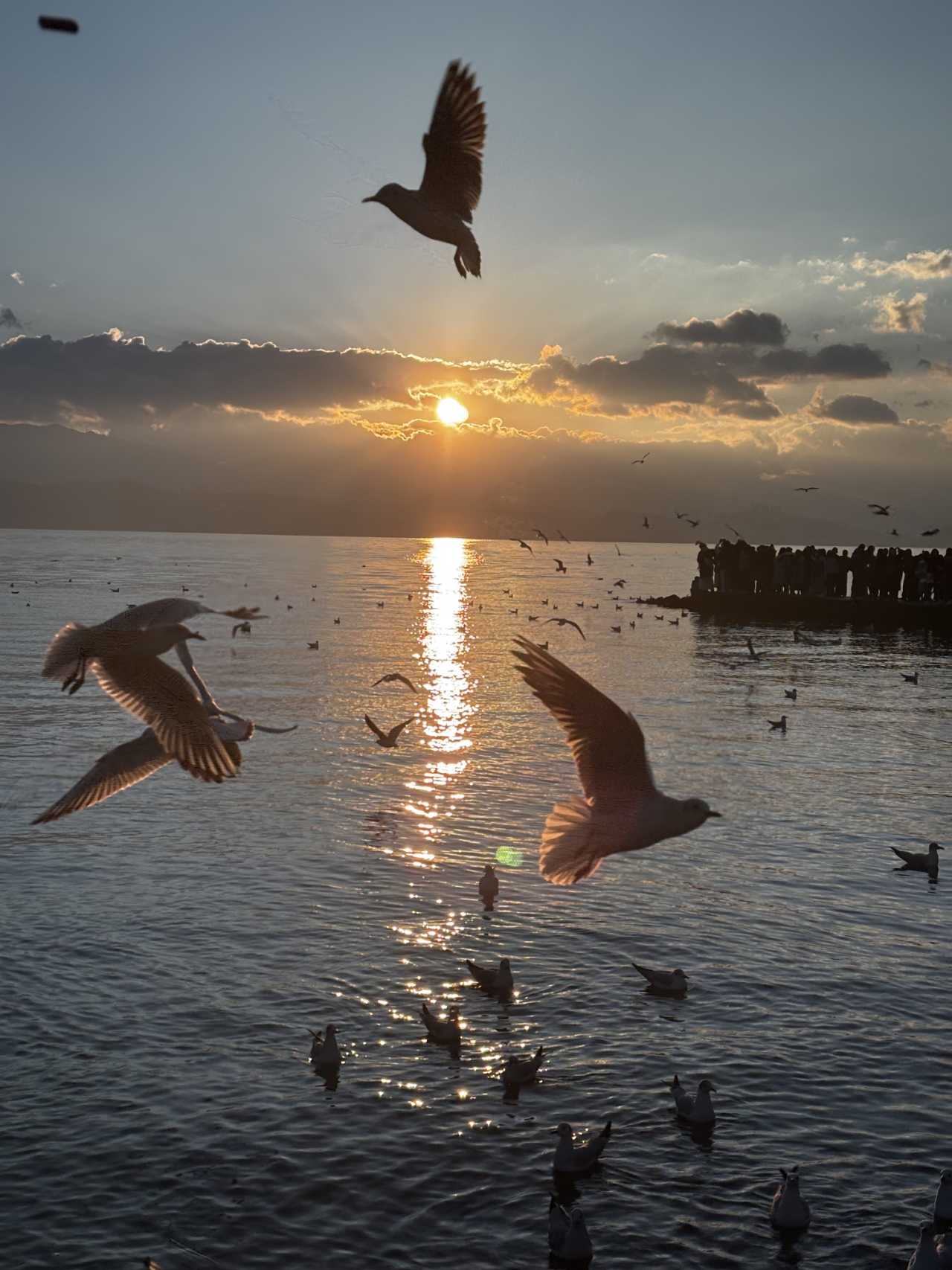
Longkan Pier was packed with people, all waiting in silence. Seagulls danced in the air; some were feeding them, others taking photos—humans and nature in harmony. The clouds on the horizon were thick, and for a while, we thought today's sunrise would be a miss. But no one was disappointed. Everyone waited, almost by unspoken agreement. Around 8:40, the sun finally broke through the clouds and leaped out, a beam of light streaming straight onto the water. The crowd cheered, and shutters clicked in rapid succession. Then, as if on cue, people began to leave. We, too, set off on our journey along the western shore of Erhai.
Cycling the West Shore: The Wind Is Free, and So Am I
We rented a Harley-style electric scooter, and my son drove while I sat behind. Gentle wind, soft morning light, a leisurely pace. I spread my arms and felt myself merge into this landscape—the wind was free, and that innocent version of myself had returned.
In the distance, Cangshan Mountain was capped with snow. My son said to take a photo, but my eyes were drawn to the countryside I love. This time, our guesthouse in Dali was in a village. Every day, we weaved through country roads, watching farmers work—planting, tending, harvesting. Winter in the north is cold and dry, but here it was still lush and green. For someone who loves to garden, this was heaven. I thought to myself: when I'm old, maybe I'll come here for the winter, plant a plot of land, rise with the sun and rest with its setting, returning to the simplest life.
I love the light between 8 and 9 in the morning. When sunlight pours down, it's a natural filter—bright, clean, warm, and soft. It's the world and the life I want.
Perched on a branch, I thought they were light bulbs, glinting in the sun. Getting closer, I realized they were egrets, motionless, basking in their comfort zone. I couldn't resist climbing over the fence, stepping onto the soft, damp grass, and getting close enough to photograph them. In that moment, I was moved by their grace—branches jutting out over the water, covered in egrets, unruffled, just enjoying the warmth.
My son took the Harley off-road and nearly ended up in a ditch. I urged him to be more careful, but he shrugged it off, still loving the thrill of speed. Aside from his youthful face, he already seemed like an adult.
There was a bench by the roadside, with a tree so crooked it was hard to photograph well. But if a girl in a long dress sat there, wouldn't the picture come to life?
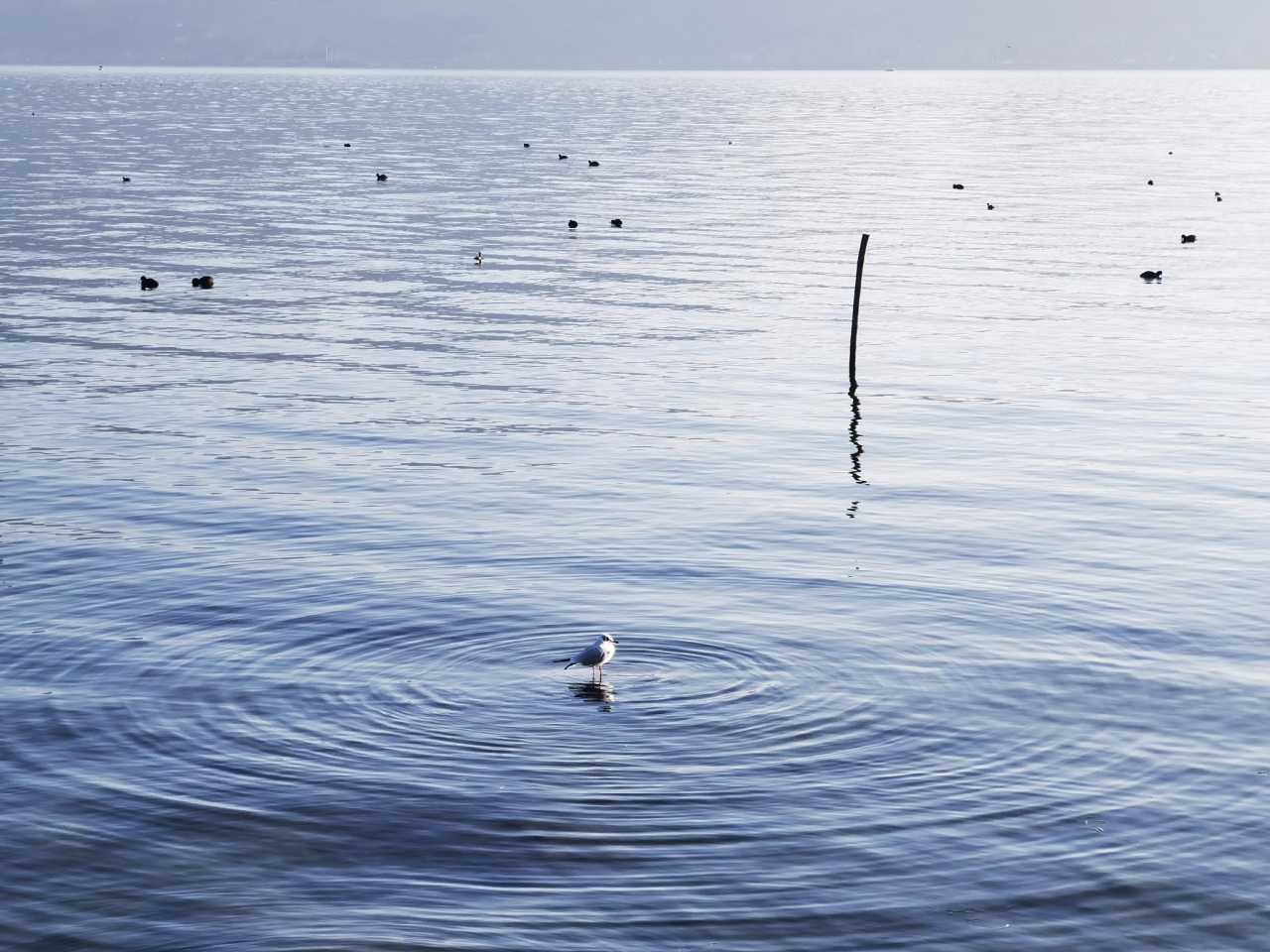
I'm particularly fond of one photo: a seagull playing in the water, its little feet paddling, sending ripples across the surface. I couldn't resist posting it on social media. I wonder if others can see the beauty I see. Recently, on Xiaohongshu (a Chinese lifestyle platform), someone asked, "Do you understand the photos Aquarians post?" I wanted to say, I do. It reminded me of high school Chinese class, when a classmate read their own writing. The teacher didn't get it; the classmate was anxious. The teacher asked me if I understood. I did, but when everyone said they didn't, I said I didn't too. I used to struggle with being "different"—why did I always think differently from everyone else? Later, I accepted myself and stopped caring about others' opinions. This photo is the embodiment of that "difference."
Along Erhai Lake, every step is a new scene. Cycling was impossible—I kept stopping to take photos. Blue sky, blue water, sky and water merging into one, and the quiet beauty of the lakeside road.
The most vibrant redwood tree stood alone. I'd imagined a whole forest of redwoods, but there was only this one. Still, a redwood in the water—ethereal, just the way I like it. Light, shadow, simple presentation.
I love capturing light and shadow, whether front-lit or back-lit. I love images where people blend with nature—where a person is part of the scene, not just a close-up of a face. This aesthetic created a big rift between my son and me. In the end, we each took our own photos. Neither of us would photograph the other, and he wouldn't let me take his picture. It was like "Narita breakup"—except, well, a "travel breakup" in the making.
I don't mind having people in my shots; sometimes I even seek them out. At Longkan Pier, I photographed a couple. I hesitated about whether to send them the photo, but in the end, I did, and they thanked me. Without them, the scene would have been ordinary.
At the corner, there were bougainvillea flowers. I have a special attachment to them. The last time I was in Yunnan, I fell in love with them. In Kunming, the bougainvillea outside the hotel was three or four stories high, and I marveled at how it could climb like a vine. I love Yunnan—a place where flowers bloom all year round.
Firecracker flowers and flower-adorned bicycles—they radiate romance. We switched to a bike covered in flowers, but by then, my son had already refused to take any more photos of me.
The most famous spot on the west shore is Panxi S-Bend, but in my eyes, every bend is worth capturing. Flower beds in front of guesthouses were bursting with blooms, and around every corner was a wide-open view of the lake, blue sky, and white clouds framing the distant mountains.
Da Lan Mao (Big Blue Cat) is a guesthouse. When we cycled up to it, we were already enchanted. "Enough, enough," we said to each other. The Bai-style architecture was simple and clean, with just a few touches of color making it look like a painting. The cherry blossoms in the courtyard were about to bloom. After being away for a while, I always feel that while the scenery, environment, and food are wonderful, home is still the best. I no longer fantasize about "living here." Now, I only want to come here to farm when I'm old.
Bougainvillea in the bright light, tables and chairs, greenery—it looked like a painting. I told my son that the travel environment has really improved. Many of these guesthouses are designed by the post-80s generation—our generation's "ideal state." It's the vision of people who have seen the world and created something from it. If you love these refined scenes too, you can revisit places you traveled to 20 years ago.
In a roadside park, I saw leisure and light and shadow. I don't know what my son saw, but he stopped, and I saved this image.
I love roads, and I love trees. On Nan'ao Island, we once searched for a "lonely tree," and my son even hung a picture of it on the wall. Then there were the big trees in Xizhou. Clearly, I have a thing for trees.
Three Pagodas of Chongsheng Temple: Content Just to Pass By
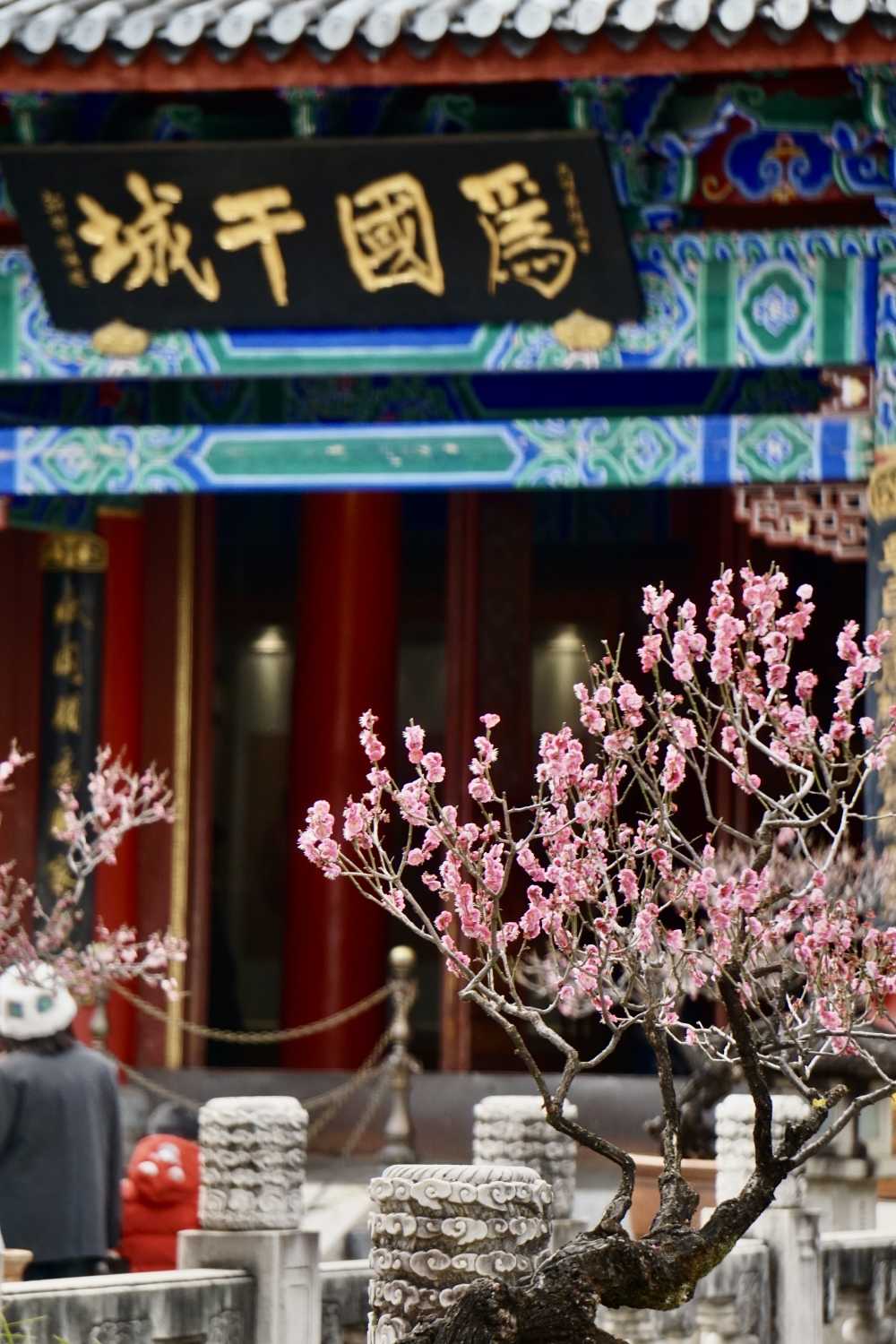
Last time in Dali, we stayed nearby. We passed by the Three Pagodas many times but never went in. I regretted it afterward. This time, I planned to visit, but after checking Xiaohongshu, I lost interest. When we drove past, I resolutely stopped the car twice to take photos, then left satisfied. As for the pagodas and Chongsheng Temple—I know a little, but not enough. So, I decided not to go in.
Cang'er Avenue: The Danger and Romance of a Viral Spot
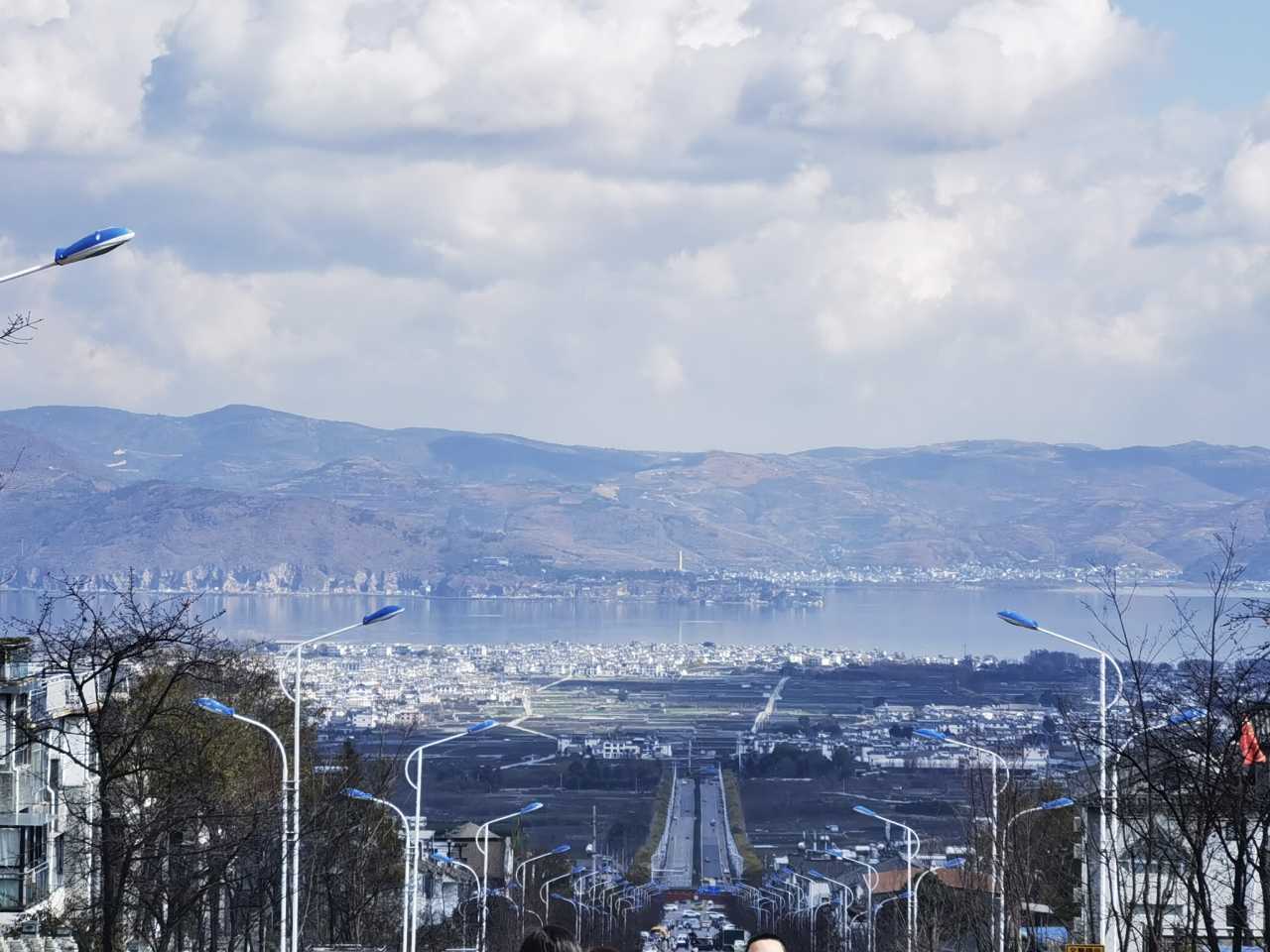
I've seen so many photos of people posing in the middle of this avenue, looking effortlessly cool. But in reality, there are tons of people and cars—it's really dangerous. I stood in the middle of the road, snapped two quick shots, and left. Da Bing has been trending again recently. In his livestreams, he recommended the cafés here and the cherry blossoms at Dali University. At the top of this road, a right turn leads to Dali University, but unfortunately, outsiders aren't allowed in. I highly recommend the Luckin Coffee on campus—under the cherry blossoms, it's the most romantic spot.
Xizhou Ancient Town: From Disappointment to Delight
Last time I was in Xizhou, all I remembered were the farm produce stalls by the archway and the Xizhou flatbread. I found it boring. This time, Xizhou won me over. If someone asked me what to do in Dali, I'd definitely recommend Xizhou—because it blends so well with farmland and natural scenery. Walk to the edge of the old town, and you'll see how open it is: there's commerce, but it's not confined to it. In fact, the commerce enhances the natural beauty.
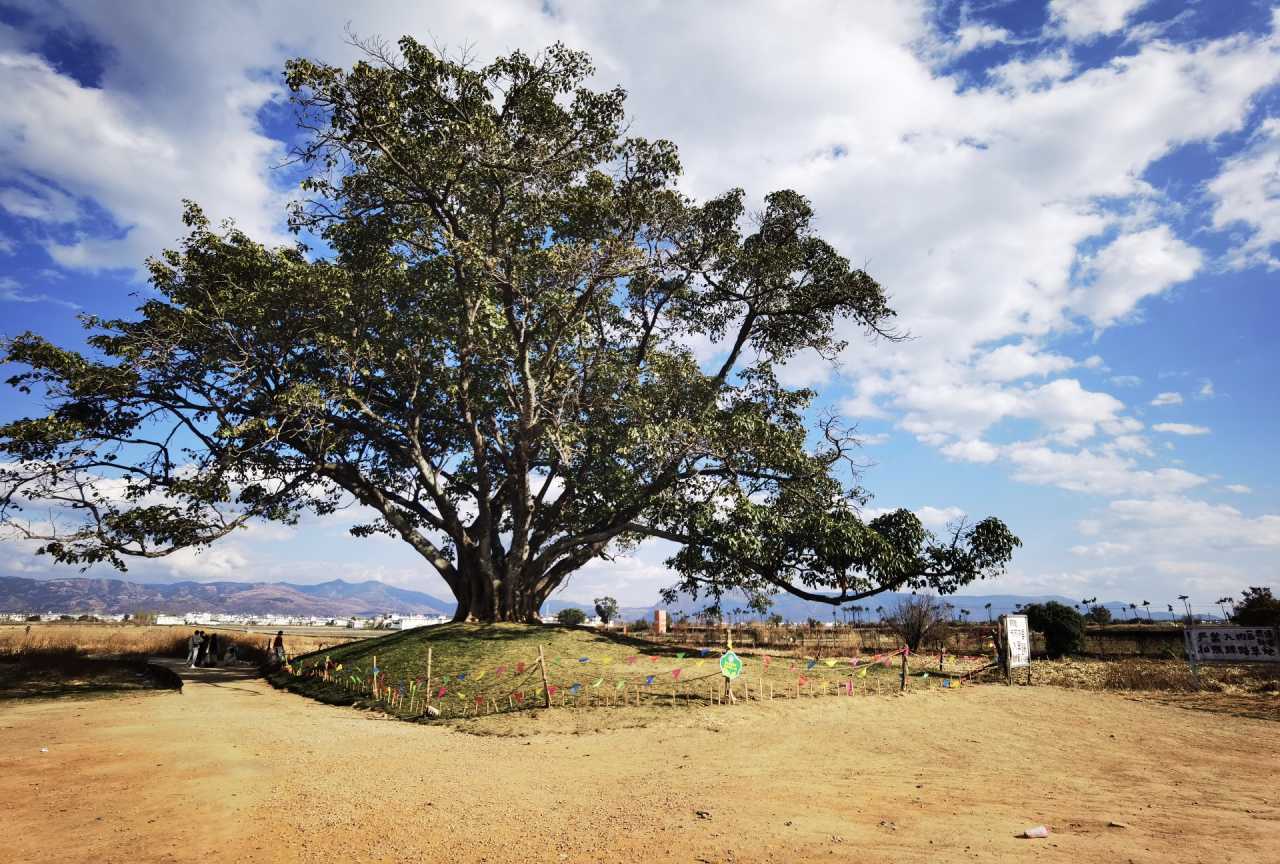
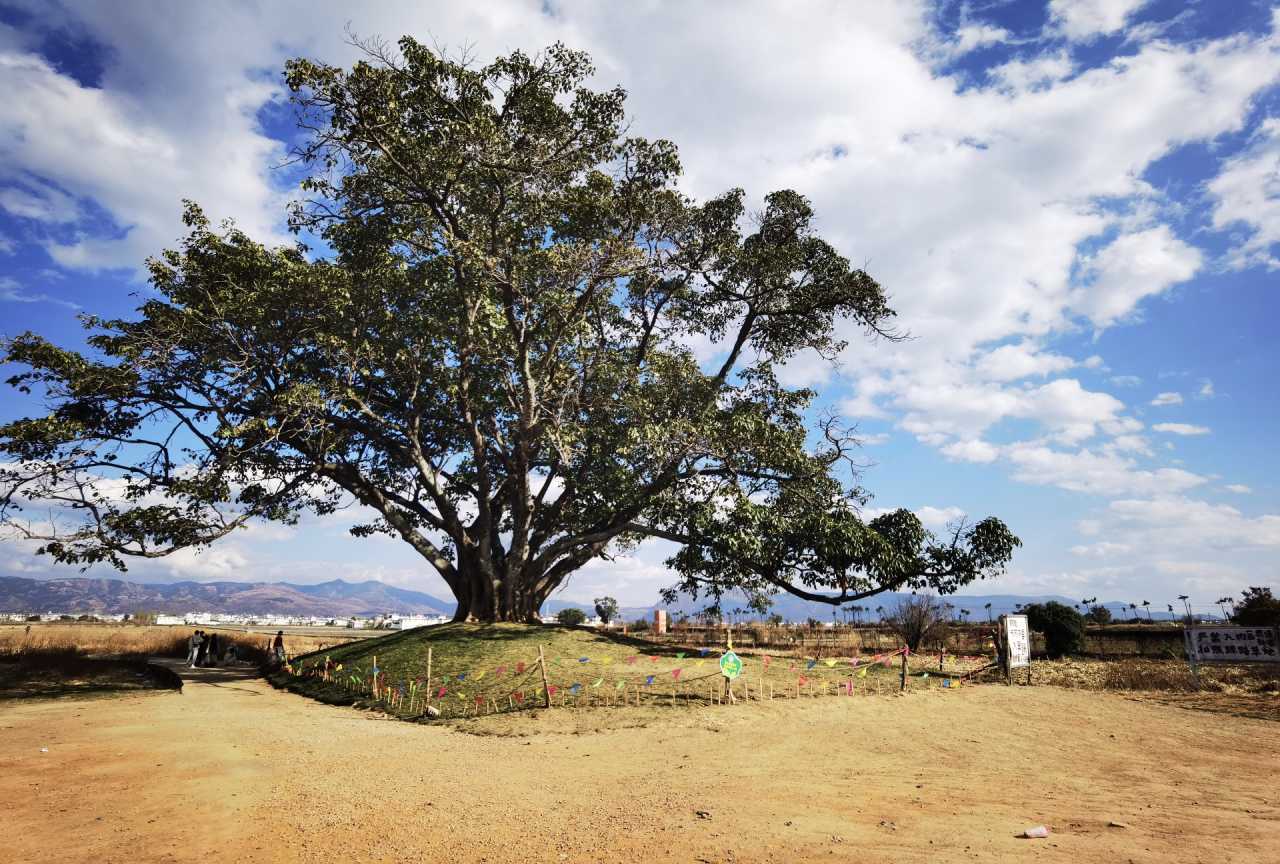
The big tree was fenced off, so we couldn't take photos under it. Looking up at it, I felt awe—awe for life and nature. I'm grateful for this tree. If it hadn't drawn me in, I wouldn't have revisited Xizhou, and I would have missed the version of it that I now love.
Fang Ka Coffee—also recommended by Da Bing. I ordered a coffee and sat on the second floor, facing a field of crops. If it had still been lush green, the view would have been even more open and comfortable. The white-walled, grey-tiled Bai-style houses were clean and crisp. No matter how you pair them, they look beautiful.
I went to Fang Ka alone, while my son explored the old town. When I shared my location with him, I found him "stocking up"—buying postcards and fridge magnets. He does this on every trip, as gifts for classmates and friends.
At a tie-dye stall, I bargained with another girl. After some nonsense banter, I bought a sun hat for 15 yuan. The vendor wasn't happy about it, but she sold it to me anyway. I have to say, Xizhou has the lowest prices.
The Corner Tower is Xizhou's iconic building. Photographing it isn't easy—it's always crowded. But as long as the strangers' heads aren't facing the camera, I can still use the shot.
The rice field in front of the Rice Field Coffee had already been harvested, leaving it bare. I closed my eyes and imagined it lush green and golden yellow. The waterwheel and small train added richness to the scene. The old town is compact and lively; its edges are quiet and open, where you can sink into a sofa and let time slip away.
As I was about to leave, I saw a sign that read: "The wind of missing you blows to wherever." As I've gotten older, I've naturally filtered out a lot of things. "The wind of missing you blows to wherever—I miss you wherever I am." This is truly the world of the young.
When I got on a tuk-tuk, I saw the real Xizhou—the look of the old town. I asked the driver not to move and snapped this photo.
Rapeseed Flowers in Bloom: A Surprise by the Roadside
I fell in love with this field of rapeseed flowers on the way to Xizhou. I said I'd come back to photograph it. But when I turned into a village lane, I couldn't find a way to turn around. I quickly took a photo, then drove into the village, carefully reversing in someone's doorway, and managed to get a second shot.
While taking photos, I was looking for angles—checking the fullness of the scene, the layers, whether the sky was blue, whether the clouds were abundant and pleasing. I'm learning to make my photos tell a story.
Dali Old Town: Fatigue and Rewards at the North Gate
The North Gate—it's hard to get a good photo here. Writing about this feels like that day did: a sense of fatigue, and the style shifts from poetic to rough.
We did a lot of "stocking up" here—things were so cheap I wondered if we'd ended up in Yiwu (China's wholesale capital). My son bought a big bag of postcards and fridge magnets for under 100 yuan. The same fridge magnets that cost single digits here were 20-30 yuan elsewhere. The magnetic pegboard in his room is already overflowing, and he's expanded to our refrigerator.
Lou She: Our Guesthouse
Looking at it on its own, it's really beautiful—the courtyard of my dreams. I wondered if it was Japanese-style. We arrived on the first day after dark and didn't return until early morning on the third day. It wasn't until we were about to leave that I really looked at the courtyard. I loved it. The only downside was that it was in a village—a very rural one. But as a hidden paradise, it was perfect.
Xingsheng Bridge: The Beauty of Steel and Concrete
Xiaohongshu is both my entertainment app and my guidebook. Everyone said parking was hard, but luckily my son insisted we drive closer—and there were parking spots right under the bridge. People were doing photoshoots and wedding shoots. Is this steel structure really that beautiful? In Tianjin, almost every bridge could outshine it. But this is Dali's only European-style bridge, so it counts as a landmark. My son wanted to come; I wasn't very interested. The light and shadow were nice, but it's nowhere near as impressive as Chongqing's "Interstellar Crossing." I'll have to go there next time.

Does anyone still remember wall calendars? Does this photo give off that vibe? In Yunnan under the clouds, there's always some unavoidable gloom.
And the black-headed gulls—what were those black things? I didn't notice them at the time. Maybe because the weather was bad, they weren't flying.
Yunxiang Mountain: Dali's "Fornia"
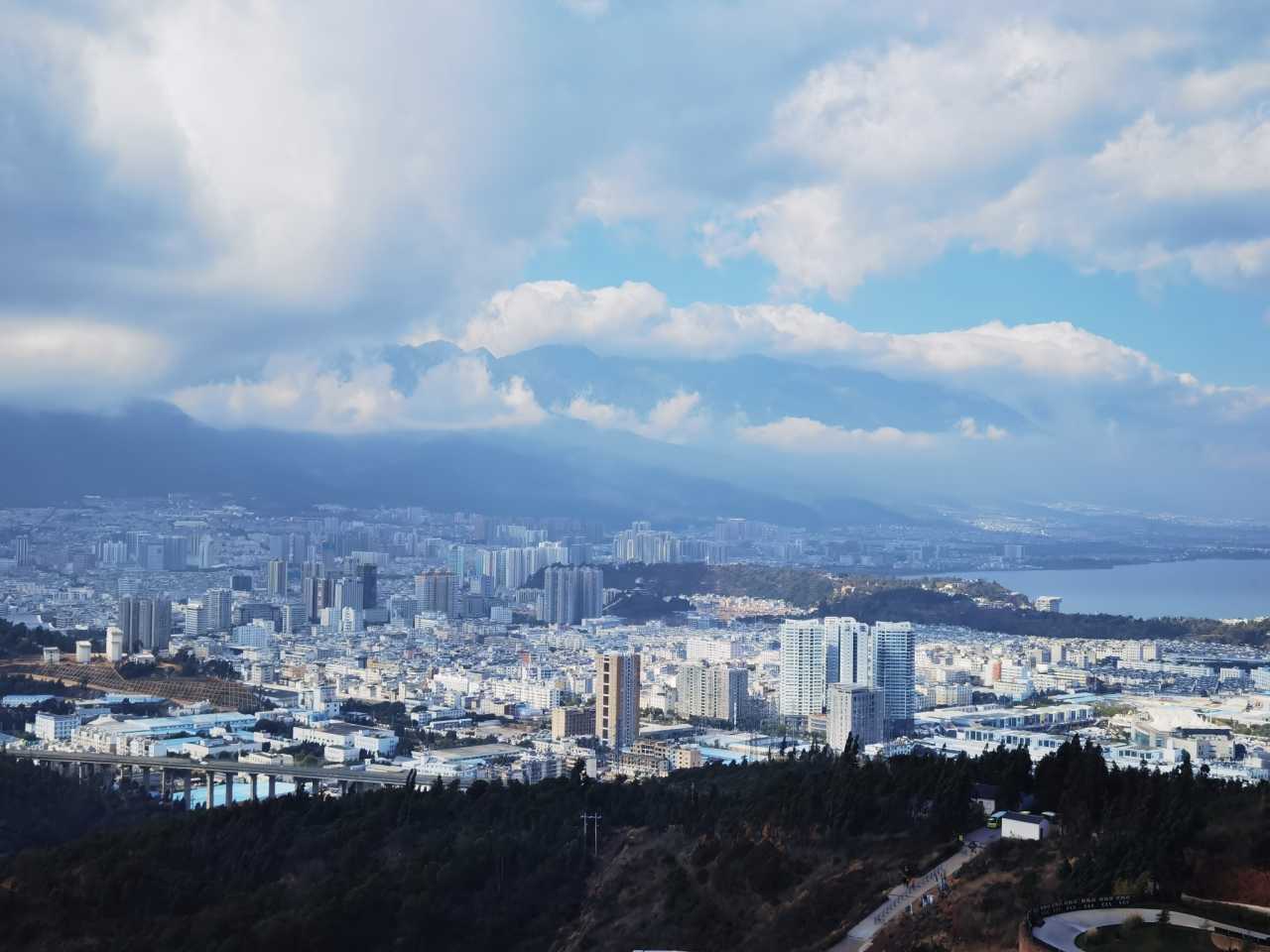
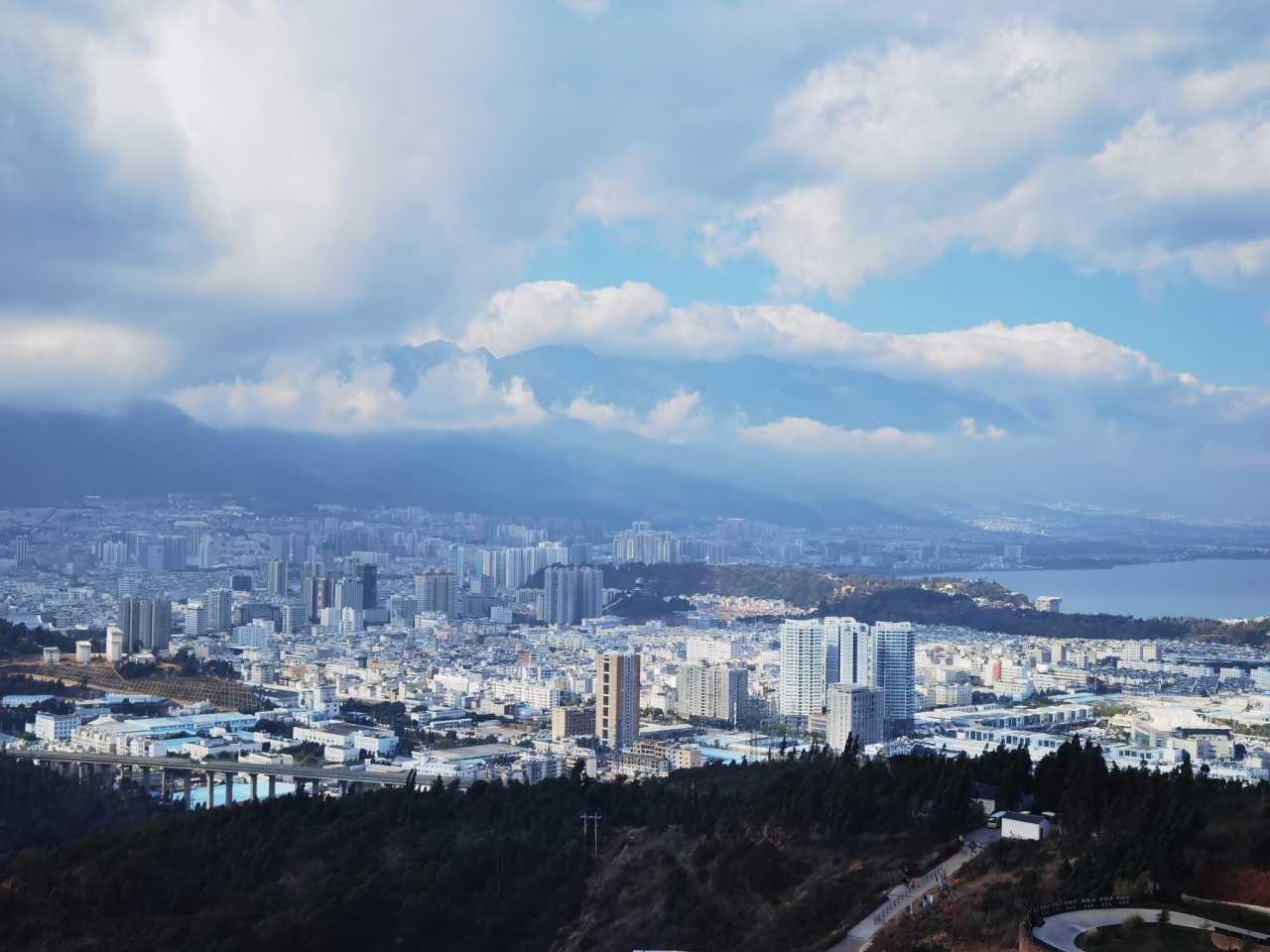
I absolutely love Yunxiang Mountain. My son had no expectations, but I loved it—the big lawn, the romantic anticipation, the sweeping view of Dali city, the visual impact of Cangshan, Erhai, and the city merging into one. And the unexpected strong winds.
I recommended it to my best friend: bring your little one—this road is great for playing around for half a day. My son is too old now; he sees himself as an adult. No matter how much I encouraged him, he just went and had a coffee, quietly watching me dart around.
These three photos were taken by zooming in step by step. Each one shows the importance of focal length, as well as the ever-changing clouds and the effect of light on the scene. On the other side, the clouds were thin, and the scene was bright. This time in Dali, the travel environment was fantastic. Every new attraction made me want to visit. Zhumo Mountain—Dali's Manhattan. We kept saying we wouldn't come back, but writing this now, I think I will. I love seeing beautiful scenery and capturing the world's wonders on my phone. If there's a next time, I'll visit Jizhao Nunnery, climb Cangshan, and look down on Erhai from Yundai Road.
The wind was too strong. It was quiet, perfect for landscape photography. I needed a model—someone in a hat and coat, walking or sitting, just part of the scenery. I treasured this small crowd of people. Luckily, I had a hat, gloves, a big down jacket, and enough weight to keep me steady.
Haidong: The Wind Still Strong, the World Tilted
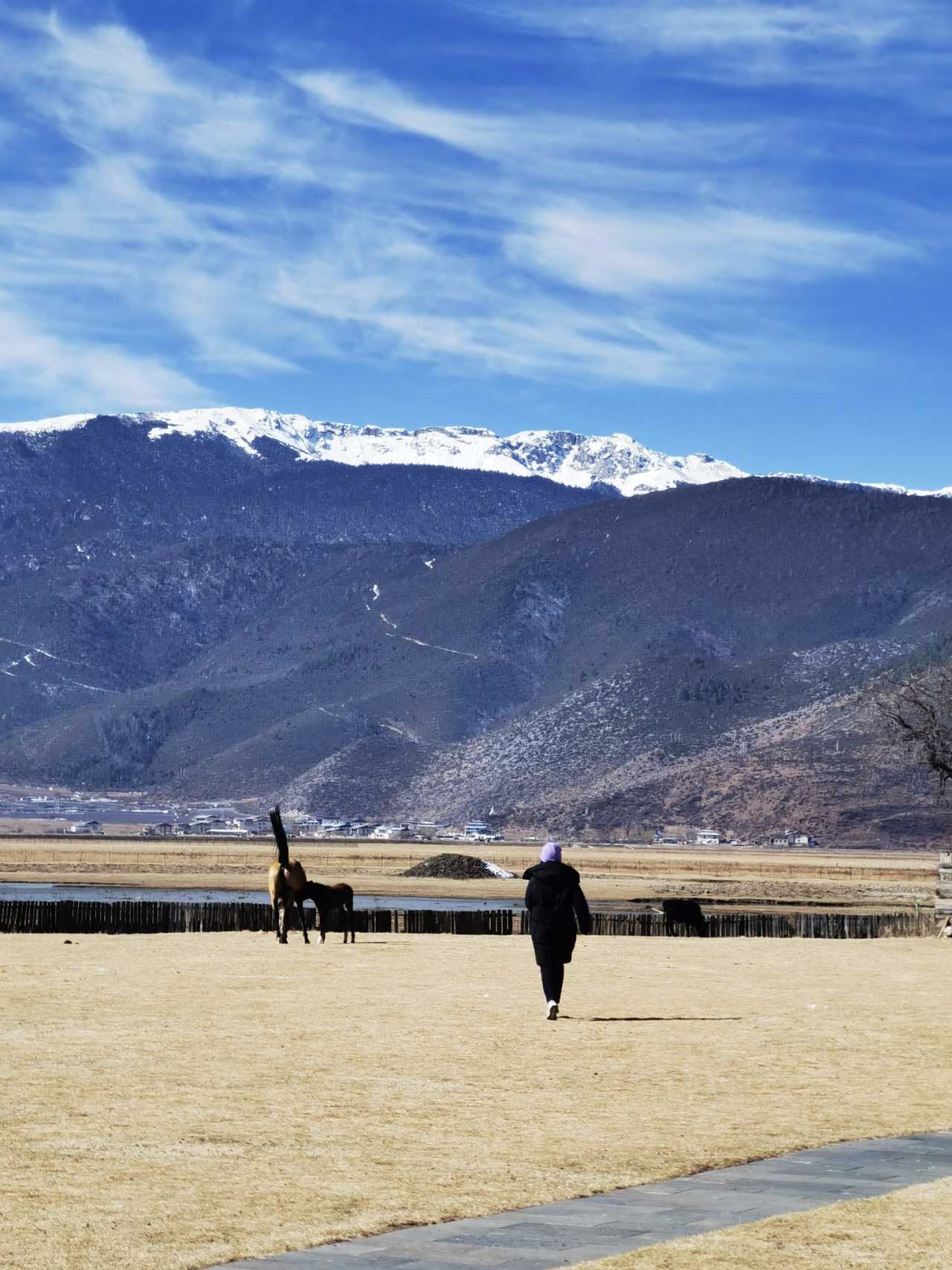
I couldn't resist anymore. This wetland must be especially pleasant on a calm, sunny day. In the frame, there was someone who loves it even more than I do—capturing a landscape, zooming in on him.
This trip made me realize how important chairs are. Set up a chair, and you've got a campsite. A random shot can be a cover photo. At Wunongding, I tried to borrow a chair from someone. My son was either too embarrassed or too rebellious to sit in it. Our aesthetics are worlds apart. It's not a complete rift, but we don't appreciate each other's work, and we both want to delete the other's photo gallery.
Lixiangbang: Can't Afford Greece? This Is a Bargain
I thought a man-made attraction wouldn't be appealing, but my son insisted on including it. From a distance, it was a visual shock—the heavens seemed to favor us. The wind stopped, the clouds cleared, and an endless vista unfolded before us.
Walking through Santorini, we only saw fragments. Even climbing to the top (for 2 "coffee coins") only gave us a partial view. The drone shots must be what we imagine. I'm stubborn about doing things my own way. I don't reject videos, drones, or editing—it's just that they're too difficult for me. I tried editing a video last summer, and it was really hard. I asked myself: why am I recording this? For others' applause and praise? No. I don't even post on social media. It's just for my own memories.
I don't try to please others, so I record my travels in my own way. That's also why I don't run a Douyin or Xiaohongshu account. Recently, I saw a stand-up comedy bit by Liang Haiyuan—"The Person Sitting in the Corner." Aren't I the same? Everyone has their own posture. When you have a choice, be yourself.
Looking at the distant wetland, it seemed hazy and ethereal. I applied a filter to this one. An Aquarius's taste is always unique. But this flower corridor had the best firecracker flowers I've ever seen, in my favorite shade of vibrant orange. I don't like it as much now—it's too eye-catching. In the drama "Meet Yourself," the fairy-like lead wore a jacket that I've always liked. But now that so many people wear it, I've stopped wearing that color. Firecracker flowers can survive the winter in the north. I think I've been putting off planting them because I've been meaning to grow beans instead.
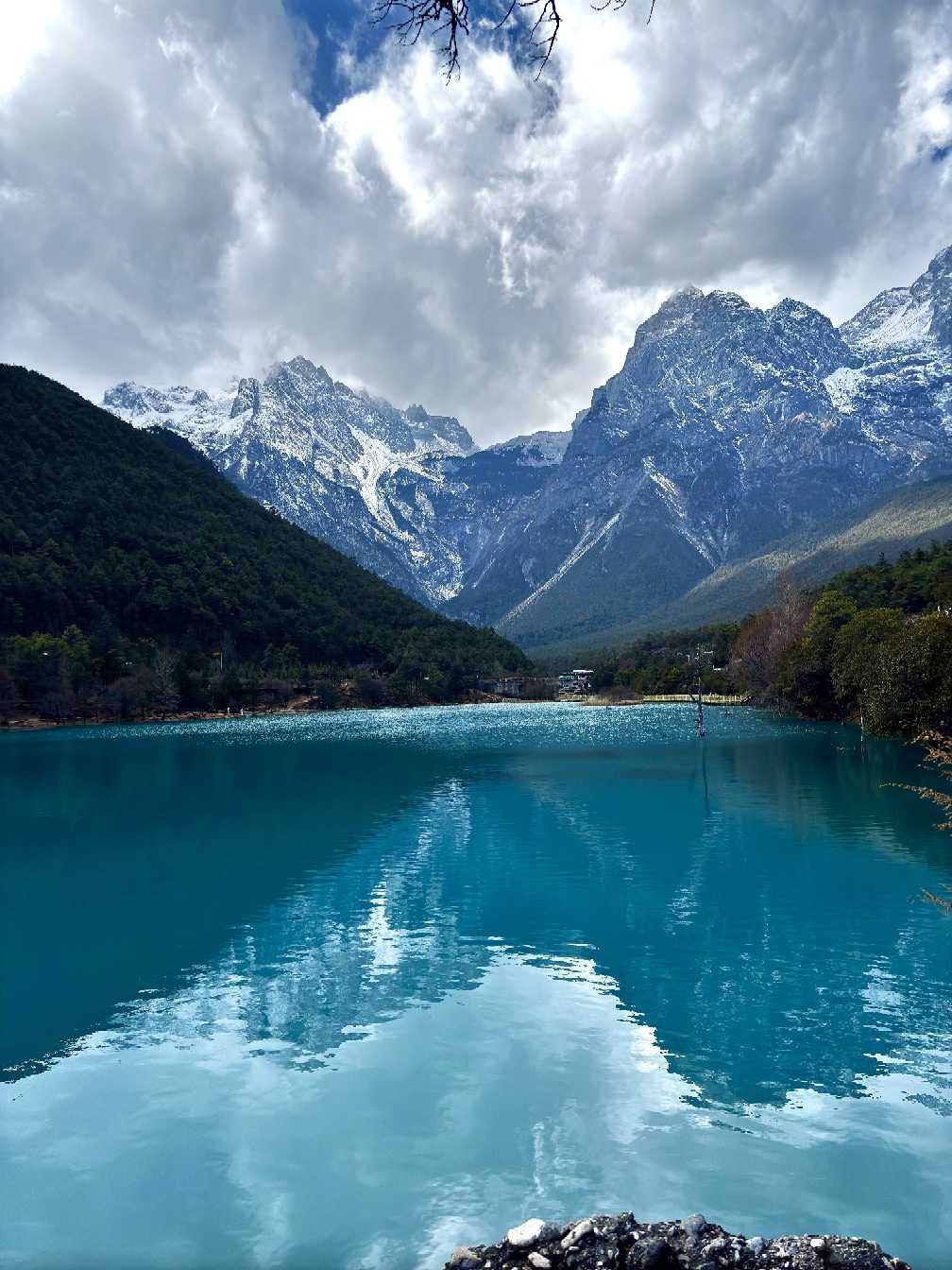
This is the greenery in southern China—it's almost ironic. It's a spectacle that northern succulent lovers can only dream of. Down here, they grow like there's no tomorrow. Back home, if you don't pamper them, they just give up.
This angle reminded me of something I once read: a traveler went to see San Mao's former home. Looking back, he saw the sea that San Mao had written about, and left satisfied. He found in that place what the books described and what he had hoped for. But I wanted to sit down on the ground and stare at it for a while. In the end, I left reluctantly. I'm a greedy lover of beauty.
The afternoon sun was warm on my skin. My down jacket was long gone, left in the car. Every step was a new scene. I marvel at the designer—or perhaps the builder. A great idea, and anyone who steps into it would be mesmerized. It feels like being in another country. I always say China has everything, referring to natural landscapes. But now, the man-made ones are catching up. I remember a friend who came back from a honeymoon in Santorini saying, "It's tiny—it's all about photo spots." As for the experience, I think this one wins.
There was a museum about Lixiangbang that I didn't visit. My expectations kept me away. I wonder if I'll regret it.
I love these little nooks with tea breaks.
Tyndall effect—like a flashlight. It was breathtaking. The calm sea was covered by dark clouds, reminding me of Gorky's "The Song of the Stormy Petrel." Sunlight broke through the cracks in the clouds and poured down. I was seeing this side of the sea for the first time.
Wenbi Village: A Gift of Light and Shadow
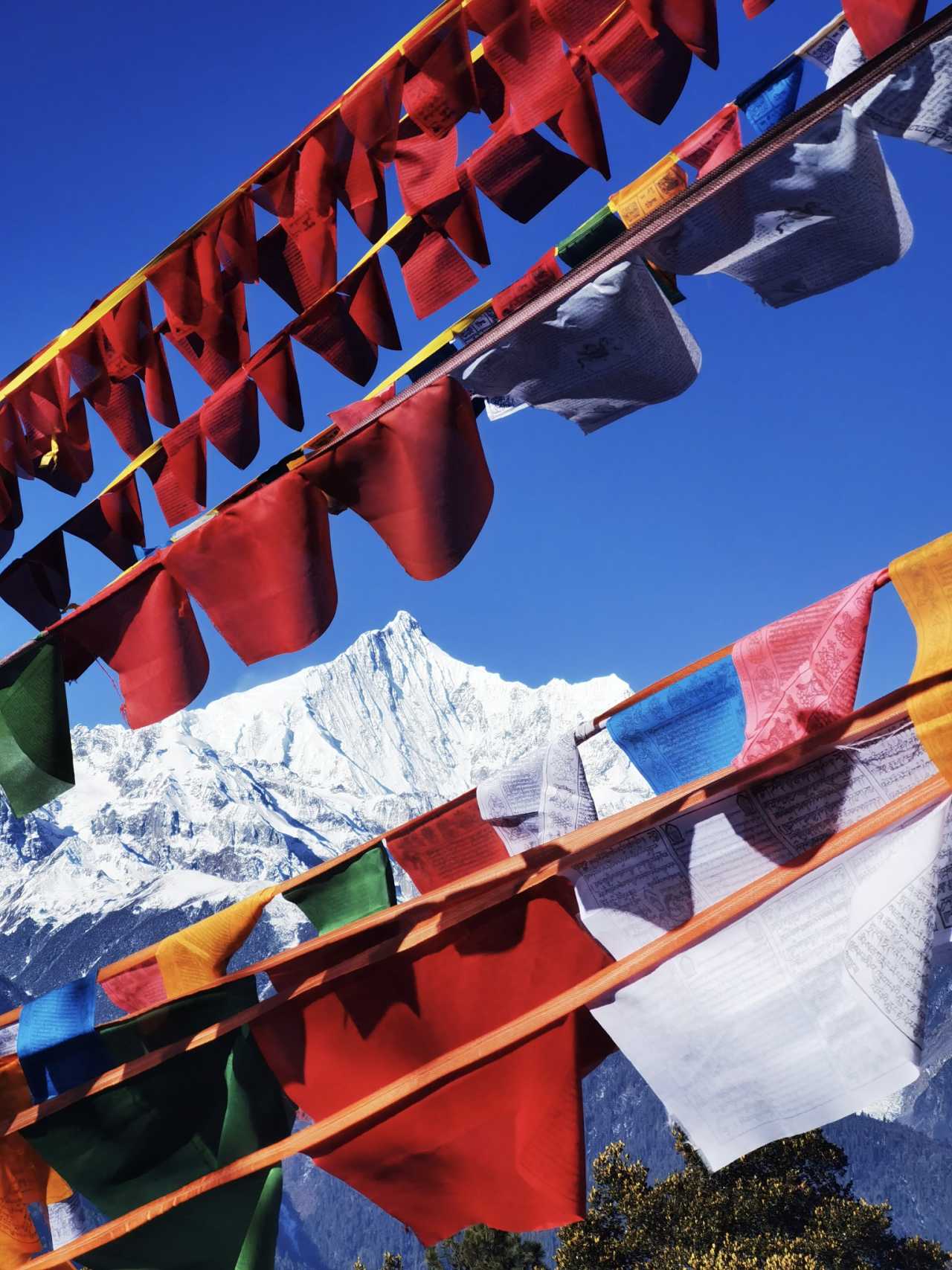
I hadn't looked up anything about Wenbi Village. In my eyes, every spot along the eastern shore of Erhai is a scenic wonder.
Epilogue: Across Mountains and Seas, Becoming Myself
Ten days, nine nights. From Dali to Lijiang, then to Shangri-La. Together, we chased sunrises, waited for sunsets, climbed snowy mountains, and wandered through ancient towns. I saw my son grow—he's no longer the little boy who needed to hold my hand. He's a young man who stays calm, doesn't panic, and knows how to comfort me. I also saw my own change—I no longer cling to others' opinions, no longer worry about being "different." I've learned to record life in the way that suits me.
The greatest meaning of travel isn't how many places you've been or how many photos you've taken. It's about rediscovering yourself and the people around you on the road. Crossing mountains and seas isn't about reaching a destination—it's about becoming yourself.
Practical Tips: - Sunrise in Dali is around 8:10 AM; arrive half an hour early - Xizhou has the lowest prices—stock up on fridge magnets and postcards - Jade Dragon Snow Mountain cable car tickets must be booked in advance; check official channels - Shangri-La is at high altitude; guard against the cold and altitude sickness - Yunxiang Mountain is very windy; bring a hat and gloves - Lixiangbang is great for photos; visit in the morning or late afternoon - Rent a Harley-style electric scooter for cycling around Erhai—it offers great freedom - Dali University's cherry blossom season is beautiful, but outsiders are not allowed on campus
May we all, on our journeys, cross mountains and seas and become ourselves.
You should also read:

Clouds Over the Rainbow: A Five-Day Soul Journey Through Kunming, Dali, and Lijiang
Clouds Over the Rainbow: A Five-Day Soul Journey Through Kunming, Dali, and Lijiang Prologue: The Decision to Fly into the Clouds In February, the chill of the North still lingered. A single discounted airfare sparked this spontaneous trip. Round-trip from Beijing to Kunming—1,700 yuan made…
Continue reading...
South of the Clouds: A Spontaneous Lijiang Wanderlust
South of the Clouds: A Spontaneous Lijiang Wanderlust Prologue: When the Soul Meets Freedom Some places have names that alone stir the heart with longing. Lijiang is one such place. It exists like an unfinished poem, a melody left hanging in the air, echoing softly…
Continue reading...
Strolling Among the Clouds: Gathering Autumn's Light on the Western Sichuan Plateau
Strolling Among the Clouds: Gathering Autumn's Light on the Western Sichuan Plateau Prologue: A Sun Chaser's Journey Autumn sunlight is like a gentle painter, using golden brushstrokes to smear the last traces of warmth across the earth. It slips through the gaps between your fingers,…
Continue reading...