Alone Through Southeast Yunnan: Gathering Slow-Motion Morning Mists and Sunsets Amid the Roar of Bullet Trains
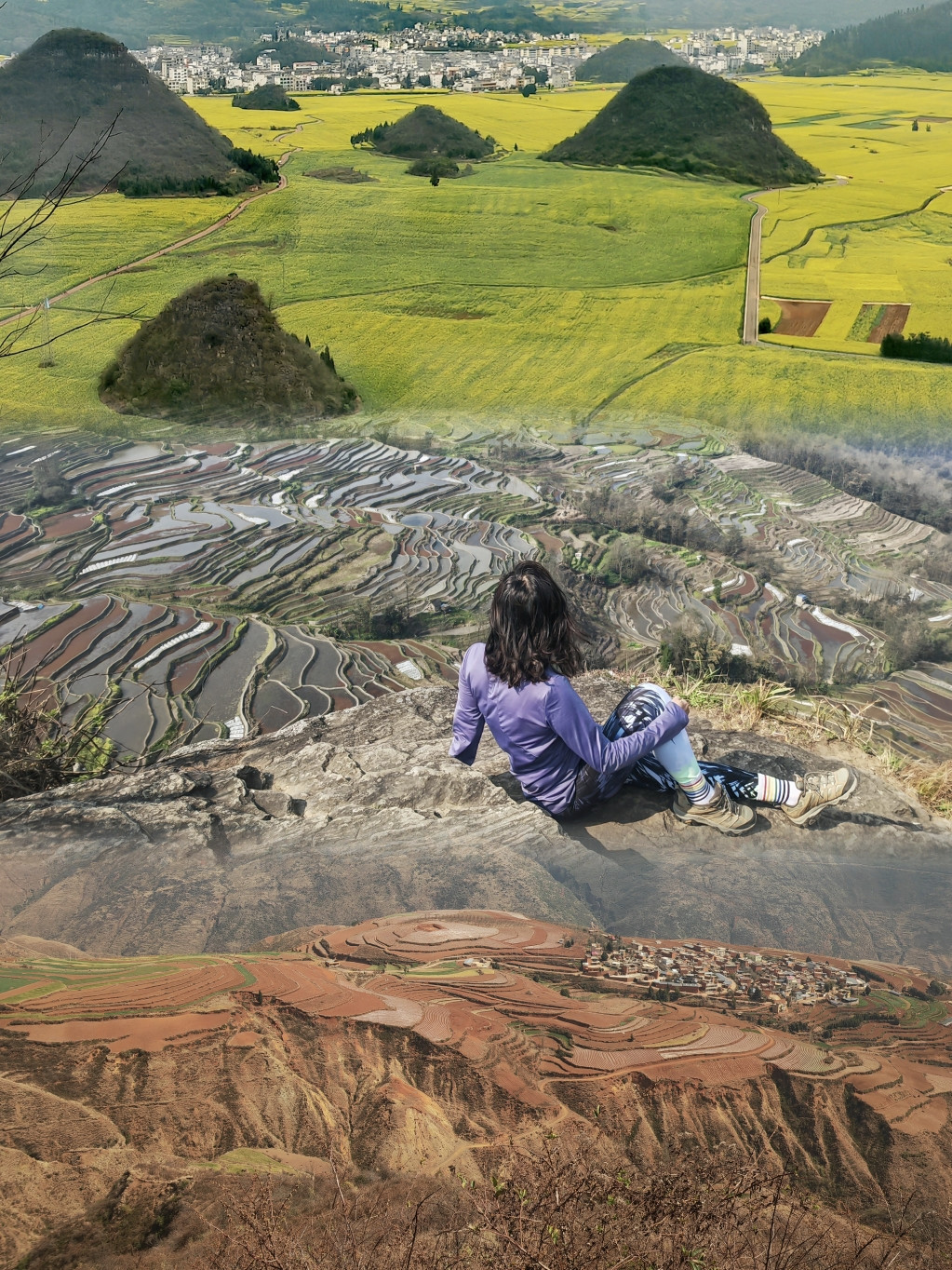
Alone Through Southeast Yunnan: Gathering Slow-Motion Morning Mists and Sunsets Amid the Roar of Bullet Trains
Prologue: A Cough That Set Me Free
After the Spring Festival, my cough clung to my throat like sticky syrup—impossible to shake off. My planned winter return to Arxan was derailed by a few dry hacks. A trip to the hospital revealed nothing: lungs clear, no inflammation. The doctor shrugged and said, "Get more rest." But my restless heart refused to listen.
I flipped through the calendar. Late February—the perfect time for Yuanyang's terraced fields to fill with water, and Luoping's rapeseed flowers to blaze yellow. I couldn't wait. Within three days, I'd locked in a Southeast Yunnan itinerary: escaping Guangzhou's damp spring for the legendary "Land of Clouds."
I trusted Yunnan wouldn't let me down. It never has.
Chapter 1: Kunming, a Familiar Stranger
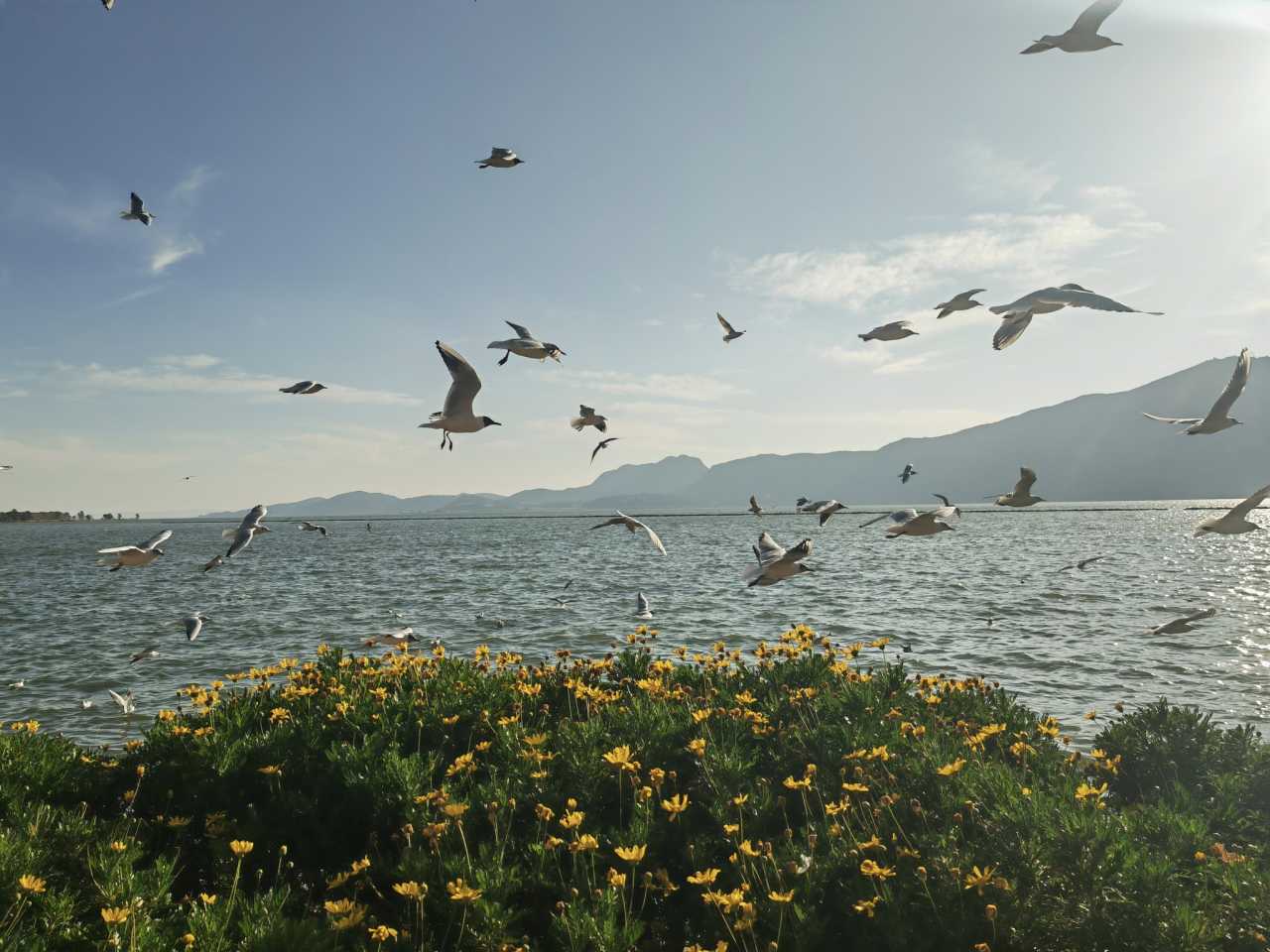
A Date with Seagulls by Dianchi Lake
Kunming had always been a transit hub for me. I'd visited Yunnan multiple times, and the city felt like a well-thumbed travel guide—most chapters already read. This time, I planned a "fragmented patch-up"—those corners I'd brushed past before were finally getting their due.
I remembered a business trip years ago when I wandered by Dianchi Lake and asked a security guard when I could see the seagulls. With an unexpectedly poetic air, he replied, "About in winter"—channeling the lyrics of a famous Chinese ballad. The words stuck with me.
So on an early spring evening, I dragged my luggage into a hotel, changed trains three times, hopped on an electric scooter, and finally reached Haihong Wetland Park.
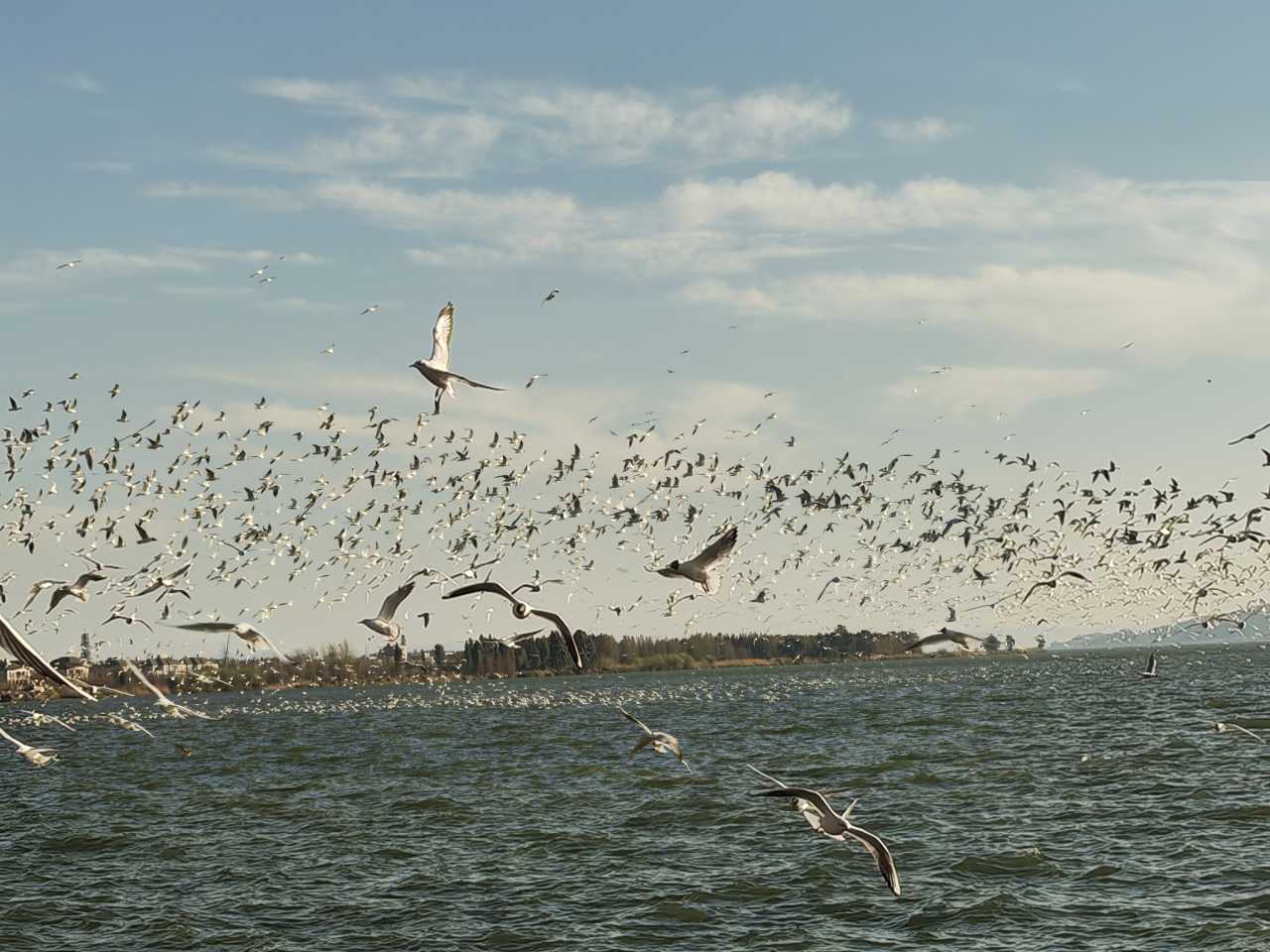
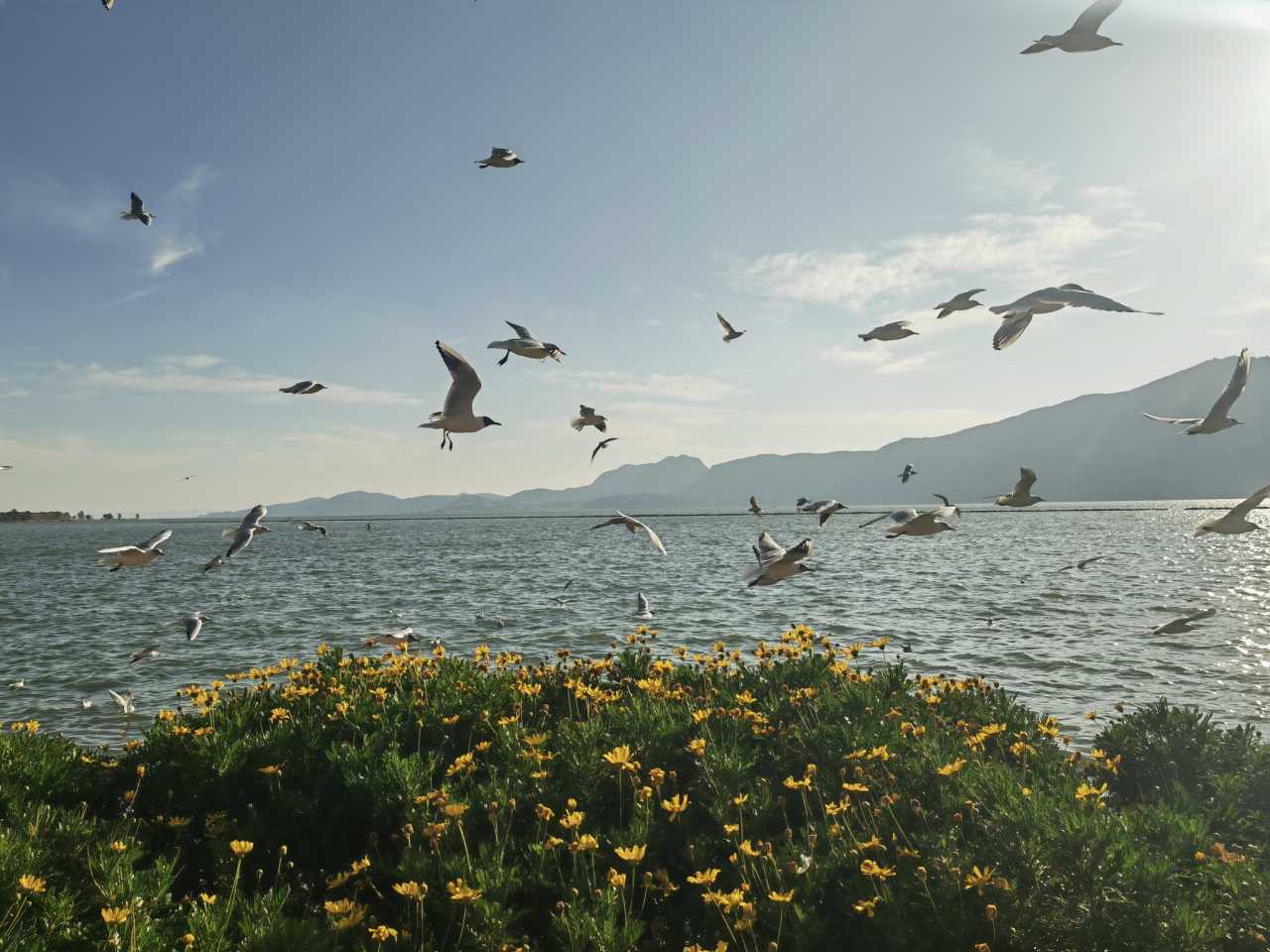
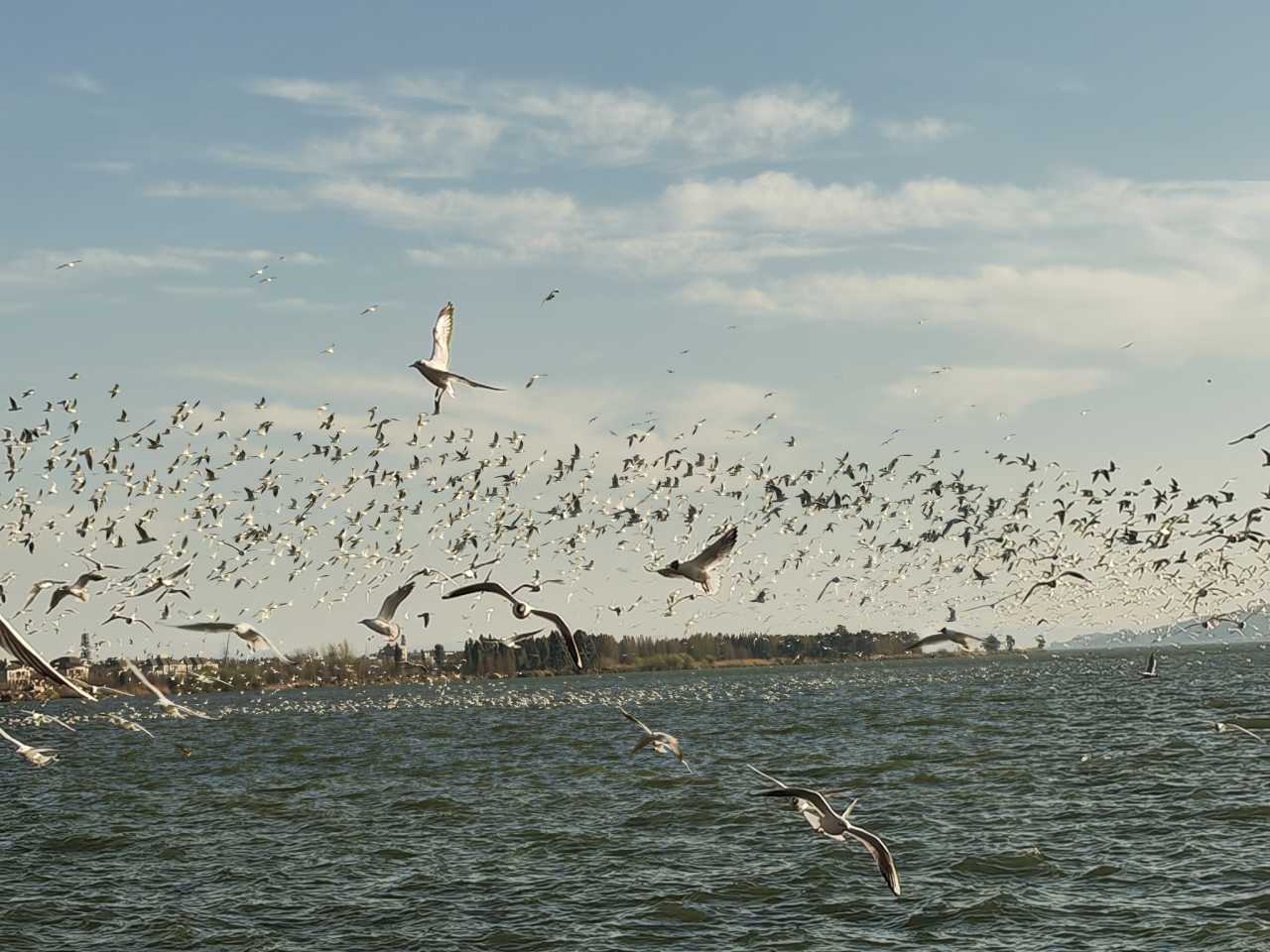
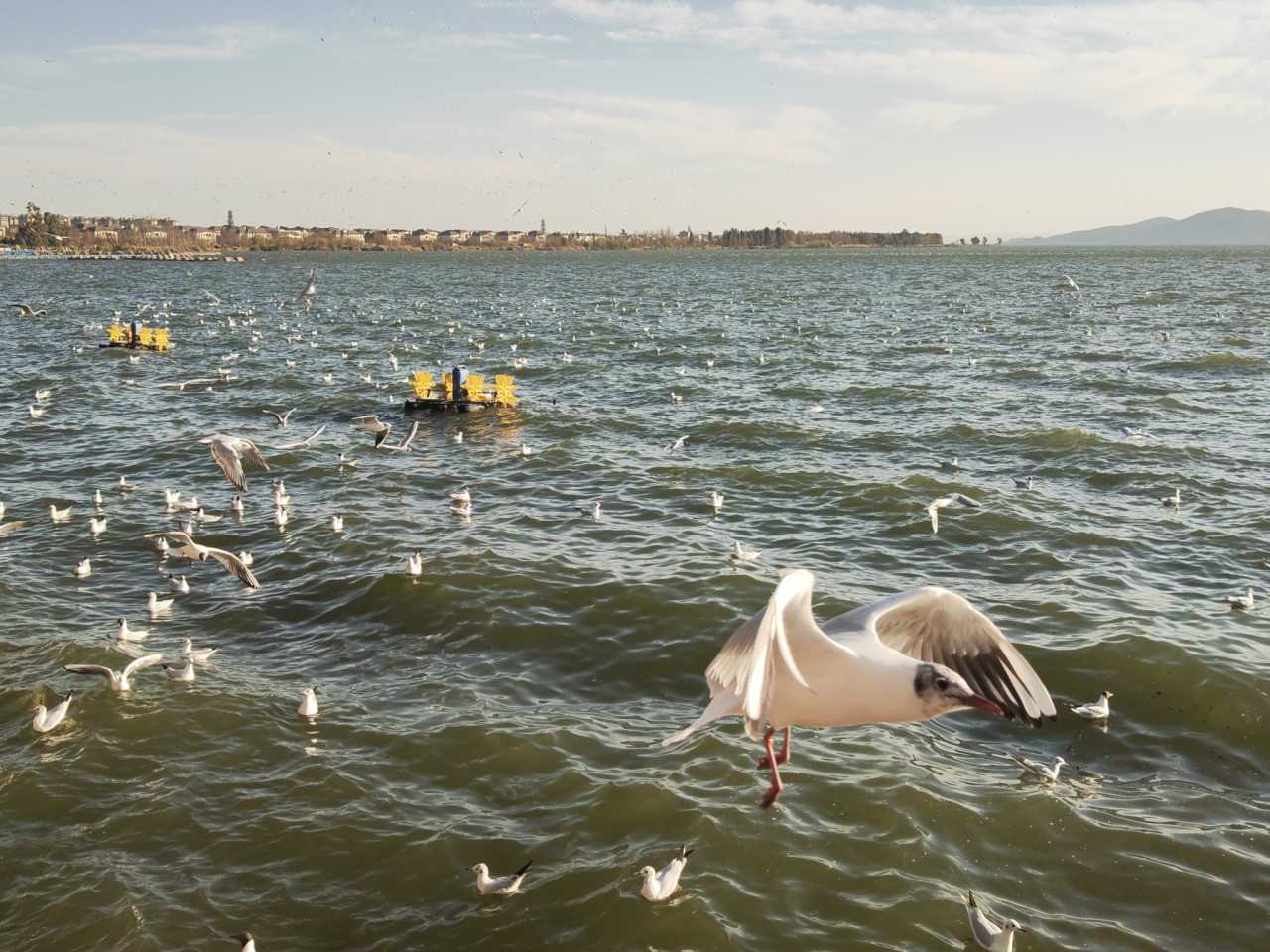
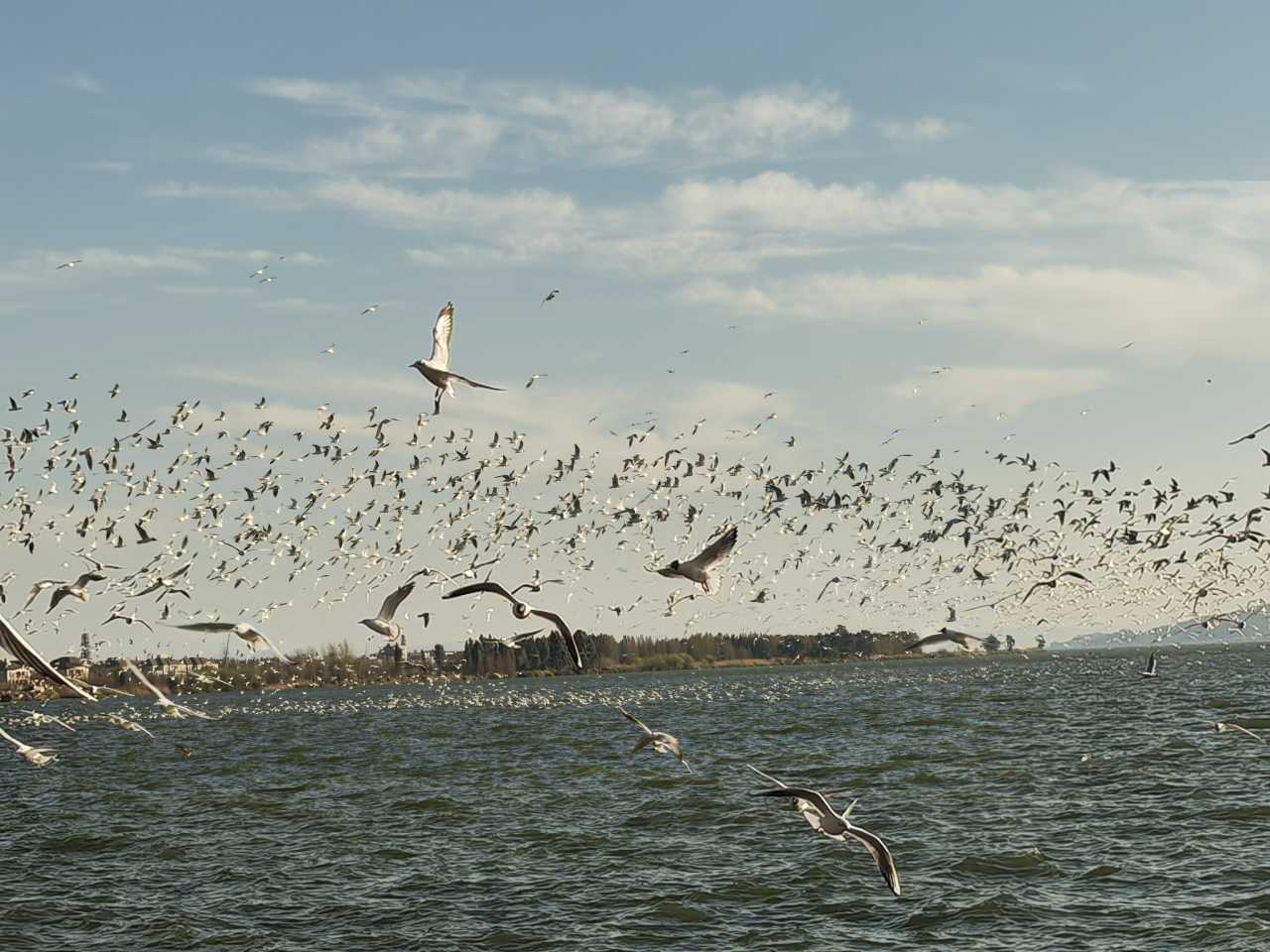
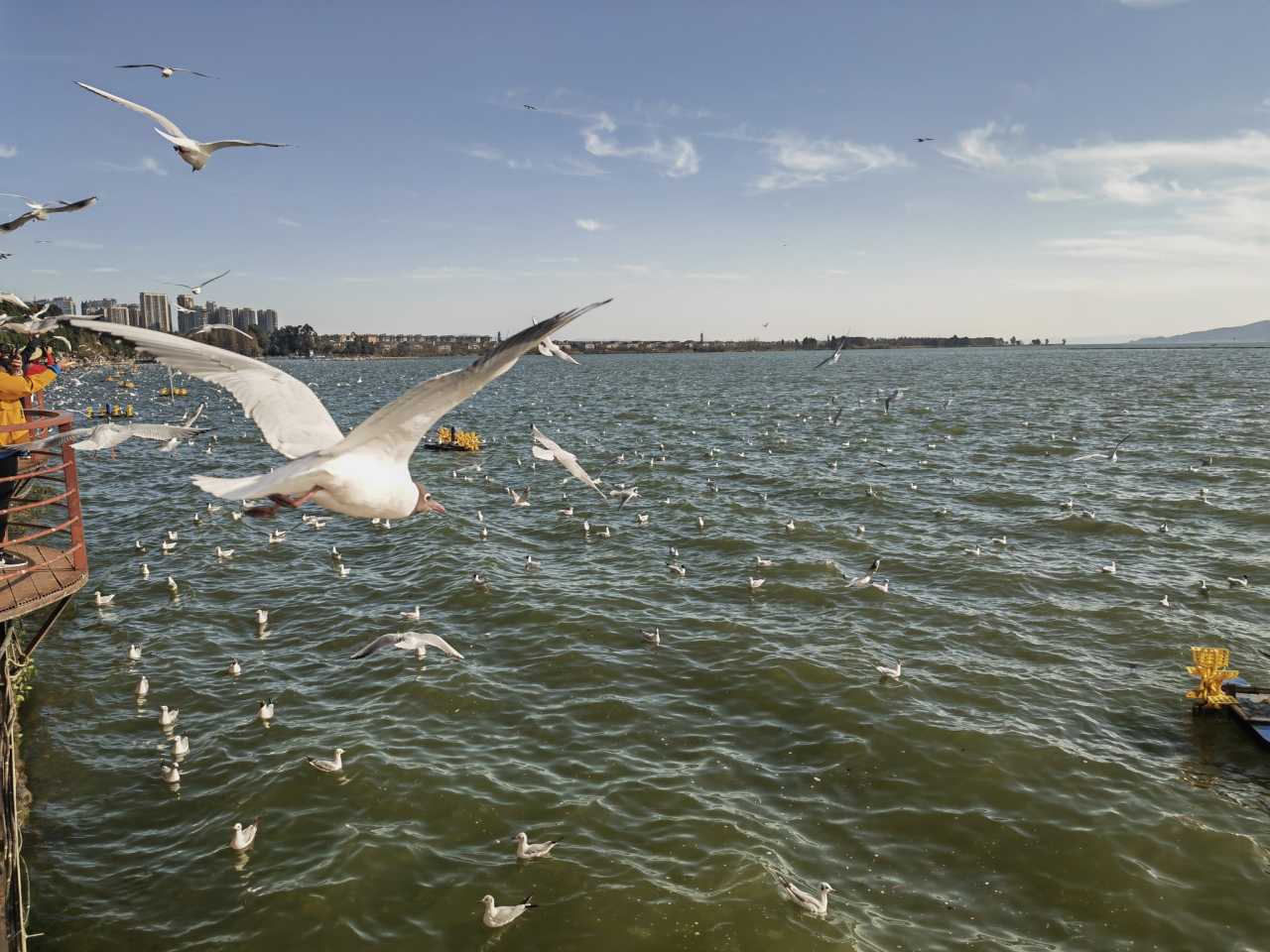
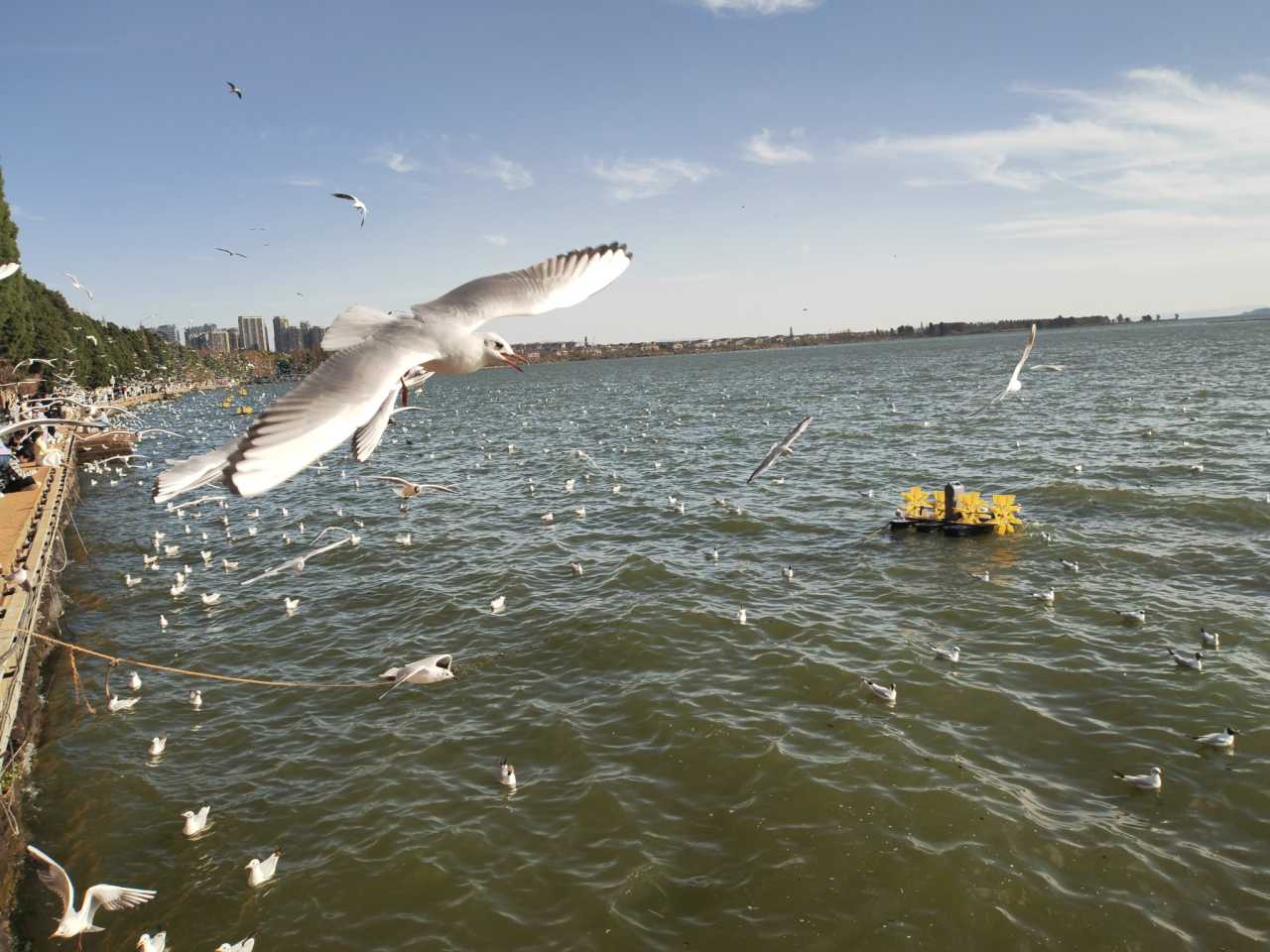
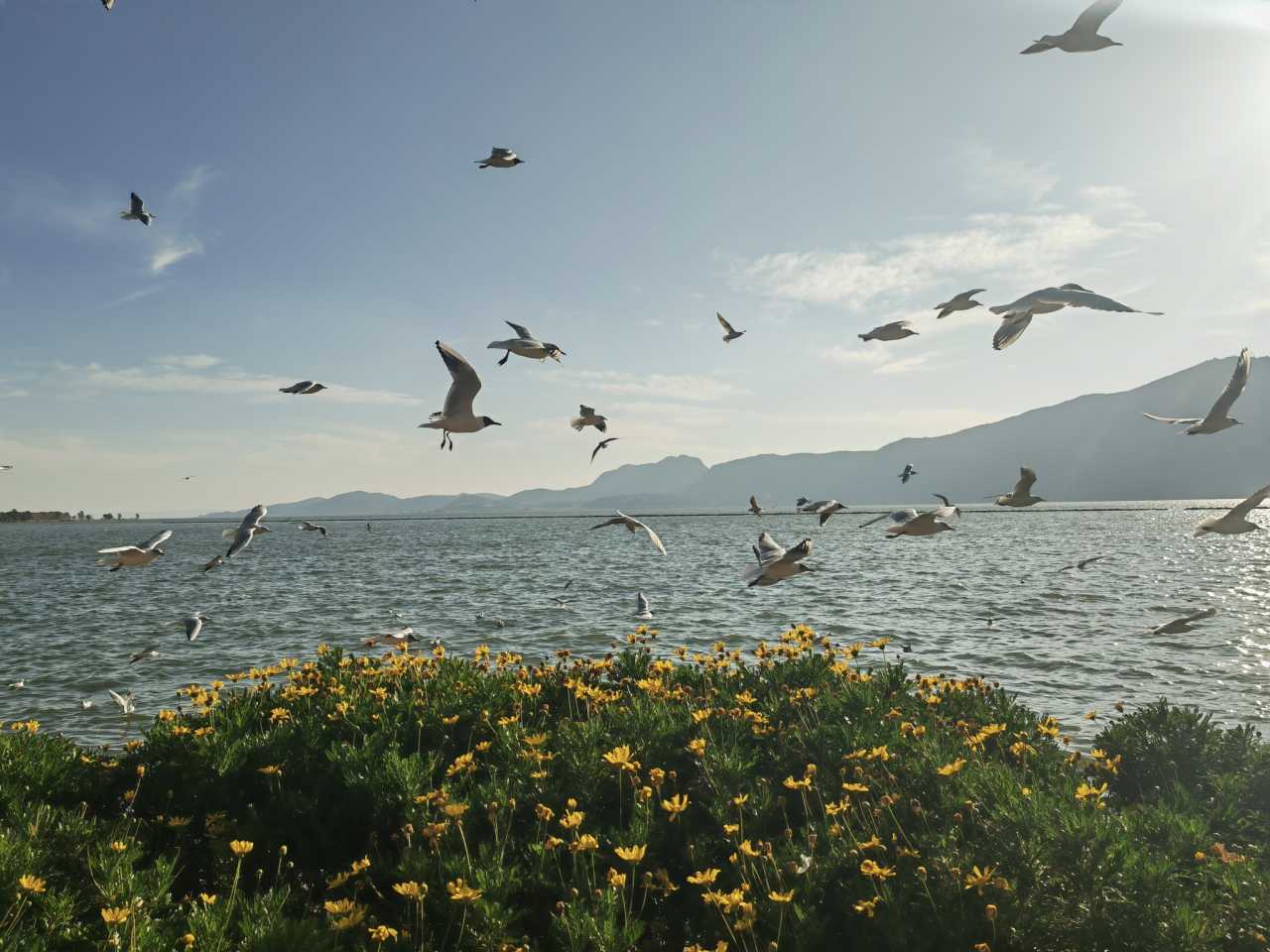
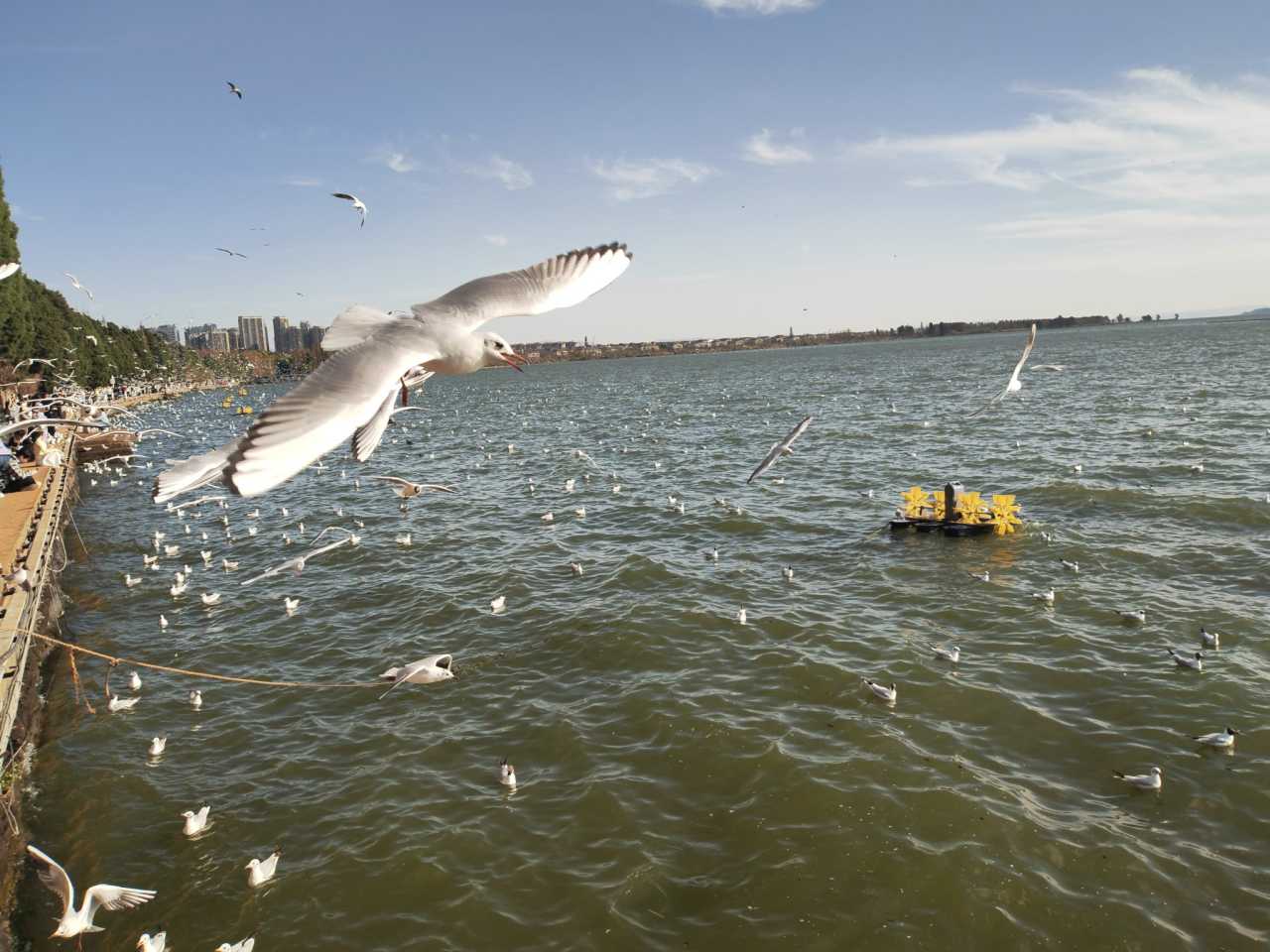
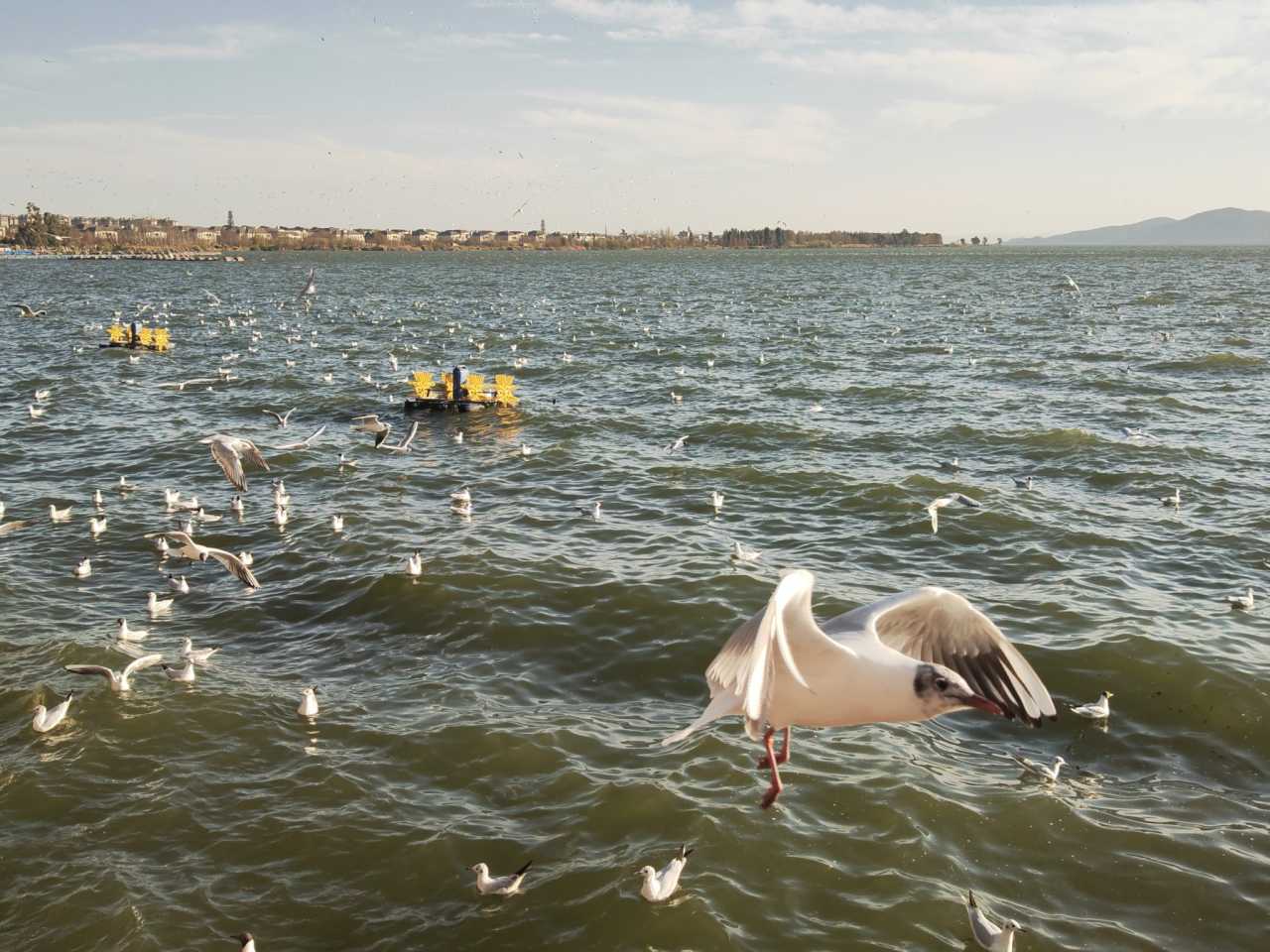
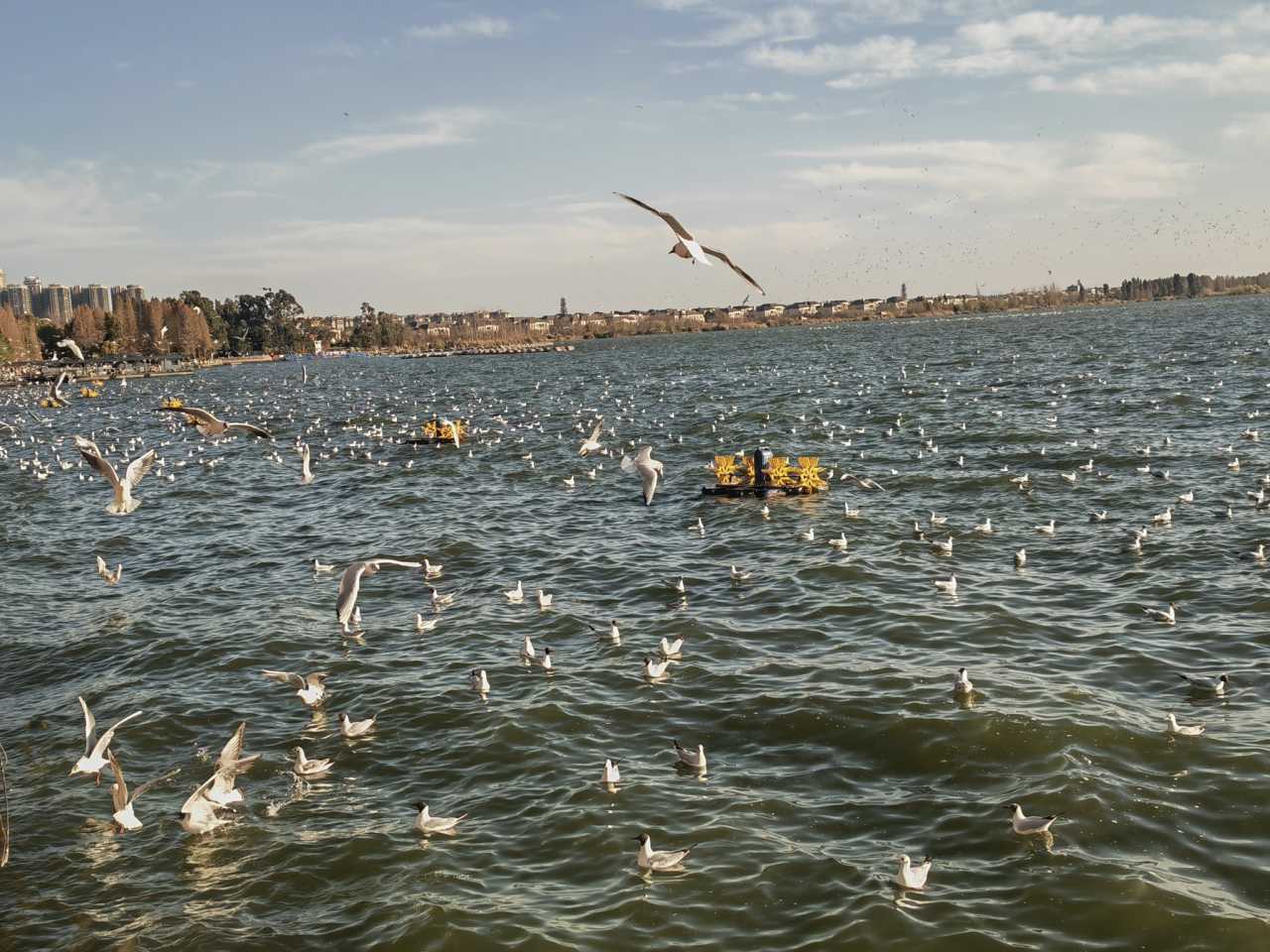
The seagulls at Dianchi Lake were overwhelming. These little creatures fly from Siberia, Mongolia, Kyrgyzstan's lake basins, and Xinjiang's Bosten Lake to winter here. Their "residency" runs from late October to mid-March each year. By late February, the main flock had started heading north, but plenty remained.
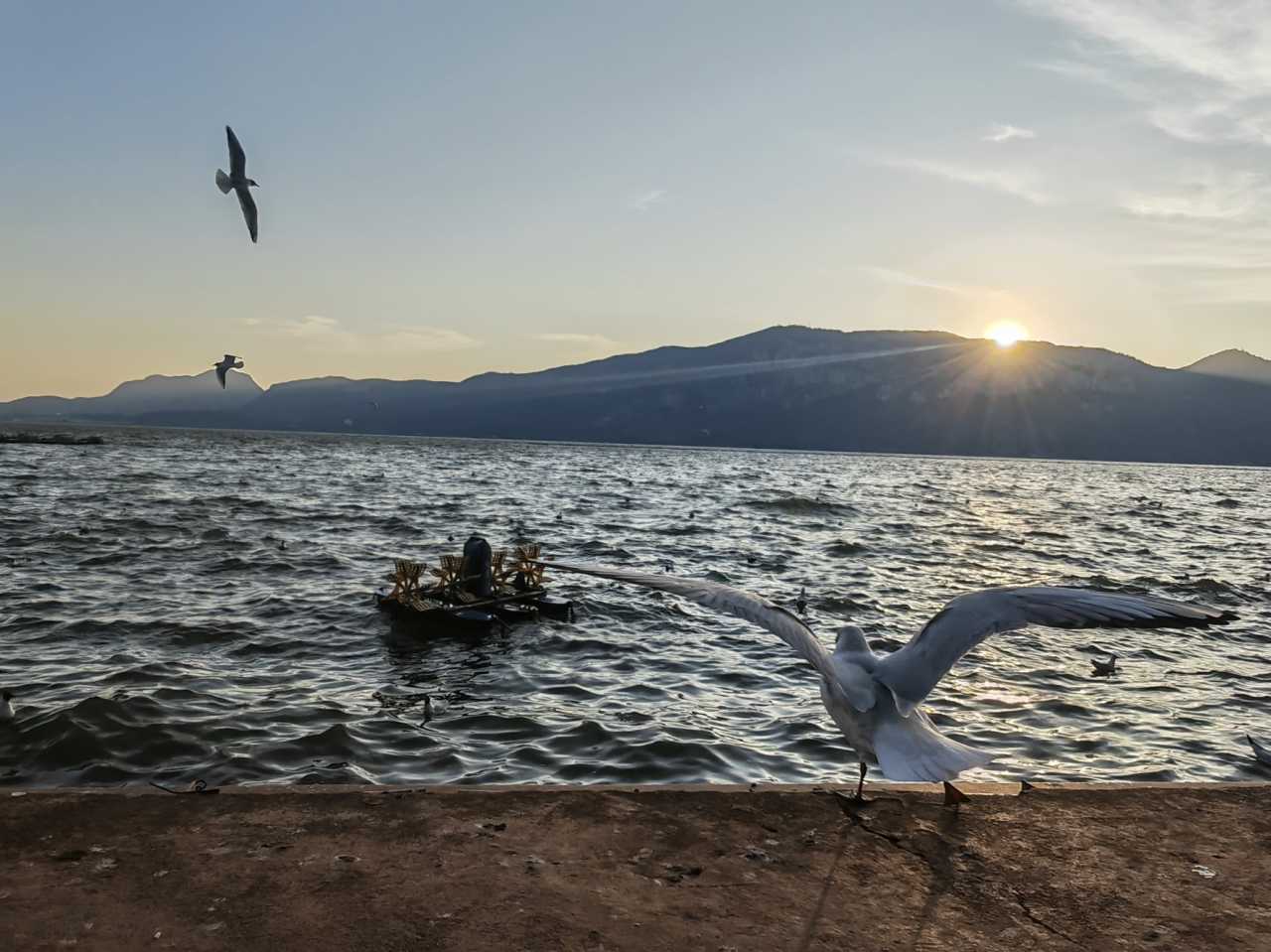
I stood by the lake, pulled out crushed soda crackers from my bag, crumbled them in my palm, and raised my hand. Within seconds, several seagulls dove down, snatched the crumbs with precision, and vanished. The evening sunlight painted the lake gold. The birds flew in formation toward the center, then circled back. That scene erased a day's exhaustion.
The sun was slowly swallowed by the mountains. Light faded, temperature dropped. Yet people lingered by the lake, dancing with the gulls. I passed through the wetland park's redwood grove and rode my electric scooter back. The wind rustled the roadside saplings—nature's spring symphony.
Practical Tips: Best seagull-viewing is from late October to mid-March. Go to Haigeng Dam (opposite Jinjia Courtyard) at 9 AM, or Haihong Wetland Park's redwood boardwalk at 5:30 PM for optimal results.
Chapter 2: Yuanmou Earth Forest, a Time-Travel by Bullet Train
3 Million Years of Waiting, a Day Trip
Yuanmou Earth Forest was my first "pick-up" target. A day trip via bullet train and bus—all thanks to a post algorithm pushed my way.
At 7°C in the morning, I rode an electric scooter to Kunming Station. Wind seeped into my collar, chilling me to the bone. But knowing the earth forest would hit 30°C at noon—that temperature swing was Yunnan's welcome ritual.
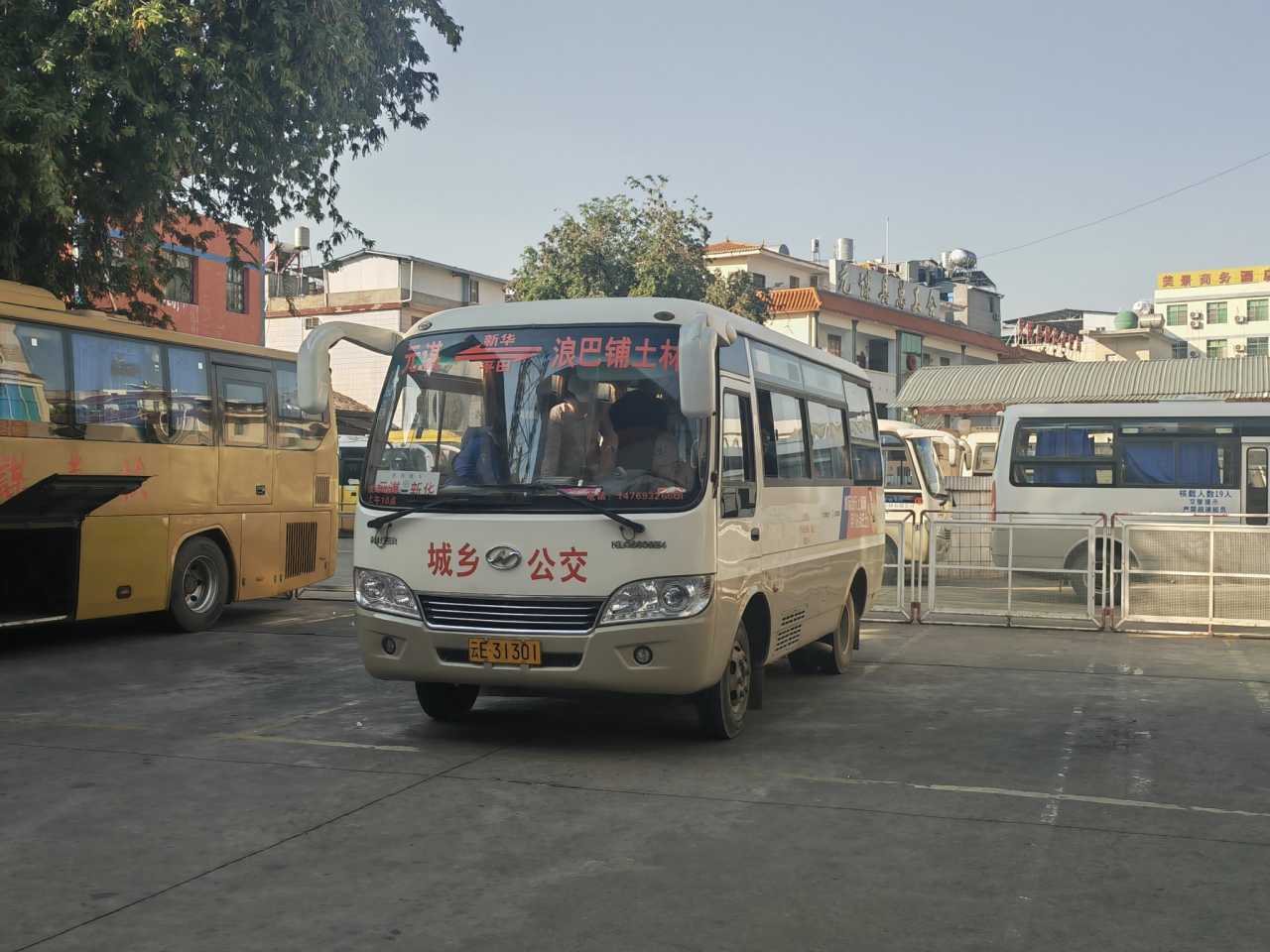
The bullet train arrived at Yuanmou West Station at 9:24 AM, three minutes late. I didn't hesitate—taxi straight to the bus station. Yuanmou's bus station runs only one daily bus to Langbao Earth Forest at 10 AM. Timing was tight. I passed security at 9:40 and boarded. Perfect.
The bus left the county seat and climbed into the mountains. Red earth fields lined the road, with occasional patches of small earth forests. As we passed Pingtian, vast earth forests spread across the window—low, expansive, already fenced off. It's predictable: soon, like Wumao and Langbao, this place will become another Instagram hotspot. The scenic area entrance is 10 kilometers from the attraction, and the shuttle ticket costs more than the entrance fee—standard "scenic area economics."
Along the way, the driver stopped several times to let local aunties and uncles off. They carried daily goods and food, slowly walking into villages. This route wasn't just for tourists—it was a lifeline for locals.
At 11:30 AM, the bus arrived at Langbao Earth Forest parking lot.
Walking in the Creases of Time
Langbao Earth Forest, also known as Xinhua Earth Forest, sits in Xinhua Township, Yuanmou County, Chuxiong Prefecture—33 kilometers from the county seat. Elevation: 1,560–1,640 meters. Area: 1.4 square kilometers. Formed 3 million years ago. Three million years—enough time for humanity to go from the Stone Age to the high-speed rail era.
At the entrance, two paths diverged: the shuttle route on the left, and a small trail weaving directly through the earth forest on the right. A "special forces" traveler like me chose the right without hesitation.
Walking down the concrete path to the bottom, earth forests of all shapes burst into view. Some stood like swords pointing at the sky. Others resembled a potbellied king. A few looked like a maiden gazing into the distance. Still others seemed like neatly arranged heavenly soldiers. Each formation had its own charm—some majestic, some jagged. I completely lost my bearings amid nature's masterpiece.
Langbao Earth Forest has four zones. Walking from Zone 1 to Zones 3 and 4 was a crescendo of highlights. Finally, I climbed to the "Welcome Pine" viewing platform—the highest point in the entire scenic area. The drone-like perspective brought the earth forest journey to its peak. Below me: Zones 4 and 2 up close, a valley with yellow lake water in the distance, and Zone 3 sandwiched in between.
At that moment, the day's exhaustion and scorching sun were all worth it.
At 3:30 PM, everyone was present, and the bus departed early for Yuanmou West Station. I boarded the bullet train and was back in Kunming by 7:38 PM. Walking out of Tangzixiang Station, lights flickered, crowds flowed. Compared to the daytime earth forest—sun, sand, and solitude—it felt like traveling through time.
Practical Tips: - Entirely doable by public transit, though tight. Take D280 from Kunming Station at 8:00 AM, arriving at Yuanmou West at 9:21 AM. Return on D255 departing 6:00 PM, arriving Kunming at 7:38 PM. Book bullet train tickets in advance or risk standing. - From Yuanmou West Station, take a taxi or Bus Route 1 to the bus station. Book the minibus ticket on Qunar or Ctrip in advance (add 2 RMB service fee). Tell the driver you need the train station on the return—they'll drop you at Yuanmou West. - Don't believe shuttle staff who say "10 km from gate to scenic area." It's actually 2 km. Total hike: 6 km, 3–4 hours. - No shops inside. Bring your own lunch and water. Midday heat is intense—sunscreen and hydration are mandatory.
Chapter 3: Dongchuan Red Land, God's Spilled Palette
A Day Tour, Fulfilling a Dream
Dongchuan Red Land—a "holy site" in photography circles—had been on my wish list for years. This time, I bought a day tour online. Hassle-free.

At 7:45 AM, my driver-guide A-Fu picked me up, then collected two more guests at Jinjiang Hotel. Our group of seven headed northeast. Entering Dongchuan, red soil flanked the roads, surrounding fields of green highland barley, gray-white plastic mulch, and white flowers from immature rapeseed. Scattered villages and tractors brought the canvas to life. Calling it "God's spilled palette" wasn't an exaggeration.
First stop: Xiguadi and Dengjiagou Village. Wind strong enough to blow you away—we snapped a few shots by the car and retreated. October is the prime season here: red land paired with white rapeseed flowers and green crops creates a watermelon-rind effect.
Second stop: Lopu Hollow. Terraced fields rose and fell, colors jumping like a musical staff—hence the name. We ran into the "internet-famous grandpa"—well, his brother. The original grandpa had passed away. Now two brothers work the scenic area. Tourists wanted photos; the driver said, "Five yuan for the whole car." The old man cooperated, blending into the red land without feeling too commercial.
Wafang Liangzi and Guoditang Village offered close-up views of the red land's vastness and color contrast. The thousand-year-old tree was a filming location for the movie Forever Young. A lone fir standing for millennia, detached from the world—symbolizing the land's resilience and vicissitudes.
Luoxia Valley and a Windy Farewell
We rested and ate lunch at A-Fu's place. Afternoon destination: Luoxia Valley—the only place in Dongchuan Red Land requiring an entrance and shuttle ticket. Ravines crisscrossed, cliffs dropped sharply, terraced fields layered along the mountain contours in graceful arcs. Walking the boardwalk to the end, the viewing platform revealed tiered fields surrounding a small village. So beautiful I wanted to sit and stare all day.
Jinxiuyuan and Qicai Slope were no less stunning than Luoxia Valley—open views, breathtaking panoramas. But the wind nearly knocked me over. I hid behind a concrete pillar, snapped a few quick shots, and retreated.
4:00 PM, time to head back. On the way, A-Fu treated us to roasted potatoes—not many potatoes, but a table full of dipping sauces. Consider it an experience.
In one short day, I collided with the red land. Every time I think of it, I step into a colorful dream.
Practical Tips: - If you have time, stay overnight in Dongchuan to experience the sunrise and sunset—truly magnificent. - The only enclosed scenic area is Luoxia Valley. Bring your own water. - Watch your step when taking photos—don't trample crops. At Wafang Liangzi, I saw a group of aunties queuing up to wave chiffon scarves in the fields. Speechless. - The Qicai Slope viewing platform is a dirt slope—steep and windy. Be careful.
Chapter 4: Yuanyang Rice Terraces, the Hani's Millennia-Old Epic
From Jianshui to Duoyishu, Bumpy Roads and Beautiful Scenery
Yuanyang Rice Terraces, like Dongchuan Red Land, had been a long-cherished dream.
To get there early, I combined a bullet train and bus: bullet train from Kunming to Jianshui, then Bus Route 18 to the bus station, and another bus to Yuanyang.
At Jianshui bus station, a woman asked where I was headed. "Yuanyang," I said. "You're the last passenger on this bus," she replied. I squeezed into the last left window seat, next to several Hani aunties. Some played Douyin on speaker, others coughed without covering their mouths, a few chatted loudly. I silently put on my mask, cranked up my earphones, and tried to distance myself from the "local flavor."
An hour later, we arrived at Yuanyang Nansha Bus Station. Right next to us was a minibus heading to Duoyishu. My heart leaped—despite the hassle, everything connected perfectly.
The car began winding through the mountains. Passing Quanfuzhuang and Malizhai viewpoints, the kind driver stopped twice to let us climb up for a first look at Yuanyang's terraces. But the midday sun was too harsh—the terraces didn't show their best.
Pugao Old Village, Slow Time for One
I got off at Yun'an Shanjia Guesthouse. Four fellow passengers wanted to rent a car together for sunset. While they washed up and ate, I walked alone to Pugao Old Village viewing platform.
Pugao Old Village, adjacent to Duoyishu Terraces, is a small Hani settlement of about a hundred households. Most houses had been converted into modern buildings, but traditional Hani "mushroom houses" dotted the landscape. Stone paths and steps connected the homes. Occasionally, a water buffalo returning from the fields passed by, hooves clattering heavily on the stone. Every time I stepped aside for a panting buffalo and a silent farmer, I thought: what tourists see as scenery is an inescapable livelihood for locals.
Pugao Old Village's square served as the viewing platform. In front stood a pear tree in full white bloom, rustling in the wind. Below the blossoms, terraced fields shimmered with blue light. Compared to the crowded Duoyishu viewing platform nearby, this place was peaceful, allowing me to savor the view and let my thoughts wander. At that moment, I shed the world's chaos and returned to the essence of travel.
Love Spring Blue and Dawa Zhe Sunset
The Four-Elements Coexistence Viewing Platform perfectly showcased the Hani's ecological wisdom: "forest above, village in the middle, terraces below, waterways running through." A seemingly casual touch of peach blossom brightened the village below.
Love Spring Blue Terraces: on clear mornings around 10 AM, the water surface reflects the blue sky, creating a "water and sky merge into one" azure effect. We arrived near sunset—the effect was diminished. Local villagers had blocked the entrance, charging 5 yuan per person to enter for photos. The colors weren't striking enough, so I skipped it.
Dawa Zhe Sunset—recommended by the guesthouse owner as a less crowded spot. When we arrived, the tiny area was packed. Front rows: tripods and telephoto lenses. Overhead: a swarm of drones. This was "not crowded"?
The sun was gradually swallowed by distant peaks. The low-lying terraces took on an ink-wash painting effect. Though we didn't get the "golden hour" of sunbeams piercing the clouds, two small clouds beside the setting sun added a finishing touch to an imperfect sunset.
Practical Tips: - Only two direct buses run from Jianshui to Xinjie Bus Station daily; most go to Nansha Bus Station. Aim to reach Nansha before 11 AM to connect with the Duoyishu minibus. - Stay near Duoyishu in Pugao Old Village or Huangcaoling for easy morning walks to sunrise spots. Many guesthouses require climbing stone steps—staff will carry your luggage, but you'll have to climb when going out. - Minibuses run from Quanfuzhuang to Dawa Zhe, hop-on-hop-off, fare 5–20 yuan. But after sunset, return vehicles are scarce—plan accordingly.
Chapter 5: Market Day and Sunrise, Two Ways to Open Yuanyang
Duoyishu Sunrise, Surprise Behind the Clouds
I set out at 6:20 AM, walking to Huangcaoling for sunrise. The sky was still dark. Narrow roadsides were packed with tour buses. We threaded through the gaps. Everyone heading the same direction was going to the side of Duoyishu viewing platform for an alternate angle.
Huangcaoling had several guesthouses where you could watch sunrise from your room. Below the guesthouses, villagers had built two viewing platforms—5 yuan per person. We entered the first one and waited.
The sky glowed gray-white. Clouds were too thick; the sun refused to show. I thought today would be a bust. Then, at 7:50 AM, the sun suddenly broke through the clouds, casting a faint orange-yellow glow over the layered terraces and scattered homes. Not perfect, but enough.
Shengcun Market, Hani Life in Full Swing
After sunrise, I returned to the guesthouse for breakfast. The driver I'd arranged picked us up. Per my request, first stop: Shengcun market.
Yuanyang's market operates every three days (on Pig, Rabbit, and Sheep days). The guesthouse owner confirmed today was market day. Walking in, I felt like I'd fallen into a living museum of ethnic culture.
Most vendors were women in dark blue Hani attire or colorful Yi costumes, accessories rich with ethnic character. Shoppers carried bamboo or plastic backpacks. In the clothing section, a handcrafted silver-embroidered women's jacket was priced at 6,000 yuan—dense stitching and neatly arranged silver ornaments testified to its quality. Men's clothing, by contrast, was plain.
At the food section entrance, several elderly people chatted while smoking water pipes. Times had changed—bamboo water pipes had been replaced by stainless steel—but the old folks' blissful smoke-cloud expressions remained unchanged.
Yuanyang's market is not just a trading place—it's a living display of ethnic culture. I'm grateful to have experienced it during my stay.
Laoyingzui and Malizhai, Quiet Corners
After the market, we headed to Laoyingzui Terraces. Layers upon layers of terraces stretched from the valley floor to the mountaintop, steep slopes with sharp lines. Patches of red algae covered the water, earning it the nickname "Earth's Palette."
Laoyingzui isn't on the main route—no shuttle buses, few visitors, preserving its original character. Standing by the terraces, the only sounds were wind and water. That silence was Yuanyang's most luxurious gift.
Malizhai Terraces had trees and small huts interspersed, adding depth to the landscape. If time allowed, it was worth lingering—because slow is the right way to open Southeast Yunnan.
Epilogue: Slow-Motion Southeast Yunnan, a Fast-Paced Heart
Eleven days. From Guangzhou to Kunming. From Yuanmou Earth Forest to Dongchuan Red Land. From Jianshui to Yuanyang Rice Terraces. Bullet trains roared across the Yunnan-Guizhou Plateau, but at every stop, I paused to gather the scenery that speed had forgotten.
Southeast Yunnan's morning mist is slow. It rises from the valleys, creeping over the terraces inch by inch, like the Hani's thousand-year-old farming rhythm—unhurried. Southeast Yunnan's sunset is also slow. The sun dawdles on the ridge before finally setting, its afterglow painting the earth forest red and the terraces gold.
In this age of efficiency, we've grown accustomed to speed—fast trains, fast food, fast-paced lives. But some landscapes can't be rushed. They demand you stop, wait, even take detours.
Like the Hani farmer I met in Yuanyang, leading his water buffalo along the stone path, unhurried. His rhythm is as ancient as this land. And I, a traveler from Guangzhou, found in his rhythm a long-lost peace.
Southeast Yunnan won't let you down. It just asks you to slow down.
About the Author: A solo traveler who set out with a cough, believing the best scenery is worth reaching at the slowest pace.
You should also read:
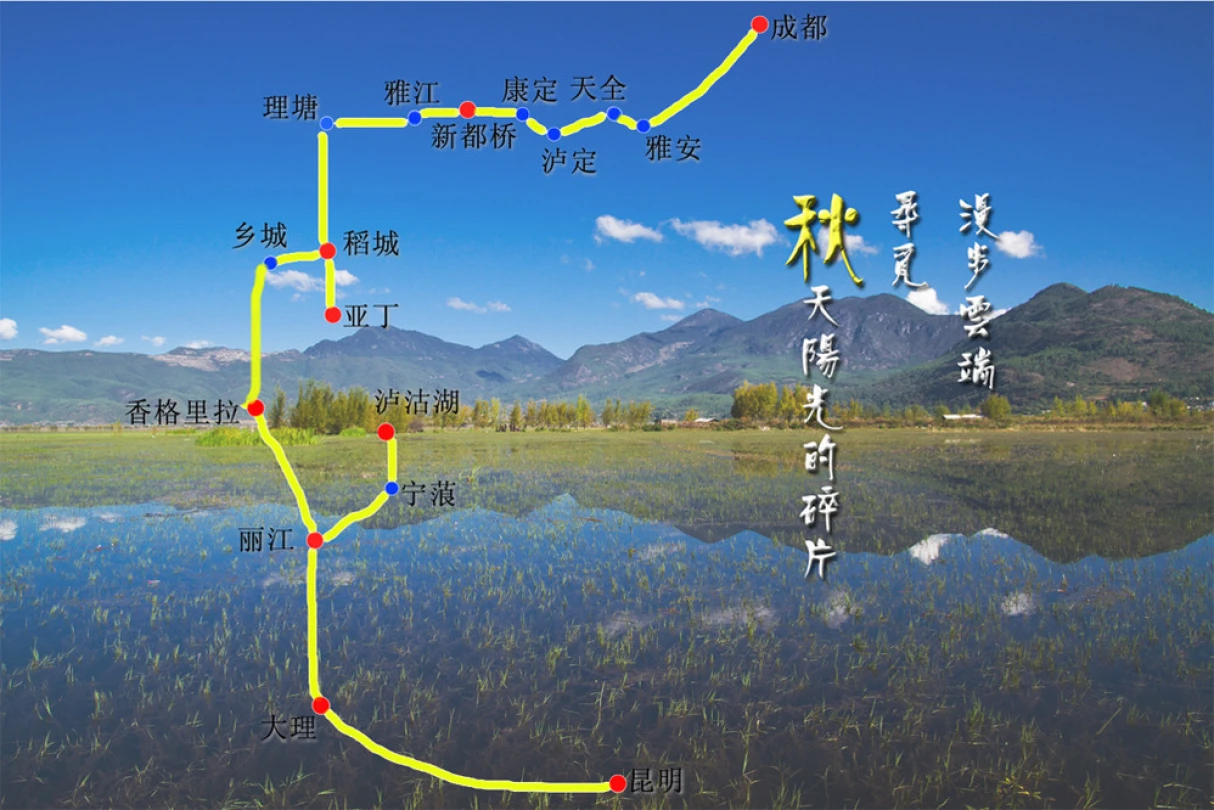
Strolling Among the Clouds: Gathering Autumn's Light on the Western Sichuan Plateau
Strolling Among the Clouds: Gathering Autumn's Light on the Western Sichuan Plateau Prologue: A Sun Chaser's Journey Autumn sunlight is like a gentle painter, using golden brushstrokes to smear the last traces of warmth across the earth. It slips through the gaps between your fingers,…
Continue reading...
Idle Clouds in Autumn, a Moonlit City: A Slow Travelogue Through Lijiang and Shuhe
Idle Clouds in Autumn, a Moonlit City: A Slow Travelogue Through Lijiang and Shuhe When the autumn wind brushes across the ancient city's eaves, when sunlight spills onto the mottled cobblestone streets, when the melodies of folk songs mingle with the aroma of plum wine…
Continue reading...
Solo in Yunnan: A Wanderer’s Guide to the Land of Eternal Spring
Solo in Yunnan: A Wanderer’s Guide to the Land of Eternal Spring There’s something magical about traveling alone. No compromises, no schedules to keep, no one to please but yourself. I’ve been on the road for nearly three months now, and not once have I…
Continue reading...