Another Possibility for Winter Dali: The Liang-Wang Duo's Four-Day In-Depth Journey

Another Possibility for Winter Dali: The Liang-Wang Duo's Four-Day In-Depth Journey
The start of 2025 turned out to be more曲折 (winding and unpredictable) than expected. Our original plan for a trip to the Yuanyang Rice Terraces was completely disrupted by the relentless forecasts of moderate rain and haze. We had already booked flights, arranged a rental car, reserved a guesthouse, and even scouted photography spots — only for the weather gods to deliver a merciless "blow to the head." In desperation, Dali became our Plan B. To be honest, setting off with a "backup option" mindset left us feeling somewhat anxious. But Dali seemed unfazed by our hesitation, embracing us with the most generous blue skies, white clouds, and gentle sea breeze. And so, this guide to "the right way to experience winter Dali" was born — a four-day in-depth travelogue belonging to the Liang-Wang Duo.
About Us: The "Liang-Wang Duo" of the Travel World
I'm Liang, and beside me is Teacher Wang. As a middle-aged couple, after experiencing a particularly challenging December, we decided to kick off the new year of 2025 with a journey. This time, we went against our usual habits and prepared two sets of plans — we even booked two sets of accommodation. As it turned out, this "crafty hare with multiple burrows" decision saved our entire holiday.
Quick Practical Information
- Travel Dates: January 8–12, 2025 (5 days)
- Cost per Person: Approximately 3,000 RMB
- Transportation: Round-trip flights from Beijing to Kunming; self-driving rental car in Dali
- Photography Gear: Sony A7M4 + Tamron 28-300mm; Huawei Mate60 Pro
- Packing Guide: A winter down jacket is essential (not a lightweight one!). Large temperature differences between morning and evening; bring sunscreen and an umbrella at all times.
Itinerary Overview
- Day 1: Beijing → Kunming → Weishan Ancient Town → Stay near Sansheng Island
- Day 2: Sunrise at Xindi Coffee → Chongyi Village → Majiuyi → Xiabopeng
- Day 3: Sunrise at Majiuyi → Cycling the ecological corridor to Longkan Pier → Night view of Xingsheng Bridge
- Day 4: Haidong Wetland → Luwo Mountain → Sunset at Xiaoputuo
- Day 5: Dali → Kunming → Beijing
Day 1: Weishan Ancient Town — A Nanzhao Memory Forgotten by Time
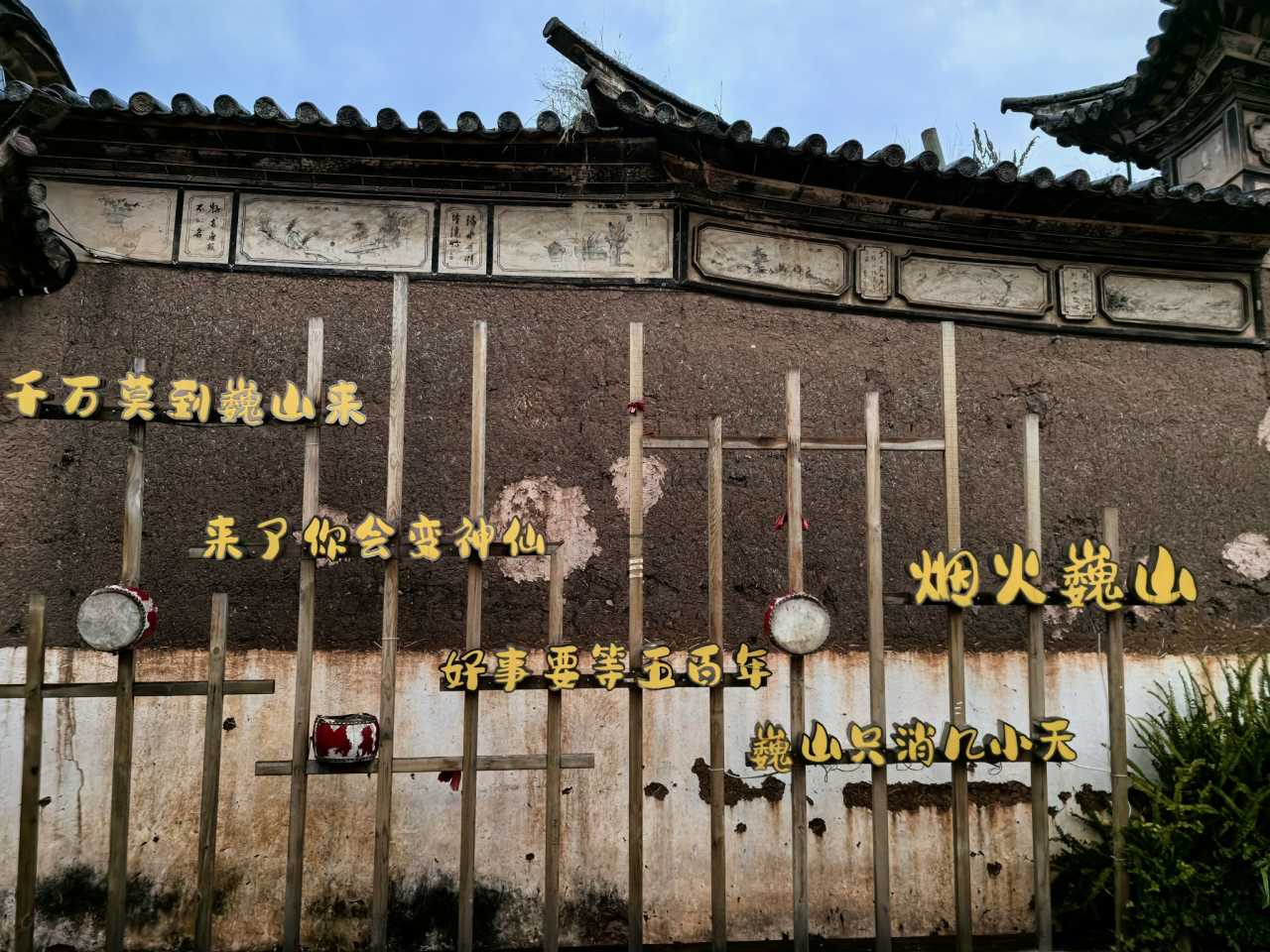
After driving over 300 kilometers from Kunming, we arrived in Weishan in the afternoon. This ancient town is like a reclusive old man, quietly guarding his own stories. As the birthplace of the Nanzhao Kingdom, Weishan has been an important hub on the Ancient Tea Horse Road since the Tang Dynasty. The old town we saw was first built during the Yuan Dynasty and was converted from an earthen fort to a brick city during the Hongwu period of the Ming Dynasty. It still retains the traditional Bai architectural layout of "three rooms and one screen wall" and "four courtyards and five skywells."
Nanzhao Museum: Touching the Millennia-Old Overlord of the Southwest
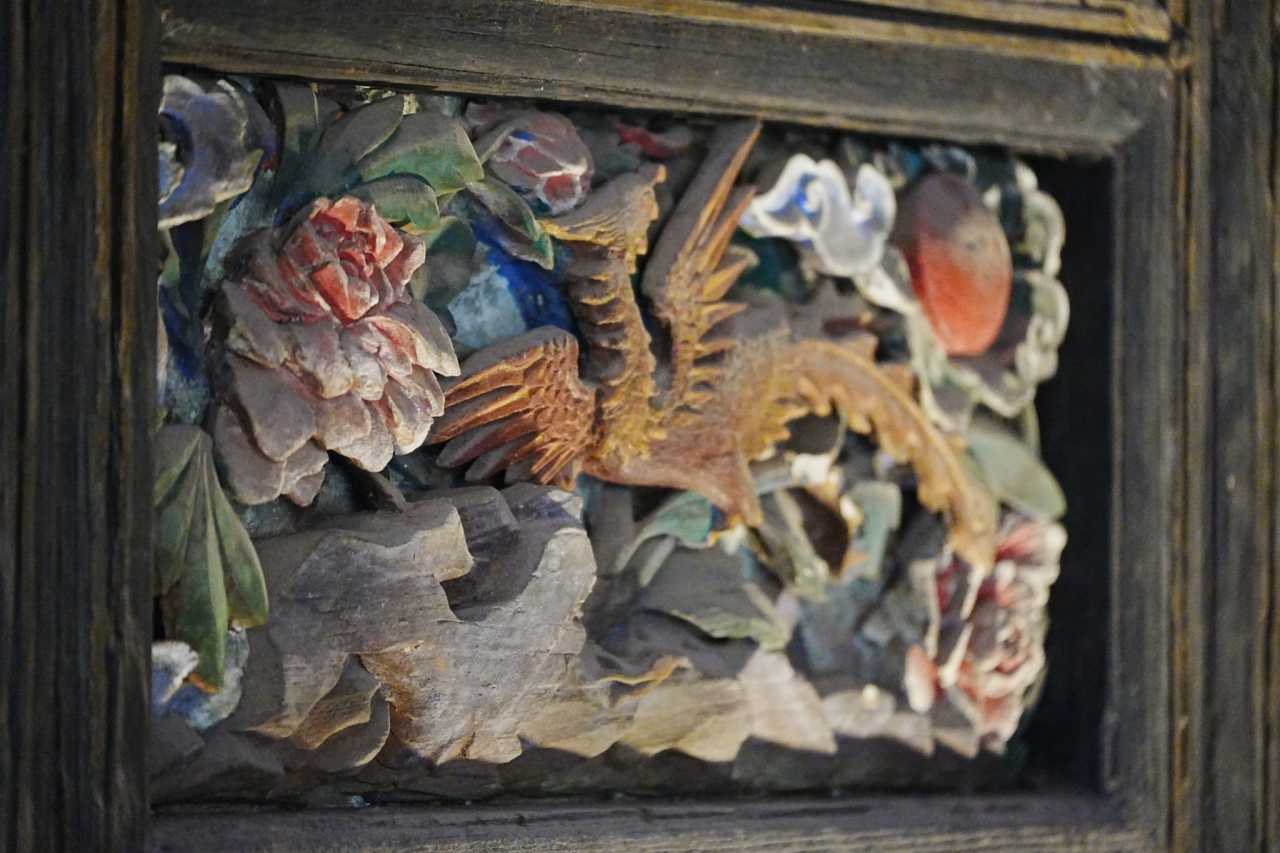
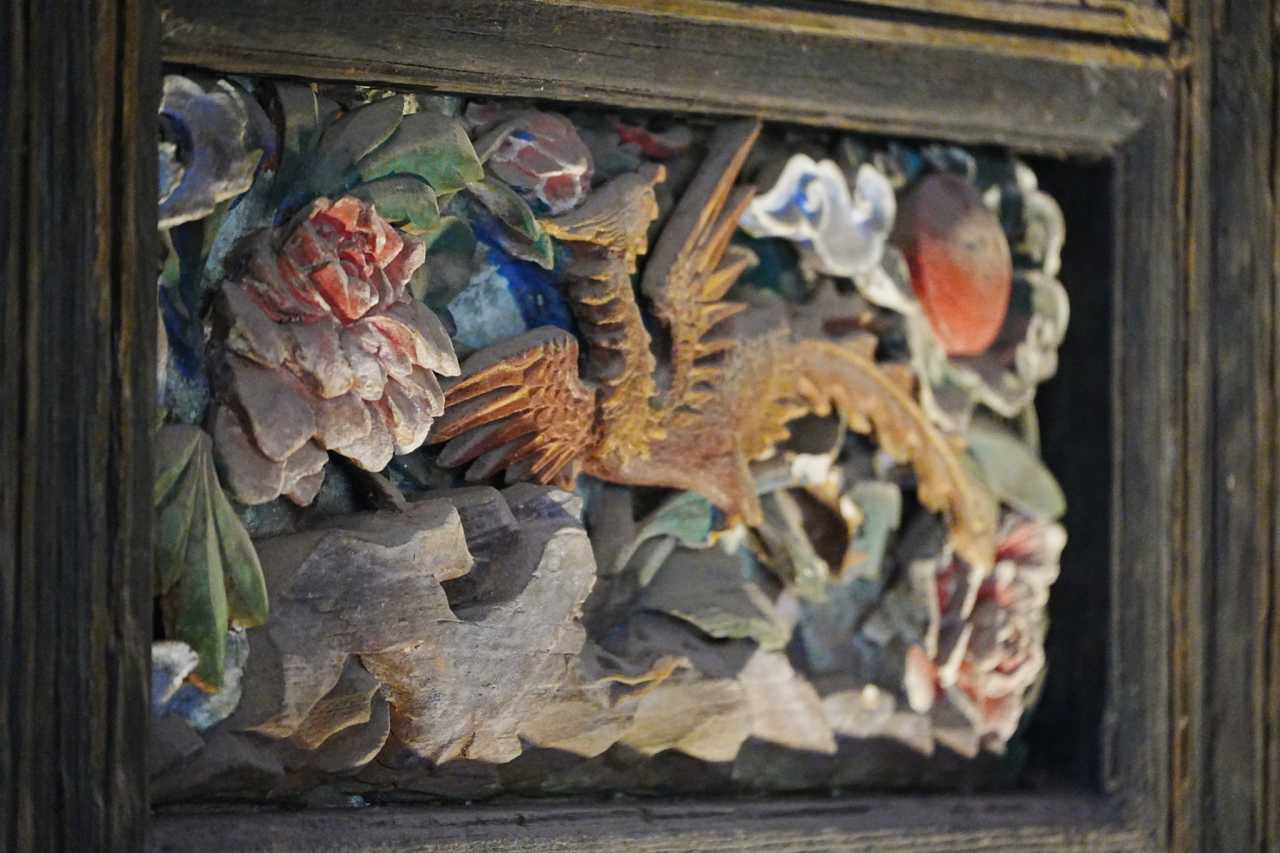
Stepping into the Nanzhao Museum, the first thing that catches your eye is the solemn entrance hall, which forms a central axis with the Sun Palace and the Twin Pagodas of Dengjue Temple. The museum houses 3,737 artifacts, but the most breathtaking are the six Ming Dynasty wooden carved doors — each nearly three meters high, carved from top to bottom with dragons, phoenixes, auspicious beasts, seasonal landscapes, mountains, waters, and castles. Combining relief and openwork carving, their colors are so vivid you can't tear your eyes away.
The Sun Palace was built in the 16th year of the Yongle era of the Ming Dynasty (1418 AD). It features a single-eave hip-and-gable roof with thick, rustic timber. Standing before the hall, you can feel the masterful skill of Ming Dynasty craftsmen — the carvings on the melon-columns and camel-hump brackets are delicate and lifelike, still vivid after 600 years.
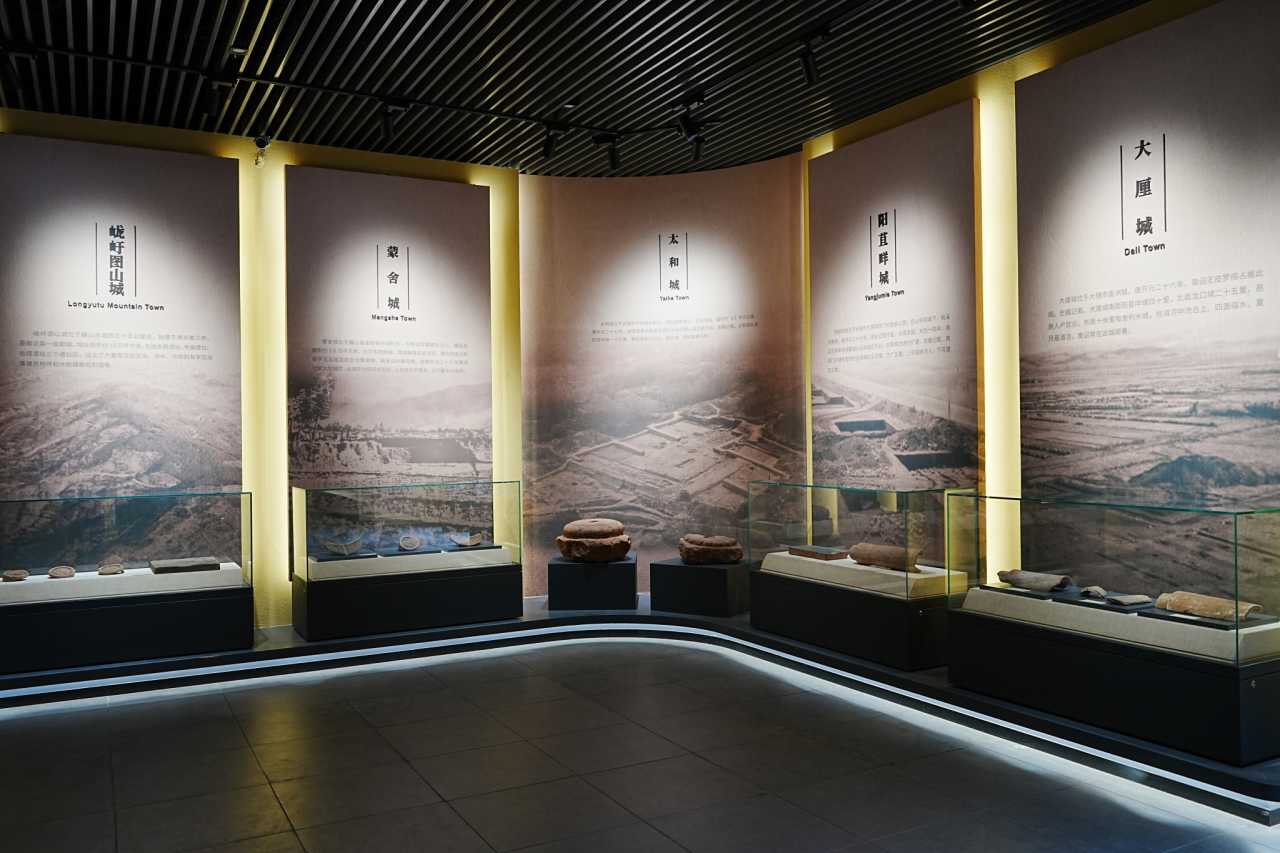
The museum's exhibits clearly outline the rise and fall of the Nanzhao Kingdom: from its founding by Xinuluo in 649 AD to the capital's move to Dali's Taihe City in 738 AD, this southwestern regime operated in Weishan for over 90 years, almost spanning the entire Tang Dynasty. The gallery features a replica of the "Imperial Tour of Geluofeng" from the Shizhongshan Grottoes in Jianchuan, with 16 distinct figures. The warriors, adorned with tiger skins and yak tails, are rich in ethnic character.
Wenhua Academy: Where Ancient Architecture Meets Light and Shadow
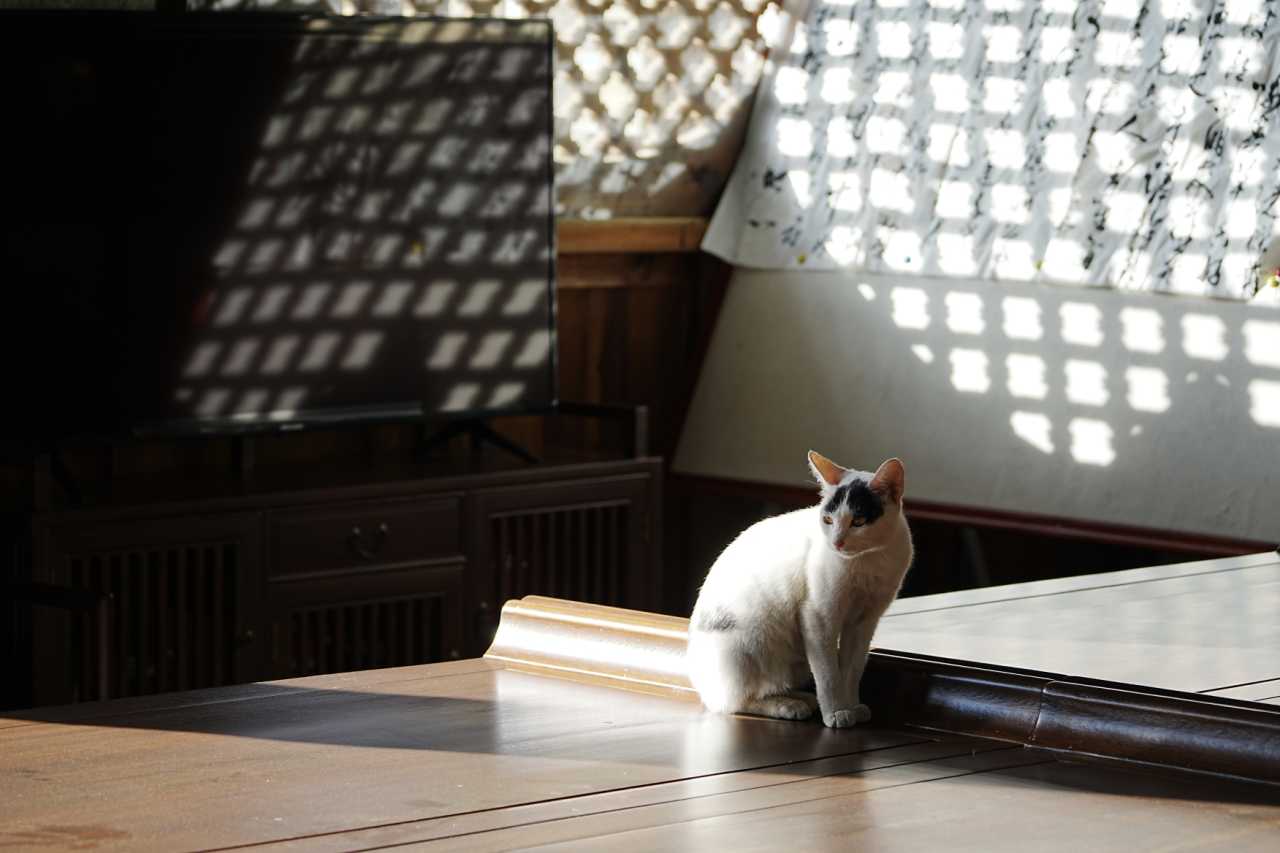
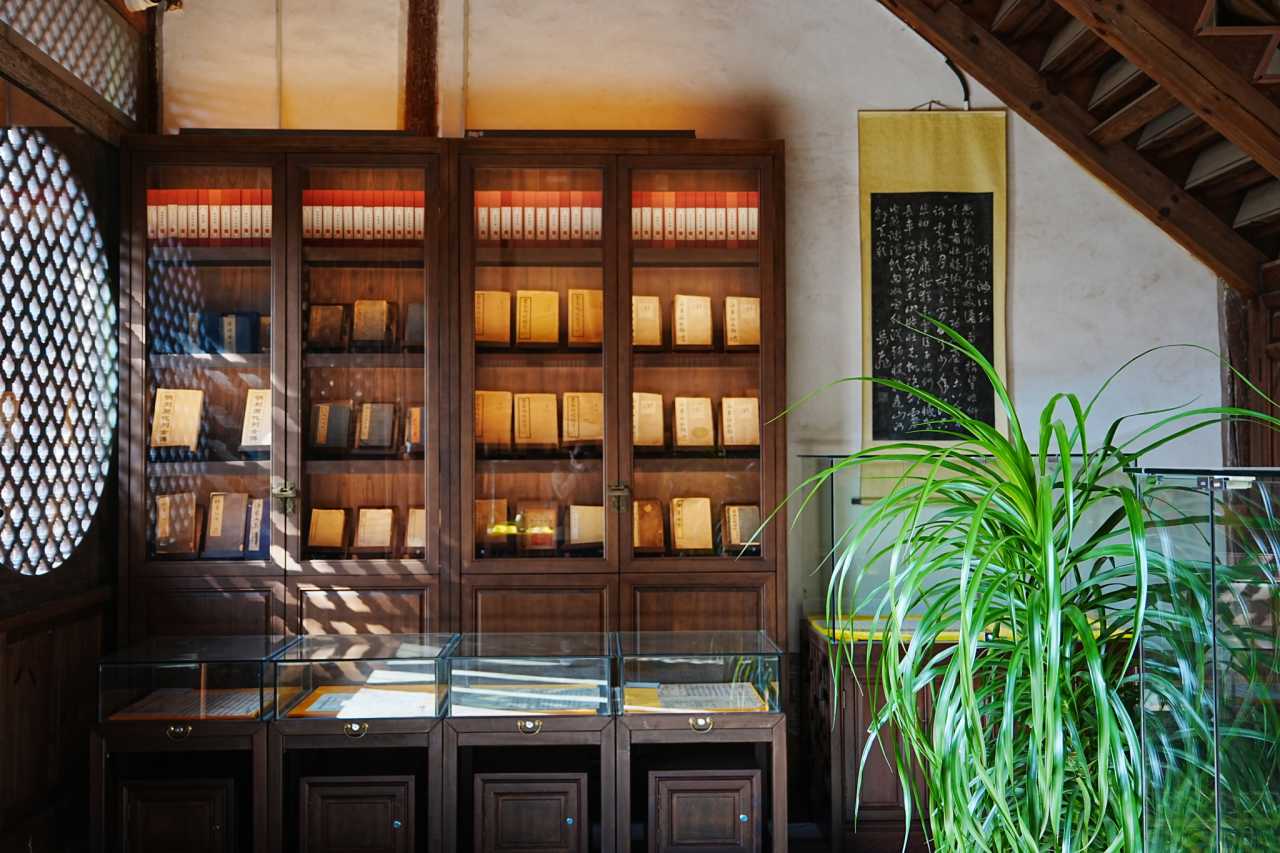
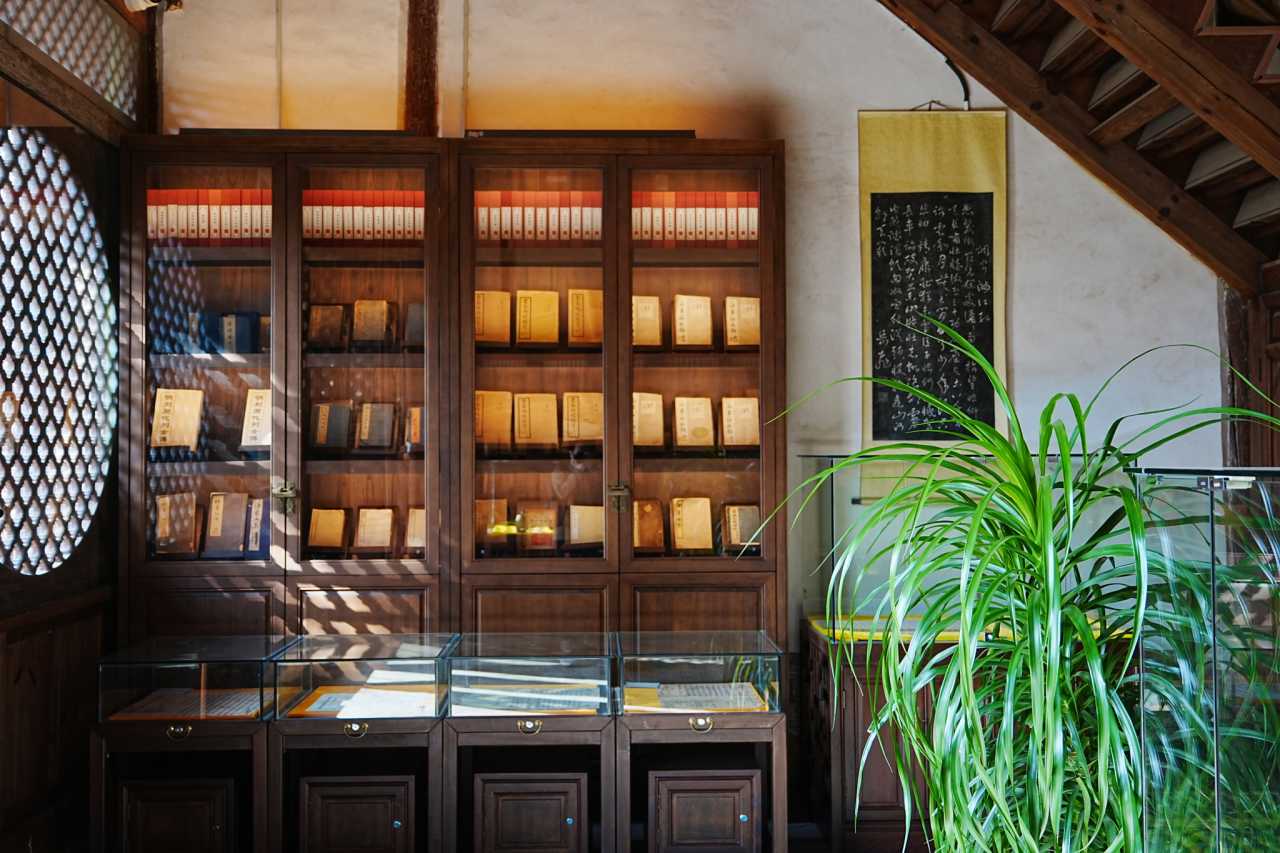
The Wenhua Academy was first built in the first year of the Guangxu era of the Qing Dynasty (1875 AD), covering over 4,000 square meters. It consists of a main gate, a second gate, a Pan Pond, an arched bridge, the Yanta Archway, the Kuixing Pavilion, and a library building. What surprised me most was that during this warm winter, the plum blossoms and magnolias in the courtyard were blooming simultaneously. Sunlight streamed through the ancient lattice windows, casting dappled shadows, and the air was filled with a faint scent of ink.
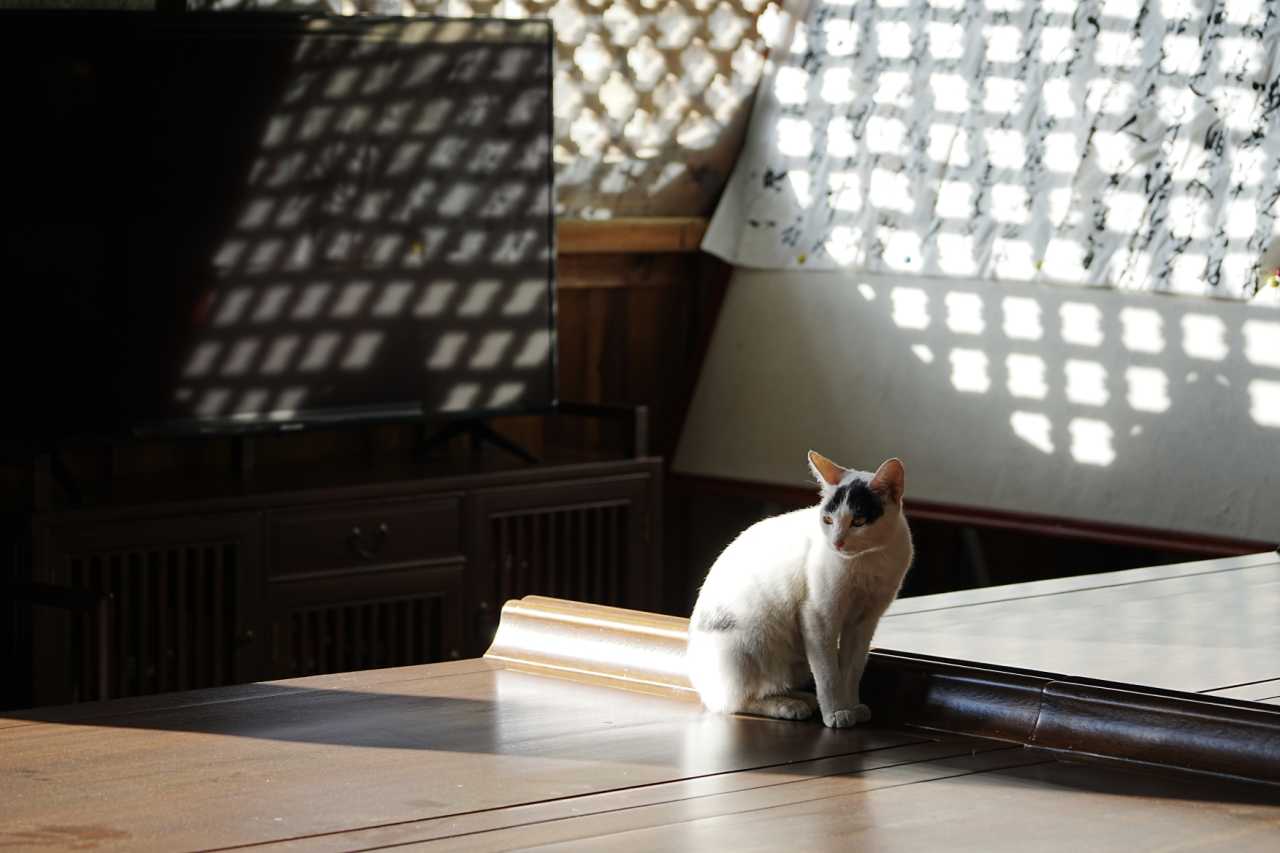
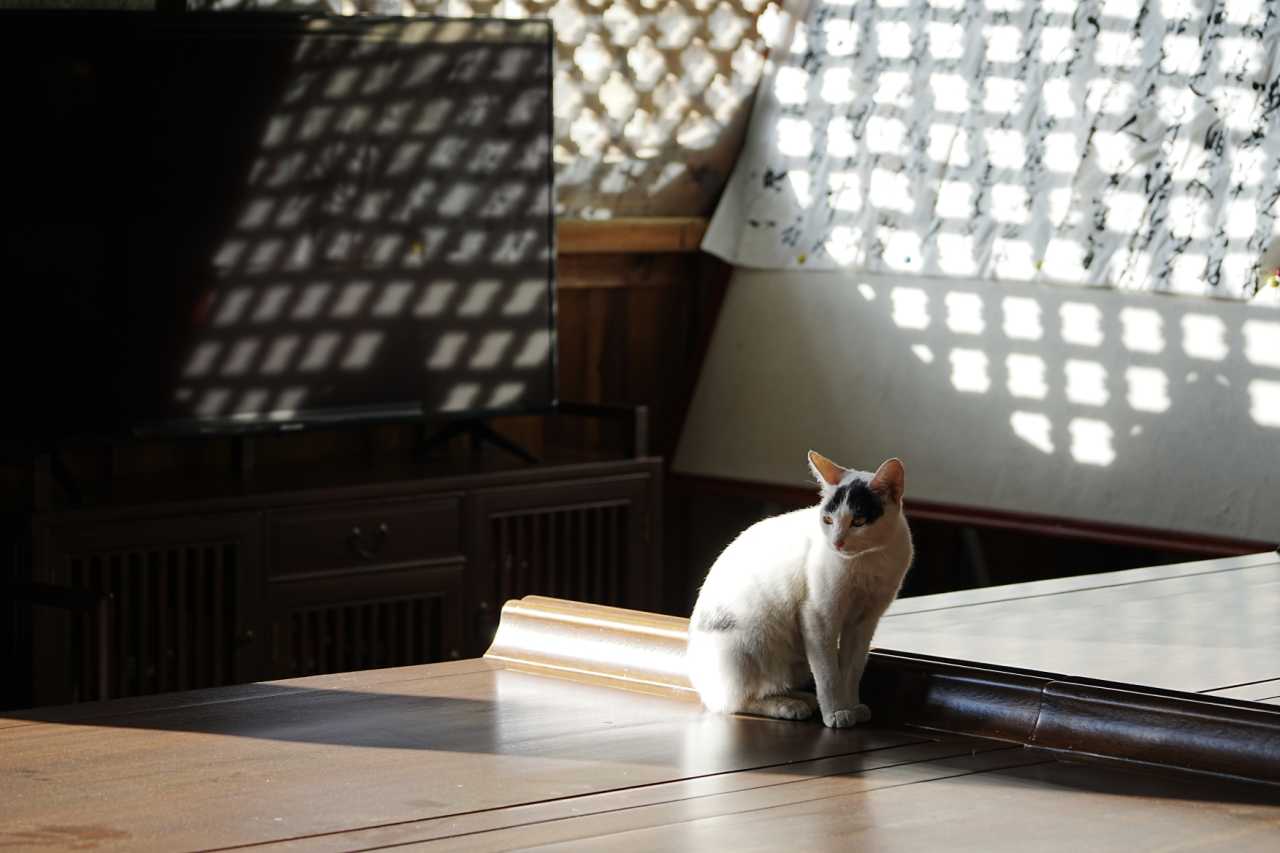
The Xiaogong Shrine in the southwest corner of the academy has been converted into a library. Here, we encountered a cat basking in the sun, lying lazily on the stone steps as if it owned the place. Pick up a book, sip a cup of tea — time slows down here.
Librairie Avant-Garde at Chongzheng Academy: The "Resurrection" Power of a Cup of Coffee
The Librairie Avant-Garde bookstore is located at the former site of the Chongzheng Academy on the west side of the ancient town. The collision of traditional architecture and modern design creates a wonderful spark. After a grueling 300-kilometer drive and a car-swapping mishap, we were physically and mentally exhausted — but a single cup of hot coffee instantly brought us "back to life." At the bookstore, we met a beautiful woman who had been traveling and staying locally. She strongly recommended the fried eggplant cubes at Master Kun's Restaurant, calling them "not just good, but extraordinary."
Weishan in the Rain: The Scent of Daily Life and Slow Living
As we left the bookstore, a light rain began to fall. We walked through the ancient alleys under our umbrellas. The plaque reading "Wanli Zhan Tian" (Gazing at the Heavens from a Myriad Miles Away) on the Gongchen Tower looked even more majestic in the rain. Weishan Ancient Town retains a rare sense of everyday life — a shop for repairing shoes and making keys, an alley hung with bright red lanterns, enticing stalls selling smoked foods... The locals leisurely played cards, as if time had stopped here.

There's a saying in Weishan: "Play in Dali, eat in Weishan." We tried grilled rice cakes (烧饵块, shao er kuai), millet cakes, candied fruits, cold shrimp jelly (凉虾, liang xia), and mushroom soup. We sampled two of Master Kun's signature dishes (reportedly featured on CCTV), but privately, I think the fried eggplant cubes were the real surprise. On a chilly rainy night, a bowl of banlangen soup (板蓝根汤, isatis root soup) warmed us from the stomach up.
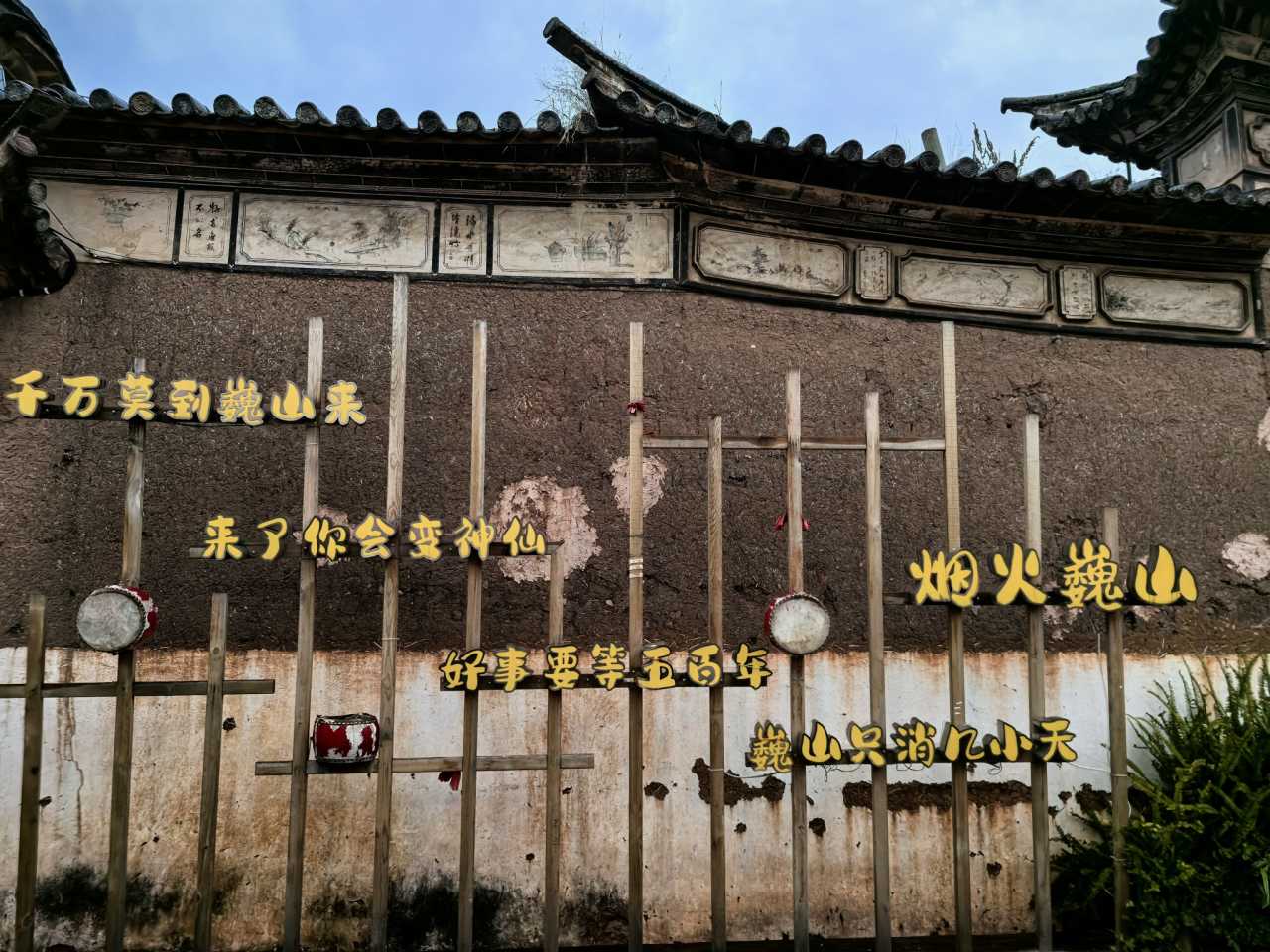
What is the "scent of daily life" in Weishan? It's the tune of a folk song: "Never come to Weishan, or you'll become a fairy; good things take 500 years to wait, but in Weishan, just a few days are great." It's the unadulterated life of an ancient town, it's a big bowl of tea with a few small dishes, it's strolling slowly and watching quietly. Unfortunately, for travelers like us, in a hurry to come and go, such savoring felt like a luxury.
Day 2: Sunrise over Erhai Lake and a Winter Romance on the Ecological Corridor
Xindi Coffee: A Spectacular Sunrise Feast
At 6:30 in the morning, we got up in the pitch dark, wrapped ourselves in our thickest down jackets, and walked a few hundred meters to Xindi Coffee. We thought we had arrived early enough, but the best spots were already taken. Xindi Coffee is located in Xiamo Village, right next to the ecological corridor. The owner is a local who never studied design, yet he created this internet-famous spot from a "third-person perspective" — reportedly, during peak season, 3,000 to 5,000 people come here daily to take photos.
Recommended Sunrise Photography Spots in Dali: - Xindi Coffee: Excellent vantage point, 7.5 km from the old town - Longkan Pier: A must-visit for tourists, lots of seagulls, 5 km from the old town - Chongyi Village Boardwalk: Lesser-known but no less beautiful, 9.5 km from the old town - Xiabopeng Village Dead Trees: Full of atmosphere, 8 km from the old town - Caicun Xiaoyizhuang Pier: Wide view, with seagulls and a beautiful tree
At Xindi Coffee, we witnessed the most stirring moment of sunrise over Erhai Lake. The moment the sun broke through the clouds, starbursts, silhouettes, and reflections intertwined, while red-billed gulls danced gracefully in the morning light. Special thanks to a young couple from Guizhou who took a back-view photo of us — during our chat, we discovered their parents were exactly in their zodiac year of birth, seven years younger than us. Teacher Wang and I exchanged a smile: should we feel embarrassed, or proud?
Xindi Coffee Photography Spots: 1. First-floor internet-famous window (limited to 3 minutes when crowded) 2. "Mirror of the Sky" water reflection spot 3. Panoramic gauze-curtain balcony 4. White balcony (very photogenic) 5. Panoramic window (shoes must be removed) 6. Third-floor lattice balcony 7. Third-floor left glass balcony (excellent for time-lapse) 8. Third-floor window for back-view portraits, like an oil painting
Chongyi Village: A Misty Winter Wonderland
Cycling south from Xindi Coffee, we arrived at Chongyi Village, which has recently gained some fame. The metasequoia forest here had lost its leaves, but the sturdy roots and fallen leaves still held plenty of charm. Walking along the misty boardwalk, with the cloud-shrouded Cangshan Mountain appearing and disappearing, felt like stepping into a fairy tale.
Interestingly, the road sign read "Chongyi Village" (崇益村), but the navigation showed "Chongyi Village" (崇邑村) — which one is correct? We were utterly confused, but with such beautiful scenery before us, who cared about the name?
From Majiuyi to Xiabopeng: The Essence of the Ecological Corridor
In the afternoon, we found shared e-bikes and rode south from Majiuyi along the ecological corridor to Xiabopeng. This stretch is the highlight of the western shore of Erhai Lake. How many "lonely trees" are there along the lakeshore? It's a mystery. The winter dead trees, paired with the wetland reeds, made every spot a photo opportunity.
Teacher Wang spotted a combination of two dead trees and insisted I sit on them for a photo. The trees were so slippery I couldn't get a grip. I struggled to keep my balance, shouting "Please hurry up and take the picture!" The nearby fisherman probably found us quite ridiculous, but that's the joy of travel, isn't it?
Day 3: A Cycling Journey from Majiuyi to Longkan Ancient Ferry
In the morning, we gave up on the plan to photograph sunrise at Shuangyuan Creek — the weather forecast said today would be average. Watching the sunrise from our guesthouse balcony was cozy enough. Breakfast started with an erkuai (饵块, a kind of rice cake pancake, in my understanding), and then we began our southward cycling journey.
Our destination was the more crowded Longkan Pier. Along the way, we passed Love Square and Longkan Ancient Ferry. Although there were many people, the scenery was well worth it. As we neared Caicun Pier, clouds drifted across the sky that looked just like the ones from home — at that moment, I felt a sudden pang of homesickness.
A Final Word: What Dali Taught Us
Over four days of in-depth travel in Dali, we experienced a journey from "backup option" to "true love." Dali showed us, in its own way, that the best travels often come from unexpected surprises.
For those about to set off: 1. Prepare a Plan B: Weather is unpredictable; having an extra plan gives you more peace of mind. 2. Wake up early for sunrise: Xindi Coffee is worth giving up your sleep-in. 3. Cycle the ecological corridor: Don't just chase the internet-famous S-curves; scenery is everywhere. 4. Weishan deserves a full day: Don't just hang around Dali's old town; Weishan's everyday charm is more moving. 5. Stay warm first: Winter in Dali has big temperature differences between day and night; a down jacket is not just for show.
Finally, let's end with a photo we took at Xindi Coffee — in the frame, Teacher Wang and I stand side by side at the window. The morning light of Erhai Lake spills over us, like an oil painting. At this moment, let time stand still.
Meeting is already beautiful. Dali, see you next time.
You should also read:
Yunnan! Paradise on Earth – The Yubeng Chapter: A Soul-Cleansing Journey into Seclusion
Yunnan! Paradise on Earth – The Yubeng Chapter: A Soul-Cleansing Journey into Seclusion Prologue: Why Yubeng? If you ask me which place in Yunnan is most worth hiking to, I would answer without hesitation: Yubeng. This is not an answer I give lightly. As a…
Continue reading...
Into the Hidden Valley: A Solo Journey Through the Mysterious Dulong River
Into the Hidden Valley: A Solo Journey Through the Mysterious Dulong River Deep in the northwestern corner of Yunnan Province, tucked away from the modern world, lies a place that feels like a secret whispered among mountains. The Dulong River Valley is not just a…
Continue reading...
God’s Abandoned Palette: A Self-Drive Journey Through Yunnan’s Dongchuan Red Land
God’s Abandoned Palette: A Self-Drive Journey Through Yunnan’s Dongchuan Red Land Travel has never been about reaching some distant geographic coordinate. It’s about encountering, along the way, the version of yourself buried beneath the rubble of daily routine. During this May Day holiday, I finally…
Continue reading...